Q: Scientists are constantly trying to “prove” the existence of ghosts or departed spirits. What is the Catholic teaching on the presence of ghosts or spirits?
Catholics believe that death is not the end of human existence. While our present, corruptible bodies decay after death, our immortal souls will be reunited with our glorified bodies in the fullness of time. We don’t actually know what this will look like, although we do believe that we can have contact with the dead who have gone before us. That’s what we do when we pray for the intercession of the saints. But the Church does not teach that tormented souls linger on earth like the ghosts of popular imagination. Instead, Catholics believe that the communion of saints is invisible to most people most of the time. Any contact we have with the dead comes through the experience of faith, not necessarily though the empirical channels employed by scientists in search of the paranormal.
Theologian Karl Rahner, S.J., explains this well:
“The great mistake of many people … is to imagine that those whom death has taken, leave us. They do not leave us. They remain! Where are they? In the darkness? Oh, no. It is we who are in darkness. We do not see them, but they see us. Their eyes radiant with glory, are fixed upon our eyes … Though invisible to us, our dead are not absent … They are living near us transfigured into light and power and love.”
When I became a Christian, I felt like God was inviting me to come to him for parenting support, through prayer and reading his word.
When I first looked at what the Bible said, I didn’t see much advice for parents. Apart from the often-quoted Proverbs 22:6 “train up a child in the way he should go,” there doesn’t seem to be a lot of advice that directly speaks to our parenting challenges. However, a deeper look reveals that many verses can support parents raising their children.
Loving our children is a reflection, on the micro level, of how Jesus loves us. As imperfect humans with a tendency to sin, it’s a lot to live up to, but thankfully God gave us his Holy Spirit to be with us.
Here are six Bible verses to meditate on and memorize to help us along our parenting journey. I try to read and reread these as often as I can so that when I’m in a sticky parenting situation, God’s words of advice remind me to parent in the spirit and not in the flesh.
1. Remember the fruit
But the fruit of the Spirit is love, joy, peace, patience, kindness, goodness, faithfulness, gentleness, self-control; against such things there is no law (Galatians 5:22-23).
There are many parenting moments where I don’t feel peaceful or patient, when my words aren’t kind or gentle. Having this verse at the forefront of my mind can interrupt any negative patterns of thinking. It’s so easy to forget, which is why I like to read this one often; I even spent a week meditating on it. You could put it in a prominent place like your bathroom mirror, or on the fridge.
2. Pray without ceasing
Cast all your anxieties on him, because he cares for you (1 Peter 5:7).
When I first became a Christian three years ago, I gave up new-age practices after God showed me to rely solely on him. However, my parenting actually deteriorated for a while as I did not share my problems with him! It felt much harder to rely on a God I could not see. It took an inspiring sermon on the power of prayer to really make me sit down every day, and make sure I gave every anxiety to God. After that, I felt much calmer as a parent.
It can be all too easy to get caught up in my worries and not involve God. The Bible is full of reminders such as; “pray without ceasing” (1 Thessalonians 5:16) and “do not be anxious about anything but in everything by prayer and supplication with thanksgiving let your requests be made known to God.” (Philippians 4:6)
3. Speak gently
A soft answer turns back wrath: but a harsh word stirs up anger (Prov. 15:1).
When I want to make a request or set a limit with my kids, it can be easy to let my own emotions come out in my tone of voice. Sometimes I get frustrated about the state of the kitchen or my irritation rises as a simple request is met with complaints or arguing. Nevertheless, using a gentle, loving tone, even when we need to hold a firm limit can help to build the sense of connection children need to cooperate with us.
No human being can tame the tongue. It is a restless evil, full of deadly poison (James 3.8).
I have found this particularly helpful as my daughter has gotten older and more prone to debating or questioning me. Sometimes rising irritation can lead me to say things that I may regret later. In those moments, I try to remember the book of James which has many reminders about staying quiet.
5. Stop complaining
Do all things without grumbling or disputing,that you may be blameless and innocent, children of God without blemish in the midst of a crooked and twisted generation, among whom you shine as lights in the world (Philippians 2:14-15).
Before coming to Christ, I must admit I complained a lot, often about the state of the house and the amount of items on my to-do list. I thought of it as a healthy expression of my feelings, but in reality, there were times when my moaning just created a bad atmosphere. This verse helps me, as it acknowledges that yes, this world is fallen and broken, so there will be many struggles. But we are servants of Christ so it’s our job to shine.
6. God makes the impossible possible
With man this is impossible, but with God all things are possible (Matthew 19.26).
There have been moments when things seem impossibly hard, and I feel there is no hope. When I find myself caught thinking I’m not a good enough parent, or this is never going to change, I just remember that I’m not doing it alone.
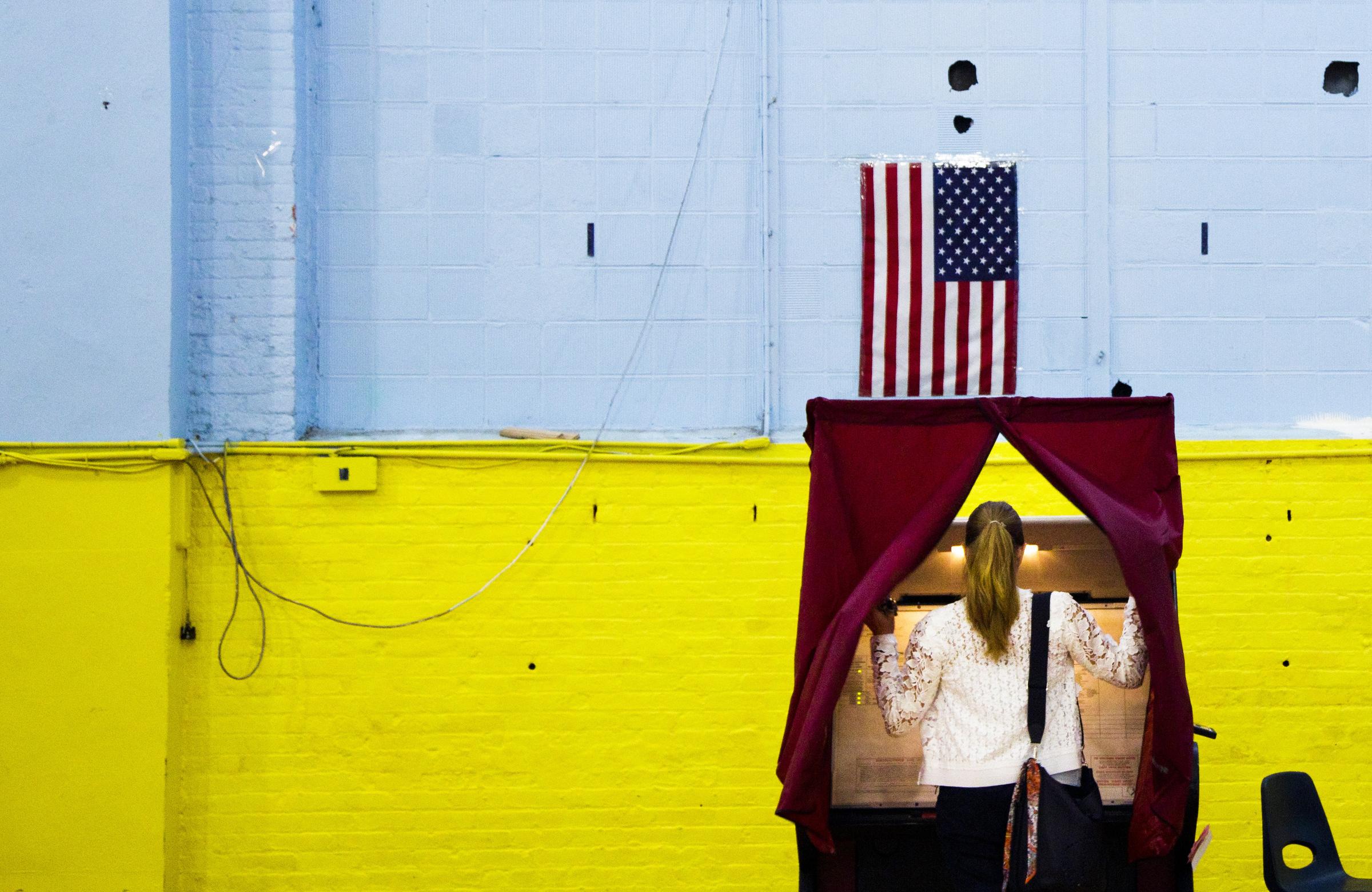
We’ve been hearing about this year’s presidential election for a long time. Emotions are running high on all sides, and as the election draws closer, we’re inundated with news and opinions. You may have tried to tune out the campaign because you aren’t happy with your choices, but it’s almost time to head to the polls. Voting is important. And there’s always a lot for voters to consider, and different issues are important to different people. However, the Catholic Church has never advocated its members to vote for a particular candidate, particular party, or vote solely on one issue. In fact, Catholics are never single-issue voters. As Catholics, our faith helps us sort out the many complicated issues we face during an election and leads us to an informed decision about which candidate to vote for.
Every election year, the United States Conference of Catholic Bishops publishes a guide called “Forming Consciences for Faithful Citizenship” — a teaching document on the political responsibilities of Catholics that offers insights on issues important to the Church. This video highlights the content of that guide.
As a people of faith, it’s important that we remember we have a moral obligation to uphold, founded in the teachings of Jesus and of the Church. Hopefully, this video and guide will help you make the best possible moral, faith-filled choice as you vote in this election. Watch it, share it, and vote.
Not sure how or where to vote this year? Visit rockthevote.com for details on voting in your area.
The Paulist Fathers released several resources to anchor those who seek to engage with the moral questions that dominate election cycles. These documents will help you as you consider your choices this November.
Christ has no body but yours, No hands, no feet on earth but yours, Yours are the eyes with which he looks Compassion on this world, Yours are the feet with which he walks to do good, Yours are the hands, with which he blesses all the world. Yours are the hands, yours are the feet, Yours are the eyes, you are his body. Christ has no body now but yours, No hands, no feet on earth but yours, Yours are the eyes with which he looks compassion on this world. Christ has no body now on earth but yours. — St. Teresa of Ávila
When I first read the words of this beautiful prayer by St. Teresa of Ávila, I felt they truly summed up how I wanted to live my life — by sharing God’s love with those around me. My own prayer became focused on finding ways to love the people I meet, even in the routine circumstances of my day.
He was perhaps 5 years old, standing in my open doorway and waiting for me to notice him. When I greeted the little boy, he whispered in his best English: “My mother asks you give her painkillers. Her tooth is hurting.”
Because my husband and I run a tourist lodge in Gambia, I spend the winter months in this tiny West African country. Many people live hand-to-mouth, and finding money to go to a health clinic is beyond them. Our neighbors know I keep a basic first aid kit and painkillers on hand, so it’s a rare week when someone doesn’t appear at our door asking for help. It’s one small way I can show love to my community.
Jesus said that the greatest commandment was to love God and to love your neighbor as yourself, and he lived out that commandment daily. He brought God’s love to those on the margins of society, stood up against injustice, and showed compassion for those he met.
St. Teresa was born in Spain in 1515. As a young woman, she became a Carmelite nun, but for many years she found it difficult to devote herself as fully to God as she wanted. But eventually, after a series of visions, she felt herself becoming closer and closer to God, founding her own religious order despite much opposition. She focused on living a life of simplicity and experiencing God’s love, motivating her to show that love to those around her. This famous prayer sums up her attitude.
It’s become a very real inspiration for me here in one of the poorest countries in Africa. Here are a few ways you too can bring this prayer to life:
Yours are the eyes that look with compassion
When Jesus looked at people he met, he didn’t judge them by the standards of the day. He looked beyond the outward circumstances of their lives — circumstances that sometimes invited condemnation from the religious leaders and the community — and showed love toward them. Think about his compassionate exchange with the woman caught in adultery or his interactions with Zacchaeus, the tax collector reviled in his community. With these examples in mind, I’m trying to look at others with the same compassion, without judging or condemning, even those who perhaps don’t invite it easily.
Yours are the hands with which he blesses all the world
Jesus used his hands to work as a skilled carpenter. We, too, have skills we can use to help others, such as helping a friend fix their car, using your gifts to update the church website, or cleaning up a neighbor’s yard after a storm.
Jesus also blessed people with his hands, like the children who were brought to him despite the disciples’ disapproval. In the past, I’ve cooked a meal for an elderly neighbor, sewed drapes for a friend’s new home, and soothed a fretful baby so a new mom could steal some sleep. These are all practical ways we can use our hands to bless others.
And Jesus also used his hands to heal. He spread mud on a blind man’s eyes, lifted Jairus’ daughter from her deathbed, and even touched lepers despite the fear and revulsion of most people at the time. We can all hold the hand of a sick friend when praying for their healing, console a teen who’s disappointed after not making the team, or hug a grieving friend.
Jesus walked everywhere, crisscrossing the region constantly because walking was the only way to travel unless you were rich. During his journeying, Jesus reached out to others. He talked with the woman at the well and taught those who walked miles and sat for hours just to listen to him speak. He even walked to Bethany, knowing that his friend Lazarus had died, to comfort Martha and Mary and ultimately raise Lazarus to life again.
Use your feet to do good by doing a walk or run for charity. A few years back, I raised money for Cancer Research UK by taking part in a 5K run. The thought that I was helping others was a great motivation when I was training! By extension, drive a friend to a doctor’s appointment or take a neighbor to the grocery store. You might travel yourself to visit a friend in the hospital or volunteer at a shelter for the homeless. Some might even feel called to travel worldwide, perhaps to serve on a hospital ship or volunteer their medical expertise.
Learning to live St. Teresa’s prayer means looking for opportunities to bring God’s love to others, including small acts of compassion in our daily lives. Praying St. Teresa’s prayer has made me much more aware of God’s compassion toward people I meet every day — in line at the grocery store, waiting for the bus, or simply someone I pass in the street. I feel closer to God because I’m learning to see others through his eyes. So every day, I’m trying to look for ways to use my hands, feet, and whole body to show God’s love to everyone.
I haven’t made it to the stroke of midnight awake on New Year’s Eve for at least the past decade, and during my years working as a hospital chaplain, I never thought twice about offering to cover the New Year’s Day on-call shift. Unlike Christmas, Thanksgiving, or Easter, I don’t have special traditions or memories associated with the holiday, so I can’t see staying up late for it or avoiding work on it.
And yet, I have a minor obsession with crafting New Year’s resolutions and partaking in various practices that help me orient myself for the upcoming calendar year. I regularly choose a word for the year, make an annual bucket list, and create goals related to my spiritual, physical, and emotional well-being. I also select a quote or Scripture passage to memorize and let shape my year.
Little did I know, back in January, what a tumultuous year 2020 would be, and now that I’m in the midst of particularly difficult times, I’m grateful that I was drawn to these verses back on that New Year’s Day. To me, they say: “life is full of good and bad, but no matter what happens to us, we have a choice in how we respond to it.” And then they offer an invitation to make choices — to stretch out our hands — to the things that will give us life: to things that will help us grow, that will energize us, that will open us up to the presence of God in the world and that will help us share the love of God with our neighbors.
Here are three choices that I’m making these days, motivated by the 15th chapter of Sirach, that are giving me life:
I choose to ask myself one important question at the end of each day.
In his Spiritual Exercises, St. Ignatius of Loyola describes a technique of prayerful reflection on the events of the day. This reflective exercise prods us to recognize where and how God may have been working in the highs and lows of our past 24 hours. While hisExamen walks through five steps, I’ve recently taken to asking myself one examen-inspired question at the end of each day: Did the love I exhibited today outweigh any grumpiness that I exuded?
I started this practice after a series of unfortunate weeks during which I found myself snapping at my husband, rolling my eyes while on work-related phone calls, complaining to anyone who would listen, and making negative comments during Zoom meetings. I realized that I had become a total grump and that I was hurting myself, my family, my co-workers, and my friends. In short, I was not making choices that gave me, or anyone around me, life. Something needed to change. So I drew a little grid with thirty boxes on the monthly page of my planner, and I committed to checking off a box for each day that my love outweighed my ill-humor. Knowing that I would evaluate myself at the end of the day, I was much more inclined to make loving choices, and I found that as I exhibited more love, I felt an increase in peace and gratitude as well.
I choose to spend time playing with my toddler every day with no distractions.
My 18-month-old daughter has a whole array of words, mannerisms, and preferred activities that I find hilarious and delightful, including her propensity to call anyone under the age of 10 a baby and her favorite morning activity of sitting in the passenger seat of our parked car. And yet, I recently noticed that I reach for my phone, a magazine, or my meal-planning notebook anytime I spend time with her. My tendency to distract myself from our time together troubled me; so I decided to spend at least 30 fully-present minutes with my daughter each day. This decision — a commitment to share intentional and distraction-free time with my child — has had two significant impacts in my life: First, it has heightened my sensitivity to the presence of God in my life as I join my toddler in her wonder and awe at the created world. Closely examining a flower that she has picked and thrust under my nose beats scrolling social media any day. Second, it has given me the opportunity for a deeper connection with one of the beings I love most in the world.
With our nation finally attending to the murders of people of color and our communities finally acknowledging systemic injustices and grappling with social sins, I started to question the role that I, as a white person, play in furthering racism. It’s humbling and horrifying. It’s also easy to become paralyzed into inaction with feelings of guilt and uncertainty. What is the next best step? Instead of becoming paralyzed, I decided to start taking action with one small step this summer: I made consuming media related to race-relations a goal. I’ve bookmarked Ibram X. Kendi’santi-racist reading listand Sarah Sophie Flicker and Alyssa Klein’sAnti-Racism Resources on my computer, and I am choosing to turn to these when selecting my next book, podcast, or article with the intention of expanding my own life, breaking down racist tendencies and stultifying biases, and replacing thoughtless habits with life-giving objectives. It is a small step towards a life that more fully honors the lives of others.
Even amidst the challenges of today, we are given countless opportunities to choose — like the author of Sirach describes — between fire and water, life and death. My three choices help me find life and contribute to life in small but meaningful ways.
Editorial note: The following article contains mentions of pregnancy/infant loss.
The desire to become a mother took me by surprise. Beyond early childhood years of wanting five daughters named after American Girl dolls, having kids wasn’t on my radar. However, after two years of marriage, I faced the possibility of having kids with a heart of hope. What I didn’t know at the time was that an unexpected diagnosis would make becoming pregnant more challenging than I ever thought possible.
“You have PCOS. How has no one told you that before?”
I met my doctor’s gaze through the webcam. I had pushed for a meeting after months of being seen by well-intentioned but uninformed medical technicians. This diagnosis came after working with OBGYNs, holistic practitioners, and even acupuncturists while on the search for an answer to family-building. The diagnosis, though, was less of a path forward and more of a cul-de-sac.
I knew God was listening. However, He felt far away. I needed a girlfriend with whom to commiserate, a mother figure who would help me. I thought about this during my weekly Thursday night Adoration hour.
“Am I not your mother […] how else can I help?”
I reread the last line of Mary’s message under a painting of Our Lady of Guadalupe on the wall of my parish’s Adoration chapel. I figured if I needed help on the journey toward motherhood, who better to rely on than the Mother of Mothers? My heart began to ease as I spoke.
Holy Mary, I ask for your help. That you would intercede for me and ask God that if it’s not His will for me to have a child, to please, please, take the desire from my heart.
After another disappointing fertility cycle, I decided to try one more time. My husband, who never pressured me to have children, agreed I should take a break if this next one didn’t pan out.
Mary, I ask for your help again. For your holy intercession through Jesus Christ, your son my Lord, to God that it could be his holy will that I become pregnant this time.
As I called out to Mary, again and again, words appeared in my mind. In my head I heard, “I will help you become a mother because you first went to my mother.” I was still as that notion began to increase my confidence that maybe it was almost time.
A week after my 35th birthday, the doctor’s office confirmed that not only was my positive at-home pregnancy test accurate, but also — I was having twins. After the initial shock, I imagined my bump and how I would reveal the news. My prayer life and budding relationship with Mary continued to grow as well. It all felt too good to be true, but I pushed those thoughts away.
At 12 weeks, I woke up and went into the bathroom. I was bleeding. Terror filled within me as I sat there trying to figure out what to do. My husband turned on his bedside lamp and we called the doctor.
The on-call nurse said I would need to wait until the doctor’s office opened. As I laid on wet bed sheets, I saw my grandmother’s painting of Our Lady of Guadalupe hanging in the room across the hallway. My eyes locked on her serene face and hands folded in prayer and thought, “Am I not your mother? How else can I help?”
Oh Mary, please help me. Please help my babies. Keep them there. Oh Mary, please.
My reliance on the Holy Mother’s intercession and listening ear was all that I had, and I found it to be the only thing I needed. Later that morning, I was bumped up to be the first seen by the medical technician. I burst into tears when she found two beating hearts.
At the beginning of my journey to motherhood, I felt that there would be a natural conclusion to my prayer — a time when I wouldn’t need to rely on the Holy Mother as much as before. First it was becoming pregnant, but she was there during my pregnancy to hear my fears and joys. Then, I thought that after I gave birth, the journey would conclude and I wouldn’t have to “bother” her so much. However, I still rely on Mary every moment of every day.
When my boys wake up, I thank her for praying over them during the night. I ask her to watch over them as they explore which comes with the inevitable toddles and falls. Mostly, I ask her to help me to be the best mother I can be in each moment. To not stress so much about the little things, but to continue to trust in God. I jokingly ask her to pray for my kids through my mistakes while I earnestly navigate the learning curve of motherhood.
My path towards motherhood led me to Mary’s perfect example of seeking light through dark times. Mary’s faithfulness to God and her unceasing love continues to be an option for all of us to choose daily when seeking hope.
I want to live a simple, joyful life. I don’t want it to be complicated—I don’t want my happiness to be dependent on luxuries and comforts that I cannot afford. In my quest for such simplicity, I am inspired by the life and example of St. Francis of Assisi. I’m often impressed by Francis’ ability to deny himself the pleasures life has to offer.
The idea of self-care was not a primary concern for him. Francis used to refer to his body as “Brother Ass” because he treated it like one. “A person’s worst enemy is the flesh,” he once said. “All its concern is how to squander the present. What is worse, it claims for itself and takes credit for what was given not to it, but to the soul.” Francis would deny himself any comforts, even those that were necessary for him to accommodate the many illnesses he suffered late in his life.
As Francis lay dying, he was asked by one of the brothers if he had any regrets, if there was anything he would have done differently.
“Yes,” he said. “I would have been kinder to Brother Ass.”
St. Francis seems to be telling me that a healthy spirituality does not require me to sacrifice the things I enjoy. I don’t have to practice extreme self-denial. Rather, a healthy spirituality can—and perhaps should—make room for me to enjoy the simple pleasures and savor God’s many gifts. I find that when I do not spend at least part of my day outdoors—even if it as simple as taking my dogs for a walk to the park or watching the birds at my feeder while sipping a cup of tea—I am not a happy person; I do not feel whole. My spiritual life is the way I grow closer to God; it makes me whole. The happiness I feel in something as simple as watching a woodpecker hang from my feeder must, therefore, tell me something about God. It is a prayer as much as anything else.
You can make similar moments prayers of your own by following a few easy steps:
Give thanks. Take a moment to thank God for whatever it is you’re doing. This can be as simple as saying “Thanks, God!” out loud. You can also take some time at the end of the day and review those things that brought you happiness. You may want to begin this act of gratitude with this prayer or something similar: “Heavenly Father, all good things come from you. Thank you for the many signs of your love I received today.” Gratitude helps you keep your attention on God from whom all blessings flow and not on the activity or yourself.
Find God. Actively seek God’s presence in whatever it is you’re doing. You might notice God in a feeling or thought. God might make himself known through the presence of another. By actively seeking God, you will find that you are more attentive to God’s presence surrounding you.
Share. Joy is not something we hoard. It is not something for our self alone. Joy can only be made complete when it is shared with another. Share your experience of joy with someone else. Even solitary activities can be shared through conversations and social media. For example, I post pictures on Instagram and Facebook of the birds I see when I go birdwatching; this helps me share the beauty I see, and, I hope, brings beauty into other people’s lives.
We all need to find the time and place where we can enjoy the gifts God has given us. God wants us to be happy. True happiness fills us with God’s goodness and love. It satisfies us; it doesn’t leave us hungry and craving for more. True happiness leaves us feeling light and free, not burdened with the fear that it is fleeting. When we are truly happy, we find that we are filled with peace, kindness, gentleness, meekness, and generosity; we know that God alone is enough.
Life is hard. We don’t need to make it any harder than it is. Take the time to seek out those things that bring you true happiness. For me and my wife Cathy, that can be as simple as watching the birds that visit our yard. I remember the first time I captured a picture of a Cedar Waxwing. We were sitting on our backyard patio, and Cathy pointed out a strange looking bird, something we had never seen before. We grabbed our camera and snapped a few pictures. We then saw another, and another, and another. Soon we noticed a whole flock of Cedar Waxwings perched in a tree, feeding on berries from its branches. We were so excited. That moment of relaxation on our patio had turned into a shared moment when we felt God’s love, goodness, and beauty.
So, be kinder to Brother Ass and treat yourself to the simple pleasures that bring you joy. And don’t be surprised when you discover God enjoying them with you.
The Rosary is a Catholic prayer devotion that draws us closer to Jesus and Mary by reflecting on key moments in their lives. According to Catholic tradition, Mary gave the Rosary to St. Dominic when she appeared to him in 1214. In 1520, Pope Leo X approved it for use by lay people. In those days, many were illiterate, so the Rosary allowed anyone to pray with familiar words from scripture.
The word Rosary comes from the Latin rosarium, which means rose garden. In scripture, roses symbolize perfection. So, the Rosary is like a perfect garden of prayers.
The Rosary involves a lot of repetition. You might be wondering, why pray the same prayers over and over again? Praying the Rosary helps slow us down, calm our hearts, and get in touch with our desires for God.
So, if you want to try praying the Rosary, where do you start? Busted Halo’s new 2-minute video has you covered. Learn about the history and tradition of the Rosary, how to pray, what it means to meditate on the Mysteries of the Rosary, and more!
To download this video go here and click the download arrow or choose save or download (top right). Please note, all Busted Halo videos are free to use in parishes, schools, or for other educational purposes. In fact, we encourage it!
Resources and reflections
The Rosary can be prayed anywhere and is a prayer for everyone. Here are a few additional resources to help you pray the Rosary or share this prayer with your parish or classroom.
In the name of the Father, and of the Son, and of the Holy Spirit. Amen.
Apostles’ Creed
I believe in God, the Father almighty, Creator of heaven and earth, and in Jesus Christ, his only Son, our Lord, who was conceived by the Holy Spirit, born of the Virgin Mary, suffered under Pontius Pilate, was crucified, died and was buried; he descended into hell; on the third day he rose again from the dead; he ascended into heaven, and is seated at the right hand of God the Father almighty; from there he will come to judge the living and the dead. I believe in the Holy Spirit, the holy catholic Church, the communion of saints, the forgiveness of sins, the resurrection of the body, and life everlasting. Amen.
Our Father
Our Father, who art in heaven, hallowed be thy name; thy kingdom come; thy will be done on earth as it is in heaven. Give us this day our daily bread; and forgive us our trespasses; as we forgive those who trespass against us; and lead us not into temptation, but deliver us from evil. Amen.
Hail Mary
Hail Mary, full of grace, the Lord is with thee; blessed art thou among women; and blessed is the fruit of thy womb, Jesus. Holy Mary, Mother of God, pray for us sinners, now and at the hour of our death. Amen.
Glory Be
Glory be to the Father, and to the Son, and to the Holy Spirit, * as it was in the beginning, is now and ever shall be, world without end. Amen.
Fatima Prayer
O my Jesus, forgive us our sins, save us from the fires of hell; lead all souls to heaven, especially those in most need of thy mercy.
Hail, Holy Queen
Hail, holy Queen, mother of mercy, our life, our sweetness, and our hope. To thee do we cry, poor banished children of Eve; to thee do we send up our sighs, mourning and weeping in this valley of tears. Turn then, most gracious advocate, thine eyes of mercy toward us; and, after this, our exile, show unto us the blessed fruit of thy womb, Jesus. O clement, O loving, O sweet Virgin Mary.
Pray for us O holy mother of God, that we may be made worthy of the promises of Christ.
Rosary Prayer
Let us pray. O God, whose only-begotten Son by his life, death and Resurrection, has purchased for us the rewards of eternal life; grant, we beseech thee, that by meditating upon these mysteries of the most holy rosary of the Blessed Virgin Mary, we may imitate what they contain and obtain what they promise, through the same Christ our Lord. Amen.
What are the Mysteries of the Rosary?
These “Mysteries” (not the crime-solving kind) focus on the significant events in the lives of Jesus and Mary. They’re broken down into four categories and generally prayed on different days of the week:
The Joyful Mysteries (Mondays and Saturdays)
The Annunciation
The Visitation
The Nativity
The Presentation
Finding Jesus in the Temple
The Sorrowful Mysteries (Tuesdays and Fridays)
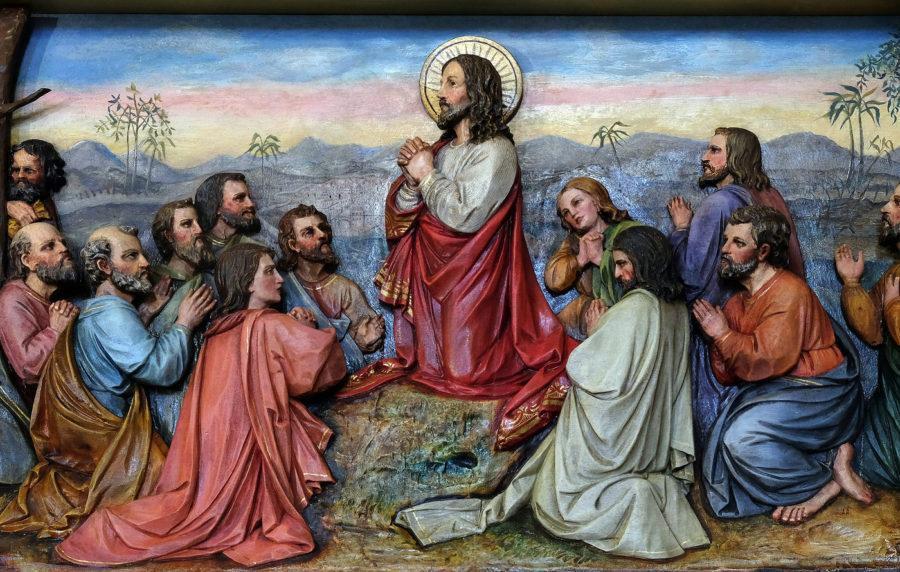
The Agony in the Garden
The Scourging at the Pillar
The Crowning of Thorns
The Carrying of the Cross
The Crucifixion
The Glorious Mysteries (Wednesdays)
The Resurrection
The Ascension
The Coming of the Holy Spirit
The Assumption of Mary
The Coronation of Mary
The Luminous Mysteries (or Mysteries of Light) (Thursdays)
Jesus’ Baptism
The Wedding Feast at Cana
The Proclamation of the Kingdom of God
The Transfiguration
The Institution of the Eucharist
The Rosary is a powerful prayer. Many miracles have been attributed to the Rosary (like the miracle at Fatima), and countless others have experienced healing, conversion, and answered prayers. But the biggest miracle of all is the hope it has given to millions around the world.
A few years ago, during a Saturday session of my doctoral class called “Critical Issues in Educational Leadership,” we compared charter versus public schools, a controversial topic in the education sphere. Our conversation sparked a heated debate between two students, one of whom was the principal of a public school in Harlem and the other an assistant principal of a charter school in the Bronx.
I watched the debate with rapt attention, on the edge of my seat. The verbal sparring was elegant. Back and forth I moved my head, as if I were witnessing two seasoned tennis players duking it out in the U.S. Open finals.
I don’t remember the exact arguments they made. But what I do remember is that right after the class broke for lunch, one of the debaters said to the other, “Do you want a burger and fries or pizza?” The other replied, “How about we each get something different and split?” And off they went to enjoy lunch as if nothing ever happened between them.
The ease with which they switched from debaters to friends made me realize how desperately we need to revive congenial civility at a minimum and open-hearted, deep discussions at best. It’s okay if our loved ones don’t think like we do. But, instead of ignoring “taboo” topics, we should be able to talk about them without getting into shouting matches or arguments.
So, how can we disagree with others and still love them?
Normalize discussions where we disagree by approaching each person as a child of God
Growing up, my parents frequently hosted dinner parties for their friends. At every gathering, without fail, they would eventually tread into what we now consider stormy waters: religion, current events, history, and politics. And every gathering, they would engage in an all-out heated debate. After they aired their opinions, they would laugh and happily accept my mom’s offer of “Who wants cake?”
Reminiscing on my childhood makes me long for a time when political or other serious discussions could be just another topic of conversation like books, movies, and the weather. I think we can open ourselves to serious topics — and actually enjoy discussing them — by practicing having candid, calm conversations without getting our hackles up. In this way, we are not only hearing each other out respectfully but learning about other points of view, which is at the heart of being a good citizen and a good person.
A positive start to entertaining sticky conversations is to approach others the way God sees them: as his own precious children whom he knew even before birth (Jeremiah 1:5). If we look at someone we disagree with through the eyes of our loving Father, how can we not be moved to open our hearts? We can let our guard down and be a little more patient, kind, and merciful.
In high school, my friends and I would gather daily at a cafeteria lunch table and hash out various controversial topics: abortion, gun control, euthanasia, the Iraq War, and more. Sometimes, things got heated (and sometimes we were nerdy enough to prepare research for our discussions), but I can never recall a time when we crossed a boundary into personal attacks or made anyone feel lesser for thinking differently. In fact, we celebrated that we all disagreed because it made the conversation more stimulating and lunchtime more fun.
I think today sometimes we forget to separate the perspective from the person. Everyone has a right to their own opinion, even if it differs from ours.
When our loved ones think differently about an important issue, it may feel like a personal affront. We want them to believe what we do, especially if what they believe appears antithetical to our Christian beliefs. But more likely than not, they aren’t disagreeing with us because they want to harm us. They have reasons for believing what they believe, and we need to be open-minded to hear them out. Trying to convince someone without listening to them is like shouting down a well: We only hear our own voice echoing back at us.
We can approach difficult conversations more calmly when we view each other as human beings who deserve decency and dignity. As children of God, God loves each one of us and invites us to his heart – no matter where we are or what we think.
Replace rage masquerading as passion with patience
Oftentimes, the issues we are passionate about stem from deeper personal experiences, struggles, or trauma in our lives. As such, it can make us feel angry when others don’t see things our way. Channeled appropriately, anger can drive us to positive action. Anger is a normal emotional response that can be healthy when handled well. But if we masquerade our rage as “passion,” then we’re in trouble. Because it’s one thing to be deeply involved and concerned about something. It’s another thing to be belligerent or derogatory about it.
For example, my mom and I once stood in line to take the East River Ferry to Manhattan. We were speaking in Polish. A man in back of us, angry at the state of immigration, said loudly to his friend, “These Polaks should go back to their own country” and proceeded to expand on the various reasons why immigrants, in his worldview, were detrimental to our country.
Now, it’s one thing to hold the opinion that immigration systemically weakens a nation. But it’s another to insult or denigrate others because of this view.
My mom and I decided the best course of action for us was to ignore him. We wouldn’t let him ruin a perfectly beautiful summer day, and arguing with a stranger would hardly be productive. I secretly wanted to wallop him, but, thank God, I had the restraint not to do so.
There are some practical things we can do to catch ourselves before our passion turns into proverbial road rage. Take a deep breath. Pause. Say a little prayer. Maybe not every conversation has to come to a close. Maybe we can pick up later when we’ve had time to breathe, especially if someone says something that’s offensive to us. If we feel comfortable, we can pause and tell the person how we feel or wait for another day to do so calmly. More often than not, if they are our friends or loved ones, they will hear us out.
At the end of the day, we should remember:
It’s okay not to have the last word.
It’s okay not to persuade someone to your point of view.
It’s okay not to “win.”
Because if all we try to do is “win,” then we lose the greatest thing of all: our capacity for kindness. Patience. Mercy. Love.
Our nation is deeply divided. But having conversations – no matter how small – can help narrow the divide, bring healing through understanding, and make our communities and country stronger. And that’s a real win.
Students at Cristo Rey New York High School. (CNS photo/Chaz Muth)
Faith is not taught, it is caught. So while it’s important to present your curriculum clearly and accurately, you must also offer an enthusiastic example of a life lived in faith.
Can your students see that your own life is infused with joy and grace? Do they recognize that you are living in the peace and freedom that only God can give? While maintaining appropriate boundaries, are you honest with them about your own times of struggle and the fruits of those struggles?
Your witness will be the strongest message they carry away from your classroom. While doctrines and jargon may go in one ear and out the other, the example of a life shaped by the good news remains in the heart. Be a person of faith and trust that God will touch your students’ hearts and inspire them to respond.

 Q: Scientists are constantly trying to “prove” the existence of ghosts or departed spirits. What is the Catholic teaching on the presence of ghosts or spirits?





 Resources and reflections