Category: Ministry Resources

  • O Antiphons: A Prayerful Homestretch to Christmas

    O Antiphons: A Prayerful Homestretch to Christmas

    “O Come, O Come Emmanuel” is one of my favorite hymns, if not my all-time favorite. This hymn is ubiquitous with the Advent season and is heard in most Catholic churches in the United States at least once in the season. The words of this hymn, simultaneously wonderfully ancient and ever-new, are based on what is referred to as the “O Antiphons.” Now, maybe you already knew that, maybe you’ve heard of the “O Antiphons” before, or maybe you’re now wondering what an antiphon even is. Chances are though, you’ve heard this hymn and might have wondered where it came from.

    An antiphon is a short phrase or sentence that is used in liturgies like the Mass or Liturgy of the Hours. Antiphons serve as small refrains and often highlight a particular message or prayer of the season. In this case, the “O Antiphons” refer to the specific antiphons used in Vespers (evening prayer of Liturgy of the Hours) that go with reciting the Magnificat (Mary’s prayer of praise from Luke) from December 17 to 23. Together, these seven antiphons – all of which start with calling upon Jesus Christ with an exclamatory O, hence the name –  help to serve as a prayerful conclusion to Advent, a homestretch prayer on our way to Christmas.

    LISTEN: Father Dave Explains O Antiphons

    Structurally, each antiphon has two key parts. The first is a traditional title of Jesus Christ as the messiah, the one who was promised to come, such as Emmanuel, used by Gabriel in the Annunciation meaning “God with us.” These titles reflect how the prophets thought of the coming messiah and who he is. The second part of each antiphon is a reflection of that role by drawing upon the words of the prophet Isaiah. This portion helps to reflect on the mission and ministry of the messiah and how he would live out that particular title. For us as Christians, we use these prophetic titles and words to reflect on Jesus Christ, what he has done in history, and how he continues to act in our lives today.

    We can sit with these seven little phrases and draw upon their richness in helping us to know Jesus Christ as the wisdom of God, guiding us in our lives and actions. We too call upon Jesus Christ in a longing way as we look forward to and hope for his second coming. So just as the prophets longed for his first arrival, we too wait eagerly and look forward to his return in glory.


    December 17: O Sapientia

    O Wisdom, O holy Word of God, you govern all creation with your strong yet gentle care. Come and show your people the way to salvation.

    O Wisdom, O Word of God! These ancient titles reflect God’s perfect knowledge and are titles given specifically to Jesus Christ. In the Book of Wisdom, wisdom is personified as existing before all time with God, and in relationship with the Father. In the original Greek of the Book of Wisdom, the word used for Wisdom is “Sophia” (which may ring bells of the Hagia Sophia or Holy Wisdom). Wisdom was depicted in feminine language as one who is gentle and caring. In the prologue of the Gospel of John, we hear how the Word was with God and was God (John 1:1). The Greek word used here is “Logos,” which, in addition to word, can also be translated as wisdom. Christ is this wisdom of God, the perfect knowledge of the divine, loving, and creative, made manifest in human life.

    Christ was present at the creation of the universe as the Son, the Wisdom, and the Word. Indeed, Christ was not passive in the creation, but was the very blueprint of creation itself. As Psalm 33:6 states: “By the Lord’s word the heavens were made; by the breath of his mouth all their host.” The world was made to reflect this Wisdom and Word, and humanity, made in God’s image, is called to look to Christ for the very way to live our lives. Christ is not distant from creation either, as this antiphon reminds us. Rather, he continues to govern and care for creation, remaining intimately connected and in relationship with all he has made.

    Through the goodness of the world that Christ created, he shows us the way to eternal life. We are a sacramental people, meaning that physical signs point us to the goodness of God and salvation. As we enter the final days of preparation for Christmas, may the bright decorations and the joyful celebrations with family and friends be a sign of God’s love and lead us deeper into knowing the Wisdom and Word made flesh.


    December 18: O Adonai

    O sacred Lord of ancient Israel, who showed yourself to Moses in the burning bush, who gave him the holy law on Sinai mountain: come, stretch out your mighty hand to set us free.

    Christ is not a new creation that was spontaneously generated on December 25 over 2000 years ago. Christ, as the Son of God, the second person of the Trinity, has always and will always exist. The title used for Christ in this antiphon is Adonai, a Hebrew word for the Lord of all who is a good and just ruler, a giver of law.

    Even if they were not known in the moment, all three persons of the Trinity were present at the burning bush. The same Christ who would be held as an infant in Mary’s arms declared himself as “I am who I am” to Moses (Ex. 3:14). Our Lord and God, who is infinite and eternal, humbled himself to be held as a child to set us free.

    St. Paul writes of Christ coming under the law to free us from it. This is not to set us free from the moral and theological precepts, such as the Ten Commandments, but to free us from the law of sin and death. Christ is the author of true law, of the laws given to Moses, and ultimately, of the law of life. It is this same Christ who sets us free from the law of sin who gives us the laws of love and freedom. The same Christ who has acted in history to give the law and set us free continues to act in our lives with his mighty hand.


    December 19: O Radix Jesse

    O Flower of Jesse’s stem, you have been raised up as a sign for all peoples; kings stand silent in your presence; the nations bow down in worship before you. Come, let nothing keep you from coming to our aid.

    O Flower, Christ, who is the sign of new life, flourishing, and beauty! In the dark of winter, the thought of a freshly bloomed, beautiful flower can bring us to a place of peace, warmth, and tranquility. In the difficulties of life, Christ is the flower that brings us to these same places. Christ, through sharing our humanity in the incarnation, knows our pains and struggles. He sees us in our times of need and comes to be with us, to hold and comfort us, to grant us hope and peace like the thought of a beautiful flower on a cold night.

    It’s interesting to note that “radix” is translated as “flower” in the English breviary when it actually means “root.” This reality of being both root, stem, and flower shows Christ’s presence throughout history. In the antiphon, it seems odd at first to call upon Christ, who in his human family is a descendant of Jesse, as the root of the stem. And yet, as God, Christ is the root, the beginning, of the family line. He has existed before the world and helped bring forth the family of Jesse and his son, King David. He is the source of their life, the root which draws in to care for them. And yet, Christ also steps into the world as their descendant. Christ humbles himself and is born from the stem of Jesse as a humble shepherd. This language is drawn from chapter 11 of Isaiah where the prophet states “A shoot shall come out from the stump of Jesse” (v. 1) and “the root of Jesse shall stand as a signal to the peoples” (v. 10).

    All nations will bow down in worship; all peoples are called to life with Christ. This humble flower blossoms not just for us as individuals, but for all peoples throughout the world and history. We share in the mission to bring all nations to Christ, to proclaim his love and his truth to the world. We ask Christ to remove all barriers between us and him so that he may come to help us just as he came to help the world at his birth. We share in this, too, by removing the barriers in the world between all peoples, so that we may live together in the love of Christ.


    December 20: O Clavis David

    O Key of David, O royal Power of Israel, controlling at your will the gate of heaven: come, break down the prison walls of death for those who dwell in darkness and the shadow of death; and lead your captive people into freedom.

    O key of the royal family, open for us the treasury of your goodness. You have loosened our chains. You have given us the freedom of eternal life in your love. You, O God and Christ, have humbled yourself, as the one who opens the gates of heaven, to be given to Peter and your Church. In your love, you have made the path of salvation known to us and promised to be with us in our journey.

    By your incarnation, O Son of God, you came to give us freedom from death. By your paschal mystery, your death and resurrection, you lead us out of the dark valley of death and into eternal life. Death has no power over us any longer; you have trampled death by death. In your birth, we remember why you have come. We remember and look forward to the ultimate glory of your resurrection.

    As we look towards Christmas in just a few days, we can reflect in prayer on what Christ has freed us from in our lives. What shackles has Christ removed for us so that we can love God and neighbor more? We can also reflect on what barriers there are in our hearts to loving more deeply, and asking Christ to give us the grace to remove them. By the birth of Christ, we are invited to love God and neighbor with our whole heart and selves.


    December 21: O Oriens (Dawn of the East)

    O Radiant Dawn, splendor of eternal light, sun of justice: come, shine on those who dwell in darkness and the shadow of death.

    O Radiant Dawn, how we long for the rising of the sun in the dark months – to feel the warmth on our faces. Knowing the shadow of death that looms over all of us, we long for the eternal light of God all the more. Christ is the light we long for and know in our lives and the Church. Christ’s light guides us in our steps and helps lead us to a life of love and discipleship. The child born in the manger is this sun, this great light of God’s love, who continues to walk with us and guide us. 

    In facing the cold and dark of injustice, separation, and pains of our world, we desire the sun of justice. We know that Christ not only brings justice to earth and rights wrongs, but that Christ is the true justice we seek. He calls us to follow him in this world, to share that justice. This justice is not harsh and punitive, but kind, patient, loving, and uniting. The prophet Malachi describes the rays of this sun as healing (Malachi 4:2). The warm rays of Christ heal our souls, warm our hearts, and guide our steps in justice. In welcoming these healing rays, Christ transforms us and sends us forth into the world to share that same light and warmth.


    December 22: O Rex Gentium

    O King of all the nations, the only joy of every human heart; O Keystone of the mighty arch of man, come and save the creature you fashioned from the dust.

    O King of the nations, you are the true ruler of all peoples and all creation. You call all peoples to yourself and call all of us to live together as your people. You rule not as a despot or tyrant, but as a loving servant who cares for the hearts of all. Truly, you bring us the joy that lasts forever, a joy that does not perish; you satisfy our every longing.

    O Christ, through you humanity was made, and through you, humanity is completed. You are the keystone of the arch of humanity. You have wonderfully made us in your image out of lowly dust and made us to share in your love forever. Our arch, however, is not complete without you. Only with you, O Christ, humanity is made whole and complete. In taking on human flesh as a lowly child in the manger, you bring the fullness of our true selves. You restore us and bring us to new life. Come, save us, bring us to eternal life, bring all of humanity to completion in and through your love.

    In looking to Christ as our King, we look to see how we emulate his kingship. At our baptisms, we are anointed as sharing in Christ’s roles as priest, prophet, and king. As ones who share in his kingly role and ministry, we lead in our lives and in our worlds. Whether that is as leaders in our families, our work, or any other aspect of our lives, it is a moment to reflect Christ in his role as our king, to be one who serves.


    December 23: O Emmanuel

    O Emmanuel, king and lawgiver, desire of the nations, Savior of all people, come and set us free, Lord our God.

    O Emmanuel is our final antiphon and final evening prayer before Christmas begins. We find ourselves on the precipice of a great day and season of celebration. Knowing what is to come, we cry out to Jesus Christ; we cry out with titles that summarize all the other antiphons. We cry out, knowing that Christ alone will save us and set us free. This antiphon is short, knowing the light of Christmas dawn is coming soon.

    Emmanuel means “God is with us.” It’s an intimate reminder at the start of this antiphon that God is always near us. We remember the unique way that Christ walked among us at Christmas, but know that he is still always with us. He is the king and lawgiver, the one who rules over our lives and makes the laws that govern the world. Christ is not a distant ruler or a despot, but one who is close and in relationship with all of us.

    Christ is the desire of all nations, the savior of all. Christ came to the world and became like us in all things but sin so that we could be like him and share in eternal life. We cry out now, especially from the darkness of sin and separation in our lives, for the same Christ born in the manger to save us this day. We cry out to our God, our Lord, who loves us all, transforms us, and brings us everlasting life.

    As the Church prepares to celebrate Christmas starting with the vigil on Christmas Eve, we close out our reflections upon the “O Antiphons.” These short stanzas, these poetic lines drawing upon scripture, help us to prepare our hearts for the great celebration of Christmas and can guide us in our daily lives as Christians. We invite you to prayerfully recite each of these antiphons, taking a small pause between each one, as a final prayer of Advent. Reflect on where God has spoken to you in this season, and where God is leading you to share the joy of Christmas with others. May you have a wonderful, blessed, and merry Christmas!

  • Our Lady of Guadalupe: More Than Meets the Eye

    Our Lady of Guadalupe: More Than Meets the Eye

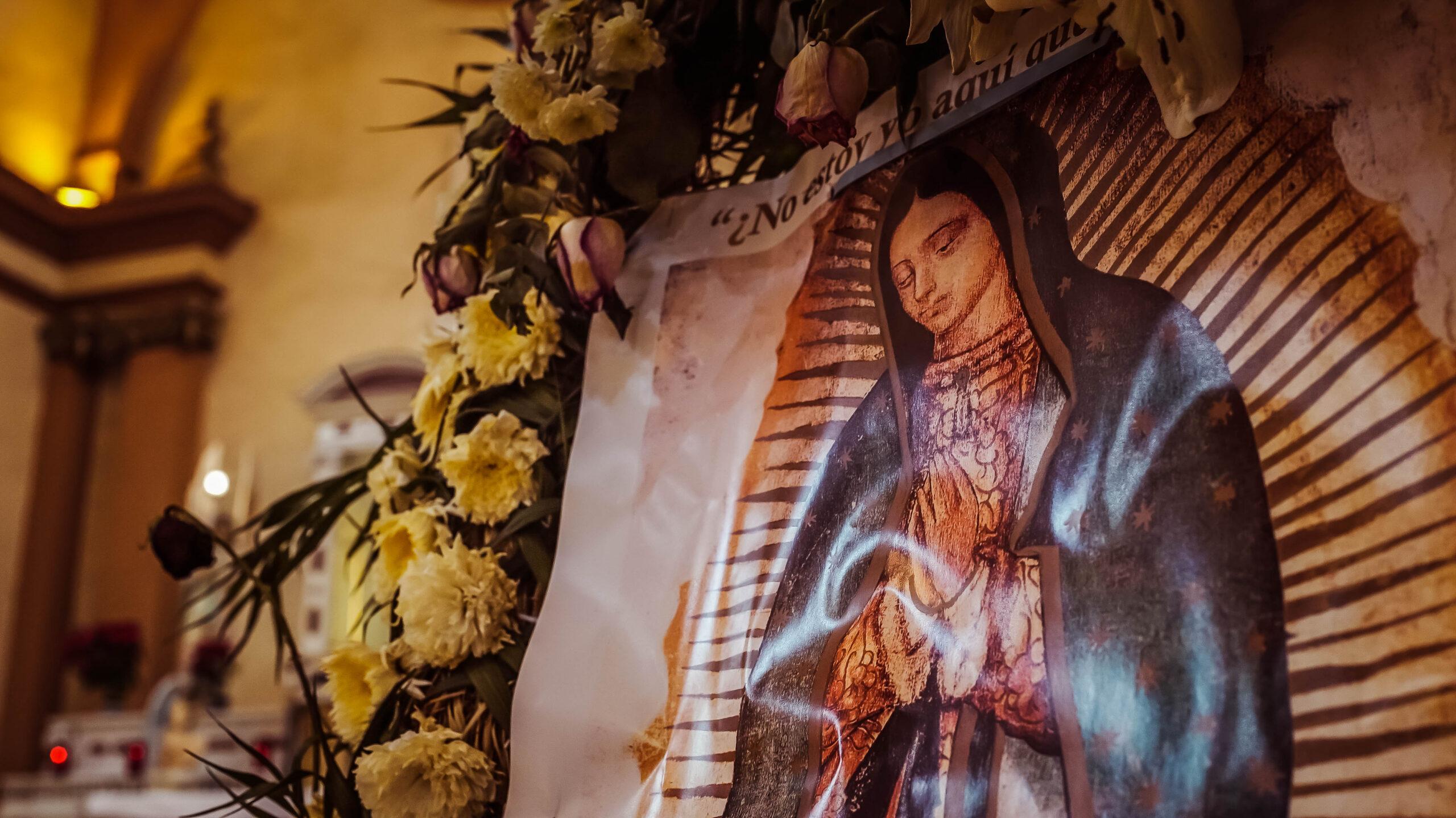
    Our Lady of Guadalupe, as she appeared in Mexico to Saint Juan Diego in the year 1531, is one of the most popular depictions of the Blessed Virgin Mary around the world. In my own experience, seeing her radiant image week after week as it hangs near the altar of my home church in Northern New Jersey piqued my interest and led me to learn more about this apparition. Upon first glance at the holy image, Our Lady’s beauty, humility, and tenderness are clear for all to see, but as it turns out, there is actually far more to this stunning self-portrait of Mary than one might suspect. As we prepare to celebrate the annual Feast of Our Lady of Guadalupe on December 12, let’s take some time to appreciate what makes La Virgen de Guadalupe so unique:

    1. Practicality

    On a basic level, I find it utterly amazing that the image of Our Lady of Guadalupe was given to humanity by Mary herself. As the historical account of the miraculous apparition goes, the Blessed Virgin came to Juan Diego and instructed him to petition the bishop of Mexico to build a church on the Hill of Tepeyac where she appeared. When the bishop asked Juan Diego for proof, Mary once again visited Juan Diego and gave him roses – in the dead of winter – to carry in his tilma, or cloak, and present to the bishop. Arriving before the skeptical clergyman once more, Juan Diego opened his tilma to reveal not only the beautiful roses, but the heavenly image of Our Lady of Guadalupe herself as we know her today. 

    This is the very same image that we still see of the Blessed Mother almost 500 years later. It’s not every day that the Mother of our Lord descends from heaven and quite literally hands us a self-portrait as a means of introducing herself to those who don’t yet know her. In a practical sense, this image allows us to honor Mary more intimately. It is not a man-made rendition of what some artist believed the Blessed Virgin might have looked like. When we look at this image, we see our Mother exactly as she appeared to Juan Diego centuries ago, her likeness crafted by heavenly design and gifted to humanity on a poor man’s cloak.

    RELATED: Our Lady of Guadalupe and the Joy of Knowing Her Son

    2. Symbolism

    The full account of the symbolism woven into La Virgen de Guadalupe’s image could stand as its own dissertation, but it is certainly worth mentioning in brief. Many elements incorporated into the depiction served to explain Mary’s identity – and that of the child in her womb – to the Aztec people. For example, the stars on her royal blue-green cloak that mirrored the constellations as they illuminated the sky on the morning of her apparition signified that she came to the Aztecs from heaven. The traditional black maternity band worn around her waist drew the natives’ attention to the child in her womb. With the sun behind her and the crescent moon under her feet, both of which were symbols of Aztec deities, Mary revealed that she was bearing the one and only true God. 

    I find it especially powerful that Our Lady came to her sons and daughters of Mexico in a way that was so personally meaningful to them, embodying their history and culture to demonstrate that she came to them as their mother. This leaves no doubt in my mind that when Christ gave us his mother to be our own as he hanged dying on his cross (John 19:26-27), Mary took us into the fold of her mantle as her beloved children. She is truly and devotedly our mother.

    RELATED: Our Lady of Guadalupe: A Convert’s Guide to Feasting the Patroness of the Americas

    3. Signs of Life

    Yes, you read that correctly. Though claims about the many miraculous attributes of Our Lady of Guadalupe’s image have naturally been met by their fair share of critics and naysayers, studies by doctors and scientists over the past century have resulted in some phenomenal findings. In the case of a three-hour infrared study of the tilma conducted in 1981 by Dr. Philip Callahan, a biophysicist and consultant for NASA, it was discovered that the figure of the Blessed Virgin Mother on the tilma maintains a temperature of 98.6 degrees Fahrenheit, which is the natural temperature of the living human body. Another investigation by gynecologist Carlos Fernandez del Castillo revealed that, when listening to the image with a stethoscope, one heartbeat could be heard at the chest of Our Lady, and a second within her womb that carries the unborn Christ. Ophthalmologists Dr. Manuel Torroella, Dr. Enrique Graue, and their colleagues likewise examined the image and discovered that the eyes of Our Lady of Guadalupe reflect images back at the viewer just as the normal human eyeball does. The list goes on

    Being a devout Roman Catholic and first-year medical student who loves all things science, I can’t help but take some personal satisfaction in these findings. As anyone with internet access can attest, an unfortunate “religion versus science” mentality seems to predominate our society and all too easily brings contention to discussions of either topic. Perhaps these scientific anomalies woven into La Virgen de Guadalupe’s image will show those who choose science alone at the expense of faith that it is God who is the author of the natural world; it is through science that we strive to decode his divine language.

    One of the main points I take away from the apparition of Our Lady of Guadalupe is that Mary comes to us as our own loving Mother, fully compassionate toward our personal circumstances and seeking above all to bring us closer to her and her beloved Son. Just as she did for the Aztec people centuries ago, Our Lady of Guadalupe comes to meet us precisely where we are, and as we are, to offer us her love and intercession. I often find great comfort in the words she spoke to Saint Juan Diego in one of his most difficult moments, and I encourage you to do the same: “Am I not here, I, who am your Mother? Are you not under my shadow and protection? Am I not the source of your joy?”

  • 5 Prayers for Your Thanksgiving Feast

    5 Prayers for Your Thanksgiving Feast

    Leading people in prayer is an art. Carving turkey is an art. Baking marshmallows atop sweet potatoes is an art. It is also delicious.

    For now, I’ll limit myself to the art of prayer, namely that hallowed Thanksgiving Prayer offered by a head of the family, or a person perceived to be religious, or the first person to ask if we’re going to pray first. If experience has taught you to anticipate that this will almost definitely be you, I humbly submit the following Thanksgiving prayers.

    The Tweetable

    Sometimes brevity is the priority, particularly if the meal is being served later than anticipated. Or if you sense animosity growing over the potatoes getting cold.

    Lord, we gather today to offer Thanksgiving,

    to remember your gifts, to give thanks for living.

    We demand no wealth, no fame, no worldly success,

    just this food, this family [these friends], in your goodness to bless. Amen.

    All the Fixin’s

    I suppose the “meat” of a Thanksgiving prayer is the simple expression of gratitude, which means the prayer can be short and locally oriented. However, there’s something to be said for naming specific things and people. In the spirit of Catholic Social Teaching, Thanksgiving is a great occasion to include in our prayer individuals who are not immediately in front of us, but for whom we could not enjoy the meal without.

    Lord God, we thank you for the gift of this day, the gift of one another,

    and the gift of this food which you have provided from your bounty.

    As we prepare to celebrate this Thanksgiving feast,

    we ask for your blessing upon us and upon all of the gifts that fill our table.

    Bless also the farmers and laborers who cultivate the land, and provide

    the meat and vegetables we are so fortunate to enjoy.

    Bless the grocers and market workers, clerks and store owners.

    May all those who have labored for this food be treated with the dignity of children of God,

    and may they be paid a just wage.
    As we give you thanks, O Lord, we ask that you nourish us,

    that we might be good stewards of the earth, keepers of one another,

    and prophets of your coming Kingdom.

    We ask this through Christ, Our Lord. Amen.

    The Historian

    In my intro to liturgy class at seminary, our professor taught us to formulate prayers in a “You Who … Do” format. You recall what God has done and ask him to do it again. One wouldn’t think this could work for modern things like cars and iPads, but trust me, the Catholic Book of Blessings finds a way. So shall we … with turkey.

    O God of loving kindness,

    You created the birds of the air, the fish of the sea,

    and all the creatures who dwell on the land.

    You set humankind to have dominion over the animals,

    to assist us in our labors, and sustain us in our living.

    Since the earliest days of this Thanksgiving feast,

    the turkey has been a sign of your goodness and the bountiful love

    with which you nourish us without ceasing.                                                           

    We ask you then, to send your blessing upon this turkey, upon all of our food,

    and upon all of us who are nourished by it, even as we remember those who this day go without.

    We ask this through Christ Our Lord. Amen.

    RELATED: 3 Easy Prayers for Thanksgiving Dinner

    Thanksgiving for One

    It may be that you’re spending this Thanksgiving alone. It may be that you have spent other Thanksgivings alone, by choice, or by circumstance. Whatever the reason, God is with you, loves you, and is thankful for the gift of your life.

    O God, you search me and you know me.

    You know my heart, my mind, my life.

    I give you thanks for the many blessings you give me

    and all of the ways you walk with me each day.

    I ask for your blessing upon this food,

    and upon all those who brought it to this table.

    May you continue to nourish and strengthen me,

    so that all that I am, and all that I will be,

    I may offer as a gift to you.

    Through Christ, Our Lord. Amen.

    Tweetable II: The Sequel

    (I won’t be offended if you didn’t like my first one. It’s fine. Maybe you’ll like this one better.)

    For food to nourish and warm our bodies.

    For loved ones to share in sorrow and joy.

    For time, for mercy, for newness, for-giving.

    For life in Your Kingdom,

    We give thanks, O Lord.

    Amen.


    Originally published Nov. 25, 2019

  • The Generosity of Less: Learning From St. Clare This Advent

    The Generosity of Less: Learning From St. Clare This Advent

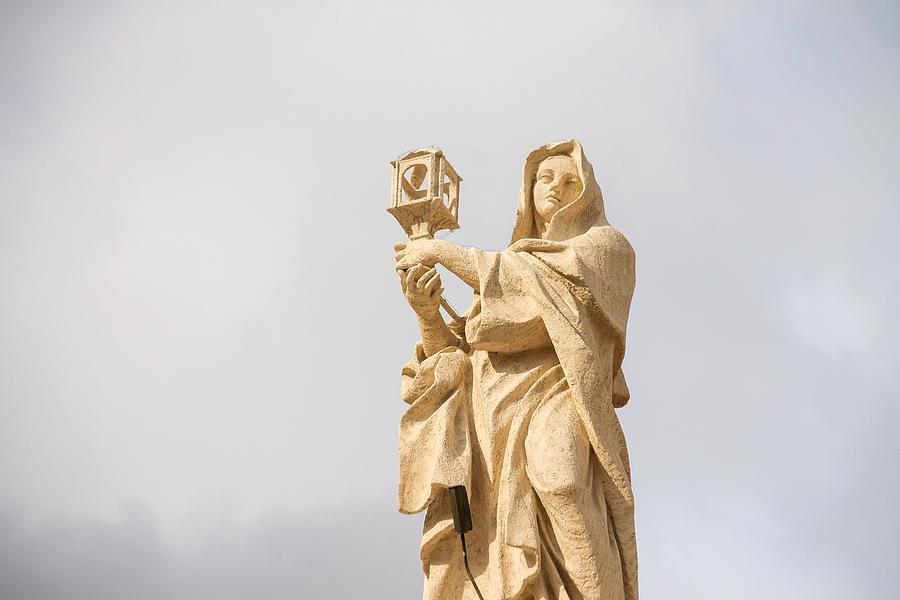
    st clare statue as she is holding a lamp with a white background

    “Look closely, I say, to the beginning of the life of this admired one, indeed at the poverty of him who was wrapped in swaddling clothes and placed in a manger. O marvelous humility! O astonishing poverty! The King of the angels, the Lord of heaven and earth is laid to rest in a manger!” – St. Clare of Assisi, Fourth Letter to Agnes

    Two years ago, I was received into full communion with the Catholic Church as Advent began. I chose St. Clare as my confirmation saint for reasons that were largely intuitive at the time because of my previous community service experiences with Franciscans. Having gained more perspective since then as both a new Catholic and a young parent, I’ve found Clare’s devotion to simplicity particularly fitting to keep in mind as we approach the season of giving and gratitude. 

    Our culture often romanticizes generosity around the holidays by doing too much of everything. With small children, I am often confronted with temptations to maximize every moment, develop new traditions, and create picture-perfect memories. Instead, by embracing St. Clare’s example, I’m able to reconsider how to live generously in ways that are truer to the spirit of my faith’s humble Christian origins.

    RELATED: How to Make Friends With a Saint

    Clare knew these origins well; she contemplated them in solitude and encouraged others to do the same whenever she could. As I have grown in my faith the past two years, I have tried to learn more about Clare in order to discover how to integrate her example into my own life. Her original writings shed light on her devotion to Christ, while others have also written eloquently about her. In one of St. Pope John Paul II’s letters to the Poor Clares, the Franciscan order of nuns that St. Clare founded, he describes her as having a “spirit of poverty” that “emptie[d] her of everything but the simplicity of a gaze fixed on God.” 

    It can be hard to imagine that kind of austere intensity in our current environment. Particularly as we hope to begin to emerge from these dreadful pandemic days, it is far too tempting to make up for lost time in an excess of abundance: more commitments, more gifts, more time away from home. I have had to renew my focus by sticking closely to pre-planned lists and resisting the urge to feel pressured to match everyone else in material generosity. While even the Poor Clares made exceptions for Christmas and other feast days in their otherwise strict observances, their charism is a helpful reminder when we find ourselves biting off more than we can chew by the time we move into December. 

    LISTEN: Saints of Our Lives: Saint Clare of Assisi

    How did Clare keep her gaze on what she saw as the only thing that truly mattered? By never looking away from where the Christian faith began. In her writings, she frequently discussed the Christ Child and Mother Mary. In them, she saw the heart of the Christian life that could best be nurtured through constant prayer and focus, ultimately hoping to become a “mirror” that reflects “eternity.” Both her Rule and Testament and her letters to Agnes demonstrate an unwavering focus that enabled her to use her time as effectively and efficiently as possible. Because of this single-mindedness, the Poor Clares were able to serve their community far more than we might naturally assume. Clare’s physical separation from the outside world did not prevent her from helping those in need; instead, by seeing her vocation as a gift, she was able to offer herself as a gift to others in a fully authentic way through prayers and even healing. Most famously, her devotion to the Blessed Sacrament once saved her Sisters from an invading army

    These insights into Clare’s life again bring us back to Mary, our Mother — a fitting focal point as Advent approaches. Mary knew well what it meant to empty herself for the sake of Jesus and, ultimately, for the world. Through Clare’s example, I am humbled by the reminder that the spirit of Advent can serve as a sort of ongoing spiritual compass for our entire lives as Christians, looking to Our Mother and the Son of God and their patient endurance as constant models for how to grow ever more consumed by their guiding light.  

    RELATED: Patron Saints for Introverts

    And so now, we prepare to wait also for Christ. We gaze upon his face as Clare did, awestruck as ever that God chose to become man. What better time to be reminded that that is all that ever matters? As we approach the season of waiting and giving, we can keep these truths in mind to guide our hearts toward generosity. We can let go of the impulse to do too much and forgive those who do not know how to do otherwise. When relatives give my young children far too many presents, I can try to see the grace that’s intended instead of allowing myself to feel weighed down with the constant pull of stuff. I can make an effort to bake cookies for gifts and write my thank you notes before Valentine’s Day, grateful for the chance to return the love I have received. In all things, we can seek Clare’s “holy simplicity” wherever we go.

    Originally published November 11, 2021.

  • 2024 InstaAdvent Photo Challenge

    2024 InstaAdvent Photo Challenge

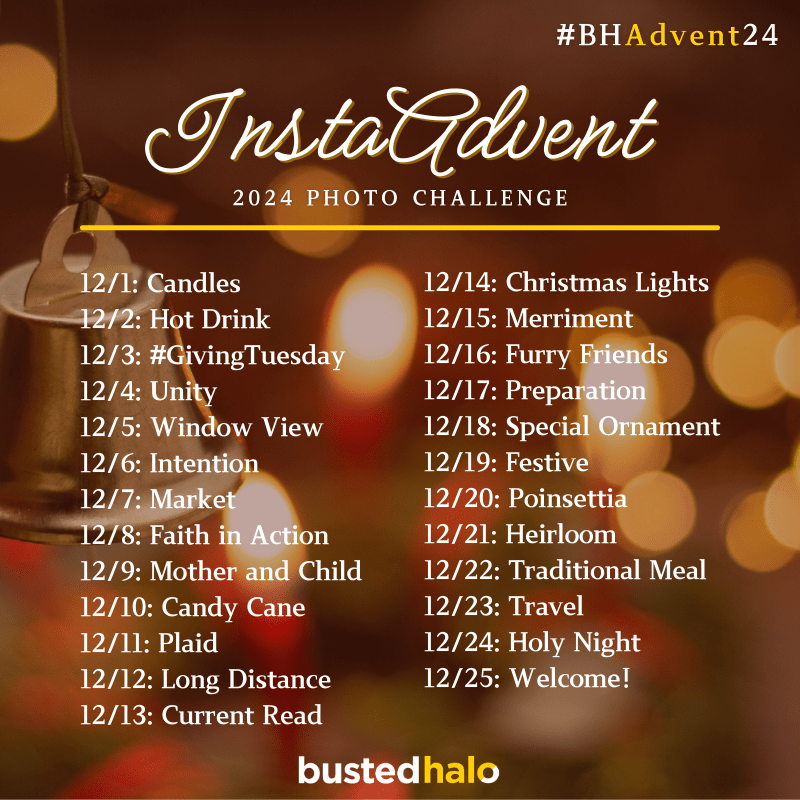
    Our InstaAdvent Photo Challenge is back! Advent is a time of anticipation and waiting for the birth of Jesus. There’s so much wonder and love in the air! So, join us in Busted Halo’s InstaAdvent Photo Challenge! Post a photo every day during Advent and stay connected to the hope, joy, and occasional candy cane that make this time of year so special. It’s the season of giving, so we’ll be giving away prizes each week!

    How do you participate?

    • Share our InstaAdvent image on Instagram so we know you are participating in the challenge!
    • Take a pic following our theme of the day and tag #BHAdvent24 and @bustedhalo on all your posts!
    • If you’re not on Instagram, no worries! You can still participate in the fun by uploading your Advent photos to Twitter or Facebook, using the hashtag #BHAdvent24, and mentioning @bustedhalo.

    We can’t wait to see your photos! Have a blessed Advent journey!


    Busted Halo Advent Photo Challenge

  • Virtual Remembrance Retreat

    Virtual Remembrance Retreat

    With All Souls’ Day, November 2, Catholic parishes and other faith communities begin a month-long remembrance for all who have died. In the same spirit, we share this retreat as a way to remember the people in your life who have died. This virtual retreat offers a chance for you to reflect more deeply on what they have taught you, as well as an opportunity to offer thanks and determine how their legacy will guide your life going forward. Click here to open/download a PDF of the retreat.

    Getting started

    Many faith communities have a Book of Remembrance in which people are invited to write the names of those who have died.

    Begin your retreat by writing down the names of the people you would like to remember. In order to not overwhelm yourself, list no more than five names per retreat. Write these names in your journal, on a writing pad, or on a small note board so they remain visible to you for a few days. Next to each name, write a two-word description of that person. No more than two words for now, you can write more later if you’d like.

    Here’s an example:

    Michael Davis – faithful friend.

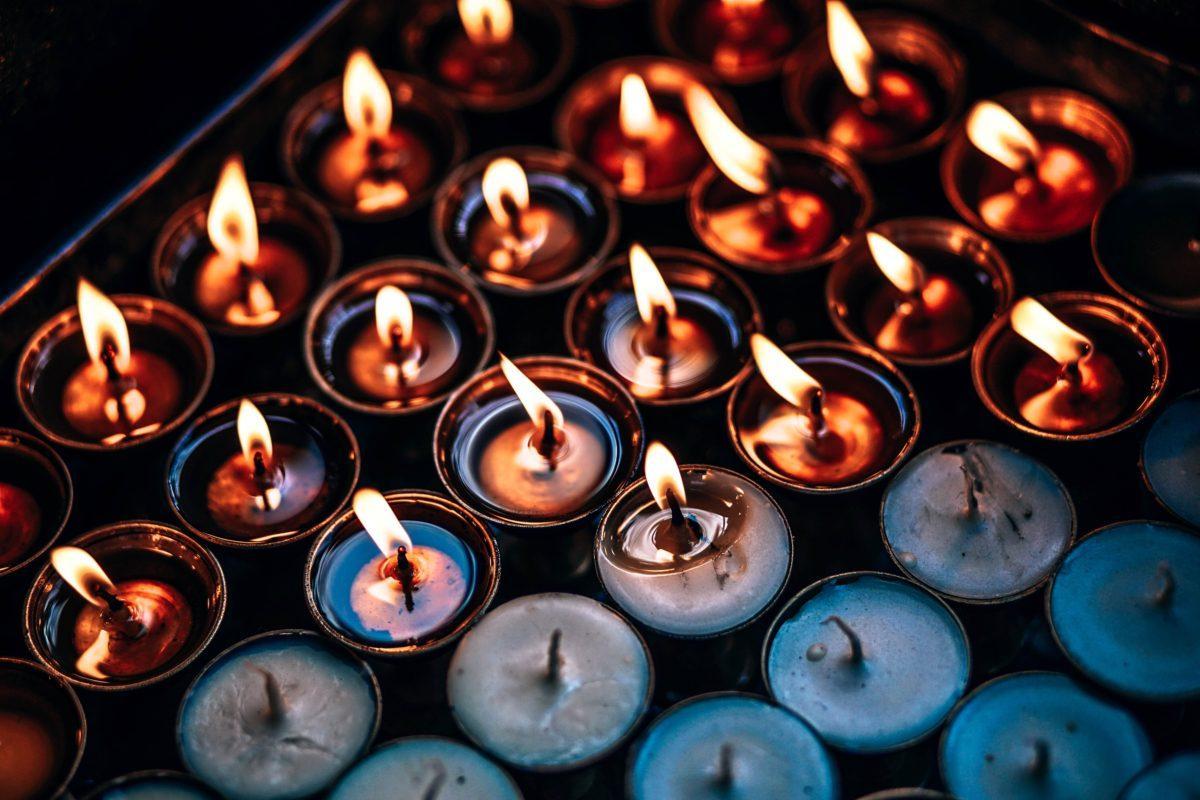
    Finally, light a candle in memory of the one(s) you have named as a sign of hopefulness

    Prayer (based on Numbers 6:24-26)

    “The Lord bless you and keep you! The Lord let his face shine upon you, and be gracious to you! The Lord look upon you kindly and give you peace!”

    Gracious God, Author of Life and Victor over Death, at this time of remembrance, I ask that you continue to bless and keep (say the names you listed above) who are now at rest in death. Smile upon them and give them your grace. Please continue to bless and keep me as well as any who were a part of their lives. May their rest be peaceful as you show them your kindness. Through Christ our Lord, Amen.

    Giving thanks

    For each person that you’ve listed, speak or write something about that person for which you are thankful.

    Reflection

    Based on your relationship with each person you have named, select one of the four ways below to reflect more deeply. Your reflection will be structured as a conversation for you to have either with the person you have named, with yourself, or with God. Conduct the conversation as you wish (writing, speaking, praying). Go at your own pace and challenge yourself to move a bit beyond your comfort zone for the sake of healing, integrity, and insight.

    “I am still grieving over you.”

    • Talk about what you are feeling specifically at this stage of your grieving.
    • Talk about what you are doing to cope with your grieving. What support do you have?
    • Talk about what you hope for in the midst of the grieving.
    • Pray for comfort in this time of grief.

    “I really need/want to let go of something concerning you.”

    • Talk about why you need or want to forgive the person you have named.
    • Talk about what you are doing to help you let go. What support do you have?
    • Talk about any insights you have gained that might explain why the person you have named hurt or offended you.
    • Make a statement of your intention to let go and move on.
    • Pray for the strength to show mercy.

    “I wish I could have said this to you.”

    • Talk about what the person you have named means to you.
    • Talk about what specifically you wanted to say to them and why.
    • Talk about what you hoped for in your relationship with the person you named.
    • Pray for your peace of mind and heart.

    I hope you are at peace.”

    • Talk about what the person you have named went through.
    • Talk about what you hope the person experiences in this time of rest.
    • Talk about how your perspectives and outlooks have grown in virtue because of knowing the
    • person you have named.
    • Pray for a peaceful rest for the person you have named.

    Legacy

    Here is an opportunity for you to mention what the person you have named has taught you and what you would like to carry forward in your own life. Use the guidelines below for creating your legacy statement:

    In the course of their life, (names from above) taught me to ___________. In gratitude and hope, I plan to live out their lesson by ___________, with the help of God.

    Closing prayer

    Excellent Lord, you are the God of the living and of the dead. In the moment of remembering (names from above) who have died, I take this time to commend so many who have died to your loving care. Especially remember those who have died alone, children who have died, those who have died from disease and poverty, and those who have died as a result of war or violence. May they truly rest in peace.

    For the ones who loved them, give comfort. Let them know your loving care through your presence and the presence of friends and community. May those who are grieving be touched by tangible expressions of consolation and support.

    God, in your grace, show those who have died your loving mercy. And, in your wisdom, let their legacies help us live better lives. Amen.

    Conclusion

    Here are a few suggestions for your ongoing remembrance:

    • Write the names of those you are remembering in your parish’s Book of Remembrance.
    • Light a candle in a church for the ones you have named in this retreat.
    • Create a page in your journal for each person you have named. Add photos and even funeral programs to your entries.
    • Use the legacy portion of this retreat with others. Plan a time with family or mutual friends to celebrate and remember the legacy of the deceased.


    Originally published on November 1, 2017.

  • Encouragement for Caregivers: 6 Bible Verses to Give You Strength for Your Care Giving Journey

    Encouragement for Caregivers: 6 Bible Verses to Give You Strength for Your Care Giving Journey

    In the year 2001, my father was diagnosed with progressive supranuclear palsy, (a degenerative condition similar to ALS), and my mother became his caregiver until he passed away seven years later. Although she did it lovingly and willingly, caregiving was also emotionally and physically demanding. Recently, I’ve taken on more of a caring role with my mother, and I now understand the difficulties even better.

    When a caregiving situation continues for weeks, months, or even years, it’s challenging.

    I’ve become very aware that I don’t feel strong enough to handle the physical and especially the emotional demands of caregiving. I’d like to say I’ve always stayed positive and full of faith, but in reality, I’ve sometimes found it hard to keep going. I realized that I needed to learn to rely more fully on God to help me cope.

    So, I’ve taken intentional steps to encourage myself and to keep communication lines with God open. Specific verses in my daily Bible reading sometimes jump out at me. Verses that remind me how much God loves me or promises that he will strengthen and protect me whatever the circumstances are hugely encouraging. But in the rush of everyday life, it’s easy to forget, so I’ve been exploring ways to bring them to mind when I’m busy or feeling overwhelmed.

    RELATED: 5 Creative Ways to Pray for Others

    I organize uplifting worship songs into playlists so I can listen to them while I’m cleaning or doing the laundry. I draw or stitch Bible verses onto bookmarks, so I see them when I’m reading. Sometimes, I write out reassuring scripture on small cards or sticky notes and carry them round in my pocket to take out and read throughout the day.

    It’s not about telling myself how I should feel, but more about acknowledging my true feelings to God and looking to him to help me find a way through the difficult times. I hope you find these verses encouraging too.

    1. When things feel overwhelming

    When your loved one gets a serious diagnosis and you don’t know what the future holds, it’s easy to feel overwhelmed. But sometimes it’s just the myriad of day-to-day tasks that seem overwhelming, so it helps to remember that God is our strength. When I’m in this situation, one of my favorite verses is Psalm 3:3 “For You, O Lord, are a shield about me, my glory and the lifter of my head.” Listen to this uplifting song based on Psalm 3:3 by the Brooklyn Tabernacle Choir.

    2. When you’re afraid

    When you’re faced with the suffering of a loved one, or the possibility of living life without them, the future can seem very dark. We all prefer to know that things will be OK, but God never promised us that life would be easy, only that he would always be with us. I’ve taken great comfort from Isaiah 41:10: “Do not fear: I am with you; do not be anxious: I am your God. I will strengthen you, I will help you, I will uphold you with my victorious right hand.”

    3. When you’re worrying about the future

    Perhaps you’ve got a hospital appointment tomorrow, or you’re wondering who will look after your disabled child when you’re gone? You’re not sure how life is going to pan out. At times like this, I try to remember that God has already gone before me and has promised to be with me — no matter what. Deuteronomy 31:8 tells us “It is the Lord who goes before you; he will be with you and will never fail you or forsake you. So do not fear or be dismayed.”

    4. When you’re feeling lonely

    Caregiving can be lonely. You may be confined to the house with little opportunity to go out or spend time with others. If like my father, your loved one becomes unable to speak or respond to you, it’s easy to feel terribly alone. But God is omnipresent – with us every moment of the day and night (and sometimes nights are the most difficult). We only need to reach out and God’s there. This sentiment is affirmed in Psalm 46:2: “God is our refuge and our strength, an ever-present help in distress.”

    5. When you’re experiencing doubt

    There may be moments in the midst of caregiving when we begin to doubt that God loves us and wants the best for us. In troubling situations, it can be easy to focus on the circumstances around us and not on God’s faithfulness to us. But Jesus was kind to those who doubted and didn’t accuse or blame them. When Thomas doubted the truth of his resurrection, Jesus allowed him to touch the wounds and see for himself (John 20:24-29).

    When I’m feeling full of doubt, I remind myself not to rely on my own understanding but to trust in God: “Trust in the Lord with all your heart and lean not on your own understanding. In all your ways submit to him and he will make your paths straight.” (Proverbs 3:5-6)

    6. When you are weary

    Caregiving is physically demanding – you may be nursing someone who’s sick or disabled,  or lifting a child constantly. Just staying on top of the cooking, cleaning, and laundry can feel totally exhausting, in addition to the emotional stress you’re experiencing. Sometimes, it’s not easy to get as much rest as we need, and at times like these, I rely on God to give me strength. In Matthew 11:28-30, Jesus urges us to come to him when we feel weary. I also love the image of an eagle rising above the storm in Isaiah 40:29-31: “They that hope in the Lord will renew their strength, they will soar on eagles’ wings.”

    Caregiving can feel all-consuming, and at times, we may feel inadequate for the task. But placing daily reminders in my path reassures me of God’s presence and helps make the task feel less daunting.

    (Originally published November 15th, 2017)

  • Boo! 5 More Spooky Saints to Help You Celebrate Halloween

    Boo! 5 More Spooky Saints to Help You Celebrate Halloween

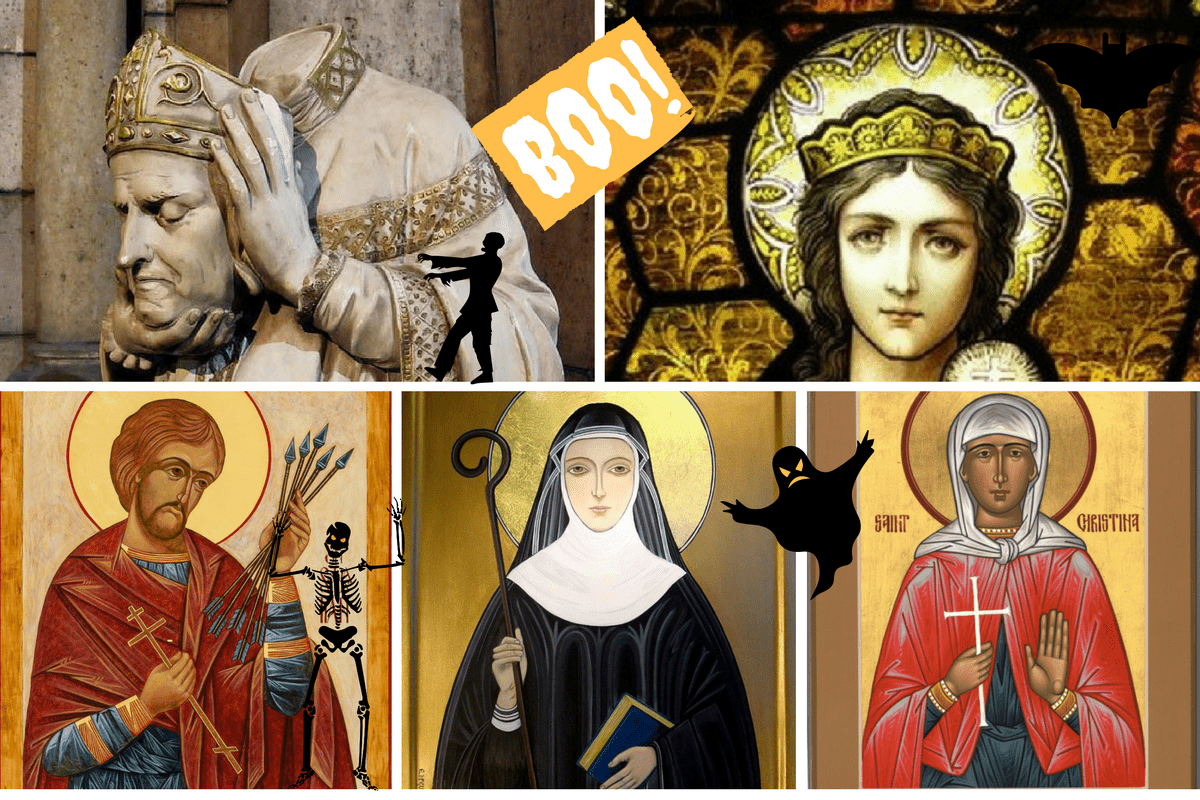
    Halloween is just around the corner! Usually, we associate this time of year with costumes, haunted houses, and trick-or-treating, but there are other sources of spook! Since Halloween comes just before All Saints’ Day, let’s get to know a little more about five saints with stories that contain a bit of faith and a bit of fright.

    RELATED: 5 Spooky Saints to Help You Celebrate Halloween

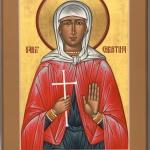
    saint-christina

    1. Saint Christina the Astonishing

    It’s probably safe to say that you’ve never had a travel experience anything quite like Saint Christina. She died at age 21 after a fatal seizure. At her own funeral, she levitated out of her coffin and condemned the people for their sinful ways. As she put it, an angel carried her away to Hell and Purgatory so that she could see what awaited the sinners on Earth. God gave her a choice: either remain in Heaven or return to Earth to live a life of simplicity and charity. Christina chose the latter, but even with her explanation, people still thought that she was a crazy woman.

    Christina would pray high above the trees, pray in the cold river during the winter time, and she would even set herself on fire during fits of agony. Yet she remained unharmed by all the stunts she pulled because of her faith. Truly astonishing.

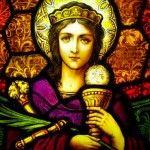
    saint-barbara

    2. Saint Barbara

    The daughter of a rich pagan named Dioscorus, Barbara spent most of her life locked in a tower by her overprotective father. In protest, Barbara secretly converted to Christianity. Enraged by her choice, Dioscorus decided to let his sword do the talking. But before he could kill her, Barbara was saved by a prayer for salvation and a magical portal that transported her out of the tower.

    But Dioscorus caught up with her, and Barbara was captured and tortured. Because of her faith, her wounds would miraculously disappear. Dioscorus eventually had enough of her trickery. Barbara was beheaded. Dioscorus thought that he had the last laugh, but he was struck by lightning and consumed by flames. This legend led to Barbara becoming the patron saint of fire and explosives.

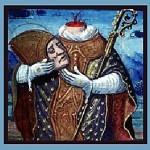
    hi-res-saint-denis

    3. Saint Denis

    Saint Denis was the Bishop of Paris in the third century and tasked with converting people throughout the region. Denis was exceptionally good at his job, which annoyed the local pagans who saw him as a threat. They called for the arrest (and the heads) of Denis and his missionaries.

    Beheadings tend to put an end to most people’s ambitions (See Saint Barbara), yet like any good workaholic knows, there is always more work to be done. After being decapitated, Denis reportedly picked up his own head and walked six miles, delivering a sermon the entire way. Ironically, Saint Denis is now known as the patron saint of headaches.

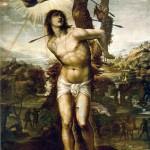
    saint-sebastian

    4. Saint Sebastian

    Is there such a thing as a zombie saint? Consider the case of Saint Sebastian, a Roman Christian in the third century with an impressive record of converting almost anyone who encountered him — from a mute woman who regained her ability to talk after she became a Christian to a young man named Tiburtius who would later become a saint himself.

    But not everyone was impressed with Sebastian, and he was sentenced to death by firing squad. After archers left Sebastian for dead, one of his followers went to find his body and discovered that he was still alive. When he recovered, Sebastian appeared before the emperor and condemned him for his treatment of Christians. Sebastian was then beaten to death by the emperor’s guards and thrown into the sewer. Afterward, one of Sebastian’s followers had a vision of Sebastian telling her the location of his body. Talk about a ghost story.

    saint-scholastica

    5. Saint Scholastica

    We’ve all had those great conversations with people that we just didn’t want to end. Saint Scholastica took it to the next level. She enjoyed having long talks about sacred texts with her twin brother, Saint Benedict. One day, they had supper together and when Benedict was ready to leave, Scholastica asked him to stay so they could continue to talk. Benedict refused, insisting that he needed to go. At that point, Scholastica closed her hands in prayer, and out of nowhere, a wild storm occurred outside of the house. Benedict asked, “What have you done?” to which she replied, “I asked you and you would not listen; so I asked my God and he did listen. So now go off, if you can, leave me and return to your monastery.” Benedict was out of luck that evening and had no choice but to stay with his sister. Better luck next time, Benedict.

    These spooky stories are strange enough to give Stephen King a run for his money, so be sure to add them to your list of essential Halloween tales.

    Originally published October 30, 2019.

  • Faith and Politics: Navigating an Election Season as a Catholic

    Faith and Politics: Navigating an Election Season as a Catholic

    With the 2024 Presidential election just around the corner and political tensions higher than ever, Busted Halo acknowledges that this can be a difficult time for Catholics as they decide on a presidential candidate. As Catholics, our faith helps us sort out the many complicated issues we face during an election and leads us to an informed decision about which candidate to vote for. 

    We hope these resources might prove helpful for you and your loved ones during this time, and we’ll keep all of you in our prayers as you seek to inform your conscience, discern, and cast your ballot. 

    Voting Catholic (Video)

    Father Dave reflects on the core principles of Catholic Social Teaching that should serve to inform the consciences of Catholic voters before they head to the polls.

    Practicing “Civic Discipleship” This Election Season With Fr. Bryan Massingale (Podcast)

    When forming our consciences this election season, Father Bryan notes, “I think sometimes we have this understanding, even among Catholics, that politics and faith should not meet at all; that is not at all what we believe as Catholics. But as I tell people, when Catholics enter the political arena, we don’t bring partisan values to the conversation – we bring Gospel values to the conversation.”

    Can a Priest Tell Me Who to Vote for? (Podcast) 

    Father Dave discusses the difference between a priest informing his congregation on relevant issues and the outright endorsement of a political candidate, as well as the guidelines that priests are called to follow during the election season.

    Dr. Charlie Camosy: Pro-Life Voters Are Politically Homeless (Podcast)

    For those feeling anxious about voting or the outcome of this election, Dr. Camosy says, “These political decisions are not without weight and gravity. They are important, but at the end of the day, our ability to be authentically Catholic and to say, ‘I’m a Catholic first, and a political actor second. I don’t filter my faith through my politics, but rather the other way around.’ That becomes way more important, especially if we have our ultimate home [of heaven] in mind.”

    How To Talk to Those Who Disagree with You—and Still Love Them (Article)

    “Our nation is deeply divided. But having conversations – no matter how small – can help narrow the divide, bring healing through understanding, and make our communities and country stronger. And that’s a real win.”

    Fatherly Advice: Dealing With Political Division (Podcast)

    Political division is prominent in our country today, but maintaining one’s dignity as a Catholic is of the utmost importance. Father Dave shares how to navigate this tense time with patience and compassion for others, especially those with whom we disagree.

    Voting as a Catholic (Podcast)

    Catholic voters must carefully consider a number of issues before deciding which political candidate would be best for the country. Father Dave reflects on these issues…

    Bishop John Stowe on Catholic Voting (Video and Podcast)

    Bishop John Stowe joins the Busted Halo Show to discuss the “womb to tomb” approach to being pro-life and the implications it might have on voting as a Catholic.

    Keeping the Faith during Election Season (Facebook Live)

    Father Dave discusses how you can make important faith-based decisions about voting and relationships during the election season.

    More Resources: 

    Forming Consciences for Faithful Citizenship (USCCB) 

    The United States Conference of Catholic Bishops offers a number of resources on how Catholics can engage in politics responsibly “by offering the best of themselves so that the leader can govern,” in the words of Pope Francis.

    Prayer Before an Election (USCCB)

    This prayer published by the United States Conference of Catholic Bishops asks God for the guidance and discernment to navigate the challenges of this election season while staying true to the Catholic faith.

    Originally published October 15, 2020.