Category: Life & Culture

  • The Radiance of Mary: How Lippi’s ‘Adoration’ Deepened My Faith

    The Radiance of Mary: How Lippi’s ‘Adoration’ Deepened My Faith

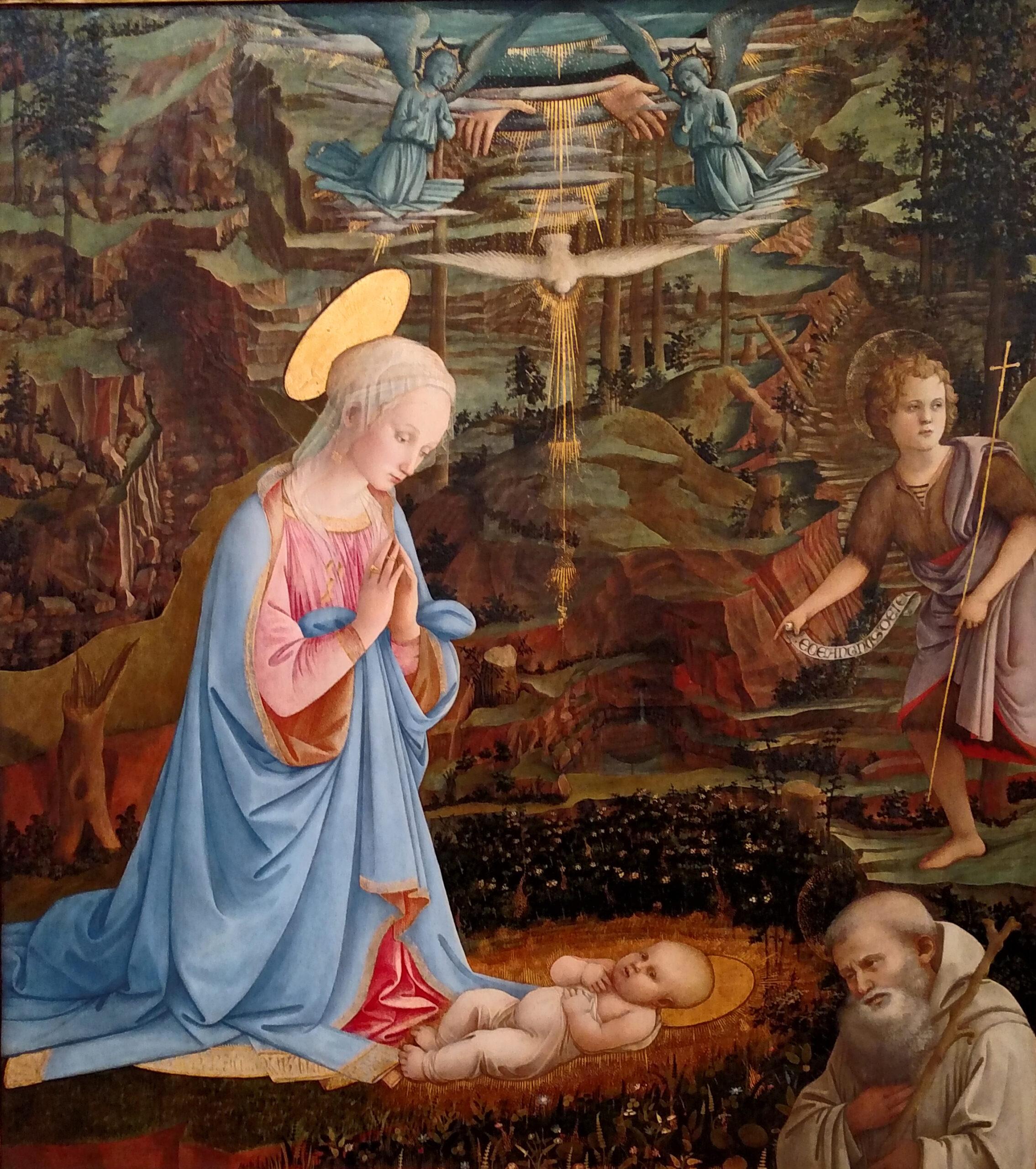
    As I marched through the Uffizi Gallery, I could see how, as the Renaissance progressed, artists made the figures in their paintings less like icons and more like human beings.  Suddenly, I found myself looking at a painting of a very real, very young woman. She was kneeling in a dark wilderness. Her hair and face were radiant. I first thought this was an anachronism, like the blue-eyed, blond Jesus of a certain era of popular art. Then I saw what better observers have seen. She was suffused with light. We say every Sunday, “God from God, Light from light…” The girl had been given the same gift of light — light nourishing, pure, powerful. Even her blue robe was richer and brighter than any earthly fiber.

    The 1463 painting is “The Adoration of the Christ Child” by Filippo Lippi. In it, Mary’s delicate features mixed tenderness, awe, and astonishment. Her hands are clasped together gently in prayer; her slender fingers seem to be on the verge of trembling. She is looking down at her newborn boy, lying exposed on the ground. I recalled the shock I felt 38 years ago when I first realized my wife and I were in charge of an utterly helpless child who was more precious than anything we had ever imagined. In the painting, moreover, there is no stable, no St. Joseph, no Magi, no shepherds. There are only two other people pictured: St. John the Baptist, in the form of a young boy, and the founder of the monastery for which the painting was commissioned. 

    RELATED: Art and Adoration: How Artwork Opens My Eyes to God’s Handiwork

    Mary’s look is full of awe and love, but awe can bring bewilderment, and love always brings vulnerability. I imagine from her expression that she sensed, even before a wise old man told her, that “a sword will pierce even your own soul.” Her faith was not daunted, but neither was her pity lessened. She had been given the greatest gift, and the deepest anguish. At the same time, the painting reminds us that, even as she kneels in this dark wilderness, she is accompanied by the greatest of powers. At the top is the Father, indicated by a pair of hands. The dove of the Holy Spirit dives down, blazing with the Holy Spirit. She will never be alone, even when she seems to be. 

    Seeing the painting in Florence, Italy on a trip last summer, I was reminded that art can be as powerful as words in conveying truth. The painting underlines the way God’s work has made us more deeply and truly human. Before Lippi and his peers came on the stage, art was about gods and goddesses, kings and queens. Then, artists began to see the glory in ordinary people. This reflects how the Lord has selected otherwise ordinary people, such as Abraham and Ruth, to change the world. The summit of this was his anointing of a young girl in an obscure Middle Eastern land to be the Queen of the Universe.

    RELATED: What Is the Solemnity of Mary?

    It’s a reminder that the Blessed Virgin Mary was a girl who had been visited by a messenger from God with news that 2,000 years later still baffles many. Pregnant, she traveled with her husband in a land troubled by foreign occupation and simmering unrest to give birth far away from her family. We rightly are in awe of the Queen of Heaven! Let us also take heart from the brave, young woman in this painting, and remember that great things can also come to ordinary people like us, with all our cares, troubles, and needs.

    Finally, let us remember that inspiration can strike even when we least expect it. You might think that being in one of the world’s great art museums would have primed me to get the most out of paintings. However, we had spent the previous week of our trip in Rome, where we trudged past miles of paintings and sculptures. Then the Uffizi welcomed us with art on every wall and the ceiling too. As guidebooks and more experienced travelers had warned, I had reached a point where I didn’t think I could absorb anything new about sacred art. I was half-wishing I could see one of those paintings of dogs playing poker, just to rest my overloaded brain.

    RELATED: Using Art as a Path to the Holy Spirit

    Promptly, I was confronted with Lippi’s painting of Mary glowing and grieving, foreseeing joy and wonder, yet accepting also toil and sorrow. It’s a reminder that experiences of the sacred can break through anything that weighs you down, from boredom to despair. And, of course, this need not happen in a world-famous museum. One day, after returning home, I took a walk around a lake near my house. The day was so gorgeous and the park so quiet that for once I turned off my phone and just welcomed the quiet. I looked at the blue sky and the sunlight on the leaves. It was my final realization: There are sacred masterpieces all around us.
  • 5 Unique Nativity Characters From Around the World

    5 Unique Nativity Characters From Around the World

    We all know who was at the Nativity.

    Actually, let me correct that: We all know who we agree was at the Nativity. The Gospel accounts differ (Mark and John don’t mention it at all), but there are characters who traditionally appear in Nativity scenes at our churches and homes. There’s the Holy Family, obviously. Shepherds, sheep, a donkey, an ox. At least one angel. The Three Magi might be there, but they also might not appear until the Epiphany. (Of course, there’s also some contention about whether or not Jesus should appear in the manger before December 25, but let’s not get into that.) 

    Each of these characters tells us something about the meaning of Christmas and the impact of the Incarnation on human history. That’s why I find it fascinating that other cultures around the world sometimes choose to add new characters to this familiar scene. Just like the figures we’re used to seeing, these characters reveal important insights about the Nativity. 

    RELATED: The Netflix Children’s Movie That Draws Us in to Christ’s Nativity

    Learning about them has introduced me to new ways of contemplating the Christmas story, and deepened my appreciation for the global diversity of our faith. I would like to share some of them with you here, both to invite you to a new perspective and, perhaps, to inspire you to make some additions to your own Nativity set.

    The pastori (Italy): Naples, Italy, is famous for its detailed and populous Nativities, which place the birth of Christ among scenes from 18th century Italian country life. These scenes are filled with pastori (literally, “shepherds”), figures representing ordinary people: bakers, farmers, merchants, fishermen, barmaids, musicians, and others. Sometimes they are satirical or humorous, for instance, the dozing shepherd Benino, who misses the angel’s summons. But in all cases, they remind us that the sacred exists side-by-side with the mundane and that Christ was born among everyday, working people.

    The devil (Mexico): Probably the character you’d least expect to see at the Nativity! In many Mexican Nativities, the devil appears, often carrying an object of temptation (a bag of money, or a bottle of alcohol). Like a skull in a Renaissance painting, his presence reminds us that evil exists even alongside the joy of the Nativity. But it also calls to mind Christ’s ultimate victory over sin and death. Sometimes the devil appears as an old man, standing by St. Joseph; in those cases, he is the tempter, trying to sow doubts about Jesus’ virgin birth and convince Joseph to abandon Mary. Joseph, of course, gives him the cold shoulder.

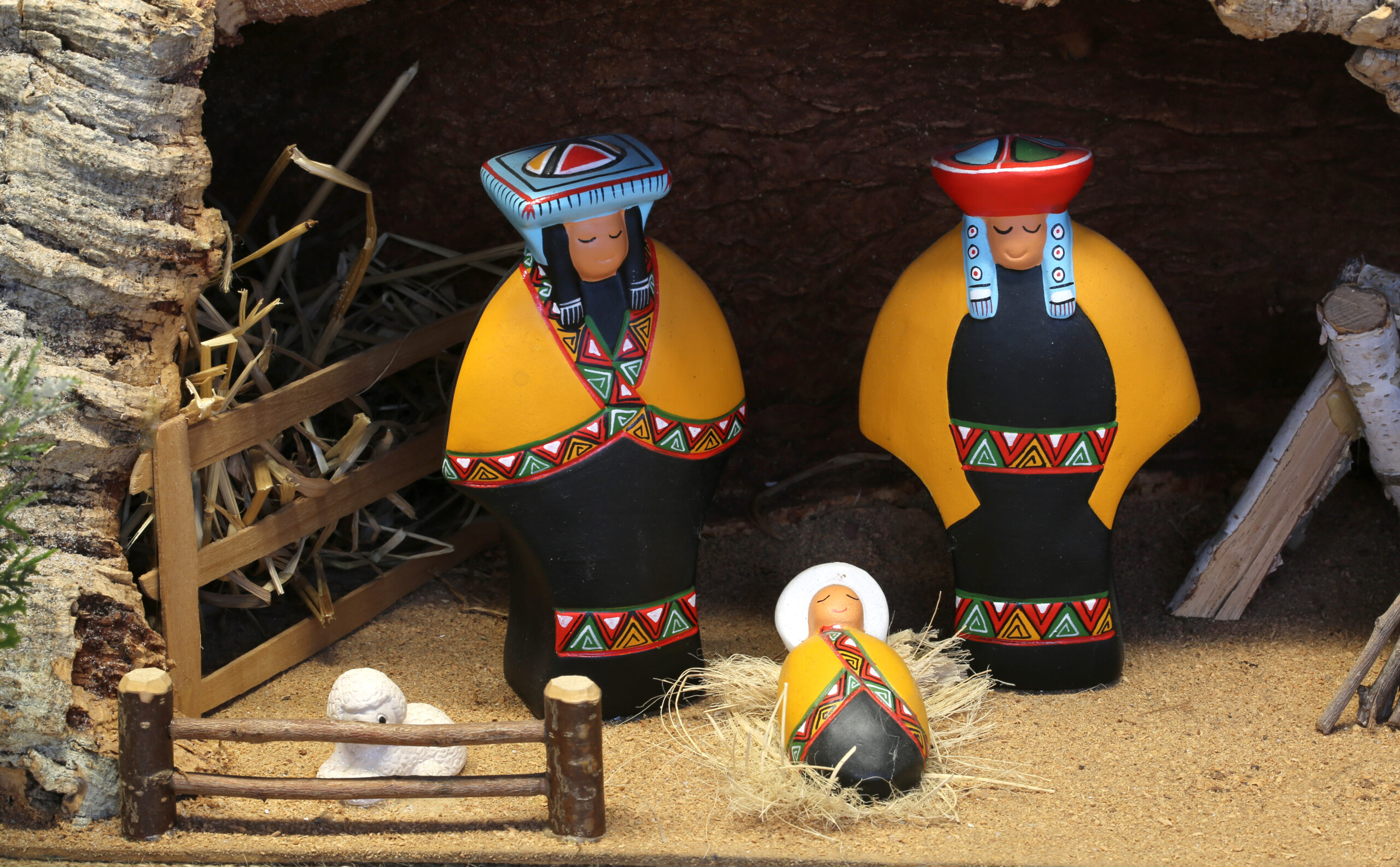
    Local wildlife (Worldwide): Different cultures will sometimes put their stamp on the Nativity by including local animals alongside (or in place of) the traditional donkey, ox, and sheep. There are indigenous North American Nativities featuring foxes, moose, and beavers, Southeast Asian Nativities with water buffalo and elephants, and African Nativities with zebras and lions (like this example, which also imagines the human characters wearing traditional local clothing). Like the animals we are used to seeing, these regional additions remind us of the humility of Christ’s birth and God’s love for all of creation. 

    RELATED: Recast Your Christmas Story

    The Caganer (Spain): In Catalan Nativities, you may notice a man clad in a white shirt and a floppy red peasant cap. Although, you’ll likely notice him because of what he’s doing: squatting and defecating on the ground. This is El Caganer (literally: “The Pooper”), a humorous figure popular in Spain and some other regions of Europe. He serves the same purpose as the Neapolitan pastori, illustrating how the Incarnation brings together the sacred and the profane. Sometimes our vision of Christmas becomes too sanitized, with its glowing beatific baby Jesus. The Caganer reminds us that Christ came into a world of dirt, mucus, mold, sweat, and, yes, poop. That same, messy world is where we still meet him today.

    Kneeling Santa (USA): In America, Christmas is often caught between the secular and the sacred, and no figure better embodies that dichotomy than the Kneeling Santa. These figures depict Santa Claus genuflecting before the manger, adoring the Christ Child. The website of the Catholic Company, which sells a variety of Kneeling Santa items, describes him as a “combination of American culture and tradition without sacrificing deeper religious reverence.” While it can seem a little goofy, there’s also something nice about this attempt at compromise in the Christmas culture war: respecting local traditions while still testifying to the spiritual heart of the season.

    What I appreciate most about all of these characters is that they help me see the Nativity from a new perspective. They remind me that, even in a story as ancient and familiar as the Incarnation, there is always more to discover.

  • ’A Christmas Carol’ Conversion: What Scrooge Teaches Us About Reconciliation

    ’A Christmas Carol’ Conversion: What Scrooge Teaches Us About Reconciliation


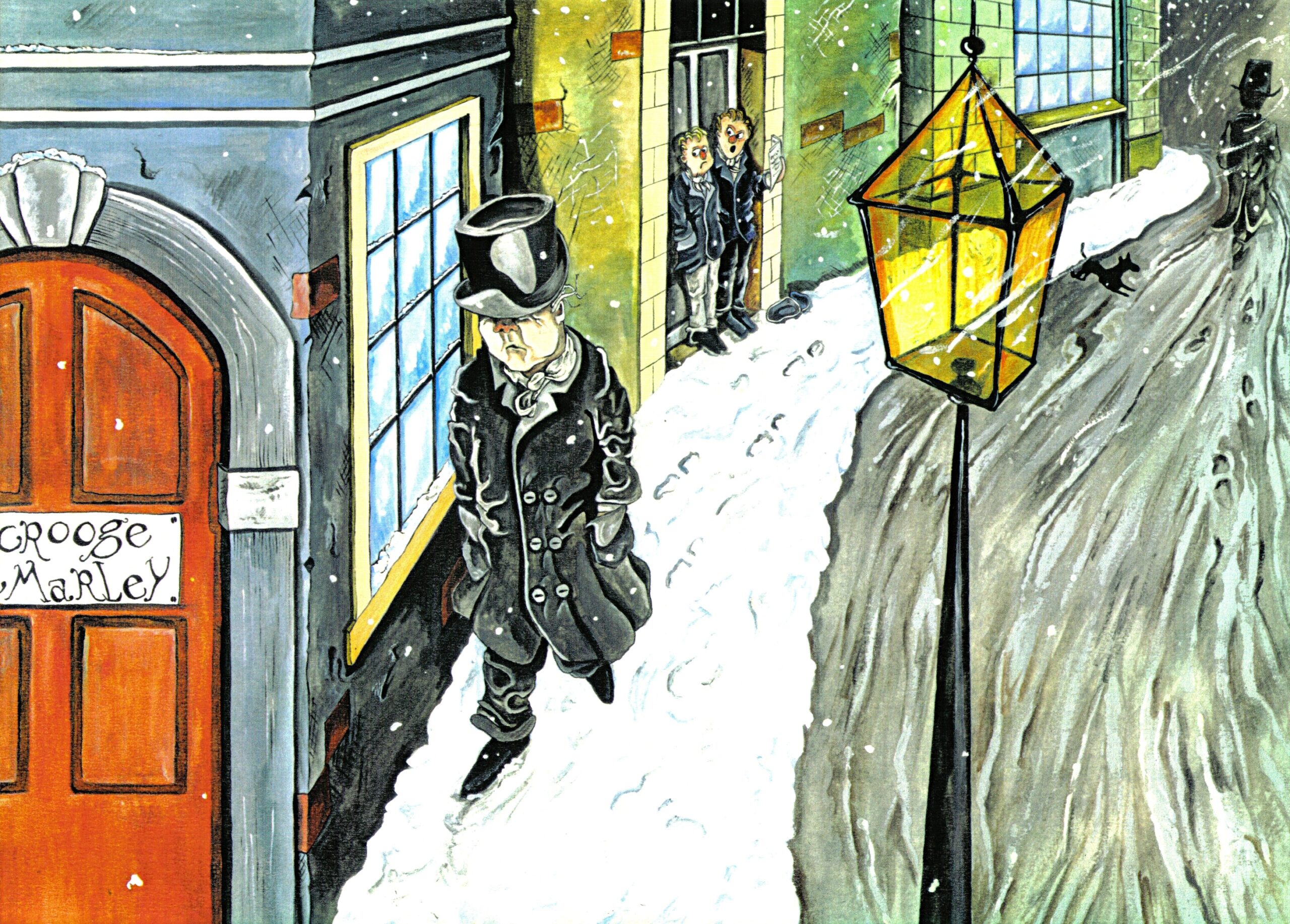
    Whether it’s the original novella by Charles Dickens or one of its many screen adaptations, “A Christmas Carol” is enshrined in my mind as a holiday staple. Why shouldn’t it be? Like the songs of the season remind us, Christmas is a time for telling “scary ghost stories and tales of the glories of Christmases long, long ago.” That is what Dickens’ book is – a dramatic event filled with encounters with haunting spirits that, when all is said and done, convince Ebenezer Scrooge of the unrighteousness of his deeds and the need to turn his life around.

    Jacob Marley, Scrooge’s deceased business partner, visits him and kickstarts the series of events that lead to a change in the protagonist. Marley’s chains shaken so horrifically are a symbol of his sins. He reminds Scrooge that he, like us, has sin in his soul – a ponderous chain, but through repentance and change, Scrooge’s unhappy fate can be sponged away. Because this Christmas classic deals so acutely with morality, it is no surprise that we can find in Scrooge’s conversion allusions to Reconciliation. In this story, we witness Scrooge’s sorrow, desire to amend his life, and penance for his misdeeds.

    WATCH: Sacraments 101: Penance

    The parts of Reconciliation

    The Sacrament in which Jesus ordinarily forgives sins is commonly referred to as Confession, Reconciliation, or Penance. While the terms are often interchanged, they really refer to different steps we take in the Sacrament.

    Confession is what it sounds like: confessing your sins to God through the priest. There is power in naming and denouncing our vices, and God’s grace is working in us and strengthening us along the way.

    Next comes reconciliation, part of which entails being sorry for your sins. If you are not sorry for something, you admit there is nothing to forgive. If we have sorrow (contrition) for our sins, then the priest gives us absolution – God’s forgiveness. Even though the penitent is forgiven, they must still try to make amends for the sin. In an act of contrition before absolution, we express our sorrow for our sins and our intention to amend our lives and avoid future sin.

    Finally, we are given penance to do. Sometimes this will be reciting rote prayers. Other times, it could be some external activity. For example, when I was young, I was supposed to empty the dishwasher as penance for disobeying my parents. Another time, I was told to play the Wii with my brother because it was something he really enjoyed (though I not as much). Entering the confessional takes initiative, and penance takes effort.

    RELATED: 4 Gifts to Give One Another From ‘It’s a Wonderful Life’

    The steps of Scrooge’s conversion

    At the beginning of Scrooge’s adventures, it’s clear that he does not desire this intervention of his own will. His associate, the late Jacob Marley, offers him hope to escape a doomed fate like his own: Scrooge will be haunted by a triad of spirits united in a single purpose – his conversion. At the outset, Scrooge is reluctant. But, as time goes on, he takes initiative and puts in the effort to externally express his reformed interior life.

    The first task of the spirits is to instill guilt or regret in Scrooge. The Ghost of Christmas Past shows Scrooge that he is selfish, that he let the desire for wealth dominate any charity in his life – even toward his lover. In his past, he chose greed over love and commitment. This wonderfully expresses how every sin is self-seeking at the expense of God and others.

    The Ghost of Christmas Present awakens Scrooge to the cold, harsh realities of poverty. When shown the home of his employee Bob Cratchit, Scrooge takes an interest in someone other than himself – the sickly Tiny Tim. The spirit reveals that unless the family’s means change, the boy will perish. A wave of sorrow washes over Scrooge, and the fact that he has a direct impact on this cuts him to the quick. Our actions, for good or ill, have consequences.

    It could be said that Scrooge is now in a state of contrition. His heart is being humbled and softened, ready to take on a new flame and vigor. But, if there was any question as to his resolve, the terror of the Ghost of Christmas Yet to Come makes Scrooge’s conversion a matter of personal, vested interest.

    RELATED: From Humbug to Humble: ‘A Christmas Carol’ Lives on

    As Marley’s chains and foreboding words alluded to, Scrooge’s fate is an unhappy one if he fails to amend his life. The final spirit shows our protagonist his grave, and that no one will mourn his death, leading Scrooge to a frenzied plea with the apparition that culminates in what could be considered an act of contrition if given in a sacramental context.

    “I am not the man I was. I will not be the man I must have been but for this intercourse,” cries Scrooge in the cemetery, glaring at his own name on a tombstone. “Assure me that I yet may change these shadows you have shown me by an altered life!” He proceeds to promise he will honor Christmas in his heart always and allow the three Christmas spirits to strive within him. Before waking to his new lease on life, he raises his hands “in a last prayer to have his fate reversed.”

    To some extent, Scrooge seems sorry for the misery he caused others. To an even greater extent, he was scared to death of a fate worse than fatality. Scrooge’s fear leading him to sorrow and repentance is akin to what is called imperfect contrition in Reconciliation. Imperfect contrition is the fear of punishment (the pains of hell) that our sins deserve. Perfect contrition is sorrow for sin out of love for God and recognizing that sin offends him. Yet, God can use our imperfect contrition to affect his Sacrament in us through the merits of Jesus, whose sacrifice supplies what our hearts lack in perfect contrition. Similarly, the imperfect contrition in Scrooge’s heart leads to a radical transformation for the better.

    Displaying contrition, Scrooge also revealed to the third spirit that his past life was in need of change and that he plans to change it. This is his confession, or admission of wrongdoing. For penance, he makes good on his word and avoids sinning in the future by treating others with charity and taking delight in bringing them joy. He chooses to live what is captured by the popular quote attributed to Mother Teresa: “It is Christmas every time you let God love others through you…it is Christmas every time you smile at your brother and offer him your hand.”

    RELATED: Busted Halo’s Guide to Confession

    Reconciliation

    So can we say Scrooge is reconciled? Is he squared away with God? Well, the effort by Marley and the three spirits certainly offers hope that the future can be altered – just as Scrooge’s life could be altered. Dickens certainly wishes the readers to carry such a hope away with them. The beautiful thing about the Sacrament of Reconciliation is that we are given a guarantee of God’s forgiveness.

    If we are good to our word (to strive against temptations and to do our penance), we have a hope greater than Scrooge’s. We have God’s word for it: “Go in peace. Your sins are forgiven.”

  • Advent Reflection: Simple Devotional Practices to Bring Peace Amidst Holiday Fatigue

    Advent Reflection: Simple Devotional Practices to Bring Peace Amidst Holiday Fatigue

    It seems that every year, the unofficial start of the secular Christmas season creeps up earlier and earlier. Just after Halloween, my husband shared with me how one of his coworkers had already set up their tree and décor because they wanted to “get the most out of the season.” While I often feel the urge to blast my favorite Christmas tunes and pull out the cheerful decorations when I see neighbors and local businesses doing so, my Catholic instincts tell me otherwise

    The Church has given us the season of Advent to awaken ourselves to Christ’s coming and turn our minds from the world’s distractions. When I was younger, before Advent began, my parents encouraged my siblings and me to reflect on what spiritual gifts we could give to the Christ child on his birthday. Through their instruction and the Church’s guidance, I came to see Advent as a time to focus on spiritual treasures rather than earthly ones, helping me understand how these weeks leading up to Christmas are meant to gradually lead us to the birth of Christ. 

    RELATED: 10 Meaningful Advent Traditions to Try This Year

    Though it is difficult to refrain from merrymaking, and sometimes feels Scroogelike to resist, I’ve found great merit in celebrating the Advent season before Christmastide. While the world tells us to indulge in early celebration, the Church invites us to prepare during Advent.

    The Catechism urges us to gird ourselves with a spirit of anticipation, reminding us that, “The coming of God’s Son to earth is an event of such immensity that God willed to prepare for it over centuries” (Catechism of the Catholic Church, 522). The Advent season stands apart as a time to recall the ache and hope of the world for a Savior and look forward to his second coming (Catechism of the Catholic Church, 524). There is a saying that goes, “The greater the fast, the greater the feast,” indicating that sacrifice bears meaning, allowing us to create space for the joy of redemption. By keeping the weeks before Christmas simple, prayerful, and full of hopeful longing, we bear witness to the magnificence of this feast. 

    If you have struggled this year to keep Advent quiet and preparatory, the season is not over. Here are a few ways you can still partake in the preparation during these final weeks.

    Pray the St. Andrew Novena

    While the St. Andrew Novena begins on the feast of St. Andrew, November 30, and ends on Christmas Eve, there’s no reason why you can’t jump into it right now. The beautiful prayer emphasizes the humble reality of Christ’s arrival into the world on a cold dark night in Bethlehem, inviting us to unite our personal petitions to the hour of Christ’s arrival. Here is a link to the full prayer, along with instructions on how to pray the novena. 

    Meditate on the O Antiphons 

    The O Antiphons are verses sung during vespers in the Liturgy of the Hours between Dec. 17 and Dec. 24. Each verse introduces a title of Christ, which can also be found in the well-known Advent Hymn, “O Come O Come Emmanuel.” They give voice to the longing for Christ which Advent ought to rouse, allowing us to declare our need for a Savior. If you don’t have access to the full Vesper prayers, pray and meditate on the O Antiphons themselves and consider singing the appropriate verse from “O Come O Come Emmanuel.” You can find the antiphons, along with relevant Scripture verses and suggestions for meditation here.  

    RELATED: Why I’m Fasting for Peace During Advent

    Fast before Christmas 

    While Lent is often seen as the liturgical season for fasting, the Church traditionally observed another 40-day fasting period beginning after Nov. 11, or Martinmas (the feast of St. Martin), to prepare for Christmastide. While fasting and abstinence aren’t required for Catholics during Advent, they are effective ways to create space in our hearts for Christ’s arrival at Christmas. Whether you choose to abstain from meat on certain days of the week, give up TV, social media or some other pleasure, disciplining our bodies alerts our spirits to Christ’s voice calling us to prepare room for him in our lives. 

    When I was young, one way my family celebrated Advent was to prepare a bed of straw for Jesus. Any time we made a personal sacrifice or did a good deed for another, we cut a piece of yellow yarn to place in the center of our Advent wreath so that by Christmas Eve, Jesus had a warm cradle of “straw” in which to rest. While there is no harm in attending holiday parties or tuning into some Christmas music, let us strive this Advent to embrace a spirit of anticipation rather than indulgence, so that we might fully enter into the joy of salvific redemption during the Christmas season. 

  • Why I’m Fasting for Peace During Advent

    Why I’m Fasting for Peace During Advent

    In 2023, Advent arrived at a time when violence in Gaza was often on my mind. Harrowing news and calls for a ceasefire filled my Instagram feed, forcing me to consider what it would mean to respond authentically to the reality of such suffering. As a Catholic, I knew prayerful self-denial was an option, but I had resisted the idea. What good would a manufactured drop of my own suffering do amid the ocean already in existence? Compared to the suffering that war brings, though, that concern felt selfish. “Effective” or not, it is certainly fitting to offer proof of love through sacrifice, and as Lenten as that sentiment feels to me, Advent can be a time of “offering up” as well. 

    I’ll admit that I didn’t choose Advent for purely spiritual reasons. The liturgical season is shorter than Lent, and at 22 days, Advent 2023 was the shortest possible duration. I also knew that the short winter days would be a help: I’d decided to go without food from sunrise to sunset. I was particularly inspired by the fasting practices of Islam. In addition to it being the faith of those who bore the brunt of the violence, my fast was inspired by Ismatu Gwendolyn, a Muslim public scholar and activist, who had engaged in a 40-day fast in response to the violence in Palestine and shared about the experience.  

    RELATED: Fasting From Injustice

    Our Muslim siblings go without food and drink from sunrise to sunset during their holy month of Ramadan as a practice of devotion and spiritual discipline. As you can imagine, this is a far more intensive manner of fasting than the standard two small meals and one large meal that constitutes a standard day of Catholic fasting, especially when considering our reduced consumption is only required on Ash Wednesday and Good Friday. Despite softening the practice for myself (in addition to a shorter fasting period, I did not prohibit myself from drinking liquids during daylight hours), I still very much felt the deprivation of nourishment. What began as a fast for peace became an opportunity to better understand how more than a day of hunger feels.  

    What surprised me the most was how the lack of nutrients manifested itself. I didn’t often feel my stomach rumbling or find myself wanting food to combat the sensation of an empty stomach. What I did feel were the cognitive effects. This wasn’t a matter of being distracted by hunger; operating on less fuel, my brain simply couldn’t function as well as it normally did. I wasn’t as present. It was harder to communicate. It was harder to think. As an aspiring graduate student, I was alarmed by the brain fog I felt, knowing that clear thinking and eloquent expression are fundamental in academic environments. 

    RELATED: The Fast I Choose: No Matter the Season

    I found myself thinking of all the children who sit hungry at school, struggling to focus and learn. According to the USDA, in 2023, “7.2 million children lived in food-insecure households in which children, along with adults, were food insecure.” I thought about how these children may be met with punishment, rather than compassion, for living the effects of hunger. I thought about the long-term effects of that response. 

    How difficult it must be to struggle through elementary school when hunger prevents you from reaching your full potential. How difficult to live through any of the indignities of poverty – homelessness, insecurity, exploitation – with a diminished mental strength. How difficult to not only live under the constant threat of death from bombs or bullets, but also to starve through it. 

    RELATED: Swords into Plowshares: Finding Peace in Advent Today

    I want to emphasize that what I did is not novel: Muslims undergo their Ramadan fast yearly. Christian history reveals more extensive traditions of fasting as well, including during Quadragesima Sancti Martini, or the Forty Days’ Fast of Saint Martin’s, which took place during the weeks leading up to Christmas. Additionally, it feels odd to write about my experience when there are so many people for whom hunger is a daily experience and its effects a constant threat to livelihood. To choose to be hungry is, as a spiritual practice, a privilege. Nonetheless, experience is a powerful teacher: I’m not sure I would’ve understood the mental effects of hunger without experiencing them first-hand. This fast broadened my understanding of hunger and consequently deepened my compassion for those who have no choice but to go without their daily bread. 

    During Advent, we remember the arrival of a God who humbled Himself to live among us, who came to proclaim good news to the poor. If you, like me, have always been blessed with food security, I invite you – provided, of course, that it is healthy and safe for you to do so – to seek out hunger this Advent. Offer your sacrifice up for an intention. Consider donating the money saved on food to your neighbors in need. Prepare for the coming of a Savior who said “I was hungry and you gave me food” (Matt. 25:35) by sharing in and learning from his reality.

  • 6 Resolutions I’m Making for the Liturgical New Year

    6 Resolutions I’m Making for the Liturgical New Year

    A couple of years ago, a friend told me that she and her partner were hosting a Liturgical New Year’s party on the Saturday night leading into the first Sunday of Advent. Fan of New Year’s energy and keeper of the liturgical year that I am, hearing about this party delighted me to no end. 

    What a fun way to celebrate an important communal transition from one liturgical year to the next, which happens with the commencement of Advent, the season representing the time in history before Christ was known to humans. During Advent, we anticipate and prepare for God entering this world through the person of Jesus, whose life we then follow throughout the rest of the liturgical year. 

    RELATED: Before Making a Resolution, Make a Confession

    I didn’t go to the party (heck, I wasn’t even invited, given that we live on opposite sides of the country!), but imagining my friends’ festive gathering planted the seed in me to mark the onset of a new liturgical year more intentionally. 

    Cue: liturgical New Year’s resolutions. 

    Now, it doesn’t take ordination to know that the self-improvement-new-year-new-me energy of January 1 isn’t a part of the liturgical new year vibe, which has much more to do with organizing the Scriptural readings, feast days, and seasons of the Church than it does with any individual’s agenda or goals. 

    That said, as the liturgical year walks us through the mystery of Christ, it also, according to the USCCB, “calls us to live his mystery in our own lives.” It makes sense to me, then, to make the liturgical year personal as well as communal, and to use this special time as an opportunity to think about the ways that I might strengthen, grow, and deepen my faith in the year ahead. 

    If this thought resonates with you, here are some ideas for liturgical New Year’s resolutions:

    Read a spiritual classic

    We have so much to gain from the saints who have gone before us, and one way to take in their wisdom is by reading their works. However, because books like “Dark Night of The Soul” and “The Confessions” are a heavier mental lift than your average beach read, it might take a resolution to make reading them actually happen. For instance, I had to psych myself up to read St. Teresa of Avila’s “Interior Castle” a couple of years ago, but I’m so glad that I did, as the book played (and continues to play) an influential role in my spiritual development. 

    WATCH: Advent in 2 Minutes

    Commit to going on a retreat or pilgrimage

    If going on a retreat or pilgrimage is something that you’ve long considered doing, make this year the year! 2025 is a Catholic jubilee year with the theme “Pilgrims of Hope;” if you have the time and the means, you might consider joining Catholics from all over the world as they make pilgrimages to Rome and other holy sites of significance. Check in with your local diocese to see if they have jubilee celebrations planned, or go your own way by planning to spend a day in prayer and rest at a place that nourishes your soul, like a state park or cathedral in your city. 

    Focus on a particular commandment

    Maybe you’ve noticed an area of thinking or behavior that has been a struggle for you lately – a tendency to tell white lies, or a pattern of using Sundays to catch up on your work email, for instance. Consider the commandment with which your habits most clash, and decide to go all-in on that commandment this year. Read about it, pray about it, talk to a spiritual director or trusted friend about it, and reflect on how you can better live out the commandment in your life. 

    Pick a patron saint for the year

    If you are looking for more of a vibe than a specific goal or two, choosing a patron saint for the year can help you get there. For instance, St. Monica is the patron saint of mothers, so if you are interested in deepening your role as a parent, son, or daughter, she might be a good choice. As part of this resolution, you can learn about your saint, pray to them for intercession, and consider practical ways that you can integrate their example into your life. Check out this extensive patron saint list to get started. 

    I’m thinking of choosing St. Dymphna, the patron saint of therapists, as my saint for the year, as I’m not only hoping to grow in my knowledge and skill as a psychotherapist this year, but am also planning to take my clinical licensure exam and will take all the help I can get in the process! 

    RELATED: Why I Choose a Word of the Year in Lieu of a Resolution

    Perform the Corporal Works of Mercy

    You can’t go wrong with a resolution that positions you to imitate the ways of Jesus. Choose one or more of the Corporal Works of Mercy – feed the hungry, give drink to the thirsty, shelter the homeless, visit the sick, visit the prisoners, bury the dead, give alms to the poor – to devote some of your time to in the year ahead. 

    Lean into Advent

    There’s a trope that most New Year’s resolutions are abandoned by February 1, and if you get the sense that this might be the case for you, it’s fine to let go of making a resolution for the whole liturgical year and instead focus on the season ahead. Consider how you can fill the four weeks of Advent with expectant waiting, hopeful anticipation, and joyful preparation – perhaps by attending Advent vespers at your parish, reading an Advent devotional daily, or volunteering at a local soup kitchen. 

    There’s a saying that fruit grows where you plant and water seeds. As we transition from one liturgical year to the next, take time to nourish the seeds of your spiritual life. Intentionality about setting goals is a good place to start. 

  • On Signs From God: Contemplating How God Reveals Himself to Me

    On Signs From God: Contemplating How God Reveals Himself to Me

    Person walking on road with a sign on the ground pointing in two different directions.

    God and I have a running inside joke. It started two years ago, when I read another Busted Halo article about discernment. The author wrote that when a friend of his was faced with a big decision, she would ask God to see a dog — specifically a Dalmatian — to confirm that she was making the right choice.

    As the author explains in the article, relying on signs from God is not the best tool for discernment. God is not a fortune teller and often, the signs we perceive tell us more about ourselves and what we want than God’s will. At the same time, God can speak to us through the physical world in the ways we need it most. 

    RELATED: Looking for a Sign From God? Try These Prayer Practices Instead

    At the time I came across this article, I was starved for affirmation from God. I had a job that brought me little fulfillment, a lengthy commute that drained my energy, and a profound yearning for community and friendship. I wasn’t facing any monumental decisions, but I wanted God to give me a sign that I was moving in the right direction, even if it didn’t feel that way. I don’t know if it was right or wrong to ask this of God, but a few days later, as I was driving home from work, I saw a woman crossing the street walking two spotted dogs on her leash — Dalmatians.

    While this might seem like a direct sign from the divine, it felt more like a playful elbow nudge from the Lord. Seeing those Dalmatians, I perceived a fatherly imperative and promise from God: Lighten up, it’s ok, I’m here

    In the following months, I didn’t ask to see another Dalmatian, but every so often I would cross paths with one, the dogs’ striking coats filling me with an inner warmth as they assured me of God’s presence. Seeing the Dalmatians was not a coincidence nor was it a command — it simply allowed God to reach out to me in a way he knew I would recognize.

    LISTEN: Brett Seeks a Sign From God

    Then there came a time when I was faced with a decision. I had two job offers to discern between, and the similarities in both their roles and workplaces made the choice extremely difficult. Since they were both at local universities, I decided to drive to each one and walk around the campuses, reflect on the offers, and attempt to determine where my soul was pulled. 

    I went on my quest on an icy Saturday in the middle of winter, muted gray clouds casting shadows over the traffic on the expressway. As I took the exit ramp to the first campus, I noticed that the car ahead of me had its windows down, which seemed like an odd choice for such a frigid day. As we curved down the ramp, the head of a Dalmatian emerged from the passenger window, the dog’s ears flapping in the brisk wind. My heartbeat accelerated as I accepted God’s squeeze on my shoulder and thanked him for staying by my side as I made my decision.

    Looking back, I don’t know if that Dalmatian was an indication that the campus I was heading towards was where I belonged, or just a gentle reminder that God would be with me wherever I went. Regardless, I know that it was not by chance that I was driving behind that car or that the dog needed fresh air — God knows what will speak to us the most in the moment that we need to hear him. 

    RELATED: What Is a Sign From God?

    I don’t think that discernment and decision-making should rely solely on perceived signs from God, but I also have faith that God finds unique ways to reveal himself to us. A stranger who holds open the door when our arms are full, a stoplight that turns green right when we approach — it is all laden with meaning whether or not we choose to extract it. 

    If we trust that everything we encounter has the ability to connect us back to God, moments of mundanity can become beautiful and coincidences can transform into assurances that he is watching over us. When I see a Dalmatian, it is like receiving a handwritten note from God, a little inside joke to lift my spirits and fill me with his presence. God always knows what will affirm his love for me, even if it comes in the form of a spotted dog.

  • 4 Things You Need to Know About #GivingTuesday

    4 Things You Need to Know About #GivingTuesday

    #1 What is it?

    #GivingTuesday is a global day of giving to kick off the giving season on the Tuesday following Thanksgiving, Black Friday, and Cyber Monday. We have a day for giving thanks. We have two for getting deals. Now, we have Giving Tuesday (December 3 this year), a day dedicated to giving back. Whether it’s some of your time, a donation, act of kindness, or the power of your voice in your local community, GIVE!

    #2 When did Giving Tuesday start?

    Giving Tuesday began in 2012 and has grown into a global movement that celebrates and supports giving.

    #3 What sort of an impact does Giving Tuesday have?

    In 2023, Giving Tuesday raised more than $3.1 billion in philanthropic donations in the United States alone. In 2023, donations made to Busted Halo on Giving Tuesday topped $47,000! Because of your Giving Tuesday generosity, we were able to have an even greater impact in 2024 and reach people like never before through new articles, videos, podcasts, and other ministry resources.

    #4 How do I get involved?

    This one’s easy: GIVE. Here at Busted Halo, we’re kicking off our Holiday Fund Drive, and generous donors have offered to combine efforts and match any donation you make on Giving Tuesday. If you appreciate the spiritual nourishment you get here at Busted Halo — through our website, videos, podcasts, radio show, and, coming soon, our Advent Calendar — then we hope you’ll consider making a gift. Busted Halo’s spiritual outreach has a particular urgency at this time of year. While the rest of the world is focused on the commercialism of Christmas, we bring you back to the true meaning and spiritual importance of the Advent and Christmas seasons. These meaningful experiences can’t be bought on Black Friday or Cyber Monday. Join us in sharing the Catholic faith joyfully! Donate on Giving Tuesday!


  • How Prayer Cards Help Me Honor the Holy Souls That Have Gone Before Me

    How Prayer Cards Help Me Honor the Holy Souls That Have Gone Before Me

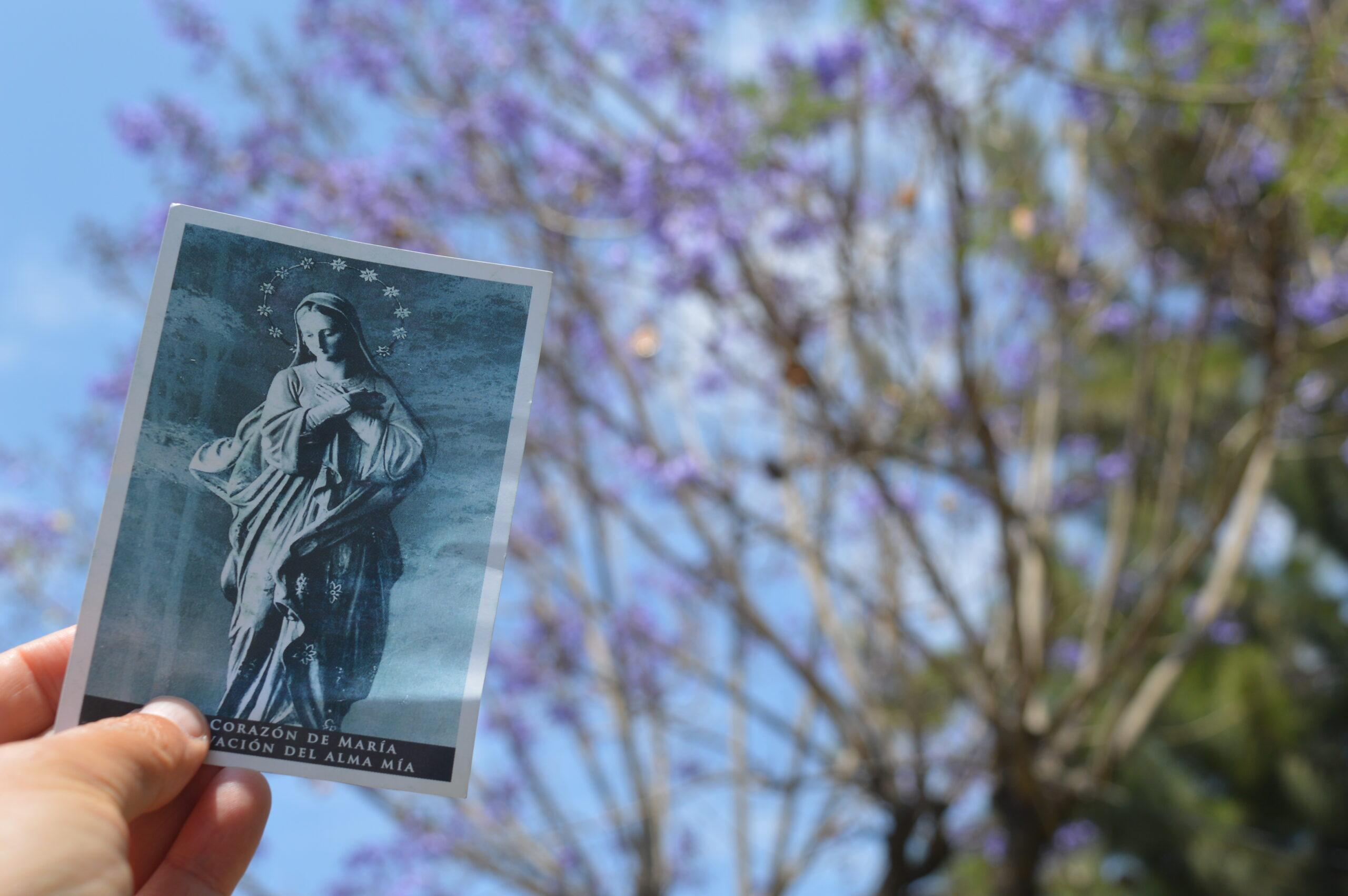
    The cover photo consists of the Virgin Mary on a prayer card held up towards the sky.

    A few years ago, some bedroom repair work forced me to move piles of stuff around. As I was rearranging the room, I happened to notice a novelty box in which I have kept memorial cards of the deceased for many years.

    As I looked through the cards, there were surprises – people I had forgotten about who had shown acts of kindness to me: a friend’s sister, a woman I volunteered with at a pregnancy resource center, great aunts and uncles, holy priests. Cards of relatives who had died before I was born had been passed down to me — like my grandfather, who I never knew (except through stories from my Mom and grandmother).

    RELATED: Grateful to Our Beloved Dead: Remembering Lessons From My Late Grandparents

    As I went through the remembrances, I said the prayers on the backs of them. I noticed connections – this person died on the same day as that person, years later. I thought about these women and men, all of whom had an effect on my life in little or big ways, in ways that I will never know; I realized, we really are “the communion of saints.”

    Since I work in communications, my thoughts often focus on the tools we use to communicate. Those memorial cards communicate! They communicate a life of a man or woman made in the image and likeness of God with a unique story of love and pain and joy and suffering – of God’s plan lived out.

    In November, we pray for the Holy Souls so they can share in the Beatific Vision of our Lord Jesus Christ who sacrificed his life and death for us and loves every single soul.

     LISTEN: Can the Souls in Purgatory Pray for Us?

    A friend of mine puts praying for the Holy Souls in action by keeping a running prayer list with names of the deceased, going back generations. Similar to keeping memorial cards, it is a tangible reminder of those who have been before us and our need to pray for them. It also makes me think of the tradition of Native Americans that I learned about in the Knights of Columbus documentary, “Enduring Faith: The Story of Native American Catholics,” aired on EWTN prior to the Holy Father’s visit to Canada in the summer of 2022.

    Harold Compton, the Deputy Director of Policy and Research for the Rosebud Reservation talked about how they believe in the sacredness of the number seven, and aim to look at how their actions as a tribe will affect seven generations forward. They encourage thinking about how one sits in the middle of those seven generations: “Looking back three generations – what did you learn from those three generations; what have they given you? And the three generations coming after you, and looking at what you, as the middle of that seven generations, can do, sharing that knowledge from the past with the future.”

    As I think back three generations, I recall a story about how a great-grandfather (who of course I did not know) would open the door of his home after Mass to provide food for the homeless. My grandmother carried that story forward to me and I can share it with my nieces and nephews.

    RELATED: Why Do Catholics Pray for the Dead?  

    So, if you are in a desperate fit when cleaning, do not throw out those memorial cards. This November, pray for the departed, ponder something you know about him or her, and how you might carry that lesson forward. Ask the Holy Souls to pray for you.

    When we were children, we were taught to pray for “the most abandoned soul in purgatory.” It is a spiritual work of mercy. Saint Stanislaus Papczyński said: “There is no greater act than to pray for the holy souls in Purgatory because unlike us on earth, they can no longer pray for themselves.”

    My box of memorial cards is overflowing. Soon I will need a new one. And someday there will be a dusty card with my name on it (I sure hope they don’t go all digital). I hope one November, decades from now, some great-great niece or nephew picks up that card and prays for me. That, indeed, will be a work of mercy.

    Originally published Nov. 3 2023.

  • Holy Friends: 4 Saints to Turn to  This All Saints’ Day

    Holy Friends: 4 Saints to Turn to This All Saints’ Day

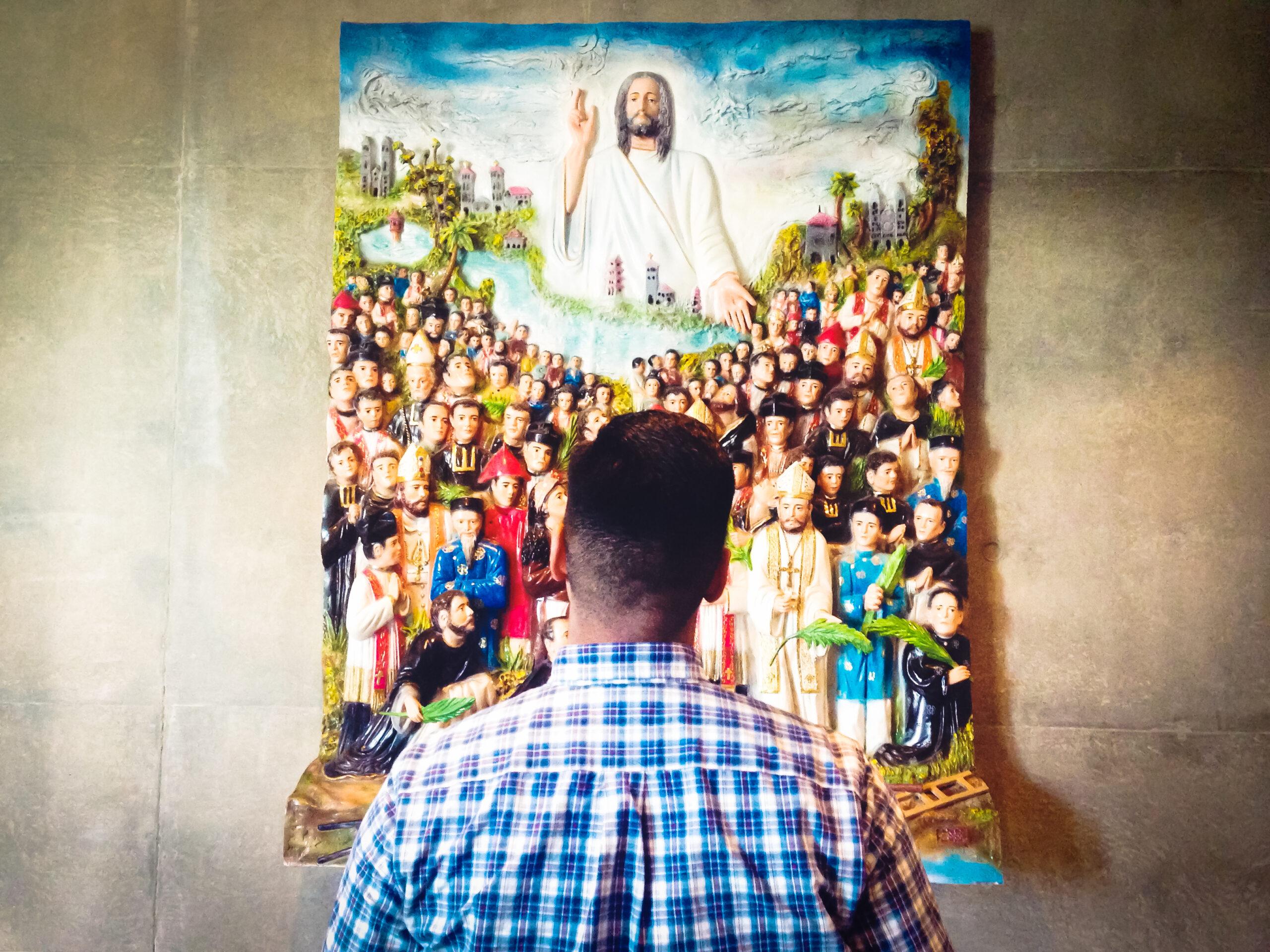
    Man in flannel shirt looking at a painting of Jesus and several saints.
    Photo by Angie Menes on Cathopic.

    As a convert to Catholicism, I’ve found that the veneration of the saints is a part of the faith that has taken me a little while to get used to. Having children has transformed that experience. Perhaps because they grew up with the idea of saints in their midst, my 9-year-old and 10-year-old bring up saints frequently. They love reading, watching, and listening to stories about the saints, celebrating feast days, and asking certain saints to intercede for our family at particular times.

    In this way — and perhaps this is normal for most Catholic families — I have realized that my family has “befriended” certain saints. Or maybe those saints have been kind enough to befriend us.

    RELATED: Want to Raise Little Saints? Tell the Saints’ Stories

    Throughout the day, we’ll talk to saints who have become part of the fabric of our lives, joking about what this saint might think of this or that daily task we’re doing. Would St. Thomas Aquinas, the patron saint of students, approve of my daughter deciding to watch another episode of “Bluey” instead of studying? Is St. Christopher, the patron saint of travelers, tired of seeing those Doritos bags strewn all over the car, and would he prefer a nicer ride, maybe?

    It probably won’t surprise you to learn that All Saints’ Day has become one of my family’s favorite holy days in the liturgical calendar. Here are a few of the saints that our family turns to frequently, and whom we’re happy to share with others looking for new family friends:

    1. St. Elizabeth Ann Seton (1774-1821)

    This new school year has been a test for my daughter. Third-grade math and social studies have been more challenging than she anticipated, and her grades have suffered. She prefers “girl saints,” so we’ve studied St.  Elizabeth Ann Seton together. St. Elizabeth Ann Seton, the first American-born Catholic saint, is perhaps best known as the founder of our parochial school system. 

    In reading a recent biography, I discovered that when she was younger, St. Elizabeth loved to dance and was fond of the fancy cream-colored slippers she wore to one of George Washington’s birthday parties. My daughter, who is a ballet enthusiast, found this anecdote inspiring. We often talk to St. Elizabeth about dancing and school—about how young women need to focus on both to be well-rounded. 

    Because Elizabeth Ann Seton also founded and led the Sisters of Charity, the first community for women religious in the United States, she’s an excellent role model for female leadership. As a teacher, I often turn to her myself! Before big test days, my daughter and I pray for St. Elizabeth Ann Seton’s intercession for her and her classmates, and she wears a St. Elizabeth medal around her neck daily.

    RELATED: How to Make Friends With a Saint

    2. St. Augustine of Hippo (354-430)

    If you’ve ever heard that old quip about kids who ask “why” constantly, then you’re actually talking about my fifth-grade son — who asks “why” about everything, including our Catholic faith. This cool kid spends most of his spare time reading books: You can’t catch him without a “Harry Potter” tome in his hands recently. He also has allergies and often rubs his eyes. 

    Last year, as his dad and I read Augustine’s “Confessions” together, we determined that this patron saint of theologians and sore eyes might be a good fit for our son to learn more about because we loved how Augustine transformed himself from a public thinker and speaker, or rhetorician, to a devoted intellectual and spiritual servant of God. 

    Every year, our parish hosts a fall festival, where children dress up as saints and participate in a costume contest. One of our family traditions is that our kids read a book about the saint they choose to emulate. When he was 8, our son flew through a biography about Augustine by Simonetta Carr, enjoying learning about the saint’s many travels. 

    St. Augustine is pretty inspiring for a child who loves facts and asking the “whys” of life, and I’m already looking forward to when my son’s old enough for us to read some of Augustine’s original writings together. (Plus, I always remind him that St. Augustine was a fan of another Catholic saint — his mom, St. Monica — who helped lead this beloved saint to his eventual conversion.)

    LISTEN: What Are the Benefits of Praying to Saints?

    3. St. Jude Thaddeus (between 1-80)

    I doubt there’s a Catholic household with children during cold and flu season where St. Jude — one of Christ’s 12 Apostles — isn’t often invoked. As a child, my husband caught pneumonia a few times, and because he also has asthma, he became extremely ill. St. Jude has always been a favorite friend of my spouse due to the saint’s association with sick children, mainly because of the famous children’s hospital that bears his name. 

    This fall, my father-in-law has been ill and hospitalized. He is currently in a rehabilitation center, but his case has been up and down for weeks. Some days, our family has been unsure if he will make it. Throughout this period, St. Jude, the patron saint of the “lost causes,” has been our family’s rock. We know we are not alone in this devotion. 

    St. Jude’s popularity rose in the United States during the Great Depression when many felt as if they were going through hopeless times. It was during this tumultuous period that Fr. John Tort felt called to found The National Shrine of St. Jude in Chicago: The saint’s popularity soon spread throughout the country and has since provided solace to many going through difficult times, whether due to illness or other challenges. St. Jude, who wears green in his iconography as a symbol of hope and renewal, is one of those saints whose name often rolls off the tongues of everyone in my family when we pray together during Mass or Adoration. Simply hearing his name tends to bring us a sense of peace.

    RELATED: How Do the Saints Hear Our Prayers?

    4. St. Hildegard of Bingen (1098-1179)

    As a convert, I often feel behind in my faith — and it might seem funny that I’ve found inspiration this past year in St. Hildegard — a German Benedictine abbess, writer, poet, composer, mystic, and theologian. If her résumé isn’t intimidating, I don’t know whose would be! St. Hildegard wrote nine books and at least 155 musical compositions, including a musical morality play, “Ordo Virtutum.” This only scratches the surface of her accomplishments! What I find most inspirational is that she didn’t begin writing until she was 42. In other words, there’s still hope for those of us who haven’t achieved all we would have liked yet. 

    Her first theological book, “Scivias (Know the Ways),” discusses the difficulties of balancing her spiritual experiences with intellectual reasoning. While we may not all have visions like Hildegard, many of us still struggle with balancing faith and reason and articulating our reconciled ideas to others with moral courage. Often, when I struggle in my professional life as a faith-filled teacher and writer, I think of Hildegard’s example and ask for her to intercede on my behalf, putting my fears to rest.

    By turning to these saints regularly — along with others I haven’t mentioned here and feel guilty about not including (please forgive me, St. Francis Xavier, St. Hedwig of Silesia, St. Sigismund of Burgundy, and St. Frances Cabrini, among others) — I’ve come to realize these figures aren’t distant at all. As St. Elizabeth Ann Seton reminds us, “We must pray without ceasing, in every occurrence and employment of our lives,” and that’s exactly what my family strives to do now, with her help and the help of our other saintly friends. These saints have become companions, offering guidance, humor, and solace during life’s inevitable ups and downs. 

    As my family prepares to celebrate All Saints’ Day, I’m heartened by how much richer our lives have become by welcoming these holy friends — not just as inspirations but as faithful intercessors walking alongside us. And yes, one day, I pray my family will be counted among them, too.