Blog

  • 3 Ways to Practice the Art of Listening

    3 Ways to Practice the Art of Listening

    Photo courtesy of Cathopic

    Anyone who knows me well can tell you that I’m a very opinionated person. While I pride myself on being open to considering different points of view, the truth is, I still struggle mightily with listening to other people. However, I was recently reading the book by Mother Mary Francis, P.C.C.,But I Have Called You Friends: Reflections on the Art of Christian Friendship and I came across the following passage, which made an immediate impression on me: 

    “The person of intelligently strong convictions is ready to have them modified, expanded, or changed according to the counterevidence presented. Any persons of opposite convictions are friends to be listened to, not enemies to be warded off.”

    As I read and reread that paragraph several times, I became decidedly uncomfortable. I began to ponder how often my convictions have gotten in the way of treating people with charity, even family members. My parents enjoy watching cable news. I do not. “Hot button” political issues tend to get my hackles up, so if I’m in the room when the talking heads happen to be on the TV, arguments too often break out. The question of student loan forgiveness, for example, has provoked more than a few heated exchanges. My immediate impulse when contradicted, is to get defensive or go on a counterattack. 

    RELATED: Two Ears and One Mouth: Why We Should Listen More Than We Talk

    In our 21st-century outrage culture, the art of listening is so important but is rarely practiced. Sadly, none of us is immune to the temptation to scapegoat people, whether family members or total strangers. It can be too easy for me to label people who don’t share my political convictions, religious beliefs, or cultural presuppositions as “enemies.” When I fail to treat the opinions of others with respect, empathy is quickly lost. 

    There’s nothing wrong with holding strong convictions or defending your principles. Respectful listening doesn’t mean that you remain passive or completely disengage from a debate. Authentic dialogue is a form of active listening. True respectful conversation can be learned by doing it, through patient practice. I’ve found three simple and practical strategies that have been immensely helpful in keeping me mindful of my biases and of the respect owed to those who don’t share my opinions.

    LISTEN: How to Have a Crucial Conversation

    1. Be present

    The first step in learning to listen is to eliminate distractions and simply be present. I can’t count how many times I’ve failed to be truly present in a conversation or debate. We’re all addicted to our smartphones these days, and when someone else is speaking, I can be sorely tempted to take out my phone and scroll through my social media feed or check my email. Not only is this an incredibly rude thing to do, but also I’m robbing myself of the chance to learn — to truly understand a different perspective from my own.

    2. Don’t interrupt

    “A fool takes no pleasure in understanding, but only in expressing personal opinion” (Proverbs 18:2). Ouch! Personally, this biblical one-liner hits a little too close to home. I’m a self-identified chatterbox and I know quite well that I have a bad habit of interrupting during conversations, trying to finish other people’s sentences or jumping in early with my counterarguments. This is disrespectful and a form of pride — many of us like to hear ourselves talk! Respectful silence shows that you value your discussion partner and are truly interested in what they have to say. 

    3. Ask questions

    Unless you ask questions, you’re not making enough of an effort to understand someone else’s position. If someone puts forth an argument or an assertion that makes my blood boil, my habitual reaction is to go on the attack. But when I began to slow down and ask questions (“Why do you believe that?” or “Could you please tell me more about your feelings on this?”) I found it easier to keep my emotions in check. I’ve even tried to rephrase my counterarguments in the form of questions. (“Have you considered this perspective?”) This kind of measured response signals respect for the opposing point of view. 

    RELATED: Learning and Listening: Identifying My Blind Spots and Committing to Growth

    True understanding

    If, while the other person is speaking, you’re preoccupied with coming up with a witty rejoinder, or if you start interrupting, or if you retaliate without asking any questions, then you’re not making the effort to listen or cultivate genuine mutual understanding. Listening to understand rather than to respond is difficult, but it’s worth it. The epistle of St. James admonishes Christians to remain modest and restrained in speech: “You must understand this, my beloved: let everyone be quick to listen, slow to speak, slow to anger” (James 1:19). 

    Honestly, I’m still a work in progress when it comes to keeping my temper during intense discussions. But I have begun to notice changes for the better. My family in particular, have commended me for the fact that I now make a point of keeping my cell phone in my pocket during conversations. They’ve noticed that I interrupt less and ask more questions. Our talks about current events have become more engaging and mutually fruitful, as we try to understand one another rather than simply “win” an argument.

    Also, as I’ve made an effort to understand perspectives other than my own, my worldview has started to become less cramped and insular. I’ve learned to stop labeling people of different beliefs as “enemies” (or worse “sinners”) whose views can be easily discounted. After all, they are fellow children of God with infinite dignity who should be respected and loved. 

    As the scribe correctly responds in Mark’s Gospel, “‘to love [God] with all your heart, with all your understanding, with all your strength, and to love your neighbor as yourself’ is worth more than all burnt offerings and sacrifices” (Mark 12:33).
  • What Is a Charism? Understanding Our Holy Traditions

    What Is a Charism? Understanding Our Holy Traditions

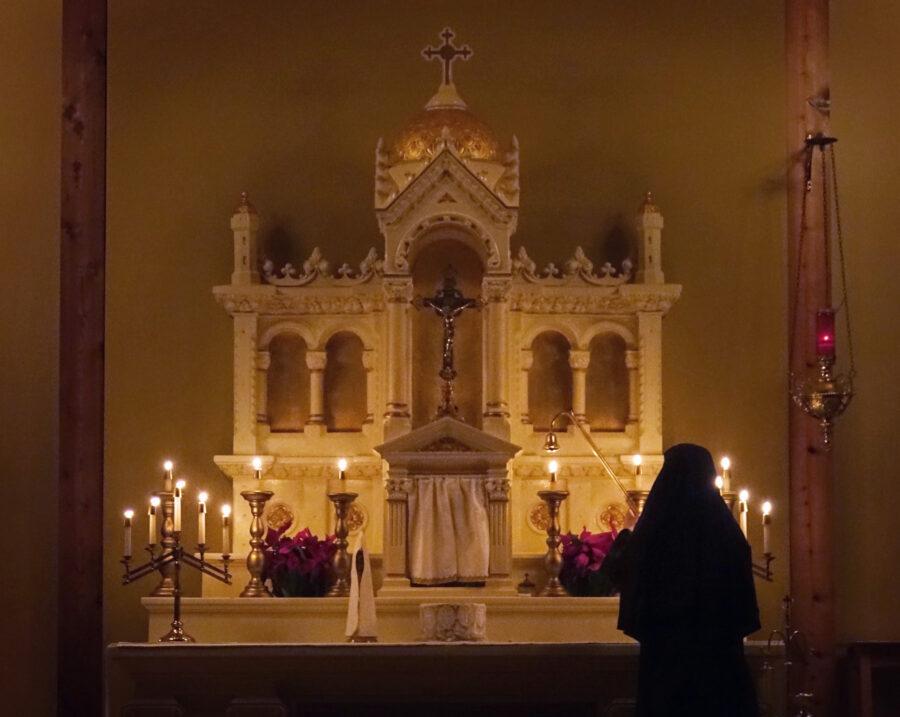
    A member of the Benedictines of Mary, Queen of Apostles is seen during vespers in Gower, Missouri. (CNS photo/Karen Pulfer Focht)

    After our parents died, my sister and I knew that our maiden name would not carry on. Since there were just the two of us girls and we both took our husbands’ names when we married, the surname “Arthur” died with my dad. But it wasn’t just the name that we lost with the passing of the older generation. We also lost some family traditions that were important to my parents but less so to my sister and me, like eating peanut butter pie on Christmas day and my dad’s prayer before meals. We even lost a bit of the connection with some cousins that we used to see more regularly when my mom controlled the family social calendar.

    Many religious communities are working now to keep this same kind of thing from happening to them. Since the number of religious sisters, priests, and brothers has decreased significantly in recent decades, wise communities of vowed religious are working to ensure that their order’s unique spin on how they live out the Gospel can be passed to future generations through the lay people involved in their sponsored ministries.

    RELATED: Why the Sign of the Peace Means Now More Than Ever

    That spin has a name, one that is commonly misunderstood: Charism. A charism is defined in some circles as a “special power,” but this conjures up images of snake-handling believers speaking in tongues, which doesn’t quite hit the mark. Others define it as a talent, but in common parlance, we don’t say that a good pianist has a “musical charism” or that an accomplished chef has a “culinary charism.” Still, others define it as a “gift of the Holy Spirit,” which is certainly true and the original meaning of the root word in Greek, but this definition is still a bit too general to be useful.

    The Catechism of the Catholic Church defines charisms as “graces of the Holy Spirit which directly or indirectly benefit the Church, ordered as they are to her building up, to the good of men, and to the needs of the world” (Article 799). In everyday language, a charism can be understood as “the gifts from God that allow a person or group to live out the Gospel in relation to the world around them.” In this way, it is the power/talent/gift/grace through which a religious order puts the Gospel into daily practice. 

    You’d be forgiven for assuming that religious orders are all pretty much the same. Many people do since, after all, they take many of the same vows. But just as your family and mine both celebrate Christmas, we might have very different ways of doing so. Your family might insist on exchanging presents on Christmas Eve before attending midnight Mass. Mine might prioritize the use of an Advent calendar, caroling, and Christmas movie marathons. Both of us honor the feast, but we each have our own spin on it.

    Similarly, all Catholic religious orders work to live out the Gospel, but each one does so in its own way. Some emphasize prayer and contemplation while others concentrate on service in the community. Some sponsor ministries in health care while others are devoted to education. Some prioritize long-standing traditional Catholic practices, while others emphasize advocacy and social justice. Each has its own “gifts of the Holy Spirit” that enable them to live out their mission as a religious order in the Church.

    Understanding charism in this way is more important today than ever before. Just as I lost family traditions and connections to relatives after my parents died, religious orders are in danger of losing their particular spins on Gospel living now that the future of the ministries they sponsor are run by lay people.

    RELATED: 3 Ways to Discover Your Vocation

    Although this may sound like bad news, it’s not! At least, it doesn’t have to be. In fact, religious communities have a unique opportunity to nurture – and even elevate – their charism within the ministries that they sponsor. I work at an all-girls Catholic high school sponsored by the Sisters of Mercy. When the school opened in 1955, all the teachers and administrators were religious sisters who lived in the convent attached to the building. But we haven’t had a Sister of Mercy employed as a teacher at our school in more than 20 years.

    However, the charism of the Sisters of Mercy is stronger and more visible at our school than it ever was before the advent of lay teachers. That’s because the sisters recognized the need to be very intentional and explicit in teaching their charism to the lay people who began to replace them in their ministries. At my school, everyone from the president and principal down to the newest freshman student can tell you what the core values of the Sisters of Mercy are and what social justice issues they prioritize in their service and advocacy. That was not the case in decades past.

    Fortunately, many religious orders have been forward-thinking as they look to the future. They have wisely taken the challenge of declining numbers and turned it into an opportunity to clearly define and communicate their charism. In fact, their example has encouraged me to be more intentional about the family traditions I hope my son will pass on to his children and grandchildren. Sometimes the threat of losing something of value is the very thing that makes it more precious over time.

    Originally published May 1, 2019

  • Finding Peace in Rough Seas: Turning to Faith in Times of Personal Crisis

    Finding Peace in Rough Seas: Turning to Faith in Times of Personal Crisis

    Big waves crash against rocks in stormy weather.
    Photo by Flaviya85 on Bigstock

    When I was 15 years old, my father took my cousin and me on a deep-sea fishing trip.

    The captain of the 60-foot-long charter boat transported us 40 miles away from the Ocean City, MD shoreline toward the Gulf Stream…an area often the home to the enormous Bluefin Tuna he hoped we’d catch.

    Although we traversed an endless parade of white-capped waves on our journey, the turbulence was hardly noticeable. As long as the powerful engines kept pushing us forward at a rapid clip, the boat’s v-shaped hull tore through the waves, preventing us from noticing the bulk of their effects.

    We would feel an occasional bump or two, but the impact on our equilibriums was minimal. The speed at which we raced to our destination allowed us to maintain our balance.

    RELATED: Shelter From the Storm: How My Tornado Shelter Became a Reminder of God’s Protection

    When the engines shut off, however, the five-foot-high waves took control, tossing our vessel back and forth like a beach ball at a Jimmy Buffett concert. While our lives were in no real danger, my stomach was ready to jump overboard.

    I laid on the hard sofa inside the cabin, realizing my body wasn’t made for constant churning. Instead, I needed to cease moving. I needed the waves to stop.

    My cousin, on the other hand, felt fine. Dramamine kept his body’s reaction to our environment under control.

    The only one on the boat’s deck who didn’t suffer any consequences from our environment — at least not without the aid of drugs — was the first mate.

    You see, he’d taken this journey hundreds of times. He felt the waves nearly every day, so his body was conditioned to handle them. Most importantly, he trusted his captain to keep him safe. Although a big wave would occasionally knock him down, he got right back up and steadied himself before the next one hit. 

    I recall my deep sea experience each time my job, my relationships, or the health of my loved ones threatens to break me. My son’s recent health scare qualified, and it reminded me that all too often, life’s waves do their best to pound us into submission. One time they almost did.

    RELATED: 5 Steps for Praying When You’re Overwhelmed

    When my wife was pregnant, we did everything right. We attended classes and purchased the appropriate baby gear. She visited the obstetrician as prescribed, swallowed oversized vitamins, and avoided a lengthy list of foods. We were sure we were prepared.

    We weren’t at all ready, however, for the tsunami that was about to crash into her already fragile body.

    Although she’d experienced a few isolated contractions early in her pregnancy, at 24 weeks, they returned. Only this time they weren’t isolated…and they weren’t stopping.

    We rushed to the hospital, and they admitted her immediately. The concern on the attending doctor’s face didn’t help ease our fears.

    Giving birth at 24 weeks wasn’t unprecedented, but our son’s survival was far from guaranteed. If he did make it, a lengthy stay in the neonatal intensive care unit (NICU) was in his future. We needed to do everything possible to stop the contractions.

    Nurses who shared our concern used an IV to pump terbutaline into her veins. Terbutaline—a drug that has, in the years since, caused the death of more than one pregnant user—had, in my wife’s case, elicited persistent vomiting that exacerbated her already debilitating dehydration. She was struggling and the contractions were growing in intensity and frequency.

    Wave upon wave upon wave.

    RELATED: Praying Through Pregnancy

    At around midnight, her doctor became concerned that they might not be able to halt her contractions. When the doctor added that the hospital’s NICU was full, our hearts sank. My wife would have to be flown by helicopter to a hospital that had space available for our tiny son.

    She was understandably terrified as medics monitored her vitals in the tiny chopper. I couldn’t fit, so I sped down the highway in our Honda Civic, hoping that our son would delay his arrival. As I did so, Jesus’ words popped into my mind.

    “A violent squall came up and waves were breaking over the boat, so that it was already filling up. Jesus was in the stern, asleep on a cushion. They woke him and said to him, “Teacher, do you not care that we are perishing?” He woke up, rebuked the wind, and said to the sea, “Quiet! Be still!” The wind ceased and there was great calm.” (Mark 37-39)

    In the midst of our storm, Jesus was in control. I forced the gas pedal to the floor and prayed that he’d tell our waves to be still.

    I don’t always trust him to still the waves in my life, though. Instead of confronting life head on, with Jesus on my side, I hide. I trust my way instead of following his.

    That night on the highway, however, I couldn’t escape. My wife and I were tossed and turned, our son’s life at risk.

    Fortunately, our expectation that our son was going to enter the world much too early wasn’t God’s plan. After an anxious night at the second hospital, the waves finally subsided. My wife’s contractions ceased, and we were able to return home.

    RELATED: On Suffering: How I Stopped Asking ‘Why’ And Started Asking ‘How’

    Over the next couple of months, my wife was on bed rest. With a stocked cooler at her bedside, she sacrificed her mobility as well as her health to shepherd our son into the world. Born healthy at 37 weeks, Nathan, which means “gift of God,” certainly was God’s gift to our family.

    The joy that he brought us was almost enough to make us forget the storm that we — particularly my wife and infant son — survived.

    I still often attempt to solve my problems with my solutions. In doing so, I forget that I can’t control everything that happens in my life.

    During that night 18 years ago when my faith was its weakest, I couldn’t solve my family’s problems. I had to trust him even when I wasn’t sure he would save my son.

    I recently learned a short prayer that St. Faustina taught:

    “Jesus, I trust in you.” 

    I now pray this prayer whenever the storm clouds gather. And storm clouds gather nearly every day.

    Not only does it remind me that Jesus can calm the waves, but it also helps me trust that he can do so. Big or small, no challenge is more than he can handle.

    Jesus has and will provide me peace during the most difficult days of my life, and he promises to provide you peace, too.

  • A Resurrection From Cynicism: Learning to See Myself With God’s Eyes

    A Resurrection From Cynicism: Learning to See Myself With God’s Eyes

    Photo by Debby Hudson on Unsplash

    “A cup filled with vinegar can’t spill honey.” I don’t remember how I came across the saying, but despite being filled with wisdom, the phrase has always made me feel uneasy about myself. I go to church, I volunteer, I teach children with disabilities, I’m kind and caring… but underneath all that, I can sense a sour smell of vinegar, of bitterness and cynicism…and it shows. And it’s painful. 

    I get annoyed when a handful of us are working hard in the church kitchen while the other 150 people from the congregation just turn up to enjoy the meal. No one is rushing to help. Sure, I think to myself, it’s all about ‘give and take’ for us Christians…as long as I give and you take. I get tired of parents who complain about their children’s behavior at home and blame teachers (like me) for failing to make their child achieve in school. The toxic thoughts run through my head, Perhaps, you could start introducing some boundaries at home…then we’ll talk! 

    Pray for Us Complainers: Turning Our Words From Protest to Praise

    I read the Bible and ask God to heal my heart and renew my mind, remove the darkness and cynicism…but it just won’t go away. So I try a different strategy. I say to myself, come on, you’ve got to look at yourself through the eyes of God. You’ve got to see yourself the way He sees you. But, how does He see me? 

    ***

    I teach in a special elementary school for children with severe learning difficulties. The other day, I asked a boy in my class to count all the children (four) and all the adults (three) in class. His math was different from mine. He ended up with two grown-ups and five children. He pointed at one of the teaching assistants and said, “One.” He pointed at the other one and said, “Two.” Then he stopped. I kept pointing at myself to encourage him to continue counting. The boy scrutinized my face for a couple more seconds, and gave out a firm “no.” As far as he was concerned, I didn’t count as a grown-up.

    At first, I was embarrassed. There were two other members of staff there, and I was suddenly exposed as a fraud! I pretend to be an experienced professional, a grown-up. Is this really how I appear to other people?! Yet, his observations were a precious gift. 

    RELATED: Praying for Patience: What I’ve Learned From God’s Time vs. My Own

    The cynical part of me is critical of other people’s behavior and choices; it can be furious, angry, impatient and frustrated. It savors every depressing headline on the front page of a national newspaper. It moans and complains. This dark and gloomy “me” is too thick-skinned to go through the narrow gate to enter the kingdom. But that’s not the real me. The real me — the silly, playful, joyful me — meets the requirements. The boy confirmed it! In fact, we all qualify. 

    The real me makes funny noises, dances around the classroom, loves little people, loves life. My heart is not filled with vinegar. It’s full of sweet childhood innocence, and when it spills, it turns my surroundings into a land of milk and honey. It can never be taken away from me or get lost.

    God is faithful and does respond to my unique needs and cries for help. When I read the Bible, I don’t actually get messages like, “Be good” or “Try harder.” The lines and verses that always stand out for me personally are those linked to attention, focus and concentration. Be watchful, be on guard, stay alert, stay awake. 

    The cynical mind isn’t necessarily a bad thing. It may come from a place of knowledge and deeper awareness of the inequality and desperate need in the world. I can keep that. What I don’t want is to indulge in celebrating my own (or the world’s) shortcomings and faults. I want to be alert. Keep my eyes on what is good, true, and beautiful. Have faith like a child. Avoid getting carried away into the depths of cynicism and despair. And God has always showered me with lovely things and sweet moments to help me stay awake to the beauty of his creation.

    Originally published June 4, 2020.

  • 5 Meaningful Ways Your Family Can Honor the Sabbath

    5 Meaningful Ways Your Family Can Honor the Sabbath

    Photo by National Cancer Institute on Unsplash

    As someone who’s driven by productivity, keeping the Sabbath holy can sometimes feel like the one commandment that really cramps my style. It always seems like Sundays are the days I get inspired to jump into some new work project or frantically clean out all my closets. I find myself wheedling the Lord in ways I’d never dream the rest of the week: “Can’t I just scrub one toilet, pleeeease?” 

    And yet, there’s that still, small voice telling me to hold off on stressful activities just for the day in favor of rest. Over my years of following Jesus, I’ve gradually found that listening to this prompting reaps major benefits. When I actually slow down one day a week, not only do I feel closer to God, I’m less stressed and more level-headed throughout the week.

    Of course, there’s the obvious biblical directive to not work one day a week—but a truly restorative Sabbath is so much more than not going into the office on Sunday. Here are five ways to add extra layers of refreshment to your day of rest.

    RELATED: How to Intentionally Plan a Day of Rest

    Read a spiritual book

    While I’m a hard-core book lover, I have a hard time allowing myself to simply sit and read during the day—especially when there are other tasks that beckon. Sundays, though, I try to give myself a pass. After all, there’s nothing like a good book on a lazy day to slow the head-spinning pace of weekday life. If it’s a book that’s spiritually enriching, so much the better. Some of my personal inspirational faves include “My Sisters the Saints” by Colleen Carroll Campbell, “Same Kind of Different as Me by Ron Hall and Denver Moore, and “Story of a Soul: The Autobiography of St. Therese of Liseux.”    

    Spend time in adoration or pray the rosary

    Once I get my heinie in the pew on Sunday morning, I often find the hour of prayer leaves me wanting more time in God’s presence. I’m fortunate enough to live down the street from my church, which has an adoration chapel, so some Sunday afternoons I’ll slip over there to finish the convo I started with the Lord during Mass. I always leave feeling “prayed up” for the week ahead.

    Want to take your spiritual development a step further? Make time during your Sabbath to pray the Rosary. The quiet rhythm of this prayer is a uniquely soothing way to connect with God. 

    RELATED: Why Isn’t the Sabbath on Saturday? 

    Invest in a hobby

    God may not have instructed us to go play in a garage band or take up paintball on the Sabbath, but this day is all about refreshment—and doesn’t having fun make you feel refreshed? Taking time for hobbies you enjoy is a surefire way to refill your mental (and even spiritual) tank. In fact, research shows that getting into a state of “flow”—where you’re completely immersed in an activity, such as a hobby—may reduce depression and anxiety. 

    On any given Sunday afternoon, you can usually find me working on counted cross-stitch (my latest project: a festive-looking llama for my daughter’s bedroom), baking cookies, or playing jazz standards on the piano.

    Make it family time

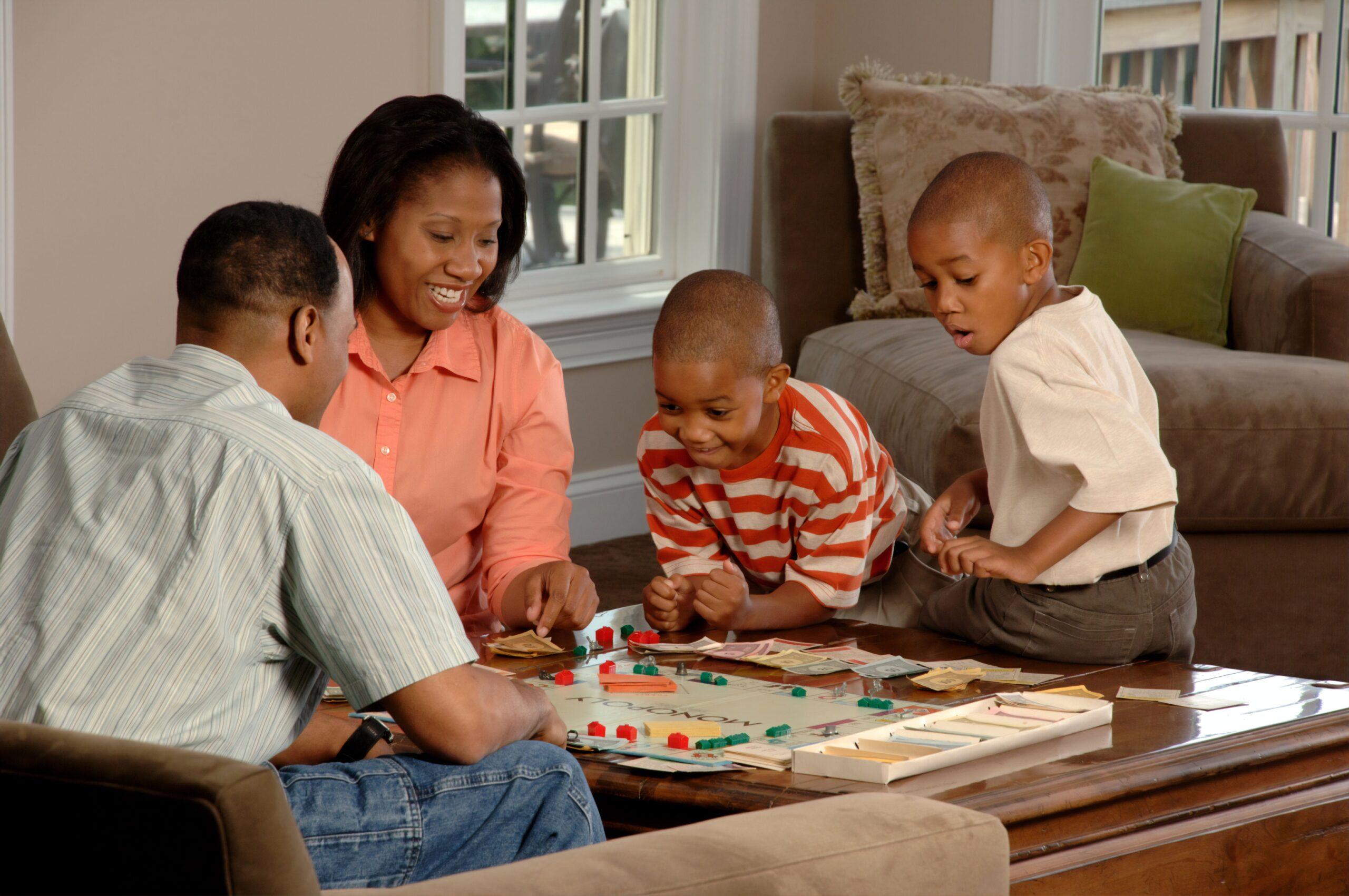
    The Sabbath presents an opportunity to get intentional about quality time with family—something that all too easily falls by the wayside on hectic weekdays. Haul out a board game that everyone can play, or go for a family hike on Sunday. If family doesn’t live close by or relationships are strained, reach out to close friends for a cozy dinner or movie night at your place. You might even consider taking a social media break to help you focus on whatever loved ones are in front of you in real life, rather than on a screen. 

    RELATED: 5 Tips for a Spiritual Summer

    Skip the chores and errands

    We all know we’re not “supposed” to work on the Sabbath, but to me, work goes beyond the kind I get paid to do. If I spend my whole Sunday doing laundry, wrestling my cantankerous vacuum, and running errands, have I actually rested? Well…not really.

    We live in a busy world, and everyone’s schedules are different, so it may not always be feasible to skip housework or grocery shopping for a full 24 hours. In our family, though, we’ve made a commitment to frontload chores and errands on Saturday as much as possible. It’s sometimes a tall order, but it pays off in a full day of chill on Sunday. When we genuinely get a whole day off of work (in the home and out of it), we recharge our spiritual batteries to be God’s hands and feet in the world the rest of the week.

    Originally published July 1, 2020.

  • Taking Your Faith on Vacation: How to Plan the Ultimate Spiritual Road Trip

    Taking Your Faith on Vacation: How to Plan the Ultimate Spiritual Road Trip

    We are at the peak of summer vacation time, and to me, that means one thing — road trips! In fact, I consider myself to be something of a road trip aficionado. My road trips always involve curated playlists handpicked specifically for that particular adventure. I never leave on an interstate journey without a legal pad and Sharpie in order to communicate with other motorists. And most of my road trips have included original car games. Some have had costumes, and a few notable outings involved hand puppets to entertain passing truckers. Mixed in with all of these shenanigans however, my family and friends make sure to never leave our Catholic faith at home. Travel is a great way to experience the sheer variety and vastness of the Catholic tradition and the universal Catholic Church. Here are a handful of suggestions for how you, your friends, and family can take your faith on the road on your next vacation.

    Visit a unique new church

    My family always celebrates Mass while we’re on vacation, which lets us simultaneously experience the local culture and also participate in a Mass that is often entirely different than what we are accustomed to. Doing so, we have attended Mass in enormous basilicas and tiny chapels, overlooking the ocean in Mexico, and under towering trees at an outdoor Mass in Northern Michigan. Masstimes.org can steer you toward all manner of churches, no matter your destination. The website catholicplaces.org also lists notable Catholic points of interest but focuses on basilicas, cathedrals, and shrines that go beyond the typical neighborhood parish.

    RELATED: What Are Some Great Catholic Sites to Visit on Vacation?

    Catch a music festival

    In recent decades, music festivals have become destinations of their own. There are weekend-long concert events spanning all music genres, and Christian music is no different. Some of the bigger shows yet to happen this summer include Soulfest, Shippensburg, Pennsylvania’s Uprise Festival, and PointFest at Cedar Point in Sandusky, Ohio. A listing and map of many of the larger Christian music festivals can be found here.

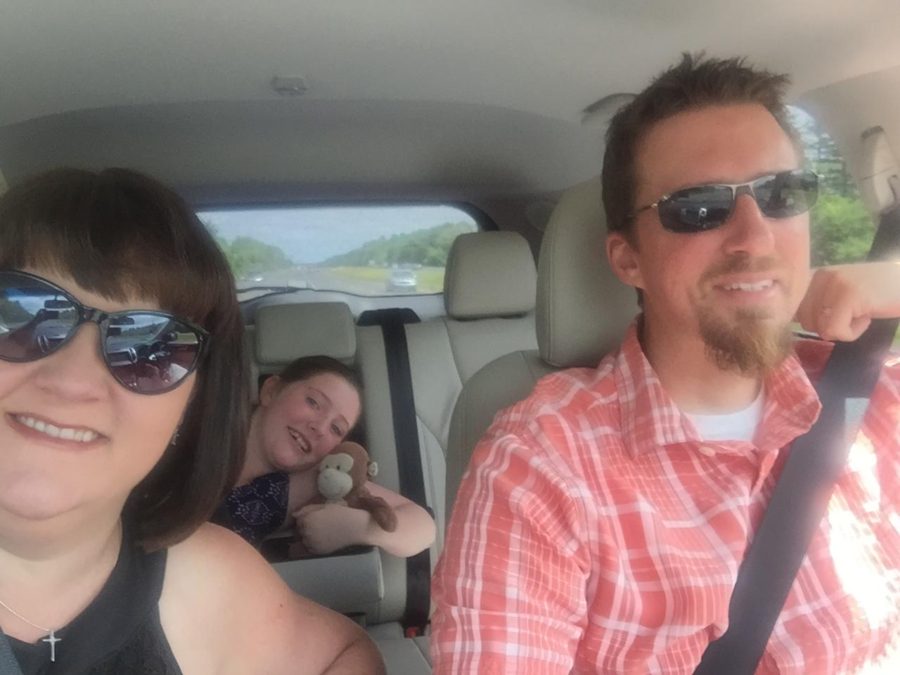
    The author on a road trip with his family.

    Head to campus

    I live in a college town. I was initially surprised at how many tourists visit Michigan State University’s campus each day. Some are alumni, some are families with prospective students, and many others have unique motivations like seeing a football game in every Big Ten stadium. Check out the USCCB’s list of U.S. Catholic Colleges and Universities. Play a round of golf at the Abbey Golf Course at St. Leo’s University, tour the McMullen Museum of Art at Boston College, or take a guided tour of the St. Joan of Arc Chapel on Marquette University’s campus. Not to mention, just about every Catholic university has regularly scheduled Masses open to the public. And if you find yourself in East Lansing on MSU’s campus, be sure to walk one block north and stop by my home parish of St. John Church and Student Center, home of the Catholic Spartans. Go Green!

    RELATED: Vacation Guide to Saintly U.S. Cities

    Drop in on a parish festival

    Some regions of the country admittedly do this better than others. I tend to associate parish festivals with Midwestern cities founded by European immigrants, such as Cleveland, Milwaukee, Minneapolis/St Paul, and Indianapolis. Those dioceses, in particular, have parish festivals every weekend of the summer and well into the fall. I remember going to several of these each summer when I was a kid growing up in Milwaukee. Think beer tent, local cover bands, carnival games for the kids, and maybe even a handful of midway rides all staffed with volunteers from the hosting church. Many parish bulletins and websites will advertise not only their own events but others happening nearby. Checking out the events section of your diocesan website is another good place to start.

    Participate in an event Mass

    Summertime is when the regular Sunday Mass may burst through the church doors to take worship out into the beautiful weather God has blessed us with. There are some oceanside parishes that hold Mass on the beach, some that have Mass out on the lawn, and I have found myself at a Polka Mass or two as well. So, the next time you’re road tripping across the country, look for a Mass in the great outdoors.

    Originally published July 10, 2019.

  • How My Puppy Helps Me View Every Moment as a Chance to Encounter God

    How My Puppy Helps Me View Every Moment as a Chance to Encounter God

    puppy sonia while hiking looking back at the camera with a background of fall foliage and mountains
    The author’s puppy Sonia

    If dogs had resumes, they would boast a long list of services. As personal trainers, they get us off the couch to exercise. As wellness gurus, they lower blood pressure and help us de-stress. And as therapists, dogs provide comfort and companionship, especially in times of sorrow and loneliness. 

    One occupation that should be added to this list is spiritual guide. My husband and I had been talking about getting a dog for a few months, as we both wanted a canine companion for all our hiking adventures. Even though I enjoyed many pets of all kinds throughout my life, it wasn’t until my husband and I adopted our 6-month-old schnauzer/shepherd/malinois mix on May 16, 2021, that I realized I could strengthen my own faith through my relationship with her. In just our few months together so far, our “pandemic puppy” Sonia has already taught me to encounter life in the way that God intends for us: with joy, praise, and gratitude. 

    RELATED: A Gratitude Meditation

    Approach each day with an abundance of joy.

    Wake up at 5:30 a.m., walk the dog, make breakfast, take the subway, go to work, take the subway, walk the dog, make dinner, walk the dog, sleep… And get up the next day to do it all over again. Having a routine is a good thing, but I can easily find myself simply going through the motions. I sometimes feel stuck in a cycle, stressed, or exhausted. I just want to make it to the weekend. 

    However, this mindset does not reflect a life rooted in faith. When we approach each day through the lens of joy, we can see all the ways in which God works in our lives. Suddenly, the seeming invisibility of God’s grace becomes visible.

    My puppy reminds me to take on each day with deep, spiritual joy. She inches her way towards my pillow and licks my face to celebrate the morning. She looks deeply into my eyes, glad to start each new day with me, no matter how much I grumble to roll out of bed. What a reminder for me to gaze in the same way at her. At the world. And most importantly, our Lord. Sonia walks to the park each morning with a skip in her step, wagging her tail. That’s when I remember to remain joyful in the Lord’s presence each and every day.

    RELATED: Will I See My Pets in Heaven?

    the author's puppy Sonia looking very cute on a fall hike

    Appreciate where you are in the present moment.

    My husband and I have gone camping with Sonia four times since we adopted her, most recently during the prime of autumn, when peak foliage cascaded through the Catskill Mountains. Every day after a campfire breakfast, we went on a six-mile hike through forests and meadows, around lakes and waterfalls, and up mountain peaks. Sonia was curious about frogs and fallen leaves; I was moved by God’s ability to restore and heal me in the woods.

    It was bittersweet to return to the city after a week in the wilderness without Wi-Fi, and I was nervous that Sonia would not adjust well. I was afraid that my garden and city park would suddenly seem boring and small to her.

    But perhaps I was projecting my own reticence to return to reality onto her, because when we got back to Brooklyn, she literally pulled me to the park, ready to romp with her canine friends, chase squirrels, and collect sticks. Nothing had changed, only where we were. I realized that every moment is precious, no matter where I am. This is the inner spiritual wonder that God wants us to feel. There is grace in every moment, even in times of longing or suffering. 

    RELATED: A Gratitude Retreat

    Be grateful for the people you’re with.

    A sweet, spunky pup who was found malnourished in Tijuana, Mexico, Sonia fortunately felt comfortable with us when we first met her. She quickly became an indispensable part of our family. As such, whenever my husband or I return from work, she greets us as if we hadn’t seen each other in years: wagging her tail, widely smiling, barking happily. In fact, she warmly welcomes all of our family and friends, even our cat, Shadow (who has yet to reciprocate Sonia’s friendly advances). This generosity of spirit reminds me to praise God for every person I encounter in my day: my husband, my family, my coworkers, and neighbors who stop me to chat. It’s through the people in our lives that God works his graces and shows his love. We should be grateful for their presence and consequently God’s presence in our lives through them.

    Adopting a puppy came with challenges, but it was a big blessing in our lives. I thank God every day for Sonia and know that I should approach my life and the people in it with deep gratitude and joy. Moreover, I should encounter the Lord in the big-hearted, unconditional way that Sonia loves me.

    Originally published November 22, 2021.

  • Why Do We Celebrate the Solemnity of Saints Peter and Paul on the Same Day?

    Why Do We Celebrate the Solemnity of Saints Peter and Paul on the Same Day?

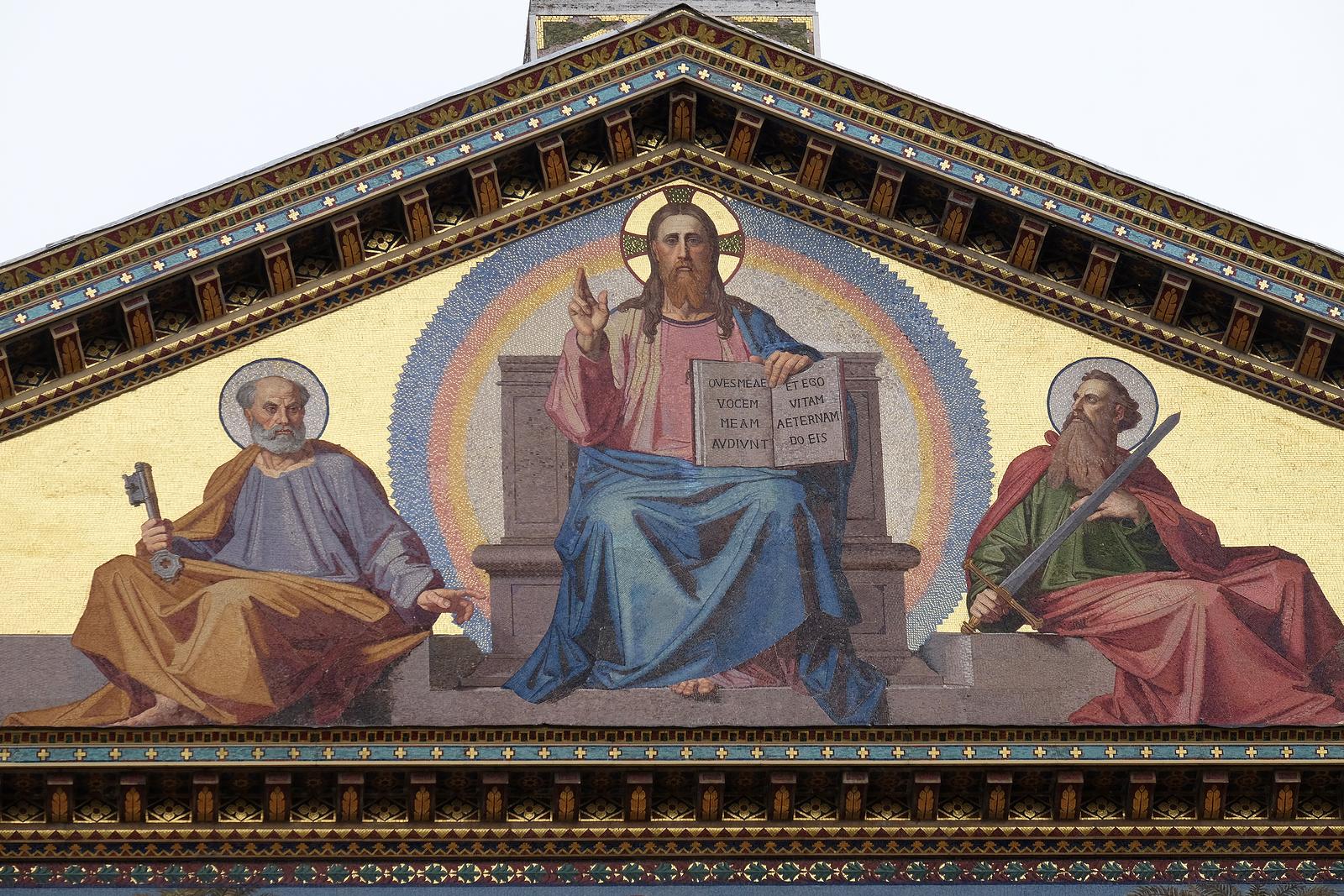
    ROME, ITALY – SEPTEMBER 05: Mosaic of Jesus Christ the Teacher, Saints Peter and Paul, Basilica of Saint Paul outside the walls, Rome, Italy on September 05, 2016.

    St. Peter and St. Paul are two of the most well-known saints and are often spoken of as the two men most responsible for spreading the Christian message in the days of the early church.

    RELATED: Why Is St. Paul Called an Apostle?

    As to why they are celebrated on the same day, legend has it that they were executed on the same day under the command of Emperor Nero and buried in Rome. (Although historical accounts cite Peter being martyred in 64 AD and Paul in 67 AD.)

    Because of his Roman citizenship, Saint Paul was beheaded. St. Peter was reportedly crucified upside down because he said he was not worthy to be sacrificed in the same manner as Christ.

    WATCH: Why Does Jesus ask Peter “do you love me” three times?

    June 29, the Church celebrates the feast day of both men, and as early as 258 AD, there is evidence of an already-lengthy tradition that both Saint Peter and Saint Paul were celebrated on the same day.

    In a sermon in the year 395, St. Augustine of Hippo said of Saints Peter and Paul:

    “Both apostles share the same feast day, for these two were one; and even though they suffered on different days, they were as one. Peter went first, and Paul followed. And so we celebrate this day made holy for us by the apostles’ blood. Let us embrace what they believed, their life, their labors, their sufferings, their preaching, and their confession of faith.”

  • What Does the Church Say About Limbo?

    What Does the Church Say About Limbo?

    White Clouds and Blue Sky
    Photo by Ithalu Dominguez on Pexels

    Editorial note: The following article contains mentions of pregnancy/infant loss.

    The loss of a child is a heartbreaking situation. There is grief over the death of the beloved child, of course, but also over the child’s future now lost. Additionally, there can be grief and uncertainty over the soul of the child and where they are now. In the midst of this loss, the Catholic Church has always offered words of consolation and hope, trusting in God’s infinite love and mercy. Amid the pain of miscarriages, stillbirths, and lost children, we find consolation in our God who desires all children of the world to come to him. To any and all persons facing such loss, please know you have the prayers of the Busted Halo staff.

    Throughout history, some have responded to these griefs and uncertainties by saying that children who pass away before receiving the Sacrament of Baptism are in Limbo. Limbo is at the heart of a tension between understanding God as being all-loving and desiring the salvation of all and the Catholic understanding that baptism is needed for salvation. This raises questions, especially about the souls of unbaptized children and what happens to them in the next life. The loss of a child is always especially difficult, and many in the Church have tried to find explanations that offer consolation. Limbo was one such answer to those questions, and while never completely embraced by the Church, neither has it been completely done away with. The answer to “Does Limbo exist?” is a much more complex question and requires a look at the growth of the idea of Limbo over time.

    LISTEN: Navigating Miscarriage, Stillbirth, and Infant Loss With Abigail Jorgenson

    In the tension between understanding salvation that required baptism and understanding that a loving God wouldn’t punish children who never had the option or ability to be baptized, St. Augustine was among the first to discuss the idea of “Limbo.” This would be a place separate from heaven and fully enjoying the presence of God, but also away from hell. To some theologians, Limbo existed on the edge of hell but was not a place of suffering. To others, it was a place of pleasant neutrality. There was, however, never an official definition or understanding of what Limbo was or what it was like. Other theologians throughout the ages, such as St. Thomas Aquinas and St. Alphonsus Liguori, would continue to write about Limbo.

    Yet with all of this writing, the concept of Limbo had never been formally adopted as the Church’s position. The closest the Church got was the mention of Limbo in St. Pius X’s Catechism in question 100 wherein he wrote: “Children who die without baptism go to Limbo, where they do not enjoy God, but neither do they suffer.” However, this Catechism was never made known as official teaching for the whole world, but rather, for the faithful in the city of Rome. St. Pius X wrote and published it only for the immediate Church in Rome as the local bishop, not for the whole world.

    Even though this idea was shared by a pope, it was never a universal idea in the Church, or adopted as official Catholic teaching. St. Cajetan, a priest in the 16th Century, notably wrote against the idea of Limbo. He argued that children who are unable to be baptized in life share in the concept of Baptism by Desire (that someone who desires God’s grace but is physically unable to be baptized is still saved and in effect, baptized) because of their mothers’ love and desire to have them baptized. St. Cajetan argued for a more open approach to God’s mercy for these children.

    WATCH: Baptism 101

    In 1980, the Congregation for the Doctrine of Faith (CDF) put out Instruction on Infant Baptism. In this document, they stated that: “As for children who die without Baptism, the Church can only entrust them to God’s mercy, as she does in the funeral rite provided for them.” The CDF felt that the most important thing to say on the death of a child before they were baptized was to entrust that soul to God’s infinite mercy.

    About 25 years later, the International Theological Commission wrote The Hope of Salvation for Infants Who Die Without Being Baptized. In this, the Commission made several arguments to uphold the idea that a child who died before baptism could share in God’s joy in heaven eternally. They rooted these arguments in paragraph 1261 of the Catechism of the Catholic Church which states: “[there is] hope that there is a way of salvation for children who have died without Baptism.” They also point to our celebration of the infant martyrs on December 28, that we celebrate them as martyrs and saints even though they were never baptized. Finally, the document reminds us that Christ’s salvific love is true – and a greater truth than original sin, which we are all subject to. As such, Christ’s love will win out, and this gives us great hope and joy for the salvation of unbaptized children.

    RELATED: 9 Ways to Help a Grieving Friend

    Interestingly enough, though, none of these statements outright deny the existence of Limbo. Rather, the Church places greater emphasis on hope and trust in God’s love when it comes to the souls of unbaptized children. One can be a good Catholic whether or not they believe in Limbo.

    Personally, I find that the idea of Limbo does not line up with what I have been taught about a loving and merciful God. I have great hope and trust in God’s love to welcome unbaptized children into heaven and find that this gives greater peace to those who have faced such a loss. If anyone should find themselves in the situation of walking with someone who lost a child before a baptism was celebrated, my first piece of advice is simply to be with them. Not necessarily to even say anything, but to be present alongside them in mourning and an image of God’s merciful love in the time of loss. When words are needed, words of hope, especially those of Christ, are most consoling. As Jesus said, “Let the children come to me, and do not prevent them; for the kingdom of heaven belongs to such as these” (Matthew 19:14).

  • Busted Halo Honored With Catholic Media Association Awards

    Busted Halo Honored With Catholic Media Association Awards

    Busted Halo received two awards and four honorable mentions at the Catholic Media Association’s annual Catholic Media Conference, recognizing our expertise in digital content development, broadcasting, and social media.

    As a media ministry that seeks to use a relevant and accessible voice to help people understand the Catholic faith, put it into practice in their everyday lives, and share it with others, Busted Halo is thrilled to be recognized for our accomplishments in spreading the joy of the Gospel in the digital space. We are grateful to the Catholic Media Association for acknowledging the talent and dedication of the Busted Halo team.

    First Place

    Best Blog – Expression of Faith: Busted Halo

    Second Place

    Best Use of Live Video in Social Media: Father Dave Answers Your Questions of Faith

    Honorable Mentions

    Best Multimedia Package – Eucharistic Revival: Busted Halo’s Guide to the Eucharistic Revival

    Best E-Newsletter: Busted Halo

    Best Podcast – Expression of Faith: The Busted Halo Show With Father Dave Dwyer

    Best Podcast – Social Justice Issues: The Busted Halo Show With Father Dave Dwyer

    Click here to view all the 2024 Catholic Media Award winners.