
Blog

  • Mary: The Background Music to My Spiritual Life

    Mary: The Background Music to My Spiritual Life

    For over two years, every night it’s the same: At the appointed time, I gather my freshly bathed and pajamaed toddler into my arms, all fuzz and snuggles. We turn off the light in his bedroom and settle into the rocking chair. My son knows the drill, so he tucks his fuzzy head under my chin and cuddles into my arms. Then we begin:

    Softly, we rock in the darkness. I recite “Goodnight Moon.” Then five nursery rhymes, another book, four prayers, and a lullaby.

    RELATED: I Never Connected With the Rosary… Until I Became a Mother

    They’re the same words every night, and they’re my child’s bridge between the discoveries of day and the peace of sleep. As we sit together, heart-to-heart, my voice surrounds and comforts him, but I imagine he is not thinking of me. My voice, and our nightly litany, is background music that fades away while he reviews the day and surrenders all his anxieties to calm.

    It is a sweet privilege to be his background music, to be that safety that allows him to bound with courage into the world.

    Sweeter still is the knowledge that although I am not a child anymore, that although I am all grown up, my Heavenly Father has given me this background music, too.

    WATCH: Mary in 2 Minutes

    At one time, the Son of God rocked in his mother’s arms, tucking his fuzzy head under her blessed chin as she cuddled and sang to him. The Blessed Virgin Mary was the background music to his earthly ministry. First, it was the beating of her heart at the Incarnation, when Jesus spent nine months safely in the tabernacle of her womb. Then, her voice was the background music at his foretold birth in Bethlehem, and even during an exiled flight into Egypt that lasted a number of years while powerful men sought to take his life. Mary was there in the background when Jesus performed his first miracle, quietly and confidently telling the Galilean wedding staff, “Do whatever he tells you” (John 2:5). When Jesus’ time had come, Mary was there, in the background, as her Son obediently met his ultimate suffering: his Passion and death. Mary had seen him all the way there. And what a gift, that the Lord passed her on:

    “Woman,” He said, “behold your son.” Her new “son” was to be John, who represents all of us.

    Then: “Behold your mother” (John 19:26-27).

    And our mother she is. 

    RELATED: No Mere Greeting: The Hidden Meaning of the Hail Mary

    It was with a shock that I realized, while rocking my son, that Mary is the background music to my relationship with God in the Church — and quite literally! Every time I pray the Rosary, I pray for her intercession 53 times, but each time, the “Hail Mary” fades away as I meditate on that decade’s mystery, which is a moment in the life of Christ.

    It was a great surprise because I had struggled to feel devoted to Mary ever since I turned 13, when I reached — and passed — the age of her world-saving “yes” to God. But now, as a mother, I can understand her differently. She is the background music to my spiritual life: to my relationship with Christ.

    “She is an echo of God, speaking and repeating only God. If you say ‘Mary’ she says ‘God.’” Writes St. Louis de Montfort in “True Devotion to Mary.” “[Y]ou never think of Mary without Mary thinking of God for you. You never praise or honour Mary without Mary joining you in praising and honouring God.”

    WATCH: The Rosary in 2 Minutes

    In that “Hail Mary” greeting, in the repetition of her prayers, Mary smooths out the wrinkles between me and God, pouring his grace into my life and carrying me — as a mother carries her child — to see the King of Kings.

    And it’s almost like she rocks me, with my head tucked under her chin. Her warmth remains as her voice fades to the background, so all that remains for me to embrace is the light of Heaven: the Son she rocked thousands of years ago, who went to the cross for me, and pursues me even now.

    Now, and at the hour of our death. Amen.

    Originally published May 5, 2021.
  • Saint Mom: Why Are There So Few Saints Who Were Mothers?

    Saint Mom: Why Are There So Few Saints Who Were Mothers?

    It’s fair to say the saints have taken over our home. I am up to five statues of Mary in my kitchen alone, all cheering me on through daily chores. An image of Mary Magdalene gazes down at us in the dining room. St. Anne is on my night table, reminding me to read my books. My son sleeps with St. Michael the Archangel next to him for protection, and my daughter has a quote from St. Catherine of Siena on her wall. Since we look to the saints for daily inspiration, it was natural that I would turn to them to find help being a good mom. What I learned is that there are relatively few saint moms, and their paths to holiness were shockingly similar.

    So, if you want to be a saint and a mom, prepare your family. You probably won’t be getting canonized unless your husband dies, you sell all your possessions, and become a nun. Sorry, kids. Mom won’t be around to babysit the grandchildren. She is doing the Lord’s work.

    RELATED: Mysticism: It’s Not Just for Saints

    Step one: Be born into a wealthy family.

    Step two: You must get married. An unhappy marriage is optional but preferred. Bonus points if your in-laws are also notably mean to you.

    Step three: Have some children, who will likely die young or go into religious life themselves.  

    Step four: Your husband must die or you must mutually decide to enter separate religious orders. (My husband and I were going to do this for Valentine’s Day but spiritual attack in the form of pizza and Netflix intervened.)

    Step five: You must enter religious life or live in a convent that you support. Founding your own order is optional. Even in the New World, the first American-born saint mom, Elizabeth Ann Seton, was raised in a wealthy family, lost her husband, and founded a religious order.

    Reading all of this, I began to wonder if there was any hope for the rest us. I did discover a FastPass to mom sainthood that did not involve wealth or a convent. Unfortunately, it requires martyrdom (see “Marytrs of Kyoto” or “Spanish Civil War”). Ready to sign up?

    RELATED: Getting by with Help from a Little Flower

    Are entering the convent and/or being martyred really the only way moms can become saints? We are all called to become saints, and having the saints as spiritual examples is one of the best things about Catholicism. However, for the average mom today, it’s hard to relate to the experiences of our saint mom role models. Of course, we can always look to Our Lady and St. Anne, but it’s fair to say their circumstances were unique. I began to wonder if this phenomenon was the spiritual equivalent of not having any pictures of yourself alone after your children are born. There may be plenty of saint moms out there, but they are the ones taking the pictures; they are not in them. Until recently, it was accepted that most saint moms toiled behind the scenes with little recognition.

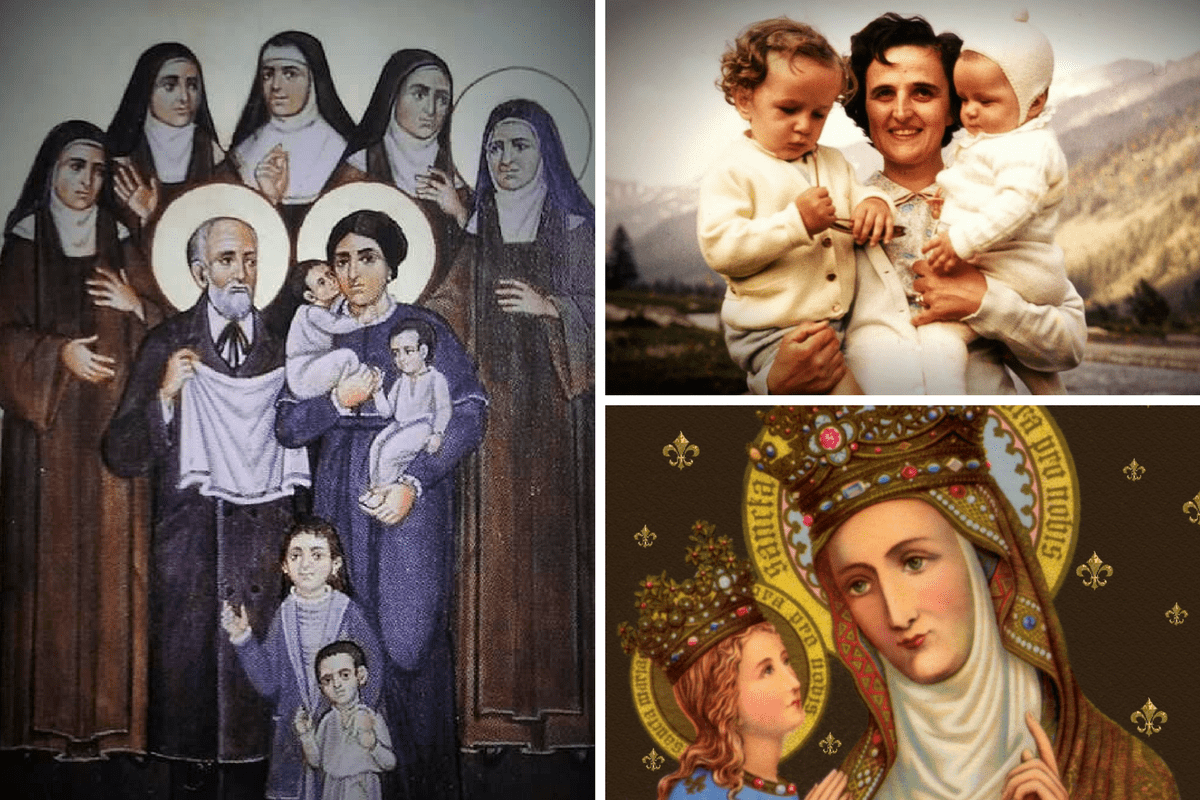
    Take heart, Catholic moms. As women’s roles have become better understood and more visible, a new wave of saint moms is coming. Two of the most popular mom saints today, St. Zelie Martin and St. Gianna Molla, not only have cool names, but they were working moms with kids, and are more relatable to most of us. St. Zelie and her husband, St. Louis Martin, were the first married couple to be canonized in history and are best known for being the parents of St. Therese of Lisieux, the Little Flower. Not only did Zelie have nine children, most of whom went into religious life, but she ran her own lace business — before Etsy.

    A working pediatrician with four kids, St. Gianna Molla famously refused treatments for cancer so that she could give birth to her daughter. She ended up dying from complications following the birth. Interestingly, none of the Molla children entered religious life, but the youngest daughter followed in her mother’s footsteps and became a doctor.

    Both Zelie and Gianna were noted for their ability to live out their faith in everyday life. Zelie’s letters are filled with references to fasting, prayers with the family, and daily Mass. Just like my kitchen, the Martin family had a statue of Mary in an honored place, fondly referred to as “Our Lady of the Smile.” Gianna considered her work her religious mission and her marriage and family as her vocation. She was noted for her care of the poor and marginalized but also for her spirit of joy that served as an example to her children.

    It can be hard for us to see the holiness of our everyday actions, especially when we’re struggling to get the kids in the car for Mass, cleaning glitter slime out of the sink, or refereeing the latest cage match between siblings. It helps to see the Church’s recognition of the sanctity of motherhood is growing and maturing with each new saint mom. I can’t wait to see who is next. Could it be you?

    Originally published August 9, 2017.

  • What is my role as a godparent?

    What is my role as a godparent?

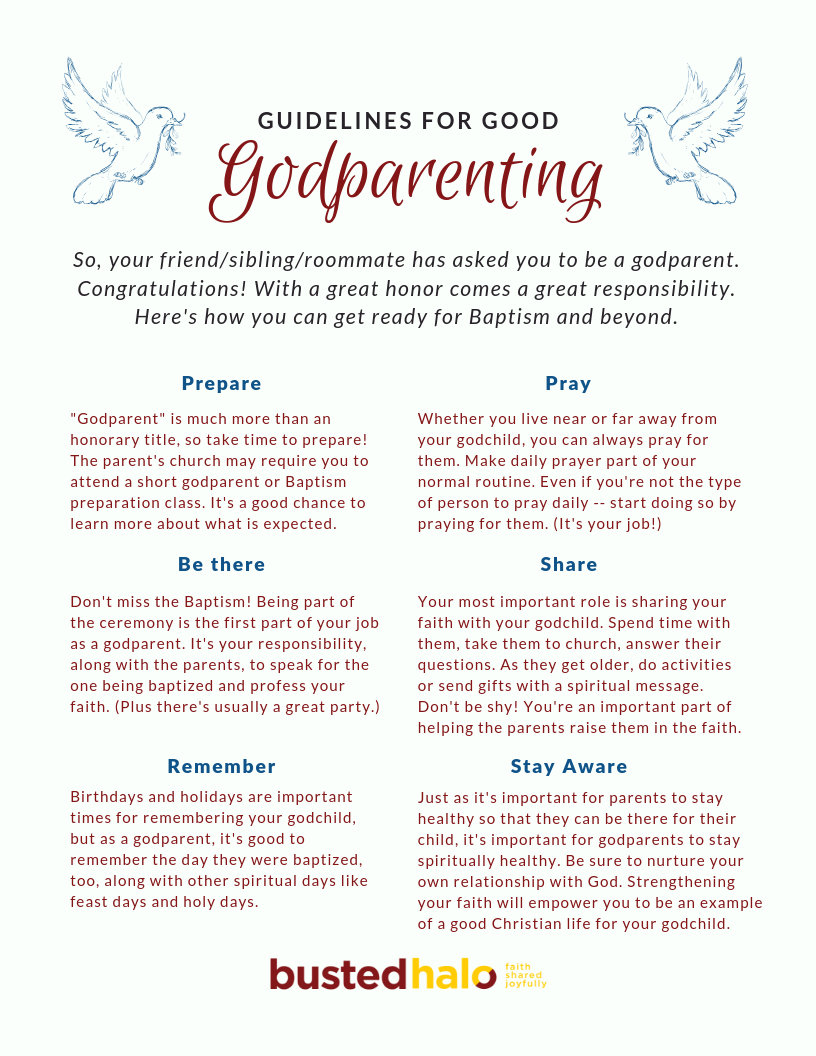
    So, your friend/sibling/roommate has asked you to be a godparent. It can be fun, but it’s more than just sending a birthday card once a year. So, get ready for the baptism and beyond with Busted Halo’s “Guidelines for Good Godparenting.”

    Click here or the image below to download a high-quality printable copy.


  • Mary in Two Minutes

    Mary in Two Minutes

    Ever wonder about Catholics’ relationship with the Virgin Mary? Do they worship her or just pray to her? What’s the Annunciation? What’s the Immaculate Conception? What’s the Assumption? All these questions and more are answered in this short two (okay, three) minute video.

    To download this video go here and click the download arrow or choose save or download.

  • A Good Dog: How ‘Bluey’ Inspires Goodness for the Whole Family

    A Good Dog: How ‘Bluey’ Inspires Goodness for the Whole Family

    Image Courtesy of Disney+

    A red dog gently bunts a cricket ball to his younger sister; she triumphantly catches it and immediately runs to him to celebrate her big play. He proclaims, “What a catch!” while affectionately ruffling her hair as she giggles with glee. Looking on, a father states to his daughter, “That’s what cricket is all about, kid.” I find myself awash in tears while watching this tender and supportive interaction play out on the screen with my young daughters. 

    What is it about the Australian kids’ cartoon “Bluey” that tugs my heartstrings? Parents and children alike feel drawn to and inspired by the show. Animated dogs are far from a new genre, and yet “Bluey” possesses a fresh, unique sense of childhood’s wonder and joy. “Bluey” follows the adventures of an anthropomorphic family of Blue Heelers living in Australia. Bluey is a spunky 6-year-old pup, and her 4-year-old sister, Bingo, happily takes the role of her imaginative playmate. Often joining in their elaborate games, their parents create a loving, family-oriented atmosphere. We began watching “Bluey” after our dear friends mentioned its charm and it became a fast favorite in our home. Wading through media meant for children is a daunting task as a parent, but “Bluey” provides a welcoming, safe space to which I find myself continually returning. There’s silliness, foibles, and even the sprinkling of light potty humor; and through it all “Bluey” captures the essence of goodness and family life remarkably well. 

    RELATED: 3 Ways God Reveals Himself to Me Through My Young Children  

    “Bluey” depicts the mundane, everyday interactions between a family and their friends. “Bluey’s” narratives do not focus on big sweeping storylines but rather on the sacred space of family life. Holding relationships at its center, the pursuit of goodness and harmony is evident in the depictions of both the adults and children in the series. The stories weave a tapestry of virtue I see reflected in my own family. 

    Giggles cascade across the room as my daughters carefully guide a ladybug to her newly constructed magic carpet. For an unexplained reason, our home has experienced an influx of ladybug visitors and, inspired by a particularly charming episode of “Bluey” called “Slide,” no bug shall be harmed in our home. In “Slide,” Bluey’s sister Bingo and her best friend Lila develop a system for ensuring that when they careen down the water slide, no bugs are squashed. My sweet, caring girls took this message to heart, and we are now the protectors and playmates of all insects. Small acts of kindness for the tiniest of friends, but kindness nonetheless. 

    LISTEN: Tackling Kids’ Tough Questions of Faith

    Goodness, sometimes defined as virtue in action, radiates throughout “Bluey’s” family as they navigate forming relationships that bless not only one another but also their neighbors, friends, and family. Theologian Stanley Hauerwas describes the development of virtue as narratively formed through stories. I see this development firsthand and subsequently try to be mindful as I curate the stories my daughters watch and read. Yet, I have discovered their characters are not the only ones formed through these narratives.  

    Kindness and goodness are depicted not only in the main characters, but also throughout their community; emphasizing our need to both give and receive support. In an episode called “Baby Race,” Bluey’s mom, Chilli, recollects her struggles with comparison early in motherhood. Her anxieties over Bluey’s development are eased when she is visited by a more experienced mom friend who gently informs her, “You’re doing great.” This has become a reminder frequently quoted by my dear friends and me when one of us is feeling the weight of motherhood. Never underestimate the wisdom of a pink poodle and the ripple effect of support. 

    RELATED: Children and the Church: Recognizing the Welcome

    The episode referenced at the beginning of this article, “Cricket,” chronicles the journey of Rusty, a friend of Bluey’s, to become a skilled cricket player. Rusty’s dad is deployed overseas; yet through his letters, he imparts advice on facing fast pitches by writing, “As you grow up, you’ll face harder things than a cricket ball… Just keep your eye on the ball and take care of your little sister for me.” This prompts Rusty to bunt the ball to his sister and celebrate her achievement rather than reveling in his own skill. My older daughter quickly caught onto the thread most pertinent to her life and cooed “Aw! He shared with his little sister.” And that’s the beauty of “Bluey;” she saw a sweet story about sharing with your siblings, while I watched a heartwarming tale about a young dog growing in character and skill, and we both loved every minute. 

    The stories that we watch and read with our children form both parent and child. They offer verbiage to discuss tricky topics, provide games and ideas for imaginative play, and gently teach us all the virtue of goodness. By creating a program that highlights the beauty of the mundane and centers on creating healthy relationships with others, “Bluey” has inspired and captivated audiences. All ages can enjoy a show that depicts how kids and parents can both grow in goodness within their everyday lives. As I read, watch, and listen to various stories with my children, I am learning to embrace each narrative that shapes my character, and that of my children, for good – even those starring a small blue dog. 

  • With Finals Looming…Who Is the Patron Saint of Studying?

    With Finals Looming…Who Is the Patron Saint of Studying?

    I can offer three who would be good to pray with:
    1) St. Thomas Aquinas — the official patron of scholars and a doctor of the church. His great work, the “Summa Theologica,” might just be something you’re studying in fact.

    2) St. John Henry Newman was very active in the intellectual life and set up centers for discussion so as to merge Catholics with intellectual conversation at universities as it was often misconstrued that to be Catholic is to be anti-intellectual. Campus Ministry Centers across the United States often bear his name. Read “The Idea of a University” sometime.

    3) An obvious one is St. Ignatius of Loyola who founded the Jesuits whose charism is education. Many Jesuit universities exist in the United States and elsewhere including Georgetown, Boston College, Fordham, and Loyola Marymount.

    If you’re really desperate, you just might want to try St. Jude. He is the patron saint of hopeless cases and has been known to dig a few people out of a jam.

    Originally published May 9, 2016.

  • Learning About Sacrifice, With the Help of St. Mark

    Learning About Sacrifice, With the Help of St. Mark

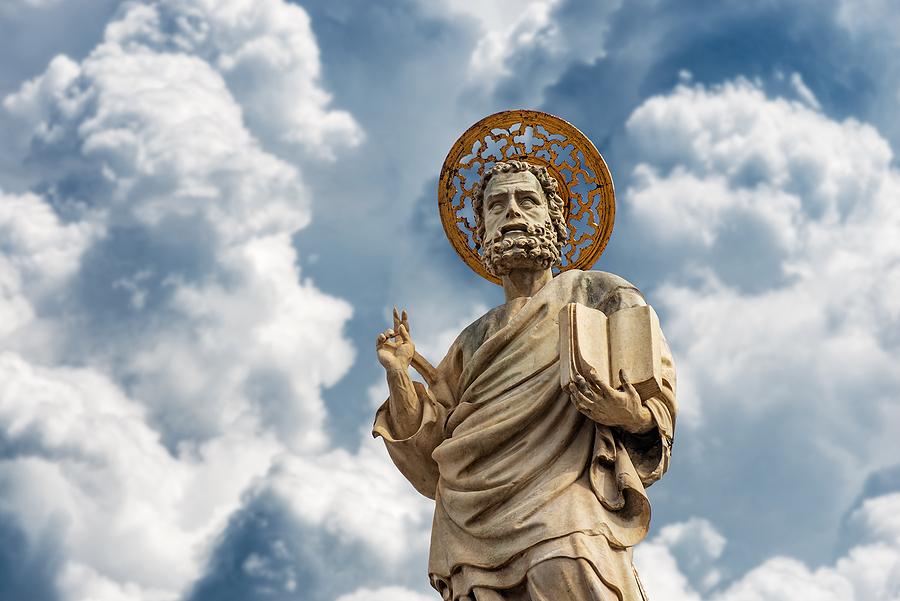
    Image of statue of St. Mark with sky in background.
    Photo by Alberto SevenOnSeven on Bigstock

    Sacrifice is key. We know that Jesus requires this of his followers, but I also heard this statement repeated many times when my wife and I were engaged.

    If I am honest, I think this kind of statement is kind of threatening. I know it to be true based on the life, witness, and words of Christ, but sacrifice is difficult. Approaching my fifth wedding anniversary while having two children (and one on the way) has validated the importance of sacrifice even more concretely in my life. Much of this investigation into sacrifice, however, has been enlightened by St. Mark. 

    The feast day of St. Mark falls on April 25 each year. This critically important saint is often overlooked because he was not one of the 12 Apostles. He does not appear in the stories about the earthly ministry of Jesus, but he wrote one of the four Gospels. 

    RELATED: How to Make Friends With a Saint

    I admit I used to know nothing about St. Mark; he was just a man who wrote a Gospel. My appreciation for him climbed last year when I decided, for the first time, to read the Gospel of Mark straight through from beginning to end. I often read the Gospel of the day, but after hearing a podcast about the importance of reading these accounts as they were written, I took up the task. I started with Mark, well, because it is the shortest Gospel!

    I learned that from the earliest days of the Church, Mark was known to be the interpreter of St. Peter. He became close to Peter and was able to write his account of Jesus’ life based on listening to Peter’s stories.  His writings are viewed as the preaching of St. Peter. We also know, from Acts 12, that Mark was once the companion of Paul and Barnabas as well. 

    Taking the time to read the entire Gospel of Mark transformed me. What became more palpable very quickly, was that Jesus was sent to sacrifice his life for me. I felt this in the way that Jesus spoke about his passion in the Gospel of Mark. I could picture Peter speaking these words to Mark and being moved by them as he heard them for the first time. It became more real for me because I realized that this message was literally passed down through the generations in a powerful and transformative way.

    RELATED: How to Be a Saint-in-the-Making

    At the start of the third chapter of Mark, people begin to plot Jesus’ death. All Jesus did prior was heal the sick, restore the possessed, and preach the truth. And yet, humanity rejected him. He was to be killed because of who he was. Still, he continued to place himself in the spotlight with more public healings and more intense preaching. Christ did all of this with the knowledge that he came to suffer.

    This reaches a shift in intentionality at the midway point in the Gospel. Peter confesses that Jesus is the Son of God and Jesus goes on, three times, to tell the Apostles that he will be arrested, suffer, die, and rise. Jesus states that he “must suffer” (Mark 8:31). 

    I became more and more intrigued by this truth as I reached the details of Jesus’ passion. It seemed more real to me and more powerful. If he tells us that in order to follow him we must also take up the cross (Mark 8:34), then why do I view sacrifice in such a negative way? The sacrifices that I am being invited into actually make me like Jesus. Mark, specifically, taught me this because of his intense focus on suffering and sacrifice. Sacrifice is an opportunity, it should not be a fear.

    RELATED: What I’ve Learned About Marriage When the Unexpected Happens

    My first practical thought was: Can I be more intentional about sacrificing in my marriage? I do my best to do this by helping around the house after work, but I think I view these tasks as things I just have to do. Mark’s insights helped me to see that I can offer difficult times (even if they are simple) as avenues of grace for my loved ones. Doing the dishes or folding the laundry late at night when I am tired and drained aren’t just nice things to do. They can be sacrificial and intentionally done to give me access to Jesus’ sacrificial love. 

    Second, I thought about my two boys. Being a parent of a 3-and-a-half-year-old and a 1-and-a-half-year-old can be chaotic. Noise, messiness, and lack of sleep are all side effects when the needs of your children demand all of your attention. My wife, Joanna, experiences this more than I do since she is home with them, but being consistently present to her children all day is a sacrifice. Rather than look to escape into my phone or have “me time,” Mark has inspired me to be more present during these special times with my kids. 

    The beauty of Christian sacrifice is that its focus is not on rigor. Sacrifice opens us up to love and makes us who we are meant to be. The tired tasks and intentional presence I strive to have with my children make me a better husband and dad. They do not make my life darker but brighter. Thanks to St. Mark, I am becoming less fearful of sacrifice and more grateful for the impact of Christ’s sacrifice in the concrete aspects of my life.

  • The Heavens Are Telling the Glory of God: An Earth Day Reflection

    The Heavens Are Telling the Glory of God: An Earth Day Reflection

    A white woman in a blue tank top is holding a handful of dirt. A plant is growing out of the dirt in her hands.
    Photo by Nikola Jovanovic on Unsplash

    As we celebrate Earth Day tomorrow, I am reminded of the words of Psalm 19, celebrating God’s glory in creation, which begins with the following phrases:

    The heavens are telling the glory of God;
    and the firmament proclaims his handiwork.
    Day to day pours forth speech,
    and night to night declares knowledge.
    There is no speech, nor are there words;
    their voice is not heard;
    yet their voice goes out through all the earth,
    and their words to the end of the world.

    How exactly do the heavens tell of the glory of God? According to this psalm, they do not have a voice that can be heard through speech, and yet the words of their “voice” travel to all corners of the world because, with gratitude, they proclaim God’s majesty through the nature they are endowed with: trees root into the forest floor, reaching with branches of praise toward heaven, sheltering the things below; rivers rush and teem with aquatic life, a watery vessel for fish to travel; the sun and moon usher in the day and night, balancing the world with warmth and cold; flowers and plants enrich the mind’s eye with dynamic beauty and mystery, inviting the viewing into greater discovery.

    RELATED: Digital Retreat for Deepening Our Relationship With God and Nature

    Through my own experiences of spending time in nature: running, hiking, and gardening, I have witnessed firsthand the Earth speaking to me that everything is a gift. Yet, how often do I consciously call to mind and express gratitude for all that I have in a tangible way, as the Earth does? Not often enough. When we allow ourselves to experience deep and authentic gratitude, we naturally want to give back. We want to bring about something good for all the good that has been given to us; in other words, to co-create with God in blessing the world around us. I invite you to consider the visible ways you can cultivate a continuous inner life of gratitude by taking up the call to be co-creators with God in all seasons.

    In my own life, I have been blessed with an aptitude for words, specifically through my work as a novelist. Through the gift of storytelling, and by crafting characters and stories that glorify God and reveal his presence, I can bring to life a story where he can be found within the pages. In recent years, I have also had the opportunity to co-create with God in developing and implementing lesson plans as a faith formation minister at my local parish. Content creation of faith materials has given me an opportunity to produce something tangible for the benefit of young minds—another expression of my gratitude to God through the gift of teaching.

    RELATED: Bible Verses to Help You Care for Our Planet

    Recently, I have begun caring for three potted rose bushes on my small back deck. Growing up, whenever the winter frost had melted and springtime was beginning, I would begrudgingly stalk outside to help with the gardening in the family backyard, pulling up countless weeds, pouring out bags of fresh dirt, and helping plant new seeds. Once out on my own in a rented townhouse without any backyard garden, I found myself surprisingly missing the springtime chore. I had taken the gift of aiding in the backyard’s beauty for granted, and I now look forward to the day when I will have my own. Today, I look forward to picking out dead leaves from my rose pots come spring, gently pruning the branches to aid in new growth, and watering the base. As I write, the branches have turned green, and the season’s first yellow roses are about to blossom.

    Now it’s your turn. How can you co-create with God from a place of profound gratitude? What gifts and talents has he graced you with that you can use to bring newness of life and beauty to the world? Co-creation arises through baking pies to nourish new neighbors; bringing a spare space to life in decorating for a celebration; sewing clothing to provide warmth for children, and many more expressions of gratitude that create something beautiful that blesses the Earth.

    Originally published April 21, 2023.

  • Who Decides Who Can Be a Confirmation Sponsor?

    Who Decides Who Can Be a Confirmation Sponsor?

    Q: Who makes the decision as to who can be the sponsors for a child making his confirmation? The rules are 1) church-goer in good standing 2) not divorced 3) Catholic. I don’t know anyone who qualifies for all three.

    A sponsor for baptism or confirmation must be at least 16 years old and be a Catholic who has received the Sacraments of Confirmation and Eucharist and who “leads a life of faith in keeping with the function to be taken on” (see the Code of Canon Law, paragraph 874, for the complete requirements). In most places, as determined by the local bishop or the pastor of a church, “leading a life of faith” is interpreted to mean that a person is following the teaching of the Church with respect to marriage. If single, he or she must not be living with a partner; if married, he or she must be sacramentally married in the Church. (Someone who is civilly divorced but not remarried can still be eligible.) While these standards can certainly vary by parish and priest, these rules aim to ensure that the sponsor can set a good example for his/her godchild or confirmandi. The most important role of sponsorship is sharing your faith and helping your godchild/confirmandi’s spirituality flourish. A young person needs a role model who attends Mass regularly and who takes the teaching of the Church seriously. 

    If you don’t know anyone who meets the requirements, make an appointment with the director of the confirmation program to discuss your particular situation. He or she will know if any exceptions might be approved by your local bishop. Alternatively, he or she could also connect you with faithful members of your parish who would be delighted to meet you and accompany a candidate on the journey to confirmation.

  • How I’m Learning to Stop Comparing Myself to Others, With the Help of Humility

    How I’m Learning to Stop Comparing Myself to Others, With the Help of Humility

    Man holding his face looking at laptopThis past New Year’s Eve, I decided it would be helpful to compose a year-in-review post for my personal blog detailing my accomplishments as a freelancer in 2021. I was initially pleased with the overview, because the list of achievements seemed impressive: I had 32 articles published (one of which was spotlighted by an influential Catholic publication and later appeared anthologized in book form), I helped to edit two comic book issues, and I appeared as a guest on five podcasts! This all followed my decision to pursue my dream of being a creative writer back in 2020 when my internship as a lab assistant in a natural history museum ended abruptly during the height of the pandemic. My leap of faith appeared to have paid off, and on the surface I seemed to have much to be grateful for. But instead, my satisfaction quickly gave way to depression and disappointment.

    When I compared myself to other writers I knew who seemed, from my vantage point, far more successful and prolific, I felt like a failure. I began to wallow in self-pity and resentment: I had worked so hard for nearly two years! Why wasn’t I more successful? Why didn’t more people appreciate and recognize my work?

    RELATED: What Does It Mean to Be Content? A Reflection on Appreciating What I Have

    At around this time, my mom recommended that I read Fr. Robert Spitzer’s book “Finding True Happiness.” I dove right in, and soon found that Fr. Spitzer understood exactly the kind of emotional whirlwind I was going through. Because many of us tend to classify ourselves and our peers in terms of “winners” and “losers,” we end up coupling our own self-worth with our relative level of worldly success, or perceived lack thereof. This emotional trap is called “the comparison game” and, as Fr. Spitzer explains, it can have dire ramifications for one’s spiritual life: “As the list [of accomplishments] grows more important for defining our self-worth and identity, we will make humility, compassion, virtue, self-sacrifice, and empathy less important.”

    As I read this, I was reminded starkly of the Parable of the Sower (Matthew 13:3-9), in which Jesus speaks of the thorns and brambles – “the cares of the world and delight in riches” – which grow up and choke the life of grace that God desires to bestow on us. By indulging in the comparison game, I had allowed self-defeating emotions and behavior patterns to strangle the joy and passion out of my creative pursuits! I would scroll through Twitter with envy, begrudging the apparent success of other young writers. Writer’s block hit me like a ton of bricks and my words seemed inadequate and stale.

    RELATED: 7 Simple Ways to Find Humility

    Like a rigged casino machine, you cannot “win” the comparison game; the only way out is to stop playing. I learned that the key to breaking the loop of self-centeredness and pride is to cultivate an attitude of service and the virtue of humility. My goals as a writer needed to be completely reoriented away from a desperate scramble for approval and towards a humble acceptance of God’s will. This change of perspective has not been an overnight conversion, but is an ongoing process of healing and discernment. One helpful devotion that I recently began practicing is the Litany of Humility. When I was introduced to this prayer years ago, I was initially put off by it, especially by petitions such as:

    “That others may be praised and I go unnoticed,

    Jesus, grant me the grace to desire it.”

    Why on earth would I ask God that I be unnoticed, overlooked, forgotten? It seemed absurd! At that time, I wasn’t ready to receive the meaning of these challenging words. But now I understand that I was unwittingly playing the comparison game. By actively praying for the gift of humility, I am allowing God to get to work uprooting the weeds of selfishness, envy, and resentment in my heart so that, if I cooperate with his grace, humility and charity can begin to take root like seeds that fell on good soil.

    Originally published May 13, 2022.