

Tag: Faith in Everyday Life

  • Pray, Fast, Give: My Decision to Part with a Possession Each Day of Lent

    Pray, Fast, Give: My Decision to Part with a Possession Each Day of Lent

    Young man sitting on orange couch opening a cardbox boxOne of my favorite little moments from J.R.R. Tolkien’s fantasy masterpiece “The Lord of the Rings” is when the ranger Aragorn returns to Pippin a treasured brooch that the hobbit had cast by the wayside as a clue after he and his cousin Merry were captured by the evil orcs. “It was a wrench to let it go,” said Pippin, “but what else could I do?” Indeed, if Pippin had not had the good sense to drop the brooch, his friends might never have known that the two young hobbits were still alive at all. Aragorn confirms that Pippin made the right choice, saying that “one who cannot cast away a treasure at need is in fetters.”

    I find this exchange so powerful because it often reflects my own experience. Parting with possessions, even those that I no longer need or use, can be a truly wrenching task. There are times when I feel like my possessions really possess me. Yet when I ask God for the strength to let them go, I know at once that I’m doing the right thing.

    RELATED: A Spiritual Spring Cleaning: The Surpising Way Decluttering Enriched My Faith Life

    It’s true that, as a Catholic layperson, I have no obligation to take a vow of poverty like a professed religious brother. And yet, as a disciple of Jesus Christ, I am called to live simply and modestly, prioritizing people over possessions. More often than I would like, I find myself emulating the rich young man who encounters Jesus in Mark’s Gospel. When Jesus invites him to sell all he has and become a disciple, the youth “was shocked and went away grieving, for he had many possessions” (Mark 10:22). Like that poor soul, I time and again find myself a prisoner of my possessions.

    Thank God that the Church gives us the season of Lent! Lent can be a powerful, intentional time of conversion, a time to reorient my spiritual life and sacrifice those things that have become obstacles and stumbling blocks on my personal walk with God, holding me back from pursuing a more authentic path of discipleship.

    As Ash Wednesday approached this year, I realized that I could make my process of decluttering into a Lenten blessing, an opportunity to examine what my spiritual priorities truly are, as well as an opportunity to practice almsgiving and help the less fortunate through the corporal works of mercy.

    RELATED: Choosing Sacrificial Giving During Lent – And All Year Long

    When I was out on a walk around my neighborhood thinking over all these things, I had a flash of inspiration: I would collect 40 of my unused or lightly used items and donate them to charity — 40 items for the 40 days of Lent! Of course, this is hardly an original idea (honestly, I can’t remember where I first heard about it) but I believe that it is what God is calling me to do this Lent. I didn’t even wait for Ash Wednesday to begin putting my plan into practice!

    About half of the items I’ve collected for donation so far are clothing. On a recent episode of the “Word on Fire Show”, Bishop Robert Barron said that cleaning out the closet can be a very good way to make an examination of conscience.

    Admittedly, I felt a bit defensive when I heard that. “Well,” I thought, “maybe that’s true for other people, but I certainly don’t have that many unused clothes.” But when I searched through my bedroom closet a few weeks ago, I got a sobering reality check: I found many items of clothing that I wasn’t wearing because they no longer fit, and more than a few pieces that I had bought on impulse and had simply never worn at all. I put all these aside into a big bag to donate to my parish’s Lenten clothing drive.

    Besides clothing, the bulk of the items I’ve chosen to give away are books. I’ve written before about my struggle to downsize my enormous book collection. When I’m being brutally honest with myself, I know that many, if not most, of the books I own are titles that I’ll never read again. I either hang onto them for sentimental reasons or because I fool myself into thinking that I will need them for some vague “writing project” that I may (or may not) do in the future. The time had come to seriously cull my book collection. So far, I’ve managed to almost fill up three banker’s boxes with books to donate to my local library’s charity book drop! But this was not an easy accomplishment.

    RELATED: How Decluttering My Office Created Space for New Career Goals

    At one point, I was just stuck; I couldn’t seem to part with any of my books no matter how hard I tried. I kept putting them back on the shelf. Then I remembered one of my favorite Catholic podcasters, the Dutch priest Fr. Roderick Vonhöge, who often shares insights into his own decluttering process on his podcast “The Walk.” So I started listening to an episode where Fr. Roderick revealed how he’s been incorporating prayer into his efforts at decluttering. He found that praying over each unwanted object, and specifically giving thanks to God for its former usefulness, made it easier for him to let go of things cluttering up his workspace. 

    This insight changed my whole perspective on parting with my books, and I adapted Fr. Roderick’s practice into my own three-part prayer: As I took each book off the shelf, I first thanked God for sending that book into my life when he needed it. Second, I asked God to bless the person who would receive this book now that it was no longer useful to me. And third, I made an act of trust that God will provide for all my future needs. This was a liberating experience that allowed me to donate far more books than I thought possible before!

    There are still several more weeks of Lent to go, and I know I’m just beginning this journey of conversion. I’m just starting to form a better relationship with my possessions that reflects my primary calling as a child of God and a disciple of Jesus Christ. With the help of prayer and trust in God’s grace during this holy season, I’m certain I’ll make progress.


  • Living in Communion With God And Neighbor: Thoughts on the Greatest Commandment

    Living in Communion With God And Neighbor: Thoughts on the Greatest Commandment

    Woman comforting man on the road
    Photo by Gerardo Javier Juarez Martinez

    A deacon at my church once shared a metaphor from earlier Christian times that can be traced back to the sixth-century monk and hermit, Dorotheos of Gaza. It goes like this: Think of a wheel or circle. (In our modern times, we can think of a bicycle wheel.) Imagine the spokes of the wheel. As the spokes travel from the outside tire towards the hub in the center of the wheel, they necessarily get closer to one another. In this metaphor, the center of the wheel is God and the spokes are each of us on our own path to God. It does not matter at what point on the circumference you start, as one continues on their journey to the center, one must get closer and closer to other people on their own paths. 

    RELATED: Loving Your Neighbor When It’s Hard

    This metaphor reminded me of the Gospel story in which Jesus is asked, ”What is the greatest commandment?” Jesus responds with not one, but two commandments: to love God with all your heart, with all your soul, and with all your mind, and to love your neighbor as yourself (Matthew 22:37-39). 

    I don’t quite remember the first time I heard this teaching. It was likely when I was a kid at Mass or at the Catholic elementary school I attended. Now, reflecting on it as an adult, I see that Christ is expressing the bond that exists between how we treat others and how we love God. 

    Keeping this teaching in mind has helped me view others I encounter with more compassion, seeing Christ in them and having a better understanding of how we are all made in God’s image. This includes everyone from my own family and friends, to my co-workers, to strangers I see out at, say, the grocery store. To embrace Christianity is to live a life striving for God, which in turn requires us to work to increase our love for our neighbors. 

    RELATED: A Practical Guide to Loving Your Enemies

    Jesus met many people throughout various walks of life, treating them with love, and calling them to turn their hearts toward love. I often think about the choice I have each time I interact with someone, especially if I’m not in the greatest mood. I can choose to let my bad mood take over and come across as insensitive and contemptuous, or I can work to overcome it to be more thoughtful and humble. I don’t always choose the latter. 

    However, I try to remember that not only is it best practice to treat others with kindness and respect for their own sake, but also that my actions reflect how I express my love for God on a day-to-day basis. As Servant of God Dorothy Day poignantly put it, “I really only love God as much as I love the person I love the least.” The call to love your neighbor as yourself is not always easy, and I have certainly not lived this out in all (or likely most) interactions I have had with others. Still, striving towards virtue and attempting to live more in line with Jesus’ teachings with each successive day is an integral part of the Christian life. 

    HOMILY: Two Inseparable Loves: Reflection on the Greatest Commandment

    Part of my attempt to live out Jesus’ teaching has been trying to be more active and deliberate in the use of my time. This has meant getting more involved in the ministries at my parish, such as the food pantry and the refugee resettlement program. I have also tried to live out God’s love for others in my own family. Being there to help my kids when they have a problem, or simply to spend time playing games with them and sharing in their interests, being a devoted husband to my wife, doing chores around the house (even and especially when I’d rather do anything else) are all ways in which I can try and emulate Christ’s teachings in my life. 

    The beauty of the two-fold nature of the greatest commandment, to me, is that we are all given many, many opportunities to convey our love and gratitude to God through how we treat others. This can range from the time we spend with our family and friends to the mundane interactions we all have with strangers in our daily lives and everything in between. God calls us all to be in communion with him, and at the same time, to be in communion with each other. “Do not withhold good from those to whom it is due, when it is in your power to do it,” as it is written in the Book of Proverbs (3:27). Love is a gift God has freely given to all of mankind… and that is something I hope to keep in mind next time I see my neighbor.

  • A Busy Person’s Guide to Lent

    A Busy Person’s Guide to Lent

    Lent is a wonderful time to slow down and take stock, a special time for fasting, prayer, and almsgiving. But adding just one – much less all three – additional activities into our busy, over-scheduled lives can feel like a huge challenge. Between my full-time job, my part-time job, helping my son with homework, and having dinner with my family, some days I’m hard-pressed to find even 15 minutes of unaccounted for time.

    Still, though, I feel called to make the most of the Lenten season this year, and I know that giving up something, giving to something, and giving of myself in prayer are the best ways to do that. But how can I add any of that to my schedule when I rarely have time for lunch away from my desk? I’ve found that the key is giving up adding things in. Instead, the trick is to rethink the time I already have.

    Maximize your morning

    Think your morning shower is only good for getting you cleaned up for the day? Or that your first cup of coffee is merely an energy boost? Repurpose your regular routine in one of these creative ways:

    • Sometimes I’m barely conscious when I stumble into the shower in the mornings. That’s when I like to use traditional prayers I’ve known all my life. Beginning my morning with a couple Our Fathers and Hail Marys allows the words and their meaning to work on me without effort and sets the tone for the rest of my day.
    • Bring an intention to your morning while you’re getting ready for the day and offer it up in prayer. Saying something simple like, “May this day bring me closer to you,” or “May I serve you and others faithfully today” can transform morning grogginess into a more peaceful, positive embrace of the new day.
    • Is picking up coffee on the way to work part of your morning routine? Brew a pot at home, save the money, and make a donation to charity or put it in a CRS Rice Bowl instead.
    • If a doughnut usually accompanies your morning coffee, try skipping it for a while. Although you’re not fasting completely, you are making a choice to do without something, which is the whole point of fasting in the first place.

    RELATED: I’m Not Catholic, But Lent Is Just What My Busy Soul Needs

    Leverage the lines

    Despite the advances in technology, we all still wait in lines – the carpool line, the check-out line, the drive-through line. Make it a goal to use the time you spend there in creative ways that support your spiritual journey:

    • Count your blessings. This never fails to improve my mood and reframe the way I think about the annoyance of being stuck in a line in the first place.
    • I also like to be honest with God and share my frustration. Sometimes, I’ll pray, “Ugh. I’m not in a good mood, Lord. Please teach me patience.” This has a way of moving me from my frustration to an acceptance of the present moment just as it is.

    RELATED: 2019 InstaLent Photo Challenge

    Tackle technology

    Many people believe that the internet and social media provide far more to distract us than center us. But using technology mindfully can be a nourishing Lenten practice:

    • When scrolling through social media, suspend your judgment of a comment or photo and instead pray for that person. A simple, “Grant her peace and joy,” is a great way to lift friends and acquaintances in prayer. And if the person is someone you have a hard time with, try praying, “Help me to be merciful as you are merciful.”
    • If you feel you should spend less time on social media but can’t seem to cut back, use it to support your Lenten “fast.” Set an alarm and allow yourself five minutes of mindless scrolling. Then when that time is up, use it for some creative “almsgiving.” You could clean out a closet and donate what you don’t need, call or write a note to someone who may be lonely, or email your legislators about a cause you believe in. You’ll find you won’t miss the time you gave up “liking” and “sharing.”
    • Consciously use your cell phone for prayer. Whether you’re looking for daily scripture readings, guided meditations, more traditional prayers, or contemplative music, there’s an app for that! You can also use the tools already on your phone. Try setting an alarm or calendar notification to remind you to stop what you’re doing and take time to pray. Or keep a list of prayer requests on your phone’s notepad.

    Making Lent a meaningful time of spiritual renewal doesn’t have to be difficult. We just need some creative thinking, an open heart, and the faith that everything – even the mundane routines of daily life – “work together for good to those who love God” (Romans 8:28).

    Originally published February 26, 2018.

  • What Do Lent and Valentine’s Day Have in Common? More Than You Think

    What Do Lent and Valentine’s Day Have in Common? More Than You Think

    Grey heart made of ash and dustAsh Wednesday and Valentine’s Day can seem like contradictions. One day celebrates romantic love, while the other reminds us that our bodies will one day turn into dust. This year, February 14 will be filled with both Cupid and ashes.


    Ash Wednesday marks the beginning of the Lenten season of repentance and the preparation for the holiest days of the Church year. I always find that the beginning of Lent comes up so fast that I do not spend enough time reflecting on how I should spend this season. My tendency towards the eleventh hour isn’t new – if I am honest, I also tend to buy my Valentine’s Day gift for my wife at the last minute as well. So this year, I want to make the start of Lent and Valentine’s Day more impactful by considering what they mean — together.

    RELATED: Why Ash Wednesday Isn’t a Downer

    This year’s simultaneous occurrence of these two important days on the calendar has been a fruitful coincidence for me because it prompted me to start thinking about the day sooner than I usually do. So often, I live in a state of distraction – going from one day to the next without being intentional about the coming days. Once I investigated the significance of Valentine’s Day and Ash Wednesday, I found that their alignment offers a powerful opportunity to see that love means that we die to ourselves. 

    St. Valentine was a priest (possibly a bishop) who lived during the third century. He was a man of tremendous faith. During his time, Emperor Claudius struggled to employ soldiers in his army. He thought this was because men would rather marry than serve him. So, Claudius outlawed marriages in order to spike the numbers in his army.

    In response, Valentine often married couples in secret so they could enter into the sacred bond of lifelong love together. When he was later imprisoned for doing so, he healed the jailer’s daughter of blindness, befriended her, and would often sign his letters to her, “your Valentine.” Valentine was eventually beheaded for his defiance of the emperor and died as a martyr of the faith. 

    LISTEN: Saints of Our Lives: St. Valentine

    Learning about the life of St. Valentine has compelled me to reflect on what I do for Valentine’s Day and how I approach the everyday aspects of my marriage. Specifically, how can I sacrifice more for my wife? Instead of viewing ordinary tasks as a simple responsibility, I have begun to see that doing the dishes or laundry after a long day of work can be an offering of love to her because she so often does them for me. Simply carving out time to write a letter to her on an ordinary day is another practice that I know will make our relationship more rooted in the sacrifice of St. Valentine. 

    Love costs us something: our time, our energy, our sacrifice and effort. Lent is meant to cost us small offerings so that we can gain further insight into Jesus’ sacrifice. That is why we receive ashes on the first day of Lent. I would argue that Valentine lived from the consciousness of his own ashes. He knew that to follow Jesus meant that his entire being would be an offering to God.

    This Lent, I know I am being invited to do something similar. So, rather than giving up ice cream and sweets, I want to be committed to sacrificing in ways that explicitly proclaim the love that motivates the sacrifice. This Valentine’s Day will be made up of no extravagant gifts; my wife and I have decided to make Lent an extended Valentine’s Day of sacrifices for each other. 

    RELATED: In Defense of the Lenten Sacrifice

    Just like making time to sacrifice for my wife, this Lent I want to make the sacrifice of waking up 15 minutes earlier each day to pray. I want to commit to being more present at Sunday Mass, especially during the reception of Holy Communion. I hope that these practices will be more concerned with loving Christ and less concerned with giving things up because that is “what you do during Lent.” 

    This Valentine’s Day, and Ash Wednesday, practice sacrificial love that continues throughout Lent. See that love is most pure when it acts out of intentional choices for the other. Then we will experience that St. Valentine and ashes truly belong together. 

  • 25 Great Things You Can Do for Lent

    25 Great Things You Can Do for Lent

    25-great-things-to-do-for-lentAsh Wednesday marks the beginning of Lent, the 40 days of preparation for the Easter season when Christians are called to deepen their spiritual lives through the practices of fasting, prayer, and almsgiving. The belief is that our consistent participation in these practices — like exercise we do for our physical health — improves our spiritual well-being by stripping away all that is unnecessary and becoming more mindful of how God is working in our lives. Challenge yourself this year, and go beyond the usual practice of “giving up” something. Now is a great time to take stock of your spiritual life and to grow in it. Not sure where to start? Check out these 25 ideas:

    1. Make a commitment to read the Sunday scriptures before Sunday Mass. In the same way that reading up on football players, opposing teams, and coaching strategies will help you experience a game more fully, familiarizing yourself with the readings ahead of time will help you experience them in a deeper way on Sunday.

    2. Use Busted Halo’s Lent Calendar, filled with Lenten-themed Daily Jolts and MicroChallenges to find new ways to practice the disciplines of fasting, prayer, and almsgiving. Each day of Lent, we’ll offer an inspirational quote paired with a practical, challenging task that you can do that day to help keep your spiritual life on point. You can also find these challenges on our website, or when you follow us on Facebook or Twitter.

    3. Try a new spiritual practice. Sign up for an hour of Eucharistic Adoration. Experience Mass at a parish that’s made up of people from a different racial/ethnic group. Sign up for a silent retreat or spend at least one hour in silent meditation each weekend.

    4. Think about what you usually spend your money on. Do you buy too many clothes? Spend too much on dinner out? Pick one type of expenditure that you’ll “fast” from during Lent, and then give the money you would usually spend to a local charity.

    5. Take something on — 40 days of letter writing, 40 acts of kindness, 40 phone calls to the important people in your life.

    6. When you first sit down in front of your computer at work, or at the very end of your workday, try a 10-minute guided prayer from Sacred Space based on the spiritual exercises of St. Ignatius.

    7. Go to (or watch) a weekday Mass one day during the week. Many parishes offer them early in the morning, at noon, or after work. Daily Masses are often more intimate and shorter than Sunday Mass.

    8. If you don’t have a cross in your apartment or house, buy a simple one and put it in your bedroom.

    9. Use Busted Halo’s InstaLent Photo Challenge for daily, creative doses of Lenten spirituality. Post a photo each day and encounter the themes of Lent on a visual, personal level.

    10. Instead of turning on a streaming service for your next binge-watching session, read the entire Gospel of Mark in one sitting. As the shortest Gospel, it is the most concise story of Jesus’ life, and the cross, a central Lenten symbol, plays an even more prominent role than in the other Gospels.

    11. Meditate with the Stations of the Cross. Many parishes offer these during Lent and often on Fridays. Or check out Busted Halo’s Virtual Stations of the Cross.

    12. Create your own Friday fish fry! Try this simple and delicious recipe. It’s not the healthiest thing in the world, but a fun Catholic tradition to help you abstain from eating meat on Fridays during Lent.

    13. Unplug from your iPhone or turn off your car radio on your commute. The silence may be jarring at first, but you may find that you are able to concentrate better and will be more observant of your surroundings.

    14. Buy a book of daily reflections and keep it by your bed. Local parishes often offer these for purchase during Lent, and there are some good ones available online. Try the Magnificat or a book by Edward Hays.

    15. Think about a habit that has kept you from being whom God is calling you to be. Consciously give up that habit for Lent.

    16. Spend at least one weekend or evening volunteering during Lent. If you feel comfortable volunteering in person, help package meals at your local soup kitchen or stock shelves at a food pantry. If you’d rather volunteer from home, reach out to your parish to see how your skills might help serve on of the church committees. 

    17. Make a commitment to fast from insensitive, cruel comments about others. So, no gossiping or going down the Twitter rabbit hole.

    18. Participate in a spiritual book club or small community of faith. Check out what’s already going on at your parish or pick a book and start your own.

    19. As a part of your Lenten almsgiving, make a point to learn more about a particular social issue (immigration, human trafficking, racism, the environment, public education, child poverty). Give money to an organization related to your chosen issue that supports the dignity of the human person.

    20. Tap into your creative side and try using coloring as a way to pray and meditate during Lent. Buy a coloring book or download a Lent calendar coloring page here.

    21. Use the Catholic Relief Services Rice Bowl to reflect on the realities of people in need around the world and devote prayers, fasting, and almsgiving to changing the lives of the poor. The money raised by CRS Rice Bowl supports not only the prevention of hunger and poverty in countries like Kenya, Vietnam, and Honduras, but also  in the United States. (Twenty-five percent of all donations stay in the local diocese where they are collected.) For your Lenten Fridays, CRS Rice Bowl also features meatless recipes from cultures around the world. 

    22. Pray for somebody. As you’re walking the streets, driving the highways, or waiting for a meeting to start, pick out a person who appears to be in need and pray for that person. Be mindful of the words of philosopher Philo of Alexandria, who said, “Be kind, for everyone you meet is fighting a great battle.”

    23. Get to know your neighbors. Introduce yourself, plan a dinner, or bring food to an older person on your block.

    24. Read the Works of Mercy as Jesus describes them in Matthew 25:31-46. Then put this teaching into practice and choose an act of service you can perform throughout Lent.

    25. Celebrate the Sacrament of Reconciliation. Can’t remember how? Here’s a simple guide with some tips. Tell the priest it’s been a while, and ask him to guide you through it.

  • The Lord’s Invitation: 4 Ways to Pray Without Ceasing

    The Lord’s Invitation: 4 Ways to Pray Without Ceasing

    Image of a rosary hanging in front of a car windshield at dusk.
    Photo by Julie Tupas on Unsplash

    I remember reading through the letters of St. Paul in college and being struck by a line that had never really stood out to me before. In his letter to the Thessalonians, St. Paul urges his listeners,  “Pray without ceasing” (1 Thess. 5:17). That seemed like such a daunting command to me.

    I certainly have struggled with what it means to pray in my own life. Whether I’m wondering how I can possibly fit an hour of prayer into my day, or doubting that my prayers are truly from the heart – it’s safe to say, the idea of prayer without ceasing was a fantasy in my eyes.

    RELATED: What St. Paul Can Teach Us About Christian Joy

    In my studies at school and in personal readings, I’ve discovered that Paul’s call to ceaseless prayer is in fact an invitation to a happier life through constant communication with our Lord. Of course it can still be difficult for me to set aside time in prayer and focus completely on the Lord, but with the help of some great Catholic writers, I have learned not to fear prayer, but rather embrace it. Here are four concrete ways that we can begin to practice unceasing prayer.

    1. Pray consistently

    To truly pray ceaselessly, we must first be able to pray consistently. By praying at set times throughout our day, we can orient our work and ourselves towards the Lord.

    One beautiful way that we can practice consistent prayer is through the Liturgy of the Hours. This is the public and communal prayer of the Church, in which there are set prayers to be said at specific times throughout the day. I have found this to be a helpful way to schedule consistent prayer for my day, and I truly enjoy the beautiful morning and evening prayers that start and end my day with the Lord.

    2.  Give alms

    St. Thomas Aquinas, one of the greatest thinkers in the Church, explains that we can accept the Lord’s invitation to unceasing prayer by giving alms. Our generosity and almsgiving can be a cause of continual prayer for others on our behalf. Aquinas explains, “He who gives alms is the one who always prays, for the person who receives alms prays for you even when you are asleep” (Commentary on 1 Thessalonians). 

    RELATED: Choosing Sacrificial Giving

    For years, my family created care packages for the homeless, each of us purchasing a few essential items that we’d then pack in tote bags and share with those in need, especially around Christmastime. There are many ways to practice almsgiving, such as tithing at Sunday Mass, donating clothes and food to a local shelter, or volunteering at a local soup kitchen. Imagine the beautiful tapestry of perpetual prayer there would be if all Christians were as generous as Christ calls us to be, sharing our gifts and inviting those we serve to pray for us.

    3.  Desire God

    Perhaps the most common excuse for why we don’t pray is that we are too busy — it certainly is for me. Yet all the busyness in the world can’t keep us from ceaseless prayer. In fact, St. Augustine points out that while it is beneficial to spend much time in prayer, this is not necessary for unending prayer. We can continue with the good and necessary work in our lives, all the while desiring the Lord and his will for us. This means keeping God at the heart of all we do.

    RELATED: Keeping My Faith Alive in Times of Spiritual Struggle

    Augustine explains that prayer without ceasing is “Desire without intermission, from him who alone can give it, a happy life, which no life can be but that which is eternal.” We can pray ceaselessly, by desiring continually, the Lord and the true happiness that only he can bring (Letter 130.9.18). It can be very easy for me to get overwhelmed by the struggles and anxieties of my daily life, but I strive to remember and focus on what is at the heart of my life — the Lord. When I can end the day knowing that I kept God and his love for me in mind with all that I did, I can rest knowing it was a day of prayer.

    4.  Turn all thoughts to the Lord

    One of the most transformative approaches to ceaseless prayer I have learned is to turn the interior monologue of my thoughts into a dialogue with God. If there is one thing I already do without end, it is thinking! There is a beautiful opportunity to invite the Lord into these thoughts so that they are transformed into a conversation with him. I often become overwhelmed when thinking of my plans for the future. Instead of planning my future alone in my mind, I turn my thoughts into a dialogue with God, asking him to guide my ideas, show me the right way, and help me accomplish his will for my future. Through that continual conversation and contact with the Lord, we are truly praying without ceasing.

    RELATED: Offer to Pray for Someone? 5 Ways to Stick to Your Word

    St. Paul’s command, I’ve come to understand, is not some oppressive law on the number of hours I must spend in prayer. Rather, it is an invitation to transform my life so that I am always in contact with and in the presence of God. I hope these steps to pray without ceasing help anyone looking to achieve everlasting union with our Lord.

    Originally published January 24, 2022. 

  • Adjusting My Unrealistic Expectations: Three Essential Takeaways from the Search for My Soulmate

    Adjusting My Unrealistic Expectations: Three Essential Takeaways from the Search for My Soulmate

    I am your sister in Christ; I am also your friend rooted in reality. Between the ages of 22 and 25, I prayed fervently to St. Anne, St. Anthony, St. Joseph, Our Lady of Perpetual Help, and all the other friends in heaven who promise to make spousal matches. I was looking for a St. Joseph of my very own, after briefly discerning religious life during college and realizing it wasn’t for me. Once I knew that I wasn’t called to live in a convent, I began the search for the perfect Catholic gentleman. I wanted an intellectual (would we meet reaching for the same Chesterton book?), someone my parents would adore immediately, and most likely someone I would meet at Mass or Theology on Tap. I attended so many Catholic networking events in the cities where I lived during that time, certain it would be where I would meet my future husband.
    RELATED: My Spouse Isn’t Religious, but God Is Still in My Marriage

    When I turned 25, I did meet someone… a gruff, burly man working in entertainment in Los Angeles, who just happened to be Jewish, with no interest in converting to the Catholic faith. But we had other values in common, like family, community, and love for nature. Seven years later, none of that has changed, and we are newlyweds. Our journey was not necessarily what I imagined for myself at 25 – and our wedding was not either. We got married in the time of COVID, with our parents watching via video stream and our handful of witnesses wearing masks and standing six feet apart. My expectations came crashing down hard when we had to postpone our original wedding date, but the joy of our tiny marriage was real because of who I married.

    But I’m not here to tell you the details of my story (albeit it is pretty good and full of divine intervention). Instead, I want to share with you what I’ve learned about relationship expectations as a faithful Catholic called to marriage, which is that – to the surprise of some – virtue requires us to open our hearts and pick our battles (proof: St. Therese of Lisieux’s life in the convent). 

    Here are a few suggestions for how to adjust potentially unrealistic expectations you may have of the person you hope to marry.

    1. Your future spouse probably has hobbies that are different from yours and those of a monk.

    While I didn’t grow up gaming and honestly don’t really get the appeal, my husband has a weekly video game night with a bunch of guys he connects with virtually, and they play as a team. It is one of his best stress-reducers after a long work week. And who am I to judge? It’s not violent, and if it was, we could have a conversation about whether or not that particular game affects his demeanor. As a lifelong soul searcher, sure, I would love to see him pick up “Confessions” by St. Augustine on a Friday night instead. But if I’m choosing to do my nails or watch “Under the Tuscan Sun” in my free time, then why shouldn’t he be able to use his time in the way that he chooses? For the record, my husband is also a ceramics artist, a gardener, and the best cook I know.

    RELATED: What Is Marriage Prep Like for Those Marrying Non-Christians

    2. He or she might not be who your parents – or even your best friend – always had in mind for you.

    My parents expressed skepticism when I told them I was certain my vocation was to marry a non-Catholic man. I met my husband at the wedding of two Catholic friends who also found the match odd and frankly, disappointing. I felt downtrodden by the uncertainty of others, even when I was certain in my own heart. I wanted everyone to recognize our chemistry instantly and thought affirmation would come easily if it was my vocation. But Christ was the first to teach us that true vocation is not always easy. Over time, my parents and friends were able to see the love between us, and the same beauty and goodness that I see in my husband. While they usually want what is best for us, the important thing to remember if others aren’t sure about your partner is to ask yourself earnestly – what do you want?

    3. Perfection doesn’t exist outside of Jesus Christ and Our Lady.

    If I asked you to list your sins, we call that Confession. If I asked you to make a list of the sins you don’t want your future spouse to commit, we would probably call that unattainable (aside, of course, from the biggies like infidelity). Every human being is marred by original sin, and no matter how hard we try to overcome our flaws, any married couple can tell you that they are present daily. God willing, you will find someone who loves you for you and all your shortcomings – I am lucky enough to have done so. And in the same way you wish to be loved despite your imperfections, you must learn to love another despite his or hers. 

    RELATED: 4 Questions to Ask in an Interfaith Relationship

    Everyone has their own non-negotiables based on lived experiences, and it’s okay to keep those in mind as you look for a spouse. But if we find that we cannot change our beloved, can we love them anyway? (Spoiler alert: you won’t change anyone overnight or maybe ever, especially when it comes to picking their socks up off the floor.) While my husband is not actively involved in my faith life, I know that he loves me because of who I am in my entirety, including my spirituality and religious grounding, which is the soil from which the rest of my character springs. And I see the Holy Spirit emanating from him when he cooks me an incredible meal or gazes at the mountains. He often teaches me with his generosity, from organizing neighborhood trash cleanups to buying hats and socks to hand out to LA’s homeless. 

    The overarching theme here is not letting an unattainable ideal or an impulse to check all the boxes prevent you from finding true love. There are incredible people out there, both inside and outside the Catholic Church. Chemistry is important (in my experience) as is a shared value system and vision for your lives together, plus of course conversations on the big three: sex, children, money. 

    But open your heart to see the true person in front of you. You could be so pleasantly surprised at where it leads.

    Originally published Feb. 3 2021.

  • ‘Jonathan & Jesus’ Is a Story of Surrender We Can All Learn From

    ‘Jonathan & Jesus’ Is a Story of Surrender We Can All Learn From

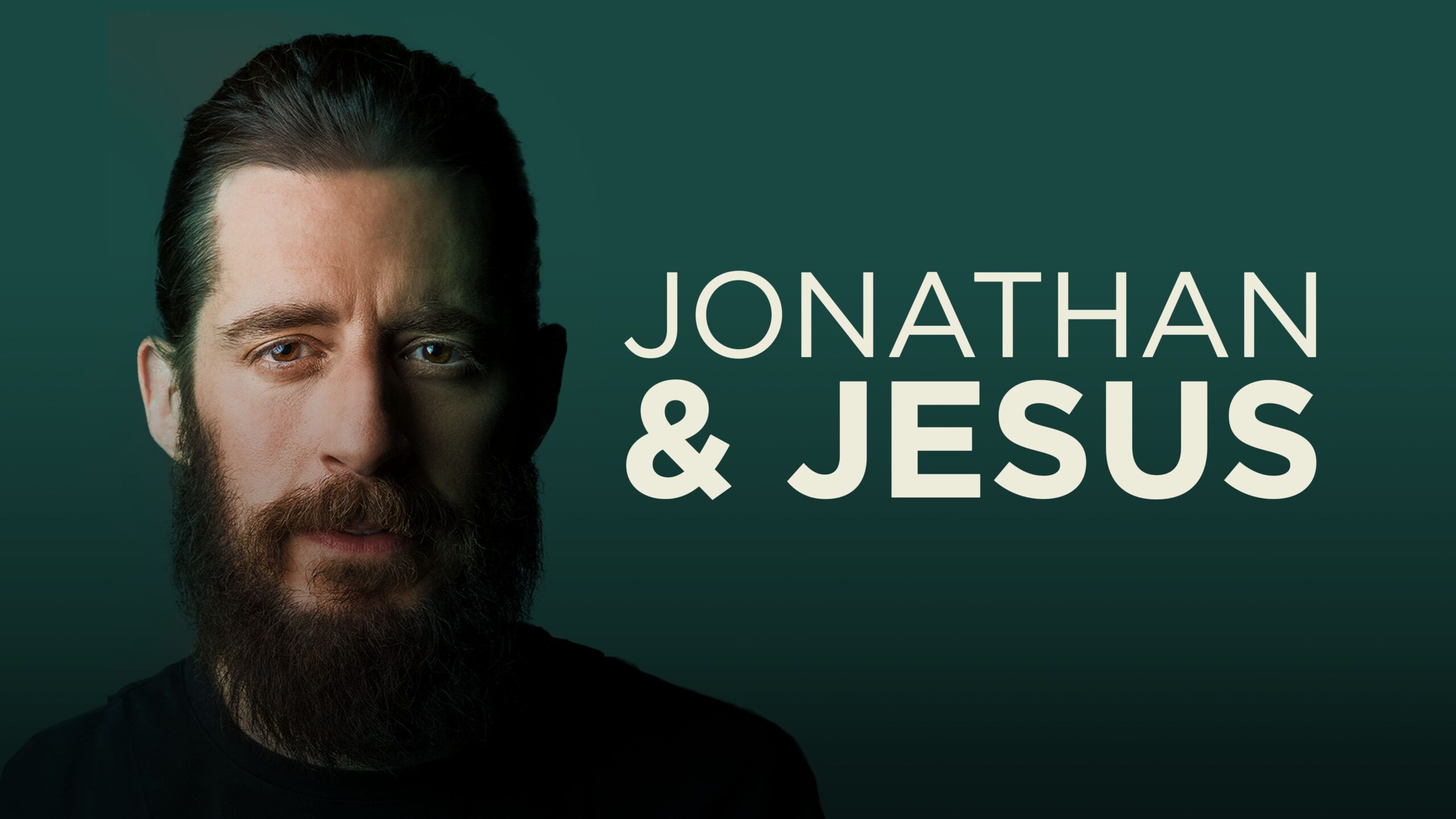
    “Jonathan & Jesus” docuseries | Steven Schwartz

    Let’s get this out of the way first: I’m an unapologetic fan of “The Chosen,” the series about the life of Christ that went from a crowdfunded upstart to an unexpected worldwide phenomenon; its fourth season is about to hit movie theaters in February before being released to streaming in March. I think Jonathan Roumie’s performance as Jesus in the series is staggeringly good. I’m also someone who’s worked in the entertainment industry for much too long, often with those magical creatures we call actors (not, for full disclosure, with Jonathan Roumie). So, I acknowledge I’m not the most objective viewer of the newly released “Jonathan & Jesus” docuseries.

    Yet I admit when I initially learned about “Jonathan & Jesus,” I had a moment of “oh, dear.” My first thought: How does this, even when made with the best intentions, avoid looking like an ego trip?

    I’m happy to say that “Jonathan & Jesus” doesn’t play at all like an ego trip. It’s not an easy watch – that’s not criticism, that’s praise – because it is a journey through the life-changing nature of Roumie’s experiences, from deeply blessed to personally overwhelming to just plain cool, during the early days of the ascendency of “The Chosen.” It’s also an interrogation of the meaning and impact of Jesus, not only on the actor playing the role, but on everyone in our world.

    LISTEN: Jonathan Roumie’s Prayer Challenge

    While the burgeoning of “The Chosen” phenomenon and Roumie’s landing a lead in “Jesus Revolution” between the shooting of seasons two and three of “The Chosen” serve as an ongoing throughline, each episode of the docuseries has its own focus, roughly sketched as (1) Jesus as God and historical/cultural touchstone, (2) Christianity, division, and unity, (3) celebrity and humility, and (4) control versus surrender. “Jonathan & Jesus” is ambitious and immersed in big questions throughout, touching on subjects both complicated and diverse. 

    A journey through the meaning of Jesus as the Incarnate Word of God, the primary cause of Western Civilization, and a pop culture motif took me on an emotional rollercoaster. First, I felt vaguely uncomfortable seeing some of the more mundane depictions of Jesus portrayed in pop culture, from “Family Guy” to the Buddy Christ image from Kevin Smith’s “Dogma.” That gave way to a sense of the transcendent as a historian standing in the shadow of the Roman Colosseum considered that at the time the Colosseum was built, it would have been ludicrous to think that the Roman Empire would soon be ruins, but a nascent faith beginning with Jesus and a small group of followers in Judea would survive, thrive, and be, millenia later, the largest faith in the world. 

    Discussions between Roumie and preachers and influencers of various Christian denominations reminded me how we’re so unfortunately quick to criticize each other, focusing on the things that divide us as Christians instead of the God who unites us all. Interviews with scientists, ministers, writers/podcasters, human rights campaigners, and musicians revealed the pivotal moments in which these people chose to surrender their lives — expectations and illusions of control included — to God in faith and the monumental results of that choice. Given my own constant struggle with surrender and what it really means in practice, seeing these stories is a nudge to keep on trying. (If you’re like me, you regularly turn your eyes heavenward and say, “Is this it, God, am I surrendering right yet? Because I don’t think I am!?!”) And yes, you will come away from this doc wishing that Jonathan Roumie, Sheila E., Brandon Flowers, and Alice Cooper could tour as the world’s most unlikely supergroup.

    Photo courtesy of The Chosen / Mike Kubeisy

    RELATED: Spiritual Streaming: 5 Catholic-Themed Films for Your Next Movie Night

    With all these matters raised and considered, the series is in some ways a choose-your-own-adventure; which parts of it stick with you will vary significantly from viewer to viewer. At the close of the final episode, the person who watched with me said, “The things some of those Christians he interviewed were doing…feeding migrants under bridges and saving trafficked women…how am I ever going to get to heaven?” Meanwhile, I was most affected by the unflinching honesty of the life-of-an-actor segments, which take the viewer from the dire situation Roumie was in just months before “The Chosen” came along to interviews with his sister, Olivia, and Dallas Jenkins (creator of “The Chosen”), discussing how both fame and the conflation of a human actor and the Son of God in the mind of fans can be disorienting, scary, and exhausting—even for a grounded person with a deep faith to sustain him. In my professional life, I’ve seen both actors eking out a living juggling acting gigs with low-paying survival jobs and actors dealing with sudden fame due to one big role (never mind the role of Jesus, which adds knotty moral questions to the already complex issue of fan adulation). These segments felt painfully real and raw to me, a look behind the curtain that we rarely get about the challenges of life as an actor. 

    Does the docuseries fully get its arms around all these subjects? Not precisely, but to my eyes that’s exactly the point. These subjects can be explored, dissected, studied, grappled with, and prayed over, but as Anthony Bova, Roumie’s acting coach, says in the plainest way possible: “…the whole Jesus Christ thing, that’s tough. Because…I mean, whadya do with that?” That statement works as both an acting coach throwing up his hands at the challenges of a role (the job of playing the perfect human is restricted to exactly one role in all of literature, and it’s this one) and a person questioning how much any of us can represent Jesus, even if we’re mandated as Christians to try. So fair enough, Anthony. That’s a question millions have asked over the ages.  

    RELATED: Less Worry, More Trust: Praying the Surrender Novena in Times of Change

    But along comes a scene near the end of the docuseries to show us what we do with the “whole Jesus Christ thing.” It takes us back to 2018, to a part of Jonathan Roumie’s personal story of surrender that many “Chosen” followers have heard about but not seen. I’m not going to go into detail; it is a losing proposition to try to find adequate words to describe someone at the end of his rope encountering the ineffable, and in any event, the powerful moment deserves to be experienced, not described. I’ll just note that if you want to see God starting to lift up someone who has fully surrendered after a long struggle in the wilderness, well, there it is. 

    So no, none of us can get our arms fully around these subjects. Not you, not me, not Jonathan Roumie. Three hours of screen time (or two thousand years of Anno Domini) cannot unlock the unfathomable. What “Jonathan & Jesus” shows us, viscerally and in multiple different testimonies, is what we can do: surrender to the unfathomable. And then the one who is the ultimate subject of this docuseries – the one whose credit is larger, in bold and after the ampersand in the title treatment of the trailer — can get his arms fully around us and take us on his journey.

  • How to See Life’s Interruptions as Blessings

    How to See Life’s Interruptions as Blessings

    I once went on a retreat in Northern Colorado to a Benedictine abbey where I noticed a bell would ring throughout the day. I later learned that the bell was to let the sisters know it was time for something they were called to do or attend to (prayer, farm chores, someone at the front door of the abbey, etc). When the bell rang, they had to stop what they were doing to tend to whatever the bell’s purpose was for; as that interruption became the top priority. 
    We have an actual bell in our house, but no one is allowed to ring it because it’s really loud and my kids would never stop. Ever. 

    RELATED: Praying for Patience: What I Learned From God’s Time vs. My Own

    At the time, I thought the bell at the abbey felt a lot like parenting. Having kids is one long season of interruption, setting aside whatever we’re doing to attend to the needs of others, and parents learn to roll with it no matter how frustrating that feels at times. But, there are many moments when my time (what little I have) gets taken from me, and it’s a continuous struggle to want to share or give that time away. 

    Often, in the evenings, I finally get a chance to sit down after a long day of continually serving my family only for someone to need something. Maybe it’s something I can’t really ignore, like someone getting soap in their eyes in the shower, a misunderstood homework assignment, or the baby waking for an unscheduled after-bed diaper change. Often, it’s something I want to ignore but realize is important to one of my kids, like a requested bedtime story, or help with nail polish. On the weekends, my husband will often ask me to help with a project; thwarting any opportunity for me to do things I’d hope to do. Even when it’s not something urgent, my time is often interrupted by thoughts or reminders of things I didn’t do. I’ll start to read a book, then remember I forgot to wash uniforms for school the next day, which leads to discovering a load of towels in the washer which can’t be moved because the dryer is full. 

    RELATED: The Work of Rest: How I Find Time for Spiritual Reflection in My Busy Life

    Those with the vocations of parenthood and religious life aren’t the only ones who have “bells” to answer; everyone does. We are all called to serve others every single day; what better way to know when to serve than to be interrupted with a reminder? While at the abbey, I learned the importance of our Christian call to love and serve and how that’s a large part of my vocation as a mom. When I get frustrated at interruptions, I remember the bells at the abbey. I remember my vocation. Every request from one of my family members is a daily reminder and call to serve. It’s kind of my job. 

    The bells of the abbey remind me that despite whatever curveballs I get in family life, the object is to keep going. Especially when I don’t want to. Find the good in the interruption, the gift, the message, whatever it is God is trying to show us. Look for the lighter side of what I’ve had to adjust and why I had to. That’s what the bell means. 

    RELATED: Learning to Live in the Moment, Even When You’re Busy

    So, how do you stop regarding all the unpleasant things as interruptions?

    I don’t know. 

    Like everything else, I suppose it’s about practice, persistence, determination. I’m not very good at it, but I’m trying to be. I’ve been working on a few things that help like:

    • Stop and take a breath.
    • Pray for help: Holy Spirit, give me the patience to handle each interruption with patience so I may offer it up to God.
    • Prioritize my to-do list after the interruption.
    • Remember the importance of my Christian duty to love and serve others. (I know, this is so hard sometimes. I’m terrible at this a lot, too).

    We all know living the holy life isn’t easy. It takes a lot of humility and self-sacrifice, and maybe life’s interruptions are God’s way of reminding us of that. If serving others is an act of the highest form of love, then we honor God every time we answer that “bell,” especially if we don’t want to, but choose to anyway for the sake of the one ringing it. 

    RELATED: 10 Ways to Serve Others When You Have Young Kids

    I try to remember that God is always working on my soul. Interruptions are a part of life and I doubt we’ll ever see an end to them. So, I find that with the right perspective, it’s a lot more bearable. As it stands, our metaphorical bell of perpetual interruption serves as a good enough reminder of my duty as a mom to serve my family. Maybe one day I’ll learn to fully embrace the bell. The metaphorical one, not the real one in my house. It’s really loud and it would never stop ringing. Ever.

    Originally published January 11, 2021.

  • How Attending Mass in a Different Language Taught Me About the Universality of the Church

    How Attending Mass in a Different Language Taught Me About the Universality of the Church

    Faruk Tokluoglu on Pexels

    Growing up in one of Canada’s English-speaking provinces, I experienced a faith that was passed on to me at home, at Mass, and at Catholic school. This exposure was consistently in English, apart from a few basic prayers taught and subsequently memorized in French. In my 20s, I moved around quite a bit, spending time in the United Kingdom and the United States. I found a new parish wherever I went, and always in an English setting. 

    Eventually, I moved to Montreal, a vibrant, multicultural, and multilingual (with French as the official language) metropolis in Canada, and I have been blessed with the opportunity to now call this city home. My husband and I live in one of the city’s historically Italian residential neighborhoods. Although it is a very diverse community today, there is still a significant Italian presence, and our local parish offers Masses in either Italian or French, accordingly. I am at a proficient level in French, and I have a basic understanding of Italian. Since further connecting with my Italian heritage and rekindling my French language skills were both on my bucket list, I viewed these Masses as an exciting opportunity.

    LISTEN: How Can I Follow Along With Mass in a Different Language?

    The experience of participating regularly (that is to say, not just occasionally while on vacation) in a non-English Mass has been enlightening and refreshing, but of course, took some adapting. Following all the points made in the homily, for instance, was a particular challenge for me at first. Still, there are lots of people locally and worldwide who have to adapt to attending Mass in a different language than their own. I had never really given much thought to this fact, but now I have a much greater awareness and appreciation of individuals in such a scenario.  

    Before the Second Vatican Council in the first half of the 1960s, Masses around the world were celebrated in a common language, Latin. It was only after this important ecumenical council that the faithful were able to attend Mass in the language of the local community. Despite this change to the vernacular, the format of the Mass remains the same in whichever part of the world and in whichever translation. 

    This consistency provides a visible sign of the universality of the Church. In fact, the word “catholic” literally means universal. The Catholic Church is indeed a vibrant community of believing women, men, and children connected in faith across the globe. The universality of the Church in the context of the Mass has become clearer to me since moving to Montreal and joining a parish community that functions in a language that I had not been accustomed to using at Mass.  

    RELATED: Experiencing Spanish Mass

    I would like to share two actions that helped me to adapt to a non-English Catholic Church community more readily.  

    First, I take more time to prepare for Masses. Before each Mass, I read through the Sunday readings and corresponding reflections in my English-language Missal. (I use the Canadian edition.) At the Italian-language Masses, the parish provides printouts at the entrance of the Church, which contain the corresponding readings for the day and other key parts of the Mass, including the Creed and Prayers of the Faithful, in Italian. This resource is very helpful to follow along and participate more fully in the celebration. To better streamline my adaptation to the French-language Masses, I subscribed to a monthly resource providing the Readings for all the Masses, including the daily Masses as well. About a year ago now, I started as a lector during the weekday French Masses, and the preparation involved in that context has also helped me adapt more seamlessly. 

    Second, I seek out alternative ways to celebrate the faith in English (or the language that I am used to attending Mass in), in addition to personal/family prayer. Shortly after moving to Montreal, amidst the first year of the pandemic, I became aware of an online prayer session hosted by the Sisters of the Congregation of Notre Dame. This virtual English-language prayer session in the Lectio Divina format gathers a small group of young adults (or those young at heart) once a month to pray together using one of the readings from the upcoming Sunday Mass. Lectio Divina is a beautiful way to pray with Holy Scripture. The Scripture passage is read three times and participants are invited to reflect upon what the passage is saying today and to share these thoughts with the group. Sometimes a reflection may be about certain emotions that have moved our hearts. Other times, it relates to a specific character in the passage, and other options could be seeing the pertinence of the text in the context of a current personal circumstance.  

    RELATED: A Dead Language? 5 Facts About Latin in the Catholic Church?

    Regularly participating in the Mass in a different language has presented me with some graces, despite the natural challenges associated with adapting to the less familiar. The extra preparation that I do in advance of Mass gives me more time to think deeply about the readings. I can be more attentive and focused throughout the celebration. 

    I highly recommend attending Mass in a different language if the opportunity arises, perhaps while traveling or if there is a local parish that celebrates Mass in another language. A change from the familiar, a switch from the routine, can be a valuable blessing to heighten one’s focus or reduce distractions during the Mass and to develop or renew one’s awe and appreciation of the various rites.

    To sum up, the Church is indeed universal. Participating in the Mass, in whichever language, is a powerful sign of the unity that connects Catholics around the globe. Each time we gather around the Eucharistic table for the fulfilling nourishment that only Christ can provide, we partake with others worldwide who are receiving the same sacrament.