Tag: Faith in Everyday Life

  • The Radiance of Mary: How Lippi’s ‘Adoration’ Deepened My Faith

    The Radiance of Mary: How Lippi’s ‘Adoration’ Deepened My Faith

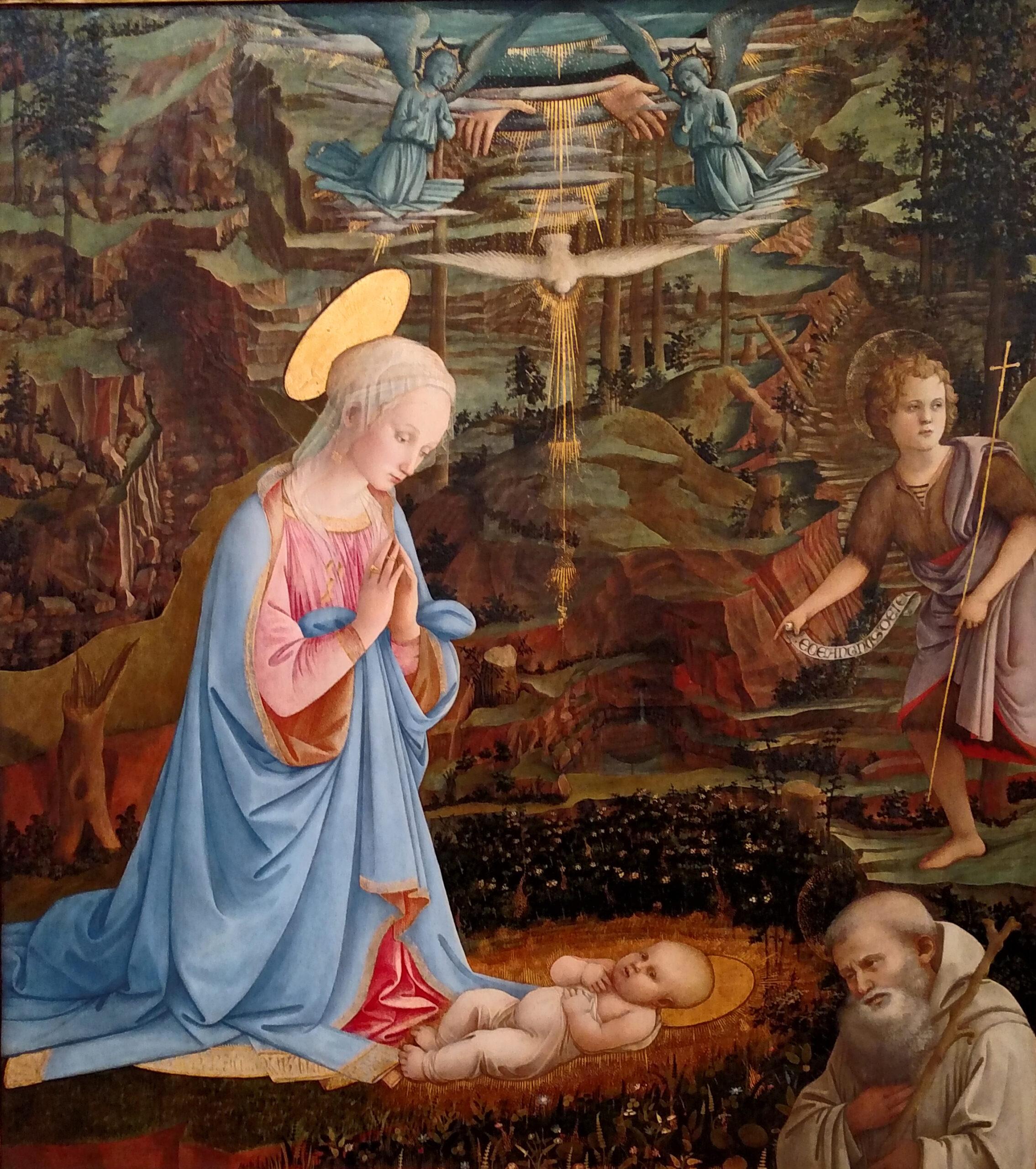
    As I marched through the Uffizi Gallery, I could see how, as the Renaissance progressed, artists made the figures in their paintings less like icons and more like human beings.  Suddenly, I found myself looking at a painting of a very real, very young woman. She was kneeling in a dark wilderness. Her hair and face were radiant. I first thought this was an anachronism, like the blue-eyed, blond Jesus of a certain era of popular art. Then I saw what better observers have seen. She was suffused with light. We say every Sunday, “God from God, Light from light…” The girl had been given the same gift of light — light nourishing, pure, powerful. Even her blue robe was richer and brighter than any earthly fiber.

    The 1463 painting is “The Adoration of the Christ Child” by Filippo Lippi. In it, Mary’s delicate features mixed tenderness, awe, and astonishment. Her hands are clasped together gently in prayer; her slender fingers seem to be on the verge of trembling. She is looking down at her newborn boy, lying exposed on the ground. I recalled the shock I felt 38 years ago when I first realized my wife and I were in charge of an utterly helpless child who was more precious than anything we had ever imagined. In the painting, moreover, there is no stable, no St. Joseph, no Magi, no shepherds. There are only two other people pictured: St. John the Baptist, in the form of a young boy, and the founder of the monastery for which the painting was commissioned. 

    RELATED: Art and Adoration: How Artwork Opens My Eyes to God’s Handiwork

    Mary’s look is full of awe and love, but awe can bring bewilderment, and love always brings vulnerability. I imagine from her expression that she sensed, even before a wise old man told her, that “a sword will pierce even your own soul.” Her faith was not daunted, but neither was her pity lessened. She had been given the greatest gift, and the deepest anguish. At the same time, the painting reminds us that, even as she kneels in this dark wilderness, she is accompanied by the greatest of powers. At the top is the Father, indicated by a pair of hands. The dove of the Holy Spirit dives down, blazing with the Holy Spirit. She will never be alone, even when she seems to be. 

    Seeing the painting in Florence, Italy on a trip last summer, I was reminded that art can be as powerful as words in conveying truth. The painting underlines the way God’s work has made us more deeply and truly human. Before Lippi and his peers came on the stage, art was about gods and goddesses, kings and queens. Then, artists began to see the glory in ordinary people. This reflects how the Lord has selected otherwise ordinary people, such as Abraham and Ruth, to change the world. The summit of this was his anointing of a young girl in an obscure Middle Eastern land to be the Queen of the Universe.

    RELATED: What Is the Solemnity of Mary?

    It’s a reminder that the Blessed Virgin Mary was a girl who had been visited by a messenger from God with news that 2,000 years later still baffles many. Pregnant, she traveled with her husband in a land troubled by foreign occupation and simmering unrest to give birth far away from her family. We rightly are in awe of the Queen of Heaven! Let us also take heart from the brave, young woman in this painting, and remember that great things can also come to ordinary people like us, with all our cares, troubles, and needs.

    Finally, let us remember that inspiration can strike even when we least expect it. You might think that being in one of the world’s great art museums would have primed me to get the most out of paintings. However, we had spent the previous week of our trip in Rome, where we trudged past miles of paintings and sculptures. Then the Uffizi welcomed us with art on every wall and the ceiling too. As guidebooks and more experienced travelers had warned, I had reached a point where I didn’t think I could absorb anything new about sacred art. I was half-wishing I could see one of those paintings of dogs playing poker, just to rest my overloaded brain.

    RELATED: Using Art as a Path to the Holy Spirit

    Promptly, I was confronted with Lippi’s painting of Mary glowing and grieving, foreseeing joy and wonder, yet accepting also toil and sorrow. It’s a reminder that experiences of the sacred can break through anything that weighs you down, from boredom to despair. And, of course, this need not happen in a world-famous museum. One day, after returning home, I took a walk around a lake near my house. The day was so gorgeous and the park so quiet that for once I turned off my phone and just welcomed the quiet. I looked at the blue sky and the sunlight on the leaves. It was my final realization: There are sacred masterpieces all around us.

  • ’A Christmas Carol’ Conversion: What Scrooge Teaches Us About Reconciliation

    ’A Christmas Carol’ Conversion: What Scrooge Teaches Us About Reconciliation


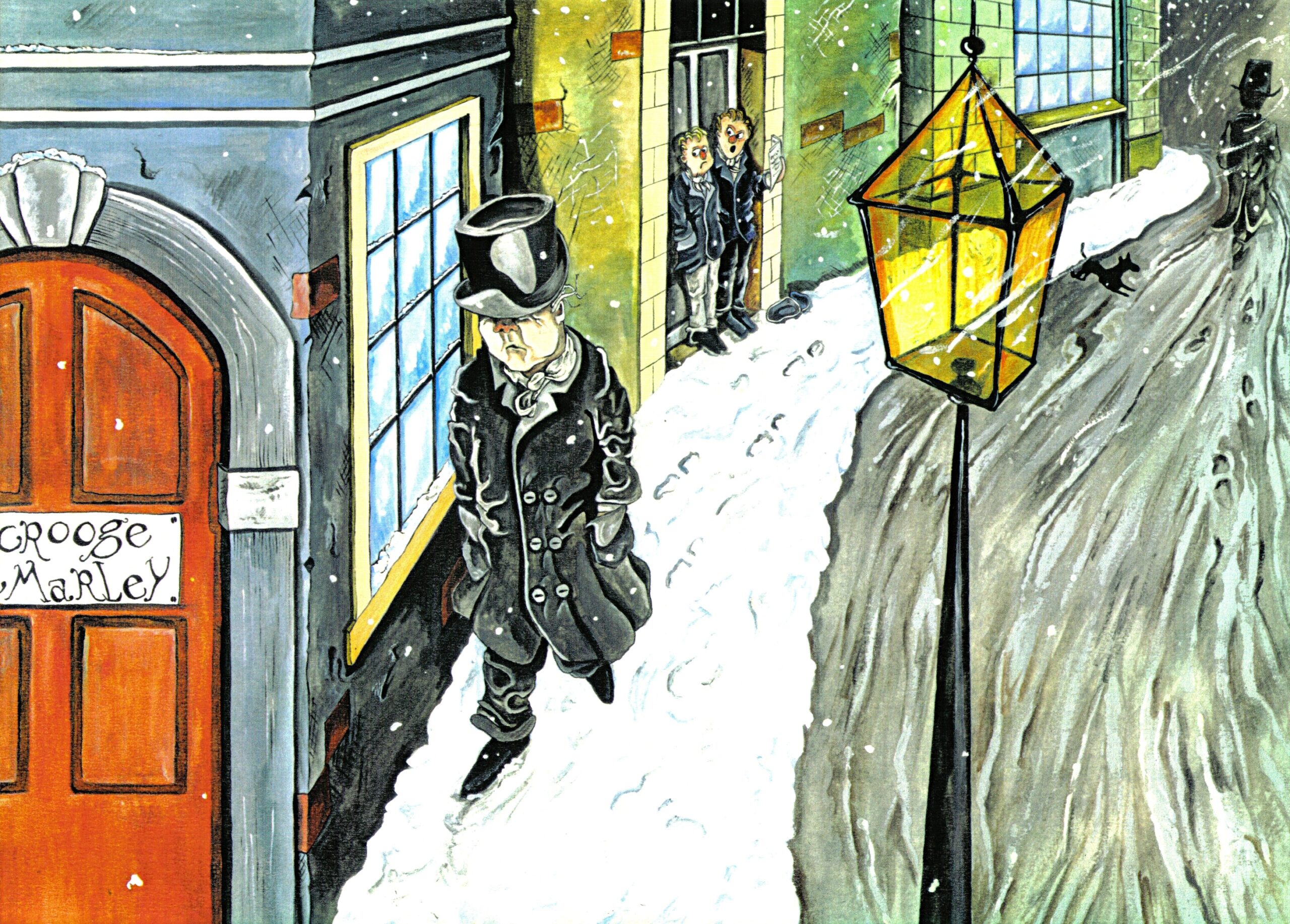
    Whether it’s the original novella by Charles Dickens or one of its many screen adaptations, “A Christmas Carol” is enshrined in my mind as a holiday staple. Why shouldn’t it be? Like the songs of the season remind us, Christmas is a time for telling “scary ghost stories and tales of the glories of Christmases long, long ago.” That is what Dickens’ book is – a dramatic event filled with encounters with haunting spirits that, when all is said and done, convince Ebenezer Scrooge of the unrighteousness of his deeds and the need to turn his life around.

    Jacob Marley, Scrooge’s deceased business partner, visits him and kickstarts the series of events that lead to a change in the protagonist. Marley’s chains shaken so horrifically are a symbol of his sins. He reminds Scrooge that he, like us, has sin in his soul – a ponderous chain, but through repentance and change, Scrooge’s unhappy fate can be sponged away. Because this Christmas classic deals so acutely with morality, it is no surprise that we can find in Scrooge’s conversion allusions to Reconciliation. In this story, we witness Scrooge’s sorrow, desire to amend his life, and penance for his misdeeds.

    WATCH: Sacraments 101: Penance

    The parts of Reconciliation

    The Sacrament in which Jesus ordinarily forgives sins is commonly referred to as Confession, Reconciliation, or Penance. While the terms are often interchanged, they really refer to different steps we take in the Sacrament.

    Confession is what it sounds like: confessing your sins to God through the priest. There is power in naming and denouncing our vices, and God’s grace is working in us and strengthening us along the way.

    Next comes reconciliation, part of which entails being sorry for your sins. If you are not sorry for something, you admit there is nothing to forgive. If we have sorrow (contrition) for our sins, then the priest gives us absolution – God’s forgiveness. Even though the penitent is forgiven, they must still try to make amends for the sin. In an act of contrition before absolution, we express our sorrow for our sins and our intention to amend our lives and avoid future sin.

    Finally, we are given penance to do. Sometimes this will be reciting rote prayers. Other times, it could be some external activity. For example, when I was young, I was supposed to empty the dishwasher as penance for disobeying my parents. Another time, I was told to play the Wii with my brother because it was something he really enjoyed (though I not as much). Entering the confessional takes initiative, and penance takes effort.

    RELATED: 4 Gifts to Give One Another From ‘It’s a Wonderful Life’

    The steps of Scrooge’s conversion

    At the beginning of Scrooge’s adventures, it’s clear that he does not desire this intervention of his own will. His associate, the late Jacob Marley, offers him hope to escape a doomed fate like his own: Scrooge will be haunted by a triad of spirits united in a single purpose – his conversion. At the outset, Scrooge is reluctant. But, as time goes on, he takes initiative and puts in the effort to externally express his reformed interior life.

    The first task of the spirits is to instill guilt or regret in Scrooge. The Ghost of Christmas Past shows Scrooge that he is selfish, that he let the desire for wealth dominate any charity in his life – even toward his lover. In his past, he chose greed over love and commitment. This wonderfully expresses how every sin is self-seeking at the expense of God and others.

    The Ghost of Christmas Present awakens Scrooge to the cold, harsh realities of poverty. When shown the home of his employee Bob Cratchit, Scrooge takes an interest in someone other than himself – the sickly Tiny Tim. The spirit reveals that unless the family’s means change, the boy will perish. A wave of sorrow washes over Scrooge, and the fact that he has a direct impact on this cuts him to the quick. Our actions, for good or ill, have consequences.

    It could be said that Scrooge is now in a state of contrition. His heart is being humbled and softened, ready to take on a new flame and vigor. But, if there was any question as to his resolve, the terror of the Ghost of Christmas Yet to Come makes Scrooge’s conversion a matter of personal, vested interest.

    RELATED: From Humbug to Humble: ‘A Christmas Carol’ Lives on

    As Marley’s chains and foreboding words alluded to, Scrooge’s fate is an unhappy one if he fails to amend his life. The final spirit shows our protagonist his grave, and that no one will mourn his death, leading Scrooge to a frenzied plea with the apparition that culminates in what could be considered an act of contrition if given in a sacramental context.

    “I am not the man I was. I will not be the man I must have been but for this intercourse,” cries Scrooge in the cemetery, glaring at his own name on a tombstone. “Assure me that I yet may change these shadows you have shown me by an altered life!” He proceeds to promise he will honor Christmas in his heart always and allow the three Christmas spirits to strive within him. Before waking to his new lease on life, he raises his hands “in a last prayer to have his fate reversed.”

    To some extent, Scrooge seems sorry for the misery he caused others. To an even greater extent, he was scared to death of a fate worse than fatality. Scrooge’s fear leading him to sorrow and repentance is akin to what is called imperfect contrition in Reconciliation. Imperfect contrition is the fear of punishment (the pains of hell) that our sins deserve. Perfect contrition is sorrow for sin out of love for God and recognizing that sin offends him. Yet, God can use our imperfect contrition to affect his Sacrament in us through the merits of Jesus, whose sacrifice supplies what our hearts lack in perfect contrition. Similarly, the imperfect contrition in Scrooge’s heart leads to a radical transformation for the better.

    Displaying contrition, Scrooge also revealed to the third spirit that his past life was in need of change and that he plans to change it. This is his confession, or admission of wrongdoing. For penance, he makes good on his word and avoids sinning in the future by treating others with charity and taking delight in bringing them joy. He chooses to live what is captured by the popular quote attributed to Mother Teresa: “It is Christmas every time you let God love others through you…it is Christmas every time you smile at your brother and offer him your hand.”

    RELATED: Busted Halo’s Guide to Confession

    Reconciliation

    So can we say Scrooge is reconciled? Is he squared away with God? Well, the effort by Marley and the three spirits certainly offers hope that the future can be altered – just as Scrooge’s life could be altered. Dickens certainly wishes the readers to carry such a hope away with them. The beautiful thing about the Sacrament of Reconciliation is that we are given a guarantee of God’s forgiveness.

    If we are good to our word (to strive against temptations and to do our penance), we have a hope greater than Scrooge’s. We have God’s word for it: “Go in peace. Your sins are forgiven.”

  • O Antiphons: A Prayerful Homestretch to Christmas

    O Antiphons: A Prayerful Homestretch to Christmas

    “O Come, O Come Emmanuel” is one of my favorite hymns, if not my all-time favorite. This hymn is ubiquitous with the Advent season and is heard in most Catholic churches in the United States at least once in the season. The words of this hymn, simultaneously wonderfully ancient and ever-new, are based on what is referred to as the “O Antiphons.” Now, maybe you already knew that, maybe you’ve heard of the “O Antiphons” before, or maybe you’re now wondering what an antiphon even is. Chances are though, you’ve heard this hymn and might have wondered where it came from.

    An antiphon is a short phrase or sentence that is used in liturgies like the Mass or Liturgy of the Hours. Antiphons serve as small refrains and often highlight a particular message or prayer of the season. In this case, the “O Antiphons” refer to the specific antiphons used in Vespers (evening prayer of Liturgy of the Hours) that go with reciting the Magnificat (Mary’s prayer of praise from Luke) from December 17 to 23. Together, these seven antiphons – all of which start with calling upon Jesus Christ with an exclamatory O, hence the name –  help to serve as a prayerful conclusion to Advent, a homestretch prayer on our way to Christmas.

    LISTEN: Father Dave Explains O Antiphons

    Structurally, each antiphon has two key parts. The first is a traditional title of Jesus Christ as the messiah, the one who was promised to come, such as Emmanuel, used by Gabriel in the Annunciation meaning “God with us.” These titles reflect how the prophets thought of the coming messiah and who he is. The second part of each antiphon is a reflection of that role by drawing upon the words of the prophet Isaiah. This portion helps to reflect on the mission and ministry of the messiah and how he would live out that particular title. For us as Christians, we use these prophetic titles and words to reflect on Jesus Christ, what he has done in history, and how he continues to act in our lives today.

    We can sit with these seven little phrases and draw upon their richness in helping us to know Jesus Christ as the wisdom of God, guiding us in our lives and actions. We too call upon Jesus Christ in a longing way as we look forward to and hope for his second coming. So just as the prophets longed for his first arrival, we too wait eagerly and look forward to his return in glory.


    December 17: O Sapientia

    O Wisdom, O holy Word of God, you govern all creation with your strong yet gentle care. Come and show your people the way to salvation.

    O Wisdom, O Word of God! These ancient titles reflect God’s perfect knowledge and are titles given specifically to Jesus Christ. In the Book of Wisdom, wisdom is personified as existing before all time with God, and in relationship with the Father. In the original Greek of the Book of Wisdom, the word used for Wisdom is “Sophia” (which may ring bells of the Hagia Sophia or Holy Wisdom). Wisdom was depicted in feminine language as one who is gentle and caring. In the prologue of the Gospel of John, we hear how the Word was with God and was God (John 1:1). The Greek word used here is “Logos,” which, in addition to word, can also be translated as wisdom. Christ is this wisdom of God, the perfect knowledge of the divine, loving, and creative, made manifest in human life.

    Christ was present at the creation of the universe as the Son, the Wisdom, and the Word. Indeed, Christ was not passive in the creation, but was the very blueprint of creation itself. As Psalm 33:6 states: “By the Lord’s word the heavens were made; by the breath of his mouth all their host.” The world was made to reflect this Wisdom and Word, and humanity, made in God’s image, is called to look to Christ for the very way to live our lives. Christ is not distant from creation either, as this antiphon reminds us. Rather, he continues to govern and care for creation, remaining intimately connected and in relationship with all he has made.

    Through the goodness of the world that Christ created, he shows us the way to eternal life. We are a sacramental people, meaning that physical signs point us to the goodness of God and salvation. As we enter the final days of preparation for Christmas, may the bright decorations and the joyful celebrations with family and friends be a sign of God’s love and lead us deeper into knowing the Wisdom and Word made flesh.


    December 18: O Adonai

    O sacred Lord of ancient Israel, who showed yourself to Moses in the burning bush, who gave him the holy law on Sinai mountain: come, stretch out your mighty hand to set us free.

    Christ is not a new creation that was spontaneously generated on December 25 over 2000 years ago. Christ, as the Son of God, the second person of the Trinity, has always and will always exist. The title used for Christ in this antiphon is Adonai, a Hebrew word for the Lord of all who is a good and just ruler, a giver of law.

    Even if they were not known in the moment, all three persons of the Trinity were present at the burning bush. The same Christ who would be held as an infant in Mary’s arms declared himself as “I am who I am” to Moses (Ex. 3:14). Our Lord and God, who is infinite and eternal, humbled himself to be held as a child to set us free.

    St. Paul writes of Christ coming under the law to free us from it. This is not to set us free from the moral and theological precepts, such as the Ten Commandments, but to free us from the law of sin and death. Christ is the author of true law, of the laws given to Moses, and ultimately, of the law of life. It is this same Christ who sets us free from the law of sin who gives us the laws of love and freedom. The same Christ who has acted in history to give the law and set us free continues to act in our lives with his mighty hand.


    December 19: O Radix Jesse

    O Flower of Jesse’s stem, you have been raised up as a sign for all peoples; kings stand silent in your presence; the nations bow down in worship before you. Come, let nothing keep you from coming to our aid.

    O Flower, Christ, who is the sign of new life, flourishing, and beauty! In the dark of winter, the thought of a freshly bloomed, beautiful flower can bring us to a place of peace, warmth, and tranquility. In the difficulties of life, Christ is the flower that brings us to these same places. Christ, through sharing our humanity in the incarnation, knows our pains and struggles. He sees us in our times of need and comes to be with us, to hold and comfort us, to grant us hope and peace like the thought of a beautiful flower on a cold night.

    It’s interesting to note that “radix” is translated as “flower” in the English breviary when it actually means “root.” This reality of being both root, stem, and flower shows Christ’s presence throughout history. In the antiphon, it seems odd at first to call upon Christ, who in his human family is a descendant of Jesse, as the root of the stem. And yet, as God, Christ is the root, the beginning, of the family line. He has existed before the world and helped bring forth the family of Jesse and his son, King David. He is the source of their life, the root which draws in to care for them. And yet, Christ also steps into the world as their descendant. Christ humbles himself and is born from the stem of Jesse as a humble shepherd. This language is drawn from chapter 11 of Isaiah where the prophet states “A shoot shall come out from the stump of Jesse” (v. 1) and “the root of Jesse shall stand as a signal to the peoples” (v. 10).

    All nations will bow down in worship; all peoples are called to life with Christ. This humble flower blossoms not just for us as individuals, but for all peoples throughout the world and history. We share in the mission to bring all nations to Christ, to proclaim his love and his truth to the world. We ask Christ to remove all barriers between us and him so that he may come to help us just as he came to help the world at his birth. We share in this, too, by removing the barriers in the world between all peoples, so that we may live together in the love of Christ.


    December 20: O Clavis David

    O Key of David, O royal Power of Israel, controlling at your will the gate of heaven: come, break down the prison walls of death for those who dwell in darkness and the shadow of death; and lead your captive people into freedom.

    O key of the royal family, open for us the treasury of your goodness. You have loosened our chains. You have given us the freedom of eternal life in your love. You, O God and Christ, have humbled yourself, as the one who opens the gates of heaven, to be given to Peter and your Church. In your love, you have made the path of salvation known to us and promised to be with us in our journey.

    By your incarnation, O Son of God, you came to give us freedom from death. By your paschal mystery, your death and resurrection, you lead us out of the dark valley of death and into eternal life. Death has no power over us any longer; you have trampled death by death. In your birth, we remember why you have come. We remember and look forward to the ultimate glory of your resurrection.

    As we look towards Christmas in just a few days, we can reflect in prayer on what Christ has freed us from in our lives. What shackles has Christ removed for us so that we can love God and neighbor more? We can also reflect on what barriers there are in our hearts to loving more deeply, and asking Christ to give us the grace to remove them. By the birth of Christ, we are invited to love God and neighbor with our whole heart and selves.


    December 21: O Oriens (Dawn of the East)

    O Radiant Dawn, splendor of eternal light, sun of justice: come, shine on those who dwell in darkness and the shadow of death.

    O Radiant Dawn, how we long for the rising of the sun in the dark months – to feel the warmth on our faces. Knowing the shadow of death that looms over all of us, we long for the eternal light of God all the more. Christ is the light we long for and know in our lives and the Church. Christ’s light guides us in our steps and helps lead us to a life of love and discipleship. The child born in the manger is this sun, this great light of God’s love, who continues to walk with us and guide us. 

    In facing the cold and dark of injustice, separation, and pains of our world, we desire the sun of justice. We know that Christ not only brings justice to earth and rights wrongs, but that Christ is the true justice we seek. He calls us to follow him in this world, to share that justice. This justice is not harsh and punitive, but kind, patient, loving, and uniting. The prophet Malachi describes the rays of this sun as healing (Malachi 4:2). The warm rays of Christ heal our souls, warm our hearts, and guide our steps in justice. In welcoming these healing rays, Christ transforms us and sends us forth into the world to share that same light and warmth.


    December 22: O Rex Gentium

    O King of all the nations, the only joy of every human heart; O Keystone of the mighty arch of man, come and save the creature you fashioned from the dust.

    O King of the nations, you are the true ruler of all peoples and all creation. You call all peoples to yourself and call all of us to live together as your people. You rule not as a despot or tyrant, but as a loving servant who cares for the hearts of all. Truly, you bring us the joy that lasts forever, a joy that does not perish; you satisfy our every longing.

    O Christ, through you humanity was made, and through you, humanity is completed. You are the keystone of the arch of humanity. You have wonderfully made us in your image out of lowly dust and made us to share in your love forever. Our arch, however, is not complete without you. Only with you, O Christ, humanity is made whole and complete. In taking on human flesh as a lowly child in the manger, you bring the fullness of our true selves. You restore us and bring us to new life. Come, save us, bring us to eternal life, bring all of humanity to completion in and through your love.

    In looking to Christ as our King, we look to see how we emulate his kingship. At our baptisms, we are anointed as sharing in Christ’s roles as priest, prophet, and king. As ones who share in his kingly role and ministry, we lead in our lives and in our worlds. Whether that is as leaders in our families, our work, or any other aspect of our lives, it is a moment to reflect Christ in his role as our king, to be one who serves.


    December 23: O Emmanuel

    O Emmanuel, king and lawgiver, desire of the nations, Savior of all people, come and set us free, Lord our God.

    O Emmanuel is our final antiphon and final evening prayer before Christmas begins. We find ourselves on the precipice of a great day and season of celebration. Knowing what is to come, we cry out to Jesus Christ; we cry out with titles that summarize all the other antiphons. We cry out, knowing that Christ alone will save us and set us free. This antiphon is short, knowing the light of Christmas dawn is coming soon.

    Emmanuel means “God is with us.” It’s an intimate reminder at the start of this antiphon that God is always near us. We remember the unique way that Christ walked among us at Christmas, but know that he is still always with us. He is the king and lawgiver, the one who rules over our lives and makes the laws that govern the world. Christ is not a distant ruler or a despot, but one who is close and in relationship with all of us.

    Christ is the desire of all nations, the savior of all. Christ came to the world and became like us in all things but sin so that we could be like him and share in eternal life. We cry out now, especially from the darkness of sin and separation in our lives, for the same Christ born in the manger to save us this day. We cry out to our God, our Lord, who loves us all, transforms us, and brings us everlasting life.

    As the Church prepares to celebrate Christmas starting with the vigil on Christmas Eve, we close out our reflections upon the “O Antiphons.” These short stanzas, these poetic lines drawing upon scripture, help us to prepare our hearts for the great celebration of Christmas and can guide us in our daily lives as Christians. We invite you to prayerfully recite each of these antiphons, taking a small pause between each one, as a final prayer of Advent. Reflect on where God has spoken to you in this season, and where God is leading you to share the joy of Christmas with others. May you have a wonderful, blessed, and merry Christmas!

  • Advent Reflection: Simple Devotional Practices to Bring Peace Amidst Holiday Fatigue

    Advent Reflection: Simple Devotional Practices to Bring Peace Amidst Holiday Fatigue

    It seems that every year, the unofficial start of the secular Christmas season creeps up earlier and earlier. Just after Halloween, my husband shared with me how one of his coworkers had already set up their tree and décor because they wanted to “get the most out of the season.” While I often feel the urge to blast my favorite Christmas tunes and pull out the cheerful decorations when I see neighbors and local businesses doing so, my Catholic instincts tell me otherwise

    The Church has given us the season of Advent to awaken ourselves to Christ’s coming and turn our minds from the world’s distractions. When I was younger, before Advent began, my parents encouraged my siblings and me to reflect on what spiritual gifts we could give to the Christ child on his birthday. Through their instruction and the Church’s guidance, I came to see Advent as a time to focus on spiritual treasures rather than earthly ones, helping me understand how these weeks leading up to Christmas are meant to gradually lead us to the birth of Christ. 

    RELATED: 10 Meaningful Advent Traditions to Try This Year

    Though it is difficult to refrain from merrymaking, and sometimes feels Scroogelike to resist, I’ve found great merit in celebrating the Advent season before Christmastide. While the world tells us to indulge in early celebration, the Church invites us to prepare during Advent.

    The Catechism urges us to gird ourselves with a spirit of anticipation, reminding us that, “The coming of God’s Son to earth is an event of such immensity that God willed to prepare for it over centuries” (Catechism of the Catholic Church, 522). The Advent season stands apart as a time to recall the ache and hope of the world for a Savior and look forward to his second coming (Catechism of the Catholic Church, 524). There is a saying that goes, “The greater the fast, the greater the feast,” indicating that sacrifice bears meaning, allowing us to create space for the joy of redemption. By keeping the weeks before Christmas simple, prayerful, and full of hopeful longing, we bear witness to the magnificence of this feast. 

    If you have struggled this year to keep Advent quiet and preparatory, the season is not over. Here are a few ways you can still partake in the preparation during these final weeks.

    Pray the St. Andrew Novena

    While the St. Andrew Novena begins on the feast of St. Andrew, November 30, and ends on Christmas Eve, there’s no reason why you can’t jump into it right now. The beautiful prayer emphasizes the humble reality of Christ’s arrival into the world on a cold dark night in Bethlehem, inviting us to unite our personal petitions to the hour of Christ’s arrival. Here is a link to the full prayer, along with instructions on how to pray the novena. 

    Meditate on the O Antiphons 

    The O Antiphons are verses sung during vespers in the Liturgy of the Hours between Dec. 17 and Dec. 24. Each verse introduces a title of Christ, which can also be found in the well-known Advent Hymn, “O Come O Come Emmanuel.” They give voice to the longing for Christ which Advent ought to rouse, allowing us to declare our need for a Savior. If you don’t have access to the full Vesper prayers, pray and meditate on the O Antiphons themselves and consider singing the appropriate verse from “O Come O Come Emmanuel.” You can find the antiphons, along with relevant Scripture verses and suggestions for meditation here.  

    RELATED: Why I’m Fasting for Peace During Advent

    Fast before Christmas 

    While Lent is often seen as the liturgical season for fasting, the Church traditionally observed another 40-day fasting period beginning after Nov. 11, or Martinmas (the feast of St. Martin), to prepare for Christmastide. While fasting and abstinence aren’t required for Catholics during Advent, they are effective ways to create space in our hearts for Christ’s arrival at Christmas. Whether you choose to abstain from meat on certain days of the week, give up TV, social media or some other pleasure, disciplining our bodies alerts our spirits to Christ’s voice calling us to prepare room for him in our lives. 

    When I was young, one way my family celebrated Advent was to prepare a bed of straw for Jesus. Any time we made a personal sacrifice or did a good deed for another, we cut a piece of yellow yarn to place in the center of our Advent wreath so that by Christmas Eve, Jesus had a warm cradle of “straw” in which to rest. While there is no harm in attending holiday parties or tuning into some Christmas music, let us strive this Advent to embrace a spirit of anticipation rather than indulgence, so that we might fully enter into the joy of salvific redemption during the Christmas season. 

  • Our Lady of Guadalupe: More Than Meets the Eye

    Our Lady of Guadalupe: More Than Meets the Eye

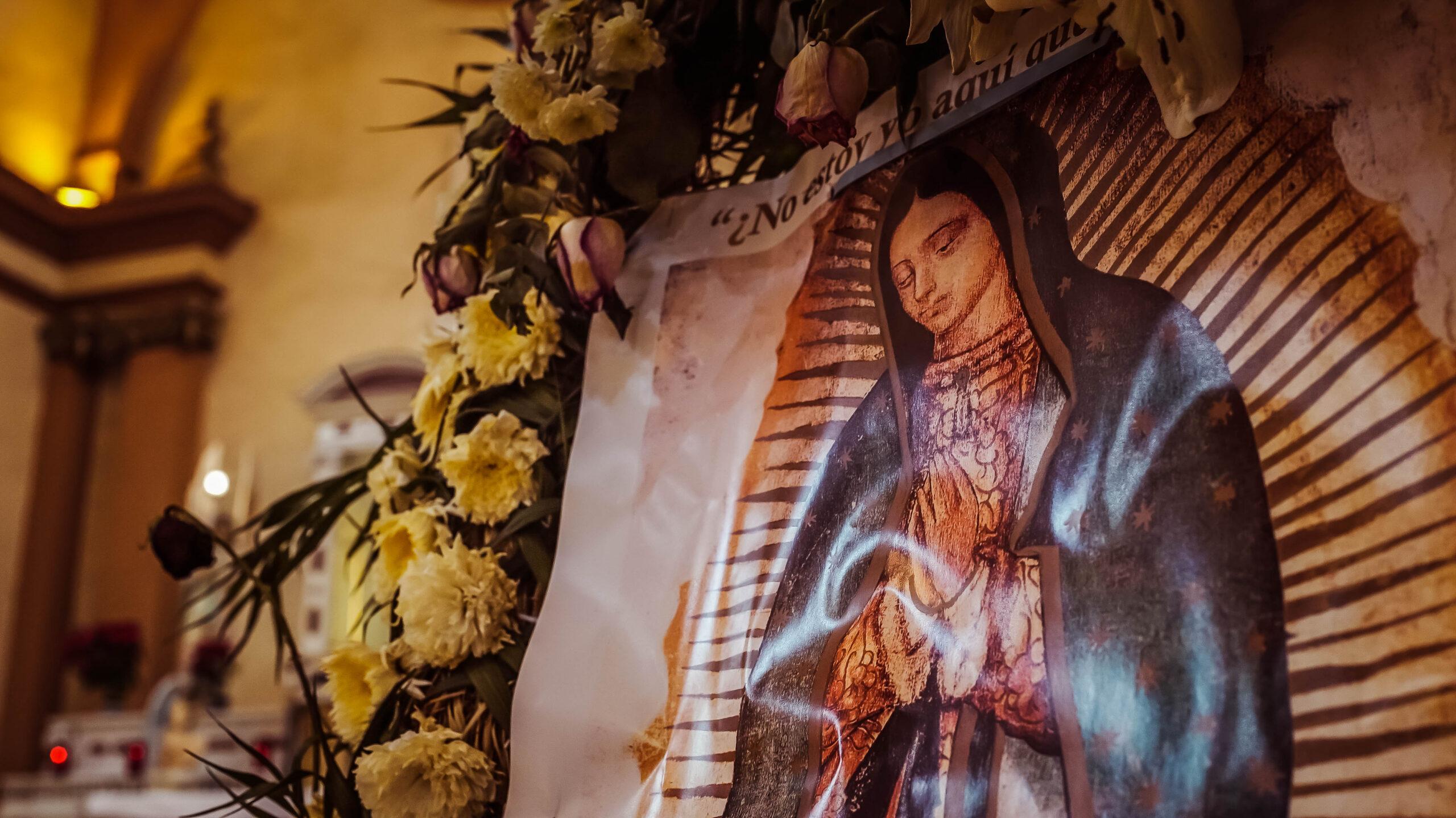
    Our Lady of Guadalupe, as she appeared in Mexico to Saint Juan Diego in the year 1531, is one of the most popular depictions of the Blessed Virgin Mary around the world. In my own experience, seeing her radiant image week after week as it hangs near the altar of my home church in Northern New Jersey piqued my interest and led me to learn more about this apparition. Upon first glance at the holy image, Our Lady’s beauty, humility, and tenderness are clear for all to see, but as it turns out, there is actually far more to this stunning self-portrait of Mary than one might suspect. As we prepare to celebrate the annual Feast of Our Lady of Guadalupe on December 12, let’s take some time to appreciate what makes La Virgen de Guadalupe so unique:

    1. Practicality

    On a basic level, I find it utterly amazing that the image of Our Lady of Guadalupe was given to humanity by Mary herself. As the historical account of the miraculous apparition goes, the Blessed Virgin came to Juan Diego and instructed him to petition the bishop of Mexico to build a church on the Hill of Tepeyac where she appeared. When the bishop asked Juan Diego for proof, Mary once again visited Juan Diego and gave him roses – in the dead of winter – to carry in his tilma, or cloak, and present to the bishop. Arriving before the skeptical clergyman once more, Juan Diego opened his tilma to reveal not only the beautiful roses, but the heavenly image of Our Lady of Guadalupe herself as we know her today. 

    This is the very same image that we still see of the Blessed Mother almost 500 years later. It’s not every day that the Mother of our Lord descends from heaven and quite literally hands us a self-portrait as a means of introducing herself to those who don’t yet know her. In a practical sense, this image allows us to honor Mary more intimately. It is not a man-made rendition of what some artist believed the Blessed Virgin might have looked like. When we look at this image, we see our Mother exactly as she appeared to Juan Diego centuries ago, her likeness crafted by heavenly design and gifted to humanity on a poor man’s cloak.

    RELATED: Our Lady of Guadalupe and the Joy of Knowing Her Son

    2. Symbolism

    The full account of the symbolism woven into La Virgen de Guadalupe’s image could stand as its own dissertation, but it is certainly worth mentioning in brief. Many elements incorporated into the depiction served to explain Mary’s identity – and that of the child in her womb – to the Aztec people. For example, the stars on her royal blue-green cloak that mirrored the constellations as they illuminated the sky on the morning of her apparition signified that she came to the Aztecs from heaven. The traditional black maternity band worn around her waist drew the natives’ attention to the child in her womb. With the sun behind her and the crescent moon under her feet, both of which were symbols of Aztec deities, Mary revealed that she was bearing the one and only true God. 

    I find it especially powerful that Our Lady came to her sons and daughters of Mexico in a way that was so personally meaningful to them, embodying their history and culture to demonstrate that she came to them as their mother. This leaves no doubt in my mind that when Christ gave us his mother to be our own as he hanged dying on his cross (John 19:26-27), Mary took us into the fold of her mantle as her beloved children. She is truly and devotedly our mother.

    RELATED: Our Lady of Guadalupe: A Convert’s Guide to Feasting the Patroness of the Americas

    3. Signs of Life

    Yes, you read that correctly. Though claims about the many miraculous attributes of Our Lady of Guadalupe’s image have naturally been met by their fair share of critics and naysayers, studies by doctors and scientists over the past century have resulted in some phenomenal findings. In the case of a three-hour infrared study of the tilma conducted in 1981 by Dr. Philip Callahan, a biophysicist and consultant for NASA, it was discovered that the figure of the Blessed Virgin Mother on the tilma maintains a temperature of 98.6 degrees Fahrenheit, which is the natural temperature of the living human body. Another investigation by gynecologist Carlos Fernandez del Castillo revealed that, when listening to the image with a stethoscope, one heartbeat could be heard at the chest of Our Lady, and a second within her womb that carries the unborn Christ. Ophthalmologists Dr. Manuel Torroella, Dr. Enrique Graue, and their colleagues likewise examined the image and discovered that the eyes of Our Lady of Guadalupe reflect images back at the viewer just as the normal human eyeball does. The list goes on

    Being a devout Roman Catholic and first-year medical student who loves all things science, I can’t help but take some personal satisfaction in these findings. As anyone with internet access can attest, an unfortunate “religion versus science” mentality seems to predominate our society and all too easily brings contention to discussions of either topic. Perhaps these scientific anomalies woven into La Virgen de Guadalupe’s image will show those who choose science alone at the expense of faith that it is God who is the author of the natural world; it is through science that we strive to decode his divine language.

    One of the main points I take away from the apparition of Our Lady of Guadalupe is that Mary comes to us as our own loving Mother, fully compassionate toward our personal circumstances and seeking above all to bring us closer to her and her beloved Son. Just as she did for the Aztec people centuries ago, Our Lady of Guadalupe comes to meet us precisely where we are, and as we are, to offer us her love and intercession. I often find great comfort in the words she spoke to Saint Juan Diego in one of his most difficult moments, and I encourage you to do the same: “Am I not here, I, who am your Mother? Are you not under my shadow and protection? Am I not the source of your joy?”

  • Hands-on Faith: How Contact Builds Our Connection to Christ

    Hands-on Faith: How Contact Builds Our Connection to Christ

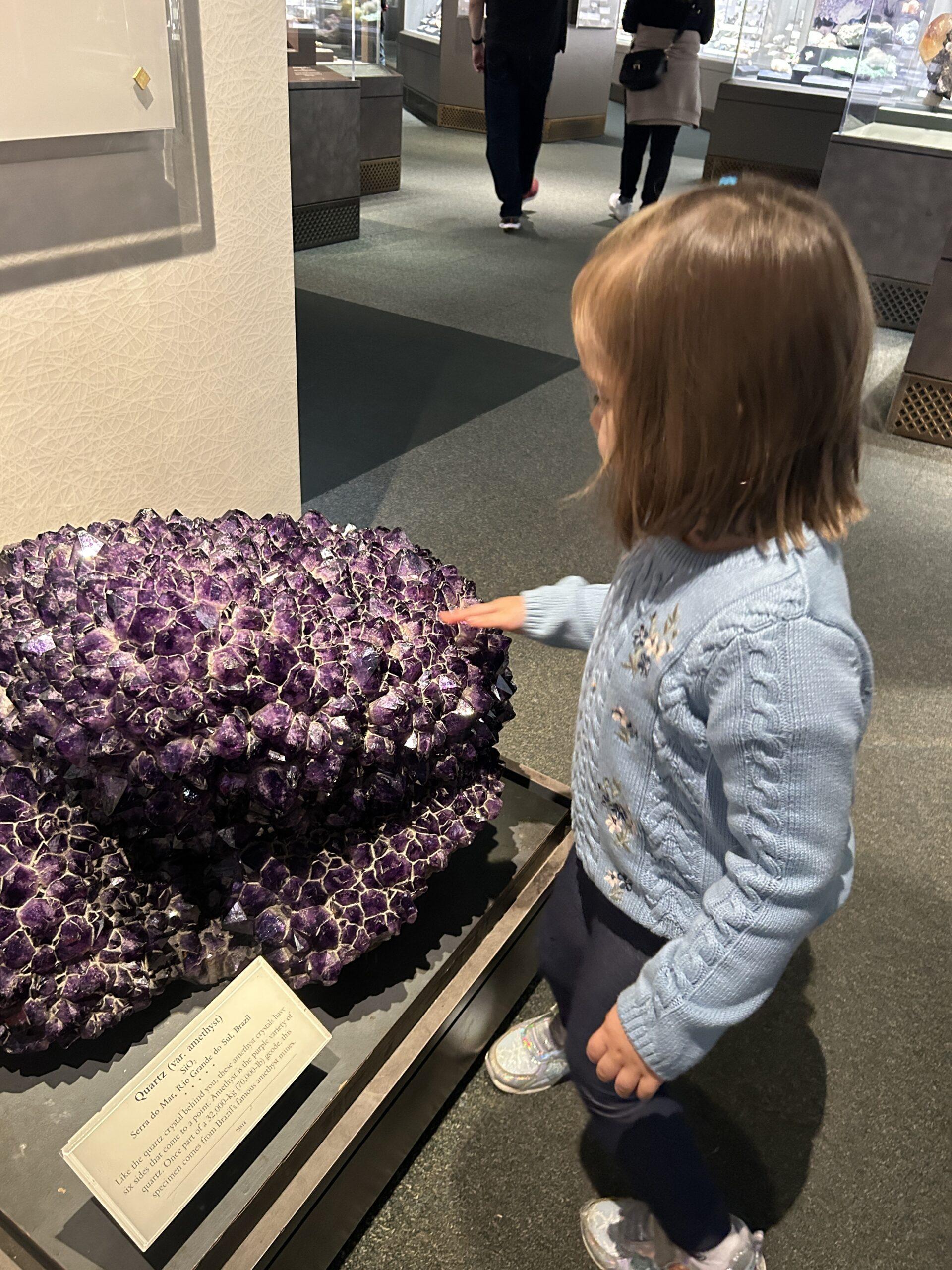
    My daughters love museums  –  a fact which has required practice, cajoling, and plenty of snacks – but, once sparked, the adventure of discovery is contagious. Throughout our family’s recent trip to Washington, D.C., we experimented with which museums worked best for children. The National Art Gallery, with its automated “please step back from the art!” alerts and constant shushing of giggles was not a friendly option for us. We felt more at home in the National Museum of Natural History. My girls, barely 3 and almost 6 years old, stared in awe at the towering dinosaur bones, the blue whale suspended above the ocean room, and the countless treasures encircling the iconic elephant, Henry, who oversees the entryway. In the Hall of Fossils, I noticed a sign that both shocked and delighted me, reading “please touch.” My girls hurried over to feel the dinosaur bones replicas, their faces alight with joy at having the opportunity to interact with something so precious. 

    We discovered more of these thoughtful signs throughout the museum, on huge stones containing amethysts, on ammonoid fossils, and on a section of sea coral. My younger daughter chatted all day about how she touched the amethyst. She loved the shape of the gemstones, how cold it felt to the touch, its color and how it shifted in the light. Having seen a great deal of beautiful and fascinating things behind pristine glass, the opportunity to touch and handle an exhibit was priceless. 

    RELATED: Children and the Church: Recognizing the Welcome

    While my husband and I chuckled at her newfound love for gemstones, we also recognized a deep truth within her delight: Connection is strengthened through contact. Contact can manifest in various forms, but that tactile connection impacted her in a way that merely viewing never could have. These dear signs scattered across the museum brought to my mind John 20:27. As the newly resurrected Jesus offers his hands and side for Thomas to touch, he tells Thomas, “Put your finger here; see my hands. Reach out your hand and put it in my side…”offering his body as proof of his resurrection. 

    Photo courtesy of the author

    Throughout the New Testament, Jesus offers his incarnated body to his people to see, to hear, and to touch. The Gospels open with the nativity, a sign of God’s love for us which shocks and delights. Although we celebrate the birth of Jesus yearly, this gift of the incarnation of our God continues to astound me. God became man, took on flesh, accepted vulnerability and human needs in order to connect with, serve, and save his creations. His birth, upbringing, and adulthood were far from lavish, sheltered experiences; he was born in a time of danger and fear for the lives of the young. He was brought into the world by a young woman away from her family and spent his early years in a foreign country; Christ touched and lived in the world of the lowly. 

    RELATED: How My Young Family is Making Room for Christ this Christmas

    In turn, he offered himself in ministry and sacrificed for the humble and proud alike. The incarnation was a fulfillment of prophesies and promises, but the way Christ served his people while on earth was also an invitation for connection. Christ told his disciples, “Let the little children come to me, and do not stop them; for the kingdom of heaven belongs to such as these.” (Matthew 19:14). He never shied away from his people and their need for him. He walked dusty roads, cried with his friends, healed with spit and mud, and in all his actions, formed connections through contact. 

    We are a tactile people, drawn to contact, longing for connection. Our God knew this; he created us in this way. So, in all his love for us, he reached down from heaven, took on flesh and said to all his people, “please touch.” As we enjoy this season of Advent and remember the incarnation, how will we answer God’s invitation for connection? Perhaps this Advent we will clasp Christ’s outstretched hand and focus on our relationship with him, leaning into each week of Advent and preparing our hearts for his second coming. Or maybe our connection will be extending that hand of welcome to our neighbor; inviting them in so as to reflect God’s love into their life. Hopefully we can do both, loving our neighbor as God loves us. Connecting with others in the knowledge that we serve a God who continually invites us into a relationship with him. 

  • Why I’m Fasting for Peace During Advent

    Why I’m Fasting for Peace During Advent

    In 2023, Advent arrived at a time when violence in Gaza was often on my mind. Harrowing news and calls for a ceasefire filled my Instagram feed, forcing me to consider what it would mean to respond authentically to the reality of such suffering. As a Catholic, I knew prayerful self-denial was an option, but I had resisted the idea. What good would a manufactured drop of my own suffering do amid the ocean already in existence? Compared to the suffering that war brings, though, that concern felt selfish. “Effective” or not, it is certainly fitting to offer proof of love through sacrifice, and as Lenten as that sentiment feels to me, Advent can be a time of “offering up” as well. 

    I’ll admit that I didn’t choose Advent for purely spiritual reasons. The liturgical season is shorter than Lent, and at 22 days, Advent 2023 was the shortest possible duration. I also knew that the short winter days would be a help: I’d decided to go without food from sunrise to sunset. I was particularly inspired by the fasting practices of Islam. In addition to it being the faith of those who bore the brunt of the violence, my fast was inspired by Ismatu Gwendolyn, a Muslim public scholar and activist, who had engaged in a 40-day fast in response to the violence in Palestine and shared about the experience.  

    RELATED: Fasting From Injustice

    Our Muslim siblings go without food and drink from sunrise to sunset during their holy month of Ramadan as a practice of devotion and spiritual discipline. As you can imagine, this is a far more intensive manner of fasting than the standard two small meals and one large meal that constitutes a standard day of Catholic fasting, especially when considering our reduced consumption is only required on Ash Wednesday and Good Friday. Despite softening the practice for myself (in addition to a shorter fasting period, I did not prohibit myself from drinking liquids during daylight hours), I still very much felt the deprivation of nourishment. What began as a fast for peace became an opportunity to better understand how more than a day of hunger feels.  

    What surprised me the most was how the lack of nutrients manifested itself. I didn’t often feel my stomach rumbling or find myself wanting food to combat the sensation of an empty stomach. What I did feel were the cognitive effects. This wasn’t a matter of being distracted by hunger; operating on less fuel, my brain simply couldn’t function as well as it normally did. I wasn’t as present. It was harder to communicate. It was harder to think. As an aspiring graduate student, I was alarmed by the brain fog I felt, knowing that clear thinking and eloquent expression are fundamental in academic environments. 

    RELATED: The Fast I Choose: No Matter the Season

    I found myself thinking of all the children who sit hungry at school, struggling to focus and learn. According to the USDA, in 2023, “7.2 million children lived in food-insecure households in which children, along with adults, were food insecure.” I thought about how these children may be met with punishment, rather than compassion, for living the effects of hunger. I thought about the long-term effects of that response. 

    How difficult it must be to struggle through elementary school when hunger prevents you from reaching your full potential. How difficult to live through any of the indignities of poverty – homelessness, insecurity, exploitation – with a diminished mental strength. How difficult to not only live under the constant threat of death from bombs or bullets, but also to starve through it. 

    RELATED: Swords into Plowshares: Finding Peace in Advent Today

    I want to emphasize that what I did is not novel: Muslims undergo their Ramadan fast yearly. Christian history reveals more extensive traditions of fasting as well, including during Quadragesima Sancti Martini, or the Forty Days’ Fast of Saint Martin’s, which took place during the weeks leading up to Christmas. Additionally, it feels odd to write about my experience when there are so many people for whom hunger is a daily experience and its effects a constant threat to livelihood. To choose to be hungry is, as a spiritual practice, a privilege. Nonetheless, experience is a powerful teacher: I’m not sure I would’ve understood the mental effects of hunger without experiencing them first-hand. This fast broadened my understanding of hunger and consequently deepened my compassion for those who have no choice but to go without their daily bread. 

    During Advent, we remember the arrival of a God who humbled Himself to live among us, who came to proclaim good news to the poor. If you, like me, have always been blessed with food security, I invite you – provided, of course, that it is healthy and safe for you to do so – to seek out hunger this Advent. Offer your sacrifice up for an intention. Consider donating the money saved on food to your neighbors in need. Prepare for the coming of a Savior who said “I was hungry and you gave me food” (Matt. 25:35) by sharing in and learning from his reality.

  • Visual Devotions: Crafting Meaningful Moments in Advent

    Visual Devotions: Crafting Meaningful Moments in Advent

    As a child, I always looked forward to the Advent season, those four weeks of anticipation leading up to Christmas. However, it wasn’t until my late 20s that I discovered the profound impact of incorporating art into my spiritual practice. 

    My journey with Advent art began unexpectedly when a friend invited me to an “Advent Art Night” at her church. Skeptical at first, I found myself deeply moved by the experience of creating a simple painting of an Advent wreath. The meditative act of applying brushstrokes while reflecting on the theme of hope showed me the value of creating a tangible piece of my faith through art. 

    RELATED: Praying With Your Eyes: How to Get Started With Visio Divina

    Since then, I’ve made it a tradition to engage in at least one Advent art project each year, finding that the creative process helps me connect more deeply with the season’s themes and prepare my heart for Christmas in a unique and meaningful way.

    By incorporating visual art into Advent devotions, individuals and communities can deepen their understanding of the season’s themes and enhance their overall experience. Here are some examples of project ideas themed around each week of the season.

    Hope

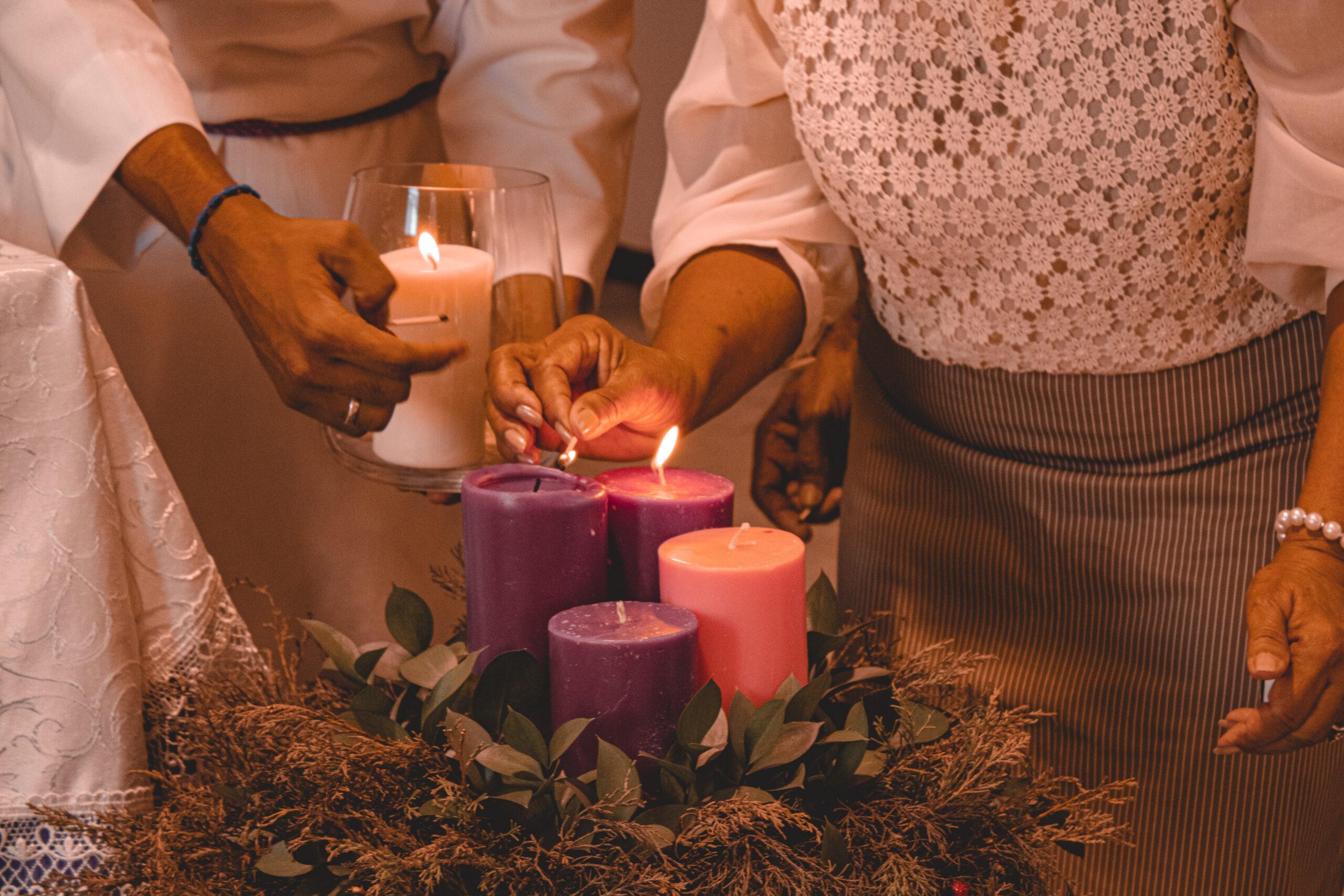
    1. Advent wreath painting: Create a watercolor or acrylic painting of an Advent wreath, focusing on the first candle representing hope. Use warm colors to symbolize the light of hope in the darkness. Check out these Advent wreath photos for inspiration.
    2. Hope jar: Decorate a glass jar and fill it with small slips of paper containing Bible verses about hope. Draw one each day for reflection. Check out this video for more ideas.
    3. Prophetic landscape: Paint or draw a landscape inspired by Isaiah’s prophecies of the Messiah’s coming, incorporating symbols of hope and renewal. Check out these ideas for this project.

    Peace

    1. Peace dove collage: Create a collage of a dove using torn paper from magazines or newspapers. Include words and phrases related to peace found in Advent Scriptures. Searching for these phrases will give you time to reflect on the overall Scripture and help you meditate on these topics!
    2. Jesse Tree with peaceful imagery: Adapt the traditional Jesse Tree project by focusing on images and symbols of peace. Use prints or paintings of biblical scenes, such as the Annunciation, the Nativity, or the Prodigal Son’s return, and add quotes or verses related to peace.
    3. Paper plate peace doves: Create paper plate doves with outstretched wings, symbolizing peace and hope. Hang the doves in a window or on a wall as a reminder of peace. 

    RELATED: How Artwork Opens My Eyes to God’s Handiwork 

    Joy

    1. Joyful nativity scene: Craft a mixed-media nativity scene using materials like fabric, paper, and found objects. Focus on expressing the joy of Christ’s birth through vibrant colors and dynamic compositions.
    2. Joy explosion: Create an abstract painting or drawing that visually represents an “explosion” of joy, using bright colors and energetic brush strokes or lines.
    3. Joyful song lyrics art: Choose lyrics from your favorite Christmas carol about joy and create typographic art featuring those words in creative fonts and colors.

    Love

    1. Heart-shaped Advent calendar: Design a heart-shaped Advent calendar using cardboard or foam board. Create 24 small pockets or doors, each containing a Scripture verse about God’s love or a small act of kindness to perform.
    2. Love mosaic: Create a mosaic using small pieces of colored paper, glass, or tile to form an image symbolizing God’s love, such as a heart or a cross.
    3. Love letter art: Write letters to friends or family members expressing love and gratitude, then decorate the envelopes with artistic designs before mailing them out.

    RELATED: Strengthening My Faith Through Creativity

    Advent Devotions

    To fully integrate art into your Advent experience, consider these approaches:

    1. Daily reflection: Spend time creating or reflecting on a piece of Advent-themed art. Use this time for prayer and meditation on the day’s Scriptures. Click for more Advent Devotional Resources.
    2. Family art time: Set aside time each week for family members to create Advent art together. Discuss the themes and scriptures as you work. Here are some additional ideas for Catholic Advent Crafts.
    3. Community art project: Organize a community-wide Advent project, like a collaborative mural or installation piece that grows throughout the season. Check out these resources to get you started.
    4. Art-based worship: Incorporate visual art into church services or small group gatherings. Use projected images, live art demonstrations, or displays of congregant-created artwork to enhance worship experiences. The Art of Advent has great seasonal prints and devotions for inspiration.

    Creating visual devotions for Advent can significantly enrich the season’s spiritual experience. By engaging in art projects that reflect Advent themes, individuals and communities can deepen their connection to the story of Christ’s coming and prepare their hearts for the celebration of Christmas. As you engage with Advent art, remember that the goal is not perfection but rather a heartfelt expression of faith and anticipation of the coming of Christ.

  • 6 Resolutions I’m Making for the Liturgical New Year

    6 Resolutions I’m Making for the Liturgical New Year

    A couple of years ago, a friend told me that she and her partner were hosting a Liturgical New Year’s party on the Saturday night leading into the first Sunday of Advent. Fan of New Year’s energy and keeper of the liturgical year that I am, hearing about this party delighted me to no end. 

    What a fun way to celebrate an important communal transition from one liturgical year to the next, which happens with the commencement of Advent, the season representing the time in history before Christ was known to humans. During Advent, we anticipate and prepare for God entering this world through the person of Jesus, whose life we then follow throughout the rest of the liturgical year. 

    RELATED: Before Making a Resolution, Make a Confession

    I didn’t go to the party (heck, I wasn’t even invited, given that we live on opposite sides of the country!), but imagining my friends’ festive gathering planted the seed in me to mark the onset of a new liturgical year more intentionally. 

    Cue: liturgical New Year’s resolutions. 

    Now, it doesn’t take ordination to know that the self-improvement-new-year-new-me energy of January 1 isn’t a part of the liturgical new year vibe, which has much more to do with organizing the Scriptural readings, feast days, and seasons of the Church than it does with any individual’s agenda or goals. 

    That said, as the liturgical year walks us through the mystery of Christ, it also, according to the USCCB, “calls us to live his mystery in our own lives.” It makes sense to me, then, to make the liturgical year personal as well as communal, and to use this special time as an opportunity to think about the ways that I might strengthen, grow, and deepen my faith in the year ahead. 

    If this thought resonates with you, here are some ideas for liturgical New Year’s resolutions:

    Read a spiritual classic

    We have so much to gain from the saints who have gone before us, and one way to take in their wisdom is by reading their works. However, because books like “Dark Night of The Soul” and “The Confessions” are a heavier mental lift than your average beach read, it might take a resolution to make reading them actually happen. For instance, I had to psych myself up to read St. Teresa of Avila’s “Interior Castle” a couple of years ago, but I’m so glad that I did, as the book played (and continues to play) an influential role in my spiritual development. 

    WATCH: Advent in 2 Minutes

    Commit to going on a retreat or pilgrimage

    If going on a retreat or pilgrimage is something that you’ve long considered doing, make this year the year! 2025 is a Catholic jubilee year with the theme “Pilgrims of Hope;” if you have the time and the means, you might consider joining Catholics from all over the world as they make pilgrimages to Rome and other holy sites of significance. Check in with your local diocese to see if they have jubilee celebrations planned, or go your own way by planning to spend a day in prayer and rest at a place that nourishes your soul, like a state park or cathedral in your city. 

    Focus on a particular commandment

    Maybe you’ve noticed an area of thinking or behavior that has been a struggle for you lately – a tendency to tell white lies, or a pattern of using Sundays to catch up on your work email, for instance. Consider the commandment with which your habits most clash, and decide to go all-in on that commandment this year. Read about it, pray about it, talk to a spiritual director or trusted friend about it, and reflect on how you can better live out the commandment in your life. 

    Pick a patron saint for the year

    If you are looking for more of a vibe than a specific goal or two, choosing a patron saint for the year can help you get there. For instance, St. Monica is the patron saint of mothers, so if you are interested in deepening your role as a parent, son, or daughter, she might be a good choice. As part of this resolution, you can learn about your saint, pray to them for intercession, and consider practical ways that you can integrate their example into your life. Check out this extensive patron saint list to get started. 

    I’m thinking of choosing St. Dymphna, the patron saint of therapists, as my saint for the year, as I’m not only hoping to grow in my knowledge and skill as a psychotherapist this year, but am also planning to take my clinical licensure exam and will take all the help I can get in the process! 

    RELATED: Why I Choose a Word of the Year in Lieu of a Resolution

    Perform the Corporal Works of Mercy

    You can’t go wrong with a resolution that positions you to imitate the ways of Jesus. Choose one or more of the Corporal Works of Mercy – feed the hungry, give drink to the thirsty, shelter the homeless, visit the sick, visit the prisoners, bury the dead, give alms to the poor – to devote some of your time to in the year ahead. 

    Lean into Advent

    There’s a trope that most New Year’s resolutions are abandoned by February 1, and if you get the sense that this might be the case for you, it’s fine to let go of making a resolution for the whole liturgical year and instead focus on the season ahead. Consider how you can fill the four weeks of Advent with expectant waiting, hopeful anticipation, and joyful preparation – perhaps by attending Advent vespers at your parish, reading an Advent devotional daily, or volunteering at a local soup kitchen. 

    There’s a saying that fruit grows where you plant and water seeds. As we transition from one liturgical year to the next, take time to nourish the seeds of your spiritual life. Intentionality about setting goals is a good place to start. 

  • The Generosity of Less: Learning From St. Clare This Advent

    The Generosity of Less: Learning From St. Clare This Advent

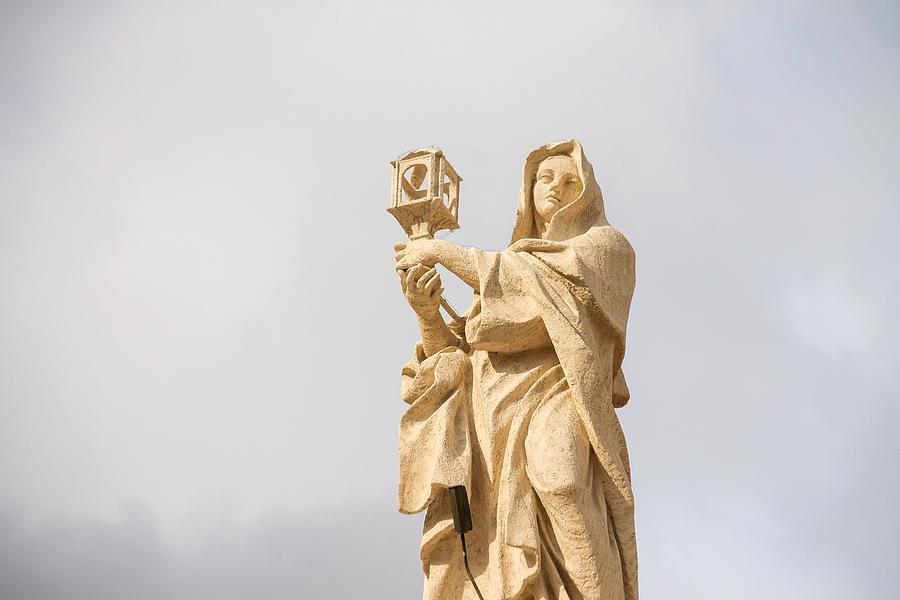
    st clare statue as she is holding a lamp with a white background

    “Look closely, I say, to the beginning of the life of this admired one, indeed at the poverty of him who was wrapped in swaddling clothes and placed in a manger. O marvelous humility! O astonishing poverty! The King of the angels, the Lord of heaven and earth is laid to rest in a manger!” – St. Clare of Assisi, Fourth Letter to Agnes

    Two years ago, I was received into full communion with the Catholic Church as Advent began. I chose St. Clare as my confirmation saint for reasons that were largely intuitive at the time because of my previous community service experiences with Franciscans. Having gained more perspective since then as both a new Catholic and a young parent, I’ve found Clare’s devotion to simplicity particularly fitting to keep in mind as we approach the season of giving and gratitude. 

    Our culture often romanticizes generosity around the holidays by doing too much of everything. With small children, I am often confronted with temptations to maximize every moment, develop new traditions, and create picture-perfect memories. Instead, by embracing St. Clare’s example, I’m able to reconsider how to live generously in ways that are truer to the spirit of my faith’s humble Christian origins.

    RELATED: How to Make Friends With a Saint

    Clare knew these origins well; she contemplated them in solitude and encouraged others to do the same whenever she could. As I have grown in my faith the past two years, I have tried to learn more about Clare in order to discover how to integrate her example into my own life. Her original writings shed light on her devotion to Christ, while others have also written eloquently about her. In one of St. Pope John Paul II’s letters to the Poor Clares, the Franciscan order of nuns that St. Clare founded, he describes her as having a “spirit of poverty” that “emptie[d] her of everything but the simplicity of a gaze fixed on God.” 

    It can be hard to imagine that kind of austere intensity in our current environment. Particularly as we hope to begin to emerge from these dreadful pandemic days, it is far too tempting to make up for lost time in an excess of abundance: more commitments, more gifts, more time away from home. I have had to renew my focus by sticking closely to pre-planned lists and resisting the urge to feel pressured to match everyone else in material generosity. While even the Poor Clares made exceptions for Christmas and other feast days in their otherwise strict observances, their charism is a helpful reminder when we find ourselves biting off more than we can chew by the time we move into December. 

    LISTEN: Saints of Our Lives: Saint Clare of Assisi

    How did Clare keep her gaze on what she saw as the only thing that truly mattered? By never looking away from where the Christian faith began. In her writings, she frequently discussed the Christ Child and Mother Mary. In them, she saw the heart of the Christian life that could best be nurtured through constant prayer and focus, ultimately hoping to become a “mirror” that reflects “eternity.” Both her Rule and Testament and her letters to Agnes demonstrate an unwavering focus that enabled her to use her time as effectively and efficiently as possible. Because of this single-mindedness, the Poor Clares were able to serve their community far more than we might naturally assume. Clare’s physical separation from the outside world did not prevent her from helping those in need; instead, by seeing her vocation as a gift, she was able to offer herself as a gift to others in a fully authentic way through prayers and even healing. Most famously, her devotion to the Blessed Sacrament once saved her Sisters from an invading army

    These insights into Clare’s life again bring us back to Mary, our Mother — a fitting focal point as Advent approaches. Mary knew well what it meant to empty herself for the sake of Jesus and, ultimately, for the world. Through Clare’s example, I am humbled by the reminder that the spirit of Advent can serve as a sort of ongoing spiritual compass for our entire lives as Christians, looking to Our Mother and the Son of God and their patient endurance as constant models for how to grow ever more consumed by their guiding light.  

    RELATED: Patron Saints for Introverts

    And so now, we prepare to wait also for Christ. We gaze upon his face as Clare did, awestruck as ever that God chose to become man. What better time to be reminded that that is all that ever matters? As we approach the season of waiting and giving, we can keep these truths in mind to guide our hearts toward generosity. We can let go of the impulse to do too much and forgive those who do not know how to do otherwise. When relatives give my young children far too many presents, I can try to see the grace that’s intended instead of allowing myself to feel weighed down with the constant pull of stuff. I can make an effort to bake cookies for gifts and write my thank you notes before Valentine’s Day, grateful for the chance to return the love I have received. In all things, we can seek Clare’s “holy simplicity” wherever we go.

    Originally published November 11, 2021.