Tag: Faith in Everyday Life

  • Saint Mom: Why Are There So Few Saints Who Were Mothers?

    Saint Mom: Why Are There So Few Saints Who Were Mothers?

    It’s fair to say the saints have taken over our home. I am up to five statues of Mary in my kitchen alone, all cheering me on through daily chores. An image of Mary Magdalene gazes down at us in the dining room. St. Anne is on my night table, reminding me to read my books. My son sleeps with St. Michael the Archangel next to him for protection, and my daughter has a quote from St. Catherine of Siena on her wall. Since we look to the saints for daily inspiration, it was natural that I would turn to them to find help being a good mom. What I learned is that there are relatively few saint moms, and their paths to holiness were shockingly similar.

    So, if you want to be a saint and a mom, prepare your family. You probably won’t be getting canonized unless your husband dies, you sell all your possessions, and become a nun. Sorry, kids. Mom won’t be around to babysit the grandchildren. She is doing the Lord’s work.

    RELATED: Mysticism: It’s Not Just for Saints

    Step one: Be born into a wealthy family.

    Step two: You must get married. An unhappy marriage is optional but preferred. Bonus points if your in-laws are also notably mean to you.

    Step three: Have some children, who will likely die young or go into religious life themselves.  

    Step four: Your husband must die or you must mutually decide to enter separate religious orders. (My husband and I were going to do this for Valentine’s Day but spiritual attack in the form of pizza and Netflix intervened.)

    Step five: You must enter religious life or live in a convent that you support. Founding your own order is optional. Even in the New World, the first American-born saint mom, Elizabeth Ann Seton, was raised in a wealthy family, lost her husband, and founded a religious order.

    Reading all of this, I began to wonder if there was any hope for the rest us. I did discover a FastPass to mom sainthood that did not involve wealth or a convent. Unfortunately, it requires martyrdom (see “Marytrs of Kyoto” or “Spanish Civil War”). Ready to sign up?

    RELATED: Getting by with Help from a Little Flower

    Are entering the convent and/or being martyred really the only way moms can become saints? We are all called to become saints, and having the saints as spiritual examples is one of the best things about Catholicism. However, for the average mom today, it’s hard to relate to the experiences of our saint mom role models. Of course, we can always look to Our Lady and St. Anne, but it’s fair to say their circumstances were unique. I began to wonder if this phenomenon was the spiritual equivalent of not having any pictures of yourself alone after your children are born. There may be plenty of saint moms out there, but they are the ones taking the pictures; they are not in them. Until recently, it was accepted that most saint moms toiled behind the scenes with little recognition.

    Take heart, Catholic moms. As women’s roles have become better understood and more visible, a new wave of saint moms is coming. Two of the most popular mom saints today, St. Zelie Martin and St. Gianna Molla, not only have cool names, but they were working moms with kids, and are more relatable to most of us. St. Zelie and her husband, St. Louis Martin, were the first married couple to be canonized in history and are best known for being the parents of St. Therese of Lisieux, the Little Flower. Not only did Zelie have nine children, most of whom went into religious life, but she ran her own lace business — before Etsy.

    A working pediatrician with four kids, St. Gianna Molla famously refused treatments for cancer so that she could give birth to her daughter. She ended up dying from complications following the birth. Interestingly, none of the Molla children entered religious life, but the youngest daughter followed in her mother’s footsteps and became a doctor.

    Both Zelie and Gianna were noted for their ability to live out their faith in everyday life. Zelie’s letters are filled with references to fasting, prayers with the family, and daily Mass. Just like my kitchen, the Martin family had a statue of Mary in an honored place, fondly referred to as “Our Lady of the Smile.” Gianna considered her work her religious mission and her marriage and family as her vocation. She was noted for her care of the poor and marginalized but also for her spirit of joy that served as an example to her children.

    It can be hard for us to see the holiness of our everyday actions, especially when we’re struggling to get the kids in the car for Mass, cleaning glitter slime out of the sink, or refereeing the latest cage match between siblings. It helps to see the Church’s recognition of the sanctity of motherhood is growing and maturing with each new saint mom. I can’t wait to see who is next. Could it be you?

    Originally published August 9, 2017.

  • A Good Dog: How ‘Bluey’ Inspires Goodness for the Whole Family

    A Good Dog: How ‘Bluey’ Inspires Goodness for the Whole Family

    Image Courtesy of Disney+

    A red dog gently bunts a cricket ball to his younger sister; she triumphantly catches it and immediately runs to him to celebrate her big play. He proclaims, “What a catch!” while affectionately ruffling her hair as she giggles with glee. Looking on, a father states to his daughter, “That’s what cricket is all about, kid.” I find myself awash in tears while watching this tender and supportive interaction play out on the screen with my young daughters. 

    What is it about the Australian kids’ cartoon “Bluey” that tugs my heartstrings? Parents and children alike feel drawn to and inspired by the show. Animated dogs are far from a new genre, and yet “Bluey” possesses a fresh, unique sense of childhood’s wonder and joy. “Bluey” follows the adventures of an anthropomorphic family of Blue Heelers living in Australia. Bluey is a spunky 6-year-old pup, and her 4-year-old sister, Bingo, happily takes the role of her imaginative playmate. Often joining in their elaborate games, their parents create a loving, family-oriented atmosphere. We began watching “Bluey” after our dear friends mentioned its charm and it became a fast favorite in our home. Wading through media meant for children is a daunting task as a parent, but “Bluey” provides a welcoming, safe space to which I find myself continually returning. There’s silliness, foibles, and even the sprinkling of light potty humor; and through it all “Bluey” captures the essence of goodness and family life remarkably well. 

    RELATED: 3 Ways God Reveals Himself to Me Through My Young Children  

    “Bluey” depicts the mundane, everyday interactions between a family and their friends. “Bluey’s” narratives do not focus on big sweeping storylines but rather on the sacred space of family life. Holding relationships at its center, the pursuit of goodness and harmony is evident in the depictions of both the adults and children in the series. The stories weave a tapestry of virtue I see reflected in my own family. 

    Giggles cascade across the room as my daughters carefully guide a ladybug to her newly constructed magic carpet. For an unexplained reason, our home has experienced an influx of ladybug visitors and, inspired by a particularly charming episode of “Bluey” called “Slide,” no bug shall be harmed in our home. In “Slide,” Bluey’s sister Bingo and her best friend Lila develop a system for ensuring that when they careen down the water slide, no bugs are squashed. My sweet, caring girls took this message to heart, and we are now the protectors and playmates of all insects. Small acts of kindness for the tiniest of friends, but kindness nonetheless. 

    LISTEN: Tackling Kids’ Tough Questions of Faith

    Goodness, sometimes defined as virtue in action, radiates throughout “Bluey’s” family as they navigate forming relationships that bless not only one another but also their neighbors, friends, and family. Theologian Stanley Hauerwas describes the development of virtue as narratively formed through stories. I see this development firsthand and subsequently try to be mindful as I curate the stories my daughters watch and read. Yet, I have discovered their characters are not the only ones formed through these narratives.  

    Kindness and goodness are depicted not only in the main characters, but also throughout their community; emphasizing our need to both give and receive support. In an episode called “Baby Race,” Bluey’s mom, Chilli, recollects her struggles with comparison early in motherhood. Her anxieties over Bluey’s development are eased when she is visited by a more experienced mom friend who gently informs her, “You’re doing great.” This has become a reminder frequently quoted by my dear friends and me when one of us is feeling the weight of motherhood. Never underestimate the wisdom of a pink poodle and the ripple effect of support. 

    RELATED: Children and the Church: Recognizing the Welcome

    The episode referenced at the beginning of this article, “Cricket,” chronicles the journey of Rusty, a friend of Bluey’s, to become a skilled cricket player. Rusty’s dad is deployed overseas; yet through his letters, he imparts advice on facing fast pitches by writing, “As you grow up, you’ll face harder things than a cricket ball… Just keep your eye on the ball and take care of your little sister for me.” This prompts Rusty to bunt the ball to his sister and celebrate her achievement rather than reveling in his own skill. My older daughter quickly caught onto the thread most pertinent to her life and cooed “Aw! He shared with his little sister.” And that’s the beauty of “Bluey;” she saw a sweet story about sharing with your siblings, while I watched a heartwarming tale about a young dog growing in character and skill, and we both loved every minute. 

    The stories that we watch and read with our children form both parent and child. They offer verbiage to discuss tricky topics, provide games and ideas for imaginative play, and gently teach us all the virtue of goodness. By creating a program that highlights the beauty of the mundane and centers on creating healthy relationships with others, “Bluey” has inspired and captivated audiences. All ages can enjoy a show that depicts how kids and parents can both grow in goodness within their everyday lives. As I read, watch, and listen to various stories with my children, I am learning to embrace each narrative that shapes my character, and that of my children, for good – even those starring a small blue dog. 

  • Learning About Sacrifice, With the Help of St. Mark

    Learning About Sacrifice, With the Help of St. Mark

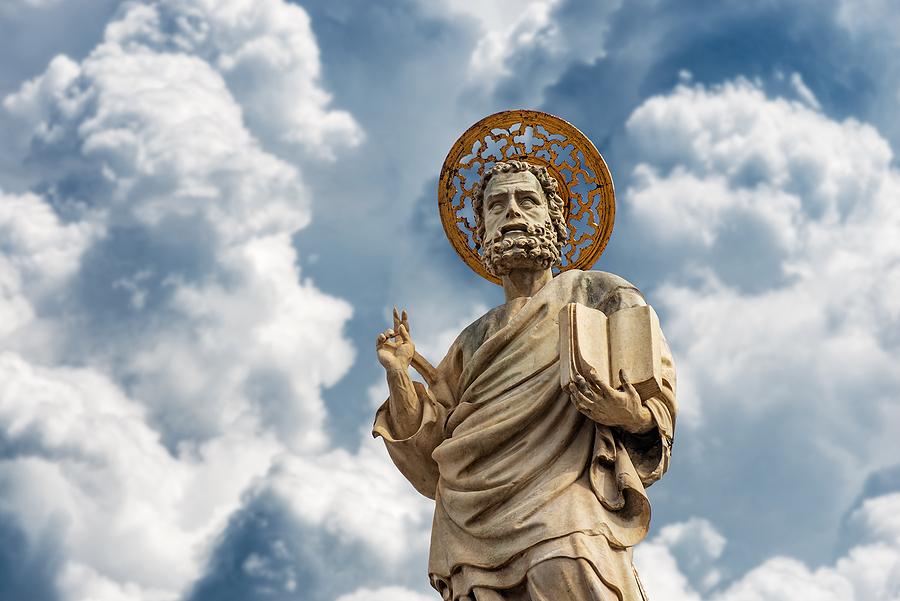
    Image of statue of St. Mark with sky in background.
    Photo by Alberto SevenOnSeven on Bigstock

    Sacrifice is key. We know that Jesus requires this of his followers, but I also heard this statement repeated many times when my wife and I were engaged.

    If I am honest, I think this kind of statement is kind of threatening. I know it to be true based on the life, witness, and words of Christ, but sacrifice is difficult. Approaching my fifth wedding anniversary while having two children (and one on the way) has validated the importance of sacrifice even more concretely in my life. Much of this investigation into sacrifice, however, has been enlightened by St. Mark. 

    The feast day of St. Mark falls on April 25 each year. This critically important saint is often overlooked because he was not one of the 12 Apostles. He does not appear in the stories about the earthly ministry of Jesus, but he wrote one of the four Gospels. 

    RELATED: How to Make Friends With a Saint

    I admit I used to know nothing about St. Mark; he was just a man who wrote a Gospel. My appreciation for him climbed last year when I decided, for the first time, to read the Gospel of Mark straight through from beginning to end. I often read the Gospel of the day, but after hearing a podcast about the importance of reading these accounts as they were written, I took up the task. I started with Mark, well, because it is the shortest Gospel!

    I learned that from the earliest days of the Church, Mark was known to be the interpreter of St. Peter. He became close to Peter and was able to write his account of Jesus’ life based on listening to Peter’s stories.  His writings are viewed as the preaching of St. Peter. We also know, from Acts 12, that Mark was once the companion of Paul and Barnabas as well. 

    Taking the time to read the entire Gospel of Mark transformed me. What became more palpable very quickly, was that Jesus was sent to sacrifice his life for me. I felt this in the way that Jesus spoke about his passion in the Gospel of Mark. I could picture Peter speaking these words to Mark and being moved by them as he heard them for the first time. It became more real for me because I realized that this message was literally passed down through the generations in a powerful and transformative way.

    RELATED: How to Be a Saint-in-the-Making

    At the start of the third chapter of Mark, people begin to plot Jesus’ death. All Jesus did prior was heal the sick, restore the possessed, and preach the truth. And yet, humanity rejected him. He was to be killed because of who he was. Still, he continued to place himself in the spotlight with more public healings and more intense preaching. Christ did all of this with the knowledge that he came to suffer.

    This reaches a shift in intentionality at the midway point in the Gospel. Peter confesses that Jesus is the Son of God and Jesus goes on, three times, to tell the Apostles that he will be arrested, suffer, die, and rise. Jesus states that he “must suffer” (Mark 8:31). 

    I became more and more intrigued by this truth as I reached the details of Jesus’ passion. It seemed more real to me and more powerful. If he tells us that in order to follow him we must also take up the cross (Mark 8:34), then why do I view sacrifice in such a negative way? The sacrifices that I am being invited into actually make me like Jesus. Mark, specifically, taught me this because of his intense focus on suffering and sacrifice. Sacrifice is an opportunity, it should not be a fear.

    RELATED: What I’ve Learned About Marriage When the Unexpected Happens

    My first practical thought was: Can I be more intentional about sacrificing in my marriage? I do my best to do this by helping around the house after work, but I think I view these tasks as things I just have to do. Mark’s insights helped me to see that I can offer difficult times (even if they are simple) as avenues of grace for my loved ones. Doing the dishes or folding the laundry late at night when I am tired and drained aren’t just nice things to do. They can be sacrificial and intentionally done to give me access to Jesus’ sacrificial love. 

    Second, I thought about my two boys. Being a parent of a 3-and-a-half-year-old and a 1-and-a-half-year-old can be chaotic. Noise, messiness, and lack of sleep are all side effects when the needs of your children demand all of your attention. My wife, Joanna, experiences this more than I do since she is home with them, but being consistently present to her children all day is a sacrifice. Rather than look to escape into my phone or have “me time,” Mark has inspired me to be more present during these special times with my kids. 

    The beauty of Christian sacrifice is that its focus is not on rigor. Sacrifice opens us up to love and makes us who we are meant to be. The tired tasks and intentional presence I strive to have with my children make me a better husband and dad. They do not make my life darker but brighter. Thanks to St. Mark, I am becoming less fearful of sacrifice and more grateful for the impact of Christ’s sacrifice in the concrete aspects of my life.

  • The Heavens Are Telling the Glory of God: An Earth Day Reflection

    The Heavens Are Telling the Glory of God: An Earth Day Reflection

    A white woman in a blue tank top is holding a handful of dirt. A plant is growing out of the dirt in her hands.
    Photo by Nikola Jovanovic on Unsplash

    As we celebrate Earth Day tomorrow, I am reminded of the words of Psalm 19, celebrating God’s glory in creation, which begins with the following phrases:

    The heavens are telling the glory of God;
    and the firmament proclaims his handiwork.
    Day to day pours forth speech,
    and night to night declares knowledge.
    There is no speech, nor are there words;
    their voice is not heard;
    yet their voice goes out through all the earth,
    and their words to the end of the world.

    How exactly do the heavens tell of the glory of God? According to this psalm, they do not have a voice that can be heard through speech, and yet the words of their “voice” travel to all corners of the world because, with gratitude, they proclaim God’s majesty through the nature they are endowed with: trees root into the forest floor, reaching with branches of praise toward heaven, sheltering the things below; rivers rush and teem with aquatic life, a watery vessel for fish to travel; the sun and moon usher in the day and night, balancing the world with warmth and cold; flowers and plants enrich the mind’s eye with dynamic beauty and mystery, inviting the viewing into greater discovery.

    RELATED: Digital Retreat for Deepening Our Relationship With God and Nature

    Through my own experiences of spending time in nature: running, hiking, and gardening, I have witnessed firsthand the Earth speaking to me that everything is a gift. Yet, how often do I consciously call to mind and express gratitude for all that I have in a tangible way, as the Earth does? Not often enough. When we allow ourselves to experience deep and authentic gratitude, we naturally want to give back. We want to bring about something good for all the good that has been given to us; in other words, to co-create with God in blessing the world around us. I invite you to consider the visible ways you can cultivate a continuous inner life of gratitude by taking up the call to be co-creators with God in all seasons.

    In my own life, I have been blessed with an aptitude for words, specifically through my work as a novelist. Through the gift of storytelling, and by crafting characters and stories that glorify God and reveal his presence, I can bring to life a story where he can be found within the pages. In recent years, I have also had the opportunity to co-create with God in developing and implementing lesson plans as a faith formation minister at my local parish. Content creation of faith materials has given me an opportunity to produce something tangible for the benefit of young minds—another expression of my gratitude to God through the gift of teaching.

    RELATED: Bible Verses to Help You Care for Our Planet

    Recently, I have begun caring for three potted rose bushes on my small back deck. Growing up, whenever the winter frost had melted and springtime was beginning, I would begrudgingly stalk outside to help with the gardening in the family backyard, pulling up countless weeds, pouring out bags of fresh dirt, and helping plant new seeds. Once out on my own in a rented townhouse without any backyard garden, I found myself surprisingly missing the springtime chore. I had taken the gift of aiding in the backyard’s beauty for granted, and I now look forward to the day when I will have my own. Today, I look forward to picking out dead leaves from my rose pots come spring, gently pruning the branches to aid in new growth, and watering the base. As I write, the branches have turned green, and the season’s first yellow roses are about to blossom.

    Now it’s your turn. How can you co-create with God from a place of profound gratitude? What gifts and talents has he graced you with that you can use to bring newness of life and beauty to the world? Co-creation arises through baking pies to nourish new neighbors; bringing a spare space to life in decorating for a celebration; sewing clothing to provide warmth for children, and many more expressions of gratitude that create something beautiful that blesses the Earth.

    Originally published April 21, 2023.

  • 3 Ways to Maintain Joy Throughout the Easter Season

    3 Ways to Maintain Joy Throughout the Easter Season

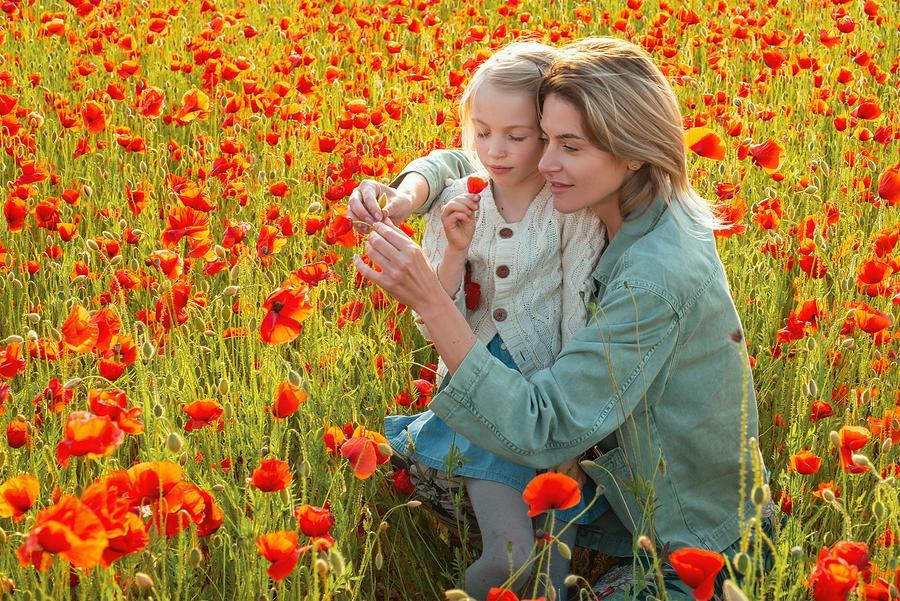
    Mom and daughter picking flowers in a flower field

    During the height of the COVID-19 pandemic, I began to suffer a deep depression, unlike anything I had known previously. I’m a professor, and during the first months of the pandemic I was undergoing a difficult tenure and promotion process at my institution. Moreover, like many others during the pandemic — my workload increased simultaneously. I was working full-time remotely while taking care of my two young children at home. I remember thinking, Of course this hardship begins during Lent. I prayed, I fasted, and I gave. Yet when Easter came, I didn’t feel the joy I thought I should have. Don’t get me wrong: My family celebrated Easter and went to Mass, but this season didn’t feel fitting to my heart. We celebrated for a day, took pictures, and then I would argue that my soul receded back into a Lenten modality. I felt I needed to do more, to work harder, to be worthy of the joy that Eastertide as a season brings with it.

    As we moved farther afield from the earliest stages of COVID-19, my depression slowly abated. I ultimately received tenure, yet I still struggled with the mixed emotions I had from the process. Eventually, I was diagnosed with clinical depression and sought therapy. Through this process – and through friends, family, and the Church – I began to discover new ways to instill meaning behind my suffering. Contemplating how much my identity was tied to my profession led me to seek ways to rely more on my faith and renew my sense of identity as an image-bearer of God rather than a worker only. I began to lean into the liturgical calendar rather than the academic one to define not only my life but also my family’s life, including fostering joy during a time when I didn’t necessarily feel joyful.

    Easter isn’t just one day; it is the second-longest liturgical season in our calendar, lasting 50 days for Catholics. We are to practice 50 days of joy in the knowledge of the resurrection. Keeping joy, as I learned while I was suffering from depression, isn’t an easy task. While suffering may mark the first part of the Easter story, it isn’t the last part that is essential for all of us faithful to remember. 1 Peter 1:3 reminds us to praise God and to recognize that “In his great mercy he has given us new birth into a living hope through the resurrection of Jesus Christ from the dead.” Easter is about a “living hope,” not one that is gone in a day, but one that lives in us.

    Lenten practice, in my experience, feels like work on the soul, and I would argue that Easter practice ought to, as well. It simply ought to feel like a different kind of work, a work toward proclaiming joy — and resting in it — for 50, long, well-earned days.

    Now, my family celebrates Eastertide with intention, just as we do Lent. Here are a few practices we’ve adopted that have lightened my soul and altered our family culture around the Easter season:

    We practice gratitude daily.

    In a personal journal, I write down at least two things that I’m grateful for each day. These can be as small as walking the dog or enjoying the sunshine. When I pick my children up from school, I ask them to practice this with me. “What brought you joy today?” I inquire. Because I have elementary-age schoolchildren, I delight in their stories of races won and lost at recess, of learning new science facts in school, and of lunchtime antics between their many friends.

    We create an Eastertide family calendar.

    We began this practice with Advent, and we’ve learned that liturgical calendars based around the Easter season help us partake in at least one joyful, praising activity each day. For Eastertide, some of these activities include: reading a Catholic book together, singing worship songs, dancing, celebrating Saints with Feast Days during the season like Saint Catherine of Siena, finding and planting flowers, serving others in the community, and praying. We build these calendars around what works in our home, and each day the children mark off what we’ve accomplished. “We can’t go to bed without dancing!” they’ll exclaim, and they’ll be right.

    Even on days when I don’t feel ready to praise, the calendar reminds me — and my family — that Easter is the season of joy, of living and sharing in the happiness that is Christ’s resurrection.

    We go to Adoration.

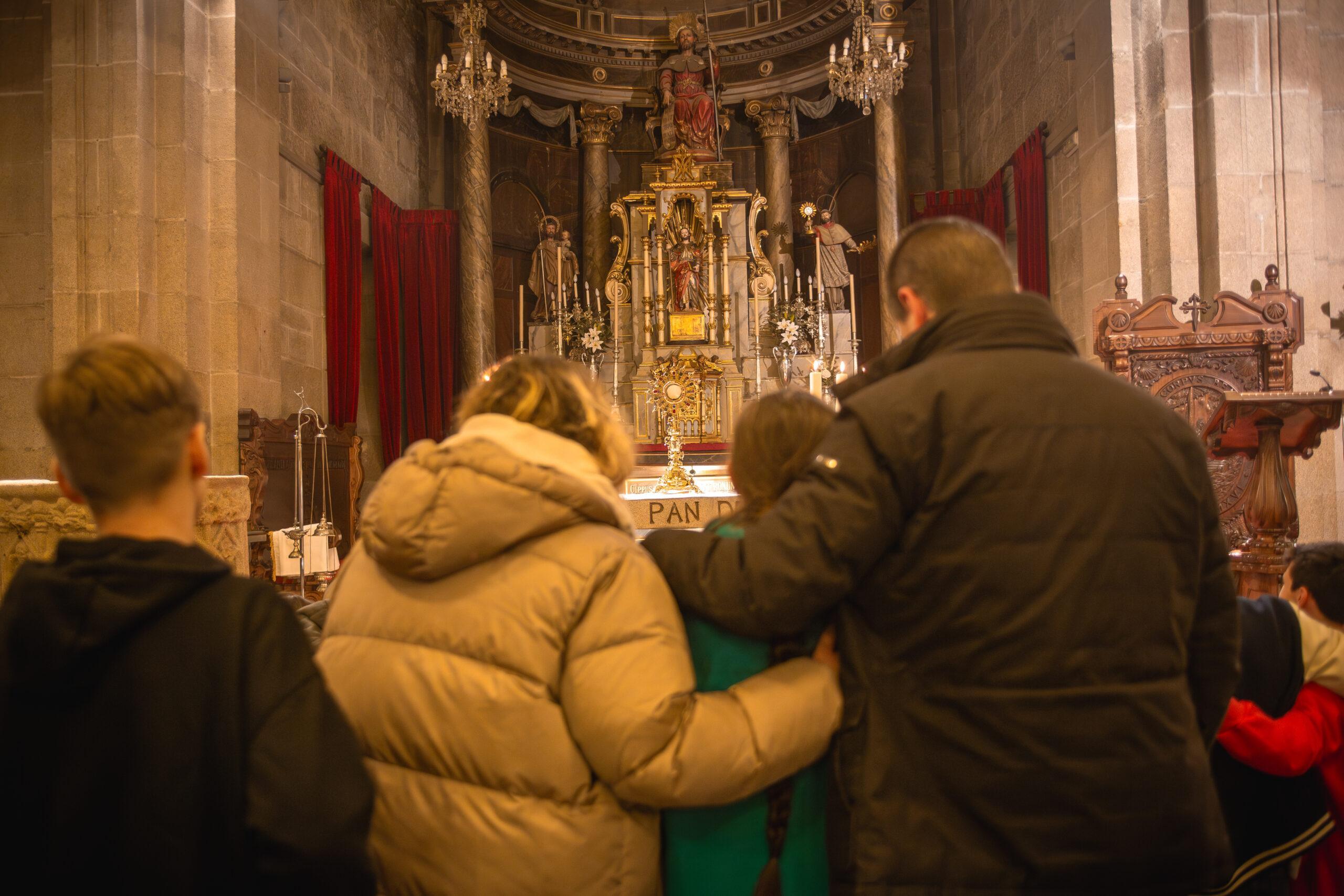
    My parish has scheduled times for Eucharistic Adoration, and our family goes together. Being inside the Church, praying there, basking in the beauty of the Eucharist and the prayerful community that gathers together reminds us that we are not alone in maintaining and celebrating the joy of Easter. We pray in the car before going into the Church, and then we pray inside. I allow my children to walk quietly around and appreciate the stained glass windows in our parish. Every time we’re there, we leave with our spirits lifted, knowing that we chose to spend time with God. It isn’t always quiet, or perfect, but it is joyful — and the questions they ask (such as “Why would Jesus suffer?) remind me of all that I have to be grateful for as a Catholic.

    Lent is a time of spiritual growth, yet so, too, is Eastertide. For those like myself who have suffered, and still deal with the ramifications of depression, Eastertide as a practice may even be more difficult than Lent. Yet as Pope Francis reminds us in Evangelii Gaudium, “The joy of the Gospel fills the hearts and lives of all who encounter Jesus. Those who accept his offer of salvation are set free from sin, sorrow, inner emptiness, and loneliness.”

    In celebrating the full 50 days of the Easter season, we accept the offer salvation provides us. Moreover, we evangelize to others the joy of the Gospel because they see us living, and practicing daily, a sustained encounter with Jesus. As humans, we all suffer, yet we all also experience moments of joy. For me, especially when experiencing the worst parts of my depression, Eastertide helped me remember Jesus’ love and cultivate his promise fulfilled in my life — even on those days when I least wanted to do so. Indeed, in the midst of one of my most salient times of isolation and despair, joy found root in my soul again — and it occurred because of committed and renewed Eastertide devotional practice. Psalm 32:11, one of my favorites, echoes this joyful message: “Be glad in the Lord, and rejoice, O righteous, and shout for joy, all you upright in heart!”

    Originally published April 12, 2023.

  • What I’ve Learned About Divine Mercy (and Three Saints Who Can Help)

    What I’ve Learned About Divine Mercy (and Three Saints Who Can Help)

    I never learned to rely on Divine Mercy as much as I did during the year I taught fourth grade. A newly minted Master of Arts in English, I had planned to teach middle school language arts or high school literature, but, as so often happens, the Lord had other plans and called me to interview for a fourth grade position instead. Drawn by the school’s classic Catholic approach to education and the opportunity to guide students toward truth, beauty, and goodness, I was willing to overlook my utter lack of experience in elementary education to accept the position. 

    With plenty of perfectionism to spare, however, as a first-year teacher, I held myself and my students to unreasonable standards. Most often, I expected to override their natural propensity to talk with my stimulating lesson plans, and I hoped to make it through entire mornings without losing any of my carefully planned activities to endless side conversations or botched transitions between classes. When we inevitably fell short, I became irritated with them and with myself. The picture of a merciful educator I was not — just someone who felt consistently burned out by the mental and emotional toll of the first year of teaching.

    RELATED: The Magis: An Ignatian Antidote for Burnout

    I confided in a colleague and dear friend of mine at lunch one day last October, certain that eight weeks of school should have made me a professional at classroom management, and dismayed when they had not. I had shouted at my students too much earlier that day; once again, I hadn’t been able to love them the way God loves me, and I was sure he was upset with me for it, because I was upset with myself.

    She responded to my concerns with an excerpt from St. Thérèse’s writings:

    And if the good God wants you weak and helpless like a child… do you believe that you will have less merit? …. Agree to stumble at every step therefore, even to fall, to carry your cross weakly, to love your helplessness. Your soul will draw more profit from it than if, carried by grace, you would accomplish with enthusiasm heroic actions that would fill your soul with personal satisfaction and pride.” 

    Thérèse knew that our weakness is not a reason to hide our faces in shame, but rather, to rejoice. Our littleness invites God close to us when we offer it up in trustful surrender, rather than pity ourselves. And God delights in taking his little children over and over again into his loving arms. Instead of beating myself up for my next mistake, I could ask God to meet me right there in his tender mercy, and imagine him smiling gently at me as he did so. And then, I could extend his mercy to my students in turn. I felt enormously comforted and encouraged by this realization.

    RELATED: Is Mercy Like Grace?

    In short, this is what Divine Mercy is: God’s promise that he will be there to embrace us every time we fall. God’s response to our failings is always, only, and forever mercy. In response, I am called to place complete and confident trust in his goodness — but this is something I am always working on, always learning how to do. 

    So this year, to celebrate the anniversary of my reintroduction to and adoption of Divine Mercy as a guiding principle of faith in my own life, I’d like to consecrate — to set aside or devote — the entire month of October to Divine Mercy, and I’d recommend that you do it, too! Luckily, there are three saints associated with it whose feast days give us the perfect opportunity to celebrate all month long:

    St. Thérèse: October 1

    St. Thérèse learned to revel in her littleness as a gift from the Father. In celebration of her feast day, enjoy a favorite childhood pastime to recall your own smallness, and continue to cultivate a childlike heart. For me, the day will probably involve coloring books and a favorite childhood novel or film (and also probably cookies — because nothing evokes warm childhood memories like the smell of fresh-baked chocolate chip cookies). 

    St. Faustina: October 5

    Jesus revealed his merciful heart to St. Faustina just prior to World War II, and she kept a record of these encounters in her diary. Today would be the perfect day to begin a new habit of praying the Divine Mercy chaplet daily, for peace in our world today. The chaplet is especially powerful if prayed at 3 p.m., during the Hour of Mercy, and I’ve found that setting a daily reminder on my phone for that time offers a helpful way to get in the habit of praying it.

    St. John Paul the Great: October 22

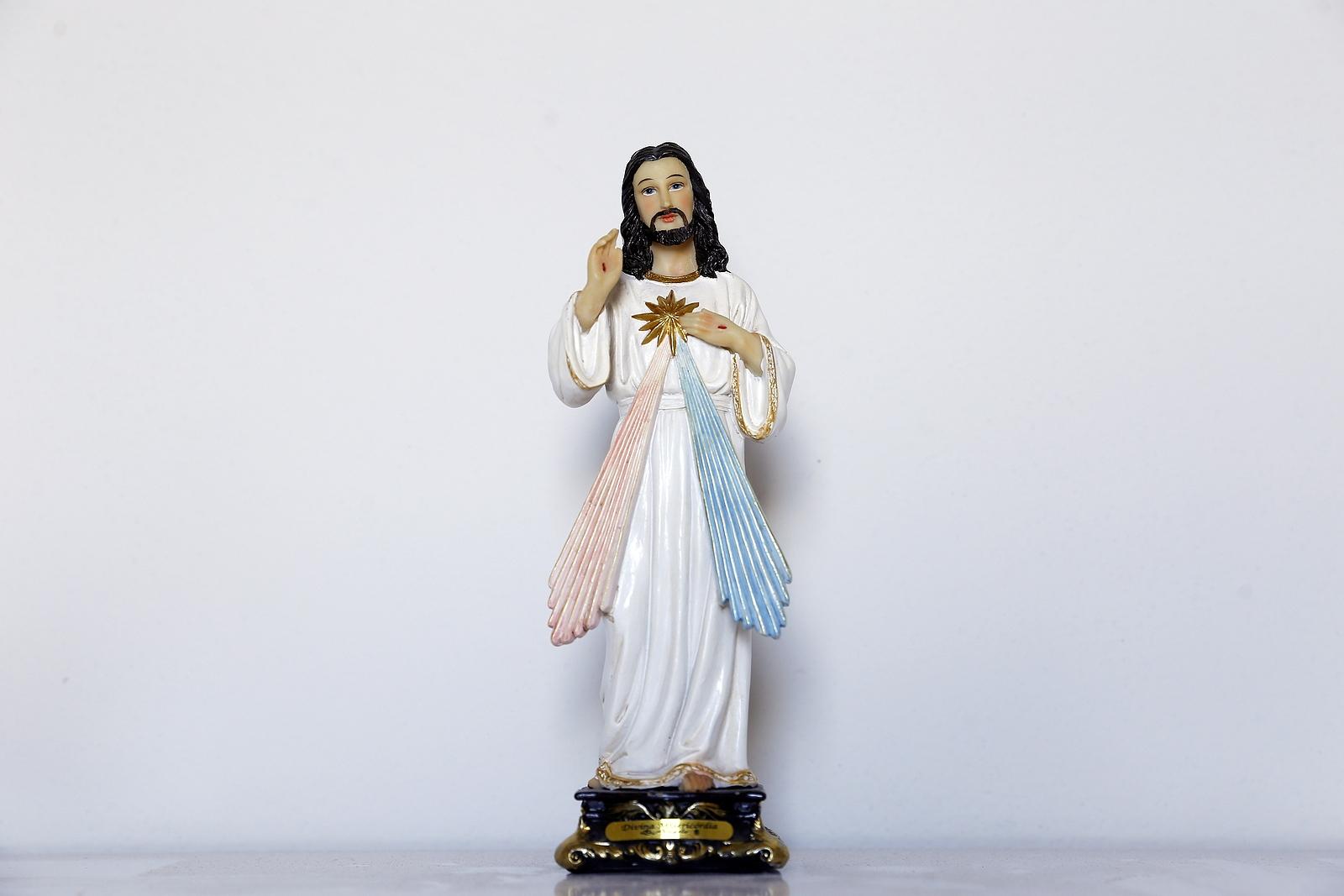
    John Paul II knew that a deep understanding of Divine Mercy is the remedy for all of our ills: “There is nothing that man needs more than Divine Mercy… Anyone can look at this image of the merciful Jesus, his heart radiating grace, and hear in the depths of his own soul what Blessed Faustina heard: ‘Fear nothing; I am with you always.’ And if this person responds with a sincere heart: ‘Jesus, I trust in you,’ he will find comfort in all his anxieties and fears.” Procure an image of Divine Mercy to display in your own home, and turn to it whenever you need a reminder of God’s infinite mercy. Mine is placed above my nightstand, so it’s one of the last things I see before I go to sleep, and among the first things to greet me in the morning. It’s a lovely reminder that God’s mercy is with me and holding me always! 

    Originally published April 25, 2022.

  • Love Amidst Pain: A Reflection on the Journey to Calvary Through Mary’s Eyes

    Love Amidst Pain: A Reflection on the Journey to Calvary Through Mary’s Eyes

    Abstract of holding the crossAs my infant son struggled with a difficult medical condition over the last few years, I found myself in the midst of caregiving like I had never experienced before. During that time, I stumbled across an old devotion: the Seven Sorrows of Mary. So, finding a connection with the Blessed Mother in my sorrow and hers, I found myself meditating on the Passion and Death of Jesus in a new way. 

    Amid Mary’s great Passion-related sorrows, we can find consolation, just as in the middle of a dark night, we find illumination in the stars. That consolation is that Jesus could see Mary standing there along the road to Calvary. Her presence was a comfort to him, as it was for me facing grief and sorrow in my own life.

    RELATED: Maternal Love and the Cross

    Their meeting is not recorded in the Bible, but we know it happened by tradition. Their meeting was likely brief, just after Christ’s first nasty fall, and in that moment, Mary witnessed all the wretchedness that the people around her son put him through. Yet, what was wretched for her was also a moment in which Jesus could see that he wasn’t alone. Her presence showed him that someone loved him, that someone grieved his fate, and that Mary shared his suffering in her heart.

    So even though Mary witnessed all the grotesque details of Jesus’ torture, she perhaps saw too the glimmer of relief in his eyes — just for a moment, that she was there.

    Sometimes, our presence is not enough to console someone we love. But in certain, beautiful moments, it can. Even during the most difficult times, God offers us small graces. Like Mary, then, we can keep going.

    Right after Mary and Jesus were forced to part, the soldiers recognized that he might not make it all the way to Golgotha alone. I wonder if Mary saw Simon of Cyrene from behind, and saw him help Jesus carry the cross as she longed to do. This too, was both a sorrow and a consolation, for now he had some help, but he was getting farther and farther from Mary, and closer and closer to death.

    RELATED: Turning to Mary in Difficult Times

    Isn’t it funny how intimately sorrow and consolation are linked? The other side of sorrow is joy, and the other side of love is loss. As a caregiver, I’ve learned acutely that in life, we walk the razor-thin edge between the two sides, feeling both in their time as we wobble between them. It’s the sorrow of sitting at the bedside of a suffering loved one, intermingled with the joy of being in their presence, the joy of loving them with a depth that only such suffering uncovers. To flee one – sorrow or joy – is to flee the other. We can accept joy in our lives only when we accept sorrow. We can accept love only when we also accept loss.

    This is the drama of our fragile, human lives. It is my drama in caregiving, and, I imagine, in all the permutations of life in which we live our days for the sake of another. Perhaps it is why Jesus told us to take up our crosses, that we may take up our joys in their time as well (Matthew 16:24). Perhaps it is why the man who avoided suffering “went away sad” (Matthew 19:22).

    Mary’s sorrow is different from sadness. It is founded on faith, given momentum by hope, and is the interwoven brother of love. Sorrow is deep, like roots that probe deeper and deeper so that the tree above can bear abundant fruit. It is like the chaff that grows up with the grain; to remove sorrow now would threaten the harvest, but one day, God will separate the two (Matthew 3:12). Sorrow will be forgotten, and we’ll be left with the abundance and joy of Easter.

    Editor’s note: This article is an edited excerpt from Theresa’s book, “Caring for a Loved One with Mary: A Seven Sorrows Prayer Companion” (OSV 2023).

  • Bless Us, Oh Lord, for These Thy Gifts: The Holiness of Mealtimes

    Bless Us, Oh Lord, for These Thy Gifts: The Holiness of Mealtimes

    Family sitting at a table sharing a meal together.
    Photo by Cottonbro Studio on Pexels.

    A few years ago, I was asked to sit on an alumnae panel at my high school to talk about life in college and beyond. At the end of the discussion, the panelists took turns giving the seniors advice about college life.

    Mine? “Don’t study while you eat.”

    For me, the point of a meal is to be fully present with the person you’re sharing it with. (And if you are eating alone, the meal can be a time to mindfully reflect or pray.)

    There is a sanctity in literally breaking bread with others — whether it be for a special occasion or as part of an everyday routine. Regardless, being distraction-free and fully focused on the present moment — and God’s presence in our company — makes each meal full of grace.

    RELATED: How Rice and Beans Became Our Weekly Dinner Tradition

    Gathering together

    During the Last Supper, a Passover Seder, Jesus gathered with his 12 disciples in the Upper Room to celebrate the Jewish feast. Together, they reclined at the table to symbolize that they are a free people. They feasted on food such as eggs (beitzah), bitter herbs (maror), lettuce (chazeret), parsley (karpas), a spiced apples and nut mixture (charoset), unleavened bread (matzah), and chicken or fish. They enjoyed the traditional four cups of wine throughout the meal. 

    Mealtimes emphasize the beauty of a community. Everyone takes time out of their busy lives to come together as one. It’s no wonder that Jesus chose a meal to establish the first Mass, the holiest of meals. In fact, every Mass is a meal. We gather together to listen to God’s word and eat and drink his body and blood in the form of bread and wine.

    That’s probably why I love hosting family and friends for a home-cooked meal. My husband and I have some favorite dishes we cook for guests: Jamaican-style oxtail, lasagna with homemade pasta, slow-cooked honey-soy ribs, and French onion soup, to name a few. But even daily meals where it’s just Arthur and me (and our dog on the lookout for scraps) feel special because it’s a time when we can simply be together and enjoy a moment of stillness in our lives.

    LISTEN: Heather King Talks Food and Faith

    Making announcements

    As Jesus literally broke bread, he told his disciples: “This is my body, which is given for you. Do this in remembrance of me” (Luke 22:19). He did it again as he passed around the cup of wine: “This cup that is poured out for you is the new covenant in my blood” (Luke 22:20). This was one of the most singularly important announcements in the world: that Jesus is fully present in the bread and wine that is shared in Mass, all around the world, from that very first seder meal to today.

    In our own lives, mealtimes are moments for making announcements. I remember, for instance, the night my sister announced that she was pregnant. It was also over a meal that my husband and I announced we were engaged. Mealtime makes perfect sense to share announcements such as these, as well as job promotions, new ventures, travel plans, and so forth, because we are sharing time and food with our loved ones.

    Coming to terms

    Because we are gathered with loved ones, mealtimes can also be a place to process bad news. I remember the meal I shared with my family the day of my grandmother’s wake: a pork cutlet with mashed potatoes and cucumber salad—the typical hearty Polish fare that is my total comfort food. The meal not only gave me the physical strength to bear the painful events to come but also gave me courage, knowing I was in solidarity with my grieving family.

    Jesus himself shared a dramatic pronouncement at the Last Supper: “Truly, truly, I say to you, one of you will betray me” (John 13:21). This, I’m sure, caused quite a stir in the Upper Room. And, while his disciples were shocked that there could be a traitor among such a close-knit group, Jesus planted the seed to allow them to begin to process all the terrible things that were to come on his road to Calvary.

    RELATED: 4 Spiritual Lessons I’ve Learned From Baking Bread

    Imparting wisdom

    During a seder, it is traditional to wash hands as part of ritual and spiritual cleansing. But Jesus also washed his disciples’ feet, saying: “If I then, your Lord and Teacher, have washed your feet, you also ought to wash one another’s feet. For I have given you an example, that you also should do as I have done to you” (John 13:14-15). We, too, can gain wisdom from the loved ones gathered with us. I remember my parents telling their stories of living in Communist-occupied Poland. Due to mismanagement and poor economic policies, the Communist regime rationed food and other everyday supplies so that store shelves were frequently empty. People stood with government-issued ration cards in long lines (“kolejki”), some of which took days, to receive their portions of sugar, meat, flour, chocolate, etc. Stories such as these gave me the prudence to always be grateful for life’s blessings—like mealtimes.

    Jesus teaches us to keep mealtimes sacred. There’s a game that some people play when they go out to a restaurant. Everyone places their cell phones in a pile in the middle of the table. The first person to touch their phone pays for the entire check.

    Perhaps this is a little cruel for the first poor soul to succumb to temptation, but the message is a simple one: When you’re sharing a meal with your loved ones, be fully there for them. Be present. Make it holy. Jesus did when he instituted the Mass. We can, too—and not just on Sundays, but every day of the week.

  • Choosing Compassion Over Criticism: Why I’m Giving Up Judging Others for Lent

    Choosing Compassion Over Criticism: Why I’m Giving Up Judging Others for Lent

    A hand pointing at the sky
    Photo by Maayan Nemanov on UnSplash

    At a 4:00 p.m. Saturday Mass in Overland Park, Kansas, during the preparation of gifts, I sat on the stiff, dark wooden church pew and reflected on Lent. Earlier that week, a student taking my Christian Ethics course asked what I had given up for the season. It was a routine question, but it felt more genuine since we had been discussing moral virtues, vices, and spirituality that day. I told the class that I had not decided. The students were surprised. I acknowledged that, in the past, I had given up yelling at my children (now teenagers!) with mixed results. 

    What came to me during Mass was the thought that I could give up judging other people as the Gospel of Matthew teaches. “Do not judge, so that you may not be judged. For with the judgment you make you will be judged, and the measure you give will be the measure you get” (Matthew 7:1-2). As the thought arose, I sensed that God began to laugh. Indeed, when I told my ethics students that I had given up judging others, they howled and one student commented, “Professor Hughes, c’mon, you can’t be serious!”

    RELATED: Overcoming Judgement in a Divided World

    Yes, I get it. We evaluate other people’s actions and their character constantly: for an unkind word, indifference to our needs, suffering behind a slow car or being passed by a fast one, or, worse yet, feeling our good work or integrity is overlooked or forgotten. Our judgments frequently pair with hurt, anger, resentment – pain. Psychology tells us that we tend to attribute more to personal character than to situations and that we know much less about complex situations, actions, and motives than we suppose. I cannot count how many times I’ve made snap judgments about certain students on the first day of class. I might focus on a weird facial expression, a slouched body posture, a face hidden under a hoodie, or a single negative comment and sortput them squarely into a “worthy” or “unworthy” bucket. 

    During Lent, I became more attuned to the frequency and quality of my judgments. I habitually sorted actions and persons into different categories — innocent, guilty, deserving, undeserving — so that Jesus’ injunction seemed on a commonsense level to be impossible. Surely, he didn’t mean it! On my daily commute, at times I find myself attributing malicious motives against me by my fellow commuters behind the careless driving or impatient honks without knowing anything about their lives, worries, pressures, etc. And it really makes no sense. But I, along with many of us, can habituate taking offense and then passing harsh judgments too easily and quickly.

    Or perhaps Jesus just meant not consigning another person to hell. It is, in fact, easy to think this. But from my Lenten experience and reflection on Matthew, I don’t believe condemnation is the main issue. What’s happening is a more subtle and pervasive way of seeing and assessing others that becomes a blindness to love. So what does this biblical teaching mean?

    RELATED: A Practical Guide to Loving Our Enemies

    Matthew’s and other biblical references to “judging” seldom mean “do not condemn.” Luke uses a different word for “judge” (krino) and for “condemn” (katadikazete), distinguishing two different acts. Matthew (and Mark) add to the prohibition on judging the caution about how the way we measure others should be the way we measure ourselves. So, condemnation is only one of many responses covered in the ways we judge — not the only way. It seems that the meaning concerns more common interactions and judgments we make. From my own experience this past Lent, this distinction rang true. 

    That Lent, I learned that Jesus does not mean ignoring injustice or becoming desensitized to evil and wrongdoing. What I found in self-monitoring my judgment of others — especially behind the wheel — was that when I judged and quickly sorted another person into a negative category, I became less connected to that person, more cut off, more isolated from them and from my own tendency to act likewise. Indeed, one of the key meanings of the Greek term krino aside from “judge,” is “to separate.” If I wanted to see harshness, strictness, looking out to be offended by this look, that remark, his comment or her gesture, I would find them. I saw and judged the other as such. And in so doing, I separated myself from my neighbor and ignored my own harshness, strictness, and ways that I might offend others. 

    LISTEN: Getting Back to Basics in a Polarized World

    I was not at all aware that the measuring stick I used would be similarly used on me. And that is the tough part. It requires serious self-reflection, knowledge of one’s sinfulness, needing God’s help, mercy, and being constantly on the lookout for goodness to get “judging” right. It requires a type of ego death, one that means a better seeing of another person in all their complexity rather than a fixation on a snapshot in time or a fault, hurt, or offense. A patient gazing and understanding of the other with, what Richard Rohr calls “soft eyes,” rather than an emotional reaction and quick sorting into some form of inferiority. 

    Judging others makes it very hard indeed to see Christ’s goodness, kindness, mercy, and love being poured out upon my neighbor and myself every second. Judging can quickly and subtly lend itself to emphasizing what is wrong with the person, the driver, the lack, the negative in a situation. It means seeing the person or group behind such acts as unable to be fully defined and described and named by them as who they are in God. That Lenten lesson is still a work in progress for me. I suspect we all need to practice slowing down, waiting, and letting the goodness of the other reveal itself to us. For that, we’ll need to ask God for help: help to slow my assessments, find more patience, and remember that everyone is an image of incomprehensible love. And finally, I need to trust that, as always, our loving God will deliver and help me to see more lovingly and less critically.

  • How Memorizing Prayers Together Brought My Family Closer to God

    How Memorizing Prayers Together Brought My Family Closer to God

    Family kneeling before an alter in Church praying before the Eucharist
    Photo by Yandry Fernandez Perdomo on Cathopic

    Last fall, signs outside our parish and notices within our weekly bulletin reminded my family that the month of October in our Catholic faith is dedicated to the Rosary. Every time when we walked into Mass, we heard other parishioners reciting the Rosary before the service started. It may sound cheesy, but my husband and I felt a spiritual calling in October to participate in those prayers more actively. Notably, this isn’t a reflection on how my family learned to say the Rosary together during October. It is, however, an account of how we began to try.

    In this process of learning the prayers for the Rosary, we felt “behind” where we imagined other families we knew to be. In October, my family already knew “The Hail Mary” and “Glory Be,” but those were our only starting points. We began by adding “The Salve Regina” to our nightly routines, learning one line per night in our living room before the kids would dash off to brush their teeth and crawl into bed. 

    RELATED: Three Things I’m Doing to Teach My Young Children About the Mass

    In the process, we found that attempting to memorize new prayers together was unexpectedly spiritually rewarding for every member of our family—my husband, my two elementary-school-age children, and me. Before last October, we’d recite those prayers we already knew each night before bedtime, but we’d never attempted anything long. We’d also never practiced the memorization and recitation process nightly together. We had learned those prayers individually or with our church classes. Of course, the things that are spiritually rewarding in our lives are never quite as easy as we’d like them to be, and this process has been no different. It’s now Lent, and we’ve still yet to say the Rosary together without reading at least part of it from a book or a screen. 

    A little like brushing their teeth each night, my children often balk at reciting the prayers. Likewise, sometimes when there’s a football game on, so does my husband.  I also admit that if I’ve had a long day at work and would rather relax with a book and have some solitude, adding the drama of begging everyone to come together to learn prayers isn’t exciting for me. Still, once we start reciting the prayers and learning the lines, a sense of accomplishment and even a spiritual weight visits our living room that is worth every bit of nudging our family might have needed to start memorizing together. The kids might be fighting about whose cookie looks bigger for dessert, or what TV show they’ll watch in the morning, yet they’ll calm down once we’ve launched into saying the prayers a few times. Solemnity almost always takes hold, so to speak. 

    As part of our practice, we say each line of the prayer we’re covering that day five times together, adding whatever lines we learned the day before to it. Then we have each person say the prayer to the point they’ve learned it on their own. My children love taking center stage in the living room, standing on a certain part of the rug where there’s a big flower: This is their stage. They also enjoy checking and correcting my husband and me when we inevitably fumble certain lines or words in the prayers. Like the kids, we stand up on that same flower in the rug, making the recitation a more active, bodily endeavor. Even so, it still took my family three months to remember the “Salve Regina.” In part, this is because we didn’t recite the prayer every day, despite our best intentions. Yet when we’d get off schedule for a few days (like when my son got sick with the flu), we always picked back up where we left off as soon as we could. Now that we’ve finally learned “The Salve Regina,” the prayer is part of the fabric of our lives. We’ll say it together before I drop the kids off at school, or if they’re having an anxious moment, we’ll hold hands and pray it together. My 8-year-old daughter and I will also recite the prayers we’ve learned as I brush her hair in the morning.

    RELATED: What My Family Learned From Inviting Our Local Priests to Dinner

    As we’re approaching her First Communion this Easter, we’ve turned our focus to memorizing “The Apostles’ Creed.” The Rosary begins with it, and the Creed serves as a foundational statement of Catholic beliefs, focusing on our faith’s mysteries. When we practiced “The Apostles’ Creed” last week – again, before bed, in our living room betwixt the chaos of getting school clothes ready for the next day and lunch boxes packed – my daughter asked about the phrase in the creed stating that Jesus was “conceived by the Holy Spirit.” We realized she had no idea what the word “conceived” meant, and to be honest, my husband and I faltered for a moment in answering her. Theological explorations are not often at the forefront of our minds during our household bedtime routines. Even though we were saying the words together almost daily for months, it wasn’t until my daughter was able to repeat them without struggling that she began to ponder their meaning. How exactly was Jesus conceived by the Holy Spirit AND born of the Virgin Mary, not one or the other, she inquired?  

    After thinking through it—and, yes, Googling it—we explained that even though Jesus was born of a human mother, Mary, he possesses a divine nature, as his conception occurred through the Holy Spirit rather than a human father. Jesus is fully divine and fully human, both God and man. While we may worship this truth together at Mass and while my daughter may have learned this in her religious education classes, the lightbulb that went off in her head while we were discussing this mystery as a family was amazing to not only watch but also to participate in with her. Wow, we seemed to realize as a family, these words we’re repeating are astounding when one truly thinks through them and feels their power. 

    This was a special moment – and a rare one in our family routine – and it felt exhilarating to experience it. In fact, we encounter struggle more often than not. While we are almost done learning the Creed now, my husband is farther behind than the rest of us, and it’s not for lack of trying: memorization is simply harder for him. My daughter has a speech impediment, and the words don’t come easily to her either. Because every member of the family is different in how we learn, this can prove an impediment to keeping the energy and momentum needed to inspire daily practice. 

    RELATED: Children and the Church: Recognizing the Welcome

    Keeping this in mind, my husband and I try to keep an atmosphere of lightness. We never shame anyone if someone is struggling, but we encourage each other to make it to the end of that section no matter the attempts it takes. The laughter that inevitably happens as we mix or miss words is good for our family’s soul. Plus, it teaches our children to be kind to each other – and to us – because we’re all learning the prayers together simultaneously. Through memorizing and reciting prayers, our entire family can be described for one of the first times ever as spiritually curious. While we may have been fighting moments earlier before trying to pray about who did or did not do the dishes, we open ourselves to God being with us when we pause for this practice. Our hearts, minds, and days almost always settle. While it may not happen right away, after the final recitation, there is usually a sense of pervasive and palpable calm, and that is worth every up and down in getting there.

    It bears mention here that in Catholicism, memorization entails a spiritual recollection that is supposed to work in concert with the intellectual aspect of memory. For example, the liturgy of the Catholic Mass is a memorial, or “a remembering of” the re-presentation of the sacrificial act of Jesus’ death on the Cross. During each Mass, our salvation becomes present before us on the altar through the Sacrament of the Eucharist. In other words, Mass is not a mere recollection but an active participation in this past salvific event, making the past present in a sacred and transformative way.  

    As my family prepares for my daughter’s First Communion, we have learned that memorizing prayers has brought us closer to God’s divine mission on our couch at home in addition to on our parish’s pews. Memorizing together helps us connect with the Church’s past and lay claim to our own future within it. The often-fumbled words, the shared laughter, and the earnest attempts to understand the words we’re reciting have led us to find grace within our family’s spiritual life and to connect that grace with the broader Church family we also belong to and are learning more about through its prayers and creeds. 

    Indeed, in nurturing our children’s spiritual growth, my husband and I have inadvertently discovered a path to our own. Our family recitation and prayer time has become a conduit for grace, an opportunity to be present with one another and God. As my daughter prepares for her First Communion, “The Apostles Creed” stands not just as a set of words now memorized but as a testament to our shared journey, a journey that has drawn us closer to each other and the Church’s doctrines, and most importantly, closer to God.