
Tag: Faith in Everyday Life

  • 5 Meaningful Ways Your Family Can Honor the Sabbath

    5 Meaningful Ways Your Family Can Honor the Sabbath

    Photo by National Cancer Institute on Unsplash

    As someone who’s driven by productivity, keeping the Sabbath holy can sometimes feel like the one commandment that really cramps my style. It always seems like Sundays are the days I get inspired to jump into some new work project or frantically clean out all my closets. I find myself wheedling the Lord in ways I’d never dream the rest of the week: “Can’t I just scrub one toilet, pleeeease?” 

    And yet, there’s that still, small voice telling me to hold off on stressful activities just for the day in favor of rest. Over my years of following Jesus, I’ve gradually found that listening to this prompting reaps major benefits. When I actually slow down one day a week, not only do I feel closer to God, I’m less stressed and more level-headed throughout the week.

    Of course, there’s the obvious biblical directive to not work one day a week—but a truly restorative Sabbath is so much more than not going into the office on Sunday. Here are five ways to add extra layers of refreshment to your day of rest.

    RELATED: How to Intentionally Plan a Day of Rest

    Read a spiritual book

    While I’m a hard-core book lover, I have a hard time allowing myself to simply sit and read during the day—especially when there are other tasks that beckon. Sundays, though, I try to give myself a pass. After all, there’s nothing like a good book on a lazy day to slow the head-spinning pace of weekday life. If it’s a book that’s spiritually enriching, so much the better. Some of my personal inspirational faves include “My Sisters the Saints” by Colleen Carroll Campbell, “Same Kind of Different as Me by Ron Hall and Denver Moore, and “Story of a Soul: The Autobiography of St. Therese of Liseux.”    

    Spend time in adoration or pray the rosary

    Once I get my heinie in the pew on Sunday morning, I often find the hour of prayer leaves me wanting more time in God’s presence. I’m fortunate enough to live down the street from my church, which has an adoration chapel, so some Sunday afternoons I’ll slip over there to finish the convo I started with the Lord during Mass. I always leave feeling “prayed up” for the week ahead.

    Want to take your spiritual development a step further? Make time during your Sabbath to pray the Rosary. The quiet rhythm of this prayer is a uniquely soothing way to connect with God. 

    RELATED: Why Isn’t the Sabbath on Saturday? 

    Invest in a hobby

    God may not have instructed us to go play in a garage band or take up paintball on the Sabbath, but this day is all about refreshment—and doesn’t having fun make you feel refreshed? Taking time for hobbies you enjoy is a surefire way to refill your mental (and even spiritual) tank. In fact, research shows that getting into a state of “flow”—where you’re completely immersed in an activity, such as a hobby—may reduce depression and anxiety. 

    On any given Sunday afternoon, you can usually find me working on counted cross-stitch (my latest project: a festive-looking llama for my daughter’s bedroom), baking cookies, or playing jazz standards on the piano.

    Make it family time

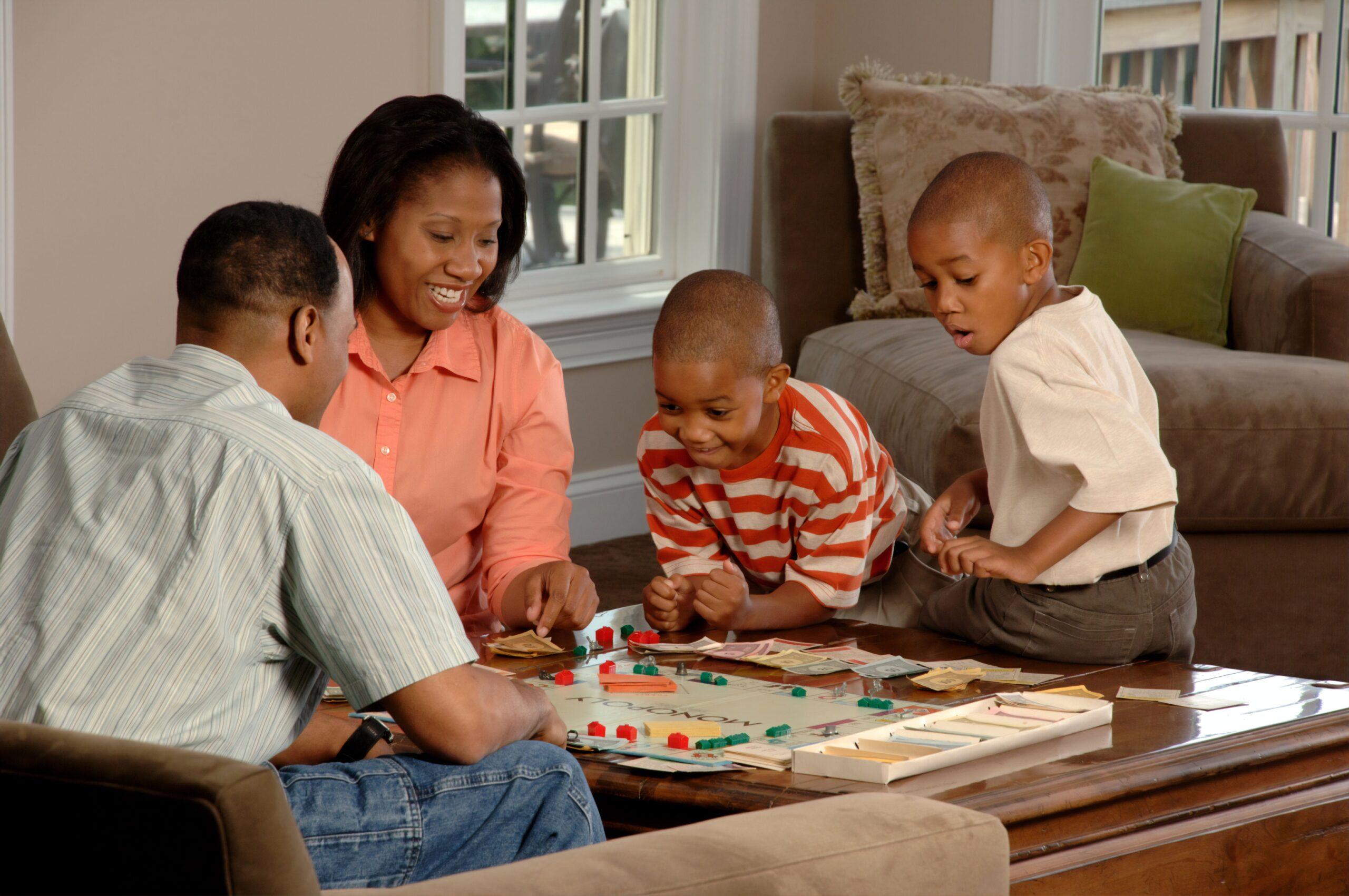
    The Sabbath presents an opportunity to get intentional about quality time with family—something that all too easily falls by the wayside on hectic weekdays. Haul out a board game that everyone can play, or go for a family hike on Sunday. If family doesn’t live close by or relationships are strained, reach out to close friends for a cozy dinner or movie night at your place. You might even consider taking a social media break to help you focus on whatever loved ones are in front of you in real life, rather than on a screen. 

    RELATED: 5 Tips for a Spiritual Summer

    Skip the chores and errands

    We all know we’re not “supposed” to work on the Sabbath, but to me, work goes beyond the kind I get paid to do. If I spend my whole Sunday doing laundry, wrestling my cantankerous vacuum, and running errands, have I actually rested? Well…not really.

    We live in a busy world, and everyone’s schedules are different, so it may not always be feasible to skip housework or grocery shopping for a full 24 hours. In our family, though, we’ve made a commitment to frontload chores and errands on Saturday as much as possible. It’s sometimes a tall order, but it pays off in a full day of chill on Sunday. When we genuinely get a whole day off of work (in the home and out of it), we recharge our spiritual batteries to be God’s hands and feet in the world the rest of the week.

    Originally published July 1, 2020.

  • What Does the Church Say About Limbo?

    What Does the Church Say About Limbo?

    White Clouds and Blue Sky
    Photo by Ithalu Dominguez on Pexels

    Editorial note: The following article contains mentions of pregnancy/infant loss.

    The loss of a child is a heartbreaking situation. There is grief over the death of the beloved child, of course, but also over the child’s future now lost. Additionally, there can be grief and uncertainty over the soul of the child and where they are now. In the midst of this loss, the Catholic Church has always offered words of consolation and hope, trusting in God’s infinite love and mercy. Amid the pain of miscarriages, stillbirths, and lost children, we find consolation in our God who desires all children of the world to come to him. To any and all persons facing such loss, please know you have the prayers of the Busted Halo staff.

    Throughout history, some have responded to these griefs and uncertainties by saying that children who pass away before receiving the Sacrament of Baptism are in Limbo. Limbo is at the heart of a tension between understanding God as being all-loving and desiring the salvation of all and the Catholic understanding that baptism is needed for salvation. This raises questions, especially about the souls of unbaptized children and what happens to them in the next life. The loss of a child is always especially difficult, and many in the Church have tried to find explanations that offer consolation. Limbo was one such answer to those questions, and while never completely embraced by the Church, neither has it been completely done away with. The answer to “Does Limbo exist?” is a much more complex question and requires a look at the growth of the idea of Limbo over time.

    LISTEN: Navigating Miscarriage, Stillbirth, and Infant Loss With Abigail Jorgenson

    In the tension between understanding salvation that required baptism and understanding that a loving God wouldn’t punish children who never had the option or ability to be baptized, St. Augustine was among the first to discuss the idea of “Limbo.” This would be a place separate from heaven and fully enjoying the presence of God, but also away from hell. To some theologians, Limbo existed on the edge of hell but was not a place of suffering. To others, it was a place of pleasant neutrality. There was, however, never an official definition or understanding of what Limbo was or what it was like. Other theologians throughout the ages, such as St. Thomas Aquinas and St. Alphonsus Liguori, would continue to write about Limbo.

    Yet with all of this writing, the concept of Limbo had never been formally adopted as the Church’s position. The closest the Church got was the mention of Limbo in St. Pius X’s Catechism in question 100 wherein he wrote: “Children who die without baptism go to Limbo, where they do not enjoy God, but neither do they suffer.” However, this Catechism was never made known as official teaching for the whole world, but rather, for the faithful in the city of Rome. St. Pius X wrote and published it only for the immediate Church in Rome as the local bishop, not for the whole world.

    Even though this idea was shared by a pope, it was never a universal idea in the Church, or adopted as official Catholic teaching. St. Cajetan, a priest in the 16th Century, notably wrote against the idea of Limbo. He argued that children who are unable to be baptized in life share in the concept of Baptism by Desire (that someone who desires God’s grace but is physically unable to be baptized is still saved and in effect, baptized) because of their mothers’ love and desire to have them baptized. St. Cajetan argued for a more open approach to God’s mercy for these children.

    WATCH: Baptism 101

    In 1980, the Congregation for the Doctrine of Faith (CDF) put out Instruction on Infant Baptism. In this document, they stated that: “As for children who die without Baptism, the Church can only entrust them to God’s mercy, as she does in the funeral rite provided for them.” The CDF felt that the most important thing to say on the death of a child before they were baptized was to entrust that soul to God’s infinite mercy.

    About 25 years later, the International Theological Commission wrote The Hope of Salvation for Infants Who Die Without Being Baptized. In this, the Commission made several arguments to uphold the idea that a child who died before baptism could share in God’s joy in heaven eternally. They rooted these arguments in paragraph 1261 of the Catechism of the Catholic Church which states: “[there is] hope that there is a way of salvation for children who have died without Baptism.” They also point to our celebration of the infant martyrs on December 28, that we celebrate them as martyrs and saints even though they were never baptized. Finally, the document reminds us that Christ’s salvific love is true – and a greater truth than original sin, which we are all subject to. As such, Christ’s love will win out, and this gives us great hope and joy for the salvation of unbaptized children.

    RELATED: 9 Ways to Help a Grieving Friend

    Interestingly enough, though, none of these statements outright deny the existence of Limbo. Rather, the Church places greater emphasis on hope and trust in God’s love when it comes to the souls of unbaptized children. One can be a good Catholic whether or not they believe in Limbo.

    Personally, I find that the idea of Limbo does not line up with what I have been taught about a loving and merciful God. I have great hope and trust in God’s love to welcome unbaptized children into heaven and find that this gives greater peace to those who have faced such a loss. If anyone should find themselves in the situation of walking with someone who lost a child before a baptism was celebrated, my first piece of advice is simply to be with them. Not necessarily to even say anything, but to be present alongside them in mourning and an image of God’s merciful love in the time of loss. When words are needed, words of hope, especially those of Christ, are most consoling. As Jesus said, “Let the children come to me, and do not prevent them; for the kingdom of heaven belongs to such as these” (Matthew 19:14).

  • How I Found Friends Through Faith: Trusting God to Bring Meaningful Connections

    How I Found Friends Through Faith: Trusting God to Bring Meaningful Connections

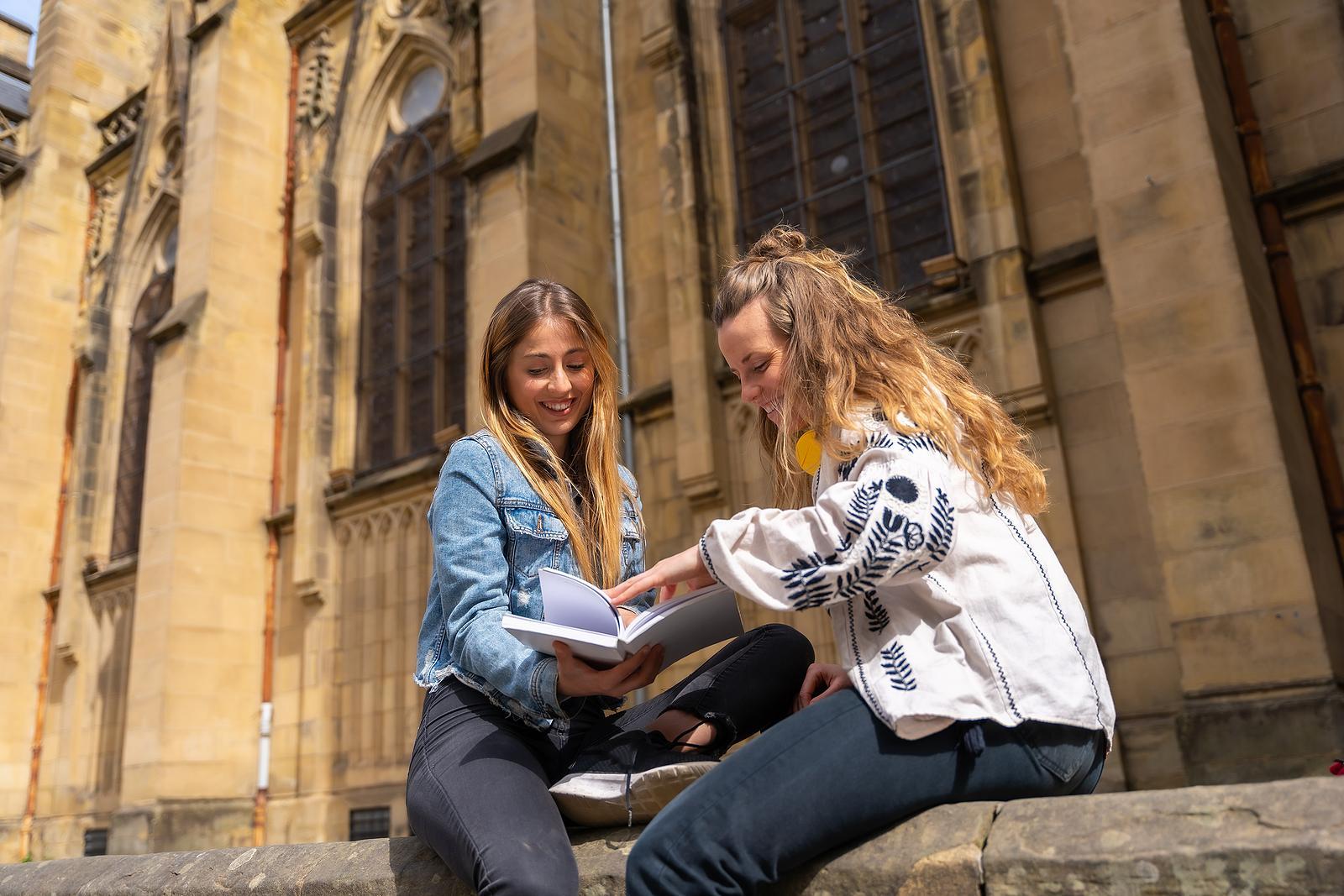
    Two girls read a book together.After college, there was a period in my life when I dreaded the weekends.  
    I anxiously awaited the long hours of unstructured time I would spend trying to distract myself from my loneliness. It wasn’t that I lacked friends, it was the physical distance between us that left me without plans on the weekends. As I adjusted to moving back home while working full-time as a college librarian and not having connections at my fingertips like I had when I was a student, I hungered for community with peers.

    My instinct during this time of loneliness was to take advantage of as many opportunities as possible to foster social connection. I joined a women’s group at a parish in Chicago and volunteered as a literacy tutor. I invested in hobbies that would sustain my body and mind – I went to exercise classes and rollerbladed, I started a gratitude journal and listened to audiobooks. 

    LISTEN: How Can I Be Strong in Faith While Missing Community? 

    Though these pursuits were healthy and helped me discover what fulfills me, I could not stay present and enjoy them when my focus remained on what I lacked. I stayed in motion but hadn’t found my place, becoming bitter and cynical when these activities did not produce the community I craved. Rather than reframing this period of loneliness as an opportunity to try new experiences and reevaluate my priorities, I saw it as a burden that I didn’t deserve to carry. I concentrated too much on what I wanted to gain from these activities rather than on what I could give to God and others through them.

    As this period continued, I knew I needed help. While I received support through mental health counseling, I also brought this ache to my spiritual life, turning to saints who had both experienced pain and found profound peace in trusting God. I asked our Blessed Mother Mary for help finding good and holy friendships. I prayed a novena to St. Therese the Little Flower, asking for the courage to pursue true friendships. On the last day of the novena, I joined a woman whom I had briefly met at Mass for a drink. It was the first new friend I had made in a long time, and the conversation we had affirmed me that a new, meaningful connection was possible.

    RELATED: Three Female Saints and Mystics Who Guide Me to Freedom

    As I struggled to let go of my need for control and rely on the saints’ intercession, opportunities for friendship and community began to present themselves more naturally, but without the same sense of pressure. I was invited to volunteer with an organization that hosts afterschool programs for girls, and I met other like-minded women who also volunteered there. Saying yes to this invitation and engaging with the connections I made there allowed me to intentionally invest in the community, striving for quality of interactions over quantity.

    I learned to rely on friendships that are spread across far distances, acknowledging that even if I don’t talk to these people every day, they are still the friends I have on speed dial whether I need to laugh or reach out for support. I planned weekend trips and organized a virtual book club with these friends to help us stay tethered. I worked to be grateful for the friendships I do have, and the community that I have within my family. By letting God into the work of bringing new people into my life, I slowly let go of the notion that I need a sprawling group of connections in order to feel whole.

    RELATED: Finding Fellowship: How I Built Community at a New Church

    As I look back to see what God was doing to my heart during this time, I can see him helping me rethink what community looks like. The biggest misconception I held was the belief that community is static, and that I will reach a stable point where I am completely fulfilled by all my activities and social interactions. Community is not a finish line or a goal to achieve – it is a growing organism that is never fully formed. God was showing me that community is always in flow, evolving as new connections form and others wilt, but he is the only one who will always be beside me.  

    The philosopher Aristotle wrote that, “Without friends, no one would want to live, even if he had all other goods.” The longing for community transcends generations, centuries and cultures. I do not take for granted the communities I’ve found through various avenues, but I know they may change and fade. There will be other seasons of loneliness, loss and grief that I will need to learn to endure with grace. Yet, it is these seasons that make my friendships so valuable, and allow me to renew my dependence on God, realigning myself with his dream for my life. 

    Originally published May 23, 2022.

  • Summer Spirituality: Building a Habit of Prayer In Ordinary Time

    Summer Spirituality: Building a Habit of Prayer In Ordinary Time

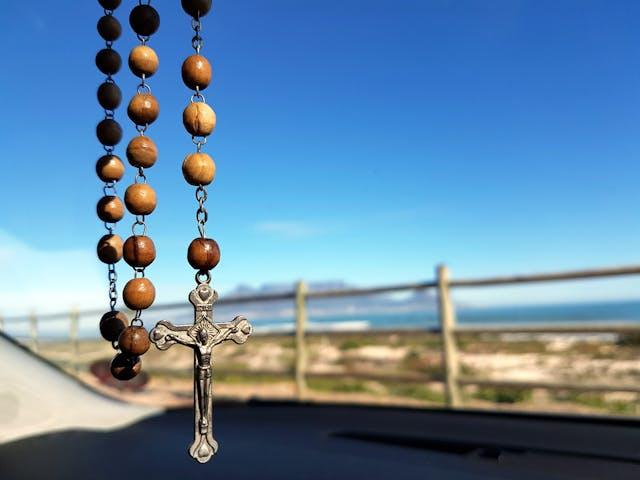
    Rosary beads hangingI find Lent and Advent easy to commit to, in many ways. The practices throughout these seasons have been ingrained in my mind since I was a small child. There is a clear beginning and ending, and I know what to expect from each period. These are the times that I am supposed to be working on my faith – so I sign up for a reflection book, make a commitment to pray the Rosary, or take on some other faith-related exercise. Summer is a different story.

    The nice weather and fluid schedules often lead me to feeling lost in my spiritual life. I can easily go days without praying for more than a few minutes at a time. Since I usually do not make a conscious choice to commit to a prayer practice, I allow the summer to slip by without growing much in my faith. I realized that I needed to add a spiritual element after my experience a few summers ago. I found that I hardly ever prayed, other than right before bed. It is a blessing to be able to relax more and spend more time outside, but if I am honest, those good things often took the place of the greatest thing: my relationship with God. 

    RELATED: How My Family Is Spending Our Summer With God

    I realized I became less patient and less kind towards my family members and others during the summer because I was not connected to the experience of God’s love in prayer. My lack of commitment to spending time with God and my relationship with him led to less intentionality in my other relationships. Neglecting prayer can become fuel for ignoring others. 

    With this in mind, I tried something different last summer. I decided to make a commitment, as I would at the beginning of Advent or Lent, to deepen my prayer life and intimacy with God. I would carve out the summer from the middle of June to the end of August and make these six weeks a time of dedication to God and growth in my spiritual life. 

    My idea was to imitate Jesus’ actions of going off and praying on his own throughout the Gospels. I wanted to make each day of the summer a “mini-retreat”, like Jesus often would when he went to the mountains or a deserted place to pray (Mark 1:35; Mark 6:46; Luke 6:12). Specifically, I wanted to spend time contemplating the “solitary place” that Jesus went to. So, I decided to pray every morning, in the same place, and in a similar way. 

    WATCH: Great Catholic Sites to Visit on Summer Vacation 

    I set an earlier alarm every day, sat on the same spot on the couch, and located a crucifix on the wall to center my focus. I found that the first step of waking up early is the most important. In order to increase my odds, I moved my phone charger to my dresser so that I would have to get out of bed to shut off my alarm each morning. Before doing so, I was too prone to hit the snooze button. Then I would wake up when the kids woke up and lose out on my time for prayer. The early mornings served as a great stage to offer my entire day to God.

    Second, I sat in the same space each day to increase the context of my prayer. The routine of sitting in the same space each day slowly sanctifies that space and triggers in my mind that I am about to enter into something special and holy. Once I adopted this habit, it became easier to pray, and I began to enter into deep prayer more quickly. The scene was simple and ordinary, but I slowly began to work the muscles of prayer each morning, in a similar way. The space and the entire process led me to become more used to praying in silence each day. I began to crave it. 

    Finally, I wanted to move a crucifix to my place of prayer so that I could focus on something when my mind began to drift. I got in the habit of beginning my time gazing at the cross and asking Christ to guide me in being alone with him. Then I would read the Gospel of the day, reflect on a key phrase or action of Jesus, and end with some time of quiet prayer looking at the cross again. 

    RELATED: 5 Tips for a Spiritual Summer

    I found that it was the commitment to making summer prayerful that made all of the difference. Once I was intentional about how I would spend the very first parts of my day, I was able to encounter God in ways that I never had before in silence and in the solitary space of my own living room. I was also able to be more of the man that I am being called to be: more patient and kind with my family. While far from perfect, prayer is continuing to radically change me. 

    Summer is not simply a time for rest and relaxation in the sun. Like all seasons, it is a chance to grow in intimacy with God. This summer, make your own commitment to prayer and watch him move to meet you every single day. 

  • Do This in Memory of Me

    Do This in Memory of Me

    John’s dad’s 1929 Model-A Ford Tudor Sedan

    “Will you take care of my car for me after I’m gone?” My father asked me while we sat in my sister’s living room. I didn’t know it at the time, but that would be one of the final face-to-face conversations he and I would have before he passed away less than a month later.

    The car that Dad was referring to was his beloved 1929 Model-A Ford Tudor Sedan. He had bought it for $125 back in 1962 when he was 14 years old and then spent the next two years restoring a car that he couldn’t yet legally drive himself. When kids his age were drooling over the latest muscle cars and building hot rods in their garages, my father was restoring a 33-year-old family car. It would be the modern-day equivalent of seeing a kid put all of his blood, sweat, and tears into a 1986 Ford Taurus station wagon.

    As a professional auto mechanic his entire life, my dad owned hundreds of cars. The Model-A was the only car he would never sell. The car was at his high school graduation, it was at my parents’ wedding (as well as the weddings of many of their friends), and it is pictured on my parents’ tombstone. So, when asked if I would take custody of his car for him, how could I say anything but yes?

    At the time that my dad died, the week before Father’s Day in 2016, his Model-A had not been on the road in close to 15 years. During those years, my mom was diagnosed with a terminal disease, and Dad became her primary caregiver. Shortly after her passing, his health quickly declined. For all of that time, the ’29 Ford sat in storage, neglected, rusting, and collecting dust. By the time I took over its care, the car’s engine was completely seized up, and no amount of pulling on its hand crank would break it loose.

    Luckily, in Dad’s collection of extra parts, he had a spare engine/clutch/transmission assembly that matched what was in the car. My 11-year-old daughter, Bella, and I spent the summer of 2017 rebuilding the spare engine and getting it running on a test stand. Then last fall, we swapped out the seized engine in the car for the one we now had running. By late November, we took the car for its maiden voyage around our neighborhood; the first time it had driven under its own power in nearly a decade and a half.

    RELATED: Virtual Father’s Day Retreat

    John and his daughter Bella getting ready to take his dad’s car for a spin.

    This whole project has become about so much more than the car. It has been a means of grieving the loss of both of my parents, a bonding experience for my daughter and me, and, believe it or not, a basis for theological reflection as well.

    That last angle didn’t occur to me until sitting in Mass one day recently when the priest referenced the famous exchange between Jesus and Peter recorded at the end of John’s Gospel: “Do you love me?”… “Feed my sheep.” (John 21:17)

    Dad’s question came echoing back to me: “Will you take care of my car for me after I’m gone?” Like Peter, I was quick to respond, but I doubt either one of us knew what we were signing ourselves up for. In both cases, by the time we knew enough to ask informed questions, the person we would have asked was no longer with us.

    By the time Jesus’ first disciples were out in the community continuing his ministry, they surely encountered and experienced many things that they felt like they were unprepared for. At Pentecost, the Holy Spirit descended upon the first disciples to continue to inspire and guide them in following their Christian mission. Dad didn’t leave me with nearly as powerful of an advocate as the Holy Spirit, but at least I have Google and YouTube to help me out.

    As I reflect on these unexpected parallels between an old Ford and the Catholic faith, I’m also struck by how they are both handed down through word and tradition from one generation to the next. We know that Jesus’ original 12 Apostles passed on the faith through their writings and through their actions. As we work on the Model-A, Bella often comments, “I love how the car still smells like Grandpa.” She’s not wrong — it does smell like him, or he smelled like it. They both had that unique potpourri of gear grease, gasoline, and exhaust that all old mechanics have. Bella still has that firsthand experience to remember what her grandfather smelled like. But her kids will not. They will have to come to rely on her descriptions, much like we have come to rely on all of those generations of Christians who have gone before us.

    I still don’t view the Model-A as “my car.” I tell people it’s my dad’s car — I’m just taking care of it for him. Someday, down the road, Bella will take over as its primary caretaker. She’ll teach her kids about their Catholic faith and how their great-grandpa bought a car for $125 when he was 14 years old. Based on what I’ve seen thus far, I think I’ll be leaving both the car and the faith in good hands.

    Originally published June 11, 2018

  • A Guide to the Month of the Most Sacred Heart of Jesus

    A Guide to the Month of the Most Sacred Heart of Jesus

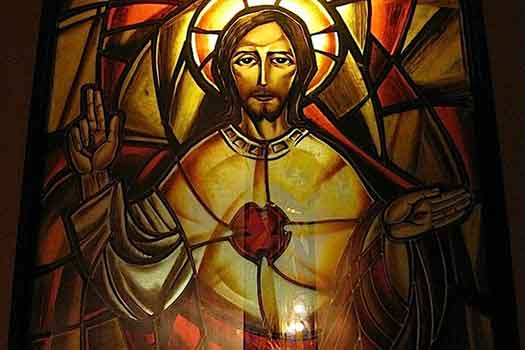
    i-heart-jesusThe Church dedicates the month of June to the Sacred Heart of Jesus, one of the most popular Catholic devotions throughout the world. So what is the Sacred Heart, anyway? When Catholics talk about the Sacred Heart we’re referring to the physical (yes, blood and ventricles and valves … this is an unabashedly embodied faith, y’all) Heart of Jesus as a representation of his Divine Love for humanity. Throughout his earthly ministry, Jesus’ Heart was moved by compassion for the poor, the sick, the forgotten, and the grieving. Pierced by a sword on the Cross as an act of self-giving love and enthroned in Heaven for eternity, this same Heart still beats for us and yearns for us and overflows with mercy for us and aches in solidarity with us. Come along with your favorite convert and start your summer off right(eous) with a few ideas to celebrate the month of the Sacred Heart:

    1. Begin at the Beginning

    During June, make an effort to begin your day with prayer. If this is a new practice for you, start out simply. If you have a picture of the Sacred Heart of Jesus, use it to focus as you pray. Try this little prayer to start:

    Consecration to the Sacred Heart of Jesus and the Immaculate Heart of Mary

    For a couple or family: Sacred Heart of Jesus and Immaculate Heart of Mary, I give myself and my whole family entirely to you [here name your family members], and to show our devotion to You this day, we consecrate to You our eyes, our ears, our mouths, our hearts, our whole being without reserve. Wherefore, dear Mother and sweet Jesus, we are Your own, guard us and keep us always as Your property and possession. Amen. (from The Catholic Mother’s Resource Guide by Maria Compton-Hernandez, Queenship Publishing, 2002)

    For a single person: Sacred Heart of Jesus and Immaculate Heart of Mary, I give myself entirely to you, and to show my devotion to You this day, I consecrate to You my eyes, my ears, my mouth, my heart, my whole being without reserve. Wherefore, dear Mother and sweet Jesus, I am Your own, guard me and keep me always as Your property and possession. Amen.

    If there are little people at your house, invite them to pray along by making the Sign of the Cross over their eyes, ears, mouth, and hearts as you pray aloud. (Also, make it clear that you want them touching their own eyes, ears, etc. … or else what started off as an act of piety will turn into a no holds barred cage match. Ask me how I know.)

    2. Tell it to his heart

    If you (like me) are a child of the ’80s, this song is now stuck in your head … probably forever. You’re welcome. This month, as we think about the boundless love of Christ and his Heart … which is set aflame with love for us, which was contained in his earthly body, which contains the whole universe … let’s imagine our prayers, petitions, worries, joys, and fears tucked into the living, beating Heart of Jesus. Here are a couple of ideas to get you started:

    • Using a dry erase or chalk board, draw an outline of the Sacred Heart. For the rest of the month of June, write your petitions inside the Heart.
    • Cut out a large Sacred Heart shape from poster board. Using photos, magazine clippings, and newspaper headlines, fill the Heart with images of loved ones, images that represent personal intentions, and words or images that represent petitions for your community and the whole world. Use the collage you’ve created as a starting point for prayer.
    • Try this exercise: Imagine you are standing face to face with Jesus. As you tell him the joys, burdens, and concerns of you heart, imagine his Sacred Heart growing more and more radiant with love. See your intentions inside his Heart and trust that they are safe there.

    3. Go to Mass

    Did you ever notice that the priest pours a bit of water into the wine before the Eucharist is consecrated? Ever wonder why? One reason comes from Scripture. In John’s Gospel, the soldier pierces Jesus side (i.e. his Heart) with a sword and blood and water flows from the wound. When we receive the Eucharist, we are receiving the Heart of Jesus. After you receive Communion, pray that through the grace of the Blessed Sacrament your heart may be made more like his Heart … merciful, compassionate, humble, and fearless. If you have yet to receive your first Communion, pray this prayer as you place your hands over your own heart to receive the God’s blessing from your priest.

    4. Divine Mercy

    The Divine Mercy Chaplet (a prayer) originates from a vision St. Faustina received of Jesus, his Heart overflowing with radiant mercy for all of us. All you need to try this popular devotion is an ordinary rosary (or 10 fingers … or toes). If praying a full chaplet feels intimidating at first, try quietly repeating this short prayer from the chaplet:

    O Blood and Water, which gushed forth from the Heart of Jesus as a fountain of Mercy for us, I trust in You!

    5. And what would a feast be without food

    Although the actual Solemnity of the Most Sacred Heart of Jesus is June 7, let the feasting continue all month! Check out Catholic Cuisine for loads of ideas for great food to celebrate the month. If your local farmers’ market is open (ours just opened this weekend), try making a Sacred Heart shape out of sliced strawberries, blueberries for the thorns, and sliced peaches for the flames. You can also make a treat to bring to someone in your parish, neighborhood, or apartment building who is homebound. Let them know that they’re in Jesus’ Heart … and yours too.

    Originally published June 10, 2013.

  • How Adopting a ‘Growth Mindset’ Has Enriched My Spiritual Life

    How Adopting a ‘Growth Mindset’ Has Enriched My Spiritual Life

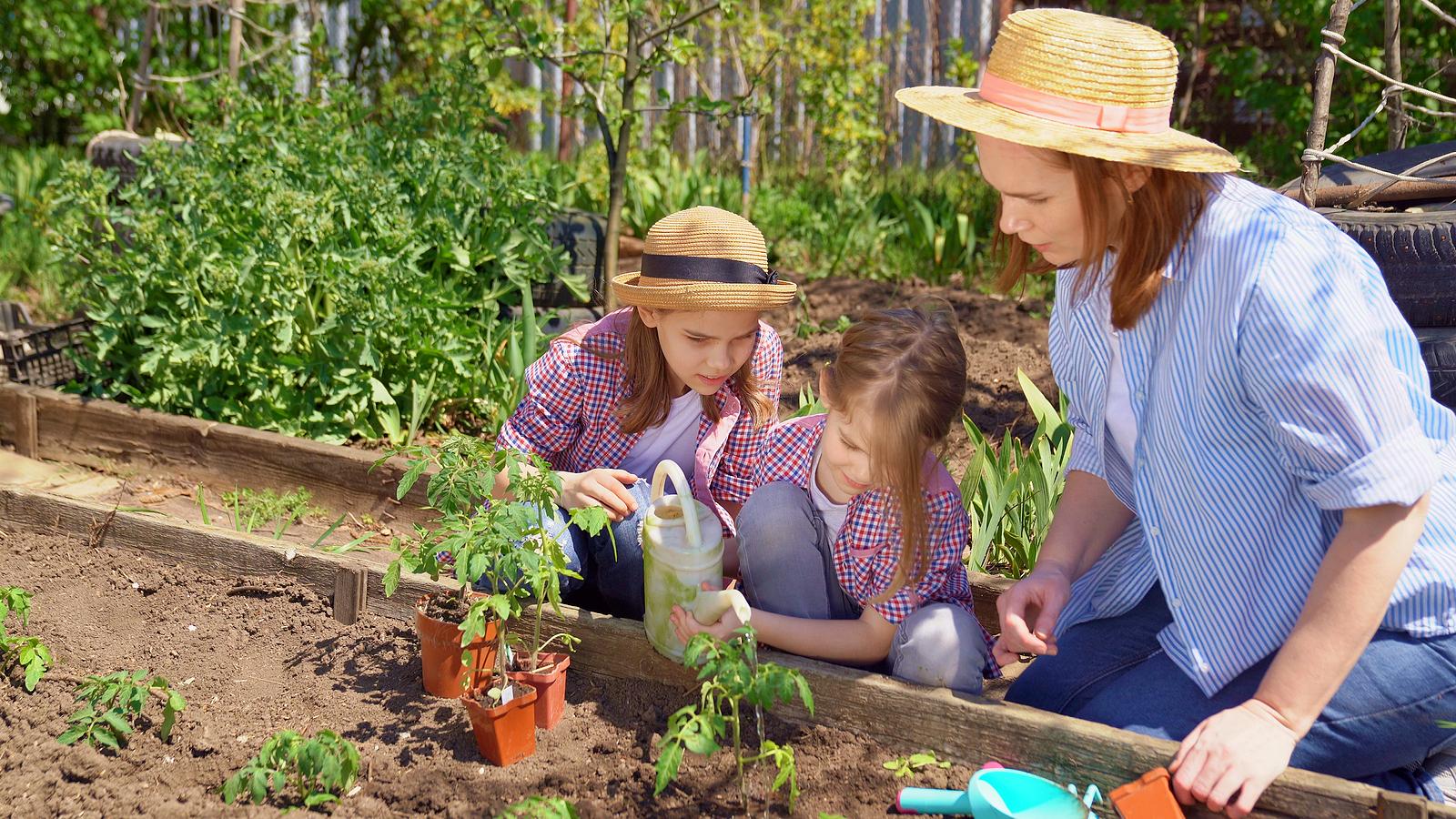
    Mom And Her Daughters Planting Seedlings In Garden BoxWhen I saw the first spots of bright green in our long planter boxes, a jolt of adrenaline shot through my veins. It’s actually happening! I thought to myself as I called my daughters, who are 4 and 7, to see the sprouts. We are actually growing things in our garden! 

    Just two weeks prior, I had fussed around them as they spilled soil, sloshed water, and sprinkled flower seeds. I was nervous. After a long history of gardening failures, I had finally been able to keep a few houseplants alive for a few months. Growing something from seeds seemed like the next logical step, but it also felt like a colossal leap, like attempting to cross a divide just a few inches too wide. As I carefully arranged the planters in the sun, I truly didn’t know if they would bloom or die.

    That’s because, for a long time, I thought I was just bad at gardening. As I watched neighbors and friends successfully grow their own food, I wrote it off as a special talent that they were blessed with, and one I didn’t receive. “I’m good at other things,” I would joke as I thought about the garden beds around my house overrun with weeds. 

    RELATED: Wisdom Learned From Gardening With My Mother

    Then, in a professional development session for high school teachers, I learned about the concept of having a growth mindset, the belief that a person can grow in their abilities and skills, and I decided to give gardening a more intentional try. What if I did a little research first? I asked myself. What if I invested a little money in getting the right tools? What if I made it a habit to do a little bit of work each day? What if I tracked my progress slowly over a longer period of time? 

    The questions intrigued and excited me. Suddenly gardening didn’t feel like an activity that was never meant for me, but a challenge that I could take on at my own pace and in my own way. 

    Adopting a growth mindset can transform the way a person looks at any new or interesting skill they want to try, like playing the piano, painting with watercolor, or skateboarding. It can also transform the way we approach our spiritual lives. Ordinary Time, with its slower rhythm and focus on steady discipleship, is the perfect time to look at our spiritual lives with an eye to slow and steady growth. 

    My time in the garden has taught me that I need the same things whether I want to learn something brand new or cultivate the thing that is already a cornerstone of my life – my relationship with God: a reasonable goal, the right tools, and daily attention, patience, and time. 

    RELATED: Weeds and Wheat: Getting Rid of What We Don’t Need

    Growing vegetables still feels too daunting this year, so our family is trying to grow a few pots of flowers and herbs. This goal seems just challenging enough that I want to work toward it. I will celebrate if we are successful, but I won’t be devastated if we fail. 

    If I want to grow in my spiritual life, setting a reasonable goal is important, too. I once heard a priest preach about this when it comes to establishing a habit of daily prayer. “You’ll never start with an hour a day! Try 10 minutes,” he said. When I wanted to get into the habit of praying the Rosary every day, I started with just one decade a day. I don’t have to do everything all at once. I can work toward a bigger goal via small steps over time. 

    The right tools have also made a big difference in my abilities as a gardener. I set a small budget for this hobby and intentionally bought items that would help me troubleshoot problems I have encountered in the past: pots with good drainage (I tend to drown my plants) and potting soil that has nutrients mixed in (sometimes just the sun is not enough—who knew?). 

    LISTEN: Simple Ways to Rejuvenate Your Faith With Joe Paprocki

    I’ve learned there’s no need to go all out and spend a ton of money on products or services that promise they will help me connect with God. By thinking carefully about roadblocks that have prevented my spiritual growth in the past, I’ve found creative solutions for overcoming them one at a time. For instance, an old-fashioned alarm clock has helped me and my husband wake up early for personal prayer so we no longer start our day by reaching for our phones. 

    I think the hardest truth about learning something new is that it takes consistent daily attention, patience, and time. I need to check on my garden every day, just as a musician needs to practice or an athlete needs to train every day. These daily tasks can feel tedious because they rarely provide evidence of growth or development. However, when I take a longer view, success is easier to see. I am a more confident gardener than I was a few years ago. And perhaps in a few years, I will be better at it still. 

    The same is true for spiritual growth. It can feel tedious to show up to Mass every week or prayer every day. But as the seasons of my life change over time, or as I start to encounter challenges and difficulties with more trust and grace, I can see the ways that God has been nurturing my soul with careful attention all along, just like a gardener. 

  • From Pen to Prayer: How the Lost Art of Letter Writing Connects Me to God

    From Pen to Prayer: How the Lost Art of Letter Writing Connects Me to God

    Paper and pen set out on white table. Behind it is a few light pink flowers and a white cup of tea. At the back of the image is a white sheet or curtain draped upon a table.
    Photo by Sixteen Miles Out on Unsplash

    My friend Tanna lives in Louisiana. No, that’s not the start of a children’s nursery rhyme. I met Tanna back in high school when we both partook in an immersive sustainable farm program in Upstate New York. Together, we got up at the crack of dawn, milked cows, collected eggs, repaired fencing, and overall experienced the beauty and hardships of farm life. 

    Though there were other girls in the program, Tanna and I “clicked.” We stayed friends, even visiting each other’s homes over the next summer and exchanging emails. After college, however, we kept in touch less often. Things got busy; life happened, as they say. A decade went by before we both desired to rekindle our old friendship more seriously. We connected through Facebook; Tanna sent me a direct message when she learned that the beloved farm where we met unfortunately closed during the pandemic. It was this loss of our shared idyllic memories that prompted us to rekindle our friendship. 

    LISTEN: Keeping Friendships Strong

    We could have done so digitally, but we decided to handwrite to each other instead. When we were at the farm, we used to send letters to our family and friends almost every day. Letter writing seemed like a fun alternative to emails, which we both got enough of working in the higher education sector. We both love writing, so we half-jokingly agreed that if we both become famous writers one day, someone would publish our correspondences as a book, like the letters of Henry James and Edith Wharton, or “Words in Air: The Complete Correspondence Between Elizabeth Bishop and Robert Lowell,” two American poets. 

    I think it goes without saying that the immediacy of sending and receiving a text message or email has unilaterally killed the art of letter-writing. Even so, Tanna and I are a year into our penpal experiment, and we are loving it so far. Besides renewing an old friendship, it’s also given me insight into how we can approach our own relationships with God. 

    Good things take time and effort

    When I write my letters to Tanna, I make it a special affair. I brew myself a cup of tea, curl up under a blanket, and wait until the dog settles on the bed. I take a few sheets of beautiful stationery and pick up my favorite pen. Then, I think about what I want to say before I set pen to paper. 

    Writing a letter takes intentionality. I purposefully carve a sacred quiet space to not only enjoy doing it but also to make the letter itself good and meaningful. Because I take the time to craft the letter carefully, it is more thoughtful and well-written than a rushed email or quick text.

    RELATED: How to Start a Prayer Journal

    I realized that I should try to do the same thing for my relationship with God: Be more intentional in my prayer. Life undoubtedly gets busy, and I don’t always have the time to make everything just so (after all, my sacred letter-writing practice is not a daily one). Quiet solitude is usually not within grasp in the midst of our bustling daily routines. However, I know I can set aside time to dwell in the Lord’s presence a little more intentionally. When I’m walking the dog in the morning, when I’m making breakfast, or even when I’m transferring subways – those are all moments I can open my heart up to him.

    After all, he wants us to talk to him and lean on him. He wants us to share all our worries, fears, triumphs, and tribulations. Nothing is too small for God to hear: “Ah, Lord God, it is you who made the heavens and the earth by your great power and by your outstretched arm. Nothing is too hard for you” (Jeremiah 32:17). Giving ourselves the time to give God our hearts is what will bring us closer to him – with or without tea and blankets. 

    Good things are worth the wait

    Letter-writing is a practice of patience. I’ve learned to embrace the silences in between letters with joyful anticipation. I know a letter response will come, so I am not anxious about when I receive it. In fact, it’s fun to have a hopeful eagerness when checking the mailbox: Is it coming today? Has the post even arrived yet? When a letter from Tanna finally does get here, I eagerly tear open the envelope and begin reading before I’ve even had a chance to sit down.

    I wish I applied the same thinking to my relationship with God. There have been times in my life when I felt frustrated with what I interpreted as his silence. For instance, there was a season of my life when I questioned whether God truly called me to write. I don’t make a full-time living wage from writing. My job and other responsibilities can make finding time to dedicate to the craft challenging. If this was truly meant to be for me, then why would it be so hard?

    RELATED: 3 Tips for Stepping Outside Your Age Bracket When Making Friends

    But, as my husband always tells me, sometimes time and silence are the best things for us. Those seasons can be fruitful – as long as we don’t give up on listening for God’s guidance. Having truncated pockets of time, for instance, made me prioritize projects and focus on writing magazine articles and essays. Praise God, I’m close to my hundredth published piece! God is good, but he will answer us in his own way and on his own time. We just need to practice patience. Knowing that God will take care of us and lead us down the right path can help quell the anxieties we feel in the more silent seasons. And it’s always worth the wait: “At the right time, I, the Lord, will make it happen” (Isaiah 60:22). 

    Receiving letters from Tanna is a wonderful way to rekindle my friendship with her. I still feel like we “click” because we have similar interests and picked up where we left off from high school. Because writing a letter is intentional, effortful, and a time investment, we don’t waste paper and ink on surface-layer topics (What did you do this weekend? What do you like to watch?) and dive right into the deep end of our hearts (What are the stresses and anxieties we feel? What are our hopes and dreams?). The handwritten words feel more meaningful than a text message or email. This is especially true because Tanna’s cerebral palsy makes writing more challenging for her – and yet, she perseveres and wants to do it anyway. That melts my heart every time I read a letter from her.

    God also sends us proverbial handwritten letters. He invites us to his heart in every Mass through the Eucharist. And, he longingly waits for us to turn to him each and every day – even when we turn our backs on him. He is eternally patient. We only need to give ourselves the time to write back to him.

  • A New Perspective on Our Faith: A Look at First Reconciliation Through My Daughter’s Eyes

    A New Perspective on Our Faith: A Look at First Reconciliation Through My Daughter’s Eyes

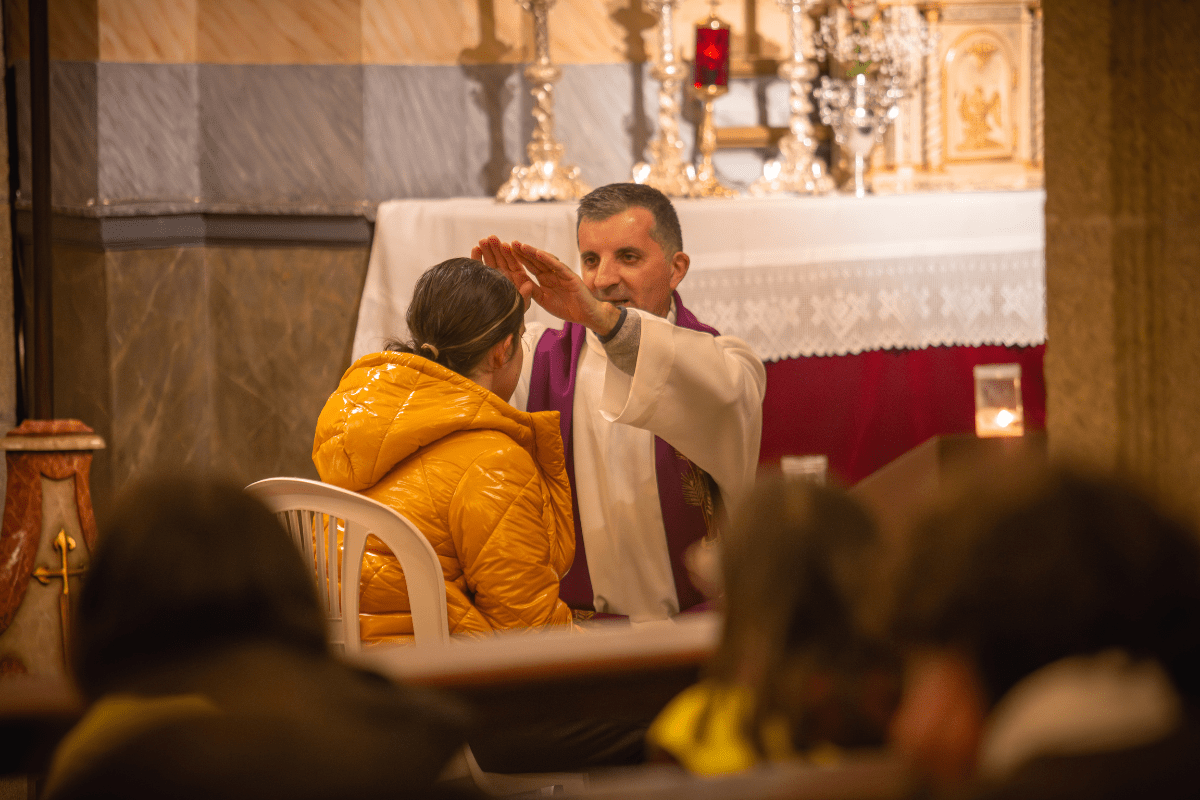
    A young girl goes to confession
    Photo by Yandry Fernández Perdomo on Cathopic

    My daughter is in second grade, which means it is the year of her First Communion. When she began her religious education classes at our parish this year, her dad and I were focused on preparing her for this milestone. We had prayers to practice, doctrines to discuss, and — as my daughter kept reminding me — a dress to dream about and purchase.    

    While the weekend of her First Communion was beautiful, what I found in the time leading up to it was that it was not that sacrament that my daughter was focused on most. It was the Sacrament of Reconciliation she was particularly curious about.

    What would she tell the priest? My daughter wondered. Would she talk to our parish priest specifically, the one she knows, the one who plays the harmonica and likes chocolate? Would he dislike her after she told her sins to him?  

    LISTEN: Preparing Your Kids for First Reconciliation and First Communion

    At dinner, my daughter would pretend to whisper her sins to her older brother, and he would laugh. If you knew her, you would know that this was a sign of how nervous she was about the experience, joking to cover up her worries, playing pretend to imagine the experience.

    As someone who converted to Catholicism at age 28, I felt as if I couldn’t always field my daughter’s questions or worries in the best way. I had never been a child participating in the Sacrament of Reconciliation, and children see the world through different lenses than adults. How was I to guide her and ease her nervousness?

    I talked with her about my experience with First Reconciliation, which she joked must have been hours long because I was almost 30 when I went. Just think about all of those sins I had to recount, she jested. While I didn’t recount all of my sins with her as I did during my first Confession, what I did share with her was the feeling of relief I experienced after it.

    I told her I was nervous like her when I went the first time, and I still get nervous, every time. Somehow, though, my soul always feels healed afterward. God’s grace, working through the priest, transforms my heart, and I feel lighter. The sacrament is a gift, and the nervousness we feel before we go to Confession is natural because, unlike Christ, we aren’t perfect. We sin, and so we try to reconcile ourselves and our hearts with him. This is how I tried to explain it to her at least, focusing on the feelings after the Confessional experience rather than what seemed to be the worries plaguing her heart before it.

    RELATED: Busted Halo’s Guide to Confession

    On the day of her First Confession, my daughter dressed up, not in her communion dress, but in one of her other favorites. To her, that Saturday felt as momentous as the next day, the day of her First Communion, would be. After all, one could not happen without the other. We practiced her confessional prayer before we left. We also discussed how she didn’t need to share anything she divulged about her sins in the confessional with her parents, her brother, or even the family dog unless she wanted to. 

    When we arrived at the parish and waited in line with the other children, she hopped from one foot to the next. There was a palpable sense of nervousness in the air. Some of the kids remarked noisily about their feelings, others simply stared, wide-eyed. On the car ride over, my daughter had wondered aloud if her confession would be longer or shorter than others, which might explain why she had inquired so persistently about the length of my first one.

    As she ventured into the booth during her turn, I thought about the times as a family we had gone together and she had waited on me. What must it be like, as a child, to know your parents are receiving forgiveness for their sins? 

    Throughout this year, my family has made it a point to go to confession together during each liturgical season, and I have been cognizant of my daughter’s eyes on me, searching and following, contemplating her own future steps in the Church as she grows up in it — and she sees her family growing up in it, too. 

    I speak with her often about how, as a child, she gets to experience the faith in a different way than I did because she receives many of the sacraments over time in her life (i.e. Baptism, Reconciliation, Communion, Confirmation), whereas I received them fairly close together in an RCIA setting. Through witnessing her journey, my faith deepens because I experience the sacraments anew, this time with a child’s gaze. We learn together, I tell her. She teaches me, as much as I do her. 

    WATCH: Confession 101

    With this said, God teaches us all through his sacraments, through these channels of God’s grace. I am reminded of Psalm, 32:8, which reads, “I will instruct you and teach you in the way you should go; I will counsel you with my loving eye on you.” Throughout this year, I have felt God’s loving eye on both my daughter and me. Our journey toward her Reconciliation has been one of growth and togetherness.

    It is likely not a surprise that when my daughter came out of the confessional, she looked lighter. Her smile of relief mixed with joy is one I’ll never forget. We did her penance together. 

    On the way home, I saw she had grabbed my phone and had texted her dad who was working that day. “She was very nervous!” she wrote about herself. Imagine a few thousand cry/laugh emojis attached to this text.

    After I took my phone back, I told her that while she may have been nervous, I was also a little nervous (to which she laughed), but that she did great.

    “We both did great,” she responded.

    In the end, preparing my daughter for the Sacrament of Reconciliation not only laid the groundwork for her to enter more fully into the Church, but also reconciled me closer to her, to God, and the sacraments that drew me to convert to the faith in the first place. 

    It deepened our connection to each other, and most importantly, to God’s love and his wondrous works in the world — in my family’s hearts.

  • Reflecting on the Holy Spirit’s Guidance This Pentecost

    Reflecting on the Holy Spirit’s Guidance This Pentecost

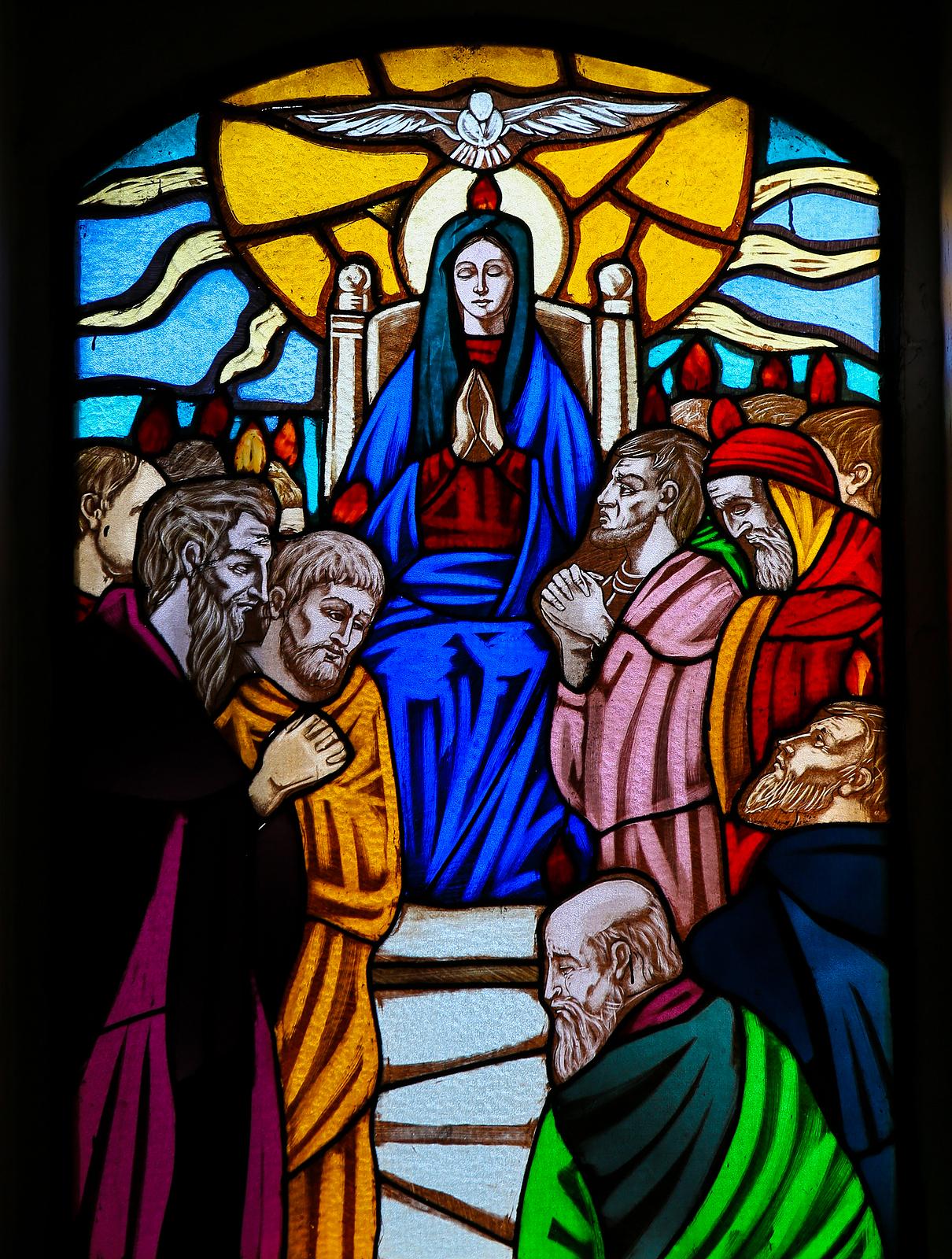
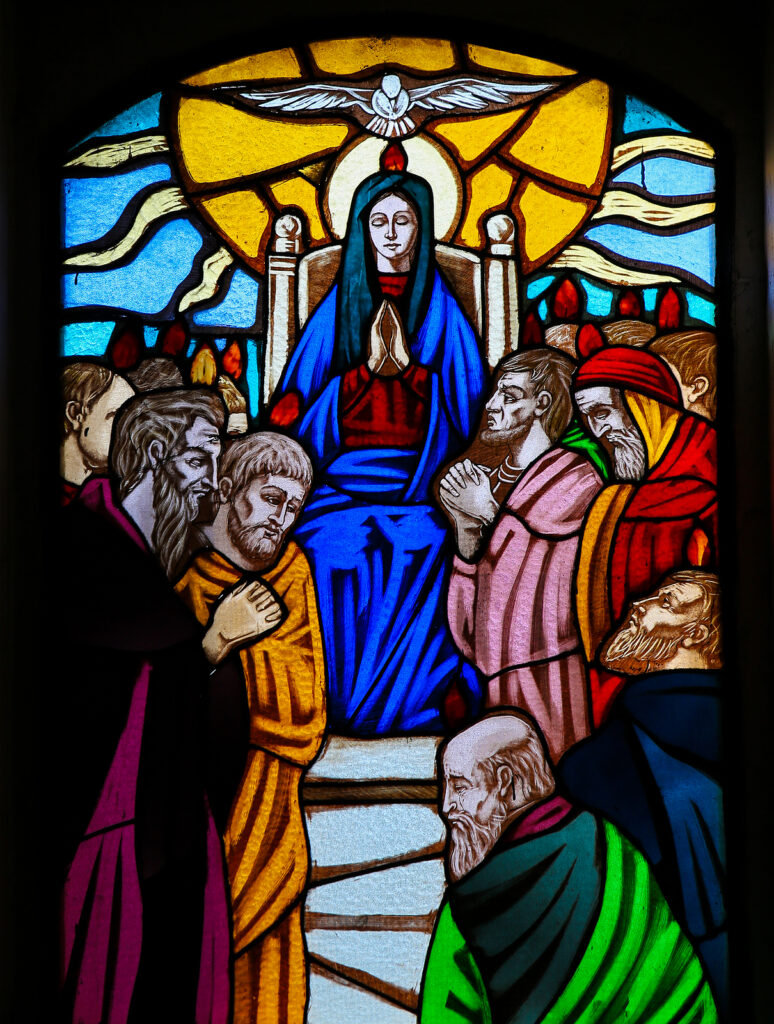
    Stained glass window depicting the the Descent of the Holy Spirit at Pentecost in the Church of Ostuni Apulia Italy.On May 19 this year, we’ll celebrate the birthday of the Catholic Church: Pentecost. Several thousand years ago, the third person of the Holy Trinity made its debut and gave the Apostles the strength, wisdom, and courage they needed to spread the Gospel to all nations. But if you’re anything like me, it can be easy to forget about this pivotal day in the Church’s history since it doesn’t come with a lot of pomp and circumstance. Easter has an entire three-hour ceremony which includes the induction of new Catholics to the Church, the four-week season of Advent builds the anticipation of Christmas, and every Ash Wednesday triggers a flood of Catholic memes about the various ash crosses on social media. 

    While it’s true that Pentecost may not be amplified by the same bells and whistles, this solemnity provides its own value, reminding us of the Holy Spirit’s inspiring presence in our lives. It’s easy to forget how active the Holy Spirit can be, but hearing the message of Peter’s courageous witness, the proclamation that changed the Church forever can draw attention to the Spirit’s activity in our own lives. For my part, I am reminded of the Holy Spirit’s good guidance in my own life.

    WATCH: Pentecost in Two Minutes

    I think back to when I was a senior in high school making the decision of where to attend college. Of course, choosing what school to attend is pivotal; so much prayer and discernment was needed. Many people gave me advice and promoted different schools (usually whichever one they went to), and as I witnessed schoolmate after schoolmate gleefully announce their choice of college, I felt stuck and frustrated. I looked at plenty of schools that offered practical majors such as business or computer science, but I wasn’t particularly compelled to attend them. The school I was most drawn to was Christendom College. 

    Christendom emphasized community and had an unflagging commitment to Catholic orthodoxy. Its curriculum was built on the Catholic liberal arts tradition, offering theology, philosophy, and classic works of literature in place of contemporary conventions such as engineering. Many friends and family members were skeptical about the school because of this and thought it was therefore less practical. However I connected with the school’s goal to expand its students’ minds in a broader sense, helping them achieve the ability to think and reason effectively. Though the school’s vision was unconventional, its fascinating curriculum and the prospect of spending four years engaging with passionately Catholic young people was impossible to overlook.

    RELATED: Unwrap the Gifts of the Spirit This Pentecost

    The writings of St. Ignatius of Loyola, a personal favorite of mine for many years, held the answer to my questions. St. Ignatius reminds us that the Holy Spirit’s movements in our souls take away sadness and disturbance and, in doing so, draw us to good action. The thought of attending Christendom brought peace and confidence that I would be well-prepared for the work of evangelization. After months of prayer, discernment, and exploration, I had my answer.  

    I finally decided to take the liberal arts route, choosing history as my major. By exploring the actions of the Catholic Church over the past centuries and learning about the multifaceted motivations of the men and women who shaped history, the Holy Spirit guided me to a greater understanding of his Church and the nature of the men and women who fill her pews. 

    RELATED: How to Celebrate Pentecost Sunday

    Now that I’ve graduated, I can confidently say that during those four years, my life changed for the better. I made strong friendships with great people, grew both spiritually and emotionally, and became a better, stronger, wiser person because of the choices I made. But I didn’t make it alone. As we approach Pentecost, a solemnity to celebrate the Holy Spirit in a special way, I’m reminded of this and filled with gratitude for what the Spirit has done for me. 

    I think if we take a genuine look back at our lives, we’ll notice the care and precision with which we’re guided through this chaotic world. My experience with college was only one of many in which confusion and frustration gave way to gratitude as it became clear what the Spirit was doing. This Pentecost, I invite you to reflect upon the confusing moments in your own life. You might find there’s wisdom present there you may not have otherwise noticed.