Tag: Personal Growth

  • Finding Peace in Rough Seas: Turning to Faith in Times of Personal Crisis

    Finding Peace in Rough Seas: Turning to Faith in Times of Personal Crisis

    Big waves crash against rocks in stormy weather.
    Photo by Flaviya85 on Bigstock

    When I was 15 years old, my father took my cousin and me on a deep-sea fishing trip.

    The captain of the 60-foot-long charter boat transported us 40 miles away from the Ocean City, MD shoreline toward the Gulf Stream…an area often the home to the enormous Bluefin Tuna he hoped we’d catch.

    Although we traversed an endless parade of white-capped waves on our journey, the turbulence was hardly noticeable. As long as the powerful engines kept pushing us forward at a rapid clip, the boat’s v-shaped hull tore through the waves, preventing us from noticing the bulk of their effects.

    We would feel an occasional bump or two, but the impact on our equilibriums was minimal. The speed at which we raced to our destination allowed us to maintain our balance.

    RELATED: Shelter From the Storm: How My Tornado Shelter Became a Reminder of God’s Protection

    When the engines shut off, however, the five-foot-high waves took control, tossing our vessel back and forth like a beach ball at a Jimmy Buffett concert. While our lives were in no real danger, my stomach was ready to jump overboard.

    I laid on the hard sofa inside the cabin, realizing my body wasn’t made for constant churning. Instead, I needed to cease moving. I needed the waves to stop.

    My cousin, on the other hand, felt fine. Dramamine kept his body’s reaction to our environment under control.

    The only one on the boat’s deck who didn’t suffer any consequences from our environment — at least not without the aid of drugs — was the first mate.

    You see, he’d taken this journey hundreds of times. He felt the waves nearly every day, so his body was conditioned to handle them. Most importantly, he trusted his captain to keep him safe. Although a big wave would occasionally knock him down, he got right back up and steadied himself before the next one hit. 

    I recall my deep sea experience each time my job, my relationships, or the health of my loved ones threatens to break me. My son’s recent health scare qualified, and it reminded me that all too often, life’s waves do their best to pound us into submission. One time they almost did.

    RELATED: 5 Steps for Praying When You’re Overwhelmed

    When my wife was pregnant, we did everything right. We attended classes and purchased the appropriate baby gear. She visited the obstetrician as prescribed, swallowed oversized vitamins, and avoided a lengthy list of foods. We were sure we were prepared.

    We weren’t at all ready, however, for the tsunami that was about to crash into her already fragile body.

    Although she’d experienced a few isolated contractions early in her pregnancy, at 24 weeks, they returned. Only this time they weren’t isolated…and they weren’t stopping.

    We rushed to the hospital, and they admitted her immediately. The concern on the attending doctor’s face didn’t help ease our fears.

    Giving birth at 24 weeks wasn’t unprecedented, but our son’s survival was far from guaranteed. If he did make it, a lengthy stay in the neonatal intensive care unit (NICU) was in his future. We needed to do everything possible to stop the contractions.

    Nurses who shared our concern used an IV to pump terbutaline into her veins. Terbutaline—a drug that has, in the years since, caused the death of more than one pregnant user—had, in my wife’s case, elicited persistent vomiting that exacerbated her already debilitating dehydration. She was struggling and the contractions were growing in intensity and frequency.

    Wave upon wave upon wave.

    RELATED: Praying Through Pregnancy

    At around midnight, her doctor became concerned that they might not be able to halt her contractions. When the doctor added that the hospital’s NICU was full, our hearts sank. My wife would have to be flown by helicopter to a hospital that had space available for our tiny son.

    She was understandably terrified as medics monitored her vitals in the tiny chopper. I couldn’t fit, so I sped down the highway in our Honda Civic, hoping that our son would delay his arrival. As I did so, Jesus’ words popped into my mind.

    “A violent squall came up and waves were breaking over the boat, so that it was already filling up. Jesus was in the stern, asleep on a cushion. They woke him and said to him, “Teacher, do you not care that we are perishing?” He woke up, rebuked the wind, and said to the sea, “Quiet! Be still!” The wind ceased and there was great calm.” (Mark 37-39)

    In the midst of our storm, Jesus was in control. I forced the gas pedal to the floor and prayed that he’d tell our waves to be still.

    I don’t always trust him to still the waves in my life, though. Instead of confronting life head on, with Jesus on my side, I hide. I trust my way instead of following his.

    That night on the highway, however, I couldn’t escape. My wife and I were tossed and turned, our son’s life at risk.

    Fortunately, our expectation that our son was going to enter the world much too early wasn’t God’s plan. After an anxious night at the second hospital, the waves finally subsided. My wife’s contractions ceased, and we were able to return home.

    RELATED: On Suffering: How I Stopped Asking ‘Why’ And Started Asking ‘How’

    Over the next couple of months, my wife was on bed rest. With a stocked cooler at her bedside, she sacrificed her mobility as well as her health to shepherd our son into the world. Born healthy at 37 weeks, Nathan, which means “gift of God,” certainly was God’s gift to our family.

    The joy that he brought us was almost enough to make us forget the storm that we — particularly my wife and infant son — survived.

    I still often attempt to solve my problems with my solutions. In doing so, I forget that I can’t control everything that happens in my life.

    During that night 18 years ago when my faith was its weakest, I couldn’t solve my family’s problems. I had to trust him even when I wasn’t sure he would save my son.

    I recently learned a short prayer that St. Faustina taught:

    “Jesus, I trust in you.” 

    I now pray this prayer whenever the storm clouds gather. And storm clouds gather nearly every day.

    Not only does it remind me that Jesus can calm the waves, but it also helps me trust that he can do so. Big or small, no challenge is more than he can handle.

    Jesus has and will provide me peace during the most difficult days of my life, and he promises to provide you peace, too.


  • A Resurrection From Cynicism: Learning to See Myself With God’s Eyes

    A Resurrection From Cynicism: Learning to See Myself With God’s Eyes

    Photo by Debby Hudson on Unsplash

    “A cup filled with vinegar can’t spill honey.” I don’t remember how I came across the saying, but despite being filled with wisdom, the phrase has always made me feel uneasy about myself. I go to church, I volunteer, I teach children with disabilities, I’m kind and caring… but underneath all that, I can sense a sour smell of vinegar, of bitterness and cynicism…and it shows. And it’s painful. 

    I get annoyed when a handful of us are working hard in the church kitchen while the other 150 people from the congregation just turn up to enjoy the meal. No one is rushing to help. Sure, I think to myself, it’s all about ‘give and take’ for us Christians…as long as I give and you take. I get tired of parents who complain about their children’s behavior at home and blame teachers (like me) for failing to make their child achieve in school. The toxic thoughts run through my head, Perhaps, you could start introducing some boundaries at home…then we’ll talk! 

    Pray for Us Complainers: Turning Our Words From Protest to Praise

    I read the Bible and ask God to heal my heart and renew my mind, remove the darkness and cynicism…but it just won’t go away. So I try a different strategy. I say to myself, come on, you’ve got to look at yourself through the eyes of God. You’ve got to see yourself the way He sees you. But, how does He see me? 

    ***

    I teach in a special elementary school for children with severe learning difficulties. The other day, I asked a boy in my class to count all the children (four) and all the adults (three) in class. His math was different from mine. He ended up with two grown-ups and five children. He pointed at one of the teaching assistants and said, “One.” He pointed at the other one and said, “Two.” Then he stopped. I kept pointing at myself to encourage him to continue counting. The boy scrutinized my face for a couple more seconds, and gave out a firm “no.” As far as he was concerned, I didn’t count as a grown-up.

    At first, I was embarrassed. There were two other members of staff there, and I was suddenly exposed as a fraud! I pretend to be an experienced professional, a grown-up. Is this really how I appear to other people?! Yet, his observations were a precious gift. 

    RELATED: Praying for Patience: What I’ve Learned From God’s Time vs. My Own

    The cynical part of me is critical of other people’s behavior and choices; it can be furious, angry, impatient and frustrated. It savors every depressing headline on the front page of a national newspaper. It moans and complains. This dark and gloomy “me” is too thick-skinned to go through the narrow gate to enter the kingdom. But that’s not the real me. The real me — the silly, playful, joyful me — meets the requirements. The boy confirmed it! In fact, we all qualify. 

    The real me makes funny noises, dances around the classroom, loves little people, loves life. My heart is not filled with vinegar. It’s full of sweet childhood innocence, and when it spills, it turns my surroundings into a land of milk and honey. It can never be taken away from me or get lost.

    God is faithful and does respond to my unique needs and cries for help. When I read the Bible, I don’t actually get messages like, “Be good” or “Try harder.” The lines and verses that always stand out for me personally are those linked to attention, focus and concentration. Be watchful, be on guard, stay alert, stay awake. 

    The cynical mind isn’t necessarily a bad thing. It may come from a place of knowledge and deeper awareness of the inequality and desperate need in the world. I can keep that. What I don’t want is to indulge in celebrating my own (or the world’s) shortcomings and faults. I want to be alert. Keep my eyes on what is good, true, and beautiful. Have faith like a child. Avoid getting carried away into the depths of cynicism and despair. And God has always showered me with lovely things and sweet moments to help me stay awake to the beauty of his creation.

    Originally published June 4, 2020.

  • How I Found Friends Through Faith: Trusting God to Bring Meaningful Connections

    How I Found Friends Through Faith: Trusting God to Bring Meaningful Connections

    Two girls read a book together.After college, there was a period in my life when I dreaded the weekends.  
    I anxiously awaited the long hours of unstructured time I would spend trying to distract myself from my loneliness. It wasn’t that I lacked friends, it was the physical distance between us that left me without plans on the weekends. As I adjusted to moving back home while working full-time as a college librarian and not having connections at my fingertips like I had when I was a student, I hungered for community with peers.

    My instinct during this time of loneliness was to take advantage of as many opportunities as possible to foster social connection. I joined a women’s group at a parish in Chicago and volunteered as a literacy tutor. I invested in hobbies that would sustain my body and mind – I went to exercise classes and rollerbladed, I started a gratitude journal and listened to audiobooks. 

    LISTEN: How Can I Be Strong in Faith While Missing Community? 

    Though these pursuits were healthy and helped me discover what fulfills me, I could not stay present and enjoy them when my focus remained on what I lacked. I stayed in motion but hadn’t found my place, becoming bitter and cynical when these activities did not produce the community I craved. Rather than reframing this period of loneliness as an opportunity to try new experiences and reevaluate my priorities, I saw it as a burden that I didn’t deserve to carry. I concentrated too much on what I wanted to gain from these activities rather than on what I could give to God and others through them.

    As this period continued, I knew I needed help. While I received support through mental health counseling, I also brought this ache to my spiritual life, turning to saints who had both experienced pain and found profound peace in trusting God. I asked our Blessed Mother Mary for help finding good and holy friendships. I prayed a novena to St. Therese the Little Flower, asking for the courage to pursue true friendships. On the last day of the novena, I joined a woman whom I had briefly met at Mass for a drink. It was the first new friend I had made in a long time, and the conversation we had affirmed me that a new, meaningful connection was possible.

    RELATED: Three Female Saints and Mystics Who Guide Me to Freedom

    As I struggled to let go of my need for control and rely on the saints’ intercession, opportunities for friendship and community began to present themselves more naturally, but without the same sense of pressure. I was invited to volunteer with an organization that hosts afterschool programs for girls, and I met other like-minded women who also volunteered there. Saying yes to this invitation and engaging with the connections I made there allowed me to intentionally invest in the community, striving for quality of interactions over quantity.

    I learned to rely on friendships that are spread across far distances, acknowledging that even if I don’t talk to these people every day, they are still the friends I have on speed dial whether I need to laugh or reach out for support. I planned weekend trips and organized a virtual book club with these friends to help us stay tethered. I worked to be grateful for the friendships I do have, and the community that I have within my family. By letting God into the work of bringing new people into my life, I slowly let go of the notion that I need a sprawling group of connections in order to feel whole.

    RELATED: Finding Fellowship: How I Built Community at a New Church

    As I look back to see what God was doing to my heart during this time, I can see him helping me rethink what community looks like. The biggest misconception I held was the belief that community is static, and that I will reach a stable point where I am completely fulfilled by all my activities and social interactions. Community is not a finish line or a goal to achieve – it is a growing organism that is never fully formed. God was showing me that community is always in flow, evolving as new connections form and others wilt, but he is the only one who will always be beside me.  

    The philosopher Aristotle wrote that, “Without friends, no one would want to live, even if he had all other goods.” The longing for community transcends generations, centuries and cultures. I do not take for granted the communities I’ve found through various avenues, but I know they may change and fade. There will be other seasons of loneliness, loss and grief that I will need to learn to endure with grace. Yet, it is these seasons that make my friendships so valuable, and allow me to renew my dependence on God, realigning myself with his dream for my life. 

    Originally published May 23, 2022.

  • Summer Spirituality: Building a Habit of Prayer In Ordinary Time

    Summer Spirituality: Building a Habit of Prayer In Ordinary Time

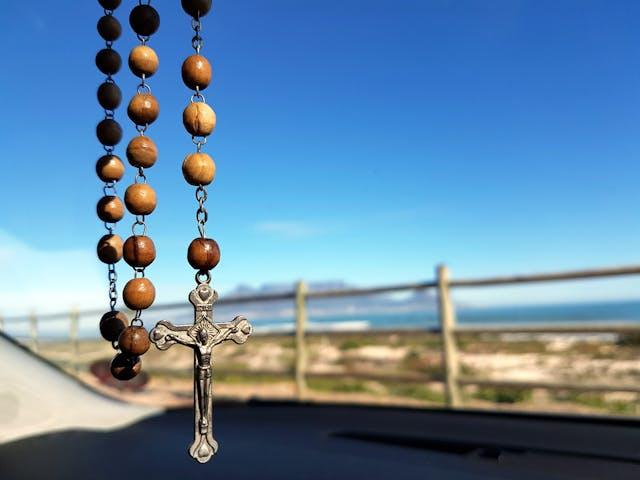
    Rosary beads hangingI find Lent and Advent easy to commit to, in many ways. The practices throughout these seasons have been ingrained in my mind since I was a small child. There is a clear beginning and ending, and I know what to expect from each period. These are the times that I am supposed to be working on my faith – so I sign up for a reflection book, make a commitment to pray the Rosary, or take on some other faith-related exercise. Summer is a different story.
    The nice weather and fluid schedules often lead me to feeling lost in my spiritual life. I can easily go days without praying for more than a few minutes at a time. Since I usually do not make a conscious choice to commit to a prayer practice, I allow the summer to slip by without growing much in my faith. I realized that I needed to add a spiritual element after my experience a few summers ago. I found that I hardly ever prayed, other than right before bed. It is a blessing to be able to relax more and spend more time outside, but if I am honest, those good things often took the place of the greatest thing: my relationship with God. 

    RELATED: How My Family Is Spending Our Summer With God

    I realized I became less patient and less kind towards my family members and others during the summer because I was not connected to the experience of God’s love in prayer. My lack of commitment to spending time with God and my relationship with him led to less intentionality in my other relationships. Neglecting prayer can become fuel for ignoring others. 

    With this in mind, I tried something different last summer. I decided to make a commitment, as I would at the beginning of Advent or Lent, to deepen my prayer life and intimacy with God. I would carve out the summer from the middle of June to the end of August and make these six weeks a time of dedication to God and growth in my spiritual life. 

    My idea was to imitate Jesus’ actions of going off and praying on his own throughout the Gospels. I wanted to make each day of the summer a “mini-retreat”, like Jesus often would when he went to the mountains or a deserted place to pray (Mark 1:35; Mark 6:46; Luke 6:12). Specifically, I wanted to spend time contemplating the “solitary place” that Jesus went to. So, I decided to pray every morning, in the same place, and in a similar way. 

    WATCH: Great Catholic Sites to Visit on Summer Vacation 

    I set an earlier alarm every day, sat on the same spot on the couch, and located a crucifix on the wall to center my focus. I found that the first step of waking up early is the most important. In order to increase my odds, I moved my phone charger to my dresser so that I would have to get out of bed to shut off my alarm each morning. Before doing so, I was too prone to hit the snooze button. Then I would wake up when the kids woke up and lose out on my time for prayer. The early mornings served as a great stage to offer my entire day to God.

    Second, I sat in the same space each day to increase the context of my prayer. The routine of sitting in the same space each day slowly sanctifies that space and triggers in my mind that I am about to enter into something special and holy. Once I adopted this habit, it became easier to pray, and I began to enter into deep prayer more quickly. The scene was simple and ordinary, but I slowly began to work the muscles of prayer each morning, in a similar way. The space and the entire process led me to become more used to praying in silence each day. I began to crave it. 

    Finally, I wanted to move a crucifix to my place of prayer so that I could focus on something when my mind began to drift. I got in the habit of beginning my time gazing at the cross and asking Christ to guide me in being alone with him. Then I would read the Gospel of the day, reflect on a key phrase or action of Jesus, and end with some time of quiet prayer looking at the cross again. 

    RELATED: 5 Tips for a Spiritual Summer

    I found that it was the commitment to making summer prayerful that made all of the difference. Once I was intentional about how I would spend the very first parts of my day, I was able to encounter God in ways that I never had before in silence and in the solitary space of my own living room. I was also able to be more of the man that I am being called to be: more patient and kind with my family. While far from perfect, prayer is continuing to radically change me. 

    Summer is not simply a time for rest and relaxation in the sun. Like all seasons, it is a chance to grow in intimacy with God. This summer, make your own commitment to prayer and watch him move to meet you every single day. 

  • How Adopting a ‘Growth Mindset’ Has Enriched My Spiritual Life

    How Adopting a ‘Growth Mindset’ Has Enriched My Spiritual Life

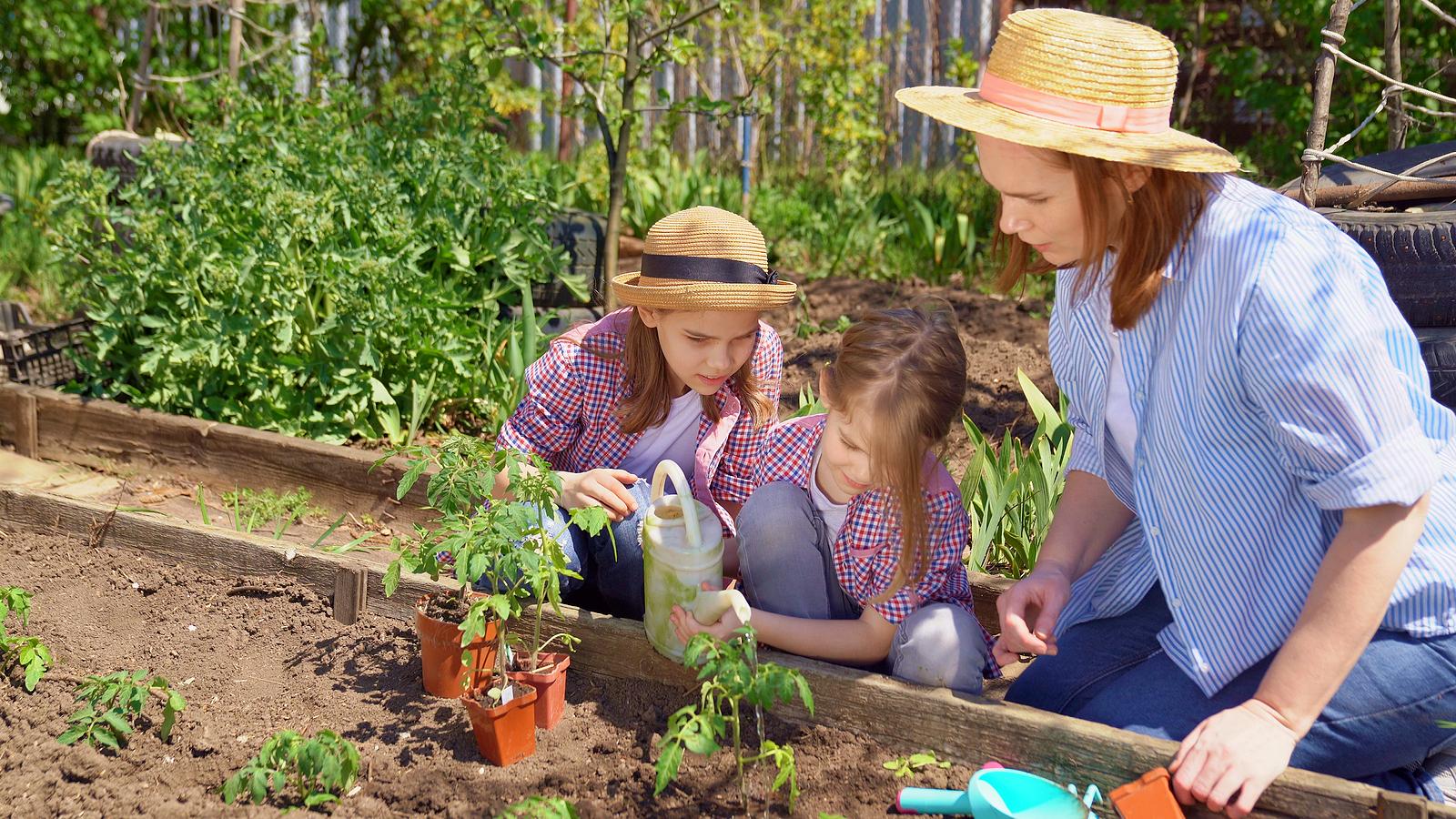
    Mom And Her Daughters Planting Seedlings In Garden BoxWhen I saw the first spots of bright green in our long planter boxes, a jolt of adrenaline shot through my veins. It’s actually happening! I thought to myself as I called my daughters, who are 4 and 7, to see the sprouts. We are actually growing things in our garden! 

    Just two weeks prior, I had fussed around them as they spilled soil, sloshed water, and sprinkled flower seeds. I was nervous. After a long history of gardening failures, I had finally been able to keep a few houseplants alive for a few months. Growing something from seeds seemed like the next logical step, but it also felt like a colossal leap, like attempting to cross a divide just a few inches too wide. As I carefully arranged the planters in the sun, I truly didn’t know if they would bloom or die.

    That’s because, for a long time, I thought I was just bad at gardening. As I watched neighbors and friends successfully grow their own food, I wrote it off as a special talent that they were blessed with, and one I didn’t receive. “I’m good at other things,” I would joke as I thought about the garden beds around my house overrun with weeds. 

    RELATED: Wisdom Learned From Gardening With My Mother

    Then, in a professional development session for high school teachers, I learned about the concept of having a growth mindset, the belief that a person can grow in their abilities and skills, and I decided to give gardening a more intentional try. What if I did a little research first? I asked myself. What if I invested a little money in getting the right tools? What if I made it a habit to do a little bit of work each day? What if I tracked my progress slowly over a longer period of time? 

    The questions intrigued and excited me. Suddenly gardening didn’t feel like an activity that was never meant for me, but a challenge that I could take on at my own pace and in my own way. 

    Adopting a growth mindset can transform the way a person looks at any new or interesting skill they want to try, like playing the piano, painting with watercolor, or skateboarding. It can also transform the way we approach our spiritual lives. Ordinary Time, with its slower rhythm and focus on steady discipleship, is the perfect time to look at our spiritual lives with an eye to slow and steady growth. 

    My time in the garden has taught me that I need the same things whether I want to learn something brand new or cultivate the thing that is already a cornerstone of my life – my relationship with God: a reasonable goal, the right tools, and daily attention, patience, and time. 

    RELATED: Weeds and Wheat: Getting Rid of What We Don’t Need

    Growing vegetables still feels too daunting this year, so our family is trying to grow a few pots of flowers and herbs. This goal seems just challenging enough that I want to work toward it. I will celebrate if we are successful, but I won’t be devastated if we fail. 

    If I want to grow in my spiritual life, setting a reasonable goal is important, too. I once heard a priest preach about this when it comes to establishing a habit of daily prayer. “You’ll never start with an hour a day! Try 10 minutes,” he said. When I wanted to get into the habit of praying the Rosary every day, I started with just one decade a day. I don’t have to do everything all at once. I can work toward a bigger goal via small steps over time. 

    The right tools have also made a big difference in my abilities as a gardener. I set a small budget for this hobby and intentionally bought items that would help me troubleshoot problems I have encountered in the past: pots with good drainage (I tend to drown my plants) and potting soil that has nutrients mixed in (sometimes just the sun is not enough—who knew?). 

    LISTEN: Simple Ways to Rejuvenate Your Faith With Joe Paprocki

    I’ve learned there’s no need to go all out and spend a ton of money on products or services that promise they will help me connect with God. By thinking carefully about roadblocks that have prevented my spiritual growth in the past, I’ve found creative solutions for overcoming them one at a time. For instance, an old-fashioned alarm clock has helped me and my husband wake up early for personal prayer so we no longer start our day by reaching for our phones. 

    I think the hardest truth about learning something new is that it takes consistent daily attention, patience, and time. I need to check on my garden every day, just as a musician needs to practice or an athlete needs to train every day. These daily tasks can feel tedious because they rarely provide evidence of growth or development. However, when I take a longer view, success is easier to see. I am a more confident gardener than I was a few years ago. And perhaps in a few years, I will be better at it still. 

    The same is true for spiritual growth. It can feel tedious to show up to Mass every week or prayer every day. But as the seasons of my life change over time, or as I start to encounter challenges and difficulties with more trust and grace, I can see the ways that God has been nurturing my soul with careful attention all along, just like a gardener. 

  • From Pen to Prayer: How the Lost Art of Letter Writing Connects Me to God

    From Pen to Prayer: How the Lost Art of Letter Writing Connects Me to God

    Paper and pen set out on white table. Behind it is a few light pink flowers and a white cup of tea. At the back of the image is a white sheet or curtain draped upon a table.
    Photo by Sixteen Miles Out on Unsplash

    My friend Tanna lives in Louisiana. No, that’s not the start of a children’s nursery rhyme. I met Tanna back in high school when we both partook in an immersive sustainable farm program in Upstate New York. Together, we got up at the crack of dawn, milked cows, collected eggs, repaired fencing, and overall experienced the beauty and hardships of farm life. 

    Though there were other girls in the program, Tanna and I “clicked.” We stayed friends, even visiting each other’s homes over the next summer and exchanging emails. After college, however, we kept in touch less often. Things got busy; life happened, as they say. A decade went by before we both desired to rekindle our old friendship more seriously. We connected through Facebook; Tanna sent me a direct message when she learned that the beloved farm where we met unfortunately closed during the pandemic. It was this loss of our shared idyllic memories that prompted us to rekindle our friendship. 

    LISTEN: Keeping Friendships Strong

    We could have done so digitally, but we decided to handwrite to each other instead. When we were at the farm, we used to send letters to our family and friends almost every day. Letter writing seemed like a fun alternative to emails, which we both got enough of working in the higher education sector. We both love writing, so we half-jokingly agreed that if we both become famous writers one day, someone would publish our correspondences as a book, like the letters of Henry James and Edith Wharton, or “Words in Air: The Complete Correspondence Between Elizabeth Bishop and Robert Lowell,” two American poets. 

    I think it goes without saying that the immediacy of sending and receiving a text message or email has unilaterally killed the art of letter-writing. Even so, Tanna and I are a year into our penpal experiment, and we are loving it so far. Besides renewing an old friendship, it’s also given me insight into how we can approach our own relationships with God. 

    Good things take time and effort

    When I write my letters to Tanna, I make it a special affair. I brew myself a cup of tea, curl up under a blanket, and wait until the dog settles on the bed. I take a few sheets of beautiful stationery and pick up my favorite pen. Then, I think about what I want to say before I set pen to paper. 

    Writing a letter takes intentionality. I purposefully carve a sacred quiet space to not only enjoy doing it but also to make the letter itself good and meaningful. Because I take the time to craft the letter carefully, it is more thoughtful and well-written than a rushed email or quick text.

    RELATED: How to Start a Prayer Journal

    I realized that I should try to do the same thing for my relationship with God: Be more intentional in my prayer. Life undoubtedly gets busy, and I don’t always have the time to make everything just so (after all, my sacred letter-writing practice is not a daily one). Quiet solitude is usually not within grasp in the midst of our bustling daily routines. However, I know I can set aside time to dwell in the Lord’s presence a little more intentionally. When I’m walking the dog in the morning, when I’m making breakfast, or even when I’m transferring subways – those are all moments I can open my heart up to him.

    After all, he wants us to talk to him and lean on him. He wants us to share all our worries, fears, triumphs, and tribulations. Nothing is too small for God to hear: “Ah, Lord God, it is you who made the heavens and the earth by your great power and by your outstretched arm. Nothing is too hard for you” (Jeremiah 32:17). Giving ourselves the time to give God our hearts is what will bring us closer to him – with or without tea and blankets. 

    Good things are worth the wait

    Letter-writing is a practice of patience. I’ve learned to embrace the silences in between letters with joyful anticipation. I know a letter response will come, so I am not anxious about when I receive it. In fact, it’s fun to have a hopeful eagerness when checking the mailbox: Is it coming today? Has the post even arrived yet? When a letter from Tanna finally does get here, I eagerly tear open the envelope and begin reading before I’ve even had a chance to sit down.

    I wish I applied the same thinking to my relationship with God. There have been times in my life when I felt frustrated with what I interpreted as his silence. For instance, there was a season of my life when I questioned whether God truly called me to write. I don’t make a full-time living wage from writing. My job and other responsibilities can make finding time to dedicate to the craft challenging. If this was truly meant to be for me, then why would it be so hard?

    RELATED: 3 Tips for Stepping Outside Your Age Bracket When Making Friends

    But, as my husband always tells me, sometimes time and silence are the best things for us. Those seasons can be fruitful – as long as we don’t give up on listening for God’s guidance. Having truncated pockets of time, for instance, made me prioritize projects and focus on writing magazine articles and essays. Praise God, I’m close to my hundredth published piece! God is good, but he will answer us in his own way and on his own time. We just need to practice patience. Knowing that God will take care of us and lead us down the right path can help quell the anxieties we feel in the more silent seasons. And it’s always worth the wait: “At the right time, I, the Lord, will make it happen” (Isaiah 60:22). 

    Receiving letters from Tanna is a wonderful way to rekindle my friendship with her. I still feel like we “click” because we have similar interests and picked up where we left off from high school. Because writing a letter is intentional, effortful, and a time investment, we don’t waste paper and ink on surface-layer topics (What did you do this weekend? What do you like to watch?) and dive right into the deep end of our hearts (What are the stresses and anxieties we feel? What are our hopes and dreams?). The handwritten words feel more meaningful than a text message or email. This is especially true because Tanna’s cerebral palsy makes writing more challenging for her – and yet, she perseveres and wants to do it anyway. That melts my heart every time I read a letter from her.

    God also sends us proverbial handwritten letters. He invites us to his heart in every Mass through the Eucharist. And, he longingly waits for us to turn to him each and every day – even when we turn our backs on him. He is eternally patient. We only need to give ourselves the time to write back to him.

  • Reflecting on the Holy Spirit’s Guidance This Pentecost

    Reflecting on the Holy Spirit’s Guidance This Pentecost

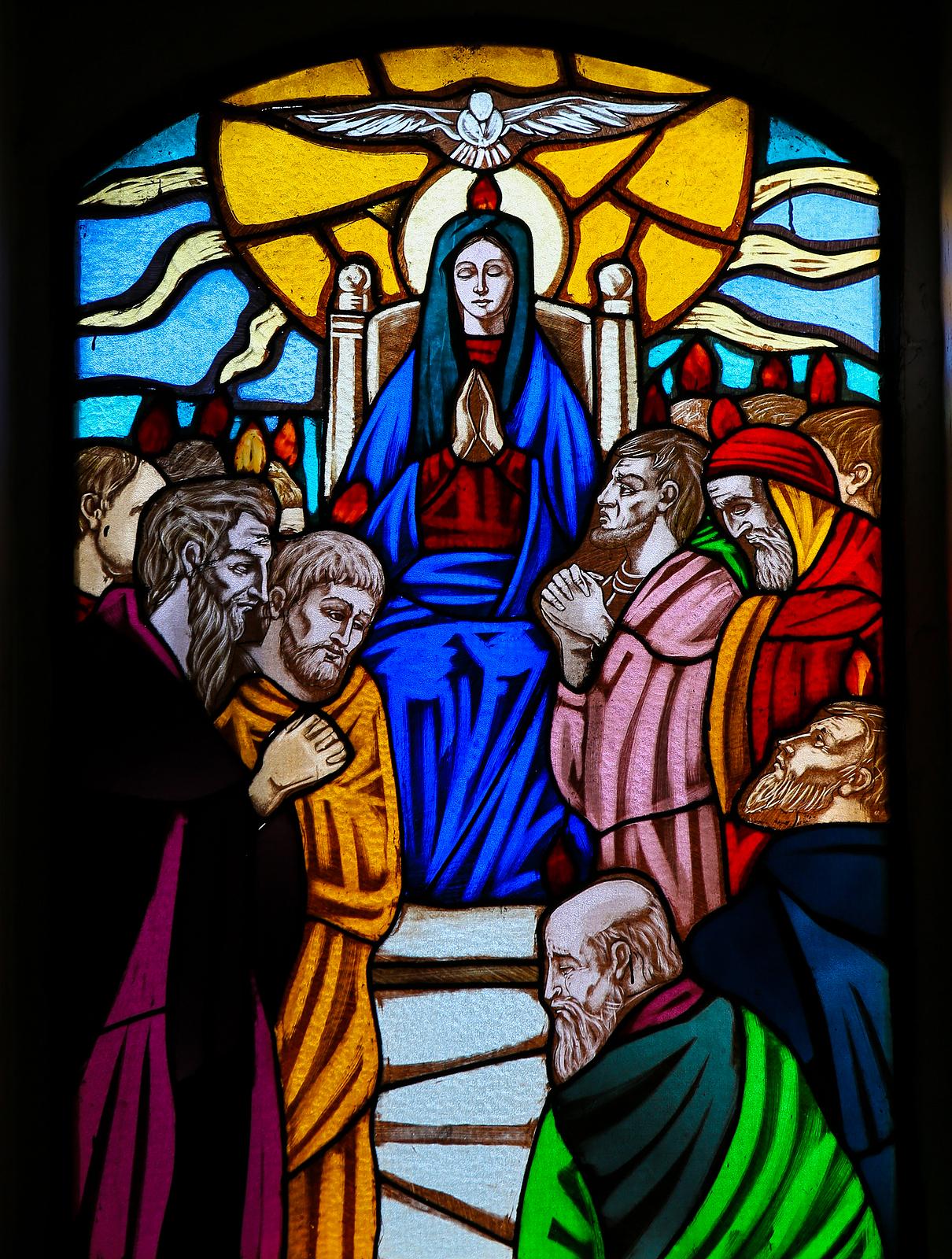
    Stained glass window depicting the the Descent of the Holy Spirit at Pentecost in the Church of Ostuni Apulia Italy.On May 19 this year, we’ll celebrate the birthday of the Catholic Church: Pentecost. Several thousand years ago, the third person of the Holy Trinity made its debut and gave the Apostles the strength, wisdom, and courage they needed to spread the Gospel to all nations. But if you’re anything like me, it can be easy to forget about this pivotal day in the Church’s history since it doesn’t come with a lot of pomp and circumstance. Easter has an entire three-hour ceremony which includes the induction of new Catholics to the Church, the four-week season of Advent builds the anticipation of Christmas, and every Ash Wednesday triggers a flood of Catholic memes about the various ash crosses on social media. 
    While it’s true that Pentecost may not be amplified by the same bells and whistles, this solemnity provides its own value, reminding us of the Holy Spirit’s inspiring presence in our lives. It’s easy to forget how active the Holy Spirit can be, but hearing the message of Peter’s courageous witness, the proclamation that changed the Church forever can draw attention to the Spirit’s activity in our own lives. For my part, I am reminded of the Holy Spirit’s good guidance in my own life.

    WATCH: Pentecost in Two Minutes

    I think back to when I was a senior in high school making the decision of where to attend college. Of course, choosing what school to attend is pivotal; so much prayer and discernment was needed. Many people gave me advice and promoted different schools (usually whichever one they went to), and as I witnessed schoolmate after schoolmate gleefully announce their choice of college, I felt stuck and frustrated. I looked at plenty of schools that offered practical majors such as business or computer science, but I wasn’t particularly compelled to attend them. The school I was most drawn to was Christendom College. 

    Christendom emphasized community and had an unflagging commitment to Catholic orthodoxy. Its curriculum was built on the Catholic liberal arts tradition, offering theology, philosophy, and classic works of literature in place of contemporary conventions such as engineering. Many friends and family members were skeptical about the school because of this and thought it was therefore less practical. However I connected with the school’s goal to expand its students’ minds in a broader sense, helping them achieve the ability to think and reason effectively. Though the school’s vision was unconventional, its fascinating curriculum and the prospect of spending four years engaging with passionately Catholic young people was impossible to overlook.

    RELATED: Unwrap the Gifts of the Spirit This Pentecost

    The writings of St. Ignatius of Loyola, a personal favorite of mine for many years, held the answer to my questions. St. Ignatius reminds us that the Holy Spirit’s movements in our souls take away sadness and disturbance and, in doing so, draw us to good action. The thought of attending Christendom brought peace and confidence that I would be well-prepared for the work of evangelization. After months of prayer, discernment, and exploration, I had my answer.  

    I finally decided to take the liberal arts route, choosing history as my major. By exploring the actions of the Catholic Church over the past centuries and learning about the multifaceted motivations of the men and women who shaped history, the Holy Spirit guided me to a greater understanding of his Church and the nature of the men and women who fill her pews. 

    RELATED: How to Celebrate Pentecost Sunday

    Now that I’ve graduated, I can confidently say that during those four years, my life changed for the better. I made strong friendships with great people, grew both spiritually and emotionally, and became a better, stronger, wiser person because of the choices I made. But I didn’t make it alone. As we approach Pentecost, a solemnity to celebrate the Holy Spirit in a special way, I’m reminded of this and filled with gratitude for what the Spirit has done for me. 

    I think if we take a genuine look back at our lives, we’ll notice the care and precision with which we’re guided through this chaotic world. My experience with college was only one of many in which confusion and frustration gave way to gratitude as it became clear what the Spirit was doing. This Pentecost, I invite you to reflect upon the confusing moments in your own life. You might find there’s wisdom present there you may not have otherwise noticed.

  • Saint Mom: Why Are There So Few Saints Who Were Mothers?

    Saint Mom: Why Are There So Few Saints Who Were Mothers?

    It’s fair to say the saints have taken over our home. I am up to five statues of Mary in my kitchen alone, all cheering me on through daily chores. An image of Mary Magdalene gazes down at us in the dining room. St. Anne is on my night table, reminding me to read my books. My son sleeps with St. Michael the Archangel next to him for protection, and my daughter has a quote from St. Catherine of Siena on her wall. Since we look to the saints for daily inspiration, it was natural that I would turn to them to find help being a good mom. What I learned is that there are relatively few saint moms, and their paths to holiness were shockingly similar.

    So, if you want to be a saint and a mom, prepare your family. You probably won’t be getting canonized unless your husband dies, you sell all your possessions, and become a nun. Sorry, kids. Mom won’t be around to babysit the grandchildren. She is doing the Lord’s work.

    RELATED: Mysticism: It’s Not Just for Saints

    Step one: Be born into a wealthy family.

    Step two: You must get married. An unhappy marriage is optional but preferred. Bonus points if your in-laws are also notably mean to you.

    Step three: Have some children, who will likely die young or go into religious life themselves.  

    Step four: Your husband must die or you must mutually decide to enter separate religious orders. (My husband and I were going to do this for Valentine’s Day but spiritual attack in the form of pizza and Netflix intervened.)

    Step five: You must enter religious life or live in a convent that you support. Founding your own order is optional. Even in the New World, the first American-born saint mom, Elizabeth Ann Seton, was raised in a wealthy family, lost her husband, and founded a religious order.

    Reading all of this, I began to wonder if there was any hope for the rest us. I did discover a FastPass to mom sainthood that did not involve wealth or a convent. Unfortunately, it requires martyrdom (see “Marytrs of Kyoto” or “Spanish Civil War”). Ready to sign up?

    RELATED: Getting by with Help from a Little Flower

    Are entering the convent and/or being martyred really the only way moms can become saints? We are all called to become saints, and having the saints as spiritual examples is one of the best things about Catholicism. However, for the average mom today, it’s hard to relate to the experiences of our saint mom role models. Of course, we can always look to Our Lady and St. Anne, but it’s fair to say their circumstances were unique. I began to wonder if this phenomenon was the spiritual equivalent of not having any pictures of yourself alone after your children are born. There may be plenty of saint moms out there, but they are the ones taking the pictures; they are not in them. Until recently, it was accepted that most saint moms toiled behind the scenes with little recognition.

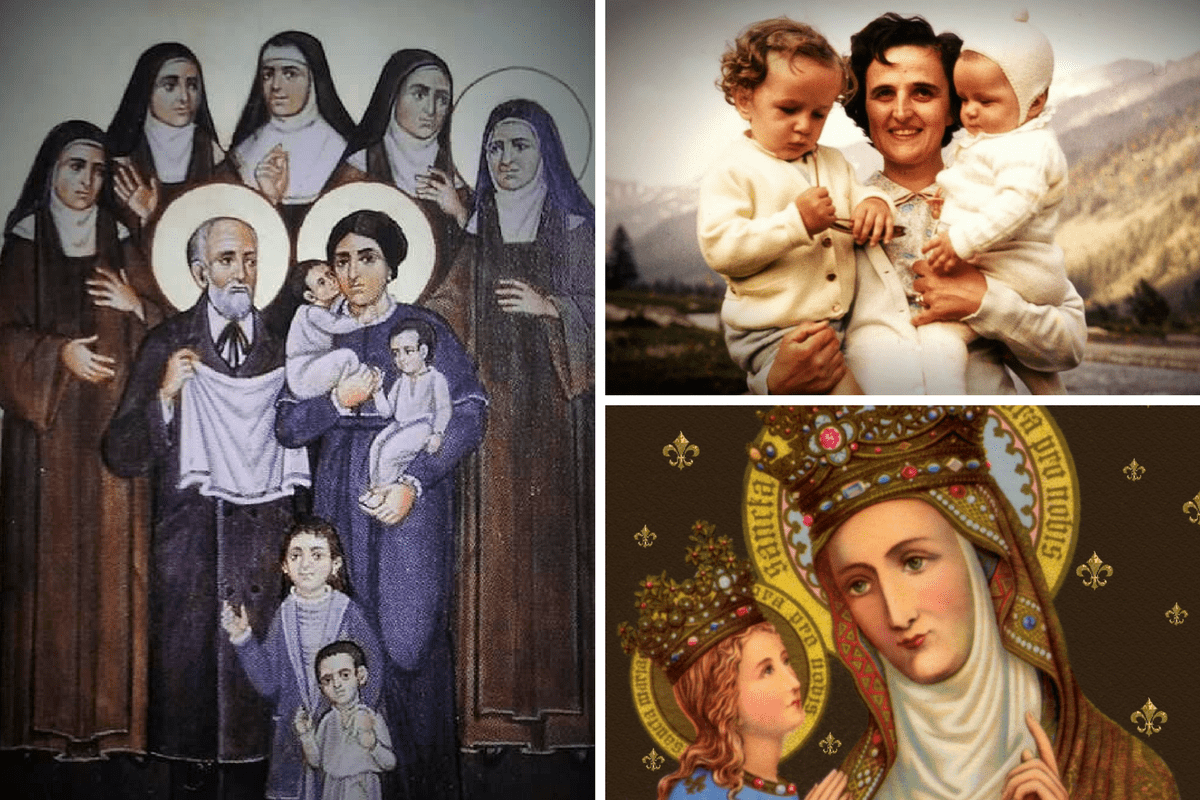
    Take heart, Catholic moms. As women’s roles have become better understood and more visible, a new wave of saint moms is coming. Two of the most popular mom saints today, St. Zelie Martin and St. Gianna Molla, not only have cool names, but they were working moms with kids, and are more relatable to most of us. St. Zelie and her husband, St. Louis Martin, were the first married couple to be canonized in history and are best known for being the parents of St. Therese of Lisieux, the Little Flower. Not only did Zelie have nine children, most of whom went into religious life, but she ran her own lace business — before Etsy.

    A working pediatrician with four kids, St. Gianna Molla famously refused treatments for cancer so that she could give birth to her daughter. She ended up dying from complications following the birth. Interestingly, none of the Molla children entered religious life, but the youngest daughter followed in her mother’s footsteps and became a doctor.

    Both Zelie and Gianna were noted for their ability to live out their faith in everyday life. Zelie’s letters are filled with references to fasting, prayers with the family, and daily Mass. Just like my kitchen, the Martin family had a statue of Mary in an honored place, fondly referred to as “Our Lady of the Smile.” Gianna considered her work her religious mission and her marriage and family as her vocation. She was noted for her care of the poor and marginalized but also for her spirit of joy that served as an example to her children.

    It can be hard for us to see the holiness of our everyday actions, especially when we’re struggling to get the kids in the car for Mass, cleaning glitter slime out of the sink, or refereeing the latest cage match between siblings. It helps to see the Church’s recognition of the sanctity of motherhood is growing and maturing with each new saint mom. I can’t wait to see who is next. Could it be you?

    Originally published August 9, 2017.

  • What the Annunciation Taught Me About Maintaining Joy Amidst Uncertainty

    What the Annunciation Taught Me About Maintaining Joy Amidst Uncertainty

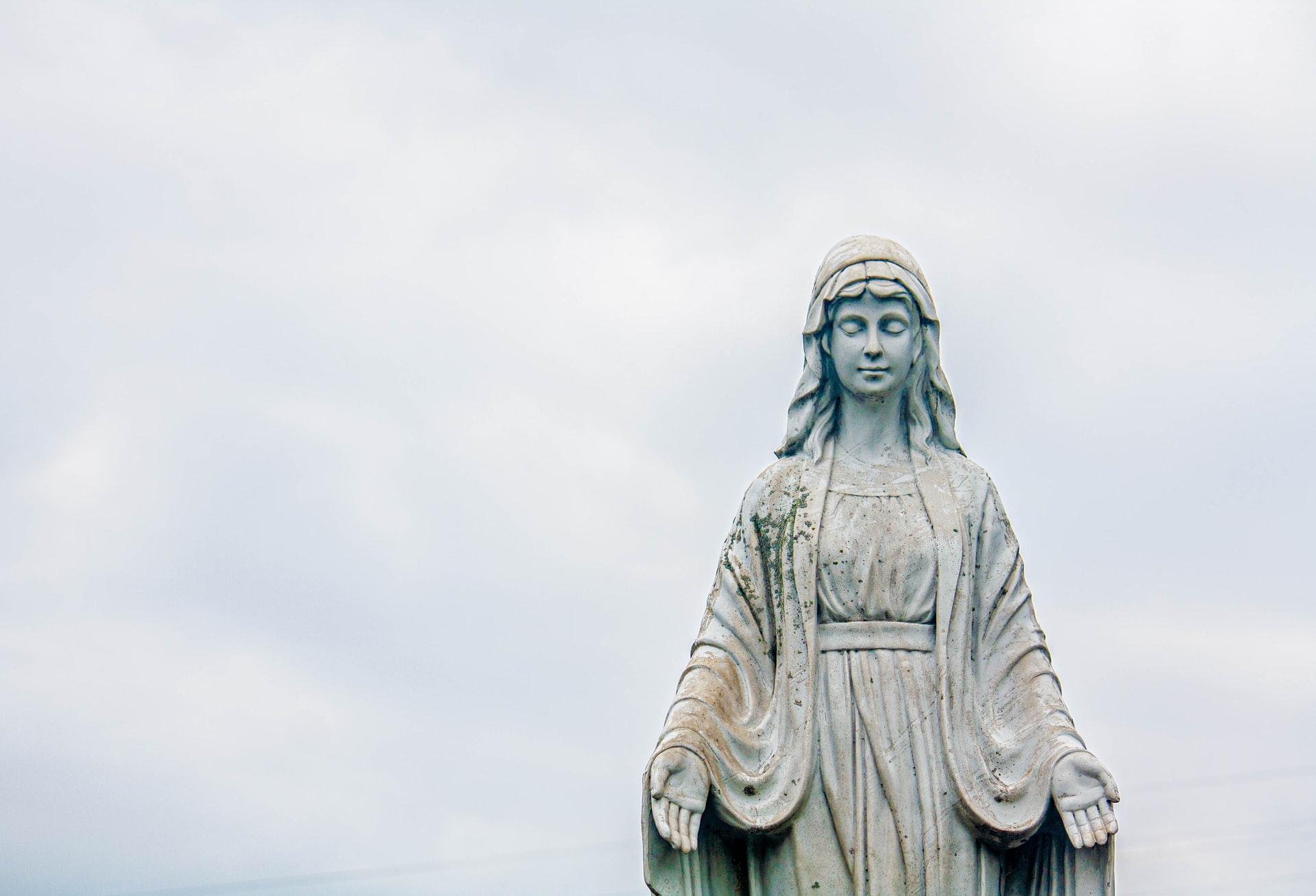
    A statue of the blessed virgin against an overcast sky
    Photo by Gianna Bonello on UnSplash

    Mary said, “Behold, I am the handmaid of the Lord. May it be done to me according to your word.” Then the angel departed from her (Luke 1:38). 

    I have always struggled with control. Ever since I can remember, wondering how others perceive me in my relationships, personal appearance, career, and even my vocation has consumed my thoughts, placing the way others see me at the forefront of my mind. My desire to appear a certain way — whether that was humorous and lighthearted around my friends, overachieving and disciplined in school, or completely put together at work — always seemed to come first, leaving my soul weak and my confidence fragile. As control in all of these areas of my life became impossible to maintain, I realized that worrying about what others thought of me made it impossible to experience joy. My identity relied completely on certainty. 

    RELATED: Reflecting on the Annunciation: How Saying ‘Yes’ Can Make All the Difference

    On a morning when I was feeling particularly overwhelmed, I turned to Scripture in the hopes that I would find solace in Jesus’ words — something I had not done for quite some time. I have always been drawn to passages about the Blessed Mother, and remember flipping through the pages to find her Annunciation. Although I was familiar with the final verse of Chapter One of Luke’s Gospel, I had never framed Mary’s humble response to the Annunciation within the need for control in my own life. Mary’s fiat, or acceptance of God’s will for her life, is the first decade of the joyful mysteries, and yet each moment within them is bound up in uncertainty. From the Annunciation to the Finding of Jesus in the Temple, every instance hinges upon Mary’s surrender to the unknown. Her initial encounter with the angel presents her with a choice between hope and despair, and her resounding “yes” to his message, despite her fear of the unknown, allows her to remain in the present and know peace. As I continued to read through the passage, I was filled with a new desire to say “yes” to my own crosses, particularly my worry over how people viewed me and surrender to God’s will in moments of uncertainty. 

    Reading the passage of the Annunciation inspired me to put myself in Mary’s shoes, allowing me to delve further and further into the mystery of her fiat. Following the Annunciation, the rest of the joyful mysteries continue to test Mary’s willingness to surrender to God’s will. Immediately upon hearing her cousin Elizabeth is pregnant, Mary sets aside her own needs and desires to visit her cousin. She gives birth to Jesus in a foreign place, unaware that her new family will have to flee shortly after. When Jesus is a boy, her trust is tested when she loses her only child in the Temple. Even after he is found, Mary hears from Simeon that a sword will pierce her heart seven times, a reminder that she will suffer as her son fulfills God’s will. Again, her acceptance of sorrow gives way to trust, instilling within her an even deeper sense of joy. 

    RELATED: Mary: The Background Music to My Spiritual Life

    As a young woman, it is easy to question my identity in moments of uncertainty. There have been many times when I have felt the weight of the unknown and been unafraid of the surrender it would require of me — whether I was feeling complacent in a particular job, afraid to leave an unhealthy friendship, or struggling to embrace my current state of life. In moments of fear, I have been tempted to pity myself, and allow shame to creep in. In my hesitancy to embrace the uncertain, I allow my need for security to rob me of joy of the present. I forget that hope in uncertainty is the antithesis of fear in the unknown; in striving to practice that hope, I can imitate Mary in the joyful mysteries and draw closer to Christ, her son. 

    My vocation as a young person is not something I must patiently wait to begin at a certain time. It is not something I must intricately plan out of a need for control or security. My vocation, rather, is to say “yes” in the midst of uncertainty and respond to wherever God needs me in the present moment, and to surrender to the needs of those around me with a spirit of joy and hope. Regardless of our particular circumstances, God has a plan for us amidst the uncertainty; he may not give us all that we want, but he will surely give us all that we need if we have the courage to ask.

    Originally published March 25, 2022.

  • Choosing Compassion Over Criticism: Why I’m Giving Up Judging Others for Lent

    Choosing Compassion Over Criticism: Why I’m Giving Up Judging Others for Lent

    A hand pointing at the sky
    Photo by Maayan Nemanov on UnSplash

    At a 4:00 p.m. Saturday Mass in Overland Park, Kansas, during the preparation of gifts, I sat on the stiff, dark wooden church pew and reflected on Lent. Earlier that week, a student taking my Christian Ethics course asked what I had given up for the season. It was a routine question, but it felt more genuine since we had been discussing moral virtues, vices, and spirituality that day. I told the class that I had not decided. The students were surprised. I acknowledged that, in the past, I had given up yelling at my children (now teenagers!) with mixed results. 

    What came to me during Mass was the thought that I could give up judging other people as the Gospel of Matthew teaches. “Do not judge, so that you may not be judged. For with the judgment you make you will be judged, and the measure you give will be the measure you get” (Matthew 7:1-2). As the thought arose, I sensed that God began to laugh. Indeed, when I told my ethics students that I had given up judging others, they howled and one student commented, “Professor Hughes, c’mon, you can’t be serious!”

    RELATED: Overcoming Judgement in a Divided World

    Yes, I get it. We evaluate other people’s actions and their character constantly: for an unkind word, indifference to our needs, suffering behind a slow car or being passed by a fast one, or, worse yet, feeling our good work or integrity is overlooked or forgotten. Our judgments frequently pair with hurt, anger, resentment – pain. Psychology tells us that we tend to attribute more to personal character than to situations and that we know much less about complex situations, actions, and motives than we suppose. I cannot count how many times I’ve made snap judgments about certain students on the first day of class. I might focus on a weird facial expression, a slouched body posture, a face hidden under a hoodie, or a single negative comment and sortput them squarely into a “worthy” or “unworthy” bucket. 

    During Lent, I became more attuned to the frequency and quality of my judgments. I habitually sorted actions and persons into different categories — innocent, guilty, deserving, undeserving — so that Jesus’ injunction seemed on a commonsense level to be impossible. Surely, he didn’t mean it! On my daily commute, at times I find myself attributing malicious motives against me by my fellow commuters behind the careless driving or impatient honks without knowing anything about their lives, worries, pressures, etc. And it really makes no sense. But I, along with many of us, can habituate taking offense and then passing harsh judgments too easily and quickly.

    Or perhaps Jesus just meant not consigning another person to hell. It is, in fact, easy to think this. But from my Lenten experience and reflection on Matthew, I don’t believe condemnation is the main issue. What’s happening is a more subtle and pervasive way of seeing and assessing others that becomes a blindness to love. So what does this biblical teaching mean?

    RELATED: A Practical Guide to Loving Our Enemies

    Matthew’s and other biblical references to “judging” seldom mean “do not condemn.” Luke uses a different word for “judge” (krino) and for “condemn” (katadikazete), distinguishing two different acts. Matthew (and Mark) add to the prohibition on judging the caution about how the way we measure others should be the way we measure ourselves. So, condemnation is only one of many responses covered in the ways we judge — not the only way. It seems that the meaning concerns more common interactions and judgments we make. From my own experience this past Lent, this distinction rang true. 

    That Lent, I learned that Jesus does not mean ignoring injustice or becoming desensitized to evil and wrongdoing. What I found in self-monitoring my judgment of others — especially behind the wheel — was that when I judged and quickly sorted another person into a negative category, I became less connected to that person, more cut off, more isolated from them and from my own tendency to act likewise. Indeed, one of the key meanings of the Greek term krino aside from “judge,” is “to separate.” If I wanted to see harshness, strictness, looking out to be offended by this look, that remark, his comment or her gesture, I would find them. I saw and judged the other as such. And in so doing, I separated myself from my neighbor and ignored my own harshness, strictness, and ways that I might offend others. 

    LISTEN: Getting Back to Basics in a Polarized World

    I was not at all aware that the measuring stick I used would be similarly used on me. And that is the tough part. It requires serious self-reflection, knowledge of one’s sinfulness, needing God’s help, mercy, and being constantly on the lookout for goodness to get “judging” right. It requires a type of ego death, one that means a better seeing of another person in all their complexity rather than a fixation on a snapshot in time or a fault, hurt, or offense. A patient gazing and understanding of the other with, what Richard Rohr calls “soft eyes,” rather than an emotional reaction and quick sorting into some form of inferiority. 

    Judging others makes it very hard indeed to see Christ’s goodness, kindness, mercy, and love being poured out upon my neighbor and myself every second. Judging can quickly and subtly lend itself to emphasizing what is wrong with the person, the driver, the lack, the negative in a situation. It means seeing the person or group behind such acts as unable to be fully defined and described and named by them as who they are in God. That Lenten lesson is still a work in progress for me. I suspect we all need to practice slowing down, waiting, and letting the goodness of the other reveal itself to us. For that, we’ll need to ask God for help: help to slow my assessments, find more patience, and remember that everyone is an image of incomprehensible love. And finally, I need to trust that, as always, our loving God will deliver and help me to see more lovingly and less critically.