Tag: Saints

  • How to Read Like the Saints

    How to Read Like the Saints

    In my early adult years, I enjoyed hanging out at big-box bookstores, sipping on a cup of coffee while flipping through the pages of some random book. One of the books that I arbitrarily picked up was “Confessions” by Saint Augustine. I was born and raised Catholic, but up until that day, I had just been going through the motions and hadn’t taken my faith seriously. But after finishing a full cup of coffee and reading halfway through “Confessions,” I paused and thought to myself, “Wow! This is mind-blowing stuff.” Deep inside I was echoing Saint Augustine: “Oh beauty so ancient and yet so new, too late have I known you, too late have I loved you.” “Confessions” reawakened my faith that day and gave my spiritual journey a boost to get back on track. 

    But the deeper I got into adult life, the busier I’ve become. Lately, finding the time to hang out at a bookstore, sip on a cup of coffee, and get lost in a good book is a struggle. Plus, it’s so easy to spend my leisure time scrolling through social media rather than practicing deep spiritual reading. But I long for the transformation that comes from deep reading. There’s something about immersing myself in a story, going on a journey with spiritual heroes like Saint Augustine, digging deep into their insights and sharing in their struggles as well as their triumphs. Deep reading gives me the opportunity to discern how the lives of the saints apply to my life today. And we need only turn to the saints for wisdom about how to practice this sort of deep reading. Here are three ways that I’ve learned to read like the saints (in order to work on living more like one).  

    RELATED: Patron Saints for Introverts

    Read for spiritual fulfillment

    Even though Saint Augustine’s story is from 1,600 years ago, I found myself relating to it. He was living a restless life away from God until one day, he heard a voice call out to him saying, “Take up and read.” He did just that, picked up the Bible, and read Paul’s Letter to the Romans (Romans 13:13:34, to be exact). His life was changed from that moment forward. After that fateful reading, Augustine gave his heart to the Lord and was baptized into the faith, serving as a priest, and then as a bishop. 

    It might have felt random, and I didn’t hear a voice call out to me, but I believe it was providential that I picked up “Confessions” that day at the bookstore because similar to Augustine’s conversion story, picking up his book changed my life as well. Reading his insights opened my own eyes to the beauty of the Catholic faith. I started going to Mass every Sunday, sometimes even daily Mass. I started serving in different ministries at my parish, and, this probably goes without saying, I was hooked on reading more spiritual books. 

    Read for knowledge

    Edith Stein (who we now know as Saint Teresa Benedicta of the Cross) was alone waiting at a friend’s house when she picked up a book on Saint Teresa of Ávila. When she finished reading, she closed it and said, “This is the truth!” This marked the beginning of living a life of conviction, joining the Catholic Church, finding a home in a Carmelite monastery, and eventually becoming a martyr because of her beliefs. When I read the writings of Saint Teresa of Ávila today, I, too, find myself saying, “This is the truth!” I want to learn all that I can about the way of perfection and journey into my own interior castle, the soul, through prayer and being mindful of God’s presence in my life.

    Read for inspiration

    When Saint Ignatius of Loyola was in the hospital recovering from battle wounds, he read works by Saints Francis and Dominic. Saint Ignatius was so inspired by their stories that he turned his life around and went from a selfish and vain womanizer to someone who modeled his life after Saints Francis and Dominic. When I’m waiting at the doctor’s office, I have a tendency to pull out my phone and mindlessly scroll through my newsfeed as a diversion. And I may be inspired by friends’ posts on what restaurant to go to for dinner, but still, I’m probably better off taking that opportunity to read about the lives of the saints, finding inspiration in their holy deeds, and working to make my life more like theirs.

    RELATED: How Do the Saints Hear Our Prayers?

    Today, it takes a conscious effort to prioritize the kind of reading that reignites the mind and the soul. Summer is a friendly season to make that effort, rewire our brain connections, and reignite the neurons for deep reading. I’m looking forward to finding a spot in nature to unwind, unplug, and just get lost in a good book, especially one about a saint. When I make the time to dive deep into the lives and learnings of the saints, I often find that I’m also guided to deepen my own relationship with God. As French writer Marcel Proust put it, “The end of a book’s wisdom appears to us as merely the start of our own.” May the end of the saints’ wisdom be the beginning of ours.

    Originally published August 5, 2019.
  • Reconsidering Mary Magdalene

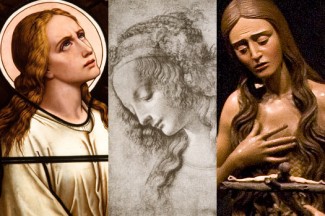
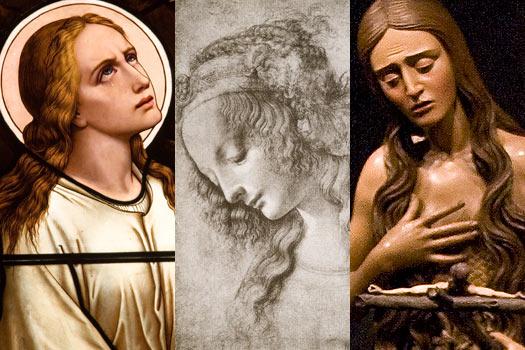
    Reconsidering Mary Magdalene

    Mary Magdalene was not the prostitute that you read about in Luke 7:36-50. Her story begins in Luke 8:1-3, which says, “Soon afterwards Jesus went through cities and villages, proclaiming and bringing the good news of the kingdom of God. The twelve were with Jesus, as well as some women who had been cured of evil spirits and infirmities. Mary, called Magdalene, from whom seven demons had gone out, and Joanna … and Susanna, and many others … who provided for them out of their resources.”

    She also is not to be confused with the unknown woman who washed and anointed Jesus’ feet, nor was she Jesus’ wife, although some modern novels would have us believe this. (There is simply no evidence for this in the Gospels.) But keep in mind that she is the only woman in the New Testament to be called by her full name — Mary Magdalene. All other women are referred to simply by their first names. This is the first clue that she is a woman of immense importance to the early Church, as well as to Jesus and his mission.

    Mary Magdalene is a woman who — once her demons had been exorcised — followed Jesus to the very end of his life: She gave her resources to him and the mission of spreading the Gospel; she accompanied Jesus on many of his journeys in first-century Palestine; and she is a model of what a true disciple looks like.

    RELATED: Did Mary Write a Gospel?

    However, attempts to move Mary to the background of the Passion narratives and to erase her as a vital and loving witness to Jesus began well before the fifth century. It began with the writer of Luke, in Acts, where Peter and Paul are given center stage as those who preach to the Gentiles and witness to the risen Christ — ignoring that it is Mary Magdalene, called the Apostle to the Apostles, who first sees the risen Christ in the garden, according to both the Gospels of Matthew and John. In Luke, when Mary and two other women return breathless and excited to say they have seen the Lord, the male disciples think their words are “like nonsense” (Luke 24:11). Is the author of Acts responsible for this erasure of The Magdalene, as she sometimes is called, or is it part of a wider effort to discredit her authority and put Peter at the head of the new church?

    In the sixth century, Pope Gregory the Great tried to undermine Mary Magdalene’s reputation by connecting her story to the story of the prostitute that precedes her story in the Gospel of Luke. But this is a misinterpretation. Luke is clear that Mary was the woman healed by Jesus when he expelled seven demons from her.

    And Mary responded by contributing to Jesus’ ministry and following him. Luke says she was a woman of means, like some other women who followed Jesus. They were not just followers in the passive sense — they were disciples. It is even possible that women were part of the 70 disciples Jesus sent out two by two, pairing one man and one woman together for security purposes, for his ministry was not just to men but also to women and children. New Testament scholar John Dominic Crossan thinks this is a strong possibility as discussed in his book, “Jesus: A Revolutionary Biography.”

    RELATED: The Female Saints and Mystics Who Guide Me to Freedom

    And even when all the male disciples ran away, Mary Magdalene stayed true to her discipleship and her love for Jesus. She stayed, with several other women, as Jesus was crucified. Matthew writes in his Gospel, “There were also many women there, looking on from afar who had followed Jesus from Galilee, ministering to him, among whom were Mary Magdalene, and Mary the mother of James and Joseph and the mother of the sons of Zebedee.” John 19:25 also puts Mary, the mother of Jesus, with this group.

    I imagine Mary Magdalene watching from a distance as Jesus is nailed to the cross. I see her stretching out her hands in passionate protest as the nails pound in. I hear her cries as Jesus begins to lose his breath and sink under the weight of his own body on the cross, eventually suffocating to death.

    When he finally dies, the women follow Joseph of Arimathea as he takes down the broken body and lays it in the tomb. According to the Gospel of Luke, they prepare “spices and perfumed oils” to anoint Jesus’ body, but because it is the Sabbath, they have to wait another day to visit the tomb and anoint the body, as was customary.

    The story of Mary Magdalene is a hard story to tell, to see the way Mary’s role and gifts have been set aside and almost forgotten, although we know how close she was to Jesus, how much he loved her. We must share her story with others.

    We can take the memory and passionate witness of Mary Magdalene into our own hearts and see her as a model of true discipleship, looking for ways we can follow and witness along with her and other disciples. We can try — as she did — to not turn away from the suffering of others. We can try  — as she did — to go the distance with people as they stand up for their beliefs and the Gospel. We can stride out into the world with boldness and belief, confident that we have the words of life in our hands — as she did — The Magdalene.

    Originally published July 22, 2016.

  • Why Do We Celebrate the Solemnity of Saints Peter and Paul on the Same Day?

    Why Do We Celebrate the Solemnity of Saints Peter and Paul on the Same Day?

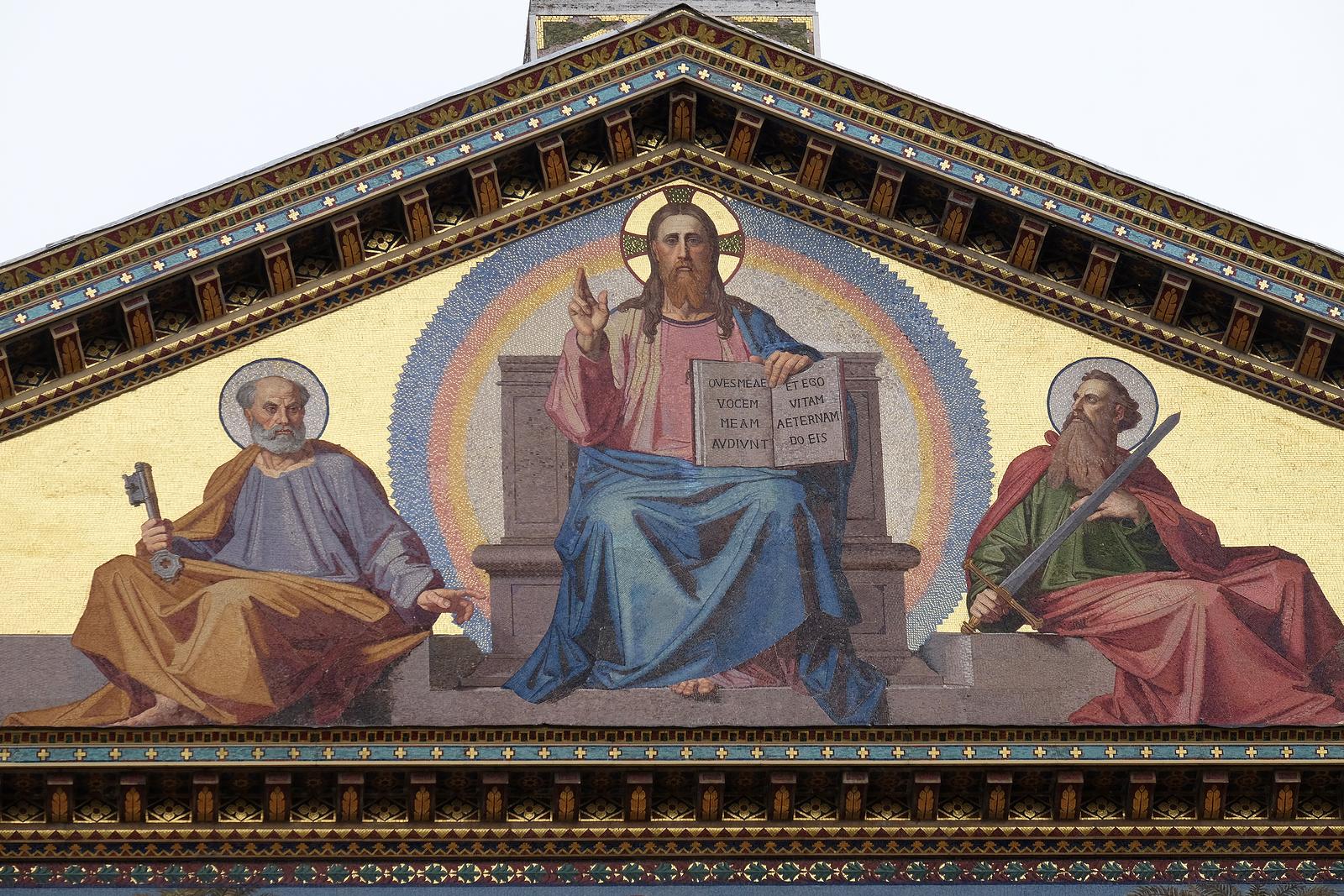
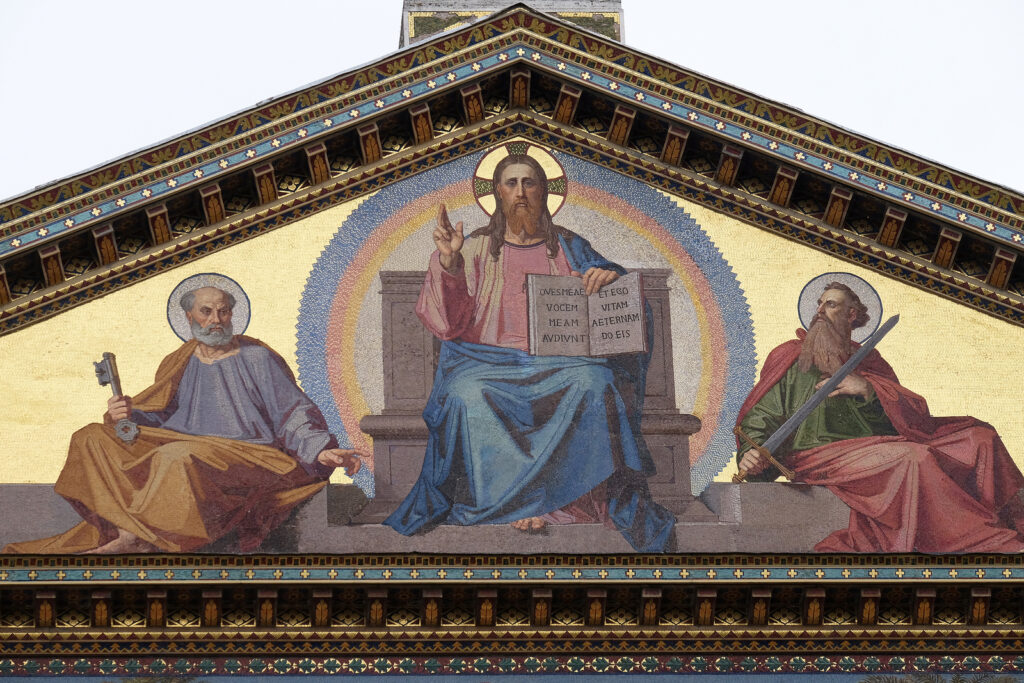
    ROME, ITALY – SEPTEMBER 05: Mosaic of Jesus Christ the Teacher, Saints Peter and Paul, Basilica of Saint Paul outside the walls, Rome, Italy on September 05, 2016.

    St. Peter and St. Paul are two of the most well-known saints and are often spoken of as the two men most responsible for spreading the Christian message in the days of the early church.

    RELATED: Why Is St. Paul Called an Apostle?

    As to why they are celebrated on the same day, legend has it that they were executed on the same day under the command of Emperor Nero and buried in Rome. (Although historical accounts cite Peter being martyred in 64 AD and Paul in 67 AD.)

    Because of his Roman citizenship, Saint Paul was beheaded. St. Peter was reportedly crucified upside down because he said he was not worthy to be sacrificed in the same manner as Christ.

    WATCH: Why Does Jesus ask Peter “do you love me” three times?

    June 29, the Church celebrates the feast day of both men, and as early as 258 AD, there is evidence of an already-lengthy tradition that both Saint Peter and Saint Paul were celebrated on the same day.

    In a sermon in the year 395, St. Augustine of Hippo said of Saints Peter and Paul:

    “Both apostles share the same feast day, for these two were one; and even though they suffered on different days, they were as one. Peter went first, and Paul followed. And so we celebrate this day made holy for us by the apostles’ blood. Let us embrace what they believed, their life, their labors, their sufferings, their preaching, and their confession of faith.”

  • How I Found Friends Through Faith: Trusting God to Bring Meaningful Connections

    How I Found Friends Through Faith: Trusting God to Bring Meaningful Connections

    Two girls read a book together.After college, there was a period in my life when I dreaded the weekends.  
    I anxiously awaited the long hours of unstructured time I would spend trying to distract myself from my loneliness. It wasn’t that I lacked friends, it was the physical distance between us that left me without plans on the weekends. As I adjusted to moving back home while working full-time as a college librarian and not having connections at my fingertips like I had when I was a student, I hungered for community with peers.

    My instinct during this time of loneliness was to take advantage of as many opportunities as possible to foster social connection. I joined a women’s group at a parish in Chicago and volunteered as a literacy tutor. I invested in hobbies that would sustain my body and mind – I went to exercise classes and rollerbladed, I started a gratitude journal and listened to audiobooks. 

    LISTEN: How Can I Be Strong in Faith While Missing Community? 

    Though these pursuits were healthy and helped me discover what fulfills me, I could not stay present and enjoy them when my focus remained on what I lacked. I stayed in motion but hadn’t found my place, becoming bitter and cynical when these activities did not produce the community I craved. Rather than reframing this period of loneliness as an opportunity to try new experiences and reevaluate my priorities, I saw it as a burden that I didn’t deserve to carry. I concentrated too much on what I wanted to gain from these activities rather than on what I could give to God and others through them.

    As this period continued, I knew I needed help. While I received support through mental health counseling, I also brought this ache to my spiritual life, turning to saints who had both experienced pain and found profound peace in trusting God. I asked our Blessed Mother Mary for help finding good and holy friendships. I prayed a novena to St. Therese the Little Flower, asking for the courage to pursue true friendships. On the last day of the novena, I joined a woman whom I had briefly met at Mass for a drink. It was the first new friend I had made in a long time, and the conversation we had affirmed me that a new, meaningful connection was possible.

    RELATED: Three Female Saints and Mystics Who Guide Me to Freedom

    As I struggled to let go of my need for control and rely on the saints’ intercession, opportunities for friendship and community began to present themselves more naturally, but without the same sense of pressure. I was invited to volunteer with an organization that hosts afterschool programs for girls, and I met other like-minded women who also volunteered there. Saying yes to this invitation and engaging with the connections I made there allowed me to intentionally invest in the community, striving for quality of interactions over quantity.

    I learned to rely on friendships that are spread across far distances, acknowledging that even if I don’t talk to these people every day, they are still the friends I have on speed dial whether I need to laugh or reach out for support. I planned weekend trips and organized a virtual book club with these friends to help us stay tethered. I worked to be grateful for the friendships I do have, and the community that I have within my family. By letting God into the work of bringing new people into my life, I slowly let go of the notion that I need a sprawling group of connections in order to feel whole.

    RELATED: Finding Fellowship: How I Built Community at a New Church

    As I look back to see what God was doing to my heart during this time, I can see him helping me rethink what community looks like. The biggest misconception I held was the belief that community is static, and that I will reach a stable point where I am completely fulfilled by all my activities and social interactions. Community is not a finish line or a goal to achieve – it is a growing organism that is never fully formed. God was showing me that community is always in flow, evolving as new connections form and others wilt, but he is the only one who will always be beside me.  

    The philosopher Aristotle wrote that, “Without friends, no one would want to live, even if he had all other goods.” The longing for community transcends generations, centuries and cultures. I do not take for granted the communities I’ve found through various avenues, but I know they may change and fade. There will be other seasons of loneliness, loss and grief that I will need to learn to endure with grace. Yet, it is these seasons that make my friendships so valuable, and allow me to renew my dependence on God, realigning myself with his dream for my life. 

    Originally published May 23, 2022.

  • Marian Consecration: The What, Why and How

    Marian Consecration: The What, Why and How

    Marian consecration. Even for practicing Catholics who already know a thing or two about devotions to a saint, the phrase might stir up some confusion. 

    I get it, and I want to help clear up some of the mystery!

    I myself stumbled across consecration at a time when I wanted to deepen my faith. I had chosen Mary for my Confirmation name and prayed the Rosary every once in a while, but I felt a call to form a more personal relationship with her. In 2016, I saw that a women’s fellowship group was leading a retreat for Marian consecration. I leapt at the promise that it would be a game-changer and decided to participate. 

    WATCH: Mary in Two Minutes

    If to consecrate means “to set aside for a particular purpose,” what does it mean, exactly, when the term is applied to our relationship with Mary? Put simply, Marian consecration is an entrustment of oneself to Our Lady. But if that “simple” idea still sounds vague and mystical, know that consecration involves the following concrete steps: 

    1. A substantial period of prayerful preparation (typically 33 days). Often, parishes will host small groups that commit to making the consecration together over this time period, but you can also make it alone at any time. 
    2. A final prayer — the Act of Consecration itself — to be said on the day of the consecration (preferably a Marian Feast Day).
    3. A persistent spirit of trust in Mary’s motherly care and intercession, to endure for the rest of your life.

    As Catholics, we recognize that when, from the Cross, Jesus gave Mary to the disciple John, and John, in turn, to Mary, Jesus made her our spiritual mother. As such, Mary’s equipped in a special way, over and above all the other saints in heaven, to lead us to holiness. “Mary’s task is to give spiritual birth to Christians, to feed and nurture them with grace, and to help them grow to full stature in Christ.” Fr. Michael Gaitley writes, in his popular guide to Marian consecration, “33 Days to Morning Glory,” “In short, Mary’s job is to help us grow in holiness. It’s her mission to form us into saints” (25). 

    RELATED: I Never Connected With the Rosary… Until I Became a Mother

    Moreover, Fr. Gaitley explains that Mary is united to the will of God more closely than any other human being throughout all of time. If we want to know and follow the will of God in our own lives, there’s no better person to entrust the care of our souls to than Mary herself. A friend of mine once said, “The question isn’t really, ‘Why should you consecrate yourself to Mary?’ but, ‘Why shouldn’t you?’” 

    But does that mean that we’re making Mary more important than God Himself?

    I can see why it might seem that way, especially to someone who’s new to the idea of consecration. But the answer is an emphatic no. Mary’s goal, while alive, was simply to live in union with God, and now that she’s in Heaven, she has the same goal for each of us. If we consecrate ourselves to Mary, it’s not with the intention of replacing God but rather, of allowing Mary to bring us closer to him, as other servants of the Lord, committed to doing his will in the world. 

    Okay, this sounds good, but where do I start?

    Since there’s a particular kind of preparation associated with making a consecration to Mary, you’ll need some guidance through the process. If your parish hosts small groups for Marian consecration, you might find it helpful to join one, because of the benefit of being able to pray and process your reflections with others. But you can also make it by yourself!

    Either way, you’ll need a book. If you want to go “old school,” you can use St. Louis de Montfort’s “True Devotion to Mary,” but I prefer Fr. Gaitley’s conversational, approachable style in “33 Days to Morning Glory” (which I’ve already cited above). He does a great job of breaking down consecration into related themes that build on one another, and offering short prayers to meditate with each day. Plus, he organizes each week of the retreat according to the theology of a particular Marian saint: Louis de Montfort, Maximilian Kolbe, Mother Teresa, and John Paul II. 

    LISTEN: Fatherly Advice: Relating to Mary

    At the heart of any Marian consecration, though, is a total gift of ourselves to Mary: an offering of all of our prayers, intentions, works, sacrifices, and gifts, for her to use as needed to help form us into saints. 

    I consecrated myself to Mary for the first time on the Feast of the Immaculate Conception in 2016, and have since re-consecrated myself (you can renew the offering as many times as you’d like!) twice more — in 2017, on the Feast of Our Lady of the Rosary (October 7) and in 2020, on the Feast of the Visitation, which also fell on Pentecost (talk about a perfect day for a consecration, combining a Marian feast day with the celebration of the Holy Spirit’s descent!). Each time, I’ve felt myself grow in my own understanding of how Mary wants to be a mother to me, and of how she leads me to her son. Most of all, I’ve grown in a spirit of trustful abandonment regarding God’s will for my life, as I’ve prayed to emulate Mary’s fiat. Last year, I purchased a bracelet to remind me of my consecration, and I wear it each day as a tangible reminder of the offering I’ve made and of Mary’s unceasing care for me.  

    If there’s one thing I recommend that you do for your faith life this May, particularly if you’re serious about becoming a saint (as we all should be!), it’s consecration to Mary. You won’t regret it. 

    Originally published May 16, 2022.

  • Saint Mom: Why Are There So Few Saints Who Were Mothers?

    Saint Mom: Why Are There So Few Saints Who Were Mothers?

    It’s fair to say the saints have taken over our home. I am up to five statues of Mary in my kitchen alone, all cheering me on through daily chores. An image of Mary Magdalene gazes down at us in the dining room. St. Anne is on my night table, reminding me to read my books. My son sleeps with St. Michael the Archangel next to him for protection, and my daughter has a quote from St. Catherine of Siena on her wall. Since we look to the saints for daily inspiration, it was natural that I would turn to them to find help being a good mom. What I learned is that there are relatively few saint moms, and their paths to holiness were shockingly similar.

    So, if you want to be a saint and a mom, prepare your family. You probably won’t be getting canonized unless your husband dies, you sell all your possessions, and become a nun. Sorry, kids. Mom won’t be around to babysit the grandchildren. She is doing the Lord’s work.

    RELATED: Mysticism: It’s Not Just for Saints

    Step one: Be born into a wealthy family.

    Step two: You must get married. An unhappy marriage is optional but preferred. Bonus points if your in-laws are also notably mean to you.

    Step three: Have some children, who will likely die young or go into religious life themselves.  

    Step four: Your husband must die or you must mutually decide to enter separate religious orders. (My husband and I were going to do this for Valentine’s Day but spiritual attack in the form of pizza and Netflix intervened.)

    Step five: You must enter religious life or live in a convent that you support. Founding your own order is optional. Even in the New World, the first American-born saint mom, Elizabeth Ann Seton, was raised in a wealthy family, lost her husband, and founded a religious order.

    Reading all of this, I began to wonder if there was any hope for the rest us. I did discover a FastPass to mom sainthood that did not involve wealth or a convent. Unfortunately, it requires martyrdom (see “Marytrs of Kyoto” or “Spanish Civil War”). Ready to sign up?

    RELATED: Getting by with Help from a Little Flower

    Are entering the convent and/or being martyred really the only way moms can become saints? We are all called to become saints, and having the saints as spiritual examples is one of the best things about Catholicism. However, for the average mom today, it’s hard to relate to the experiences of our saint mom role models. Of course, we can always look to Our Lady and St. Anne, but it’s fair to say their circumstances were unique. I began to wonder if this phenomenon was the spiritual equivalent of not having any pictures of yourself alone after your children are born. There may be plenty of saint moms out there, but they are the ones taking the pictures; they are not in them. Until recently, it was accepted that most saint moms toiled behind the scenes with little recognition.

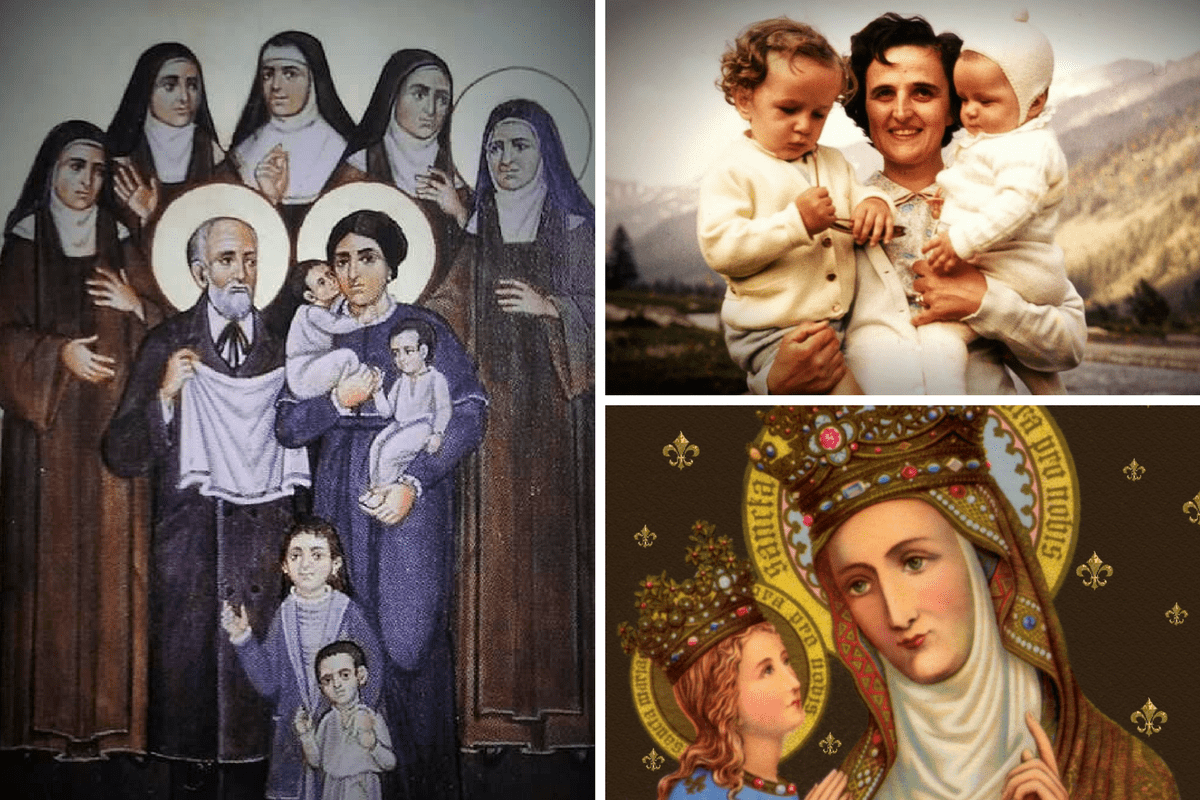
    Take heart, Catholic moms. As women’s roles have become better understood and more visible, a new wave of saint moms is coming. Two of the most popular mom saints today, St. Zelie Martin and St. Gianna Molla, not only have cool names, but they were working moms with kids, and are more relatable to most of us. St. Zelie and her husband, St. Louis Martin, were the first married couple to be canonized in history and are best known for being the parents of St. Therese of Lisieux, the Little Flower. Not only did Zelie have nine children, most of whom went into religious life, but she ran her own lace business — before Etsy.

    A working pediatrician with four kids, St. Gianna Molla famously refused treatments for cancer so that she could give birth to her daughter. She ended up dying from complications following the birth. Interestingly, none of the Molla children entered religious life, but the youngest daughter followed in her mother’s footsteps and became a doctor.

    Both Zelie and Gianna were noted for their ability to live out their faith in everyday life. Zelie’s letters are filled with references to fasting, prayers with the family, and daily Mass. Just like my kitchen, the Martin family had a statue of Mary in an honored place, fondly referred to as “Our Lady of the Smile.” Gianna considered her work her religious mission and her marriage and family as her vocation. She was noted for her care of the poor and marginalized but also for her spirit of joy that served as an example to her children.

    It can be hard for us to see the holiness of our everyday actions, especially when we’re struggling to get the kids in the car for Mass, cleaning glitter slime out of the sink, or refereeing the latest cage match between siblings. It helps to see the Church’s recognition of the sanctity of motherhood is growing and maturing with each new saint mom. I can’t wait to see who is next. Could it be you?

    Originally published August 9, 2017.

  • Learning About Sacrifice, With the Help of St. Mark

    Learning About Sacrifice, With the Help of St. Mark

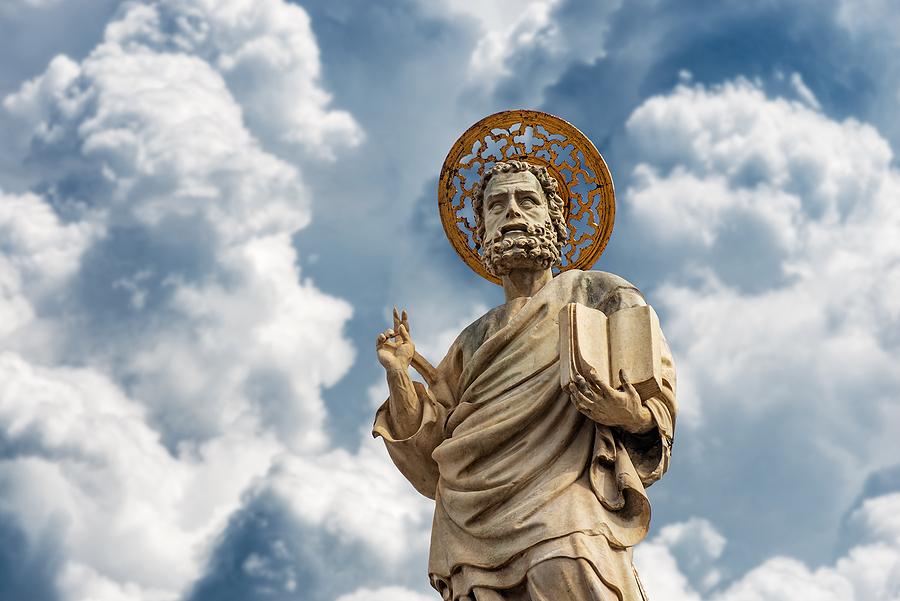
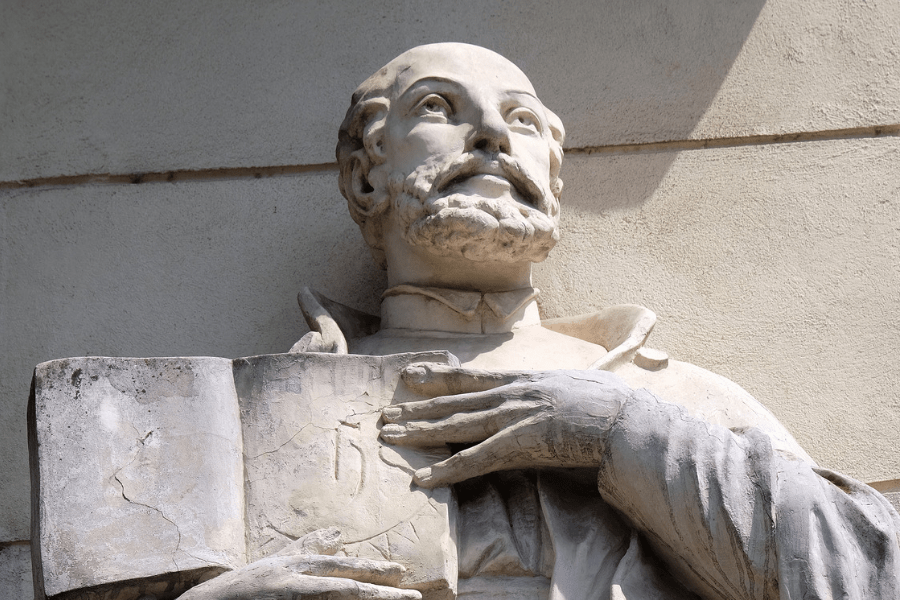
    Image of statue of St. Mark with sky in background.
    Photo by Alberto SevenOnSeven on Bigstock

    Sacrifice is key. We know that Jesus requires this of his followers, but I also heard this statement repeated many times when my wife and I were engaged.

    If I am honest, I think this kind of statement is kind of threatening. I know it to be true based on the life, witness, and words of Christ, but sacrifice is difficult. Approaching my fifth wedding anniversary while having two children (and one on the way) has validated the importance of sacrifice even more concretely in my life. Much of this investigation into sacrifice, however, has been enlightened by St. Mark. 

    The feast day of St. Mark falls on April 25 each year. This critically important saint is often overlooked because he was not one of the 12 Apostles. He does not appear in the stories about the earthly ministry of Jesus, but he wrote one of the four Gospels. 

    RELATED: How to Make Friends With a Saint

    I admit I used to know nothing about St. Mark; he was just a man who wrote a Gospel. My appreciation for him climbed last year when I decided, for the first time, to read the Gospel of Mark straight through from beginning to end. I often read the Gospel of the day, but after hearing a podcast about the importance of reading these accounts as they were written, I took up the task. I started with Mark, well, because it is the shortest Gospel!

    I learned that from the earliest days of the Church, Mark was known to be the interpreter of St. Peter. He became close to Peter and was able to write his account of Jesus’ life based on listening to Peter’s stories.  His writings are viewed as the preaching of St. Peter. We also know, from Acts 12, that Mark was once the companion of Paul and Barnabas as well. 

    Taking the time to read the entire Gospel of Mark transformed me. What became more palpable very quickly, was that Jesus was sent to sacrifice his life for me. I felt this in the way that Jesus spoke about his passion in the Gospel of Mark. I could picture Peter speaking these words to Mark and being moved by them as he heard them for the first time. It became more real for me because I realized that this message was literally passed down through the generations in a powerful and transformative way.

    RELATED: How to Be a Saint-in-the-Making

    At the start of the third chapter of Mark, people begin to plot Jesus’ death. All Jesus did prior was heal the sick, restore the possessed, and preach the truth. And yet, humanity rejected him. He was to be killed because of who he was. Still, he continued to place himself in the spotlight with more public healings and more intense preaching. Christ did all of this with the knowledge that he came to suffer.

    This reaches a shift in intentionality at the midway point in the Gospel. Peter confesses that Jesus is the Son of God and Jesus goes on, three times, to tell the Apostles that he will be arrested, suffer, die, and rise. Jesus states that he “must suffer” (Mark 8:31). 

    I became more and more intrigued by this truth as I reached the details of Jesus’ passion. It seemed more real to me and more powerful. If he tells us that in order to follow him we must also take up the cross (Mark 8:34), then why do I view sacrifice in such a negative way? The sacrifices that I am being invited into actually make me like Jesus. Mark, specifically, taught me this because of his intense focus on suffering and sacrifice. Sacrifice is an opportunity, it should not be a fear.

    RELATED: What I’ve Learned About Marriage When the Unexpected Happens

    My first practical thought was: Can I be more intentional about sacrificing in my marriage? I do my best to do this by helping around the house after work, but I think I view these tasks as things I just have to do. Mark’s insights helped me to see that I can offer difficult times (even if they are simple) as avenues of grace for my loved ones. Doing the dishes or folding the laundry late at night when I am tired and drained aren’t just nice things to do. They can be sacrificial and intentionally done to give me access to Jesus’ sacrificial love. 

    Second, I thought about my two boys. Being a parent of a 3-and-a-half-year-old and a 1-and-a-half-year-old can be chaotic. Noise, messiness, and lack of sleep are all side effects when the needs of your children demand all of your attention. My wife, Joanna, experiences this more than I do since she is home with them, but being consistently present to her children all day is a sacrifice. Rather than look to escape into my phone or have “me time,” Mark has inspired me to be more present during these special times with my kids. 

    The beauty of Christian sacrifice is that its focus is not on rigor. Sacrifice opens us up to love and makes us who we are meant to be. The tired tasks and intentional presence I strive to have with my children make me a better husband and dad. They do not make my life darker but brighter. Thanks to St. Mark, I am becoming less fearful of sacrifice and more grateful for the impact of Christ’s sacrifice in the concrete aspects of my life.

  • Faith and Finance: 4 Patron Saints for Money Matters

    Faith and Finance: 4 Patron Saints for Money Matters

    We all have our favorite saints, and I’m no different. I have a few I turn to frequently whose stories have spoken to my heart. When my husband was deployed to the Gulf of Aden in the Middle East, I would ask for the intercession of St. Michael to keep him safe. Since my husband is a pilot, I also find myself turning to St. Joseph (aka “The Flying Friar”) with my prayers. I often feel a kinship with St. Elizabeth Ann Seton, who would worry about her son who was in the Navy. I know we experienced similar anxieties  while having loved ones out to sea. I’ve chosen these saints because I know they’ve experienced the same challenges that I’m facing. They’ve been through it and come out on the other side.

    Life hands us many challenges to overcome. Just like us, many (now) saints earned money, spent money, and had to overcome financial challenges. If you’re feeling overwhelmed about your debts, you’re not alone. Millions of people are dealing with all sorts of financial stress. Often, getting ahead may feel unreachable. Asking for the intercession of the saints doesn’t negate the necessity of hard work, but we’re encouraged in Matthew 7:7-8 to ask for help when he says, “Ask and it will be given to you; seek and you will find; knock and the door will be opened to you.” Here are a few saints you can turn to next time you’re feeling a financial pinch.

    RELATED: The Virtue of Being Thrifty: How to Spend Money Wisely in College

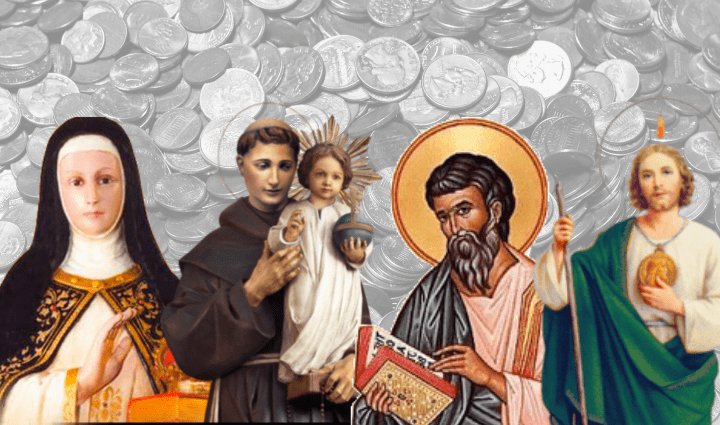
    1. St. Anthony of Padua

    St. Anthony is known for being the patron saint of lost items, but he’s also known for advocating on behalf of debtors. In 1231, St. Anthony petitioned the Council of Padua to pass law to benefit the debtors who could not pay their obligations. At that time, money lenders were loaning money at excessive interest, so only desperate people would consult a money lender. St. Anthony was known to advocate for them and campaigned for change to this predatory system. We usually think of St. Anthony when we can’t find our keys, but consider asking for his intercession next time you’re dealing with a debt load. 

    2. St. Edwiges

    St. Edwiges was the wife of a rich businessman who lived in the 13th century. She was known for visiting debtors in jail and helping them find jobs once they were released. Her fortunate life was challenged when her husband was arrested and died from a disease he contracted while in prison, leaving her to enter a convent to which her daughter already belonged. Despite her poverty, she remained faithful and charitable. She personally reminds me that generosity isn’t a luxury. We are called to have open hearts, no matter our financial circumstances. 

    RELATED: What Is Our Responsibility When It Comes to Money

    3. St. Matthew the Apostle

    St. Matthew was a tax collector and was even sitting in a tax booth when Jesus called him to become one of his apostles. It may strike you as odd to reach out to a tax collector like Matthew when you’re dealing with debt, but he was a financial wiz. The Gospel of Matthew is full of insight on how to keep our finances in perspective. For instance, Matthew 6:21 tells us, “For where your treasure is, there also will your heart be.” And in Matthew 6:24, Jesus said, “No one can serve two masters. He will either hate one and love the other, or be devoted to one and despise the other. You cannot serve God and mammon.” He tells us to be concerned with things of heaven and less concerned with worldly affairs. St. Matthew encourages me because he was actually “good” with money by the world’s standards. Financial stress isn’t limited to those with debt. The Gospel of Matthew can be helpful to those who struggle honoring God as their master rather than money.

    4. St. Jude

    Handling a debt load may sometimes cause us to feel desperate and hopeless. St. Jude, the patron saint of desperate situations, may be the perfect saint for those days of anxiety. St. Jude is known for helping Danny Thomas, the founder of St. Jude’s Children’s Research Hospital. Danny was in desperate need of financial help and a job. He prayed for the intercession of St. Jude and now the research hospital is now named for the saint of lost causes. 

    Combining an action plan, some hard work, and prayer to these helpful patron saints may help you pay off your debts. When I’m faced with money matters, they always help me remember, “Be strong and courageous. Do not fear or be in dread of them, for it is the Lord your God who goes with you. He will not leave you or forsake you.” (Deuteronomy 31:6)

    Originally published November 9 2020.

  • What I’ve Learned About Divine Mercy (and Three Saints Who Can Help)

    What I’ve Learned About Divine Mercy (and Three Saints Who Can Help)

    I never learned to rely on Divine Mercy as much as I did during the year I taught fourth grade. A newly minted Master of Arts in English, I had planned to teach middle school language arts or high school literature, but, as so often happens, the Lord had other plans and called me to interview for a fourth grade position instead. Drawn by the school’s classic Catholic approach to education and the opportunity to guide students toward truth, beauty, and goodness, I was willing to overlook my utter lack of experience in elementary education to accept the position. 

    With plenty of perfectionism to spare, however, as a first-year teacher, I held myself and my students to unreasonable standards. Most often, I expected to override their natural propensity to talk with my stimulating lesson plans, and I hoped to make it through entire mornings without losing any of my carefully planned activities to endless side conversations or botched transitions between classes. When we inevitably fell short, I became irritated with them and with myself. The picture of a merciful educator I was not — just someone who felt consistently burned out by the mental and emotional toll of the first year of teaching.

    RELATED: The Magis: An Ignatian Antidote for Burnout

    I confided in a colleague and dear friend of mine at lunch one day last October, certain that eight weeks of school should have made me a professional at classroom management, and dismayed when they had not. I had shouted at my students too much earlier that day; once again, I hadn’t been able to love them the way God loves me, and I was sure he was upset with me for it, because I was upset with myself.

    She responded to my concerns with an excerpt from St. Thérèse’s writings:

    And if the good God wants you weak and helpless like a child… do you believe that you will have less merit? …. Agree to stumble at every step therefore, even to fall, to carry your cross weakly, to love your helplessness. Your soul will draw more profit from it than if, carried by grace, you would accomplish with enthusiasm heroic actions that would fill your soul with personal satisfaction and pride.” 

    Thérèse knew that our weakness is not a reason to hide our faces in shame, but rather, to rejoice. Our littleness invites God close to us when we offer it up in trustful surrender, rather than pity ourselves. And God delights in taking his little children over and over again into his loving arms. Instead of beating myself up for my next mistake, I could ask God to meet me right there in his tender mercy, and imagine him smiling gently at me as he did so. And then, I could extend his mercy to my students in turn. I felt enormously comforted and encouraged by this realization.

    RELATED: Is Mercy Like Grace?

    In short, this is what Divine Mercy is: God’s promise that he will be there to embrace us every time we fall. God’s response to our failings is always, only, and forever mercy. In response, I am called to place complete and confident trust in his goodness — but this is something I am always working on, always learning how to do. 

    So this year, to celebrate the anniversary of my reintroduction to and adoption of Divine Mercy as a guiding principle of faith in my own life, I’d like to consecrate — to set aside or devote — the entire month of October to Divine Mercy, and I’d recommend that you do it, too! Luckily, there are three saints associated with it whose feast days give us the perfect opportunity to celebrate all month long:

    St. Thérèse: October 1

    St. Thérèse learned to revel in her littleness as a gift from the Father. In celebration of her feast day, enjoy a favorite childhood pastime to recall your own smallness, and continue to cultivate a childlike heart. For me, the day will probably involve coloring books and a favorite childhood novel or film (and also probably cookies — because nothing evokes warm childhood memories like the smell of fresh-baked chocolate chip cookies). 

    St. Faustina: October 5

    Jesus revealed his merciful heart to St. Faustina just prior to World War II, and she kept a record of these encounters in her diary. Today would be the perfect day to begin a new habit of praying the Divine Mercy chaplet daily, for peace in our world today. The chaplet is especially powerful if prayed at 3 p.m., during the Hour of Mercy, and I’ve found that setting a daily reminder on my phone for that time offers a helpful way to get in the habit of praying it.

    St. John Paul the Great: October 22

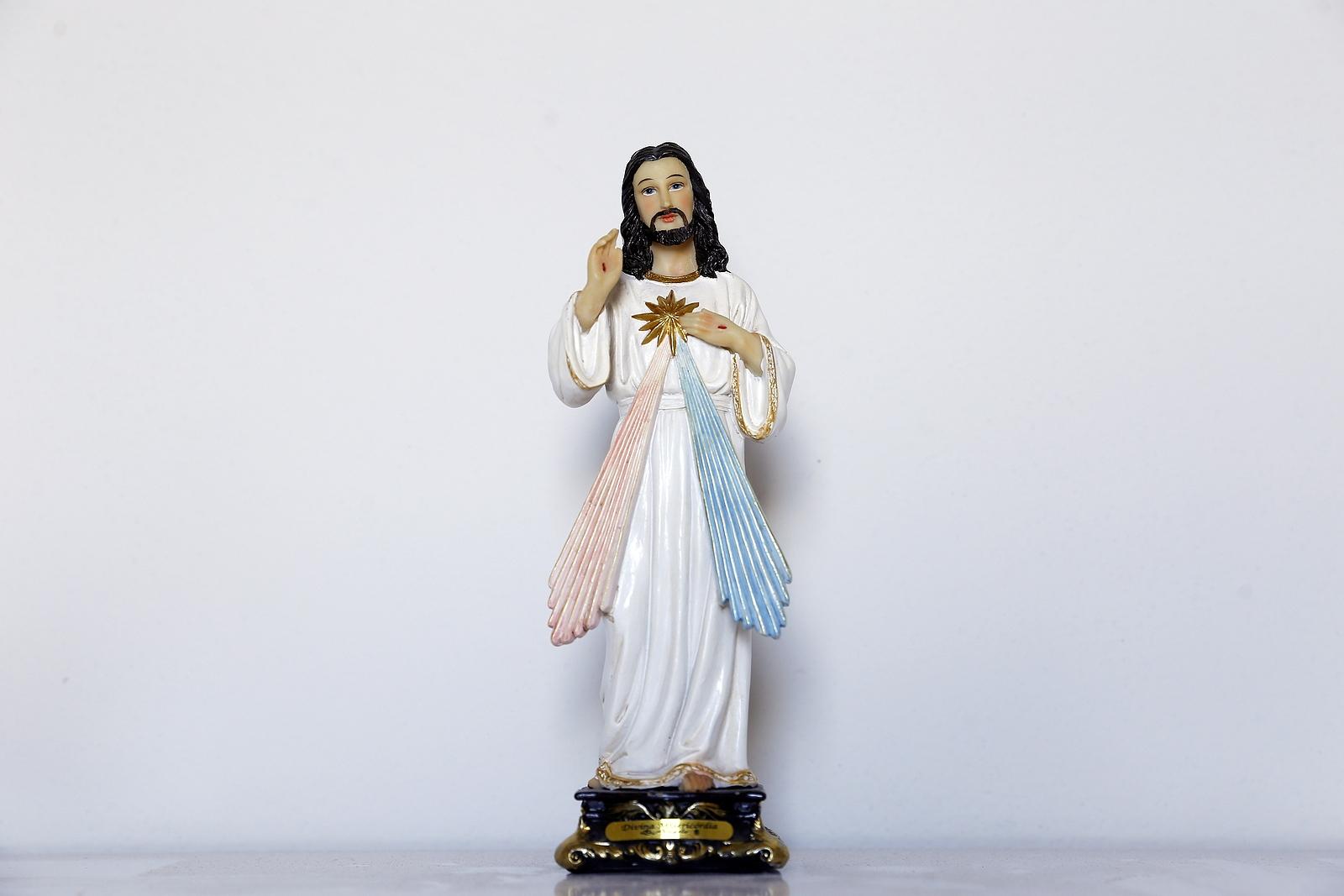
    John Paul II knew that a deep understanding of Divine Mercy is the remedy for all of our ills: “There is nothing that man needs more than Divine Mercy… Anyone can look at this image of the merciful Jesus, his heart radiating grace, and hear in the depths of his own soul what Blessed Faustina heard: ‘Fear nothing; I am with you always.’ And if this person responds with a sincere heart: ‘Jesus, I trust in you,’ he will find comfort in all his anxieties and fears.” Procure an image of Divine Mercy to display in your own home, and turn to it whenever you need a reminder of God’s infinite mercy. Mine is placed above my nightstand, so it’s one of the last things I see before I go to sleep, and among the first things to greet me in the morning. It’s a lovely reminder that God’s mercy is with me and holding me always! 

    Originally published April 25, 2022.

  • How My Family Is Celebrating St. Joseph and St. Patrick Together This March

    How My Family Is Celebrating St. Joseph and St. Patrick Together This March

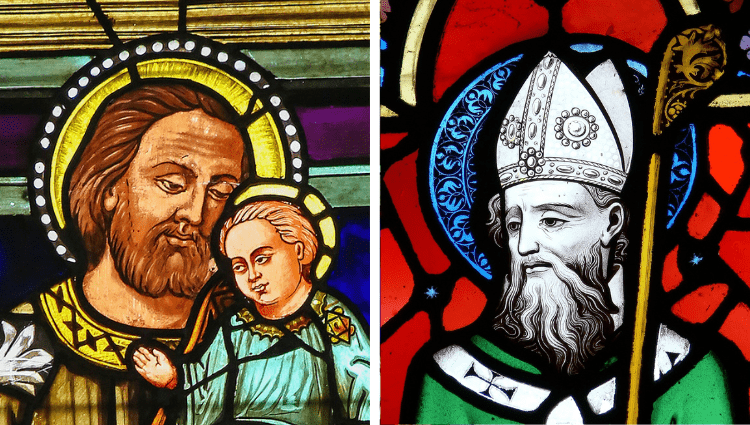
    Side-by-side stained glass icons of St. Patrick and St. JosephEvery March, I notice an emergence of leprechauns, shamrocks, and Guinness, followed by an abundance of Italian pastries, lilies, and the color red. The remembrance of St. Joseph follows St. Patrick’s Day on the calendar each year, but too often I have neglected to celebrate them both intentionally. This year, my family has decided to honor the impact of these two heroic saints in a (hopefully) memorable way. 

    My wife, Joanna, is always concerned about how we can encourage our young sons to experience the faith in a way that goes beyond attending Mass on Sunday mornings. She is great at finding ways to make being Catholic about celebrating life and having fun doing it. She’ll buy a colorful saints calendar for the kitchen, set up dinner on the floor on Holy Thursday, or dress the kids in colors that align with a specific feast day. Finding ways to infuse the faith into the normal parts of our lives sparked our ideas for how to celebrate St. Patrick and St. Joseph this year. While Joanna’s Italian side gives rise to her proclivity for Joseph, St. Patrick has always been celebrated radically in the Irish Griffin household. 

    WATCH: What Do People Really Know About St. Patrick? 

    St. Patrick receives most of the spotlight out of these two saints, and much of his feast day has been commercialized into drinking and eating corned beef. This year, we plan to eat all of the traditional Irish foods, but also use the shamrock as a way to teach our sons about who God is. 

    We plan on going outside and using chalk to outline a huge shamrock in green and have the kids color it in. Then we will focus on how the shamrock points to the fact that God is a relationship of perfect love represented by the three leaves (The Trinity of Father, Son, and Holy Spirit). While we eat dinner, we will tell the brief story of St. Patrick who helped bring the faith to the people of Ireland even though it was not easy. Then we will talk about how prayer helped him through his trials. 

    At bedtime, we will reinforce this and pray one of St. Patrick’s prayers: 

    “Christ with me, Christ before me, Christ behind me, Christ in me, Christ beneath me, Christ above me, Christ on my right, Christ on my left, Christ when I lie down, Christ when I sit down, Christ when I arise, Christ in the heart of every man who thinks of me, Christ in the mouth of everyone who speaks of me, Christ in every eye that sees me, Christ in every ear that hears me.”

    We will end the prayer with the Sign of the Cross, referencing the huge shamrock we colored together as a family. 

    Two days later on St. Joseph’s Day, we will enjoy some nice Italian pastries while focusing on an activity that we hope the boys will love. Our kids already have some toy tools. Some of them have worn out their flavor, but we will try to resurrect that by giving them a chance to build something together. As we build something together as a family, we can talk about how Joseph was a carpenter and how Jesus spent so much time building with him. 

    RELATED: Turning to St. Joseph as a Rookie Father

    Later in the day, we hope to make a tiny home out of popsicle sticks. All we’ll need is glue, a piece of cardboard to serve as the walls, and about 30 popsicle sticks. By gluing them together to form the structure of a simple five-sided house, we can teach the kids that God calls us all to build time to talk to him in our home every day. 

    In many ways, Patrick and Joseph belong together. They were both heroic men of virtue who acted radically for God. Despite the challenges they faced, they trusted that God would protect them, and moved to love those around them as if they were Christ themselves. Highlighting their trust and devotion can only aid the growth of faith among our children. 

    Even though these are simple practices, we think they can have an impact because we are using ordinary moments of the day to invite God to speak to us. Whether it is playtime or dinner or bedtime, these can be opportunities for us to bring God to our kids. While some aspects of these activities will, undoubtedly, not go as planned, we hope that they can become habits that we come back to each year so that faith becomes a part of their lives in an organic way. Hopefully, they will even give rise to celebrating other saints in a similar way. Then Patrick and Joseph can truly impact the holiness of our growing family.