Tag: Questions of Faith

  • What Does the Bible Say About the 7 Sacraments?

    What Does the Bible Say About the 7 Sacraments?

    Question: What aspects of the seven sacraments are in the Bible? Are there any that are not?

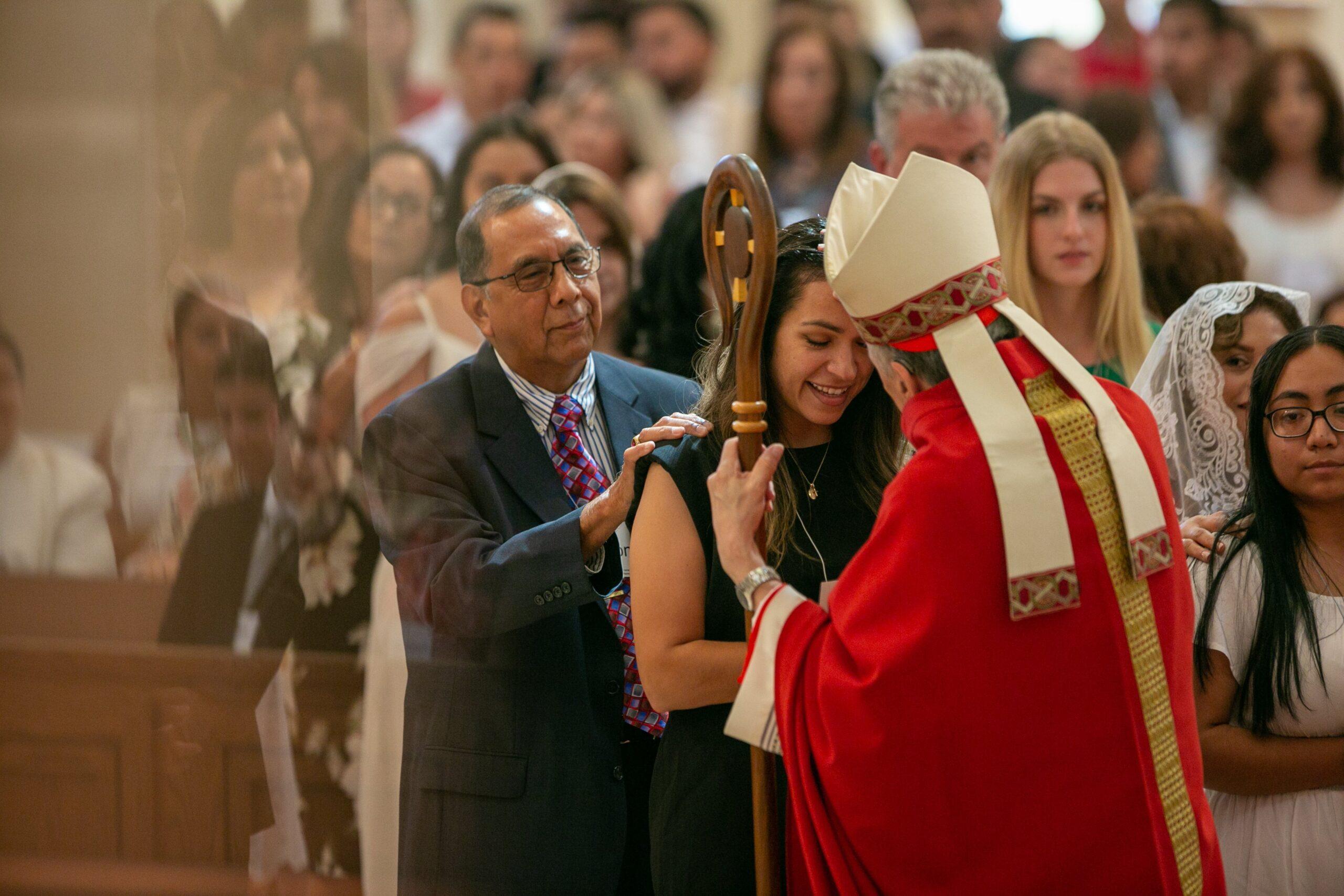
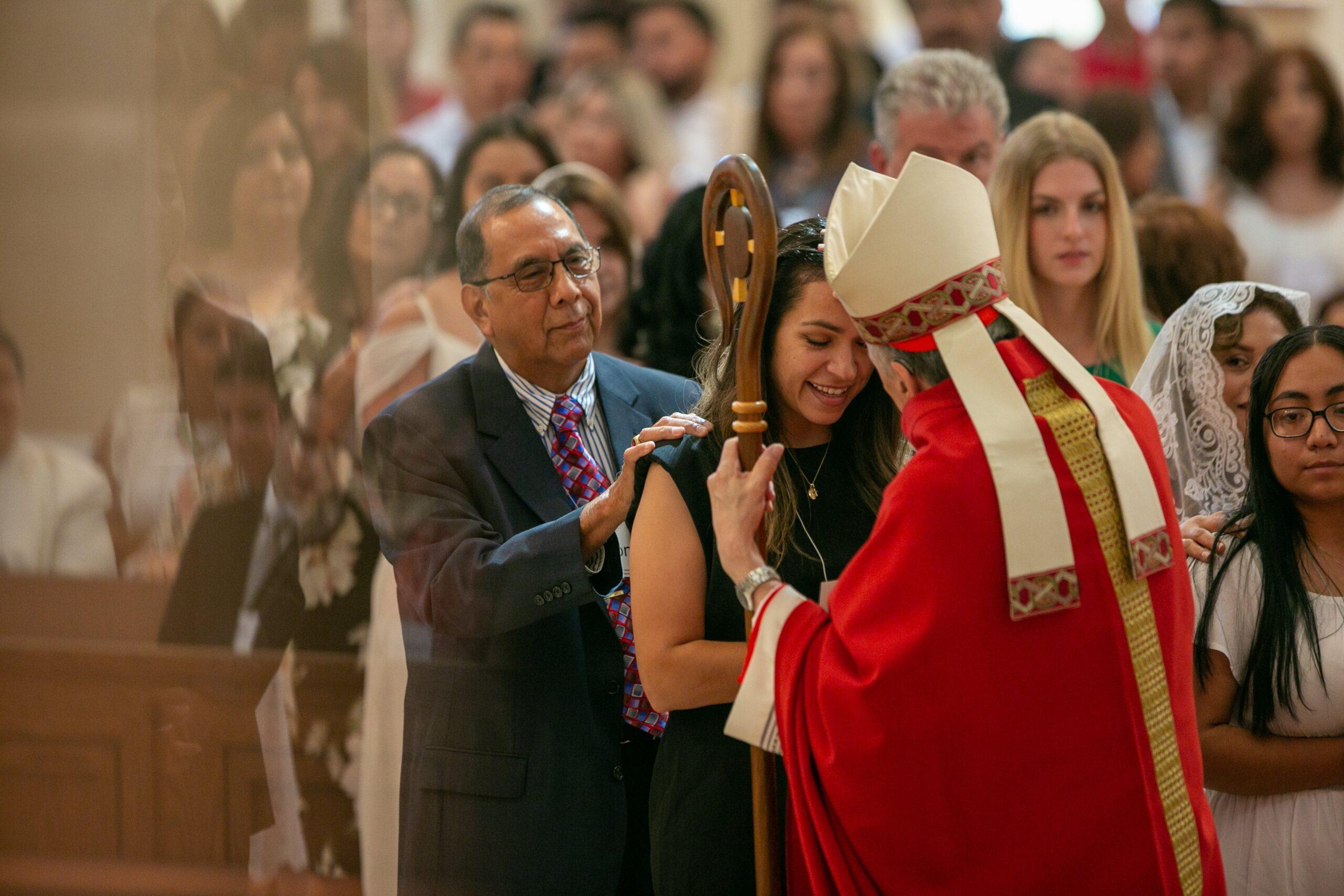
    Cardinal Daniel N. DiNardo of Galveston-Houston anoints the head of a confirmation candidate at the Co-Cathedral of the Sacred Heart in Houston June 5, 2022, during a celebration of the sacrament of confirmation. Cardinal DiNardo and Auxiliary Bishop Italo Dell'Oro confirmed more than 1,000 adult Catholics from 93 parishes and institutions across eight Masses at several parishes around the archdiocese before, during and after Pentecost. (CNS photo/James Ramos, Texas Catholic Herald)
    Cardinal Daniel N. DiNardo of Galveston-Houston anoints the head of a confirmation candidate at the Co-Cathedral of the Sacred Heart in Houston (CNS photo/James Ramos, Texas Catholic Herald)

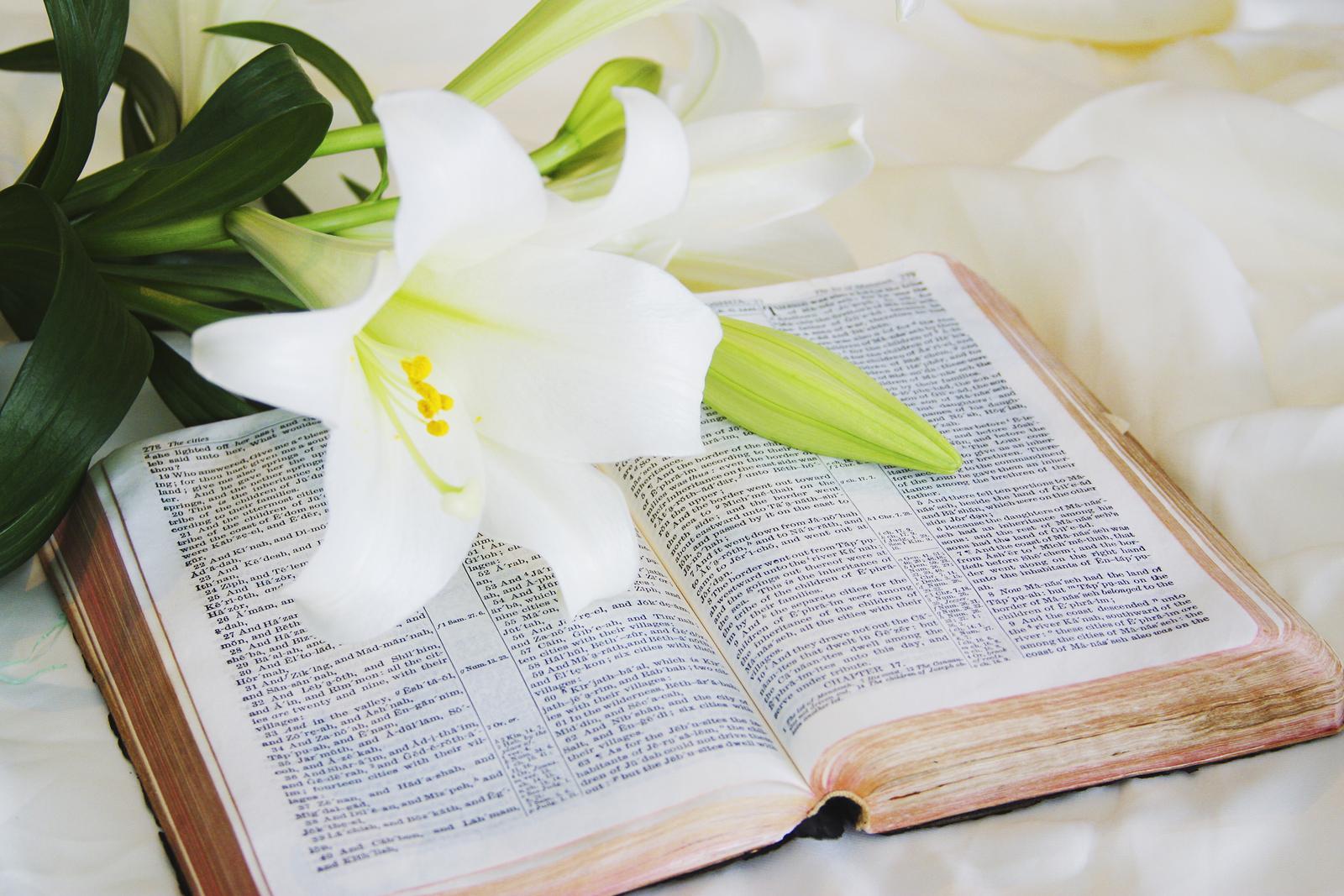
    The seven sacraments celebrated by Catholics all have their roots in Scripture, although some are featured more prominently than others. There are many references to Baptism, of course, beginning with Jesus’ Baptism by John. The Eucharist was instituted by Jesus at the Last Supper (Matthew 26:26-29). Confirmation, though not specifically named in the Bible, is traced back to the outpouring of the Holy Spirit on Jesus at his Baptism and on his followers after Jesus’ resurrection (see John 20:22 and Acts 2:1-4). The Sacrament of Reconciliation, while not practiced in the same way in biblical times as we know it now, is rooted in Jesus’ ministry of forgiving sins and proclaiming salvation to the lost. After his resurrection, he breathed on the disciples, imparting them with the Holy Spirit and stating, “If you forgive the sins of any, they are forgiven them” (John 20:23). The Sacrament of the Anointing of the Sick can be traced to the New Testament Letter of James (5:14): “Are any among you sick? They should call for the elders of the church and have them pray over them, anointing them with oil in the name of the Lord.”

    RELATED: Sacraments 101 and 201 Videos

    Finally, the two Sacraments of Vocation — Marriage and Holy Orders — derive from Scripture, although the format of the liturgical celebrations has obviously evolved through the centuries. The Bible begins with the creation of man and woman in the image and likeness of God and very soon refers to them becoming “one flesh” (Genesis 1-2). Countless other passages refer to the covenant between married spouses, and Jesus himself defended the nature of marriage when he declared, “What God has joined together, let no one separate” (Matthew 19:6). Holy Orders take shape from Jesus’ appointment of the Apostles to extend his ministry of teaching, healing, and proclaiming salvation (Matthew 10:1-8). Later, those Apostles prayed and laid their hands on other “men of good standing, full of the Spirit and of wisdom” to share in the ministry (Acts 6:3-6). Thus the succession of the apostles began and with it the tradition of a pope or bishop laying hands on a man to ordain him as a bishop, priest, or deacon.

  • Marian Consecration: The What, Why and How

    Marian Consecration: The What, Why and How

    Marian consecration. Even for practicing Catholics who already know a thing or two about devotions to a saint, the phrase might stir up some confusion. 

    I get it, and I want to help clear up some of the mystery!

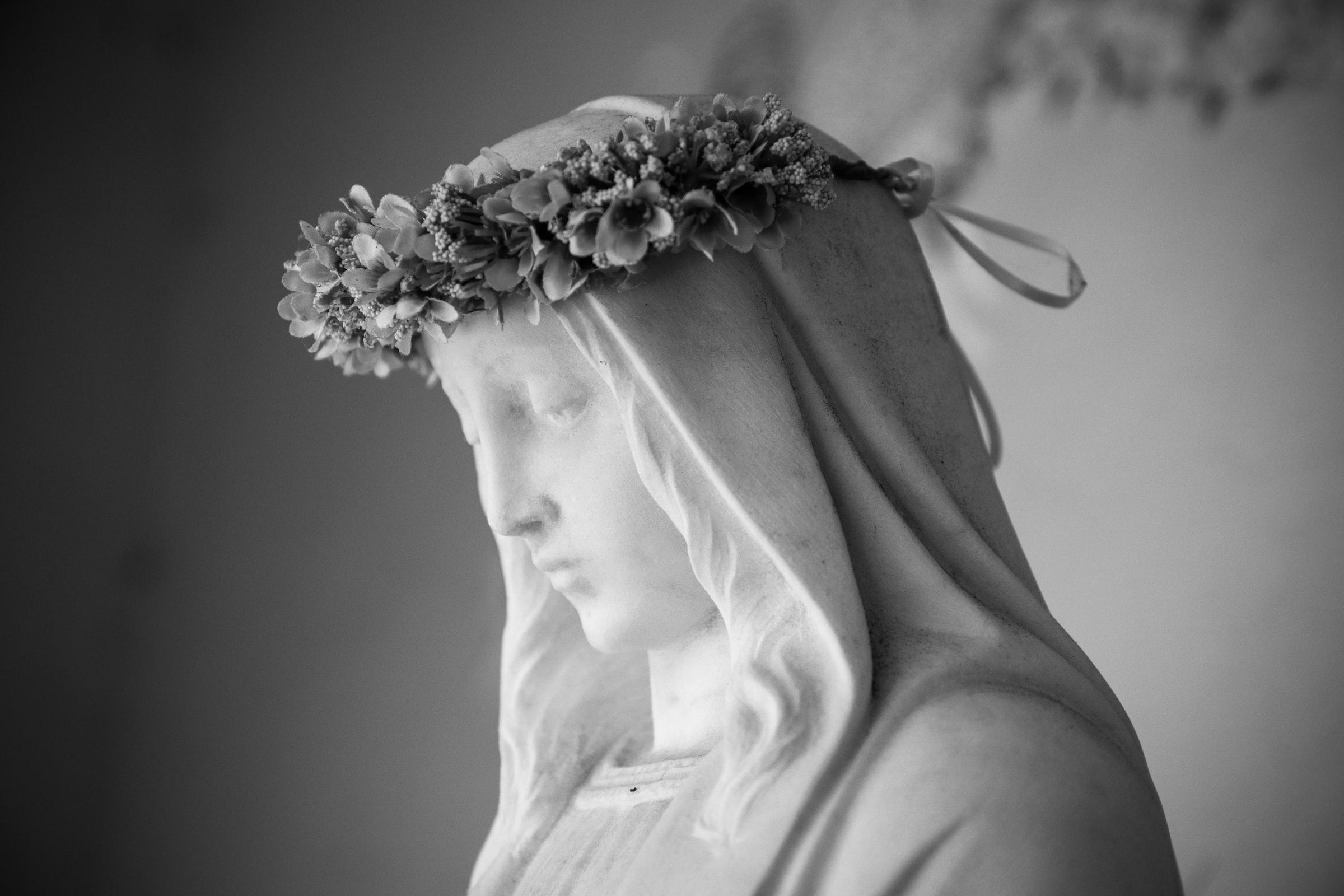
    I myself stumbled across consecration at a time when I wanted to deepen my faith. I had chosen Mary for my Confirmation name and prayed the Rosary every once in a while, but I felt a call to form a more personal relationship with her. In 2016, I saw that a women’s fellowship group was leading a retreat for Marian consecration. I leapt at the promise that it would be a game-changer and decided to participate. 

    WATCH: Mary in Two Minutes

    If to consecrate means “to set aside for a particular purpose,” what does it mean, exactly, when the term is applied to our relationship with Mary? Put simply, Marian consecration is an entrustment of oneself to Our Lady. But if that “simple” idea still sounds vague and mystical, know that consecration involves the following concrete steps: 

    1. A substantial period of prayerful preparation (typically 33 days). Often, parishes will host small groups that commit to making the consecration together over this time period, but you can also make it alone at any time. 
    2. A final prayer — the Act of Consecration itself — to be said on the day of the consecration (preferably a Marian Feast Day).
    3. A persistent spirit of trust in Mary’s motherly care and intercession, to endure for the rest of your life.

    As Catholics, we recognize that when, from the Cross, Jesus gave Mary to the disciple John, and John, in turn, to Mary, Jesus made her our spiritual mother. As such, Mary’s equipped in a special way, over and above all the other saints in heaven, to lead us to holiness. “Mary’s task is to give spiritual birth to Christians, to feed and nurture them with grace, and to help them grow to full stature in Christ.” Fr. Michael Gaitley writes, in his popular guide to Marian consecration, “33 Days to Morning Glory,” “In short, Mary’s job is to help us grow in holiness. It’s her mission to form us into saints” (25). 

    RELATED: I Never Connected With the Rosary… Until I Became a Mother

    Moreover, Fr. Gaitley explains that Mary is united to the will of God more closely than any other human being throughout all of time. If we want to know and follow the will of God in our own lives, there’s no better person to entrust the care of our souls to than Mary herself. A friend of mine once said, “The question isn’t really, ‘Why should you consecrate yourself to Mary?’ but, ‘Why shouldn’t you?’” 

    But does that mean that we’re making Mary more important than God Himself?

    I can see why it might seem that way, especially to someone who’s new to the idea of consecration. But the answer is an emphatic no. Mary’s goal, while alive, was simply to live in union with God, and now that she’s in Heaven, she has the same goal for each of us. If we consecrate ourselves to Mary, it’s not with the intention of replacing God but rather, of allowing Mary to bring us closer to him, as other servants of the Lord, committed to doing his will in the world. 

    Okay, this sounds good, but where do I start?

    Since there’s a particular kind of preparation associated with making a consecration to Mary, you’ll need some guidance through the process. If your parish hosts small groups for Marian consecration, you might find it helpful to join one, because of the benefit of being able to pray and process your reflections with others. But you can also make it by yourself!

    Either way, you’ll need a book. If you want to go “old school,” you can use St. Louis de Montfort’s “True Devotion to Mary,” but I prefer Fr. Gaitley’s conversational, approachable style in “33 Days to Morning Glory” (which I’ve already cited above). He does a great job of breaking down consecration into related themes that build on one another, and offering short prayers to meditate with each day. Plus, he organizes each week of the retreat according to the theology of a particular Marian saint: Louis de Montfort, Maximilian Kolbe, Mother Teresa, and John Paul II. 

    LISTEN: Fatherly Advice: Relating to Mary

    At the heart of any Marian consecration, though, is a total gift of ourselves to Mary: an offering of all of our prayers, intentions, works, sacrifices, and gifts, for her to use as needed to help form us into saints. 

    I consecrated myself to Mary for the first time on the Feast of the Immaculate Conception in 2016, and have since re-consecrated myself (you can renew the offering as many times as you’d like!) twice more — in 2017, on the Feast of Our Lady of the Rosary (October 7) and in 2020, on the Feast of the Visitation, which also fell on Pentecost (talk about a perfect day for a consecration, combining a Marian feast day with the celebration of the Holy Spirit’s descent!). Each time, I’ve felt myself grow in my own understanding of how Mary wants to be a mother to me, and of how she leads me to her son. Most of all, I’ve grown in a spirit of trustful abandonment regarding God’s will for my life, as I’ve prayed to emulate Mary’s fiat. Last year, I purchased a bracelet to remind me of my consecration, and I wear it each day as a tangible reminder of the offering I’ve made and of Mary’s unceasing care for me.  

    If there’s one thing I recommend that you do for your faith life this May, particularly if you’re serious about becoming a saint (as we all should be!), it’s consecration to Mary. You won’t regret it. 

    Originally published May 16, 2022.

  • With Finals Looming…Who Is the Patron Saint of Studying?

    With Finals Looming…Who Is the Patron Saint of Studying?

    I can offer three who would be good to pray with:
    1) St. Thomas Aquinas — the official patron of scholars and a doctor of the church. His great work, the “Summa Theologica,” might just be something you’re studying in fact.

    2) St. John Henry Newman was very active in the intellectual life and set up centers for discussion so as to merge Catholics with intellectual conversation at universities as it was often misconstrued that to be Catholic is to be anti-intellectual. Campus Ministry Centers across the United States often bear his name. Read “The Idea of a University” sometime.

    3) An obvious one is St. Ignatius of Loyola who founded the Jesuits whose charism is education. Many Jesuit universities exist in the United States and elsewhere including Georgetown, Boston College, Fordham, and Loyola Marymount.

    If you’re really desperate, you just might want to try St. Jude. He is the patron saint of hopeless cases and has been known to dig a few people out of a jam.

    Originally published May 9, 2016.

  • Who Decides Who Can Be a Confirmation Sponsor?

    Who Decides Who Can Be a Confirmation Sponsor?

    Q: Who makes the decision as to who can be the sponsors for a child making his confirmation? The rules are 1) church-goer in good standing 2) not divorced 3) Catholic. I don’t know anyone who qualifies for all three.

    A sponsor for baptism or confirmation must be at least 16 years old and be a Catholic who has received the Sacraments of Confirmation and Eucharist and who “leads a life of faith in keeping with the function to be taken on” (see the Code of Canon Law, paragraph 874, for the complete requirements). In most places, as determined by the local bishop or the pastor of a church, “leading a life of faith” is interpreted to mean that a person is following the teaching of the Church with respect to marriage. If single, he or she must not be living with a partner; if married, he or she must be sacramentally married in the Church. (Someone who is civilly divorced but not remarried can still be eligible.) While these standards can certainly vary by parish and priest, these rules aim to ensure that the sponsor can set a good example for his/her godchild or confirmandi. The most important role of sponsorship is sharing your faith and helping your godchild/confirmandi’s spirituality flourish. A young person needs a role model who attends Mass regularly and who takes the teaching of the Church seriously. 

    If you don’t know anyone who meets the requirements, make an appointment with the director of the confirmation program to discuss your particular situation. He or she will know if any exceptions might be approved by your local bishop. Alternatively, he or she could also connect you with faithful members of your parish who would be delighted to meet you and accompany a candidate on the journey to confirmation.

  • Why Are There No Old Testament Readings During the Easter Season?

    Why Are There No Old Testament Readings During the Easter Season?

    The Old Testament has (almost) never been read at the Eucharist during the Easter season. St. Augustine of Hippo in the fourth century started this based on earlier practices by Cyril of Jerusalem.

    Instead, the Hebrew Scriptures are replaced by the Acts of the Apostles. The logic is based on the practice of looking forward from the Resurrection and balances the Easter Vigil’s looking back on our salvation history. (At the Easter Vigil, we draw out the history of our salvation in one night from creation, through Abraham, through Moses, etc.)

    On weekdays in the Easter season, in fact, the Acts of the Apostles are read in pretty much a continuous way, with the whole book completed by the end of the season. The Second Readings on Sundays come from I Peter, I John, and the unusual Book of Revelation, during Years A, B, and C, respectively. The Gospel readings are almost exclusively from John.

    All of this is to center us on the celebration of the Resurrection and to keep us looking forward from that event into today’s time.

  • Why Do Catholics Eat Fish on Fridays?

    Why Do Catholics Eat Fish on Fridays?

    Catholics are required to abstain from eating meat on Ash Wednesday and each Friday in Lent (including Good Friday). Fish is often used as a substitute for meat-based meals. But of course, with the popularity of vegetarian and vegan diets, there are many other solutions besides fish.

    Historically, since about the second century of Christianity, Christians abstained from eating meat on Fridays as a kind of sacrifice and reminder that acknowledged Jesus’ sacrifice on the Cross, which we commemorate on Good Friday. It’s also why we proclaim the sorrowful mysteries of the rosary on Friday. About a century or two later, Lent came into being, as a season of intense preparation for Easter, so the fasting and abstinence was extended to much of Lent.

    RELATED: Eating Meat on Fridays

    The Second Vatican Council simplified many Catholic customs and laws. There was too much of an emphasis on sin and sacrifice and some of the practices were rather involved. Many people believed that breaking Friday abstinence was a sin so serious it could land you in hell. They knew the whole thing had gotten out of hand.

    So the bishops preserved fasting on Ash Wednesday and Good Friday (meaning to eat only one full meal for the day and then to merely sustain yourself for the rest of the day — two smaller meals that do not equal the one large meal) and abstaining from meat on Fridays during the more penitential time of Lent.

    Some have said the bishops were in cahoots with the fishing industry, but there is little to no evidence to claim that as truth.


  • Why Do We Give up Something for Lent?

    Why Do We Give up Something for Lent?

    whey do we give up something for lentYou’re out with your friends on a Friday night and suddenly you notice that one of them has switched from his favorite microbrew to … lemonade? Is it time for Lent already? Giving up something for Lent sometimes evokes head-scratching in non-Catholics, but what might seem like just another Catholic eccentricity can actually be a practice with deep spiritual significance.

    RELATED: Busted Halo’s 2023 Lent Calendar

    Lent, the period of 40 days that precedes the celebration of Easter, has its origin in the early days of the Church. Converts seeking to become Christian, who at that time were mostly adults, spent several years in study and preparation. Under the threat of Roman persecution, becoming a Christian was serious business, so their process of preparation was intensive! Then they went through a final period of “purification and enlightenment” for the 40 days before their baptism at Easter. The rest of the Church began to observe the season of Lent in solidarity with these newest Christians. It became an opportunity for all Christians to recall and renew the commitment of their baptism.

    Today we know Lent as a season of conversion: We acknowledge the ways we have turned away from God in our lives, and We focus on turning our hearts and minds back toward God. Hence the three pillars of Lent are prayer, fasting, and almsgiving. These observances help us turn away from whatever has distracted or derailed us and to turn back to God. Giving up something for Lent is ultimately a form of fasting. We can deprive ourselves of some small pleasure or indulgence and offer that sacrifice up to God. Or we might “give up” a bad habit such as smoking as a way of positively turning our life back toward what God wants for us.

    RELATED: 7 Meatless Meals for Lent

    So maybe your mom was on to something when she had you give up Oreos or your favorite TV show as a child. An experience of want, however temporary, can help us to appreciate the true abundance in our lives. And a small positive change can have a big impact that lasts beyond the 40 days of Lent.

    Take the time now to think about what you might give up this year. Is it something you enjoy that you want to sacrifice for a while, like your daily latte? Or is it a bad habit you want to conquer, like running in late to meetings with co-workers? Or perhaps you want to turn your cell phone off for a few hours each day and not let it distract you from the loved ones you are with in real time? Find something that works for you, and whatever it is, may it help you to turn toward God in this holy season of Lent.

    Originally published February 17, 2017.

  • Why Is St. Paul Called an Apostle?

    Why Is St. Paul Called an Apostle?

    Question: Why is St. Paul called an Apostle? He wasn’t one of the 12 Apostles that Jesus picked.

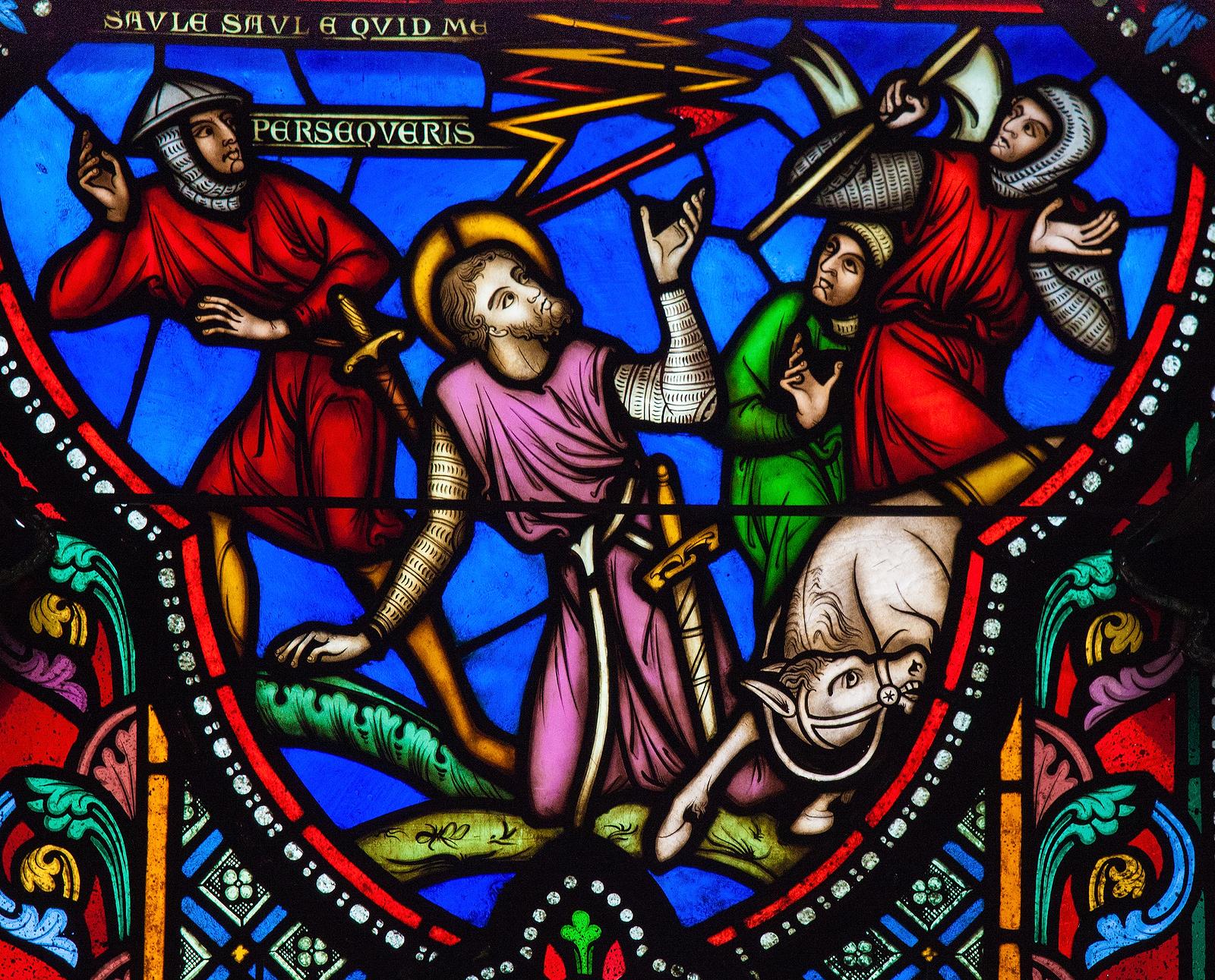
    The Conversion Of Saint PaulThe word apostle comes from the Greek apostolein, meaning sent ones. Although Jesus specially designated 12 of his followers in a symbolic restoration of the 12 tribes of Israel (see Matthew 10:2-5, Mark 3:16-19, and Luke 6:13-16), these 12 men were not the only ones sent by Jesus. Mary Magdalene and the other women who saw the risen Jesus were sent by Him to share the good news of the resurrection with the other disciples. And before the ascension, all of the disciples were sent forth by Jesus to proclaim salvation to the ends of the earth. Paul, though not one of the original companions of Jesus, considered himself an Apostle sent by Christ. Even though the Church has reserved the title “Apostle” in a special way for the 12, Paul was such a pivotal figure in the spread of the gospel that the Church has also applied this title to him, calling him “the Apostle to the Gentiles.”

  • Who Were the Magi?

    Who Were the Magi?

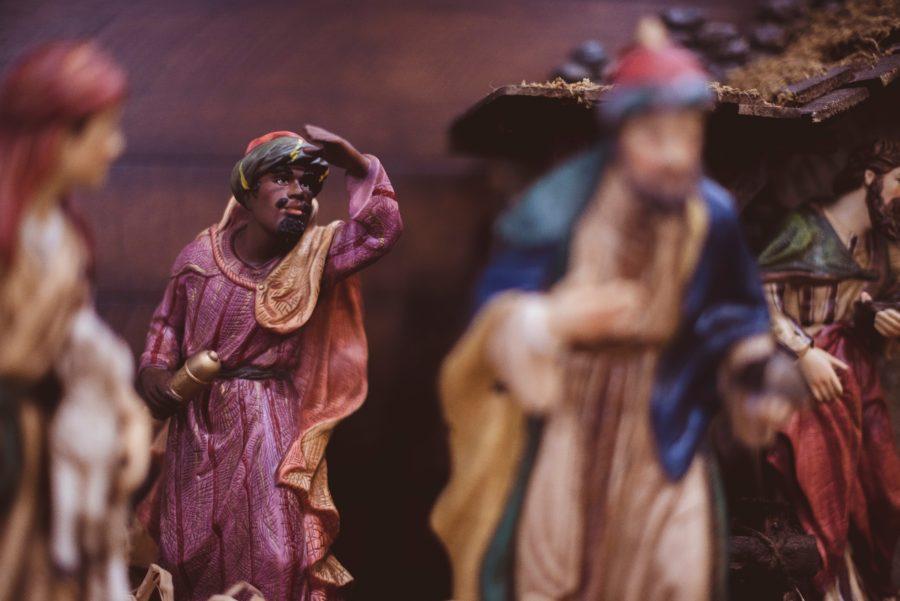
    Photo by Ben White on Unsplash

    Let me begin by stating who the “magi” were not, at least according to Scripture. There is no evidence in Matthew’s Gospel (the only one to mention the magi) that they were “three kings.” This tradition may have evolved because Psalm 72 contains a reference to kings rendering tribute and homage to Israel’s king.

    The New Testament also does not state that there were three of them. The number three probably became associated with the magi because they offered three gifts. In fact, artwork has portrayed the magi in varying numbers through the centuries, and the Eastern (Orthodox) Church has always depicted them as 12 in number. They were not named in the Bible, although a much later tradition named them Gaspar, Balthazar, and Melchior.

    RELATED: Epiphany: Why Waiting Isn’t the Hardest Part

    So who were they then? The term magi originally referred to a caste of Persian priests, astrologers who looked to the stars as guides. We don’t know their place of origin, except that it was clearly from somewhere east of the Holy Land. The gifts they brought (aromatic gum resins) suggest Arabia or the Syrian desert as a possible place of origin.

    Whoever they were or were not, these mysterious people who came to worship Jesus were pagan foreigners who came to believe a promise made to the Jewish people long before. We mark their coming with the Feast of the Epiphany January 6 at the end of the 12 Days of Christmas.

  • What Does the Solemnity of Mary Mean?

    What Does the Solemnity of Mary Mean?

    The Solemnity of Mary, Mother of God is a liturgical celebration observed on January 1. It is a holy day of obligation for Catholics, meaning that Mass attendance is required (though the Mass obligation is sometimes waived by the bishop for various reasons; when in doubt, check with your parish.)

    The use of the word “solemnity” here is not a statement about Mary’s personality. It is a designation used for certain days within the liturgical (church-based) calendar of the Church. Solemnities are the highest rank of liturgical celebration, higher than feast days or memorials. By celebrating a solemnity dedicated to Mary’s motherhood, the Church highlights the significance of her role in the life of Christ.

    Though New Year’s Day may seem more like a day for football and hangovers than for Mary, there’s a beautiful spiritual significance in celebrating her during the heart of the Christmas season. Pope Paul VI, in his apostolic exhortation Marialis Cultus (1974), called the Solemnity of Mary “a fitting occasion for renewing adoration of the newborn Prince of Peace, for listening once more to the glad tidings of the angels (Luke 2:14), and for imploring from God, through the Queen of Peace, the supreme gift of peace.”

    (Originally published January 2, 2011)