Tag: parenting

  • A New Perspective on Our Faith: A Look at First Reconciliation Through My Daughter’s Eyes

    A New Perspective on Our Faith: A Look at First Reconciliation Through My Daughter’s Eyes

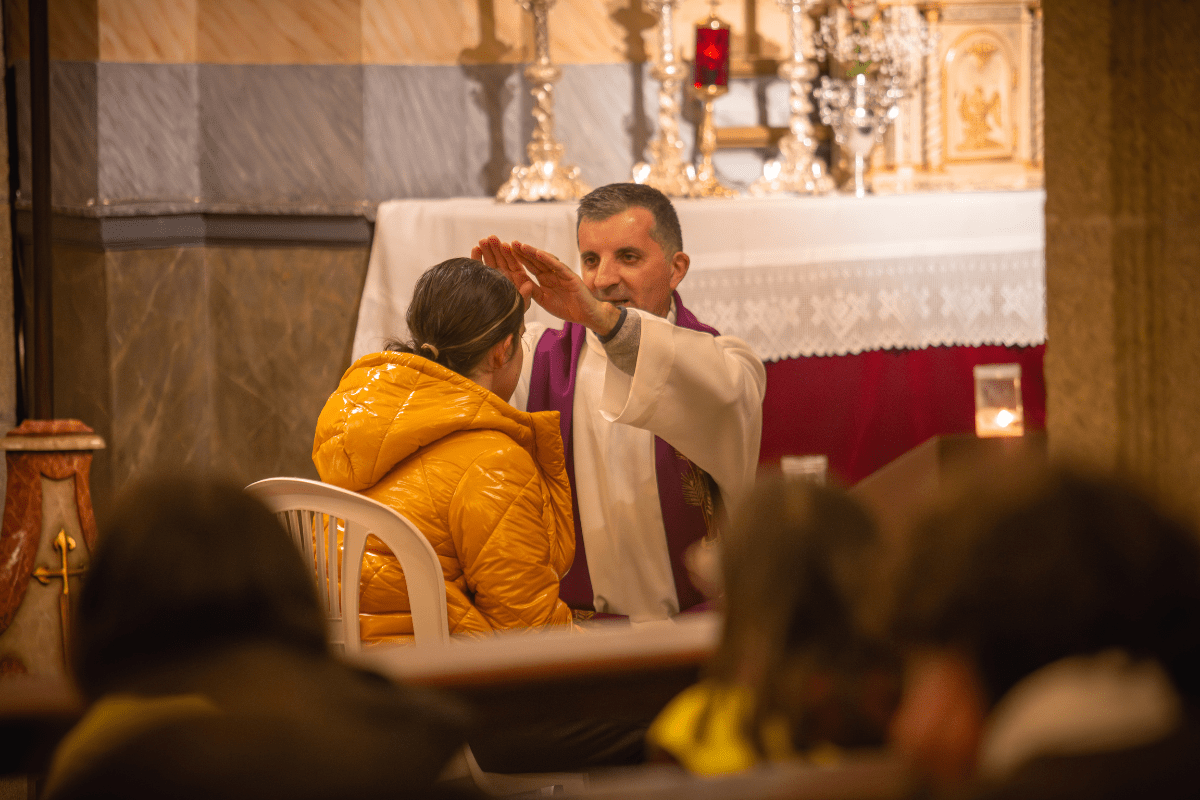
    A young girl goes to confession
    Photo by Yandry Fernández Perdomo on Cathopic

    My daughter is in second grade, which means it is the year of her First Communion. When she began her religious education classes at our parish this year, her dad and I were focused on preparing her for this milestone. We had prayers to practice, doctrines to discuss, and — as my daughter kept reminding me — a dress to dream about and purchase.    

    While the weekend of her First Communion was beautiful, what I found in the time leading up to it was that it was not that sacrament that my daughter was focused on most. It was the Sacrament of Reconciliation she was particularly curious about.

    What would she tell the priest? My daughter wondered. Would she talk to our parish priest specifically, the one she knows, the one who plays the harmonica and likes chocolate? Would he dislike her after she told her sins to him?  

    LISTEN: Preparing Your Kids for First Reconciliation and First Communion

    At dinner, my daughter would pretend to whisper her sins to her older brother, and he would laugh. If you knew her, you would know that this was a sign of how nervous she was about the experience, joking to cover up her worries, playing pretend to imagine the experience.

    As someone who converted to Catholicism at age 28, I felt as if I couldn’t always field my daughter’s questions or worries in the best way. I had never been a child participating in the Sacrament of Reconciliation, and children see the world through different lenses than adults. How was I to guide her and ease her nervousness?

    I talked with her about my experience with First Reconciliation, which she joked must have been hours long because I was almost 30 when I went. Just think about all of those sins I had to recount, she jested. While I didn’t recount all of my sins with her as I did during my first Confession, what I did share with her was the feeling of relief I experienced after it.

    I told her I was nervous like her when I went the first time, and I still get nervous, every time. Somehow, though, my soul always feels healed afterward. God’s grace, working through the priest, transforms my heart, and I feel lighter. The sacrament is a gift, and the nervousness we feel before we go to Confession is natural because, unlike Christ, we aren’t perfect. We sin, and so we try to reconcile ourselves and our hearts with him. This is how I tried to explain it to her at least, focusing on the feelings after the Confessional experience rather than what seemed to be the worries plaguing her heart before it.

    RELATED: Busted Halo’s Guide to Confession

    On the day of her First Confession, my daughter dressed up, not in her communion dress, but in one of her other favorites. To her, that Saturday felt as momentous as the next day, the day of her First Communion, would be. After all, one could not happen without the other. We practiced her confessional prayer before we left. We also discussed how she didn’t need to share anything she divulged about her sins in the confessional with her parents, her brother, or even the family dog unless she wanted to. 

    When we arrived at the parish and waited in line with the other children, she hopped from one foot to the next. There was a palpable sense of nervousness in the air. Some of the kids remarked noisily about their feelings, others simply stared, wide-eyed. On the car ride over, my daughter had wondered aloud if her confession would be longer or shorter than others, which might explain why she had inquired so persistently about the length of my first one.

    As she ventured into the booth during her turn, I thought about the times as a family we had gone together and she had waited on me. What must it be like, as a child, to know your parents are receiving forgiveness for their sins? 

    Throughout this year, my family has made it a point to go to confession together during each liturgical season, and I have been cognizant of my daughter’s eyes on me, searching and following, contemplating her own future steps in the Church as she grows up in it — and she sees her family growing up in it, too. 

    I speak with her often about how, as a child, she gets to experience the faith in a different way than I did because she receives many of the sacraments over time in her life (i.e. Baptism, Reconciliation, Communion, Confirmation), whereas I received them fairly close together in an RCIA setting. Through witnessing her journey, my faith deepens because I experience the sacraments anew, this time with a child’s gaze. We learn together, I tell her. She teaches me, as much as I do her. 

    WATCH: Confession 101

    With this said, God teaches us all through his sacraments, through these channels of God’s grace. I am reminded of Psalm, 32:8, which reads, “I will instruct you and teach you in the way you should go; I will counsel you with my loving eye on you.” Throughout this year, I have felt God’s loving eye on both my daughter and me. Our journey toward her Reconciliation has been one of growth and togetherness.

    It is likely not a surprise that when my daughter came out of the confessional, she looked lighter. Her smile of relief mixed with joy is one I’ll never forget. We did her penance together. 

    On the way home, I saw she had grabbed my phone and had texted her dad who was working that day. “She was very nervous!” she wrote about herself. Imagine a few thousand cry/laugh emojis attached to this text.

    After I took my phone back, I told her that while she may have been nervous, I was also a little nervous (to which she laughed), but that she did great.

    “We both did great,” she responded.

    In the end, preparing my daughter for the Sacrament of Reconciliation not only laid the groundwork for her to enter more fully into the Church, but also reconciled me closer to her, to God, and the sacraments that drew me to convert to the faith in the first place. 

    It deepened our connection to each other, and most importantly, to God’s love and his wondrous works in the world — in my family’s hearts.

  • Mary: The Background Music to My Spiritual Life

    Mary: The Background Music to My Spiritual Life

    For over two years, every night it’s the same: At the appointed time, I gather my freshly bathed and pajamaed toddler into my arms, all fuzz and snuggles. We turn off the light in his bedroom and settle into the rocking chair. My son knows the drill, so he tucks his fuzzy head under my chin and cuddles into my arms. Then we begin:

    Softly, we rock in the darkness. I recite “Goodnight Moon.” Then five nursery rhymes, another book, four prayers, and a lullaby.

    RELATED: I Never Connected With the Rosary… Until I Became a Mother

    They’re the same words every night, and they’re my child’s bridge between the discoveries of day and the peace of sleep. As we sit together, heart-to-heart, my voice surrounds and comforts him, but I imagine he is not thinking of me. My voice, and our nightly litany, is background music that fades away while he reviews the day and surrenders all his anxieties to calm.

    It is a sweet privilege to be his background music, to be that safety that allows him to bound with courage into the world.

    Sweeter still is the knowledge that although I am not a child anymore, that although I am all grown up, my Heavenly Father has given me this background music, too.

    WATCH: Mary in 2 Minutes

    At one time, the Son of God rocked in his mother’s arms, tucking his fuzzy head under her blessed chin as she cuddled and sang to him. The Blessed Virgin Mary was the background music to his earthly ministry. First, it was the beating of her heart at the Incarnation, when Jesus spent nine months safely in the tabernacle of her womb. Then, her voice was the background music at his foretold birth in Bethlehem, and even during an exiled flight into Egypt that lasted a number of years while powerful men sought to take his life. Mary was there in the background when Jesus performed his first miracle, quietly and confidently telling the Galilean wedding staff, “Do whatever he tells you” (John 2:5). When Jesus’ time had come, Mary was there, in the background, as her Son obediently met his ultimate suffering: his Passion and death. Mary had seen him all the way there. And what a gift, that the Lord passed her on:

    “Woman,” He said, “behold your son.” Her new “son” was to be John, who represents all of us.

    Then: “Behold your mother” (John 19:26-27).

    And our mother she is. 

    RELATED: No Mere Greeting: The Hidden Meaning of the Hail Mary

    It was with a shock that I realized, while rocking my son, that Mary is the background music to my relationship with God in the Church — and quite literally! Every time I pray the Rosary, I pray for her intercession 53 times, but each time, the “Hail Mary” fades away as I meditate on that decade’s mystery, which is a moment in the life of Christ.

    It was a great surprise because I had struggled to feel devoted to Mary ever since I turned 13, when I reached — and passed — the age of her world-saving “yes” to God. But now, as a mother, I can understand her differently. She is the background music to my spiritual life: to my relationship with Christ.

    “She is an echo of God, speaking and repeating only God. If you say ‘Mary’ she says ‘God.’” Writes St. Louis de Montfort in “True Devotion to Mary.” “[Y]ou never think of Mary without Mary thinking of God for you. You never praise or honour Mary without Mary joining you in praising and honouring God.”

    WATCH: The Rosary in 2 Minutes

    In that “Hail Mary” greeting, in the repetition of her prayers, Mary smooths out the wrinkles between me and God, pouring his grace into my life and carrying me — as a mother carries her child — to see the King of Kings.

    And it’s almost like she rocks me, with my head tucked under her chin. Her warmth remains as her voice fades to the background, so all that remains for me to embrace is the light of Heaven: the Son she rocked thousands of years ago, who went to the cross for me, and pursues me even now.

    Now, and at the hour of our death. Amen.

    Originally published May 5, 2021.

  • Saint Mom: Why Are There So Few Saints Who Were Mothers?

    Saint Mom: Why Are There So Few Saints Who Were Mothers?

    It’s fair to say the saints have taken over our home. I am up to five statues of Mary in my kitchen alone, all cheering me on through daily chores. An image of Mary Magdalene gazes down at us in the dining room. St. Anne is on my night table, reminding me to read my books. My son sleeps with St. Michael the Archangel next to him for protection, and my daughter has a quote from St. Catherine of Siena on her wall. Since we look to the saints for daily inspiration, it was natural that I would turn to them to find help being a good mom. What I learned is that there are relatively few saint moms, and their paths to holiness were shockingly similar.

    So, if you want to be a saint and a mom, prepare your family. You probably won’t be getting canonized unless your husband dies, you sell all your possessions, and become a nun. Sorry, kids. Mom won’t be around to babysit the grandchildren. She is doing the Lord’s work.

    RELATED: Mysticism: It’s Not Just for Saints

    Step one: Be born into a wealthy family.

    Step two: You must get married. An unhappy marriage is optional but preferred. Bonus points if your in-laws are also notably mean to you.

    Step three: Have some children, who will likely die young or go into religious life themselves.  

    Step four: Your husband must die or you must mutually decide to enter separate religious orders. (My husband and I were going to do this for Valentine’s Day but spiritual attack in the form of pizza and Netflix intervened.)

    Step five: You must enter religious life or live in a convent that you support. Founding your own order is optional. Even in the New World, the first American-born saint mom, Elizabeth Ann Seton, was raised in a wealthy family, lost her husband, and founded a religious order.

    Reading all of this, I began to wonder if there was any hope for the rest us. I did discover a FastPass to mom sainthood that did not involve wealth or a convent. Unfortunately, it requires martyrdom (see “Marytrs of Kyoto” or “Spanish Civil War”). Ready to sign up?

    RELATED: Getting by with Help from a Little Flower

    Are entering the convent and/or being martyred really the only way moms can become saints? We are all called to become saints, and having the saints as spiritual examples is one of the best things about Catholicism. However, for the average mom today, it’s hard to relate to the experiences of our saint mom role models. Of course, we can always look to Our Lady and St. Anne, but it’s fair to say their circumstances were unique. I began to wonder if this phenomenon was the spiritual equivalent of not having any pictures of yourself alone after your children are born. There may be plenty of saint moms out there, but they are the ones taking the pictures; they are not in them. Until recently, it was accepted that most saint moms toiled behind the scenes with little recognition.

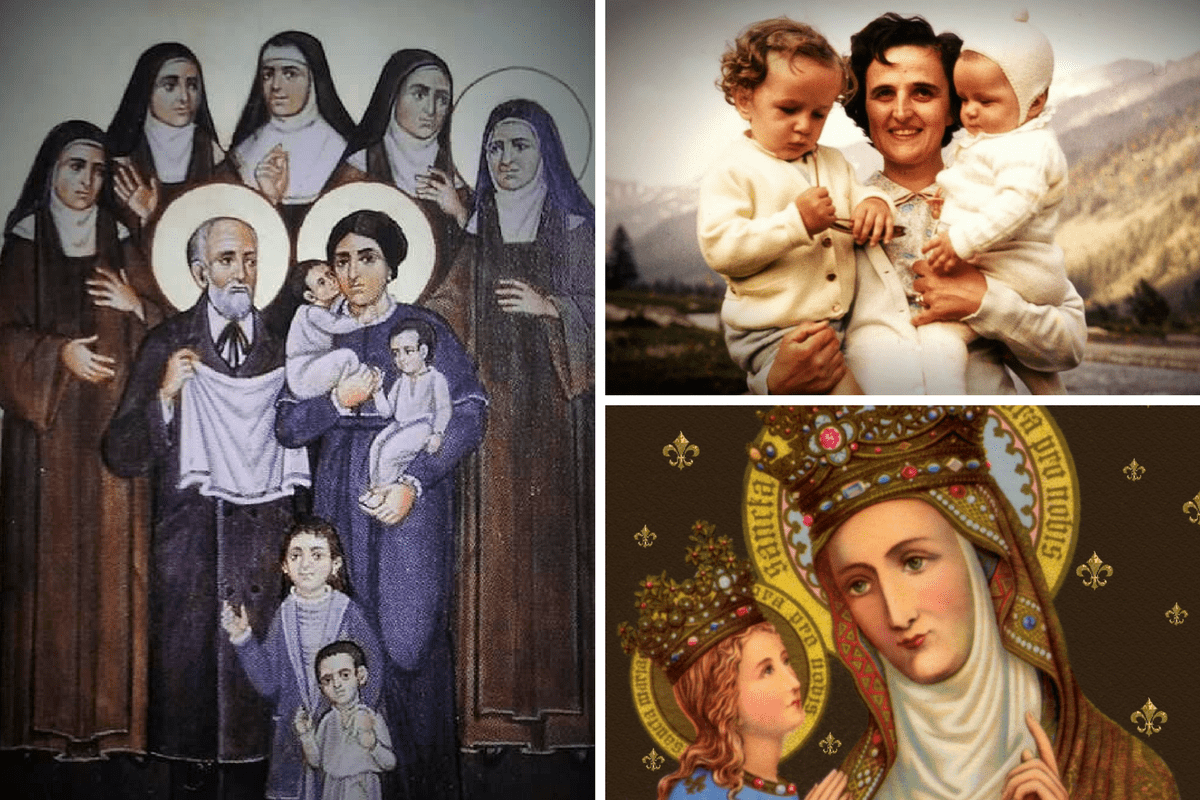
    Take heart, Catholic moms. As women’s roles have become better understood and more visible, a new wave of saint moms is coming. Two of the most popular mom saints today, St. Zelie Martin and St. Gianna Molla, not only have cool names, but they were working moms with kids, and are more relatable to most of us. St. Zelie and her husband, St. Louis Martin, were the first married couple to be canonized in history and are best known for being the parents of St. Therese of Lisieux, the Little Flower. Not only did Zelie have nine children, most of whom went into religious life, but she ran her own lace business — before Etsy.

    A working pediatrician with four kids, St. Gianna Molla famously refused treatments for cancer so that she could give birth to her daughter. She ended up dying from complications following the birth. Interestingly, none of the Molla children entered religious life, but the youngest daughter followed in her mother’s footsteps and became a doctor.

    Both Zelie and Gianna were noted for their ability to live out their faith in everyday life. Zelie’s letters are filled with references to fasting, prayers with the family, and daily Mass. Just like my kitchen, the Martin family had a statue of Mary in an honored place, fondly referred to as “Our Lady of the Smile.” Gianna considered her work her religious mission and her marriage and family as her vocation. She was noted for her care of the poor and marginalized but also for her spirit of joy that served as an example to her children.

    It can be hard for us to see the holiness of our everyday actions, especially when we’re struggling to get the kids in the car for Mass, cleaning glitter slime out of the sink, or refereeing the latest cage match between siblings. It helps to see the Church’s recognition of the sanctity of motherhood is growing and maturing with each new saint mom. I can’t wait to see who is next. Could it be you?

    Originally published August 9, 2017.

  • A Good Dog: How ‘Bluey’ Inspires Goodness for the Whole Family

    A Good Dog: How ‘Bluey’ Inspires Goodness for the Whole Family

    Image Courtesy of Disney+

    A red dog gently bunts a cricket ball to his younger sister; she triumphantly catches it and immediately runs to him to celebrate her big play. He proclaims, “What a catch!” while affectionately ruffling her hair as she giggles with glee. Looking on, a father states to his daughter, “That’s what cricket is all about, kid.” I find myself awash in tears while watching this tender and supportive interaction play out on the screen with my young daughters. 

    What is it about the Australian kids’ cartoon “Bluey” that tugs my heartstrings? Parents and children alike feel drawn to and inspired by the show. Animated dogs are far from a new genre, and yet “Bluey” possesses a fresh, unique sense of childhood’s wonder and joy. “Bluey” follows the adventures of an anthropomorphic family of Blue Heelers living in Australia. Bluey is a spunky 6-year-old pup, and her 4-year-old sister, Bingo, happily takes the role of her imaginative playmate. Often joining in their elaborate games, their parents create a loving, family-oriented atmosphere. We began watching “Bluey” after our dear friends mentioned its charm and it became a fast favorite in our home. Wading through media meant for children is a daunting task as a parent, but “Bluey” provides a welcoming, safe space to which I find myself continually returning. There’s silliness, foibles, and even the sprinkling of light potty humor; and through it all “Bluey” captures the essence of goodness and family life remarkably well. 

    RELATED: 3 Ways God Reveals Himself to Me Through My Young Children  

    “Bluey” depicts the mundane, everyday interactions between a family and their friends. “Bluey’s” narratives do not focus on big sweeping storylines but rather on the sacred space of family life. Holding relationships at its center, the pursuit of goodness and harmony is evident in the depictions of both the adults and children in the series. The stories weave a tapestry of virtue I see reflected in my own family. 

    Giggles cascade across the room as my daughters carefully guide a ladybug to her newly constructed magic carpet. For an unexplained reason, our home has experienced an influx of ladybug visitors and, inspired by a particularly charming episode of “Bluey” called “Slide,” no bug shall be harmed in our home. In “Slide,” Bluey’s sister Bingo and her best friend Lila develop a system for ensuring that when they careen down the water slide, no bugs are squashed. My sweet, caring girls took this message to heart, and we are now the protectors and playmates of all insects. Small acts of kindness for the tiniest of friends, but kindness nonetheless. 

    LISTEN: Tackling Kids’ Tough Questions of Faith

    Goodness, sometimes defined as virtue in action, radiates throughout “Bluey’s” family as they navigate forming relationships that bless not only one another but also their neighbors, friends, and family. Theologian Stanley Hauerwas describes the development of virtue as narratively formed through stories. I see this development firsthand and subsequently try to be mindful as I curate the stories my daughters watch and read. Yet, I have discovered their characters are not the only ones formed through these narratives.  

    Kindness and goodness are depicted not only in the main characters, but also throughout their community; emphasizing our need to both give and receive support. In an episode called “Baby Race,” Bluey’s mom, Chilli, recollects her struggles with comparison early in motherhood. Her anxieties over Bluey’s development are eased when she is visited by a more experienced mom friend who gently informs her, “You’re doing great.” This has become a reminder frequently quoted by my dear friends and me when one of us is feeling the weight of motherhood. Never underestimate the wisdom of a pink poodle and the ripple effect of support. 

    RELATED: Children and the Church: Recognizing the Welcome

    The episode referenced at the beginning of this article, “Cricket,” chronicles the journey of Rusty, a friend of Bluey’s, to become a skilled cricket player. Rusty’s dad is deployed overseas; yet through his letters, he imparts advice on facing fast pitches by writing, “As you grow up, you’ll face harder things than a cricket ball… Just keep your eye on the ball and take care of your little sister for me.” This prompts Rusty to bunt the ball to his sister and celebrate her achievement rather than reveling in his own skill. My older daughter quickly caught onto the thread most pertinent to her life and cooed “Aw! He shared with his little sister.” And that’s the beauty of “Bluey;” she saw a sweet story about sharing with your siblings, while I watched a heartwarming tale about a young dog growing in character and skill, and we both loved every minute. 

    The stories that we watch and read with our children form both parent and child. They offer verbiage to discuss tricky topics, provide games and ideas for imaginative play, and gently teach us all the virtue of goodness. By creating a program that highlights the beauty of the mundane and centers on creating healthy relationships with others, “Bluey” has inspired and captivated audiences. All ages can enjoy a show that depicts how kids and parents can both grow in goodness within their everyday lives. As I read, watch, and listen to various stories with my children, I am learning to embrace each narrative that shapes my character, and that of my children, for good – even those starring a small blue dog. 

  • Learning About Sacrifice, With the Help of St. Mark

    Learning About Sacrifice, With the Help of St. Mark

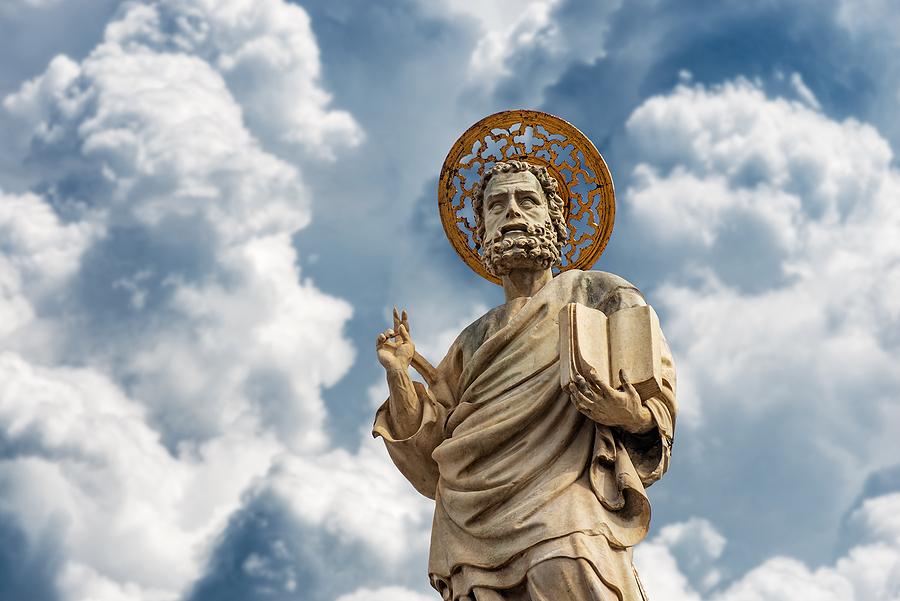
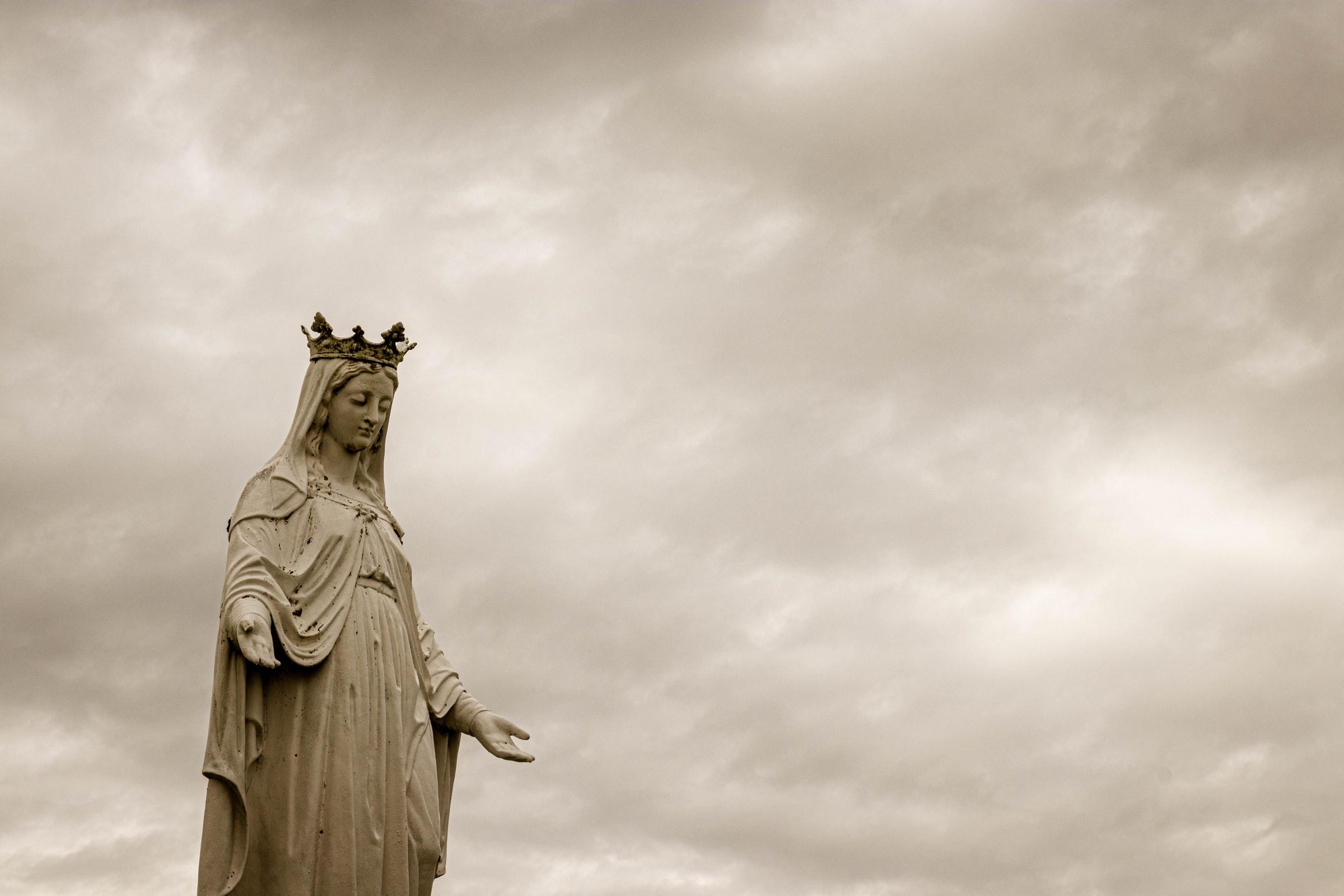
    Image of statue of St. Mark with sky in background.
    Photo by Alberto SevenOnSeven on Bigstock

    Sacrifice is key. We know that Jesus requires this of his followers, but I also heard this statement repeated many times when my wife and I were engaged.

    If I am honest, I think this kind of statement is kind of threatening. I know it to be true based on the life, witness, and words of Christ, but sacrifice is difficult. Approaching my fifth wedding anniversary while having two children (and one on the way) has validated the importance of sacrifice even more concretely in my life. Much of this investigation into sacrifice, however, has been enlightened by St. Mark. 

    The feast day of St. Mark falls on April 25 each year. This critically important saint is often overlooked because he was not one of the 12 Apostles. He does not appear in the stories about the earthly ministry of Jesus, but he wrote one of the four Gospels. 

    RELATED: How to Make Friends With a Saint

    I admit I used to know nothing about St. Mark; he was just a man who wrote a Gospel. My appreciation for him climbed last year when I decided, for the first time, to read the Gospel of Mark straight through from beginning to end. I often read the Gospel of the day, but after hearing a podcast about the importance of reading these accounts as they were written, I took up the task. I started with Mark, well, because it is the shortest Gospel!

    I learned that from the earliest days of the Church, Mark was known to be the interpreter of St. Peter. He became close to Peter and was able to write his account of Jesus’ life based on listening to Peter’s stories.  His writings are viewed as the preaching of St. Peter. We also know, from Acts 12, that Mark was once the companion of Paul and Barnabas as well. 

    Taking the time to read the entire Gospel of Mark transformed me. What became more palpable very quickly, was that Jesus was sent to sacrifice his life for me. I felt this in the way that Jesus spoke about his passion in the Gospel of Mark. I could picture Peter speaking these words to Mark and being moved by them as he heard them for the first time. It became more real for me because I realized that this message was literally passed down through the generations in a powerful and transformative way.

    RELATED: How to Be a Saint-in-the-Making

    At the start of the third chapter of Mark, people begin to plot Jesus’ death. All Jesus did prior was heal the sick, restore the possessed, and preach the truth. And yet, humanity rejected him. He was to be killed because of who he was. Still, he continued to place himself in the spotlight with more public healings and more intense preaching. Christ did all of this with the knowledge that he came to suffer.

    This reaches a shift in intentionality at the midway point in the Gospel. Peter confesses that Jesus is the Son of God and Jesus goes on, three times, to tell the Apostles that he will be arrested, suffer, die, and rise. Jesus states that he “must suffer” (Mark 8:31). 

    I became more and more intrigued by this truth as I reached the details of Jesus’ passion. It seemed more real to me and more powerful. If he tells us that in order to follow him we must also take up the cross (Mark 8:34), then why do I view sacrifice in such a negative way? The sacrifices that I am being invited into actually make me like Jesus. Mark, specifically, taught me this because of his intense focus on suffering and sacrifice. Sacrifice is an opportunity, it should not be a fear.

    RELATED: What I’ve Learned About Marriage When the Unexpected Happens

    My first practical thought was: Can I be more intentional about sacrificing in my marriage? I do my best to do this by helping around the house after work, but I think I view these tasks as things I just have to do. Mark’s insights helped me to see that I can offer difficult times (even if they are simple) as avenues of grace for my loved ones. Doing the dishes or folding the laundry late at night when I am tired and drained aren’t just nice things to do. They can be sacrificial and intentionally done to give me access to Jesus’ sacrificial love. 

    Second, I thought about my two boys. Being a parent of a 3-and-a-half-year-old and a 1-and-a-half-year-old can be chaotic. Noise, messiness, and lack of sleep are all side effects when the needs of your children demand all of your attention. My wife, Joanna, experiences this more than I do since she is home with them, but being consistently present to her children all day is a sacrifice. Rather than look to escape into my phone or have “me time,” Mark has inspired me to be more present during these special times with my kids. 

    The beauty of Christian sacrifice is that its focus is not on rigor. Sacrifice opens us up to love and makes us who we are meant to be. The tired tasks and intentional presence I strive to have with my children make me a better husband and dad. They do not make my life darker but brighter. Thanks to St. Mark, I am becoming less fearful of sacrifice and more grateful for the impact of Christ’s sacrifice in the concrete aspects of my life.

  • 3 Ways to Maintain Joy Throughout the Easter Season

    3 Ways to Maintain Joy Throughout the Easter Season

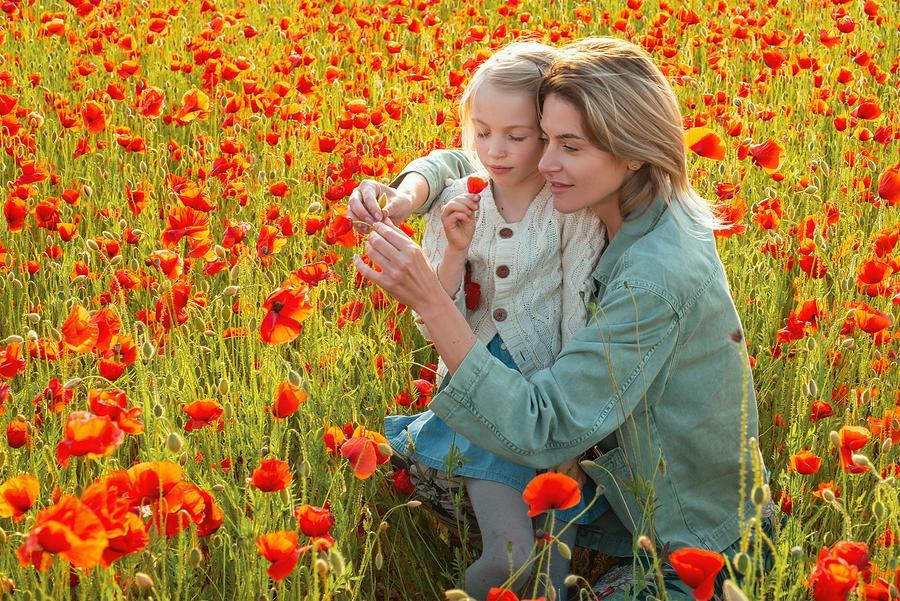
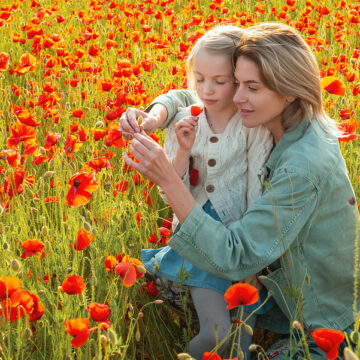
    Mom and daughter picking flowers in a flower field

    During the height of the COVID-19 pandemic, I began to suffer a deep depression, unlike anything I had known previously. I’m a professor, and during the first months of the pandemic I was undergoing a difficult tenure and promotion process at my institution. Moreover, like many others during the pandemic — my workload increased simultaneously. I was working full-time remotely while taking care of my two young children at home. I remember thinking, Of course this hardship begins during Lent. I prayed, I fasted, and I gave. Yet when Easter came, I didn’t feel the joy I thought I should have. Don’t get me wrong: My family celebrated Easter and went to Mass, but this season didn’t feel fitting to my heart. We celebrated for a day, took pictures, and then I would argue that my soul receded back into a Lenten modality. I felt I needed to do more, to work harder, to be worthy of the joy that Eastertide as a season brings with it.

    As we moved farther afield from the earliest stages of COVID-19, my depression slowly abated. I ultimately received tenure, yet I still struggled with the mixed emotions I had from the process. Eventually, I was diagnosed with clinical depression and sought therapy. Through this process – and through friends, family, and the Church – I began to discover new ways to instill meaning behind my suffering. Contemplating how much my identity was tied to my profession led me to seek ways to rely more on my faith and renew my sense of identity as an image-bearer of God rather than a worker only. I began to lean into the liturgical calendar rather than the academic one to define not only my life but also my family’s life, including fostering joy during a time when I didn’t necessarily feel joyful.

    Easter isn’t just one day; it is the second-longest liturgical season in our calendar, lasting 50 days for Catholics. We are to practice 50 days of joy in the knowledge of the resurrection. Keeping joy, as I learned while I was suffering from depression, isn’t an easy task. While suffering may mark the first part of the Easter story, it isn’t the last part that is essential for all of us faithful to remember. 1 Peter 1:3 reminds us to praise God and to recognize that “In his great mercy he has given us new birth into a living hope through the resurrection of Jesus Christ from the dead.” Easter is about a “living hope,” not one that is gone in a day, but one that lives in us.

    Lenten practice, in my experience, feels like work on the soul, and I would argue that Easter practice ought to, as well. It simply ought to feel like a different kind of work, a work toward proclaiming joy — and resting in it — for 50, long, well-earned days.

    Now, my family celebrates Eastertide with intention, just as we do Lent. Here are a few practices we’ve adopted that have lightened my soul and altered our family culture around the Easter season:

    We practice gratitude daily.

    In a personal journal, I write down at least two things that I’m grateful for each day. These can be as small as walking the dog or enjoying the sunshine. When I pick my children up from school, I ask them to practice this with me. “What brought you joy today?” I inquire. Because I have elementary-age schoolchildren, I delight in their stories of races won and lost at recess, of learning new science facts in school, and of lunchtime antics between their many friends.

    We create an Eastertide family calendar.

    We began this practice with Advent, and we’ve learned that liturgical calendars based around the Easter season help us partake in at least one joyful, praising activity each day. For Eastertide, some of these activities include: reading a Catholic book together, singing worship songs, dancing, celebrating Saints with Feast Days during the season like Saint Catherine of Siena, finding and planting flowers, serving others in the community, and praying. We build these calendars around what works in our home, and each day the children mark off what we’ve accomplished. “We can’t go to bed without dancing!” they’ll exclaim, and they’ll be right.

    Even on days when I don’t feel ready to praise, the calendar reminds me — and my family — that Easter is the season of joy, of living and sharing in the happiness that is Christ’s resurrection.

    We go to Adoration.

    My parish has scheduled times for Eucharistic Adoration, and our family goes together. Being inside the Church, praying there, basking in the beauty of the Eucharist and the prayerful community that gathers together reminds us that we are not alone in maintaining and celebrating the joy of Easter. We pray in the car before going into the Church, and then we pray inside. I allow my children to walk quietly around and appreciate the stained glass windows in our parish. Every time we’re there, we leave with our spirits lifted, knowing that we chose to spend time with God. It isn’t always quiet, or perfect, but it is joyful — and the questions they ask (such as “Why would Jesus suffer?) remind me of all that I have to be grateful for as a Catholic.

    Lent is a time of spiritual growth, yet so, too, is Eastertide. For those like myself who have suffered, and still deal with the ramifications of depression, Eastertide as a practice may even be more difficult than Lent. Yet as Pope Francis reminds us in Evangelii Gaudium, “The joy of the Gospel fills the hearts and lives of all who encounter Jesus. Those who accept his offer of salvation are set free from sin, sorrow, inner emptiness, and loneliness.”

    In celebrating the full 50 days of the Easter season, we accept the offer salvation provides us. Moreover, we evangelize to others the joy of the Gospel because they see us living, and practicing daily, a sustained encounter with Jesus. As humans, we all suffer, yet we all also experience moments of joy. For me, especially when experiencing the worst parts of my depression, Eastertide helped me remember Jesus’ love and cultivate his promise fulfilled in my life — even on those days when I least wanted to do so. Indeed, in the midst of one of my most salient times of isolation and despair, joy found root in my soul again — and it occurred because of committed and renewed Eastertide devotional practice. Psalm 32:11, one of my favorites, echoes this joyful message: “Be glad in the Lord, and rejoice, O righteous, and shout for joy, all you upright in heart!”

    Originally published April 12, 2023.

  • How Becoming a Mother Helped Me See Easter in a New Light

    How Becoming a Mother Helped Me See Easter in a New Light

    “Then the [women] went away quickly from the tomb, fearful yet overjoyed.” (Matthew 28:8)
    “Fearful yet overjoyed”? Aren’t those emotions opposites? Reading this passage from Matthew, I never understood that description of how the women felt. We read in Matthew’s Gospel that the women go to the tomb, see an angel, and are told the great news of Jesus’ resurrection. Why, then, would they go away fearful? I had always found the combination of fear and joy puzzling … that is, until I became a mother. 

    In fact, this Easter is my very first Easter as a mother, and as I read that familiar passage in Matthew’s Gospel this year, the emotions of the women began to make sense. When my son was born, I was excited to meet him, to hold him, and take him home. When the nurses weighed him and examined him in my labor and delivery room, I remember I could not take my eyes off of him. I was simply mesmerized! And I was anxious. I was waiting for an answer – “Is he alright? Is he healthy?” I had been a mother for less than an hour, and I was already afraid he might be hurt. I knew right away that I wanted to protect him from every single instance of pain and suffering, and I also knew shielding him from every inconvenience was not within my power. 

    RELATED: Who Were the Resurrection Women? 

    Recognizing my powerlessness led me to fear. I imagine my mix of emotions when I became a parent is like the women’s reaction to Jesus’ resurrection. They were excited to see Jesus again, and yet they probably had a flurry of questions and anxieties rolling around in their heads, too. They probably wondered, “How did this happen?” “Is Jesus okay?” I imagine they were likely wondering about Jesus’ future. After all, Jesus had just been executed a few days before. “What would the Jews do to Jesus when they find out he’s alive again?”

    In the midst of all my questions and mixed emotions, I eventually learned two very important things in that labor and delivery room. First, when it comes to worries — logical or not — we essentially have two choices. We can remain paralyzed with fear like the guards at the tomb (Mt 28:4) and ponder all the terrible things that could happen, focused on our powerlessness to protect our loved ones from every illness and injury. Or, we can turn to the one who does have control — God. I knew in meeting my son I had to surrender myself and my child into the arms of God, trusting him to take care of us in this life and the next. We can thank God endlessly for every joy-filled moment we have with our loved ones. We can be like the women at the tomb who do still encounter fear, but they do not remain in fear. Instead, they let celebration and happiness overshadow their fears. 

    RELATED: Three Ways God Reveals Himself to Me Through My Young Children

    While I was in the hospital, and even after being discharged, I could have focused on the pain and suffering I was enduring or the sleepless nights caring for a newborn. In fact, for a while, I did focus on the negatives. I complained a lot. And after some time, I realized I did not want to complain any more. My baby would only be this tiny for a short time, and I wanted to soak in every cuddle and coo. I chose to move my thoughts from complaining to prayers of thanksgiving. When I noticed myself venting about having to feed my newborn again or begging my baby to please go back to sleep, I started listing off my thank you’s to God instead. Thank you God for my health. Thank you God for keeping my baby safe. Thank you God for my husband and his generous heart. … On and on I’d thank God until that “glass half empty” thinking faded away and my complaints seemed insignificant. Shifting our thoughts from worries to gratitude is not easy, but as this new mom can attest, it is definitely worth it.  

    May we all, this Easter season, find the strength to trust our loving Father every day, and give thanks even in times of trial for every good gift.

    Originally published April 7, 2021.

  • How My Family Is Celebrating St. Joseph and St. Patrick Together This March

    How My Family Is Celebrating St. Joseph and St. Patrick Together This March

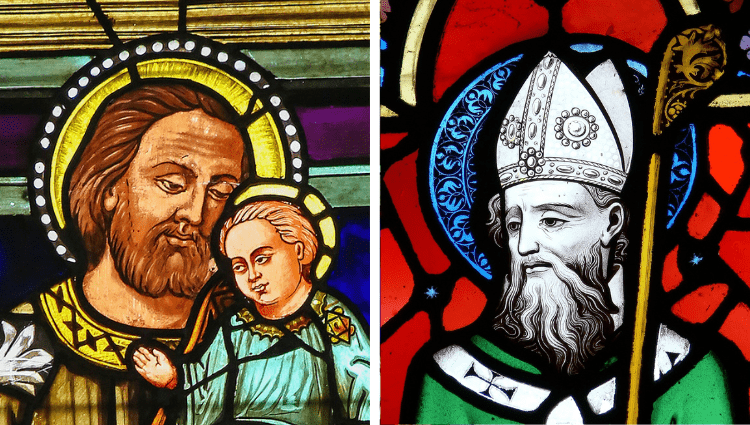
    Side-by-side stained glass icons of St. Patrick and St. JosephEvery March, I notice an emergence of leprechauns, shamrocks, and Guinness, followed by an abundance of Italian pastries, lilies, and the color red. The remembrance of St. Joseph follows St. Patrick’s Day on the calendar each year, but too often I have neglected to celebrate them both intentionally. This year, my family has decided to honor the impact of these two heroic saints in a (hopefully) memorable way. 
    My wife, Joanna, is always concerned about how we can encourage our young sons to experience the faith in a way that goes beyond attending Mass on Sunday mornings. She is great at finding ways to make being Catholic about celebrating life and having fun doing it. She’ll buy a colorful saints calendar for the kitchen, set up dinner on the floor on Holy Thursday, or dress the kids in colors that align with a specific feast day. Finding ways to infuse the faith into the normal parts of our lives sparked our ideas for how to celebrate St. Patrick and St. Joseph this year. While Joanna’s Italian side gives rise to her proclivity for Joseph, St. Patrick has always been celebrated radically in the Irish Griffin household. 

    WATCH: What Do People Really Know About St. Patrick? 

    St. Patrick receives most of the spotlight out of these two saints, and much of his feast day has been commercialized into drinking and eating corned beef. This year, we plan to eat all of the traditional Irish foods, but also use the shamrock as a way to teach our sons about who God is. 

    We plan on going outside and using chalk to outline a huge shamrock in green and have the kids color it in. Then we will focus on how the shamrock points to the fact that God is a relationship of perfect love represented by the three leaves (The Trinity of Father, Son, and Holy Spirit). While we eat dinner, we will tell the brief story of St. Patrick who helped bring the faith to the people of Ireland even though it was not easy. Then we will talk about how prayer helped him through his trials. 

    At bedtime, we will reinforce this and pray one of St. Patrick’s prayers: 

    “Christ with me, Christ before me, Christ behind me, Christ in me, Christ beneath me, Christ above me, Christ on my right, Christ on my left, Christ when I lie down, Christ when I sit down, Christ when I arise, Christ in the heart of every man who thinks of me, Christ in the mouth of everyone who speaks of me, Christ in every eye that sees me, Christ in every ear that hears me.”

    We will end the prayer with the Sign of the Cross, referencing the huge shamrock we colored together as a family. 

    Two days later on St. Joseph’s Day, we will enjoy some nice Italian pastries while focusing on an activity that we hope the boys will love. Our kids already have some toy tools. Some of them have worn out their flavor, but we will try to resurrect that by giving them a chance to build something together. As we build something together as a family, we can talk about how Joseph was a carpenter and how Jesus spent so much time building with him. 

    RELATED: Turning to St. Joseph as a Rookie Father

    Later in the day, we hope to make a tiny home out of popsicle sticks. All we’ll need is glue, a piece of cardboard to serve as the walls, and about 30 popsicle sticks. By gluing them together to form the structure of a simple five-sided house, we can teach the kids that God calls us all to build time to talk to him in our home every day. 

    In many ways, Patrick and Joseph belong together. They were both heroic men of virtue who acted radically for God. Despite the challenges they faced, they trusted that God would protect them, and moved to love those around them as if they were Christ themselves. Highlighting their trust and devotion can only aid the growth of faith among our children. 

    Even though these are simple practices, we think they can have an impact because we are using ordinary moments of the day to invite God to speak to us. Whether it is playtime or dinner or bedtime, these can be opportunities for us to bring God to our kids. While some aspects of these activities will, undoubtedly, not go as planned, we hope that they can become habits that we come back to each year so that faith becomes a part of their lives in an organic way. Hopefully, they will even give rise to celebrating other saints in a similar way. Then Patrick and Joseph can truly impact the holiness of our growing family.

  • How Memorizing Prayers Together Brought My Family Closer to God

    How Memorizing Prayers Together Brought My Family Closer to God

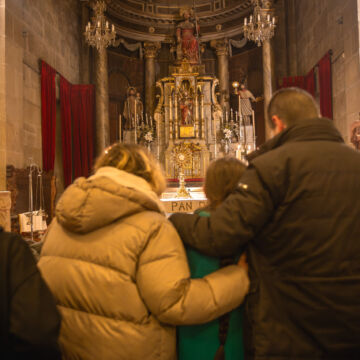
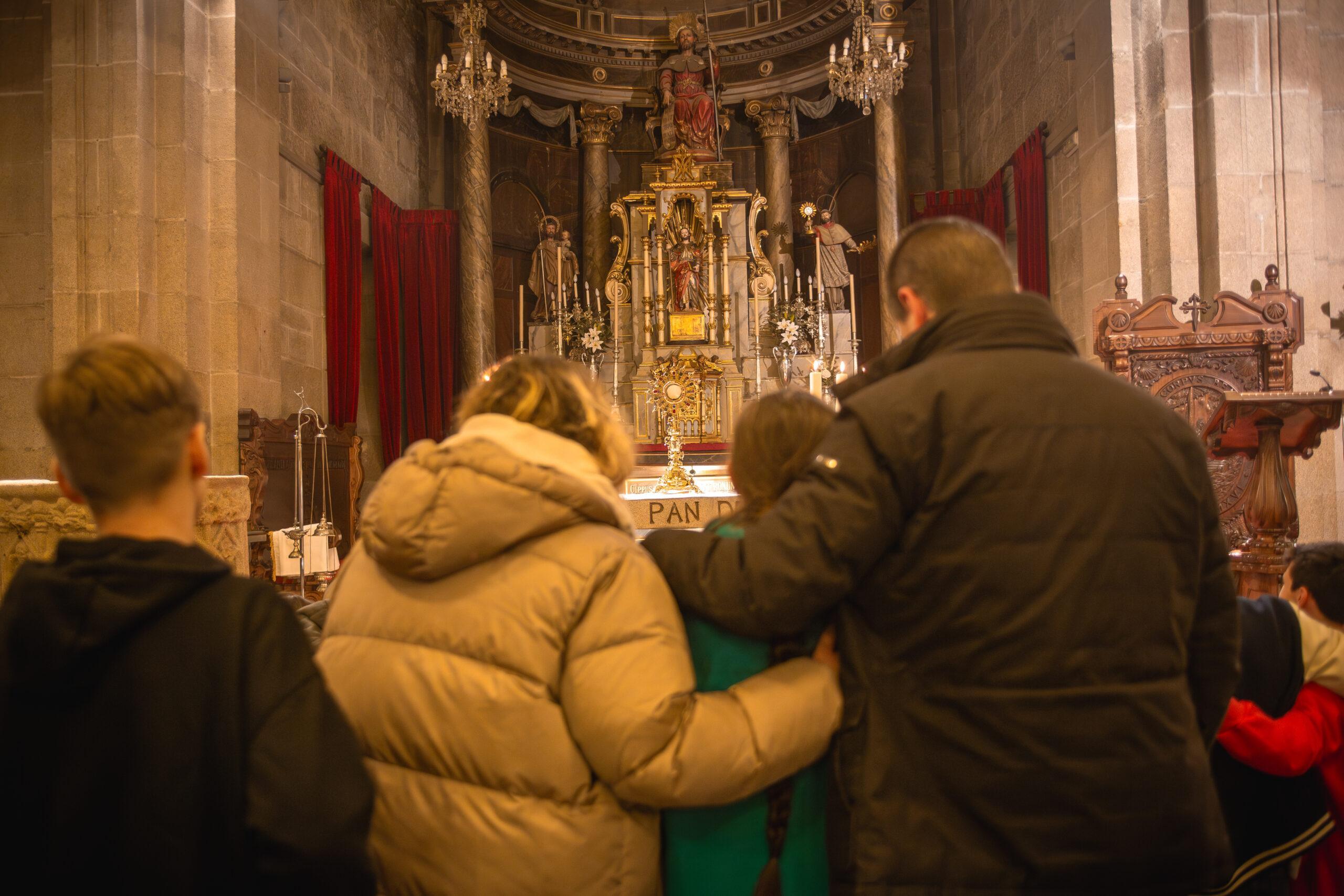
    Family kneeling before an alter in Church praying before the Eucharist
    Photo by Yandry Fernandez Perdomo on Cathopic

    Last fall, signs outside our parish and notices within our weekly bulletin reminded my family that the month of October in our Catholic faith is dedicated to the Rosary. Every time when we walked into Mass, we heard other parishioners reciting the Rosary before the service started. It may sound cheesy, but my husband and I felt a spiritual calling in October to participate in those prayers more actively. Notably, this isn’t a reflection on how my family learned to say the Rosary together during October. It is, however, an account of how we began to try.

    In this process of learning the prayers for the Rosary, we felt “behind” where we imagined other families we knew to be. In October, my family already knew “The Hail Mary” and “Glory Be,” but those were our only starting points. We began by adding “The Salve Regina” to our nightly routines, learning one line per night in our living room before the kids would dash off to brush their teeth and crawl into bed. 

    RELATED: Three Things I’m Doing to Teach My Young Children About the Mass

    In the process, we found that attempting to memorize new prayers together was unexpectedly spiritually rewarding for every member of our family—my husband, my two elementary-school-age children, and me. Before last October, we’d recite those prayers we already knew each night before bedtime, but we’d never attempted anything long. We’d also never practiced the memorization and recitation process nightly together. We had learned those prayers individually or with our church classes. Of course, the things that are spiritually rewarding in our lives are never quite as easy as we’d like them to be, and this process has been no different. It’s now Lent, and we’ve still yet to say the Rosary together without reading at least part of it from a book or a screen. 

    A little like brushing their teeth each night, my children often balk at reciting the prayers. Likewise, sometimes when there’s a football game on, so does my husband.  I also admit that if I’ve had a long day at work and would rather relax with a book and have some solitude, adding the drama of begging everyone to come together to learn prayers isn’t exciting for me. Still, once we start reciting the prayers and learning the lines, a sense of accomplishment and even a spiritual weight visits our living room that is worth every bit of nudging our family might have needed to start memorizing together. The kids might be fighting about whose cookie looks bigger for dessert, or what TV show they’ll watch in the morning, yet they’ll calm down once we’ve launched into saying the prayers a few times. Solemnity almost always takes hold, so to speak. 

    As part of our practice, we say each line of the prayer we’re covering that day five times together, adding whatever lines we learned the day before to it. Then we have each person say the prayer to the point they’ve learned it on their own. My children love taking center stage in the living room, standing on a certain part of the rug where there’s a big flower: This is their stage. They also enjoy checking and correcting my husband and me when we inevitably fumble certain lines or words in the prayers. Like the kids, we stand up on that same flower in the rug, making the recitation a more active, bodily endeavor. Even so, it still took my family three months to remember the “Salve Regina.” In part, this is because we didn’t recite the prayer every day, despite our best intentions. Yet when we’d get off schedule for a few days (like when my son got sick with the flu), we always picked back up where we left off as soon as we could. Now that we’ve finally learned “The Salve Regina,” the prayer is part of the fabric of our lives. We’ll say it together before I drop the kids off at school, or if they’re having an anxious moment, we’ll hold hands and pray it together. My 8-year-old daughter and I will also recite the prayers we’ve learned as I brush her hair in the morning.

    RELATED: What My Family Learned From Inviting Our Local Priests to Dinner

    As we’re approaching her First Communion this Easter, we’ve turned our focus to memorizing “The Apostles’ Creed.” The Rosary begins with it, and the Creed serves as a foundational statement of Catholic beliefs, focusing on our faith’s mysteries. When we practiced “The Apostles’ Creed” last week – again, before bed, in our living room betwixt the chaos of getting school clothes ready for the next day and lunch boxes packed – my daughter asked about the phrase in the creed stating that Jesus was “conceived by the Holy Spirit.” We realized she had no idea what the word “conceived” meant, and to be honest, my husband and I faltered for a moment in answering her. Theological explorations are not often at the forefront of our minds during our household bedtime routines. Even though we were saying the words together almost daily for months, it wasn’t until my daughter was able to repeat them without struggling that she began to ponder their meaning. How exactly was Jesus conceived by the Holy Spirit AND born of the Virgin Mary, not one or the other, she inquired?  

    After thinking through it—and, yes, Googling it—we explained that even though Jesus was born of a human mother, Mary, he possesses a divine nature, as his conception occurred through the Holy Spirit rather than a human father. Jesus is fully divine and fully human, both God and man. While we may worship this truth together at Mass and while my daughter may have learned this in her religious education classes, the lightbulb that went off in her head while we were discussing this mystery as a family was amazing to not only watch but also to participate in with her. Wow, we seemed to realize as a family, these words we’re repeating are astounding when one truly thinks through them and feels their power. 

    This was a special moment – and a rare one in our family routine – and it felt exhilarating to experience it. In fact, we encounter struggle more often than not. While we are almost done learning the Creed now, my husband is farther behind than the rest of us, and it’s not for lack of trying: memorization is simply harder for him. My daughter has a speech impediment, and the words don’t come easily to her either. Because every member of the family is different in how we learn, this can prove an impediment to keeping the energy and momentum needed to inspire daily practice. 

    RELATED: Children and the Church: Recognizing the Welcome

    Keeping this in mind, my husband and I try to keep an atmosphere of lightness. We never shame anyone if someone is struggling, but we encourage each other to make it to the end of that section no matter the attempts it takes. The laughter that inevitably happens as we mix or miss words is good for our family’s soul. Plus, it teaches our children to be kind to each other – and to us – because we’re all learning the prayers together simultaneously. Through memorizing and reciting prayers, our entire family can be described for one of the first times ever as spiritually curious. While we may have been fighting moments earlier before trying to pray about who did or did not do the dishes, we open ourselves to God being with us when we pause for this practice. Our hearts, minds, and days almost always settle. While it may not happen right away, after the final recitation, there is usually a sense of pervasive and palpable calm, and that is worth every up and down in getting there.

    It bears mention here that in Catholicism, memorization entails a spiritual recollection that is supposed to work in concert with the intellectual aspect of memory. For example, the liturgy of the Catholic Mass is a memorial, or “a remembering of” the re-presentation of the sacrificial act of Jesus’ death on the Cross. During each Mass, our salvation becomes present before us on the altar through the Sacrament of the Eucharist. In other words, Mass is not a mere recollection but an active participation in this past salvific event, making the past present in a sacred and transformative way.  

    As my family prepares for my daughter’s First Communion, we have learned that memorizing prayers has brought us closer to God’s divine mission on our couch at home in addition to on our parish’s pews. Memorizing together helps us connect with the Church’s past and lay claim to our own future within it. The often-fumbled words, the shared laughter, and the earnest attempts to understand the words we’re reciting have led us to find grace within our family’s spiritual life and to connect that grace with the broader Church family we also belong to and are learning more about through its prayers and creeds. 

    Indeed, in nurturing our children’s spiritual growth, my husband and I have inadvertently discovered a path to our own. Our family recitation and prayer time has become a conduit for grace, an opportunity to be present with one another and God. As my daughter prepares for her First Communion, “The Apostles Creed” stands not just as a set of words now memorized but as a testament to our shared journey, a journey that has drawn us closer to each other and the Church’s doctrines, and most importantly, closer to God.  


  • How to See Life’s Interruptions as Blessings

    How to See Life’s Interruptions as Blessings

    I once went on a retreat in Northern Colorado to a Benedictine abbey where I noticed a bell would ring throughout the day. I later learned that the bell was to let the sisters know it was time for something they were called to do or attend to (prayer, farm chores, someone at the front door of the abbey, etc). When the bell rang, they had to stop what they were doing to tend to whatever the bell’s purpose was for; as that interruption became the top priority. 

    We have an actual bell in our house, but no one is allowed to ring it because it’s really loud and my kids would never stop. Ever. 

    RELATED: Praying for Patience: What I Learned From God’s Time vs. My Own

    At the time, I thought the bell at the abbey felt a lot like parenting. Having kids is one long season of interruption, setting aside whatever we’re doing to attend to the needs of others, and parents learn to roll with it no matter how frustrating that feels at times. But, there are many moments when my time (what little I have) gets taken from me, and it’s a continuous struggle to want to share or give that time away. 

    Often, in the evenings, I finally get a chance to sit down after a long day of continually serving my family only for someone to need something. Maybe it’s something I can’t really ignore, like someone getting soap in their eyes in the shower, a misunderstood homework assignment, or the baby waking for an unscheduled after-bed diaper change. Often, it’s something I want to ignore but realize is important to one of my kids, like a requested bedtime story, or help with nail polish. On the weekends, my husband will often ask me to help with a project; thwarting any opportunity for me to do things I’d hope to do. Even when it’s not something urgent, my time is often interrupted by thoughts or reminders of things I didn’t do. I’ll start to read a book, then remember I forgot to wash uniforms for school the next day, which leads to discovering a load of towels in the washer which can’t be moved because the dryer is full. 

    RELATED: The Work of Rest: How I Find Time for Spiritual Reflection in My Busy Life

    Those with the vocations of parenthood and religious life aren’t the only ones who have “bells” to answer; everyone does. We are all called to serve others every single day; what better way to know when to serve than to be interrupted with a reminder? While at the abbey, I learned the importance of our Christian call to love and serve and how that’s a large part of my vocation as a mom. When I get frustrated at interruptions, I remember the bells at the abbey. I remember my vocation. Every request from one of my family members is a daily reminder and call to serve. It’s kind of my job. 

    The bells of the abbey remind me that despite whatever curveballs I get in family life, the object is to keep going. Especially when I don’t want to. Find the good in the interruption, the gift, the message, whatever it is God is trying to show us. Look for the lighter side of what I’ve had to adjust and why I had to. That’s what the bell means. 

    RELATED: Learning to Live in the Moment, Even When You’re Busy

    So, how do you stop regarding all the unpleasant things as interruptions?

    I don’t know. 

    Like everything else, I suppose it’s about practice, persistence, determination. I’m not very good at it, but I’m trying to be. I’ve been working on a few things that help like:

    • Stop and take a breath.
    • Pray for help: Holy Spirit, give me the patience to handle each interruption with patience so I may offer it up to God.
    • Prioritize my to-do list after the interruption.
    • Remember the importance of my Christian duty to love and serve others. (I know, this is so hard sometimes. I’m terrible at this a lot, too).

    We all know living the holy life isn’t easy. It takes a lot of humility and self-sacrifice, and maybe life’s interruptions are God’s way of reminding us of that. If serving others is an act of the highest form of love, then we honor God every time we answer that “bell,” especially if we don’t want to, but choose to anyway for the sake of the one ringing it. 

    RELATED: 10 Ways to Serve Others When You Have Young Kids

    I try to remember that God is always working on my soul. Interruptions are a part of life and I doubt we’ll ever see an end to them. So, I find that with the right perspective, it’s a lot more bearable. As it stands, our metaphorical bell of perpetual interruption serves as a good enough reminder of my duty as a mom to serve my family. Maybe one day I’ll learn to fully embrace the bell. The metaphorical one, not the real one in my house. It’s really loud and it would never stop ringing. Ever.

    Originally published January 11, 2021.