Tag: Mary

  • What the Annunciation Taught Me About Maintaining Joy Amidst Uncertainty

    What the Annunciation Taught Me About Maintaining Joy Amidst Uncertainty

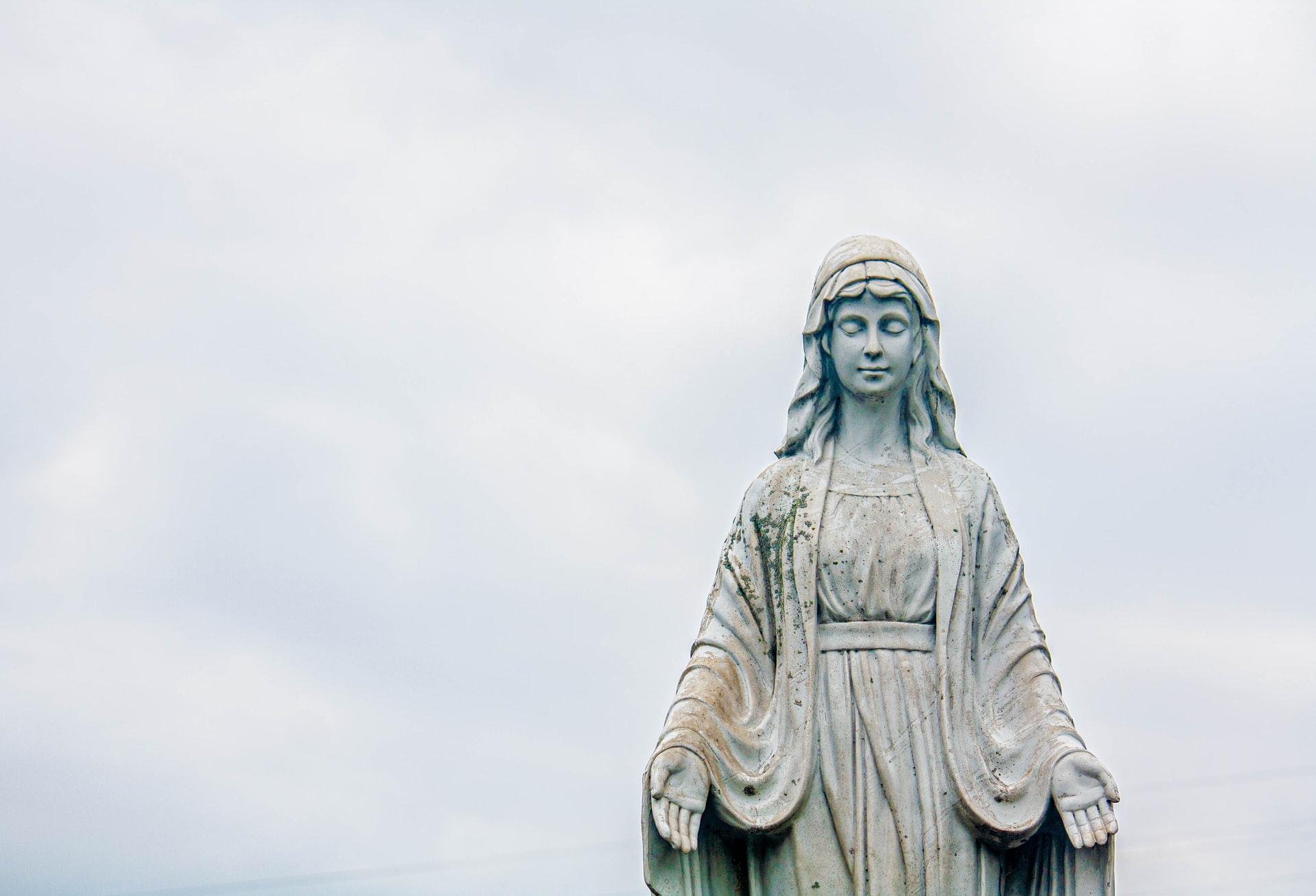
    A statue of the blessed virgin against an overcast sky
    Photo by Gianna Bonello on UnSplash

    Mary said, “Behold, I am the handmaid of the Lord. May it be done to me according to your word.” Then the angel departed from her (Luke 1:38). 

    I have always struggled with control. Ever since I can remember, wondering how others perceive me in my relationships, personal appearance, career, and even my vocation has consumed my thoughts, placing the way others see me at the forefront of my mind. My desire to appear a certain way — whether that was humorous and lighthearted around my friends, overachieving and disciplined in school, or completely put together at work — always seemed to come first, leaving my soul weak and my confidence fragile. As control in all of these areas of my life became impossible to maintain, I realized that worrying about what others thought of me made it impossible to experience joy. My identity relied completely on certainty. 

    RELATED: Reflecting on the Annunciation: How Saying ‘Yes’ Can Make All the Difference

    On a morning when I was feeling particularly overwhelmed, I turned to Scripture in the hopes that I would find solace in Jesus’ words — something I had not done for quite some time. I have always been drawn to passages about the Blessed Mother, and remember flipping through the pages to find her Annunciation. Although I was familiar with the final verse of Chapter One of Luke’s Gospel, I had never framed Mary’s humble response to the Annunciation within the need for control in my own life. Mary’s fiat, or acceptance of God’s will for her life, is the first decade of the joyful mysteries, and yet each moment within them is bound up in uncertainty. From the Annunciation to the Finding of Jesus in the Temple, every instance hinges upon Mary’s surrender to the unknown. Her initial encounter with the angel presents her with a choice between hope and despair, and her resounding “yes” to his message, despite her fear of the unknown, allows her to remain in the present and know peace. As I continued to read through the passage, I was filled with a new desire to say “yes” to my own crosses, particularly my worry over how people viewed me and surrender to God’s will in moments of uncertainty. 

    Reading the passage of the Annunciation inspired me to put myself in Mary’s shoes, allowing me to delve further and further into the mystery of her fiat. Following the Annunciation, the rest of the joyful mysteries continue to test Mary’s willingness to surrender to God’s will. Immediately upon hearing her cousin Elizabeth is pregnant, Mary sets aside her own needs and desires to visit her cousin. She gives birth to Jesus in a foreign place, unaware that her new family will have to flee shortly after. When Jesus is a boy, her trust is tested when she loses her only child in the Temple. Even after he is found, Mary hears from Simeon that a sword will pierce her heart seven times, a reminder that she will suffer as her son fulfills God’s will. Again, her acceptance of sorrow gives way to trust, instilling within her an even deeper sense of joy. 

    RELATED: Mary: The Background Music to My Spiritual Life

    As a young woman, it is easy to question my identity in moments of uncertainty. There have been many times when I have felt the weight of the unknown and been unafraid of the surrender it would require of me — whether I was feeling complacent in a particular job, afraid to leave an unhealthy friendship, or struggling to embrace my current state of life. In moments of fear, I have been tempted to pity myself, and allow shame to creep in. In my hesitancy to embrace the uncertain, I allow my need for security to rob me of joy of the present. I forget that hope in uncertainty is the antithesis of fear in the unknown; in striving to practice that hope, I can imitate Mary in the joyful mysteries and draw closer to Christ, her son. 

    My vocation as a young person is not something I must patiently wait to begin at a certain time. It is not something I must intricately plan out of a need for control or security. My vocation, rather, is to say “yes” in the midst of uncertainty and respond to wherever God needs me in the present moment, and to surrender to the needs of those around me with a spirit of joy and hope. Regardless of our particular circumstances, God has a plan for us amidst the uncertainty; he may not give us all that we want, but he will surely give us all that we need if we have the courage to ask.

    Originally published March 25, 2022.
  • Love Amidst Pain: A Reflection on the Journey to Calvary Through Mary’s Eyes

    Love Amidst Pain: A Reflection on the Journey to Calvary Through Mary’s Eyes

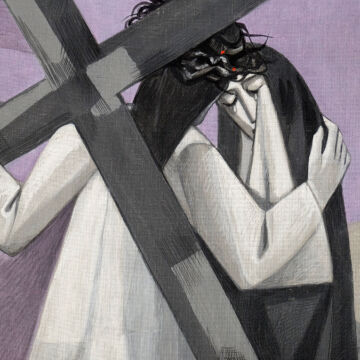
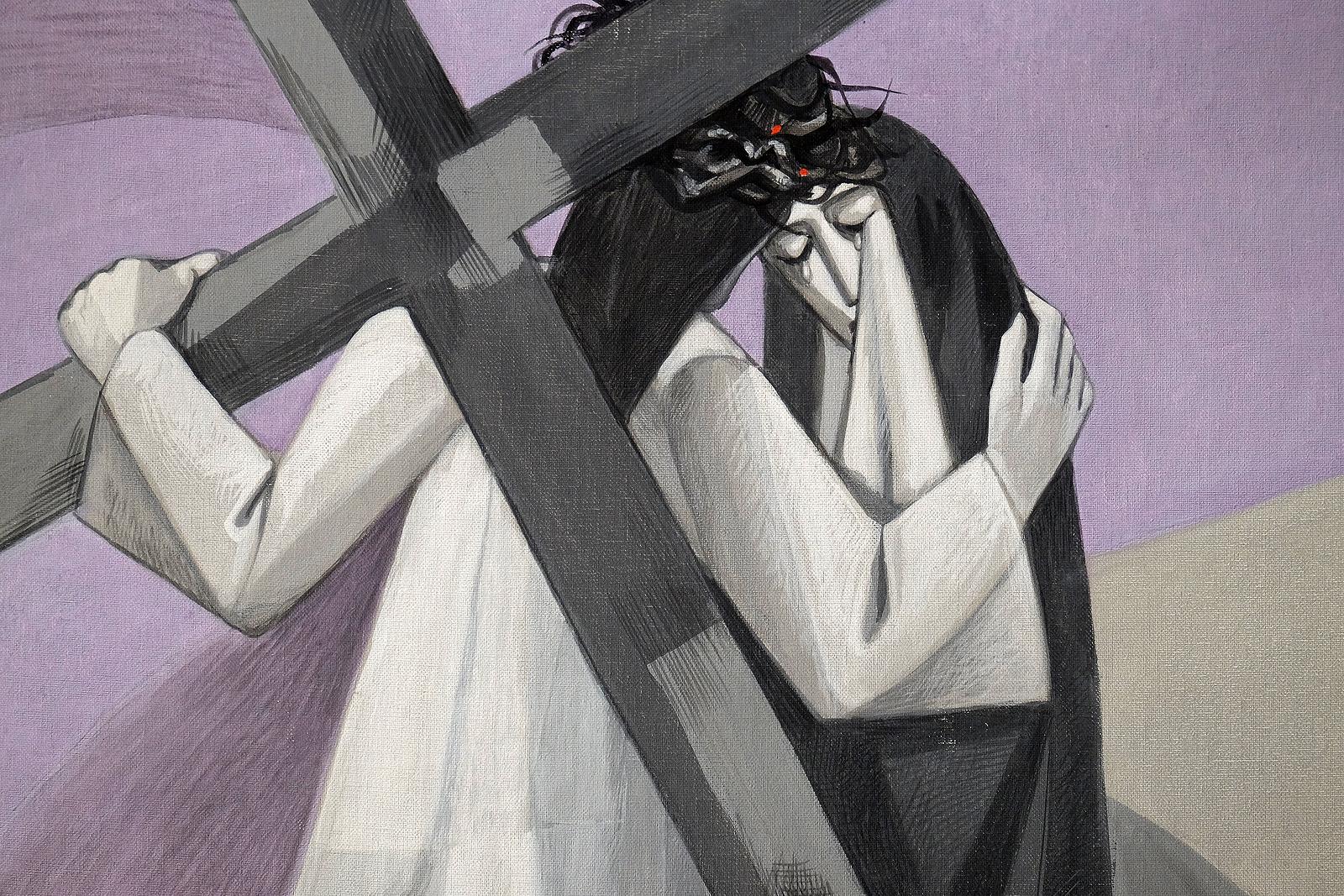
    Abstract of holding the crossAs my infant son struggled with a difficult medical condition over the last few years, I found myself in the midst of caregiving like I had never experienced before. During that time, I stumbled across an old devotion: the Seven Sorrows of Mary. So, finding a connection with the Blessed Mother in my sorrow and hers, I found myself meditating on the Passion and Death of Jesus in a new way. 

    Amid Mary’s great Passion-related sorrows, we can find consolation, just as in the middle of a dark night, we find illumination in the stars. That consolation is that Jesus could see Mary standing there along the road to Calvary. Her presence was a comfort to him, as it was for me facing grief and sorrow in my own life.

    RELATED: Maternal Love and the Cross

    Their meeting is not recorded in the Bible, but we know it happened by tradition. Their meeting was likely brief, just after Christ’s first nasty fall, and in that moment, Mary witnessed all the wretchedness that the people around her son put him through. Yet, what was wretched for her was also a moment in which Jesus could see that he wasn’t alone. Her presence showed him that someone loved him, that someone grieved his fate, and that Mary shared his suffering in her heart.

    So even though Mary witnessed all the grotesque details of Jesus’ torture, she perhaps saw too the glimmer of relief in his eyes — just for a moment, that she was there.

    Sometimes, our presence is not enough to console someone we love. But in certain, beautiful moments, it can. Even during the most difficult times, God offers us small graces. Like Mary, then, we can keep going.

    Right after Mary and Jesus were forced to part, the soldiers recognized that he might not make it all the way to Golgotha alone. I wonder if Mary saw Simon of Cyrene from behind, and saw him help Jesus carry the cross as she longed to do. This too, was both a sorrow and a consolation, for now he had some help, but he was getting farther and farther from Mary, and closer and closer to death.

    RELATED: Turning to Mary in Difficult Times

    Isn’t it funny how intimately sorrow and consolation are linked? The other side of sorrow is joy, and the other side of love is loss. As a caregiver, I’ve learned acutely that in life, we walk the razor-thin edge between the two sides, feeling both in their time as we wobble between them. It’s the sorrow of sitting at the bedside of a suffering loved one, intermingled with the joy of being in their presence, the joy of loving them with a depth that only such suffering uncovers. To flee one – sorrow or joy – is to flee the other. We can accept joy in our lives only when we accept sorrow. We can accept love only when we also accept loss.

    This is the drama of our fragile, human lives. It is my drama in caregiving, and, I imagine, in all the permutations of life in which we live our days for the sake of another. Perhaps it is why Jesus told us to take up our crosses, that we may take up our joys in their time as well (Matthew 16:24). Perhaps it is why the man who avoided suffering “went away sad” (Matthew 19:22).

    Mary’s sorrow is different from sadness. It is founded on faith, given momentum by hope, and is the interwoven brother of love. Sorrow is deep, like roots that probe deeper and deeper so that the tree above can bear abundant fruit. It is like the chaff that grows up with the grain; to remove sorrow now would threaten the harvest, but one day, God will separate the two (Matthew 3:12). Sorrow will be forgotten, and we’ll be left with the abundance and joy of Easter.

    Editor’s note: This article is an edited excerpt from Theresa’s book, “Caring for a Loved One with Mary: A Seven Sorrows Prayer Companion” (OSV 2023).

  • What Does the Solemnity of Mary Mean?

    What Does the Solemnity of Mary Mean?

    The Solemnity of Mary, Mother of God is a liturgical celebration observed on January 1. It is a holy day of obligation for Catholics, meaning that Mass attendance is required (though the Mass obligation is sometimes waived by the bishop for various reasons; when in doubt, check with your parish.)

    The use of the word “solemnity” here is not a statement about Mary’s personality. It is a designation used for certain days within the liturgical (church-based) calendar of the Church. Solemnities are the highest rank of liturgical celebration, higher than feast days or memorials. By celebrating a solemnity dedicated to Mary’s motherhood, the Church highlights the significance of her role in the life of Christ.

    Though New Year’s Day may seem more like a day for football and hangovers than for Mary, there’s a beautiful spiritual significance in celebrating her during the heart of the Christmas season. Pope Paul VI, in his apostolic exhortation Marialis Cultus (1974), called the Solemnity of Mary “a fitting occasion for renewing adoration of the newborn Prince of Peace, for listening once more to the glad tidings of the angels (Luke 2:14), and for imploring from God, through the Queen of Peace, the supreme gift of peace.”

    (Originally published January 2, 2011)