Blog

  • Models of Marriage: Remember These Lessons From Biblical Power Couples This Valentine’s Day

    Models of Marriage: Remember These Lessons From Biblical Power Couples This Valentine’s Day

    Holy Bible open with pages folded in the middle to make a heart shape and cross charm haning from the heart.
    Photo by May_Chanikran on Bigstock

    In the Sacrament of Matrimony, we are called to love each other fully in word, spirit, and deed, not only on our wedding day, but every day of our lives. That’s why the celebration of love just once a year on Valentine’s Day – the origins of which include a Roman fertility ritual and the execution of the martyr Valentine on February 14 – felt counterintuitive to me. It didn’t help that Valentine’s Day evolved into a consumerist holiday benefiting greeting card and chocolate corporations. But, after I got married, I realized that we can reframe this day in a Catholic way: Valentine’s Day can be an opportunity for couples to reenergize their commitment to each other. 

    The best place to begin this re-commitment is the Bible. Though many relationships in the Old and New Testaments reveal the pitfalls of sinfulness and the reality of our human brokenness, many also demonstrate how spouses can be wholly committed to each other. These holy unions, while far from perfect, are built on similar foundations, and we can use these lessons as models for our own marriages.

    LISTEN: Saints of Our Lives: Saint Valentine 

    Trust triumphs over darkness.

    Every marriage faces hardships, but we can survive life’s struggles together if we put our trust in God. Early on in my marriage, for example, my husband and I found it challenging to spend quality time together, as he had a rotational work schedule that made him spend most weekends at work. Our days off hardly ever coincided, and planning for family gatherings was a logistical nightmare. We realized that to deepen our union, we had to take time in our daily lives to fully enjoy each other’s company, which took commitment and communication. But these were lessons that benefited us in the long run. And now, in our fourth year of marriage, my husband’s schedule was finally adjusted to reflect a standard work week. Weekends together now feel like long-awaited blessings, and we soak in every minute of our time together. 

    There are many struggles that can strain a marriage. Several couples in the Bible faced a particular challenge: infertility. Many modern married couples, including some of my close friends, also suffer this specific struggle in private silence. Abraham and Sarah (Genesis 15-23), Isaac and Rebekah (Genesis 24-27), Elkanah and Hannah (1 Samuel 1–2:21), and Zechariah and Elizabeth (Luke 1:5-24) relied on God to direct the course of their lives. Through prayer and patience, they remind us that we are never alone in our struggles. God is with us to comfort and carry us. Ultimately, God blessed these couples with children – and some exceptional ones, too, like Jacob, Samuel, and John the Baptist. 

    However, whether or not children are part of God’s plan for us, we can strengthen our resolve as married couples by trusting in his will – and accepting it. We must be patient when our marriages are tested, keep praying even when things seem impossible, and remember that God’s blessings are always worth waiting for, in whatever form they come. 

    RELATED: Why Is Valentine’s Day Such a Big Deal?

    Kindness is key.

    There’s a saying I’m particularly partial to: “Happy wife, happy life.” But there is truth in this: If spouses aim to keep each other happy, marital life is more peaceful and joyful.

    One way to maintain authentic happiness is through kindness. Being kind to each other goes a long way, as we see in the story of Boaz and Ruth (Ruth 1-4). Ruth, who had been living in the land of the Moabites, lost her spouse and had no one to turn to. She and her mother-in-law Naomi returned to Israel, and Ruth sought out work. She found herself in Boaz’s fields, and though she was a foreigner, Boaz permitted her to work there. He ordered his men not to touch her and to treat her with respect. Boaz gave her lodging and invited her to share meals with him. In return, Ruth was grateful for all the help she could get. Eventually, Boaz and Ruth wed. 

    This power couple shows us that kindness means accepting and respecting each other. It means being patient with each other, helping with chores, taking on more when your spouse is stressed or exhausted, listening, and forgiving. Kindness is loving the person – and showing it.

    RELATED: 6 Tips for Being Better Prepared for Marriage

    Shared goals give purpose.

    Shared values and vision provide purpose for a couple’s shared life. Working towards something together is often more meaningful and enjoyable than going at it alone. My husband and I, for instance, agree that we want to live a life as simply and naturally as possible. This means having adventures in the great outdoors, prioritizing time with our family, and attending to daily joys together, like cooking and dog walking. In the long run, we hope to have our own homestead, raise chickens, and build a family in faith. In the New Testament, Priscilla and Aquila also shared a vision, playing an integral part in the spread of the early Church (Acts 18:2-3, Acts 18-19, Acts 26; Rom 16:3-5; 1 Cor 16:19; 2 Tim 4:19). After Claudius had evicted Jews from Rome, the couple settled in Corinth. There, they met St. Paul and followed him to Ephesus to evangelize, housing disciples and training them in the faith. The couple was so in sync with each other that Priscilla and Aquila are never mentioned separately in the Bible. In this way, they teach us that married couples are strongest when they are working together. This doesn’t mean spouses should always be glued to the hip, but that the strongest marriages are those unified in values and vision. 

    RELATED: Chastity, Poverty, and Obedience in Marriage

    A good Christian marriage is a holy one.

    To find a true, authentic model of Christian marriage, we need look no further than the ultimate power couple: Mary and Joseph. There were many tests in their marriage: Mary’s pregnancy before being betrothed to Joseph; King Herod’s decree of infanticide which drove them to flee to Egypt; losing their son Jesus in Jerusalem during the Passover festival. And there were no doubt many private hardships that Mary pondered in her heart (Luke 2:19). But through it all, Mary and Joseph strove to lean on each other to uncover God’s purpose for them and follow his path, wherever it would lead them. And this ultimate partnership – this ultimate true love – enabled them to create a holy home, one which raised the Son of Man and Son of God.   

    These power couples from the Bible can inspire us to recommit ourselves to our spouses this Valentine’s Day. Though it is conventionally a secular holiday, we can celebrate it in our own Catholic way, by reflecting on our role in our marriages, recommitting all our strength, faith, and love to our chosen ones, and dedicating our union to God. Plus, it is a good excuse to just have a little fun. We usually crack open a bottle of champagne and cook a meal together. (So, despite my prior jab at the consumerist aspect of the day, husbands and spouses alike, take note: flowers, chocolate, a date night, or a wonderful home-cooked meal will still be happily accepted.)

     

  • WATCH: Lent in Three Minutes

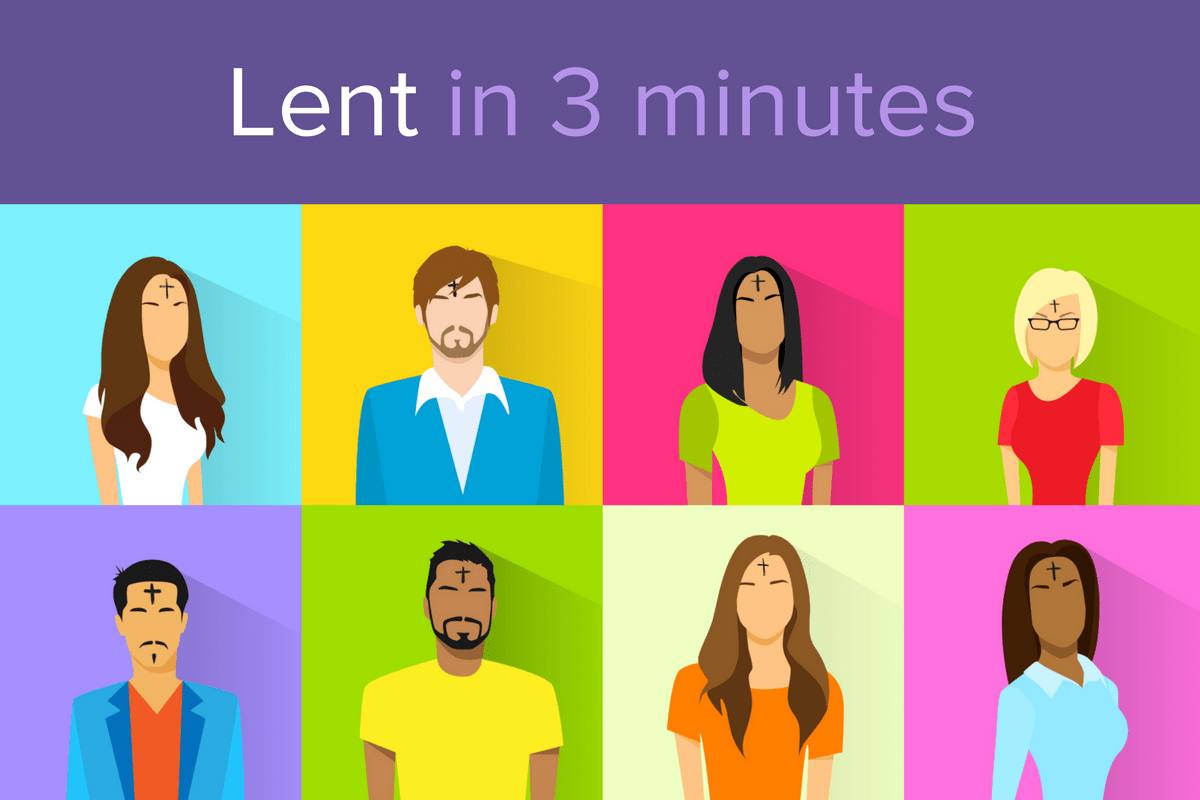
    WATCH: Lent in Three Minutes

    What is Lent all about? Why do Christians receive ashes on Ash Wednesday? Why 40 days? If you’re looking for answers, you’ve come to the right place. In an updated version of our classic video (with a bonus extra minute — because there’s a lot happening here!), Busted Halo explains the significance of this season of prayer, fasting, and giving, and how you can make the most of this time of repentance and renewal.  

    Visit Bustedhalo.com/lent for more Lenten inspiration.

    To download this video go here and click the download arrow or choose save or download (top right). Please note, all Busted Halo videos are free to use in parishes, schools, or for other educational purposes. In fact, we encourage it! 

    (Originally published January 30, 2018)

  • Post-Cana: Ways to Foster a Meaningful Marriage

    Post-Cana: Ways to Foster a Meaningful Marriage

    Couple In Love Holding Hands Each OtherIt was another Saturday night in our house: The kids were asleep, the dog had been fed, the dishes were done. Finally, it was just us. Turning to my husband, I asked like I normally did, “Want to watch something?” He grabbed the remote, I grabbed us each a glass of wine, and we scrolled through our movie choices. Tired from a day of wrangling kids, we spent half the time staring zombie-like at the film and the other half absorbed in our own chores: some last minute work emails and folding laundry. Physically, we were together on the couch, but emotionally and mentally, we were miles away. We were stuck in a robot-like ritual. This needed to change.

    The next Sunday, in our parish bulletin, an ad for a marriage enrichment night appeared. Normally, my eyes would have skimmed right over the notice. After all, our marriage wasn’t in jeopardy. We were trudging through life just like everyone else, right? Weren’t church marriage seminars for curmudgeonly couples who had nothing better to do on a Friday night? Then, I realized we had nothing better to do on a Friday night. Plus, my husband pointed out, it was cheaper than a movie date and included dessert and coffee. We signed up.

    RELATED: Being Grateful in Relationships

    I’d like to say that going to that seminar offered us the magic elixir to a perfect marriage and roused us back into the honeymoon phase, but that would be misleading. What it did offer us, aside from a kid-free night and a plate of cookies, was a starting place. By attending the seminar we confirmed to ourselves and each other that both our marriage and our faith were important and intertwined. It reminded us about the vows we took and the sacrament we received. Our “we,” we were reminded, was not “just us.” Our marriage was a covenant — with one another and with God — making us part of something bigger.  

    In preparing for marriage, we had done a lot of goal setting and planning. Now, several years and two children into this commitment, our daily discussion of goals seldom went beyond planning what we would like to eat. The next week, instead of turning on the television, we turned to a sheet of paper and each wrote where we would like our family to be in the next one, five, and 10 years. Some of these ideas, like our desire to travel more and potentially homeschool our kids, had been mere musings we mentioned in passing. Now, written down and shared, they seemed more real. This led us to our next step, which was an in-depth discussion about how to make these ideas happen. Instead of watching others’ lives unfold on the screen, we were planning our own.

    RELATED: 6 Tips for Being Better Prepared for Marriage

    A couple Sundays later, my sister unexpectedly stopped by our house as we were getting ready for church. “Leave the kids with me,” she said. My husband and I looked at each other. Just us? While we consider celebrating Mass an important family experience, our children (1 and 3) often demand our attention and care during the service. This unexpected “date” allowed us to concentrate on the Mass and celebrate it together. And the brunch we ate after involved meaningful conversation…and no juice spills or temper tantrums. Although we intend to continue to attend Mass as a family, it was another important reminder about the commitment we made to each other and God in this sacrament of marriage.

    Our lives are still hectic and exhausting. The laundry will never, ever be done. And we still enjoy watching television after the kids go to bed. But we’ve realized that the quality of time we spend together is just as, and sometimes even more, important than the quantity. By being purposeful and thoughtful with our time together, we’ve recognized that our marriage is more than “just us.”

    Originally published February 8, 2017.

  • Why Is St. Paul Called an Apostle?

    Why Is St. Paul Called an Apostle?

    Question: Why is St. Paul called an Apostle? He wasn’t one of the 12 Apostles that Jesus picked.

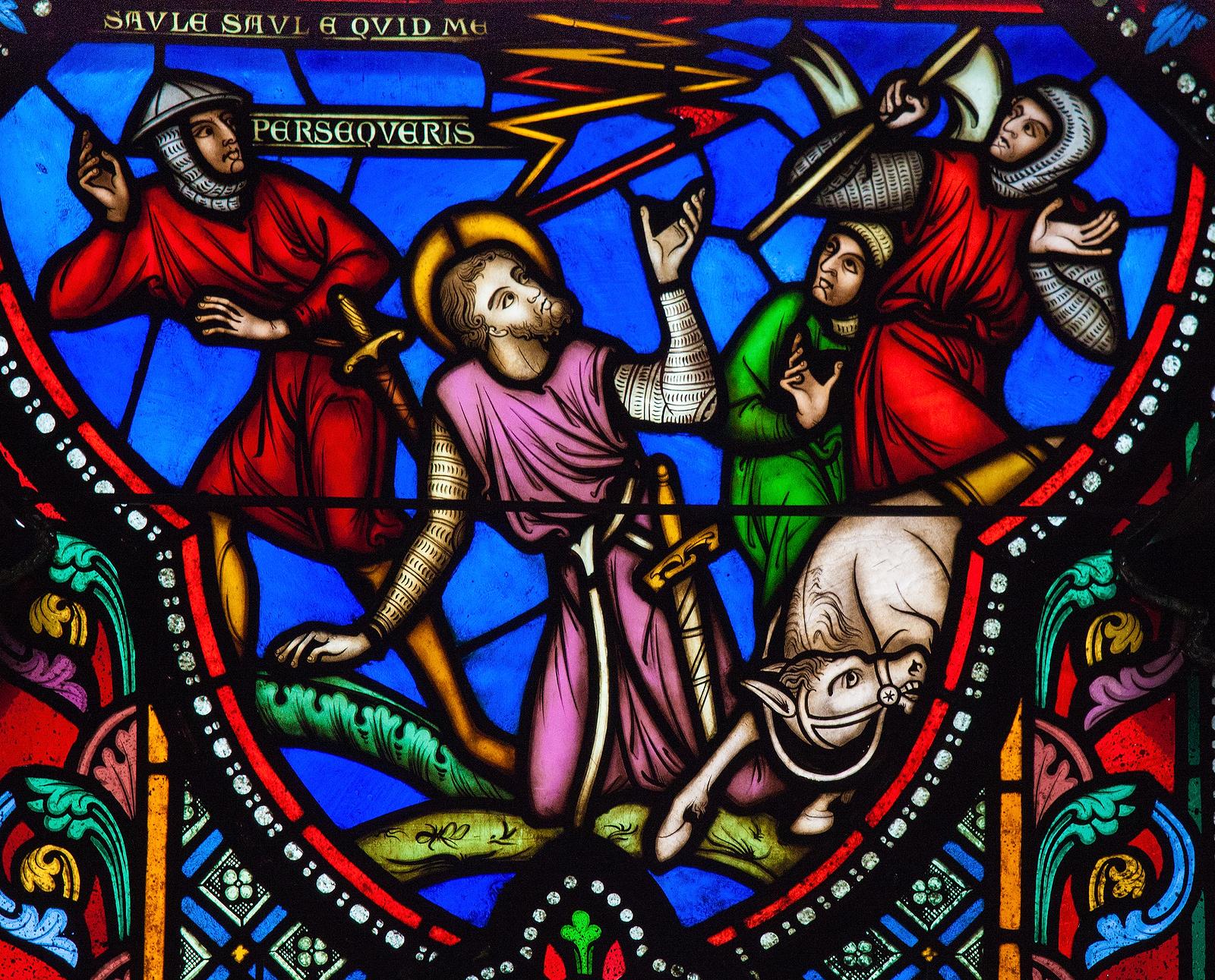
    The Conversion Of Saint PaulThe word apostle comes from the Greek apostolein, meaning sent ones. Although Jesus specially designated 12 of his followers in a symbolic restoration of the 12 tribes of Israel (see Matthew 10:2-5, Mark 3:16-19, and Luke 6:13-16), these 12 men were not the only ones sent by Jesus. Mary Magdalene and the other women who saw the risen Jesus were sent by Him to share the good news of the resurrection with the other disciples. And before the ascension, all of the disciples were sent forth by Jesus to proclaim salvation to the ends of the earth. Paul, though not one of the original companions of Jesus, considered himself an Apostle sent by Christ. Even though the Church has reserved the title “Apostle” in a special way for the 12, Paul was such a pivotal figure in the spread of the gospel that the Church has also applied this title to him, calling him “the Apostle to the Gentiles.”

  • The Lord’s Invitation: 4 Ways to Pray Without Ceasing

    The Lord’s Invitation: 4 Ways to Pray Without Ceasing

    Image of a rosary hanging in front of a car windshield at dusk.
    Photo by Julie Tupas on Unsplash

    I remember reading through the letters of St. Paul in college and being struck by a line that had never really stood out to me before. In his letter to the Thessalonians, St. Paul urges his listeners,  “Pray without ceasing” (1 Thess. 5:17). That seemed like such a daunting command to me.

    I certainly have struggled with what it means to pray in my own life. Whether I’m wondering how I can possibly fit an hour of prayer into my day, or doubting that my prayers are truly from the heart – it’s safe to say, the idea of prayer without ceasing was a fantasy in my eyes.

    RELATED: What St. Paul Can Teach Us About Christian Joy

    In my studies at school and in personal readings, I’ve discovered that Paul’s call to ceaseless prayer is in fact an invitation to a happier life through constant communication with our Lord. Of course it can still be difficult for me to set aside time in prayer and focus completely on the Lord, but with the help of some great Catholic writers, I have learned not to fear prayer, but rather embrace it. Here are four concrete ways that we can begin to practice unceasing prayer.

    1. Pray consistently

    To truly pray ceaselessly, we must first be able to pray consistently. By praying at set times throughout our day, we can orient our work and ourselves towards the Lord.

    One beautiful way that we can practice consistent prayer is through the Liturgy of the Hours. This is the public and communal prayer of the Church, in which there are set prayers to be said at specific times throughout the day. I have found this to be a helpful way to schedule consistent prayer for my day, and I truly enjoy the beautiful morning and evening prayers that start and end my day with the Lord.

    2.  Give alms

    St. Thomas Aquinas, one of the greatest thinkers in the Church, explains that we can accept the Lord’s invitation to unceasing prayer by giving alms. Our generosity and almsgiving can be a cause of continual prayer for others on our behalf. Aquinas explains, “He who gives alms is the one who always prays, for the person who receives alms prays for you even when you are asleep” (Commentary on 1 Thessalonians). 

    RELATED: Choosing Sacrificial Giving

    For years, my family created care packages for the homeless, each of us purchasing a few essential items that we’d then pack in tote bags and share with those in need, especially around Christmastime. There are many ways to practice almsgiving, such as tithing at Sunday Mass, donating clothes and food to a local shelter, or volunteering at a local soup kitchen. Imagine the beautiful tapestry of perpetual prayer there would be if all Christians were as generous as Christ calls us to be, sharing our gifts and inviting those we serve to pray for us.

    3.  Desire God

    Perhaps the most common excuse for why we don’t pray is that we are too busy — it certainly is for me. Yet all the busyness in the world can’t keep us from ceaseless prayer. In fact, St. Augustine points out that while it is beneficial to spend much time in prayer, this is not necessary for unending prayer. We can continue with the good and necessary work in our lives, all the while desiring the Lord and his will for us. This means keeping God at the heart of all we do.

    RELATED: Keeping My Faith Alive in Times of Spiritual Struggle

    Augustine explains that prayer without ceasing is “Desire without intermission, from him who alone can give it, a happy life, which no life can be but that which is eternal.” We can pray ceaselessly, by desiring continually, the Lord and the true happiness that only he can bring (Letter 130.9.18). It can be very easy for me to get overwhelmed by the struggles and anxieties of my daily life, but I strive to remember and focus on what is at the heart of my life — the Lord. When I can end the day knowing that I kept God and his love for me in mind with all that I did, I can rest knowing it was a day of prayer.

    4.  Turn all thoughts to the Lord

    One of the most transformative approaches to ceaseless prayer I have learned is to turn the interior monologue of my thoughts into a dialogue with God. If there is one thing I already do without end, it is thinking! There is a beautiful opportunity to invite the Lord into these thoughts so that they are transformed into a conversation with him. I often become overwhelmed when thinking of my plans for the future. Instead of planning my future alone in my mind, I turn my thoughts into a dialogue with God, asking him to guide my ideas, show me the right way, and help me accomplish his will for my future. Through that continual conversation and contact with the Lord, we are truly praying without ceasing.

    RELATED: Offer to Pray for Someone? 5 Ways to Stick to Your Word

    St. Paul’s command, I’ve come to understand, is not some oppressive law on the number of hours I must spend in prayer. Rather, it is an invitation to transform my life so that I am always in contact with and in the presence of God. I hope these steps to pray without ceasing help anyone looking to achieve everlasting union with our Lord.

    Originally published January 24, 2022. 

  • Adjusting My Unrealistic Expectations: Three Essential Takeaways from the Search for My Soulmate

    Adjusting My Unrealistic Expectations: Three Essential Takeaways from the Search for My Soulmate

    I am your sister in Christ; I am also your friend rooted in reality. Between the ages of 22 and 25, I prayed fervently to St. Anne, St. Anthony, St. Joseph, Our Lady of Perpetual Help, and all the other friends in heaven who promise to make spousal matches. I was looking for a St. Joseph of my very own, after briefly discerning religious life during college and realizing it wasn’t for me. Once I knew that I wasn’t called to live in a convent, I began the search for the perfect Catholic gentleman. I wanted an intellectual (would we meet reaching for the same Chesterton book?), someone my parents would adore immediately, and most likely someone I would meet at Mass or Theology on Tap. I attended so many Catholic networking events in the cities where I lived during that time, certain it would be where I would meet my future husband.
    RELATED: My Spouse Isn’t Religious, but God Is Still in My Marriage

    When I turned 25, I did meet someone… a gruff, burly man working in entertainment in Los Angeles, who just happened to be Jewish, with no interest in converting to the Catholic faith. But we had other values in common, like family, community, and love for nature. Seven years later, none of that has changed, and we are newlyweds. Our journey was not necessarily what I imagined for myself at 25 – and our wedding was not either. We got married in the time of COVID, with our parents watching via video stream and our handful of witnesses wearing masks and standing six feet apart. My expectations came crashing down hard when we had to postpone our original wedding date, but the joy of our tiny marriage was real because of who I married.

    But I’m not here to tell you the details of my story (albeit it is pretty good and full of divine intervention). Instead, I want to share with you what I’ve learned about relationship expectations as a faithful Catholic called to marriage, which is that – to the surprise of some – virtue requires us to open our hearts and pick our battles (proof: St. Therese of Lisieux’s life in the convent). 

    Here are a few suggestions for how to adjust potentially unrealistic expectations you may have of the person you hope to marry.

    1. Your future spouse probably has hobbies that are different from yours and those of a monk.

    While I didn’t grow up gaming and honestly don’t really get the appeal, my husband has a weekly video game night with a bunch of guys he connects with virtually, and they play as a team. It is one of his best stress-reducers after a long work week. And who am I to judge? It’s not violent, and if it was, we could have a conversation about whether or not that particular game affects his demeanor. As a lifelong soul searcher, sure, I would love to see him pick up “Confessions” by St. Augustine on a Friday night instead. But if I’m choosing to do my nails or watch “Under the Tuscan Sun” in my free time, then why shouldn’t he be able to use his time in the way that he chooses? For the record, my husband is also a ceramics artist, a gardener, and the best cook I know.

    RELATED: What Is Marriage Prep Like for Those Marrying Non-Christians

    2. He or she might not be who your parents – or even your best friend – always had in mind for you.

    My parents expressed skepticism when I told them I was certain my vocation was to marry a non-Catholic man. I met my husband at the wedding of two Catholic friends who also found the match odd and frankly, disappointing. I felt downtrodden by the uncertainty of others, even when I was certain in my own heart. I wanted everyone to recognize our chemistry instantly and thought affirmation would come easily if it was my vocation. But Christ was the first to teach us that true vocation is not always easy. Over time, my parents and friends were able to see the love between us, and the same beauty and goodness that I see in my husband. While they usually want what is best for us, the important thing to remember if others aren’t sure about your partner is to ask yourself earnestly – what do you want?

    3. Perfection doesn’t exist outside of Jesus Christ and Our Lady.

    If I asked you to list your sins, we call that Confession. If I asked you to make a list of the sins you don’t want your future spouse to commit, we would probably call that unattainable (aside, of course, from the biggies like infidelity). Every human being is marred by original sin, and no matter how hard we try to overcome our flaws, any married couple can tell you that they are present daily. God willing, you will find someone who loves you for you and all your shortcomings – I am lucky enough to have done so. And in the same way you wish to be loved despite your imperfections, you must learn to love another despite his or hers. 

    RELATED: 4 Questions to Ask in an Interfaith Relationship

    Everyone has their own non-negotiables based on lived experiences, and it’s okay to keep those in mind as you look for a spouse. But if we find that we cannot change our beloved, can we love them anyway? (Spoiler alert: you won’t change anyone overnight or maybe ever, especially when it comes to picking their socks up off the floor.) While my husband is not actively involved in my faith life, I know that he loves me because of who I am in my entirety, including my spirituality and religious grounding, which is the soil from which the rest of my character springs. And I see the Holy Spirit emanating from him when he cooks me an incredible meal or gazes at the mountains. He often teaches me with his generosity, from organizing neighborhood trash cleanups to buying hats and socks to hand out to LA’s homeless. 

    The overarching theme here is not letting an unattainable ideal or an impulse to check all the boxes prevent you from finding true love. There are incredible people out there, both inside and outside the Catholic Church. Chemistry is important (in my experience) as is a shared value system and vision for your lives together, plus of course conversations on the big three: sex, children, money. 

    But open your heart to see the true person in front of you. You could be so pleasantly surprised at where it leads.

    Originally published Feb. 3 2021.

  • ‘Jonathan & Jesus’ Is a Story of Surrender We Can All Learn From

    ‘Jonathan & Jesus’ Is a Story of Surrender We Can All Learn From

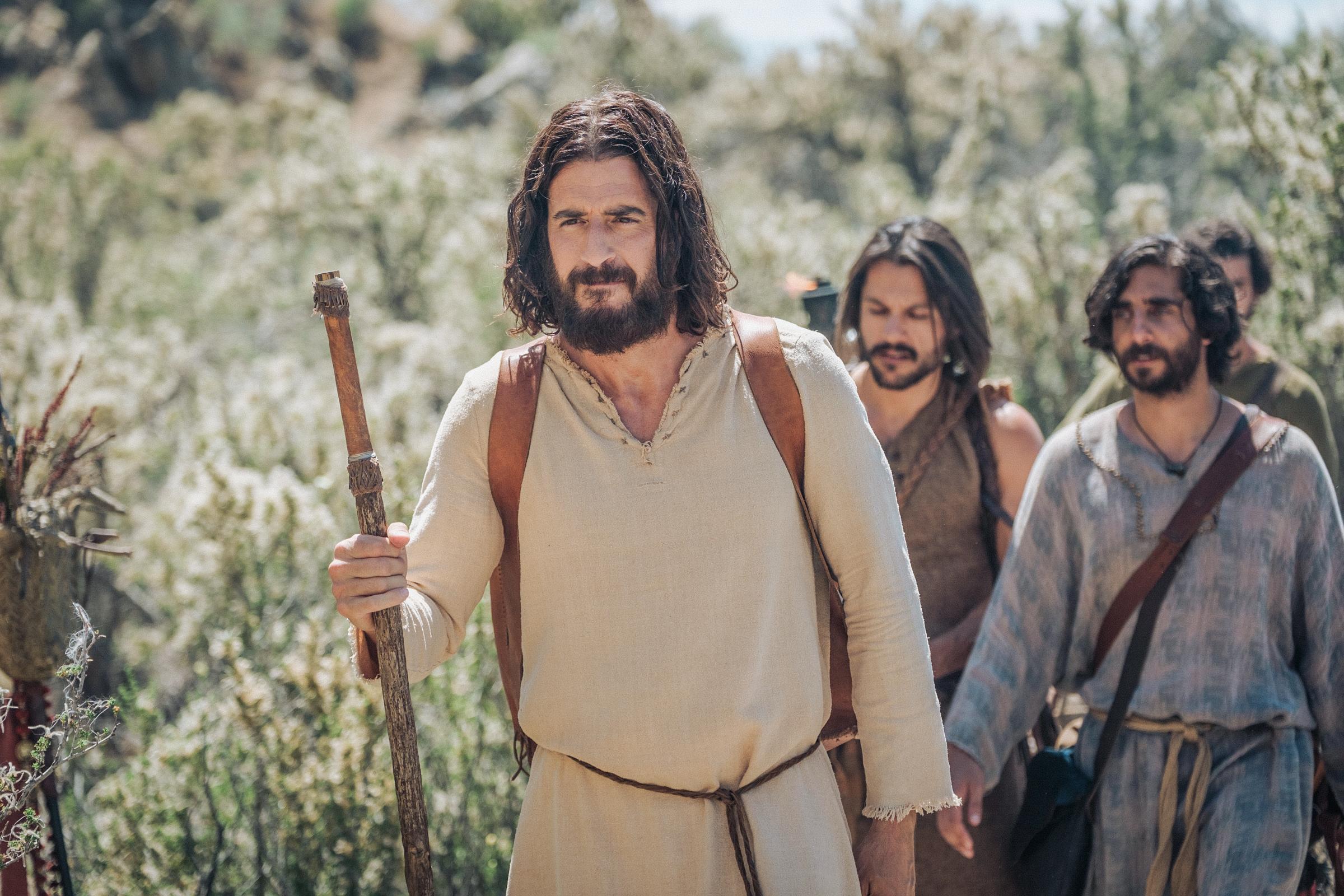
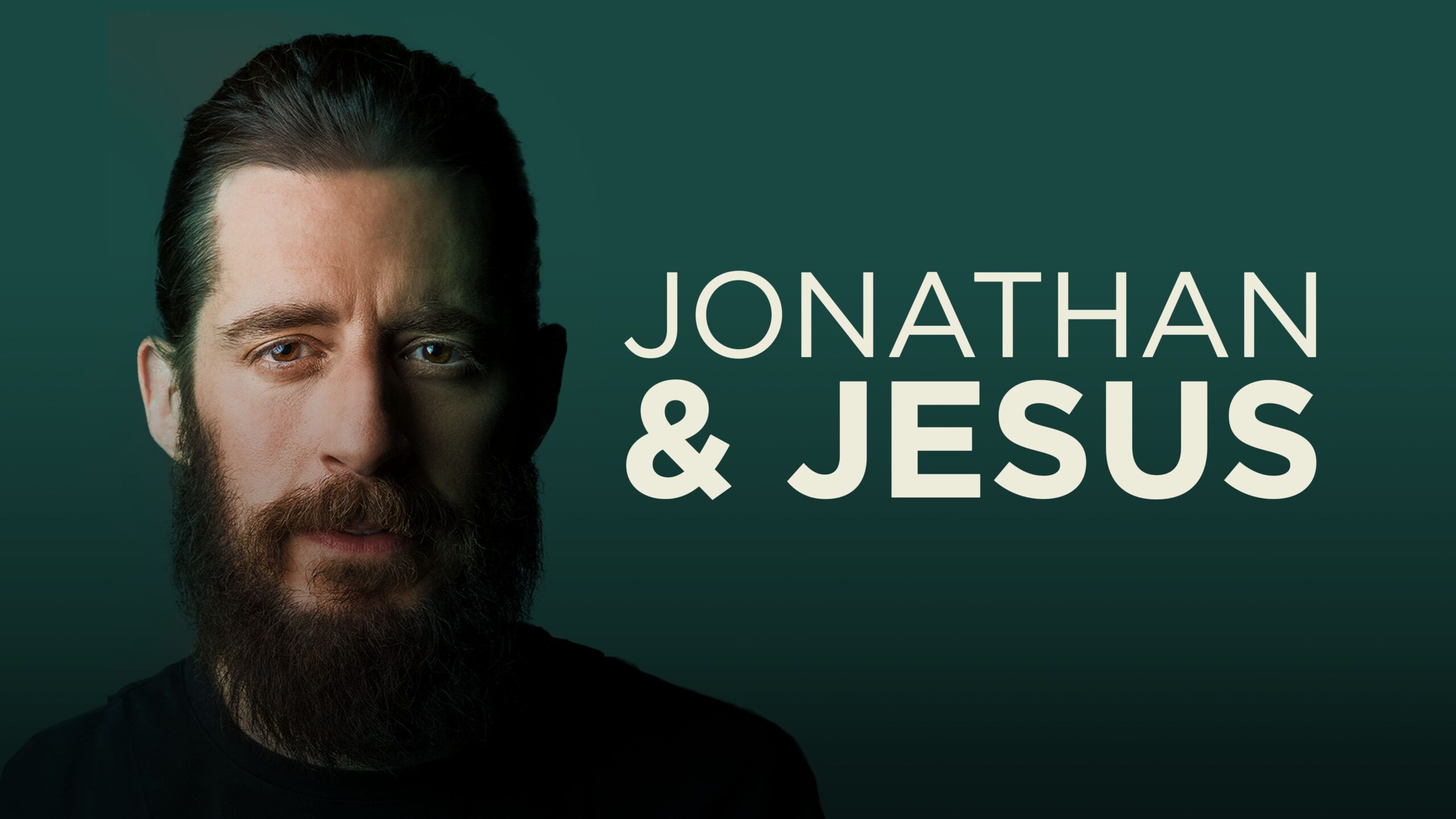
    “Jonathan & Jesus” docuseries | Steven Schwartz

    Let’s get this out of the way first: I’m an unapologetic fan of “The Chosen,” the series about the life of Christ that went from a crowdfunded upstart to an unexpected worldwide phenomenon; its fourth season is about to hit movie theaters in February before being released to streaming in March. I think Jonathan Roumie’s performance as Jesus in the series is staggeringly good. I’m also someone who’s worked in the entertainment industry for much too long, often with those magical creatures we call actors (not, for full disclosure, with Jonathan Roumie). So, I acknowledge I’m not the most objective viewer of the newly released “Jonathan & Jesus” docuseries.

    Yet I admit when I initially learned about “Jonathan & Jesus,” I had a moment of “oh, dear.” My first thought: How does this, even when made with the best intentions, avoid looking like an ego trip?

    I’m happy to say that “Jonathan & Jesus” doesn’t play at all like an ego trip. It’s not an easy watch – that’s not criticism, that’s praise – because it is a journey through the life-changing nature of Roumie’s experiences, from deeply blessed to personally overwhelming to just plain cool, during the early days of the ascendency of “The Chosen.” It’s also an interrogation of the meaning and impact of Jesus, not only on the actor playing the role, but on everyone in our world.

    LISTEN: Jonathan Roumie’s Prayer Challenge

    While the burgeoning of “The Chosen” phenomenon and Roumie’s landing a lead in “Jesus Revolution” between the shooting of seasons two and three of “The Chosen” serve as an ongoing throughline, each episode of the docuseries has its own focus, roughly sketched as (1) Jesus as God and historical/cultural touchstone, (2) Christianity, division, and unity, (3) celebrity and humility, and (4) control versus surrender. “Jonathan & Jesus” is ambitious and immersed in big questions throughout, touching on subjects both complicated and diverse. 

    A journey through the meaning of Jesus as the Incarnate Word of God, the primary cause of Western Civilization, and a pop culture motif took me on an emotional rollercoaster. First, I felt vaguely uncomfortable seeing some of the more mundane depictions of Jesus portrayed in pop culture, from “Family Guy” to the Buddy Christ image from Kevin Smith’s “Dogma.” That gave way to a sense of the transcendent as a historian standing in the shadow of the Roman Colosseum considered that at the time the Colosseum was built, it would have been ludicrous to think that the Roman Empire would soon be ruins, but a nascent faith beginning with Jesus and a small group of followers in Judea would survive, thrive, and be, millenia later, the largest faith in the world. 

    Discussions between Roumie and preachers and influencers of various Christian denominations reminded me how we’re so unfortunately quick to criticize each other, focusing on the things that divide us as Christians instead of the God who unites us all. Interviews with scientists, ministers, writers/podcasters, human rights campaigners, and musicians revealed the pivotal moments in which these people chose to surrender their lives — expectations and illusions of control included — to God in faith and the monumental results of that choice. Given my own constant struggle with surrender and what it really means in practice, seeing these stories is a nudge to keep on trying. (If you’re like me, you regularly turn your eyes heavenward and say, “Is this it, God, am I surrendering right yet? Because I don’t think I am!?!”) And yes, you will come away from this doc wishing that Jonathan Roumie, Sheila E., Brandon Flowers, and Alice Cooper could tour as the world’s most unlikely supergroup.

    Photo courtesy of The Chosen / Mike Kubeisy

    RELATED: Spiritual Streaming: 5 Catholic-Themed Films for Your Next Movie Night

    With all these matters raised and considered, the series is in some ways a choose-your-own-adventure; which parts of it stick with you will vary significantly from viewer to viewer. At the close of the final episode, the person who watched with me said, “The things some of those Christians he interviewed were doing…feeding migrants under bridges and saving trafficked women…how am I ever going to get to heaven?” Meanwhile, I was most affected by the unflinching honesty of the life-of-an-actor segments, which take the viewer from the dire situation Roumie was in just months before “The Chosen” came along to interviews with his sister, Olivia, and Dallas Jenkins (creator of “The Chosen”), discussing how both fame and the conflation of a human actor and the Son of God in the mind of fans can be disorienting, scary, and exhausting—even for a grounded person with a deep faith to sustain him. In my professional life, I’ve seen both actors eking out a living juggling acting gigs with low-paying survival jobs and actors dealing with sudden fame due to one big role (never mind the role of Jesus, which adds knotty moral questions to the already complex issue of fan adulation). These segments felt painfully real and raw to me, a look behind the curtain that we rarely get about the challenges of life as an actor. 

    Does the docuseries fully get its arms around all these subjects? Not precisely, but to my eyes that’s exactly the point. These subjects can be explored, dissected, studied, grappled with, and prayed over, but as Anthony Bova, Roumie’s acting coach, says in the plainest way possible: “…the whole Jesus Christ thing, that’s tough. Because…I mean, whadya do with that?” That statement works as both an acting coach throwing up his hands at the challenges of a role (the job of playing the perfect human is restricted to exactly one role in all of literature, and it’s this one) and a person questioning how much any of us can represent Jesus, even if we’re mandated as Christians to try. So fair enough, Anthony. That’s a question millions have asked over the ages.  

    RELATED: Less Worry, More Trust: Praying the Surrender Novena in Times of Change

    But along comes a scene near the end of the docuseries to show us what we do with the “whole Jesus Christ thing.” It takes us back to 2018, to a part of Jonathan Roumie’s personal story of surrender that many “Chosen” followers have heard about but not seen. I’m not going to go into detail; it is a losing proposition to try to find adequate words to describe someone at the end of his rope encountering the ineffable, and in any event, the powerful moment deserves to be experienced, not described. I’ll just note that if you want to see God starting to lift up someone who has fully surrendered after a long struggle in the wilderness, well, there it is. 

    So no, none of us can get our arms fully around these subjects. Not you, not me, not Jonathan Roumie. Three hours of screen time (or two thousand years of Anno Domini) cannot unlock the unfathomable. What “Jonathan & Jesus” shows us, viscerally and in multiple different testimonies, is what we can do: surrender to the unfathomable. And then the one who is the ultimate subject of this docuseries – the one whose credit is larger, in bold and after the ampersand in the title treatment of the trailer — can get his arms fully around us and take us on his journey.

  • How to See Life’s Interruptions as Blessings

    How to See Life’s Interruptions as Blessings

    I once went on a retreat in Northern Colorado to a Benedictine abbey where I noticed a bell would ring throughout the day. I later learned that the bell was to let the sisters know it was time for something they were called to do or attend to (prayer, farm chores, someone at the front door of the abbey, etc). When the bell rang, they had to stop what they were doing to tend to whatever the bell’s purpose was for; as that interruption became the top priority. 
    We have an actual bell in our house, but no one is allowed to ring it because it’s really loud and my kids would never stop. Ever. 

    RELATED: Praying for Patience: What I Learned From God’s Time vs. My Own

    At the time, I thought the bell at the abbey felt a lot like parenting. Having kids is one long season of interruption, setting aside whatever we’re doing to attend to the needs of others, and parents learn to roll with it no matter how frustrating that feels at times. But, there are many moments when my time (what little I have) gets taken from me, and it’s a continuous struggle to want to share or give that time away. 

    Often, in the evenings, I finally get a chance to sit down after a long day of continually serving my family only for someone to need something. Maybe it’s something I can’t really ignore, like someone getting soap in their eyes in the shower, a misunderstood homework assignment, or the baby waking for an unscheduled after-bed diaper change. Often, it’s something I want to ignore but realize is important to one of my kids, like a requested bedtime story, or help with nail polish. On the weekends, my husband will often ask me to help with a project; thwarting any opportunity for me to do things I’d hope to do. Even when it’s not something urgent, my time is often interrupted by thoughts or reminders of things I didn’t do. I’ll start to read a book, then remember I forgot to wash uniforms for school the next day, which leads to discovering a load of towels in the washer which can’t be moved because the dryer is full. 

    RELATED: The Work of Rest: How I Find Time for Spiritual Reflection in My Busy Life

    Those with the vocations of parenthood and religious life aren’t the only ones who have “bells” to answer; everyone does. We are all called to serve others every single day; what better way to know when to serve than to be interrupted with a reminder? While at the abbey, I learned the importance of our Christian call to love and serve and how that’s a large part of my vocation as a mom. When I get frustrated at interruptions, I remember the bells at the abbey. I remember my vocation. Every request from one of my family members is a daily reminder and call to serve. It’s kind of my job. 

    The bells of the abbey remind me that despite whatever curveballs I get in family life, the object is to keep going. Especially when I don’t want to. Find the good in the interruption, the gift, the message, whatever it is God is trying to show us. Look for the lighter side of what I’ve had to adjust and why I had to. That’s what the bell means. 

    RELATED: Learning to Live in the Moment, Even When You’re Busy

    So, how do you stop regarding all the unpleasant things as interruptions?

    I don’t know. 

    Like everything else, I suppose it’s about practice, persistence, determination. I’m not very good at it, but I’m trying to be. I’ve been working on a few things that help like:

    • Stop and take a breath.
    • Pray for help: Holy Spirit, give me the patience to handle each interruption with patience so I may offer it up to God.
    • Prioritize my to-do list after the interruption.
    • Remember the importance of my Christian duty to love and serve others. (I know, this is so hard sometimes. I’m terrible at this a lot, too).

    We all know living the holy life isn’t easy. It takes a lot of humility and self-sacrifice, and maybe life’s interruptions are God’s way of reminding us of that. If serving others is an act of the highest form of love, then we honor God every time we answer that “bell,” especially if we don’t want to, but choose to anyway for the sake of the one ringing it. 

    RELATED: 10 Ways to Serve Others When You Have Young Kids

    I try to remember that God is always working on my soul. Interruptions are a part of life and I doubt we’ll ever see an end to them. So, I find that with the right perspective, it’s a lot more bearable. As it stands, our metaphorical bell of perpetual interruption serves as a good enough reminder of my duty as a mom to serve my family. Maybe one day I’ll learn to fully embrace the bell. The metaphorical one, not the real one in my house. It’s really loud and it would never stop ringing. Ever.

    Originally published January 11, 2021.

  • How Attending Mass in a Different Language Taught Me About the Universality of the Church

    How Attending Mass in a Different Language Taught Me About the Universality of the Church

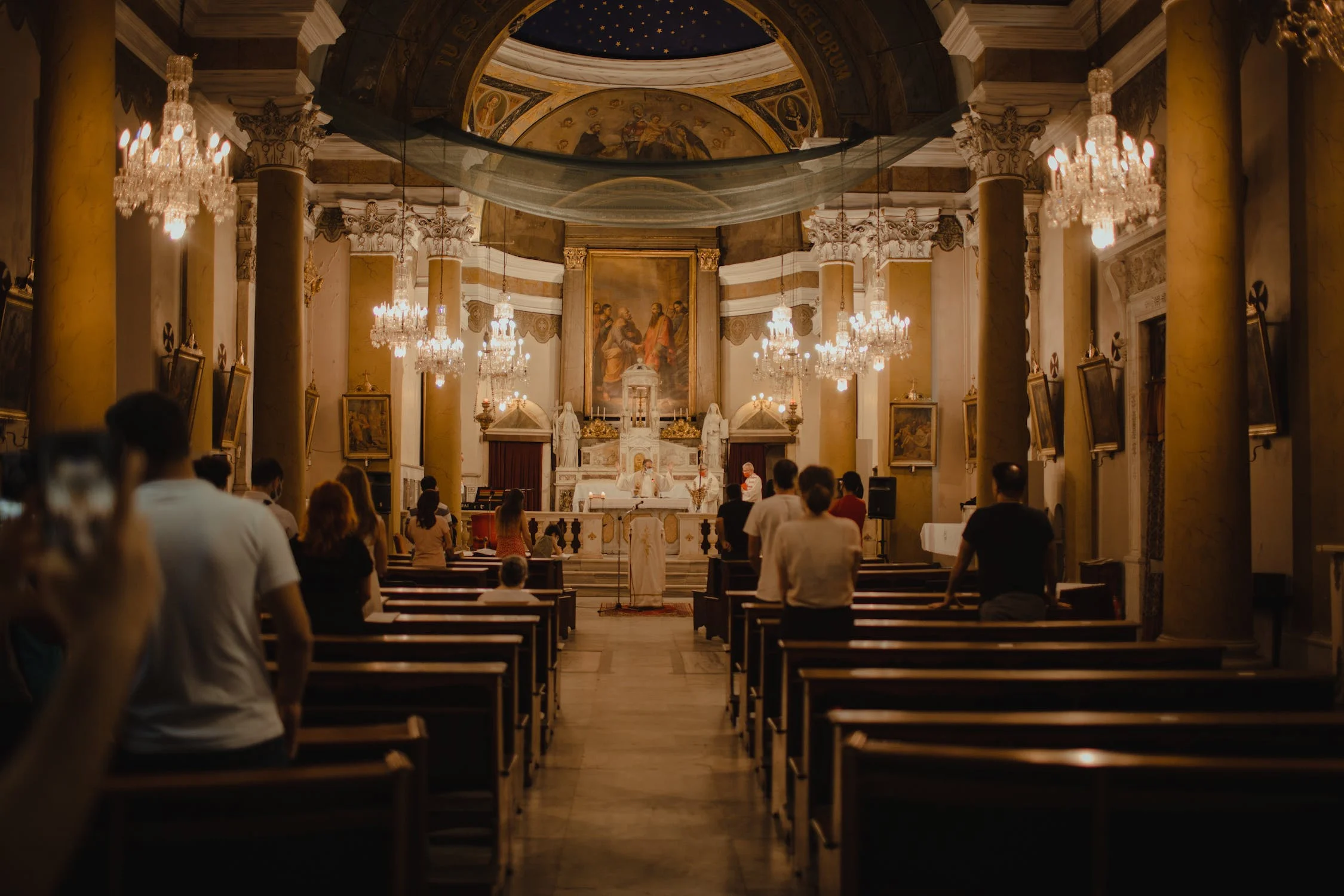
    Faruk Tokluoglu on Pexels

    Growing up in one of Canada’s English-speaking provinces, I experienced a faith that was passed on to me at home, at Mass, and at Catholic school. This exposure was consistently in English, apart from a few basic prayers taught and subsequently memorized in French. In my 20s, I moved around quite a bit, spending time in the United Kingdom and the United States. I found a new parish wherever I went, and always in an English setting. 

    Eventually, I moved to Montreal, a vibrant, multicultural, and multilingual (with French as the official language) metropolis in Canada, and I have been blessed with the opportunity to now call this city home. My husband and I live in one of the city’s historically Italian residential neighborhoods. Although it is a very diverse community today, there is still a significant Italian presence, and our local parish offers Masses in either Italian or French, accordingly. I am at a proficient level in French, and I have a basic understanding of Italian. Since further connecting with my Italian heritage and rekindling my French language skills were both on my bucket list, I viewed these Masses as an exciting opportunity.

    LISTEN: How Can I Follow Along With Mass in a Different Language?

    The experience of participating regularly (that is to say, not just occasionally while on vacation) in a non-English Mass has been enlightening and refreshing, but of course, took some adapting. Following all the points made in the homily, for instance, was a particular challenge for me at first. Still, there are lots of people locally and worldwide who have to adapt to attending Mass in a different language than their own. I had never really given much thought to this fact, but now I have a much greater awareness and appreciation of individuals in such a scenario.  

    Before the Second Vatican Council in the first half of the 1960s, Masses around the world were celebrated in a common language, Latin. It was only after this important ecumenical council that the faithful were able to attend Mass in the language of the local community. Despite this change to the vernacular, the format of the Mass remains the same in whichever part of the world and in whichever translation. 

    This consistency provides a visible sign of the universality of the Church. In fact, the word “catholic” literally means universal. The Catholic Church is indeed a vibrant community of believing women, men, and children connected in faith across the globe. The universality of the Church in the context of the Mass has become clearer to me since moving to Montreal and joining a parish community that functions in a language that I had not been accustomed to using at Mass.  

    RELATED: Experiencing Spanish Mass

    I would like to share two actions that helped me to adapt to a non-English Catholic Church community more readily.  

    First, I take more time to prepare for Masses. Before each Mass, I read through the Sunday readings and corresponding reflections in my English-language Missal. (I use the Canadian edition.) At the Italian-language Masses, the parish provides printouts at the entrance of the Church, which contain the corresponding readings for the day and other key parts of the Mass, including the Creed and Prayers of the Faithful, in Italian. This resource is very helpful to follow along and participate more fully in the celebration. To better streamline my adaptation to the French-language Masses, I subscribed to a monthly resource providing the Readings for all the Masses, including the daily Masses as well. About a year ago now, I started as a lector during the weekday French Masses, and the preparation involved in that context has also helped me adapt more seamlessly. 

    Second, I seek out alternative ways to celebrate the faith in English (or the language that I am used to attending Mass in), in addition to personal/family prayer. Shortly after moving to Montreal, amidst the first year of the pandemic, I became aware of an online prayer session hosted by the Sisters of the Congregation of Notre Dame. This virtual English-language prayer session in the Lectio Divina format gathers a small group of young adults (or those young at heart) once a month to pray together using one of the readings from the upcoming Sunday Mass. Lectio Divina is a beautiful way to pray with Holy Scripture. The Scripture passage is read three times and participants are invited to reflect upon what the passage is saying today and to share these thoughts with the group. Sometimes a reflection may be about certain emotions that have moved our hearts. Other times, it relates to a specific character in the passage, and other options could be seeing the pertinence of the text in the context of a current personal circumstance.  

    RELATED: A Dead Language? 5 Facts About Latin in the Catholic Church?

    Regularly participating in the Mass in a different language has presented me with some graces, despite the natural challenges associated with adapting to the less familiar. The extra preparation that I do in advance of Mass gives me more time to think deeply about the readings. I can be more attentive and focused throughout the celebration. 

    I highly recommend attending Mass in a different language if the opportunity arises, perhaps while traveling or if there is a local parish that celebrates Mass in another language. A change from the familiar, a switch from the routine, can be a valuable blessing to heighten one’s focus or reduce distractions during the Mass and to develop or renew one’s awe and appreciation of the various rites.

    To sum up, the Church is indeed universal. Participating in the Mass, in whichever language, is a powerful sign of the unity that connects Catholics around the globe. Each time we gather around the Eucharistic table for the fulfilling nourishment that only Christ can provide, we partake with others worldwide who are receiving the same sacrament. 


  • 5 Psalms for When You’re Sick

    5 Psalms for When You’re Sick

    For many of us, as we move through January, our thoughts turn to getting healthy by watching what we eat and hitting the gym. But the reality of winter presents us with some health challenges, as contagious illnesses like colds and the flu make their annual rounds. When we get sick in the winter months, darker days and colder weather can compound the misery of the experience.

    Whether you’re laid low with something acute, like the flu, or something chronic you struggle with all year long, it can be tough to find comfort for your soul when your body feels so wretched. Thankfully, the Bible offers a wealth of encouragement for such times. If you’ve ever read the Book of Psalms, you know that these ancient prayers of praise (and sometimes even anger or despair) resonate on a deep level even today. Though you may have read the psalms in the midst of other trials in the past, perhaps it’s time for a fresh look at how they can serve as a source of hope and comfort for illness. Here are five psalms to turn to when you’re sick.

    Psalm 6: God hears us

    Sometimes when you don’t feel well, don’t you just want someone to commiserate with you? If you can’t call upon loved ones to share the pain of your illness, try praying along with David, the author of Psalm 6. This biblical “man after God’s own heart” knew well the burden of unrelenting affliction. In this totally relatable cry for mercy, he pleads with God, “O Lord, heal me, for my bones are in agony. My soul is in anguish. How long, O Lord, how long?” The psalm ends with the helpful reminder that “the Lord has heard my cry for mercy; the Lord accepts my prayer.” We, too, can rest in the knowledge that no matter how God may choose to answer, he does hear and accept our prayers.

    RELATED: How I Started Praying the 23rd Psalm with My Kids

    Psalm 38: You’re not in this alone

    Though most psalms point to God’s enduring faithfulness and eventual deliverance, they don’t all end neatly tied up with a bow. But that doesn’t mean they don’t still bring comfort. I personally find enormous amount of encouragement in Psalm 38, where David offers up a litany of his sufferings. “There is no health in my body,” he laments. His wounds “fester and are loathsome,” his back “is filled with searing pain.” To me, it’s good to read that my suffering is not unique. There’s solidarity in remembering that even (or especially) God’s beloved saints have endured illnesses just as bad—or far worse—than mine.

    Psalm 41: God is Healer

    Psalm 41 contains perhaps the most comforting verse in all of Scripture for anyone struggling with sickness: “The Lord will sustain him on his sickbed and restore him from his bed of illness.” While we know that God doesn’t heal every illness—and when he does, it’s always on his own timeline—this psalm testifies to the sustaining grace he offers our souls when our bodies fail us.

    WATCH: Who Can Receive the Anointing of the Sick?

    Psalm 35: Fight back against illness

    In Psalm 35, David asks the Lord to “contend with those who contend with me”—meaning King Saul’s army that pursued David as he fled through the desert. But in my own life, I like to use this psalm as a rallying cry against the invading agents that assault my body during a sickness. I picture the “attackers gathered against me when I was unaware” as the bacteria or virus that’s making me sick. And I pray that, like David’s pursuers, they may they be scattered far away. In a final, beautiful affirmation, this psalm ends by declaring that God loves it when his children are healthy: “The Lord delights in the well-being of his servant.”

    Psalm 73: Don’t compare and despair

    When I’m sick, it’s all too easy to look at others who feel fine and get jealous or resentful. Why am I the one stuck here suffering?, I wonder. It’s not fair! The writer of Psalm 73 apparently felt the same way. “They have no struggles; their bodies are healthy and strong,” he notes about those around him. Still, by the psalm’s end, he circles back to the truth of God’s perpetual presence: “Yet I am always with you; you hold me by my right hand.” He even finds peace in detaching from the comparison trap: “But, as for me, it is good to be near God. I have made the Sovereign Lord my refuge.”

    The psalms not only offer encouragement for recovery from sickness, but remind us that suffering is part of the human condition. God’s understanding of—and compassion for—sickness comes through loud and clear in these ancient poems. May you find comfort and healing as you read them during an illness.

    (Originally published January 23, 2019)