Blog

  • Lessons of Faith and Fortitude: Five Teachings From Saint Lawrence

    Lessons of Faith and Fortitude: Five Teachings From Saint Lawrence

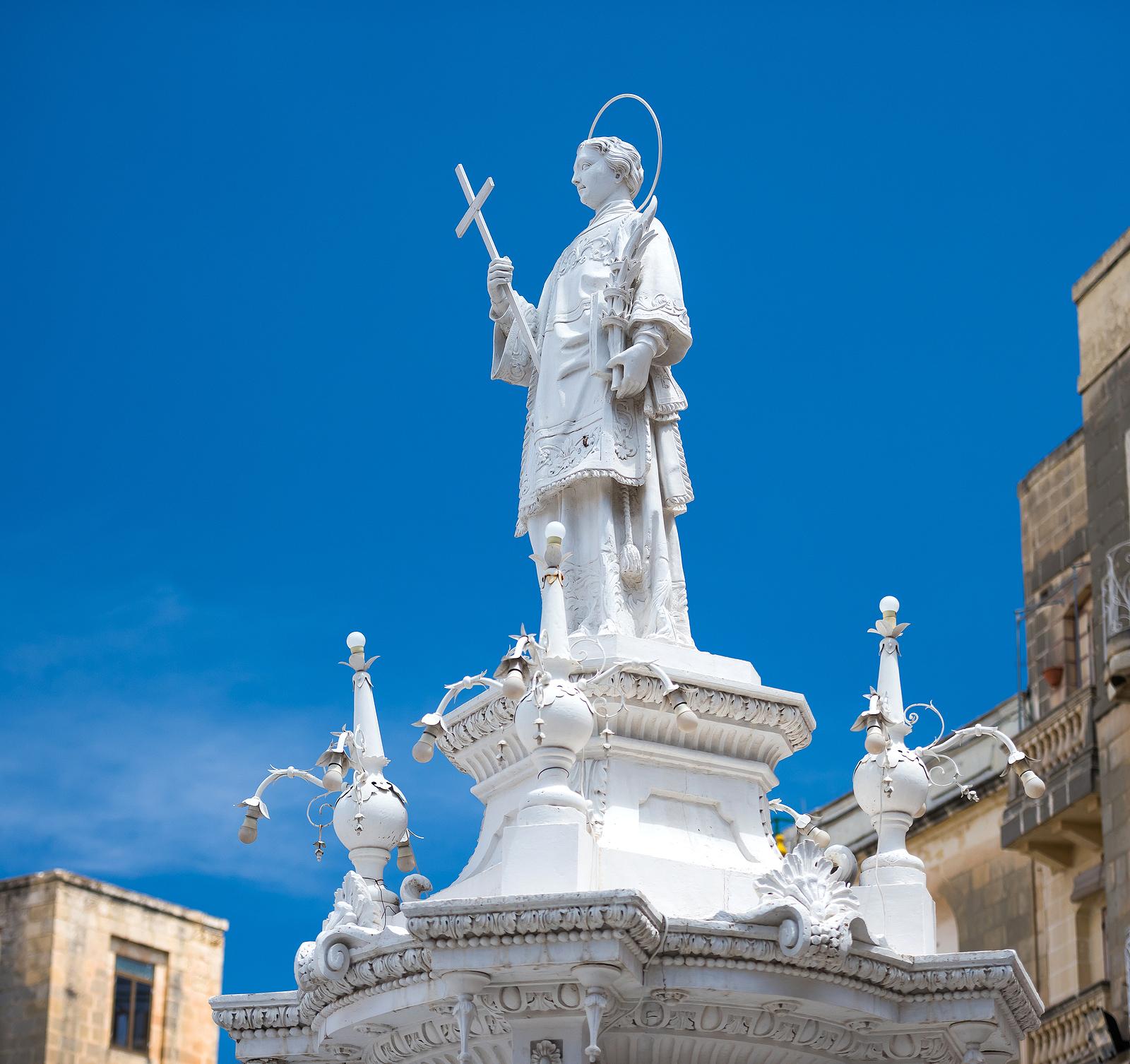
    Statue of St. Lawrence in front of a blue sky. He is holding a cross.
    Photo by LGreen on Bigstock

    I’m not sure where I first heard the story of Saint Lawrence’s martyrdom, but it has always resonated with me. Amidst all the theology and seriousness surrounding our Catholic faith, Saint Lawrence’s courage and wit in the face of dire circumstances offer valuable lessons for us all.

    This second-century saint’s life, most of which was lost to antiquity, continues to resonate with believers today. The story of Saint Lawrence’s martyrdom can provide us with humor, charity, and sacrifice, offering valuable lessons. Let’s delve into the life of Saint Lawrence, exploring five things to learn from his remarkable journey.

    Charity beyond wealth

    Perhaps the most renowned anecdote from Saint Lawrence’s life revolves around his act of charity during the tumultuous reign of Roman Emperor Valerian. As one of the seven deacons of Rome, Lawrence was entrusted with the Church’s treasures. However, when confronted by Roman authorities demanding the surrender of these riches, he astounded them with an act of selflessness. Instead of relinquishing the material wealth, Lawrence distributed it among the poor, widows, and orphans, proclaiming that these people were the true treasures of the Church.

    In a world where materialism often reigns supreme, Saint Lawrence’s actions offer a poignant reminder of the importance of charity and compassion. His legacy encourages us to look beyond our possessions and share our resources with those in need. True wealth lies not in material belongings, but in the warmth of human connection fostered through acts of love and generosity.

    RELATED: How St. Teresa of Avila Helped Me Overcome the Fear of Failure

    The unyielding spirit of faith

    Throughout his life, Saint Lawrence epitomized an unyielding spirit of faith, even in the face of dire circumstances. When commanded to renounce his beliefs under pain of death, he stood firm, refusing to abandon his Christian principles. This unwavering commitment to his faith resulted in his arrest and subsequent martyrdom. His execution by being roasted alive on a gridiron remains one of the most harrowing yet poignant testimonies to his steadfast faith.

    In an era where religious tolerance is often tested and religious persecution persists in some parts of the world, the example of Saint Lawrence resonates deeply. His courage inspires us to embrace our beliefs and convictions with resolute determination, regardless of the consequences.

    Humor amidst adversity

    Despite the grave situation he faced, Saint Lawrence displayed an unexpected and brave sense of humor as he was led to his execution by burning. Tradition holds that he humorously remarked to his executioners, “Turn me over, I’m done on this side!”, refusing to be cowed by the darkness surrounding him. This part of Saint Lawrence’s story also demonstrates the humor of the Catholic Church as Saint Lawrence is the patron saint of chefs.

    Saint Lawrence’s humor offers a powerful lesson in resilience. It reminds us that laughter can be a source of strength, even amidst the darkest moments. By finding joy in the face of adversity, we can better navigate life’s challenges with courage and hope.

    A spirit of service

    As one of the seven deacons of Rome, Saint Lawrence was dedicated to serving the Christian community and assisting the pope in various capacities. His life of service exemplifies the Christian ethos of caring for others, especially the marginalized and vulnerable. Through his ministry, Lawrence demonstrated that true greatness lies not in self-serving pursuits but in humbly dedicating oneself to the betterment of others.

    For example, Lawrence was known for his work with the destitute and his efforts to aid those who were suffering, often going out of his way to provide for the needs of the poor and the sick.

    In our busy days, where ambition often overshadows compassion, Saint Lawrence’s emphasis on service serves as a poignant reminder to prioritize the needs of others. By embracing the call to service, we can find fulfillment and purpose beyond personal achievements.

    RELATED: Paying the Ultimate Price: What Martyrs Can Teach Us About Sacrifices for Faith

    Martyrdom as a testament of faith

    Saint Lawrence’s martyrdom remains an enduring testament to his unwavering faith and commitment to his beliefs. His readiness to embrace death rather than betray his principles demonstrates the immense strength and conviction of his faith.

    Though few may be called upon to make such a dramatic sacrifice, Saint Lawrence’s martyrdom reminds us to remain steadfast in our beliefs, even when the world challenges our convictions. In a society that often values conformity over authenticity, his courage in the face of death serves as a powerful reminder to stand true to ourselves and our beliefs.

    The life of Saint Lawrence of Rome has always been a timeless source of inspiration for me, offering profound insights that resonate deeply in my own journey. His acts of charity, unwavering faith, and remarkable humor illuminate a path toward greater compassion, courage, and service. 

    From Saint Lawrence, I have learned the importance of standing firm in my beliefs, and finding strength in humor during tough times.

    As I contemplate his legacy, I strive to embrace these virtues in my own life. May we all find the strength to carry forward the flame of Saint Lawrence’s indomitable spirit, living with the same compassion, courage, and joyful resilience that he exemplified. By doing so, we ensure that his remarkable spirit continues to inspire generations to come.
  • What Is the Transfiguration?

    What Is the Transfiguration?

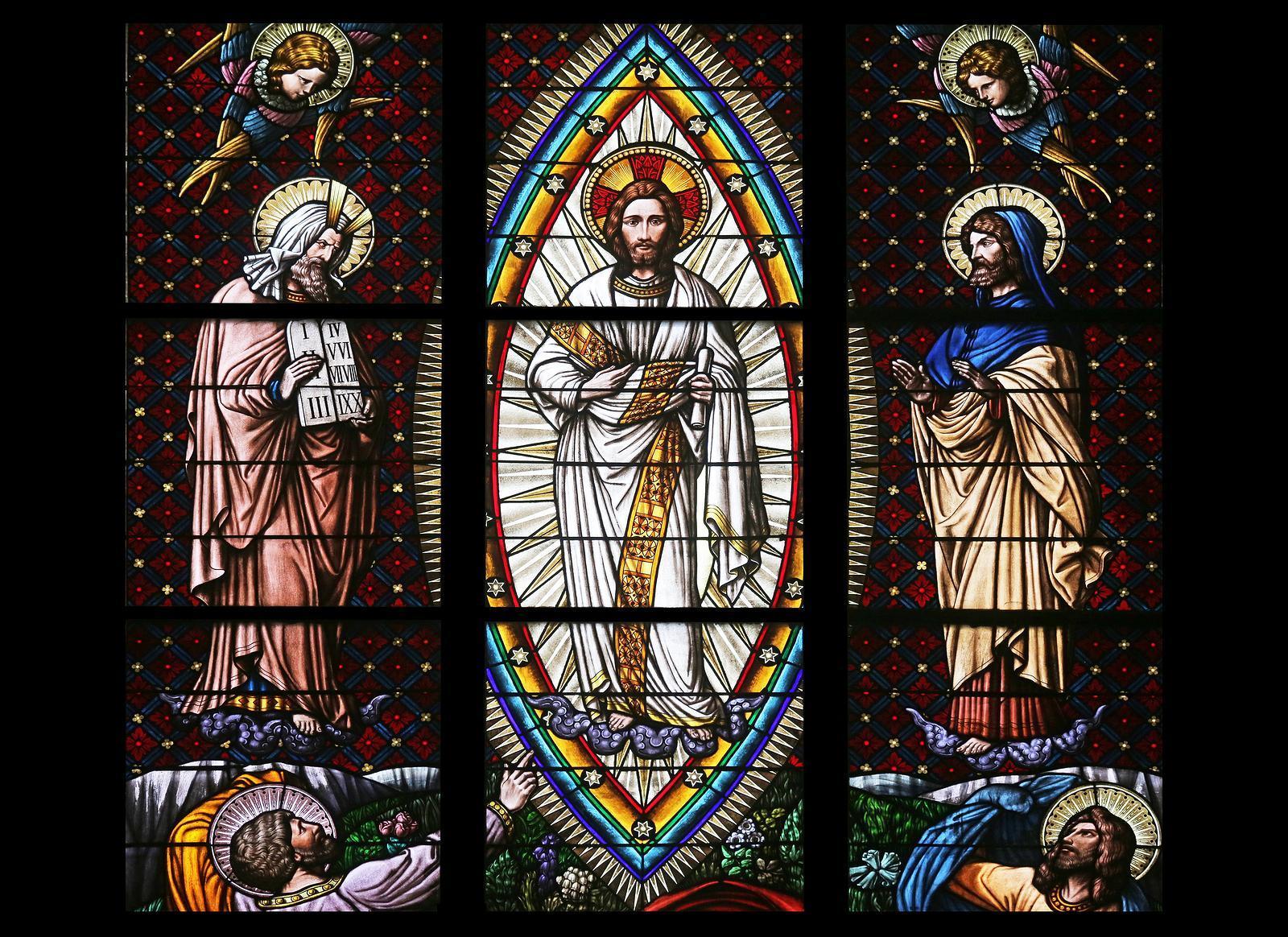
    The Transfiguration is an event from the life of Jesus that’s reported in three of the four gospels (Matthew 17:1-9, Mark 9:2-8, Luke 9:28-36). Jesus, along with his disciples, went up a mountain that overlooks Jerusalem and then appears with Elijah and Moses while he “transfigures,” meaning that the disciples see Jesus as he would appear after the resurrection. The gospels report that Jesus’ face and clothes became “dazzling white.”

    RELATED: Who Gave Jesus His Halo?

    The story is meant to not simply be a miracle but also has several other meanings. One is that Jesus is the fulfillment of the Old Testament law and prophets. At the Transfiguration, he’s seen with Moses (giver of the law) and Elijah (greatest of all prophets). As they overlook Jerusalem, the story foreshadows where this fulfillment of the law will take place: Jerusalem, where Jesus will meet his death. The disciples are confused by the Transfiguration and don’t realize that Jesus must die in order to save the world.

    Lastly, the story is a foretaste of what is in store for us. We will all rise again, and with the Transfiguration, Jesus gives his disciples just a glimpse of what the afterlife holds for both them and us.

    Originally published August 4, 2017.

  • ‘Inside Out 2’ and the Journey of Self-Acceptance and Reconciliation

    ‘Inside Out 2’ and the Journey of Self-Acceptance and Reconciliation

    “Inside Out 2” (Courtesy of Walt Disney Pictures)

    As a rising kindergartener, my 5-year-old feels our summer schedule should encompass all things big-kid-related. One of her ideas for a rite of passage: movie theaters. I was hesitant at first, but after she saw a trailer for “Inside Out 2,” there was no stopping the flood of requests to see the new movie. 

    We attended a sensory-friendly screening where the lights are merely dimmed and the volume plays a tad softer. Overall, it was a success. My 2-and-a-half-year-old lost interest midway through, but discovered the joys of popcorn and was placated, while my big kid was utterly mesmerized.

    RELATED: A Good Dog: How ‘Bluey’ Inspires Goodness for the Whole Family

    For those unfamiliar with the “Inside Out” movies, the plots center on the Emotions that reside in our heads: Joy, Sadness, Fear, Anger, and Envy. These Emotions control the console of our feelings while creating and storing memories. The mind in which most of the plot’s action takes place belongs to Riley, a lovable young lady who is 11 in the first movie and 13 in the sequel. The first film is a favorite at our house and focuses on the important roles of both Joy and Sadness in our life and growth.

    The writers of Pixar’s “Inside Out 2” succeeded again in crafting a film that not only appeals to youngsters, but also speaks with a nuanced wisdom to tweens, teens, and adults. While the new emotions in Riley’s head, led by Anxiety, have received a great deal of attention, an aspect of the movie that fascinated me was the Belief System. 

    The Belief System is a curated set of memories that create Riley’s continually forming Sense of Self. At the start of “Inside Out 2,” the audience witnesses Joy carefully choosing good memories to add to Riley’s Belief System; thereby forming a string of light that fuels and develops the Sense of Self. Joy also creates a launching device for all painful or embarrassing memories; they are sent flying to the back of the mind. The emotions express pride in Riley’s Sense of Self as it intones beliefs like “I am a good person” and “I am a good friend.” Then, puberty begins and Anxiety usurps the console of Emotions. 

    Anxiety destroys Riley’s Sense of Self and begins to form a new Sense of Self based on anxious beliefs; this new Belief System crackles and pops while shining a scalding orange. Riley acts out of character, ignoring her friends in favor of popularity, lying for clout, and appearing altogether lost internally. The Emotions are faced with a tough choice as they struggle to fight Anxiety and restore Riley’s Sense of Self: Do they release the bad memories to influence the Belief System in order to incorporate the good ones as well?

    RELATED: Spiritual Streaming: 5 Faith-Themed Films for Your Next Movie Night

    The Emotions realize that clinging to the Belief that we are all good, without the nuance of our flaws, isn’t a realistic or healthy way to live. The floodgate of memories is unleashed and Riley copes with the influx of new threads to her Belief System: She is a good person, but she makes mistakes and bad choices. Riley doesn’t accept her faults, but instead acknowledges them, and attempts to repair the damage she’s done. She finds a way to grow and move forward with a more holistic view of who she is.

    As I sat in the theater with my daughters cuddled on either side of me, I couldn’t help but think about how we as Christians take this idea of acknowledging our faults to an even more fulfilling conclusion.

    Rather than being left with the emotions in our head waging war against our poor choices and their effects on our Sense of Self, we are offered a beautiful example of love and forgiveness through God’s offer of Reconciliation. When we bring our whole selves, mistakes and all, vulnerably before God, He offers us grace. We are reminded in Romans 5:8 that, “God proves his love for us in that while we were still sinners Christ died for us.” Our faults do not have to become entrenched in our Sense of Self; we recognize our sinfulness and we bring it to him who loves us nonetheless. 

    When we acknowledge before God our failings, mistakes, and sins, we move into a relationship of love; for as C.S. Lewis writes “to love at all is to be vulnerable.” This vulnerability and willingness to confess our sins before God allows us to accept his love and grace. As Riley has to come to understand her Sense of Self as a fluctuating core, capable of good and bad choices, we too have the chance to humbly admit our failures and embrace our deep need for God.

    LISTEN: Co-Creator of ‘Blue’s Clues’ and ‘Daniel Tiger’s Neighborhood’ Offers Life Lessons for All Ages

    My 5-year-old tends to be hard on herself when she makes a mistake – a reaction I understand all too well. We often talk through how a poor choice does not indicate that you are a mean or bad person; in fact, feeling regret and disappointment in your actions shows that you know what is right, good, and true. The key is to make amends for our bad decisions. I appreciated how the movie showed Riley’s realization of her unkind behavior towards her friends, and her willingness to apologize and patiently build back their trust. When Riley makes amends with the friends whom she has hurt, she has to admit that she was wrong, but she moves towards a wholeness within herself.

    Reconciliation restores not only our relationship with God, but also our relationship with ourselves. Acknowledging our need for God’s grace creates an opportunity for our Sense of Self to broaden from internal musings to external appreciation for what God tells us about ourselves. He reminds us that we are fearfully and wonderfully made (Psalm 139), we are precious, honored, (Isaiah 43), chosen (Ephesians 1), created in God’s own image (Genesis 1:27), forgiven (1 John 1:9), and loved (Romans 8:38). When our Sense of Self wavers, as “Inside Out 2” reminds us it is prone to do, we can lean back on the truth of what God tells us about ourselves.

    I think the concept that our feelings about ourselves will change over time is an important one for both young and mature audiences. There are days of soaring pride and dark disappointment. However, when our Sense of Self relies not on our own fluctuating emotions, but on the steady promises of God, we can rest in the peace of his gaze. This is my hope and prayer for my girls, that movies like “Inside Out 2” remind them that everyone struggles with identity and belonging, yet their worth is not measured by feelings or validation from their peers. Their significance and Sense of Self is guaranteed and beautifully crafted by a God who loves them and welcomes them with open arms.

  • Meeting God Through Ignatian Spirituality

    Meeting God Through Ignatian Spirituality

    I am a daughter of Ignatius. At times, I joke that I am a “Jesuitte” because I live and breathe the very spirituality that guides the Jesuits, an all-male religious order that St. Ignatius founded more than 500 years ago. Ignatius’ legacy, spirituality, and tools for discernment permeate my life, my marriage, and my motherhood. They form the basis of my ministry as a retreat facilitator, spiritual director, and writer.

    Much of Ignatian spirituality finds its roots in St. Ignatius’ recorded experiences of prayer and his own experiences of God. St. Ignatius crafted the text of the Spiritual Exercises, a series of meditations and guides for praying with scripture. The gifts of Ignatian spirituality serve as rudders for walking through life with hope and clarity.

    Here are seven unique elements of Ignatian spirituality that I lean on regularly in my day-to-day life. I invite you to consider using them as guiding principles in your own.

    1. Living as a contemplative in action

    I am not a monk. My walls echo with the voices of children and conversations with my husband. I live in the world as a wife and mother. Like most of us, I juggle the many responsibilities that are part of my lay vocation: working, raising children, grocery shopping, earning a living, socializing with friends and family. I am active, yet I am also a contemplative. Morning prayer is the foundation of my day, and it strengthens me and readies me to go out into the world using the gifts God gave me. Each of us can come to God daily in prayer within the realities of our lives to serve as the foundation for our work in the world.

    2. Accepting we are each fully loved and given mercy

    I seek to accept that I am loved by God as I am and also to see the goodness in each person. Ignatian spirituality honors the dignity of each person and respects our woundedness. This teaching helps make me aware of my capacity for sin and my own brokenness, which in turn helps me more compassionately encounter others. A close relationship with God built through prayer strengthens my belief in my own goodness and reminds me of my dependency on God to overcome temptations. How can you turn to God in prayer to deepen your knowledge of God’s love for you and also ask for God’s help in overcoming temptations?

    3. Seeing God in all things

    Ignatius was known to stare at the stars and sky for long periods of time, and it brought him great consolation. This act of pausing and noticing God at work in all things — and not just at Mass — remains a guiding principle of Ignatian spirituality and my life. Today, I can pause and consider what is before me — nature, other people, my children, my work — and notice what God might be teaching me in my daily encounters. In your day, notice the abundance of ways God encounters you through the world and the people around you.

    4. Knowing we are not alone

    I have a companion and friend in Jesus, no matter what I am facing in life. The crux of the Spiritual Exercises is about developing a personal and intimate relationship with Jesus and understanding Jesus’ humanity and divinity. Just as Jesus grew into his divinity, I, too, grow in my own holiness within the reality of my full life. Even if we do not participate in the Spiritual Exercises, we can get to know Jesus by using prayer methods such as Lectio Divina or Ignatian Contemplation to pray with the Gospels. As we pray with scriptures, such as Jesus’ baptism (Luke 3:21-22), we see that Jesus understood He was fully loved by God, just as we are, and we see that Jesus overcame temptations, like the ones He faced in the desert (Luke 4:1-13), with the help of God. We, too, can overcome anything we are facing with Jesus’ gift of companionship.

    5. Learning from Jesus

    I can look to Jesus to model the way to live, love, and act. Ignatian spirituality teaches me that getting to know Jesus and loving him clarifies my unique way to walk through the world and express my faith. Jesus teaches me how to remain grounded in a relationship with God, through prayer. I can also learn about the unique aspects of God’s Kingdom by watching whom Jesus loves, how He loves them, and how He acts. Jesus shows us how to love others with compassion, and he shows us how we can respond to the deepest needs of others to help restore their dignity.

    6. Being women and men for others

    My encounter with God through prayer calls me forth to be a woman for others. At the very end of the Spiritual Exercises is a meditation that begins: “Love ought to express itself in deeds more than words.” In a sense, this means Jesus desires concrete actions from me to express my love of God. Jesus modeled a life centered on reading human hearts and responding to the deepest need. We, too, are called to notice the deep needs of others and respond to them out of the love God has for us.

    7. Praying about our lives

    I can bring my entire life before God in prayer. A prayer tool that pulls many of these pieces together is the Examen, which was developed by St. Ignatius. It involves praying about the last 24 hours of your day and acknowledging where we encountered God, what helped us grow in our relationship with God, what inhibited our growth in God, and how we are uniquely called to bring God’s love and mercy into the world. If you haven’t already, give the Examen a try as a way of including God in all areas of your life.

    When we’re often caught up in the latest trend or fleeting fad, I find comfort and relief in the credibility of a spirituality that has survived this long and continues to impact me and so many others still today. May Ignatius’ wisdom and insights from his own spiritual journey continue to bear fruit in our lives today!

    (Originally published April 3, 2017)

  • How Finding a Spiritual Director Changed My Life

    How Finding a Spiritual Director Changed My Life

    “Who do you imagine as a spiritual director?” Carla, the coordinator at my local Ignatian Spirituality Center asked. I started to laugh as the image of Don Porter, the actor who played Sally Field’s father on the television show, “Gidget” flashed in my mind. Carla’s mission was to find a spiritual director match for me among the resource pool the Center maintains.

    “Dr. Lawrence from the show ‘Gidget.’” I answered. On the show, Dr. Lawrence was an English professor who found his daughter’s antics adorable, and he always had a kind word for her when she got herself into trouble. “No small task — but find me someone like him,” I joked.

    But Carla knew that as much as this detail seemed silly, it was telling of the type of spiritual director I was looking for.

    A spiritual director is someone you can talk to about your experience with God. They are there to support you, guide you, and help you see where God is working in your life. Carla asked me about my spiritual background and what nourished my own faith journey. It was through this conversation that we realized I was looking for someone intellectual and compassionate, someone who wouldn’t be intimidated by my sometimes brassy manner. Yes, someone like Dr. Lawrence.

    RELATED: A Guide to Spiritual Direction

    The next week, I received an email from Carla with a possible match. Mark was a deacon from a neighboring parish and would meet with me to see if we were a good fit for one another.

    When we met, I immediately noticed Mark’s boisterous, yet warm, manner. He welcomed me as if I was a long-lost niece and offered me tea. Within minutes, Mark told me he was New Yorker, a perfect match for my East L.A. brass, and as I started to tell him about my spiritual background, he quoted Church Fathers and writers as if they were dear friends.

    I told Mark I had pursued spiritual direction because I wanted more of God in my life. I had felt disconnected, not just from God, but from others in my life, and I lacked focus in my work and relationships. I wanted to feel God’s presence in an ordinary day, as I believed all the rest would fall in line when I knew God was there.

    “The time we spend together is just for you, to feel supported and for me to help you find God,” Mark said.

    RELATED: Father Dave Visits His Spiritual Director

    He asked about my prayer life. How did I pray? What did I pray about? How did I feel connected to God? Was it mostly through Mass or could I remember times I felt God in other places? As I answered, it felt wonderful to share these precious things with someone else.

    As we wrapped up our meeting, Mark said to me, “Pray the Examen,” giving me the next step for making a connection with God. “You’ll see where he’s been all along.”

    I added the Examen to my nightly routine. By looking over my day with gratitude, I began to see all the ways in which I connect with God — through music I play on my stereo (or even in the car), art in museums or magazines, conversations with strangers and friends, hikes in the forest near my house, and sometimes, even as I fold laundry. I realized I had so many places to look for and meet God. And after sharing these revelations with Mark, I started to view these activities as moments of worship.

    “Now, try to notice God in the moment, instead of only in the reflection of the day,” Mark advised. I will, in fits and starts, as any practice takes just that, practice. When I do, I stop and savor these moments of God’s presence.

    Talking to Mark is akin to daydreaming about God. I imagine where I’d like to spend time with God like I would if my old friend was coming in from out of town. I might take them for a walk to Lake Washington or share a favorite cafe or an art exhibit. What would I want to tell an old friend about? What struggles or joys would I share? Something magical happens when we daydream about God with another believer. We conjure God up. And I begin to notice that God is present with Mark and me as if he heard us talking about our dear friend.

    Originally published April 30th, 2018.

  • How to Read Like the Saints

    How to Read Like the Saints

    In my early adult years, I enjoyed hanging out at big-box bookstores, sipping on a cup of coffee while flipping through the pages of some random book. One of the books that I arbitrarily picked up was “Confessions” by Saint Augustine. I was born and raised Catholic, but up until that day, I had just been going through the motions and hadn’t taken my faith seriously. But after finishing a full cup of coffee and reading halfway through “Confessions,” I paused and thought to myself, “Wow! This is mind-blowing stuff.” Deep inside I was echoing Saint Augustine: “Oh beauty so ancient and yet so new, too late have I known you, too late have I loved you.” “Confessions” reawakened my faith that day and gave my spiritual journey a boost to get back on track. 

    But the deeper I got into adult life, the busier I’ve become. Lately, finding the time to hang out at a bookstore, sip on a cup of coffee, and get lost in a good book is a struggle. Plus, it’s so easy to spend my leisure time scrolling through social media rather than practicing deep spiritual reading. But I long for the transformation that comes from deep reading. There’s something about immersing myself in a story, going on a journey with spiritual heroes like Saint Augustine, digging deep into their insights and sharing in their struggles as well as their triumphs. Deep reading gives me the opportunity to discern how the lives of the saints apply to my life today. And we need only turn to the saints for wisdom about how to practice this sort of deep reading. Here are three ways that I’ve learned to read like the saints (in order to work on living more like one).  

    RELATED: Patron Saints for Introverts

    Read for spiritual fulfillment

    Even though Saint Augustine’s story is from 1,600 years ago, I found myself relating to it. He was living a restless life away from God until one day, he heard a voice call out to him saying, “Take up and read.” He did just that, picked up the Bible, and read Paul’s Letter to the Romans (Romans 13:13:34, to be exact). His life was changed from that moment forward. After that fateful reading, Augustine gave his heart to the Lord and was baptized into the faith, serving as a priest, and then as a bishop. 

    It might have felt random, and I didn’t hear a voice call out to me, but I believe it was providential that I picked up “Confessions” that day at the bookstore because similar to Augustine’s conversion story, picking up his book changed my life as well. Reading his insights opened my own eyes to the beauty of the Catholic faith. I started going to Mass every Sunday, sometimes even daily Mass. I started serving in different ministries at my parish, and, this probably goes without saying, I was hooked on reading more spiritual books. 

    Read for knowledge

    Edith Stein (who we now know as Saint Teresa Benedicta of the Cross) was alone waiting at a friend’s house when she picked up a book on Saint Teresa of Ávila. When she finished reading, she closed it and said, “This is the truth!” This marked the beginning of living a life of conviction, joining the Catholic Church, finding a home in a Carmelite monastery, and eventually becoming a martyr because of her beliefs. When I read the writings of Saint Teresa of Ávila today, I, too, find myself saying, “This is the truth!” I want to learn all that I can about the way of perfection and journey into my own interior castle, the soul, through prayer and being mindful of God’s presence in my life.

    Read for inspiration

    When Saint Ignatius of Loyola was in the hospital recovering from battle wounds, he read works by Saints Francis and Dominic. Saint Ignatius was so inspired by their stories that he turned his life around and went from a selfish and vain womanizer to someone who modeled his life after Saints Francis and Dominic. When I’m waiting at the doctor’s office, I have a tendency to pull out my phone and mindlessly scroll through my newsfeed as a diversion. And I may be inspired by friends’ posts on what restaurant to go to for dinner, but still, I’m probably better off taking that opportunity to read about the lives of the saints, finding inspiration in their holy deeds, and working to make my life more like theirs.

    RELATED: How Do the Saints Hear Our Prayers?

    Today, it takes a conscious effort to prioritize the kind of reading that reignites the mind and the soul. Summer is a friendly season to make that effort, rewire our brain connections, and reignite the neurons for deep reading. I’m looking forward to finding a spot in nature to unwind, unplug, and just get lost in a good book, especially one about a saint. When I make the time to dive deep into the lives and learnings of the saints, I often find that I’m also guided to deepen my own relationship with God. As French writer Marcel Proust put it, “The end of a book’s wisdom appears to us as merely the start of our own.” May the end of the saints’ wisdom be the beginning of ours.

    Originally published August 5, 2019.

  • The Camino de Santiago: The Gift That Keeps on Giving

    The Camino de Santiago: The Gift That Keeps on Giving


    The scallop shell, a symbol of the Camino, is found attached to the backpacks of most pilgrims. (Photo courtesy of the author)

    “Hiking on the Camino can become addictive,” a pilgrim on the Camino de Santiago told a small group of us while we were having dinner together in an albergue (pilgrim inn) a few years ago. His words proved prophetic – I have done three Caminos and counting! I began my third pilgrimage on the Caminho Portugués in October 2023. I had missed the sound of my hiking poles touching the ground, the meeting up with other pilgrims as well as time alone for quiet reflection, and the visits to chapels, churches, and cathedrals along the way, but mostly I missed the feeling of just being on the Camino as so many others have done before.  

    Starting out on The Portuguese Way

    The Caminho Portugués starts in Lisbon and continues to Porto, where the majority of pilgrims begin their journey. I headed out from there in October 2023, intending to go as far as I could depending on weather. The Caminho Portugués was my shortest hike, but no less meaningful than the other Caminos I have traveled. Having no set time limit, I lingered where I chose, taking time to simply enjoy being where I was, once again on the Pilgrim Way. Like so many other pilgrims, I visited the Igreja de Carmo, the 18th-century baroque church famous for its stunning blue murals on the exterior walls, among other historic places. 

    RELATED: My Virtual Camino: Celebrating the Feast of St. James in My Own Backyard

    The gift of humanity

    About a week into my Portuguese Camino hike in the village of Tamelo, I was waiting for the albergue to open. A Belgian woman in her 40s sat across from me outside and told me that her 43-year-old athletic, healthy husband had died of esophageal cancer two years before. Her depression became so severe that she had to stop working. Her son, who had hiked the Portuguese Camino as a way of healing, suggested she do the same. 

    Sharing such stories with complete strangers is not unusual on the Camino. It seems to make us lower our defenses and laughter, love, caring, and sharing become the norm. Such conversations felt like gifts to me, gifts of people’s humanity and kindness.

    The taxi angel

    Not long after that conversation, the rain began overnight. Lacking the heartiness of some pilgrims, I found that hiking in the rain under a plastic poncho, which caused uncomfortably damp clothes, made it time for me to cheat a little. But it was Sunday in rural Portugal and no buses were running, so I called a taxi, using my Spanish in Portugal to explain where I was and where I wanted to go. 

    Dez minutos,’’ I was told. Ten minutes. Ten minutes turned into 30. I called again. “Dos minutos,” I was told, two minutes, and right at two minutes, a well-worn black car pulled into the bus stop. I placed my small bag in the trunk, which was full of odds and ends and jumper cables. Strange that this was a taxi, I thought, but this was rural Portugal on a Sunday morning. The driver went north for about 20 minutes and then stopped at another rural bus stop.  

    RELATED: Everyone Walks Their Own Camino

    A Portuguese cyclist who spoke good English came by. I told him of my predicament, that I was trying to get to Punto do Lima. The driver then explained to the cyclist that he was, in fact, not a taxi driver but he could see I needed help, so he was just giving me a lift. 

    Just then, two Canadian hikers whom I had run into now and then on the Camino literally came out of the woods. When I explained what had happened, we all laughed, and then one of the hikers, Ken, said to me, “The Camino always gives.” The man in the black car was my taxi angel, I realized, another gift from the camino. The cyclist called a real taxi, I gave a very happy “Obrigado” (thank you) to the car angel, and the taxi driver took me to an albergue in Punto do Lima, where I spent a dry and comfortable night. 

    Arrival in Santiago de Compostela

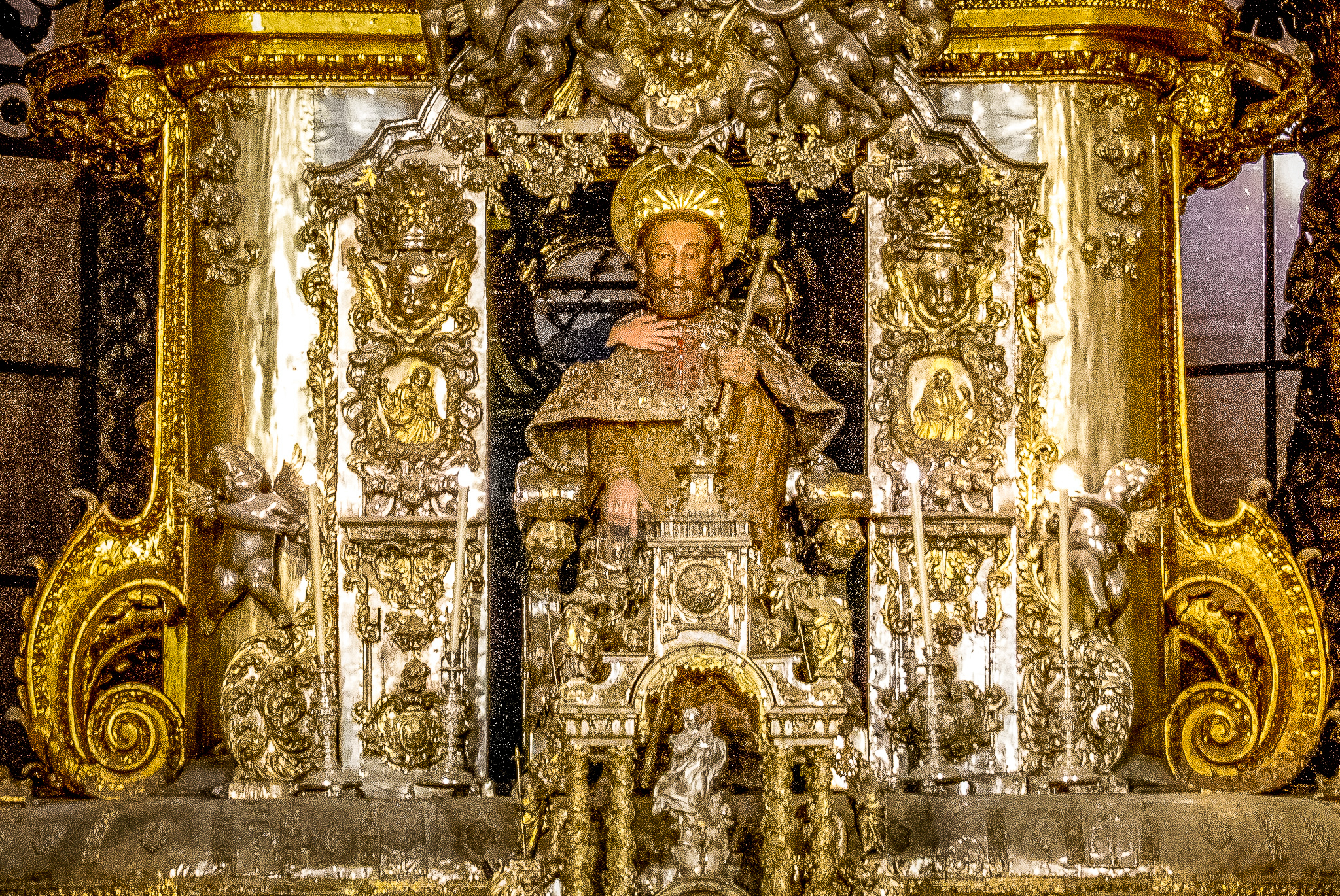
    The hand of a pilgrim hugging the statue of Saint James in the Cathedral of Compostela. (Photo courtesy of the author)

    After hiking for 10 days, I arrived in Santiago de Compostela and seeing the Cathedral of Saint James again was no less enthralling. I got in line to hug the statue of Saint James, a pilgrim tradition, and said a prayer of thanks for all of it. I received Communion with many other pilgrims from around the world. Seeing their faces with their looks of wonder, happiness, belief, disbelief – I don’t know which word best describes the look on their faces, so maybe all of them will have to do.

    And then another gift — seeing the botafumeiro, the incense burner, so large and heavy that five priests are needed to lift it above the chancel and swing it, a sight which happens only infrequently. I looked in wonder and said another silent prayer of thanks.

    A camino full of grace

    Just a few months before my hike, my closest friend from high school passed away. I lit a candle for her before the altar of Saint James. That same night I dreamt about her as she was when we were growing up together. In the dream, we both knew she was still ill, but that dream was like having one more chance to see her well and laughing. Maybe that dream was yet another gift.

    I will miss the pilgrims I met in Tamelo and others along the way, all on a pilgrimage for their own reasons so willingly shared. Friendship and affection grew easily among us, and it is doubtful I’ll ever see them again, but the Camino is like that. Angels come and go. “How many Caminos have you done?” is a familiar question among us pilgrims. This was my third Camino, but I’m sure there will be a fourth, and fifth – with arms open to receive the Camino’s grace.

  • Reconsidering Mary Magdalene

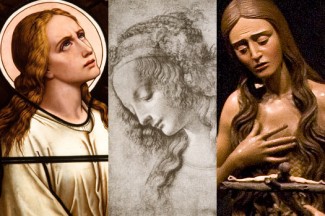
    Reconsidering Mary Magdalene

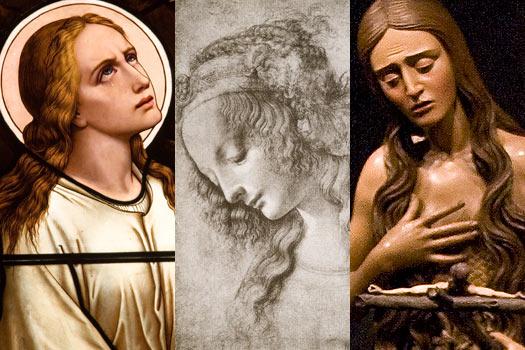
    Mary Magdalene was not the prostitute that you read about in Luke 7:36-50. Her story begins in Luke 8:1-3, which says, “Soon afterwards Jesus went through cities and villages, proclaiming and bringing the good news of the kingdom of God. The twelve were with Jesus, as well as some women who had been cured of evil spirits and infirmities. Mary, called Magdalene, from whom seven demons had gone out, and Joanna … and Susanna, and many others … who provided for them out of their resources.”

    She also is not to be confused with the unknown woman who washed and anointed Jesus’ feet, nor was she Jesus’ wife, although some modern novels would have us believe this. (There is simply no evidence for this in the Gospels.) But keep in mind that she is the only woman in the New Testament to be called by her full name — Mary Magdalene. All other women are referred to simply by their first names. This is the first clue that she is a woman of immense importance to the early Church, as well as to Jesus and his mission.

    Mary Magdalene is a woman who — once her demons had been exorcised — followed Jesus to the very end of his life: She gave her resources to him and the mission of spreading the Gospel; she accompanied Jesus on many of his journeys in first-century Palestine; and she is a model of what a true disciple looks like.

    RELATED: Did Mary Write a Gospel?

    However, attempts to move Mary to the background of the Passion narratives and to erase her as a vital and loving witness to Jesus began well before the fifth century. It began with the writer of Luke, in Acts, where Peter and Paul are given center stage as those who preach to the Gentiles and witness to the risen Christ — ignoring that it is Mary Magdalene, called the Apostle to the Apostles, who first sees the risen Christ in the garden, according to both the Gospels of Matthew and John. In Luke, when Mary and two other women return breathless and excited to say they have seen the Lord, the male disciples think their words are “like nonsense” (Luke 24:11). Is the author of Acts responsible for this erasure of The Magdalene, as she sometimes is called, or is it part of a wider effort to discredit her authority and put Peter at the head of the new church?

    In the sixth century, Pope Gregory the Great tried to undermine Mary Magdalene’s reputation by connecting her story to the story of the prostitute that precedes her story in the Gospel of Luke. But this is a misinterpretation. Luke is clear that Mary was the woman healed by Jesus when he expelled seven demons from her.

    And Mary responded by contributing to Jesus’ ministry and following him. Luke says she was a woman of means, like some other women who followed Jesus. They were not just followers in the passive sense — they were disciples. It is even possible that women were part of the 70 disciples Jesus sent out two by two, pairing one man and one woman together for security purposes, for his ministry was not just to men but also to women and children. New Testament scholar John Dominic Crossan thinks this is a strong possibility as discussed in his book, “Jesus: A Revolutionary Biography.”

    RELATED: The Female Saints and Mystics Who Guide Me to Freedom

    And even when all the male disciples ran away, Mary Magdalene stayed true to her discipleship and her love for Jesus. She stayed, with several other women, as Jesus was crucified. Matthew writes in his Gospel, “There were also many women there, looking on from afar who had followed Jesus from Galilee, ministering to him, among whom were Mary Magdalene, and Mary the mother of James and Joseph and the mother of the sons of Zebedee.” John 19:25 also puts Mary, the mother of Jesus, with this group.

    I imagine Mary Magdalene watching from a distance as Jesus is nailed to the cross. I see her stretching out her hands in passionate protest as the nails pound in. I hear her cries as Jesus begins to lose his breath and sink under the weight of his own body on the cross, eventually suffocating to death.

    When he finally dies, the women follow Joseph of Arimathea as he takes down the broken body and lays it in the tomb. According to the Gospel of Luke, they prepare “spices and perfumed oils” to anoint Jesus’ body, but because it is the Sabbath, they have to wait another day to visit the tomb and anoint the body, as was customary.

    The story of Mary Magdalene is a hard story to tell, to see the way Mary’s role and gifts have been set aside and almost forgotten, although we know how close she was to Jesus, how much he loved her. We must share her story with others.

    We can take the memory and passionate witness of Mary Magdalene into our own hearts and see her as a model of true discipleship, looking for ways we can follow and witness along with her and other disciples. We can try — as she did — to not turn away from the suffering of others. We can try  — as she did — to go the distance with people as they stand up for their beliefs and the Gospel. We can stride out into the world with boldness and belief, confident that we have the words of life in our hands — as she did — The Magdalene.

    Originally published July 22, 2016.

  • Faith and Fitness: 3 Spiritual Lessons I Learned From CrossFit

    Faith and Fitness: 3 Spiritual Lessons I Learned From CrossFit

    Woman drinking from a water bottle in the gym. She is wearing a CrossFit tank top.
    The author, at her CrossFit gym, taking a well-deserved water break.

    When I came to my first CrossFit class three years ago, I arrived to prove to my sister how much I would not enjoy it. As someone who identified as “not a gym person,” I could not lift an empty barbell, did not know how to use a rowing machine, and could not do one push-up (even from my knees). Today, I can lift (power clean) 125 pounds, use the rower like I know how to walk, and perform 15 regular pushups. And I really have no clue how this happened. The physical gains in CrossFit have been immense because of the methodology. And, the more I think about it, this methodology very naturally transfers to spiritual life. Here are three spiritual lessons I’ve garnered from my CrossFit experience.

    RELATED: Running the Path of Faith: What I Learned From Incorporating Spirituality into My Exercise Routine

    Your spiritual fitness regimen can be programmed to include a variety of repetitive prayer practices

    In CrossFit, workouts are programmed by the staff. So when you arrive at the gym, your workout will be detailed on the whiteboard, and the movements (for example push-ups, pull-ups, deadlifts, box jumps, etc.) are chosen for you based on a system that repeats certain movements in a cycle to holistically build your overall fitness. This varied structure keeps me engaged and lowers the risk of injury. Similarly, I benefit from discipline in the spiritual life but need to vary my prayer practices. When I expect myself to stay statically consistent (i.e. “I’m going to pray the Examen every night forever!”) I end up giving it up when I skip one night. Instead, I make the goals shorter and vary them. (“This week I’m going to try centering prayer for 10 min/day at lunch.”)

    RELATED: A Prayer for Every Mile: How My Prayer Bracelet Helped Me Finish a Half Marathon

    All prayer practices are infinitely scalable according to your spiritual fitness

    All of the movements in a CrossFit workout can be scaled. Every movement has degrees of difficulty according to the athlete’s body on the particular day they’re showing up. If the workout calls for “pull-ups” and you can’t even hang from a bar, a scaled option includes pulling yourself up using gymnastics rings, or pulling a light dumbbell to your chest as you angle your body forward. Similarly with spiritual practices, sometimes you have to scale according to your bandwidth and time or other factors. My prescribed 10 minutes of centering prayer could be scaled to three minutes if I’m running late for work or maxed out at the end of the day. My nightly Examen could be scaled to lighting a candle and saying a couple of gratitude prayers. The point of scaling is to allow myself to build consistency without burning out.

    RELATED: Biking and Praying: How a 7-Day Ride Reenergized My Faith

    Community carries you

    If I show up to the gym, I know the workout will be completed because everyone will be doing it and I’m a part of the whole moving organism. My body will just kind of kick into gear even if my mind is thinking of other things— at some point, something shifts and I’m entirely present. Calories have been burned, and the workout counts even if I did not consciously decide to make each movement happen. Similarly, when I show up for Mass, it is likely that I might not be “in the mood” to go when the time comes around, but good old obligation and being witnessed in my practice subconsciously motivates me. And, even if I’m “going through the motions”— standing, kneeling, sitting, saying repetitive prayers—my mind could be elsewhere but the prayers still “count.”

    RELATED: 6 Bible Passages for Runners

    CrossFit spirituality is one of consistent effort in community with adjustments according to your daily need. Over time, the method begins to take, and you will find yourself on a whole new level of spiritual fitness you never knew possible.

    Originally published August 18, 2023.

  • What Is Grace? Three Truths That Help Us Understand God’s Favor

    What Is Grace? Three Truths That Help Us Understand God’s Favor

    Priest holds up communion waferShortly after being ordained a deacon, I was asked by my pastor to put together a presentation on the sacraments. Working my way through the task, I came to a point where I needed to produce a slide on what it is that the sacraments provide. That gift, in special abundance, is of course God’s amazing and life-giving grace. 

    At that moment, I froze. Had I looked in a mirror, I’m certain I would have seen myself looking like a deer in headlights. Of course, I knew that grace is good. If I were to ask just about anyone if they wanted a bountiful helping of God’s grace, that answer would be in the high affirmative. That said, I found myself at a loss as to how to explain what grace is. Grace seemed to be one of those things that is easier to internalize than it is to explain.

    LISTEN: Is Mercy Like Grace? 

    Sure, had I been asked at that time by a parishioner what grace was, I’m confident that I would have been able to tap dance my way to some kind of answer. I likely would’ve responded with something like: It is a gift from God. It is good and will make us better disciples. It will make us happier humans. But I knew that this response was sub-par. There had to be a better way to describe what grace truly is. 

    Desiring not to ever poorly shuffle my way through an explanation of something so important, I set out on a mission to come up with a succinct and relatable description of God’s grace.

    After analyzing the many definitions of the various types of grace, (Sanctifying, Actual, Sacramental, etc), I came up even more deer-dazed than when I started. But then, I found it, a best-in-class explanation of grace. Confidence immediately replaced my grace-related trepidation. Before me was something that I not only understood, but also something that I could easily share with others.

    It came from the “Catechism of the Catholic Church,” paragraph 1996, and reads,

    Grace is favor, the free and undeserved help that God gives us to respond to his call to become children of God, adoptive sons, partakers of the Divine Nature and of eternal life.

    This short, yet comprehensive definition breaks down into three grace-related truths:

    1. Grace is free and undeserved

    “Grace is favor, the free and undeserved help God gives us…” Short and sweet, what this tells us is that although we don’t deserve this great gift of grace, God desires to pour it out on us. All we have to do is recognize, accept, and participate within it. Perhaps the greatest example of this is recognizing and believing in Christ’s presence in the Eucharist and participating in it at the altar of the Mass.

    2. Grace contains a call and a response

    Of all three components of this definition, the “help that God gives us to respond to his call”  is the one that housed my personal “light-bulb” moment in understanding the gift of grace. Notice that there are two ingredients baked into this part of grace; first there is a call, and then, a response.

    The call is God’s and it’s always coming our way. I imagine it sounding something like this, “Learn from me the way to life. I love you, come this way!” 

    I picture this call as a giant radio signal that God, since the beginning of time, has been diffusing throughout the ends of the earth. Trying to jam this signal, is the world and the elements of evil, and they are good at it.  

    WATCH: Sacraments 201: The Eucharist

    For many of us, that signal gets increasingly difficult to hear. It becomes replaced by worldly distractions that seek to steal from us God’s intended gift of happiness. For me, the most effective way to blast through the noise that seeks to block God’s call is to attend Mass frequently. There is indeed something happening at the Mass, specifically in the Sacrament of Holy Communion, that keeps me hungering not only for the Mass, but for more time with he who is the Mass. 

    Grace is the force that helps us to respond to God’s perpetual signal, his loving call. Suddenly, grace makes perfect sense! Grace gives us the ability to hear and then respond to God’s call!

    But understand this about grace; it takes two to tango. To receive its maximal benefit, we must be active participants within it. As the Apostle James wrote, “Draw near to God, and he will draw near to you.”

    3. Grace calls us to become partakers of the divine nature and of the eternal life

    When we respond to God’s call we become, “adoptive sons, partakers of the Divine Nature and eternal life.” This relates back to the Mass where we “partake” in Christ’s very essence. While God delivers grace in many ways, grace nears its zenith during the Mass, and most essentially within the Sacrament of the Eucharist. 

    Having discovered a definition that helped me put a pin in my presentation on the sacraments was a minor find relative to where it has led me. The understanding of the interrelationship and inseparability of grace and the Eucharist has set me on a mission to share the truth of both. What’s often missing in one’s understanding of the Eucharist is what the gifted benefit of grace really is, and how that grace stands ready to lead us all on a path towards happiness and holiness.

    Originally published July 12, 2022.