Tag: st ignatius

  • Praying for Presence: How the Examen Helps Me Focus

    Praying for Presence: How the Examen Helps Me Focus

    When I was a kid, there were nights at the dinner table when my dad would get quiet and start staring off into the distance. My sisters and I would joke, “Dad’s thinking about work again!” and the chorus of giggles would break him out of his trance and bring him back to dinner. 

    Now, at 41, I’m the one who’s prone to the “thinking about work” face at dinner and many other times as I try to shift from employee to father at the end of the workday. 

    As a civil defense attorney, I’ll regularly handle 200 or more cases at any given time, each with its own facts, medical records, litigation status, and hearing schedule. 

    As a father, I have four kids who are growing up way too fast — each with their own interests, likes/dislikes, friends, school assignments, extracurriculars, etc. 

    As a husband, I have an incredible wife who has kept me around for 12 years and counting, but we’re no longer carefree 20-somethings with little responsibility and an excess of free time. It’s frighteningly easy to lose track of each other amidst our sea of responsibilities and commitments. 

    RELATED: How I Use Ignatian Discernment to Make Decisions Big and Small

    Alternating between those three main roles in my life, it can be difficult to be fully engaged in the present moment. There are dinners and vacations where I have replayed court hearings in my head, pondering how I could have performed better. There are file reviews at work where I continually think of kids’ sports schedules or weekend plans. There are times at work and with the family when I’m thinking of household repairs. 

    One thing that’s helped me with this is the Examen, a prayer formulated by St. Ignatius Loyola.  I first came across the prayer when I was a teenager considering a Jesuit vocation. The whole of Ignatian spirituality, with its emphasis on finding God in all things, was such a revelation to my young mind, but this prayer made an impression and I recently resumed the practice of praying it at night. The basic outline of the prayer is a 5-step process:

    1. Be aware you’re in God’s presence. 
    2. Ask for grace to see God’s work in your life.
    3. Review the day in detail. 
    4. Reflect on specific actions and see whether they brought you closer to or farther away from God. 
    5. Make a resolution for tomorrow.

    When a priest gives a homily at Mass, he takes the Gospel message and makes it applicable to the general congregation. When I pray the Examen, I try to feel I take it one step further and make it applicable directly to my life — my wife, my errands, my kids, my schedule, my work, my supervisor, my commute, and all of the nitty-gritty that makes up my life. 

    I think hidden within my lack of focus is the false belief that whatever I’m focused on is the most important, most pressing matter. Praying the Examen gently corrects this warped way of thinking by reminding me that everything is important, because everything relates back to God. 

    RELATED: Growing in Gratitude, Thanks to the Examen

    The process of he fourth step, reflecting on my actions and whether they brought me closer to or farther from God, changes every day, but I’ll sometimes ask:

    • Was I short with someone on a work call where I was just trying to get another task off the to-do list?
    • Were my “blinders” on while I tried to go through my work day, missing opportunities to hear and see those souls that work alongside me?  
    • Should I have stopped by the desk of a colleague who was widowed last year and seen how she’s holding up? 
    • Did I pay attention to my kids when I came home? 
    • Did I focus on the stories they so eagerly conveyed to me, treasuring them as the gifts they are?
    • Did I miss an opportunity to show more initiative, to ask questions, to be silly, to initiate play? 
    • Have I taken active steps today to work on my marriage?
    • Have I listened to things my wife has expressed frustration over and given her empathy, as well as whatever support I could?
    • Have I made efforts to connect with my wife and share myself, and not just go through the day on our parallel routes?

    For me, the biggest benefit of the Examen is not just the act of praying it towards the end of the day, but rather the way it shapes my mind throughout the day. Getting in the habit of praying it has “trained” my brain to start considering those questions as I am going about my day. As I live in the present moment, I know that God is there and I know that the only way I can respond to him is by being present in that moment, noticing what he is offering me in that moment, and responding with love. 

    With regularly praying the Examen, my “thinking about work” face pops up less often. When I’m with my wife and kids, I’m with them — attuned to all the beautiful intricacies of the present moment. 
  • Reflecting on the Holy Spirit’s Guidance This Pentecost

    Reflecting on the Holy Spirit’s Guidance This Pentecost

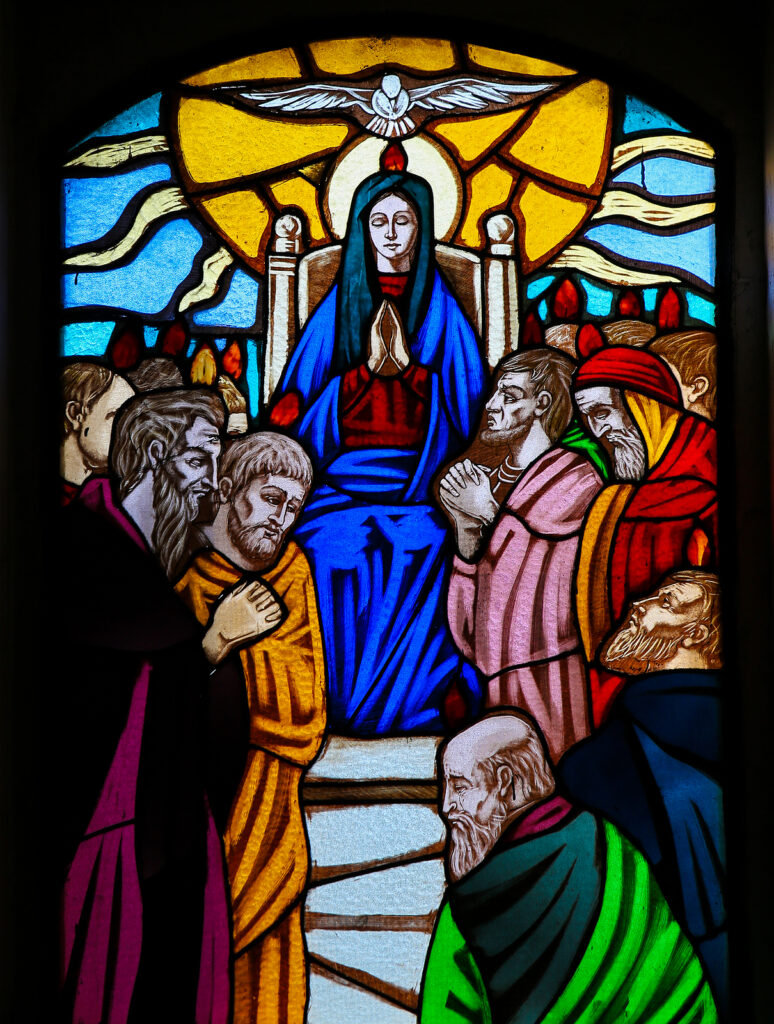
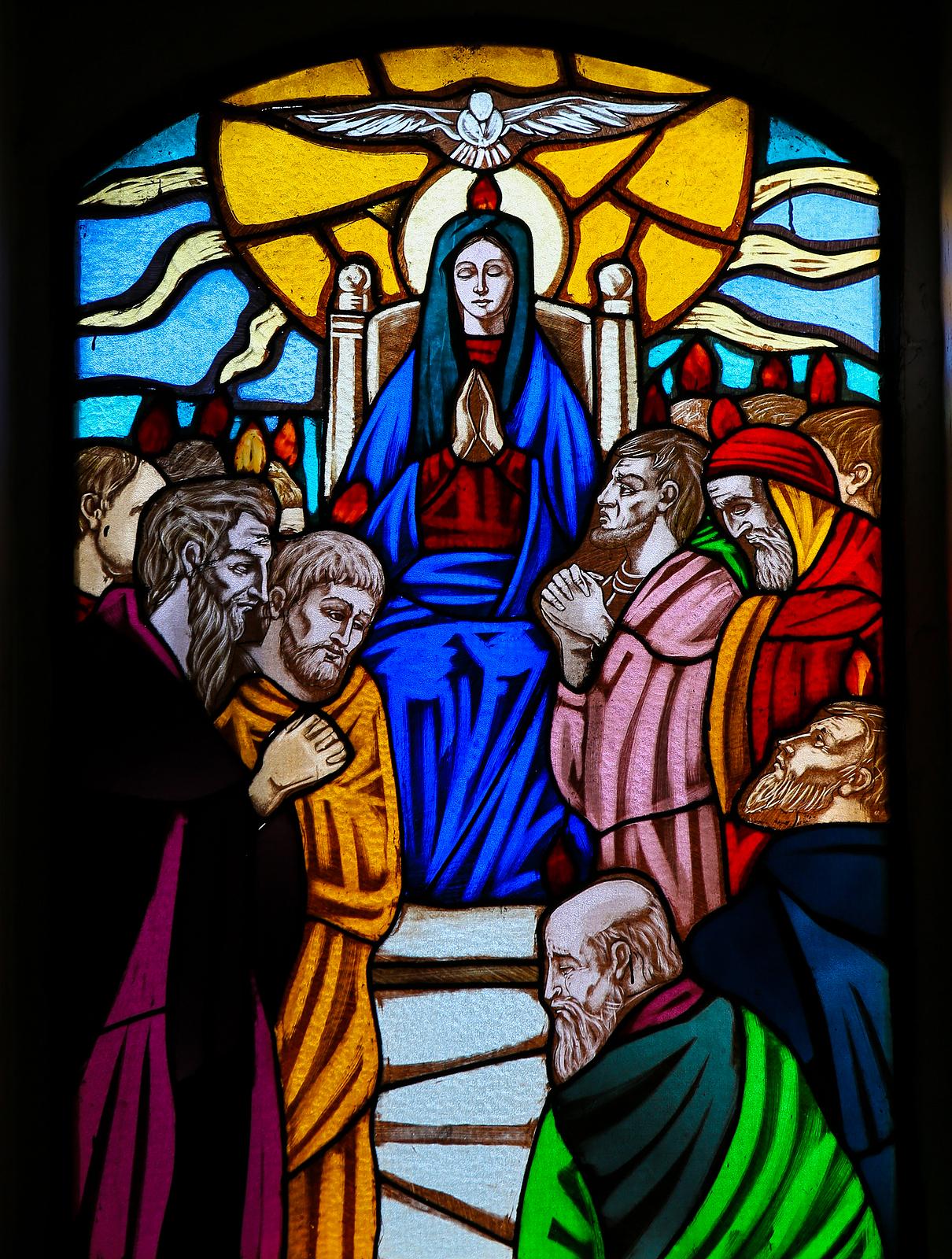
    Stained glass window depicting the the Descent of the Holy Spirit at Pentecost in the Church of Ostuni Apulia Italy.On May 19 this year, we’ll celebrate the birthday of the Catholic Church: Pentecost. Several thousand years ago, the third person of the Holy Trinity made its debut and gave the Apostles the strength, wisdom, and courage they needed to spread the Gospel to all nations. But if you’re anything like me, it can be easy to forget about this pivotal day in the Church’s history since it doesn’t come with a lot of pomp and circumstance. Easter has an entire three-hour ceremony which includes the induction of new Catholics to the Church, the four-week season of Advent builds the anticipation of Christmas, and every Ash Wednesday triggers a flood of Catholic memes about the various ash crosses on social media. 

    While it’s true that Pentecost may not be amplified by the same bells and whistles, this solemnity provides its own value, reminding us of the Holy Spirit’s inspiring presence in our lives. It’s easy to forget how active the Holy Spirit can be, but hearing the message of Peter’s courageous witness, the proclamation that changed the Church forever can draw attention to the Spirit’s activity in our own lives. For my part, I am reminded of the Holy Spirit’s good guidance in my own life.

    WATCH: Pentecost in Two Minutes

    I think back to when I was a senior in high school making the decision of where to attend college. Of course, choosing what school to attend is pivotal; so much prayer and discernment was needed. Many people gave me advice and promoted different schools (usually whichever one they went to), and as I witnessed schoolmate after schoolmate gleefully announce their choice of college, I felt stuck and frustrated. I looked at plenty of schools that offered practical majors such as business or computer science, but I wasn’t particularly compelled to attend them. The school I was most drawn to was Christendom College. 

    Christendom emphasized community and had an unflagging commitment to Catholic orthodoxy. Its curriculum was built on the Catholic liberal arts tradition, offering theology, philosophy, and classic works of literature in place of contemporary conventions such as engineering. Many friends and family members were skeptical about the school because of this and thought it was therefore less practical. However I connected with the school’s goal to expand its students’ minds in a broader sense, helping them achieve the ability to think and reason effectively. Though the school’s vision was unconventional, its fascinating curriculum and the prospect of spending four years engaging with passionately Catholic young people was impossible to overlook.

    RELATED: Unwrap the Gifts of the Spirit This Pentecost

    The writings of St. Ignatius of Loyola, a personal favorite of mine for many years, held the answer to my questions. St. Ignatius reminds us that the Holy Spirit’s movements in our souls take away sadness and disturbance and, in doing so, draw us to good action. The thought of attending Christendom brought peace and confidence that I would be well-prepared for the work of evangelization. After months of prayer, discernment, and exploration, I had my answer.  

    I finally decided to take the liberal arts route, choosing history as my major. By exploring the actions of the Catholic Church over the past centuries and learning about the multifaceted motivations of the men and women who shaped history, the Holy Spirit guided me to a greater understanding of his Church and the nature of the men and women who fill her pews. 

    RELATED: How to Celebrate Pentecost Sunday

    Now that I’ve graduated, I can confidently say that during those four years, my life changed for the better. I made strong friendships with great people, grew both spiritually and emotionally, and became a better, stronger, wiser person because of the choices I made. But I didn’t make it alone. As we approach Pentecost, a solemnity to celebrate the Holy Spirit in a special way, I’m reminded of this and filled with gratitude for what the Spirit has done for me. 

    I think if we take a genuine look back at our lives, we’ll notice the care and precision with which we’re guided through this chaotic world. My experience with college was only one of many in which confusion and frustration gave way to gratitude as it became clear what the Spirit was doing. This Pentecost, I invite you to reflect upon the confusing moments in your own life. You might find there’s wisdom present there you may not have otherwise noticed.

  • With Finals Looming…Who Is the Patron Saint of Studying?

    With Finals Looming…Who Is the Patron Saint of Studying?

    I can offer three who would be good to pray with:


    1) St. Thomas Aquinas — the official patron of scholars and a doctor of the church. His great work, the “Summa Theologica,” might just be something you’re studying in fact.

    2) St. John Henry Newman was very active in the intellectual life and set up centers for discussion so as to merge Catholics with intellectual conversation at universities as it was often misconstrued that to be Catholic is to be anti-intellectual. Campus Ministry Centers across the United States often bear his name. Read “The Idea of a University” sometime.

    3) An obvious one is St. Ignatius of Loyola who founded the Jesuits whose charism is education. Many Jesuit universities exist in the United States and elsewhere including Georgetown, Boston College, Fordham, and Loyola Marymount.

    If you’re really desperate, you just might want to try St. Jude. He is the patron saint of hopeless cases and has been known to dig a few people out of a jam.

    Originally published May 9, 2016.

  • More Than a Story: How ‘Star Wars’ Gives Voice to My Spiritual Journey

    More Than a Story: How ‘Star Wars’ Gives Voice to My Spiritual Journey

    Space backgroundPeople like to tell me that they haven’t seen “Star Wars.” 

    It started out as a joke with friends: “Eric loves ‘Star Wars!’ This will absolutely shock him. He won’t be able to believe it.” 

    But over time, it’s become something else. Usually, after I give a talk or a workshop—one thoroughly peppered with “Star Wars” references and jokes—a person will come up to me, sort of sheepish. “I really liked your talk,” they’ll say before pivoting to confession mode. “But Eric, I’m really sorry to say this, but I haven’t seen ‘Star Wars’…”

    I mock shock, anger even, but then we laugh. It’s fine, of course—the franchise isn’t for everyone. We all have stories we like and some that just don’t resonate. I haven’t yet refused a friendship over the mere sin of not having seen “Star Wars.”

    But I have been thinking more and more about this transition in the way people talk to me about that galaxy far, far away. Because I think they see a change in me: This isn’t just a story I enjoy; it means something. 

    RELATED: Faith and the Force: ‘Ahsoka’ and the Power of Relationship

    Sure, it holds a special place in my own life story: My dad popped those VHS tapes in the VCR when I was little, ensuring I had something super cool to talk to my friends about in school for the rest of the week–and that I was ready for the prequel trilogy to premiere only a few years later. 

    But “Star Wars” means more to me than that. It gives voice to my own spiritual journey.

    I’m not talking about drawing parallels between our faith and “Star Wars”: “Anakin as the Chosen One is like Jesus as our Savior!” Or, “Jesuits are like Jedi because they both practice a form of indifference!” Parallels are helpful, sure; they help us see spiritual stakes in otherwise secular stories. But we remain passive observers when we simply look for parallels; we don’t engage the spiritual truths they point to. 

    What moves me about “Star Wars” is that the story gives me a new language with which to give voice to my spiritual journey. For example, the Dark Side of the Force feeds on fear; am I allowing fear to govern my decisions in relationships, at work, or in the way I view myself? If I am, then I may be unknowingly pursuing a dark path—and my own faith tradition has plenty to say about that! 

    What about redemption? Sure, we love to see Luke cling so fervently to the belief that his father might still be saved, and that Anakin still lives somewhere in Darth Vader. But do I act as confidently in this galaxy oh-so-near? Do I display those spiritual virtues that Luke does on the second Death Star: nonviolence, trust, surrender, and compassion? And if not, is there a relationship in my life that could benefit from such a disposition?

    I enter into the story; I engage the characters. I try some of those lofty lessons on for size. And I do so in a way that remembers St. Ignatius, the founder of the Jesuits—honoring the spiritual legacy of the Basque soldier-turned-saint who realized that God was to be found in all things, through our senses and our desires. Ignatius invites us to engage Scripture this way, by entering the story. But what if we did the same with stories of pop culture that mean so much to us?

    Because I think in the end, that’s the point: God is present in these supposedly godless stories. God desires to speak to us through the very myths and legends that move us, that inspire us, that stoke our imagination. Are these holy texts? Not in any way a biblical scholar would recognize, but these are stories that speak to something deep within ourselves.

    And the reason I spend so much time thinking about them—the reason I wrote a whole book, “My Life with the Jedi: The Spirituality of Star Wars”—is because I think that while these stories speak to us, we can use that same language to speak to others. To discover spiritual truths within ourselves. 

    We don’t actually have some mystical energy force to call upon to levitate rocks or pull X-Wings from mucky swamps. But we do experience the tug of the dark side and the light each and every day. We wrestle with decisions that set our lives on trajectories that bring us closer to the light or further from it. 

    RELATED: Curate Your Own Lenten Movie Marathon

    Painting this very relatable spiritual struggle in the hues of laser swords and warrior monks simply brings into clarity the weight of otherwise mundane decisions. Spiritual decisions. Do I move closer to the light? Or, do I find myself in darkness and in need of redemption? The fate of the galaxy might not rest on my meager decision-making. But then again, maybe it does. 

    Star Wars. Ignatian spirituality. Pop culture. Our faith lives. These aren’t separate things. In fact, one can feed the other, all while elevating our ability to see new. possibilities in a world so desperately in need of them. 

    Maybe that’s why people have started apologizing to me for not seeing “Star Wars.” People feel as though they have to apologize for not being fully bought in. Not because “Star Wars” is my religion but because it clearly gives me a new language with which to articulate very old spiritual truths. And that matters—to me, to you, to our world. 

    But here’s what I say in response: Don’t apologize for not seeing “Star Wars.” Find the story or stories that inspire you. And see what God might be trying to say to you through them. 

    Learn more about and get your copy of “My Life with the Jedi: The Spirituality of Star Wars” from Loyola Press today!