
Tag: Scripture

  • On Signs From God: Contemplating How God Reveals Himself to Me

    On Signs From God: Contemplating How God Reveals Himself to Me

    Person walking on road with a sign on the ground pointing in two different directions.

    God and I have a running inside joke. It started two years ago, when I read another Busted Halo article about discernment. The author wrote that when a friend of his was faced with a big decision, she would ask God to see a dog — specifically a Dalmatian — to confirm that she was making the right choice.

    As the author explains in the article, relying on signs from God is not the best tool for discernment. God is not a fortune teller and often, the signs we perceive tell us more about ourselves and what we want than God’s will. At the same time, God can speak to us through the physical world in the ways we need it most. 

    RELATED: Looking for a Sign From God? Try These Prayer Practices Instead

    At the time I came across this article, I was starved for affirmation from God. I had a job that brought me little fulfillment, a lengthy commute that drained my energy, and a profound yearning for community and friendship. I wasn’t facing any monumental decisions, but I wanted God to give me a sign that I was moving in the right direction, even if it didn’t feel that way. I don’t know if it was right or wrong to ask this of God, but a few days later, as I was driving home from work, I saw a woman crossing the street walking two spotted dogs on her leash — Dalmatians.

    While this might seem like a direct sign from the divine, it felt more like a playful elbow nudge from the Lord. Seeing those Dalmatians, I perceived a fatherly imperative and promise from God: Lighten up, it’s ok, I’m here

    In the following months, I didn’t ask to see another Dalmatian, but every so often I would cross paths with one, the dogs’ striking coats filling me with an inner warmth as they assured me of God’s presence. Seeing the Dalmatians was not a coincidence nor was it a command — it simply allowed God to reach out to me in a way he knew I would recognize.

    LISTEN: Brett Seeks a Sign From God

    Then there came a time when I was faced with a decision. I had two job offers to discern between, and the similarities in both their roles and workplaces made the choice extremely difficult. Since they were both at local universities, I decided to drive to each one and walk around the campuses, reflect on the offers, and attempt to determine where my soul was pulled. 

    I went on my quest on an icy Saturday in the middle of winter, muted gray clouds casting shadows over the traffic on the expressway. As I took the exit ramp to the first campus, I noticed that the car ahead of me had its windows down, which seemed like an odd choice for such a frigid day. As we curved down the ramp, the head of a Dalmatian emerged from the passenger window, the dog’s ears flapping in the brisk wind. My heartbeat accelerated as I accepted God’s squeeze on my shoulder and thanked him for staying by my side as I made my decision.

    Looking back, I don’t know if that Dalmatian was an indication that the campus I was heading towards was where I belonged, or just a gentle reminder that God would be with me wherever I went. Regardless, I know that it was not by chance that I was driving behind that car or that the dog needed fresh air — God knows what will speak to us the most in the moment that we need to hear him. 

    RELATED: What Is a Sign From God?

    I don’t think that discernment and decision-making should rely solely on perceived signs from God, but I also have faith that God finds unique ways to reveal himself to us. A stranger who holds open the door when our arms are full, a stoplight that turns green right when we approach — it is all laden with meaning whether or not we choose to extract it. 

    If we trust that everything we encounter has the ability to connect us back to God, moments of mundanity can become beautiful and coincidences can transform into assurances that he is watching over us. When I see a Dalmatian, it is like receiving a handwritten note from God, a little inside joke to lift my spirits and fill me with his presence. God always knows what will affirm his love for me, even if it comes in the form of a spotted dog.
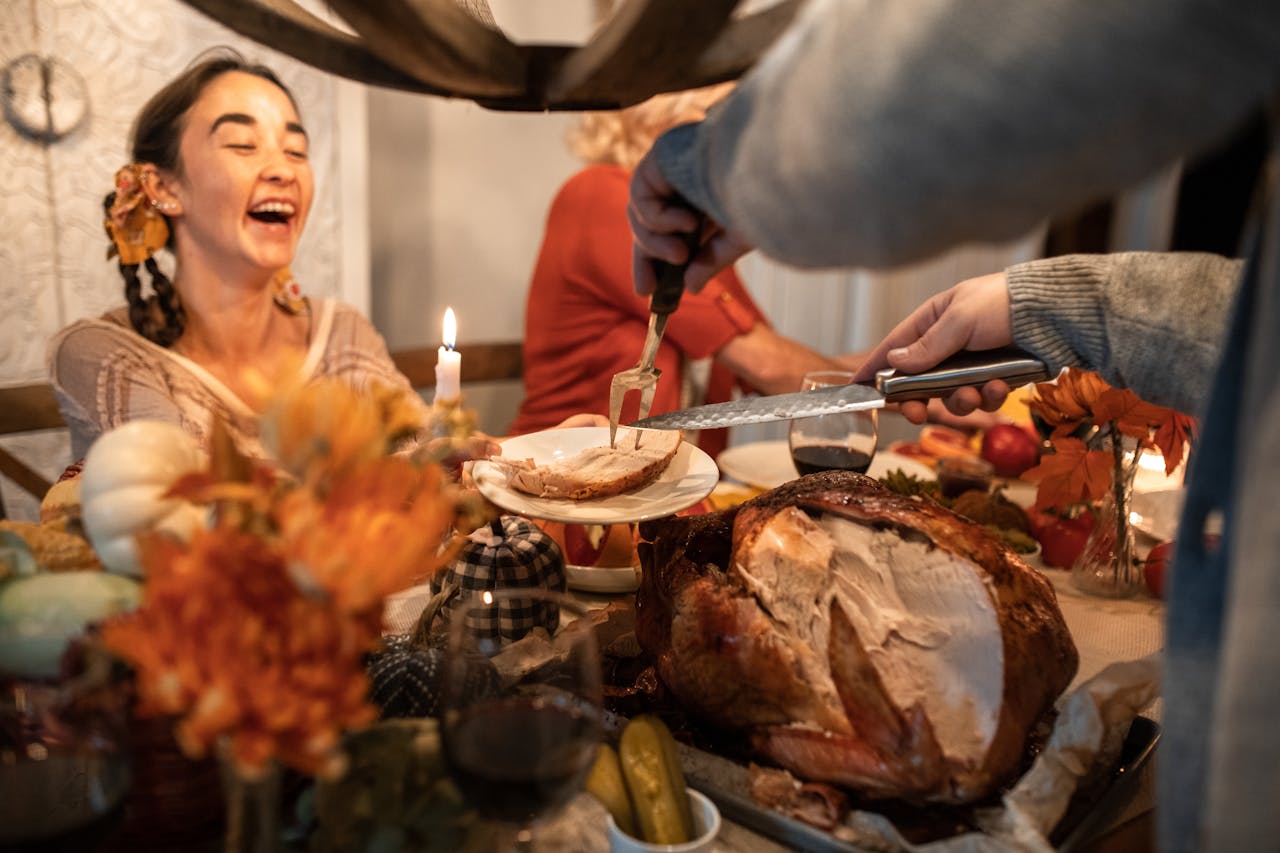

  • More Than a Meal: The Holiness of Friendsgiving

    More Than a Meal: The Holiness of Friendsgiving

    It’s that time of year again — crunchy leaves, pumpkin spice, wishbones, and pecan pie. Thanksgiving is around the corner, and what better way to celebrate than by hosting a Friendsgiving feast? 

    While I love gathering around the table with my family, one of the things I look forward to most during the year is Friendsgiving. I wait for it like a child waits for Christmas. I love the fall decor, the hearty dishes, and the liveliness, but most of all, I love seeing all my beautiful friends in one place — the way we would like to be more often but can’t always manage with busy schedules. 

    RELATED: Bless Us, Oh Lord, for These Thy Gifts: The Holiness of Mealtimes

    I first celebrated Friendsgiving a couple of years ago with a small group of my girlfriends. We each brought a dish, and dinner went late into the night as we moved from the kitchen to the patio to the living room, talking and laughing all the while. 

    What I took away from that night is that Friendsgiving is more than just a chance to catch up with friends. It’s a spiritual experience. Spending time with women who I usually only spoke to at parties and brunches brought a new sense of intimacy and gratefulness to our conversation, fostered by the intentionality of Friendsgiving. We were brought together not only because we are friends but also because we are grateful that we’re friends. 

    Friendsgiving reminds us of our blessings and renews our commitment to our friendship — to serving and lifting each other up. (Thessalonians 5:11) This can strengthen our existing connections or create new ones, cultivating a spirit of togetherness and gratitude that ultimately points towards God. 

    The Catechism of the Catholic Church says that friendship is a “direct demand of human and Christian brotherhood” (CCC 1939) and the Bible highlights the importance of meaningful relationships (Romans 12:10). These themes lie at the core of Friendsgiving! Christianity has a long history of feasting as an opportunity to come together and celebrate the goodness of the Lord, remembering the blessings he has given us. 

    RELATED: 3 Easy Prayers for Thanksgiving Dinner

    In Christian theology, feasting with friends lives out the biblical principle of community. The Bible points to fellowship among believers: “They broke bread in their homes and ate together with glad and sincere hearts… and the Lord added to their number daily those who were being saved” (Acts 2:46-47). How inspiring to imagine the earliest Christians sharing meals as a form of praising God! Friendsgiving is a present-day manifestation of this practice — a modern way to break bread together. 

    There are several things to focus on when gathering to share a meal and give thanks. At the heart of any Thanksgiving meal is gratitude. Beginning your festivities with a prayer of thanksgiving is a wonderful way to acknowledge God’s provision and the gift of your loved ones. As you savor each dish, appreciate the hands that went into its preparation. I always make macaroni and cheese, my favorite childhood meal, and there are certain dishes I know friends will bring that everyone loves, like their signature macarons or the jalapeño poppers they only make once a year. 

    Encourage your guests to share what they’re thankful for to foster an atmosphere of warmth and connection. I have started a tradition at Friendsgiving where we pass around flowers and whoever holds the bouquet shares what they’re grateful for.

    Incorporating Catholic symbolism into your decor and menu is another beautiful way to remember why you’re gathered together. Set the tables with candles to create ambiance as well as to represent the light of Christ. Evergreen wreaths are a lovely symbol of eternal life, while sprigs of rosemary add fragrance and represent remembrance. Holy cards or Bible verses at each setting add a thoughtful touch, and of course, a bouquet of autumnal flowers never hurts!

    RELATED: Food for Thought: How I’m Approaching Thanksgiving Differently This Year

    As for the feast itself — create a seasonal menu that celebrates the blessings of the harvest season. Dishes of roasted root vegetables, sprouts, cranberries, pomegranates, and pumpkin soup paired with warm beverages like mulled wine or cider make for a cozy feast. Encourage guests to bring dishes from their cultural background or family traditions, creating a tapestry of diversity that demonstrates the inclusive nature of hospitality. For dessert, you could include soul cakes, a traditional All Souls’ Day treat alongside your favorite pie. This balance of Catholic tradition and seasonal celebration will create a memorable event for your guests. 

    Most importantly, foster an atmosphere of hospitality. Open your home to friends without family nearby and extend this generosity beyond your immediate circle by inviting newcomers to your community. Perhaps invite someone who might otherwise be alone, or donate to a local food bank. Friendsgiving isn’t about one lavish meal; it’s a spirit of gratitude and love that extends beyond the day. Generosity and hospitality are pillars of Christianity — the act of opening your home not only strengthens community bonds, but also creates a space where thankfulness is openly expressed, mirroring the biblical command to “give thanks in all circumstances” (1 Thessalonians 5:18) .

    Friendsgiving is more than just a festive gathering — it is a meaningful expression of Christian community and all that it stands for. Whether you’re hosting a Friendsgiving feast or attending one, use the time to reflect on the goodness in your life and give thanks to the Lord. In doing so, you transform a simple meal into a celebration of faith, hospitality, and the blessings we’ve been given.

  • 6 Bible Verses That Shepherd My Parenting

    6 Bible Verses That Shepherd My Parenting

    Parents and a toddler preparing food togetherWhen I became a Christian, I felt like God was inviting me to come to him for parenting support, through prayer and reading his word. 

    When I first looked at what the Bible said, I didn’t see much advice for parents. Apart from the often-quoted Proverbs 22:6 “train up a child in the way he should go,” there doesn’t seem to be a lot of advice that directly speaks to our parenting challenges. However, a deeper look reveals that many verses can support parents raising their children. 

    RELATED: How Memorizing Prayers Brought My Family Closer to God

    Loving our children is a reflection, on the micro level, of how Jesus loves us. As imperfect humans with a tendency to sin, it’s a lot to live up to, but thankfully God gave us his Holy Spirit to be with us. 

    Here are six Bible verses to meditate on and memorize to help us along our parenting journey. I try to read and reread these as often as I can so that when I’m in a sticky parenting situation, God’s words of advice remind me to parent in the spirit and not in the flesh. 

    1. Remember the fruit

    But the fruit of the Spirit is love, joy, peace, patience, kindness, goodness, faithfulness, gentleness, self-control; against such things there is no law (Galatians 5:22-23).

    There are many parenting moments where I don’t feel peaceful or patient, when my words aren’t kind or gentle. Having this verse at the forefront of my mind can interrupt any negative patterns of thinking. It’s so easy to forget, which is why I like to read this one often; I even spent a week meditating on it. You could put it in a prominent place like your bathroom mirror, or on the fridge. 

    2. Pray without ceasing

    Cast all your anxieties on him, because he cares for you (1 Peter 5:7).

    When I first became a Christian three years ago, I gave up new-age practices after God showed me to rely solely on him. However, my parenting actually deteriorated for a while as I did not share my problems with him! It felt much harder to rely on a God I could not see. It took an inspiring sermon on the power of prayer to really make me sit down every day, and make sure I gave every anxiety to God. After that, I felt much calmer as a parent. 

    It can be all too easy to get caught up in my worries and not involve God. The Bible is full of reminders such as; “pray without ceasing” (1 Thessalonians 5:16) and “do not be anxious about anything but in everything by prayer and supplication with thanksgiving let your requests be made known to God.” (Philippians 4:6)

    3. Speak gently

    A soft answer turns back wrath: but a harsh word stirs up anger (Prov. 15:1).

    When I want to make a request or set a limit with my kids, it can be easy to let my own emotions come out in my tone of voice. Sometimes I get frustrated about the state of the kitchen or my irritation rises as a simple request is met with complaints or arguing. Nevertheless, using a gentle, loving tone, even when we need to hold a firm limit can help to build the sense of connection children need to cooperate with us. 

    LISTEN: Tackling Kids’ Tough Questions of Faith

    4. Stay quiet

    No human being can tame the tongue. It is a restless evil, full of deadly poison (James 3.8).

    I have found this particularly helpful as my daughter has gotten older and more prone to debating or questioning me. Sometimes rising irritation can lead me to say things that I may regret later. In those moments, I try to remember the book of James which has many reminders about staying quiet. 

    5. Stop complaining

    Do all things without grumbling or disputing, that you may be blameless and innocent, children of God without blemish in the midst of a crooked and twisted generation, among whom you shine as lights in the world (Philippians 2:14-15).

    Before coming to Christ, I must admit I complained a lot, often about the state of the house and the amount of items on my to-do list. I thought of it as a healthy expression of my feelings, but in reality, there were times when my moaning just created a bad atmosphere. This verse helps me, as it acknowledges that yes, this world is fallen and broken, so there will be many struggles. But we are servants of Christ so it’s our job to shine.

    6. God makes the impossible possible

    With man this is impossible, but with God all things are possible (Matthew 19.26).

    There have been moments when things seem impossibly hard, and I feel there is no hope. When I find myself caught thinking I’m not a good enough parent, or this is never going to change, I just remember that I’m not doing it alone.

  • Salt of the Earth: Engaging Hearts and Minds With Jesus’ Metaphors

    Salt of the Earth: Engaging Hearts and Minds With Jesus’ Metaphors

    Wooden spoon full of salt
    Photo by Jason Tuinstra on Unsplash

    “Why didn’t Jesus talk plainly? Why didn’t he just say what he meant?” The student asked. “What is, ‘You are the salt of the world’ supposed to mean? I use salt on my eggs!” The quip got a big laugh. 

    My freshman-year student was genuinely puzzled over Jesus’ parables and metaphors. “How are we supposed to understand what he is saying?”

    “Good questions,” I encouraged, impressed by her candor. 

    “Metaphors are a mercy of God for us,” I told the class. He wanted to transform his disciples – and us. Jesus hoped to change our views of our world, ourselves, and him. He wanted us to feel what he feels, to love others as he loves others. 

    I was not surprised by this question. After all, Jesus’ disciples asked him this. Jesus had answered, “Because knowledge of the mysteries of the kingdom of heaven has been granted to you…” (Matthew 13:11). Christ offered us his divine metaphors as a different kind of language to draw us into his very different kind of kingdom. 

    LISTEN: Why Do Jesus’ Parables Vary So Much in Tone?

    Metaphors, similes, and parables are essentially comparisons between two very different things or acts. They use familiar comparisons to expand our experience with less familiar acts of God’s presence. In the well-known metaphor that my student asked about, for example, Jesus said that those who know and do his word are the “salt” of the earth. What is not well-known, however, is the way metaphors open us up to new ways of knowing and experiencing Christ.  

    Metaphors offer us intuitive, “feeling” words to talk about his kingdom. As any religious teacher knows, we cannot describe and analyze God’s kingdom the same way a science teacher might talk about a chemical reaction. It degrades the kingdom of God to define it “clinically,” as if it were just another physical location. Metaphors liberate the kingdom from everyday definitions and develop expansive ways to understand and experience God’s presence. Metaphors engage our affect and intellect in ways that allow us to wrestle with ambiguities, challenge our worldviews, and help us to feel what others feel.

    To engage with us more intimately, Jesus chose the metaphorical logic embedded in the heart’s mind. “The National Directory for Catechesis” encourages educators to continue using metaphors just as Christ did. 

    Jesus used metaphors and parables for our salvation. Metaphors link different ideas that normally do not connect. Who would have thought to connect “salt” and “God’s Kingdom”? These links pave pathways to new ideas, new perceptions, and more complete ways of knowing and experiencing God.

    LISTEN: What Should Be Taken Literally in the Bible?

    When we consider the different metaphors of Christ, we can explore new ways of understanding God’s Kingdom — our feelings and our thinking, our imaginations, and our ability to relate to others’ feelings. These qualities invite us further into God’s kingdom — to “feel it” as well as understand it. 

    Jesus knew that the very process of pondering metaphors is what produces new ways of understanding. The main task in teaching merciful metaphors and parables is to help students meditate upon them. In this way, educators offer valuable “sparks” to students’ brains that allow students to relate to Christ with their full minds and hearts.

    How to accomplish this?  

    First, educators can introduce the “salt” metaphor by reading the passage in Matthew 5. Ask for any initial responses. Then reread the passage. Show a salt shaker and invite them to describe its function. 

    Second, the educator can ask students how they use salt today. The more ways students can relate to salt, the better. For example, do any students use electrolyte-restoring liquids when exercising? Has anyone gargled with salt water when they had a sore throat? How does salt enhance the taste of food? 

    LISTEN: Top 10 Tips for Catechists With Joe Paprocki 

    Third, the educator may offer insights about salt during Jesus’ time. For example, sometimes Roman soldiers were paid in salt because it was so valuable; even as valuable as gold. Teachers might note how salt is crucial for a proper diet and that salt was used to preserve meat. Some cultures rubbed salt in wounds to sterilize them. 

    After expanding their understanding of salt, return to the question of how Christians are like salt, as Jesus said. How can we act like salt’s healing or life-preserving qualities?  

    Fourth, ask “How can we all become even more ‘salty’ Christians?” 

    Fifth, ask students to suggest other metaphors for Christians or the kingdom of God. What other more modern metaphors could describe the healing, health-giving, sustaining, or life-giving acts of Christians?  

    In teaching by metaphors and parables, Christ used common images to draw his listeners into his uncommon life. Let’s continue that tradition.

  • Our ‘Hidden Lives’ in Nazareth: How Embracing the Ordinary Encourages Holiness

    Our ‘Hidden Lives’ in Nazareth: How Embracing the Ordinary Encourages Holiness

    Orange sky over Nazareth
    Photo by Vytautas Markūnas on Cathopic

    My 17-month-old daughter signals me to replay the “Freeze Dance” song for the 10th time in a row. A look of repetitive torture creases my brow as I sigh and rewind one more time. My baby girl once again dances when commanded and then freezes when prompted. Meanwhile, I just stare blankly at the television screen, my enthusiasm used up about eight dances ago. I would love to do anything else, but I keep hitting play for my daughter. This is what I call my hidden life in Nazareth.

    Jesus spent 30 years in Nazareth, a small, backwater town about 60 miles from Jerusalem. This leads to a big question: What exactly did Jesus do for three decades during these hidden years of Nazareth? 

    Answers to this question can prove elusive because there is very little written record or information about Jesus from this time. Gnostic Gospels, such as “The Infancy Gospel of Thomas,” even try to fill in the blanks of this period by giving an apocryphal account of Jesus’ childhood. We have no detailed answer as to what Jesus did during this time except for one episode in the second chapter of Luke in which Jesus is lost for three days in the temple. Luke gives a vague statement at the end of the chapter, “And Jesus advanced in wisdom and age and favor before God and Man.”

    LISTEN: Do We Have Any Information on Jesus’ Life Before His Public Ministry? 

    How was Jesus able to grow in wisdom and favor before God and Man in such a small place, around the same people, doing the same old tasks day in and day out? The simple answer is Jesus is God. However, Nazareth also played an important role in developing Jesus’ human nature as well. There, Jesus likely experienced what I felt when I watched the “Freeze Dance” with my daughter for the 10th time: The monotony of everyday life. This is what helped him grow in wisdom and holiness. 

    Here are a few things that I imagine Jesus could have experienced on a day-to-day basis:

    • On the way to a carpentry job with Saint Joseph, Jesus meets the neighbor who says the same thing to him for the thousandth time, “Hey, Jesus! Working hard or hardly working?” (Complete with a wink, finger point, and goofy smile.)
    • At night, Jesus sticks his fingers in his ears and prays for patience as Saint Joseph’s snoring kept most of the neighborhood awake. 
    • The Blessed Mother prepares the same meal for multiple days in a row. Jesus learns to be thankful and enjoy it for the nourishment and sustenance it gave him. 

    RELATED: How to See Life’s Interruptions as Blessings

    These examples are silly, but it is entirely possible that Jesus grew in wisdom and holiness through instances like these. He learned to give of himself for the love of his neighbors and to treat them with a smile and a kind word. It is in Nazareth that he likely did the same things every day, as we often do, and learned humility and abandonment of self to the will of God. Nazareth taught Jesus to detach from worldly things and embrace the spiritual. This is what our hidden lives of Nazareth teach us as well, by learning to drop our selfish desire to do anything but watch the “Freeze Dance” again with our children and see this normal life as a beautiful gift from God.

    I would like to share three Scripture verses and reflections to help you contemplate your own hidden life in Nazareth, and how to detach from the world and embrace the spiritual life.

    1. “Jesus said to him, ‘If you wish to be perfect, go sell what you have and give to the poor, and you will have treasure in heaven. Then come, follow me’” (Matthew 19:21). 

    There is nothing in the world as important as living for Jesus. All our money, honors, and dreams will someday die with our final breath. Our eternity will be based on one of the following questions: Did I follow Christ? Did I not follow Christ? The answer will depend on whether we die to our own selfish will and follow God’s. 

          2. “If anyone wants to go to law with you over your tunic, hand him your cloak as well” (Matthew 5:40).

    I often find myself worked up or anxious about worldly things I encounter daily. I worry about money, if I am doing my job correctly, my family, and how people perceive me. These worries keep me focused on myself and on things that pass away with this life. I aim to hand them over to Christ and practice detachment.

          3. “And to another he said, ‘Follow Me.’ But he replied, ‘Lord, let me go first and bury my father.’ But he answered him, let the dead bury their dead. But you, go and proclaim the kingdom of God” (Luke 9:59-60).

    God wants us to follow him. Is there anything more beautiful than knowing that the creator of the world wants us to be with him? To do this, he asks that we let go of the sins we are attached to before we are buried with them in the ground. What sins do we need to repent from that keep us from life?

    Remember when you find yourself dragged down by the monotony of the day, that Jesus endured this too. He embraced his Nazareth, loved his Nazareth, and learned in Nazareth to obey the will of the Father. May we imitate him in the daily routines of our lives. 

  • Finding Peace in Rough Seas: Turning to Faith in Times of Personal Crisis

    Finding Peace in Rough Seas: Turning to Faith in Times of Personal Crisis

    Big waves crash against rocks in stormy weather.
    Photo by Flaviya85 on Bigstock

    When I was 15 years old, my father took my cousin and me on a deep-sea fishing trip.

    The captain of the 60-foot-long charter boat transported us 40 miles away from the Ocean City, MD shoreline toward the Gulf Stream…an area often the home to the enormous Bluefin Tuna he hoped we’d catch.

    Although we traversed an endless parade of white-capped waves on our journey, the turbulence was hardly noticeable. As long as the powerful engines kept pushing us forward at a rapid clip, the boat’s v-shaped hull tore through the waves, preventing us from noticing the bulk of their effects.

    We would feel an occasional bump or two, but the impact on our equilibriums was minimal. The speed at which we raced to our destination allowed us to maintain our balance.

    RELATED: Shelter From the Storm: How My Tornado Shelter Became a Reminder of God’s Protection

    When the engines shut off, however, the five-foot-high waves took control, tossing our vessel back and forth like a beach ball at a Jimmy Buffett concert. While our lives were in no real danger, my stomach was ready to jump overboard.

    I laid on the hard sofa inside the cabin, realizing my body wasn’t made for constant churning. Instead, I needed to cease moving. I needed the waves to stop.

    My cousin, on the other hand, felt fine. Dramamine kept his body’s reaction to our environment under control.

    The only one on the boat’s deck who didn’t suffer any consequences from our environment — at least not without the aid of drugs — was the first mate.

    You see, he’d taken this journey hundreds of times. He felt the waves nearly every day, so his body was conditioned to handle them. Most importantly, he trusted his captain to keep him safe. Although a big wave would occasionally knock him down, he got right back up and steadied himself before the next one hit. 

    I recall my deep sea experience each time my job, my relationships, or the health of my loved ones threatens to break me. My son’s recent health scare qualified, and it reminded me that all too often, life’s waves do their best to pound us into submission. One time they almost did.

    RELATED: 5 Steps for Praying When You’re Overwhelmed

    When my wife was pregnant, we did everything right. We attended classes and purchased the appropriate baby gear. She visited the obstetrician as prescribed, swallowed oversized vitamins, and avoided a lengthy list of foods. We were sure we were prepared.

    We weren’t at all ready, however, for the tsunami that was about to crash into her already fragile body.

    Although she’d experienced a few isolated contractions early in her pregnancy, at 24 weeks, they returned. Only this time they weren’t isolated…and they weren’t stopping.

    We rushed to the hospital, and they admitted her immediately. The concern on the attending doctor’s face didn’t help ease our fears.

    Giving birth at 24 weeks wasn’t unprecedented, but our son’s survival was far from guaranteed. If he did make it, a lengthy stay in the neonatal intensive care unit (NICU) was in his future. We needed to do everything possible to stop the contractions.

    Nurses who shared our concern used an IV to pump terbutaline into her veins. Terbutaline—a drug that has, in the years since, caused the death of more than one pregnant user—had, in my wife’s case, elicited persistent vomiting that exacerbated her already debilitating dehydration. She was struggling and the contractions were growing in intensity and frequency.

    Wave upon wave upon wave.

    RELATED: Praying Through Pregnancy

    At around midnight, her doctor became concerned that they might not be able to halt her contractions. When the doctor added that the hospital’s NICU was full, our hearts sank. My wife would have to be flown by helicopter to a hospital that had space available for our tiny son.

    She was understandably terrified as medics monitored her vitals in the tiny chopper. I couldn’t fit, so I sped down the highway in our Honda Civic, hoping that our son would delay his arrival. As I did so, Jesus’ words popped into my mind.

    “A violent squall came up and waves were breaking over the boat, so that it was already filling up. Jesus was in the stern, asleep on a cushion. They woke him and said to him, “Teacher, do you not care that we are perishing?” He woke up, rebuked the wind, and said to the sea, “Quiet! Be still!” The wind ceased and there was great calm.” (Mark 37-39)

    In the midst of our storm, Jesus was in control. I forced the gas pedal to the floor and prayed that he’d tell our waves to be still.

    I don’t always trust him to still the waves in my life, though. Instead of confronting life head on, with Jesus on my side, I hide. I trust my way instead of following his.

    That night on the highway, however, I couldn’t escape. My wife and I were tossed and turned, our son’s life at risk.

    Fortunately, our expectation that our son was going to enter the world much too early wasn’t God’s plan. After an anxious night at the second hospital, the waves finally subsided. My wife’s contractions ceased, and we were able to return home.

    RELATED: On Suffering: How I Stopped Asking ‘Why’ And Started Asking ‘How’

    Over the next couple of months, my wife was on bed rest. With a stocked cooler at her bedside, she sacrificed her mobility as well as her health to shepherd our son into the world. Born healthy at 37 weeks, Nathan, which means “gift of God,” certainly was God’s gift to our family.

    The joy that he brought us was almost enough to make us forget the storm that we — particularly my wife and infant son — survived.

    I still often attempt to solve my problems with my solutions. In doing so, I forget that I can’t control everything that happens in my life.

    During that night 18 years ago when my faith was its weakest, I couldn’t solve my family’s problems. I had to trust him even when I wasn’t sure he would save my son.

    I recently learned a short prayer that St. Faustina taught:

    “Jesus, I trust in you.” 

    I now pray this prayer whenever the storm clouds gather. And storm clouds gather nearly every day.

    Not only does it remind me that Jesus can calm the waves, but it also helps me trust that he can do so. Big or small, no challenge is more than he can handle.

    Jesus has and will provide me peace during the most difficult days of my life, and he promises to provide you peace, too.

  • The Heavens Are Telling the Glory of God: An Earth Day Reflection

    The Heavens Are Telling the Glory of God: An Earth Day Reflection

    A white woman in a blue tank top is holding a handful of dirt. A plant is growing out of the dirt in her hands.
    Photo by Nikola Jovanovic on Unsplash

    As we celebrate Earth Day tomorrow, I am reminded of the words of Psalm 19, celebrating God’s glory in creation, which begins with the following phrases:

    The heavens are telling the glory of God;
    and the firmament proclaims his handiwork.
    Day to day pours forth speech,
    and night to night declares knowledge.
    There is no speech, nor are there words;
    their voice is not heard;
    yet their voice goes out through all the earth,
    and their words to the end of the world.

    How exactly do the heavens tell of the glory of God? According to this psalm, they do not have a voice that can be heard through speech, and yet the words of their “voice” travel to all corners of the world because, with gratitude, they proclaim God’s majesty through the nature they are endowed with: trees root into the forest floor, reaching with branches of praise toward heaven, sheltering the things below; rivers rush and teem with aquatic life, a watery vessel for fish to travel; the sun and moon usher in the day and night, balancing the world with warmth and cold; flowers and plants enrich the mind’s eye with dynamic beauty and mystery, inviting the viewing into greater discovery.

    RELATED: Digital Retreat for Deepening Our Relationship With God and Nature

    Through my own experiences of spending time in nature: running, hiking, and gardening, I have witnessed firsthand the Earth speaking to me that everything is a gift. Yet, how often do I consciously call to mind and express gratitude for all that I have in a tangible way, as the Earth does? Not often enough. When we allow ourselves to experience deep and authentic gratitude, we naturally want to give back. We want to bring about something good for all the good that has been given to us; in other words, to co-create with God in blessing the world around us. I invite you to consider the visible ways you can cultivate a continuous inner life of gratitude by taking up the call to be co-creators with God in all seasons.

    In my own life, I have been blessed with an aptitude for words, specifically through my work as a novelist. Through the gift of storytelling, and by crafting characters and stories that glorify God and reveal his presence, I can bring to life a story where he can be found within the pages. In recent years, I have also had the opportunity to co-create with God in developing and implementing lesson plans as a faith formation minister at my local parish. Content creation of faith materials has given me an opportunity to produce something tangible for the benefit of young minds—another expression of my gratitude to God through the gift of teaching.

    RELATED: Bible Verses to Help You Care for Our Planet

    Recently, I have begun caring for three potted rose bushes on my small back deck. Growing up, whenever the winter frost had melted and springtime was beginning, I would begrudgingly stalk outside to help with the gardening in the family backyard, pulling up countless weeds, pouring out bags of fresh dirt, and helping plant new seeds. Once out on my own in a rented townhouse without any backyard garden, I found myself surprisingly missing the springtime chore. I had taken the gift of aiding in the backyard’s beauty for granted, and I now look forward to the day when I will have my own. Today, I look forward to picking out dead leaves from my rose pots come spring, gently pruning the branches to aid in new growth, and watering the base. As I write, the branches have turned green, and the season’s first yellow roses are about to blossom.

    Now it’s your turn. How can you co-create with God from a place of profound gratitude? What gifts and talents has he graced you with that you can use to bring newness of life and beauty to the world? Co-creation arises through baking pies to nourish new neighbors; bringing a spare space to life in decorating for a celebration; sewing clothing to provide warmth for children, and many more expressions of gratitude that create something beautiful that blesses the Earth.

    Originally published April 21, 2023.

  • Bless Us, Oh Lord, for These Thy Gifts: The Holiness of Mealtimes

    Bless Us, Oh Lord, for These Thy Gifts: The Holiness of Mealtimes

    Family sitting at a table sharing a meal together.
    Photo by Cottonbro Studio on Pexels.

    A few years ago, I was asked to sit on an alumnae panel at my high school to talk about life in college and beyond. At the end of the discussion, the panelists took turns giving the seniors advice about college life.

    Mine? “Don’t study while you eat.”

    For me, the point of a meal is to be fully present with the person you’re sharing it with. (And if you are eating alone, the meal can be a time to mindfully reflect or pray.)

    There is a sanctity in literally breaking bread with others — whether it be for a special occasion or as part of an everyday routine. Regardless, being distraction-free and fully focused on the present moment — and God’s presence in our company — makes each meal full of grace.

    RELATED: How Rice and Beans Became Our Weekly Dinner Tradition

    Gathering together

    During the Last Supper, a Passover Seder, Jesus gathered with his 12 disciples in the Upper Room to celebrate the Jewish feast. Together, they reclined at the table to symbolize that they are a free people. They feasted on food such as eggs (beitzah), bitter herbs (maror), lettuce (chazeret), parsley (karpas), a spiced apples and nut mixture (charoset), unleavened bread (matzah), and chicken or fish. They enjoyed the traditional four cups of wine throughout the meal. 

    Mealtimes emphasize the beauty of a community. Everyone takes time out of their busy lives to come together as one. It’s no wonder that Jesus chose a meal to establish the first Mass, the holiest of meals. In fact, every Mass is a meal. We gather together to listen to God’s word and eat and drink his body and blood in the form of bread and wine.

    That’s probably why I love hosting family and friends for a home-cooked meal. My husband and I have some favorite dishes we cook for guests: Jamaican-style oxtail, lasagna with homemade pasta, slow-cooked honey-soy ribs, and French onion soup, to name a few. But even daily meals where it’s just Arthur and me (and our dog on the lookout for scraps) feel special because it’s a time when we can simply be together and enjoy a moment of stillness in our lives.

    LISTEN: Heather King Talks Food and Faith

    Making announcements

    As Jesus literally broke bread, he told his disciples: “This is my body, which is given for you. Do this in remembrance of me” (Luke 22:19). He did it again as he passed around the cup of wine: “This cup that is poured out for you is the new covenant in my blood” (Luke 22:20). This was one of the most singularly important announcements in the world: that Jesus is fully present in the bread and wine that is shared in Mass, all around the world, from that very first seder meal to today.

    In our own lives, mealtimes are moments for making announcements. I remember, for instance, the night my sister announced that she was pregnant. It was also over a meal that my husband and I announced we were engaged. Mealtime makes perfect sense to share announcements such as these, as well as job promotions, new ventures, travel plans, and so forth, because we are sharing time and food with our loved ones.

    Coming to terms

    Because we are gathered with loved ones, mealtimes can also be a place to process bad news. I remember the meal I shared with my family the day of my grandmother’s wake: a pork cutlet with mashed potatoes and cucumber salad—the typical hearty Polish fare that is my total comfort food. The meal not only gave me the physical strength to bear the painful events to come but also gave me courage, knowing I was in solidarity with my grieving family.

    Jesus himself shared a dramatic pronouncement at the Last Supper: “Truly, truly, I say to you, one of you will betray me” (John 13:21). This, I’m sure, caused quite a stir in the Upper Room. And, while his disciples were shocked that there could be a traitor among such a close-knit group, Jesus planted the seed to allow them to begin to process all the terrible things that were to come on his road to Calvary.

    RELATED: 4 Spiritual Lessons I’ve Learned From Baking Bread

    Imparting wisdom

    During a seder, it is traditional to wash hands as part of ritual and spiritual cleansing. But Jesus also washed his disciples’ feet, saying: “If I then, your Lord and Teacher, have washed your feet, you also ought to wash one another’s feet. For I have given you an example, that you also should do as I have done to you” (John 13:14-15). We, too, can gain wisdom from the loved ones gathered with us. I remember my parents telling their stories of living in Communist-occupied Poland. Due to mismanagement and poor economic policies, the Communist regime rationed food and other everyday supplies so that store shelves were frequently empty. People stood with government-issued ration cards in long lines (“kolejki”), some of which took days, to receive their portions of sugar, meat, flour, chocolate, etc. Stories such as these gave me the prudence to always be grateful for life’s blessings—like mealtimes.

    Jesus teaches us to keep mealtimes sacred. There’s a game that some people play when they go out to a restaurant. Everyone places their cell phones in a pile in the middle of the table. The first person to touch their phone pays for the entire check.

    Perhaps this is a little cruel for the first poor soul to succumb to temptation, but the message is a simple one: When you’re sharing a meal with your loved ones, be fully there for them. Be present. Make it holy. Jesus did when he instituted the Mass. We can, too—and not just on Sundays, but every day of the week.

  • Choosing Compassion Over Criticism: Why I’m Giving Up Judging Others for Lent

    Choosing Compassion Over Criticism: Why I’m Giving Up Judging Others for Lent

    A hand pointing at the sky
    Photo by Maayan Nemanov on UnSplash

    At a 4:00 p.m. Saturday Mass in Overland Park, Kansas, during the preparation of gifts, I sat on the stiff, dark wooden church pew and reflected on Lent. Earlier that week, a student taking my Christian Ethics course asked what I had given up for the season. It was a routine question, but it felt more genuine since we had been discussing moral virtues, vices, and spirituality that day. I told the class that I had not decided. The students were surprised. I acknowledged that, in the past, I had given up yelling at my children (now teenagers!) with mixed results. 

    What came to me during Mass was the thought that I could give up judging other people as the Gospel of Matthew teaches. “Do not judge, so that you may not be judged. For with the judgment you make you will be judged, and the measure you give will be the measure you get” (Matthew 7:1-2). As the thought arose, I sensed that God began to laugh. Indeed, when I told my ethics students that I had given up judging others, they howled and one student commented, “Professor Hughes, c’mon, you can’t be serious!”

    RELATED: Overcoming Judgement in a Divided World

    Yes, I get it. We evaluate other people’s actions and their character constantly: for an unkind word, indifference to our needs, suffering behind a slow car or being passed by a fast one, or, worse yet, feeling our good work or integrity is overlooked or forgotten. Our judgments frequently pair with hurt, anger, resentment – pain. Psychology tells us that we tend to attribute more to personal character than to situations and that we know much less about complex situations, actions, and motives than we suppose. I cannot count how many times I’ve made snap judgments about certain students on the first day of class. I might focus on a weird facial expression, a slouched body posture, a face hidden under a hoodie, or a single negative comment and sortput them squarely into a “worthy” or “unworthy” bucket. 

    During Lent, I became more attuned to the frequency and quality of my judgments. I habitually sorted actions and persons into different categories — innocent, guilty, deserving, undeserving — so that Jesus’ injunction seemed on a commonsense level to be impossible. Surely, he didn’t mean it! On my daily commute, at times I find myself attributing malicious motives against me by my fellow commuters behind the careless driving or impatient honks without knowing anything about their lives, worries, pressures, etc. And it really makes no sense. But I, along with many of us, can habituate taking offense and then passing harsh judgments too easily and quickly.

    Or perhaps Jesus just meant not consigning another person to hell. It is, in fact, easy to think this. But from my Lenten experience and reflection on Matthew, I don’t believe condemnation is the main issue. What’s happening is a more subtle and pervasive way of seeing and assessing others that becomes a blindness to love. So what does this biblical teaching mean?

    RELATED: A Practical Guide to Loving Our Enemies

    Matthew’s and other biblical references to “judging” seldom mean “do not condemn.” Luke uses a different word for “judge” (krino) and for “condemn” (katadikazete), distinguishing two different acts. Matthew (and Mark) add to the prohibition on judging the caution about how the way we measure others should be the way we measure ourselves. So, condemnation is only one of many responses covered in the ways we judge — not the only way. It seems that the meaning concerns more common interactions and judgments we make. From my own experience this past Lent, this distinction rang true. 

    That Lent, I learned that Jesus does not mean ignoring injustice or becoming desensitized to evil and wrongdoing. What I found in self-monitoring my judgment of others — especially behind the wheel — was that when I judged and quickly sorted another person into a negative category, I became less connected to that person, more cut off, more isolated from them and from my own tendency to act likewise. Indeed, one of the key meanings of the Greek term krino aside from “judge,” is “to separate.” If I wanted to see harshness, strictness, looking out to be offended by this look, that remark, his comment or her gesture, I would find them. I saw and judged the other as such. And in so doing, I separated myself from my neighbor and ignored my own harshness, strictness, and ways that I might offend others. 

    LISTEN: Getting Back to Basics in a Polarized World

    I was not at all aware that the measuring stick I used would be similarly used on me. And that is the tough part. It requires serious self-reflection, knowledge of one’s sinfulness, needing God’s help, mercy, and being constantly on the lookout for goodness to get “judging” right. It requires a type of ego death, one that means a better seeing of another person in all their complexity rather than a fixation on a snapshot in time or a fault, hurt, or offense. A patient gazing and understanding of the other with, what Richard Rohr calls “soft eyes,” rather than an emotional reaction and quick sorting into some form of inferiority. 

    Judging others makes it very hard indeed to see Christ’s goodness, kindness, mercy, and love being poured out upon my neighbor and myself every second. Judging can quickly and subtly lend itself to emphasizing what is wrong with the person, the driver, the lack, the negative in a situation. It means seeing the person or group behind such acts as unable to be fully defined and described and named by them as who they are in God. That Lenten lesson is still a work in progress for me. I suspect we all need to practice slowing down, waiting, and letting the goodness of the other reveal itself to us. For that, we’ll need to ask God for help: help to slow my assessments, find more patience, and remember that everyone is an image of incomprehensible love. And finally, I need to trust that, as always, our loving God will deliver and help me to see more lovingly and less critically.

  • Living in Communion With God And Neighbor: Thoughts on the Greatest Commandment

    Living in Communion With God And Neighbor: Thoughts on the Greatest Commandment

    Woman comforting man on the road
    Photo by Gerardo Javier Juarez Martinez

    A deacon at my church once shared a metaphor from earlier Christian times that can be traced back to the sixth-century monk and hermit, Dorotheos of Gaza. It goes like this: Think of a wheel or circle. (In our modern times, we can think of a bicycle wheel.) Imagine the spokes of the wheel. As the spokes travel from the outside tire towards the hub in the center of the wheel, they necessarily get closer to one another. In this metaphor, the center of the wheel is God and the spokes are each of us on our own path to God. It does not matter at what point on the circumference you start, as one continues on their journey to the center, one must get closer and closer to other people on their own paths. 

    RELATED: Loving Your Neighbor When It’s Hard

    This metaphor reminded me of the Gospel story in which Jesus is asked, ”What is the greatest commandment?” Jesus responds with not one, but two commandments: to love God with all your heart, with all your soul, and with all your mind, and to love your neighbor as yourself (Matthew 22:37-39). 

    I don’t quite remember the first time I heard this teaching. It was likely when I was a kid at Mass or at the Catholic elementary school I attended. Now, reflecting on it as an adult, I see that Christ is expressing the bond that exists between how we treat others and how we love God. 

    Keeping this teaching in mind has helped me view others I encounter with more compassion, seeing Christ in them and having a better understanding of how we are all made in God’s image. This includes everyone from my own family and friends, to my co-workers, to strangers I see out at, say, the grocery store. To embrace Christianity is to live a life striving for God, which in turn requires us to work to increase our love for our neighbors. 

    RELATED: A Practical Guide to Loving Your Enemies

    Jesus met many people throughout various walks of life, treating them with love, and calling them to turn their hearts toward love. I often think about the choice I have each time I interact with someone, especially if I’m not in the greatest mood. I can choose to let my bad mood take over and come across as insensitive and contemptuous, or I can work to overcome it to be more thoughtful and humble. I don’t always choose the latter. 

    However, I try to remember that not only is it best practice to treat others with kindness and respect for their own sake, but also that my actions reflect how I express my love for God on a day-to-day basis. As Servant of God Dorothy Day poignantly put it, “I really only love God as much as I love the person I love the least.” The call to love your neighbor as yourself is not always easy, and I have certainly not lived this out in all (or likely most) interactions I have had with others. Still, striving towards virtue and attempting to live more in line with Jesus’ teachings with each successive day is an integral part of the Christian life. 

    HOMILY: Two Inseparable Loves: Reflection on the Greatest Commandment

    Part of my attempt to live out Jesus’ teaching has been trying to be more active and deliberate in the use of my time. This has meant getting more involved in the ministries at my parish, such as the food pantry and the refugee resettlement program. I have also tried to live out God’s love for others in my own family. Being there to help my kids when they have a problem, or simply to spend time playing games with them and sharing in their interests, being a devoted husband to my wife, doing chores around the house (even and especially when I’d rather do anything else) are all ways in which I can try and emulate Christ’s teachings in my life. 

    The beauty of the two-fold nature of the greatest commandment, to me, is that we are all given many, many opportunities to convey our love and gratitude to God through how we treat others. This can range from the time we spend with our family and friends to the mundane interactions we all have with strangers in our daily lives and everything in between. God calls us all to be in communion with him, and at the same time, to be in communion with each other. “Do not withhold good from those to whom it is due, when it is in your power to do it,” as it is written in the Book of Proverbs (3:27). Love is a gift God has freely given to all of mankind… and that is something I hope to keep in mind next time I see my neighbor.