Tag: rosary

  • The Rosary in Two Minutes

    The Rosary in Two Minutes

    The Rosary is a Catholic prayer devotion that draws us closer to Jesus and Mary by reflecting on key moments in their lives. According to Catholic tradition, Mary gave the Rosary to St. Dominic when she appeared to him in 1214. In 1520, Pope Leo X approved it for use by lay people. In those days, many were illiterate, so the Rosary allowed anyone to pray with familiar words from scripture.

    The word Rosary comes from the Latin rosarium, which means rose garden. In scripture, roses symbolize perfection. So, the Rosary is like a perfect garden of prayers.

    The Rosary involves a lot of repetition. You might be wondering, why pray the same prayers over and over again? Praying the Rosary helps slow us down, calm our hearts, and get in touch with our desires for God.

    So, if you want to try praying the Rosary, where do you start? Busted Halo’s new 2-minute video has you covered. Learn about the history and tradition of the Rosary, how to pray, what it means to meditate on the Mysteries of the Rosary, and more!

    To download this video go here and click the download arrow or choose save or download (top right). Please note, all Busted Halo videos are free to use in parishes, schools, or for other educational purposes. In fact, we encourage it!
    Resources and reflections

    The Rosary can be prayed anywhere and is a prayer for everyone. Here are a few additional resources to help you pray the Rosary or share this prayer with your parish or classroom.

    “The Catholic Rosary: A Study in the Power of Prayer”

    “What Are the Origins of the Rosary?”

    “Can I Wear a Rosary Around My Neck?”

    “Saying the Rosary and SAYING the Rosary”

    “Understanding the Rosary: A Wake-Up Call”

    Podcast: “How Did the Rosary Begin?”

    Podcast: “Mysteries of the Rosary”

    What are the prayers of the Rosary?

    Sign of the Cross

    In the name of the Father, and of the Son, and of the Holy Spirit. Amen.

    Apostles’ Creed

    I believe in God, the Father almighty, Creator of heaven and earth, and in Jesus Christ, his only Son, our Lord, who was conceived by the Holy Spirit, born of the Virgin Mary, suffered under Pontius Pilate, was crucified, died and was buried; he descended into hell; on the third day he rose again from the dead; he ascended into heaven, and is seated at the right hand of God the Father almighty; from there he will come to judge the living and the dead. I believe in the Holy Spirit, the holy catholic Church, the communion of saints, the forgiveness of sins, the resurrection of the body, and life everlasting. Amen.

    Our Father

    Our Father, who art in heaven, hallowed be thy name; thy kingdom come; thy will be done on earth as it is in heaven. Give us this day our daily bread; and forgive us our trespasses; as we forgive those who trespass against us; and lead us not into temptation, but deliver us from evil. Amen.

    Hail Mary

    Hail Mary, full of grace, the Lord is with thee; blessed art thou among women; and blessed is the fruit of thy womb, Jesus. Holy Mary, Mother of God, pray for us sinners, now and at the hour of our death. Amen.

    Glory Be

    Glory be to the Father, and to the Son, and to the Holy Spirit, * as it was in the beginning, is now and ever shall be, world without end. Amen.

    Fatima Prayer

    O my Jesus, forgive us our sins, save us from the fires of hell; lead all souls to heaven, especially those in most need of thy mercy.

    Hail, Holy Queen

    Hail, holy Queen, mother of mercy, our life, our sweetness, and our hope. To thee do we cry, poor banished children of Eve; to thee do we send up our sighs, mourning and weeping in this valley of tears. Turn then, most gracious advocate, thine eyes of mercy toward us; and, after this, our exile, show unto us the blessed fruit of thy womb, Jesus. O clement, O loving, O sweet Virgin Mary.

    Pray for us O holy mother of God, that we may be made worthy of the promises of Christ.

    Rosary Prayer

    Let us pray. O God, whose only-begotten Son by his life, death and Resurrection, has purchased for us the rewards of eternal life; grant, we beseech thee, that by meditating upon these mysteries of the most holy rosary of the Blessed Virgin Mary, we may imitate what they contain and obtain what they promise, through the same Christ our Lord. Amen.

    What are the Mysteries of the Rosary?

    These “Mysteries” (not the crime-solving kind) focus on the significant events in the lives of Jesus and Mary. They’re broken down into four categories and generally prayed on different days of the week:

    The Joyful Mysteries (Mondays and Saturdays)
    • The Annunciation
    • The Visitation
    • The Nativity
    • The Presentation
    • Finding Jesus in the Temple
    The Sorrowful Mysteries (Tuesdays and Fridays)
    • The Agony in the Garden
    • The Scourging at the Pillar
    • The Crowning of Thorns
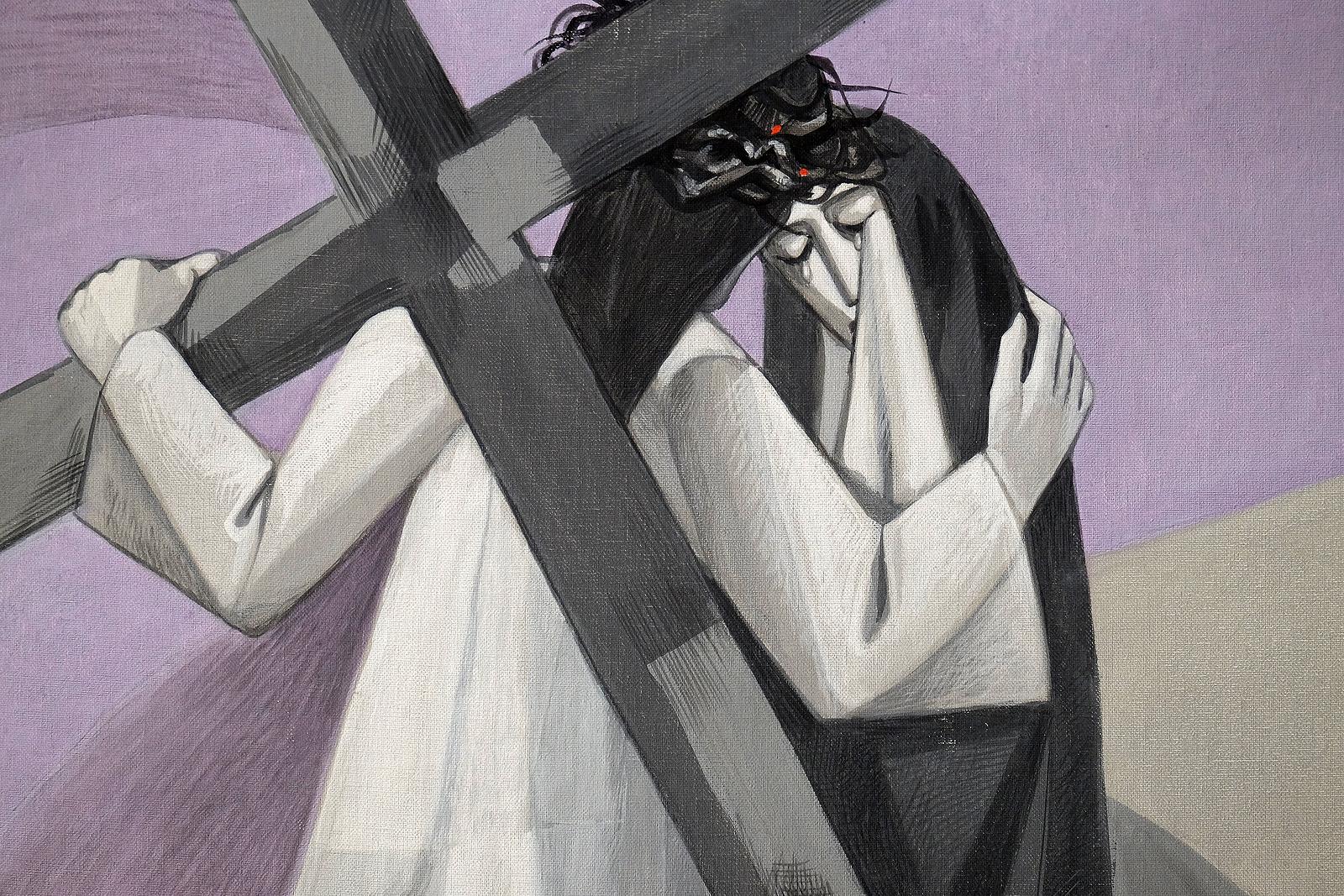
    • The Carrying of the Cross
    • The Crucifixion
    The Glorious Mysteries (Wednesdays)
    • The Resurrection
    • The Ascension
    • The Coming of the Holy Spirit
    • The Assumption of Mary
    • The Coronation of Mary
    The Luminous Mysteries (or Mysteries of Light) (Thursdays)
    • Jesus’ Baptism
    • The Wedding Feast at Cana
    • The Proclamation of the Kingdom of God
    • The Transfiguration
    • The Institution of the Eucharist

    The Rosary is a powerful prayer. Many miracles have been attributed to the Rosary (like the miracle at Fatima), and countless others have experienced healing, conversion, and answered prayers. But the biggest miracle of all is the hope it has given to millions around the world.

    Originally published May 21, 2018.
  • What are the Seven Sorrows of Mary?

    What are the Seven Sorrows of Mary?

    The “Seven Sorrows of Mary” refers to the seven feats of “spiritual martyrdom” (suffering spiritually through experiences) endured by the Mother of God in loving solidarity with her Son. They are:

    1) Mary’s sorrow at the prophecy of Simeon
    2) The flight into Egypt
    3) Having lost the Holy Child in Jerusalem
    4) Meeting Jesus on his way to Calvary
    5) Standing at the foot of the Cross
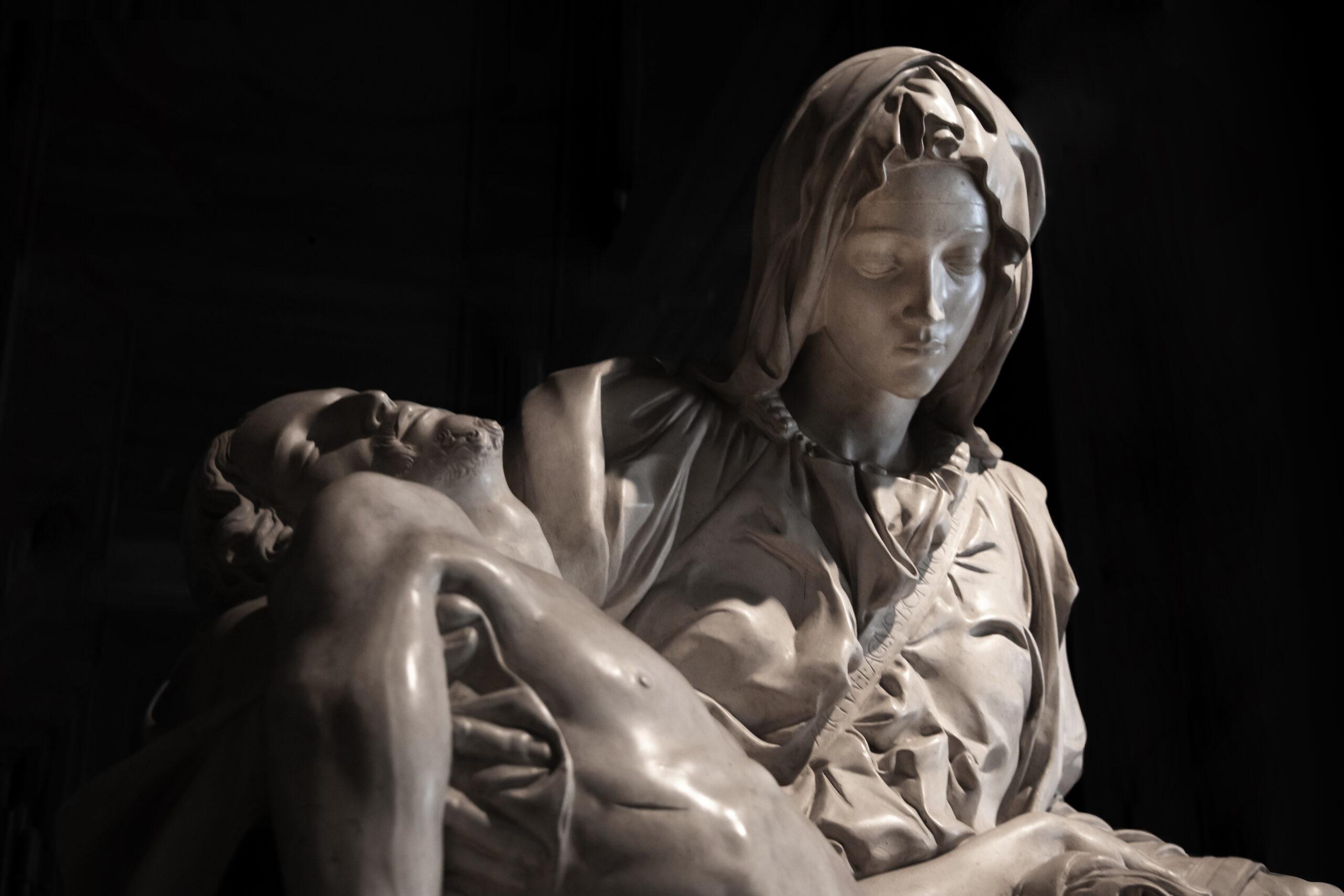
    6) Jesus being taken from the Cross (Depicted in art as The Pieta)
    7) The burial of Christ.

    The Seven Sorrows are all rooted in Scripture. Devotion to the Seven Sorrows of Mary stems primarily from the Order of Servites (The Servants of Mary) and has given rise to the Seven Sorrows Rosary as well as many other devotions to the sorrows (or dolors) of Our Lady. The Feast of the Seven Sorrows of Mary falls on September 15 and was first celebrated by the Servites before becoming part of the liturgical calendar of the Church Universal.

    Originally published April 2013.

  • Summer Spirituality: Building a Habit of Prayer In Ordinary Time

    Summer Spirituality: Building a Habit of Prayer In Ordinary Time

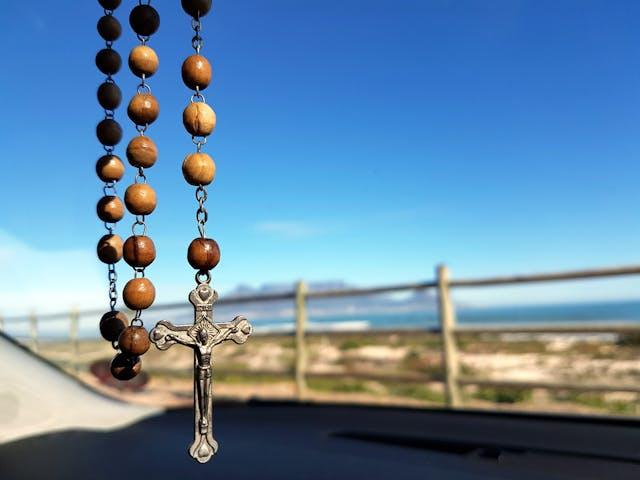
    Rosary beads hangingI find Lent and Advent easy to commit to, in many ways. The practices throughout these seasons have been ingrained in my mind since I was a small child. There is a clear beginning and ending, and I know what to expect from each period. These are the times that I am supposed to be working on my faith – so I sign up for a reflection book, make a commitment to pray the Rosary, or take on some other faith-related exercise. Summer is a different story.

    The nice weather and fluid schedules often lead me to feeling lost in my spiritual life. I can easily go days without praying for more than a few minutes at a time. Since I usually do not make a conscious choice to commit to a prayer practice, I allow the summer to slip by without growing much in my faith. I realized that I needed to add a spiritual element after my experience a few summers ago. I found that I hardly ever prayed, other than right before bed. It is a blessing to be able to relax more and spend more time outside, but if I am honest, those good things often took the place of the greatest thing: my relationship with God. 

    RELATED: How My Family Is Spending Our Summer With God

    I realized I became less patient and less kind towards my family members and others during the summer because I was not connected to the experience of God’s love in prayer. My lack of commitment to spending time with God and my relationship with him led to less intentionality in my other relationships. Neglecting prayer can become fuel for ignoring others. 

    With this in mind, I tried something different last summer. I decided to make a commitment, as I would at the beginning of Advent or Lent, to deepen my prayer life and intimacy with God. I would carve out the summer from the middle of June to the end of August and make these six weeks a time of dedication to God and growth in my spiritual life. 

    My idea was to imitate Jesus’ actions of going off and praying on his own throughout the Gospels. I wanted to make each day of the summer a “mini-retreat”, like Jesus often would when he went to the mountains or a deserted place to pray (Mark 1:35; Mark 6:46; Luke 6:12). Specifically, I wanted to spend time contemplating the “solitary place” that Jesus went to. So, I decided to pray every morning, in the same place, and in a similar way. 

    WATCH: Great Catholic Sites to Visit on Summer Vacation 

    I set an earlier alarm every day, sat on the same spot on the couch, and located a crucifix on the wall to center my focus. I found that the first step of waking up early is the most important. In order to increase my odds, I moved my phone charger to my dresser so that I would have to get out of bed to shut off my alarm each morning. Before doing so, I was too prone to hit the snooze button. Then I would wake up when the kids woke up and lose out on my time for prayer. The early mornings served as a great stage to offer my entire day to God.

    Second, I sat in the same space each day to increase the context of my prayer. The routine of sitting in the same space each day slowly sanctifies that space and triggers in my mind that I am about to enter into something special and holy. Once I adopted this habit, it became easier to pray, and I began to enter into deep prayer more quickly. The scene was simple and ordinary, but I slowly began to work the muscles of prayer each morning, in a similar way. The space and the entire process led me to become more used to praying in silence each day. I began to crave it. 

    Finally, I wanted to move a crucifix to my place of prayer so that I could focus on something when my mind began to drift. I got in the habit of beginning my time gazing at the cross and asking Christ to guide me in being alone with him. Then I would read the Gospel of the day, reflect on a key phrase or action of Jesus, and end with some time of quiet prayer looking at the cross again. 

    RELATED: 5 Tips for a Spiritual Summer

    I found that it was the commitment to making summer prayerful that made all of the difference. Once I was intentional about how I would spend the very first parts of my day, I was able to encounter God in ways that I never had before in silence and in the solitary space of my own living room. I was also able to be more of the man that I am being called to be: more patient and kind with my family. While far from perfect, prayer is continuing to radically change me. 

    Summer is not simply a time for rest and relaxation in the sun. Like all seasons, it is a chance to grow in intimacy with God. This summer, make your own commitment to prayer and watch him move to meet you every single day. 

  • Memorial Day and the Power of Remembrance

    Memorial Day and the Power of Remembrance

    Photo by John Hill on Pexels

    While I was growing up, my family emphasized that calling to mind those who gave their lives to sacrifice for our country is always necessary and important. 

    We visited the cemetery on all major holidays to spend time at my grandparents’ graves. We traveled there on Thanksgiving, the week of Christmas, and Easter Sunday. My parents, my three brothers, and I would climb into the car after Mass and head to the cemetery.

    If we were at my paternal grandfather’s grave, we would all exit the car once we arrived and say a prayer at the tombstone. After a few minutes, my mom would bring us back to the car and my dad would stay behind at the grave of his father. If we were at my maternal grandmother’s grave, the opposite happened. Dad would usher us to the car and Mom would stay behind for a few extra minutes. 

    RELATED: Virtual Memorial Day Retreat: Remembering Those Who Serve 

    This was their intimate time alone with the parent they had lost. We honored their memory by going to the cemetery as a family, but I also remember that image of my mother or father spending one-on-one time with the grave as I peered out the car window looking at them. It was as if they were talking to their respective parent as if they were still alive and could hear them. They were remembering them by continuing their relationship with them. I was drawn into this moment because I witnessed my mom and dad love their own parent even beyond their death. 

    My maternal grandmother is buried at an armed services cemetery on Long Island because her husband served in the military. All the tombstones there are the same rectangle shape and the same color, white. The uniform aisles of tombstones evoke something inside of me that brings me to honor those who gave their lives and the family members of those who served. Every visit is like a miniature Memorial Day. 

    Today, we are called to remember and honor the sacrificial love of countless men and women who gave everything so we could live in our beautiful country. The challenge is to honor them even when it is not Memorial Day. 

    RELATED: What Should Catholics Do on Memorial Day?

    When I visited the cemetery as a child, I was so reflective of my grandparents’ lives as well as grateful for the love of my parents. I was more attentive to my relationship with them because I was reminded of how short and fragile life is. 

    But then, I would go back to my routine until the next holiday and forget how important it is to remember those who came before me so that I could live (literally in the case of my grandparents being my ancestors). On this Memorial Day, we are invited to take that focus towards those who died in service. How can we be more intentional about giving them honor and respect?

    Our Catholic faith offers two great connections that are easy and powerful. One, pray for veterans, those who died in the line of duty, and those current service men and women at Mass on Memorial Day weekend. The Eucharist is the memorial of Christ’s suffering, death, and resurrection. We do not simply call to mind what Christ did; those mysteries are made to present to us. As the Son of God died so that we could live, we can pray especially for those who died for our country so that we could have the freedoms we do today.

    RELATED: How Prayer Cards Help Me Honor the Holy Souls That Have Gone Before Me

    Second, pray a decade of the Rosary or an entire Rosary for our veterans. We can pray for those who have died and those who have returned from the armed forces. We know that so many returning service people struggle to reacclimate into society. Pray that they may find work and know their value. 

    Memorial Day is always the last Monday in May, a month dedicated to honoring the Mother of God. Praying for Mary’s intercession allows us to call to mind the fact that she is guiding all of her children, wherever they find themselves.

    Whatever you do for Memorial Day, make it something that serves as a powerful and lasting reminder of just how blessed we are to have people in our age and in our history who live out the sacrificial love of Christ. May we honor them by respecting that love and mirroring it in our own lives as best we can. 

  • Mary: The Background Music to My Spiritual Life

    Mary: The Background Music to My Spiritual Life

    For over two years, every night it’s the same: At the appointed time, I gather my freshly bathed and pajamaed toddler into my arms, all fuzz and snuggles. We turn off the light in his bedroom and settle into the rocking chair. My son knows the drill, so he tucks his fuzzy head under my chin and cuddles into my arms. Then we begin:

    Softly, we rock in the darkness. I recite “Goodnight Moon.” Then five nursery rhymes, another book, four prayers, and a lullaby.

    RELATED: I Never Connected With the Rosary… Until I Became a Mother

    They’re the same words every night, and they’re my child’s bridge between the discoveries of day and the peace of sleep. As we sit together, heart-to-heart, my voice surrounds and comforts him, but I imagine he is not thinking of me. My voice, and our nightly litany, is background music that fades away while he reviews the day and surrenders all his anxieties to calm.

    It is a sweet privilege to be his background music, to be that safety that allows him to bound with courage into the world.

    Sweeter still is the knowledge that although I am not a child anymore, that although I am all grown up, my Heavenly Father has given me this background music, too.

    WATCH: Mary in 2 Minutes

    At one time, the Son of God rocked in his mother’s arms, tucking his fuzzy head under her blessed chin as she cuddled and sang to him. The Blessed Virgin Mary was the background music to his earthly ministry. First, it was the beating of her heart at the Incarnation, when Jesus spent nine months safely in the tabernacle of her womb. Then, her voice was the background music at his foretold birth in Bethlehem, and even during an exiled flight into Egypt that lasted a number of years while powerful men sought to take his life. Mary was there in the background when Jesus performed his first miracle, quietly and confidently telling the Galilean wedding staff, “Do whatever he tells you” (John 2:5). When Jesus’ time had come, Mary was there, in the background, as her Son obediently met his ultimate suffering: his Passion and death. Mary had seen him all the way there. And what a gift, that the Lord passed her on:

    “Woman,” He said, “behold your son.” Her new “son” was to be John, who represents all of us.

    Then: “Behold your mother” (John 19:26-27).

    And our mother she is. 

    RELATED: No Mere Greeting: The Hidden Meaning of the Hail Mary

    It was with a shock that I realized, while rocking my son, that Mary is the background music to my relationship with God in the Church — and quite literally! Every time I pray the Rosary, I pray for her intercession 53 times, but each time, the “Hail Mary” fades away as I meditate on that decade’s mystery, which is a moment in the life of Christ.

    It was a great surprise because I had struggled to feel devoted to Mary ever since I turned 13, when I reached — and passed — the age of her world-saving “yes” to God. But now, as a mother, I can understand her differently. She is the background music to my spiritual life: to my relationship with Christ.

    “She is an echo of God, speaking and repeating only God. If you say ‘Mary’ she says ‘God.’” Writes St. Louis de Montfort in “True Devotion to Mary.” “[Y]ou never think of Mary without Mary thinking of God for you. You never praise or honour Mary without Mary joining you in praising and honouring God.”

    WATCH: The Rosary in 2 Minutes

    In that “Hail Mary” greeting, in the repetition of her prayers, Mary smooths out the wrinkles between me and God, pouring his grace into my life and carrying me — as a mother carries her child — to see the King of Kings.

    And it’s almost like she rocks me, with my head tucked under her chin. Her warmth remains as her voice fades to the background, so all that remains for me to embrace is the light of Heaven: the Son she rocked thousands of years ago, who went to the cross for me, and pursues me even now.

    Now, and at the hour of our death. Amen.

    Originally published May 5, 2021.

  • Love Amidst Pain: A Reflection on the Journey to Calvary Through Mary’s Eyes

    Love Amidst Pain: A Reflection on the Journey to Calvary Through Mary’s Eyes

    Abstract of holding the crossAs my infant son struggled with a difficult medical condition over the last few years, I found myself in the midst of caregiving like I had never experienced before. During that time, I stumbled across an old devotion: the Seven Sorrows of Mary. So, finding a connection with the Blessed Mother in my sorrow and hers, I found myself meditating on the Passion and Death of Jesus in a new way. 

    Amid Mary’s great Passion-related sorrows, we can find consolation, just as in the middle of a dark night, we find illumination in the stars. That consolation is that Jesus could see Mary standing there along the road to Calvary. Her presence was a comfort to him, as it was for me facing grief and sorrow in my own life.

    RELATED: Maternal Love and the Cross

    Their meeting is not recorded in the Bible, but we know it happened by tradition. Their meeting was likely brief, just after Christ’s first nasty fall, and in that moment, Mary witnessed all the wretchedness that the people around her son put him through. Yet, what was wretched for her was also a moment in which Jesus could see that he wasn’t alone. Her presence showed him that someone loved him, that someone grieved his fate, and that Mary shared his suffering in her heart.

    So even though Mary witnessed all the grotesque details of Jesus’ torture, she perhaps saw too the glimmer of relief in his eyes — just for a moment, that she was there.

    Sometimes, our presence is not enough to console someone we love. But in certain, beautiful moments, it can. Even during the most difficult times, God offers us small graces. Like Mary, then, we can keep going.

    Right after Mary and Jesus were forced to part, the soldiers recognized that he might not make it all the way to Golgotha alone. I wonder if Mary saw Simon of Cyrene from behind, and saw him help Jesus carry the cross as she longed to do. This too, was both a sorrow and a consolation, for now he had some help, but he was getting farther and farther from Mary, and closer and closer to death.

    RELATED: Turning to Mary in Difficult Times

    Isn’t it funny how intimately sorrow and consolation are linked? The other side of sorrow is joy, and the other side of love is loss. As a caregiver, I’ve learned acutely that in life, we walk the razor-thin edge between the two sides, feeling both in their time as we wobble between them. It’s the sorrow of sitting at the bedside of a suffering loved one, intermingled with the joy of being in their presence, the joy of loving them with a depth that only such suffering uncovers. To flee one – sorrow or joy – is to flee the other. We can accept joy in our lives only when we accept sorrow. We can accept love only when we also accept loss.

    This is the drama of our fragile, human lives. It is my drama in caregiving, and, I imagine, in all the permutations of life in which we live our days for the sake of another. Perhaps it is why Jesus told us to take up our crosses, that we may take up our joys in their time as well (Matthew 16:24). Perhaps it is why the man who avoided suffering “went away sad” (Matthew 19:22).

    Mary’s sorrow is different from sadness. It is founded on faith, given momentum by hope, and is the interwoven brother of love. Sorrow is deep, like roots that probe deeper and deeper so that the tree above can bear abundant fruit. It is like the chaff that grows up with the grain; to remove sorrow now would threaten the harvest, but one day, God will separate the two (Matthew 3:12). Sorrow will be forgotten, and we’ll be left with the abundance and joy of Easter.

    Editor’s note: This article is an edited excerpt from Theresa’s book, “Caring for a Loved One with Mary: A Seven Sorrows Prayer Companion” (OSV 2023).