Tag: Prayer

  • Advent Reflection: Simple Devotional Practices to Bring Peace Amidst Holiday Fatigue

    Advent Reflection: Simple Devotional Practices to Bring Peace Amidst Holiday Fatigue

    It seems that every year, the unofficial start of the secular Christmas season creeps up earlier and earlier. Just after Halloween, my husband shared with me how one of his coworkers had already set up their tree and décor because they wanted to “get the most out of the season.” While I often feel the urge to blast my favorite Christmas tunes and pull out the cheerful decorations when I see neighbors and local businesses doing so, my Catholic instincts tell me otherwise

    The Church has given us the season of Advent to awaken ourselves to Christ’s coming and turn our minds from the world’s distractions. When I was younger, before Advent began, my parents encouraged my siblings and me to reflect on what spiritual gifts we could give to the Christ child on his birthday. Through their instruction and the Church’s guidance, I came to see Advent as a time to focus on spiritual treasures rather than earthly ones, helping me understand how these weeks leading up to Christmas are meant to gradually lead us to the birth of Christ. 

    RELATED: 10 Meaningful Advent Traditions to Try This Year

    Though it is difficult to refrain from merrymaking, and sometimes feels Scroogelike to resist, I’ve found great merit in celebrating the Advent season before Christmastide. While the world tells us to indulge in early celebration, the Church invites us to prepare during Advent.

    The Catechism urges us to gird ourselves with a spirit of anticipation, reminding us that, “The coming of God’s Son to earth is an event of such immensity that God willed to prepare for it over centuries” (Catechism of the Catholic Church, 522). The Advent season stands apart as a time to recall the ache and hope of the world for a Savior and look forward to his second coming (Catechism of the Catholic Church, 524). There is a saying that goes, “The greater the fast, the greater the feast,” indicating that sacrifice bears meaning, allowing us to create space for the joy of redemption. By keeping the weeks before Christmas simple, prayerful, and full of hopeful longing, we bear witness to the magnificence of this feast. 

    If you have struggled this year to keep Advent quiet and preparatory, the season is not over. Here are a few ways you can still partake in the preparation during these final weeks.

    Pray the St. Andrew Novena

    While the St. Andrew Novena begins on the feast of St. Andrew, November 30, and ends on Christmas Eve, there’s no reason why you can’t jump into it right now. The beautiful prayer emphasizes the humble reality of Christ’s arrival into the world on a cold dark night in Bethlehem, inviting us to unite our personal petitions to the hour of Christ’s arrival. Here is a link to the full prayer, along with instructions on how to pray the novena. 

    Meditate on the O Antiphons 

    The O Antiphons are verses sung during vespers in the Liturgy of the Hours between Dec. 17 and Dec. 24. Each verse introduces a title of Christ, which can also be found in the well-known Advent Hymn, “O Come O Come Emmanuel.” They give voice to the longing for Christ which Advent ought to rouse, allowing us to declare our need for a Savior. If you don’t have access to the full Vesper prayers, pray and meditate on the O Antiphons themselves and consider singing the appropriate verse from “O Come O Come Emmanuel.” You can find the antiphons, along with relevant Scripture verses and suggestions for meditation here.  

    RELATED: Why I’m Fasting for Peace During Advent

    Fast before Christmas 

    While Lent is often seen as the liturgical season for fasting, the Church traditionally observed another 40-day fasting period beginning after Nov. 11, or Martinmas (the feast of St. Martin), to prepare for Christmastide. While fasting and abstinence aren’t required for Catholics during Advent, they are effective ways to create space in our hearts for Christ’s arrival at Christmas. Whether you choose to abstain from meat on certain days of the week, give up TV, social media or some other pleasure, disciplining our bodies alerts our spirits to Christ’s voice calling us to prepare room for him in our lives. 

    When I was young, one way my family celebrated Advent was to prepare a bed of straw for Jesus. Any time we made a personal sacrifice or did a good deed for another, we cut a piece of yellow yarn to place in the center of our Advent wreath so that by Christmas Eve, Jesus had a warm cradle of “straw” in which to rest. While there is no harm in attending holiday parties or tuning into some Christmas music, let us strive this Advent to embrace a spirit of anticipation rather than indulgence, so that we might fully enter into the joy of salvific redemption during the Christmas season. 

  • Why I’m Fasting for Peace During Advent

    Why I’m Fasting for Peace During Advent

    In 2023, Advent arrived at a time when violence in Gaza was often on my mind. Harrowing news and calls for a ceasefire filled my Instagram feed, forcing me to consider what it would mean to respond authentically to the reality of such suffering. As a Catholic, I knew prayerful self-denial was an option, but I had resisted the idea. What good would a manufactured drop of my own suffering do amid the ocean already in existence? Compared to the suffering that war brings, though, that concern felt selfish. “Effective” or not, it is certainly fitting to offer proof of love through sacrifice, and as Lenten as that sentiment feels to me, Advent can be a time of “offering up” as well. 

    I’ll admit that I didn’t choose Advent for purely spiritual reasons. The liturgical season is shorter than Lent, and at 22 days, Advent 2023 was the shortest possible duration. I also knew that the short winter days would be a help: I’d decided to go without food from sunrise to sunset. I was particularly inspired by the fasting practices of Islam. In addition to it being the faith of those who bore the brunt of the violence, my fast was inspired by Ismatu Gwendolyn, a Muslim public scholar and activist, who had engaged in a 40-day fast in response to the violence in Palestine and shared about the experience.  

    RELATED: Fasting From Injustice

    Our Muslim siblings go without food and drink from sunrise to sunset during their holy month of Ramadan as a practice of devotion and spiritual discipline. As you can imagine, this is a far more intensive manner of fasting than the standard two small meals and one large meal that constitutes a standard day of Catholic fasting, especially when considering our reduced consumption is only required on Ash Wednesday and Good Friday. Despite softening the practice for myself (in addition to a shorter fasting period, I did not prohibit myself from drinking liquids during daylight hours), I still very much felt the deprivation of nourishment. What began as a fast for peace became an opportunity to better understand how more than a day of hunger feels.  

    What surprised me the most was how the lack of nutrients manifested itself. I didn’t often feel my stomach rumbling or find myself wanting food to combat the sensation of an empty stomach. What I did feel were the cognitive effects. This wasn’t a matter of being distracted by hunger; operating on less fuel, my brain simply couldn’t function as well as it normally did. I wasn’t as present. It was harder to communicate. It was harder to think. As an aspiring graduate student, I was alarmed by the brain fog I felt, knowing that clear thinking and eloquent expression are fundamental in academic environments. 

    RELATED: The Fast I Choose: No Matter the Season

    I found myself thinking of all the children who sit hungry at school, struggling to focus and learn. According to the USDA, in 2023, “7.2 million children lived in food-insecure households in which children, along with adults, were food insecure.” I thought about how these children may be met with punishment, rather than compassion, for living the effects of hunger. I thought about the long-term effects of that response. 

    How difficult it must be to struggle through elementary school when hunger prevents you from reaching your full potential. How difficult to live through any of the indignities of poverty – homelessness, insecurity, exploitation – with a diminished mental strength. How difficult to not only live under the constant threat of death from bombs or bullets, but also to starve through it. 

    RELATED: Swords into Plowshares: Finding Peace in Advent Today

    I want to emphasize that what I did is not novel: Muslims undergo their Ramadan fast yearly. Christian history reveals more extensive traditions of fasting as well, including during Quadragesima Sancti Martini, or the Forty Days’ Fast of Saint Martin’s, which took place during the weeks leading up to Christmas. Additionally, it feels odd to write about my experience when there are so many people for whom hunger is a daily experience and its effects a constant threat to livelihood. To choose to be hungry is, as a spiritual practice, a privilege. Nonetheless, experience is a powerful teacher: I’m not sure I would’ve understood the mental effects of hunger without experiencing them first-hand. This fast broadened my understanding of hunger and consequently deepened my compassion for those who have no choice but to go without their daily bread. 

    During Advent, we remember the arrival of a God who humbled Himself to live among us, who came to proclaim good news to the poor. If you, like me, have always been blessed with food security, I invite you – provided, of course, that it is healthy and safe for you to do so – to seek out hunger this Advent. Offer your sacrifice up for an intention. Consider donating the money saved on food to your neighbors in need. Prepare for the coming of a Savior who said “I was hungry and you gave me food” (Matt. 25:35) by sharing in and learning from his reality.

  • Visual Devotions: Crafting Meaningful Moments in Advent

    Visual Devotions: Crafting Meaningful Moments in Advent

    As a child, I always looked forward to the Advent season, those four weeks of anticipation leading up to Christmas. However, it wasn’t until my late 20s that I discovered the profound impact of incorporating art into my spiritual practice. 

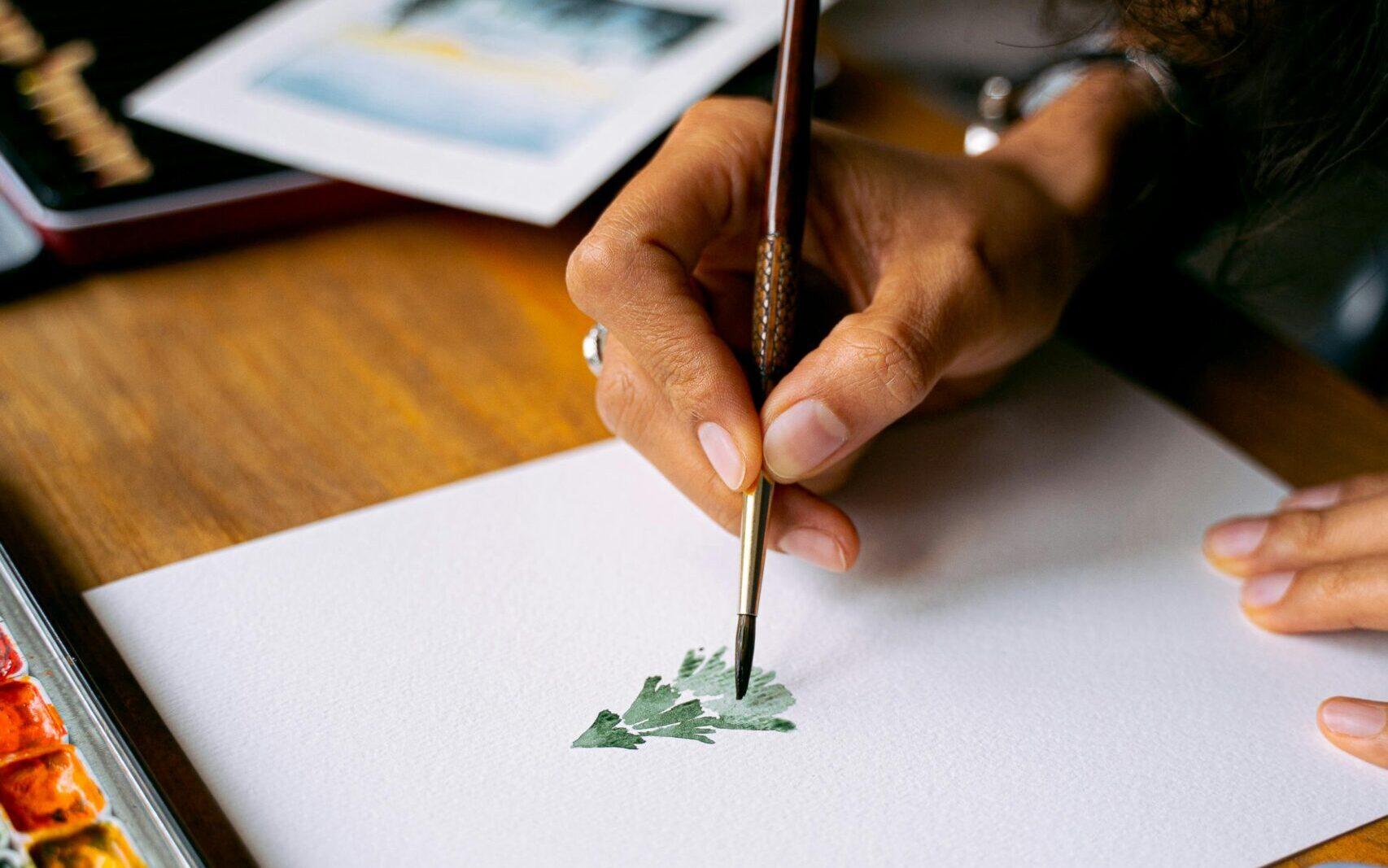
    My journey with Advent art began unexpectedly when a friend invited me to an “Advent Art Night” at her church. Skeptical at first, I found myself deeply moved by the experience of creating a simple painting of an Advent wreath. The meditative act of applying brushstrokes while reflecting on the theme of hope showed me the value of creating a tangible piece of my faith through art. 

    RELATED: Praying With Your Eyes: How to Get Started With Visio Divina

    Since then, I’ve made it a tradition to engage in at least one Advent art project each year, finding that the creative process helps me connect more deeply with the season’s themes and prepare my heart for Christmas in a unique and meaningful way.

    By incorporating visual art into Advent devotions, individuals and communities can deepen their understanding of the season’s themes and enhance their overall experience. Here are some examples of project ideas themed around each week of the season.

    Hope

    1. Advent wreath painting: Create a watercolor or acrylic painting of an Advent wreath, focusing on the first candle representing hope. Use warm colors to symbolize the light of hope in the darkness. Check out these Advent wreath photos for inspiration.
    2. Hope jar: Decorate a glass jar and fill it with small slips of paper containing Bible verses about hope. Draw one each day for reflection. Check out this video for more ideas.
    3. Prophetic landscape: Paint or draw a landscape inspired by Isaiah’s prophecies of the Messiah’s coming, incorporating symbols of hope and renewal. Check out these ideas for this project.

    Peace

    1. Peace dove collage: Create a collage of a dove using torn paper from magazines or newspapers. Include words and phrases related to peace found in Advent Scriptures. Searching for these phrases will give you time to reflect on the overall Scripture and help you meditate on these topics!
    2. Jesse Tree with peaceful imagery: Adapt the traditional Jesse Tree project by focusing on images and symbols of peace. Use prints or paintings of biblical scenes, such as the Annunciation, the Nativity, or the Prodigal Son’s return, and add quotes or verses related to peace.
    3. Paper plate peace doves: Create paper plate doves with outstretched wings, symbolizing peace and hope. Hang the doves in a window or on a wall as a reminder of peace. 

    RELATED: How Artwork Opens My Eyes to God’s Handiwork 

    Joy

    1. Joyful nativity scene: Craft a mixed-media nativity scene using materials like fabric, paper, and found objects. Focus on expressing the joy of Christ’s birth through vibrant colors and dynamic compositions.
    2. Joy explosion: Create an abstract painting or drawing that visually represents an “explosion” of joy, using bright colors and energetic brush strokes or lines.
    3. Joyful song lyrics art: Choose lyrics from your favorite Christmas carol about joy and create typographic art featuring those words in creative fonts and colors.

    Love

    1. Heart-shaped Advent calendar: Design a heart-shaped Advent calendar using cardboard or foam board. Create 24 small pockets or doors, each containing a Scripture verse about God’s love or a small act of kindness to perform.
    2. Love mosaic: Create a mosaic using small pieces of colored paper, glass, or tile to form an image symbolizing God’s love, such as a heart or a cross.
    3. Love letter art: Write letters to friends or family members expressing love and gratitude, then decorate the envelopes with artistic designs before mailing them out.

    RELATED: Strengthening My Faith Through Creativity

    Advent Devotions

    To fully integrate art into your Advent experience, consider these approaches:

    1. Daily reflection: Spend time creating or reflecting on a piece of Advent-themed art. Use this time for prayer and meditation on the day’s Scriptures. Click for more Advent Devotional Resources.
    2. Family art time: Set aside time each week for family members to create Advent art together. Discuss the themes and scriptures as you work. Here are some additional ideas for Catholic Advent Crafts.
    3. Community art project: Organize a community-wide Advent project, like a collaborative mural or installation piece that grows throughout the season. Check out these resources to get you started.
    4. Art-based worship: Incorporate visual art into church services or small group gatherings. Use projected images, live art demonstrations, or displays of congregant-created artwork to enhance worship experiences. The Art of Advent has great seasonal prints and devotions for inspiration.

    Creating visual devotions for Advent can significantly enrich the season’s spiritual experience. By engaging in art projects that reflect Advent themes, individuals and communities can deepen their connection to the story of Christ’s coming and prepare their hearts for the celebration of Christmas. As you engage with Advent art, remember that the goal is not perfection but rather a heartfelt expression of faith and anticipation of the coming of Christ.

  • 5 Prayers for Your Thanksgiving Feast

    5 Prayers for Your Thanksgiving Feast

    Leading people in prayer is an art. Carving turkey is an art. Baking marshmallows atop sweet potatoes is an art. It is also delicious.

    For now, I’ll limit myself to the art of prayer, namely that hallowed Thanksgiving Prayer offered by a head of the family, or a person perceived to be religious, or the first person to ask if we’re going to pray first. If experience has taught you to anticipate that this will almost definitely be you, I humbly submit the following Thanksgiving prayers.

    The Tweetable

    Sometimes brevity is the priority, particularly if the meal is being served later than anticipated. Or if you sense animosity growing over the potatoes getting cold.

    Lord, we gather today to offer Thanksgiving,

    to remember your gifts, to give thanks for living.

    We demand no wealth, no fame, no worldly success,

    just this food, this family [these friends], in your goodness to bless. Amen.

    All the Fixin’s

    I suppose the “meat” of a Thanksgiving prayer is the simple expression of gratitude, which means the prayer can be short and locally oriented. However, there’s something to be said for naming specific things and people. In the spirit of Catholic Social Teaching, Thanksgiving is a great occasion to include in our prayer individuals who are not immediately in front of us, but for whom we could not enjoy the meal without.

    Lord God, we thank you for the gift of this day, the gift of one another,

    and the gift of this food which you have provided from your bounty.

    As we prepare to celebrate this Thanksgiving feast,

    we ask for your blessing upon us and upon all of the gifts that fill our table.

    Bless also the farmers and laborers who cultivate the land, and provide

    the meat and vegetables we are so fortunate to enjoy.

    Bless the grocers and market workers, clerks and store owners.

    May all those who have labored for this food be treated with the dignity of children of God,

    and may they be paid a just wage.
    As we give you thanks, O Lord, we ask that you nourish us,

    that we might be good stewards of the earth, keepers of one another,

    and prophets of your coming Kingdom.

    We ask this through Christ, Our Lord. Amen.

    The Historian

    In my intro to liturgy class at seminary, our professor taught us to formulate prayers in a “You Who … Do” format. You recall what God has done and ask him to do it again. One wouldn’t think this could work for modern things like cars and iPads, but trust me, the Catholic Book of Blessings finds a way. So shall we … with turkey.

    O God of loving kindness,

    You created the birds of the air, the fish of the sea,

    and all the creatures who dwell on the land.

    You set humankind to have dominion over the animals,

    to assist us in our labors, and sustain us in our living.

    Since the earliest days of this Thanksgiving feast,

    the turkey has been a sign of your goodness and the bountiful love

    with which you nourish us without ceasing.                                                           

    We ask you then, to send your blessing upon this turkey, upon all of our food,

    and upon all of us who are nourished by it, even as we remember those who this day go without.

    We ask this through Christ Our Lord. Amen.

    RELATED: 3 Easy Prayers for Thanksgiving Dinner

    Thanksgiving for One

    It may be that you’re spending this Thanksgiving alone. It may be that you have spent other Thanksgivings alone, by choice, or by circumstance. Whatever the reason, God is with you, loves you, and is thankful for the gift of your life.

    O God, you search me and you know me.

    You know my heart, my mind, my life.

    I give you thanks for the many blessings you give me

    and all of the ways you walk with me each day.

    I ask for your blessing upon this food,

    and upon all those who brought it to this table.

    May you continue to nourish and strengthen me,

    so that all that I am, and all that I will be,

    I may offer as a gift to you.

    Through Christ, Our Lord. Amen.

    Tweetable II: The Sequel

    (I won’t be offended if you didn’t like my first one. It’s fine. Maybe you’ll like this one better.)

    For food to nourish and warm our bodies.

    For loved ones to share in sorrow and joy.

    For time, for mercy, for newness, for-giving.

    For life in Your Kingdom,

    We give thanks, O Lord.

    Amen.


    Originally published Nov. 25, 2019

  • How Prayer Cards Help Me Honor the Holy Souls That Have Gone Before Me

    How Prayer Cards Help Me Honor the Holy Souls That Have Gone Before Me

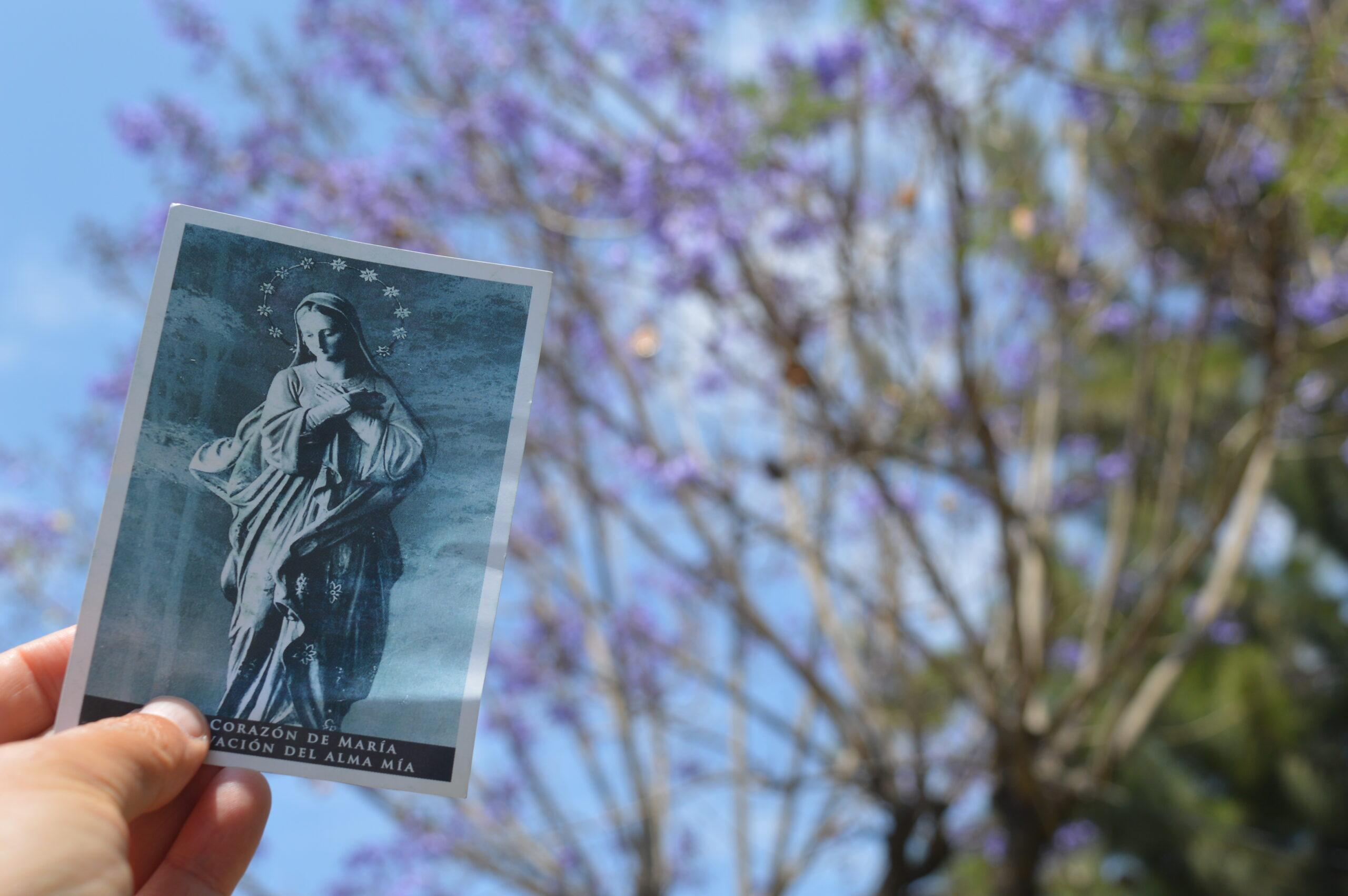
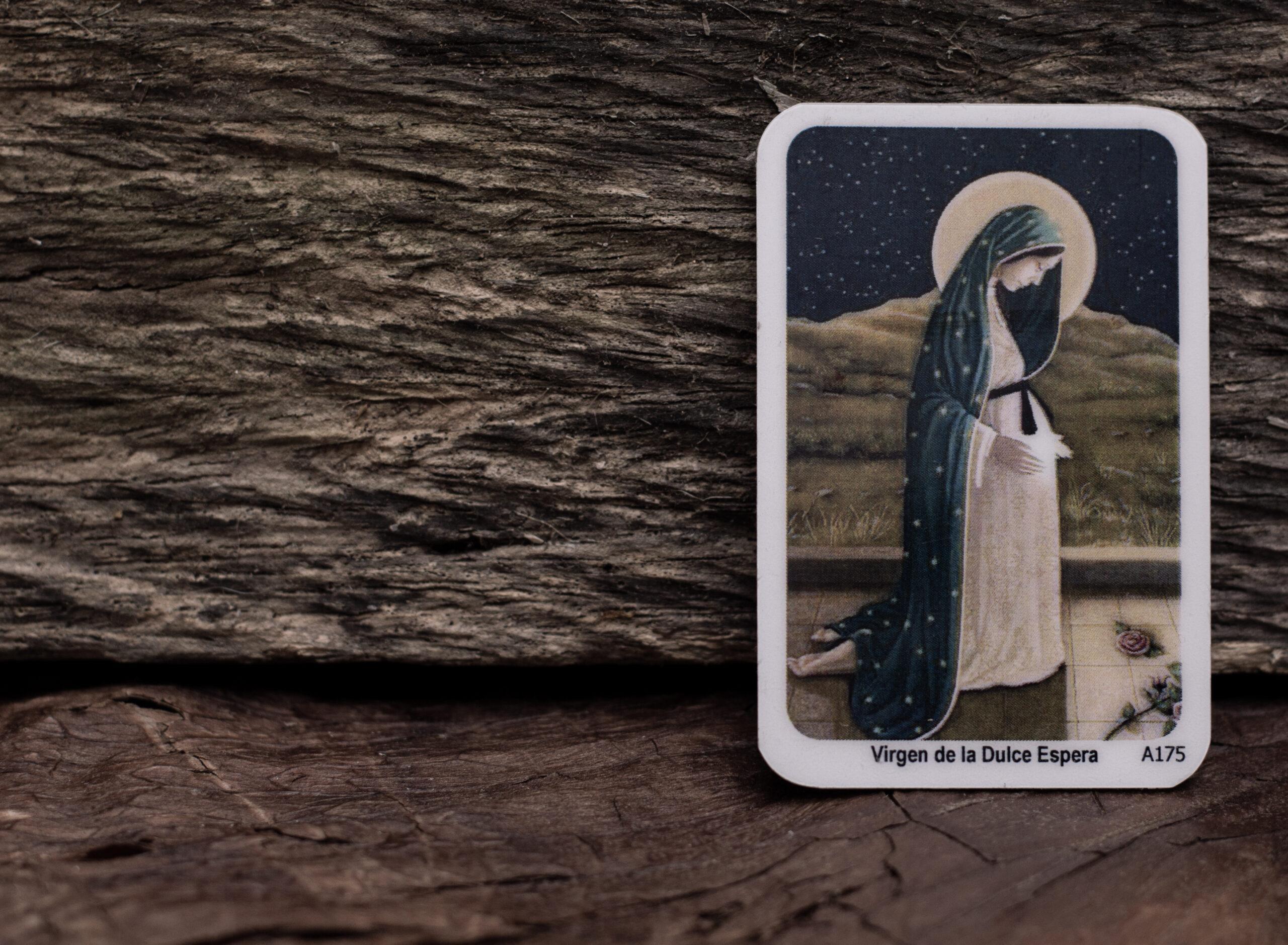
    The cover photo consists of the Virgin Mary on a prayer card held up towards the sky.

    A few years ago, some bedroom repair work forced me to move piles of stuff around. As I was rearranging the room, I happened to notice a novelty box in which I have kept memorial cards of the deceased for many years.

    As I looked through the cards, there were surprises – people I had forgotten about who had shown acts of kindness to me: a friend’s sister, a woman I volunteered with at a pregnancy resource center, great aunts and uncles, holy priests. Cards of relatives who had died before I was born had been passed down to me — like my grandfather, who I never knew (except through stories from my Mom and grandmother).

    RELATED: Grateful to Our Beloved Dead: Remembering Lessons From My Late Grandparents

    As I went through the remembrances, I said the prayers on the backs of them. I noticed connections – this person died on the same day as that person, years later. I thought about these women and men, all of whom had an effect on my life in little or big ways, in ways that I will never know; I realized, we really are “the communion of saints.”

    Since I work in communications, my thoughts often focus on the tools we use to communicate. Those memorial cards communicate! They communicate a life of a man or woman made in the image and likeness of God with a unique story of love and pain and joy and suffering – of God’s plan lived out.

    In November, we pray for the Holy Souls so they can share in the Beatific Vision of our Lord Jesus Christ who sacrificed his life and death for us and loves every single soul.

     LISTEN: Can the Souls in Purgatory Pray for Us?

    A friend of mine puts praying for the Holy Souls in action by keeping a running prayer list with names of the deceased, going back generations. Similar to keeping memorial cards, it is a tangible reminder of those who have been before us and our need to pray for them. It also makes me think of the tradition of Native Americans that I learned about in the Knights of Columbus documentary, “Enduring Faith: The Story of Native American Catholics,” aired on EWTN prior to the Holy Father’s visit to Canada in the summer of 2022.

    Harold Compton, the Deputy Director of Policy and Research for the Rosebud Reservation talked about how they believe in the sacredness of the number seven, and aim to look at how their actions as a tribe will affect seven generations forward. They encourage thinking about how one sits in the middle of those seven generations: “Looking back three generations – what did you learn from those three generations; what have they given you? And the three generations coming after you, and looking at what you, as the middle of that seven generations, can do, sharing that knowledge from the past with the future.”

    As I think back three generations, I recall a story about how a great-grandfather (who of course I did not know) would open the door of his home after Mass to provide food for the homeless. My grandmother carried that story forward to me and I can share it with my nieces and nephews.

    RELATED: Why Do Catholics Pray for the Dead?  

    So, if you are in a desperate fit when cleaning, do not throw out those memorial cards. This November, pray for the departed, ponder something you know about him or her, and how you might carry that lesson forward. Ask the Holy Souls to pray for you.

    When we were children, we were taught to pray for “the most abandoned soul in purgatory.” It is a spiritual work of mercy. Saint Stanislaus Papczyński said: “There is no greater act than to pray for the holy souls in Purgatory because unlike us on earth, they can no longer pray for themselves.”

    My box of memorial cards is overflowing. Soon I will need a new one. And someday there will be a dusty card with my name on it (I sure hope they don’t go all digital). I hope one November, decades from now, some great-great niece or nephew picks up that card and prays for me. That, indeed, will be a work of mercy.

    Originally published Nov. 3 2023.

  • Praying for Presence: How the Examen Helps Me Focus

    Praying for Presence: How the Examen Helps Me Focus

    When I was a kid, there were nights at the dinner table when my dad would get quiet and start staring off into the distance. My sisters and I would joke, “Dad’s thinking about work again!” and the chorus of giggles would break him out of his trance and bring him back to dinner. 

    Now, at 41, I’m the one who’s prone to the “thinking about work” face at dinner and many other times as I try to shift from employee to father at the end of the workday. 

    As a civil defense attorney, I’ll regularly handle 200 or more cases at any given time, each with its own facts, medical records, litigation status, and hearing schedule. 

    As a father, I have four kids who are growing up way too fast — each with their own interests, likes/dislikes, friends, school assignments, extracurriculars, etc. 

    As a husband, I have an incredible wife who has kept me around for 12 years and counting, but we’re no longer carefree 20-somethings with little responsibility and an excess of free time. It’s frighteningly easy to lose track of each other amidst our sea of responsibilities and commitments. 

    RELATED: How I Use Ignatian Discernment to Make Decisions Big and Small

    Alternating between those three main roles in my life, it can be difficult to be fully engaged in the present moment. There are dinners and vacations where I have replayed court hearings in my head, pondering how I could have performed better. There are file reviews at work where I continually think of kids’ sports schedules or weekend plans. There are times at work and with the family when I’m thinking of household repairs. 

    One thing that’s helped me with this is the Examen, a prayer formulated by St. Ignatius Loyola.  I first came across the prayer when I was a teenager considering a Jesuit vocation. The whole of Ignatian spirituality, with its emphasis on finding God in all things, was such a revelation to my young mind, but this prayer made an impression and I recently resumed the practice of praying it at night. The basic outline of the prayer is a 5-step process:

    1. Be aware you’re in God’s presence. 
    2. Ask for grace to see God’s work in your life.
    3. Review the day in detail. 
    4. Reflect on specific actions and see whether they brought you closer to or farther away from God. 
    5. Make a resolution for tomorrow.

    When a priest gives a homily at Mass, he takes the Gospel message and makes it applicable to the general congregation. When I pray the Examen, I try to feel I take it one step further and make it applicable directly to my life — my wife, my errands, my kids, my schedule, my work, my supervisor, my commute, and all of the nitty-gritty that makes up my life. 

    I think hidden within my lack of focus is the false belief that whatever I’m focused on is the most important, most pressing matter. Praying the Examen gently corrects this warped way of thinking by reminding me that everything is important, because everything relates back to God. 

    RELATED: Growing in Gratitude, Thanks to the Examen

    The process of he fourth step, reflecting on my actions and whether they brought me closer to or farther from God, changes every day, but I’ll sometimes ask:

    • Was I short with someone on a work call where I was just trying to get another task off the to-do list?
    • Were my “blinders” on while I tried to go through my work day, missing opportunities to hear and see those souls that work alongside me?  
    • Should I have stopped by the desk of a colleague who was widowed last year and seen how she’s holding up? 
    • Did I pay attention to my kids when I came home? 
    • Did I focus on the stories they so eagerly conveyed to me, treasuring them as the gifts they are?
    • Did I miss an opportunity to show more initiative, to ask questions, to be silly, to initiate play? 
    • Have I taken active steps today to work on my marriage?
    • Have I listened to things my wife has expressed frustration over and given her empathy, as well as whatever support I could?
    • Have I made efforts to connect with my wife and share myself, and not just go through the day on our parallel routes?

    For me, the biggest benefit of the Examen is not just the act of praying it towards the end of the day, but rather the way it shapes my mind throughout the day. Getting in the habit of praying it has “trained” my brain to start considering those questions as I am going about my day. As I live in the present moment, I know that God is there and I know that the only way I can respond to him is by being present in that moment, noticing what he is offering me in that moment, and responding with love. 

    With regularly praying the Examen, my “thinking about work” face pops up less often. When I’m with my wife and kids, I’m with them — attuned to all the beautiful intricacies of the present moment. 

  • Lessons from St. Teresa: How to Be the Eyes, Hands, and Feet of Christ

    Lessons from St. Teresa: How to Be the Eyes, Hands, and Feet of Christ

    Christ has no body but yours,
    No hands, no feet on earth but yours,
    Yours are the eyes with which he looks
    Compassion on this world,
    Yours are the feet with which he walks to do good,
    Yours are the hands, with which he blesses all the world.
    Yours are the hands, yours are the feet,
    Yours are the eyes, you are his body.
    Christ has no body now but yours,
    No hands, no feet on earth but yours,
    Yours are the eyes with which he looks
    compassion on this world.
    Christ has no body now on earth but yours. — St. Teresa of Ávila

    When I first read the words of this beautiful prayer by St. Teresa of Ávila, I felt they truly summed up how I wanted to live my life — by sharing God’s love with those around me. My own prayer became focused on finding ways to love the people I meet, even in the routine circumstances of my day.

    He was perhaps 5 years old, standing in my open doorway and waiting for me to notice him. When I greeted the little boy, he whispered in his best English: “My mother asks you give her painkillers. Her tooth is hurting.”

    Because my husband and I run a tourist lodge in Gambia, I spend the winter months in this tiny West African country. Many people live hand-to-mouth, and finding money to go to a health clinic is beyond them. Our neighbors know I keep a basic first aid kit and painkillers on hand, so it’s a rare week when someone doesn’t appear at our door asking for help. It’s one small way I can show love to my community.

    Jesus said that the greatest commandment was to love God and to love your neighbor as yourself, and he lived out that commandment daily. He brought God’s love to those on the margins of society, stood up against injustice, and showed compassion for those he met.

    RELATED: Who Is St. Teresa of Ávila?

    St. Teresa was born in Spain in 1515. As a young woman, she became a Carmelite nun, but for many years she found it difficult to devote herself as fully to God as she wanted. But eventually, after a series of visions, she felt herself becoming closer and closer to God, founding her own religious order despite much opposition. She focused on living a life of simplicity and experiencing God’s love, motivating her to show that love to those around her. This famous prayer sums up her attitude.

    It’s become a very real inspiration for me here in one of the poorest countries in Africa. Here are a few ways you too can bring this prayer to life:

    Yours are the eyes that look with compassion

    When Jesus looked at people he met, he didn’t judge them by the standards of the day. He looked beyond the outward circumstances of their lives — circumstances that sometimes invited condemnation from the religious leaders and the community — and showed love toward them. Think about his compassionate exchange with the woman caught in adultery or his interactions with Zacchaeus, the tax collector reviled in his community. With these examples in mind, I’m trying to look at others with the same compassion, without judging or condemning, even those who perhaps don’t invite it easily.

    Yours are the hands with which he blesses all the world

    Jesus used his hands to work as a skilled carpenter. We, too, have skills we can use to help others, such as helping a friend fix their car, using your gifts to update the church website, or cleaning up a neighbor’s yard after a storm.

    Jesus also blessed people with his hands, like the children who were brought to him despite the disciples’ disapproval. In the past, I’ve cooked a meal for an elderly neighbor, sewed drapes for a friend’s new home, and soothed a fretful baby so a new mom could steal some sleep. These are all practical ways we can use our hands to bless others.

    And Jesus also used his hands to heal. He spread mud on a blind man’s eyes, lifted Jairus’ daughter from her deathbed, and even touched lepers despite the fear and revulsion of most people at the time. We can all hold the hand of a sick friend when praying for their healing, console a teen who’s disappointed after not making the team, or hug a grieving friend.

    RELATED: 9 Ways to Help a Grieving Friend (That Aren’t Bringing a Meal)

    Yours are the feet that walk to do good

    Jesus walked everywhere, crisscrossing the region constantly because walking was the only way to travel unless you were rich. During his journeying, Jesus reached out to others. He talked with the woman at the well and taught those who walked miles and sat for hours just to listen to him speak. He even walked to Bethany, knowing that his friend Lazarus had died, to comfort Martha and Mary and ultimately raise Lazarus to life again.

    Use your feet to do good by doing a walk or run for charity. A few years back, I raised money for Cancer Research UK by taking part in a 5K run. The thought that I was helping others was a great motivation when I was training! By extension, drive a friend to a doctor’s appointment or take a neighbor to the grocery store. You might travel yourself to visit a friend in the hospital or volunteer at a shelter for the homeless. Some might even feel called to travel worldwide, perhaps to serve on a hospital ship or volunteer their medical expertise.

    Learning to live St. Teresa’s prayer means looking for opportunities to bring God’s love to others, including small acts of compassion in our daily lives. Praying St. Teresa’s prayer has made me much more aware of God’s compassion toward people I meet every day — in line at the grocery store, waiting for the bus, or simply someone I pass in the street. I feel closer to God because I’m learning to see others through his eyes. So every day, I’m trying to look for ways to use my hands, feet, and whole body to show God’s love to everyone.

    Originally published May 23, 2018.

  • How My Struggle With Infertility Deepened My Relationship With Mary

    How My Struggle With Infertility Deepened My Relationship With Mary

    Photo of the Virgin Mary pregnant with Christ.
    Photo by Carolina BR on Cathopic.

    Editorial note: The following article contains mentions of pregnancy/infant loss.

    The desire to become a mother took me by surprise. Beyond early childhood years of wanting five daughters named after American Girl dolls, having kids wasn’t on my radar. However, after two years of marriage, I faced the possibility of having kids with a heart of hope. What I didn’t know at the time was that an unexpected diagnosis would make becoming pregnant more challenging than I ever thought possible.

    “You have PCOS. How has no one told you that before?” 

    I met my doctor’s gaze through the webcam. I had pushed for a meeting after months of being seen by well-intentioned but uninformed medical technicians. This diagnosis came after working with OBGYNs, holistic practitioners, and even acupuncturists while on the search for an answer to family-building. The diagnosis, though, was less of a path forward and more of a cul-de-sac.

    LISTEN: Coping With Infertility

    Turning towards Mary’s holy help

    I knew God was listening. However, He felt far away. I needed a girlfriend with whom to commiserate, a mother figure who would help me. I thought about this during my weekly Thursday night Adoration hour.

    “Am I not your mother […] how else can I help?”

    I reread the last line of Mary’s message under a painting of Our Lady of Guadalupe on the wall of my parish’s Adoration chapel. I figured if I needed help on the journey toward motherhood, who better to rely on than the Mother of Mothers? My heart began to ease as I spoke. 

    Holy Mary, I ask for your help. That you would intercede for me and ask God that if it’s not His will for me to have a child, to please, please, take the desire from my heart. 

    After another disappointing fertility cycle, I decided to try one more time. My husband, who never pressured me to have children, agreed I should take a break if this next one didn’t pan out. 

    Mary, I ask for your help again. For your holy intercession through Jesus Christ, your son my Lord, to God that it could be his holy will that I become pregnant this time. 

    As I called out to Mary, again and again, words appeared in my mind. In my head I heard, “I will help you become a mother because you first went to my mother.” I was still as that notion began to increase my confidence that maybe it was almost time. 

    RELATED: Turning to Mary in Difficult Times

    Mary’s light in dark times

    A week after my 35th birthday, the doctor’s office confirmed that not only was my positive at-home pregnancy test accurate, but also — I was having twins. After the initial shock, I imagined my bump and how I would reveal the news. My prayer life and budding relationship with Mary continued to grow as well. It all felt too good to be true, but I pushed those thoughts away.  

    At 12 weeks, I woke up and went into the bathroom. I was bleeding. Terror filled within me as I sat there trying to figure out what to do. My husband turned on his bedside lamp and we called the doctor. 

    The on-call nurse said I would need to wait until the doctor’s office opened. As I laid on wet bed sheets, I saw my grandmother’s painting of Our Lady of Guadalupe hanging in the room across the hallway. My eyes locked on her serene face and hands folded in prayer and thought, “Am I not your mother? How else can I help?” 

    Oh Mary, please help me. Please help my babies. Keep them there. Oh Mary, please. 

    My reliance on the Holy Mother’s intercession and listening ear was all that I had, and I found it to be the only thing I needed. Later that morning, I was bumped up to be the first seen by the medical technician. I burst into tears when she found two beating hearts. 

    RELATED: I Never Connected With the Rosary… Until I Became a Mother

    At the beginning of my journey to motherhood, I felt that there would be a natural conclusion to my prayer — a time when I wouldn’t need to rely on the Holy Mother as much as before. First it was becoming pregnant, but she was there during my pregnancy to hear my fears and joys. Then, I thought that after I gave birth, the journey would conclude and I wouldn’t have to “bother” her so much. However, I still rely on Mary every moment of every day. 

    When my boys wake up, I thank her for praying over them during the night. I ask her to watch over them as they explore which comes with the inevitable toddles and falls. Mostly, I ask her to help me to be the best mother I can be in each moment. To not stress so much about the little things, but to continue to trust in God. I jokingly ask her to pray for my kids through my mistakes while I earnestly navigate the learning curve of motherhood.    

    My path towards motherhood led me to Mary’s perfect example of seeking light through dark times. Mary’s faithfulness to God and her unceasing love continues to be an option for all of us to choose daily when seeking hope. 

  • The Rosary in Two Minutes

    The Rosary in Two Minutes

    The Rosary is a Catholic prayer devotion that draws us closer to Jesus and Mary by reflecting on key moments in their lives. According to Catholic tradition, Mary gave the Rosary to St. Dominic when she appeared to him in 1214. In 1520, Pope Leo X approved it for use by lay people. In those days, many were illiterate, so the Rosary allowed anyone to pray with familiar words from scripture.

    The word Rosary comes from the Latin rosarium, which means rose garden. In scripture, roses symbolize perfection. So, the Rosary is like a perfect garden of prayers.

    The Rosary involves a lot of repetition. You might be wondering, why pray the same prayers over and over again? Praying the Rosary helps slow us down, calm our hearts, and get in touch with our desires for God.

    So, if you want to try praying the Rosary, where do you start? Busted Halo’s new 2-minute video has you covered. Learn about the history and tradition of the Rosary, how to pray, what it means to meditate on the Mysteries of the Rosary, and more!

    To download this video go here and click the download arrow or choose save or download (top right). Please note, all Busted Halo videos are free to use in parishes, schools, or for other educational purposes. In fact, we encourage it!

    Resources and reflections

    The Rosary can be prayed anywhere and is a prayer for everyone. Here are a few additional resources to help you pray the Rosary or share this prayer with your parish or classroom.

    “The Catholic Rosary: A Study in the Power of Prayer”

    “What Are the Origins of the Rosary?”

    “Can I Wear a Rosary Around My Neck?”

    “Saying the Rosary and SAYING the Rosary”

    “Understanding the Rosary: A Wake-Up Call”

    Podcast: “How Did the Rosary Begin?”

    Podcast: “Mysteries of the Rosary”

    What are the prayers of the Rosary?

    Sign of the Cross

    In the name of the Father, and of the Son, and of the Holy Spirit. Amen.

    Apostles’ Creed

    I believe in God, the Father almighty, Creator of heaven and earth, and in Jesus Christ, his only Son, our Lord, who was conceived by the Holy Spirit, born of the Virgin Mary, suffered under Pontius Pilate, was crucified, died and was buried; he descended into hell; on the third day he rose again from the dead; he ascended into heaven, and is seated at the right hand of God the Father almighty; from there he will come to judge the living and the dead. I believe in the Holy Spirit, the holy catholic Church, the communion of saints, the forgiveness of sins, the resurrection of the body, and life everlasting. Amen.

    Our Father

    Our Father, who art in heaven, hallowed be thy name; thy kingdom come; thy will be done on earth as it is in heaven. Give us this day our daily bread; and forgive us our trespasses; as we forgive those who trespass against us; and lead us not into temptation, but deliver us from evil. Amen.

    Hail Mary

    Hail Mary, full of grace, the Lord is with thee; blessed art thou among women; and blessed is the fruit of thy womb, Jesus. Holy Mary, Mother of God, pray for us sinners, now and at the hour of our death. Amen.

    Glory Be

    Glory be to the Father, and to the Son, and to the Holy Spirit, * as it was in the beginning, is now and ever shall be, world without end. Amen.

    Fatima Prayer

    O my Jesus, forgive us our sins, save us from the fires of hell; lead all souls to heaven, especially those in most need of thy mercy.

    Hail, Holy Queen

    Hail, holy Queen, mother of mercy, our life, our sweetness, and our hope. To thee do we cry, poor banished children of Eve; to thee do we send up our sighs, mourning and weeping in this valley of tears. Turn then, most gracious advocate, thine eyes of mercy toward us; and, after this, our exile, show unto us the blessed fruit of thy womb, Jesus. O clement, O loving, O sweet Virgin Mary.

    Pray for us O holy mother of God, that we may be made worthy of the promises of Christ.

    Rosary Prayer

    Let us pray. O God, whose only-begotten Son by his life, death and Resurrection, has purchased for us the rewards of eternal life; grant, we beseech thee, that by meditating upon these mysteries of the most holy rosary of the Blessed Virgin Mary, we may imitate what they contain and obtain what they promise, through the same Christ our Lord. Amen.

    What are the Mysteries of the Rosary?

    These “Mysteries” (not the crime-solving kind) focus on the significant events in the lives of Jesus and Mary. They’re broken down into four categories and generally prayed on different days of the week:

    The Joyful Mysteries (Mondays and Saturdays)
    • The Annunciation
    • The Visitation
    • The Nativity
    • The Presentation
    • Finding Jesus in the Temple
    The Sorrowful Mysteries (Tuesdays and Fridays)
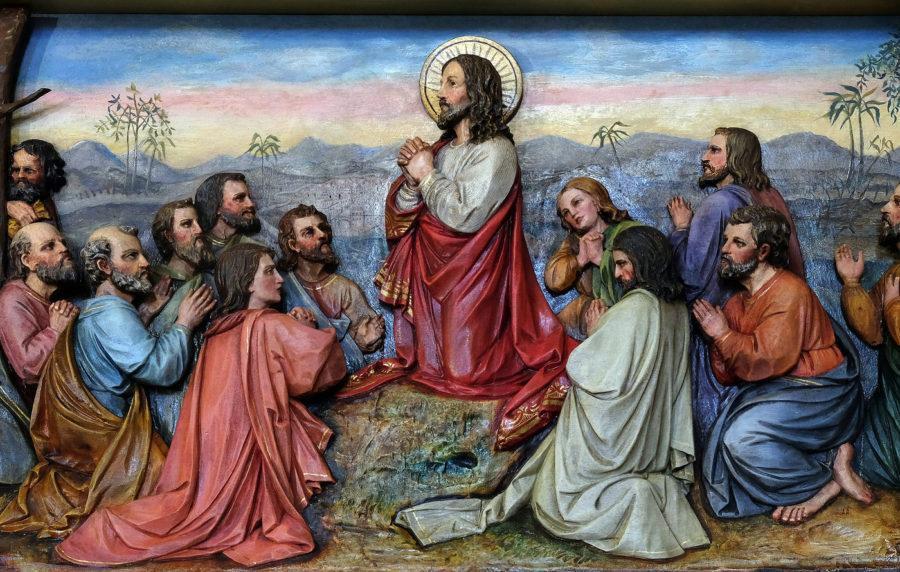
    • The Agony in the Garden
    • The Scourging at the Pillar
    • The Crowning of Thorns
    • The Carrying of the Cross
    • The Crucifixion
    The Glorious Mysteries (Wednesdays)
    • The Resurrection
    • The Ascension
    • The Coming of the Holy Spirit
    • The Assumption of Mary
    • The Coronation of Mary
    The Luminous Mysteries (or Mysteries of Light) (Thursdays)
    • Jesus’ Baptism
    • The Wedding Feast at Cana
    • The Proclamation of the Kingdom of God
    • The Transfiguration
    • The Institution of the Eucharist

    The Rosary is a powerful prayer. Many miracles have been attributed to the Rosary (like the miracle at Fatima), and countless others have experienced healing, conversion, and answered prayers. But the biggest miracle of all is the hope it has given to millions around the world.

    Originally published May 21, 2018.

  • God Never Gives Up on Us: Lessons From My Journey of Meeting My Fiancée

    God Never Gives Up on Us: Lessons From My Journey of Meeting My Fiancée

    A woman's hands are resting on a table with a wooden crucifix and a Bible.Sometimes, it feels like God abandons us. The disciples might have felt this way after the Crucifixion. Or, at least, they felt downcast, their hopes dashed; the prospect of building the kingdom without their leader seemed bleak and pointless. Their whole world had been shaken and flipped upside down. Jesus, their point of reference and the truth by which they viewed existence lay in a tomb.

    In my own prayer life, I’ve faced issues that seemed hopeless. I have prayed for certain blessings for a while, but, growing impatient when my prayers go unanswered, I stop asking for those petitions. I get in the lazy habit of assuming my desire is not in accord with God’s will.

    However, I’ve found that even if I give up on my prayers and my dreams, God doesn’t. Those prayers that I let peter out after I grow tired of asking for the same thing time and again are prayers that God nevertheless uses for my benefit and his glory.

    RELATED: Try These Unique Forms of Prayer When You’re in a Spiritual Rut

    For years, I prayed to God to send me a spouse and to make me a good husband and father along the way. I joined a local Bible study where our leader introduced us to a St. Raphael prayer for singles in search of a spouse. For months, I prayed this devotedly almost every night. But eventually, the consistency slackened, and I stopped altogether.

    Time went by, and I hadn’t gone to Bible study for several weeks. Then, during a pilgrimage to some beautiful Chicago churches, I bumped into our group leader. She wanted to know why I hadn’t been coming; I had no legitimate excuse. She also said there was a new woman who had joined Bible study. I had nothing else better going on Thursday nights. So God brought me back to the group. 

    That summer, I got acquainted with Ellen, our new member, who came to the study in search of a friend group (and, just possibly, a significant other). 

    RELATED: A Pathway to Holiness: A Single Man’s Search for Vocation

    Summer passed, autumn came, and after midnight following a Halloween party, I asked Ellen out on a date. She graciously accepted, and since then, she has listened, cared for, comforted, and loved me, which, as a certain aged Hobbit might observe, “is better than I deserve.” Her desire for a family, the intention to raise children in the faith, her spontaneity, genius, and sharing of herself when she knows I need consolation are part of what makes her the perfect partner.

    Now here I sit, a few weeks out from our wedding. After I proposed, Ellen revealed she also prayed to find someone to share her life with. God, in his design and timing, made us the answer to each other’s prayers. It gives me real Tobiah and Sarah vibes! As the Scripture reveals, St. Raphael played the matchmaker in their lives too.

    I have no doubt Raphael interceded on my behalf. Reflecting back on that time of spiritual dismay before meeting Ellen, I realized I had given up on God, thinking that he didn’t want what I so strongly felt drawn to — marriage. But that’s not how vocations work. God had a plan.

    RELATED: Looking for a Sign From God? Try These Prayer Practices Instead

    The same was true after Jesus’ death. The Apostles had also given up: If Jesus really was who he said he was, why was he dead? In response, they returned to their former lives. In John: 21, St. Peter says he’s going fishing. Jesus, who had called him to be a fisher of men, appears on the scene and draws Peter back to land. When the disciples get ashore, they find Jesus relaxing by a charcoal fire, and they share a simple breakfast of baked fish.

    It’s a cozy, calming scene. That’s the soothing effect of Jesus in our lives. Yet, we so quickly lose hope. In the same way he ridiculed Peter elsewhere, Jesus could also complain of us: “You of little faith!” (Matthew 14:31).

    What God taught me, as he taught Peter too, is that no matter the weakness of our faith and hope in him, Jesus never gives up on us. It’s his all-powerful determination that brought him to the Cross. It’s his grace that will bring me and Ellen to the altar and the rest of our lives together.