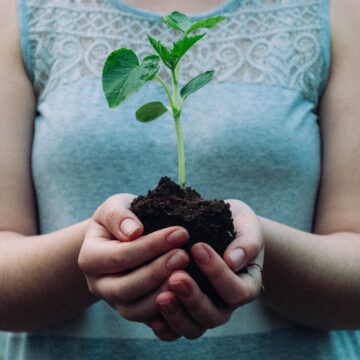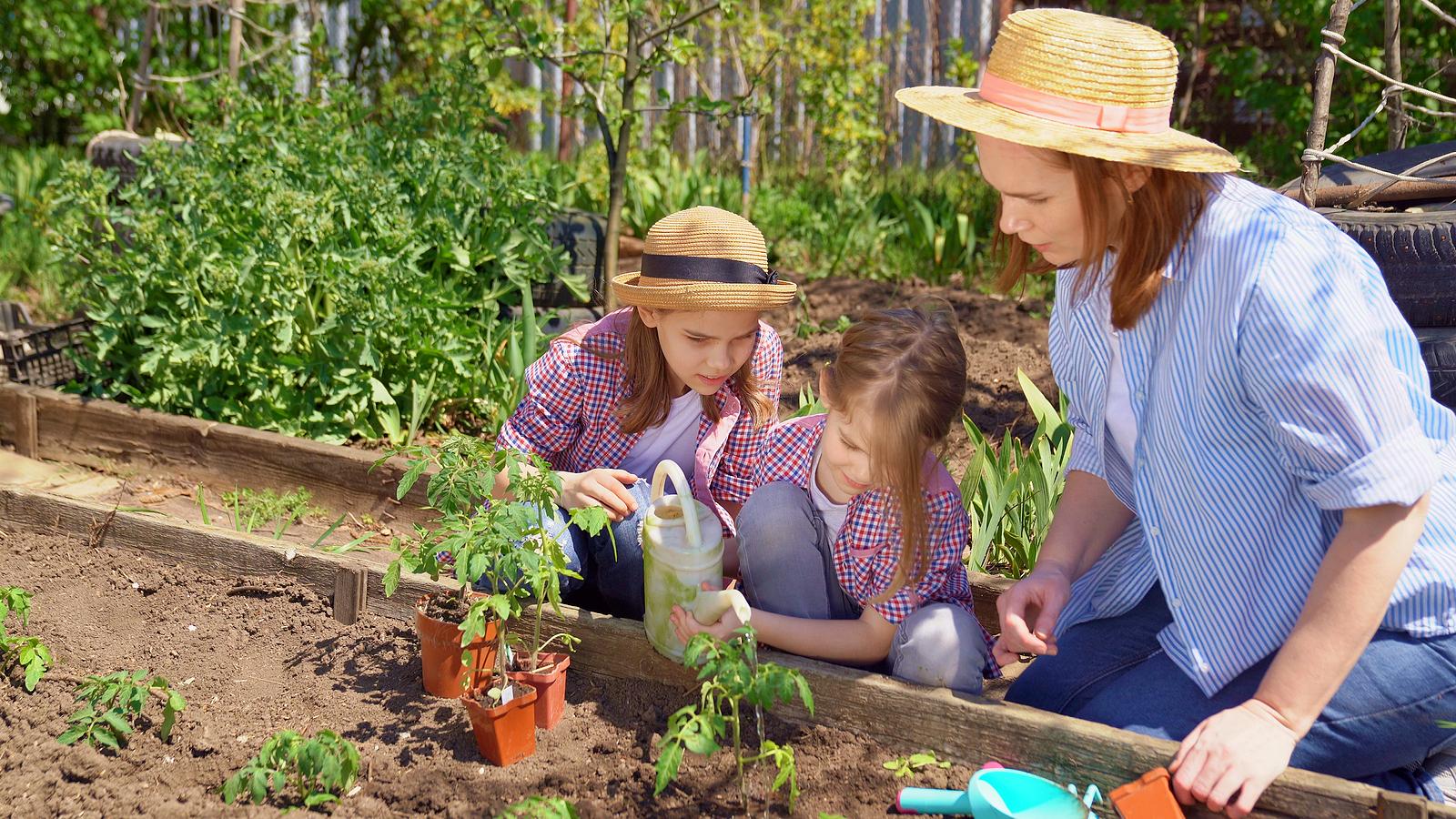
 When I saw the first spots of bright green in our long planter boxes, a jolt of adrenaline shot through my veins. It’s actually happening! I thought to myself as I called my daughters, who are 4 and 7, to see the sprouts. We are actually growing things in our garden!
Just two weeks prior, I had fussed around them as they spilled soil, sloshed water, and sprinkled flower seeds. I was nervous. After a long history of gardening failures, I had finally been able to keep a few houseplants alive for a few months. Growing something from seeds seemed like the next logical step, but it also felt like a colossal leap, like attempting to cross a divide just a few inches too wide. As I carefully arranged the planters in the sun, I truly didn’t know if they would bloom or die.
That’s because, for a long time, I thought I was just bad at gardening. As I watched neighbors and friends successfully grow their own food, I wrote it off as a special talent that they were blessed with, and one I didn’t receive. “I’m good at other things,” I would joke as I thought about the garden beds around my house overrun with weeds.
RELATED: Wisdom Learned From Gardening With My Mother
Then, in a professional development session for high school teachers, I learned about the concept of having a growth mindset, the belief that a person can grow in their abilities and skills, and I decided to give gardening a more intentional try. What if I did a little research first? I asked myself. What if I invested a little money in getting the right tools? What if I made it a habit to do a little bit of work each day? What if I tracked my progress slowly over a longer period of time?
The questions intrigued and excited me. Suddenly gardening didn’t feel like an activity that was never meant for me, but a challenge that I could take on at my own pace and in my own way.
Adopting a growth mindset can transform the way a person looks at any new or interesting skill they want to try, like playing the piano, painting with watercolor, or skateboarding. It can also transform the way we approach our spiritual lives. Ordinary Time, with its slower rhythm and focus on steady discipleship, is the perfect time to look at our spiritual lives with an eye to slow and steady growth.
My time in the garden has taught me that I need the same things whether I want to learn something brand new or cultivate the thing that is already a cornerstone of my life – my relationship with God: a reasonable goal, the right tools, and daily attention, patience, and time.
RELATED: Weeds and Wheat: Getting Rid of What We Don’t Need
Growing vegetables still feels too daunting this year, so our family is trying to grow a few pots of flowers and herbs. This goal seems just challenging enough that I want to work toward it. I will celebrate if we are successful, but I won’t be devastated if we fail.
If I want to grow in my spiritual life, setting a reasonable goal is important, too. I once heard a priest preach about this when it comes to establishing a habit of daily prayer. “You’ll never start with an hour a day! Try 10 minutes,” he said. When I wanted to get into the habit of praying the Rosary every day, I started with just one decade a day. I don’t have to do everything all at once. I can work toward a bigger goal via small steps over time.
The right tools have also made a big difference in my abilities as a gardener. I set a small budget for this hobby and intentionally bought items that would help me troubleshoot problems I have encountered in the past: pots with good drainage (I tend to drown my plants) and potting soil that has nutrients mixed in (sometimes just the sun is not enough—who knew?).
LISTEN: Simple Ways to Rejuvenate Your Faith With Joe Paprocki
I’ve learned there’s no need to go all out and spend a ton of money on products or services that promise they will help me connect with God. By thinking carefully about roadblocks that have prevented my spiritual growth in the past, I’ve found creative solutions for overcoming them one at a time. For instance, an old-fashioned alarm clock has helped me and my husband wake up early for personal prayer so we no longer start our day by reaching for our phones.
I think the hardest truth about learning something new is that it takes consistent daily attention, patience, and time. I need to check on my garden every day, just as a musician needs to practice or an athlete needs to train every day. These daily tasks can feel tedious because they rarely provide evidence of growth or development. However, when I take a longer view, success is easier to see. I am a more confident gardener than I was a few years ago. And perhaps in a few years, I will be better at it still.
The same is true for spiritual growth. It can feel tedious to show up to Mass every week or prayer every day. But as the seasons of my life change over time, or as I start to encounter challenges and difficulties with more trust and grace, I can see the ways that God has been nurturing my soul with careful attention all along, just like a gardener.