Tag: motherhood

  • How My Struggle With Infertility Deepened My Relationship With Mary

    How My Struggle With Infertility Deepened My Relationship With Mary

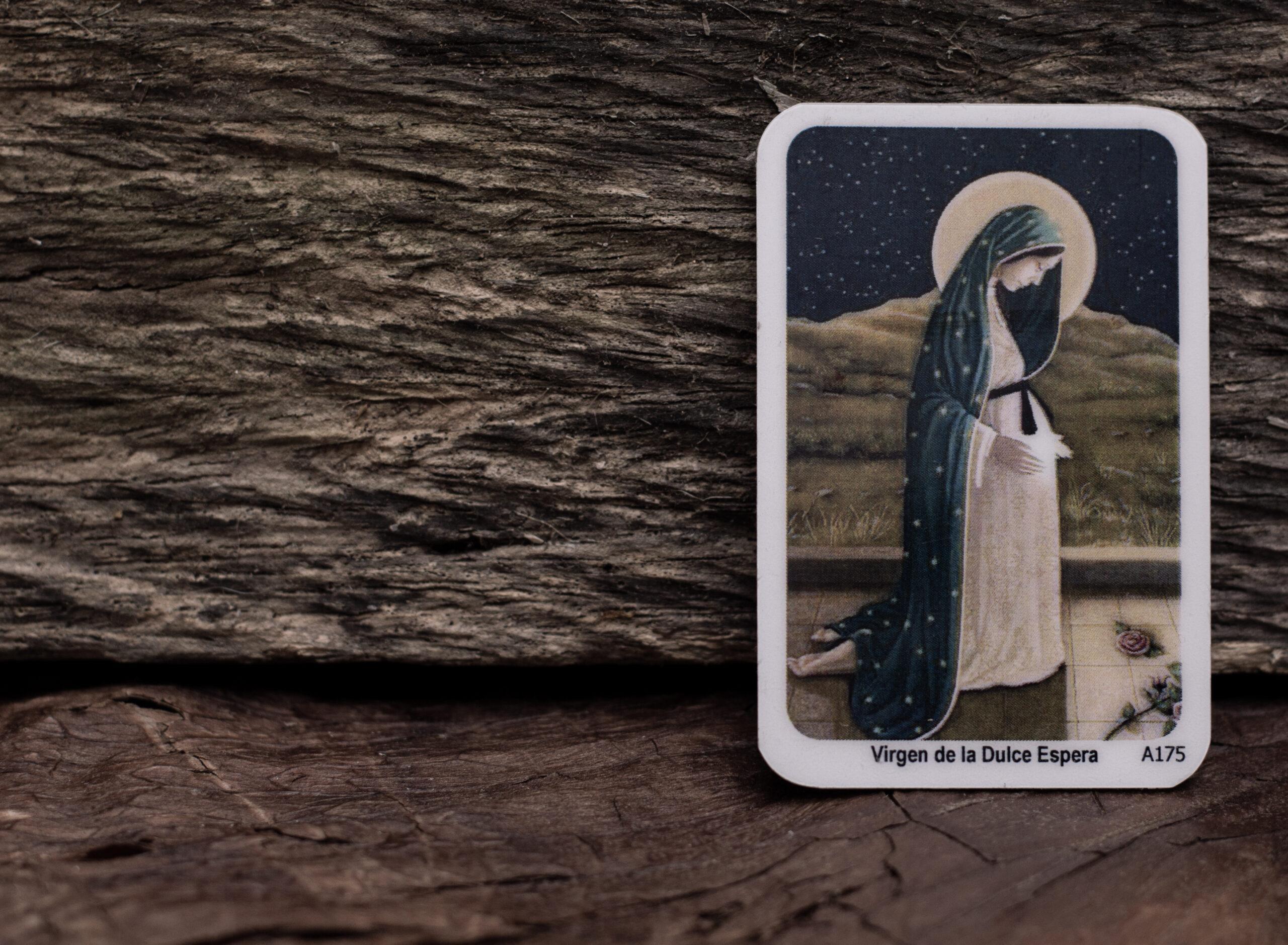
    Photo of the Virgin Mary pregnant with Christ.
    Photo by Carolina BR on Cathopic.

    Editorial note: The following article contains mentions of pregnancy/infant loss.

    The desire to become a mother took me by surprise. Beyond early childhood years of wanting five daughters named after American Girl dolls, having kids wasn’t on my radar. However, after two years of marriage, I faced the possibility of having kids with a heart of hope. What I didn’t know at the time was that an unexpected diagnosis would make becoming pregnant more challenging than I ever thought possible.

    “You have PCOS. How has no one told you that before?” 

    I met my doctor’s gaze through the webcam. I had pushed for a meeting after months of being seen by well-intentioned but uninformed medical technicians. This diagnosis came after working with OBGYNs, holistic practitioners, and even acupuncturists while on the search for an answer to family-building. The diagnosis, though, was less of a path forward and more of a cul-de-sac.

    LISTEN: Coping With Infertility

    Turning towards Mary’s holy help

    I knew God was listening. However, He felt far away. I needed a girlfriend with whom to commiserate, a mother figure who would help me. I thought about this during my weekly Thursday night Adoration hour.

    “Am I not your mother […] how else can I help?”

    I reread the last line of Mary’s message under a painting of Our Lady of Guadalupe on the wall of my parish’s Adoration chapel. I figured if I needed help on the journey toward motherhood, who better to rely on than the Mother of Mothers? My heart began to ease as I spoke. 

    Holy Mary, I ask for your help. That you would intercede for me and ask God that if it’s not His will for me to have a child, to please, please, take the desire from my heart. 

    After another disappointing fertility cycle, I decided to try one more time. My husband, who never pressured me to have children, agreed I should take a break if this next one didn’t pan out. 

    Mary, I ask for your help again. For your holy intercession through Jesus Christ, your son my Lord, to God that it could be his holy will that I become pregnant this time. 

    As I called out to Mary, again and again, words appeared in my mind. In my head I heard, “I will help you become a mother because you first went to my mother.” I was still as that notion began to increase my confidence that maybe it was almost time. 

    RELATED: Turning to Mary in Difficult Times

    Mary’s light in dark times

    A week after my 35th birthday, the doctor’s office confirmed that not only was my positive at-home pregnancy test accurate, but also — I was having twins. After the initial shock, I imagined my bump and how I would reveal the news. My prayer life and budding relationship with Mary continued to grow as well. It all felt too good to be true, but I pushed those thoughts away.  

    At 12 weeks, I woke up and went into the bathroom. I was bleeding. Terror filled within me as I sat there trying to figure out what to do. My husband turned on his bedside lamp and we called the doctor. 

    The on-call nurse said I would need to wait until the doctor’s office opened. As I laid on wet bed sheets, I saw my grandmother’s painting of Our Lady of Guadalupe hanging in the room across the hallway. My eyes locked on her serene face and hands folded in prayer and thought, “Am I not your mother? How else can I help?” 

    Oh Mary, please help me. Please help my babies. Keep them there. Oh Mary, please. 

    My reliance on the Holy Mother’s intercession and listening ear was all that I had, and I found it to be the only thing I needed. Later that morning, I was bumped up to be the first seen by the medical technician. I burst into tears when she found two beating hearts. 

    RELATED: I Never Connected With the Rosary… Until I Became a Mother

    At the beginning of my journey to motherhood, I felt that there would be a natural conclusion to my prayer — a time when I wouldn’t need to rely on the Holy Mother as much as before. First it was becoming pregnant, but she was there during my pregnancy to hear my fears and joys. Then, I thought that after I gave birth, the journey would conclude and I wouldn’t have to “bother” her so much. However, I still rely on Mary every moment of every day. 

    When my boys wake up, I thank her for praying over them during the night. I ask her to watch over them as they explore which comes with the inevitable toddles and falls. Mostly, I ask her to help me to be the best mother I can be in each moment. To not stress so much about the little things, but to continue to trust in God. I jokingly ask her to pray for my kids through my mistakes while I earnestly navigate the learning curve of motherhood.    

    My path towards motherhood led me to Mary’s perfect example of seeking light through dark times. Mary’s faithfulness to God and her unceasing love continues to be an option for all of us to choose daily when seeking hope. 
  • Mary: The Background Music to My Spiritual Life

    Mary: The Background Music to My Spiritual Life

    For over two years, every night it’s the same: At the appointed time, I gather my freshly bathed and pajamaed toddler into my arms, all fuzz and snuggles. We turn off the light in his bedroom and settle into the rocking chair. My son knows the drill, so he tucks his fuzzy head under my chin and cuddles into my arms. Then we begin:

    Softly, we rock in the darkness. I recite “Goodnight Moon.” Then five nursery rhymes, another book, four prayers, and a lullaby.

    RELATED: I Never Connected With the Rosary… Until I Became a Mother

    They’re the same words every night, and they’re my child’s bridge between the discoveries of day and the peace of sleep. As we sit together, heart-to-heart, my voice surrounds and comforts him, but I imagine he is not thinking of me. My voice, and our nightly litany, is background music that fades away while he reviews the day and surrenders all his anxieties to calm.

    It is a sweet privilege to be his background music, to be that safety that allows him to bound with courage into the world.

    Sweeter still is the knowledge that although I am not a child anymore, that although I am all grown up, my Heavenly Father has given me this background music, too.

    WATCH: Mary in 2 Minutes

    At one time, the Son of God rocked in his mother’s arms, tucking his fuzzy head under her blessed chin as she cuddled and sang to him. The Blessed Virgin Mary was the background music to his earthly ministry. First, it was the beating of her heart at the Incarnation, when Jesus spent nine months safely in the tabernacle of her womb. Then, her voice was the background music at his foretold birth in Bethlehem, and even during an exiled flight into Egypt that lasted a number of years while powerful men sought to take his life. Mary was there in the background when Jesus performed his first miracle, quietly and confidently telling the Galilean wedding staff, “Do whatever he tells you” (John 2:5). When Jesus’ time had come, Mary was there, in the background, as her Son obediently met his ultimate suffering: his Passion and death. Mary had seen him all the way there. And what a gift, that the Lord passed her on:

    “Woman,” He said, “behold your son.” Her new “son” was to be John, who represents all of us.

    Then: “Behold your mother” (John 19:26-27).

    And our mother she is. 

    RELATED: No Mere Greeting: The Hidden Meaning of the Hail Mary

    It was with a shock that I realized, while rocking my son, that Mary is the background music to my relationship with God in the Church — and quite literally! Every time I pray the Rosary, I pray for her intercession 53 times, but each time, the “Hail Mary” fades away as I meditate on that decade’s mystery, which is a moment in the life of Christ.

    It was a great surprise because I had struggled to feel devoted to Mary ever since I turned 13, when I reached — and passed — the age of her world-saving “yes” to God. But now, as a mother, I can understand her differently. She is the background music to my spiritual life: to my relationship with Christ.

    “She is an echo of God, speaking and repeating only God. If you say ‘Mary’ she says ‘God.’” Writes St. Louis de Montfort in “True Devotion to Mary.” “[Y]ou never think of Mary without Mary thinking of God for you. You never praise or honour Mary without Mary joining you in praising and honouring God.”

    WATCH: The Rosary in 2 Minutes

    In that “Hail Mary” greeting, in the repetition of her prayers, Mary smooths out the wrinkles between me and God, pouring his grace into my life and carrying me — as a mother carries her child — to see the King of Kings.

    And it’s almost like she rocks me, with my head tucked under her chin. Her warmth remains as her voice fades to the background, so all that remains for me to embrace is the light of Heaven: the Son she rocked thousands of years ago, who went to the cross for me, and pursues me even now.

    Now, and at the hour of our death. Amen.

    Originally published May 5, 2021.

  • Saint Mom: Why Are There So Few Saints Who Were Mothers?

    Saint Mom: Why Are There So Few Saints Who Were Mothers?

    It’s fair to say the saints have taken over our home. I am up to five statues of Mary in my kitchen alone, all cheering me on through daily chores. An image of Mary Magdalene gazes down at us in the dining room. St. Anne is on my night table, reminding me to read my books. My son sleeps with St. Michael the Archangel next to him for protection, and my daughter has a quote from St. Catherine of Siena on her wall. Since we look to the saints for daily inspiration, it was natural that I would turn to them to find help being a good mom. What I learned is that there are relatively few saint moms, and their paths to holiness were shockingly similar.

    So, if you want to be a saint and a mom, prepare your family. You probably won’t be getting canonized unless your husband dies, you sell all your possessions, and become a nun. Sorry, kids. Mom won’t be around to babysit the grandchildren. She is doing the Lord’s work.

    RELATED: Mysticism: It’s Not Just for Saints

    Step one: Be born into a wealthy family.

    Step two: You must get married. An unhappy marriage is optional but preferred. Bonus points if your in-laws are also notably mean to you.

    Step three: Have some children, who will likely die young or go into religious life themselves.  

    Step four: Your husband must die or you must mutually decide to enter separate religious orders. (My husband and I were going to do this for Valentine’s Day but spiritual attack in the form of pizza and Netflix intervened.)

    Step five: You must enter religious life or live in a convent that you support. Founding your own order is optional. Even in the New World, the first American-born saint mom, Elizabeth Ann Seton, was raised in a wealthy family, lost her husband, and founded a religious order.

    Reading all of this, I began to wonder if there was any hope for the rest us. I did discover a FastPass to mom sainthood that did not involve wealth or a convent. Unfortunately, it requires martyrdom (see “Marytrs of Kyoto” or “Spanish Civil War”). Ready to sign up?

    RELATED: Getting by with Help from a Little Flower

    Are entering the convent and/or being martyred really the only way moms can become saints? We are all called to become saints, and having the saints as spiritual examples is one of the best things about Catholicism. However, for the average mom today, it’s hard to relate to the experiences of our saint mom role models. Of course, we can always look to Our Lady and St. Anne, but it’s fair to say their circumstances were unique. I began to wonder if this phenomenon was the spiritual equivalent of not having any pictures of yourself alone after your children are born. There may be plenty of saint moms out there, but they are the ones taking the pictures; they are not in them. Until recently, it was accepted that most saint moms toiled behind the scenes with little recognition.

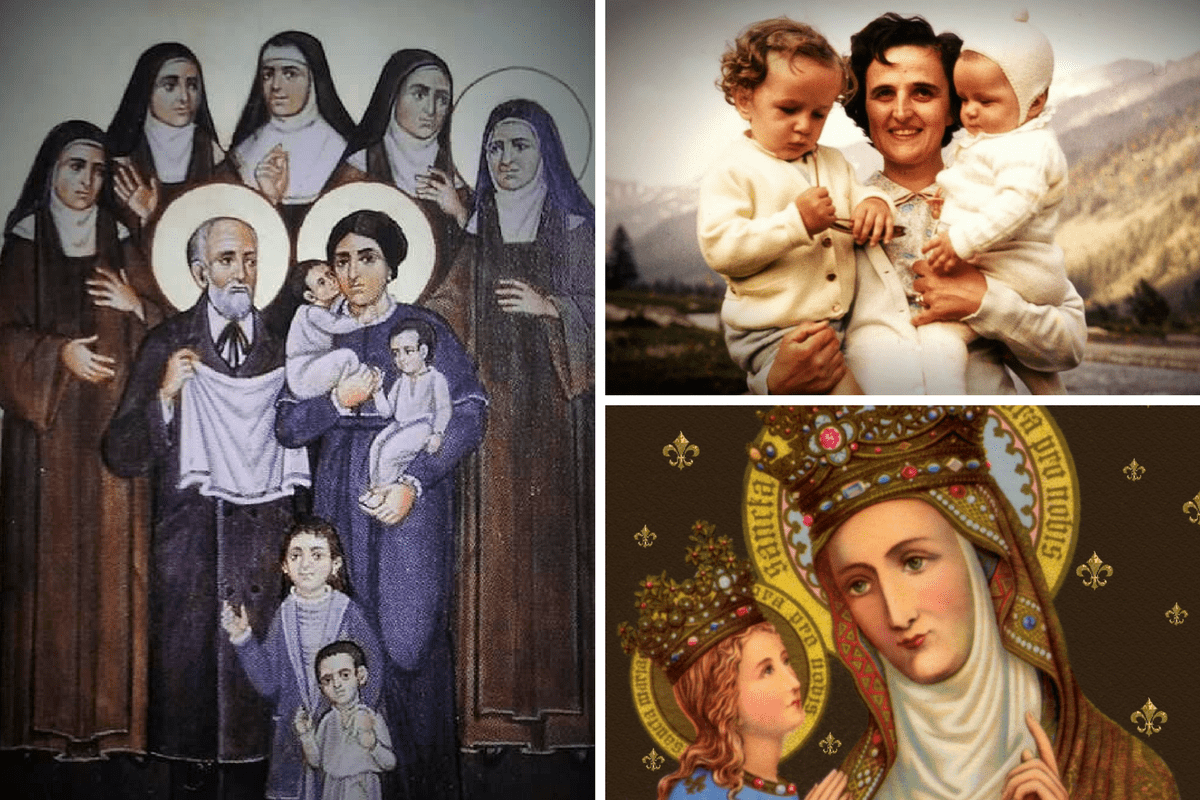
    Take heart, Catholic moms. As women’s roles have become better understood and more visible, a new wave of saint moms is coming. Two of the most popular mom saints today, St. Zelie Martin and St. Gianna Molla, not only have cool names, but they were working moms with kids, and are more relatable to most of us. St. Zelie and her husband, St. Louis Martin, were the first married couple to be canonized in history and are best known for being the parents of St. Therese of Lisieux, the Little Flower. Not only did Zelie have nine children, most of whom went into religious life, but she ran her own lace business — before Etsy.

    A working pediatrician with four kids, St. Gianna Molla famously refused treatments for cancer so that she could give birth to her daughter. She ended up dying from complications following the birth. Interestingly, none of the Molla children entered religious life, but the youngest daughter followed in her mother’s footsteps and became a doctor.

    Both Zelie and Gianna were noted for their ability to live out their faith in everyday life. Zelie’s letters are filled with references to fasting, prayers with the family, and daily Mass. Just like my kitchen, the Martin family had a statue of Mary in an honored place, fondly referred to as “Our Lady of the Smile.” Gianna considered her work her religious mission and her marriage and family as her vocation. She was noted for her care of the poor and marginalized but also for her spirit of joy that served as an example to her children.

    It can be hard for us to see the holiness of our everyday actions, especially when we’re struggling to get the kids in the car for Mass, cleaning glitter slime out of the sink, or refereeing the latest cage match between siblings. It helps to see the Church’s recognition of the sanctity of motherhood is growing and maturing with each new saint mom. I can’t wait to see who is next. Could it be you?

    Originally published August 9, 2017.

  • How Becoming a Mother Helped Me See Easter in a New Light

    How Becoming a Mother Helped Me See Easter in a New Light

    “Then the [women] went away quickly from the tomb, fearful yet overjoyed.” (Matthew 28:8)

    “Fearful yet overjoyed”? Aren’t those emotions opposites? Reading this passage from Matthew, I never understood that description of how the women felt. We read in Matthew’s Gospel that the women go to the tomb, see an angel, and are told the great news of Jesus’ resurrection. Why, then, would they go away fearful? I had always found the combination of fear and joy puzzling … that is, until I became a mother. 

    In fact, this Easter is my very first Easter as a mother, and as I read that familiar passage in Matthew’s Gospel this year, the emotions of the women began to make sense. When my son was born, I was excited to meet him, to hold him, and take him home. When the nurses weighed him and examined him in my labor and delivery room, I remember I could not take my eyes off of him. I was simply mesmerized! And I was anxious. I was waiting for an answer – “Is he alright? Is he healthy?” I had been a mother for less than an hour, and I was already afraid he might be hurt. I knew right away that I wanted to protect him from every single instance of pain and suffering, and I also knew shielding him from every inconvenience was not within my power. 

    RELATED: Who Were the Resurrection Women? 

    Recognizing my powerlessness led me to fear. I imagine my mix of emotions when I became a parent is like the women’s reaction to Jesus’ resurrection. They were excited to see Jesus again, and yet they probably had a flurry of questions and anxieties rolling around in their heads, too. They probably wondered, “How did this happen?” “Is Jesus okay?” I imagine they were likely wondering about Jesus’ future. After all, Jesus had just been executed a few days before. “What would the Jews do to Jesus when they find out he’s alive again?”

    In the midst of all my questions and mixed emotions, I eventually learned two very important things in that labor and delivery room. First, when it comes to worries — logical or not — we essentially have two choices. We can remain paralyzed with fear like the guards at the tomb (Mt 28:4) and ponder all the terrible things that could happen, focused on our powerlessness to protect our loved ones from every illness and injury. Or, we can turn to the one who does have control — God. I knew in meeting my son I had to surrender myself and my child into the arms of God, trusting him to take care of us in this life and the next. We can thank God endlessly for every joy-filled moment we have with our loved ones. We can be like the women at the tomb who do still encounter fear, but they do not remain in fear. Instead, they let celebration and happiness overshadow their fears. 

    RELATED: Three Ways God Reveals Himself to Me Through My Young Children

    While I was in the hospital, and even after being discharged, I could have focused on the pain and suffering I was enduring or the sleepless nights caring for a newborn. In fact, for a while, I did focus on the negatives. I complained a lot. And after some time, I realized I did not want to complain any more. My baby would only be this tiny for a short time, and I wanted to soak in every cuddle and coo. I chose to move my thoughts from complaining to prayers of thanksgiving. When I noticed myself venting about having to feed my newborn again or begging my baby to please go back to sleep, I started listing off my thank you’s to God instead. Thank you God for my health. Thank you God for keeping my baby safe. Thank you God for my husband and his generous heart. … On and on I’d thank God until that “glass half empty” thinking faded away and my complaints seemed insignificant. Shifting our thoughts from worries to gratitude is not easy, but as this new mom can attest, it is definitely worth it.  

    May we all, this Easter season, find the strength to trust our loving Father every day, and give thanks even in times of trial for every good gift.

    Originally published April 7, 2021.