Tag: marriage

  • God Never Gives Up on Us: Lessons From My Journey of Meeting My Fiancée

    God Never Gives Up on Us: Lessons From My Journey of Meeting My Fiancée

    A woman's hands are resting on a table with a wooden crucifix and a Bible.Sometimes, it feels like God abandons us. The disciples might have felt this way after the Crucifixion. Or, at least, they felt downcast, their hopes dashed; the prospect of building the kingdom without their leader seemed bleak and pointless. Their whole world had been shaken and flipped upside down. Jesus, their point of reference and the truth by which they viewed existence lay in a tomb.

    In my own prayer life, I’ve faced issues that seemed hopeless. I have prayed for certain blessings for a while, but, growing impatient when my prayers go unanswered, I stop asking for those petitions. I get in the lazy habit of assuming my desire is not in accord with God’s will.

    However, I’ve found that even if I give up on my prayers and my dreams, God doesn’t. Those prayers that I let peter out after I grow tired of asking for the same thing time and again are prayers that God nevertheless uses for my benefit and his glory.

    RELATED: Try These Unique Forms of Prayer When You’re in a Spiritual Rut

    For years, I prayed to God to send me a spouse and to make me a good husband and father along the way. I joined a local Bible study where our leader introduced us to a St. Raphael prayer for singles in search of a spouse. For months, I prayed this devotedly almost every night. But eventually, the consistency slackened, and I stopped altogether.

    Time went by, and I hadn’t gone to Bible study for several weeks. Then, during a pilgrimage to some beautiful Chicago churches, I bumped into our group leader. She wanted to know why I hadn’t been coming; I had no legitimate excuse. She also said there was a new woman who had joined Bible study. I had nothing else better going on Thursday nights. So God brought me back to the group. 

    That summer, I got acquainted with Ellen, our new member, who came to the study in search of a friend group (and, just possibly, a significant other). 

    RELATED: A Pathway to Holiness: A Single Man’s Search for Vocation

    Summer passed, autumn came, and after midnight following a Halloween party, I asked Ellen out on a date. She graciously accepted, and since then, she has listened, cared for, comforted, and loved me, which, as a certain aged Hobbit might observe, “is better than I deserve.” Her desire for a family, the intention to raise children in the faith, her spontaneity, genius, and sharing of herself when she knows I need consolation are part of what makes her the perfect partner.

    Now here I sit, a few weeks out from our wedding. After I proposed, Ellen revealed she also prayed to find someone to share her life with. God, in his design and timing, made us the answer to each other’s prayers. It gives me real Tobiah and Sarah vibes! As the Scripture reveals, St. Raphael played the matchmaker in their lives too.

    I have no doubt Raphael interceded on my behalf. Reflecting back on that time of spiritual dismay before meeting Ellen, I realized I had given up on God, thinking that he didn’t want what I so strongly felt drawn to — marriage. But that’s not how vocations work. God had a plan.

    RELATED: Looking for a Sign From God? Try These Prayer Practices Instead

    The same was true after Jesus’ death. The Apostles had also given up: If Jesus really was who he said he was, why was he dead? In response, they returned to their former lives. In John: 21, St. Peter says he’s going fishing. Jesus, who had called him to be a fisher of men, appears on the scene and draws Peter back to land. When the disciples get ashore, they find Jesus relaxing by a charcoal fire, and they share a simple breakfast of baked fish.

    It’s a cozy, calming scene. That’s the soothing effect of Jesus in our lives. Yet, we so quickly lose hope. In the same way he ridiculed Peter elsewhere, Jesus could also complain of us: “You of little faith!” (Matthew 14:31).

    What God taught me, as he taught Peter too, is that no matter the weakness of our faith and hope in him, Jesus never gives up on us. It’s his all-powerful determination that brought him to the Cross. It’s his grace that will bring me and Ellen to the altar and the rest of our lives together.
  • What Does the Bible Say About the 7 Sacraments?

    What Does the Bible Say About the 7 Sacraments?

    Question: What aspects of the seven sacraments are in the Bible? Are there any that are not?

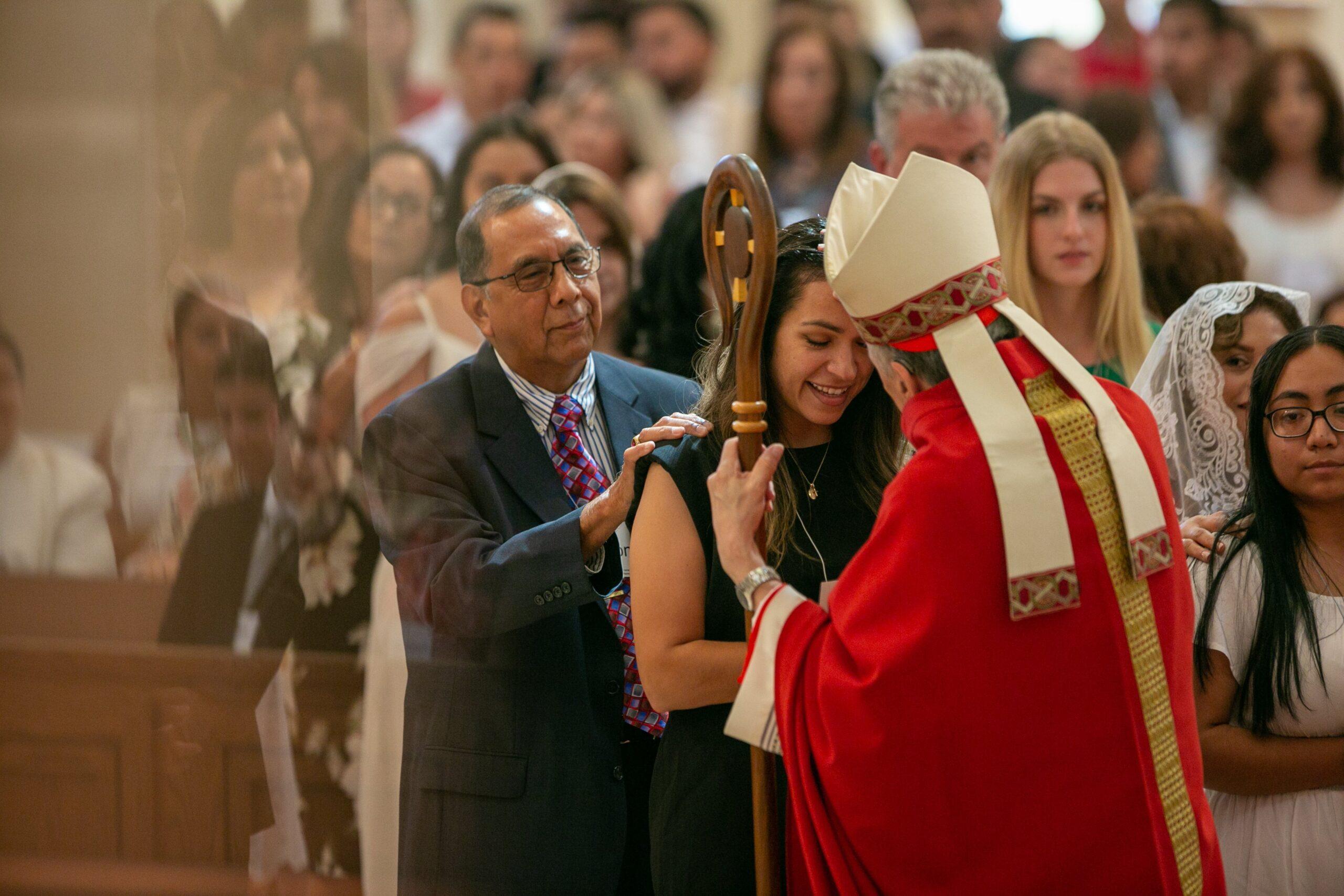
    Cardinal Daniel N. DiNardo of Galveston-Houston anoints the head of a confirmation candidate at the Co-Cathedral of the Sacred Heart in Houston June 5, 2022, during a celebration of the sacrament of confirmation. Cardinal DiNardo and Auxiliary Bishop Italo Dell'Oro confirmed more than 1,000 adult Catholics from 93 parishes and institutions across eight Masses at several parishes around the archdiocese before, during and after Pentecost. (CNS photo/James Ramos, Texas Catholic Herald)
    Cardinal Daniel N. DiNardo of Galveston-Houston anoints the head of a confirmation candidate at the Co-Cathedral of the Sacred Heart in Houston (CNS photo/James Ramos, Texas Catholic Herald)

    The seven sacraments celebrated by Catholics all have their roots in Scripture, although some are featured more prominently than others. There are many references to Baptism, of course, beginning with Jesus’ Baptism by John. The Eucharist was instituted by Jesus at the Last Supper (Matthew 26:26-29). Confirmation, though not specifically named in the Bible, is traced back to the outpouring of the Holy Spirit on Jesus at his Baptism and on his followers after Jesus’ resurrection (see John 20:22 and Acts 2:1-4). The Sacrament of Reconciliation, while not practiced in the same way in biblical times as we know it now, is rooted in Jesus’ ministry of forgiving sins and proclaiming salvation to the lost. After his resurrection, he breathed on the disciples, imparting them with the Holy Spirit and stating, “If you forgive the sins of any, they are forgiven them” (John 20:23). The Sacrament of the Anointing of the Sick can be traced to the New Testament Letter of James (5:14): “Are any among you sick? They should call for the elders of the church and have them pray over them, anointing them with oil in the name of the Lord.”

    RELATED: Sacraments 101 and 201 Videos

    Finally, the two Sacraments of Vocation — Marriage and Holy Orders — derive from Scripture, although the format of the liturgical celebrations has obviously evolved through the centuries. The Bible begins with the creation of man and woman in the image and likeness of God and very soon refers to them becoming “one flesh” (Genesis 1-2). Countless other passages refer to the covenant between married spouses, and Jesus himself defended the nature of marriage when he declared, “What God has joined together, let no one separate” (Matthew 19:6). Holy Orders take shape from Jesus’ appointment of the Apostles to extend his ministry of teaching, healing, and proclaiming salvation (Matthew 10:1-8). Later, those Apostles prayed and laid their hands on other “men of good standing, full of the Spirit and of wisdom” to share in the ministry (Acts 6:3-6). Thus the succession of the apostles began and with it the tradition of a pope or bishop laying hands on a man to ordain him as a bishop, priest, or deacon.

  • Learning About Sacrifice, With the Help of St. Mark

    Learning About Sacrifice, With the Help of St. Mark

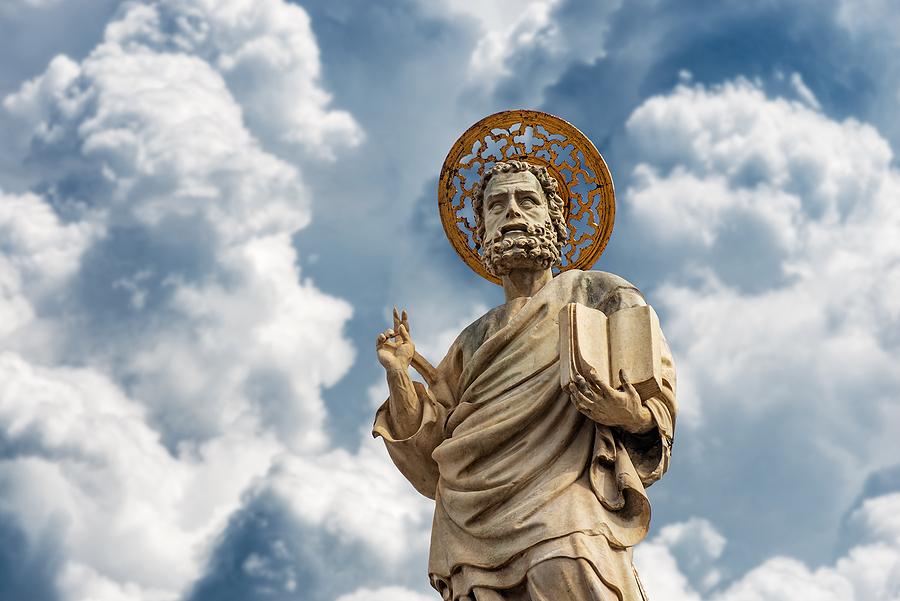
    Image of statue of St. Mark with sky in background.
    Photo by Alberto SevenOnSeven on Bigstock

    Sacrifice is key. We know that Jesus requires this of his followers, but I also heard this statement repeated many times when my wife and I were engaged.

    If I am honest, I think this kind of statement is kind of threatening. I know it to be true based on the life, witness, and words of Christ, but sacrifice is difficult. Approaching my fifth wedding anniversary while having two children (and one on the way) has validated the importance of sacrifice even more concretely in my life. Much of this investigation into sacrifice, however, has been enlightened by St. Mark. 

    The feast day of St. Mark falls on April 25 each year. This critically important saint is often overlooked because he was not one of the 12 Apostles. He does not appear in the stories about the earthly ministry of Jesus, but he wrote one of the four Gospels. 

    RELATED: How to Make Friends With a Saint

    I admit I used to know nothing about St. Mark; he was just a man who wrote a Gospel. My appreciation for him climbed last year when I decided, for the first time, to read the Gospel of Mark straight through from beginning to end. I often read the Gospel of the day, but after hearing a podcast about the importance of reading these accounts as they were written, I took up the task. I started with Mark, well, because it is the shortest Gospel!

    I learned that from the earliest days of the Church, Mark was known to be the interpreter of St. Peter. He became close to Peter and was able to write his account of Jesus’ life based on listening to Peter’s stories.  His writings are viewed as the preaching of St. Peter. We also know, from Acts 12, that Mark was once the companion of Paul and Barnabas as well. 

    Taking the time to read the entire Gospel of Mark transformed me. What became more palpable very quickly, was that Jesus was sent to sacrifice his life for me. I felt this in the way that Jesus spoke about his passion in the Gospel of Mark. I could picture Peter speaking these words to Mark and being moved by them as he heard them for the first time. It became more real for me because I realized that this message was literally passed down through the generations in a powerful and transformative way.

    RELATED: How to Be a Saint-in-the-Making

    At the start of the third chapter of Mark, people begin to plot Jesus’ death. All Jesus did prior was heal the sick, restore the possessed, and preach the truth. And yet, humanity rejected him. He was to be killed because of who he was. Still, he continued to place himself in the spotlight with more public healings and more intense preaching. Christ did all of this with the knowledge that he came to suffer.

    This reaches a shift in intentionality at the midway point in the Gospel. Peter confesses that Jesus is the Son of God and Jesus goes on, three times, to tell the Apostles that he will be arrested, suffer, die, and rise. Jesus states that he “must suffer” (Mark 8:31). 

    I became more and more intrigued by this truth as I reached the details of Jesus’ passion. It seemed more real to me and more powerful. If he tells us that in order to follow him we must also take up the cross (Mark 8:34), then why do I view sacrifice in such a negative way? The sacrifices that I am being invited into actually make me like Jesus. Mark, specifically, taught me this because of his intense focus on suffering and sacrifice. Sacrifice is an opportunity, it should not be a fear.

    RELATED: What I’ve Learned About Marriage When the Unexpected Happens

    My first practical thought was: Can I be more intentional about sacrificing in my marriage? I do my best to do this by helping around the house after work, but I think I view these tasks as things I just have to do. Mark’s insights helped me to see that I can offer difficult times (even if they are simple) as avenues of grace for my loved ones. Doing the dishes or folding the laundry late at night when I am tired and drained aren’t just nice things to do. They can be sacrificial and intentionally done to give me access to Jesus’ sacrificial love. 

    Second, I thought about my two boys. Being a parent of a 3-and-a-half-year-old and a 1-and-a-half-year-old can be chaotic. Noise, messiness, and lack of sleep are all side effects when the needs of your children demand all of your attention. My wife, Joanna, experiences this more than I do since she is home with them, but being consistently present to her children all day is a sacrifice. Rather than look to escape into my phone or have “me time,” Mark has inspired me to be more present during these special times with my kids. 

    The beauty of Christian sacrifice is that its focus is not on rigor. Sacrifice opens us up to love and makes us who we are meant to be. The tired tasks and intentional presence I strive to have with my children make me a better husband and dad. They do not make my life darker but brighter. Thanks to St. Mark, I am becoming less fearful of sacrifice and more grateful for the impact of Christ’s sacrifice in the concrete aspects of my life.

  • What Do Lent and Valentine’s Day Have in Common? More Than You Think

    What Do Lent and Valentine’s Day Have in Common? More Than You Think

    Grey heart made of ash and dustAsh Wednesday and Valentine’s Day can seem like contradictions. One day celebrates romantic love, while the other reminds us that our bodies will one day turn into dust. This year, February 14 will be filled with both Cupid and ashes.


    Ash Wednesday marks the beginning of the Lenten season of repentance and the preparation for the holiest days of the Church year. I always find that the beginning of Lent comes up so fast that I do not spend enough time reflecting on how I should spend this season. My tendency towards the eleventh hour isn’t new – if I am honest, I also tend to buy my Valentine’s Day gift for my wife at the last minute as well. So this year, I want to make the start of Lent and Valentine’s Day more impactful by considering what they mean — together.

    RELATED: Why Ash Wednesday Isn’t a Downer

    This year’s simultaneous occurrence of these two important days on the calendar has been a fruitful coincidence for me because it prompted me to start thinking about the day sooner than I usually do. So often, I live in a state of distraction – going from one day to the next without being intentional about the coming days. Once I investigated the significance of Valentine’s Day and Ash Wednesday, I found that their alignment offers a powerful opportunity to see that love means that we die to ourselves. 

    St. Valentine was a priest (possibly a bishop) who lived during the third century. He was a man of tremendous faith. During his time, Emperor Claudius struggled to employ soldiers in his army. He thought this was because men would rather marry than serve him. So, Claudius outlawed marriages in order to spike the numbers in his army.

    In response, Valentine often married couples in secret so they could enter into the sacred bond of lifelong love together. When he was later imprisoned for doing so, he healed the jailer’s daughter of blindness, befriended her, and would often sign his letters to her, “your Valentine.” Valentine was eventually beheaded for his defiance of the emperor and died as a martyr of the faith. 

    LISTEN: Saints of Our Lives: St. Valentine

    Learning about the life of St. Valentine has compelled me to reflect on what I do for Valentine’s Day and how I approach the everyday aspects of my marriage. Specifically, how can I sacrifice more for my wife? Instead of viewing ordinary tasks as a simple responsibility, I have begun to see that doing the dishes or laundry after a long day of work can be an offering of love to her because she so often does them for me. Simply carving out time to write a letter to her on an ordinary day is another practice that I know will make our relationship more rooted in the sacrifice of St. Valentine. 

    Love costs us something: our time, our energy, our sacrifice and effort. Lent is meant to cost us small offerings so that we can gain further insight into Jesus’ sacrifice. That is why we receive ashes on the first day of Lent. I would argue that Valentine lived from the consciousness of his own ashes. He knew that to follow Jesus meant that his entire being would be an offering to God.

    This Lent, I know I am being invited to do something similar. So, rather than giving up ice cream and sweets, I want to be committed to sacrificing in ways that explicitly proclaim the love that motivates the sacrifice. This Valentine’s Day will be made up of no extravagant gifts; my wife and I have decided to make Lent an extended Valentine’s Day of sacrifices for each other. 

    RELATED: In Defense of the Lenten Sacrifice

    Just like making time to sacrifice for my wife, this Lent I want to make the sacrifice of waking up 15 minutes earlier each day to pray. I want to commit to being more present at Sunday Mass, especially during the reception of Holy Communion. I hope that these practices will be more concerned with loving Christ and less concerned with giving things up because that is “what you do during Lent.” 

    This Valentine’s Day, and Ash Wednesday, practice sacrificial love that continues throughout Lent. See that love is most pure when it acts out of intentional choices for the other. Then we will experience that St. Valentine and ashes truly belong together. 

  • Models of Marriage: Remember These Lessons From Biblical Power Couples This Valentine’s Day

    Models of Marriage: Remember These Lessons From Biblical Power Couples This Valentine’s Day

    Holy Bible open with pages folded in the middle to make a heart shape and cross charm haning from the heart.
    Photo by May_Chanikran on Bigstock

    In the Sacrament of Matrimony, we are called to love each other fully in word, spirit, and deed, not only on our wedding day, but every day of our lives. That’s why the celebration of love just once a year on Valentine’s Day – the origins of which include a Roman fertility ritual and the execution of the martyr Valentine on February 14 – felt counterintuitive to me. It didn’t help that Valentine’s Day evolved into a consumerist holiday benefiting greeting card and chocolate corporations. But, after I got married, I realized that we can reframe this day in a Catholic way: Valentine’s Day can be an opportunity for couples to reenergize their commitment to each other. 

    The best place to begin this re-commitment is the Bible. Though many relationships in the Old and New Testaments reveal the pitfalls of sinfulness and the reality of our human brokenness, many also demonstrate how spouses can be wholly committed to each other. These holy unions, while far from perfect, are built on similar foundations, and we can use these lessons as models for our own marriages.

    LISTEN: Saints of Our Lives: Saint Valentine 

    Trust triumphs over darkness.

    Every marriage faces hardships, but we can survive life’s struggles together if we put our trust in God. Early on in my marriage, for example, my husband and I found it challenging to spend quality time together, as he had a rotational work schedule that made him spend most weekends at work. Our days off hardly ever coincided, and planning for family gatherings was a logistical nightmare. We realized that to deepen our union, we had to take time in our daily lives to fully enjoy each other’s company, which took commitment and communication. But these were lessons that benefited us in the long run. And now, in our fourth year of marriage, my husband’s schedule was finally adjusted to reflect a standard work week. Weekends together now feel like long-awaited blessings, and we soak in every minute of our time together. 

    There are many struggles that can strain a marriage. Several couples in the Bible faced a particular challenge: infertility. Many modern married couples, including some of my close friends, also suffer this specific struggle in private silence. Abraham and Sarah (Genesis 15-23), Isaac and Rebekah (Genesis 24-27), Elkanah and Hannah (1 Samuel 1–2:21), and Zechariah and Elizabeth (Luke 1:5-24) relied on God to direct the course of their lives. Through prayer and patience, they remind us that we are never alone in our struggles. God is with us to comfort and carry us. Ultimately, God blessed these couples with children – and some exceptional ones, too, like Jacob, Samuel, and John the Baptist. 

    However, whether or not children are part of God’s plan for us, we can strengthen our resolve as married couples by trusting in his will – and accepting it. We must be patient when our marriages are tested, keep praying even when things seem impossible, and remember that God’s blessings are always worth waiting for, in whatever form they come. 

    RELATED: Why Is Valentine’s Day Such a Big Deal?

    Kindness is key.

    There’s a saying I’m particularly partial to: “Happy wife, happy life.” But there is truth in this: If spouses aim to keep each other happy, marital life is more peaceful and joyful.

    One way to maintain authentic happiness is through kindness. Being kind to each other goes a long way, as we see in the story of Boaz and Ruth (Ruth 1-4). Ruth, who had been living in the land of the Moabites, lost her spouse and had no one to turn to. She and her mother-in-law Naomi returned to Israel, and Ruth sought out work. She found herself in Boaz’s fields, and though she was a foreigner, Boaz permitted her to work there. He ordered his men not to touch her and to treat her with respect. Boaz gave her lodging and invited her to share meals with him. In return, Ruth was grateful for all the help she could get. Eventually, Boaz and Ruth wed. 

    This power couple shows us that kindness means accepting and respecting each other. It means being patient with each other, helping with chores, taking on more when your spouse is stressed or exhausted, listening, and forgiving. Kindness is loving the person – and showing it.

    RELATED: 6 Tips for Being Better Prepared for Marriage

    Shared goals give purpose.

    Shared values and vision provide purpose for a couple’s shared life. Working towards something together is often more meaningful and enjoyable than going at it alone. My husband and I, for instance, agree that we want to live a life as simply and naturally as possible. This means having adventures in the great outdoors, prioritizing time with our family, and attending to daily joys together, like cooking and dog walking. In the long run, we hope to have our own homestead, raise chickens, and build a family in faith. In the New Testament, Priscilla and Aquila also shared a vision, playing an integral part in the spread of the early Church (Acts 18:2-3, Acts 18-19, Acts 26; Rom 16:3-5; 1 Cor 16:19; 2 Tim 4:19). After Claudius had evicted Jews from Rome, the couple settled in Corinth. There, they met St. Paul and followed him to Ephesus to evangelize, housing disciples and training them in the faith. The couple was so in sync with each other that Priscilla and Aquila are never mentioned separately in the Bible. In this way, they teach us that married couples are strongest when they are working together. This doesn’t mean spouses should always be glued to the hip, but that the strongest marriages are those unified in values and vision. 

    RELATED: Chastity, Poverty, and Obedience in Marriage

    A good Christian marriage is a holy one.

    To find a true, authentic model of Christian marriage, we need look no further than the ultimate power couple: Mary and Joseph. There were many tests in their marriage: Mary’s pregnancy before being betrothed to Joseph; King Herod’s decree of infanticide which drove them to flee to Egypt; losing their son Jesus in Jerusalem during the Passover festival. And there were no doubt many private hardships that Mary pondered in her heart (Luke 2:19). But through it all, Mary and Joseph strove to lean on each other to uncover God’s purpose for them and follow his path, wherever it would lead them. And this ultimate partnership – this ultimate true love – enabled them to create a holy home, one which raised the Son of Man and Son of God.   

    These power couples from the Bible can inspire us to recommit ourselves to our spouses this Valentine’s Day. Though it is conventionally a secular holiday, we can celebrate it in our own Catholic way, by reflecting on our role in our marriages, recommitting all our strength, faith, and love to our chosen ones, and dedicating our union to God. Plus, it is a good excuse to just have a little fun. We usually crack open a bottle of champagne and cook a meal together. (So, despite my prior jab at the consumerist aspect of the day, husbands and spouses alike, take note: flowers, chocolate, a date night, or a wonderful home-cooked meal will still be happily accepted.)


  • Post-Cana: Ways to Foster a Meaningful Marriage

    Post-Cana: Ways to Foster a Meaningful Marriage

    Couple In Love Holding Hands Each OtherIt was another Saturday night in our house: The kids were asleep, the dog had been fed, the dishes were done. Finally, it was just us. Turning to my husband, I asked like I normally did, “Want to watch something?” He grabbed the remote, I grabbed us each a glass of wine, and we scrolled through our movie choices. Tired from a day of wrangling kids, we spent half the time staring zombie-like at the film and the other half absorbed in our own chores: some last minute work emails and folding laundry. Physically, we were together on the couch, but emotionally and mentally, we were miles away. We were stuck in a robot-like ritual. This needed to change.

    The next Sunday, in our parish bulletin, an ad for a marriage enrichment night appeared. Normally, my eyes would have skimmed right over the notice. After all, our marriage wasn’t in jeopardy. We were trudging through life just like everyone else, right? Weren’t church marriage seminars for curmudgeonly couples who had nothing better to do on a Friday night? Then, I realized we had nothing better to do on a Friday night. Plus, my husband pointed out, it was cheaper than a movie date and included dessert and coffee. We signed up.

    RELATED: Being Grateful in Relationships

    I’d like to say that going to that seminar offered us the magic elixir to a perfect marriage and roused us back into the honeymoon phase, but that would be misleading. What it did offer us, aside from a kid-free night and a plate of cookies, was a starting place. By attending the seminar we confirmed to ourselves and each other that both our marriage and our faith were important and intertwined. It reminded us about the vows we took and the sacrament we received. Our “we,” we were reminded, was not “just us.” Our marriage was a covenant — with one another and with God — making us part of something bigger.  

    In preparing for marriage, we had done a lot of goal setting and planning. Now, several years and two children into this commitment, our daily discussion of goals seldom went beyond planning what we would like to eat. The next week, instead of turning on the television, we turned to a sheet of paper and each wrote where we would like our family to be in the next one, five, and 10 years. Some of these ideas, like our desire to travel more and potentially homeschool our kids, had been mere musings we mentioned in passing. Now, written down and shared, they seemed more real. This led us to our next step, which was an in-depth discussion about how to make these ideas happen. Instead of watching others’ lives unfold on the screen, we were planning our own.

    RELATED: 6 Tips for Being Better Prepared for Marriage

    A couple Sundays later, my sister unexpectedly stopped by our house as we were getting ready for church. “Leave the kids with me,” she said. My husband and I looked at each other. Just us? While we consider celebrating Mass an important family experience, our children (1 and 3) often demand our attention and care during the service. This unexpected “date” allowed us to concentrate on the Mass and celebrate it together. And the brunch we ate after involved meaningful conversation…and no juice spills or temper tantrums. Although we intend to continue to attend Mass as a family, it was another important reminder about the commitment we made to each other and God in this sacrament of marriage.

    Our lives are still hectic and exhausting. The laundry will never, ever be done. And we still enjoy watching television after the kids go to bed. But we’ve realized that the quality of time we spend together is just as, and sometimes even more, important than the quantity. By being purposeful and thoughtful with our time together, we’ve recognized that our marriage is more than “just us.”

    Originally published February 8, 2017.

  • Adjusting My Unrealistic Expectations: Three Essential Takeaways from the Search for My Soulmate

    Adjusting My Unrealistic Expectations: Three Essential Takeaways from the Search for My Soulmate

    I am your sister in Christ; I am also your friend rooted in reality. Between the ages of 22 and 25, I prayed fervently to St. Anne, St. Anthony, St. Joseph, Our Lady of Perpetual Help, and all the other friends in heaven who promise to make spousal matches. I was looking for a St. Joseph of my very own, after briefly discerning religious life during college and realizing it wasn’t for me. Once I knew that I wasn’t called to live in a convent, I began the search for the perfect Catholic gentleman. I wanted an intellectual (would we meet reaching for the same Chesterton book?), someone my parents would adore immediately, and most likely someone I would meet at Mass or Theology on Tap. I attended so many Catholic networking events in the cities where I lived during that time, certain it would be where I would meet my future husband.

    RELATED: My Spouse Isn’t Religious, but God Is Still in My Marriage

    When I turned 25, I did meet someone… a gruff, burly man working in entertainment in Los Angeles, who just happened to be Jewish, with no interest in converting to the Catholic faith. But we had other values in common, like family, community, and love for nature. Seven years later, none of that has changed, and we are newlyweds. Our journey was not necessarily what I imagined for myself at 25 – and our wedding was not either. We got married in the time of COVID, with our parents watching via video stream and our handful of witnesses wearing masks and standing six feet apart. My expectations came crashing down hard when we had to postpone our original wedding date, but the joy of our tiny marriage was real because of who I married.

    But I’m not here to tell you the details of my story (albeit it is pretty good and full of divine intervention). Instead, I want to share with you what I’ve learned about relationship expectations as a faithful Catholic called to marriage, which is that – to the surprise of some – virtue requires us to open our hearts and pick our battles (proof: St. Therese of Lisieux’s life in the convent). 

    Here are a few suggestions for how to adjust potentially unrealistic expectations you may have of the person you hope to marry.

    1. Your future spouse probably has hobbies that are different from yours and those of a monk.

    While I didn’t grow up gaming and honestly don’t really get the appeal, my husband has a weekly video game night with a bunch of guys he connects with virtually, and they play as a team. It is one of his best stress-reducers after a long work week. And who am I to judge? It’s not violent, and if it was, we could have a conversation about whether or not that particular game affects his demeanor. As a lifelong soul searcher, sure, I would love to see him pick up “Confessions” by St. Augustine on a Friday night instead. But if I’m choosing to do my nails or watch “Under the Tuscan Sun” in my free time, then why shouldn’t he be able to use his time in the way that he chooses? For the record, my husband is also a ceramics artist, a gardener, and the best cook I know.

    RELATED: What Is Marriage Prep Like for Those Marrying Non-Christians

    2. He or she might not be who your parents – or even your best friend – always had in mind for you.

    My parents expressed skepticism when I told them I was certain my vocation was to marry a non-Catholic man. I met my husband at the wedding of two Catholic friends who also found the match odd and frankly, disappointing. I felt downtrodden by the uncertainty of others, even when I was certain in my own heart. I wanted everyone to recognize our chemistry instantly and thought affirmation would come easily if it was my vocation. But Christ was the first to teach us that true vocation is not always easy. Over time, my parents and friends were able to see the love between us, and the same beauty and goodness that I see in my husband. While they usually want what is best for us, the important thing to remember if others aren’t sure about your partner is to ask yourself earnestly – what do you want?

    3. Perfection doesn’t exist outside of Jesus Christ and Our Lady.

    If I asked you to list your sins, we call that Confession. If I asked you to make a list of the sins you don’t want your future spouse to commit, we would probably call that unattainable (aside, of course, from the biggies like infidelity). Every human being is marred by original sin, and no matter how hard we try to overcome our flaws, any married couple can tell you that they are present daily. God willing, you will find someone who loves you for you and all your shortcomings – I am lucky enough to have done so. And in the same way you wish to be loved despite your imperfections, you must learn to love another despite his or hers. 

    RELATED: 4 Questions to Ask in an Interfaith Relationship

    Everyone has their own non-negotiables based on lived experiences, and it’s okay to keep those in mind as you look for a spouse. But if we find that we cannot change our beloved, can we love them anyway? (Spoiler alert: you won’t change anyone overnight or maybe ever, especially when it comes to picking their socks up off the floor.) While my husband is not actively involved in my faith life, I know that he loves me because of who I am in my entirety, including my spirituality and religious grounding, which is the soil from which the rest of my character springs. And I see the Holy Spirit emanating from him when he cooks me an incredible meal or gazes at the mountains. He often teaches me with his generosity, from organizing neighborhood trash cleanups to buying hats and socks to hand out to LA’s homeless. 

    The overarching theme here is not letting an unattainable ideal or an impulse to check all the boxes prevent you from finding true love. There are incredible people out there, both inside and outside the Catholic Church. Chemistry is important (in my experience) as is a shared value system and vision for your lives together, plus of course conversations on the big three: sex, children, money. 

    But open your heart to see the true person in front of you. You could be so pleasantly surprised at where it leads.

    Originally published Feb. 3 2021.