Tag: Lifestyle

  • 5 Unique Nativity Characters From Around the World

    5 Unique Nativity Characters From Around the World

    We all know who was at the Nativity.

    Actually, let me correct that: We all know who we agree was at the Nativity. The Gospel accounts differ (Mark and John don’t mention it at all), but there are characters who traditionally appear in Nativity scenes at our churches and homes. There’s the Holy Family, obviously. Shepherds, sheep, a donkey, an ox. At least one angel. The Three Magi might be there, but they also might not appear until the Epiphany. (Of course, there’s also some contention about whether or not Jesus should appear in the manger before December 25, but let’s not get into that.) 

    Each of these characters tells us something about the meaning of Christmas and the impact of the Incarnation on human history. That’s why I find it fascinating that other cultures around the world sometimes choose to add new characters to this familiar scene. Just like the figures we’re used to seeing, these characters reveal important insights about the Nativity. 

    RELATED: The Netflix Children’s Movie That Draws Us in to Christ’s Nativity

    Learning about them has introduced me to new ways of contemplating the Christmas story, and deepened my appreciation for the global diversity of our faith. I would like to share some of them with you here, both to invite you to a new perspective and, perhaps, to inspire you to make some additions to your own Nativity set.

    The pastori (Italy): Naples, Italy, is famous for its detailed and populous Nativities, which place the birth of Christ among scenes from 18th century Italian country life. These scenes are filled with pastori (literally, “shepherds”), figures representing ordinary people: bakers, farmers, merchants, fishermen, barmaids, musicians, and others. Sometimes they are satirical or humorous, for instance, the dozing shepherd Benino, who misses the angel’s summons. But in all cases, they remind us that the sacred exists side-by-side with the mundane and that Christ was born among everyday, working people.

    The devil (Mexico): Probably the character you’d least expect to see at the Nativity! In many Mexican Nativities, the devil appears, often carrying an object of temptation (a bag of money, or a bottle of alcohol). Like a skull in a Renaissance painting, his presence reminds us that evil exists even alongside the joy of the Nativity. But it also calls to mind Christ’s ultimate victory over sin and death. Sometimes the devil appears as an old man, standing by St. Joseph; in those cases, he is the tempter, trying to sow doubts about Jesus’ virgin birth and convince Joseph to abandon Mary. Joseph, of course, gives him the cold shoulder.

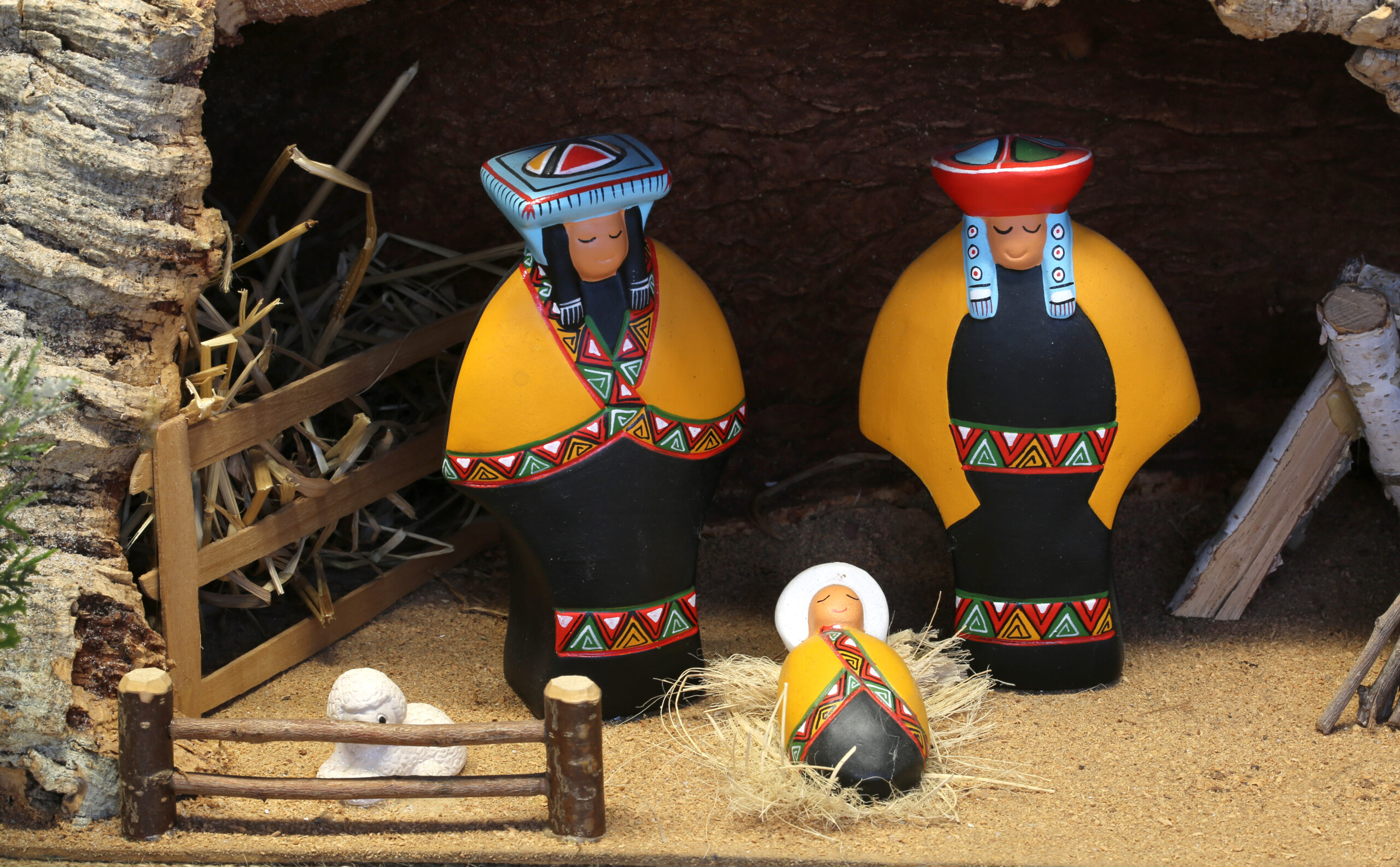
    Local wildlife (Worldwide): Different cultures will sometimes put their stamp on the Nativity by including local animals alongside (or in place of) the traditional donkey, ox, and sheep. There are indigenous North American Nativities featuring foxes, moose, and beavers, Southeast Asian Nativities with water buffalo and elephants, and African Nativities with zebras and lions (like this example, which also imagines the human characters wearing traditional local clothing). Like the animals we are used to seeing, these regional additions remind us of the humility of Christ’s birth and God’s love for all of creation. 

    RELATED: Recast Your Christmas Story

    The Caganer (Spain): In Catalan Nativities, you may notice a man clad in a white shirt and a floppy red peasant cap. Although, you’ll likely notice him because of what he’s doing: squatting and defecating on the ground. This is El Caganer (literally: “The Pooper”), a humorous figure popular in Spain and some other regions of Europe. He serves the same purpose as the Neapolitan pastori, illustrating how the Incarnation brings together the sacred and the profane. Sometimes our vision of Christmas becomes too sanitized, with its glowing beatific baby Jesus. The Caganer reminds us that Christ came into a world of dirt, mucus, mold, sweat, and, yes, poop. That same, messy world is where we still meet him today.

    Kneeling Santa (USA): In America, Christmas is often caught between the secular and the sacred, and no figure better embodies that dichotomy than the Kneeling Santa. These figures depict Santa Claus genuflecting before the manger, adoring the Christ Child. The website of the Catholic Company, which sells a variety of Kneeling Santa items, describes him as a “combination of American culture and tradition without sacrificing deeper religious reverence.” While it can seem a little goofy, there’s also something nice about this attempt at compromise in the Christmas culture war: respecting local traditions while still testifying to the spiritual heart of the season.

    What I appreciate most about all of these characters is that they help me see the Nativity from a new perspective. They remind me that, even in a story as ancient and familiar as the Incarnation, there is always more to discover.

  • ’A Christmas Carol’ Conversion: What Scrooge Teaches Us About Reconciliation

    ’A Christmas Carol’ Conversion: What Scrooge Teaches Us About Reconciliation


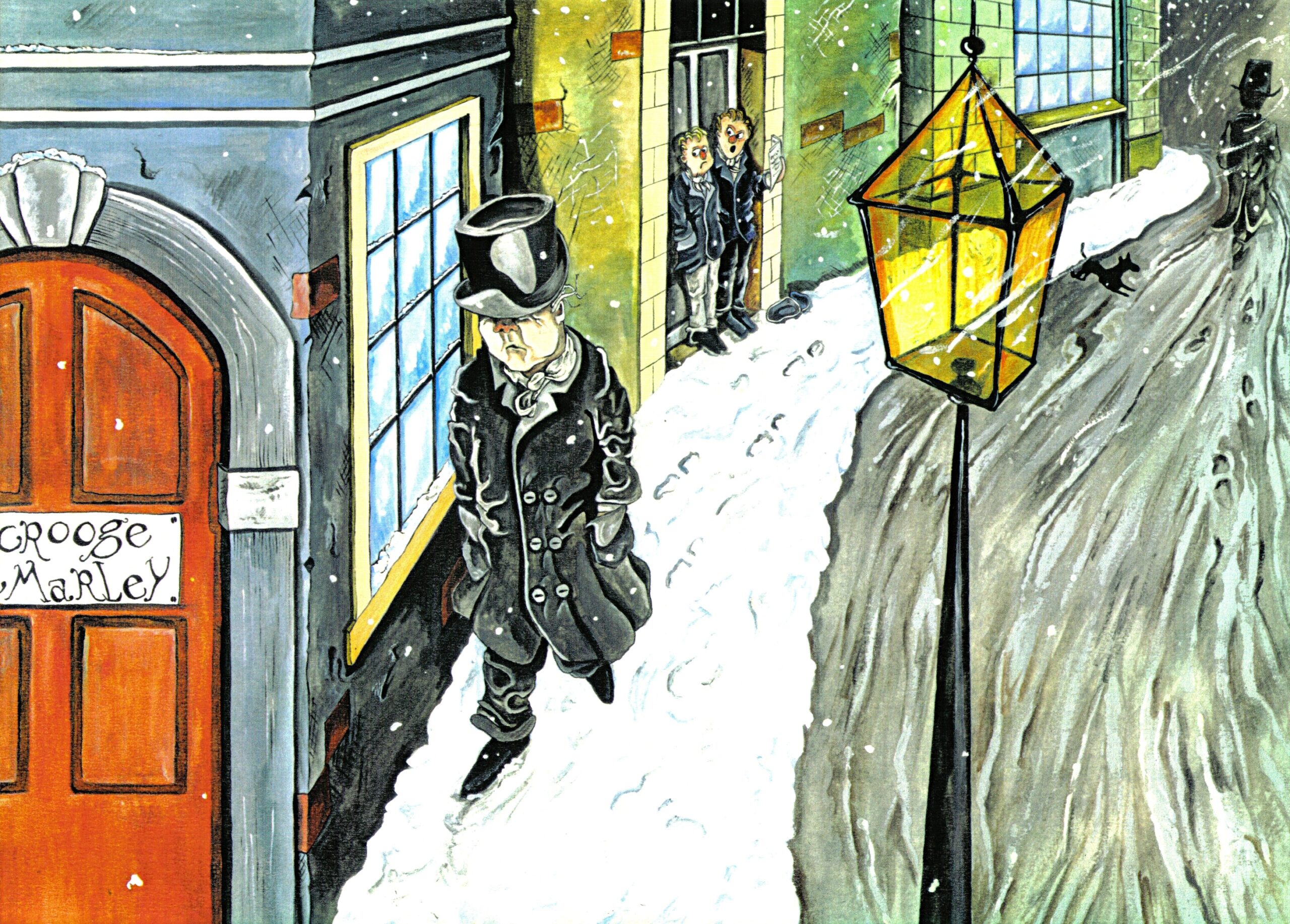
    Whether it’s the original novella by Charles Dickens or one of its many screen adaptations, “A Christmas Carol” is enshrined in my mind as a holiday staple. Why shouldn’t it be? Like the songs of the season remind us, Christmas is a time for telling “scary ghost stories and tales of the glories of Christmases long, long ago.” That is what Dickens’ book is – a dramatic event filled with encounters with haunting spirits that, when all is said and done, convince Ebenezer Scrooge of the unrighteousness of his deeds and the need to turn his life around.

    Jacob Marley, Scrooge’s deceased business partner, visits him and kickstarts the series of events that lead to a change in the protagonist. Marley’s chains shaken so horrifically are a symbol of his sins. He reminds Scrooge that he, like us, has sin in his soul – a ponderous chain, but through repentance and change, Scrooge’s unhappy fate can be sponged away. Because this Christmas classic deals so acutely with morality, it is no surprise that we can find in Scrooge’s conversion allusions to Reconciliation. In this story, we witness Scrooge’s sorrow, desire to amend his life, and penance for his misdeeds.

    WATCH: Sacraments 101: Penance

    The parts of Reconciliation

    The Sacrament in which Jesus ordinarily forgives sins is commonly referred to as Confession, Reconciliation, or Penance. While the terms are often interchanged, they really refer to different steps we take in the Sacrament.

    Confession is what it sounds like: confessing your sins to God through the priest. There is power in naming and denouncing our vices, and God’s grace is working in us and strengthening us along the way.

    Next comes reconciliation, part of which entails being sorry for your sins. If you are not sorry for something, you admit there is nothing to forgive. If we have sorrow (contrition) for our sins, then the priest gives us absolution – God’s forgiveness. Even though the penitent is forgiven, they must still try to make amends for the sin. In an act of contrition before absolution, we express our sorrow for our sins and our intention to amend our lives and avoid future sin.

    Finally, we are given penance to do. Sometimes this will be reciting rote prayers. Other times, it could be some external activity. For example, when I was young, I was supposed to empty the dishwasher as penance for disobeying my parents. Another time, I was told to play the Wii with my brother because it was something he really enjoyed (though I not as much). Entering the confessional takes initiative, and penance takes effort.

    RELATED: 4 Gifts to Give One Another From ‘It’s a Wonderful Life’

    The steps of Scrooge’s conversion

    At the beginning of Scrooge’s adventures, it’s clear that he does not desire this intervention of his own will. His associate, the late Jacob Marley, offers him hope to escape a doomed fate like his own: Scrooge will be haunted by a triad of spirits united in a single purpose – his conversion. At the outset, Scrooge is reluctant. But, as time goes on, he takes initiative and puts in the effort to externally express his reformed interior life.

    The first task of the spirits is to instill guilt or regret in Scrooge. The Ghost of Christmas Past shows Scrooge that he is selfish, that he let the desire for wealth dominate any charity in his life – even toward his lover. In his past, he chose greed over love and commitment. This wonderfully expresses how every sin is self-seeking at the expense of God and others.

    The Ghost of Christmas Present awakens Scrooge to the cold, harsh realities of poverty. When shown the home of his employee Bob Cratchit, Scrooge takes an interest in someone other than himself – the sickly Tiny Tim. The spirit reveals that unless the family’s means change, the boy will perish. A wave of sorrow washes over Scrooge, and the fact that he has a direct impact on this cuts him to the quick. Our actions, for good or ill, have consequences.

    It could be said that Scrooge is now in a state of contrition. His heart is being humbled and softened, ready to take on a new flame and vigor. But, if there was any question as to his resolve, the terror of the Ghost of Christmas Yet to Come makes Scrooge’s conversion a matter of personal, vested interest.

    RELATED: From Humbug to Humble: ‘A Christmas Carol’ Lives on

    As Marley’s chains and foreboding words alluded to, Scrooge’s fate is an unhappy one if he fails to amend his life. The final spirit shows our protagonist his grave, and that no one will mourn his death, leading Scrooge to a frenzied plea with the apparition that culminates in what could be considered an act of contrition if given in a sacramental context.

    “I am not the man I was. I will not be the man I must have been but for this intercourse,” cries Scrooge in the cemetery, glaring at his own name on a tombstone. “Assure me that I yet may change these shadows you have shown me by an altered life!” He proceeds to promise he will honor Christmas in his heart always and allow the three Christmas spirits to strive within him. Before waking to his new lease on life, he raises his hands “in a last prayer to have his fate reversed.”

    To some extent, Scrooge seems sorry for the misery he caused others. To an even greater extent, he was scared to death of a fate worse than fatality. Scrooge’s fear leading him to sorrow and repentance is akin to what is called imperfect contrition in Reconciliation. Imperfect contrition is the fear of punishment (the pains of hell) that our sins deserve. Perfect contrition is sorrow for sin out of love for God and recognizing that sin offends him. Yet, God can use our imperfect contrition to affect his Sacrament in us through the merits of Jesus, whose sacrifice supplies what our hearts lack in perfect contrition. Similarly, the imperfect contrition in Scrooge’s heart leads to a radical transformation for the better.

    Displaying contrition, Scrooge also revealed to the third spirit that his past life was in need of change and that he plans to change it. This is his confession, or admission of wrongdoing. For penance, he makes good on his word and avoids sinning in the future by treating others with charity and taking delight in bringing them joy. He chooses to live what is captured by the popular quote attributed to Mother Teresa: “It is Christmas every time you let God love others through you…it is Christmas every time you smile at your brother and offer him your hand.”

    RELATED: Busted Halo’s Guide to Confession

    Reconciliation

    So can we say Scrooge is reconciled? Is he squared away with God? Well, the effort by Marley and the three spirits certainly offers hope that the future can be altered – just as Scrooge’s life could be altered. Dickens certainly wishes the readers to carry such a hope away with them. The beautiful thing about the Sacrament of Reconciliation is that we are given a guarantee of God’s forgiveness.

    If we are good to our word (to strive against temptations and to do our penance), we have a hope greater than Scrooge’s. We have God’s word for it: “Go in peace. Your sins are forgiven.”

  • Visual Devotions: Crafting Meaningful Moments in Advent

    Visual Devotions: Crafting Meaningful Moments in Advent

    As a child, I always looked forward to the Advent season, those four weeks of anticipation leading up to Christmas. However, it wasn’t until my late 20s that I discovered the profound impact of incorporating art into my spiritual practice. 

    My journey with Advent art began unexpectedly when a friend invited me to an “Advent Art Night” at her church. Skeptical at first, I found myself deeply moved by the experience of creating a simple painting of an Advent wreath. The meditative act of applying brushstrokes while reflecting on the theme of hope showed me the value of creating a tangible piece of my faith through art. 

    RELATED: Praying With Your Eyes: How to Get Started With Visio Divina

    Since then, I’ve made it a tradition to engage in at least one Advent art project each year, finding that the creative process helps me connect more deeply with the season’s themes and prepare my heart for Christmas in a unique and meaningful way.

    By incorporating visual art into Advent devotions, individuals and communities can deepen their understanding of the season’s themes and enhance their overall experience. Here are some examples of project ideas themed around each week of the season.

    Hope

    1. Advent wreath painting: Create a watercolor or acrylic painting of an Advent wreath, focusing on the first candle representing hope. Use warm colors to symbolize the light of hope in the darkness. Check out these Advent wreath photos for inspiration.
    2. Hope jar: Decorate a glass jar and fill it with small slips of paper containing Bible verses about hope. Draw one each day for reflection. Check out this video for more ideas.
    3. Prophetic landscape: Paint or draw a landscape inspired by Isaiah’s prophecies of the Messiah’s coming, incorporating symbols of hope and renewal. Check out these ideas for this project.

    Peace

    1. Peace dove collage: Create a collage of a dove using torn paper from magazines or newspapers. Include words and phrases related to peace found in Advent Scriptures. Searching for these phrases will give you time to reflect on the overall Scripture and help you meditate on these topics!
    2. Jesse Tree with peaceful imagery: Adapt the traditional Jesse Tree project by focusing on images and symbols of peace. Use prints or paintings of biblical scenes, such as the Annunciation, the Nativity, or the Prodigal Son’s return, and add quotes or verses related to peace.
    3. Paper plate peace doves: Create paper plate doves with outstretched wings, symbolizing peace and hope. Hang the doves in a window or on a wall as a reminder of peace. 

    RELATED: How Artwork Opens My Eyes to God’s Handiwork 

    Joy

    1. Joyful nativity scene: Craft a mixed-media nativity scene using materials like fabric, paper, and found objects. Focus on expressing the joy of Christ’s birth through vibrant colors and dynamic compositions.
    2. Joy explosion: Create an abstract painting or drawing that visually represents an “explosion” of joy, using bright colors and energetic brush strokes or lines.
    3. Joyful song lyrics art: Choose lyrics from your favorite Christmas carol about joy and create typographic art featuring those words in creative fonts and colors.

    Love

    1. Heart-shaped Advent calendar: Design a heart-shaped Advent calendar using cardboard or foam board. Create 24 small pockets or doors, each containing a Scripture verse about God’s love or a small act of kindness to perform.
    2. Love mosaic: Create a mosaic using small pieces of colored paper, glass, or tile to form an image symbolizing God’s love, such as a heart or a cross.
    3. Love letter art: Write letters to friends or family members expressing love and gratitude, then decorate the envelopes with artistic designs before mailing them out.

    RELATED: Strengthening My Faith Through Creativity

    Advent Devotions

    To fully integrate art into your Advent experience, consider these approaches:

    1. Daily reflection: Spend time creating or reflecting on a piece of Advent-themed art. Use this time for prayer and meditation on the day’s Scriptures. Click for more Advent Devotional Resources.
    2. Family art time: Set aside time each week for family members to create Advent art together. Discuss the themes and scriptures as you work. Here are some additional ideas for Catholic Advent Crafts.
    3. Community art project: Organize a community-wide Advent project, like a collaborative mural or installation piece that grows throughout the season. Check out these resources to get you started.
    4. Art-based worship: Incorporate visual art into church services or small group gatherings. Use projected images, live art demonstrations, or displays of congregant-created artwork to enhance worship experiences. The Art of Advent has great seasonal prints and devotions for inspiration.

    Creating visual devotions for Advent can significantly enrich the season’s spiritual experience. By engaging in art projects that reflect Advent themes, individuals and communities can deepen their connection to the story of Christ’s coming and prepare their hearts for the celebration of Christmas. As you engage with Advent art, remember that the goal is not perfection but rather a heartfelt expression of faith and anticipation of the coming of Christ.

  • On Signs From God: Contemplating How God Reveals Himself to Me

    On Signs From God: Contemplating How God Reveals Himself to Me

    Person walking on road with a sign on the ground pointing in two different directions.

    God and I have a running inside joke. It started two years ago, when I read another Busted Halo article about discernment. The author wrote that when a friend of his was faced with a big decision, she would ask God to see a dog — specifically a Dalmatian — to confirm that she was making the right choice.

    As the author explains in the article, relying on signs from God is not the best tool for discernment. God is not a fortune teller and often, the signs we perceive tell us more about ourselves and what we want than God’s will. At the same time, God can speak to us through the physical world in the ways we need it most. 

    RELATED: Looking for a Sign From God? Try These Prayer Practices Instead

    At the time I came across this article, I was starved for affirmation from God. I had a job that brought me little fulfillment, a lengthy commute that drained my energy, and a profound yearning for community and friendship. I wasn’t facing any monumental decisions, but I wanted God to give me a sign that I was moving in the right direction, even if it didn’t feel that way. I don’t know if it was right or wrong to ask this of God, but a few days later, as I was driving home from work, I saw a woman crossing the street walking two spotted dogs on her leash — Dalmatians.

    While this might seem like a direct sign from the divine, it felt more like a playful elbow nudge from the Lord. Seeing those Dalmatians, I perceived a fatherly imperative and promise from God: Lighten up, it’s ok, I’m here

    In the following months, I didn’t ask to see another Dalmatian, but every so often I would cross paths with one, the dogs’ striking coats filling me with an inner warmth as they assured me of God’s presence. Seeing the Dalmatians was not a coincidence nor was it a command — it simply allowed God to reach out to me in a way he knew I would recognize.

    LISTEN: Brett Seeks a Sign From God

    Then there came a time when I was faced with a decision. I had two job offers to discern between, and the similarities in both their roles and workplaces made the choice extremely difficult. Since they were both at local universities, I decided to drive to each one and walk around the campuses, reflect on the offers, and attempt to determine where my soul was pulled. 

    I went on my quest on an icy Saturday in the middle of winter, muted gray clouds casting shadows over the traffic on the expressway. As I took the exit ramp to the first campus, I noticed that the car ahead of me had its windows down, which seemed like an odd choice for such a frigid day. As we curved down the ramp, the head of a Dalmatian emerged from the passenger window, the dog’s ears flapping in the brisk wind. My heartbeat accelerated as I accepted God’s squeeze on my shoulder and thanked him for staying by my side as I made my decision.

    Looking back, I don’t know if that Dalmatian was an indication that the campus I was heading towards was where I belonged, or just a gentle reminder that God would be with me wherever I went. Regardless, I know that it was not by chance that I was driving behind that car or that the dog needed fresh air — God knows what will speak to us the most in the moment that we need to hear him. 

    RELATED: What Is a Sign From God?

    I don’t think that discernment and decision-making should rely solely on perceived signs from God, but I also have faith that God finds unique ways to reveal himself to us. A stranger who holds open the door when our arms are full, a stoplight that turns green right when we approach — it is all laden with meaning whether or not we choose to extract it. 

    If we trust that everything we encounter has the ability to connect us back to God, moments of mundanity can become beautiful and coincidences can transform into assurances that he is watching over us. When I see a Dalmatian, it is like receiving a handwritten note from God, a little inside joke to lift my spirits and fill me with his presence. God always knows what will affirm his love for me, even if it comes in the form of a spotted dog.

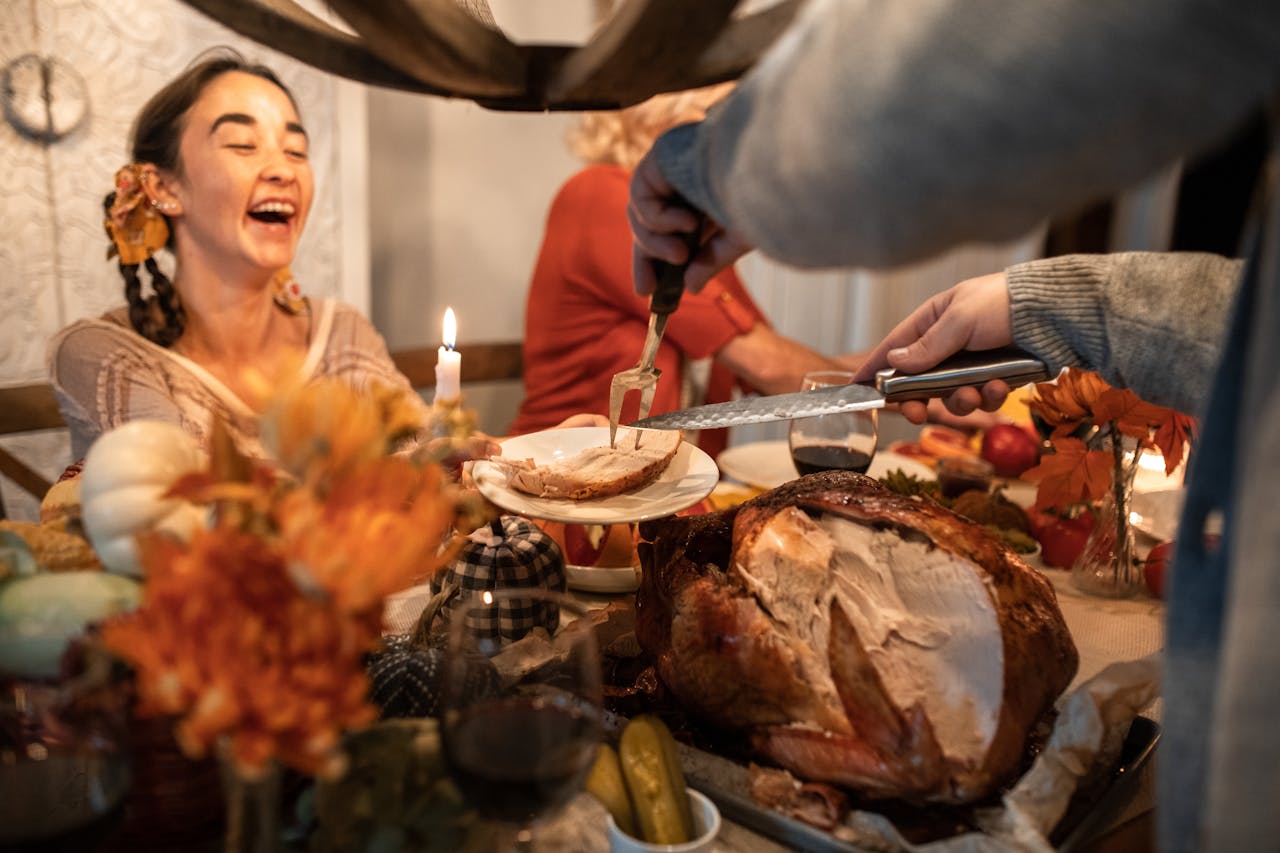
  • More Than a Meal: The Holiness of Friendsgiving

    More Than a Meal: The Holiness of Friendsgiving

    It’s that time of year again — crunchy leaves, pumpkin spice, wishbones, and pecan pie. Thanksgiving is around the corner, and what better way to celebrate than by hosting a Friendsgiving feast? 

    While I love gathering around the table with my family, one of the things I look forward to most during the year is Friendsgiving. I wait for it like a child waits for Christmas. I love the fall decor, the hearty dishes, and the liveliness, but most of all, I love seeing all my beautiful friends in one place — the way we would like to be more often but can’t always manage with busy schedules. 

    RELATED: Bless Us, Oh Lord, for These Thy Gifts: The Holiness of Mealtimes

    I first celebrated Friendsgiving a couple of years ago with a small group of my girlfriends. We each brought a dish, and dinner went late into the night as we moved from the kitchen to the patio to the living room, talking and laughing all the while. 

    What I took away from that night is that Friendsgiving is more than just a chance to catch up with friends. It’s a spiritual experience. Spending time with women who I usually only spoke to at parties and brunches brought a new sense of intimacy and gratefulness to our conversation, fostered by the intentionality of Friendsgiving. We were brought together not only because we are friends but also because we are grateful that we’re friends. 

    Friendsgiving reminds us of our blessings and renews our commitment to our friendship — to serving and lifting each other up. (Thessalonians 5:11) This can strengthen our existing connections or create new ones, cultivating a spirit of togetherness and gratitude that ultimately points towards God. 

    The Catechism of the Catholic Church says that friendship is a “direct demand of human and Christian brotherhood” (CCC 1939) and the Bible highlights the importance of meaningful relationships (Romans 12:10). These themes lie at the core of Friendsgiving! Christianity has a long history of feasting as an opportunity to come together and celebrate the goodness of the Lord, remembering the blessings he has given us. 

    RELATED: 3 Easy Prayers for Thanksgiving Dinner

    In Christian theology, feasting with friends lives out the biblical principle of community. The Bible points to fellowship among believers: “They broke bread in their homes and ate together with glad and sincere hearts… and the Lord added to their number daily those who were being saved” (Acts 2:46-47). How inspiring to imagine the earliest Christians sharing meals as a form of praising God! Friendsgiving is a present-day manifestation of this practice — a modern way to break bread together. 

    There are several things to focus on when gathering to share a meal and give thanks. At the heart of any Thanksgiving meal is gratitude. Beginning your festivities with a prayer of thanksgiving is a wonderful way to acknowledge God’s provision and the gift of your loved ones. As you savor each dish, appreciate the hands that went into its preparation. I always make macaroni and cheese, my favorite childhood meal, and there are certain dishes I know friends will bring that everyone loves, like their signature macarons or the jalapeño poppers they only make once a year. 

    Encourage your guests to share what they’re thankful for to foster an atmosphere of warmth and connection. I have started a tradition at Friendsgiving where we pass around flowers and whoever holds the bouquet shares what they’re grateful for.

    Incorporating Catholic symbolism into your decor and menu is another beautiful way to remember why you’re gathered together. Set the tables with candles to create ambiance as well as to represent the light of Christ. Evergreen wreaths are a lovely symbol of eternal life, while sprigs of rosemary add fragrance and represent remembrance. Holy cards or Bible verses at each setting add a thoughtful touch, and of course, a bouquet of autumnal flowers never hurts!

    RELATED: Food for Thought: How I’m Approaching Thanksgiving Differently This Year

    As for the feast itself — create a seasonal menu that celebrates the blessings of the harvest season. Dishes of roasted root vegetables, sprouts, cranberries, pomegranates, and pumpkin soup paired with warm beverages like mulled wine or cider make for a cozy feast. Encourage guests to bring dishes from their cultural background or family traditions, creating a tapestry of diversity that demonstrates the inclusive nature of hospitality. For dessert, you could include soul cakes, a traditional All Souls’ Day treat alongside your favorite pie. This balance of Catholic tradition and seasonal celebration will create a memorable event for your guests. 

    Most importantly, foster an atmosphere of hospitality. Open your home to friends without family nearby and extend this generosity beyond your immediate circle by inviting newcomers to your community. Perhaps invite someone who might otherwise be alone, or donate to a local food bank. Friendsgiving isn’t about one lavish meal; it’s a spirit of gratitude and love that extends beyond the day. Generosity and hospitality are pillars of Christianity — the act of opening your home not only strengthens community bonds, but also creates a space where thankfulness is openly expressed, mirroring the biblical command to “give thanks in all circumstances” (1 Thessalonians 5:18) .

    Friendsgiving is more than just a festive gathering — it is a meaningful expression of Christian community and all that it stands for. Whether you’re hosting a Friendsgiving feast or attending one, use the time to reflect on the goodness in your life and give thanks to the Lord. In doing so, you transform a simple meal into a celebration of faith, hospitality, and the blessings we’ve been given.

  • How To Talk to Those Who Disagree with You—and Still Love Them

    How To Talk to Those Who Disagree with You—and Still Love Them

    Two people having a conversation at a table.
    Photo by Christina Morillo on Pexels.

    A few years ago, during a Saturday session of my doctoral class called “Critical Issues in Educational Leadership,” we compared charter versus public schools, a controversial topic in the education sphere. Our conversation sparked a heated debate between two students, one of whom was the principal of a public school in Harlem and the other an assistant principal of a charter school in the Bronx. 

    I watched the debate with rapt attention, on the edge of my seat. The verbal sparring was elegant. Back and forth I moved my head, as if I were witnessing two seasoned tennis players duking it out in the U.S. Open finals.

    I don’t remember the exact arguments they made. But what I do remember is that right after the class broke for lunch, one of the debaters said to the other, “Do you want a burger and fries or pizza?” The other replied, “How about we each get something different and split?” And off they went to enjoy lunch as if nothing ever happened between them.

    The ease with which they switched from debaters to friends made me realize how desperately we need to revive congenial civility at a minimum and open-hearted, deep discussions at best. It’s okay if our loved ones don’t think like we do. But, instead of ignoring “taboo” topics, we should be able to talk about them without getting into shouting matches or arguments.  

    So, how can we disagree with others and still love them?

    Normalize discussions where we disagree by approaching each person as a child of God

    Growing up, my parents frequently hosted dinner parties for their friends. At every gathering, without fail, they would eventually tread into what we now consider stormy waters: religion, current events, history, and politics. And every gathering, they would engage in an all-out heated debate. After they aired their opinions, they would laugh and happily accept my mom’s offer of “Who wants cake?”

    Reminiscing on my childhood makes me long for a time when political or other serious discussions could be just another topic of conversation like books, movies, and the weather. I think we can open ourselves to serious topics — and actually enjoy discussing them — by practicing having candid, calm conversations without getting our hackles up. In this way, we are not only hearing each other out respectfully but learning about other points of view, which is at the heart of being a good citizen and a good person.

    A positive start to entertaining sticky conversations is to approach others the way God sees them: as his own precious children whom he knew even before birth (Jeremiah 1:5). If we look at someone we disagree with through the eyes of our loving Father, how can we not be moved to open our hearts? We can let our guard down and be a little more patient, kind, and merciful. 

    In high school, my friends and I would gather daily at a cafeteria lunch table and hash out various controversial topics: abortion, gun control, euthanasia, the Iraq War, and more. Sometimes, things got heated (and sometimes we were nerdy enough to prepare research for our discussions), but I can never recall a time when we crossed a boundary into personal attacks or made anyone feel lesser for thinking differently. In fact, we celebrated that we all disagreed because it made the conversation more stimulating and lunchtime more fun.

    I think today sometimes we forget to separate the perspective from the person. Everyone has a right to their own opinion, even if it differs from ours. 

    When our loved ones think differently about an important issue, it may feel like a personal affront. We want them to believe what we do, especially if what they believe appears antithetical to our Christian beliefs. But more likely than not, they aren’t disagreeing with us because they want to harm us. They have reasons for believing what they believe, and we need to be open-minded to hear them out. Trying to convince someone without listening to them is like shouting down a well: We only hear our own voice echoing back at us.  

    We can approach difficult conversations more calmly when we view each other as human beings who deserve decency and dignity. As children of God, God loves each one of us and invites us to his heart – no matter where we are or what we think. 

    Replace rage masquerading as passion with patience

    Oftentimes, the issues we are passionate about stem from deeper personal experiences, struggles, or trauma in our lives. As such, it can make us feel angry when others don’t see things our way. Channeled appropriately, anger can drive us to positive action. Anger is a normal emotional response that can be healthy when handled well. But if we masquerade our rage as “passion,” then we’re in trouble. Because it’s one thing to be deeply involved and concerned about something. It’s another thing to be belligerent or derogatory about it.

    For example, my mom and I once stood in line to take the East River Ferry to Manhattan. We were speaking in Polish. A man in back of us, angry at the state of immigration, said loudly to his friend, “These Polaks should go back to their own country” and proceeded to expand on the various reasons why immigrants, in his worldview, were detrimental to our country.

    Now, it’s one thing to hold the opinion that immigration systemically weakens a nation. But it’s another to insult or denigrate others because of this view.

    My mom and I decided the best course of action for us was to ignore him. We wouldn’t let him ruin a perfectly beautiful summer day, and arguing with a stranger would hardly be productive. I secretly wanted to wallop him, but, thank God, I had the restraint not to do so. 

    There are some practical things we can do to catch ourselves before our passion turns into proverbial road rage. Take a deep breath. Pause. Say a little prayer. Maybe not every conversation has to come to a close. Maybe we can pick up later when we’ve had time to breathe, especially if someone says something that’s offensive to us. If we feel comfortable, we can pause and tell the person how we feel or wait for another day to do so calmly. More often than not, if they are our friends or loved ones, they will hear us out. 

    At the end of the day, we should remember:

    It’s okay not to have the last word.

    It’s okay not to persuade someone to your point of view. 

    It’s okay not to “win.” 

    Because if all we try to do is “win,” then we lose the greatest thing of all: our capacity for kindness. Patience. Mercy. Love. 

    Our nation is deeply divided. But having conversations – no matter how small – can help narrow the divide, bring healing through understanding, and make our communities and country stronger. And that’s a real win.

  • Breaking the Cycle: How I Stopped Worshipping My Phone

    Breaking the Cycle: How I Stopped Worshipping My Phone

    Dad using smartphone while toddler son playsA few weeks ago, my wife and I were running errands with our 1-year-old and 3-year-old. Since they were tired and a little cranky, she ran into the grocery store to get bread while I waited in the car with the boys.

    I pulled out my phone and started to answer emails and scroll through social media. 

    My older son, Benedict, began to ask me questions about random things — and I continued to scroll on my phone as I answered him. After about two minutes, Ben said, “Daddy, get off your phone. I’m talking to you.” He wasn’t stating it angrily. His tone was more sad that his father was not paying attention to him. At that moment, I felt like I was choosing my phone over my son. I was ashamed, but I felt something else: convicted to love him more. So, I put my phone down in the car, and I pledged to put it down more often. 

    LISTEN: Father Dave Talks Mental Health and Social Media

    We all know that people of all ages have become addicted to their phones. They have become an extension of our bodies. According to Consumer Affairs, “on average, cell phone users look at their phones 144 times a day,” and the average American spends 4 hours and 39 minutes on their phone every day. That means we spend almost 70 days staring at that small rectangular device in our pockets over the course of a year. 

    In many ways, I worshipped my phone. What we worship is what we spend the most time thinking about and what we care most about. Worship is what orients our time, energy, and attention. 

    When Ben called me out about my phone, it didn’t feel good, but choosing to separate myself from my phone certainly did. I realized that my phone was keeping me from loving my family more and distracting me from opportunities to pray more often. So, I began to place my phone in my room when I got home from work until the kids went to bed. This freed me to be so much more attentive to my kids and my wife. I was looking them in the eyes; I was more willing to simply play on the floor with my sons. 

    RELATED: God First: Discerning Where Idols Are in Our Lives

    I also found myself freer from the worries of that particular workday and more present with my family, rather than thinking about what others were saying on social media or the score of the sports game. I became more concerned with the person in front of me rather than a screen, and, quite frankly, more happy because I wasn’t living through my device; I was living for my loved ones. 

    I also began to charge my phone on my dresser rather than my nightstand to avoid numbingly scrolling through social media or the internet at night. This made me more eager to speak to my wife about our day or to pray for an extended period before bed. The unproductive time I would have spent on my phone became a time for true worship. 

    The combination of healthier relationships in my family and more intimate prayer time has allowed me to further appreciate the need to be detached from my phone. It also helped me understand that by loving God first, along with my family, I was placing the one who is to be worshipped alone in his proper place. 

    This week, consider your phone habits. Look up your screen time and reflect on if those around you would claim that you occasionally choose your phone over conversation with them. If so, make a commitment to put it down. Then watch and see how your worship of God and relationships can flourish.

  • Understanding Christian Hope for a New School Year

    Understanding Christian Hope for a New School Year

    A group of college students sitting on steps laughingEvery new school year brings its own set of expectations for the future. I have a privileged position to reflect on this reality, as I teach senior theology, which includes a course on vocations. This opportunity inspires me to consider the Christian theological virtue of hope and its effect on the life to which Christians are called. 

    Many seniors at Catholic high schools come from families with means, whose hopes for the future involve attending a prestigious college, achieving professional success, and solidifying their legacy. One finds these hopes imparted well onto these young people. Every year I overhear the usual questions of “Where will you be attending school next year?” and “What will you be studying?” 

    LISTEN: Saints for the School Year: Holy Men and Women to Accompany Teachers

    Instilling hope for a successful college and professional career is a necessary step in procuring that future. These are noble goals that should offer opportunities for deeper growth in virtue. But hope for these things is a little different when considered through the lens of faith.

    In Spe Salvi, an encyclical which provides Pope Benedict’s treatment of the virtue of hope, he describes “one who has hope” as one who “lives differently” (2). Benedict sees hope through the lens of the Resurrection of Jesus. 

    Because hope is understood in light of the Resurrection, one’s death, but also one’s life, is viewed differently, particularly when it comes to God’s call for our lives. The early Christian martyrs died with hope for their resurrections because they had faith in the Resurrection of Jesus, but they also lived with hope before their martyrdom. This belief did not invalidate the deaths they faced; their individual lives and, more importantly, life itself were just more real. It was in the face of these seemingly hopeless circumstances that God’s purpose for them became clear. 

    RELATED: The Road to Emmaus: A Journey Toward Hope

    A common movie trope involves the hero realizing his weapon cannot pierce the monster’s scales from the outside, so he must be swallowed by it in order to defeat it. It appears as though the monster has won and hope seems lost, until the hero cuts himself out of the monster from the inside, both freeing himself and killing the monster. It was by initially relinquishing his power but maintaining the small strand of hope that success was possible. 

    There is a powerful metaphor here for the way Christ conquered death and established hope in the Resurrection. In the same way that God worked on humanity intrinsically: Allowing himself to be swallowed up by creation, by time, and ultimately by death, he could then cut his way out by the double-edged sword of his Word (cf. Heb 4:12). This is referred to as the kenosis, or self-emptying, of Jesus highlighted by St. Paul in Philippians 2:7.

    Kenosis is not only a foundational idea to historical orthodox Christology, but a foundation of Christian spirituality and an essential element to fostering hope. Through kenosis, we can see the proper way of viewing hope: How Christians are called to “live differently,” including how they see their vocations. One discovers a vocation through kenosis in recognizing their relationship to the whole. There is a misguided notion that discerning one’s next steps in life is a realization of one’s individuality by rejection of community. For those raised in a Catholic environment, this often requires a shedding of one’s Catholic “identity.” This is misguided not only because of the rejection of Catholic practice, but also because it asserts the self above the community that formed it. Worse than St. Paul’s eye in 1 Corinthians 12:21 saying to his hand “I don’t need you!” it’s saying it to the whole body. The discerning young person, in recognizing oneself as one member of the Body of Christ, finds a calling in relation to the Body. This is why many high schools and colleges, including the ones where I teach, have built-in service days and organizations to help young people see themselves as connected to their local community.

    RELATED: Pope Francis’ Advice for College Students

    Every school year is a continued preparation for students to become who God has called them to be. I implore that we not only preach kenosis to do this but also live it and model it. One way I have tried to model this practice is to be a little vulnerable, professionally and personally. Being willing to risk at least a small humiliation can begin to empty one of pride. Admit to a time you were unfair to a friend or a jerk to a stranger and had to ask forgiveness. Tell an embarrassing story not just to connect, but to show you can live through it. Humility is the vehicle for kenosis; it empties our ego quickly, which is the only way our hope is no longer in the “I,” but like St. Paul, it is now in “Christ who lives in me” (Gal. 2:20). 

    Humility and kenosis are the tools for students to realize their vocation, which gives them hope when it is understood in light of the Resurrection of Jesus, leading them to live differently. Their time in school should foster hope that “does not disappoint” (Rom. 5:5) because it is in he who does not disappoint. 

  • Four Tips for Keeping Your Semester Holy

    Four Tips for Keeping Your Semester Holy

    Close up of college student carrying books to school
    Photo by Element5 Digital on UnSplash

    I’m a college English professor with two children, ages 6 and 8. As a new school semester begins for our family, new routines automatically emerge. My son Jack will start playing basketball. My daughter Emmeline will start dance classes. I’ll begin teaching a new set of courses. A new semester automatically ushers in new ways of ordering our lives. My husband and I will arrange carline pickups and meal plans. College students will begin to schedule cardio classes with friends and other extracurricular activities. 

    As academics and activities increase for parents and students alike, so does joy – and stress. We need God in all of these moments, big and small. In the midst of school planning over the years, I’ve learned that an active spiritual life can sometimes get the short shift: There is no “back to school” meeting or college orientation that God plans for worship. Here are some tips I’ve learned over the years, so my family’s relationship with God remains at the center of every academic semester.

    RELATED: 3 Ways to Keep the Faith This School Year

    1. Take a few minutes to read or listen to the Daily Readings 

    Growing up, my mother always told me to “begin the day with Jesus,” and this advice has never left me. I remember seeing her in the mornings with her Bible and coffee in hand. Today, I often read Scripture during my morning routine, while blow-drying my hair, or I’ll listen to the Laudate app on the way to work. This five-minute check-in provides spiritual guidance, helping me ponder how God’s word relates to the events of my day. As I’m teaching or learning about new subjects or simply out with friends, I can think about how the daily reading intersects.

    2. Create or find a sacred space that you visit

    This summer, my daughter attended vacation Bible school and created a rosary with pipe cleaner and multicolored beads. She asked to hang it on her wall, so she could look at it and take it down to use. At work, I have a crucifix hanging and a poem by Mother Teresa that I reflect on when needed. Creating a sacred space doesn’t require a large area; all you need are small reminders that help bring you to prayerful time with Jesus. The side of your desk can hold a prayer card, as can your laptop. If you feel your environment isn’t conducive to creating a sacred space, find a space that helps you feel close to God that is easily accessible during your week. Don’t be afraid to visit your parish, your college’s Newman center, or the sanctuary at your school if there is one! Even a beloved tree will do in a pinch. Schedule this quiet time with God the same way you would a visit to the gym or a study group session. Just 10-15 minutes in prayer, away from the bustle of everything you have to do during the week, can help recenter your mind and bring a quiet peace to an otherwise packed day.  

    RELATED: 9-Day Back-to-School Challenge

    3. Befriend a saint for the semester or school year 

    Last year, because of the pandemic, I got to know Julian of Norwich, someone I’d always found inspirational but never had time to discover more about. I spent time asking for her intercession and read a little about her, often sharing her devotional writings at the start of my classes. She lived in isolation during a pandemic and has a famous prayer: “All shall be well” that has always given me comfort. Spending dedicated time with her helped me not only grow in knowledge but also deepened my faith. If you’re interested in literature like many of my students, you might choose to spend time with Saint George—the patron saint of reading. Or, if you’re interested in medicine, Saint Raphael or Saint Gianna Molla might be for you. Perhaps when creating a sacred space, you keep your saint for that semester or even school year in mind, knowing that they’ll be praying for your spiritual and academic success. 

    4. Set aside time for Mass 

    This one you probably expected to see on this list—but sticking to it is harder than it sounds during a busy semester. On my semester calendars and syllabi, I mark off religious observations and holy days. God may not require you to attend an orientation like I mentioned above, but we should be sure to schedule Mass into our lives just as we do anything else (or ideally before we do anything else). In the same way you’ve befriended a saint for the semester, you might try to find a friend to attend Mass with. If you’re in college, Newman centers or campus ministries are excellent places to start to find like-minded Catholic students. Or simply start showing up, and you’ll find familiar, friendly faces with similar values. 

    Mass is like beginning the day with Scripture: it infuses the week with love. Receiving the Eucharist. Offering peace to your fellow Catholics. Praying together in communion. This is what being Catholic is about, so it’s important to make this time with God a must—even and especially when we’re the busiest. This is one way we bring peace and joy to ourselves, and to the world around us. 

    RELATED: Back to School: Staying Connected to What Matters

    It feels fitting to end with one of my favorite Bible verses, Philippians 4:8, which reads:Finally, brothers and sisters, whatever is true, whatever is noble, whatever is right, whatever is pure, whatever is lovely, whatever is admirable—if anything is excellent or praiseworthy—think about such things.” 

    A busy semester will pull us all in a multitude of directions, and busier schedules will likewise have us contemplating a range of different “things.” Setting aside time to read what is “right” and “pure,” spending time in sacred spaces that are “lovely,” getting to know a “noble” saint one “admires,” and attending Mass where “truth” is spoken and felt are all ways to create a holier semester. I’ve learned over the years that none of the practices I’ve suggested take much time from my everyday life, but each of them has transformed it in a different way. Incorporating these ideas into your calendar at the beginning of the semester – as my family will be ours – will help ensure not only that your spiritual life feels attended to, but also that your whole life might be infused with a sense of calm because you’ll know that God will be a fixture in the patterns of your life no matter what the semester may bring.

    Originally published August 31, 2022.