Tag: lent

  • What the Annunciation Taught Me About Maintaining Joy Amidst Uncertainty

    What the Annunciation Taught Me About Maintaining Joy Amidst Uncertainty

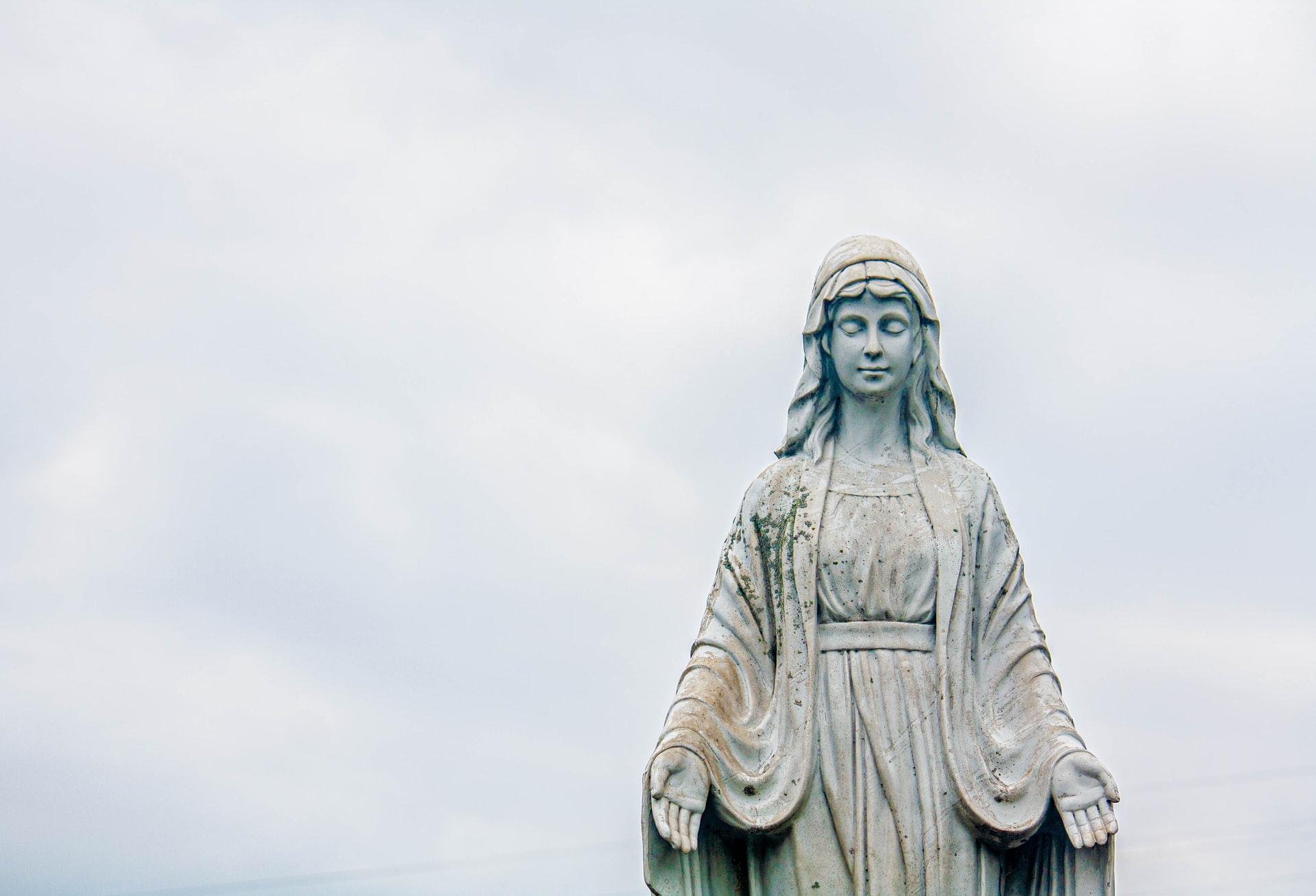
    A statue of the blessed virgin against an overcast sky
    Photo by Gianna Bonello on UnSplash

    Mary said, “Behold, I am the handmaid of the Lord. May it be done to me according to your word.” Then the angel departed from her (Luke 1:38). 

    I have always struggled with control. Ever since I can remember, wondering how others perceive me in my relationships, personal appearance, career, and even my vocation has consumed my thoughts, placing the way others see me at the forefront of my mind. My desire to appear a certain way — whether that was humorous and lighthearted around my friends, overachieving and disciplined in school, or completely put together at work — always seemed to come first, leaving my soul weak and my confidence fragile. As control in all of these areas of my life became impossible to maintain, I realized that worrying about what others thought of me made it impossible to experience joy. My identity relied completely on certainty. 

    RELATED: Reflecting on the Annunciation: How Saying ‘Yes’ Can Make All the Difference

    On a morning when I was feeling particularly overwhelmed, I turned to Scripture in the hopes that I would find solace in Jesus’ words — something I had not done for quite some time. I have always been drawn to passages about the Blessed Mother, and remember flipping through the pages to find her Annunciation. Although I was familiar with the final verse of Chapter One of Luke’s Gospel, I had never framed Mary’s humble response to the Annunciation within the need for control in my own life. Mary’s fiat, or acceptance of God’s will for her life, is the first decade of the joyful mysteries, and yet each moment within them is bound up in uncertainty. From the Annunciation to the Finding of Jesus in the Temple, every instance hinges upon Mary’s surrender to the unknown. Her initial encounter with the angel presents her with a choice between hope and despair, and her resounding “yes” to his message, despite her fear of the unknown, allows her to remain in the present and know peace. As I continued to read through the passage, I was filled with a new desire to say “yes” to my own crosses, particularly my worry over how people viewed me and surrender to God’s will in moments of uncertainty. 

    Reading the passage of the Annunciation inspired me to put myself in Mary’s shoes, allowing me to delve further and further into the mystery of her fiat. Following the Annunciation, the rest of the joyful mysteries continue to test Mary’s willingness to surrender to God’s will. Immediately upon hearing her cousin Elizabeth is pregnant, Mary sets aside her own needs and desires to visit her cousin. She gives birth to Jesus in a foreign place, unaware that her new family will have to flee shortly after. When Jesus is a boy, her trust is tested when she loses her only child in the Temple. Even after he is found, Mary hears from Simeon that a sword will pierce her heart seven times, a reminder that she will suffer as her son fulfills God’s will. Again, her acceptance of sorrow gives way to trust, instilling within her an even deeper sense of joy. 

    RELATED: Mary: The Background Music to My Spiritual Life

    As a young woman, it is easy to question my identity in moments of uncertainty. There have been many times when I have felt the weight of the unknown and been unafraid of the surrender it would require of me — whether I was feeling complacent in a particular job, afraid to leave an unhealthy friendship, or struggling to embrace my current state of life. In moments of fear, I have been tempted to pity myself, and allow shame to creep in. In my hesitancy to embrace the uncertain, I allow my need for security to rob me of joy of the present. I forget that hope in uncertainty is the antithesis of fear in the unknown; in striving to practice that hope, I can imitate Mary in the joyful mysteries and draw closer to Christ, her son. 

    My vocation as a young person is not something I must patiently wait to begin at a certain time. It is not something I must intricately plan out of a need for control or security. My vocation, rather, is to say “yes” in the midst of uncertainty and respond to wherever God needs me in the present moment, and to surrender to the needs of those around me with a spirit of joy and hope. Regardless of our particular circumstances, God has a plan for us amidst the uncertainty; he may not give us all that we want, but he will surely give us all that we need if we have the courage to ask.

    Originally published March 25, 2022.
  • Jesus, Remember Me: Reflecting on My Favorite Holy Week Tradition

    Jesus, Remember Me: Reflecting on My Favorite Holy Week Tradition

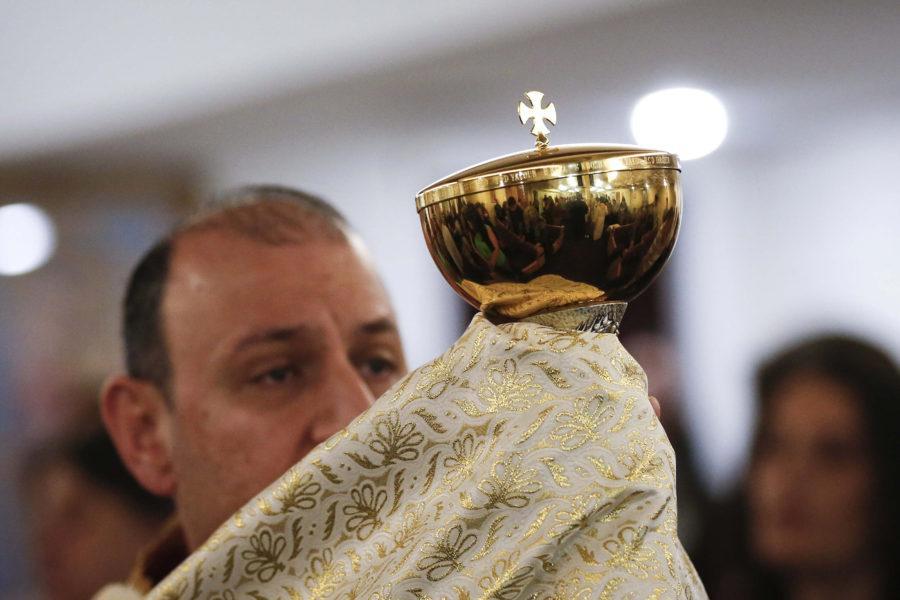
    Msgr. Felix Shabi carries a chalice containing the Eucharist to a place of repose following Holy Thursday Mass of the Lord’s Supper at Mar Abraham Chaldean Catholic Church in Scottsdale, Arizona. (CNS photo/Nancy Wiechec)

    Dating back to my preteen altar server days, I’ve always had a deep connection to the Triduum. Every year, when the volunteer ministry schedule for Holy Week came out, I was the first to sign up. Back then, the novelty of the unique rituals intrigued me; it’s not every day that you see your priest kneeling down to wash parishioners feet in imitation of Christ.

    Through the years, I still find myself just as connected to the observances of Holy Week. Now, though, instead of having my curiosity piqued by different liturgical traditions like it was during my youth, these blessed holy days signify a deep, spiritual time of reverence, thanksgiving, and self-reflection. Looking back over the season of Lent, I’m reminded how the emptiness I’ve experienced signifies my dependence on the Holy Spirit.

    RELATED: Your Essential Guide to the Triduum

    Our Catholic faith is full of so many beautiful traditions, but one that leaves me speechless every time I witness it is the procession of the Blessed Sacrament on Holy Thursday. When the Mass of the Lord’s Supper has ended, the consecrated Hosts are solemnly carried over to a special repository, commonly referred to as the altar of repose. Many churches use their chapels for this occasion. The Blessed Sacrament remains in this location until the Communion Service on Good Friday.

    I was attending the Holy Thursday service at St. Joseph’s Cathedral in San Diego when I first felt the magnitude of this procession. The priest had just finished reciting the post-Communion prayer, the incense was being prepared, and I was gazing around trying to find where the altar of repose was located. The cathedral was packed full of congregants, yet the air hung perfectly silent. Without the rays of the bright Southern California sun shining in, the dark, wooden fixtures set a somber tone. The sanctuary was mostly illuminated by candles burning on the main altar.

    I expected the choir to begin playing a quiet melody or to start a soft chant as the procession of the Blessed Sacrament commenced. Instead, the priest invited us all to follow behind him. Parishioners were encouraged to join the Blessed Sacrament as the procession trickled outside, down to the sidewalks that circled the cathedral, before ultimately resting at the temporary altar set up in the social hall. As the priest began to walk, the only sounds to break the silence were from Luke 23:42: “Jesus, remember me when you come into your kingdom.” These sweet, somber words, quietly sung, echoed throughout the remainder of the procession.

    “Jesus, remember me when you come into your kingdom.”

    This humble plea sits heavily on my chest every time I hear it. These words serve as a meaningful reminder to me that we’re all invited to partake in the kingdom of God by actively participating in our Catholic faith through the sacraments. Remembering the importance of the sacraments inspires me to regularly receive the Eucharist and nudges me to go to Confession.

    RELATED: Simple Service: The Story of My First Footwashing

    On Holy Thursday, we commemorate the night that Jesus made a gift of himself for the human race. This year, before you head out for Holy Thursday Mass, remind yourself of what you are celebrating when you remember the Last Supper. You are about to stand witness to the body and blood of Christ.

    If you don’t usually participate in Adoration, spend some extra time with Jesus on the eve of his crucifixion. Allow yourself to remain open to hearing God’s message. How can you follow in Jesus’ footsteps by serving others? What are the blessings in your life that you take for granted? What might be holding you back from picking up your cross and following in Christ’s footsteps?

    As I reflect upon the beautiful procession of the Blessed Sacrament, I find myself praying, “Jesus, remember me when you come into your kingdom.” My soul takes comfort in knowing that we all have an open invitation to live in eternity with God.

    Originally published March 28, 2018.

  • WATCH: Holy Week in Three Minutes

    WATCH: Holy Week in Three Minutes

    Why do Catholics wave palms on Palm Sunday, wash each other’s feet on Holy Thursday, or kiss the cross on Good Friday? In an updated version of our classic video (with a bonus extra minute — because there’s a lot going on this week!), Busted Halo explains the significance of the final week we spend preparing for Easter.

    To download this video go here and click the download arrow or choose save or download.

  • Bless Us, Oh Lord, for These Thy Gifts: The Holiness of Mealtimes

    Bless Us, Oh Lord, for These Thy Gifts: The Holiness of Mealtimes

    Family sitting at a table sharing a meal together.
    Photo by Cottonbro Studio on Pexels.

    A few years ago, I was asked to sit on an alumnae panel at my high school to talk about life in college and beyond. At the end of the discussion, the panelists took turns giving the seniors advice about college life.

    Mine? “Don’t study while you eat.”

    For me, the point of a meal is to be fully present with the person you’re sharing it with. (And if you are eating alone, the meal can be a time to mindfully reflect or pray.)

    There is a sanctity in literally breaking bread with others — whether it be for a special occasion or as part of an everyday routine. Regardless, being distraction-free and fully focused on the present moment — and God’s presence in our company — makes each meal full of grace.

    RELATED: How Rice and Beans Became Our Weekly Dinner Tradition

    Gathering together

    During the Last Supper, a Passover Seder, Jesus gathered with his 12 disciples in the Upper Room to celebrate the Jewish feast. Together, they reclined at the table to symbolize that they are a free people. They feasted on food such as eggs (beitzah), bitter herbs (maror), lettuce (chazeret), parsley (karpas), a spiced apples and nut mixture (charoset), unleavened bread (matzah), and chicken or fish. They enjoyed the traditional four cups of wine throughout the meal. 

    Mealtimes emphasize the beauty of a community. Everyone takes time out of their busy lives to come together as one. It’s no wonder that Jesus chose a meal to establish the first Mass, the holiest of meals. In fact, every Mass is a meal. We gather together to listen to God’s word and eat and drink his body and blood in the form of bread and wine.

    That’s probably why I love hosting family and friends for a home-cooked meal. My husband and I have some favorite dishes we cook for guests: Jamaican-style oxtail, lasagna with homemade pasta, slow-cooked honey-soy ribs, and French onion soup, to name a few. But even daily meals where it’s just Arthur and me (and our dog on the lookout for scraps) feel special because it’s a time when we can simply be together and enjoy a moment of stillness in our lives.

    LISTEN: Heather King Talks Food and Faith

    Making announcements

    As Jesus literally broke bread, he told his disciples: “This is my body, which is given for you. Do this in remembrance of me” (Luke 22:19). He did it again as he passed around the cup of wine: “This cup that is poured out for you is the new covenant in my blood” (Luke 22:20). This was one of the most singularly important announcements in the world: that Jesus is fully present in the bread and wine that is shared in Mass, all around the world, from that very first seder meal to today.

    In our own lives, mealtimes are moments for making announcements. I remember, for instance, the night my sister announced that she was pregnant. It was also over a meal that my husband and I announced we were engaged. Mealtime makes perfect sense to share announcements such as these, as well as job promotions, new ventures, travel plans, and so forth, because we are sharing time and food with our loved ones.

    Coming to terms

    Because we are gathered with loved ones, mealtimes can also be a place to process bad news. I remember the meal I shared with my family the day of my grandmother’s wake: a pork cutlet with mashed potatoes and cucumber salad—the typical hearty Polish fare that is my total comfort food. The meal not only gave me the physical strength to bear the painful events to come but also gave me courage, knowing I was in solidarity with my grieving family.

    Jesus himself shared a dramatic pronouncement at the Last Supper: “Truly, truly, I say to you, one of you will betray me” (John 13:21). This, I’m sure, caused quite a stir in the Upper Room. And, while his disciples were shocked that there could be a traitor among such a close-knit group, Jesus planted the seed to allow them to begin to process all the terrible things that were to come on his road to Calvary.

    RELATED: 4 Spiritual Lessons I’ve Learned From Baking Bread

    Imparting wisdom

    During a seder, it is traditional to wash hands as part of ritual and spiritual cleansing. But Jesus also washed his disciples’ feet, saying: “If I then, your Lord and Teacher, have washed your feet, you also ought to wash one another’s feet. For I have given you an example, that you also should do as I have done to you” (John 13:14-15). We, too, can gain wisdom from the loved ones gathered with us. I remember my parents telling their stories of living in Communist-occupied Poland. Due to mismanagement and poor economic policies, the Communist regime rationed food and other everyday supplies so that store shelves were frequently empty. People stood with government-issued ration cards in long lines (“kolejki”), some of which took days, to receive their portions of sugar, meat, flour, chocolate, etc. Stories such as these gave me the prudence to always be grateful for life’s blessings—like mealtimes.

    Jesus teaches us to keep mealtimes sacred. There’s a game that some people play when they go out to a restaurant. Everyone places their cell phones in a pile in the middle of the table. The first person to touch their phone pays for the entire check.

    Perhaps this is a little cruel for the first poor soul to succumb to temptation, but the message is a simple one: When you’re sharing a meal with your loved ones, be fully there for them. Be present. Make it holy. Jesus did when he instituted the Mass. We can, too—and not just on Sundays, but every day of the week.

  • Choosing Compassion Over Criticism: Why I’m Giving Up Judging Others for Lent

    Choosing Compassion Over Criticism: Why I’m Giving Up Judging Others for Lent

    A hand pointing at the sky
    Photo by Maayan Nemanov on UnSplash

    At a 4:00 p.m. Saturday Mass in Overland Park, Kansas, during the preparation of gifts, I sat on the stiff, dark wooden church pew and reflected on Lent. Earlier that week, a student taking my Christian Ethics course asked what I had given up for the season. It was a routine question, but it felt more genuine since we had been discussing moral virtues, vices, and spirituality that day. I told the class that I had not decided. The students were surprised. I acknowledged that, in the past, I had given up yelling at my children (now teenagers!) with mixed results. 

    What came to me during Mass was the thought that I could give up judging other people as the Gospel of Matthew teaches. “Do not judge, so that you may not be judged. For with the judgment you make you will be judged, and the measure you give will be the measure you get” (Matthew 7:1-2). As the thought arose, I sensed that God began to laugh. Indeed, when I told my ethics students that I had given up judging others, they howled and one student commented, “Professor Hughes, c’mon, you can’t be serious!”

    RELATED: Overcoming Judgement in a Divided World

    Yes, I get it. We evaluate other people’s actions and their character constantly: for an unkind word, indifference to our needs, suffering behind a slow car or being passed by a fast one, or, worse yet, feeling our good work or integrity is overlooked or forgotten. Our judgments frequently pair with hurt, anger, resentment – pain. Psychology tells us that we tend to attribute more to personal character than to situations and that we know much less about complex situations, actions, and motives than we suppose. I cannot count how many times I’ve made snap judgments about certain students on the first day of class. I might focus on a weird facial expression, a slouched body posture, a face hidden under a hoodie, or a single negative comment and sortput them squarely into a “worthy” or “unworthy” bucket. 

    During Lent, I became more attuned to the frequency and quality of my judgments. I habitually sorted actions and persons into different categories — innocent, guilty, deserving, undeserving — so that Jesus’ injunction seemed on a commonsense level to be impossible. Surely, he didn’t mean it! On my daily commute, at times I find myself attributing malicious motives against me by my fellow commuters behind the careless driving or impatient honks without knowing anything about their lives, worries, pressures, etc. And it really makes no sense. But I, along with many of us, can habituate taking offense and then passing harsh judgments too easily and quickly.

    Or perhaps Jesus just meant not consigning another person to hell. It is, in fact, easy to think this. But from my Lenten experience and reflection on Matthew, I don’t believe condemnation is the main issue. What’s happening is a more subtle and pervasive way of seeing and assessing others that becomes a blindness to love. So what does this biblical teaching mean?

    RELATED: A Practical Guide to Loving Our Enemies

    Matthew’s and other biblical references to “judging” seldom mean “do not condemn.” Luke uses a different word for “judge” (krino) and for “condemn” (katadikazete), distinguishing two different acts. Matthew (and Mark) add to the prohibition on judging the caution about how the way we measure others should be the way we measure ourselves. So, condemnation is only one of many responses covered in the ways we judge — not the only way. It seems that the meaning concerns more common interactions and judgments we make. From my own experience this past Lent, this distinction rang true. 

    That Lent, I learned that Jesus does not mean ignoring injustice or becoming desensitized to evil and wrongdoing. What I found in self-monitoring my judgment of others — especially behind the wheel — was that when I judged and quickly sorted another person into a negative category, I became less connected to that person, more cut off, more isolated from them and from my own tendency to act likewise. Indeed, one of the key meanings of the Greek term krino aside from “judge,” is “to separate.” If I wanted to see harshness, strictness, looking out to be offended by this look, that remark, his comment or her gesture, I would find them. I saw and judged the other as such. And in so doing, I separated myself from my neighbor and ignored my own harshness, strictness, and ways that I might offend others. 

    LISTEN: Getting Back to Basics in a Polarized World

    I was not at all aware that the measuring stick I used would be similarly used on me. And that is the tough part. It requires serious self-reflection, knowledge of one’s sinfulness, needing God’s help, mercy, and being constantly on the lookout for goodness to get “judging” right. It requires a type of ego death, one that means a better seeing of another person in all their complexity rather than a fixation on a snapshot in time or a fault, hurt, or offense. A patient gazing and understanding of the other with, what Richard Rohr calls “soft eyes,” rather than an emotional reaction and quick sorting into some form of inferiority. 

    Judging others makes it very hard indeed to see Christ’s goodness, kindness, mercy, and love being poured out upon my neighbor and myself every second. Judging can quickly and subtly lend itself to emphasizing what is wrong with the person, the driver, the lack, the negative in a situation. It means seeing the person or group behind such acts as unable to be fully defined and described and named by them as who they are in God. That Lenten lesson is still a work in progress for me. I suspect we all need to practice slowing down, waiting, and letting the goodness of the other reveal itself to us. For that, we’ll need to ask God for help: help to slow my assessments, find more patience, and remember that everyone is an image of incomprehensible love. And finally, I need to trust that, as always, our loving God will deliver and help me to see more lovingly and less critically.

  • Pray, Fast, Give: My Decision to Part with a Possession Each Day of Lent

    Pray, Fast, Give: My Decision to Part with a Possession Each Day of Lent

    Young man sitting on orange couch opening a cardbox boxOne of my favorite little moments from J.R.R. Tolkien’s fantasy masterpiece “The Lord of the Rings” is when the ranger Aragorn returns to Pippin a treasured brooch that the hobbit had cast by the wayside as a clue after he and his cousin Merry were captured by the evil orcs. “It was a wrench to let it go,” said Pippin, “but what else could I do?” Indeed, if Pippin had not had the good sense to drop the brooch, his friends might never have known that the two young hobbits were still alive at all. Aragorn confirms that Pippin made the right choice, saying that “one who cannot cast away a treasure at need is in fetters.”

    I find this exchange so powerful because it often reflects my own experience. Parting with possessions, even those that I no longer need or use, can be a truly wrenching task. There are times when I feel like my possessions really possess me. Yet when I ask God for the strength to let them go, I know at once that I’m doing the right thing.

    RELATED: A Spiritual Spring Cleaning: The Surpising Way Decluttering Enriched My Faith Life

    It’s true that, as a Catholic layperson, I have no obligation to take a vow of poverty like a professed religious brother. And yet, as a disciple of Jesus Christ, I am called to live simply and modestly, prioritizing people over possessions. More often than I would like, I find myself emulating the rich young man who encounters Jesus in Mark’s Gospel. When Jesus invites him to sell all he has and become a disciple, the youth “was shocked and went away grieving, for he had many possessions” (Mark 10:22). Like that poor soul, I time and again find myself a prisoner of my possessions.

    Thank God that the Church gives us the season of Lent! Lent can be a powerful, intentional time of conversion, a time to reorient my spiritual life and sacrifice those things that have become obstacles and stumbling blocks on my personal walk with God, holding me back from pursuing a more authentic path of discipleship.

    As Ash Wednesday approached this year, I realized that I could make my process of decluttering into a Lenten blessing, an opportunity to examine what my spiritual priorities truly are, as well as an opportunity to practice almsgiving and help the less fortunate through the corporal works of mercy.

    RELATED: Choosing Sacrificial Giving During Lent – And All Year Long

    When I was out on a walk around my neighborhood thinking over all these things, I had a flash of inspiration: I would collect 40 of my unused or lightly used items and donate them to charity — 40 items for the 40 days of Lent! Of course, this is hardly an original idea (honestly, I can’t remember where I first heard about it) but I believe that it is what God is calling me to do this Lent. I didn’t even wait for Ash Wednesday to begin putting my plan into practice!

    About half of the items I’ve collected for donation so far are clothing. On a recent episode of the “Word on Fire Show”, Bishop Robert Barron said that cleaning out the closet can be a very good way to make an examination of conscience.

    Admittedly, I felt a bit defensive when I heard that. “Well,” I thought, “maybe that’s true for other people, but I certainly don’t have that many unused clothes.” But when I searched through my bedroom closet a few weeks ago, I got a sobering reality check: I found many items of clothing that I wasn’t wearing because they no longer fit, and more than a few pieces that I had bought on impulse and had simply never worn at all. I put all these aside into a big bag to donate to my parish’s Lenten clothing drive.

    Besides clothing, the bulk of the items I’ve chosen to give away are books. I’ve written before about my struggle to downsize my enormous book collection. When I’m being brutally honest with myself, I know that many, if not most, of the books I own are titles that I’ll never read again. I either hang onto them for sentimental reasons or because I fool myself into thinking that I will need them for some vague “writing project” that I may (or may not) do in the future. The time had come to seriously cull my book collection. So far, I’ve managed to almost fill up three banker’s boxes with books to donate to my local library’s charity book drop! But this was not an easy accomplishment.

    RELATED: How Decluttering My Office Created Space for New Career Goals

    At one point, I was just stuck; I couldn’t seem to part with any of my books no matter how hard I tried. I kept putting them back on the shelf. Then I remembered one of my favorite Catholic podcasters, the Dutch priest Fr. Roderick Vonhöge, who often shares insights into his own decluttering process on his podcast “The Walk.” So I started listening to an episode where Fr. Roderick revealed how he’s been incorporating prayer into his efforts at decluttering. He found that praying over each unwanted object, and specifically giving thanks to God for its former usefulness, made it easier for him to let go of things cluttering up his workspace. 

    This insight changed my whole perspective on parting with my books, and I adapted Fr. Roderick’s practice into my own three-part prayer: As I took each book off the shelf, I first thanked God for sending that book into my life when he needed it. Second, I asked God to bless the person who would receive this book now that it was no longer useful to me. And third, I made an act of trust that God will provide for all my future needs. This was a liberating experience that allowed me to donate far more books than I thought possible before!

    There are still several more weeks of Lent to go, and I know I’m just beginning this journey of conversion. I’m just starting to form a better relationship with my possessions that reflects my primary calling as a child of God and a disciple of Jesus Christ. With the help of prayer and trust in God’s grace during this holy season, I’m certain I’ll make progress.

  • Why Do Catholics Eat Fish on Fridays?

    Why Do Catholics Eat Fish on Fridays?

    Catholics are required to abstain from eating meat on Ash Wednesday and each Friday in Lent (including Good Friday). Fish is often used as a substitute for meat-based meals. But of course, with the popularity of vegetarian and vegan diets, there are many other solutions besides fish.

    Historically, since about the second century of Christianity, Christians abstained from eating meat on Fridays as a kind of sacrifice and reminder that acknowledged Jesus’ sacrifice on the Cross, which we commemorate on Good Friday. It’s also why we proclaim the sorrowful mysteries of the rosary on Friday. About a century or two later, Lent came into being, as a season of intense preparation for Easter, so the fasting and abstinence was extended to much of Lent.

    RELATED: Eating Meat on Fridays

    The Second Vatican Council simplified many Catholic customs and laws. There was too much of an emphasis on sin and sacrifice and some of the practices were rather involved. Many people believed that breaking Friday abstinence was a sin so serious it could land you in hell. They knew the whole thing had gotten out of hand.

    So the bishops preserved fasting on Ash Wednesday and Good Friday (meaning to eat only one full meal for the day and then to merely sustain yourself for the rest of the day — two smaller meals that do not equal the one large meal) and abstaining from meat on Fridays during the more penitential time of Lent.

    Some have said the bishops were in cahoots with the fishing industry, but there is little to no evidence to claim that as truth.


  • A Busy Person’s Guide to Lent

    A Busy Person’s Guide to Lent

    Lent is a wonderful time to slow down and take stock, a special time for fasting, prayer, and almsgiving. But adding just one – much less all three – additional activities into our busy, over-scheduled lives can feel like a huge challenge. Between my full-time job, my part-time job, helping my son with homework, and having dinner with my family, some days I’m hard-pressed to find even 15 minutes of unaccounted for time.

    Still, though, I feel called to make the most of the Lenten season this year, and I know that giving up something, giving to something, and giving of myself in prayer are the best ways to do that. But how can I add any of that to my schedule when I rarely have time for lunch away from my desk? I’ve found that the key is giving up adding things in. Instead, the trick is to rethink the time I already have.

    Maximize your morning

    Think your morning shower is only good for getting you cleaned up for the day? Or that your first cup of coffee is merely an energy boost? Repurpose your regular routine in one of these creative ways:

    • Sometimes I’m barely conscious when I stumble into the shower in the mornings. That’s when I like to use traditional prayers I’ve known all my life. Beginning my morning with a couple Our Fathers and Hail Marys allows the words and their meaning to work on me without effort and sets the tone for the rest of my day.
    • Bring an intention to your morning while you’re getting ready for the day and offer it up in prayer. Saying something simple like, “May this day bring me closer to you,” or “May I serve you and others faithfully today” can transform morning grogginess into a more peaceful, positive embrace of the new day.
    • Is picking up coffee on the way to work part of your morning routine? Brew a pot at home, save the money, and make a donation to charity or put it in a CRS Rice Bowl instead.
    • If a doughnut usually accompanies your morning coffee, try skipping it for a while. Although you’re not fasting completely, you are making a choice to do without something, which is the whole point of fasting in the first place.

    RELATED: I’m Not Catholic, But Lent Is Just What My Busy Soul Needs

    Leverage the lines

    Despite the advances in technology, we all still wait in lines – the carpool line, the check-out line, the drive-through line. Make it a goal to use the time you spend there in creative ways that support your spiritual journey:

    • Count your blessings. This never fails to improve my mood and reframe the way I think about the annoyance of being stuck in a line in the first place.
    • I also like to be honest with God and share my frustration. Sometimes, I’ll pray, “Ugh. I’m not in a good mood, Lord. Please teach me patience.” This has a way of moving me from my frustration to an acceptance of the present moment just as it is.

    RELATED: 2019 InstaLent Photo Challenge

    Tackle technology

    Many people believe that the internet and social media provide far more to distract us than center us. But using technology mindfully can be a nourishing Lenten practice:

    • When scrolling through social media, suspend your judgment of a comment or photo and instead pray for that person. A simple, “Grant her peace and joy,” is a great way to lift friends and acquaintances in prayer. And if the person is someone you have a hard time with, try praying, “Help me to be merciful as you are merciful.”
    • If you feel you should spend less time on social media but can’t seem to cut back, use it to support your Lenten “fast.” Set an alarm and allow yourself five minutes of mindless scrolling. Then when that time is up, use it for some creative “almsgiving.” You could clean out a closet and donate what you don’t need, call or write a note to someone who may be lonely, or email your legislators about a cause you believe in. You’ll find you won’t miss the time you gave up “liking” and “sharing.”
    • Consciously use your cell phone for prayer. Whether you’re looking for daily scripture readings, guided meditations, more traditional prayers, or contemplative music, there’s an app for that! You can also use the tools already on your phone. Try setting an alarm or calendar notification to remind you to stop what you’re doing and take time to pray. Or keep a list of prayer requests on your phone’s notepad.

    Making Lent a meaningful time of spiritual renewal doesn’t have to be difficult. We just need some creative thinking, an open heart, and the faith that everything – even the mundane routines of daily life – “work together for good to those who love God” (Romans 8:28).

    Originally published February 26, 2018.

  • Why Do We Give up Something for Lent?

    Why Do We Give up Something for Lent?

    whey do we give up something for lentYou’re out with your friends on a Friday night and suddenly you notice that one of them has switched from his favorite microbrew to … lemonade? Is it time for Lent already? Giving up something for Lent sometimes evokes head-scratching in non-Catholics, but what might seem like just another Catholic eccentricity can actually be a practice with deep spiritual significance.

    RELATED: Busted Halo’s 2023 Lent Calendar

    Lent, the period of 40 days that precedes the celebration of Easter, has its origin in the early days of the Church. Converts seeking to become Christian, who at that time were mostly adults, spent several years in study and preparation. Under the threat of Roman persecution, becoming a Christian was serious business, so their process of preparation was intensive! Then they went through a final period of “purification and enlightenment” for the 40 days before their baptism at Easter. The rest of the Church began to observe the season of Lent in solidarity with these newest Christians. It became an opportunity for all Christians to recall and renew the commitment of their baptism.

    Today we know Lent as a season of conversion: We acknowledge the ways we have turned away from God in our lives, and We focus on turning our hearts and minds back toward God. Hence the three pillars of Lent are prayer, fasting, and almsgiving. These observances help us turn away from whatever has distracted or derailed us and to turn back to God. Giving up something for Lent is ultimately a form of fasting. We can deprive ourselves of some small pleasure or indulgence and offer that sacrifice up to God. Or we might “give up” a bad habit such as smoking as a way of positively turning our life back toward what God wants for us.

    RELATED: 7 Meatless Meals for Lent

    So maybe your mom was on to something when she had you give up Oreos or your favorite TV show as a child. An experience of want, however temporary, can help us to appreciate the true abundance in our lives. And a small positive change can have a big impact that lasts beyond the 40 days of Lent.

    Take the time now to think about what you might give up this year. Is it something you enjoy that you want to sacrifice for a while, like your daily latte? Or is it a bad habit you want to conquer, like running in late to meetings with co-workers? Or perhaps you want to turn your cell phone off for a few hours each day and not let it distract you from the loved ones you are with in real time? Find something that works for you, and whatever it is, may it help you to turn toward God in this holy season of Lent.

    Originally published February 17, 2017.

  • 2024 Fast‧Pray‧Give Calendar

    2024 Fast‧Pray‧Give Calendar

    Fast, pray, and give with us this Lenten season! Our digital Lent calendar shows every day of Lent and Holy Week but doesn’t let you “open” each day and find out what’s behind the picture until that day comes along. Each link will lead you to a special new Lent-themed Daily Jolt and Microchallenge!