Tag: jesus

  • O Antiphons: A Prayerful Homestretch to Christmas

    O Antiphons: A Prayerful Homestretch to Christmas

    “O Come, O Come Emmanuel” is one of my favorite hymns, if not my all-time favorite. This hymn is ubiquitous with the Advent season and is heard in most Catholic churches in the United States at least once in the season. The words of this hymn, simultaneously wonderfully ancient and ever-new, are based on what is referred to as the “O Antiphons.” Now, maybe you already knew that, maybe you’ve heard of the “O Antiphons” before, or maybe you’re now wondering what an antiphon even is. Chances are though, you’ve heard this hymn and might have wondered where it came from.

    An antiphon is a short phrase or sentence that is used in liturgies like the Mass or Liturgy of the Hours. Antiphons serve as small refrains and often highlight a particular message or prayer of the season. In this case, the “O Antiphons” refer to the specific antiphons used in Vespers (evening prayer of Liturgy of the Hours) that go with reciting the Magnificat (Mary’s prayer of praise from Luke) from December 17 to 23. Together, these seven antiphons – all of which start with calling upon Jesus Christ with an exclamatory O, hence the name –  help to serve as a prayerful conclusion to Advent, a homestretch prayer on our way to Christmas.

    LISTEN: Father Dave Explains O Antiphons

    Structurally, each antiphon has two key parts. The first is a traditional title of Jesus Christ as the messiah, the one who was promised to come, such as Emmanuel, used by Gabriel in the Annunciation meaning “God with us.” These titles reflect how the prophets thought of the coming messiah and who he is. The second part of each antiphon is a reflection of that role by drawing upon the words of the prophet Isaiah. This portion helps to reflect on the mission and ministry of the messiah and how he would live out that particular title. For us as Christians, we use these prophetic titles and words to reflect on Jesus Christ, what he has done in history, and how he continues to act in our lives today.

    We can sit with these seven little phrases and draw upon their richness in helping us to know Jesus Christ as the wisdom of God, guiding us in our lives and actions. We too call upon Jesus Christ in a longing way as we look forward to and hope for his second coming. So just as the prophets longed for his first arrival, we too wait eagerly and look forward to his return in glory.


    December 17: O Sapientia

    O Wisdom, O holy Word of God, you govern all creation with your strong yet gentle care. Come and show your people the way to salvation.

    O Wisdom, O Word of God! These ancient titles reflect God’s perfect knowledge and are titles given specifically to Jesus Christ. In the Book of Wisdom, wisdom is personified as existing before all time with God, and in relationship with the Father. In the original Greek of the Book of Wisdom, the word used for Wisdom is “Sophia” (which may ring bells of the Hagia Sophia or Holy Wisdom). Wisdom was depicted in feminine language as one who is gentle and caring. In the prologue of the Gospel of John, we hear how the Word was with God and was God (John 1:1). The Greek word used here is “Logos,” which, in addition to word, can also be translated as wisdom. Christ is this wisdom of God, the perfect knowledge of the divine, loving, and creative, made manifest in human life.

    Christ was present at the creation of the universe as the Son, the Wisdom, and the Word. Indeed, Christ was not passive in the creation, but was the very blueprint of creation itself. As Psalm 33:6 states: “By the Lord’s word the heavens were made; by the breath of his mouth all their host.” The world was made to reflect this Wisdom and Word, and humanity, made in God’s image, is called to look to Christ for the very way to live our lives. Christ is not distant from creation either, as this antiphon reminds us. Rather, he continues to govern and care for creation, remaining intimately connected and in relationship with all he has made.

    Through the goodness of the world that Christ created, he shows us the way to eternal life. We are a sacramental people, meaning that physical signs point us to the goodness of God and salvation. As we enter the final days of preparation for Christmas, may the bright decorations and the joyful celebrations with family and friends be a sign of God’s love and lead us deeper into knowing the Wisdom and Word made flesh.


    December 18: O Adonai

    O sacred Lord of ancient Israel, who showed yourself to Moses in the burning bush, who gave him the holy law on Sinai mountain: come, stretch out your mighty hand to set us free.

    Christ is not a new creation that was spontaneously generated on December 25 over 2000 years ago. Christ, as the Son of God, the second person of the Trinity, has always and will always exist. The title used for Christ in this antiphon is Adonai, a Hebrew word for the Lord of all who is a good and just ruler, a giver of law.

    Even if they were not known in the moment, all three persons of the Trinity were present at the burning bush. The same Christ who would be held as an infant in Mary’s arms declared himself as “I am who I am” to Moses (Ex. 3:14). Our Lord and God, who is infinite and eternal, humbled himself to be held as a child to set us free.

    St. Paul writes of Christ coming under the law to free us from it. This is not to set us free from the moral and theological precepts, such as the Ten Commandments, but to free us from the law of sin and death. Christ is the author of true law, of the laws given to Moses, and ultimately, of the law of life. It is this same Christ who sets us free from the law of sin who gives us the laws of love and freedom. The same Christ who has acted in history to give the law and set us free continues to act in our lives with his mighty hand.


    December 19: O Radix Jesse

    O Flower of Jesse’s stem, you have been raised up as a sign for all peoples; kings stand silent in your presence; the nations bow down in worship before you. Come, let nothing keep you from coming to our aid.

    O Flower, Christ, who is the sign of new life, flourishing, and beauty! In the dark of winter, the thought of a freshly bloomed, beautiful flower can bring us to a place of peace, warmth, and tranquility. In the difficulties of life, Christ is the flower that brings us to these same places. Christ, through sharing our humanity in the incarnation, knows our pains and struggles. He sees us in our times of need and comes to be with us, to hold and comfort us, to grant us hope and peace like the thought of a beautiful flower on a cold night.

    It’s interesting to note that “radix” is translated as “flower” in the English breviary when it actually means “root.” This reality of being both root, stem, and flower shows Christ’s presence throughout history. In the antiphon, it seems odd at first to call upon Christ, who in his human family is a descendant of Jesse, as the root of the stem. And yet, as God, Christ is the root, the beginning, of the family line. He has existed before the world and helped bring forth the family of Jesse and his son, King David. He is the source of their life, the root which draws in to care for them. And yet, Christ also steps into the world as their descendant. Christ humbles himself and is born from the stem of Jesse as a humble shepherd. This language is drawn from chapter 11 of Isaiah where the prophet states “A shoot shall come out from the stump of Jesse” (v. 1) and “the root of Jesse shall stand as a signal to the peoples” (v. 10).

    All nations will bow down in worship; all peoples are called to life with Christ. This humble flower blossoms not just for us as individuals, but for all peoples throughout the world and history. We share in the mission to bring all nations to Christ, to proclaim his love and his truth to the world. We ask Christ to remove all barriers between us and him so that he may come to help us just as he came to help the world at his birth. We share in this, too, by removing the barriers in the world between all peoples, so that we may live together in the love of Christ.


    December 20: O Clavis David

    O Key of David, O royal Power of Israel, controlling at your will the gate of heaven: come, break down the prison walls of death for those who dwell in darkness and the shadow of death; and lead your captive people into freedom.

    O key of the royal family, open for us the treasury of your goodness. You have loosened our chains. You have given us the freedom of eternal life in your love. You, O God and Christ, have humbled yourself, as the one who opens the gates of heaven, to be given to Peter and your Church. In your love, you have made the path of salvation known to us and promised to be with us in our journey.

    By your incarnation, O Son of God, you came to give us freedom from death. By your paschal mystery, your death and resurrection, you lead us out of the dark valley of death and into eternal life. Death has no power over us any longer; you have trampled death by death. In your birth, we remember why you have come. We remember and look forward to the ultimate glory of your resurrection.

    As we look towards Christmas in just a few days, we can reflect in prayer on what Christ has freed us from in our lives. What shackles has Christ removed for us so that we can love God and neighbor more? We can also reflect on what barriers there are in our hearts to loving more deeply, and asking Christ to give us the grace to remove them. By the birth of Christ, we are invited to love God and neighbor with our whole heart and selves.


    December 21: O Oriens (Dawn of the East)

    O Radiant Dawn, splendor of eternal light, sun of justice: come, shine on those who dwell in darkness and the shadow of death.

    O Radiant Dawn, how we long for the rising of the sun in the dark months – to feel the warmth on our faces. Knowing the shadow of death that looms over all of us, we long for the eternal light of God all the more. Christ is the light we long for and know in our lives and the Church. Christ’s light guides us in our steps and helps lead us to a life of love and discipleship. The child born in the manger is this sun, this great light of God’s love, who continues to walk with us and guide us. 

    In facing the cold and dark of injustice, separation, and pains of our world, we desire the sun of justice. We know that Christ not only brings justice to earth and rights wrongs, but that Christ is the true justice we seek. He calls us to follow him in this world, to share that justice. This justice is not harsh and punitive, but kind, patient, loving, and uniting. The prophet Malachi describes the rays of this sun as healing (Malachi 4:2). The warm rays of Christ heal our souls, warm our hearts, and guide our steps in justice. In welcoming these healing rays, Christ transforms us and sends us forth into the world to share that same light and warmth.


    December 22: O Rex Gentium

    O King of all the nations, the only joy of every human heart; O Keystone of the mighty arch of man, come and save the creature you fashioned from the dust.

    O King of the nations, you are the true ruler of all peoples and all creation. You call all peoples to yourself and call all of us to live together as your people. You rule not as a despot or tyrant, but as a loving servant who cares for the hearts of all. Truly, you bring us the joy that lasts forever, a joy that does not perish; you satisfy our every longing.

    O Christ, through you humanity was made, and through you, humanity is completed. You are the keystone of the arch of humanity. You have wonderfully made us in your image out of lowly dust and made us to share in your love forever. Our arch, however, is not complete without you. Only with you, O Christ, humanity is made whole and complete. In taking on human flesh as a lowly child in the manger, you bring the fullness of our true selves. You restore us and bring us to new life. Come, save us, bring us to eternal life, bring all of humanity to completion in and through your love.

    In looking to Christ as our King, we look to see how we emulate his kingship. At our baptisms, we are anointed as sharing in Christ’s roles as priest, prophet, and king. As ones who share in his kingly role and ministry, we lead in our lives and in our worlds. Whether that is as leaders in our families, our work, or any other aspect of our lives, it is a moment to reflect Christ in his role as our king, to be one who serves.


    December 23: O Emmanuel

    O Emmanuel, king and lawgiver, desire of the nations, Savior of all people, come and set us free, Lord our God.

    O Emmanuel is our final antiphon and final evening prayer before Christmas begins. We find ourselves on the precipice of a great day and season of celebration. Knowing what is to come, we cry out to Jesus Christ; we cry out with titles that summarize all the other antiphons. We cry out, knowing that Christ alone will save us and set us free. This antiphon is short, knowing the light of Christmas dawn is coming soon.

    Emmanuel means “God is with us.” It’s an intimate reminder at the start of this antiphon that God is always near us. We remember the unique way that Christ walked among us at Christmas, but know that he is still always with us. He is the king and lawgiver, the one who rules over our lives and makes the laws that govern the world. Christ is not a distant ruler or a despot, but one who is close and in relationship with all of us.

    Christ is the desire of all nations, the savior of all. Christ came to the world and became like us in all things but sin so that we could be like him and share in eternal life. We cry out now, especially from the darkness of sin and separation in our lives, for the same Christ born in the manger to save us this day. We cry out to our God, our Lord, who loves us all, transforms us, and brings us everlasting life.

    As the Church prepares to celebrate Christmas starting with the vigil on Christmas Eve, we close out our reflections upon the “O Antiphons.” These short stanzas, these poetic lines drawing upon scripture, help us to prepare our hearts for the great celebration of Christmas and can guide us in our daily lives as Christians. We invite you to prayerfully recite each of these antiphons, taking a small pause between each one, as a final prayer of Advent. Reflect on where God has spoken to you in this season, and where God is leading you to share the joy of Christmas with others. May you have a wonderful, blessed, and merry Christmas!


  • Salt of the Earth: Engaging Hearts and Minds With Jesus’ Metaphors

    Salt of the Earth: Engaging Hearts and Minds With Jesus’ Metaphors

    Wooden spoon full of salt
    Photo by Jason Tuinstra on Unsplash

    “Why didn’t Jesus talk plainly? Why didn’t he just say what he meant?” The student asked. “What is, ‘You are the salt of the world’ supposed to mean? I use salt on my eggs!” The quip got a big laugh. 

    My freshman-year student was genuinely puzzled over Jesus’ parables and metaphors. “How are we supposed to understand what he is saying?”

    “Good questions,” I encouraged, impressed by her candor. 

    “Metaphors are a mercy of God for us,” I told the class. He wanted to transform his disciples – and us. Jesus hoped to change our views of our world, ourselves, and him. He wanted us to feel what he feels, to love others as he loves others. 

    I was not surprised by this question. After all, Jesus’ disciples asked him this. Jesus had answered, “Because knowledge of the mysteries of the kingdom of heaven has been granted to you…” (Matthew 13:11). Christ offered us his divine metaphors as a different kind of language to draw us into his very different kind of kingdom. 

    LISTEN: Why Do Jesus’ Parables Vary So Much in Tone?

    Metaphors, similes, and parables are essentially comparisons between two very different things or acts. They use familiar comparisons to expand our experience with less familiar acts of God’s presence. In the well-known metaphor that my student asked about, for example, Jesus said that those who know and do his word are the “salt” of the earth. What is not well-known, however, is the way metaphors open us up to new ways of knowing and experiencing Christ.  

    Metaphors offer us intuitive, “feeling” words to talk about his kingdom. As any religious teacher knows, we cannot describe and analyze God’s kingdom the same way a science teacher might talk about a chemical reaction. It degrades the kingdom of God to define it “clinically,” as if it were just another physical location. Metaphors liberate the kingdom from everyday definitions and develop expansive ways to understand and experience God’s presence. Metaphors engage our affect and intellect in ways that allow us to wrestle with ambiguities, challenge our worldviews, and help us to feel what others feel.

    To engage with us more intimately, Jesus chose the metaphorical logic embedded in the heart’s mind. “The National Directory for Catechesis” encourages educators to continue using metaphors just as Christ did. 

    Jesus used metaphors and parables for our salvation. Metaphors link different ideas that normally do not connect. Who would have thought to connect “salt” and “God’s Kingdom”? These links pave pathways to new ideas, new perceptions, and more complete ways of knowing and experiencing God.

    LISTEN: What Should Be Taken Literally in the Bible?

    When we consider the different metaphors of Christ, we can explore new ways of understanding God’s Kingdom — our feelings and our thinking, our imaginations, and our ability to relate to others’ feelings. These qualities invite us further into God’s kingdom — to “feel it” as well as understand it. 

    Jesus knew that the very process of pondering metaphors is what produces new ways of understanding. The main task in teaching merciful metaphors and parables is to help students meditate upon them. In this way, educators offer valuable “sparks” to students’ brains that allow students to relate to Christ with their full minds and hearts.

    How to accomplish this?  

    First, educators can introduce the “salt” metaphor by reading the passage in Matthew 5. Ask for any initial responses. Then reread the passage. Show a salt shaker and invite them to describe its function. 

    Second, the educator can ask students how they use salt today. The more ways students can relate to salt, the better. For example, do any students use electrolyte-restoring liquids when exercising? Has anyone gargled with salt water when they had a sore throat? How does salt enhance the taste of food? 

    LISTEN: Top 10 Tips for Catechists With Joe Paprocki 

    Third, the educator may offer insights about salt during Jesus’ time. For example, sometimes Roman soldiers were paid in salt because it was so valuable; even as valuable as gold. Teachers might note how salt is crucial for a proper diet and that salt was used to preserve meat. Some cultures rubbed salt in wounds to sterilize them. 

    After expanding their understanding of salt, return to the question of how Christians are like salt, as Jesus said. How can we act like salt’s healing or life-preserving qualities?  

    Fourth, ask “How can we all become even more ‘salty’ Christians?” 

    Fifth, ask students to suggest other metaphors for Christians or the kingdom of God. What other more modern metaphors could describe the healing, health-giving, sustaining, or life-giving acts of Christians?  

    In teaching by metaphors and parables, Christ used common images to draw his listeners into his uncommon life. Let’s continue that tradition.

  • Our ‘Hidden Lives’ in Nazareth: How Embracing the Ordinary Encourages Holiness

    Our ‘Hidden Lives’ in Nazareth: How Embracing the Ordinary Encourages Holiness

    Orange sky over Nazareth
    Photo by Vytautas Markūnas on Cathopic

    My 17-month-old daughter signals me to replay the “Freeze Dance” song for the 10th time in a row. A look of repetitive torture creases my brow as I sigh and rewind one more time. My baby girl once again dances when commanded and then freezes when prompted. Meanwhile, I just stare blankly at the television screen, my enthusiasm used up about eight dances ago. I would love to do anything else, but I keep hitting play for my daughter. This is what I call my hidden life in Nazareth.

    Jesus spent 30 years in Nazareth, a small, backwater town about 60 miles from Jerusalem. This leads to a big question: What exactly did Jesus do for three decades during these hidden years of Nazareth? 

    Answers to this question can prove elusive because there is very little written record or information about Jesus from this time. Gnostic Gospels, such as “The Infancy Gospel of Thomas,” even try to fill in the blanks of this period by giving an apocryphal account of Jesus’ childhood. We have no detailed answer as to what Jesus did during this time except for one episode in the second chapter of Luke in which Jesus is lost for three days in the temple. Luke gives a vague statement at the end of the chapter, “And Jesus advanced in wisdom and age and favor before God and Man.”

    LISTEN: Do We Have Any Information on Jesus’ Life Before His Public Ministry? 

    How was Jesus able to grow in wisdom and favor before God and Man in such a small place, around the same people, doing the same old tasks day in and day out? The simple answer is Jesus is God. However, Nazareth also played an important role in developing Jesus’ human nature as well. There, Jesus likely experienced what I felt when I watched the “Freeze Dance” with my daughter for the 10th time: The monotony of everyday life. This is what helped him grow in wisdom and holiness. 

    Here are a few things that I imagine Jesus could have experienced on a day-to-day basis:

    • On the way to a carpentry job with Saint Joseph, Jesus meets the neighbor who says the same thing to him for the thousandth time, “Hey, Jesus! Working hard or hardly working?” (Complete with a wink, finger point, and goofy smile.)
    • At night, Jesus sticks his fingers in his ears and prays for patience as Saint Joseph’s snoring kept most of the neighborhood awake. 
    • The Blessed Mother prepares the same meal for multiple days in a row. Jesus learns to be thankful and enjoy it for the nourishment and sustenance it gave him. 

    RELATED: How to See Life’s Interruptions as Blessings

    These examples are silly, but it is entirely possible that Jesus grew in wisdom and holiness through instances like these. He learned to give of himself for the love of his neighbors and to treat them with a smile and a kind word. It is in Nazareth that he likely did the same things every day, as we often do, and learned humility and abandonment of self to the will of God. Nazareth taught Jesus to detach from worldly things and embrace the spiritual. This is what our hidden lives of Nazareth teach us as well, by learning to drop our selfish desire to do anything but watch the “Freeze Dance” again with our children and see this normal life as a beautiful gift from God.

    I would like to share three Scripture verses and reflections to help you contemplate your own hidden life in Nazareth, and how to detach from the world and embrace the spiritual life.

    1. “Jesus said to him, ‘If you wish to be perfect, go sell what you have and give to the poor, and you will have treasure in heaven. Then come, follow me’” (Matthew 19:21). 

    There is nothing in the world as important as living for Jesus. All our money, honors, and dreams will someday die with our final breath. Our eternity will be based on one of the following questions: Did I follow Christ? Did I not follow Christ? The answer will depend on whether we die to our own selfish will and follow God’s. 

          2. “If anyone wants to go to law with you over your tunic, hand him your cloak as well” (Matthew 5:40).

    I often find myself worked up or anxious about worldly things I encounter daily. I worry about money, if I am doing my job correctly, my family, and how people perceive me. These worries keep me focused on myself and on things that pass away with this life. I aim to hand them over to Christ and practice detachment.

          3. “And to another he said, ‘Follow Me.’ But he replied, ‘Lord, let me go first and bury my father.’ But he answered him, let the dead bury their dead. But you, go and proclaim the kingdom of God” (Luke 9:59-60).

    God wants us to follow him. Is there anything more beautiful than knowing that the creator of the world wants us to be with him? To do this, he asks that we let go of the sins we are attached to before we are buried with them in the ground. What sins do we need to repent from that keep us from life?

    Remember when you find yourself dragged down by the monotony of the day, that Jesus endured this too. He embraced his Nazareth, loved his Nazareth, and learned in Nazareth to obey the will of the Father. May we imitate him in the daily routines of our lives. 

  • What Is the Transfiguration?

    What Is the Transfiguration?

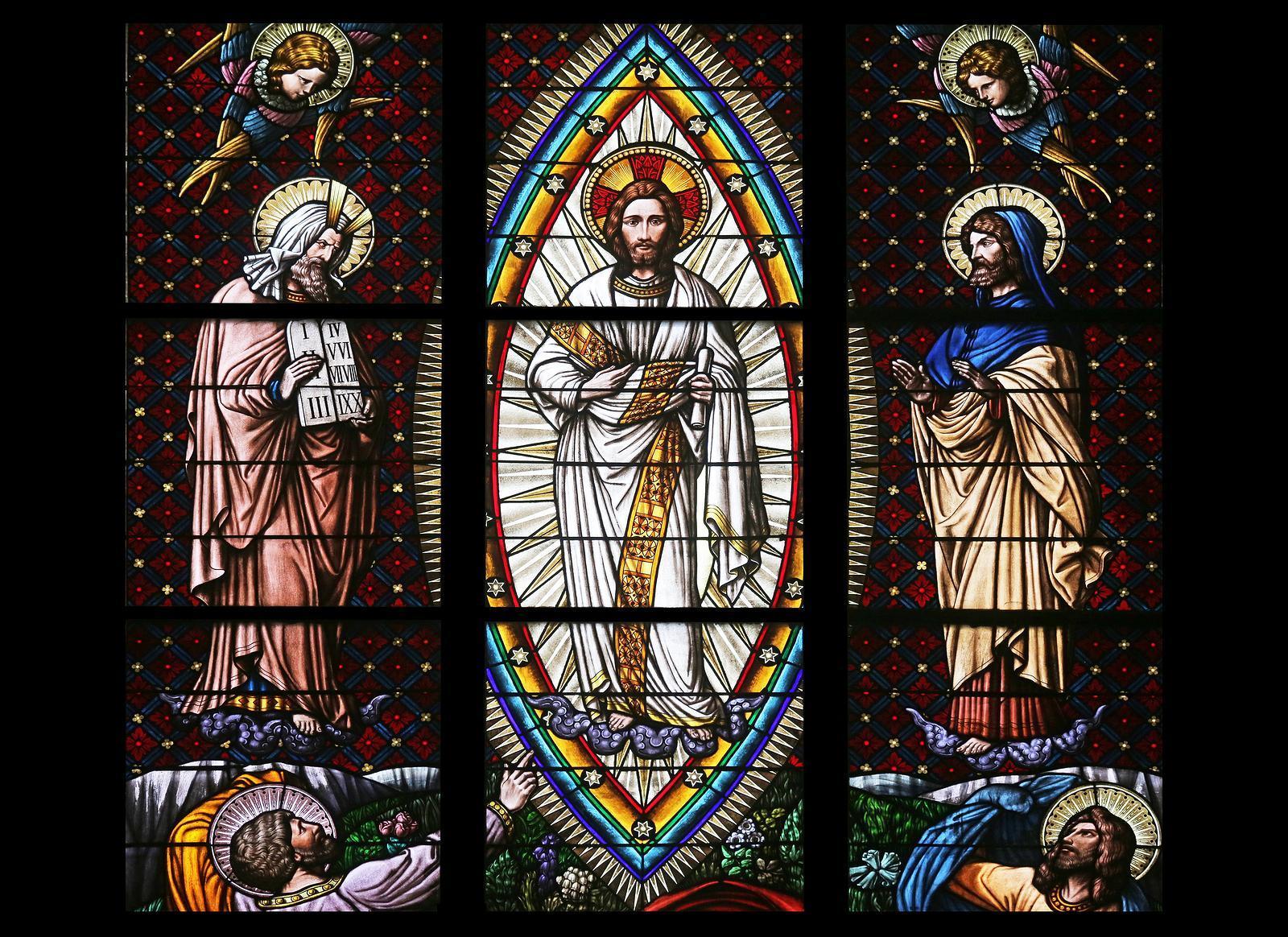
    The Transfiguration is an event from the life of Jesus that’s reported in three of the four gospels (Matthew 17:1-9, Mark 9:2-8, Luke 9:28-36). Jesus, along with his disciples, went up a mountain that overlooks Jerusalem and then appears with Elijah and Moses while he “transfigures,” meaning that the disciples see Jesus as he would appear after the resurrection. The gospels report that Jesus’ face and clothes became “dazzling white.”

    RELATED: Who Gave Jesus His Halo?

    The story is meant to not simply be a miracle but also has several other meanings. One is that Jesus is the fulfillment of the Old Testament law and prophets. At the Transfiguration, he’s seen with Moses (giver of the law) and Elijah (greatest of all prophets). As they overlook Jerusalem, the story foreshadows where this fulfillment of the law will take place: Jerusalem, where Jesus will meet his death. The disciples are confused by the Transfiguration and don’t realize that Jesus must die in order to save the world.

    Lastly, the story is a foretaste of what is in store for us. We will all rise again, and with the Transfiguration, Jesus gives his disciples just a glimpse of what the afterlife holds for both them and us.

    Originally published August 4, 2017.

  • Love Amidst Pain: A Reflection on the Journey to Calvary Through Mary’s Eyes

    Love Amidst Pain: A Reflection on the Journey to Calvary Through Mary’s Eyes

    Abstract of holding the crossAs my infant son struggled with a difficult medical condition over the last few years, I found myself in the midst of caregiving like I had never experienced before. During that time, I stumbled across an old devotion: the Seven Sorrows of Mary. So, finding a connection with the Blessed Mother in my sorrow and hers, I found myself meditating on the Passion and Death of Jesus in a new way. 

    Amid Mary’s great Passion-related sorrows, we can find consolation, just as in the middle of a dark night, we find illumination in the stars. That consolation is that Jesus could see Mary standing there along the road to Calvary. Her presence was a comfort to him, as it was for me facing grief and sorrow in my own life.

    RELATED: Maternal Love and the Cross

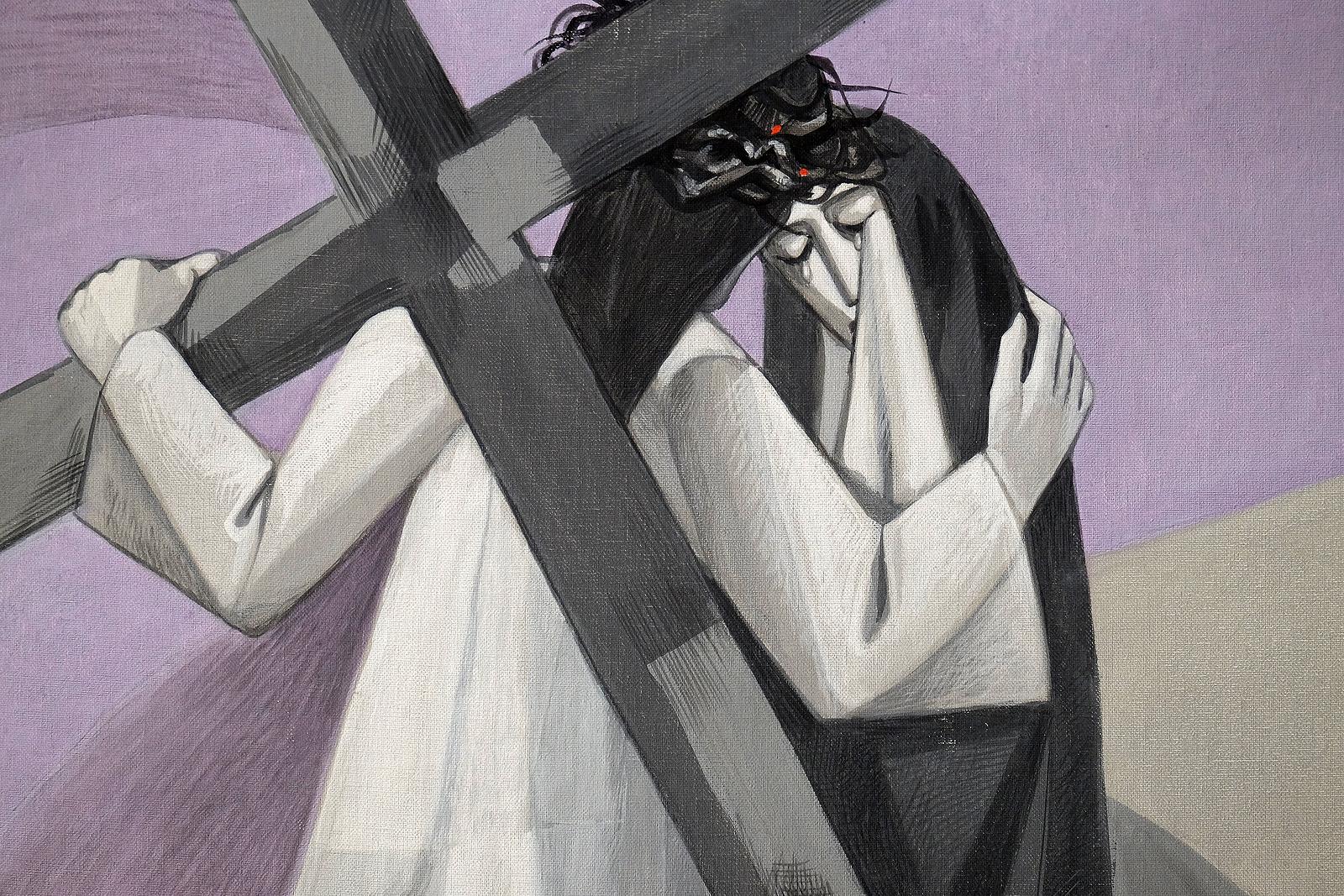
    Their meeting is not recorded in the Bible, but we know it happened by tradition. Their meeting was likely brief, just after Christ’s first nasty fall, and in that moment, Mary witnessed all the wretchedness that the people around her son put him through. Yet, what was wretched for her was also a moment in which Jesus could see that he wasn’t alone. Her presence showed him that someone loved him, that someone grieved his fate, and that Mary shared his suffering in her heart.

    So even though Mary witnessed all the grotesque details of Jesus’ torture, she perhaps saw too the glimmer of relief in his eyes — just for a moment, that she was there.

    Sometimes, our presence is not enough to console someone we love. But in certain, beautiful moments, it can. Even during the most difficult times, God offers us small graces. Like Mary, then, we can keep going.

    Right after Mary and Jesus were forced to part, the soldiers recognized that he might not make it all the way to Golgotha alone. I wonder if Mary saw Simon of Cyrene from behind, and saw him help Jesus carry the cross as she longed to do. This too, was both a sorrow and a consolation, for now he had some help, but he was getting farther and farther from Mary, and closer and closer to death.

    RELATED: Turning to Mary in Difficult Times

    Isn’t it funny how intimately sorrow and consolation are linked? The other side of sorrow is joy, and the other side of love is loss. As a caregiver, I’ve learned acutely that in life, we walk the razor-thin edge between the two sides, feeling both in their time as we wobble between them. It’s the sorrow of sitting at the bedside of a suffering loved one, intermingled with the joy of being in their presence, the joy of loving them with a depth that only such suffering uncovers. To flee one – sorrow or joy – is to flee the other. We can accept joy in our lives only when we accept sorrow. We can accept love only when we also accept loss.

    This is the drama of our fragile, human lives. It is my drama in caregiving, and, I imagine, in all the permutations of life in which we live our days for the sake of another. Perhaps it is why Jesus told us to take up our crosses, that we may take up our joys in their time as well (Matthew 16:24). Perhaps it is why the man who avoided suffering “went away sad” (Matthew 19:22).

    Mary’s sorrow is different from sadness. It is founded on faith, given momentum by hope, and is the interwoven brother of love. Sorrow is deep, like roots that probe deeper and deeper so that the tree above can bear abundant fruit. It is like the chaff that grows up with the grain; to remove sorrow now would threaten the harvest, but one day, God will separate the two (Matthew 3:12). Sorrow will be forgotten, and we’ll be left with the abundance and joy of Easter.

    Editor’s note: This article is an edited excerpt from Theresa’s book, “Caring for a Loved One with Mary: A Seven Sorrows Prayer Companion” (OSV 2023).

  • A Beginner’s Guide to Eucharistic Adoration

    A Beginner’s Guide to Eucharistic Adoration

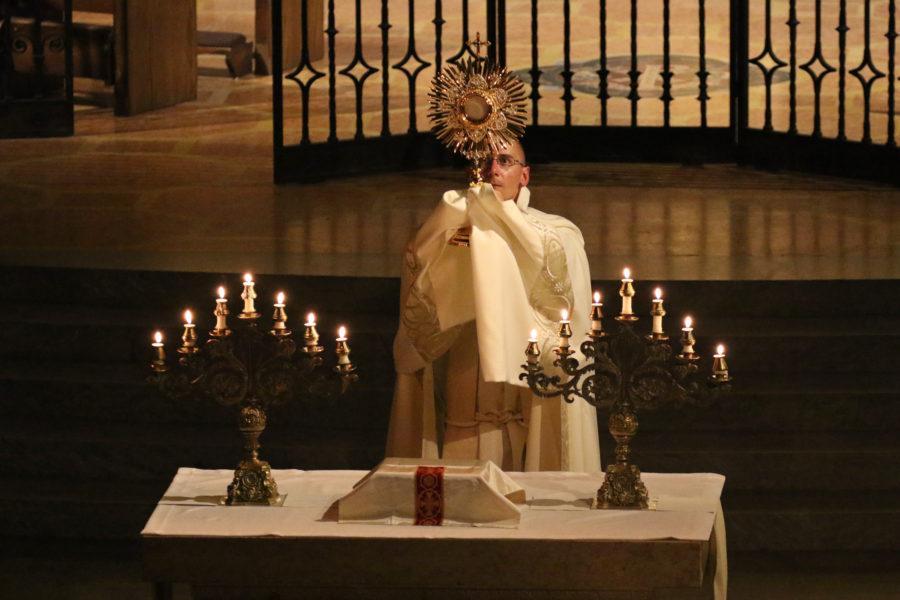
    Eucharist Adoration at Immaculate Conception Seminary in Huntington, New York. (CNS photo/Gregory A. Shemitz, Long Island Catholic)

    My first experience with Eucharistic Adoration occurred in sixth grade at my Catholic elementary school when my homeroom teacher took my entire class to the church to pray in silence in the presence of the Blessed Sacrament. If you’re thinking it was difficult for 35 12-year-olds to sit still and pray in silence for an hour, then you’d be right. We squirmed and fidgeted and poked our neighbors to avoid giving our undivided attention to the Lord. Our behavior earned a mild scolding from our soft-spoken teacher, who reminded us of Jesus’ own words in the Garden of Gethsemane the night before he was crucified: “So you could not keep watch with me for one hour?”

    After that, I didn’t go to Adoration again for many years. First, there was the challenge of carving out an hour in the middle of the week to get there, when so many other activities and errands felt more pressing. Secondly, I was worried that Adoration might only be for super holy people — ones who spend time with God in perfect, prayerful contentment. My mind is full of worldly concerns and distractions, so maybe Adoration wasn’t for me. Finally, my inner, fidgety sixth grader was concerned Adoration might be, well, boring. I assumed a Holy Hour would look like waiting for a big revelation from God and hearing nothing but crickets.

    RELATED: A Convert’s Guide to Adoration

    After moving to Colorado, though, I discovered that my new parish had a perpetual Adoration chapel, which meant I could sit with the Blessed Sacrament at any time of the day or night. And despite my years of doubts, I somehow found myself wanting to try again. Here are some things I that helped me commit to a weekly Adoration practice:

    It’s not all about me

    Like Mass, Adoration isn’t necessarily about what we will get out of it. True, the graces dispensed by God help us grow in holiness, but the primary purpose of Adoration is right there in the name of the act: to adore the One present to us in the Eucharist.

    Just be

    Remember that you don’t actually have to do anything. The Catholic faith recognizes that the greatest gift God gives us is himself, and Adoration is another way for us to recognize that gift outside of receiving the Eucharist at Mass. So, don’t overthink it. Just receive the gift.

    Pray (with a little help)

    If it’s been awhile since you’ve entered the Adoration chapel and you’re worried you might be a little bored (that’s understandable!), or you have no idea where to start (it’s okay!), I’ll offer the following suggestions:

    • Pray the rosary. To contemplate the mysteries of Jesus’ life in the rosary is to contemplate the mystery of the Eucharist given to us and the Blessed Sacrament we praise in Adoration. So, pairing these prayers is a great habit to get into.
    • Write in your prayer journalWriting in a prayer journal is a great way of making your relationship with God seem more tangible, since we’re getting the words out of our heads and onto the paper. Think of the practice as writing a letter to God. Take all your worries of the day and lay them down during Adoration. Or write to him about everything that’s going well in your life right now.
    • Listen to praise and worship music. Music can be an extremely effective way to focus our thoughts on God. Just make sure you have headphones that will keep everyone else in your vicinity from hearing your music if they’d rather spend their time in meditative prayer. I usually find that slow, reflective melodies work best for this environment — anything by Audrey Assad usually does the trick for me.
    • Read. While Adoration isn’t really the time to break out that thriller you’ve been working your way through, it is a great opportunity to pull out a book by one of the saints (such as “The Diary of St. Faustina,” St. Francis De Sales’ “Introduction to the Devout Life,” or St. Thérèse’s autobiography “The Story of a Soul.” Or prayerfully consider a few lines of the Catechism. You may also choose to read a set of devotional essays like Caryll Houselander’s “The Reed of God,” which is full of meditations on Mary. And of course, don’t forget the Bible!

    You don’t have to sit still during your Holy Hour in order to make it count. It’s okay for it to be a natural extension of the rest of your prayer life. So, if there’s something that really helps you focus your prayer, bring it to Adoration. Most of all, remember to receive the gift of Christ in the Eucharist and just be present to God.

    Originally published April 23, 2018.

  • ‘Jonathan & Jesus’ Is a Story of Surrender We Can All Learn From

    ‘Jonathan & Jesus’ Is a Story of Surrender We Can All Learn From

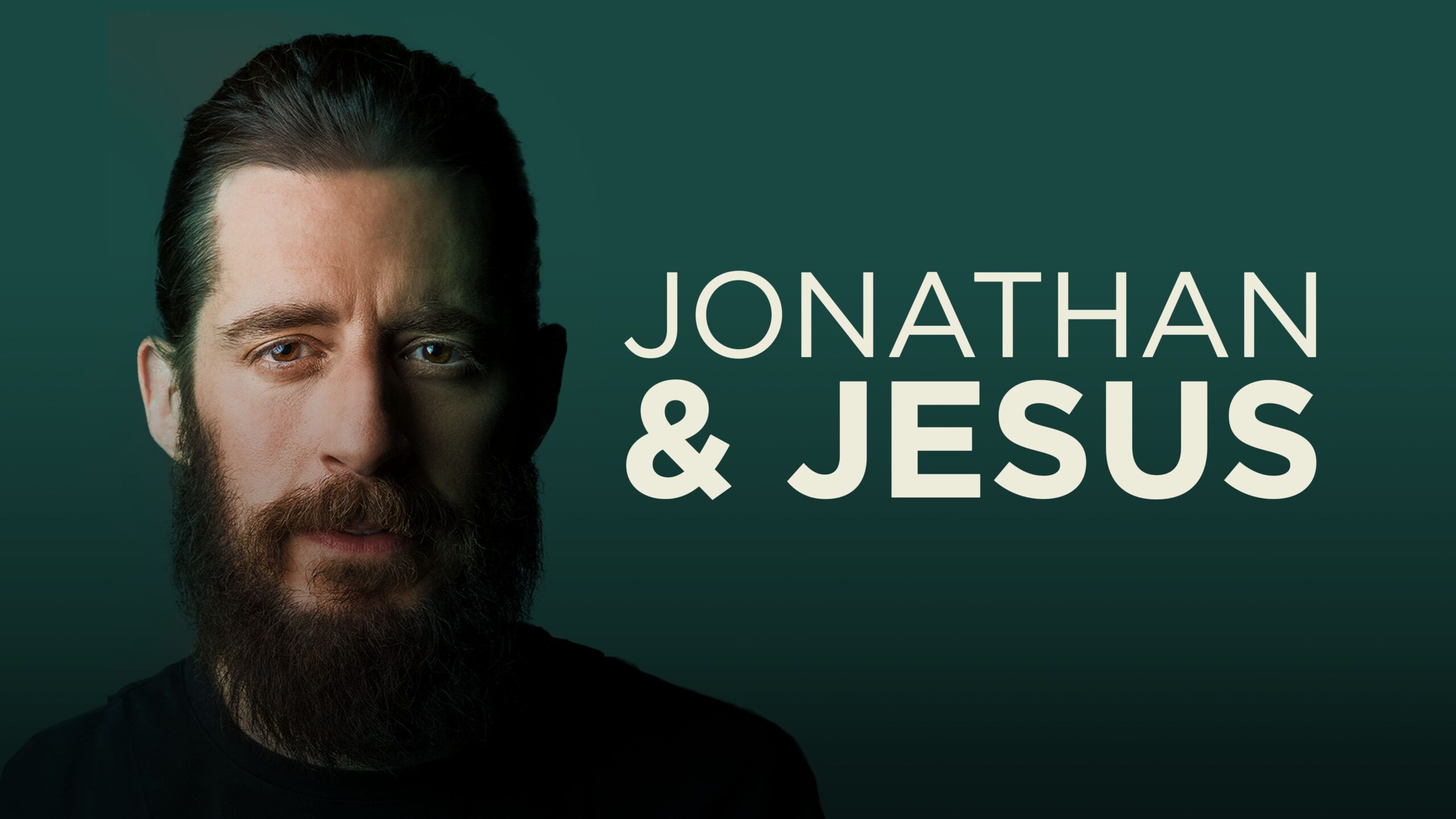
    “Jonathan & Jesus” docuseries | Steven Schwartz

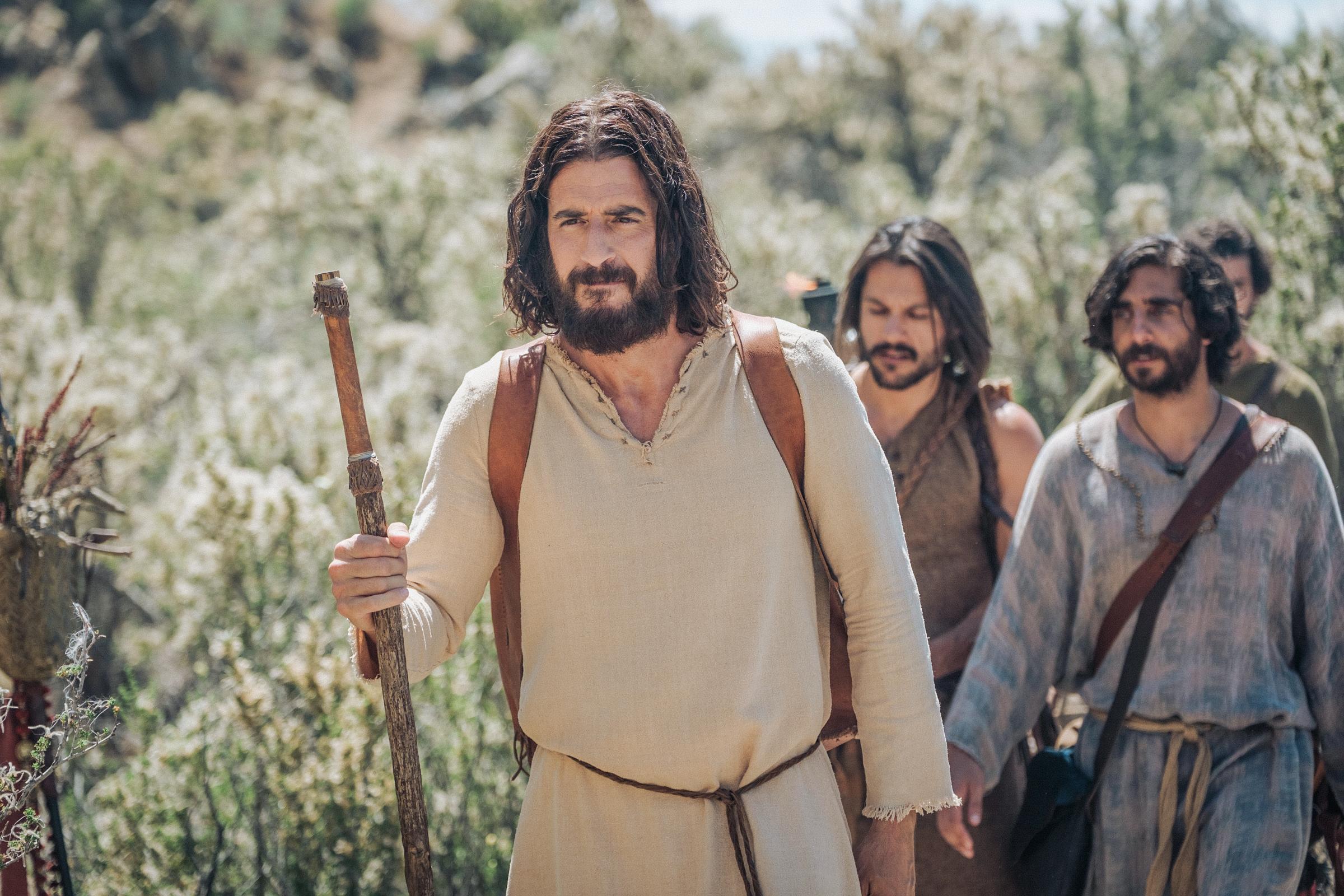
    Let’s get this out of the way first: I’m an unapologetic fan of “The Chosen,” the series about the life of Christ that went from a crowdfunded upstart to an unexpected worldwide phenomenon; its fourth season is about to hit movie theaters in February before being released to streaming in March. I think Jonathan Roumie’s performance as Jesus in the series is staggeringly good. I’m also someone who’s worked in the entertainment industry for much too long, often with those magical creatures we call actors (not, for full disclosure, with Jonathan Roumie). So, I acknowledge I’m not the most objective viewer of the newly released “Jonathan & Jesus” docuseries.

    Yet I admit when I initially learned about “Jonathan & Jesus,” I had a moment of “oh, dear.” My first thought: How does this, even when made with the best intentions, avoid looking like an ego trip?

    I’m happy to say that “Jonathan & Jesus” doesn’t play at all like an ego trip. It’s not an easy watch – that’s not criticism, that’s praise – because it is a journey through the life-changing nature of Roumie’s experiences, from deeply blessed to personally overwhelming to just plain cool, during the early days of the ascendency of “The Chosen.” It’s also an interrogation of the meaning and impact of Jesus, not only on the actor playing the role, but on everyone in our world.

    LISTEN: Jonathan Roumie’s Prayer Challenge

    While the burgeoning of “The Chosen” phenomenon and Roumie’s landing a lead in “Jesus Revolution” between the shooting of seasons two and three of “The Chosen” serve as an ongoing throughline, each episode of the docuseries has its own focus, roughly sketched as (1) Jesus as God and historical/cultural touchstone, (2) Christianity, division, and unity, (3) celebrity and humility, and (4) control versus surrender. “Jonathan & Jesus” is ambitious and immersed in big questions throughout, touching on subjects both complicated and diverse. 

    A journey through the meaning of Jesus as the Incarnate Word of God, the primary cause of Western Civilization, and a pop culture motif took me on an emotional rollercoaster. First, I felt vaguely uncomfortable seeing some of the more mundane depictions of Jesus portrayed in pop culture, from “Family Guy” to the Buddy Christ image from Kevin Smith’s “Dogma.” That gave way to a sense of the transcendent as a historian standing in the shadow of the Roman Colosseum considered that at the time the Colosseum was built, it would have been ludicrous to think that the Roman Empire would soon be ruins, but a nascent faith beginning with Jesus and a small group of followers in Judea would survive, thrive, and be, millenia later, the largest faith in the world. 

    Discussions between Roumie and preachers and influencers of various Christian denominations reminded me how we’re so unfortunately quick to criticize each other, focusing on the things that divide us as Christians instead of the God who unites us all. Interviews with scientists, ministers, writers/podcasters, human rights campaigners, and musicians revealed the pivotal moments in which these people chose to surrender their lives — expectations and illusions of control included — to God in faith and the monumental results of that choice. Given my own constant struggle with surrender and what it really means in practice, seeing these stories is a nudge to keep on trying. (If you’re like me, you regularly turn your eyes heavenward and say, “Is this it, God, am I surrendering right yet? Because I don’t think I am!?!”) And yes, you will come away from this doc wishing that Jonathan Roumie, Sheila E., Brandon Flowers, and Alice Cooper could tour as the world’s most unlikely supergroup.

    Photo courtesy of The Chosen / Mike Kubeisy

    RELATED: Spiritual Streaming: 5 Catholic-Themed Films for Your Next Movie Night

    With all these matters raised and considered, the series is in some ways a choose-your-own-adventure; which parts of it stick with you will vary significantly from viewer to viewer. At the close of the final episode, the person who watched with me said, “The things some of those Christians he interviewed were doing…feeding migrants under bridges and saving trafficked women…how am I ever going to get to heaven?” Meanwhile, I was most affected by the unflinching honesty of the life-of-an-actor segments, which take the viewer from the dire situation Roumie was in just months before “The Chosen” came along to interviews with his sister, Olivia, and Dallas Jenkins (creator of “The Chosen”), discussing how both fame and the conflation of a human actor and the Son of God in the mind of fans can be disorienting, scary, and exhausting—even for a grounded person with a deep faith to sustain him. In my professional life, I’ve seen both actors eking out a living juggling acting gigs with low-paying survival jobs and actors dealing with sudden fame due to one big role (never mind the role of Jesus, which adds knotty moral questions to the already complex issue of fan adulation). These segments felt painfully real and raw to me, a look behind the curtain that we rarely get about the challenges of life as an actor. 

    Does the docuseries fully get its arms around all these subjects? Not precisely, but to my eyes that’s exactly the point. These subjects can be explored, dissected, studied, grappled with, and prayed over, but as Anthony Bova, Roumie’s acting coach, says in the plainest way possible: “…the whole Jesus Christ thing, that’s tough. Because…I mean, whadya do with that?” That statement works as both an acting coach throwing up his hands at the challenges of a role (the job of playing the perfect human is restricted to exactly one role in all of literature, and it’s this one) and a person questioning how much any of us can represent Jesus, even if we’re mandated as Christians to try. So fair enough, Anthony. That’s a question millions have asked over the ages.  

    RELATED: Less Worry, More Trust: Praying the Surrender Novena in Times of Change

    But along comes a scene near the end of the docuseries to show us what we do with the “whole Jesus Christ thing.” It takes us back to 2018, to a part of Jonathan Roumie’s personal story of surrender that many “Chosen” followers have heard about but not seen. I’m not going to go into detail; it is a losing proposition to try to find adequate words to describe someone at the end of his rope encountering the ineffable, and in any event, the powerful moment deserves to be experienced, not described. I’ll just note that if you want to see God starting to lift up someone who has fully surrendered after a long struggle in the wilderness, well, there it is. 

    So no, none of us can get our arms fully around these subjects. Not you, not me, not Jonathan Roumie. Three hours of screen time (or two thousand years of Anno Domini) cannot unlock the unfathomable. What “Jonathan & Jesus” shows us, viscerally and in multiple different testimonies, is what we can do: surrender to the unfathomable. And then the one who is the ultimate subject of this docuseries – the one whose credit is larger, in bold and after the ampersand in the title treatment of the trailer — can get his arms fully around us and take us on his journey.