
Tag: Italian

  • How My Family Is Celebrating St. Joseph and St. Patrick Together This March

    How My Family Is Celebrating St. Joseph and St. Patrick Together This March

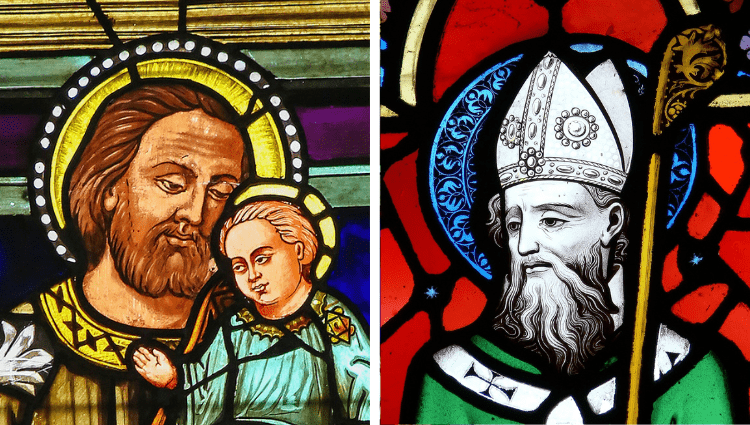
    Side-by-side stained glass icons of St. Patrick and St. JosephEvery March, I notice an emergence of leprechauns, shamrocks, and Guinness, followed by an abundance of Italian pastries, lilies, and the color red. The remembrance of St. Joseph follows St. Patrick’s Day on the calendar each year, but too often I have neglected to celebrate them both intentionally. This year, my family has decided to honor the impact of these two heroic saints in a (hopefully) memorable way. 

    My wife, Joanna, is always concerned about how we can encourage our young sons to experience the faith in a way that goes beyond attending Mass on Sunday mornings. She is great at finding ways to make being Catholic about celebrating life and having fun doing it. She’ll buy a colorful saints calendar for the kitchen, set up dinner on the floor on Holy Thursday, or dress the kids in colors that align with a specific feast day. Finding ways to infuse the faith into the normal parts of our lives sparked our ideas for how to celebrate St. Patrick and St. Joseph this year. While Joanna’s Italian side gives rise to her proclivity for Joseph, St. Patrick has always been celebrated radically in the Irish Griffin household. 

    WATCH: What Do People Really Know About St. Patrick? 

    St. Patrick receives most of the spotlight out of these two saints, and much of his feast day has been commercialized into drinking and eating corned beef. This year, we plan to eat all of the traditional Irish foods, but also use the shamrock as a way to teach our sons about who God is. 

    We plan on going outside and using chalk to outline a huge shamrock in green and have the kids color it in. Then we will focus on how the shamrock points to the fact that God is a relationship of perfect love represented by the three leaves (The Trinity of Father, Son, and Holy Spirit). While we eat dinner, we will tell the brief story of St. Patrick who helped bring the faith to the people of Ireland even though it was not easy. Then we will talk about how prayer helped him through his trials. 

    At bedtime, we will reinforce this and pray one of St. Patrick’s prayers: 

    “Christ with me, Christ before me, Christ behind me, Christ in me, Christ beneath me, Christ above me, Christ on my right, Christ on my left, Christ when I lie down, Christ when I sit down, Christ when I arise, Christ in the heart of every man who thinks of me, Christ in the mouth of everyone who speaks of me, Christ in every eye that sees me, Christ in every ear that hears me.”

    We will end the prayer with the Sign of the Cross, referencing the huge shamrock we colored together as a family. 

    Two days later on St. Joseph’s Day, we will enjoy some nice Italian pastries while focusing on an activity that we hope the boys will love. Our kids already have some toy tools. Some of them have worn out their flavor, but we will try to resurrect that by giving them a chance to build something together. As we build something together as a family, we can talk about how Joseph was a carpenter and how Jesus spent so much time building with him. 

    RELATED: Turning to St. Joseph as a Rookie Father

    Later in the day, we hope to make a tiny home out of popsicle sticks. All we’ll need is glue, a piece of cardboard to serve as the walls, and about 30 popsicle sticks. By gluing them together to form the structure of a simple five-sided house, we can teach the kids that God calls us all to build time to talk to him in our home every day. 

    In many ways, Patrick and Joseph belong together. They were both heroic men of virtue who acted radically for God. Despite the challenges they faced, they trusted that God would protect them, and moved to love those around them as if they were Christ themselves. Highlighting their trust and devotion can only aid the growth of faith among our children. 

    Even though these are simple practices, we think they can have an impact because we are using ordinary moments of the day to invite God to speak to us. Whether it is playtime or dinner or bedtime, these can be opportunities for us to bring God to our kids. While some aspects of these activities will, undoubtedly, not go as planned, we hope that they can become habits that we come back to each year so that faith becomes a part of their lives in an organic way. Hopefully, they will even give rise to celebrating other saints in a similar way. Then Patrick and Joseph can truly impact the holiness of our growing family.
  • How Attending Mass in a Different Language Taught Me About the Universality of the Church

    How Attending Mass in a Different Language Taught Me About the Universality of the Church

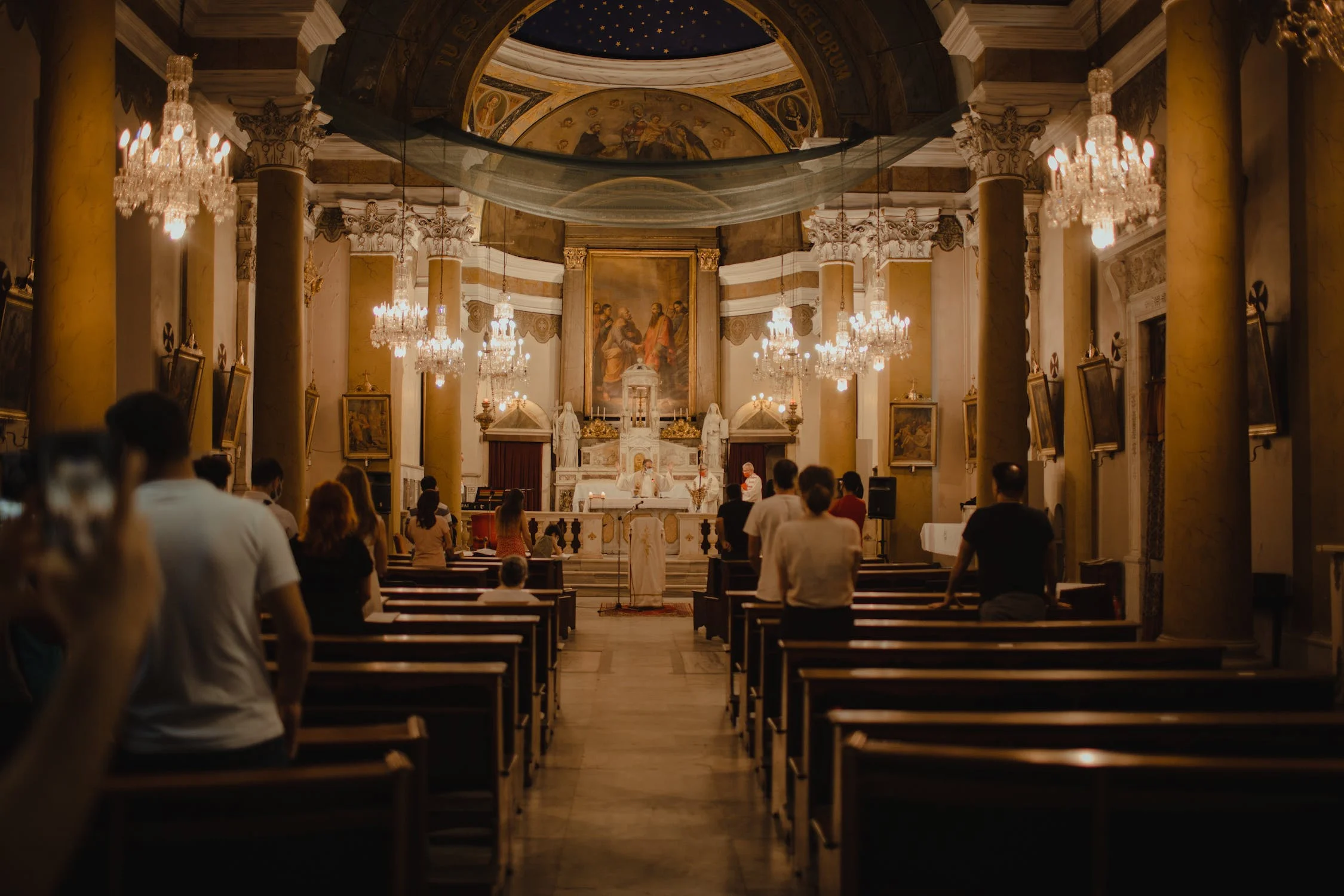
    Faruk Tokluoglu on Pexels

    Growing up in one of Canada’s English-speaking provinces, I experienced a faith that was passed on to me at home, at Mass, and at Catholic school. This exposure was consistently in English, apart from a few basic prayers taught and subsequently memorized in French. In my 20s, I moved around quite a bit, spending time in the United Kingdom and the United States. I found a new parish wherever I went, and always in an English setting. 

    Eventually, I moved to Montreal, a vibrant, multicultural, and multilingual (with French as the official language) metropolis in Canada, and I have been blessed with the opportunity to now call this city home. My husband and I live in one of the city’s historically Italian residential neighborhoods. Although it is a very diverse community today, there is still a significant Italian presence, and our local parish offers Masses in either Italian or French, accordingly. I am at a proficient level in French, and I have a basic understanding of Italian. Since further connecting with my Italian heritage and rekindling my French language skills were both on my bucket list, I viewed these Masses as an exciting opportunity.

    LISTEN: How Can I Follow Along With Mass in a Different Language?

    The experience of participating regularly (that is to say, not just occasionally while on vacation) in a non-English Mass has been enlightening and refreshing, but of course, took some adapting. Following all the points made in the homily, for instance, was a particular challenge for me at first. Still, there are lots of people locally and worldwide who have to adapt to attending Mass in a different language than their own. I had never really given much thought to this fact, but now I have a much greater awareness and appreciation of individuals in such a scenario.  

    Before the Second Vatican Council in the first half of the 1960s, Masses around the world were celebrated in a common language, Latin. It was only after this important ecumenical council that the faithful were able to attend Mass in the language of the local community. Despite this change to the vernacular, the format of the Mass remains the same in whichever part of the world and in whichever translation. 

    This consistency provides a visible sign of the universality of the Church. In fact, the word “catholic” literally means universal. The Catholic Church is indeed a vibrant community of believing women, men, and children connected in faith across the globe. The universality of the Church in the context of the Mass has become clearer to me since moving to Montreal and joining a parish community that functions in a language that I had not been accustomed to using at Mass.  

    RELATED: Experiencing Spanish Mass

    I would like to share two actions that helped me to adapt to a non-English Catholic Church community more readily.  

    First, I take more time to prepare for Masses. Before each Mass, I read through the Sunday readings and corresponding reflections in my English-language Missal. (I use the Canadian edition.) At the Italian-language Masses, the parish provides printouts at the entrance of the Church, which contain the corresponding readings for the day and other key parts of the Mass, including the Creed and Prayers of the Faithful, in Italian. This resource is very helpful to follow along and participate more fully in the celebration. To better streamline my adaptation to the French-language Masses, I subscribed to a monthly resource providing the Readings for all the Masses, including the daily Masses as well. About a year ago now, I started as a lector during the weekday French Masses, and the preparation involved in that context has also helped me adapt more seamlessly. 

    Second, I seek out alternative ways to celebrate the faith in English (or the language that I am used to attending Mass in), in addition to personal/family prayer. Shortly after moving to Montreal, amidst the first year of the pandemic, I became aware of an online prayer session hosted by the Sisters of the Congregation of Notre Dame. This virtual English-language prayer session in the Lectio Divina format gathers a small group of young adults (or those young at heart) once a month to pray together using one of the readings from the upcoming Sunday Mass. Lectio Divina is a beautiful way to pray with Holy Scripture. The Scripture passage is read three times and participants are invited to reflect upon what the passage is saying today and to share these thoughts with the group. Sometimes a reflection may be about certain emotions that have moved our hearts. Other times, it relates to a specific character in the passage, and other options could be seeing the pertinence of the text in the context of a current personal circumstance.  

    RELATED: A Dead Language? 5 Facts About Latin in the Catholic Church?

    Regularly participating in the Mass in a different language has presented me with some graces, despite the natural challenges associated with adapting to the less familiar. The extra preparation that I do in advance of Mass gives me more time to think deeply about the readings. I can be more attentive and focused throughout the celebration. 

    I highly recommend attending Mass in a different language if the opportunity arises, perhaps while traveling or if there is a local parish that celebrates Mass in another language. A change from the familiar, a switch from the routine, can be a valuable blessing to heighten one’s focus or reduce distractions during the Mass and to develop or renew one’s awe and appreciation of the various rites.

    To sum up, the Church is indeed universal. Participating in the Mass, in whichever language, is a powerful sign of the unity that connects Catholics around the globe. Each time we gather around the Eucharistic table for the fulfilling nourishment that only Christ can provide, we partake with others worldwide who are receiving the same sacrament.