
Tag: ignatian spirituality

  • Praying for Presence: How the Examen Helps Me Focus

    Praying for Presence: How the Examen Helps Me Focus

    When I was a kid, there were nights at the dinner table when my dad would get quiet and start staring off into the distance. My sisters and I would joke, “Dad’s thinking about work again!” and the chorus of giggles would break him out of his trance and bring him back to dinner. 

    Now, at 41, I’m the one who’s prone to the “thinking about work” face at dinner and many other times as I try to shift from employee to father at the end of the workday. 

    As a civil defense attorney, I’ll regularly handle 200 or more cases at any given time, each with its own facts, medical records, litigation status, and hearing schedule. 

    As a father, I have four kids who are growing up way too fast — each with their own interests, likes/dislikes, friends, school assignments, extracurriculars, etc. 

    As a husband, I have an incredible wife who has kept me around for 12 years and counting, but we’re no longer carefree 20-somethings with little responsibility and an excess of free time. It’s frighteningly easy to lose track of each other amidst our sea of responsibilities and commitments. 

    RELATED: How I Use Ignatian Discernment to Make Decisions Big and Small

    Alternating between those three main roles in my life, it can be difficult to be fully engaged in the present moment. There are dinners and vacations where I have replayed court hearings in my head, pondering how I could have performed better. There are file reviews at work where I continually think of kids’ sports schedules or weekend plans. There are times at work and with the family when I’m thinking of household repairs. 

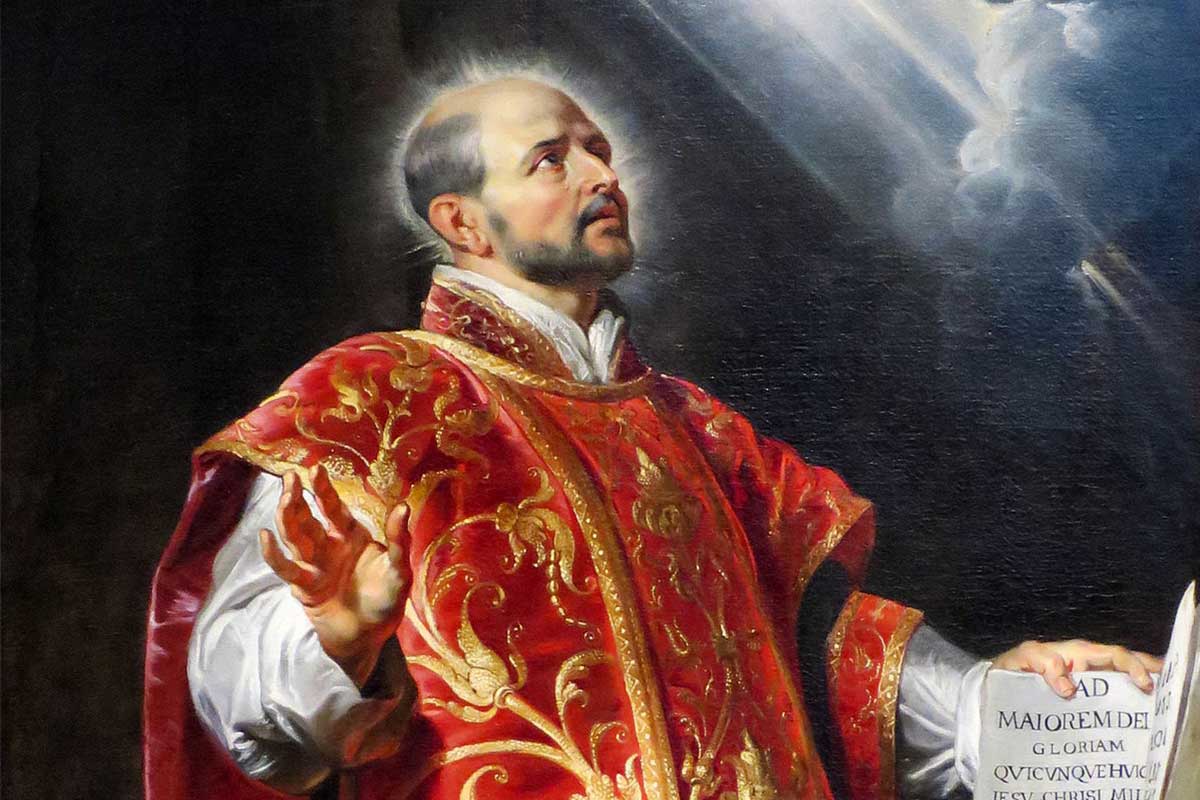
    One thing that’s helped me with this is the Examen, a prayer formulated by St. Ignatius Loyola.  I first came across the prayer when I was a teenager considering a Jesuit vocation. The whole of Ignatian spirituality, with its emphasis on finding God in all things, was such a revelation to my young mind, but this prayer made an impression and I recently resumed the practice of praying it at night. The basic outline of the prayer is a 5-step process:

    1. Be aware you’re in God’s presence. 
    2. Ask for grace to see God’s work in your life.
    3. Review the day in detail. 
    4. Reflect on specific actions and see whether they brought you closer to or farther away from God. 
    5. Make a resolution for tomorrow.

    When a priest gives a homily at Mass, he takes the Gospel message and makes it applicable to the general congregation. When I pray the Examen, I try to feel I take it one step further and make it applicable directly to my life — my wife, my errands, my kids, my schedule, my work, my supervisor, my commute, and all of the nitty-gritty that makes up my life. 

    I think hidden within my lack of focus is the false belief that whatever I’m focused on is the most important, most pressing matter. Praying the Examen gently corrects this warped way of thinking by reminding me that everything is important, because everything relates back to God. 

    RELATED: Growing in Gratitude, Thanks to the Examen

    The process of he fourth step, reflecting on my actions and whether they brought me closer to or farther from God, changes every day, but I’ll sometimes ask:

    • Was I short with someone on a work call where I was just trying to get another task off the to-do list?
    • Were my “blinders” on while I tried to go through my work day, missing opportunities to hear and see those souls that work alongside me?  
    • Should I have stopped by the desk of a colleague who was widowed last year and seen how she’s holding up? 
    • Did I pay attention to my kids when I came home? 
    • Did I focus on the stories they so eagerly conveyed to me, treasuring them as the gifts they are?
    • Did I miss an opportunity to show more initiative, to ask questions, to be silly, to initiate play? 
    • Have I taken active steps today to work on my marriage?
    • Have I listened to things my wife has expressed frustration over and given her empathy, as well as whatever support I could?
    • Have I made efforts to connect with my wife and share myself, and not just go through the day on our parallel routes?

    For me, the biggest benefit of the Examen is not just the act of praying it towards the end of the day, but rather the way it shapes my mind throughout the day. Getting in the habit of praying it has “trained” my brain to start considering those questions as I am going about my day. As I live in the present moment, I know that God is there and I know that the only way I can respond to him is by being present in that moment, noticing what he is offering me in that moment, and responding with love. 

    With regularly praying the Examen, my “thinking about work” face pops up less often. When I’m with my wife and kids, I’m with them — attuned to all the beautiful intricacies of the present moment. 
  • Meeting God Through Ignatian Spirituality

    Meeting God Through Ignatian Spirituality

    I am a daughter of Ignatius. At times, I joke that I am a “Jesuitte” because I live and breathe the very spirituality that guides the Jesuits, an all-male religious order that St. Ignatius founded more than 500 years ago. Ignatius’ legacy, spirituality, and tools for discernment permeate my life, my marriage, and my motherhood. They form the basis of my ministry as a retreat facilitator, spiritual director, and writer.

    Much of Ignatian spirituality finds its roots in St. Ignatius’ recorded experiences of prayer and his own experiences of God. St. Ignatius crafted the text of the Spiritual Exercises, a series of meditations and guides for praying with scripture. The gifts of Ignatian spirituality serve as rudders for walking through life with hope and clarity.

    Here are seven unique elements of Ignatian spirituality that I lean on regularly in my day-to-day life. I invite you to consider using them as guiding principles in your own.

    1. Living as a contemplative in action

    I am not a monk. My walls echo with the voices of children and conversations with my husband. I live in the world as a wife and mother. Like most of us, I juggle the many responsibilities that are part of my lay vocation: working, raising children, grocery shopping, earning a living, socializing with friends and family. I am active, yet I am also a contemplative. Morning prayer is the foundation of my day, and it strengthens me and readies me to go out into the world using the gifts God gave me. Each of us can come to God daily in prayer within the realities of our lives to serve as the foundation for our work in the world.

    2. Accepting we are each fully loved and given mercy

    I seek to accept that I am loved by God as I am and also to see the goodness in each person. Ignatian spirituality honors the dignity of each person and respects our woundedness. This teaching helps make me aware of my capacity for sin and my own brokenness, which in turn helps me more compassionately encounter others. A close relationship with God built through prayer strengthens my belief in my own goodness and reminds me of my dependency on God to overcome temptations. How can you turn to God in prayer to deepen your knowledge of God’s love for you and also ask for God’s help in overcoming temptations?

    3. Seeing God in all things

    Ignatius was known to stare at the stars and sky for long periods of time, and it brought him great consolation. This act of pausing and noticing God at work in all things — and not just at Mass — remains a guiding principle of Ignatian spirituality and my life. Today, I can pause and consider what is before me — nature, other people, my children, my work — and notice what God might be teaching me in my daily encounters. In your day, notice the abundance of ways God encounters you through the world and the people around you.

    4. Knowing we are not alone

    I have a companion and friend in Jesus, no matter what I am facing in life. The crux of the Spiritual Exercises is about developing a personal and intimate relationship with Jesus and understanding Jesus’ humanity and divinity. Just as Jesus grew into his divinity, I, too, grow in my own holiness within the reality of my full life. Even if we do not participate in the Spiritual Exercises, we can get to know Jesus by using prayer methods such as Lectio Divina or Ignatian Contemplation to pray with the Gospels. As we pray with scriptures, such as Jesus’ baptism (Luke 3:21-22), we see that Jesus understood He was fully loved by God, just as we are, and we see that Jesus overcame temptations, like the ones He faced in the desert (Luke 4:1-13), with the help of God. We, too, can overcome anything we are facing with Jesus’ gift of companionship.

    5. Learning from Jesus

    I can look to Jesus to model the way to live, love, and act. Ignatian spirituality teaches me that getting to know Jesus and loving him clarifies my unique way to walk through the world and express my faith. Jesus teaches me how to remain grounded in a relationship with God, through prayer. I can also learn about the unique aspects of God’s Kingdom by watching whom Jesus loves, how He loves them, and how He acts. Jesus shows us how to love others with compassion, and he shows us how we can respond to the deepest needs of others to help restore their dignity.

    6. Being women and men for others

    My encounter with God through prayer calls me forth to be a woman for others. At the very end of the Spiritual Exercises is a meditation that begins: “Love ought to express itself in deeds more than words.” In a sense, this means Jesus desires concrete actions from me to express my love of God. Jesus modeled a life centered on reading human hearts and responding to the deepest need. We, too, are called to notice the deep needs of others and respond to them out of the love God has for us.

    7. Praying about our lives

    I can bring my entire life before God in prayer. A prayer tool that pulls many of these pieces together is the Examen, which was developed by St. Ignatius. It involves praying about the last 24 hours of your day and acknowledging where we encountered God, what helped us grow in our relationship with God, what inhibited our growth in God, and how we are uniquely called to bring God’s love and mercy into the world. If you haven’t already, give the Examen a try as a way of including God in all areas of your life.

    When we’re often caught up in the latest trend or fleeting fad, I find comfort and relief in the credibility of a spirituality that has survived this long and continues to impact me and so many others still today. May Ignatius’ wisdom and insights from his own spiritual journey continue to bear fruit in our lives today!

    (Originally published April 3, 2017)

  • More Than a Story: How ‘Star Wars’ Gives Voice to My Spiritual Journey

    More Than a Story: How ‘Star Wars’ Gives Voice to My Spiritual Journey

    Space backgroundPeople like to tell me that they haven’t seen “Star Wars.” 

    It started out as a joke with friends: “Eric loves ‘Star Wars!’ This will absolutely shock him. He won’t be able to believe it.” 

    But over time, it’s become something else. Usually, after I give a talk or a workshop—one thoroughly peppered with “Star Wars” references and jokes—a person will come up to me, sort of sheepish. “I really liked your talk,” they’ll say before pivoting to confession mode. “But Eric, I’m really sorry to say this, but I haven’t seen ‘Star Wars’…”

    I mock shock, anger even, but then we laugh. It’s fine, of course—the franchise isn’t for everyone. We all have stories we like and some that just don’t resonate. I haven’t yet refused a friendship over the mere sin of not having seen “Star Wars.”

    But I have been thinking more and more about this transition in the way people talk to me about that galaxy far, far away. Because I think they see a change in me: This isn’t just a story I enjoy; it means something. 

    RELATED: Faith and the Force: ‘Ahsoka’ and the Power of Relationship

    Sure, it holds a special place in my own life story: My dad popped those VHS tapes in the VCR when I was little, ensuring I had something super cool to talk to my friends about in school for the rest of the week–and that I was ready for the prequel trilogy to premiere only a few years later. 

    But “Star Wars” means more to me than that. It gives voice to my own spiritual journey.

    I’m not talking about drawing parallels between our faith and “Star Wars”: “Anakin as the Chosen One is like Jesus as our Savior!” Or, “Jesuits are like Jedi because they both practice a form of indifference!” Parallels are helpful, sure; they help us see spiritual stakes in otherwise secular stories. But we remain passive observers when we simply look for parallels; we don’t engage the spiritual truths they point to. 

    What moves me about “Star Wars” is that the story gives me a new language with which to give voice to my spiritual journey. For example, the Dark Side of the Force feeds on fear; am I allowing fear to govern my decisions in relationships, at work, or in the way I view myself? If I am, then I may be unknowingly pursuing a dark path—and my own faith tradition has plenty to say about that! 

    What about redemption? Sure, we love to see Luke cling so fervently to the belief that his father might still be saved, and that Anakin still lives somewhere in Darth Vader. But do I act as confidently in this galaxy oh-so-near? Do I display those spiritual virtues that Luke does on the second Death Star: nonviolence, trust, surrender, and compassion? And if not, is there a relationship in my life that could benefit from such a disposition?

    I enter into the story; I engage the characters. I try some of those lofty lessons on for size. And I do so in a way that remembers St. Ignatius, the founder of the Jesuits—honoring the spiritual legacy of the Basque soldier-turned-saint who realized that God was to be found in all things, through our senses and our desires. Ignatius invites us to engage Scripture this way, by entering the story. But what if we did the same with stories of pop culture that mean so much to us?

    Because I think in the end, that’s the point: God is present in these supposedly godless stories. God desires to speak to us through the very myths and legends that move us, that inspire us, that stoke our imagination. Are these holy texts? Not in any way a biblical scholar would recognize, but these are stories that speak to something deep within ourselves.

    And the reason I spend so much time thinking about them—the reason I wrote a whole book, “My Life with the Jedi: The Spirituality of Star Wars”—is because I think that while these stories speak to us, we can use that same language to speak to others. To discover spiritual truths within ourselves. 

    We don’t actually have some mystical energy force to call upon to levitate rocks or pull X-Wings from mucky swamps. But we do experience the tug of the dark side and the light each and every day. We wrestle with decisions that set our lives on trajectories that bring us closer to the light or further from it. 

    RELATED: Curate Your Own Lenten Movie Marathon

    Painting this very relatable spiritual struggle in the hues of laser swords and warrior monks simply brings into clarity the weight of otherwise mundane decisions. Spiritual decisions. Do I move closer to the light? Or, do I find myself in darkness and in need of redemption? The fate of the galaxy might not rest on my meager decision-making. But then again, maybe it does. 

    Star Wars. Ignatian spirituality. Pop culture. Our faith lives. These aren’t separate things. In fact, one can feed the other, all while elevating our ability to see new. possibilities in a world so desperately in need of them. 

    Maybe that’s why people have started apologizing to me for not seeing “Star Wars.” People feel as though they have to apologize for not being fully bought in. Not because “Star Wars” is my religion but because it clearly gives me a new language with which to articulate very old spiritual truths. And that matters—to me, to you, to our world. 

    But here’s what I say in response: Don’t apologize for not seeing “Star Wars.” Find the story or stories that inspire you. And see what God might be trying to say to you through them. 

    Learn more about and get your copy of “My Life with the Jedi: The Spirituality of Star Wars” from Loyola Press today!