
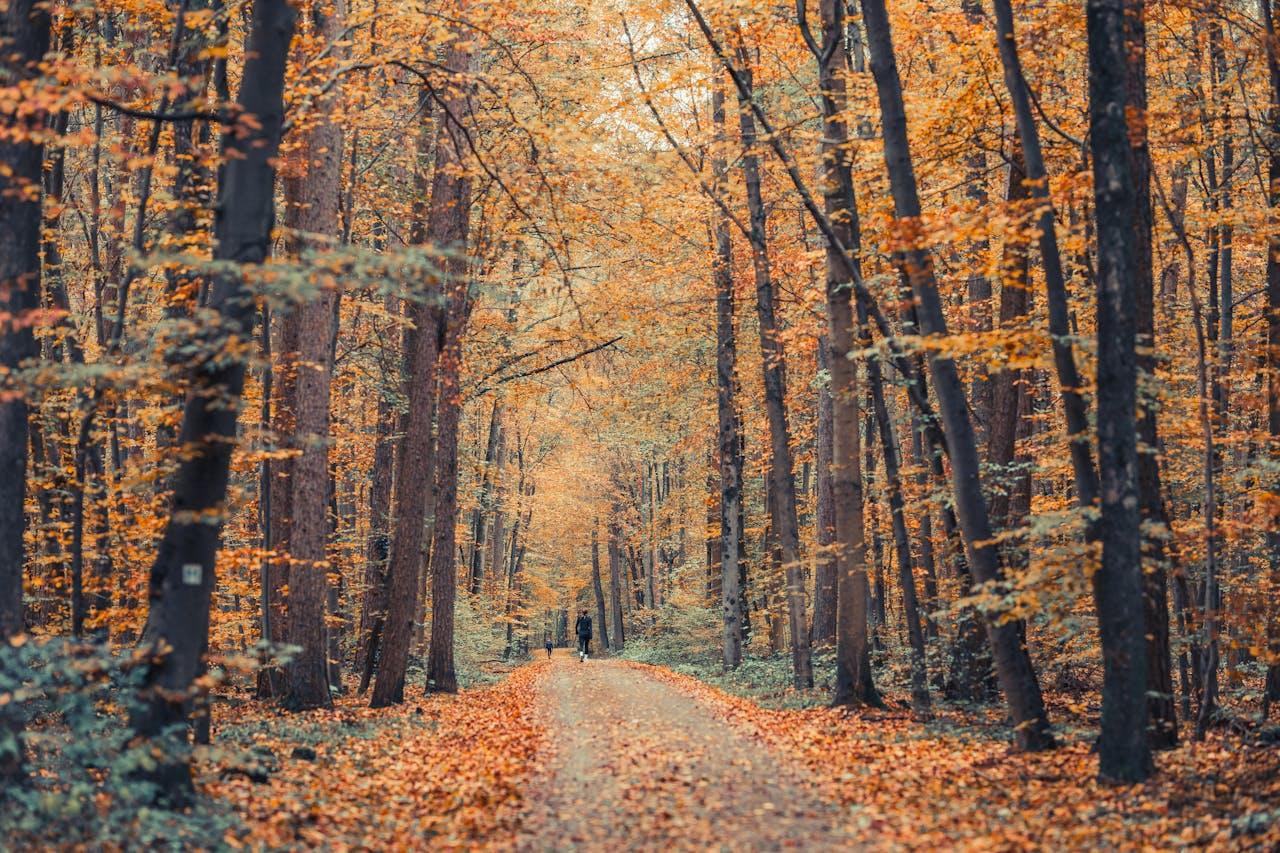
I went out for a jog recently on a beautiful early autumn afternoon. I have jogged this route often enough that I know what to expect on every street and what lies around each corner. But on this particular sunny afternoon towards the end of my run, on a sleepy side street by the beach, I encountered someone I had never seen before.
When I first caught sight of him, he was still a ways off, walking straight towards me down the street. He appeared to be a middle-aged man who looked rather disheveled. He had long scraggly hair and dirty old clothes. He was dressed for the middle of winter – even though it was barely fall. It looked like he was carrying something very heavy; the closer we got, I noticed it was a large black trash bag that he had slung over his shoulder. I also noticed that he was staring straight at me. Then, all of a sudden, he dropped his bag on the street and just stood there, watching me jog closer and closer.
RELATED: Fall: A Time of Endings and Beginnings
Warning bells went off in my head – lessons learned as a child of “Stranger danger! Stranger danger!” – and I hustled across the street to pass him at the maximum possible distance. I tried to avoid eye contact as I drew parallel to him. As I approached, he didn’t whistle at me, shout obscenities, or do any of the other things my mind caused me to fear he might do.
Instead, he simply started clapping. “You go girl!” he said with a smile as I finally passed by. “You can do it! You’re almost there!” I recovered from my shock in time to turn around and see him once again shoulder his heavy bag. “Thank you!” I shouted back in his direction. He turned and waved.
My jog felt unusually easy after this chance encounter, like it was all downhill with the wind at my back. And I couldn’t stop smiling. I think it’s because I wasn’t at all expecting God to use this particular moment and this particular person to teach me a lesson. If the mysterious stranger I had encountered was homeless, then I should have been the one helping him. Yet there he was, cheering me on with a smile, and quietly teaching me an invaluable lesson about how my fears can prevent me from recognizing others as children of God and connecting with them in a meaningful way.
As I reflected on the beautiful fall day, combined with the joy of an unexpected connection, I called to mind Matthew 9:37-38, when Jesus says to his disciples, “The harvest is abundant, but the laborers are few; so ask the master of the harvest to send out laborers for his harvest.” Jesus’s observation about the scarcity of laborers is the last thing he says to his closest followers before commissioning them as Apostles in Matthew 10, thereby giving them the power to share in his saving mission. Today, the work of the harvest continues, a sacred duty passed on from the Apostles down to us.
RELATED: How I’m Learning From the Holy and Humble
Laborers in God’s harvest are as needed as ever. I can’t help but believe that the stranger I encountered on that autumn afternoon jog had been sent out by God, a laborer in God’s harvest. This man reminded me that it’s the little things we do every day that tend to have the biggest impact in building God’s Kingdom.
Saint Teresa of Calcutta told us, “There are many people who can do big things, but there are very few people who will do the small things.” During my jog that day, I didn’t do the small things; instead, I assumed the worst about a fellow human being and tried my best to avoid him. Fortunately, he didn’t let this stop him. He took the time to stop, look me in the eye, and extend joy and encouragement to someone who must have looked like she could use it. He did the small things. Isn’t this at the heart of what we are called to do as Christ’s disciples? Isn’t this the everyday work of a laborer in God’s harvest?
Now, on my runs, walks, or hikes, I try to make eye contact with everyone I meet, smile, and extend a greeting, even if it’s just a word or two. Following the stranger’s example, when I see someone approaching in the distance, particularly someone in need of help, I try to ask myself what I can do – however small – to offer help and hope. St. Therese of Lisieux encouraged us to “Miss no single opportunity of making some small sacrifice, here by a smiling look, there by a kindly word; always doing the smallest right and doing it all for love.”
My encounter with the stranger has taught me that to labor in God’s harvest means to choose others, to make connections, to reach out across whatever may separate us. To be a laborer is to invite and welcome others to share in God’s harvest. It is a labor of love, and it starts with the seemingly small things: smiles, greetings, kind words, and offers of help.
RELATED: 5 Fun Fall Adventures
During this fall season, as I find myself admiring homes, schools, stores, and workplaces wonderfully decorated in harvest themes – as I join in secular harvest-time rituals like visiting apple orchards, pumpkin patches, and parish harvest fairs – my encounter with the stranger continues to lead me to see God’s harvest with new eyes. I find myself noticing and reflecting on the work being done all around us to make the harvest ever more abundant.
I have committed myself to the practice of slowing down and really seeing the people around me: the young boy who happily handed three dandelions he had just picked to an elderly woman walking past him on the sidewalk, the teenagers in Massachusetts who raised thousands of dollars for hurricane victims in Florida, the mom with very little free time who offers to chair a big fundraiser at her children’s school… I have discovered that I am surrounded by people who are doing the small things with love, who are visible signs of the abundance of God’s blessings in our world.
Sometimes God’s laborers might not look the way we expect them to. They might work at times and in places we wouldn’t expect to see them. Nonetheless, they are there, along with the Master of the Harvest, quietly and humbly going about the mission, joyfully beckoning us, too, to join in the work.

 This past New Year’s Eve, I decided it would be helpful to compose a year-in-review post for my personal blog detailing my accomplishments as a freelancer in 2021. I was initially pleased with the overview, because the list of achievements seemed impressive: I had 32 articles published (