Tag: gratitude

  • The Generosity of Less: Learning From St. Clare This Advent

    The Generosity of Less: Learning From St. Clare This Advent

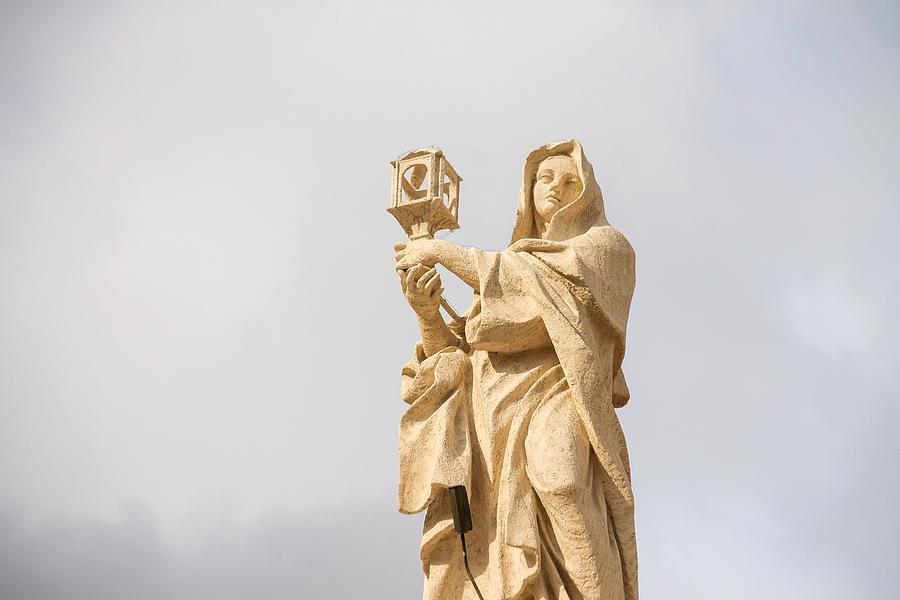
    st clare statue as she is holding a lamp with a white background

    “Look closely, I say, to the beginning of the life of this admired one, indeed at the poverty of him who was wrapped in swaddling clothes and placed in a manger. O marvelous humility! O astonishing poverty! The King of the angels, the Lord of heaven and earth is laid to rest in a manger!” – St. Clare of Assisi, Fourth Letter to Agnes

    Two years ago, I was received into full communion with the Catholic Church as Advent began. I chose St. Clare as my confirmation saint for reasons that were largely intuitive at the time because of my previous community service experiences with Franciscans. Having gained more perspective since then as both a new Catholic and a young parent, I’ve found Clare’s devotion to simplicity particularly fitting to keep in mind as we approach the season of giving and gratitude. 

    Our culture often romanticizes generosity around the holidays by doing too much of everything. With small children, I am often confronted with temptations to maximize every moment, develop new traditions, and create picture-perfect memories. Instead, by embracing St. Clare’s example, I’m able to reconsider how to live generously in ways that are truer to the spirit of my faith’s humble Christian origins.

    RELATED: How to Make Friends With a Saint

    Clare knew these origins well; she contemplated them in solitude and encouraged others to do the same whenever she could. As I have grown in my faith the past two years, I have tried to learn more about Clare in order to discover how to integrate her example into my own life. Her original writings shed light on her devotion to Christ, while others have also written eloquently about her. In one of St. Pope John Paul II’s letters to the Poor Clares, the Franciscan order of nuns that St. Clare founded, he describes her as having a “spirit of poverty” that “emptie[d] her of everything but the simplicity of a gaze fixed on God.” 

    It can be hard to imagine that kind of austere intensity in our current environment. Particularly as we hope to begin to emerge from these dreadful pandemic days, it is far too tempting to make up for lost time in an excess of abundance: more commitments, more gifts, more time away from home. I have had to renew my focus by sticking closely to pre-planned lists and resisting the urge to feel pressured to match everyone else in material generosity. While even the Poor Clares made exceptions for Christmas and other feast days in their otherwise strict observances, their charism is a helpful reminder when we find ourselves biting off more than we can chew by the time we move into December. 

    LISTEN: Saints of Our Lives: Saint Clare of Assisi

    How did Clare keep her gaze on what she saw as the only thing that truly mattered? By never looking away from where the Christian faith began. In her writings, she frequently discussed the Christ Child and Mother Mary. In them, she saw the heart of the Christian life that could best be nurtured through constant prayer and focus, ultimately hoping to become a “mirror” that reflects “eternity.” Both her Rule and Testament and her letters to Agnes demonstrate an unwavering focus that enabled her to use her time as effectively and efficiently as possible. Because of this single-mindedness, the Poor Clares were able to serve their community far more than we might naturally assume. Clare’s physical separation from the outside world did not prevent her from helping those in need; instead, by seeing her vocation as a gift, she was able to offer herself as a gift to others in a fully authentic way through prayers and even healing. Most famously, her devotion to the Blessed Sacrament once saved her Sisters from an invading army

    These insights into Clare’s life again bring us back to Mary, our Mother — a fitting focal point as Advent approaches. Mary knew well what it meant to empty herself for the sake of Jesus and, ultimately, for the world. Through Clare’s example, I am humbled by the reminder that the spirit of Advent can serve as a sort of ongoing spiritual compass for our entire lives as Christians, looking to Our Mother and the Son of God and their patient endurance as constant models for how to grow ever more consumed by their guiding light.  

    RELATED: Patron Saints for Introverts

    And so now, we prepare to wait also for Christ. We gaze upon his face as Clare did, awestruck as ever that God chose to become man. What better time to be reminded that that is all that ever matters? As we approach the season of waiting and giving, we can keep these truths in mind to guide our hearts toward generosity. We can let go of the impulse to do too much and forgive those who do not know how to do otherwise. When relatives give my young children far too many presents, I can try to see the grace that’s intended instead of allowing myself to feel weighed down with the constant pull of stuff. I can make an effort to bake cookies for gifts and write my thank you notes before Valentine’s Day, grateful for the chance to return the love I have received. In all things, we can seek Clare’s “holy simplicity” wherever we go.

    Originally published November 11, 2021.

  • On Signs From God: Contemplating How God Reveals Himself to Me

    On Signs From God: Contemplating How God Reveals Himself to Me

    Person walking on road with a sign on the ground pointing in two different directions.

    God and I have a running inside joke. It started two years ago, when I read another Busted Halo article about discernment. The author wrote that when a friend of his was faced with a big decision, she would ask God to see a dog — specifically a Dalmatian — to confirm that she was making the right choice.

    As the author explains in the article, relying on signs from God is not the best tool for discernment. God is not a fortune teller and often, the signs we perceive tell us more about ourselves and what we want than God’s will. At the same time, God can speak to us through the physical world in the ways we need it most. 

    RELATED: Looking for a Sign From God? Try These Prayer Practices Instead

    At the time I came across this article, I was starved for affirmation from God. I had a job that brought me little fulfillment, a lengthy commute that drained my energy, and a profound yearning for community and friendship. I wasn’t facing any monumental decisions, but I wanted God to give me a sign that I was moving in the right direction, even if it didn’t feel that way. I don’t know if it was right or wrong to ask this of God, but a few days later, as I was driving home from work, I saw a woman crossing the street walking two spotted dogs on her leash — Dalmatians.

    While this might seem like a direct sign from the divine, it felt more like a playful elbow nudge from the Lord. Seeing those Dalmatians, I perceived a fatherly imperative and promise from God: Lighten up, it’s ok, I’m here

    In the following months, I didn’t ask to see another Dalmatian, but every so often I would cross paths with one, the dogs’ striking coats filling me with an inner warmth as they assured me of God’s presence. Seeing the Dalmatians was not a coincidence nor was it a command — it simply allowed God to reach out to me in a way he knew I would recognize.

    LISTEN: Brett Seeks a Sign From God

    Then there came a time when I was faced with a decision. I had two job offers to discern between, and the similarities in both their roles and workplaces made the choice extremely difficult. Since they were both at local universities, I decided to drive to each one and walk around the campuses, reflect on the offers, and attempt to determine where my soul was pulled. 

    I went on my quest on an icy Saturday in the middle of winter, muted gray clouds casting shadows over the traffic on the expressway. As I took the exit ramp to the first campus, I noticed that the car ahead of me had its windows down, which seemed like an odd choice for such a frigid day. As we curved down the ramp, the head of a Dalmatian emerged from the passenger window, the dog’s ears flapping in the brisk wind. My heartbeat accelerated as I accepted God’s squeeze on my shoulder and thanked him for staying by my side as I made my decision.

    Looking back, I don’t know if that Dalmatian was an indication that the campus I was heading towards was where I belonged, or just a gentle reminder that God would be with me wherever I went. Regardless, I know that it was not by chance that I was driving behind that car or that the dog needed fresh air — God knows what will speak to us the most in the moment that we need to hear him. 

    RELATED: What Is a Sign From God?

    I don’t think that discernment and decision-making should rely solely on perceived signs from God, but I also have faith that God finds unique ways to reveal himself to us. A stranger who holds open the door when our arms are full, a stoplight that turns green right when we approach — it is all laden with meaning whether or not we choose to extract it. 

    If we trust that everything we encounter has the ability to connect us back to God, moments of mundanity can become beautiful and coincidences can transform into assurances that he is watching over us. When I see a Dalmatian, it is like receiving a handwritten note from God, a little inside joke to lift my spirits and fill me with his presence. God always knows what will affirm his love for me, even if it comes in the form of a spotted dog.

  • More Than a Meal: The Holiness of Friendsgiving

    More Than a Meal: The Holiness of Friendsgiving

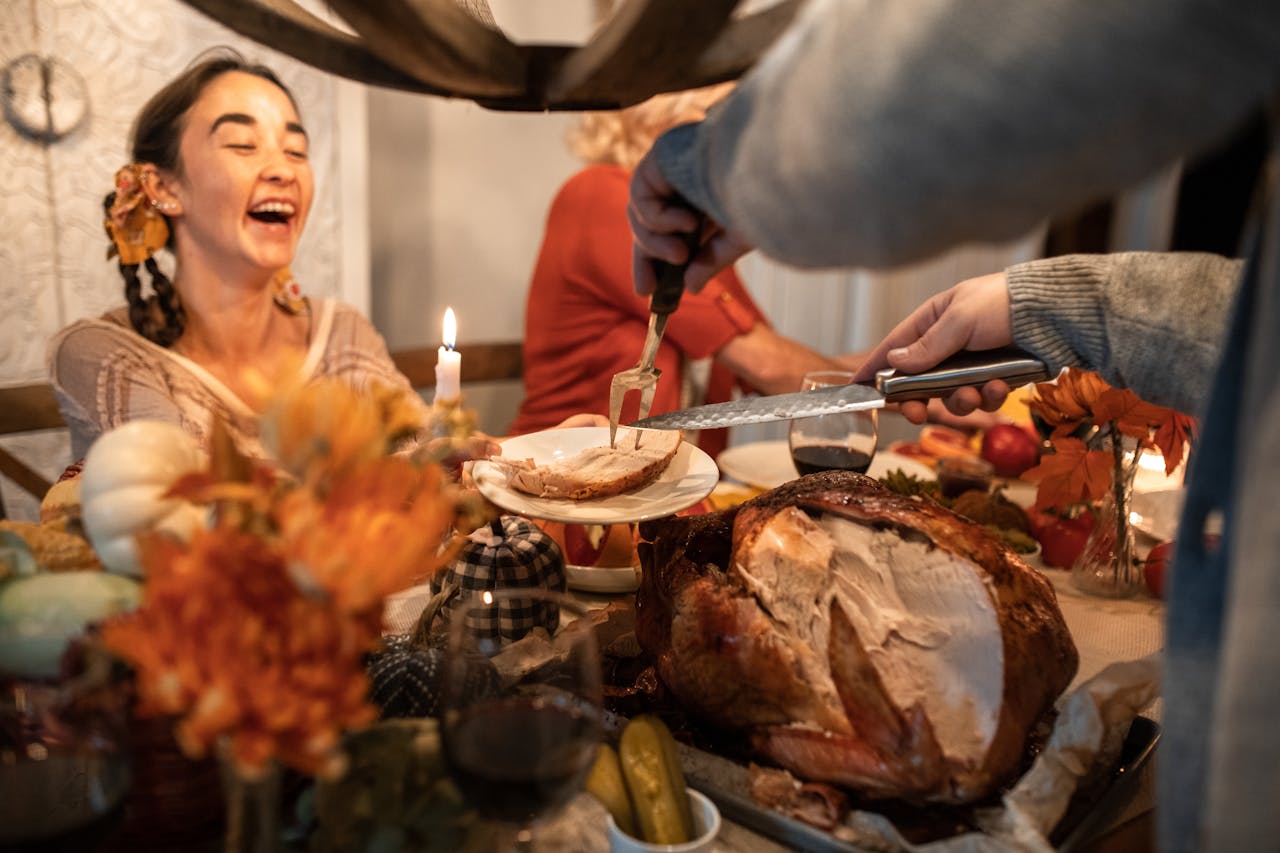
    It’s that time of year again — crunchy leaves, pumpkin spice, wishbones, and pecan pie. Thanksgiving is around the corner, and what better way to celebrate than by hosting a Friendsgiving feast? 

    While I love gathering around the table with my family, one of the things I look forward to most during the year is Friendsgiving. I wait for it like a child waits for Christmas. I love the fall decor, the hearty dishes, and the liveliness, but most of all, I love seeing all my beautiful friends in one place — the way we would like to be more often but can’t always manage with busy schedules. 

    RELATED: Bless Us, Oh Lord, for These Thy Gifts: The Holiness of Mealtimes

    I first celebrated Friendsgiving a couple of years ago with a small group of my girlfriends. We each brought a dish, and dinner went late into the night as we moved from the kitchen to the patio to the living room, talking and laughing all the while. 

    What I took away from that night is that Friendsgiving is more than just a chance to catch up with friends. It’s a spiritual experience. Spending time with women who I usually only spoke to at parties and brunches brought a new sense of intimacy and gratefulness to our conversation, fostered by the intentionality of Friendsgiving. We were brought together not only because we are friends but also because we are grateful that we’re friends. 

    Friendsgiving reminds us of our blessings and renews our commitment to our friendship — to serving and lifting each other up. (Thessalonians 5:11) This can strengthen our existing connections or create new ones, cultivating a spirit of togetherness and gratitude that ultimately points towards God. 

    The Catechism of the Catholic Church says that friendship is a “direct demand of human and Christian brotherhood” (CCC 1939) and the Bible highlights the importance of meaningful relationships (Romans 12:10). These themes lie at the core of Friendsgiving! Christianity has a long history of feasting as an opportunity to come together and celebrate the goodness of the Lord, remembering the blessings he has given us. 

    RELATED: 3 Easy Prayers for Thanksgiving Dinner

    In Christian theology, feasting with friends lives out the biblical principle of community. The Bible points to fellowship among believers: “They broke bread in their homes and ate together with glad and sincere hearts… and the Lord added to their number daily those who were being saved” (Acts 2:46-47). How inspiring to imagine the earliest Christians sharing meals as a form of praising God! Friendsgiving is a present-day manifestation of this practice — a modern way to break bread together. 

    There are several things to focus on when gathering to share a meal and give thanks. At the heart of any Thanksgiving meal is gratitude. Beginning your festivities with a prayer of thanksgiving is a wonderful way to acknowledge God’s provision and the gift of your loved ones. As you savor each dish, appreciate the hands that went into its preparation. I always make macaroni and cheese, my favorite childhood meal, and there are certain dishes I know friends will bring that everyone loves, like their signature macarons or the jalapeño poppers they only make once a year. 

    Encourage your guests to share what they’re thankful for to foster an atmosphere of warmth and connection. I have started a tradition at Friendsgiving where we pass around flowers and whoever holds the bouquet shares what they’re grateful for.

    Incorporating Catholic symbolism into your decor and menu is another beautiful way to remember why you’re gathered together. Set the tables with candles to create ambiance as well as to represent the light of Christ. Evergreen wreaths are a lovely symbol of eternal life, while sprigs of rosemary add fragrance and represent remembrance. Holy cards or Bible verses at each setting add a thoughtful touch, and of course, a bouquet of autumnal flowers never hurts!

    RELATED: Food for Thought: How I’m Approaching Thanksgiving Differently This Year

    As for the feast itself — create a seasonal menu that celebrates the blessings of the harvest season. Dishes of roasted root vegetables, sprouts, cranberries, pomegranates, and pumpkin soup paired with warm beverages like mulled wine or cider make for a cozy feast. Encourage guests to bring dishes from their cultural background or family traditions, creating a tapestry of diversity that demonstrates the inclusive nature of hospitality. For dessert, you could include soul cakes, a traditional All Souls’ Day treat alongside your favorite pie. This balance of Catholic tradition and seasonal celebration will create a memorable event for your guests. 

    Most importantly, foster an atmosphere of hospitality. Open your home to friends without family nearby and extend this generosity beyond your immediate circle by inviting newcomers to your community. Perhaps invite someone who might otherwise be alone, or donate to a local food bank. Friendsgiving isn’t about one lavish meal; it’s a spirit of gratitude and love that extends beyond the day. Generosity and hospitality are pillars of Christianity — the act of opening your home not only strengthens community bonds, but also creates a space where thankfulness is openly expressed, mirroring the biblical command to “give thanks in all circumstances” (1 Thessalonians 5:18) .

    Friendsgiving is more than just a festive gathering — it is a meaningful expression of Christian community and all that it stands for. Whether you’re hosting a Friendsgiving feast or attending one, use the time to reflect on the goodness in your life and give thanks to the Lord. In doing so, you transform a simple meal into a celebration of faith, hospitality, and the blessings we’ve been given.

  • How to Be Kinder to Yourself

    How to Be Kinder to Yourself

    I want to live a simple, joyful life. I don’t want it to be complicated—I don’t want my happiness to be dependent on luxuries and comforts that I cannot afford. In my quest for such simplicity, I am inspired by the life and example of St. Francis of Assisi. I’m often impressed by Francis’ ability to deny himself the pleasures life has to offer.

    The idea of self-care was not a primary concern for him. Francis used to refer to his body as “Brother Ass” because he treated it like one. “A person’s worst enemy is the flesh,” he once said. “All its concern is how to squander the present. What is worse, it claims for itself and takes credit for what was given not to it, but to the soul.” Francis would deny himself any comforts, even those that were necessary for him to accommodate the many illnesses he suffered late in his life.

    As Francis lay dying, he was asked by one of the brothers if he had any regrets, if there was anything he would have done differently.

    “Yes,” he said. “I would have been kinder to Brother Ass.”

    RELATED: Experiencing God’s Love Through the Splendor of Creation

    St. Francis seems to be telling me that a healthy spirituality does not require me to sacrifice the things I enjoy. I don’t have to practice extreme self-denial. Rather, a healthy spirituality can—and perhaps should—make room for me to enjoy the simple pleasures and savor God’s many gifts. I find that when I do not spend at least part of my day outdoors—even if it as simple as taking my dogs for a walk to the park or watching the birds at my feeder while sipping a cup of tea—I am not a happy person; I do not feel whole. My spiritual life is the way I grow closer to God; it makes me whole. The happiness I feel in something as simple as watching a woodpecker hang from my feeder must, therefore, tell me something about God. It is a prayer as much as anything else. 

    You can make similar moments prayers of your own by following a few easy steps:

    Give thanks. Take a moment to thank God for whatever it is you’re doing. This can be as simple as saying “Thanks, God!” out loud. You can also take some time at the end of the day and review those things that brought you happiness. You may want to begin this act of gratitude with this prayer or something similar: “Heavenly Father, all good things come from you. Thank you for the many signs of your love I received today.” Gratitude helps you keep your attention on God from whom all blessings flow and not on the activity or yourself.

    Find God. Actively seek God’s presence in whatever it is you’re doing. You might notice God in a feeling or thought. God might make himself known through the presence of another. By actively seeking God, you will find that you are more attentive to God’s presence surrounding you.

    Share. Joy is not something we hoard. It is not something for our self alone. Joy can only be made complete when it is shared with another. Share your experience of joy with someone else. Even solitary activities can be shared through conversations and social media. For example, I post pictures on Instagram and Facebook of the birds I see when I go birdwatching; this helps me share the beauty I see, and, I hope, brings beauty into other people’s lives.

    RELATED: Living a Life of Gratitude

    We all need to find the time and place where we can enjoy the gifts God has given us. God wants us to be happy. True happiness fills us with God’s goodness and love. It satisfies us; it doesn’t leave us hungry and craving for more. True happiness leaves us feeling light and free, not burdened with the fear that it is fleeting. When we are truly happy, we find that we are filled with peace, kindness, gentleness, meekness, and generosity; we know that God alone is enough.

    Life is hard. We don’t need to make it any harder than it is. Take the time to seek out those things that bring you true happiness. For me and my wife Cathy, that can be as simple as watching the birds that visit our yard. I remember the first time I captured a picture of a Cedar Waxwing. We were sitting on our backyard patio, and Cathy pointed out a strange looking bird, something we had never seen before. We grabbed our camera and snapped a few pictures. We then saw another, and another, and another. Soon we noticed a whole flock of Cedar Waxwings perched in a tree, feeding on berries from its branches. We were so excited. That moment of relaxation on our patio had turned into a shared moment when we felt God’s love, goodness, and beauty.

    So, be kinder to Brother Ass and treat yourself to the simple pleasures that bring you joy. And don’t be surprised when you discover God enjoying them with you.

    Originally published September 18, 2019.

  • How My Puppy Helps Me View Every Moment as a Chance to Encounter God

    How My Puppy Helps Me View Every Moment as a Chance to Encounter God

    puppy sonia while hiking looking back at the camera with a background of fall foliage and mountains
    The author’s puppy Sonia

    If dogs had resumes, they would boast a long list of services. As personal trainers, they get us off the couch to exercise. As wellness gurus, they lower blood pressure and help us de-stress. And as therapists, dogs provide comfort and companionship, especially in times of sorrow and loneliness. 

    One occupation that should be added to this list is spiritual guide. My husband and I had been talking about getting a dog for a few months, as we both wanted a canine companion for all our hiking adventures. Even though I enjoyed many pets of all kinds throughout my life, it wasn’t until my husband and I adopted our 6-month-old schnauzer/shepherd/malinois mix on May 16, 2021, that I realized I could strengthen my own faith through my relationship with her. In just our few months together so far, our “pandemic puppy” Sonia has already taught me to encounter life in the way that God intends for us: with joy, praise, and gratitude. 

    RELATED: A Gratitude Meditation

    Approach each day with an abundance of joy.

    Wake up at 5:30 a.m., walk the dog, make breakfast, take the subway, go to work, take the subway, walk the dog, make dinner, walk the dog, sleep… And get up the next day to do it all over again. Having a routine is a good thing, but I can easily find myself simply going through the motions. I sometimes feel stuck in a cycle, stressed, or exhausted. I just want to make it to the weekend. 

    However, this mindset does not reflect a life rooted in faith. When we approach each day through the lens of joy, we can see all the ways in which God works in our lives. Suddenly, the seeming invisibility of God’s grace becomes visible.

    My puppy reminds me to take on each day with deep, spiritual joy. She inches her way towards my pillow and licks my face to celebrate the morning. She looks deeply into my eyes, glad to start each new day with me, no matter how much I grumble to roll out of bed. What a reminder for me to gaze in the same way at her. At the world. And most importantly, our Lord. Sonia walks to the park each morning with a skip in her step, wagging her tail. That’s when I remember to remain joyful in the Lord’s presence each and every day.

    RELATED: Will I See My Pets in Heaven?

    the author's puppy Sonia looking very cute on a fall hike

    Appreciate where you are in the present moment.

    My husband and I have gone camping with Sonia four times since we adopted her, most recently during the prime of autumn, when peak foliage cascaded through the Catskill Mountains. Every day after a campfire breakfast, we went on a six-mile hike through forests and meadows, around lakes and waterfalls, and up mountain peaks. Sonia was curious about frogs and fallen leaves; I was moved by God’s ability to restore and heal me in the woods.

    It was bittersweet to return to the city after a week in the wilderness without Wi-Fi, and I was nervous that Sonia would not adjust well. I was afraid that my garden and city park would suddenly seem boring and small to her.

    But perhaps I was projecting my own reticence to return to reality onto her, because when we got back to Brooklyn, she literally pulled me to the park, ready to romp with her canine friends, chase squirrels, and collect sticks. Nothing had changed, only where we were. I realized that every moment is precious, no matter where I am. This is the inner spiritual wonder that God wants us to feel. There is grace in every moment, even in times of longing or suffering. 

    RELATED: A Gratitude Retreat

    Be grateful for the people you’re with.

    A sweet, spunky pup who was found malnourished in Tijuana, Mexico, Sonia fortunately felt comfortable with us when we first met her. She quickly became an indispensable part of our family. As such, whenever my husband or I return from work, she greets us as if we hadn’t seen each other in years: wagging her tail, widely smiling, barking happily. In fact, she warmly welcomes all of our family and friends, even our cat, Shadow (who has yet to reciprocate Sonia’s friendly advances). This generosity of spirit reminds me to praise God for every person I encounter in my day: my husband, my family, my coworkers, and neighbors who stop me to chat. It’s through the people in our lives that God works his graces and shows his love. We should be grateful for their presence and consequently God’s presence in our lives through them.

    Adopting a puppy came with challenges, but it was a big blessing in our lives. I thank God every day for Sonia and know that I should approach my life and the people in it with deep gratitude and joy. Moreover, I should encounter the Lord in the big-hearted, unconditional way that Sonia loves me.

    Originally published November 22, 2021.