
Tag: food

  • Why I’m Fasting for Peace During Advent

    Why I’m Fasting for Peace During Advent

    In 2023, Advent arrived at a time when violence in Gaza was often on my mind. Harrowing news and calls for a ceasefire filled my Instagram feed, forcing me to consider what it would mean to respond authentically to the reality of such suffering. As a Catholic, I knew prayerful self-denial was an option, but I had resisted the idea. What good would a manufactured drop of my own suffering do amid the ocean already in existence? Compared to the suffering that war brings, though, that concern felt selfish. “Effective” or not, it is certainly fitting to offer proof of love through sacrifice, and as Lenten as that sentiment feels to me, Advent can be a time of “offering up” as well. 

    I’ll admit that I didn’t choose Advent for purely spiritual reasons. The liturgical season is shorter than Lent, and at 22 days, Advent 2023 was the shortest possible duration. I also knew that the short winter days would be a help: I’d decided to go without food from sunrise to sunset. I was particularly inspired by the fasting practices of Islam. In addition to it being the faith of those who bore the brunt of the violence, my fast was inspired by Ismatu Gwendolyn, a Muslim public scholar and activist, who had engaged in a 40-day fast in response to the violence in Palestine and shared about the experience.  

    RELATED: Fasting From Injustice

    Our Muslim siblings go without food and drink from sunrise to sunset during their holy month of Ramadan as a practice of devotion and spiritual discipline. As you can imagine, this is a far more intensive manner of fasting than the standard two small meals and one large meal that constitutes a standard day of Catholic fasting, especially when considering our reduced consumption is only required on Ash Wednesday and Good Friday. Despite softening the practice for myself (in addition to a shorter fasting period, I did not prohibit myself from drinking liquids during daylight hours), I still very much felt the deprivation of nourishment. What began as a fast for peace became an opportunity to better understand how more than a day of hunger feels.  

    What surprised me the most was how the lack of nutrients manifested itself. I didn’t often feel my stomach rumbling or find myself wanting food to combat the sensation of an empty stomach. What I did feel were the cognitive effects. This wasn’t a matter of being distracted by hunger; operating on less fuel, my brain simply couldn’t function as well as it normally did. I wasn’t as present. It was harder to communicate. It was harder to think. As an aspiring graduate student, I was alarmed by the brain fog I felt, knowing that clear thinking and eloquent expression are fundamental in academic environments. 

    RELATED: The Fast I Choose: No Matter the Season

    I found myself thinking of all the children who sit hungry at school, struggling to focus and learn. According to the USDA, in 2023, “7.2 million children lived in food-insecure households in which children, along with adults, were food insecure.” I thought about how these children may be met with punishment, rather than compassion, for living the effects of hunger. I thought about the long-term effects of that response. 

    How difficult it must be to struggle through elementary school when hunger prevents you from reaching your full potential. How difficult to live through any of the indignities of poverty – homelessness, insecurity, exploitation – with a diminished mental strength. How difficult to not only live under the constant threat of death from bombs or bullets, but also to starve through it. 

    RELATED: Swords into Plowshares: Finding Peace in Advent Today

    I want to emphasize that what I did is not novel: Muslims undergo their Ramadan fast yearly. Christian history reveals more extensive traditions of fasting as well, including during Quadragesima Sancti Martini, or the Forty Days’ Fast of Saint Martin’s, which took place during the weeks leading up to Christmas. Additionally, it feels odd to write about my experience when there are so many people for whom hunger is a daily experience and its effects a constant threat to livelihood. To choose to be hungry is, as a spiritual practice, a privilege. Nonetheless, experience is a powerful teacher: I’m not sure I would’ve understood the mental effects of hunger without experiencing them first-hand. This fast broadened my understanding of hunger and consequently deepened my compassion for those who have no choice but to go without their daily bread. 

    During Advent, we remember the arrival of a God who humbled Himself to live among us, who came to proclaim good news to the poor. If you, like me, have always been blessed with food security, I invite you – provided, of course, that it is healthy and safe for you to do so – to seek out hunger this Advent. Offer your sacrifice up for an intention. Consider donating the money saved on food to your neighbors in need. Prepare for the coming of a Savior who said “I was hungry and you gave me food” (Matt. 25:35) by sharing in and learning from his reality.

  • On Signs From God: Contemplating How God Reveals Himself to Me

    On Signs From God: Contemplating How God Reveals Himself to Me

    Person walking on road with a sign on the ground pointing in two different directions.

    God and I have a running inside joke. It started two years ago, when I read another Busted Halo article about discernment. The author wrote that when a friend of his was faced with a big decision, she would ask God to see a dog — specifically a Dalmatian — to confirm that she was making the right choice.

    As the author explains in the article, relying on signs from God is not the best tool for discernment. God is not a fortune teller and often, the signs we perceive tell us more about ourselves and what we want than God’s will. At the same time, God can speak to us through the physical world in the ways we need it most. 

    RELATED: Looking for a Sign From God? Try These Prayer Practices Instead

    At the time I came across this article, I was starved for affirmation from God. I had a job that brought me little fulfillment, a lengthy commute that drained my energy, and a profound yearning for community and friendship. I wasn’t facing any monumental decisions, but I wanted God to give me a sign that I was moving in the right direction, even if it didn’t feel that way. I don’t know if it was right or wrong to ask this of God, but a few days later, as I was driving home from work, I saw a woman crossing the street walking two spotted dogs on her leash — Dalmatians.

    While this might seem like a direct sign from the divine, it felt more like a playful elbow nudge from the Lord. Seeing those Dalmatians, I perceived a fatherly imperative and promise from God: Lighten up, it’s ok, I’m here

    In the following months, I didn’t ask to see another Dalmatian, but every so often I would cross paths with one, the dogs’ striking coats filling me with an inner warmth as they assured me of God’s presence. Seeing the Dalmatians was not a coincidence nor was it a command — it simply allowed God to reach out to me in a way he knew I would recognize.

    LISTEN: Brett Seeks a Sign From God

    Then there came a time when I was faced with a decision. I had two job offers to discern between, and the similarities in both their roles and workplaces made the choice extremely difficult. Since they were both at local universities, I decided to drive to each one and walk around the campuses, reflect on the offers, and attempt to determine where my soul was pulled. 

    I went on my quest on an icy Saturday in the middle of winter, muted gray clouds casting shadows over the traffic on the expressway. As I took the exit ramp to the first campus, I noticed that the car ahead of me had its windows down, which seemed like an odd choice for such a frigid day. As we curved down the ramp, the head of a Dalmatian emerged from the passenger window, the dog’s ears flapping in the brisk wind. My heartbeat accelerated as I accepted God’s squeeze on my shoulder and thanked him for staying by my side as I made my decision.

    Looking back, I don’t know if that Dalmatian was an indication that the campus I was heading towards was where I belonged, or just a gentle reminder that God would be with me wherever I went. Regardless, I know that it was not by chance that I was driving behind that car or that the dog needed fresh air — God knows what will speak to us the most in the moment that we need to hear him. 

    RELATED: What Is a Sign From God?

    I don’t think that discernment and decision-making should rely solely on perceived signs from God, but I also have faith that God finds unique ways to reveal himself to us. A stranger who holds open the door when our arms are full, a stoplight that turns green right when we approach — it is all laden with meaning whether or not we choose to extract it. 

    If we trust that everything we encounter has the ability to connect us back to God, moments of mundanity can become beautiful and coincidences can transform into assurances that he is watching over us. When I see a Dalmatian, it is like receiving a handwritten note from God, a little inside joke to lift my spirits and fill me with his presence. God always knows what will affirm his love for me, even if it comes in the form of a spotted dog.

  • More Than a Meal: The Holiness of Friendsgiving

    More Than a Meal: The Holiness of Friendsgiving

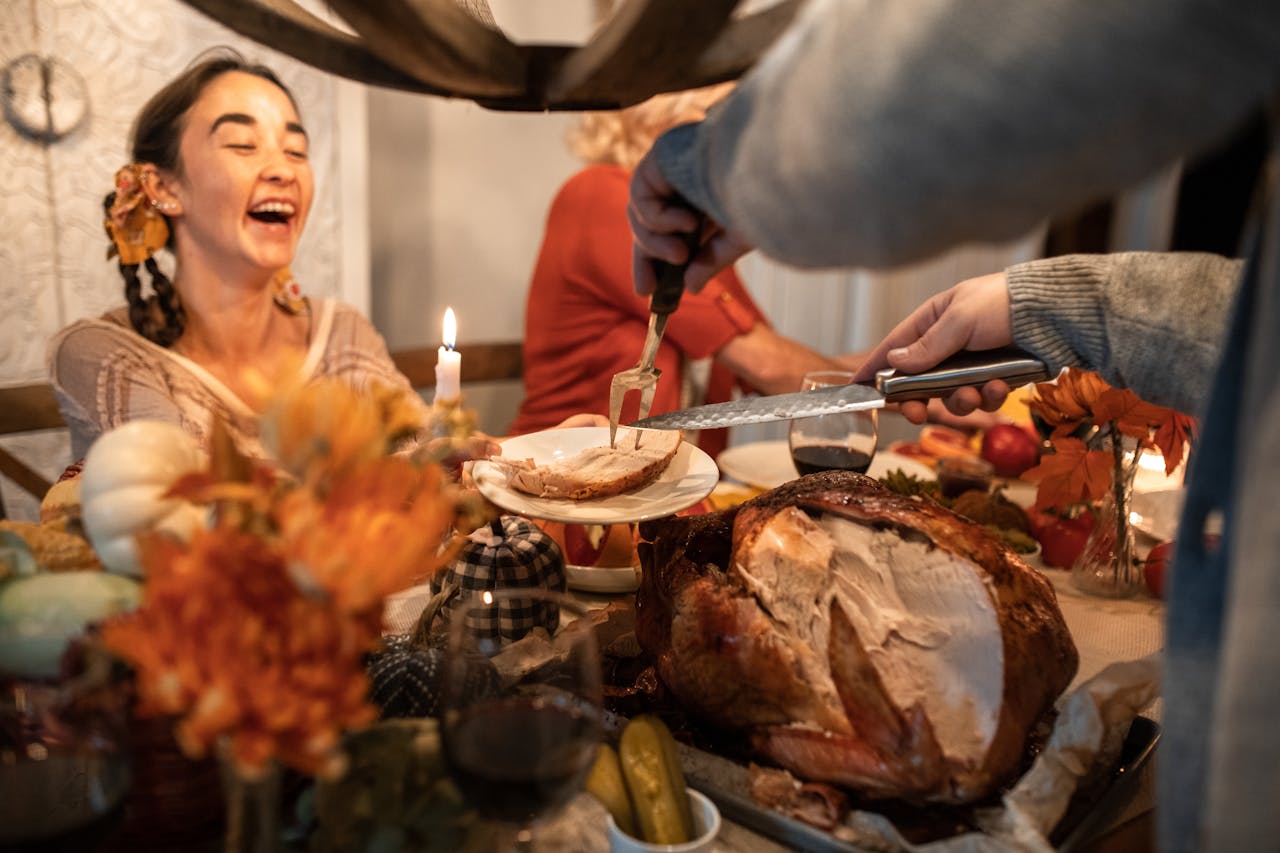
    It’s that time of year again — crunchy leaves, pumpkin spice, wishbones, and pecan pie. Thanksgiving is around the corner, and what better way to celebrate than by hosting a Friendsgiving feast? 

    While I love gathering around the table with my family, one of the things I look forward to most during the year is Friendsgiving. I wait for it like a child waits for Christmas. I love the fall decor, the hearty dishes, and the liveliness, but most of all, I love seeing all my beautiful friends in one place — the way we would like to be more often but can’t always manage with busy schedules. 

    RELATED: Bless Us, Oh Lord, for These Thy Gifts: The Holiness of Mealtimes

    I first celebrated Friendsgiving a couple of years ago with a small group of my girlfriends. We each brought a dish, and dinner went late into the night as we moved from the kitchen to the patio to the living room, talking and laughing all the while. 

    What I took away from that night is that Friendsgiving is more than just a chance to catch up with friends. It’s a spiritual experience. Spending time with women who I usually only spoke to at parties and brunches brought a new sense of intimacy and gratefulness to our conversation, fostered by the intentionality of Friendsgiving. We were brought together not only because we are friends but also because we are grateful that we’re friends. 

    Friendsgiving reminds us of our blessings and renews our commitment to our friendship — to serving and lifting each other up. (Thessalonians 5:11) This can strengthen our existing connections or create new ones, cultivating a spirit of togetherness and gratitude that ultimately points towards God. 

    The Catechism of the Catholic Church says that friendship is a “direct demand of human and Christian brotherhood” (CCC 1939) and the Bible highlights the importance of meaningful relationships (Romans 12:10). These themes lie at the core of Friendsgiving! Christianity has a long history of feasting as an opportunity to come together and celebrate the goodness of the Lord, remembering the blessings he has given us. 

    RELATED: 3 Easy Prayers for Thanksgiving Dinner

    In Christian theology, feasting with friends lives out the biblical principle of community. The Bible points to fellowship among believers: “They broke bread in their homes and ate together with glad and sincere hearts… and the Lord added to their number daily those who were being saved” (Acts 2:46-47). How inspiring to imagine the earliest Christians sharing meals as a form of praising God! Friendsgiving is a present-day manifestation of this practice — a modern way to break bread together. 

    There are several things to focus on when gathering to share a meal and give thanks. At the heart of any Thanksgiving meal is gratitude. Beginning your festivities with a prayer of thanksgiving is a wonderful way to acknowledge God’s provision and the gift of your loved ones. As you savor each dish, appreciate the hands that went into its preparation. I always make macaroni and cheese, my favorite childhood meal, and there are certain dishes I know friends will bring that everyone loves, like their signature macarons or the jalapeño poppers they only make once a year. 

    Encourage your guests to share what they’re thankful for to foster an atmosphere of warmth and connection. I have started a tradition at Friendsgiving where we pass around flowers and whoever holds the bouquet shares what they’re grateful for.

    Incorporating Catholic symbolism into your decor and menu is another beautiful way to remember why you’re gathered together. Set the tables with candles to create ambiance as well as to represent the light of Christ. Evergreen wreaths are a lovely symbol of eternal life, while sprigs of rosemary add fragrance and represent remembrance. Holy cards or Bible verses at each setting add a thoughtful touch, and of course, a bouquet of autumnal flowers never hurts!

    RELATED: Food for Thought: How I’m Approaching Thanksgiving Differently This Year

    As for the feast itself — create a seasonal menu that celebrates the blessings of the harvest season. Dishes of roasted root vegetables, sprouts, cranberries, pomegranates, and pumpkin soup paired with warm beverages like mulled wine or cider make for a cozy feast. Encourage guests to bring dishes from their cultural background or family traditions, creating a tapestry of diversity that demonstrates the inclusive nature of hospitality. For dessert, you could include soul cakes, a traditional All Souls’ Day treat alongside your favorite pie. This balance of Catholic tradition and seasonal celebration will create a memorable event for your guests. 

    Most importantly, foster an atmosphere of hospitality. Open your home to friends without family nearby and extend this generosity beyond your immediate circle by inviting newcomers to your community. Perhaps invite someone who might otherwise be alone, or donate to a local food bank. Friendsgiving isn’t about one lavish meal; it’s a spirit of gratitude and love that extends beyond the day. Generosity and hospitality are pillars of Christianity — the act of opening your home not only strengthens community bonds, but also creates a space where thankfulness is openly expressed, mirroring the biblical command to “give thanks in all circumstances” (1 Thessalonians 5:18) .

    Friendsgiving is more than just a festive gathering — it is a meaningful expression of Christian community and all that it stands for. Whether you’re hosting a Friendsgiving feast or attending one, use the time to reflect on the goodness in your life and give thanks to the Lord. In doing so, you transform a simple meal into a celebration of faith, hospitality, and the blessings we’ve been given.

  • Bless Us, Oh Lord, for These Thy Gifts: The Holiness of Mealtimes

    Bless Us, Oh Lord, for These Thy Gifts: The Holiness of Mealtimes

    Family sitting at a table sharing a meal together.
    Photo by Cottonbro Studio on Pexels.

    A few years ago, I was asked to sit on an alumnae panel at my high school to talk about life in college and beyond. At the end of the discussion, the panelists took turns giving the seniors advice about college life.

    Mine? “Don’t study while you eat.”

    For me, the point of a meal is to be fully present with the person you’re sharing it with. (And if you are eating alone, the meal can be a time to mindfully reflect or pray.)

    There is a sanctity in literally breaking bread with others — whether it be for a special occasion or as part of an everyday routine. Regardless, being distraction-free and fully focused on the present moment — and God’s presence in our company — makes each meal full of grace.

    RELATED: How Rice and Beans Became Our Weekly Dinner Tradition

    Gathering together

    During the Last Supper, a Passover Seder, Jesus gathered with his 12 disciples in the Upper Room to celebrate the Jewish feast. Together, they reclined at the table to symbolize that they are a free people. They feasted on food such as eggs (beitzah), bitter herbs (maror), lettuce (chazeret), parsley (karpas), a spiced apples and nut mixture (charoset), unleavened bread (matzah), and chicken or fish. They enjoyed the traditional four cups of wine throughout the meal. 

    Mealtimes emphasize the beauty of a community. Everyone takes time out of their busy lives to come together as one. It’s no wonder that Jesus chose a meal to establish the first Mass, the holiest of meals. In fact, every Mass is a meal. We gather together to listen to God’s word and eat and drink his body and blood in the form of bread and wine.

    That’s probably why I love hosting family and friends for a home-cooked meal. My husband and I have some favorite dishes we cook for guests: Jamaican-style oxtail, lasagna with homemade pasta, slow-cooked honey-soy ribs, and French onion soup, to name a few. But even daily meals where it’s just Arthur and me (and our dog on the lookout for scraps) feel special because it’s a time when we can simply be together and enjoy a moment of stillness in our lives.

    LISTEN: Heather King Talks Food and Faith

    Making announcements

    As Jesus literally broke bread, he told his disciples: “This is my body, which is given for you. Do this in remembrance of me” (Luke 22:19). He did it again as he passed around the cup of wine: “This cup that is poured out for you is the new covenant in my blood” (Luke 22:20). This was one of the most singularly important announcements in the world: that Jesus is fully present in the bread and wine that is shared in Mass, all around the world, from that very first seder meal to today.

    In our own lives, mealtimes are moments for making announcements. I remember, for instance, the night my sister announced that she was pregnant. It was also over a meal that my husband and I announced we were engaged. Mealtime makes perfect sense to share announcements such as these, as well as job promotions, new ventures, travel plans, and so forth, because we are sharing time and food with our loved ones.

    Coming to terms

    Because we are gathered with loved ones, mealtimes can also be a place to process bad news. I remember the meal I shared with my family the day of my grandmother’s wake: a pork cutlet with mashed potatoes and cucumber salad—the typical hearty Polish fare that is my total comfort food. The meal not only gave me the physical strength to bear the painful events to come but also gave me courage, knowing I was in solidarity with my grieving family.

    Jesus himself shared a dramatic pronouncement at the Last Supper: “Truly, truly, I say to you, one of you will betray me” (John 13:21). This, I’m sure, caused quite a stir in the Upper Room. And, while his disciples were shocked that there could be a traitor among such a close-knit group, Jesus planted the seed to allow them to begin to process all the terrible things that were to come on his road to Calvary.

    RELATED: 4 Spiritual Lessons I’ve Learned From Baking Bread

    Imparting wisdom

    During a seder, it is traditional to wash hands as part of ritual and spiritual cleansing. But Jesus also washed his disciples’ feet, saying: “If I then, your Lord and Teacher, have washed your feet, you also ought to wash one another’s feet. For I have given you an example, that you also should do as I have done to you” (John 13:14-15). We, too, can gain wisdom from the loved ones gathered with us. I remember my parents telling their stories of living in Communist-occupied Poland. Due to mismanagement and poor economic policies, the Communist regime rationed food and other everyday supplies so that store shelves were frequently empty. People stood with government-issued ration cards in long lines (“kolejki”), some of which took days, to receive their portions of sugar, meat, flour, chocolate, etc. Stories such as these gave me the prudence to always be grateful for life’s blessings—like mealtimes.

    Jesus teaches us to keep mealtimes sacred. There’s a game that some people play when they go out to a restaurant. Everyone places their cell phones in a pile in the middle of the table. The first person to touch their phone pays for the entire check.

    Perhaps this is a little cruel for the first poor soul to succumb to temptation, but the message is a simple one: When you’re sharing a meal with your loved ones, be fully there for them. Be present. Make it holy. Jesus did when he instituted the Mass. We can, too—and not just on Sundays, but every day of the week.