Tag: Entertainment

  • ’A Christmas Carol’ Conversion: What Scrooge Teaches Us About Reconciliation

    ’A Christmas Carol’ Conversion: What Scrooge Teaches Us About Reconciliation


    Whether it’s the original novella by Charles Dickens or one of its many screen adaptations, “A Christmas Carol” is enshrined in my mind as a holiday staple. Why shouldn’t it be? Like the songs of the season remind us, Christmas is a time for telling “scary ghost stories and tales of the glories of Christmases long, long ago.” That is what Dickens’ book is – a dramatic event filled with encounters with haunting spirits that, when all is said and done, convince Ebenezer Scrooge of the unrighteousness of his deeds and the need to turn his life around.

    Jacob Marley, Scrooge’s deceased business partner, visits him and kickstarts the series of events that lead to a change in the protagonist. Marley’s chains shaken so horrifically are a symbol of his sins. He reminds Scrooge that he, like us, has sin in his soul – a ponderous chain, but through repentance and change, Scrooge’s unhappy fate can be sponged away. Because this Christmas classic deals so acutely with morality, it is no surprise that we can find in Scrooge’s conversion allusions to Reconciliation. In this story, we witness Scrooge’s sorrow, desire to amend his life, and penance for his misdeeds.

    WATCH: Sacraments 101: Penance

    The parts of Reconciliation

    The Sacrament in which Jesus ordinarily forgives sins is commonly referred to as Confession, Reconciliation, or Penance. While the terms are often interchanged, they really refer to different steps we take in the Sacrament.

    Confession is what it sounds like: confessing your sins to God through the priest. There is power in naming and denouncing our vices, and God’s grace is working in us and strengthening us along the way.

    Next comes reconciliation, part of which entails being sorry for your sins. If you are not sorry for something, you admit there is nothing to forgive. If we have sorrow (contrition) for our sins, then the priest gives us absolution – God’s forgiveness. Even though the penitent is forgiven, they must still try to make amends for the sin. In an act of contrition before absolution, we express our sorrow for our sins and our intention to amend our lives and avoid future sin.

    Finally, we are given penance to do. Sometimes this will be reciting rote prayers. Other times, it could be some external activity. For example, when I was young, I was supposed to empty the dishwasher as penance for disobeying my parents. Another time, I was told to play the Wii with my brother because it was something he really enjoyed (though I not as much). Entering the confessional takes initiative, and penance takes effort.

    RELATED: 4 Gifts to Give One Another From ‘It’s a Wonderful Life’

    The steps of Scrooge’s conversion

    At the beginning of Scrooge’s adventures, it’s clear that he does not desire this intervention of his own will. His associate, the late Jacob Marley, offers him hope to escape a doomed fate like his own: Scrooge will be haunted by a triad of spirits united in a single purpose – his conversion. At the outset, Scrooge is reluctant. But, as time goes on, he takes initiative and puts in the effort to externally express his reformed interior life.

    The first task of the spirits is to instill guilt or regret in Scrooge. The Ghost of Christmas Past shows Scrooge that he is selfish, that he let the desire for wealth dominate any charity in his life – even toward his lover. In his past, he chose greed over love and commitment. This wonderfully expresses how every sin is self-seeking at the expense of God and others.

    The Ghost of Christmas Present awakens Scrooge to the cold, harsh realities of poverty. When shown the home of his employee Bob Cratchit, Scrooge takes an interest in someone other than himself – the sickly Tiny Tim. The spirit reveals that unless the family’s means change, the boy will perish. A wave of sorrow washes over Scrooge, and the fact that he has a direct impact on this cuts him to the quick. Our actions, for good or ill, have consequences.

    It could be said that Scrooge is now in a state of contrition. His heart is being humbled and softened, ready to take on a new flame and vigor. But, if there was any question as to his resolve, the terror of the Ghost of Christmas Yet to Come makes Scrooge’s conversion a matter of personal, vested interest.

    RELATED: From Humbug to Humble: ‘A Christmas Carol’ Lives on

    As Marley’s chains and foreboding words alluded to, Scrooge’s fate is an unhappy one if he fails to amend his life. The final spirit shows our protagonist his grave, and that no one will mourn his death, leading Scrooge to a frenzied plea with the apparition that culminates in what could be considered an act of contrition if given in a sacramental context.

    “I am not the man I was. I will not be the man I must have been but for this intercourse,” cries Scrooge in the cemetery, glaring at his own name on a tombstone. “Assure me that I yet may change these shadows you have shown me by an altered life!” He proceeds to promise he will honor Christmas in his heart always and allow the three Christmas spirits to strive within him. Before waking to his new lease on life, he raises his hands “in a last prayer to have his fate reversed.”

    To some extent, Scrooge seems sorry for the misery he caused others. To an even greater extent, he was scared to death of a fate worse than fatality. Scrooge’s fear leading him to sorrow and repentance is akin to what is called imperfect contrition in Reconciliation. Imperfect contrition is the fear of punishment (the pains of hell) that our sins deserve. Perfect contrition is sorrow for sin out of love for God and recognizing that sin offends him. Yet, God can use our imperfect contrition to affect his Sacrament in us through the merits of Jesus, whose sacrifice supplies what our hearts lack in perfect contrition. Similarly, the imperfect contrition in Scrooge’s heart leads to a radical transformation for the better.

    Displaying contrition, Scrooge also revealed to the third spirit that his past life was in need of change and that he plans to change it. This is his confession, or admission of wrongdoing. For penance, he makes good on his word and avoids sinning in the future by treating others with charity and taking delight in bringing them joy. He chooses to live what is captured by the popular quote attributed to Mother Teresa: “It is Christmas every time you let God love others through you…it is Christmas every time you smile at your brother and offer him your hand.”

    RELATED: Busted Halo’s Guide to Confession

    Reconciliation

    So can we say Scrooge is reconciled? Is he squared away with God? Well, the effort by Marley and the three spirits certainly offers hope that the future can be altered – just as Scrooge’s life could be altered. Dickens certainly wishes the readers to carry such a hope away with them. The beautiful thing about the Sacrament of Reconciliation is that we are given a guarantee of God’s forgiveness.

    If we are good to our word (to strive against temptations and to do our penance), we have a hope greater than Scrooge’s. We have God’s word for it: “Go in peace. Your sins are forgiven.”

  • ‘Backyard Baseball’ and the Saints: Building Teams That Help Us Grow

    ‘Backyard Baseball’ and the Saints: Building Teams That Help Us Grow

    Baseball in green grass
    Photo by nytumbleweeds on Bigstock

    Pablo Sanchez, Pete Wheeler, Luanne Lui . . . Do these names strike any memories? If so, you may have invested more hours than you can count playing “Backyard Baseball” in the late ’90s and early 2000s. Perhaps you learned about “Backyard Baseball” recently, when fans of the original PC/Mac computer game launched an online server mimicking the features of the discontinued classic back in 2021.

    Whether I had just come home from school or had been stuck inside during a snowstorm, I loved assembling a fictional team of neighborhood kids to play baseball in varying environments, such as Sandy Flats and Tin Can City — Playground Commons was my first choice. My favorite part was testing the unique cast of characters in different groups to create the most advantageous team. I laughed hard at their punchlines — “Slick, you made the right decision!” — and I admired their headstrong eagerness to help me, the player, win the game.

    Recently, the cast of “Backyard Baseball” reminded me of another group of like-minded individuals who work together for the same purpose — the saints!

    RELATED: What Are the Benefits of Praying to Saints? 

    Choosing a saint to pray to is a lot like choosing a player to join my team on “Backyard Baseball.” Once I select a team name, the characters all line up on the bleachers, eager to be picked — some even waving to get my attention. When I click on a player to learn more, I hear their pitch to join my team and see their skill ratings, which show the areas where they excel and falter. This is not much different from looking at the communion of saints and praying to one who catches my eye!

    When looking to recruit players for batting, I may consider Achmed Khan, a strong hitter, or Vicki Kawaguchi, a fast runner. Similarly, when I need guidance in specific areas of my life, I think of certain saints right away — St. Joseph when I’m considering a career change or St. Maria Goretti when I’m pursuing a romantic relationship.

    If I check out the rest of Khan’s stats, though, I’ll see he’s not the best pitcher. In fact, his skill rating is so low, I wonder if he’s ever thrown a ball straight in his life. Likewise, the saints, while living on earth, had their challenges. Although St. Therese of Lisieux had a strong prayer life, she struggled with mental health.

    RELATED: How Video Games Helped Me Level Up My Faith

    However, St. Paul advised in his second letter to the Corinthians that God’s grace “is made perfect in weakness” (12:9), meaning that God gives us more help and guidance to be like him and the saints because of our weaknesses. Much like a player from “Backyard Baseball,” the saints contribute to my team. When I fear that my anxiety and depression are clouding my mind and the voice of God, I pray to St. Therese for guidance, because she made it to heaven despite these obstacles.

    Some characters like Sally Dobbs and Stephanie Morgan are evenly skilled across the scoreboard, not particularly talented in one specific area but reliable when placed in any position on the field. These characters remind me most of saints like St. Anthony of Padua, St. Paul, and St. Francis of Assisi, who are the patron saints of many areas. Many know St. Anthony as the patron saint of lost items, but he also guides me in improving ministries at my parish — he’s the patron of my local church!

    No matter who’s on my baseball team, all these characters care about is winning the game for me, the player, just like the saints root for me to win salvation. In real life, our souls are at stake, and the saints so eagerly want to extend grace from God so that we can achieve eternal life.

    We’re still on earth, and the saints are in Heaven in full communion with God. So why not ask for their help?

    In case you’re wondering, here are the saints on my team!

    • Maria Goretti — chastity and forgiveness
    • Francis de Sales — writing
    • Mother Cabrini — courage
    • Pope John Paul II — evangelization
    • Anthony of Padua — parish life
    • Joseph the Worker — career life
    • John of the Cross — dark times/spiritual desolation
    • Therese of Lisieux — humility/mental health
    • Mother Teresa — conviction
  • ‘Inside Out 2’ and the Journey of Self-Acceptance and Reconciliation

    ‘Inside Out 2’ and the Journey of Self-Acceptance and Reconciliation

    “Inside Out 2” (Courtesy of Walt Disney Pictures)

    As a rising kindergartener, my 5-year-old feels our summer schedule should encompass all things big-kid-related. One of her ideas for a rite of passage: movie theaters. I was hesitant at first, but after she saw a trailer for “Inside Out 2,” there was no stopping the flood of requests to see the new movie. 

    We attended a sensory-friendly screening where the lights are merely dimmed and the volume plays a tad softer. Overall, it was a success. My 2-and-a-half-year-old lost interest midway through, but discovered the joys of popcorn and was placated, while my big kid was utterly mesmerized.

    RELATED: A Good Dog: How ‘Bluey’ Inspires Goodness for the Whole Family

    For those unfamiliar with the “Inside Out” movies, the plots center on the Emotions that reside in our heads: Joy, Sadness, Fear, Anger, and Envy. These Emotions control the console of our feelings while creating and storing memories. The mind in which most of the plot’s action takes place belongs to Riley, a lovable young lady who is 11 in the first movie and 13 in the sequel. The first film is a favorite at our house and focuses on the important roles of both Joy and Sadness in our life and growth.

    The writers of Pixar’s “Inside Out 2” succeeded again in crafting a film that not only appeals to youngsters, but also speaks with a nuanced wisdom to tweens, teens, and adults. While the new emotions in Riley’s head, led by Anxiety, have received a great deal of attention, an aspect of the movie that fascinated me was the Belief System. 

    The Belief System is a curated set of memories that create Riley’s continually forming Sense of Self. At the start of “Inside Out 2,” the audience witnesses Joy carefully choosing good memories to add to Riley’s Belief System; thereby forming a string of light that fuels and develops the Sense of Self. Joy also creates a launching device for all painful or embarrassing memories; they are sent flying to the back of the mind. The emotions express pride in Riley’s Sense of Self as it intones beliefs like “I am a good person” and “I am a good friend.” Then, puberty begins and Anxiety usurps the console of Emotions. 

    Anxiety destroys Riley’s Sense of Self and begins to form a new Sense of Self based on anxious beliefs; this new Belief System crackles and pops while shining a scalding orange. Riley acts out of character, ignoring her friends in favor of popularity, lying for clout, and appearing altogether lost internally. The Emotions are faced with a tough choice as they struggle to fight Anxiety and restore Riley’s Sense of Self: Do they release the bad memories to influence the Belief System in order to incorporate the good ones as well?

    RELATED: Spiritual Streaming: 5 Faith-Themed Films for Your Next Movie Night

    The Emotions realize that clinging to the Belief that we are all good, without the nuance of our flaws, isn’t a realistic or healthy way to live. The floodgate of memories is unleashed and Riley copes with the influx of new threads to her Belief System: She is a good person, but she makes mistakes and bad choices. Riley doesn’t accept her faults, but instead acknowledges them, and attempts to repair the damage she’s done. She finds a way to grow and move forward with a more holistic view of who she is.

    As I sat in the theater with my daughters cuddled on either side of me, I couldn’t help but think about how we as Christians take this idea of acknowledging our faults to an even more fulfilling conclusion.

    Rather than being left with the emotions in our head waging war against our poor choices and their effects on our Sense of Self, we are offered a beautiful example of love and forgiveness through God’s offer of Reconciliation. When we bring our whole selves, mistakes and all, vulnerably before God, He offers us grace. We are reminded in Romans 5:8 that, “God proves his love for us in that while we were still sinners Christ died for us.” Our faults do not have to become entrenched in our Sense of Self; we recognize our sinfulness and we bring it to him who loves us nonetheless. 

    When we acknowledge before God our failings, mistakes, and sins, we move into a relationship of love; for as C.S. Lewis writes “to love at all is to be vulnerable.” This vulnerability and willingness to confess our sins before God allows us to accept his love and grace. As Riley has to come to understand her Sense of Self as a fluctuating core, capable of good and bad choices, we too have the chance to humbly admit our failures and embrace our deep need for God.

    LISTEN: Co-Creator of ‘Blue’s Clues’ and ‘Daniel Tiger’s Neighborhood’ Offers Life Lessons for All Ages

    My 5-year-old tends to be hard on herself when she makes a mistake – a reaction I understand all too well. We often talk through how a poor choice does not indicate that you are a mean or bad person; in fact, feeling regret and disappointment in your actions shows that you know what is right, good, and true. The key is to make amends for our bad decisions. I appreciated how the movie showed Riley’s realization of her unkind behavior towards her friends, and her willingness to apologize and patiently build back their trust. When Riley makes amends with the friends whom she has hurt, she has to admit that she was wrong, but she moves towards a wholeness within herself.

    Reconciliation restores not only our relationship with God, but also our relationship with ourselves. Acknowledging our need for God’s grace creates an opportunity for our Sense of Self to broaden from internal musings to external appreciation for what God tells us about ourselves. He reminds us that we are fearfully and wonderfully made (Psalm 139), we are precious, honored, (Isaiah 43), chosen (Ephesians 1), created in God’s own image (Genesis 1:27), forgiven (1 John 1:9), and loved (Romans 8:38). When our Sense of Self wavers, as “Inside Out 2” reminds us it is prone to do, we can lean back on the truth of what God tells us about ourselves.

    I think the concept that our feelings about ourselves will change over time is an important one for both young and mature audiences. There are days of soaring pride and dark disappointment. However, when our Sense of Self relies not on our own fluctuating emotions, but on the steady promises of God, we can rest in the peace of his gaze. This is my hope and prayer for my girls, that movies like “Inside Out 2” remind them that everyone struggles with identity and belonging, yet their worth is not measured by feelings or validation from their peers. Their significance and Sense of Self is guaranteed and beautifully crafted by a God who loves them and welcomes them with open arms.

  • A Good Dog: How ‘Bluey’ Inspires Goodness for the Whole Family

    A Good Dog: How ‘Bluey’ Inspires Goodness for the Whole Family

    Image Courtesy of Disney+

    A red dog gently bunts a cricket ball to his younger sister; she triumphantly catches it and immediately runs to him to celebrate her big play. He proclaims, “What a catch!” while affectionately ruffling her hair as she giggles with glee. Looking on, a father states to his daughter, “That’s what cricket is all about, kid.” I find myself awash in tears while watching this tender and supportive interaction play out on the screen with my young daughters. 

    What is it about the Australian kids’ cartoon “Bluey” that tugs my heartstrings? Parents and children alike feel drawn to and inspired by the show. Animated dogs are far from a new genre, and yet “Bluey” possesses a fresh, unique sense of childhood’s wonder and joy. “Bluey” follows the adventures of an anthropomorphic family of Blue Heelers living in Australia. Bluey is a spunky 6-year-old pup, and her 4-year-old sister, Bingo, happily takes the role of her imaginative playmate. Often joining in their elaborate games, their parents create a loving, family-oriented atmosphere. We began watching “Bluey” after our dear friends mentioned its charm and it became a fast favorite in our home. Wading through media meant for children is a daunting task as a parent, but “Bluey” provides a welcoming, safe space to which I find myself continually returning. There’s silliness, foibles, and even the sprinkling of light potty humor; and through it all “Bluey” captures the essence of goodness and family life remarkably well. 

    RELATED: 3 Ways God Reveals Himself to Me Through My Young Children  

    “Bluey” depicts the mundane, everyday interactions between a family and their friends. “Bluey’s” narratives do not focus on big sweeping storylines but rather on the sacred space of family life. Holding relationships at its center, the pursuit of goodness and harmony is evident in the depictions of both the adults and children in the series. The stories weave a tapestry of virtue I see reflected in my own family. 

    Giggles cascade across the room as my daughters carefully guide a ladybug to her newly constructed magic carpet. For an unexplained reason, our home has experienced an influx of ladybug visitors and, inspired by a particularly charming episode of “Bluey” called “Slide,” no bug shall be harmed in our home. In “Slide,” Bluey’s sister Bingo and her best friend Lila develop a system for ensuring that when they careen down the water slide, no bugs are squashed. My sweet, caring girls took this message to heart, and we are now the protectors and playmates of all insects. Small acts of kindness for the tiniest of friends, but kindness nonetheless. 

    LISTEN: Tackling Kids’ Tough Questions of Faith

    Goodness, sometimes defined as virtue in action, radiates throughout “Bluey’s” family as they navigate forming relationships that bless not only one another but also their neighbors, friends, and family. Theologian Stanley Hauerwas describes the development of virtue as narratively formed through stories. I see this development firsthand and subsequently try to be mindful as I curate the stories my daughters watch and read. Yet, I have discovered their characters are not the only ones formed through these narratives.  

    Kindness and goodness are depicted not only in the main characters, but also throughout their community; emphasizing our need to both give and receive support. In an episode called “Baby Race,” Bluey’s mom, Chilli, recollects her struggles with comparison early in motherhood. Her anxieties over Bluey’s development are eased when she is visited by a more experienced mom friend who gently informs her, “You’re doing great.” This has become a reminder frequently quoted by my dear friends and me when one of us is feeling the weight of motherhood. Never underestimate the wisdom of a pink poodle and the ripple effect of support. 

    RELATED: Children and the Church: Recognizing the Welcome

    The episode referenced at the beginning of this article, “Cricket,” chronicles the journey of Rusty, a friend of Bluey’s, to become a skilled cricket player. Rusty’s dad is deployed overseas; yet through his letters, he imparts advice on facing fast pitches by writing, “As you grow up, you’ll face harder things than a cricket ball… Just keep your eye on the ball and take care of your little sister for me.” This prompts Rusty to bunt the ball to his sister and celebrate her achievement rather than reveling in his own skill. My older daughter quickly caught onto the thread most pertinent to her life and cooed “Aw! He shared with his little sister.” And that’s the beauty of “Bluey;” she saw a sweet story about sharing with your siblings, while I watched a heartwarming tale about a young dog growing in character and skill, and we both loved every minute. 

    The stories that we watch and read with our children form both parent and child. They offer verbiage to discuss tricky topics, provide games and ideas for imaginative play, and gently teach us all the virtue of goodness. By creating a program that highlights the beauty of the mundane and centers on creating healthy relationships with others, “Bluey” has inspired and captivated audiences. All ages can enjoy a show that depicts how kids and parents can both grow in goodness within their everyday lives. As I read, watch, and listen to various stories with my children, I am learning to embrace each narrative that shapes my character, and that of my children, for good – even those starring a small blue dog. 

  • More Than a Story: How ‘Star Wars’ Gives Voice to My Spiritual Journey

    More Than a Story: How ‘Star Wars’ Gives Voice to My Spiritual Journey

    Space backgroundPeople like to tell me that they haven’t seen “Star Wars.” 
    It started out as a joke with friends: “Eric loves ‘Star Wars!’ This will absolutely shock him. He won’t be able to believe it.” 

    But over time, it’s become something else. Usually, after I give a talk or a workshop—one thoroughly peppered with “Star Wars” references and jokes—a person will come up to me, sort of sheepish. “I really liked your talk,” they’ll say before pivoting to confession mode. “But Eric, I’m really sorry to say this, but I haven’t seen ‘Star Wars’…”

    I mock shock, anger even, but then we laugh. It’s fine, of course—the franchise isn’t for everyone. We all have stories we like and some that just don’t resonate. I haven’t yet refused a friendship over the mere sin of not having seen “Star Wars.”

    But I have been thinking more and more about this transition in the way people talk to me about that galaxy far, far away. Because I think they see a change in me: This isn’t just a story I enjoy; it means something. 

    RELATED: Faith and the Force: ‘Ahsoka’ and the Power of Relationship

    Sure, it holds a special place in my own life story: My dad popped those VHS tapes in the VCR when I was little, ensuring I had something super cool to talk to my friends about in school for the rest of the week–and that I was ready for the prequel trilogy to premiere only a few years later. 

    But “Star Wars” means more to me than that. It gives voice to my own spiritual journey.

    I’m not talking about drawing parallels between our faith and “Star Wars”: “Anakin as the Chosen One is like Jesus as our Savior!” Or, “Jesuits are like Jedi because they both practice a form of indifference!” Parallels are helpful, sure; they help us see spiritual stakes in otherwise secular stories. But we remain passive observers when we simply look for parallels; we don’t engage the spiritual truths they point to. 

    What moves me about “Star Wars” is that the story gives me a new language with which to give voice to my spiritual journey. For example, the Dark Side of the Force feeds on fear; am I allowing fear to govern my decisions in relationships, at work, or in the way I view myself? If I am, then I may be unknowingly pursuing a dark path—and my own faith tradition has plenty to say about that! 

    What about redemption? Sure, we love to see Luke cling so fervently to the belief that his father might still be saved, and that Anakin still lives somewhere in Darth Vader. But do I act as confidently in this galaxy oh-so-near? Do I display those spiritual virtues that Luke does on the second Death Star: nonviolence, trust, surrender, and compassion? And if not, is there a relationship in my life that could benefit from such a disposition?

    I enter into the story; I engage the characters. I try some of those lofty lessons on for size. And I do so in a way that remembers St. Ignatius, the founder of the Jesuits—honoring the spiritual legacy of the Basque soldier-turned-saint who realized that God was to be found in all things, through our senses and our desires. Ignatius invites us to engage Scripture this way, by entering the story. But what if we did the same with stories of pop culture that mean so much to us?

    Because I think in the end, that’s the point: God is present in these supposedly godless stories. God desires to speak to us through the very myths and legends that move us, that inspire us, that stoke our imagination. Are these holy texts? Not in any way a biblical scholar would recognize, but these are stories that speak to something deep within ourselves.

    And the reason I spend so much time thinking about them—the reason I wrote a whole book, “My Life with the Jedi: The Spirituality of Star Wars”—is because I think that while these stories speak to us, we can use that same language to speak to others. To discover spiritual truths within ourselves. 

    We don’t actually have some mystical energy force to call upon to levitate rocks or pull X-Wings from mucky swamps. But we do experience the tug of the dark side and the light each and every day. We wrestle with decisions that set our lives on trajectories that bring us closer to the light or further from it. 

    RELATED: Curate Your Own Lenten Movie Marathon

    Painting this very relatable spiritual struggle in the hues of laser swords and warrior monks simply brings into clarity the weight of otherwise mundane decisions. Spiritual decisions. Do I move closer to the light? Or, do I find myself in darkness and in need of redemption? The fate of the galaxy might not rest on my meager decision-making. But then again, maybe it does. 

    Star Wars. Ignatian spirituality. Pop culture. Our faith lives. These aren’t separate things. In fact, one can feed the other, all while elevating our ability to see new. possibilities in a world so desperately in need of them. 

    Maybe that’s why people have started apologizing to me for not seeing “Star Wars.” People feel as though they have to apologize for not being fully bought in. Not because “Star Wars” is my religion but because it clearly gives me a new language with which to articulate very old spiritual truths. And that matters—to me, to you, to our world. 

    But here’s what I say in response: Don’t apologize for not seeing “Star Wars.” Find the story or stories that inspire you. And see what God might be trying to say to you through them. 

    Learn more about and get your copy of “My Life with the Jedi: The Spirituality of Star Wars” from Loyola Press today!


  • ‘Jonathan & Jesus’ Is a Story of Surrender We Can All Learn From

    ‘Jonathan & Jesus’ Is a Story of Surrender We Can All Learn From

    “Jonathan & Jesus” docuseries | Steven Schwartz

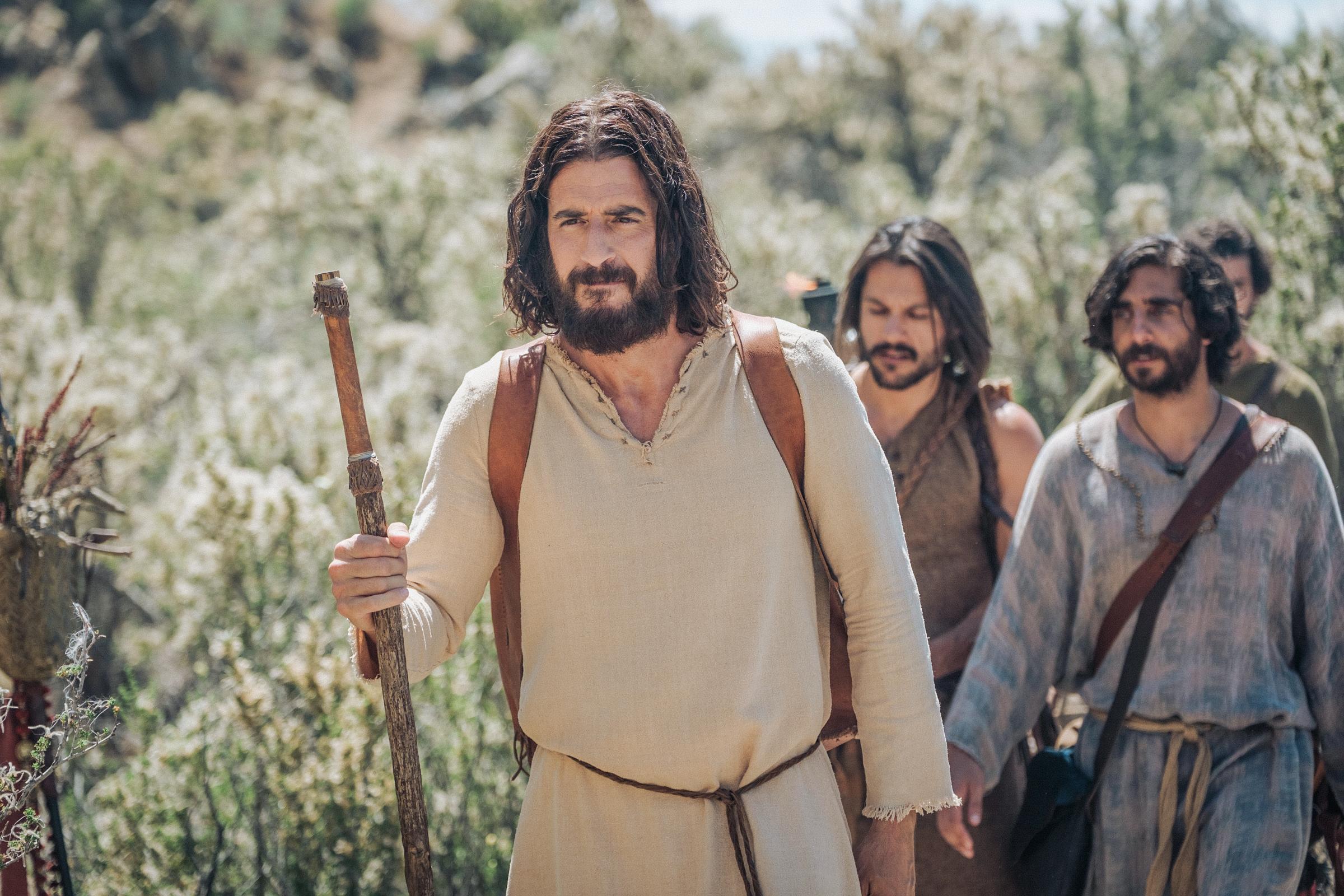
    Let’s get this out of the way first: I’m an unapologetic fan of “The Chosen,” the series about the life of Christ that went from a crowdfunded upstart to an unexpected worldwide phenomenon; its fourth season is about to hit movie theaters in February before being released to streaming in March. I think Jonathan Roumie’s performance as Jesus in the series is staggeringly good. I’m also someone who’s worked in the entertainment industry for much too long, often with those magical creatures we call actors (not, for full disclosure, with Jonathan Roumie). So, I acknowledge I’m not the most objective viewer of the newly released “Jonathan & Jesus” docuseries.

    Yet I admit when I initially learned about “Jonathan & Jesus,” I had a moment of “oh, dear.” My first thought: How does this, even when made with the best intentions, avoid looking like an ego trip?

    I’m happy to say that “Jonathan & Jesus” doesn’t play at all like an ego trip. It’s not an easy watch – that’s not criticism, that’s praise – because it is a journey through the life-changing nature of Roumie’s experiences, from deeply blessed to personally overwhelming to just plain cool, during the early days of the ascendency of “The Chosen.” It’s also an interrogation of the meaning and impact of Jesus, not only on the actor playing the role, but on everyone in our world.

    LISTEN: Jonathan Roumie’s Prayer Challenge

    While the burgeoning of “The Chosen” phenomenon and Roumie’s landing a lead in “Jesus Revolution” between the shooting of seasons two and three of “The Chosen” serve as an ongoing throughline, each episode of the docuseries has its own focus, roughly sketched as (1) Jesus as God and historical/cultural touchstone, (2) Christianity, division, and unity, (3) celebrity and humility, and (4) control versus surrender. “Jonathan & Jesus” is ambitious and immersed in big questions throughout, touching on subjects both complicated and diverse. 

    A journey through the meaning of Jesus as the Incarnate Word of God, the primary cause of Western Civilization, and a pop culture motif took me on an emotional rollercoaster. First, I felt vaguely uncomfortable seeing some of the more mundane depictions of Jesus portrayed in pop culture, from “Family Guy” to the Buddy Christ image from Kevin Smith’s “Dogma.” That gave way to a sense of the transcendent as a historian standing in the shadow of the Roman Colosseum considered that at the time the Colosseum was built, it would have been ludicrous to think that the Roman Empire would soon be ruins, but a nascent faith beginning with Jesus and a small group of followers in Judea would survive, thrive, and be, millenia later, the largest faith in the world. 

    Discussions between Roumie and preachers and influencers of various Christian denominations reminded me how we’re so unfortunately quick to criticize each other, focusing on the things that divide us as Christians instead of the God who unites us all. Interviews with scientists, ministers, writers/podcasters, human rights campaigners, and musicians revealed the pivotal moments in which these people chose to surrender their lives — expectations and illusions of control included — to God in faith and the monumental results of that choice. Given my own constant struggle with surrender and what it really means in practice, seeing these stories is a nudge to keep on trying. (If you’re like me, you regularly turn your eyes heavenward and say, “Is this it, God, am I surrendering right yet? Because I don’t think I am!?!”) And yes, you will come away from this doc wishing that Jonathan Roumie, Sheila E., Brandon Flowers, and Alice Cooper could tour as the world’s most unlikely supergroup.

    Photo courtesy of The Chosen / Mike Kubeisy

    RELATED: Spiritual Streaming: 5 Catholic-Themed Films for Your Next Movie Night

    With all these matters raised and considered, the series is in some ways a choose-your-own-adventure; which parts of it stick with you will vary significantly from viewer to viewer. At the close of the final episode, the person who watched with me said, “The things some of those Christians he interviewed were doing…feeding migrants under bridges and saving trafficked women…how am I ever going to get to heaven?” Meanwhile, I was most affected by the unflinching honesty of the life-of-an-actor segments, which take the viewer from the dire situation Roumie was in just months before “The Chosen” came along to interviews with his sister, Olivia, and Dallas Jenkins (creator of “The Chosen”), discussing how both fame and the conflation of a human actor and the Son of God in the mind of fans can be disorienting, scary, and exhausting—even for a grounded person with a deep faith to sustain him. In my professional life, I’ve seen both actors eking out a living juggling acting gigs with low-paying survival jobs and actors dealing with sudden fame due to one big role (never mind the role of Jesus, which adds knotty moral questions to the already complex issue of fan adulation). These segments felt painfully real and raw to me, a look behind the curtain that we rarely get about the challenges of life as an actor. 

    Does the docuseries fully get its arms around all these subjects? Not precisely, but to my eyes that’s exactly the point. These subjects can be explored, dissected, studied, grappled with, and prayed over, but as Anthony Bova, Roumie’s acting coach, says in the plainest way possible: “…the whole Jesus Christ thing, that’s tough. Because…I mean, whadya do with that?” That statement works as both an acting coach throwing up his hands at the challenges of a role (the job of playing the perfect human is restricted to exactly one role in all of literature, and it’s this one) and a person questioning how much any of us can represent Jesus, even if we’re mandated as Christians to try. So fair enough, Anthony. That’s a question millions have asked over the ages.  

    RELATED: Less Worry, More Trust: Praying the Surrender Novena in Times of Change

    But along comes a scene near the end of the docuseries to show us what we do with the “whole Jesus Christ thing.” It takes us back to 2018, to a part of Jonathan Roumie’s personal story of surrender that many “Chosen” followers have heard about but not seen. I’m not going to go into detail; it is a losing proposition to try to find adequate words to describe someone at the end of his rope encountering the ineffable, and in any event, the powerful moment deserves to be experienced, not described. I’ll just note that if you want to see God starting to lift up someone who has fully surrendered after a long struggle in the wilderness, well, there it is. 

    So no, none of us can get our arms fully around these subjects. Not you, not me, not Jonathan Roumie. Three hours of screen time (or two thousand years of Anno Domini) cannot unlock the unfathomable. What “Jonathan & Jesus” shows us, viscerally and in multiple different testimonies, is what we can do: surrender to the unfathomable. And then the one who is the ultimate subject of this docuseries – the one whose credit is larger, in bold and after the ampersand in the title treatment of the trailer — can get his arms fully around us and take us on his journey.