Tag: election

  • Faith and Politics: Navigating an Election Season as a Catholic

    Faith and Politics: Navigating an Election Season as a Catholic

    With the 2024 Presidential election just around the corner and political tensions higher than ever, Busted Halo acknowledges that this can be a difficult time for Catholics as they decide on a presidential candidate. As Catholics, our faith helps us sort out the many complicated issues we face during an election and leads us to an informed decision about which candidate to vote for. 

    We hope these resources might prove helpful for you and your loved ones during this time, and we’ll keep all of you in our prayers as you seek to inform your conscience, discern, and cast your ballot. 

    Voting Catholic (Video)

    Father Dave reflects on the core principles of Catholic Social Teaching that should serve to inform the consciences of Catholic voters before they head to the polls.

    Practicing “Civic Discipleship” This Election Season With Fr. Bryan Massingale (Podcast)

    When forming our consciences this election season, Father Bryan notes, “I think sometimes we have this understanding, even among Catholics, that politics and faith should not meet at all; that is not at all what we believe as Catholics. But as I tell people, when Catholics enter the political arena, we don’t bring partisan values to the conversation – we bring Gospel values to the conversation.”

    Can a Priest Tell Me Who to Vote for? (Podcast) 

    Father Dave discusses the difference between a priest informing his congregation on relevant issues and the outright endorsement of a political candidate, as well as the guidelines that priests are called to follow during the election season.

    Dr. Charlie Camosy: Pro-Life Voters Are Politically Homeless (Podcast)

    For those feeling anxious about voting or the outcome of this election, Dr. Camosy says, “These political decisions are not without weight and gravity. They are important, but at the end of the day, our ability to be authentically Catholic and to say, ‘I’m a Catholic first, and a political actor second. I don’t filter my faith through my politics, but rather the other way around.’ That becomes way more important, especially if we have our ultimate home [of heaven] in mind.”

    How To Talk to Those Who Disagree with You—and Still Love Them (Article)

    “Our nation is deeply divided. But having conversations – no matter how small – can help narrow the divide, bring healing through understanding, and make our communities and country stronger. And that’s a real win.”

    Fatherly Advice: Dealing With Political Division (Podcast)

    Political division is prominent in our country today, but maintaining one’s dignity as a Catholic is of the utmost importance. Father Dave shares how to navigate this tense time with patience and compassion for others, especially those with whom we disagree.

    Voting as a Catholic (Podcast)

    Catholic voters must carefully consider a number of issues before deciding which political candidate would be best for the country. Father Dave reflects on these issues…

    Bishop John Stowe on Catholic Voting (Video and Podcast)

    Bishop John Stowe joins the Busted Halo Show to discuss the “womb to tomb” approach to being pro-life and the implications it might have on voting as a Catholic.

    Keeping the Faith during Election Season (Facebook Live)

    Father Dave discusses how you can make important faith-based decisions about voting and relationships during the election season.

    More Resources: 

    Forming Consciences for Faithful Citizenship (USCCB) 

    The United States Conference of Catholic Bishops offers a number of resources on how Catholics can engage in politics responsibly “by offering the best of themselves so that the leader can govern,” in the words of Pope Francis.

    Prayer Before an Election (USCCB)

    This prayer published by the United States Conference of Catholic Bishops asks God for the guidance and discernment to navigate the challenges of this election season while staying true to the Catholic faith.

    Originally published October 15, 2020.
  • Watch: Voting Catholic

    Watch: Voting Catholic

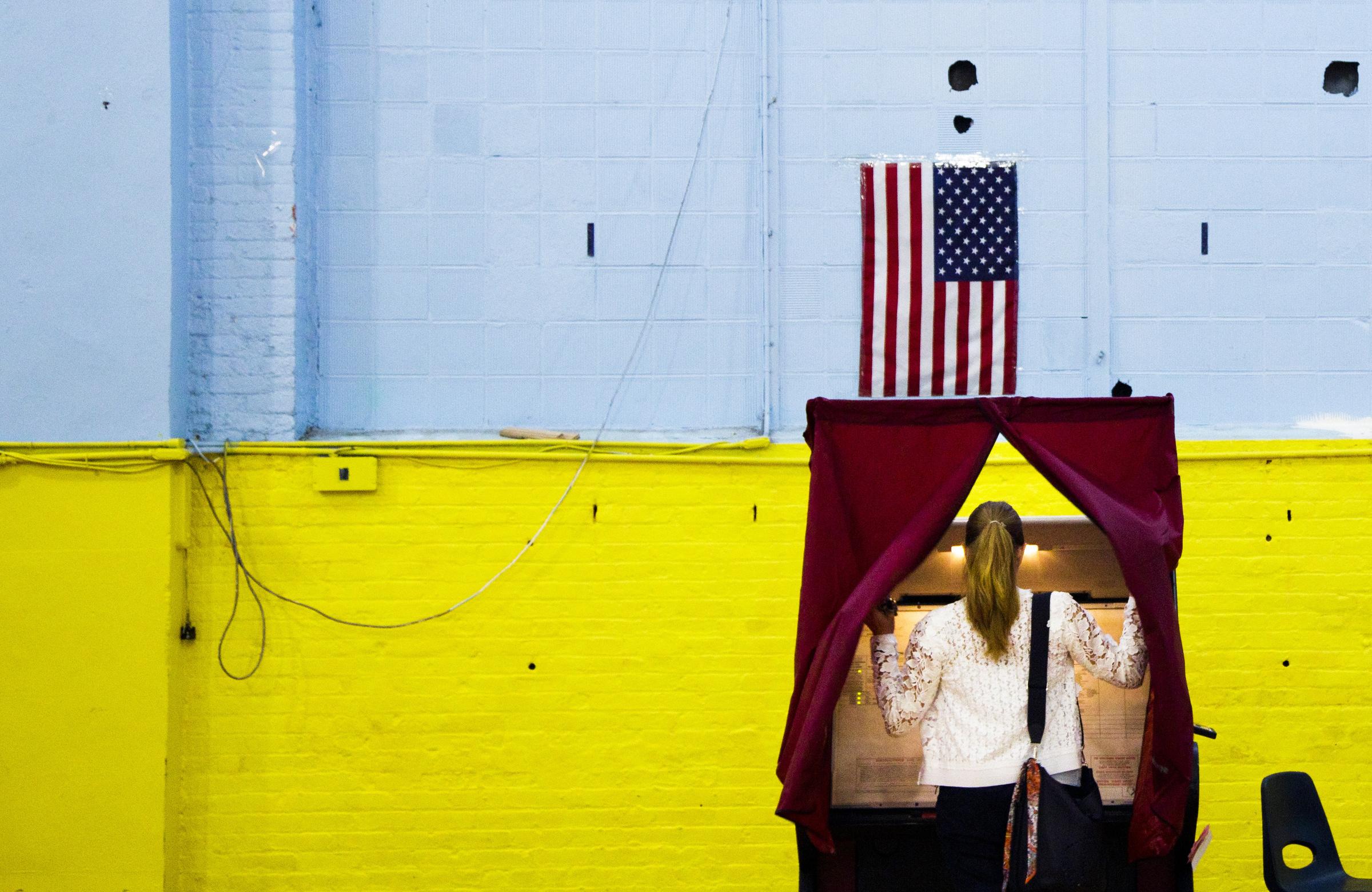
    We’ve been hearing about this year’s presidential election for a long time. Emotions are running high on all sides, and as the election draws closer, we’re inundated with news and opinions. You may have tried to tune out the campaign because you aren’t happy with your choices, but it’s almost time to head to the polls. Voting is important. And there’s always a lot for voters to consider, and different issues are important to different people. However, the Catholic Church has never advocated its members to vote for a particular candidate, particular party, or vote solely on one issue. In fact, Catholics are never single-issue voters. As Catholics, our faith helps us sort out the many complicated issues we face during an election and leads us to an informed decision about which candidate to vote for.

    Every election year, the United States Conference of Catholic Bishops publishes a guide called “Forming Consciences for Faithful Citizenship” — a teaching document on the political responsibilities of Catholics that offers insights on issues important to the Church. This video highlights the content of that guide.

    As a people of faith, it’s important that we remember we have a moral obligation to uphold, founded in the teachings of Jesus and of the Church. Hopefully, this video and guide will help you make the best possible moral, faith-filled choice as you vote in this election. Watch it, share it, and vote.

    Not sure how or where to vote this year? Visit rockthevote.com for details on voting in your area.

    The Paulist Fathers released several resources to anchor those who seek to engage with the moral questions that dominate election cycles. These documents will help you as you consider your choices this November.

    Originally published October 5, 2016.

  • How To Talk to Those Who Disagree with You—and Still Love Them

    How To Talk to Those Who Disagree with You—and Still Love Them

    Two people having a conversation at a table.
    Photo by Christina Morillo on Pexels.

    A few years ago, during a Saturday session of my doctoral class called “Critical Issues in Educational Leadership,” we compared charter versus public schools, a controversial topic in the education sphere. Our conversation sparked a heated debate between two students, one of whom was the principal of a public school in Harlem and the other an assistant principal of a charter school in the Bronx. 

    I watched the debate with rapt attention, on the edge of my seat. The verbal sparring was elegant. Back and forth I moved my head, as if I were witnessing two seasoned tennis players duking it out in the U.S. Open finals.

    I don’t remember the exact arguments they made. But what I do remember is that right after the class broke for lunch, one of the debaters said to the other, “Do you want a burger and fries or pizza?” The other replied, “How about we each get something different and split?” And off they went to enjoy lunch as if nothing ever happened between them.

    The ease with which they switched from debaters to friends made me realize how desperately we need to revive congenial civility at a minimum and open-hearted, deep discussions at best. It’s okay if our loved ones don’t think like we do. But, instead of ignoring “taboo” topics, we should be able to talk about them without getting into shouting matches or arguments.  

    So, how can we disagree with others and still love them?

    Normalize discussions where we disagree by approaching each person as a child of God

    Growing up, my parents frequently hosted dinner parties for their friends. At every gathering, without fail, they would eventually tread into what we now consider stormy waters: religion, current events, history, and politics. And every gathering, they would engage in an all-out heated debate. After they aired their opinions, they would laugh and happily accept my mom’s offer of “Who wants cake?”

    Reminiscing on my childhood makes me long for a time when political or other serious discussions could be just another topic of conversation like books, movies, and the weather. I think we can open ourselves to serious topics — and actually enjoy discussing them — by practicing having candid, calm conversations without getting our hackles up. In this way, we are not only hearing each other out respectfully but learning about other points of view, which is at the heart of being a good citizen and a good person.

    A positive start to entertaining sticky conversations is to approach others the way God sees them: as his own precious children whom he knew even before birth (Jeremiah 1:5). If we look at someone we disagree with through the eyes of our loving Father, how can we not be moved to open our hearts? We can let our guard down and be a little more patient, kind, and merciful. 

    In high school, my friends and I would gather daily at a cafeteria lunch table and hash out various controversial topics: abortion, gun control, euthanasia, the Iraq War, and more. Sometimes, things got heated (and sometimes we were nerdy enough to prepare research for our discussions), but I can never recall a time when we crossed a boundary into personal attacks or made anyone feel lesser for thinking differently. In fact, we celebrated that we all disagreed because it made the conversation more stimulating and lunchtime more fun.

    I think today sometimes we forget to separate the perspective from the person. Everyone has a right to their own opinion, even if it differs from ours. 

    When our loved ones think differently about an important issue, it may feel like a personal affront. We want them to believe what we do, especially if what they believe appears antithetical to our Christian beliefs. But more likely than not, they aren’t disagreeing with us because they want to harm us. They have reasons for believing what they believe, and we need to be open-minded to hear them out. Trying to convince someone without listening to them is like shouting down a well: We only hear our own voice echoing back at us.  

    We can approach difficult conversations more calmly when we view each other as human beings who deserve decency and dignity. As children of God, God loves each one of us and invites us to his heart – no matter where we are or what we think. 

    Replace rage masquerading as passion with patience

    Oftentimes, the issues we are passionate about stem from deeper personal experiences, struggles, or trauma in our lives. As such, it can make us feel angry when others don’t see things our way. Channeled appropriately, anger can drive us to positive action. Anger is a normal emotional response that can be healthy when handled well. But if we masquerade our rage as “passion,” then we’re in trouble. Because it’s one thing to be deeply involved and concerned about something. It’s another thing to be belligerent or derogatory about it.

    For example, my mom and I once stood in line to take the East River Ferry to Manhattan. We were speaking in Polish. A man in back of us, angry at the state of immigration, said loudly to his friend, “These Polaks should go back to their own country” and proceeded to expand on the various reasons why immigrants, in his worldview, were detrimental to our country.

    Now, it’s one thing to hold the opinion that immigration systemically weakens a nation. But it’s another to insult or denigrate others because of this view.

    My mom and I decided the best course of action for us was to ignore him. We wouldn’t let him ruin a perfectly beautiful summer day, and arguing with a stranger would hardly be productive. I secretly wanted to wallop him, but, thank God, I had the restraint not to do so. 

    There are some practical things we can do to catch ourselves before our passion turns into proverbial road rage. Take a deep breath. Pause. Say a little prayer. Maybe not every conversation has to come to a close. Maybe we can pick up later when we’ve had time to breathe, especially if someone says something that’s offensive to us. If we feel comfortable, we can pause and tell the person how we feel or wait for another day to do so calmly. More often than not, if they are our friends or loved ones, they will hear us out. 

    At the end of the day, we should remember:

    It’s okay not to have the last word.

    It’s okay not to persuade someone to your point of view. 

    It’s okay not to “win.” 

    Because if all we try to do is “win,” then we lose the greatest thing of all: our capacity for kindness. Patience. Mercy. Love. 

    Our nation is deeply divided. But having conversations – no matter how small – can help narrow the divide, bring healing through understanding, and make our communities and country stronger. And that’s a real win.