
Tag: community

  • How I Found Friends Through Faith: Trusting God to Bring Meaningful Connections

    How I Found Friends Through Faith: Trusting God to Bring Meaningful Connections

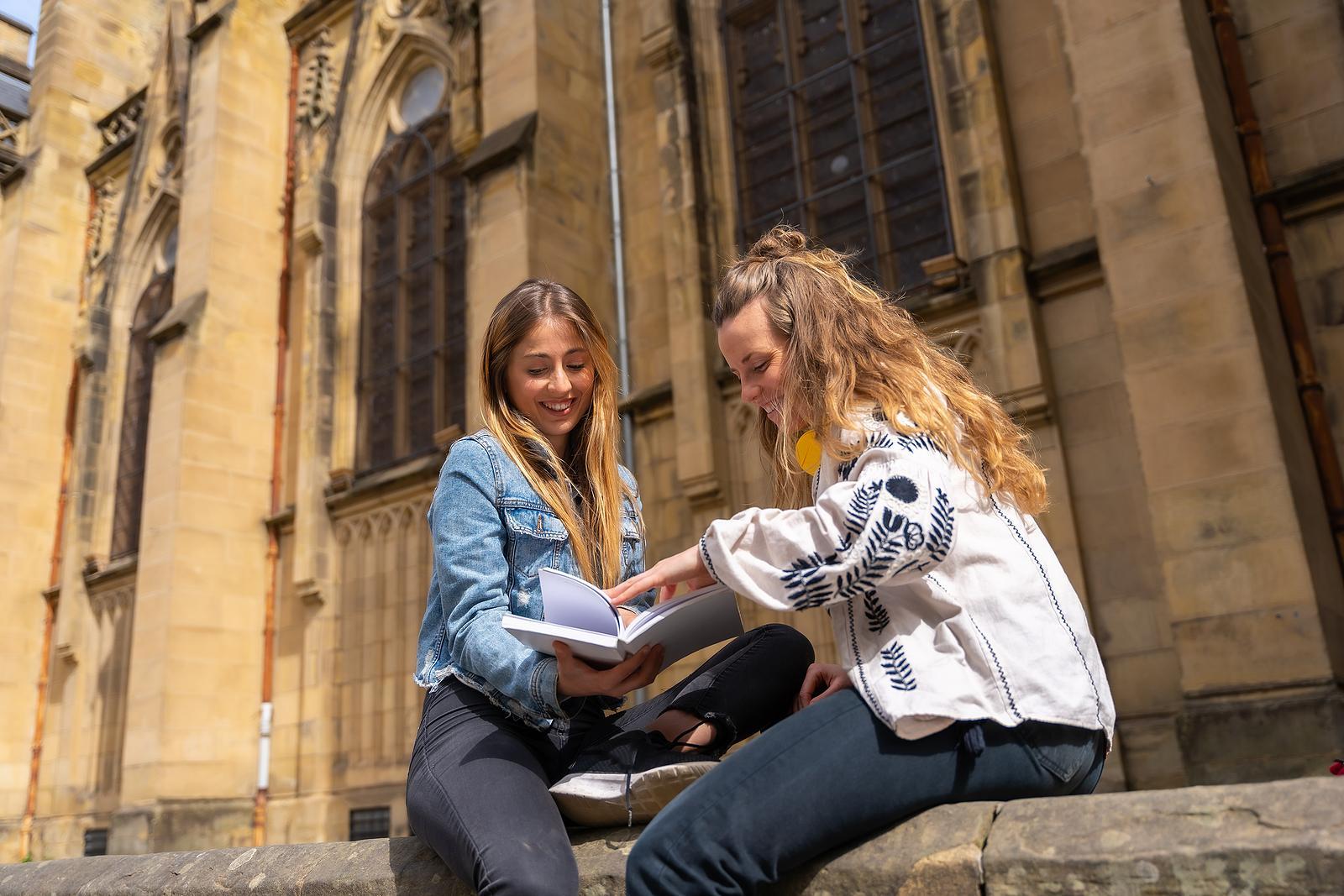
    Two girls read a book together.After college, there was a period in my life when I dreaded the weekends.  

    I anxiously awaited the long hours of unstructured time I would spend trying to distract myself from my loneliness. It wasn’t that I lacked friends, it was the physical distance between us that left me without plans on the weekends. As I adjusted to moving back home while working full-time as a college librarian and not having connections at my fingertips like I had when I was a student, I hungered for community with peers.

    My instinct during this time of loneliness was to take advantage of as many opportunities as possible to foster social connection. I joined a women’s group at a parish in Chicago and volunteered as a literacy tutor. I invested in hobbies that would sustain my body and mind – I went to exercise classes and rollerbladed, I started a gratitude journal and listened to audiobooks. 

    LISTEN: How Can I Be Strong in Faith While Missing Community? 

    Though these pursuits were healthy and helped me discover what fulfills me, I could not stay present and enjoy them when my focus remained on what I lacked. I stayed in motion but hadn’t found my place, becoming bitter and cynical when these activities did not produce the community I craved. Rather than reframing this period of loneliness as an opportunity to try new experiences and reevaluate my priorities, I saw it as a burden that I didn’t deserve to carry. I concentrated too much on what I wanted to gain from these activities rather than on what I could give to God and others through them.

    As this period continued, I knew I needed help. While I received support through mental health counseling, I also brought this ache to my spiritual life, turning to saints who had both experienced pain and found profound peace in trusting God. I asked our Blessed Mother Mary for help finding good and holy friendships. I prayed a novena to St. Therese the Little Flower, asking for the courage to pursue true friendships. On the last day of the novena, I joined a woman whom I had briefly met at Mass for a drink. It was the first new friend I had made in a long time, and the conversation we had affirmed me that a new, meaningful connection was possible.

    RELATED: Three Female Saints and Mystics Who Guide Me to Freedom

    As I struggled to let go of my need for control and rely on the saints’ intercession, opportunities for friendship and community began to present themselves more naturally, but without the same sense of pressure. I was invited to volunteer with an organization that hosts afterschool programs for girls, and I met other like-minded women who also volunteered there. Saying yes to this invitation and engaging with the connections I made there allowed me to intentionally invest in the community, striving for quality of interactions over quantity.

    I learned to rely on friendships that are spread across far distances, acknowledging that even if I don’t talk to these people every day, they are still the friends I have on speed dial whether I need to laugh or reach out for support. I planned weekend trips and organized a virtual book club with these friends to help us stay tethered. I worked to be grateful for the friendships I do have, and the community that I have within my family. By letting God into the work of bringing new people into my life, I slowly let go of the notion that I need a sprawling group of connections in order to feel whole.

    RELATED: Finding Fellowship: How I Built Community at a New Church

    As I look back to see what God was doing to my heart during this time, I can see him helping me rethink what community looks like. The biggest misconception I held was the belief that community is static, and that I will reach a stable point where I am completely fulfilled by all my activities and social interactions. Community is not a finish line or a goal to achieve – it is a growing organism that is never fully formed. God was showing me that community is always in flow, evolving as new connections form and others wilt, but he is the only one who will always be beside me.  

    The philosopher Aristotle wrote that, “Without friends, no one would want to live, even if he had all other goods.” The longing for community transcends generations, centuries and cultures. I do not take for granted the communities I’ve found through various avenues, but I know they may change and fade. There will be other seasons of loneliness, loss and grief that I will need to learn to endure with grace. Yet, it is these seasons that make my friendships so valuable, and allow me to renew my dependence on God, realigning myself with his dream for my life. 

    Originally published May 23, 2022.

  • From Pen to Prayer: How the Lost Art of Letter Writing Connects Me to God

    From Pen to Prayer: How the Lost Art of Letter Writing Connects Me to God

    Paper and pen set out on white table. Behind it is a few light pink flowers and a white cup of tea. At the back of the image is a white sheet or curtain draped upon a table.
    Photo by Sixteen Miles Out on Unsplash

    My friend Tanna lives in Louisiana. No, that’s not the start of a children’s nursery rhyme. I met Tanna back in high school when we both partook in an immersive sustainable farm program in Upstate New York. Together, we got up at the crack of dawn, milked cows, collected eggs, repaired fencing, and overall experienced the beauty and hardships of farm life. 

    Though there were other girls in the program, Tanna and I “clicked.” We stayed friends, even visiting each other’s homes over the next summer and exchanging emails. After college, however, we kept in touch less often. Things got busy; life happened, as they say. A decade went by before we both desired to rekindle our old friendship more seriously. We connected through Facebook; Tanna sent me a direct message when she learned that the beloved farm where we met unfortunately closed during the pandemic. It was this loss of our shared idyllic memories that prompted us to rekindle our friendship. 

    LISTEN: Keeping Friendships Strong

    We could have done so digitally, but we decided to handwrite to each other instead. When we were at the farm, we used to send letters to our family and friends almost every day. Letter writing seemed like a fun alternative to emails, which we both got enough of working in the higher education sector. We both love writing, so we half-jokingly agreed that if we both become famous writers one day, someone would publish our correspondences as a book, like the letters of Henry James and Edith Wharton, or “Words in Air: The Complete Correspondence Between Elizabeth Bishop and Robert Lowell,” two American poets. 

    I think it goes without saying that the immediacy of sending and receiving a text message or email has unilaterally killed the art of letter-writing. Even so, Tanna and I are a year into our penpal experiment, and we are loving it so far. Besides renewing an old friendship, it’s also given me insight into how we can approach our own relationships with God. 

    Good things take time and effort

    When I write my letters to Tanna, I make it a special affair. I brew myself a cup of tea, curl up under a blanket, and wait until the dog settles on the bed. I take a few sheets of beautiful stationery and pick up my favorite pen. Then, I think about what I want to say before I set pen to paper. 

    Writing a letter takes intentionality. I purposefully carve a sacred quiet space to not only enjoy doing it but also to make the letter itself good and meaningful. Because I take the time to craft the letter carefully, it is more thoughtful and well-written than a rushed email or quick text.

    RELATED: How to Start a Prayer Journal

    I realized that I should try to do the same thing for my relationship with God: Be more intentional in my prayer. Life undoubtedly gets busy, and I don’t always have the time to make everything just so (after all, my sacred letter-writing practice is not a daily one). Quiet solitude is usually not within grasp in the midst of our bustling daily routines. However, I know I can set aside time to dwell in the Lord’s presence a little more intentionally. When I’m walking the dog in the morning, when I’m making breakfast, or even when I’m transferring subways – those are all moments I can open my heart up to him.

    After all, he wants us to talk to him and lean on him. He wants us to share all our worries, fears, triumphs, and tribulations. Nothing is too small for God to hear: “Ah, Lord God, it is you who made the heavens and the earth by your great power and by your outstretched arm. Nothing is too hard for you” (Jeremiah 32:17). Giving ourselves the time to give God our hearts is what will bring us closer to him – with or without tea and blankets. 

    Good things are worth the wait

    Letter-writing is a practice of patience. I’ve learned to embrace the silences in between letters with joyful anticipation. I know a letter response will come, so I am not anxious about when I receive it. In fact, it’s fun to have a hopeful eagerness when checking the mailbox: Is it coming today? Has the post even arrived yet? When a letter from Tanna finally does get here, I eagerly tear open the envelope and begin reading before I’ve even had a chance to sit down.

    I wish I applied the same thinking to my relationship with God. There have been times in my life when I felt frustrated with what I interpreted as his silence. For instance, there was a season of my life when I questioned whether God truly called me to write. I don’t make a full-time living wage from writing. My job and other responsibilities can make finding time to dedicate to the craft challenging. If this was truly meant to be for me, then why would it be so hard?

    RELATED: 3 Tips for Stepping Outside Your Age Bracket When Making Friends

    But, as my husband always tells me, sometimes time and silence are the best things for us. Those seasons can be fruitful – as long as we don’t give up on listening for God’s guidance. Having truncated pockets of time, for instance, made me prioritize projects and focus on writing magazine articles and essays. Praise God, I’m close to my hundredth published piece! God is good, but he will answer us in his own way and on his own time. We just need to practice patience. Knowing that God will take care of us and lead us down the right path can help quell the anxieties we feel in the more silent seasons. And it’s always worth the wait: “At the right time, I, the Lord, will make it happen” (Isaiah 60:22). 

    Receiving letters from Tanna is a wonderful way to rekindle my friendship with her. I still feel like we “click” because we have similar interests and picked up where we left off from high school. Because writing a letter is intentional, effortful, and a time investment, we don’t waste paper and ink on surface-layer topics (What did you do this weekend? What do you like to watch?) and dive right into the deep end of our hearts (What are the stresses and anxieties we feel? What are our hopes and dreams?). The handwritten words feel more meaningful than a text message or email. This is especially true because Tanna’s cerebral palsy makes writing more challenging for her – and yet, she perseveres and wants to do it anyway. That melts my heart every time I read a letter from her.

    God also sends us proverbial handwritten letters. He invites us to his heart in every Mass through the Eucharist. And, he longingly waits for us to turn to him each and every day – even when we turn our backs on him. He is eternally patient. We only need to give ourselves the time to write back to him.