
Tag: college

  • Four Tips for Keeping Your Semester Holy

    Four Tips for Keeping Your Semester Holy

    Close up of college student carrying books to school
    Photo by Element5 Digital on UnSplash

    I’m a college English professor with two children, ages 6 and 8. As a new school semester begins for our family, new routines automatically emerge. My son Jack will start playing basketball. My daughter Emmeline will start dance classes. I’ll begin teaching a new set of courses. A new semester automatically ushers in new ways of ordering our lives. My husband and I will arrange carline pickups and meal plans. College students will begin to schedule cardio classes with friends and other extracurricular activities. 

    As academics and activities increase for parents and students alike, so does joy – and stress. We need God in all of these moments, big and small. In the midst of school planning over the years, I’ve learned that an active spiritual life can sometimes get the short shift: There is no “back to school” meeting or college orientation that God plans for worship. Here are some tips I’ve learned over the years, so my family’s relationship with God remains at the center of every academic semester.

    RELATED: 3 Ways to Keep the Faith This School Year

    1. Take a few minutes to read or listen to the Daily Readings 

    Growing up, my mother always told me to “begin the day with Jesus,” and this advice has never left me. I remember seeing her in the mornings with her Bible and coffee in hand. Today, I often read Scripture during my morning routine, while blow-drying my hair, or I’ll listen to the Laudate app on the way to work. This five-minute check-in provides spiritual guidance, helping me ponder how God’s word relates to the events of my day. As I’m teaching or learning about new subjects or simply out with friends, I can think about how the daily reading intersects.

    2. Create or find a sacred space that you visit

    This summer, my daughter attended vacation Bible school and created a rosary with pipe cleaner and multicolored beads. She asked to hang it on her wall, so she could look at it and take it down to use. At work, I have a crucifix hanging and a poem by Mother Teresa that I reflect on when needed. Creating a sacred space doesn’t require a large area; all you need are small reminders that help bring you to prayerful time with Jesus. The side of your desk can hold a prayer card, as can your laptop. If you feel your environment isn’t conducive to creating a sacred space, find a space that helps you feel close to God that is easily accessible during your week. Don’t be afraid to visit your parish, your college’s Newman center, or the sanctuary at your school if there is one! Even a beloved tree will do in a pinch. Schedule this quiet time with God the same way you would a visit to the gym or a study group session. Just 10-15 minutes in prayer, away from the bustle of everything you have to do during the week, can help recenter your mind and bring a quiet peace to an otherwise packed day.  

    RELATED: 9-Day Back-to-School Challenge

    3. Befriend a saint for the semester or school year 

    Last year, because of the pandemic, I got to know Julian of Norwich, someone I’d always found inspirational but never had time to discover more about. I spent time asking for her intercession and read a little about her, often sharing her devotional writings at the start of my classes. She lived in isolation during a pandemic and has a famous prayer: “All shall be well” that has always given me comfort. Spending dedicated time with her helped me not only grow in knowledge but also deepened my faith. If you’re interested in literature like many of my students, you might choose to spend time with Saint George—the patron saint of reading. Or, if you’re interested in medicine, Saint Raphael or Saint Gianna Molla might be for you. Perhaps when creating a sacred space, you keep your saint for that semester or even school year in mind, knowing that they’ll be praying for your spiritual and academic success. 

    4. Set aside time for Mass 

    This one you probably expected to see on this list—but sticking to it is harder than it sounds during a busy semester. On my semester calendars and syllabi, I mark off religious observations and holy days. God may not require you to attend an orientation like I mentioned above, but we should be sure to schedule Mass into our lives just as we do anything else (or ideally before we do anything else). In the same way you’ve befriended a saint for the semester, you might try to find a friend to attend Mass with. If you’re in college, Newman centers or campus ministries are excellent places to start to find like-minded Catholic students. Or simply start showing up, and you’ll find familiar, friendly faces with similar values. 

    Mass is like beginning the day with Scripture: it infuses the week with love. Receiving the Eucharist. Offering peace to your fellow Catholics. Praying together in communion. This is what being Catholic is about, so it’s important to make this time with God a must—even and especially when we’re the busiest. This is one way we bring peace and joy to ourselves, and to the world around us. 

    RELATED: Back to School: Staying Connected to What Matters

    It feels fitting to end with one of my favorite Bible verses, Philippians 4:8, which reads:Finally, brothers and sisters, whatever is true, whatever is noble, whatever is right, whatever is pure, whatever is lovely, whatever is admirable—if anything is excellent or praiseworthy—think about such things.” 

    A busy semester will pull us all in a multitude of directions, and busier schedules will likewise have us contemplating a range of different “things.” Setting aside time to read what is “right” and “pure,” spending time in sacred spaces that are “lovely,” getting to know a “noble” saint one “admires,” and attending Mass where “truth” is spoken and felt are all ways to create a holier semester. I’ve learned over the years that none of the practices I’ve suggested take much time from my everyday life, but each of them has transformed it in a different way. Incorporating these ideas into your calendar at the beginning of the semester – as my family will be ours – will help ensure not only that your spiritual life feels attended to, but also that your whole life might be infused with a sense of calm because you’ll know that God will be a fixture in the patterns of your life no matter what the semester may bring.

    Originally published August 31, 2022.
  • What St. Philip Neri Can Teach Us About the Sabbath

    What St. Philip Neri Can Teach Us About the Sabbath

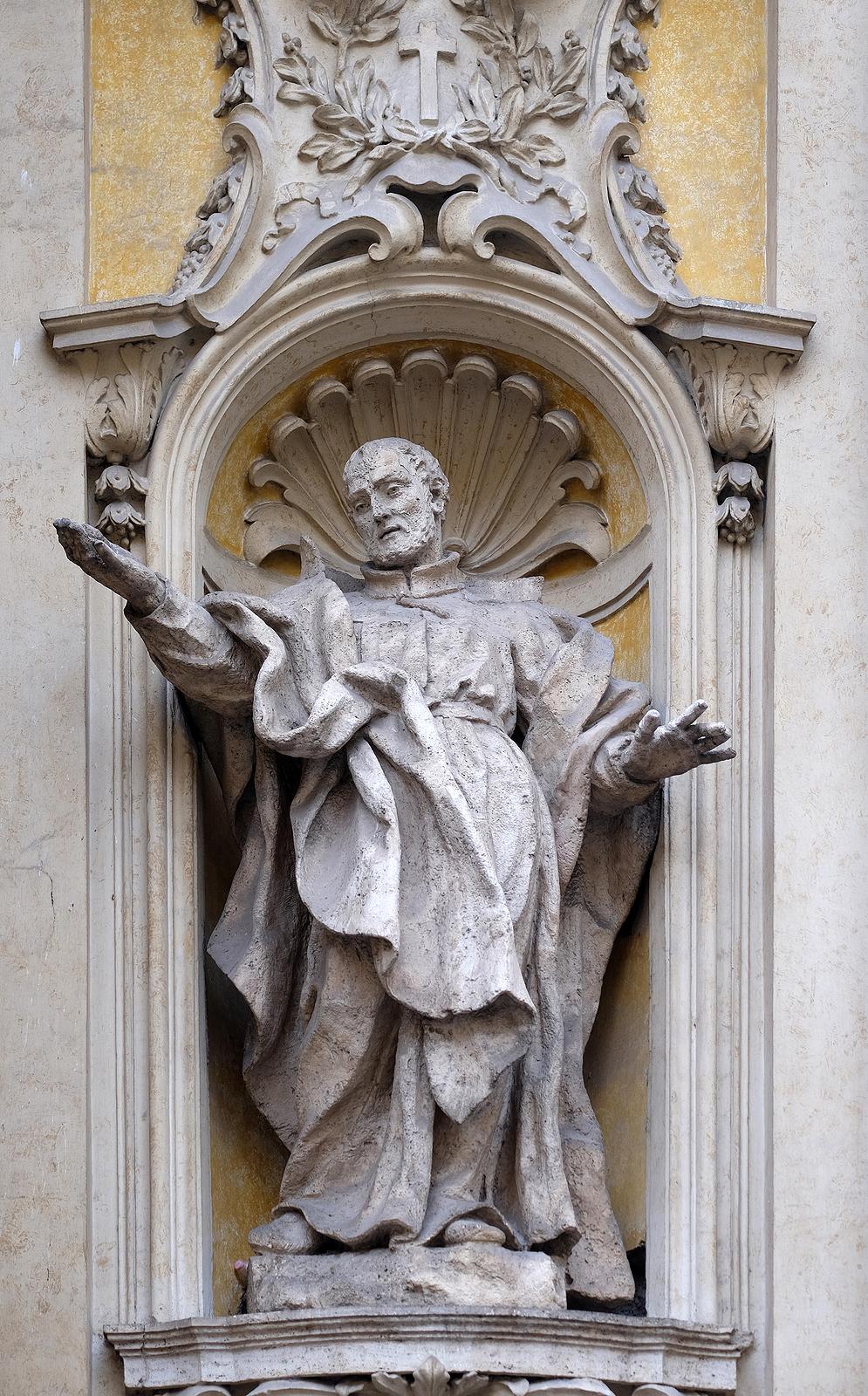
    A statue of Saint Philip Neri. His arms are outstretched. One hand faces upwards towards the sky, the other hand is facing down. His head is slightly tilted down. He wears a long robe. Above this statue is a cross carved into stone.
    Photo by zatletic on Bigstock

    If you’re anything like me, then the call to keep holy the Sabbath is something of a challenge, thanks to a constant struggle to maintain work-life balance. Whether you find it easy to overwork without respite or struggle to get started, hitting that happy medium can be difficult. 

    Honoring the Sabbath reminds us of the need for this balance: six days for work, and the seventh for worship, self-care, and spiritual and physical restoration. But when it proves difficult to actually live this out, what do we do?

    To live properly and pray sincerely, we have to avoid exhaustion. We need time for fun and joy, as these rejuvenate our souls. One saint strongly associated with joy is St. Philip Neri, whom I’ve been inspired by. He uniquely blended holiness and joy throughout his life, earning him the nickname “The Laughing Saint.” Philip Neri’s spirit beautifully encapsulates the Sabbath: a celebration of joyful life unmistakably connected to God.

    RELATED: How to Read Like the Saints

    The saints, as we know, are meant to be our exemplars, so how do we emulate Philip Neri? Well, I can give you an example of what not to do. It’s crucial to be intentional and avoid letting Sunday become overwhelmed with mundane tasks (yard work, for instance), or, for the readers in my age group, schoolwork. So many times I would walk into my college’s library on a Sunday and witness row after row of students hunkered over their studies. Though it is good for students to work, I wished we’d chosen another day to put our noses to the grindstone.

    Philip Neri was a very hardworking man, but also one who knew how to balance his duties with fun. Philip’s mission was to restore Rome, which had fallen into spiritual disarray during the early 16th century, to a passionate love of the faith. He accomplished this by establishing authentically human connections with those around him, which sometimes involved deep conversations, but oftentimes did not. He played practical jokes and took part in wine-drinking contests to make himself more approachable to those around him. After Philip’s death, doctors discovered that his heart had grown noticeably larger, to the point of damaging two of his ribs — a true testament to this great man’s jubilant heart.

    RELATED: Are We Allowed to Work on Sunday? 

    Everything Philip Neri did, regardless of how frivolous it may have seemed on the surface, had a purpose indisputably connected to God. His entire ministry was treated as one continuous Sabbath, vividly showcasing his blend of holiness and joy. This is why I’ve found him so inspiring personally — the mindset we’re called to emulate on the Sabbath, he exemplified throughout his whole life.

    Inspired by his love, passion, and charity, we can bring this saintly approach to the Sabbath into our own lives. Despite the importance of work, Philip knew how to incorporate joy into every day of his life, and so should we. His example reminds me that we aren’t made exclusively for work; we’re meant to live complete and fulfilling lives, with diverse interests and passions. Establishing boundaries between our work lives and the Sabbath, and engaging in the kind of Christ-centered fun Philip loved to partake in so much, is a valuable step in the right direction for us if we struggle to embrace the Lord’s Day.

    RELATED: How to Intentionally Plan a Day of Rest

    My Sundays might involve fun projects. I incorporate prayer into these activities— ora et labora, as St. Benedict would say. But boundaries are important, and I always make sure to never miss out on time for my important relationships, and for prayer. For others, take the day to relax, read, enjoy nature, or have a casual phone call with a friend. But without question, time for God must come first, especially on the Sabbath.

    Being mindful and intentional about observing Sabbath lets us capture the spirit of Philip Neri, that spirit of joy that helps us learn how to incorporate family, friendship, and fun into the Lord’s Day. As Phillip himself puts it, “A joyful heart is more easily made perfect than a downcast one.”

  • Reflecting on the Holy Spirit’s Guidance This Pentecost

    Reflecting on the Holy Spirit’s Guidance This Pentecost

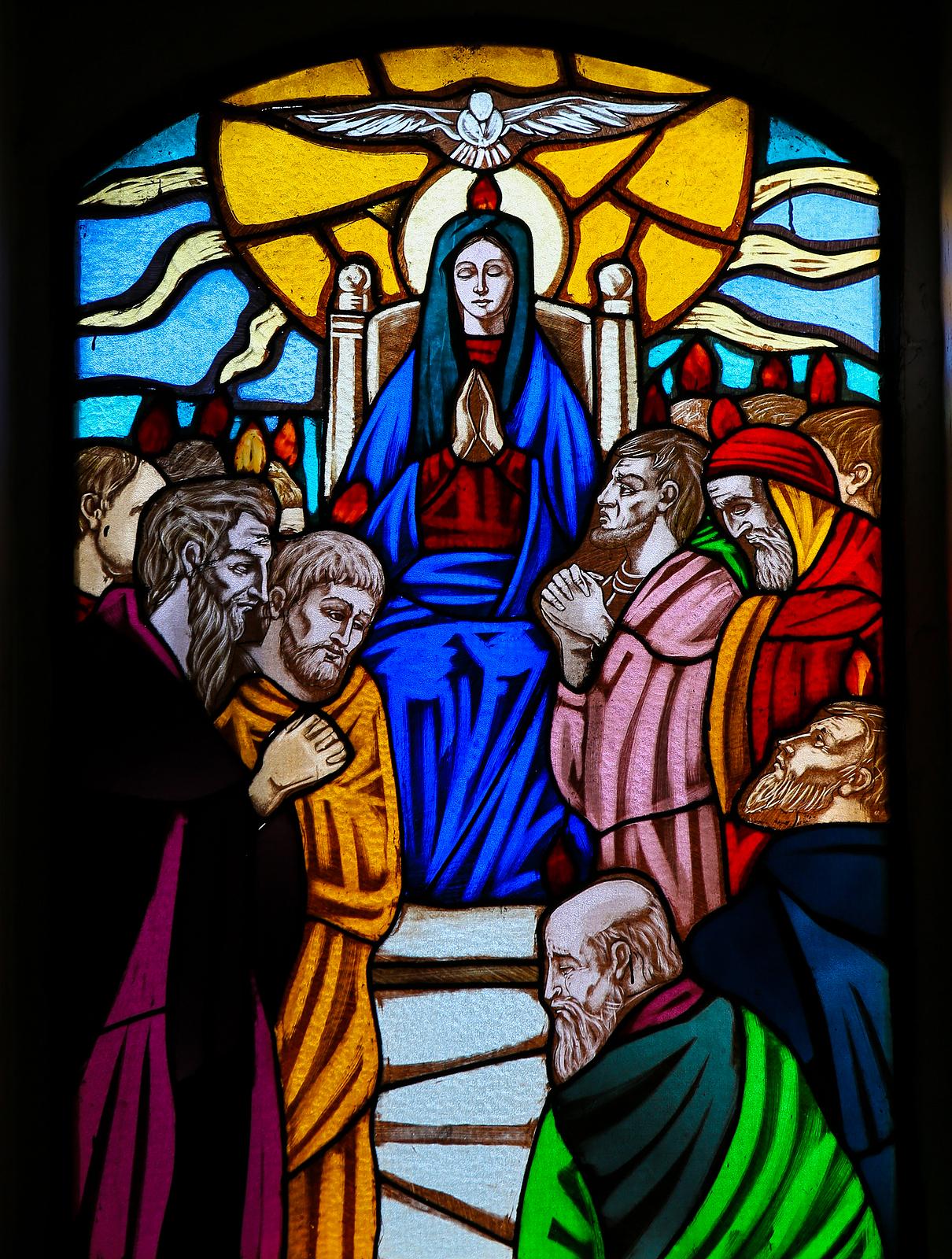
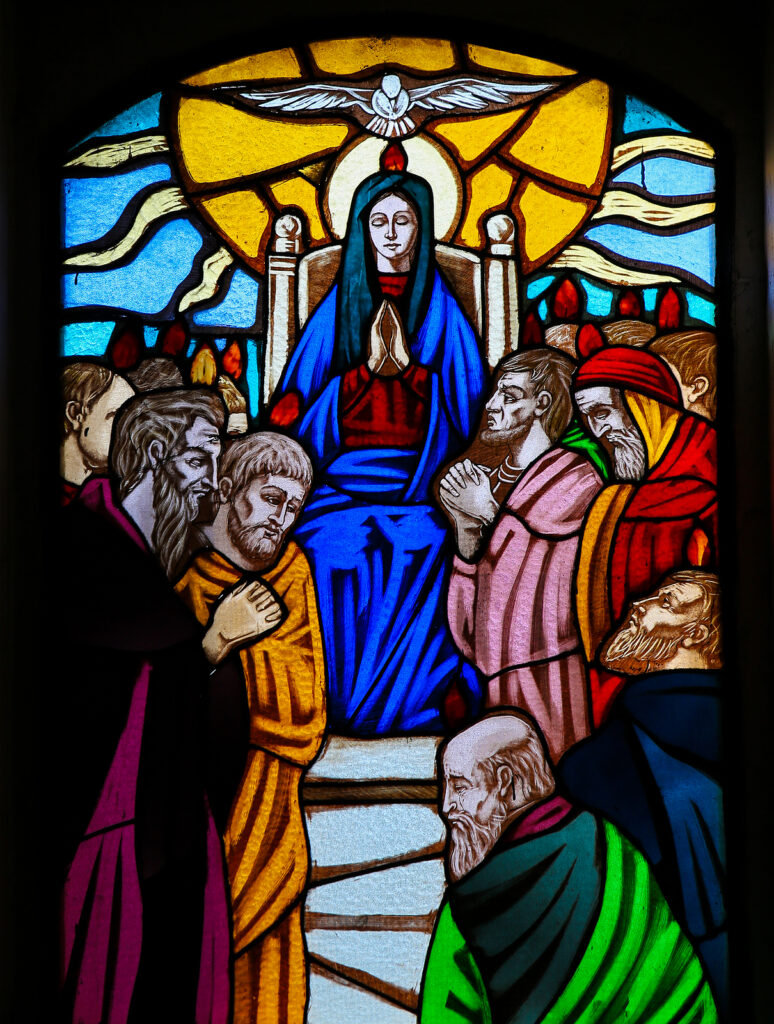
    Stained glass window depicting the the Descent of the Holy Spirit at Pentecost in the Church of Ostuni Apulia Italy.On May 19 this year, we’ll celebrate the birthday of the Catholic Church: Pentecost. Several thousand years ago, the third person of the Holy Trinity made its debut and gave the Apostles the strength, wisdom, and courage they needed to spread the Gospel to all nations. But if you’re anything like me, it can be easy to forget about this pivotal day in the Church’s history since it doesn’t come with a lot of pomp and circumstance. Easter has an entire three-hour ceremony which includes the induction of new Catholics to the Church, the four-week season of Advent builds the anticipation of Christmas, and every Ash Wednesday triggers a flood of Catholic memes about the various ash crosses on social media. 

    While it’s true that Pentecost may not be amplified by the same bells and whistles, this solemnity provides its own value, reminding us of the Holy Spirit’s inspiring presence in our lives. It’s easy to forget how active the Holy Spirit can be, but hearing the message of Peter’s courageous witness, the proclamation that changed the Church forever can draw attention to the Spirit’s activity in our own lives. For my part, I am reminded of the Holy Spirit’s good guidance in my own life.

    WATCH: Pentecost in Two Minutes

    I think back to when I was a senior in high school making the decision of where to attend college. Of course, choosing what school to attend is pivotal; so much prayer and discernment was needed. Many people gave me advice and promoted different schools (usually whichever one they went to), and as I witnessed schoolmate after schoolmate gleefully announce their choice of college, I felt stuck and frustrated. I looked at plenty of schools that offered practical majors such as business or computer science, but I wasn’t particularly compelled to attend them. The school I was most drawn to was Christendom College. 

    Christendom emphasized community and had an unflagging commitment to Catholic orthodoxy. Its curriculum was built on the Catholic liberal arts tradition, offering theology, philosophy, and classic works of literature in place of contemporary conventions such as engineering. Many friends and family members were skeptical about the school because of this and thought it was therefore less practical. However I connected with the school’s goal to expand its students’ minds in a broader sense, helping them achieve the ability to think and reason effectively. Though the school’s vision was unconventional, its fascinating curriculum and the prospect of spending four years engaging with passionately Catholic young people was impossible to overlook.

    RELATED: Unwrap the Gifts of the Spirit This Pentecost

    The writings of St. Ignatius of Loyola, a personal favorite of mine for many years, held the answer to my questions. St. Ignatius reminds us that the Holy Spirit’s movements in our souls take away sadness and disturbance and, in doing so, draw us to good action. The thought of attending Christendom brought peace and confidence that I would be well-prepared for the work of evangelization. After months of prayer, discernment, and exploration, I had my answer.  

    I finally decided to take the liberal arts route, choosing history as my major. By exploring the actions of the Catholic Church over the past centuries and learning about the multifaceted motivations of the men and women who shaped history, the Holy Spirit guided me to a greater understanding of his Church and the nature of the men and women who fill her pews. 

    RELATED: How to Celebrate Pentecost Sunday

    Now that I’ve graduated, I can confidently say that during those four years, my life changed for the better. I made strong friendships with great people, grew both spiritually and emotionally, and became a better, stronger, wiser person because of the choices I made. But I didn’t make it alone. As we approach Pentecost, a solemnity to celebrate the Holy Spirit in a special way, I’m reminded of this and filled with gratitude for what the Spirit has done for me. 

    I think if we take a genuine look back at our lives, we’ll notice the care and precision with which we’re guided through this chaotic world. My experience with college was only one of many in which confusion and frustration gave way to gratitude as it became clear what the Spirit was doing. This Pentecost, I invite you to reflect upon the confusing moments in your own life. You might find there’s wisdom present there you may not have otherwise noticed.