Tag: adoration

  • The Radiance of Mary: How Lippi’s ‘Adoration’ Deepened My Faith

    The Radiance of Mary: How Lippi’s ‘Adoration’ Deepened My Faith

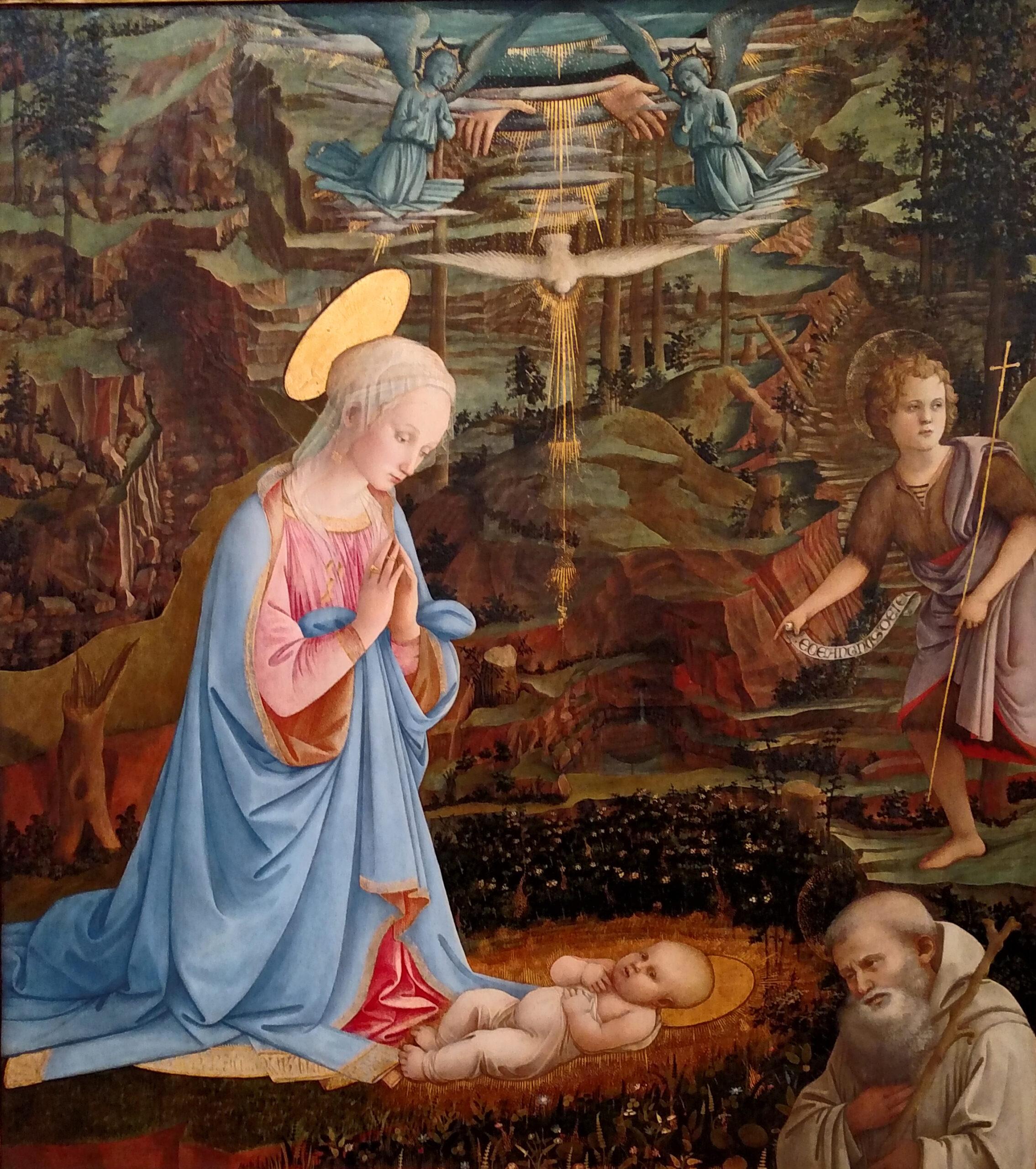
    As I marched through the Uffizi Gallery, I could see how, as the Renaissance progressed, artists made the figures in their paintings less like icons and more like human beings.  Suddenly, I found myself looking at a painting of a very real, very young woman. She was kneeling in a dark wilderness. Her hair and face were radiant. I first thought this was an anachronism, like the blue-eyed, blond Jesus of a certain era of popular art. Then I saw what better observers have seen. She was suffused with light. We say every Sunday, “God from God, Light from light…” The girl had been given the same gift of light — light nourishing, pure, powerful. Even her blue robe was richer and brighter than any earthly fiber.

    The 1463 painting is “The Adoration of the Christ Child” by Filippo Lippi. In it, Mary’s delicate features mixed tenderness, awe, and astonishment. Her hands are clasped together gently in prayer; her slender fingers seem to be on the verge of trembling. She is looking down at her newborn boy, lying exposed on the ground. I recalled the shock I felt 38 years ago when I first realized my wife and I were in charge of an utterly helpless child who was more precious than anything we had ever imagined. In the painting, moreover, there is no stable, no St. Joseph, no Magi, no shepherds. There are only two other people pictured: St. John the Baptist, in the form of a young boy, and the founder of the monastery for which the painting was commissioned. 

    RELATED: Art and Adoration: How Artwork Opens My Eyes to God’s Handiwork

    Mary’s look is full of awe and love, but awe can bring bewilderment, and love always brings vulnerability. I imagine from her expression that she sensed, even before a wise old man told her, that “a sword will pierce even your own soul.” Her faith was not daunted, but neither was her pity lessened. She had been given the greatest gift, and the deepest anguish. At the same time, the painting reminds us that, even as she kneels in this dark wilderness, she is accompanied by the greatest of powers. At the top is the Father, indicated by a pair of hands. The dove of the Holy Spirit dives down, blazing with the Holy Spirit. She will never be alone, even when she seems to be. 

    Seeing the painting in Florence, Italy on a trip last summer, I was reminded that art can be as powerful as words in conveying truth. The painting underlines the way God’s work has made us more deeply and truly human. Before Lippi and his peers came on the stage, art was about gods and goddesses, kings and queens. Then, artists began to see the glory in ordinary people. This reflects how the Lord has selected otherwise ordinary people, such as Abraham and Ruth, to change the world. The summit of this was his anointing of a young girl in an obscure Middle Eastern land to be the Queen of the Universe.

    RELATED: What Is the Solemnity of Mary?

    It’s a reminder that the Blessed Virgin Mary was a girl who had been visited by a messenger from God with news that 2,000 years later still baffles many. Pregnant, she traveled with her husband in a land troubled by foreign occupation and simmering unrest to give birth far away from her family. We rightly are in awe of the Queen of Heaven! Let us also take heart from the brave, young woman in this painting, and remember that great things can also come to ordinary people like us, with all our cares, troubles, and needs.

    Finally, let us remember that inspiration can strike even when we least expect it. You might think that being in one of the world’s great art museums would have primed me to get the most out of paintings. However, we had spent the previous week of our trip in Rome, where we trudged past miles of paintings and sculptures. Then the Uffizi welcomed us with art on every wall and the ceiling too. As guidebooks and more experienced travelers had warned, I had reached a point where I didn’t think I could absorb anything new about sacred art. I was half-wishing I could see one of those paintings of dogs playing poker, just to rest my overloaded brain.

    RELATED: Using Art as a Path to the Holy Spirit

    Promptly, I was confronted with Lippi’s painting of Mary glowing and grieving, foreseeing joy and wonder, yet accepting also toil and sorrow. It’s a reminder that experiences of the sacred can break through anything that weighs you down, from boredom to despair. And, of course, this need not happen in a world-famous museum. One day, after returning home, I took a walk around a lake near my house. The day was so gorgeous and the park so quiet that for once I turned off my phone and just welcomed the quiet. I looked at the blue sky and the sunlight on the leaves. It was my final realization: There are sacred masterpieces all around us.
  • How My Struggle With Infertility Deepened My Relationship With Mary

    How My Struggle With Infertility Deepened My Relationship With Mary

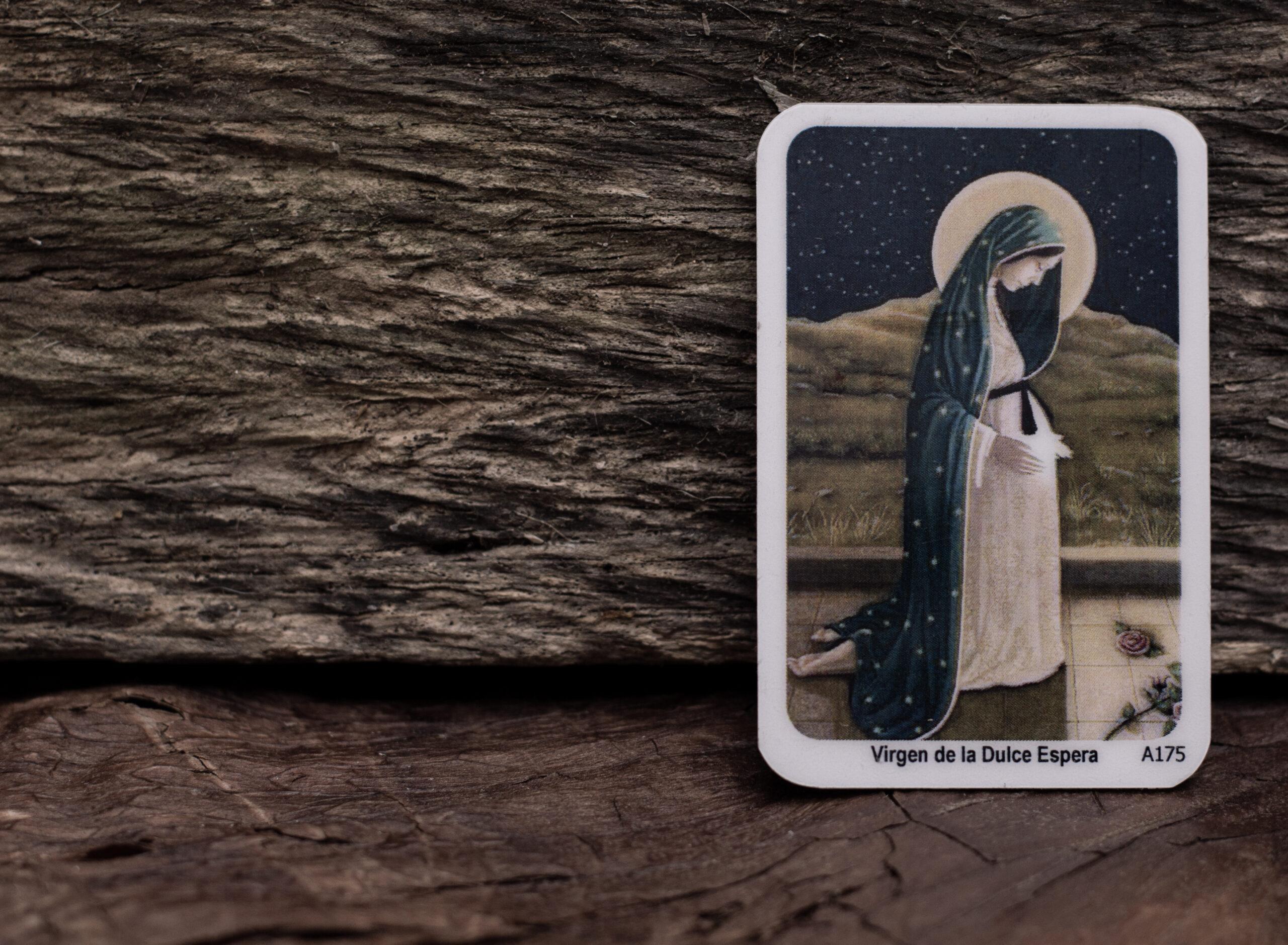
    Photo of the Virgin Mary pregnant with Christ.
    Photo by Carolina BR on Cathopic.

    Editorial note: The following article contains mentions of pregnancy/infant loss.

    The desire to become a mother took me by surprise. Beyond early childhood years of wanting five daughters named after American Girl dolls, having kids wasn’t on my radar. However, after two years of marriage, I faced the possibility of having kids with a heart of hope. What I didn’t know at the time was that an unexpected diagnosis would make becoming pregnant more challenging than I ever thought possible.

    “You have PCOS. How has no one told you that before?” 

    I met my doctor’s gaze through the webcam. I had pushed for a meeting after months of being seen by well-intentioned but uninformed medical technicians. This diagnosis came after working with OBGYNs, holistic practitioners, and even acupuncturists while on the search for an answer to family-building. The diagnosis, though, was less of a path forward and more of a cul-de-sac.

    LISTEN: Coping With Infertility

    Turning towards Mary’s holy help

    I knew God was listening. However, He felt far away. I needed a girlfriend with whom to commiserate, a mother figure who would help me. I thought about this during my weekly Thursday night Adoration hour.

    “Am I not your mother […] how else can I help?”

    I reread the last line of Mary’s message under a painting of Our Lady of Guadalupe on the wall of my parish’s Adoration chapel. I figured if I needed help on the journey toward motherhood, who better to rely on than the Mother of Mothers? My heart began to ease as I spoke. 

    Holy Mary, I ask for your help. That you would intercede for me and ask God that if it’s not His will for me to have a child, to please, please, take the desire from my heart. 

    After another disappointing fertility cycle, I decided to try one more time. My husband, who never pressured me to have children, agreed I should take a break if this next one didn’t pan out. 

    Mary, I ask for your help again. For your holy intercession through Jesus Christ, your son my Lord, to God that it could be his holy will that I become pregnant this time. 

    As I called out to Mary, again and again, words appeared in my mind. In my head I heard, “I will help you become a mother because you first went to my mother.” I was still as that notion began to increase my confidence that maybe it was almost time. 

    RELATED: Turning to Mary in Difficult Times

    Mary’s light in dark times

    A week after my 35th birthday, the doctor’s office confirmed that not only was my positive at-home pregnancy test accurate, but also — I was having twins. After the initial shock, I imagined my bump and how I would reveal the news. My prayer life and budding relationship with Mary continued to grow as well. It all felt too good to be true, but I pushed those thoughts away.  

    At 12 weeks, I woke up and went into the bathroom. I was bleeding. Terror filled within me as I sat there trying to figure out what to do. My husband turned on his bedside lamp and we called the doctor. 

    The on-call nurse said I would need to wait until the doctor’s office opened. As I laid on wet bed sheets, I saw my grandmother’s painting of Our Lady of Guadalupe hanging in the room across the hallway. My eyes locked on her serene face and hands folded in prayer and thought, “Am I not your mother? How else can I help?” 

    Oh Mary, please help me. Please help my babies. Keep them there. Oh Mary, please. 

    My reliance on the Holy Mother’s intercession and listening ear was all that I had, and I found it to be the only thing I needed. Later that morning, I was bumped up to be the first seen by the medical technician. I burst into tears when she found two beating hearts. 

    RELATED: I Never Connected With the Rosary… Until I Became a Mother

    At the beginning of my journey to motherhood, I felt that there would be a natural conclusion to my prayer — a time when I wouldn’t need to rely on the Holy Mother as much as before. First it was becoming pregnant, but she was there during my pregnancy to hear my fears and joys. Then, I thought that after I gave birth, the journey would conclude and I wouldn’t have to “bother” her so much. However, I still rely on Mary every moment of every day. 

    When my boys wake up, I thank her for praying over them during the night. I ask her to watch over them as they explore which comes with the inevitable toddles and falls. Mostly, I ask her to help me to be the best mother I can be in each moment. To not stress so much about the little things, but to continue to trust in God. I jokingly ask her to pray for my kids through my mistakes while I earnestly navigate the learning curve of motherhood.    

    My path towards motherhood led me to Mary’s perfect example of seeking light through dark times. Mary’s faithfulness to God and her unceasing love continues to be an option for all of us to choose daily when seeking hope. 

  • 3 Ways to Maintain Joy Throughout the Easter Season

    3 Ways to Maintain Joy Throughout the Easter Season

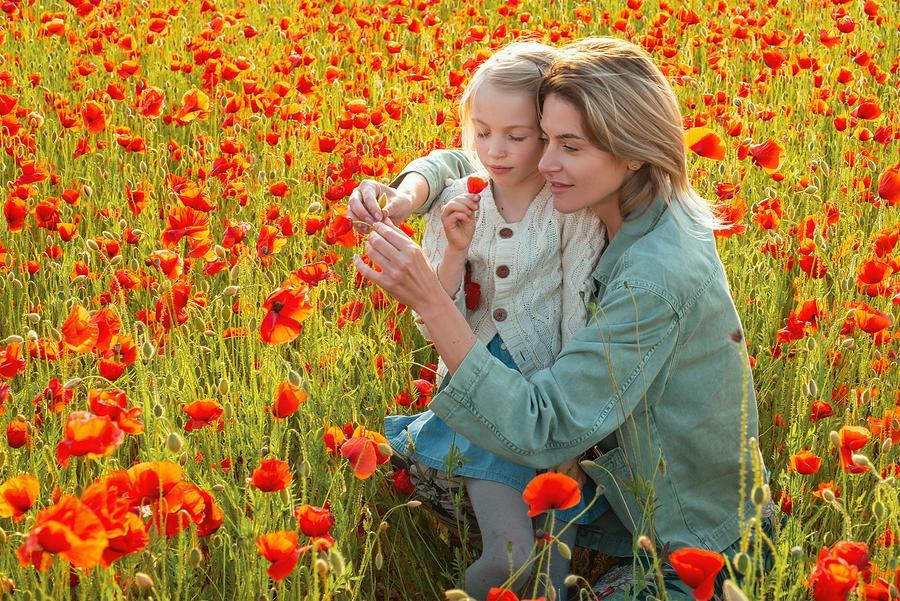
    Mom and daughter picking flowers in a flower field

    During the height of the COVID-19 pandemic, I began to suffer a deep depression, unlike anything I had known previously. I’m a professor, and during the first months of the pandemic I was undergoing a difficult tenure and promotion process at my institution. Moreover, like many others during the pandemic — my workload increased simultaneously. I was working full-time remotely while taking care of my two young children at home. I remember thinking, Of course this hardship begins during Lent. I prayed, I fasted, and I gave. Yet when Easter came, I didn’t feel the joy I thought I should have. Don’t get me wrong: My family celebrated Easter and went to Mass, but this season didn’t feel fitting to my heart. We celebrated for a day, took pictures, and then I would argue that my soul receded back into a Lenten modality. I felt I needed to do more, to work harder, to be worthy of the joy that Eastertide as a season brings with it.

    As we moved farther afield from the earliest stages of COVID-19, my depression slowly abated. I ultimately received tenure, yet I still struggled with the mixed emotions I had from the process. Eventually, I was diagnosed with clinical depression and sought therapy. Through this process – and through friends, family, and the Church – I began to discover new ways to instill meaning behind my suffering. Contemplating how much my identity was tied to my profession led me to seek ways to rely more on my faith and renew my sense of identity as an image-bearer of God rather than a worker only. I began to lean into the liturgical calendar rather than the academic one to define not only my life but also my family’s life, including fostering joy during a time when I didn’t necessarily feel joyful.

    Easter isn’t just one day; it is the second-longest liturgical season in our calendar, lasting 50 days for Catholics. We are to practice 50 days of joy in the knowledge of the resurrection. Keeping joy, as I learned while I was suffering from depression, isn’t an easy task. While suffering may mark the first part of the Easter story, it isn’t the last part that is essential for all of us faithful to remember. 1 Peter 1:3 reminds us to praise God and to recognize that “In his great mercy he has given us new birth into a living hope through the resurrection of Jesus Christ from the dead.” Easter is about a “living hope,” not one that is gone in a day, but one that lives in us.

    Lenten practice, in my experience, feels like work on the soul, and I would argue that Easter practice ought to, as well. It simply ought to feel like a different kind of work, a work toward proclaiming joy — and resting in it — for 50, long, well-earned days.

    Now, my family celebrates Eastertide with intention, just as we do Lent. Here are a few practices we’ve adopted that have lightened my soul and altered our family culture around the Easter season:

    We practice gratitude daily.

    In a personal journal, I write down at least two things that I’m grateful for each day. These can be as small as walking the dog or enjoying the sunshine. When I pick my children up from school, I ask them to practice this with me. “What brought you joy today?” I inquire. Because I have elementary-age schoolchildren, I delight in their stories of races won and lost at recess, of learning new science facts in school, and of lunchtime antics between their many friends.

    We create an Eastertide family calendar.

    We began this practice with Advent, and we’ve learned that liturgical calendars based around the Easter season help us partake in at least one joyful, praising activity each day. For Eastertide, some of these activities include: reading a Catholic book together, singing worship songs, dancing, celebrating Saints with Feast Days during the season like Saint Catherine of Siena, finding and planting flowers, serving others in the community, and praying. We build these calendars around what works in our home, and each day the children mark off what we’ve accomplished. “We can’t go to bed without dancing!” they’ll exclaim, and they’ll be right.

    Even on days when I don’t feel ready to praise, the calendar reminds me — and my family — that Easter is the season of joy, of living and sharing in the happiness that is Christ’s resurrection.

    We go to Adoration.

    My parish has scheduled times for Eucharistic Adoration, and our family goes together. Being inside the Church, praying there, basking in the beauty of the Eucharist and the prayerful community that gathers together reminds us that we are not alone in maintaining and celebrating the joy of Easter. We pray in the car before going into the Church, and then we pray inside. I allow my children to walk quietly around and appreciate the stained glass windows in our parish. Every time we’re there, we leave with our spirits lifted, knowing that we chose to spend time with God. It isn’t always quiet, or perfect, but it is joyful — and the questions they ask (such as “Why would Jesus suffer?) remind me of all that I have to be grateful for as a Catholic.

    Lent is a time of spiritual growth, yet so, too, is Eastertide. For those like myself who have suffered, and still deal with the ramifications of depression, Eastertide as a practice may even be more difficult than Lent. Yet as Pope Francis reminds us in Evangelii Gaudium, “The joy of the Gospel fills the hearts and lives of all who encounter Jesus. Those who accept his offer of salvation are set free from sin, sorrow, inner emptiness, and loneliness.”

    In celebrating the full 50 days of the Easter season, we accept the offer salvation provides us. Moreover, we evangelize to others the joy of the Gospel because they see us living, and practicing daily, a sustained encounter with Jesus. As humans, we all suffer, yet we all also experience moments of joy. For me, especially when experiencing the worst parts of my depression, Eastertide helped me remember Jesus’ love and cultivate his promise fulfilled in my life — even on those days when I least wanted to do so. Indeed, in the midst of one of my most salient times of isolation and despair, joy found root in my soul again — and it occurred because of committed and renewed Eastertide devotional practice. Psalm 32:11, one of my favorites, echoes this joyful message: “Be glad in the Lord, and rejoice, O righteous, and shout for joy, all you upright in heart!”

    Originally published April 12, 2023.

  • A Beginner’s Guide to Eucharistic Adoration

    A Beginner’s Guide to Eucharistic Adoration

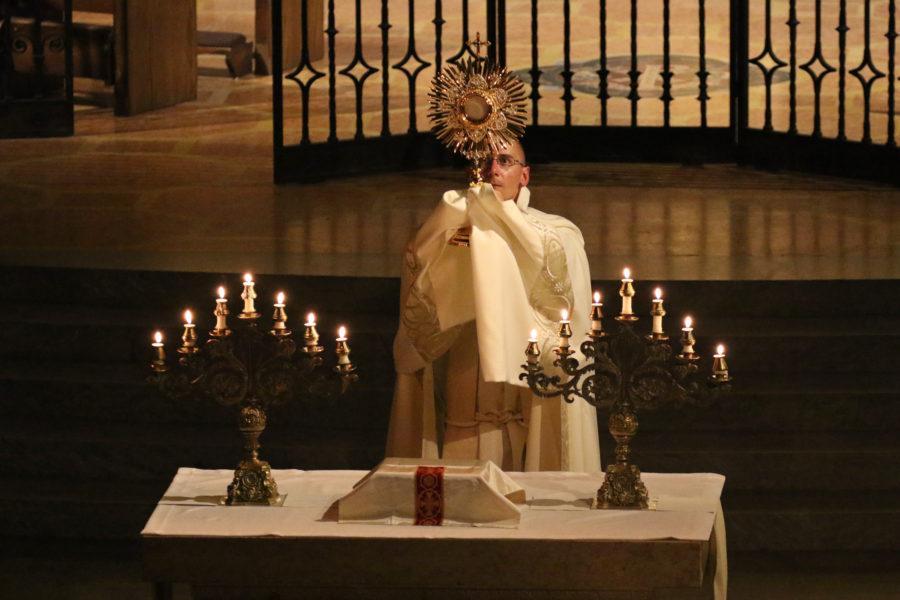
    Eucharist Adoration at Immaculate Conception Seminary in Huntington, New York. (CNS photo/Gregory A. Shemitz, Long Island Catholic)

    My first experience with Eucharistic Adoration occurred in sixth grade at my Catholic elementary school when my homeroom teacher took my entire class to the church to pray in silence in the presence of the Blessed Sacrament. If you’re thinking it was difficult for 35 12-year-olds to sit still and pray in silence for an hour, then you’d be right. We squirmed and fidgeted and poked our neighbors to avoid giving our undivided attention to the Lord. Our behavior earned a mild scolding from our soft-spoken teacher, who reminded us of Jesus’ own words in the Garden of Gethsemane the night before he was crucified: “So you could not keep watch with me for one hour?”

    After that, I didn’t go to Adoration again for many years. First, there was the challenge of carving out an hour in the middle of the week to get there, when so many other activities and errands felt more pressing. Secondly, I was worried that Adoration might only be for super holy people — ones who spend time with God in perfect, prayerful contentment. My mind is full of worldly concerns and distractions, so maybe Adoration wasn’t for me. Finally, my inner, fidgety sixth grader was concerned Adoration might be, well, boring. I assumed a Holy Hour would look like waiting for a big revelation from God and hearing nothing but crickets.

    RELATED: A Convert’s Guide to Adoration

    After moving to Colorado, though, I discovered that my new parish had a perpetual Adoration chapel, which meant I could sit with the Blessed Sacrament at any time of the day or night. And despite my years of doubts, I somehow found myself wanting to try again. Here are some things I that helped me commit to a weekly Adoration practice:

    It’s not all about me

    Like Mass, Adoration isn’t necessarily about what we will get out of it. True, the graces dispensed by God help us grow in holiness, but the primary purpose of Adoration is right there in the name of the act: to adore the One present to us in the Eucharist.

    Just be

    Remember that you don’t actually have to do anything. The Catholic faith recognizes that the greatest gift God gives us is himself, and Adoration is another way for us to recognize that gift outside of receiving the Eucharist at Mass. So, don’t overthink it. Just receive the gift.

    Pray (with a little help)

    If it’s been awhile since you’ve entered the Adoration chapel and you’re worried you might be a little bored (that’s understandable!), or you have no idea where to start (it’s okay!), I’ll offer the following suggestions:

    • Pray the rosary. To contemplate the mysteries of Jesus’ life in the rosary is to contemplate the mystery of the Eucharist given to us and the Blessed Sacrament we praise in Adoration. So, pairing these prayers is a great habit to get into.
    • Write in your prayer journalWriting in a prayer journal is a great way of making your relationship with God seem more tangible, since we’re getting the words out of our heads and onto the paper. Think of the practice as writing a letter to God. Take all your worries of the day and lay them down during Adoration. Or write to him about everything that’s going well in your life right now.
    • Listen to praise and worship music. Music can be an extremely effective way to focus our thoughts on God. Just make sure you have headphones that will keep everyone else in your vicinity from hearing your music if they’d rather spend their time in meditative prayer. I usually find that slow, reflective melodies work best for this environment — anything by Audrey Assad usually does the trick for me.
    • Read. While Adoration isn’t really the time to break out that thriller you’ve been working your way through, it is a great opportunity to pull out a book by one of the saints (such as “The Diary of St. Faustina,” St. Francis De Sales’ “Introduction to the Devout Life,” or St. Thérèse’s autobiography “The Story of a Soul.” Or prayerfully consider a few lines of the Catechism. You may also choose to read a set of devotional essays like Caryll Houselander’s “The Reed of God,” which is full of meditations on Mary. And of course, don’t forget the Bible!

    You don’t have to sit still during your Holy Hour in order to make it count. It’s okay for it to be a natural extension of the rest of your prayer life. So, if there’s something that really helps you focus your prayer, bring it to Adoration. Most of all, remember to receive the gift of Christ in the Eucharist and just be present to God.

    Originally published April 23, 2018.