Tag: Seasonal

  • More Than a Meal: The Holiness of Friendsgiving

    More Than a Meal: The Holiness of Friendsgiving

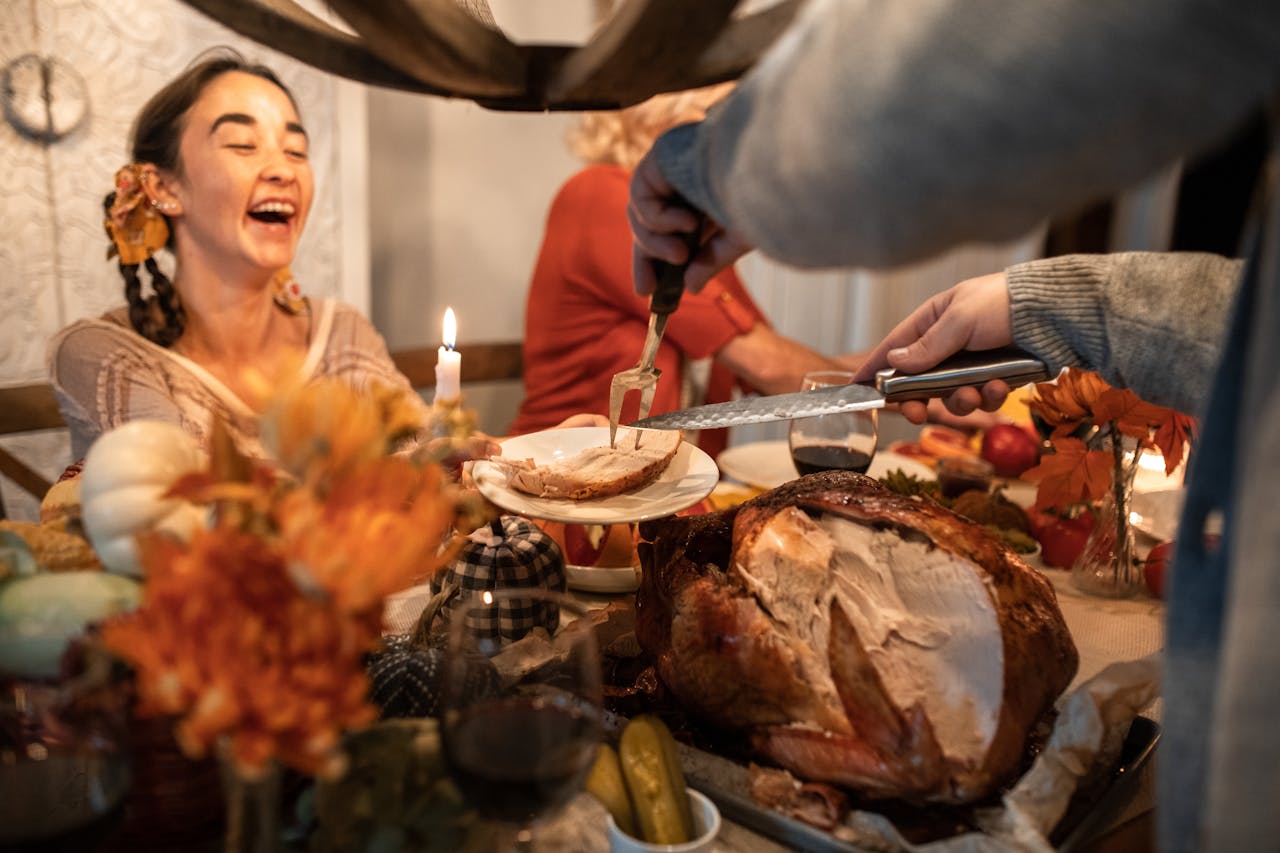
    It’s that time of year again — crunchy leaves, pumpkin spice, wishbones, and pecan pie. Thanksgiving is around the corner, and what better way to celebrate than by hosting a Friendsgiving feast? 

    While I love gathering around the table with my family, one of the things I look forward to most during the year is Friendsgiving. I wait for it like a child waits for Christmas. I love the fall decor, the hearty dishes, and the liveliness, but most of all, I love seeing all my beautiful friends in one place — the way we would like to be more often but can’t always manage with busy schedules. 

    RELATED: Bless Us, Oh Lord, for These Thy Gifts: The Holiness of Mealtimes

    I first celebrated Friendsgiving a couple of years ago with a small group of my girlfriends. We each brought a dish, and dinner went late into the night as we moved from the kitchen to the patio to the living room, talking and laughing all the while. 

    What I took away from that night is that Friendsgiving is more than just a chance to catch up with friends. It’s a spiritual experience. Spending time with women who I usually only spoke to at parties and brunches brought a new sense of intimacy and gratefulness to our conversation, fostered by the intentionality of Friendsgiving. We were brought together not only because we are friends but also because we are grateful that we’re friends. 

    Friendsgiving reminds us of our blessings and renews our commitment to our friendship — to serving and lifting each other up. (Thessalonians 5:11) This can strengthen our existing connections or create new ones, cultivating a spirit of togetherness and gratitude that ultimately points towards God. 

    The Catechism of the Catholic Church says that friendship is a “direct demand of human and Christian brotherhood” (CCC 1939) and the Bible highlights the importance of meaningful relationships (Romans 12:10). These themes lie at the core of Friendsgiving! Christianity has a long history of feasting as an opportunity to come together and celebrate the goodness of the Lord, remembering the blessings he has given us. 

    RELATED: 3 Easy Prayers for Thanksgiving Dinner

    In Christian theology, feasting with friends lives out the biblical principle of community. The Bible points to fellowship among believers: “They broke bread in their homes and ate together with glad and sincere hearts… and the Lord added to their number daily those who were being saved” (Acts 2:46-47). How inspiring to imagine the earliest Christians sharing meals as a form of praising God! Friendsgiving is a present-day manifestation of this practice — a modern way to break bread together. 

    There are several things to focus on when gathering to share a meal and give thanks. At the heart of any Thanksgiving meal is gratitude. Beginning your festivities with a prayer of thanksgiving is a wonderful way to acknowledge God’s provision and the gift of your loved ones. As you savor each dish, appreciate the hands that went into its preparation. I always make macaroni and cheese, my favorite childhood meal, and there are certain dishes I know friends will bring that everyone loves, like their signature macarons or the jalapeño poppers they only make once a year. 

    Encourage your guests to share what they’re thankful for to foster an atmosphere of warmth and connection. I have started a tradition at Friendsgiving where we pass around flowers and whoever holds the bouquet shares what they’re grateful for.

    Incorporating Catholic symbolism into your decor and menu is another beautiful way to remember why you’re gathered together. Set the tables with candles to create ambiance as well as to represent the light of Christ. Evergreen wreaths are a lovely symbol of eternal life, while sprigs of rosemary add fragrance and represent remembrance. Holy cards or Bible verses at each setting add a thoughtful touch, and of course, a bouquet of autumnal flowers never hurts!

    RELATED: Food for Thought: How I’m Approaching Thanksgiving Differently This Year

    As for the feast itself — create a seasonal menu that celebrates the blessings of the harvest season. Dishes of roasted root vegetables, sprouts, cranberries, pomegranates, and pumpkin soup paired with warm beverages like mulled wine or cider make for a cozy feast. Encourage guests to bring dishes from their cultural background or family traditions, creating a tapestry of diversity that demonstrates the inclusive nature of hospitality. For dessert, you could include soul cakes, a traditional All Souls’ Day treat alongside your favorite pie. This balance of Catholic tradition and seasonal celebration will create a memorable event for your guests. 

    Most importantly, foster an atmosphere of hospitality. Open your home to friends without family nearby and extend this generosity beyond your immediate circle by inviting newcomers to your community. Perhaps invite someone who might otherwise be alone, or donate to a local food bank. Friendsgiving isn’t about one lavish meal; it’s a spirit of gratitude and love that extends beyond the day. Generosity and hospitality are pillars of Christianity — the act of opening your home not only strengthens community bonds, but also creates a space where thankfulness is openly expressed, mirroring the biblical command to “give thanks in all circumstances” (1 Thessalonians 5:18) .

    Friendsgiving is more than just a festive gathering — it is a meaningful expression of Christian community and all that it stands for. Whether you’re hosting a Friendsgiving feast or attending one, use the time to reflect on the goodness in your life and give thanks to the Lord. In doing so, you transform a simple meal into a celebration of faith, hospitality, and the blessings we’ve been given.


  • 4 Things You Need to Know About #GivingTuesday

    4 Things You Need to Know About #GivingTuesday

    #1 What is it?

    #GivingTuesday is a global day of giving to kick off the giving season on the Tuesday following Thanksgiving, Black Friday, and Cyber Monday. We have a day for giving thanks. We have two for getting deals. Now, we have Giving Tuesday (December 3 this year), a day dedicated to giving back. Whether it’s some of your time, a donation, act of kindness, or the power of your voice in your local community, GIVE!

    #2 When did Giving Tuesday start?

    Giving Tuesday began in 2012 and has grown into a global movement that celebrates and supports giving.

    #3 What sort of an impact does Giving Tuesday have?

    In 2023, Giving Tuesday raised more than $3.1 billion in philanthropic donations in the United States alone. In 2023, donations made to Busted Halo on Giving Tuesday topped $47,000! Because of your Giving Tuesday generosity, we were able to have an even greater impact in 2024 and reach people like never before through new articles, videos, podcasts, and other ministry resources.

    #4 How do I get involved?

    This one’s easy: GIVE. Here at Busted Halo, we’re kicking off our Holiday Fund Drive, and generous donors have offered to combine efforts and match any donation you make on Giving Tuesday. If you appreciate the spiritual nourishment you get here at Busted Halo — through our website, videos, podcasts, radio show, and, coming soon, our Advent Calendar — then we hope you’ll consider making a gift. Busted Halo’s spiritual outreach has a particular urgency at this time of year. While the rest of the world is focused on the commercialism of Christmas, we bring you back to the true meaning and spiritual importance of the Advent and Christmas seasons. These meaningful experiences can’t be bought on Black Friday or Cyber Monday. Join us in sharing the Catholic faith joyfully! Donate on Giving Tuesday!


  • Taking Your Faith on Vacation: How to Plan the Ultimate Spiritual Road Trip

    Taking Your Faith on Vacation: How to Plan the Ultimate Spiritual Road Trip

    We are at the peak of summer vacation time, and to me, that means one thing — road trips! In fact, I consider myself to be something of a road trip aficionado. My road trips always involve curated playlists handpicked specifically for that particular adventure. I never leave on an interstate journey without a legal pad and Sharpie in order to communicate with other motorists. And most of my road trips have included original car games. Some have had costumes, and a few notable outings involved hand puppets to entertain passing truckers. Mixed in with all of these shenanigans however, my family and friends make sure to never leave our Catholic faith at home. Travel is a great way to experience the sheer variety and vastness of the Catholic tradition and the universal Catholic Church. Here are a handful of suggestions for how you, your friends, and family can take your faith on the road on your next vacation.

    Visit a unique new church

    My family always celebrates Mass while we’re on vacation, which lets us simultaneously experience the local culture and also participate in a Mass that is often entirely different than what we are accustomed to. Doing so, we have attended Mass in enormous basilicas and tiny chapels, overlooking the ocean in Mexico, and under towering trees at an outdoor Mass in Northern Michigan. Masstimes.org can steer you toward all manner of churches, no matter your destination. The website catholicplaces.org also lists notable Catholic points of interest but focuses on basilicas, cathedrals, and shrines that go beyond the typical neighborhood parish.

    RELATED: What Are Some Great Catholic Sites to Visit on Vacation?

    Catch a music festival

    In recent decades, music festivals have become destinations of their own. There are weekend-long concert events spanning all music genres, and Christian music is no different. Some of the bigger shows yet to happen this summer include Soulfest, Shippensburg, Pennsylvania’s Uprise Festival, and PointFest at Cedar Point in Sandusky, Ohio. A listing and map of many of the larger Christian music festivals can be found here.

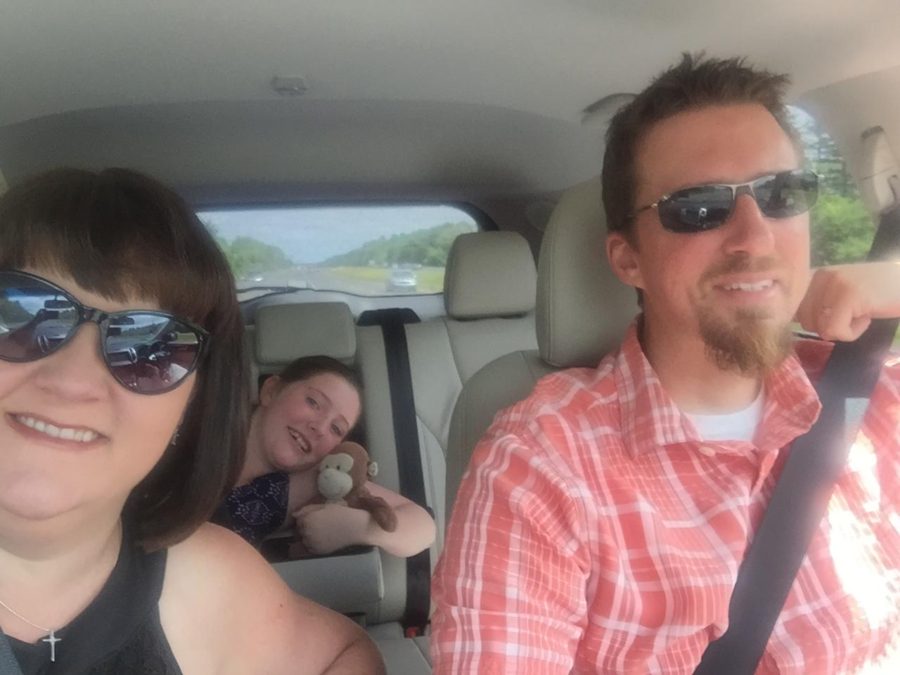
    The author on a road trip with his family.

    Head to campus

    I live in a college town. I was initially surprised at how many tourists visit Michigan State University’s campus each day. Some are alumni, some are families with prospective students, and many others have unique motivations like seeing a football game in every Big Ten stadium. Check out the USCCB’s list of U.S. Catholic Colleges and Universities. Play a round of golf at the Abbey Golf Course at St. Leo’s University, tour the McMullen Museum of Art at Boston College, or take a guided tour of the St. Joan of Arc Chapel on Marquette University’s campus. Not to mention, just about every Catholic university has regularly scheduled Masses open to the public. And if you find yourself in East Lansing on MSU’s campus, be sure to walk one block north and stop by my home parish of St. John Church and Student Center, home of the Catholic Spartans. Go Green!

    RELATED: Vacation Guide to Saintly U.S. Cities

    Drop in on a parish festival

    Some regions of the country admittedly do this better than others. I tend to associate parish festivals with Midwestern cities founded by European immigrants, such as Cleveland, Milwaukee, Minneapolis/St Paul, and Indianapolis. Those dioceses, in particular, have parish festivals every weekend of the summer and well into the fall. I remember going to several of these each summer when I was a kid growing up in Milwaukee. Think beer tent, local cover bands, carnival games for the kids, and maybe even a handful of midway rides all staffed with volunteers from the hosting church. Many parish bulletins and websites will advertise not only their own events but others happening nearby. Checking out the events section of your diocesan website is another good place to start.

    Participate in an event Mass

    Summertime is when the regular Sunday Mass may burst through the church doors to take worship out into the beautiful weather God has blessed us with. There are some oceanside parishes that hold Mass on the beach, some that have Mass out on the lawn, and I have found myself at a Polka Mass or two as well. So, the next time you’re road tripping across the country, look for a Mass in the great outdoors.

    Originally published July 10, 2019.

  • Do This in Memory of Me

    Do This in Memory of Me

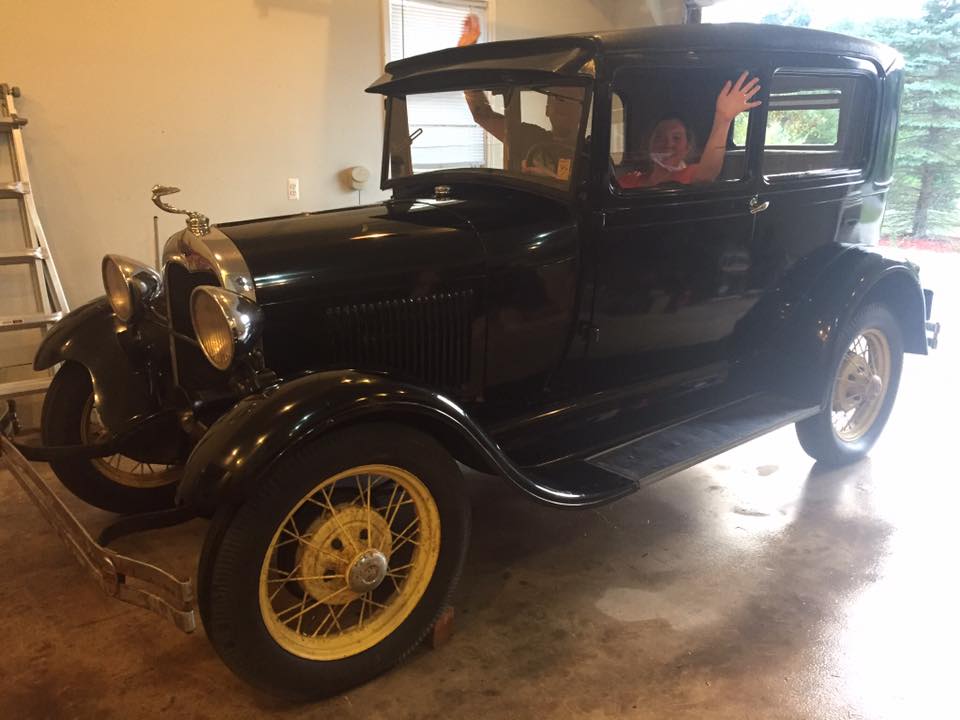
    John’s dad’s 1929 Model-A Ford Tudor Sedan

    “Will you take care of my car for me after I’m gone?” My father asked me while we sat in my sister’s living room. I didn’t know it at the time, but that would be one of the final face-to-face conversations he and I would have before he passed away less than a month later.

    The car that Dad was referring to was his beloved 1929 Model-A Ford Tudor Sedan. He had bought it for $125 back in 1962 when he was 14 years old and then spent the next two years restoring a car that he couldn’t yet legally drive himself. When kids his age were drooling over the latest muscle cars and building hot rods in their garages, my father was restoring a 33-year-old family car. It would be the modern-day equivalent of seeing a kid put all of his blood, sweat, and tears into a 1986 Ford Taurus station wagon.

    As a professional auto mechanic his entire life, my dad owned hundreds of cars. The Model-A was the only car he would never sell. The car was at his high school graduation, it was at my parents’ wedding (as well as the weddings of many of their friends), and it is pictured on my parents’ tombstone. So, when asked if I would take custody of his car for him, how could I say anything but yes?

    At the time that my dad died, the week before Father’s Day in 2016, his Model-A had not been on the road in close to 15 years. During those years, my mom was diagnosed with a terminal disease, and Dad became her primary caregiver. Shortly after her passing, his health quickly declined. For all of that time, the ’29 Ford sat in storage, neglected, rusting, and collecting dust. By the time I took over its care, the car’s engine was completely seized up, and no amount of pulling on its hand crank would break it loose.

    Luckily, in Dad’s collection of extra parts, he had a spare engine/clutch/transmission assembly that matched what was in the car. My 11-year-old daughter, Bella, and I spent the summer of 2017 rebuilding the spare engine and getting it running on a test stand. Then last fall, we swapped out the seized engine in the car for the one we now had running. By late November, we took the car for its maiden voyage around our neighborhood; the first time it had driven under its own power in nearly a decade and a half.

    RELATED: Virtual Father’s Day Retreat

    John and his daughter Bella getting ready to take his dad’s car for a spin.

    This whole project has become about so much more than the car. It has been a means of grieving the loss of both of my parents, a bonding experience for my daughter and me, and, believe it or not, a basis for theological reflection as well.

    That last angle didn’t occur to me until sitting in Mass one day recently when the priest referenced the famous exchange between Jesus and Peter recorded at the end of John’s Gospel: “Do you love me?”… “Feed my sheep.” (John 21:17)

    Dad’s question came echoing back to me: “Will you take care of my car for me after I’m gone?” Like Peter, I was quick to respond, but I doubt either one of us knew what we were signing ourselves up for. In both cases, by the time we knew enough to ask informed questions, the person we would have asked was no longer with us.

    By the time Jesus’ first disciples were out in the community continuing his ministry, they surely encountered and experienced many things that they felt like they were unprepared for. At Pentecost, the Holy Spirit descended upon the first disciples to continue to inspire and guide them in following their Christian mission. Dad didn’t leave me with nearly as powerful of an advocate as the Holy Spirit, but at least I have Google and YouTube to help me out.

    As I reflect on these unexpected parallels between an old Ford and the Catholic faith, I’m also struck by how they are both handed down through word and tradition from one generation to the next. We know that Jesus’ original 12 Apostles passed on the faith through their writings and through their actions. As we work on the Model-A, Bella often comments, “I love how the car still smells like Grandpa.” She’s not wrong — it does smell like him, or he smelled like it. They both had that unique potpourri of gear grease, gasoline, and exhaust that all old mechanics have. Bella still has that firsthand experience to remember what her grandfather smelled like. But her kids will not. They will have to come to rely on her descriptions, much like we have come to rely on all of those generations of Christians who have gone before us.

    I still don’t view the Model-A as “my car.” I tell people it’s my dad’s car — I’m just taking care of it for him. Someday, down the road, Bella will take over as its primary caretaker. She’ll teach her kids about their Catholic faith and how their great-grandpa bought a car for $125 when he was 14 years old. Based on what I’ve seen thus far, I think I’ll be leaving both the car and the faith in good hands.

    Originally published June 11, 2018

  • Virtual Memorial Day Retreat: Remembering Those Who Serve

    Virtual Memorial Day Retreat: Remembering Those Who Serve

    On Memorial Day weekend we dust off the grill, break out the lawn chairs, and head to watch the first parades of the year. But wait! Memorial Day isn’t just the unofficial start of summer. It’s a day to remember those who have made an extraordinary sacrifice in the service of their country and local community. Busted Halo’s Virtual Memorial Day Retreat guides you through moments of reflection and thanksgiving for the soldiers, police officers, and firefighters who have given their own lives in the service of others. To download a copy of this retreat, click here.

    Getting started

    Take a few moments to appreciate the rights and freedoms that are important to you:

    • Drive or walk around your town paying special attention to the police and fire stations, flags waving, and memorial ribbons for soldiers serving abroad
    • Reflect on having the right to vote, practice your own religion, and gain an education
    • Finally, remember that women and men have given their lives to defend these rights and freedoms

    Now, settle into the moment…

    • Find a silent or peaceful place
    • Close your eyes and breathe deeply
    • Recognize that God is with you

    Prayer

    Loving God, Jesus told us, “No one has greater love than this, to lay down one’s life for one’s friends” (John 15:13). At times we take for granted the peace and freedoms afforded us through the sacrifices that soldiers, police officers, firefighters, and others before us have made. We do not always appreciate the privileges and comforts that others provide us. And more intimately, sometimes our own self-interest can become more important to us than loving and caring for our friends. Help us to be more mindful of the sacrifices that others have made for our own well-being and the ways we might give of ourselves for the good of others. Amen.

    What freedoms and rights do you take for granted?

    Dear Lord, I am sorry for the times that I…

    Reading

    Wisdom: 3:1-9

    But the souls of the righteous are in the hand of God, and no torment will ever touch them. In the eyes of the foolish they seemed to have died, and their departure was thought to be a disaster, and their going from us to be their destruction; but they are at peace. For though in the sight of others they were punished, their hope is full of immortality. Having been disciplined a little, they will receive great good, because God tested them and found them worthy of himself; like gold in the furnace he tried them, and like a sacrificial burnt offering he accepted them. In the time of their visitation they will shine forth, and will run like sparks through the stubble. They will govern nations and rule over peoples, and the Lord will reign over them forever. Those who trust in him will understand truth, and the faithful will abide with him in love, because grace and mercy are upon his holy ones, and he watches over his elect.

    Thoughts on the Reading

    The reading from Wisdom, typically read at the funerals of the admired and inspiring, shows that God has neither overlooked the struggle of the brave women and men who have given their lives in defense of the freedoms we hold so dearly, nor their sacrifices for righteousness. We live in hope that our sisters and brothers now rest in the arms of the Lord, enjoying the peace, justice, and freedom that they fought so hard for us to enjoy. Memorial Day is an opportunity for our nation to remember, pray for, and mourn the loss of these women and men. We gather together in cemeteries, at flagpoles, on town greens, as well as in our churches, mosques, temples, and synagogues to pray, each in our own way, for the soldiers, police officers, and firefighters who have died in the line of duty. Encouraged by the hope of their eternal reward in the hands of God, we unite our prayers with those from all faith traditions as our whole nation prays in thanksgiving for the great sacrifice of the women and men upon whose shoulders we now stand, who have truly shown us all the greatest sort of love

    Reflecting on the Reading

    Take a few moments to think about (or even write down) your responses to the following:

    • Who do you know who serves her/his country as a soldier, police officer, or firefighter? How might you thank her/his for that service?
    • When you remember those who lost their lives defending our rights and freedoms, what does their legacy and sacrifice mean to you?
    • Name three ways you can more joyfully recall the memory of those who have died.
    • In what ways do you feel moved to help others? How might you become a servant to others in your community?

    Praying for the Community

    Adding our prayers to those across the nation, from a multitude of traditions, we give thanks for those who defend and care for us. Christ, we thank you for your saving sacrifice through which you welcome our fallen guardians into your kingdom. God, give us loving hearts so that we too may give of ourselves for others. Holy Spirit, bless all who serve and protect us. Add your own petitions perhaps for soldiers, police officers, and firefighters in your community: Christ, thank you… Father, give… Holy Spirit, bless…

    Make a Commitment to Those Who Serve Others

    Using your reflection responses as a guide, make a doable personal commitment that will help you to be more appreciative of those who put their lives on the line in service to our country. Ideas: Call or even visit your local police or fire station to thank the women and men there for their service. Invite a neighbor over for dinner who has a family member serving abroad with the military. Volunteer your time at a local veterans center or medical facility.

    Conclusion

    Christ, you taught us saying, “Blessed are the peacemakers, for they will be called children of God” (Matthew 5:9). We mourn the deaths of those who have paid the ultimate sacrifice in pursuit of peace. Still, we know that you gave your own life so that these women and men can find eternal peace in your kingdom. May we learn, through their example, to appreciate the joys of peace and freedom that we may sometimes take for granted. Amen