Catholics are required to abstain from eating meat on Ash Wednesday and each Friday in Lent (including Good Friday). Fish is often used as a substitute for meat-based meals. But of course, with the popularity of vegetarian and vegan diets, there are many other solutions besides fish.
Historically, since about the second century of Christianity, Christians abstained from eating meat on Fridays as a kind of sacrifice and reminder that acknowledged Jesus’ sacrifice on the Cross, which we commemorate on Good Friday. It’s also why we proclaim the sorrowful mysteries of the rosary on Friday. About a century or two later, Lent came into being, as a season of intense preparation for Easter, so the fasting and abstinence was extended to much of Lent.
The Second Vatican Council simplified many Catholic customs and laws. There was too much of an emphasis on sin and sacrifice and some of the practices were rather involved. Many people believed that breaking Friday abstinence was a sin so serious it could land you in hell. They knew the whole thing had gotten out of hand.
So the bishops preserved fasting on Ash Wednesday and Good Friday (meaning to eat only one full meal for the day and then to merely sustain yourself for the rest of the day — two smaller meals that do not equal the one large meal) and abstaining from meat on Fridays during the more penitential time of Lent.
Some have said the bishops were in cahoots with the fishing industry, but there is little to no evidence to claim that as truth.
Lent is a wonderful time to slow down and take stock, a special time for fasting, prayer, and almsgiving. But adding just one – much less all three – additional activities into our busy, over-scheduled lives can feel like a huge challenge. Between my full-time job, my part-time job, helping my son with homework, and having dinner with my family, some days I’m hard-pressed to find even 15 minutes of unaccounted for time.
Still, though, I feel called to make the most of the Lenten season this year, and I know that giving up something, giving to something, and giving of myself in prayer are the best ways to do that. But how can I add any of that to my schedule when I rarely have time for lunch away from my desk? I’ve found that the key is giving up adding things in. Instead, the trick is to rethink the time I already have.
Maximize your morning
Think your morning shower is only good for getting you cleaned up for the day? Or that your first cup of coffee is merely an energy boost? Repurpose your regular routine in one of these creative ways:
Sometimes I’m barely conscious when I stumble into the shower in the mornings. That’s when I like to use traditional prayers I’ve known all my life. Beginning my morning with a couple Our Fathers and Hail Marys allows the words and their meaning to work on me without effort and sets the tone for the rest of my day.
Bring an intention to your morning while you’re getting ready for the day and offer it up in prayer. Saying something simple like, “May this day bring me closer to you,” or “May I serve you and others faithfully today” can transform morning grogginess into a more peaceful, positive embrace of the new day.
Is picking up coffee on the way to work part of your morning routine? Brew a pot at home, save the money, and make a donation to charity or put it in a CRS Rice Bowl instead.
If a doughnut usually accompanies your morning coffee, try skipping it for a while. Although you’re not fasting completely, you are making a choice to do without something, which is the whole point of fasting in the first place.
Despite the advances in technology, we all still wait in lines – the carpool line, the check-out line, the drive-through line. Make it a goal to use the time you spend there in creative ways that support your spiritual journey:
Count your blessings. This never fails to improve my mood and reframe the way I think about the annoyance of being stuck in a line in the first place.
I also like to be honest with God and share my frustration. Sometimes, I’ll pray, “Ugh. I’m not in a good mood, Lord. Please teach me patience.” This has a way of moving me from my frustration to an acceptance of the present moment just as it is.
Many people believe that the internet and social media provide far more to distract us than center us. But using technology mindfully can be a nourishing Lenten practice:
When scrolling through social media, suspend your judgment of a comment or photo and instead pray for that person. A simple, “Grant her peace and joy,” is a great way to lift friends and acquaintances in prayer. And if the person is someone you have a hard time with, try praying, “Help me to be merciful as you are merciful.”
If you feel you should spend less time on social media but can’t seem to cut back, use it to support your Lenten “fast.” Set an alarm and allow yourself five minutes of mindless scrolling. Then when that time is up, use it for some creative “almsgiving.” You could clean out a closet and donate what you don’t need, call or write a note to someone who may be lonely, or email your legislators about a cause you believe in. You’ll find you won’t miss the time you gave up “liking” and “sharing.”
Consciously use your cell phone for prayer. Whether you’re looking for daily scripture readings, guided meditations, more traditional prayers, or contemplative music, there’s an app for that! You can also use the tools already on your phone. Try setting an alarm or calendar notification to remind you to stop what you’re doing and take time to pray. Or keep a list of prayer requests on your phone’s notepad.
Making Lent a meaningful time of spiritual renewal doesn’t have to be difficult. We just need some creative thinking, an open heart, and the faith that everything – even the mundane routines of daily life – “work together for good to those who love God” (Romans 8:28).
You’re out with your friends on a Friday night and suddenly you notice that one of them has switched from his favorite microbrew to … lemonade? Is it time for Lent already? Giving up something for Lent sometimes evokes head-scratching in non-Catholics, but what might seem like just another Catholic eccentricity can actually be a practice with deep spiritual significance.
Lent, the period of 40 days that precedes the celebration of Easter, has its origin in the early days of the Church. Converts seeking to become Christian, who at that time were mostly adults, spent several years in study and preparation. Under the threat of Roman persecution, becoming a Christian was serious business, so their process of preparation was intensive! Then they went through a final period of “purification and enlightenment” for the 40 days before their baptism at Easter. The rest of the Church began to observe the season of Lent in solidarity with these newest Christians. It became an opportunity for all Christians to recall and renew the commitment of their baptism.
Today we know Lent as a season of conversion: We acknowledge the ways we have turned away from God in our lives, and We focus on turning our hearts and minds back toward God. Hence the three pillars of Lent are prayer, fasting, and almsgiving. These observances help us turn away from whatever has distracted or derailed us and to turn back to God. Giving up something for Lent is ultimately a form of fasting. We can deprive ourselves of some small pleasure or indulgence and offer that sacrifice up to God. Or we might “give up” a bad habit such as smoking as a way of positively turning our life back toward what God wants for us.
So maybe your mom was on to something when she had you give up Oreos or your favorite TV show as a child. An experience of want, however temporary, can help us to appreciate the true abundance in our lives. And a small positive change can have a big impact that lasts beyond the 40 days of Lent.
Take the time now to think about what you might give up this year. Is it something you enjoy that you want to sacrifice for a while, like your daily latte? Or is it a bad habit you want to conquer, like running in late to meetings with co-workers? Or perhaps you want to turn your cell phone off for a few hours each day and not let it distract you from the loved ones you are with in real time? Find something that works for you, and whatever it is, may it help you to turn toward God in this holy season of Lent.
Fast, pray, and give with us this Lenten season! Our digital Lent calendar shows every day of Lent and Holy Week but doesn’t let you “open” each day and find out what’s behind the picture until that day comes along. Each link will lead you to a special new Lent-themed Daily Jolt and Microchallenge!
Ash Wednesday marks the beginning of Lent, the 40 days of preparation for the Easter season when Christians are called to deepen their spiritual lives through the practices of fasting, prayer, and almsgiving. The belief is that our consistent participation in these practices — like exercise we do for our physical health — improves our spiritual well-being by stripping away all that is unnecessary and becoming more mindful of how God is working in our lives. Challenge yourself this year, and go beyond the usual practice of “giving up” something. Now is a great time to take stock of your spiritual life and to grow in it. Not sure where to start? Check out these 25 ideas:
1. Make a commitment to read the Sunday scriptures before Sunday Mass. In the same way that reading up on football players, opposing teams, and coaching strategies will help you experience a game more fully, familiarizing yourself with the readings ahead of time will help you experience them in a deeper way on Sunday.
2. Use Busted Halo’s Lent Calendar, filled with Lenten-themed Daily Jolts and MicroChallenges to find new ways to practice the disciplines of fasting, prayer, and almsgiving. Each day of Lent, we’ll offer an inspirational quote paired with a practical, challenging task that you can do that day to help keep your spiritual life on point. You can also find these challenges on our website, or when you follow us on Facebook or Twitter.
3. Try a new spiritual practice. Sign up for an hour of Eucharistic Adoration. Experience Mass at a parish that’s made up of people from a different racial/ethnic group. Sign up for a silent retreat or spend at least one hour in silent meditation each weekend.
4. Think about what you usually spend your money on. Do you buy too many clothes? Spend too much on dinner out? Pick one type of expenditure that you’ll “fast” from during Lent, and then give the money you would usually spend to a local charity.
5. Take something on — 40 days of letter writing, 40 acts of kindness, 40 phone calls to the important people in your life.
6. When you first sit down in front of your computer at work, or at the very end of your workday, try a 10-minute guided prayer from Sacred Space based on the spiritual exercises of St. Ignatius.
7. Go to (or watch) a weekday Mass one day during the week. Many parishes offer them early in the morning, at noon, or after work. Daily Masses are often more intimate and shorter than Sunday Mass.
8. If you don’t have a cross in your apartment or house, buy a simple one and put it in your bedroom.
9. Use Busted Halo’s InstaLent Photo Challenge for daily, creative doses of Lenten spirituality. Post a photo each day and encounter the themes of Lent on a visual, personal level.
10. Instead of turning on a streaming service for your next binge-watching session, read the entire Gospel of Mark in one sitting. As the shortest Gospel, it is the most concise story of Jesus’ life, and the cross, a central Lenten symbol, plays an even more prominent role than in the other Gospels.
12. Create your own Friday fish fry! Try this simple and delicious recipe. It’s not the healthiest thing in the world, but a fun Catholic tradition to help you abstain from eating meat on Fridays during Lent.
13. Unplug from your iPhone or turn off your car radio on your commute. The silence may be jarring at first, but you may find that you are able to concentrate better and will be more observant of your surroundings.
14. Buy a book of daily reflections and keep it by your bed. Local parishes often offer these for purchase during Lent, and there are some good ones available online. Try the Magnificat or a book by Edward Hays.
15. Think about a habit that has kept you from being whom God is calling you to be. Consciously give up that habit for Lent.
16. Spend at least one weekend or evening volunteering during Lent. If you feel comfortable volunteering in person, help package meals at your local soup kitchen or stock shelves at a food pantry. If you’d rather volunteer from home, reach out to your parish to see how your skills might help serve on of the church committees.
17. Make a commitment to fast from insensitive, cruel comments about others. So, no gossiping or going down the Twitter rabbit hole.
18. Participate in a spiritual book club or small community of faith. Check out what’s already going on at your parish or pick a book and start your own.
19. As a part of your Lenten almsgiving, make a point to learn more about a particular social issue (immigration, human trafficking, racism, the environment, public education, child poverty). Give money to an organization related to your chosen issue that supports the dignity of the human person.
20. Tap into your creative side and try using coloring as a way to pray and meditate during Lent. Buy a coloring book or download a Lent calendar coloring page here.
21. Use the Catholic Relief Services Rice Bowl to reflect on the realities of people in need around the world and devote prayers, fasting, and almsgiving to changing the lives of the poor. The money raised by CRS RiceBowl supports not only the prevention of hunger and poverty in countries like Kenya, Vietnam, and Honduras, but also in the United States. (Twenty-five percent of all donations stay in the local diocese where they are collected.) For your Lenten Fridays, CRS Rice Bowl also features meatless recipes from cultures around the world.
22. Pray for somebody. As you’re walking the streets, driving the highways, or waiting for a meeting to start, pick out a person who appears to be in need and pray for that person. Be mindful of the words of philosopher Philo of Alexandria, who said, “Be kind, for everyone you meet is fighting a great battle.”
23. Get to know your neighbors. Introduce yourself, plan a dinner, or bring food to an older person on your block.
24. Read the Works of Mercy as Jesus describes them in Matthew 25:31-46. Then put this teaching into practice and choose an act of service you can perform throughout Lent.
25. Celebrate the Sacrament of Reconciliation. Can’t remember how? Here’s a simple guide with some tips. Tell the priest it’s been a while, and ask him to guide you through it.
Looking for a creative way to incorporate spiritual reflection into your daily routine this Lent? Our InstaLent photo challenge is back and better than ever!
Join the Busted Halo InstaLent Photo Challenge throughout the season of Lent (until Easter). Lent is a time to reflect and draw closer to God, so we hope to do just that with the creative ideas for photo-sharing we’ll provide each day. Get ready, and get creative! Your Instagram feed is about to look a whole lot like Lent.
How do you participate?
Share our InstaLent image (below) on Instagram so we know you are participating in the challenge.
Take a picture following the prompt for the day and write a brief reflection on what the photo and prompt mean to you. Don’t forget to use the hashtag #BHLent2024 in the caption, and tag or mention @bustedhalo in your posts!
If you’re not on Instagram, no worries! You can still participate in the fun by uploading your Lent photos to Twitter (X) or Facebook. Be sure to use the hashtag #BHLent2024 and mention @bustedhalo.
Need an extra incentive? Every week, a few lucky participants will receive a gift card to the Busted Halo store!
We can’t wait to see your photos! May your journey through Lent be an enriching experience.
In the Sacrament of Matrimony, we are called to love each other fully in word, spirit, and deed, not only on our wedding day, but every day of our lives. That’s why the celebration of love just once a year on Valentine’s Day – the origins of which include a Roman fertility ritual and the execution of the martyr Valentine on February 14 – felt counterintuitive to me. It didn’t help that Valentine’s Day evolved into a consumerist holiday benefiting greeting card and chocolate corporations. But, after I got married, I realized that we can reframe this day in a Catholic way: Valentine’s Day can be an opportunity for couples to reenergize their commitment to each other.
The best place to begin this re-commitment is the Bible. Though many relationships in the Old and New Testaments reveal the pitfalls of sinfulness and the reality of our human brokenness, many also demonstrate how spouses can be wholly committed to each other. These holy unions, while far from perfect, are built on similar foundations, and we can use these lessons as models for our own marriages.
Every marriage faces hardships, but we can survive life’s struggles together if we put our trust in God. Early on in my marriage, for example, my husband and I found it challenging to spend quality time together, as he had a rotational work schedule that made him spend most weekends at work. Our days off hardly ever coincided, and planning for family gatherings was a logistical nightmare. We realized that to deepen our union, we had to take time in our daily lives to fully enjoy each other’s company, which took commitment and communication. But these were lessons that benefited us in the long run. And now, in our fourth year of marriage, my husband’s schedule was finally adjusted to reflect a standard work week. Weekends together now feel like long-awaited blessings, and we soak in every minute of our time together.
There are many struggles that can strain a marriage. Several couples in the Bible faced a particular challenge: infertility. Many modern married couples, including some of my close friends, also suffer this specific struggle in private silence. Abraham and Sarah (Genesis 15-23), Isaac and Rebekah (Genesis 24-27), Elkanah and Hannah (1 Samuel 1–2:21), and Zechariah and Elizabeth (Luke 1:5-24) relied on God to direct the course of their lives. Through prayer and patience, they remind us that we are never alone in our struggles. God is with us to comfort and carry us. Ultimately, God blessed these couples with children – and some exceptional ones, too, like Jacob, Samuel, and John the Baptist.
However, whether or not children are part of God’s plan for us, we can strengthen our resolve as married couples by trusting in his will – and accepting it. We must be patient when our marriages are tested, keep praying even when things seem impossible, and remember that God’s blessings are always worth waiting for, in whatever form they come.
There’s a saying I’m particularly partial to: “Happy wife, happy life.” But there is truth in this: If spouses aim to keep each other happy, marital life is more peaceful and joyful.
One way to maintain authentic happiness is through kindness. Being kind to each other goes a long way, as we see in the story of Boaz and Ruth (Ruth 1-4). Ruth, who had been living in the land of the Moabites, lost her spouse and had no one to turn to. She and her mother-in-law Naomi returned to Israel, and Ruth sought out work. She found herself in Boaz’s fields, and though she was a foreigner, Boaz permitted her to work there. He ordered his men not to touch her and to treat her with respect. Boaz gave her lodging and invited her to share meals with him. In return, Ruth was grateful for all the help she could get. Eventually, Boaz and Ruth wed.
This power couple shows us that kindness means accepting and respecting each other. It means being patient with each other, helping with chores, taking on more when your spouse is stressed or exhausted, listening, and forgiving. Kindness is loving the person – and showing it.
Shared values and vision provide purpose for a couple’s shared life. Working towards something together is often more meaningful and enjoyable than going at it alone. My husband and I, for instance, agree that we want to live a life as simply and naturally as possible. This means having adventures in the great outdoors, prioritizing time with our family, and attending to daily joys together, like cooking and dog walking. In the long run, we hope to have our own homestead, raise chickens, and build a family in faith. In the New Testament, Priscilla and Aquila also shared a vision, playing an integral part in the spread of the early Church (Acts 18:2-3, Acts 18-19, Acts 26; Rom 16:3-5; 1 Cor 16:19; 2 Tim 4:19). After Claudius had evicted Jews from Rome, the couple settled in Corinth. There, they met St. Paul and followed him to Ephesus to evangelize, housing disciples and training them in the faith. The couple was so in sync with each other that Priscilla and Aquila are never mentioned separately in the Bible. In this way, they teach us that married couples are strongest when they are working together. This doesn’t mean spouses should always be glued to the hip, but that the strongest marriages are those unified in values and vision.
To find a true, authentic model of Christian marriage, we need look no further than the ultimate power couple: Mary and Joseph. There were many tests in their marriage: Mary’s pregnancy before being betrothed to Joseph; King Herod’s decree of infanticide which drove them to flee to Egypt; losing their son Jesus in Jerusalem during the Passover festival. And there were no doubt many private hardships that Mary pondered in her heart (Luke 2:19). But through it all, Mary and Joseph strove to lean on each other to uncover God’s purpose for them and follow his path, wherever it would lead them. And this ultimate partnership – this ultimate true love – enabled them to create a holy home, one which raised the Son of Man and Son of God.
These power couples from the Bible can inspire us to recommit ourselves to our spouses this Valentine’s Day. Though it is conventionally a secular holiday, we can celebrate it in our own Catholic way, by reflecting on our role in our marriages, recommitting all our strength, faith, and love to our chosen ones, and dedicating our union to God. Plus, it is a good excuse to just have a little fun. We usually crack open a bottle of champagne and cook a meal together. (So, despite my prior jab at the consumerist aspect of the day, husbands and spouses alike, take note: flowers, chocolate, a date night, or a wonderful home-cooked meal will still be happily accepted.)
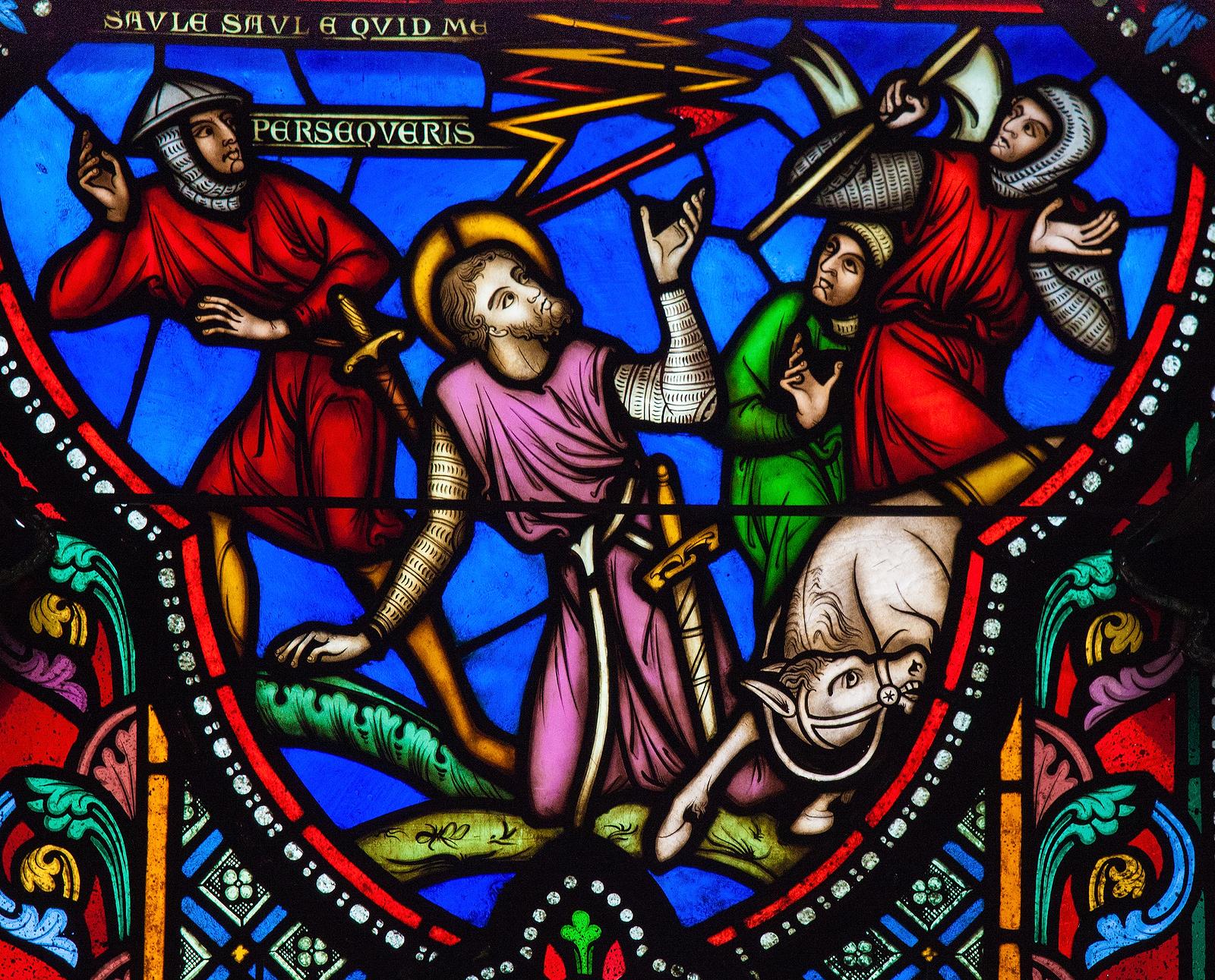
Question: Why is St. Paul called an Apostle? He wasn’t one of the 12 Apostles that Jesus picked.
The word apostle comes from the Greek apostolein, meaning sent ones. Although Jesus specially designated 12 of his followers in a symbolic restoration of the 12 tribes of Israel (see Matthew 10:2-5, Mark 3:16-19, and Luke 6:13-16), these 12 men were not the only ones sent by Jesus. Mary Magdalene and the other women who saw the risen Jesus were sent by Him to share the good news of the resurrection with the other disciples. And before the ascension, all of the disciples were sent forth by Jesus to proclaim salvation to the ends of the earth. Paul, though not one of the original companions of Jesus, considered himself an Apostle sent by Christ. Even though the Church has reserved the title “Apostle” in a special way for the 12, Paul was such a pivotal figure in the spread of the gospel that the Church has also applied this title to him, calling him “the Apostle to the Gentiles.”
I remember reading through the letters of St. Paul in college and being struck by a line that had never really stood out to me before. In his letter to the Thessalonians, St. Paul urges his listeners, “Pray without ceasing” (1 Thess. 5:17). That seemed like such a daunting command to me.
I certainly have struggled with what it means to pray in my own life. Whether I’m wondering how I can possibly fit an hour of prayer into my day, or doubting that my prayers are truly from the heart – it’s safe to say, the idea of prayer without ceasing was a fantasy in my eyes.
In my studies at school and in personal readings, I’ve discovered that Paul’s call to ceaseless prayer is in fact an invitation to a happier life through constant communication with our Lord. Of course it can still be difficult for me to set aside time in prayer and focus completely on the Lord, but with the help of some great Catholic writers, I have learned not to fear prayer, but rather embrace it. Here are four concrete ways that we can begin to practice unceasing prayer.
1. Pray consistently
To truly pray ceaselessly, we must first be able to pray consistently. By praying at set times throughout our day, we can orient our work and ourselves towards the Lord.
One beautiful way that we can practice consistent prayer is through the Liturgy of the Hours. This is the public and communal prayer of the Church, in which there are set prayers to be said at specific times throughout the day. I have found this to be a helpful way to schedule consistent prayer for my day, and I truly enjoy the beautiful morning and evening prayers that start and end my day with the Lord.
2. Give alms
St. Thomas Aquinas, one of the greatest thinkers in the Church, explains that we can accept the Lord’s invitation to unceasing prayer by giving alms. Our generosity and almsgiving can be a cause of continual prayer for others on our behalf. Aquinas explains, “He who gives alms is the one who always prays, for the person who receives alms prays for you even when you are asleep” (Commentary on 1 Thessalonians).
For years, my family created care packages for the homeless, each of us purchasing a few essential items that we’d then pack in tote bags and share with those in need, especially around Christmastime. There are many ways to practice almsgiving, such as tithing at Sunday Mass, donating clothes and food to a local shelter, or volunteering at a local soup kitchen. Imagine the beautiful tapestry of perpetual prayer there would be if all Christians were as generous as Christ calls us to be, sharing our gifts and inviting those we serve to pray for us.
3. Desire God
Perhaps the most common excuse for why we don’t pray is that we are too busy — it certainly is for me. Yet all the busyness in the world can’t keep us from ceaseless prayer. In fact, St. Augustine points out that while it is beneficial to spend much time in prayer, this is not necessary for unending prayer. We can continue with the good and necessary work in our lives, all the while desiring the Lord and his will for us. This means keeping God at the heart of all we do.
Augustine explains that prayer without ceasing is “Desire without intermission, from him who alone can give it, a happy life, which no life can be but that which is eternal.” We can pray ceaselessly, by desiring continually, the Lord and the true happiness that only he can bring (Letter 130.9.18). It can be very easy for me to get overwhelmed by the struggles and anxieties of my daily life, but I strive to remember and focus on what is at the heart of my life — the Lord. When I can end the day knowing that I kept God and his love for me in mind with all that I did, I can rest knowing it was a day of prayer.
4. Turn all thoughts to the Lord
One of the most transformative approaches to ceaseless prayer I have learned is to turn the interior monologue of my thoughts into a dialogue with God. If there is one thing I already do without end, it is thinking! There is a beautiful opportunity to invite the Lord into these thoughts so that they are transformed into a conversation with him. I often become overwhelmed when thinking of my plans for the future. Instead of planning my future alone in my mind, I turn my thoughts into a dialogue with God, asking him to guide my ideas, show me the right way, and help me accomplish his will for my future. Through that continual conversation and contact with the Lord, we are truly praying without ceasing.
St. Paul’s command, I’ve come to understand, is not some oppressive law on the number of hours I must spend in prayer. Rather, it is an invitation to transform my life so that I am always in contact with and in the presence of God. I hope these steps to pray without ceasing help anyone looking to achieve everlasting union with our Lord.
Growing up in one of Canada’s English-speaking provinces, I experienced a faith that was passed on to me at home, at Mass, and at Catholic school. This exposure was consistently in English, apart from a few basic prayers taught and subsequently memorized in French. In my 20s, I moved around quite a bit, spending time in the United Kingdom and the United States. I found a new parish wherever I went, and always in an English setting.
Eventually, I moved to Montreal, a vibrant, multicultural, and multilingual (with French as the official language) metropolis in Canada, and I have been blessed with the opportunity to now call this city home. My husband and I live in one of the city’s historically Italian residential neighborhoods. Although it is a very diverse community today, there is still a significant Italian presence, and our local parish offers Masses in either Italian or French, accordingly. I am at a proficient level in French, and I have a basic understanding of Italian. Since further connecting with my Italian heritage and rekindling my French language skills were both on my bucket list, I viewed these Masses as an exciting opportunity.
The experience of participating regularly (that is to say, not just occasionally while on vacation) in a non-English Mass has been enlightening and refreshing, but of course, took some adapting. Following all the points made in the homily, for instance, was a particular challenge for me at first. Still, there are lots of people locally and worldwide who have to adapt to attending Mass in a different language than their own. I had never really given much thought to this fact, but now I have a much greater awareness and appreciation of individuals in such a scenario.
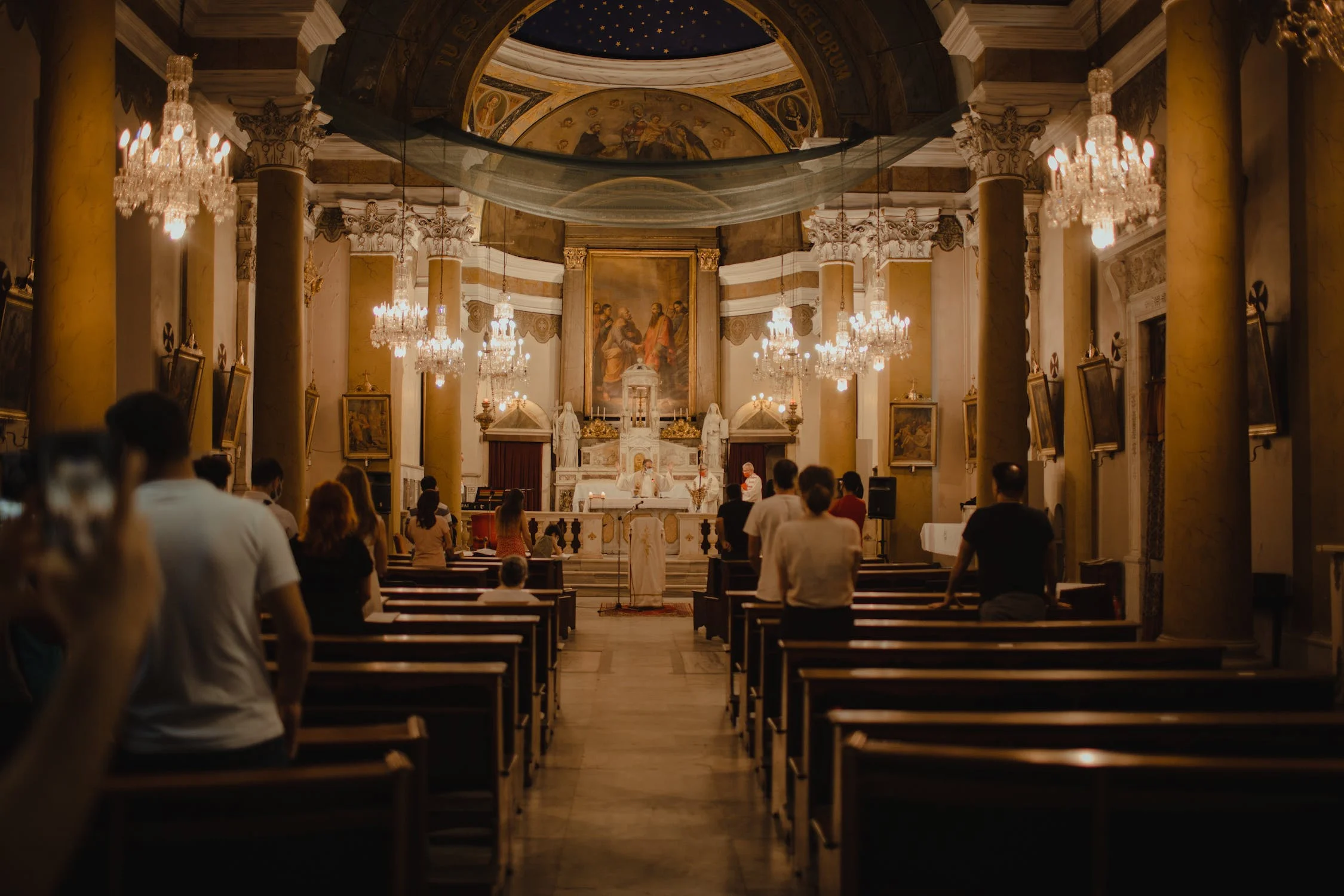
Before the Second Vatican Council in the first half of the 1960s, Masses around the world were celebrated in a common language, Latin. It was only after this important ecumenical council that the faithful were able to attend Mass in the language of the local community. Despite this change to the vernacular, the format of the Mass remains the same in whichever part of the world and in whichever translation.
This consistency provides a visible sign of the universality of the Church. In fact, the word “catholic” literally means universal. The Catholic Church is indeed a vibrant community of believing women, men, and children connected in faith across the globe. The universality of the Church in the context of the Mass has become clearer to me since moving to Montreal and joining a parish community that functions in a language that I had not been accustomed to using at Mass.
I would like to share two actions that helped me to adapt to a non-English Catholic Church community more readily.
First, I take more time to prepare for Masses. Before each Mass, I read through the Sunday readings and corresponding reflections in my English-language Missal. (I use the Canadian edition.) At the Italian-language Masses, the parish provides printouts at the entrance of the Church, which contain the corresponding readings for the day and other key parts of the Mass, including the Creed and Prayers of the Faithful, in Italian. This resource is very helpful to follow along and participate more fully in the celebration. To better streamline my adaptation to the French-language Masses, I subscribed to a monthly resource providing the Readings for all the Masses, including the daily Masses as well. About a year ago now, I started as a lector during the weekday French Masses, and the preparation involved in that context has also helped me adapt more seamlessly.
Second, I seek out alternative ways to celebrate the faith in English (or the language that I am used to attending Mass in), in addition to personal/family prayer. Shortly after moving to Montreal, amidst the first year of the pandemic, I became aware of an online prayer session hosted by the Sisters of the Congregation of Notre Dame. This virtual English-language prayer session in the Lectio Divina format gathers a small group of young adults (or those young at heart) once a month to pray together using one of the readings from the upcoming Sunday Mass. Lectio Divina is a beautiful way to pray with Holy Scripture. The Scripture passage is read three times and participants are invited to reflect upon what the passage is saying today and to share these thoughts with the group. Sometimes a reflection may be about certain emotions that have moved our hearts. Other times, it relates to a specific character in the passage, and other options could be seeing the pertinence of the text in the context of a current personal circumstance.
Regularly participating in the Mass in a different language has presented me with some graces, despite the natural challenges associated with adapting to the less familiar. The extra preparation that I do in advance of Mass gives me more time to think deeply about the readings. I can be more attentive and focused throughout the celebration.
I highly recommend attending Mass in a different language if the opportunity arises, perhaps while traveling or if there is a local parish that celebrates Mass in another language. A change from the familiar, a switch from the routine, can be a valuable blessing to heighten one’s focus or reduce distractions during the Mass and to develop or renew one’s awe and appreciation of the various rites.
To sum up, the Church is indeed universal. Participating in the Mass, in whichever language, is a powerful sign of the unity that connects Catholics around the globe. Each time we gather around the Eucharistic table for the fulfilling nourishment that only Christ can provide, we partake with others worldwide who are receiving the same sacrament.


 Catholics are required to abstain from eating meat on Ash Wednesday and each Friday in Lent (including Good Friday). Fish is often used as a substitute for meat-based meals. But of course, with the popularity of vegetarian and vegan diets, there are many other solutions besides fish.