The tomb is empty. The stone has been rolled away. Jesus is not there. A vacant grave appears in the dim light of morning. This is the height and summit of the story of Jesus the Nazarene.
Except it’s not.
This year’s Easter reading from the Gospel of John gives us the account of a grief-stricken Mary Magdalene seeking the tomb of her Rabbi, Master, and friend. It is early. The sun has yet to rise. She finds the tomb empty and — with anguish and horror — runs to tell the disciples that someone has taken the body of her Lord. This Jesus (her Jesus), who was all mercy, all truth, all gentle and fierce and holy power — must he suffer the indignity of being stolen in the night? Was not the pain and humiliation of the cross enough? Where have they taken him? Simon Peter and John tear through the quiet streets of Jerusalem and arrive at the tomb. It is just as Mary has reported. Empty. They are left with questions and vague hope.
Jesus did not come to give us vague hope. The empty tomb is not the end of the story. Jesus is not gone. He lives. Really and truly lives. Not figuratively. Not in some hyper-spiritualized, otherworldly sense. He is alive.
In the days following the Resurrection, the disciples see him, touch him, and eat with him. His body — the same body knit together in the womb of his mother and nourished lovingly at her breast. The same body slick and gritty with hard work at the side of his foster-father. The same body constantly reaching out to touch, heal, forgive, comfort, and feed. The same body subject to torture, degradation, and death has been raised from the dead. Jesus has conquered death. By his Passion and Resurrection, he has made our humanity resplendent. Jesus came to give us hope that is resplendent. He knows intimately the depth of the darkness we face. If we are brave enough and trusting enough and reckless enough to hope in him, it cannot overcome us.
This week during what the Church calls the Octave of Easter we will hear stories of the Risen Jesus walking and talking and eating and being touched by his friends. We will meet people stumbling in doubt and confusion and grasping at vague hope. We will watch the Risen One set their hearts ablaze with what is glorious and piercing and true. Easter is not over. It is still unfolding. Like the crocuses bravely pushing their way up from my snow-covered garden, the Resurrection has broken the canceling grip of what is cold and cruel and final. This week, the Resurrection will unfurl itself.
Attend or watch daily Mass this week to hear the Risen Christ proclaimed. Hear how day-by-day the Resurrection blossoms and reveals itself and receive a share of the resplendent hope that is yours … for you. Really and truly for you. The empty tomb is not the end of the story. It is the beginning of a new and glorious and forever unfurling story. It is your story. It is a story of hope. It is hopeful indeed.
Though Good Friday is the most solemn day on the liturgical calendar, for much of my early life it was difficult for me to connect to Jesus and his experience, until my brother was diagnosed with cancer back when I was 19. My faith went through a wringer. All I could ask God was, why? I could no longer pray. Every time I tried, I would just cry. Through the wisdom of my spiritual director at the time, I was able to see that my tears, being the expression of my inner anguish, were probably the most honest prayer that I had yet uttered. I was in touch with my pain, and I was sharing it with God.
This experience helped me realize that where I can connect most intimately with Jesus is through my own human experience. I do not know his experience. But I know my own. And that is where I can meet Jesus, who also went through the experience of anguish — whose sweat in the Garden of Gethsemane and the few words he managed to gasp out were the way he shared what he was going through with his father. Because Jesus, as God and man, experienced the gamut of human experience and emotion, I can meet him there. It is common ground.
Jesus’ cry from the cross, “I thirst,” captures the divine and human pathos of Good Friday. All of us know what thirst is. When I imagine the scene, I recall a thought that has haunted me over and over again from seeing images of tremendously malnourished women holding their babies: What must it be like for a mother to hear the cries of her hungry baby, and be unable to provide food for her child? This is what Mary is going through at the foot of the cross. This is what the Father is experiencing as well — he, too, is unable to meet the needs of his own son at this moment. These words declare that Jesus, the Son of God, had so completely been stripped of everything, even the help of his father and mother, that his thirst could not be alleviated.
Did Jesus’ cry stop here? Did Jesus only mean that he longed for something to drink? Or was he thirsting for something much more? If we can hear Jesus’ cry and allow these two words to reverberate in the hollow of our being, we might be able to hear in the echo an invitation that might lead us to that reality that we all long for: connection with God.
I thirst. Most of us tend to avoid admitting how empty we feel. It’s too painful to go into the depths of our being and be with ourselves for any length of time. Most of our life is filled with distractions that defend us from the emptiness. If for a moment we reflect on our reality, we might have to admit that all our telling ourselves we are in control is just a way of drowning out the fact that life is very insecure. The “security” of our lives is based on so many variables that can crumble at any moment. Beneath our public veneer is an unconscious terror that we keep at bay with a tremendous amount of psychic effort.
Jesus’ ability to cry out “I thirst,” tells us that he was in touch at a very profound level with his emptiness. He may have been expressing the thirst he felt for the restoration of the ruptured relationship between his Father and us. He may have been thirsting to taste once more the food of the kingdom of heaven, where he would enjoy the presence of his Father — and ours.
Can I hear these words and allow them to become my own as well? I thirst … At first, we might feel helpless because we don’t know what Jesus means. I might be able to discover what he means by getting in touch with my own thirst. Simply repeating the phrase, I thirst, over and over again helps me begin to feel what it is that I thirst for. And that is where Good Friday becomes a shared experience between us and Jesus, which can lead to communion.
What will my response be to Jesus’ cry? How will I try to alleviate Jesus’ thirst? The litmus test of my response will not be an abstract internal affair. Rather, it must take flesh in the way I respond to the cry of thirst from those in my life, a cry that is often suffocated. If I can hear the undertones of Jesus’ cry of thirst, I may be able to hear my own and others’ unspoken thirst — a thirst that all of us, including God, have — that can only be satiated by one gift: love.
(Previously published March 2010.)
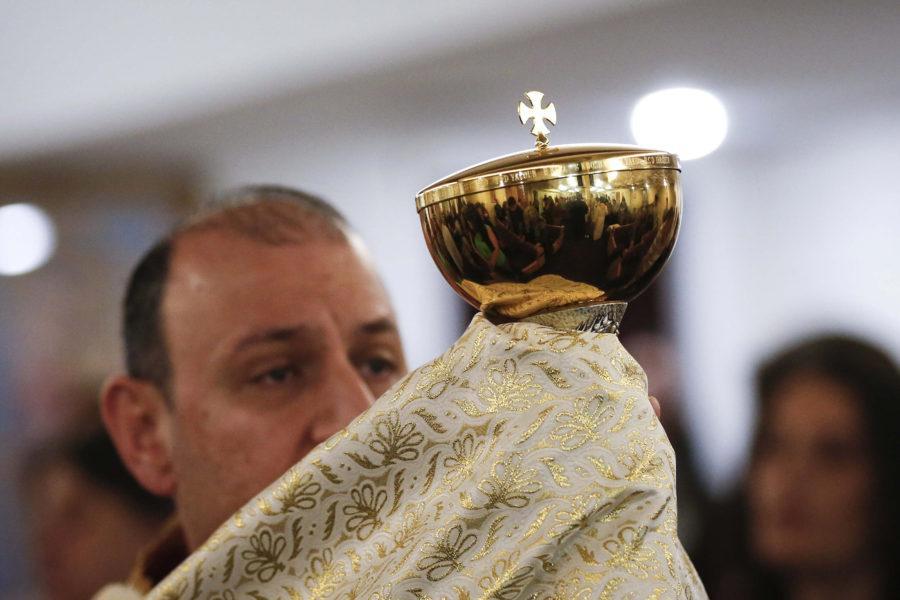
Msgr. Felix Shabi carries a chalice containing the Eucharist to a place of repose following Holy Thursday Mass of the Lord’s Supper at Mar Abraham Chaldean Catholic Church in Scottsdale, Arizona. (CNS photo/Nancy Wiechec)
Dating back to my preteen altar server days, I’ve always had a deep connection to the Triduum. Every year, when the volunteer ministry schedule for Holy Week came out, I was the first to sign up. Back then, the novelty of the unique rituals intrigued me; it’s not every day that you see your priest kneeling down to wash parishioners feet in imitation of Christ.
Through the years, I still find myself just as connected to the observances of Holy Week. Now, though, instead of having my curiosity piqued by different liturgical traditions like it was during my youth, these blessed holy days signify a deep, spiritual time of reverence, thanksgiving, and self-reflection. Looking back over the season of Lent, I’m reminded how the emptiness I’ve experienced signifies my dependence on the Holy Spirit.
Our Catholic faith is full of so many beautiful traditions, but one that leaves me speechless every time I witness it is the procession of the Blessed Sacrament on Holy Thursday. When the Mass of the Lord’s Supper has ended, the consecrated Hosts are solemnly carried over to a special repository, commonly referred to as the altar of repose. Many churches use their chapels for this occasion. The Blessed Sacrament remains in this location until the Communion Service on Good Friday.
I was attending the Holy Thursday service at St. Joseph’s Cathedral in San Diego when I first felt the magnitude of this procession. The priest had just finished reciting the post-Communion prayer, the incense was being prepared, and I was gazing around trying to find where the altar of repose was located. The cathedral was packed full of congregants, yet the air hung perfectly silent. Without the rays of the bright Southern California sun shining in, the dark, wooden fixtures set a somber tone. The sanctuary was mostly illuminated by candles burning on the main altar.
I expected the choir to begin playing a quiet melody or to start a soft chant as the procession of the Blessed Sacrament commenced. Instead, the priest invited us all to follow behind him. Parishioners were encouraged to join the Blessed Sacrament as the procession trickled outside, down to the sidewalks that circled the cathedral, before ultimately resting at the temporary altar set up in the social hall. As the priest began to walk, the only sounds to break the silence were from Luke 23:42: “Jesus, remember me when you come into your kingdom.” These sweet, somber words, quietly sung, echoed throughout the remainder of the procession.
“Jesus, remember me when you come into your kingdom.”
This humble plea sits heavily on my chest every time I hear it. These words serve as a meaningful reminder to me that we’re all invited to partake in the kingdom of God by actively participating in our Catholic faith through the sacraments. Remembering the importance of the sacraments inspires me to regularly receive the Eucharist and nudges me to go to Confession.
On Holy Thursday, we commemorate the night that Jesus made a gift of himself for the human race. This year, before you head out for Holy Thursday Mass, remind yourself of what you are celebrating when you remember the Last Supper. You are about to stand witness to the body and blood of Christ.
If you don’t usually participate in Adoration, spend some extra time with Jesus on the eve of his crucifixion. Allow yourself to remain open to hearing God’s message. How can you follow in Jesus’ footsteps by serving others? What are the blessings in your life that you take for granted? What might be holding you back from picking up your cross and following in Christ’s footsteps?
As I reflect upon the beautiful procession of the Blessed Sacrament, I find myself praying, “Jesus, remember me when you come into your kingdom.” My soul takes comfort in knowing that we all have an open invitation to live in eternity with God.
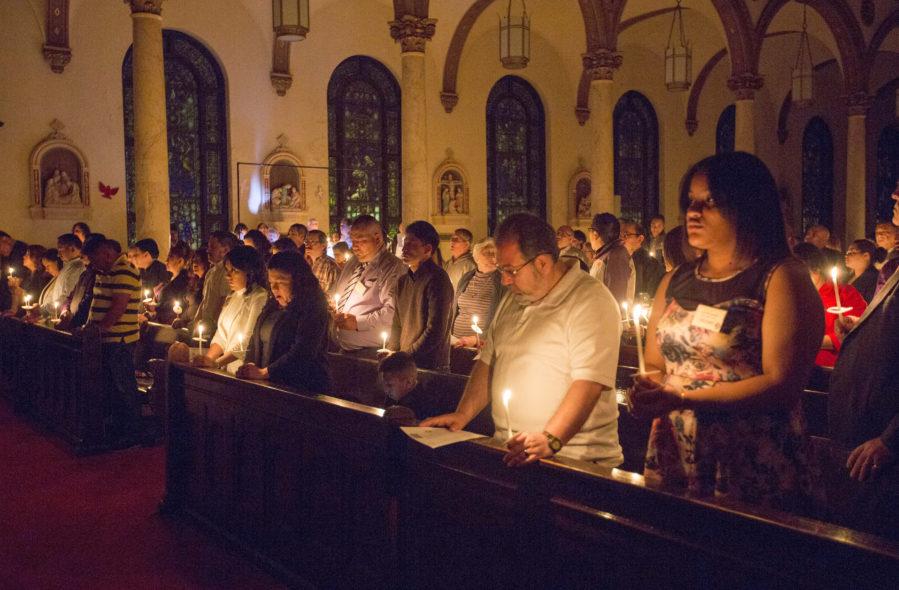
2015 Easter Vigil at St. Paul Church in Wilmington, Delaware (CNS photo/Octavio Duran)
The Triduum (TRIH-du-um) is the time of the Church year when we celebrate the passion, death, and resurrection of Jesus Christ. This three-day celebration begins with the Holy Thursday Mass and continues on Good Friday with the Liturgy of the Lord’s Passion. At the end of this liturgy, we leave the church in silence, waiting to celebrate the glory of our Lord’s resurrection. Then, on Saturday at sundown, the Church re-gathers to celebrate the final, and most grand moment of the Triduum: the Resurrection of our Lord.
The Triduum is somewhat like a three-day prayer marathon, and if you are a novice there may be some rituals that are unfamiliar to you. This guide will help you walk and pray through the liturgies of the Triduum.
The Mass on Holy Thursday is commonly known as the Feast of the Lord’s Supper. This Mass is a time for Catholics to remember the Last Supper where Jesus and his apostles gathered to celebrate Passover. In the Holy Thursday celebration, two ritual actions stand out among the rest:
The Washing of the Feet
At the Last Supper, Jesus took a basin and a towel, got down on his hands and knees and washed the feet of all of his apostles. After this action, he commanded the apostles, “I have given you a model to follow, so that as I have done for you, you should also do” (John 13:15). This is Jesus’ commandment: Just as Jesus has been a servant to his apostles, so the apostles must go out into the world and be servants to everyone around them.
We are called to do the same in our daily lives. Well, we are not called literally to wash each other’s feet (though sometimes that may be the case). The action of washing one another’s feet reminds us of the call to humble servitude. Foot washing is not a re-enactment or re-creation of a past event, but rather, it is a commemorative action that reminds us that God calls us first and foremost to be servants to others in our daily lives.
The ritual washing of the feet can take place in many ways. Some churches choose to have 12 people, who represent the apostles, have their feet washed by the priest presiding over the celebration. Other churches invite the entire gathered community to have its feet washed (this particular tradition is very powerful because everyone is invited to come and have their feet washed by someone else in their community). However the ritual takes shape, foot washing should always be a reminder that Christ has called us to be servants to the entire world.
The Celebration of the Eucharist and the Eucharistic Procession
At the very first Last Supper, Jesus also instituted the Eucharist for the Church. At this Holy Thursday celebration, we are reminded of who we are in Jesus Christ and that, through the sacrament of the Eucharist, we are and we become even more the Body of Christ together.
At the conclusion of the Holy Thursday celebration, there is no concluding prayer. Once the celebration of the Eucharist is completed, there is a Eucharistic Procession (where the Eucharist that is left from Communion is processed to a Chapel of Reservation). This procession to the Chapel of Reservation reminds us of Jesus’ time in the garden of Gethsemane when he prayed so fervently through the night. The entire community is invited to join in this procession and then join in the silent prayer and adoration until night prayer is prayed and the Eucharist is put in the Tabernacle. The gathered community leaves in silence only to return in prayer the next day for the Good Friday celebration.
Reflection questions for Holy Thursday:
Who are those people who need our help the most?
Am I willing to get down on my own hands and knees and help those who are unable to help themselves?
What does the sacrament of the Eucharist mean to me?
In this solemn celebration, we remember the Passion and Death of Our Lord. The service is marked by several important rituals including the proclaiming of the Passion according to John, the Veneration of the Cross, an extended form of General Intercessions, and finally, the distribution of Communion (reserved from the Holy Thursday celebration of the Eucharist).
The Veneration of the Cross
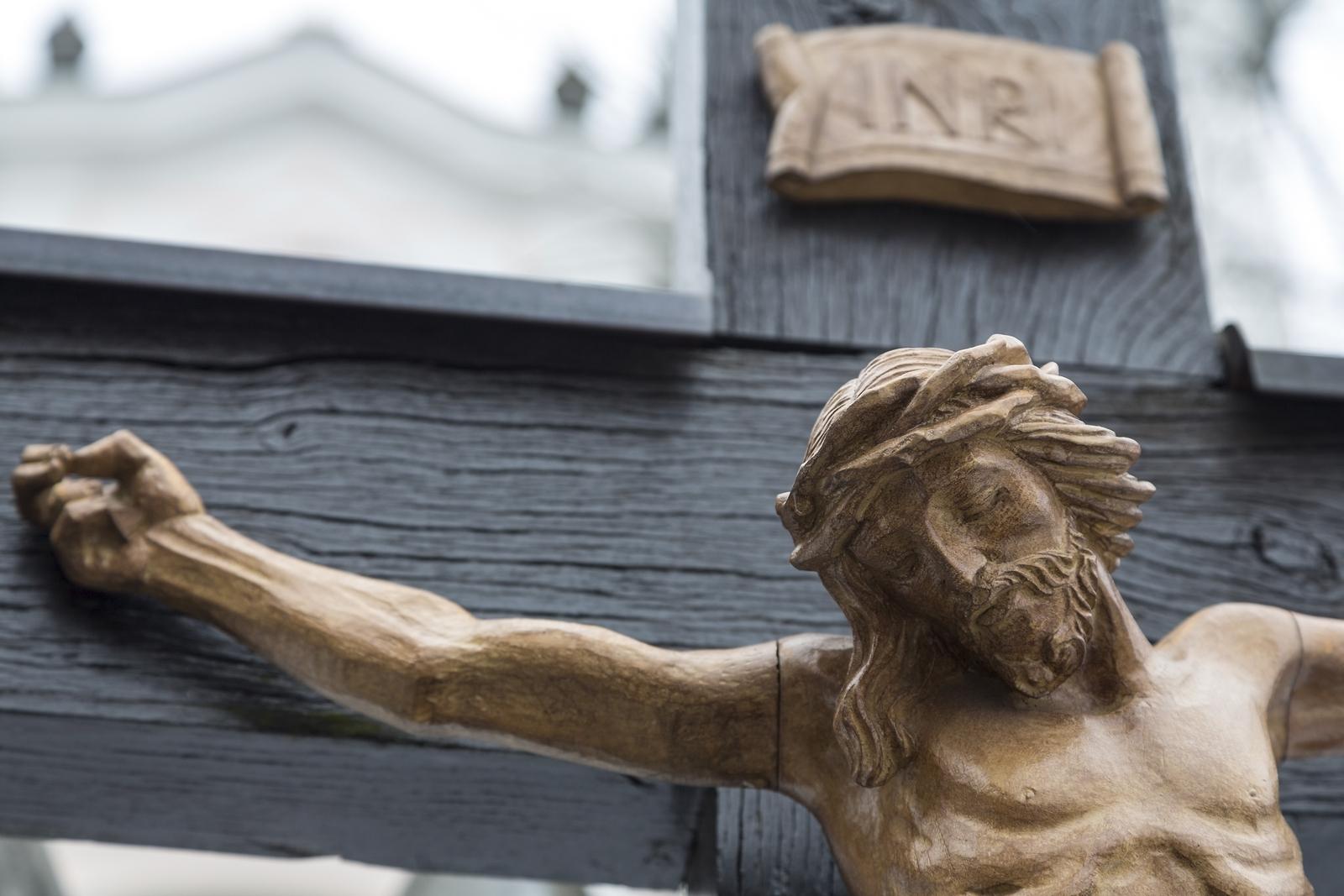
It seems strange that in the Good Friday liturgy Catholics choose to venerate, or show reverence to, the very instrument that was used to crucify Jesus. The Veneration of the Cross reminds us that through this Cross, the Glory of the resurrection emerges. So, on Good Friday, we come forward to show our great reverence and respect for the Cross. People have various traditions when they approach the Cross. Sometimes they kiss the Cross, kneel before the Cross, or even just touch it in some fashion. As you participate in this ritual, venerate the Cross in whatever way feels most normal. And most of all, just take in the experience of the gathered community coming so close to such a tragic, but integral, event in our faith.
The General Intercessions
If you enjoy spiritual aerobics, then this ritual is for you! In this expanded form of General Intercessions, the presider and the deacon work together to pray 10 intercessions. These intercessions are the same intercessions the entire Church prays on Good Friday, and they include praying for the Holy Church, praying for the unity of all Christians, praying for the Jewish people, praying for people who do not believe in Christ or in God, praying for people in public office, and praying for people who are suffering or facing difficult times. These prayers recognize how universal our Church is and that we should be aware of all of the faiths and traditions in the world that are different from our own.
Reflection questions for Good Friday:
What does the death of Jesus mean to me?
What does it mean to “Glory in the Cross”?
The celebration of the Easter Vigil tells the whole story of our salvation — from creation to resurrection and beyond. Because of all the ritual moments, this service tends to be on the lengthy side (an average Easter Vigil will last at least 2-2 1/2 hours). But don’t let the length of the celebration detract you from participating. The Easter Vigil includes the lighting of the Easter Fire and Paschal Candle (the large candle that we will use throughout the year), the singing of the Exsultet (the Easter Proclamation), the expanded Liturgy of the Word that traces time through Salvation History (the story of our Salvation), the Liturgy of Initiation (where new people come into the Church), and the celebration of the Holy Eucharist. All these rituals come together for one purpose: to remember and recall the saving deeds of our God on our behalf. Here’s an explanation of two moments from the celebration.
The Singing of the Exsultet
The Exsultet, or the Easter Proclamation, is a hymn that is sung by a deacon, priest, or cantor. This hymn speaks of how God has interceded in our lives on our behalf. The Exsultet especially recalls the Holy Night when Jesus Christ rose from the dead. What makes this moment particularly dramatic is that the Exsultet is sung in a church lit only with the light of the Paschal Candle and other smaller candles, which people are holding. In order to pray this hymn along with the deacon, priest, or cantor, try reflecting on the words of the hymn throughout Holy Saturday.
The Liturgy of the Word
The Liturgy of the Word for the Easter Vigil is comprised of nine readings and seven responsorial psalms. The first reading begins with the story of Creation and then, each subsequent reading recounts the story of our faith lives through history. You’ll hear the story of Issac and Abraham, the story of Moses and the Exodus, and more. All of these readings lead up to the singing of the Gloria when all the lights come on in the church, and then the final reading, the Resurrection of Christ, is proclaimed. Why so many readings? Again, like the singing of the Exsultet, the readings recount the many ways in which God has interceded on our behalf throughout history.
Most churches do not do the entire set of nine readings (for time’s sake). But keep in mind that the point is to recall how God has interceded on humanity’s behalf from the very beginning of time and that through this Easter Vigil we celebrate that God is present and always working in our lives, even still today.
Reflection questions for the Easter Vigil:
How has God interceded in my life?
After hearing the Resurrection story, what events do I see in my own life that are in need of new life, in need of resurrection?
How can I carry on the story of the resurrection to others?
Easter
Throughout these three days, we experience the highs and lows in our faith, ending with the ultimate high — the new life of the resurrection. The Easter Season begins with the Easter Vigil, and we enter a time (50 days) when endless “Alleluias” will ring out throughout all of our liturgical celebrations. May you experience the joy of new life in your own way this Easter Season. Have a happy and blessed Easter!
As my infant son struggled with a difficult medical condition over the last few years, I found myself in the midst of caregiving like I had never experienced before. During that time, I stumbled across an old devotion: the Seven Sorrows of Mary. So, finding a connection with the Blessed Mother in my sorrow and hers, I found myself meditating on the Passion and Death of Jesus in a new way.
Amid Mary’s great Passion-related sorrows, we can find consolation, just as in the middle of a dark night, we find illumination in the stars. That consolation is that Jesus could see Mary standing there along the road to Calvary. Her presence was a comfort to him, as it was for me facing grief and sorrow in my own life.
Their meeting is not recorded in the Bible, but we know it happened by tradition. Their meeting was likely brief, just after Christ’s first nasty fall, and in that moment, Mary witnessed all the wretchedness that the people around her son put him through. Yet, what was wretched for her was also a moment in which Jesus could see that he wasn’t alone. Her presence showed him that someone loved him, that someone grieved his fate, and that Mary shared his suffering in her heart.
So even though Mary witnessed all the grotesque details of Jesus’ torture, she perhaps saw too the glimmer of relief in his eyes — just for a moment, that she was there.
Sometimes, our presence is not enough to console someone we love. But in certain, beautiful moments, it can. Even during the most difficult times, God offers us small graces. Like Mary, then, we can keep going.
Right after Mary and Jesus were forced to part, the soldiers recognized that he might not make it all the way to Golgotha alone. I wonder if Mary saw Simon of Cyrene from behind, and saw him help Jesus carry the cross as she longed to do. This too, was both a sorrow and a consolation, for now he had some help, but he was getting farther and farther from Mary, and closer and closer to death.
Isn’t it funny how intimately sorrow and consolation are linked? The other side of sorrow is joy, and the other side of love is loss. As a caregiver, I’ve learned acutely that in life, we walk the razor-thin edge between the two sides, feeling both in their time as we wobble between them. It’s the sorrow of sitting at the bedside of a suffering loved one, intermingled with the joy of being in their presence, the joy of loving them with a depth that only such suffering uncovers. To flee one – sorrow or joy – is to flee the other. We can accept joy in our lives only when we accept sorrow. We can accept love only when we also accept loss.
This is the drama of our fragile, human lives. It is my drama in caregiving, and, I imagine, in all the permutations of life in which we live our days for the sake of another. Perhaps it is why Jesus told us to take up our crosses, that we may take up our joys in their time as well (Matthew 16:24). Perhaps it is why the man who avoided suffering “went away sad” (Matthew 19:22).
Mary’s sorrow is different from sadness. It is founded on faith, given momentum by hope, and is the interwoven brother of love. Sorrow is deep, like roots that probe deeper and deeper so that the tree above can bear abundant fruit. It is like the chaff that grows up with the grain; to remove sorrow now would threaten the harvest, but one day, God will separate the two (Matthew 3:12). Sorrow will be forgotten, and we’ll be left with the abundance and joy of Easter.
Editor’s note: This article is an edited excerpt from Theresa’s book, “Caring for a Loved One with Mary: A Seven Sorrows Prayer Companion” (OSV 2023).
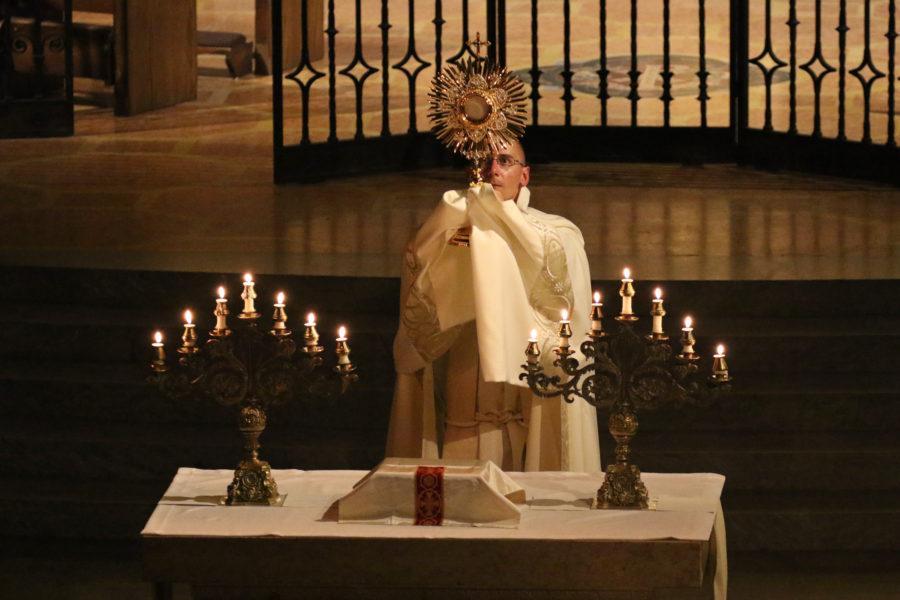
Eucharist Adoration at Immaculate Conception Seminary in Huntington, New York. (CNS photo/Gregory A. Shemitz, Long Island Catholic)
My first experience with Eucharistic Adoration occurred in sixth grade at my Catholic elementary school when my homeroom teacher took my entire class to the church to pray in silence in the presence of the Blessed Sacrament. If you’re thinking it was difficult for 35 12-year-olds to sit still and pray in silence for an hour, then you’d be right. We squirmed and fidgeted and poked our neighbors to avoid giving our undivided attention to the Lord. Our behavior earned a mild scolding from our soft-spoken teacher, who reminded us of Jesus’ own words in the Garden of Gethsemane the night before he was crucified: “So you could not keep watch with me for one hour?”
After that, I didn’t go to Adoration again for many years. First, there was the challenge of carving out an hour in the middle of the week to get there, when so many other activities and errands felt more pressing. Secondly, I was worried that Adoration might only be for super holy people — ones who spend time with God in perfect, prayerful contentment. My mind is full of worldly concerns and distractions, so maybe Adoration wasn’t for me. Finally, my inner, fidgety sixth grader was concerned Adoration might be, well, boring. I assumed a Holy Hour would look like waiting for a big revelation from God and hearing nothing but crickets.
After moving to Colorado, though, I discovered that my new parish had a perpetual Adoration chapel, which meant I could sit with the Blessed Sacrament at any time of the day or night. And despite my years of doubts, I somehow found myself wanting to try again. Here are some things I that helped me commit to a weekly Adoration practice:
It’s not all about me
Like Mass, Adoration isn’t necessarily about what we will get out of it. True, the graces dispensed by God help us grow in holiness, but the primary purpose of Adoration is right there in the name of the act: to adore the One present to us in the Eucharist.
Just be
Remember that you don’t actually have to do anything. The Catholic faith recognizes that the greatest gift God gives us is himself, and Adoration is another way for us to recognize that gift outside of receiving the Eucharist at Mass. So, don’t overthink it. Just receive the gift.
Pray (with a little help)
If it’s been awhile since you’ve entered the Adoration chapel and you’re worried you might be a little bored (that’s understandable!), or you have no idea where to start (it’s okay!), I’ll offer the following suggestions:
Pray the rosary. To contemplate the mysteries of Jesus’ life in the rosary is to contemplate the mystery of the Eucharist given to us and the Blessed Sacrament we praise in Adoration. So, pairing these prayers is a great habit to get into.
Write in your prayer journal. Writing in a prayer journal is a great way of making your relationship with God seem more tangible, since we’re getting the words out of our heads and onto the paper. Think of the practice as writing a letter to God. Take all your worries of the day and lay them down during Adoration. Or write to him about everything that’s going well in your life right now.
Listen to praise and worship music. Music can be an extremely effective way to focus our thoughts on God. Just make sure you have headphones that will keep everyone else in your vicinity from hearing your music if they’d rather spend their time in meditative prayer. I usually find that slow, reflective melodies work best for this environment — anything by Audrey Assad usually does the trick for me.
Read. While Adoration isn’t really the time to break out that thriller you’ve been working your way through, it is a great opportunity to pull out a book by one of the saints (such as “The Diary of St. Faustina,” St. Francis De Sales’ “Introduction to the Devout Life,”or St. Thérèse’s autobiography “The Story of a Soul.” Or prayerfully consider a few lines of the Catechism. You may also choose toread a set of devotional essays like Caryll Houselander’s “The Reed of God,” which is full of meditations on Mary. And of course, don’t forget the Bible!
You don’t have to sit still during your Holy Hour in order to make it count. It’s okay for it to be a natural extension of the rest of your prayer life. So, if there’s something that really helps you focus your prayer, bring it to Adoration. Most of all, remember to receive the gift of Christ in the Eucharist and just be present to God.
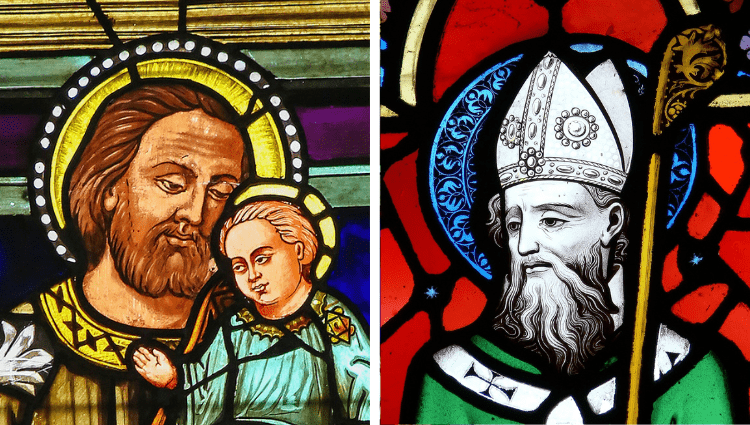
Every March, I notice an emergence of leprechauns, shamrocks, and Guinness, followed by an abundance of Italian pastries, lilies, and the color red. The remembrance of St. Joseph follows St. Patrick’s Day on the calendar each year, but too often I have neglected to celebrate them both intentionally. This year, my family has decided to honor the impact of these two heroic saints in a (hopefully) memorable way.
My wife, Joanna, is always concerned about how we can encourage our young sons to experience the faith in a way that goes beyond attending Mass on Sunday mornings. She is great at finding ways to make being Catholic about celebrating life and having fun doing it. She’ll buy a colorful saints calendar for the kitchen, set up dinner on the floor on Holy Thursday, or dress the kids in colors that align with a specific feast day. Finding ways to infuse the faith into the normal parts of our lives sparked our ideas for how to celebrate St. Patrick and St. Joseph this year. While Joanna’s Italian side gives rise to her proclivity for Joseph, St. Patrick has always been celebrated radically in the Irish Griffin household.
St. Patrick receives most of the spotlight out of these two saints, and much of his feast day has been commercialized into drinking and eating corned beef. This year, we plan to eat all of the traditional Irish foods, but also use the shamrock as a way to teach our sons about who God is.
We plan on going outside and using chalk to outline a huge shamrock in green and have the kids color it in. Then we will focus on how the shamrock points to the fact that God is a relationship of perfect love represented by the three leaves (The Trinity of Father, Son, and Holy Spirit). While we eat dinner, we will tell the brief story of St. Patrick who helped bring the faith to the people of Ireland even though it was not easy. Then we will talk about how prayer helped him through his trials.
At bedtime, we will reinforce this and pray one of St. Patrick’s prayers:
“Christ with me, Christ before me, Christ behind me, Christ in me, Christ beneath me, Christ above me, Christ on my right, Christ on my left, Christ when I lie down, Christ when I sit down, Christ when I arise, Christ in the heart of every man who thinks of me, Christ in the mouth of everyone who speaks of me, Christ in every eye that sees me, Christ in every ear that hears me.”
We will end the prayer with the Sign of the Cross, referencing the huge shamrock we colored together as a family.
Two days later on St. Joseph’s Day, we will enjoy some nice Italian pastries while focusing on an activity that we hope the boys will love. Our kids already have some toy tools. Some of them have worn out their flavor, but we will try to resurrect that by giving them a chance to build something together. As we build something together as a family, we can talk about how Joseph was a carpenter and how Jesus spent so much time building with him.
Later in the day, we hope to make a tiny home out of popsicle sticks. All we’ll need is glue, a piece of cardboard to serve as the walls, and about 30 popsicle sticks. By gluing them together to form the structure of a simple five-sided house, we can teach the kids that God calls us all to build time to talk to him in our home every day.
In many ways, Patrick and Joseph belong together. They were both heroic men of virtue who acted radically for God. Despite the challenges they faced, they trusted that God would protect them, and moved to love those around them as if they were Christ themselves. Highlighting their trust and devotion can only aid the growth of faith among our children.
Even though these are simple practices, we think they can have an impact because we are using ordinary moments of the day to invite God to speak to us. Whether it is playtime or dinner or bedtime, these can be opportunities for us to bring God to our kids. While some aspects of these activities will, undoubtedly, not go as planned, we hope that they can become habits that we come back to each year so that faith becomes a part of their lives in an organic way. Hopefully, they will even give rise to celebrating other saints in a similar way. Then Patrick and Joseph can truly impact the holiness of our growing family.
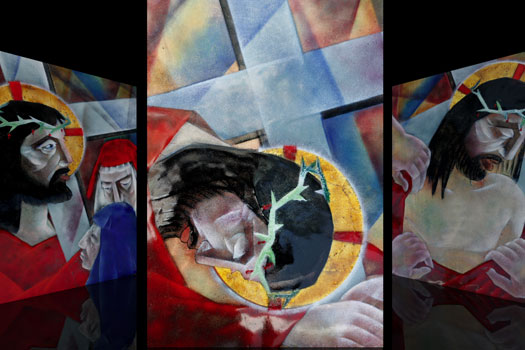
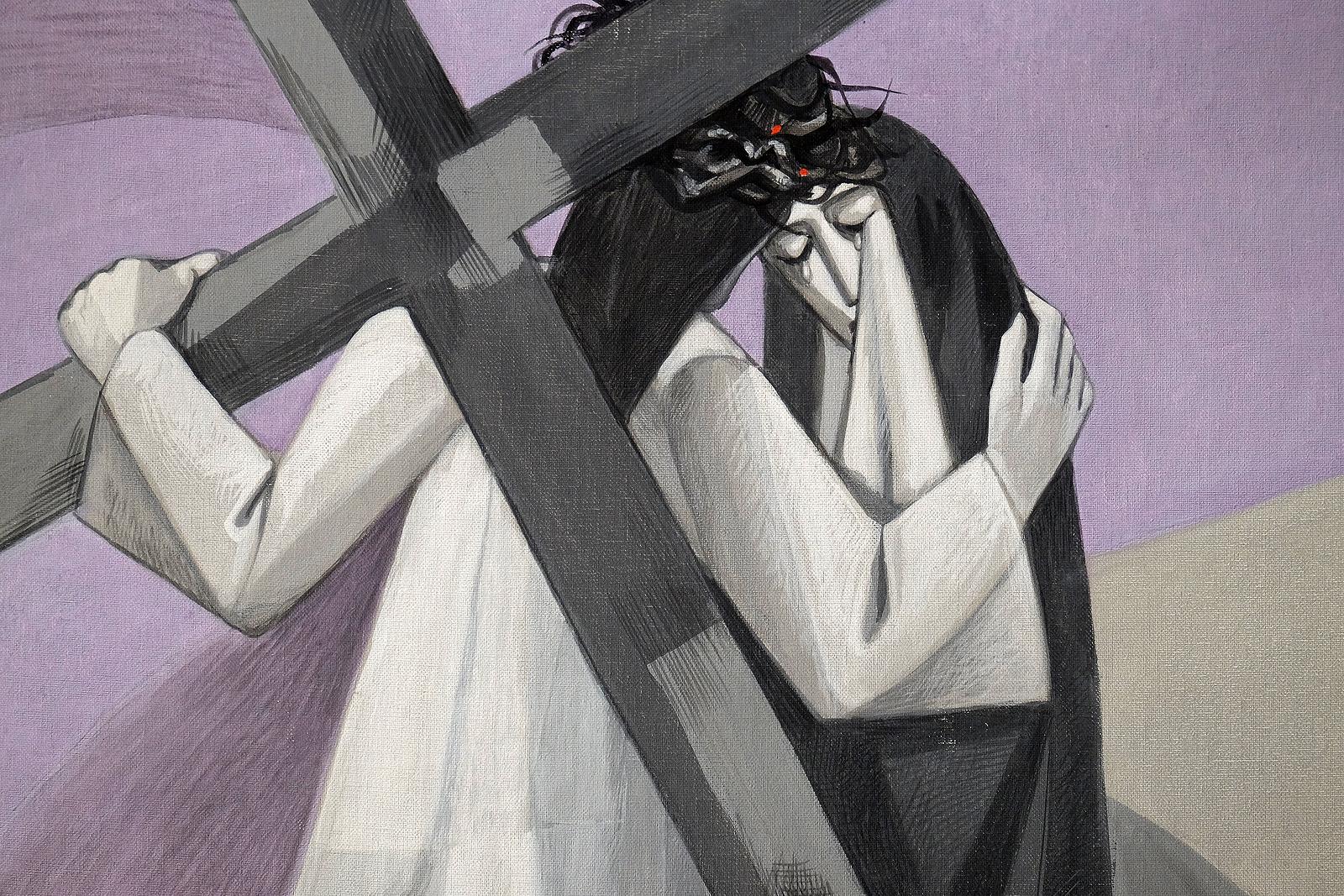
The Stations of the Cross is a devotion following the events leading to Jesus’ crucifixion. Prayers accompanying it allow time to reflect on the mystery of his death. Originally the Stations of the Cross was an actual physical journey in and around Jerusalem. Later the series was symbolized in outdoor shrines, and today many parishes display artistic representations in their sanctuaries. The Stations of the Cross may be done at any time, but is commonly a part of Lenten spiritual practice, specifically on Good Friday.
Busted Halo has created a series of virtual stations designed for personal devotion. These stations relate to Jesus’ teachings about the Kingdom of God and the reason his vision of this Kingdom led to his death. Find a quiet place to watch these stations, and as you do the devotions be open to how God is speaking to you through the Stations of the Cross.
To download these videos, go here and click the download arrow or choose save or download (top right). Please note, all Busted Halo videos are free to use in parishes, schools, or for other educational purposes. In fact, we encourage it!
Station One: Jesus Is Condemned to Death
Station Two: Jesus Carries His Cross
Station Three: Jesus Falls for the First Time
Station Four: Jesus Meets His Mother
Station Five: Simon Helps Jesus Carry His Cross
Station Six: Veronica Wipes the Face of Jesus
Station Seven: Jesus Falls for the Second Time
Station Eight: Jesus Meets the Women of Jerusalem
Station Nine: Jesus Falls for the Third Time
Station Ten: Jesus Is Stripped of His Clothes
Station Eleven: Jesus Is Nailed to the Cross
Station Twelve: Jesus Dies on the Cross
Station Thirteen: Jesus Is Taken Down from the Cross
Station Fourteen: Jesus Is Placed in the Tomb
Credits: Images of the Stations of the Cross from the Pope John Paul II Cultural Center in Washington, D.C., were created by Pittsburgh artist Virgil Cantini and courtesy of Catholic News Service and photographer Bob Roller. All music by Kevin MacLeod (incompetech.com).
A deacon at my church once shared a metaphor from earlier Christian times that can be traced back to the sixth-century monk and hermit, Dorotheos of Gaza. It goes like this: Think of a wheel or circle. (In our modern times, we can think of a bicycle wheel.) Imagine the spokes of the wheel. As the spokes travel from the outside tire towards the hub in the center of the wheel, they necessarily get closer to one another. In this metaphor, the center of the wheel is God and the spokes are each of us on our own path to God. It does not matter at what point on the circumference you start, as one continues on their journey to the center, one must get closer and closer to other people on their own paths.
This metaphor reminded me of the Gospel story in which Jesus is asked, ”What is the greatest commandment?” Jesus responds with not one, but two commandments: to love God with all your heart, with all your soul, and with all your mind, and to love your neighbor as yourself (Matthew 22:37-39).
I don’t quite remember the first time I heard this teaching. It was likely when I was a kid at Mass or at the Catholic elementary school I attended. Now, reflecting on it as an adult, I see that Christ is expressing the bond that exists between how we treat others and how we love God.
Keeping this teaching in mind has helped me view others I encounter with more compassion, seeing Christ in them and having a better understanding of how we are all made in God’s image. This includes everyone from my own family and friends, to my co-workers, to strangers I see out at, say, the grocery store. To embrace Christianity is to live a life striving for God, which in turn requires us to work to increase our love for our neighbors.
Jesus met many people throughout various walks of life, treating them with love, and calling them to turn their hearts toward love. I often think about the choice I have each time I interact with someone, especially if I’m not in the greatest mood. I can choose to let my bad mood take over and come across as insensitive and contemptuous, or I can work to overcome it to be more thoughtful and humble. I don’t always choose the latter.
However, I try to remember that not only is it best practice to treat others with kindness and respect for their own sake, but also that my actions reflect how I express my love for God on a day-to-day basis. As Servant of God Dorothy Day poignantly put it, “I really only love God as much as I love the person I love the least.” The call to love your neighbor as yourself is not always easy, and I have certainly not lived this out in all (or likely most) interactions I have had with others. Still, striving towards virtue and attempting to live more in line with Jesus’ teachings with each successive day is an integral part of the Christian life.
Part of my attempt to live out Jesus’ teaching has been trying to be more active and deliberate in the use of my time. This has meant getting more involved in the ministries at my parish, such as the food pantry and the refugee resettlement program. I have also tried to live out God’s love for others in my own family. Being there to help my kids when they have a problem, or simply to spend time playing games with them and sharing in their interests, being a devoted husband to my wife, doing chores around the house (even and especially when I’d rather do anything else) are all ways in which I can try and emulate Christ’s teachings in my life.
The beauty of the two-fold nature of the greatest commandment, to me, is that we are all given many, many opportunities to convey our love and gratitude to God through how we treat others. This can range from the time we spend with our family and friends to the mundane interactions we all have with strangers in our daily lives and everything in between. God calls us all to be in communion with him, and at the same time, to be in communion with each other. “Do not withhold good from those to whom itis due, when it is in your power to do it,” as it is written in the Book of Proverbs (3:27). Love is a gift God has freely given to all of mankind… and that is something I hope to keep in mind next time I see my neighbor.
From parables like the Prodigal Son and the Pharisee and the Publican, to Christ uttering the words, “Father, forgive them, for they know not what they are doing,” before his death, we come to understand just how important seeking forgiveness is to our faith.
As Catholics, we are called to partake in the Sacrament of Reconciliation. But for many, the confessional can be an intimidating place, and one that raises some questions. Why should we confess our sins to a priest, when we can pray to God and ask for forgiveness?
First of all, we absolutely should ask God for forgiveness whenever we are aware of any sin, no matter how small. But the Church teaches that certain sins that more severe than others. When committing these “mortal” sins, we not only break our bond with God, but we also break our bond with the entire community of faith that is the Body of Christ. So, when we participate in the Sacrament of Confession, we restore that bond between God and the community, since the priest both represents the community and acts as an intercessor between us and God.
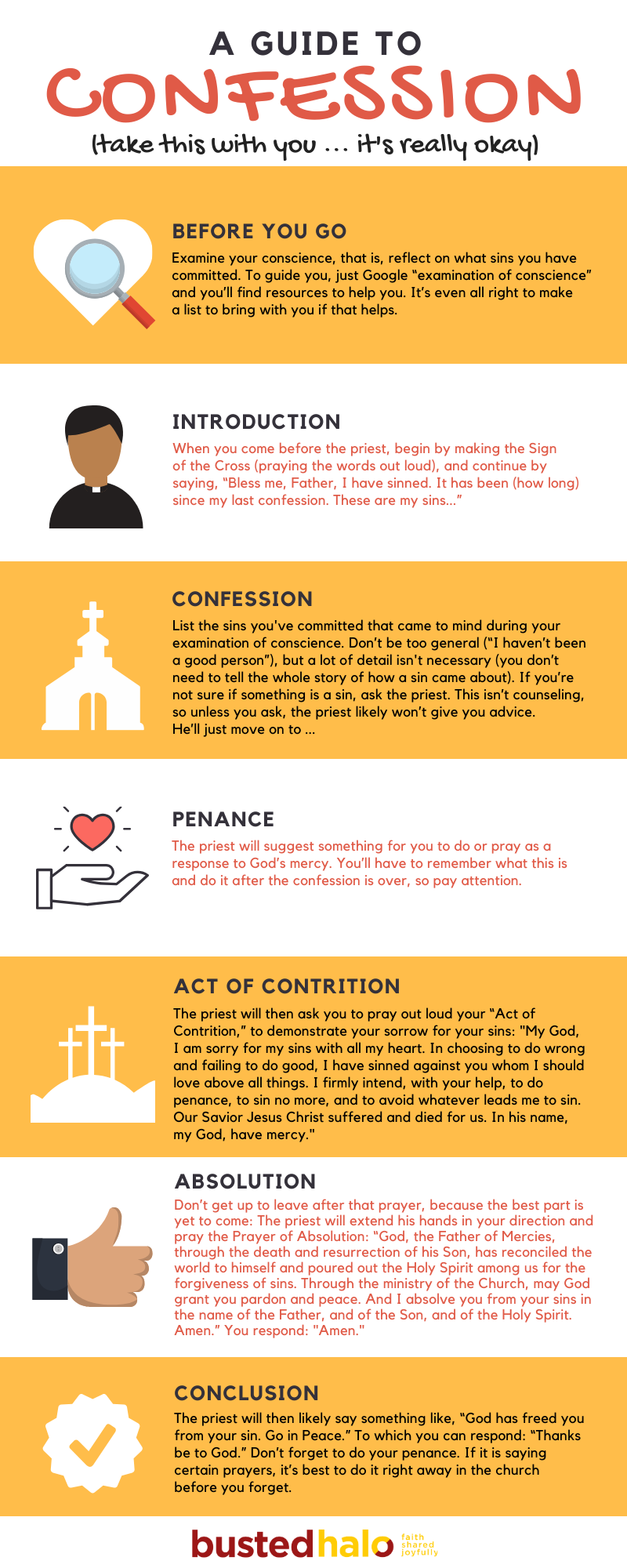
Even with all of this in mind, we’re still only human, and we have very human fears. Will the priest judge me? What if he scolds me the way my second-grade teacher did when I pushed that kid on the playground? Wait, how do I even make a decent confession? And what’s penance all about? Confession ought to be a liberating experience, and we can help you leave the confessional feeling strong and confident in your restored relationship with God and the community.
Busted Halo has put together a Guide to Confession, which explains the Sacrament’s steps so you know what to expect. If it puts you at ease, feel free to print this guide and bring it with you to the confessional!
Click here to download a printer-friendly version of this infographic.
Do you get sweaty palms just thinking about the Sacrament? These tips from one formerly reluctant confessor will help you prepare for your trip to the confessional and get rid of any jitters.
In this podcast from the Busted Halo Show, Father Dave encourages a listener, who had a negative experience with her first Confession, to return to the Sacrament.
A listener struggles with the common dilemma of knowing that something is sinful and confessing it, but also wanting to live by his own rules. Father Dave prompts us to be honest about this in Confession, as doing so can help us to overcome such a struggle.
Ann Naffziger answers a reader’s question and explains that Saint Paul provides an excellent explanation as to why Confession is necessary to rebuild our relationship with God and the entire community of faith.
It’s common to head into the Confessional with preconceived notions. Even if your Confession isn’t quite what you expect, there’s still wisdom and healing to be gained. Vanessa Gonzalez Kraft shares that priests usually provide her with guidance, even if her Confession doesn’t go the way she imagined it in her head.



 Every March, I notice an emergence of leprechauns, shamrocks, and Guinness, followed by an abundance of Italian pastries, lilies, and the color red. The remembrance of St. Joseph follows St. Patrick’s Day on the calendar each year, but too often I have neglected to celebrate them both intentionally. This year, my family has decided to honor the impact of these two heroic saints in a (hopefully) memorable way.