Category: Ministry Resources

  • Reflecting on the Holy Spirit’s Guidance This Pentecost

    Reflecting on the Holy Spirit’s Guidance This Pentecost

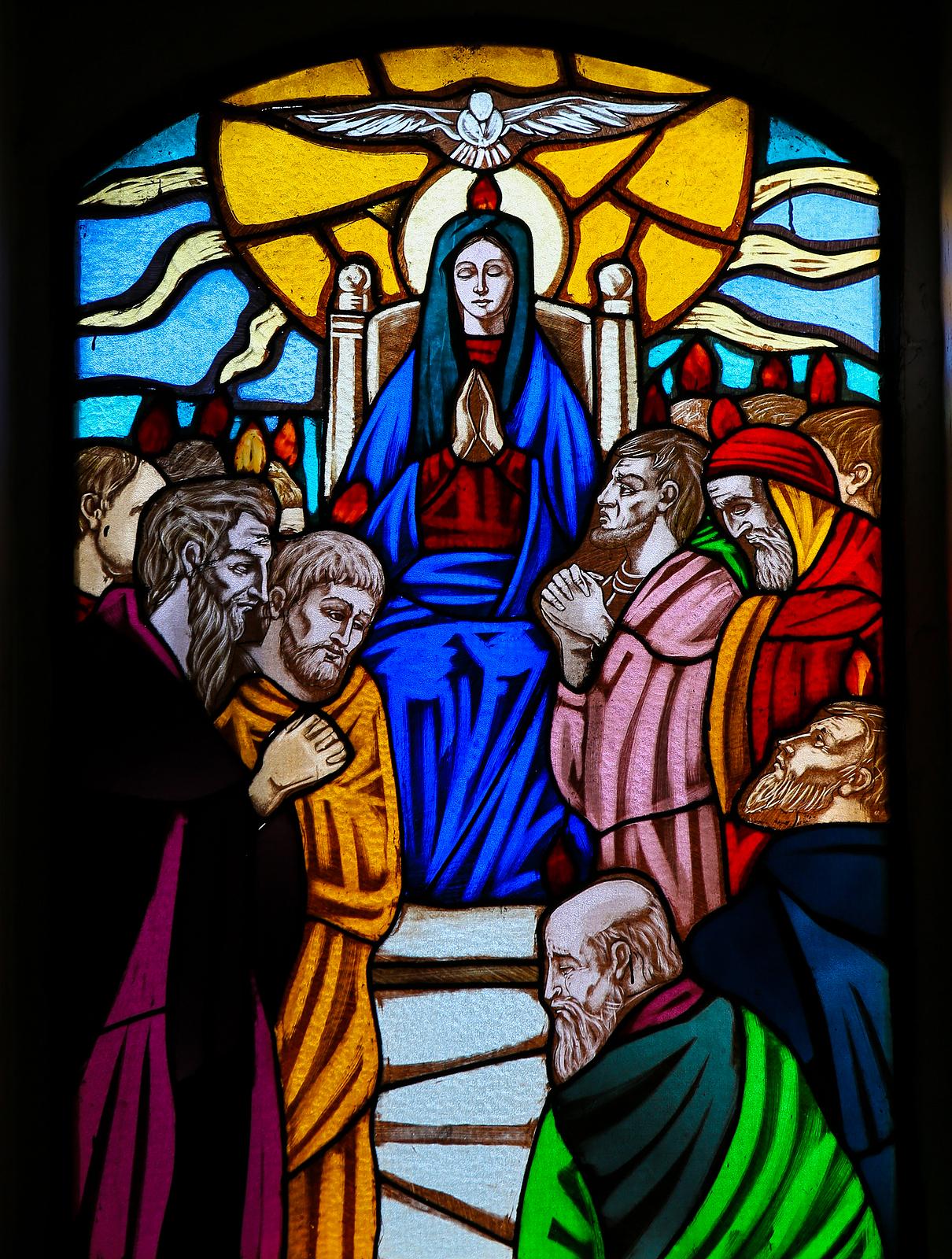
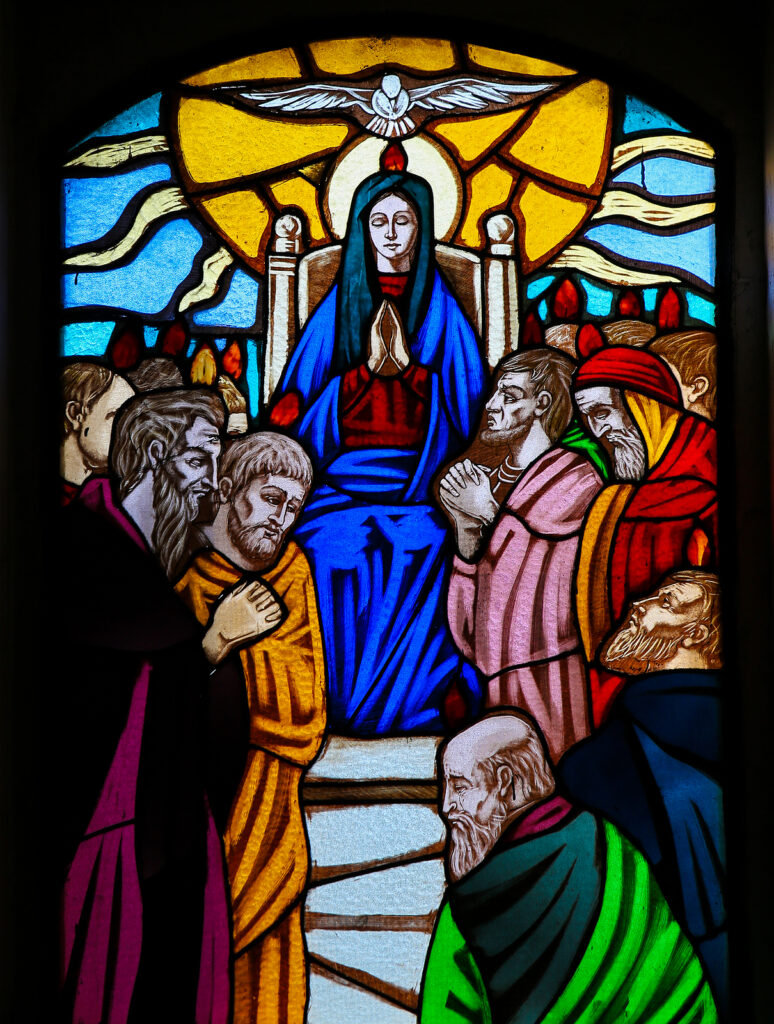
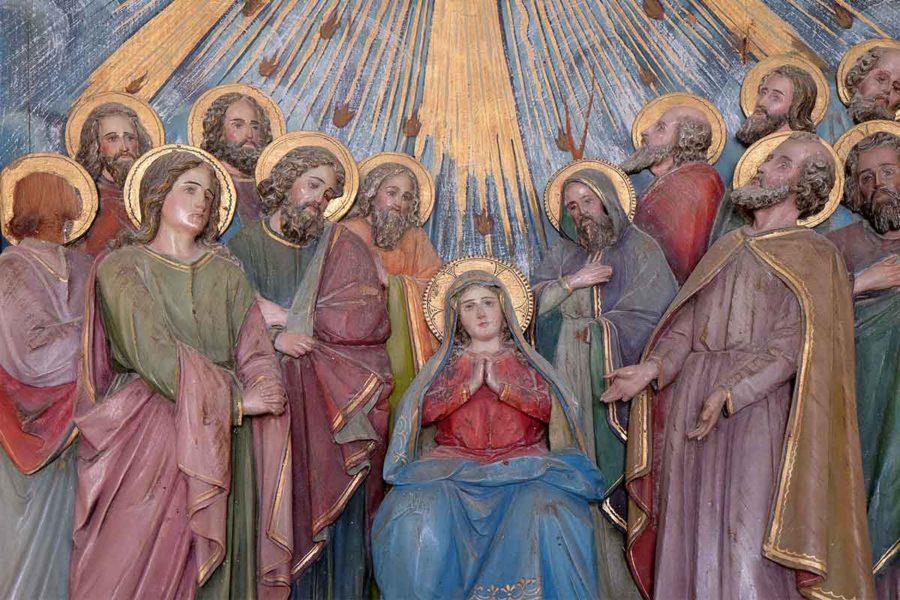
    Stained glass window depicting the the Descent of the Holy Spirit at Pentecost in the Church of Ostuni Apulia Italy.On May 19 this year, we’ll celebrate the birthday of the Catholic Church: Pentecost. Several thousand years ago, the third person of the Holy Trinity made its debut and gave the Apostles the strength, wisdom, and courage they needed to spread the Gospel to all nations. But if you’re anything like me, it can be easy to forget about this pivotal day in the Church’s history since it doesn’t come with a lot of pomp and circumstance. Easter has an entire three-hour ceremony which includes the induction of new Catholics to the Church, the four-week season of Advent builds the anticipation of Christmas, and every Ash Wednesday triggers a flood of Catholic memes about the various ash crosses on social media. 

    While it’s true that Pentecost may not be amplified by the same bells and whistles, this solemnity provides its own value, reminding us of the Holy Spirit’s inspiring presence in our lives. It’s easy to forget how active the Holy Spirit can be, but hearing the message of Peter’s courageous witness, the proclamation that changed the Church forever can draw attention to the Spirit’s activity in our own lives. For my part, I am reminded of the Holy Spirit’s good guidance in my own life.

    WATCH: Pentecost in Two Minutes

    I think back to when I was a senior in high school making the decision of where to attend college. Of course, choosing what school to attend is pivotal; so much prayer and discernment was needed. Many people gave me advice and promoted different schools (usually whichever one they went to), and as I witnessed schoolmate after schoolmate gleefully announce their choice of college, I felt stuck and frustrated. I looked at plenty of schools that offered practical majors such as business or computer science, but I wasn’t particularly compelled to attend them. The school I was most drawn to was Christendom College. 

    Christendom emphasized community and had an unflagging commitment to Catholic orthodoxy. Its curriculum was built on the Catholic liberal arts tradition, offering theology, philosophy, and classic works of literature in place of contemporary conventions such as engineering. Many friends and family members were skeptical about the school because of this and thought it was therefore less practical. However I connected with the school’s goal to expand its students’ minds in a broader sense, helping them achieve the ability to think and reason effectively. Though the school’s vision was unconventional, its fascinating curriculum and the prospect of spending four years engaging with passionately Catholic young people was impossible to overlook.

    RELATED: Unwrap the Gifts of the Spirit This Pentecost

    The writings of St. Ignatius of Loyola, a personal favorite of mine for many years, held the answer to my questions. St. Ignatius reminds us that the Holy Spirit’s movements in our souls take away sadness and disturbance and, in doing so, draw us to good action. The thought of attending Christendom brought peace and confidence that I would be well-prepared for the work of evangelization. After months of prayer, discernment, and exploration, I had my answer.  

    I finally decided to take the liberal arts route, choosing history as my major. By exploring the actions of the Catholic Church over the past centuries and learning about the multifaceted motivations of the men and women who shaped history, the Holy Spirit guided me to a greater understanding of his Church and the nature of the men and women who fill her pews. 

    RELATED: How to Celebrate Pentecost Sunday

    Now that I’ve graduated, I can confidently say that during those four years, my life changed for the better. I made strong friendships with great people, grew both spiritually and emotionally, and became a better, stronger, wiser person because of the choices I made. But I didn’t make it alone. As we approach Pentecost, a solemnity to celebrate the Holy Spirit in a special way, I’m reminded of this and filled with gratitude for what the Spirit has done for me. 

    I think if we take a genuine look back at our lives, we’ll notice the care and precision with which we’re guided through this chaotic world. My experience with college was only one of many in which confusion and frustration gave way to gratitude as it became clear what the Spirit was doing. This Pentecost, I invite you to reflect upon the confusing moments in your own life. You might find there’s wisdom present there you may not have otherwise noticed.
  • WATCH: Pentecost in Two Minutes

    WATCH: Pentecost in Two Minutes

    Can’t remember what or when Pentecost is? Well for starters, it’s this Sunday; and if you want a little more info on this celebration of the Holy Spirit and the birthday of the Church, take a look at Busted Halo’s two-minute video.

    RELATED: What Are the Gifts of the Holy Spirit?

    To download this video go here and click the download arrow or choose save or download.

  • Marian Consecration: The What, Why and How

    Marian Consecration: The What, Why and How

    Marian consecration. Even for practicing Catholics who already know a thing or two about devotions to a saint, the phrase might stir up some confusion. 

    I get it, and I want to help clear up some of the mystery!

    I myself stumbled across consecration at a time when I wanted to deepen my faith. I had chosen Mary for my Confirmation name and prayed the Rosary every once in a while, but I felt a call to form a more personal relationship with her. In 2016, I saw that a women’s fellowship group was leading a retreat for Marian consecration. I leapt at the promise that it would be a game-changer and decided to participate. 

    WATCH: Mary in Two Minutes

    If to consecrate means “to set aside for a particular purpose,” what does it mean, exactly, when the term is applied to our relationship with Mary? Put simply, Marian consecration is an entrustment of oneself to Our Lady. But if that “simple” idea still sounds vague and mystical, know that consecration involves the following concrete steps: 

    1. A substantial period of prayerful preparation (typically 33 days). Often, parishes will host small groups that commit to making the consecration together over this time period, but you can also make it alone at any time. 
    2. A final prayer — the Act of Consecration itself — to be said on the day of the consecration (preferably a Marian Feast Day).
    3. A persistent spirit of trust in Mary’s motherly care and intercession, to endure for the rest of your life.

    As Catholics, we recognize that when, from the Cross, Jesus gave Mary to the disciple John, and John, in turn, to Mary, Jesus made her our spiritual mother. As such, Mary’s equipped in a special way, over and above all the other saints in heaven, to lead us to holiness. “Mary’s task is to give spiritual birth to Christians, to feed and nurture them with grace, and to help them grow to full stature in Christ.” Fr. Michael Gaitley writes, in his popular guide to Marian consecration, “33 Days to Morning Glory,” “In short, Mary’s job is to help us grow in holiness. It’s her mission to form us into saints” (25). 

    RELATED: I Never Connected With the Rosary… Until I Became a Mother

    Moreover, Fr. Gaitley explains that Mary is united to the will of God more closely than any other human being throughout all of time. If we want to know and follow the will of God in our own lives, there’s no better person to entrust the care of our souls to than Mary herself. A friend of mine once said, “The question isn’t really, ‘Why should you consecrate yourself to Mary?’ but, ‘Why shouldn’t you?’” 

    But does that mean that we’re making Mary more important than God Himself?

    I can see why it might seem that way, especially to someone who’s new to the idea of consecration. But the answer is an emphatic no. Mary’s goal, while alive, was simply to live in union with God, and now that she’s in Heaven, she has the same goal for each of us. If we consecrate ourselves to Mary, it’s not with the intention of replacing God but rather, of allowing Mary to bring us closer to him, as other servants of the Lord, committed to doing his will in the world. 

    Okay, this sounds good, but where do I start?

    Since there’s a particular kind of preparation associated with making a consecration to Mary, you’ll need some guidance through the process. If your parish hosts small groups for Marian consecration, you might find it helpful to join one, because of the benefit of being able to pray and process your reflections with others. But you can also make it by yourself!

    Either way, you’ll need a book. If you want to go “old school,” you can use St. Louis de Montfort’s “True Devotion to Mary,” but I prefer Fr. Gaitley’s conversational, approachable style in “33 Days to Morning Glory” (which I’ve already cited above). He does a great job of breaking down consecration into related themes that build on one another, and offering short prayers to meditate with each day. Plus, he organizes each week of the retreat according to the theology of a particular Marian saint: Louis de Montfort, Maximilian Kolbe, Mother Teresa, and John Paul II. 

    LISTEN: Fatherly Advice: Relating to Mary

    At the heart of any Marian consecration, though, is a total gift of ourselves to Mary: an offering of all of our prayers, intentions, works, sacrifices, and gifts, for her to use as needed to help form us into saints. 

    I consecrated myself to Mary for the first time on the Feast of the Immaculate Conception in 2016, and have since re-consecrated myself (you can renew the offering as many times as you’d like!) twice more — in 2017, on the Feast of Our Lady of the Rosary (October 7) and in 2020, on the Feast of the Visitation, which also fell on Pentecost (talk about a perfect day for a consecration, combining a Marian feast day with the celebration of the Holy Spirit’s descent!). Each time, I’ve felt myself grow in my own understanding of how Mary wants to be a mother to me, and of how she leads me to her son. Most of all, I’ve grown in a spirit of trustful abandonment regarding God’s will for my life, as I’ve prayed to emulate Mary’s fiat. Last year, I purchased a bracelet to remind me of my consecration, and I wear it each day as a tangible reminder of the offering I’ve made and of Mary’s unceasing care for me.  

    If there’s one thing I recommend that you do for your faith life this May, particularly if you’re serious about becoming a saint (as we all should be!), it’s consecration to Mary. You won’t regret it. 

    Originally published May 16, 2022.

  • Retreat to Honor Our Mothers on Mother’s Day

    Retreat to Honor Our Mothers on Mother’s Day

    This Sunday is Mother’s Day — a day dedicated to honoring our mothers. As we go through life, our relationships with our mothers evolve and our perspectives shift. We might feel distanced from our mothers or even at odds with them. This virtual retreat focuses on our changing relationships with our mothers. You can do this retreat on your own or with your mom! Live far away? Email her the link then get on the phone, Facetime or Skype. So, in addition to a card or gift (don’t forget!), celebrate Mother’s Day with your mother in a unique way. Click here to download the PDF.

    Getting Started

    Find a comfortable place in your home or even outdoors for this retreat. Take a few minutes to think about your mother or other women who have been nurturing figures in your life. You might want to light a candle in memory of any nurturing figures that have passed away.

    Now, settle into the moment …

    • Close your eyes and breathe deeply
    • Recognize that God is with you

    Prayer

    Loving God, we thank you for the gift of mothers who give us life. By their love and sacrifices, they have taught us how to love and make sacrifices for others. We are inspired by their faith and the way they have provided a foundation for knowing you. May you strengthen our mothers through your grace so that they can continue to grow as our examples of faith and love. And, may we, their sons and daughters, always honor them with a spirit of profound respect. Amen.

    Reading

    John 2: 1-11

    “On the third day, there was a wedding in Cana of Galilee, and the mother of Jesus was there. Jesus and his disciples had also been invited to the wedding. When the wine gave out, the mother of Jesus said to him, “They have no wine.” And Jesus said to her, “Woman, what concern is that to you and to me? My hour has not yet come.” His mother said to the servants, “Do whatever he tells you.” Now standing there were six stone water jars for the Jewish rites of purification, each holding twenty or thirty gallons. Jesus said to them, “Fill the jars with water.” And they filled them up to the brim. He said to them, “Now draw some out, and take it to the chief steward.” So they took it. When the steward tasted the water that had become wine, and did not know where it came from (though the servants who had drawn the water knew), the steward called the bridegroom and said to him, “Everyone serves the good wine first, and then the inferior wine after the guests have become drunk. But you have kept the good wine until now.” Jesus did this, the first of his signs, in Cana of Galilee, and revealed his glory; and his disciples believed in him.”

    Thoughts on the Reading

    This passage is most notable because it features the first recorded miracle of Jesus’ ministry. It also has a message for us about the changing relationship between a mother and a son. Mary has played a very special role in Jesus’ life. She carried the Son of God in her womb. She watched as her son grew in God’s wisdom and knowledge, and bore witness to Jesus’ life-giving ministry. No doubt the parent-child relationship of Mary and Jesus had its ups and downs. The changes in both mother and child over time transformed their relationship. So it is with us today as we grow older and our parent-child relationship and even our role in that relationship changes. These changes can lead to even deeper bonds – connections that can produce miraculous things if we let them.

    Reflecting on the Reading

    Take a few moments to think about (or even write down) your responses to the following. If you do this retreat with your mother, share your reflections with one another.

    • For children: What are 3 things about your mom for which you give thanks?
    • For mothers: Name 3 ways that your child/children has made you into the person you are today.
    • What are your hopes for your relationship with your mother/child at this time of your life?
    • What aspects of your current relationship challenge these hopes?
    • What can you offer to your mother/child to support them at this time in their lives?
    • What can you offer to your mother/child to help your relationship grow?

    Praying for the Community

    God, we lift up for prayer all of the mothers in our midst. May we especially remember mothers without mothers, mothers who have lost children, single mothers, widows who are mothers, mothers in prison, mothers who struggle to feed their families, mothers who suffer physical and emotional abuse, and all women who face injustice and rejection as they work to nurture and raise their children.

    Add your own: God, we remember mothers who…

    Make a Commitment to Nurture Relationships

    Using your reflection responses as a guide, make a doable personal commitment to embrace the changing relationship you have with your mother as an opportunity to better communicate with one another and form an even stronger bond of mutual respect and love.

    Conclusion

    God of all mothers, we draw closer to you through the relationships we have with others. As we pay tribute to our mothers this Mother’s Day, help us to always honor all of our relationships with utmost care and compassion. Help us to be patient in difficult times and rejoice at the small miracles that happen in the midst of our relationships with our mothers. Amen.

  • Saint Mom: Why Are There So Few Saints Who Were Mothers?

    Saint Mom: Why Are There So Few Saints Who Were Mothers?

    It’s fair to say the saints have taken over our home. I am up to five statues of Mary in my kitchen alone, all cheering me on through daily chores. An image of Mary Magdalene gazes down at us in the dining room. St. Anne is on my night table, reminding me to read my books. My son sleeps with St. Michael the Archangel next to him for protection, and my daughter has a quote from St. Catherine of Siena on her wall. Since we look to the saints for daily inspiration, it was natural that I would turn to them to find help being a good mom. What I learned is that there are relatively few saint moms, and their paths to holiness were shockingly similar.

    So, if you want to be a saint and a mom, prepare your family. You probably won’t be getting canonized unless your husband dies, you sell all your possessions, and become a nun. Sorry, kids. Mom won’t be around to babysit the grandchildren. She is doing the Lord’s work.

    RELATED: Mysticism: It’s Not Just for Saints

    Step one: Be born into a wealthy family.

    Step two: You must get married. An unhappy marriage is optional but preferred. Bonus points if your in-laws are also notably mean to you.

    Step three: Have some children, who will likely die young or go into religious life themselves.  

    Step four: Your husband must die or you must mutually decide to enter separate religious orders. (My husband and I were going to do this for Valentine’s Day but spiritual attack in the form of pizza and Netflix intervened.)

    Step five: You must enter religious life or live in a convent that you support. Founding your own order is optional. Even in the New World, the first American-born saint mom, Elizabeth Ann Seton, was raised in a wealthy family, lost her husband, and founded a religious order.

    Reading all of this, I began to wonder if there was any hope for the rest us. I did discover a FastPass to mom sainthood that did not involve wealth or a convent. Unfortunately, it requires martyrdom (see “Marytrs of Kyoto” or “Spanish Civil War”). Ready to sign up?

    RELATED: Getting by with Help from a Little Flower

    Are entering the convent and/or being martyred really the only way moms can become saints? We are all called to become saints, and having the saints as spiritual examples is one of the best things about Catholicism. However, for the average mom today, it’s hard to relate to the experiences of our saint mom role models. Of course, we can always look to Our Lady and St. Anne, but it’s fair to say their circumstances were unique. I began to wonder if this phenomenon was the spiritual equivalent of not having any pictures of yourself alone after your children are born. There may be plenty of saint moms out there, but they are the ones taking the pictures; they are not in them. Until recently, it was accepted that most saint moms toiled behind the scenes with little recognition.

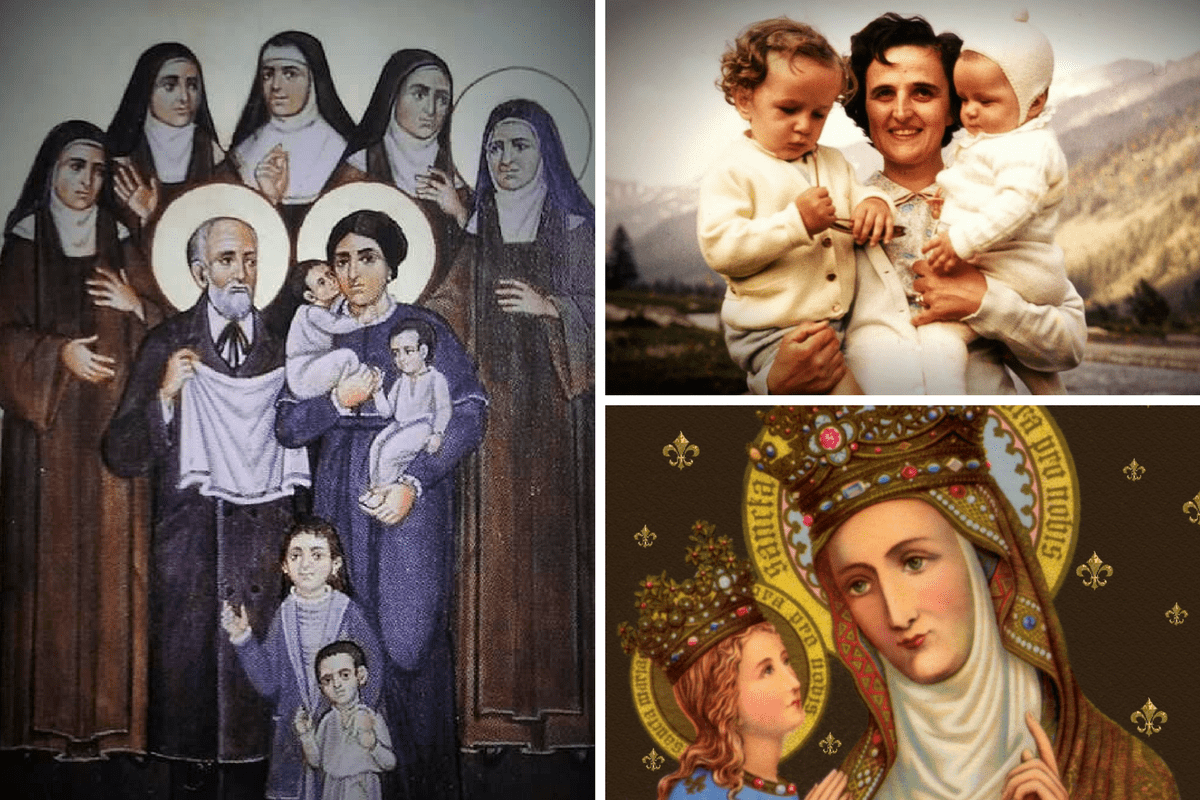
    Take heart, Catholic moms. As women’s roles have become better understood and more visible, a new wave of saint moms is coming. Two of the most popular mom saints today, St. Zelie Martin and St. Gianna Molla, not only have cool names, but they were working moms with kids, and are more relatable to most of us. St. Zelie and her husband, St. Louis Martin, were the first married couple to be canonized in history and are best known for being the parents of St. Therese of Lisieux, the Little Flower. Not only did Zelie have nine children, most of whom went into religious life, but she ran her own lace business — before Etsy.

    A working pediatrician with four kids, St. Gianna Molla famously refused treatments for cancer so that she could give birth to her daughter. She ended up dying from complications following the birth. Interestingly, none of the Molla children entered religious life, but the youngest daughter followed in her mother’s footsteps and became a doctor.

    Both Zelie and Gianna were noted for their ability to live out their faith in everyday life. Zelie’s letters are filled with references to fasting, prayers with the family, and daily Mass. Just like my kitchen, the Martin family had a statue of Mary in an honored place, fondly referred to as “Our Lady of the Smile.” Gianna considered her work her religious mission and her marriage and family as her vocation. She was noted for her care of the poor and marginalized but also for her spirit of joy that served as an example to her children.

    It can be hard for us to see the holiness of our everyday actions, especially when we’re struggling to get the kids in the car for Mass, cleaning glitter slime out of the sink, or refereeing the latest cage match between siblings. It helps to see the Church’s recognition of the sanctity of motherhood is growing and maturing with each new saint mom. I can’t wait to see who is next. Could it be you?

    Originally published August 9, 2017.

  • What is my role as a godparent?

    What is my role as a godparent?

    So, your friend/sibling/roommate has asked you to be a godparent. It can be fun, but it’s more than just sending a birthday card once a year. So, get ready for the baptism and beyond with Busted Halo’s “Guidelines for Good Godparenting.”

    Click here or the image below to download a high-quality printable copy.


  • With Finals Looming…Who Is the Patron Saint of Studying?

    With Finals Looming…Who Is the Patron Saint of Studying?

    I can offer three who would be good to pray with:
    1) St. Thomas Aquinas — the official patron of scholars and a doctor of the church. His great work, the “Summa Theologica,” might just be something you’re studying in fact.

    2) St. John Henry Newman was very active in the intellectual life and set up centers for discussion so as to merge Catholics with intellectual conversation at universities as it was often misconstrued that to be Catholic is to be anti-intellectual. Campus Ministry Centers across the United States often bear his name. Read “The Idea of a University” sometime.

    3) An obvious one is St. Ignatius of Loyola who founded the Jesuits whose charism is education. Many Jesuit universities exist in the United States and elsewhere including Georgetown, Boston College, Fordham, and Loyola Marymount.

    If you’re really desperate, you just might want to try St. Jude. He is the patron saint of hopeless cases and has been known to dig a few people out of a jam.

    Originally published May 9, 2016.

  • Who Decides Who Can Be a Confirmation Sponsor?

    Who Decides Who Can Be a Confirmation Sponsor?

    Q: Who makes the decision as to who can be the sponsors for a child making his confirmation? The rules are 1) church-goer in good standing 2) not divorced 3) Catholic. I don’t know anyone who qualifies for all three.

    A sponsor for baptism or confirmation must be at least 16 years old and be a Catholic who has received the Sacraments of Confirmation and Eucharist and who “leads a life of faith in keeping with the function to be taken on” (see the Code of Canon Law, paragraph 874, for the complete requirements). In most places, as determined by the local bishop or the pastor of a church, “leading a life of faith” is interpreted to mean that a person is following the teaching of the Church with respect to marriage. If single, he or she must not be living with a partner; if married, he or she must be sacramentally married in the Church. (Someone who is civilly divorced but not remarried can still be eligible.) While these standards can certainly vary by parish and priest, these rules aim to ensure that the sponsor can set a good example for his/her godchild or confirmandi. The most important role of sponsorship is sharing your faith and helping your godchild/confirmandi’s spirituality flourish. A young person needs a role model who attends Mass regularly and who takes the teaching of the Church seriously. 

    If you don’t know anyone who meets the requirements, make an appointment with the director of the confirmation program to discuss your particular situation. He or she will know if any exceptions might be approved by your local bishop. Alternatively, he or she could also connect you with faithful members of your parish who would be delighted to meet you and accompany a candidate on the journey to confirmation.

  • Why Are There No Old Testament Readings During the Easter Season?

    Why Are There No Old Testament Readings During the Easter Season?

    The Old Testament has (almost) never been read at the Eucharist during the Easter season. St. Augustine of Hippo in the fourth century started this based on earlier practices by Cyril of Jerusalem.

    Instead, the Hebrew Scriptures are replaced by the Acts of the Apostles. The logic is based on the practice of looking forward from the Resurrection and balances the Easter Vigil’s looking back on our salvation history. (At the Easter Vigil, we draw out the history of our salvation in one night from creation, through Abraham, through Moses, etc.)

    On weekdays in the Easter season, in fact, the Acts of the Apostles are read in pretty much a continuous way, with the whole book completed by the end of the season. The Second Readings on Sundays come from I Peter, I John, and the unusual Book of Revelation, during Years A, B, and C, respectively. The Gospel readings are almost exclusively from John.

    All of this is to center us on the celebration of the Resurrection and to keep us looking forward from that event into today’s time.

  • Faith and Finance: 4 Patron Saints for Money Matters

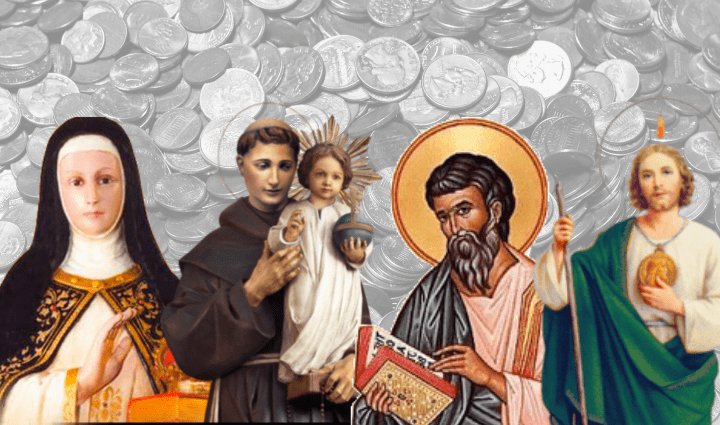
    Faith and Finance: 4 Patron Saints for Money Matters

    We all have our favorite saints, and I’m no different. I have a few I turn to frequently whose stories have spoken to my heart. When my husband was deployed to the Gulf of Aden in the Middle East, I would ask for the intercession of St. Michael to keep him safe. Since my husband is a pilot, I also find myself turning to St. Joseph (aka “The Flying Friar”) with my prayers. I often feel a kinship with St. Elizabeth Ann Seton, who would worry about her son who was in the Navy. I know we experienced similar anxieties  while having loved ones out to sea. I’ve chosen these saints because I know they’ve experienced the same challenges that I’m facing. They’ve been through it and come out on the other side.

    Life hands us many challenges to overcome. Just like us, many (now) saints earned money, spent money, and had to overcome financial challenges. If you’re feeling overwhelmed about your debts, you’re not alone. Millions of people are dealing with all sorts of financial stress. Often, getting ahead may feel unreachable. Asking for the intercession of the saints doesn’t negate the necessity of hard work, but we’re encouraged in Matthew 7:7-8 to ask for help when he says, “Ask and it will be given to you; seek and you will find; knock and the door will be opened to you.” Here are a few saints you can turn to next time you’re feeling a financial pinch.

    RELATED: The Virtue of Being Thrifty: How to Spend Money Wisely in College

    1. St. Anthony of Padua

    St. Anthony is known for being the patron saint of lost items, but he’s also known for advocating on behalf of debtors. In 1231, St. Anthony petitioned the Council of Padua to pass law to benefit the debtors who could not pay their obligations. At that time, money lenders were loaning money at excessive interest, so only desperate people would consult a money lender. St. Anthony was known to advocate for them and campaigned for change to this predatory system. We usually think of St. Anthony when we can’t find our keys, but consider asking for his intercession next time you’re dealing with a debt load. 

    2. St. Edwiges

    St. Edwiges was the wife of a rich businessman who lived in the 13th century. She was known for visiting debtors in jail and helping them find jobs once they were released. Her fortunate life was challenged when her husband was arrested and died from a disease he contracted while in prison, leaving her to enter a convent to which her daughter already belonged. Despite her poverty, she remained faithful and charitable. She personally reminds me that generosity isn’t a luxury. We are called to have open hearts, no matter our financial circumstances. 

    RELATED: What Is Our Responsibility When It Comes to Money

    3. St. Matthew the Apostle

    St. Matthew was a tax collector and was even sitting in a tax booth when Jesus called him to become one of his apostles. It may strike you as odd to reach out to a tax collector like Matthew when you’re dealing with debt, but he was a financial wiz. The Gospel of Matthew is full of insight on how to keep our finances in perspective. For instance, Matthew 6:21 tells us, “For where your treasure is, there also will your heart be.” And in Matthew 6:24, Jesus said, “No one can serve two masters. He will either hate one and love the other, or be devoted to one and despise the other. You cannot serve God and mammon.” He tells us to be concerned with things of heaven and less concerned with worldly affairs. St. Matthew encourages me because he was actually “good” with money by the world’s standards. Financial stress isn’t limited to those with debt. The Gospel of Matthew can be helpful to those who struggle honoring God as their master rather than money.

    4. St. Jude

    Handling a debt load may sometimes cause us to feel desperate and hopeless. St. Jude, the patron saint of desperate situations, may be the perfect saint for those days of anxiety. St. Jude is known for helping Danny Thomas, the founder of St. Jude’s Children’s Research Hospital. Danny was in desperate need of financial help and a job. He prayed for the intercession of St. Jude and now the research hospital is now named for the saint of lost causes. 

    Combining an action plan, some hard work, and prayer to these helpful patron saints may help you pay off your debts. When I’m faced with money matters, they always help me remember, “Be strong and courageous. Do not fear or be in dread of them, for it is the Lord your God who goes with you. He will not leave you or forsake you.” (Deuteronomy 31:6)

    Originally published November 9 2020.