Category: Ministry Resources

  • What are the Seven Sorrows of Mary?

    What are the Seven Sorrows of Mary?

    The “Seven Sorrows of Mary” refers to the seven feats of “spiritual martyrdom” (suffering spiritually through experiences) endured by the Mother of God in loving solidarity with her Son. They are:

    1) Mary’s sorrow at the prophecy of Simeon
    2) The flight into Egypt
    3) Having lost the Holy Child in Jerusalem
    4) Meeting Jesus on his way to Calvary
    5) Standing at the foot of the Cross
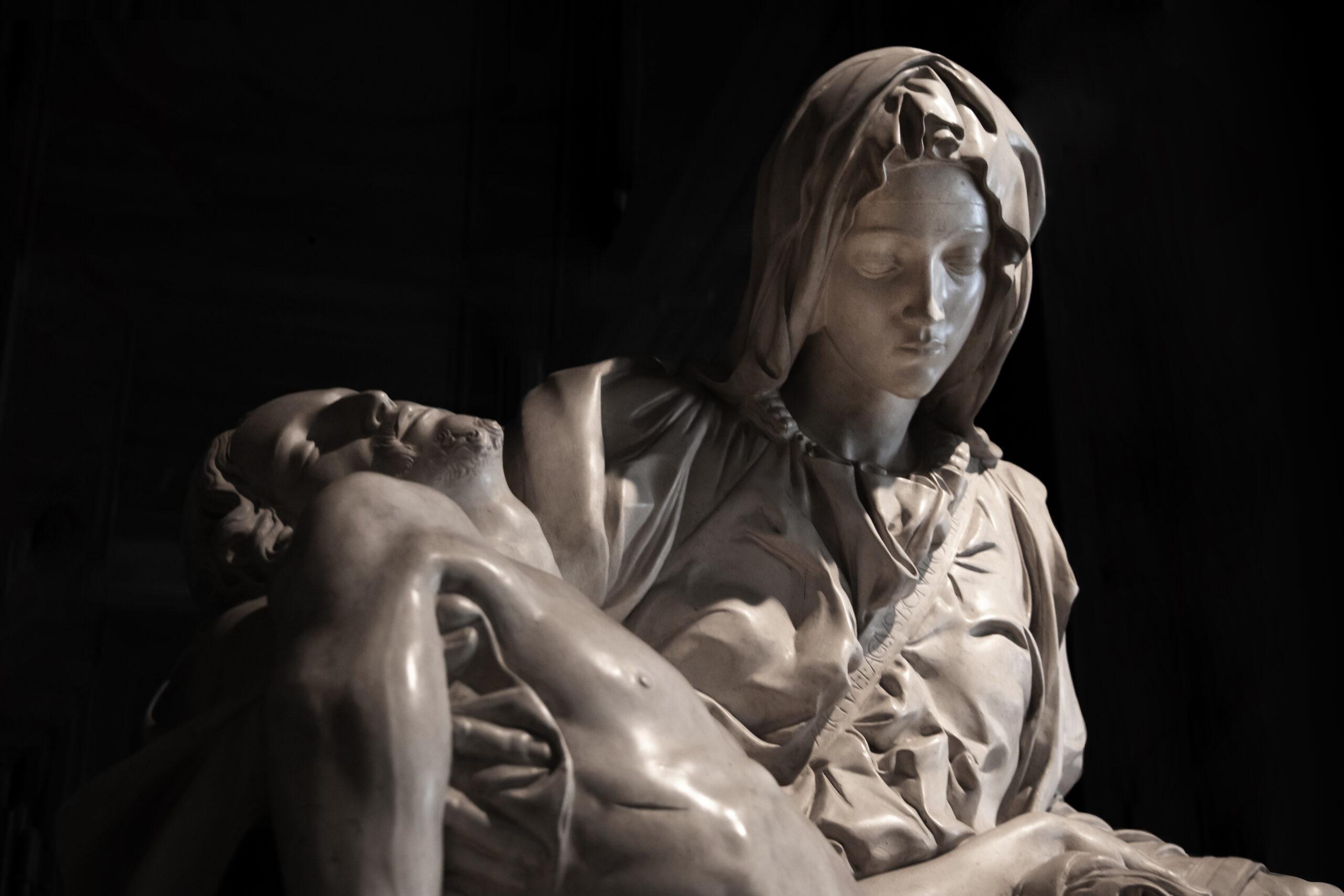
    6) Jesus being taken from the Cross (Depicted in art as The Pieta)
    7) The burial of Christ.

    The Seven Sorrows are all rooted in Scripture. Devotion to the Seven Sorrows of Mary stems primarily from the Order of Servites (The Servants of Mary) and has given rise to the Seven Sorrows Rosary as well as many other devotions to the sorrows (or dolors) of Our Lady. The Feast of the Seven Sorrows of Mary falls on September 15 and was first celebrated by the Servites before becoming part of the liturgical calendar of the Church Universal.

    Originally published April 2013.

  • Keeping the Faith After Loss: Catholic Resources for Those Affected by Suicide

    Keeping the Faith After Loss: Catholic Resources for Those Affected by Suicide

    for an article on suicide awareness, an empty bench with autumn leaves on the ground behind itAhead of this year’s World Suicide Prevention Day, we at Busted Halo prayerfully remember and pray for the souls of those who have died by suicide, for people who are vulnerable to suicide, and for those who are impacted by loss. As Catholics, we believe in the sanctity and dignity of every human life, no matter the struggles they face. We are called to support those who are struggling with compassion, empathy, and well-informed action and awareness efforts. 

    We hope these articles and podcasts on suicide and resources for those impacted by it, enlighten, offer consolation, and inspire hope. 

    What Happens to the Soul of Someone Who Commits Suicide? 

    “Many people were raised thinking that the soul of a person who commits suicide can never be redeemed. Father Dave addresses these concerns and misconceptions, making specific reference to the Catechism, which says, ‘We should not despair of the eternal salvation of persons who have taken their own lives. By ways known to him alone, God can provide the opportunity for salutary repentance. The Church prays for persons who have taken their own lives.’ 

    Father Dave continues, ‘We pray for people who have committed suicide in the same way we pray for anyone who has died. We pray for their soul.’”

    Do People Who Commit Suicide Go to Hell? 

    “In today’s times, we know much more about mental illness than ever before. We now know that anyone who commits suicide is not in control over their own actions. For something to be sinful, by definition, it needs to be done willfully, meaning, we need to be free to make the choice to commit the act in the first place and we have to know that the act is sinful.

    So therefore, if one is not in control over their own actions, they cannot be held responsible for what they have done, suicide included.”

    9 Ways to Help a Grieving Friend (That Aren’t Bringing a Meal) 

    “From my own experiences, I’ve learned that while the standard ‘Please let me know if there’s anything I can do’ means well, concrete action provides so much more assistance. When you know a friend is laid low in the mire of grief or despair, don’t wait for their call. Take action. Step in. Show up. Whether it’s bringing a meal or doing something less orthodox, any practical help will be welcomed with immense gratitude.”

    Grieving a Loved One’s Loss to Suicide

    “What we hope is that these books can bring comfort and healing to people who are in such terrible grief. Heaped on top of losing someone is the stigma and even discrimination that goes along with suicide. Losing a loved one is always hard. When it’s by suicide, it can sadly it can make it even harder.”

    Approaching Mental Health Through a Catholic Lens With Deacon Ed Shoener

    Deacon Ed Shoener is the president of the Association of Catholic Mental Health Ministers, and the co-author of two books with Bishop John Dolan of the Diocese of Phoenix, called “When a Loved One Dies by Suicide” and “Responding to Suicide: A Pastoral Handbook for Catholic Leaders.”

    Deacon Ed discusses mental health ministry in the Church. “We’re recognizing the need to do something about [mental health] and the need for God to be in the midst of this.”

    Experiencing Suicide Bereavement With the Help of the Sacraments

    “Every time I went to Mass after my sister’s death, I brought something with me. Often, it was anger against people I felt had contributed to my sister’s mental illness or had failed to help her. … During Mass, I acknowledged I did not know the whole picture and asked for the grace to forgive. I prayed for people I did not want to pray for, and gradually the anger eased.

    I am a Catholic convert. The sacraments have been a great support since my conversion, and especially now.” 

    Fr. Chris Alar on Finding Hope After a Loved One’s Suicide 

    “Fr. Chris explains that years after his grandmother’s death, a priest told him he can still pray for her, ‘I said “Father, how? She’s already been judged.”’ And he told me that God is outside of time. There’s no past. There’s no future. Everything is present eternally at one moment to God. … God will take my prayer into account for my grandmother at the moment of her death years ago.” 

    Discussion About Suicide from the Busted Halo Show

    Father Dave and Brett talk to a listener who recently lost his son by suicide. Father Dave explains that platitudes from well-wishers aren’t helpful to many who are grieving, and Brett opens up about his experience as someone who has friends who died by suicide. 

    My Daughter Committed Suicide. What Prayer Do I Say So That She Can Go To Heaven? 

    “Dearest Lord,

    We entrust (name) to your undying mercy and love.

    While in this life, they felt much pain and found life difficult.

    May you enfold them now with your love where no pain can find them, but rather your love can heal them.

    Make them Guardian Angels for those who struggle with life, for those who struggle to see you and the love that is around them.

    Give them Lord, kind admittance to your Kingdom and bring comfort to their families.

    We ask this, as we ask all things, through Christ our Lord. Amen.”

    Book: ‘The Catholic Guide to Depression: How the Saints, the Sacraments, and Psychiatry Can Help You Break Its Grip and Find Happiness Again’

    Extensive clinical experience treating patients with depression has shown author Dr. Kheriaty that the confessional can’t cure neuroses, nor can the couch forgive sin. Healing comes only when we integrate the legitimate discoveries of modern psychology and pharmacology with spiritual direction and the Sacraments, giving particular attention to the wisdom of the Church Fathers and the saints.

    Other Resources

    To Write Love On Her Arms

    To Write Love on Her Arms is a non-profit movement dedicated to presenting hope and finding help for people struggling with depression, addiction, self-injury, and suicide. TWLOHA exists to encourage, inform, inspire, and also to invest directly into treatment and recovery.

    The Dougy Center for Grieving Children & Families 

    Whether you’re grieving, or you’re helping someone who is grieving, Dougy Center is here for you. Find tip sheets, activities, podcasts, and more resources.

    The Trevor Project 

    The Trevor Project is the leading national organization providing crisis intervention and suicide prevention services to lesbian, gay, bisexual, transgender, queer & questioning (LGBTQ) young people under 25.

    Mental health resources for underrepresented communities (American Foundation for Suicide Prevention)

    From the American Foundation for Suicide Prevention, find mental health resources for minority and underrepresented communities, grouped by community.

    Suicide prevention resources (American Foundation for Suicide Prevention)  

    From the American Foundation for Suicide Prevention, find a list of resources for crisis situations, mental health care, and resources grouped by mental health conditions.

    If you or a loved one is ever experiencing suicidal thoughts, please call the National Suicide Prevention Line at 988. And consult Suicide Prevention Hotline if you are concerned for yourself or another.

  • Understanding Christian Hope for a New School Year

    Understanding Christian Hope for a New School Year

    A group of college students sitting on steps laughingEvery new school year brings its own set of expectations for the future. I have a privileged position to reflect on this reality, as I teach senior theology, which includes a course on vocations. This opportunity inspires me to consider the Christian theological virtue of hope and its effect on the life to which Christians are called. 

    Many seniors at Catholic high schools come from families with means, whose hopes for the future involve attending a prestigious college, achieving professional success, and solidifying their legacy. One finds these hopes imparted well onto these young people. Every year I overhear the usual questions of “Where will you be attending school next year?” and “What will you be studying?” 

    LISTEN: Saints for the School Year: Holy Men and Women to Accompany Teachers

    Instilling hope for a successful college and professional career is a necessary step in procuring that future. These are noble goals that should offer opportunities for deeper growth in virtue. But hope for these things is a little different when considered through the lens of faith.

    In Spe Salvi, an encyclical which provides Pope Benedict’s treatment of the virtue of hope, he describes “one who has hope” as one who “lives differently” (2). Benedict sees hope through the lens of the Resurrection of Jesus. 

    Because hope is understood in light of the Resurrection, one’s death, but also one’s life, is viewed differently, particularly when it comes to God’s call for our lives. The early Christian martyrs died with hope for their resurrections because they had faith in the Resurrection of Jesus, but they also lived with hope before their martyrdom. This belief did not invalidate the deaths they faced; their individual lives and, more importantly, life itself were just more real. It was in the face of these seemingly hopeless circumstances that God’s purpose for them became clear. 

    RELATED: The Road to Emmaus: A Journey Toward Hope

    A common movie trope involves the hero realizing his weapon cannot pierce the monster’s scales from the outside, so he must be swallowed by it in order to defeat it. It appears as though the monster has won and hope seems lost, until the hero cuts himself out of the monster from the inside, both freeing himself and killing the monster. It was by initially relinquishing his power but maintaining the small strand of hope that success was possible. 

    There is a powerful metaphor here for the way Christ conquered death and established hope in the Resurrection. In the same way that God worked on humanity intrinsically: Allowing himself to be swallowed up by creation, by time, and ultimately by death, he could then cut his way out by the double-edged sword of his Word (cf. Heb 4:12). This is referred to as the kenosis, or self-emptying, of Jesus highlighted by St. Paul in Philippians 2:7.

    Kenosis is not only a foundational idea to historical orthodox Christology, but a foundation of Christian spirituality and an essential element to fostering hope. Through kenosis, we can see the proper way of viewing hope: How Christians are called to “live differently,” including how they see their vocations. One discovers a vocation through kenosis in recognizing their relationship to the whole. There is a misguided notion that discerning one’s next steps in life is a realization of one’s individuality by rejection of community. For those raised in a Catholic environment, this often requires a shedding of one’s Catholic “identity.” This is misguided not only because of the rejection of Catholic practice, but also because it asserts the self above the community that formed it. Worse than St. Paul’s eye in 1 Corinthians 12:21 saying to his hand “I don’t need you!” it’s saying it to the whole body. The discerning young person, in recognizing oneself as one member of the Body of Christ, finds a calling in relation to the Body. This is why many high schools and colleges, including the ones where I teach, have built-in service days and organizations to help young people see themselves as connected to their local community.

    RELATED: Pope Francis’ Advice for College Students

    Every school year is a continued preparation for students to become who God has called them to be. I implore that we not only preach kenosis to do this but also live it and model it. One way I have tried to model this practice is to be a little vulnerable, professionally and personally. Being willing to risk at least a small humiliation can begin to empty one of pride. Admit to a time you were unfair to a friend or a jerk to a stranger and had to ask forgiveness. Tell an embarrassing story not just to connect, but to show you can live through it. Humility is the vehicle for kenosis; it empties our ego quickly, which is the only way our hope is no longer in the “I,” but like St. Paul, it is now in “Christ who lives in me” (Gal. 2:20). 

    Humility and kenosis are the tools for students to realize their vocation, which gives them hope when it is understood in light of the Resurrection of Jesus, leading them to live differently. Their time in school should foster hope that “does not disappoint” (Rom. 5:5) because it is in he who does not disappoint. 

  • Salt of the Earth: Engaging Hearts and Minds With Jesus’ Metaphors

    Salt of the Earth: Engaging Hearts and Minds With Jesus’ Metaphors

    Wooden spoon full of salt
    Photo by Jason Tuinstra on Unsplash

    “Why didn’t Jesus talk plainly? Why didn’t he just say what he meant?” The student asked. “What is, ‘You are the salt of the world’ supposed to mean? I use salt on my eggs!” The quip got a big laugh. 

    My freshman-year student was genuinely puzzled over Jesus’ parables and metaphors. “How are we supposed to understand what he is saying?”

    “Good questions,” I encouraged, impressed by her candor. 

    “Metaphors are a mercy of God for us,” I told the class. He wanted to transform his disciples – and us. Jesus hoped to change our views of our world, ourselves, and him. He wanted us to feel what he feels, to love others as he loves others. 

    I was not surprised by this question. After all, Jesus’ disciples asked him this. Jesus had answered, “Because knowledge of the mysteries of the kingdom of heaven has been granted to you…” (Matthew 13:11). Christ offered us his divine metaphors as a different kind of language to draw us into his very different kind of kingdom. 

    LISTEN: Why Do Jesus’ Parables Vary So Much in Tone?

    Metaphors, similes, and parables are essentially comparisons between two very different things or acts. They use familiar comparisons to expand our experience with less familiar acts of God’s presence. In the well-known metaphor that my student asked about, for example, Jesus said that those who know and do his word are the “salt” of the earth. What is not well-known, however, is the way metaphors open us up to new ways of knowing and experiencing Christ.  

    Metaphors offer us intuitive, “feeling” words to talk about his kingdom. As any religious teacher knows, we cannot describe and analyze God’s kingdom the same way a science teacher might talk about a chemical reaction. It degrades the kingdom of God to define it “clinically,” as if it were just another physical location. Metaphors liberate the kingdom from everyday definitions and develop expansive ways to understand and experience God’s presence. Metaphors engage our affect and intellect in ways that allow us to wrestle with ambiguities, challenge our worldviews, and help us to feel what others feel.

    To engage with us more intimately, Jesus chose the metaphorical logic embedded in the heart’s mind. “The National Directory for Catechesis” encourages educators to continue using metaphors just as Christ did. 

    Jesus used metaphors and parables for our salvation. Metaphors link different ideas that normally do not connect. Who would have thought to connect “salt” and “God’s Kingdom”? These links pave pathways to new ideas, new perceptions, and more complete ways of knowing and experiencing God.

    LISTEN: What Should Be Taken Literally in the Bible?

    When we consider the different metaphors of Christ, we can explore new ways of understanding God’s Kingdom — our feelings and our thinking, our imaginations, and our ability to relate to others’ feelings. These qualities invite us further into God’s kingdom — to “feel it” as well as understand it. 

    Jesus knew that the very process of pondering metaphors is what produces new ways of understanding. The main task in teaching merciful metaphors and parables is to help students meditate upon them. In this way, educators offer valuable “sparks” to students’ brains that allow students to relate to Christ with their full minds and hearts.

    How to accomplish this?  

    First, educators can introduce the “salt” metaphor by reading the passage in Matthew 5. Ask for any initial responses. Then reread the passage. Show a salt shaker and invite them to describe its function. 

    Second, the educator can ask students how they use salt today. The more ways students can relate to salt, the better. For example, do any students use electrolyte-restoring liquids when exercising? Has anyone gargled with salt water when they had a sore throat? How does salt enhance the taste of food? 

    LISTEN: Top 10 Tips for Catechists With Joe Paprocki 

    Third, the educator may offer insights about salt during Jesus’ time. For example, sometimes Roman soldiers were paid in salt because it was so valuable; even as valuable as gold. Teachers might note how salt is crucial for a proper diet and that salt was used to preserve meat. Some cultures rubbed salt in wounds to sterilize them. 

    After expanding their understanding of salt, return to the question of how Christians are like salt, as Jesus said. How can we act like salt’s healing or life-preserving qualities?  

    Fourth, ask “How can we all become even more ‘salty’ Christians?” 

    Fifth, ask students to suggest other metaphors for Christians or the kingdom of God. What other more modern metaphors could describe the healing, health-giving, sustaining, or life-giving acts of Christians?  

    In teaching by metaphors and parables, Christ used common images to draw his listeners into his uncommon life. Let’s continue that tradition.

  • Less Worry, More Trust: Praying the Surrender Novena in Times of Change

    Less Worry, More Trust: Praying the Surrender Novena in Times of Change

    Photo by Ben White on Unsplash

    Sometimes, I really miss my childhood. With my parents reliably around to take care of everything for me, I didn’t have to worry about much. As an adult with many more responsibilities, though, I often wish for that same sense of security and the ensuing freedom to rest unencumbered by the anxieties and fears of daily life. I want to be assured that someone else has things under control — especially at a time like this, when we remain gripped by a global pandemic.

    Jesus longs to give us that sense of security, to take care of everything for us in a way that even our parents couldn’t do when we were children: “If God so clothes the grass of the field, which grows today and is thrown into the oven tomorrow, will he not much more provide for you, O you of little faith?” (Mt 6:30). But in order to allow him to provide for us, we need to surrender.

    RELATED: How to Trust God When You’re Filled With Doubt and Disappointment

    Surrender sounds lovely in theory, but it’s difficult in practice. Although letting go of our fears and anxieties seems like it should be simple, it requires that we stop worrying, and that takes great effort. Yet, until we learn to replace our worry with trust, we won’t live in freedom.

    Okay, but how, exactly, do we do that?

    Enter the Surrender Novena.

    I first discovered the prayer at my parish’s Adoration chapel a few years ago, at a time when I was experiencing severe anxiety. Captivated by the freedom promised by a greater childlike dependence on God, I prayed it that spring and then tucked it into my prayer journal to revisit later in the future, when I was sure I would need it again. But then I completely forgot about it.

    …Until a friend of mine shared recently that she has been praying the Surrender Novena on a loop for the last year or so, and that whenever she finishes the nine-day circuit, she begins again. Listening to her describe how the prayer had gradually strengthened her trust and peace over time, I saw that the Surrender Novena could become a powerful tool for spiritual transformation when prayed with consistency — and that it is most necessary when so much in the world around us feels out of our control.

    RELATED: 9-Day Back-to-School Prayer Challenge: A Novena for the Start of the School Year

    Revealed by Jesus to Servant of God Don Dolindo Ruotolo, the Novena of Surrender to the Will of God (as the prayer is officially called) encourages us to lean into the Heart of Jesus with great confidence in his ability to care for us, through all the circumstances of our lives.

    And we don’t have to wait for something big to arise in order to practice this kind of surrender, although I’m sure that in the midst of the coronavirus pandemic, none of us are at a loss for worries. I myself am beginning a full-time graduate program at a time when the university environment looks completely different, and global uncertainty compounds all the usual concerns that come along with making a significant transition. How will the pandemic challenge the cultivation of community when I move to a new city? Will the university be able to sustain the learning environment it’s currently planning? What happens if there’s a resurgence? How will everyone stay safe?

    My friend’s reminder about the novena felt timely — definitely a sign that I should consider taking it up again. So I searched for the old handout in my prayer journal and settled into bed on night one, confident that leaving everything in the Lord’s hands before I went to sleep would be the best way to end my day: “O Jesus, I surrender myself to you, take care of everything!”

    RELATED: The Suscipe: A Prayer for All Occasions

    I woke up the next morning feeling lighter and freer, deeply aware for the first time in a while that I didn’t have to carry everything by myself. As I continued to pray the novena in the days that followed, I increasingly surrendered to God concerns both large and small — the people I love, trips to the grocery store, conversations with friends, and on-campus learning conditions this fall, for starters. Doing so hasn’t entirely eliminated my worries, but it has given me a sense of peace and security, a certainty of being held through it all.

    “Leave the care of your affairs to me and everything will be peaceful,” Jesus promises on day one of the Novena. For anyone desiring to rest in the heart of the Lord, particularly during a time still marked by lingering uncertainty, the Surrender Novena is an indispensable spiritual practice.

    Originally published July 29, 2020

  • Four Tips for Keeping Your Semester Holy

    Four Tips for Keeping Your Semester Holy

    Close up of college student carrying books to school
    Photo by Element5 Digital on UnSplash

    I’m a college English professor with two children, ages 6 and 8. As a new school semester begins for our family, new routines automatically emerge. My son Jack will start playing basketball. My daughter Emmeline will start dance classes. I’ll begin teaching a new set of courses. A new semester automatically ushers in new ways of ordering our lives. My husband and I will arrange carline pickups and meal plans. College students will begin to schedule cardio classes with friends and other extracurricular activities. 

    As academics and activities increase for parents and students alike, so does joy – and stress. We need God in all of these moments, big and small. In the midst of school planning over the years, I’ve learned that an active spiritual life can sometimes get the short shift: There is no “back to school” meeting or college orientation that God plans for worship. Here are some tips I’ve learned over the years, so my family’s relationship with God remains at the center of every academic semester.

    RELATED: 3 Ways to Keep the Faith This School Year

    1. Take a few minutes to read or listen to the Daily Readings 

    Growing up, my mother always told me to “begin the day with Jesus,” and this advice has never left me. I remember seeing her in the mornings with her Bible and coffee in hand. Today, I often read Scripture during my morning routine, while blow-drying my hair, or I’ll listen to the Laudate app on the way to work. This five-minute check-in provides spiritual guidance, helping me ponder how God’s word relates to the events of my day. As I’m teaching or learning about new subjects or simply out with friends, I can think about how the daily reading intersects.

    2. Create or find a sacred space that you visit

    This summer, my daughter attended vacation Bible school and created a rosary with pipe cleaner and multicolored beads. She asked to hang it on her wall, so she could look at it and take it down to use. At work, I have a crucifix hanging and a poem by Mother Teresa that I reflect on when needed. Creating a sacred space doesn’t require a large area; all you need are small reminders that help bring you to prayerful time with Jesus. The side of your desk can hold a prayer card, as can your laptop. If you feel your environment isn’t conducive to creating a sacred space, find a space that helps you feel close to God that is easily accessible during your week. Don’t be afraid to visit your parish, your college’s Newman center, or the sanctuary at your school if there is one! Even a beloved tree will do in a pinch. Schedule this quiet time with God the same way you would a visit to the gym or a study group session. Just 10-15 minutes in prayer, away from the bustle of everything you have to do during the week, can help recenter your mind and bring a quiet peace to an otherwise packed day.  

    RELATED: 9-Day Back-to-School Challenge

    3. Befriend a saint for the semester or school year 

    Last year, because of the pandemic, I got to know Julian of Norwich, someone I’d always found inspirational but never had time to discover more about. I spent time asking for her intercession and read a little about her, often sharing her devotional writings at the start of my classes. She lived in isolation during a pandemic and has a famous prayer: “All shall be well” that has always given me comfort. Spending dedicated time with her helped me not only grow in knowledge but also deepened my faith. If you’re interested in literature like many of my students, you might choose to spend time with Saint George—the patron saint of reading. Or, if you’re interested in medicine, Saint Raphael or Saint Gianna Molla might be for you. Perhaps when creating a sacred space, you keep your saint for that semester or even school year in mind, knowing that they’ll be praying for your spiritual and academic success. 

    4. Set aside time for Mass 

    This one you probably expected to see on this list—but sticking to it is harder than it sounds during a busy semester. On my semester calendars and syllabi, I mark off religious observations and holy days. God may not require you to attend an orientation like I mentioned above, but we should be sure to schedule Mass into our lives just as we do anything else (or ideally before we do anything else). In the same way you’ve befriended a saint for the semester, you might try to find a friend to attend Mass with. If you’re in college, Newman centers or campus ministries are excellent places to start to find like-minded Catholic students. Or simply start showing up, and you’ll find familiar, friendly faces with similar values. 

    Mass is like beginning the day with Scripture: it infuses the week with love. Receiving the Eucharist. Offering peace to your fellow Catholics. Praying together in communion. This is what being Catholic is about, so it’s important to make this time with God a must—even and especially when we’re the busiest. This is one way we bring peace and joy to ourselves, and to the world around us. 

    RELATED: Back to School: Staying Connected to What Matters

    It feels fitting to end with one of my favorite Bible verses, Philippians 4:8, which reads:Finally, brothers and sisters, whatever is true, whatever is noble, whatever is right, whatever is pure, whatever is lovely, whatever is admirable—if anything is excellent or praiseworthy—think about such things.” 

    A busy semester will pull us all in a multitude of directions, and busier schedules will likewise have us contemplating a range of different “things.” Setting aside time to read what is “right” and “pure,” spending time in sacred spaces that are “lovely,” getting to know a “noble” saint one “admires,” and attending Mass where “truth” is spoken and felt are all ways to create a holier semester. I’ve learned over the years that none of the practices I’ve suggested take much time from my everyday life, but each of them has transformed it in a different way. Incorporating these ideas into your calendar at the beginning of the semester – as my family will be ours – will help ensure not only that your spiritual life feels attended to, but also that your whole life might be infused with a sense of calm because you’ll know that God will be a fixture in the patterns of your life no matter what the semester may bring.

    Originally published August 31, 2022.

  • Three Steps for Coming Back to Church

    Three Steps for Coming Back to Church

    I often run into people who, upon finding out that I work in the Catholic Church, inform me that they’ve been away from church for some time. Many aren’t angry with the Church (though some are and often have good reason for being so!), rather they’ve simply fallen out of practice. Many tell me that they’d really like to return but they’re “afraid the roof will cave in.” It can be quite anxiety-provoking to come back to church. Who knows what kind of feelings this might stir up? The truth is that relief, not anxiety, is the central emotion that many people feel upon “coming home” to the Catholic Church.

    But how does one “come home”? Do you need a formal invitation? Is there a need to announce one’s absence and return? Here are three initial steps to take when you’ve made the decision to attend church once again.

    1. Show up

    Start by talking with your Catholic friends who attend church regularly. Back when I was in radio, many people I worked with knew I was a churchgoer and would tell me that they were looking for a place to attend but were too afraid to walk in on their own. I would always offer the invitation to attend with me. So ask around! Find someone you’d like to go to church with and then make a “church date” and attend with them. You can also investigate a local parish if you’re there for a wedding, baptism, funeral, or other event. You might take some extra time to pray and seek out the pastor or associate pastor afterwards for confession.

    2. Reconcile

    The Sacrament of Reconciliation is always a good option for those of us who have been away from church for some time. If you start out by attending Mass with friends or by yourself, pick up a church bulletin and find out what time the Sacrament of Reconciliation is offered in that parish, or if you’re lucky, the priest presiding at Mass might have some spare time to hear your confession that day. This sacrament reconciles us to both God and the community. The priest represents the community as well as our merciful God who forgives us. Like the Prodigal Son who came home after a long absence, God and the Church rejoice in our returning home again. So, we ritualize that celebration with the Sacrament of Reconciliation where we admit our faults and rejoice in the mercy of God. Nervous? Check out Busted Halo’s Sacraments 101 video about Reconciliation and walk with another young adult through her first confession in 10 years, captured in this video from World Youth Day.

    3. Join

    Some parishes call this “registering.” When you do this, you are saying that you wish to be a regular member of that particular parish community. You may be asked how you came to know the church, what you like about the parish, and what activities the church has that interest you. You may also be asked how you wish to contribute to the parish’s financial well-being. Remember, being part of the community means chipping in! Some parishes have a “New Parishioner Welcome Night” where you register and find out a bit more about the place. The parish, in turn, can find out more about you. Don’t be afraid of committing — putting your name down may just help you resist the temptation to drift away again after a while.

    Looking for more help making the transition?

    Some people prefer to take a little more time with their return to the church. Here are some programs designed to help with the transition back into the community:

    • Catholics Come Home is inspired by the call to a New Evangelization and is reaching out to inactive Catholics with inspiring media, which asks visitors to “open a door” and discover (or rediscover) the truth and depth of the Church.
    • Once Catholic will connect you with a community of Catholics as you sort through your issues with the Church.
    • Landings is an eight-week support group where people returning to the church get to tell their stories, discern a place in the Church, and find a way home.
    • Your local parish might also be doing something specifically for “returning Catholics,” so check out the parish bulletin or newsletter, or inquire with the priest.

    The truth is that coming back to church isn’t as scary as it sounds. And there are lots of great resources that can help you as you continue your spiritual journey here at Busted Halo — podcasts, videos about Church teaching, answers to your questions of faith, engaging articles about faith and spirituality, and much more. So, with these three steps as your guide — get out there and go (back) to church!

    Originally published February 12, 2013.

  • Lessons From Saint Benedict: Creating Community in the Classroom

    Lessons From Saint Benedict: Creating Community in the Classroom

    A teacher holds a paper and is pointing at it while showing a young girl, her student, the paper. To her right a young boy, another student, writing something down.
    Photo by Wavebreak Media on Bigstock

    The first day of school can be scary, and it’s especially scary when you’re the teacher. The first time I stood in front of a classroom, I was apprehensive, if not terrified. I wanted to engage students academically, form them in community, and assure them of God’s loving plans for their lives. But, I was daunted by the challenges of diverse student needs, apathy, and classroom management. In the face of these obstacles, I sought to respond with both excellent pedagogy and Christocentric formation.

    Several years into my teaching career, I had made some progress but was still searching for inspiration. During a conference on formation, a colleague gifted me a small red booklet that would unlock a plethora of wisdom for my classroom: “The Rule of Saint Benedict.

    St. Benedict lived in Italy during the sixth century. He faced a multitude of challenges, including violence, economic instability, and a licentious culture. He wrote “The Rule” as a guide to community life in the Lord’s service. It includes instructions for prayers, meals, discipline, and work. As I read, I saw ways that St. Benedict’s wisdom could be applied in my classroom.

    LISTEN: Saints of Our Lives: Saints Benedict and Scholastica

    Classroom management

    On my first day as a teacher, I was terrified that my students would not respect me. My solution was to assign a large amount of work and enforce scrupulous rules. I thought if students were stressed about their grades and detentions, they wouldn’t have time to be disobedient. However, it only made my students anxious and left me exhausted. 

    St. Benedict suggests a different approach. He insists that boundaries and rules be put in place to protect the community and help people become holy. He writes, ”In drawing up its regulations, we hope to set down nothing harsh, nothing burdensome. The good of all concerned, however, may prompt us to a little strictness in order to amend faults and to safeguard love” (Prologue 45-47). 

    Following St. Benedict’s advice, I started assigning work from a place of purpose, not fear. I didn’t forbid bathroom privileges but limited the pass to one student at a time. This meant that if someone abused that privilege, they were taking an opportunity from someone else: Students challenged their peers to think about the needs of others. I allowed students to work in groups, but they had to rotate working roles, ensuring a shared effort. I also dedicated 25 minutes each week to community conversations, where we discussed and argued theology, school policies, or preferred ice cream flavors. 

    These changes took some energy and management on my part, but the students and I became galvanized and enlivened by just a few adjustments. 

    RELATED: How I Instill Enthusiasm for Faith in My 10th Grade Students

    Leading by example

    Students need to see that teachers believe what they say, and that is done by deeds, not words.  Benedict understood this to be true in the monastery, and it’s just as true in the classroom. He directs leaders to, “Point out to them all that is good and holy more by example than by words” (2.11). Whether I set an example by following the dress code, praying earnestly, or putting away my cell phone, students respond to direction well when they know that I do not expect anything from them which I do not demand of myself. 

    Meeting student needs

    Instructing a classroom of diverse learners is a challenge. Students learn and respond to direction differently, which has led to the rise of differentiated instruction — an understanding that education needs to be tailored to individual students. 

    While differentiation is relatively new to education, St. Benedict employed the idea over a century ago. He says, “With the undisciplined and restless, he will use firm argument; with the obedient and docile and patient, he will appeal for greater virtue; but as for the negligent and disdainful, we charge him to use reproof and rebuke” (2:24-26). Basically, form people in the way that will be most effective for them.

    I have high expectations for students, but leave room for charity. I allowed a student an afternoon snack break because medication suppressed his appetite in the morning. One of my students was exceptionally bright and needed more challenging reading, so I gave her a copy of a novel when the rest of the class only read a short selection. I added art analysis to my class and quizzes, since several students were captivated by pictures more than words. When we know our students and seek their well-being, we can lovingly differentiate. 

    RELATED: Four Tips for Keeping Your Semester Holy

    Lesson plans, interrupted

    I may craft excellent lessons and assessments, but there are days that students don’t need my lesson plan. Sometimes they need to ask new questions, catch up on work, or have time to pray. St. Benedict teaches, “Never give a hollow greeting of peace or turn away when someone needs your love” (4:20). We must never turn away someone who needs our love, which sometimes means putting aside my plans for the sake of the people in the classroom. 

    Love is patient

    I sometimes forget that my students are students! They may not know how to stay focused, compose a sentence, or work with others. They need to be taught math equations, grammatical terms, or how to say sorry when they’ve done something wrong. St. Benedict reminds teachers to have perspective. He says, “He should realize that he has undertaken care of the sick, not tyranny over the healthy” (27:6). When I find myself frustrated by student behaviors or deficits, St. Benedict reminds me of my task—to instruct with patience and love. 

    As the new school year approaches, I feel both optimism and the onus of teaching. St. Benedict writes, “anyone undertaking the charge of souls must be ready to account for them” (2:37). Every teacher will be held accountable for their effort to form their students. When I open the doors to my classrooms this fall, I will not forget to open my heart, and allow Jesus and the saints, like St. Benedict, to form my classroom beyond education and towards formation in love.

  • What St. Philip Neri Can Teach Us About the Sabbath

    What St. Philip Neri Can Teach Us About the Sabbath

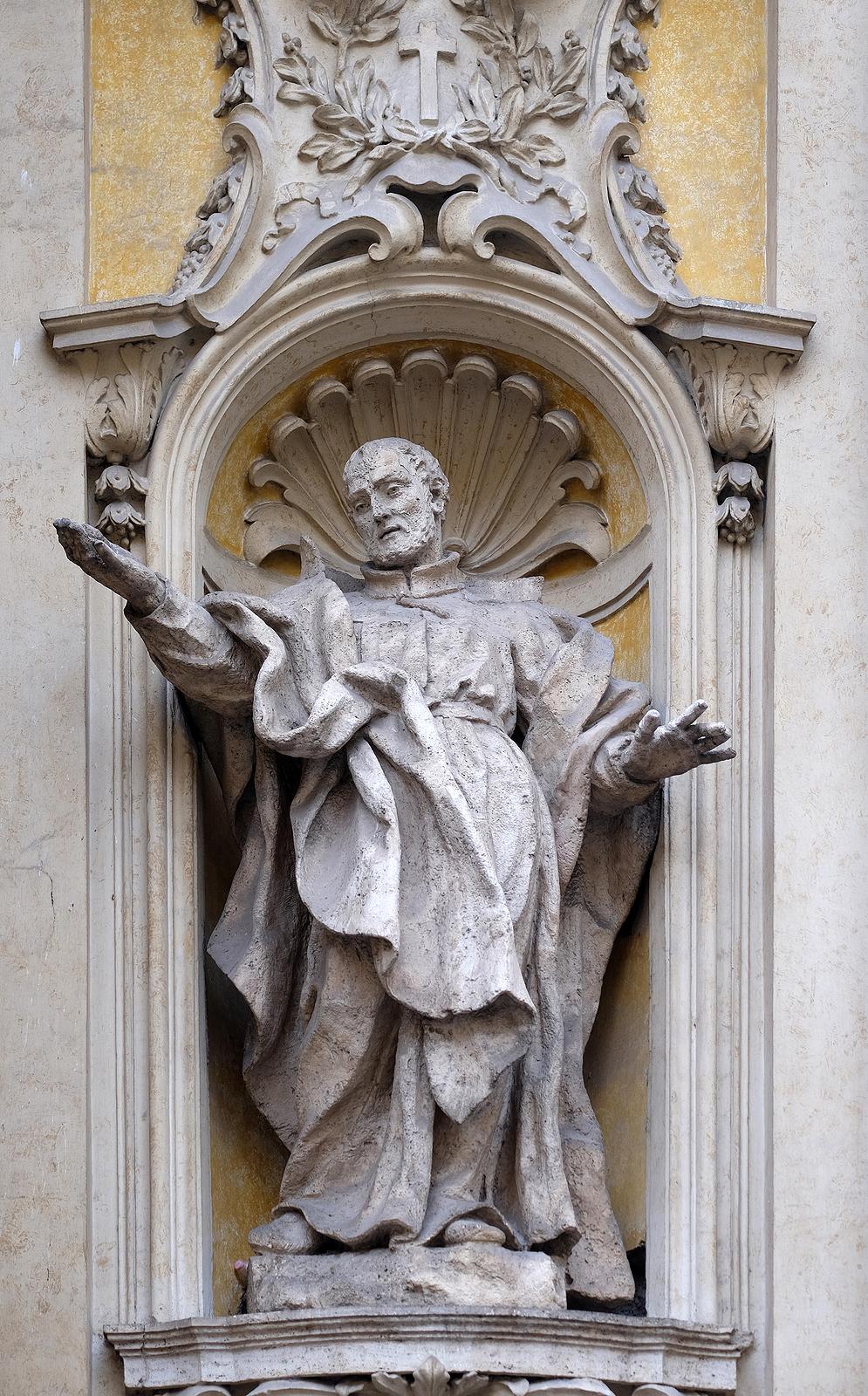
    A statue of Saint Philip Neri. His arms are outstretched. One hand faces upwards towards the sky, the other hand is facing down. His head is slightly tilted down. He wears a long robe. Above this statue is a cross carved into stone.
    Photo by zatletic on Bigstock

    If you’re anything like me, then the call to keep holy the Sabbath is something of a challenge, thanks to a constant struggle to maintain work-life balance. Whether you find it easy to overwork without respite or struggle to get started, hitting that happy medium can be difficult. 

    Honoring the Sabbath reminds us of the need for this balance: six days for work, and the seventh for worship, self-care, and spiritual and physical restoration. But when it proves difficult to actually live this out, what do we do?

    To live properly and pray sincerely, we have to avoid exhaustion. We need time for fun and joy, as these rejuvenate our souls. One saint strongly associated with joy is St. Philip Neri, whom I’ve been inspired by. He uniquely blended holiness and joy throughout his life, earning him the nickname “The Laughing Saint.” Philip Neri’s spirit beautifully encapsulates the Sabbath: a celebration of joyful life unmistakably connected to God.

    RELATED: How to Read Like the Saints

    The saints, as we know, are meant to be our exemplars, so how do we emulate Philip Neri? Well, I can give you an example of what not to do. It’s crucial to be intentional and avoid letting Sunday become overwhelmed with mundane tasks (yard work, for instance), or, for the readers in my age group, schoolwork. So many times I would walk into my college’s library on a Sunday and witness row after row of students hunkered over their studies. Though it is good for students to work, I wished we’d chosen another day to put our noses to the grindstone.

    Philip Neri was a very hardworking man, but also one who knew how to balance his duties with fun. Philip’s mission was to restore Rome, which had fallen into spiritual disarray during the early 16th century, to a passionate love of the faith. He accomplished this by establishing authentically human connections with those around him, which sometimes involved deep conversations, but oftentimes did not. He played practical jokes and took part in wine-drinking contests to make himself more approachable to those around him. After Philip’s death, doctors discovered that his heart had grown noticeably larger, to the point of damaging two of his ribs — a true testament to this great man’s jubilant heart.

    RELATED: Are We Allowed to Work on Sunday? 

    Everything Philip Neri did, regardless of how frivolous it may have seemed on the surface, had a purpose indisputably connected to God. His entire ministry was treated as one continuous Sabbath, vividly showcasing his blend of holiness and joy. This is why I’ve found him so inspiring personally — the mindset we’re called to emulate on the Sabbath, he exemplified throughout his whole life.

    Inspired by his love, passion, and charity, we can bring this saintly approach to the Sabbath into our own lives. Despite the importance of work, Philip knew how to incorporate joy into every day of his life, and so should we. His example reminds me that we aren’t made exclusively for work; we’re meant to live complete and fulfilling lives, with diverse interests and passions. Establishing boundaries between our work lives and the Sabbath, and engaging in the kind of Christ-centered fun Philip loved to partake in so much, is a valuable step in the right direction for us if we struggle to embrace the Lord’s Day.

    RELATED: How to Intentionally Plan a Day of Rest

    My Sundays might involve fun projects. I incorporate prayer into these activities— ora et labora, as St. Benedict would say. But boundaries are important, and I always make sure to never miss out on time for my important relationships, and for prayer. For others, take the day to relax, read, enjoy nature, or have a casual phone call with a friend. But without question, time for God must come first, especially on the Sabbath.

    Being mindful and intentional about observing Sabbath lets us capture the spirit of Philip Neri, that spirit of joy that helps us learn how to incorporate family, friendship, and fun into the Lord’s Day. As Phillip himself puts it, “A joyful heart is more easily made perfect than a downcast one.”

  • Finding Christ Worldwide: Embracing the Universal Celebration of Mass

    Finding Christ Worldwide: Embracing the Universal Celebration of Mass

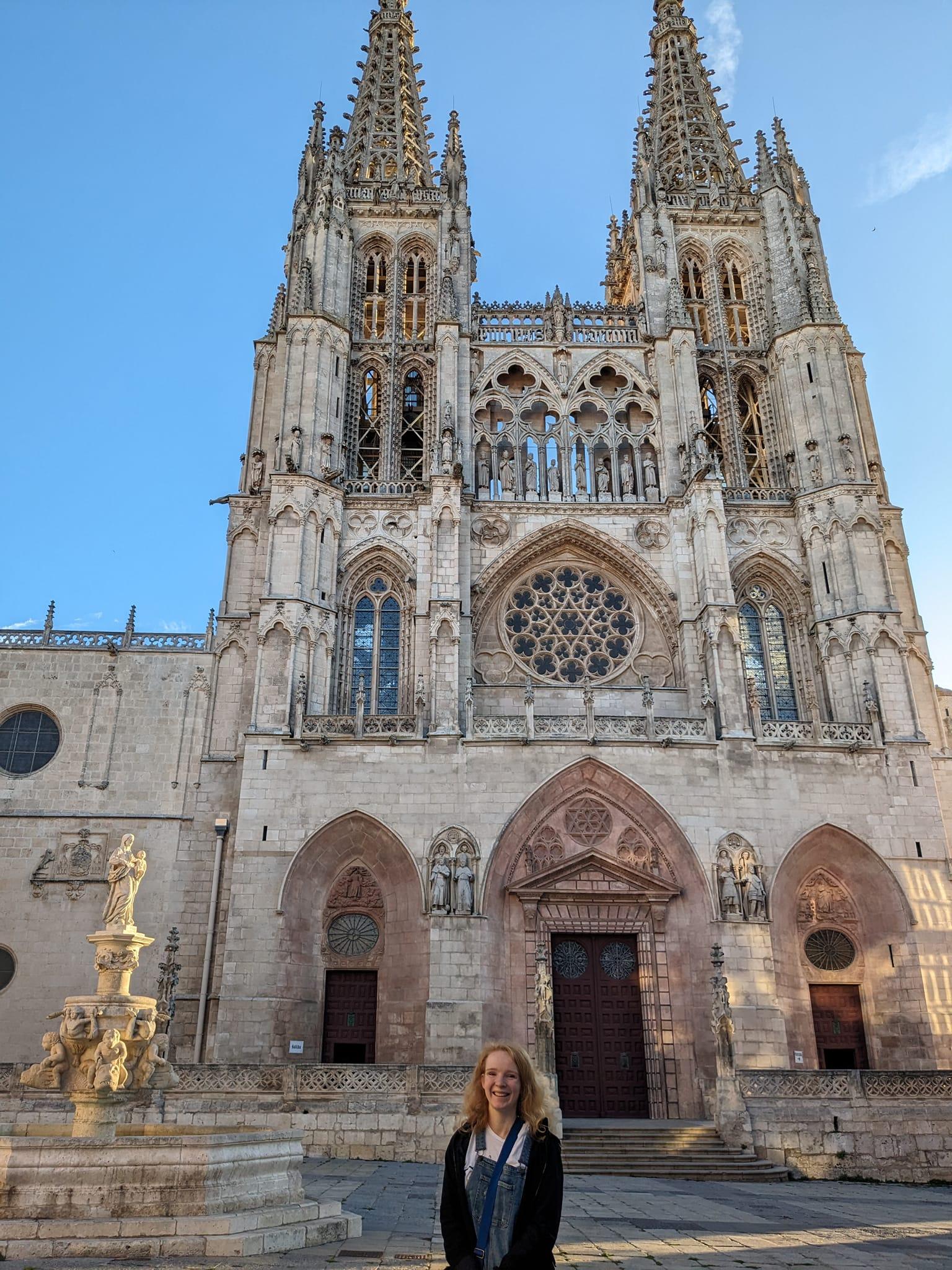
    The author in front of Burgos Cathedral in Spain. (Photo courtesy of Sheila DeBoer)

    Going to weekly Mass at St. Vincent de Paul – my large home parish in Washington State – was just another part of my routine growing up. I could count on sliding into a pew each Sunday with my parents and younger brother and sister, and I might even altar serve on a given weekend. 

    Mass was something I enjoyed, but it wasn’t something I connected to on a deeper level. To me, Mass was just what we did as a family, something very regular and earthly, like going to the grocery store or the park. I paid attention, enjoyed the music, and looked around at all those gathered, but I didn’t understand much of what was happening. Afterward, our family would head out for a meal or run errands, and the Mass we had attended would take its place as a pleasant memory.  

    As I entered high school, received the Sacrament of Confirmation, and began lectoring, my interest in discovering a deeper-than-surface-level understanding of the Mass began to grow. Then, when I experienced Mass in other Catholic Churches besides my home parish — a midwestern parish in North Dakota while visiting my sister, a beautiful basilica in Spain on pilgrimage, or Galway’s cathedral in Ireland on a trip with my mom all in my early 20s—  I began to notice the uniqueness of liturgical worship in a new way. 

    RELATED: Attending Mass in a Different Language Taught Me About the Universality of the Church

    I began to recognize that the Mass I was part of in my home parish each week was being celebrated universally around the world, in different languages and cultures — and the same Christ was present through the words of the priest in each act of consecration at the altar. This realization broadened my view of the Mass from something ordinary to something extraordinary. 

    As my appreciation for the Mass grew, I came across an even more profound reality: The Mass is a celebration where both the living and dead are in attendance. I discovered this truth only a year or two ago when listening to the Catechism in a Year podcast with Fr. Mike Schmitz. According to the Catechism of the Catholic Church in article #1354 regarding the Mass: “The Church indicates that the Eucharist is celebrated in communion with the whole Church in heaven and on earth, the living and the dead, and in communion with the pastors of the Church, the pope, the diocesan bishop, his presbyterium and his deacons, and all the bishops of the whole world together with their Churches.” 

    It is out-of-this-world (literally!) to realize that the Mass is more than a universal celebration across lands and peoples on earth, but that at each and every Mass, heaven literally touches earth. In the Lord’s Prayer, we ask that God’s will be “done on earth as it is in heaven,” and the Mass is a foretaste of heaven. In the book of Revelation, the apostle John has a vision of heavenly worship. He writes: “Day and night without ceasing they sing, ‘Holy, Holy, Holy, is the Lord God Almighty, who was and is and is to come.’” 

    It is fitting, then, that at Mass, we echo these words on earth in the Sanctus, a Latin Eucharistic prayer, or prayer of the angels, offering our praise and thanksgiving to God: “Holy, Holy, Holy, Lord God of hosts, heaven and earth are full of your glory. Hosanna in the highest.” At every Mass, we are in attendance with the angels, as well as those loved ones who have gone before us — participating personally with a great cloud of heavenly witnesses singing and glorifying God. 

    RELATED: 7 Ways to Connect More Deeply With Sunday Mass

    St. John Chrysostom, an early father of the Church, once said: “When Mass is being celebrated, the sanctuary is filled with countless angels who adore the Divine Victim [sacrificed] on the altar. Do we consider the presence of angelic hosts with us at Mass as we remember and represent the one and only sacrifice of Christ on the cross upon the altar? Whenever I attend Mass, I enter into worship of the creator with those in heaven and those on earth. What I have come to believe is that the Mass is anything but ordinary. The Mass is an extraordinary gathering not just of persons around the world from different languages and cultures, but a unity of persons and angelic hosts spanning time and era, life and death.   

    Now when I attend Mass, whether at my home parish or elsewhere around the world, I take a moment to appreciate and acknowledge the ways the heavenly worship is part of my earthly worship. Instead of only looking around at the other parishioners, I remember loved ones who have gone before me, and I praise and thank God while at Mass as they do at every moment in heaven, imagining they are sitting beside me in the pew. When I listen to the music, I also gaze at the altar or smell the sweet aroma of incense, imagining a choir of angels around the priest at the table of the Lord. These small adjustments help me to view Mass not only as something earthly but also as something deeply and profoundly heavenly.