This past New Year’s Eve, I decided it would be helpful to compose a year-in-review post for my personal blog detailing my accomplishments as a freelancer in 2021. I was initially pleased with the overview, because the list of achievements seemed impressive: I had 32 articles published (one of which was spotlighted by an influential Catholic publication and later appeared anthologized in book form), I helped to edit two comic book issues, and I appeared as a guest on five podcasts! This all followed my decision to pursue my dream of being a creative writer back in 2020 when my internship as a lab assistant in a natural history museum ended abruptly during the height of the pandemic. My leap of faith appeared to have paid off, and on the surface I seemed to have much to be grateful for. But instead, my satisfaction quickly gave way to depression and disappointment.
When I compared myself to other writers I knew who seemed, from my vantage point, far more successful and prolific, I felt like a failure. I began to wallow in self-pity and resentment: I had worked so hard for nearly two years! Why wasn’t I more successful? Why didn’t more people appreciate and recognize my work?
At around this time, my mom recommended that I read Fr. Robert Spitzer’s book “Finding True Happiness.” I dove right in, and soon found that Fr. Spitzer understood exactly the kind of emotional whirlwind I was going through. Because many of us tend to classify ourselves and our peers in terms of “winners” and “losers,” we end up coupling our own self-worth with our relative level of worldly success, or perceived lack thereof. This emotional trap is called “the comparison game” and, as Fr. Spitzer explains, it can have dire ramifications for one’s spiritual life: “As the list [of accomplishments] grows more important for defining our self-worth and identity, we will make humility, compassion, virtue, self-sacrifice, and empathy less important.”
As I read this, I was reminded starkly of the Parable of the Sower (Matthew 13:3-9), in which Jesus speaks of the thorns and brambles – “the cares of the world and delight in riches” – which grow up and choke the life of grace that God desires to bestow on us. By indulging in the comparison game, I had allowed self-defeating emotions and behavior patterns to strangle the joy and passion out of my creative pursuits! I would scroll through Twitter with envy, begrudging the apparent success of other young writers. Writer’s block hit me like a ton of bricks and my words seemed inadequate and stale.
Like a rigged casino machine, you cannot “win” the comparison game; the only way out is to stop playing. I learned that the key to breaking the loop of self-centeredness and pride is to cultivate an attitude of service and the virtue of humility. My goals as a writer needed to be completely reoriented away from a desperate scramble for approval and towards a humble acceptance of God’s will. This change of perspective has not been an overnight conversion, but is an ongoing process of healing and discernment. One helpful devotion that I recently began practicing is the Litany of Humility. When I was introduced to this prayer years ago, I was initially put off by it, especially by petitions such as:
“That others may be praised and I go unnoticed,
Jesus, grant me the grace to desire it.”
Why on earth would I ask God that I be unnoticed, overlooked, forgotten? It seemed absurd! At that time, I wasn’t ready to receive the meaning of these challenging words. But now I understand that I was unwittingly playing the comparison game. By actively praying for the gift of humility, I am allowing God to get to work uprooting the weeds of selfishness, envy, and resentment in my heart so that, if I cooperate with his grace, humility and charity can begin to take root like seeds that fell on good soil.
Mary said, “Behold, I am the handmaid of the Lord. May it be done to me according to your word.” Then the angel departed from her (Luke 1:38).
I have always struggled with control. Ever since I can remember, wondering how others perceive me in my relationships, personal appearance, career, and even my vocation has consumed my thoughts, placing the way others see me at the forefront of my mind. My desire to appear a certain way — whether that was humorous and lighthearted around my friends, overachieving and disciplined in school, or completely put together at work — always seemed to come first, leaving my soul weak and my confidence fragile. As control in all of these areas of my life became impossible to maintain, I realized that worrying about what others thought of me made it impossible to experience joy. My identity relied completely on certainty.
On a morning when I was feeling particularly overwhelmed, I turned to Scripture in the hopes that I would find solace in Jesus’ words — something I had not done for quite some time. I have always been drawn to passages about the Blessed Mother, and remember flipping through the pages to find her Annunciation. Although I was familiar with the final verse of Chapter One of Luke’s Gospel, I had never framed Mary’s humble response to the Annunciation within the need for control in my own life. Mary’s fiat, or acceptance of God’s will for her life, is the first decade of the joyful mysteries, and yet each moment within them is bound up in uncertainty. From the Annunciation to the Finding of Jesus in the Temple, every instance hinges upon Mary’s surrender to the unknown. Her initial encounter with the angel presents her with a choice between hope and despair, and her resounding “yes” to his message, despite her fear of the unknown, allows her to remain in the present and know peace. As I continued to read through the passage, I was filled with a new desire to say “yes” to my own crosses, particularly my worry over how people viewed me and surrender to God’s will in moments of uncertainty.
Reading the passage of the Annunciation inspired me to put myself in Mary’s shoes, allowing me to delve further and further into the mystery of her fiat. Following the Annunciation, the rest of the joyful mysteries continue to test Mary’s willingness to surrender to God’s will. Immediately upon hearing her cousin Elizabeth is pregnant, Mary sets aside her own needs and desires to visit her cousin. She gives birth to Jesus in a foreign place, unaware that her new family will have to flee shortly after. When Jesus is a boy, her trust is tested when she loses her only child in the Temple. Even after he is found, Mary hears from Simeon that a sword will pierce her heart seven times, a reminder that she will suffer as her son fulfills God’s will. Again, her acceptance of sorrow gives way to trust, instilling within her an even deeper sense of joy.
As a young woman, it is easy to question my identity in moments of uncertainty. There have been many times when I have felt the weight of the unknown and been unafraid of the surrender it would require of me — whether I was feeling complacent in a particular job, afraid to leave an unhealthy friendship, or struggling to embrace my current state of life. In moments of fear, I have been tempted to pity myself, and allow shame to creep in. In my hesitancy to embrace the uncertain, I allow my need for security to rob me of joy of the present. I forget that hope in uncertainty is the antithesis of fear in the unknown; in striving to practice that hope, I can imitate Mary in the joyful mysteries and draw closer to Christ, her son.
My vocation as a young person is not something I must patiently wait to begin at a certain time. It is not something I must intricately plan out of a need for control or security. My vocation, rather, is to say “yes” in the midst of uncertainty and respond to wherever God needs me in the present moment, and to surrender to the needs of those around me with a spirit of joy and hope. Regardless of our particular circumstances, God has a plan for us amidst the uncertainty; he may not give us all that we want, but he will surely give us all that we need if we have the courage to ask.
I never learned to rely on Divine Mercy as much as I did during the year I taught fourth grade. A newly minted Master of Arts in English, I had planned to teach middle school language arts or high school literature, but, as so often happens, the Lord had other plans and called me to interview for a fourth grade position instead. Drawn by the school’s classic Catholic approach to education and the opportunity to guide students toward truth, beauty, and goodness, I was willing to overlook my utter lack of experience in elementary education to accept the position.
With plenty of perfectionism to spare, however, as a first-year teacher, I held myself and my students to unreasonable standards. Most often, I expected to override their natural propensity to talk with my stimulating lesson plans, and I hoped to make it through entire mornings without losing any of my carefully planned activities to endless side conversations or botched transitions between classes. When we inevitably fell short, I became irritated with them and with myself. The picture of a merciful educator I was not — just someone who felt consistently burned out by the mental and emotional toll of the first year of teaching.
I confided in a colleague and dear friend of mine at lunch one day last October, certain that eight weeks of school should have made me a professional at classroom management, and dismayed when they had not. I had shouted at my students too much earlier that day; once again, I hadn’t been able to love them the way God loves me, and I was sure he was upset with me for it, because I was upset with myself.
She responded to my concerns with an excerpt from St. Thérèse’s writings:
“And if the good God wants you weak and helpless like a child… do you believe that you will have less merit? …. Agree to stumble at every step therefore, even to fall, to carry your cross weakly, to love your helplessness. Your soul will draw more profit from it than if, carried by grace, you would accomplish with enthusiasm heroic actions that would fill your soul with personal satisfaction and pride.”
Thérèse knew that our weakness is not a reason to hide our faces in shame, but rather, to rejoice. Our littleness invites God close to us when we offer it up in trustful surrender, rather than pity ourselves. And God delights in taking his little children over and over again into his loving arms. Instead of beating myself up for my next mistake, I could ask God to meet me right there in his tender mercy, and imagine him smiling gently at me as he did so. And then, I could extend his mercy to my students in turn. I felt enormously comforted and encouraged by this realization.
In short, this is what Divine Mercy is: God’s promise that he will be there to embrace us every time we fall. God’s response to our failings is always, only, and forever mercy. In response, I am called to place complete and confident trust in his goodness — but this is something I am always working on, always learning how to do.
So this year, to celebrate the anniversary of my reintroduction to and adoption of Divine Mercy as a guiding principle of faith in my own life, I’d like to consecrate — to set aside or devote — the entire month of October to Divine Mercy, and I’d recommend that you do it, too! Luckily, there are three saints associated with it whose feast days give us the perfect opportunity to celebrate all month long:
St. Thérèse: October 1
St. Thérèse learned to revel in her littleness as a gift from the Father. In celebration of her feast day, enjoy a favorite childhood pastime to recall your own smallness, and continue to cultivate a childlike heart. For me, the day will probably involve coloring books and a favorite childhood novel or film (and also probably cookies — because nothing evokes warm childhood memories like the smell of fresh-baked chocolate chip cookies).
St. Faustina: October 5
Jesus revealed his merciful heart to St. Faustina just prior to World War II, and she kept a record of these encounters in her diary. Today would be the perfect day to begin a new habit of praying the Divine Mercy chaplet daily, for peace in our world today. The chaplet is especially powerful if prayed at 3 p.m., during the Hour of Mercy, and I’ve found that setting a daily reminder on my phone for that time offers a helpful way to get in the habit of praying it.
St. John Paul the Great: October 22
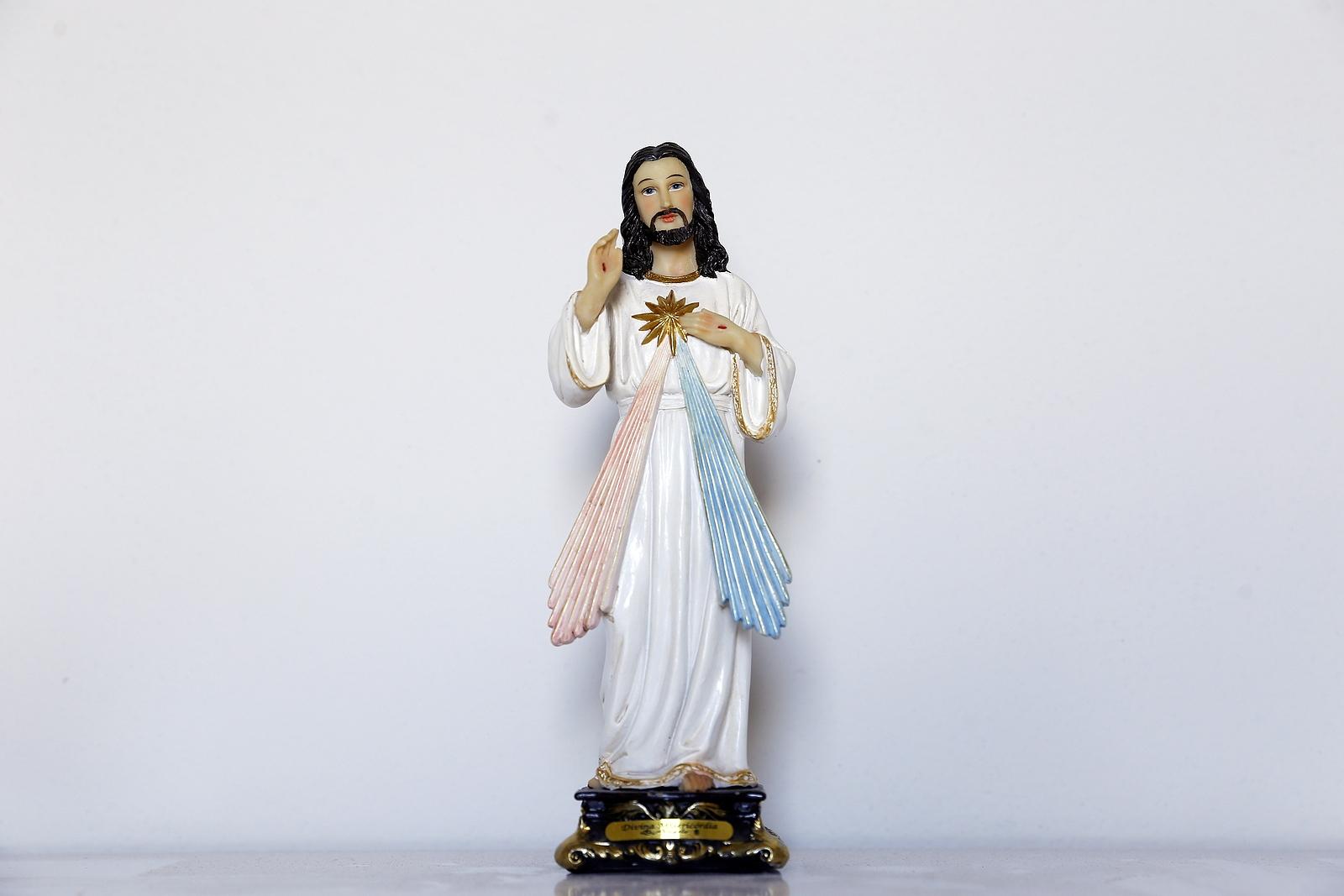
John Paul II knew that a deep understanding of Divine Mercy is the remedy for all of our ills: “There is nothing that man needs more than Divine Mercy… Anyone can look at this image of the merciful Jesus, his heart radiating grace, and hear in the depths of his own soul what Blessed Faustina heard: ‘Fear nothing; I am with you always.’ And if this person responds with a sincere heart: ‘Jesus, I trust in you,’ he will find comfort in all his anxieties and fears.” Procure an image of Divine Mercy to display in your own home, and turn to it whenever you need a reminder of God’s infinite mercy. Mine is placed above my nightstand, so it’s one of the last things I see before I go to sleep, and among the first things to greet me in the morning. It’s a lovely reminder that God’s mercy is with me and holding me always!
“Then the [women] went away quickly from the tomb, fearful yet overjoyed.” (Matthew 28:8)
“Fearful yet overjoyed”? Aren’t those emotions opposites? Reading this passage from Matthew, I never understood that description of how the women felt. We read in Matthew’s Gospel that the women go to the tomb, see an angel, and are told the great news of Jesus’ resurrection. Why, then, would they go away fearful? I had always found the combination of fear and joy puzzling … that is, until I became a mother.
In fact, this Easter is my very first Easter as a mother, and as I read that familiar passage in Matthew’s Gospel this year, the emotions of the women began to make sense. When my son was born, I was excited to meet him, to hold him, and take him home. When the nurses weighed him and examined him in my labor and delivery room, I remember I could not take my eyes off of him. I was simply mesmerized! And I was anxious. I was waiting for an answer – “Is he alright? Is he healthy?” I had been a mother for less than an hour, and I was already afraid he might be hurt. I knew right away that I wanted to protect him from every single instance of pain and suffering, and I also knew shielding him from every inconvenience was not within my power.
Recognizing my powerlessness led me to fear. I imagine my mix of emotions when I became a parent is like the women’s reaction to Jesus’ resurrection. They were excited to see Jesus again, and yet they probably had a flurry of questions and anxieties rolling around in their heads, too. They probably wondered, “How did this happen?” “Is Jesus okay?” I imagine they were likely wondering about Jesus’ future. After all, Jesus had just been executed a few days before. “What would the Jews do to Jesus when they find out he’s alive again?”
In the midst of all my questions and mixed emotions, I eventually learned two very important things in that labor and delivery room. First, when it comes to worries — logical or not — we essentially have two choices. We can remain paralyzed with fear like the guards at the tomb (Mt 28:4) and ponder all the terrible things that could happen, focused on our powerlessness to protect our loved ones from every illness and injury. Or, we can turn to the one who does have control — God. I knew in meeting my son I had to surrender myself and my child into the arms of God, trusting him to take care of us in this life and the next. We can thank God endlessly for every joy-filled moment we have with our loved ones. We can be like the women at the tomb who do still encounter fear, but they do not remain in fear. Instead, they let celebration and happiness overshadow their fears.
While I was in the hospital, and even after being discharged, I could have focused on the pain and suffering I was enduring or the sleepless nights caring for a newborn. In fact, for a while, I did focus on the negatives. I complained a lot. And after some time, I realized I did not want to complain any more. My baby would only be this tiny for a short time, and I wanted to soak in every cuddle and coo. I chose to move my thoughts from complaining to prayers of thanksgiving. When I noticed myself venting about having to feed my newborn again or begging my baby to please go back to sleep, I started listing off my thank you’s to God instead. Thank you God for my health. Thank you God for keeping my baby safe. Thank you God for my husband and his generous heart. … On and on I’d thank God until that “glass half empty” thinking faded away and my complaints seemed insignificant. Shifting our thoughts from worries to gratitude is not easy, but as this new mom can attest, it is definitely worth it.
May we all, this Easter season, find the strength to trust our loving Father every day, and give thanks even in times of trial for every good gift.
A few years ago, I was asked to sit on an alumnae panel at my high school to talk about life in college and beyond. At the end of the discussion, the panelists took turns giving the seniors advice about college life.
Mine? “Don’t study while you eat.”
For me, the point of a meal is to be fully present with the person you’re sharing it with. (And if you are eating alone, the meal can be a time to mindfully reflect or pray.)
There is a sanctity in literally breaking bread with others — whether it be for a special occasion or as part of an everyday routine. Regardless, being distraction-free and fully focused on the present moment — and God’s presence in our company — makes each meal full of grace.
During the Last Supper, a Passover Seder, Jesus gathered with his 12 disciples in the Upper Room to celebrate the Jewish feast. Together, they reclined at the table to symbolize that they are a free people. They feasted on food such as eggs (beitzah), bitter herbs (maror), lettuce (chazeret), parsley (karpas), a spiced apples and nut mixture (charoset), unleavened bread (matzah), and chicken or fish. They enjoyed the traditional four cups of wine throughout the meal.
Mealtimes emphasize the beauty of a community. Everyone takes time out of their busy lives to come together as one. It’s no wonder that Jesus chose a meal to establish the first Mass, the holiest of meals. In fact, every Mass is a meal. We gather together to listen to God’s word and eat and drink his body and blood in the form of bread and wine.
That’s probably why I love hosting family and friends for a home-cooked meal. My husband and I have some favorite dishes we cook for guests: Jamaican-style oxtail, lasagna with homemade pasta, slow-cooked honey-soy ribs, and French onion soup, to name a few. But even daily meals where it’s just Arthur and me (and our dog on the lookout for scraps) feel special because it’s a time when we can simply be together and enjoy a moment of stillness in our lives.
As Jesus literally broke bread, he told his disciples: “This is my body, which is given for you. Do this in remembrance of me” (Luke 22:19). He did it again as he passed around the cup of wine: “This cup that is poured out for you is the new covenant in my blood” (Luke 22:20). This was one of the most singularly important announcements in the world: that Jesus is fully present in the bread and wine that is shared in Mass, all around the world, from that very first seder meal to today.
In our own lives, mealtimes are moments for making announcements. I remember, for instance, the night my sister announced that she was pregnant. It was also over a meal that my husband and I announced we were engaged. Mealtime makes perfect sense to share announcements such as these, as well as job promotions, new ventures, travel plans, and so forth, because we are sharing time and food with our loved ones.
Coming to terms
Because we are gathered with loved ones, mealtimes can also be a place to process bad news. I remember the meal I shared with my family the day of my grandmother’s wake: a pork cutlet with mashed potatoes and cucumber salad—the typical hearty Polish fare that is my total comfort food. The meal not only gave me the physical strength to bear the painful events to come but also gave me courage, knowing I was in solidarity with my grieving family.
Jesus himself shared a dramatic pronouncement at the Last Supper: “Truly, truly, I say to you, one of you will betray me” (John 13:21). This, I’m sure, caused quite a stir in the Upper Room. And, while his disciples were shocked that there could be a traitor among such a close-knit group, Jesus planted the seed to allow them to begin to process all the terrible things that were to come on his road to Calvary.
During a seder, it is traditional to wash hands as part of ritual and spiritual cleansing. But Jesus also washed his disciples’ feet, saying: “If I then, your Lord and Teacher, have washed your feet, you also ought to wash one another’s feet. For I have given you an example, that you also should do as I have done to you” (John 13:14-15).We, too, can gain wisdom from the loved ones gathered with us. I remember my parents telling their stories of living in Communist-occupied Poland. Due to mismanagement and poor economic policies, the Communist regime rationed food and other everyday supplies so that store shelves were frequently empty. People stood with government-issued ration cards in long lines (“kolejki”), some of which took days, to receive their portions of sugar, meat, flour, chocolate, etc. Stories such as these gave me the prudence to always be grateful for life’s blessings—like mealtimes. Jesus teaches us to keep mealtimes sacred.There’s a game that some people play when they go out to a restaurant. Everyone places their cell phones in a pile in the middle of the table. The first person to touch their phone pays for the entire check.
Perhaps this is a little cruel for the first poor soul to succumb to temptation, but the message is a simple one: When you’re sharing a meal with your loved ones, be fully there for them. Be present. Make it holy. Jesus did when he instituted the Mass. We can, too—and not just on Sundays, but every day of the week.
At a 4:00 p.m. Saturday Mass in Overland Park, Kansas, during the preparation of gifts, I sat on the stiff, dark wooden church pew and reflected on Lent. Earlier that week, a student taking my Christian Ethics course asked what I had given up for the season. It was a routine question, but it felt more genuine since we had been discussing moral virtues, vices, and spirituality that day. I told the class that I had not decided. The students were surprised. I acknowledged that, in the past, I had given up yelling at my children (now teenagers!) with mixed results.
What came to me during Mass was the thought that I could give up judging other people as the Gospel of Matthew teaches. “Do not judge, so that you may not be judged. For with the judgment you make you will be judged, and the measure you give will be the measure you get” (Matthew 7:1-2). As the thought arose, I sensed that God began to laugh. Indeed, when I told my ethics students that I had given up judging others, they howled and one student commented, “Professor Hughes, c’mon, you can’t be serious!”
Yes, I get it. We evaluate other people’s actions and their character constantly: for an unkind word, indifference to our needs, suffering behind a slow car or being passed by a fast one, or, worse yet, feeling our good work or integrity is overlooked or forgotten. Our judgments frequently pair with hurt, anger, resentment – pain. Psychology tells us that we tend to attribute more to personal character than to situations and that we know much less about complex situations, actions, and motives than we suppose. I cannot count how many times I’ve made snap judgments about certain students on the first day of class. I might focus on a weird facial expression, a slouched body posture, a face hidden under a hoodie, or a single negative comment and sortput them squarely into a “worthy” or “unworthy” bucket.
During Lent, I became more attuned to the frequency and quality of my judgments. I habitually sorted actions and persons into different categories — innocent, guilty, deserving, undeserving — so that Jesus’ injunction seemed on a commonsense level to be impossible. Surely, he didn’t mean it! On my daily commute, at times I find myself attributing malicious motives against me by my fellow commuters behind the careless driving or impatient honks without knowing anything about their lives, worries, pressures, etc. And it really makes no sense. But I, along with many of us, can habituate taking offense and then passing harsh judgments too easily and quickly.
Or perhaps Jesus just meant not consigning another person to hell. It is, in fact, easy to think this. But from my Lenten experience and reflection on Matthew, I don’t believe condemnation is the main issue. What’s happening is a more subtle and pervasive way of seeing and assessing others that becomes a blindness to love. So what does this biblical teaching mean?
Matthew’s and other biblical references to “judging” seldom mean “do not condemn.” Luke uses a different word for “judge” (krino) and for “condemn” (katadikazete), distinguishing two different acts. Matthew (and Mark) add to the prohibition on judging the caution about how the way we measure others should be the way we measure ourselves. So, condemnation is only one of many responses covered in the ways we judge — not the only way. It seems that the meaning concerns more common interactions and judgments we make. From my own experience this past Lent, this distinction rang true.
That Lent, I learned that Jesus does not mean ignoring injustice or becoming desensitized to evil and wrongdoing. What I found in self-monitoring my judgment of others — especially behind the wheel — was that when I judged and quickly sorted another person into a negative category, I became less connected to that person, more cut off, more isolated from them and from my own tendency to act likewise. Indeed, one of the key meanings of the Greek term krino aside from “judge,” is “to separate.” If I wanted to see harshness, strictness, looking out to be offended by this look, that remark, his comment or her gesture, I would find them. I saw and judged the other as such. And in so doing, I separated myself from my neighbor and ignored my own harshness, strictness, and ways that I might offend others.
I was not at all aware that the measuring stick I used would be similarly used on me. And that is the tough part. It requires serious self-reflection, knowledge of one’s sinfulness, needing God’s help, mercy, and being constantly on the lookout for goodness to get “judging” right. It requires a type of ego death, one that means a better seeing of another person in all their complexity rather than a fixation on a snapshot in time or a fault, hurt, or offense. A patient gazing and understanding of the other with, what Richard Rohr calls “soft eyes,” rather than an emotional reaction and quick sorting into some form of inferiority.
Judging others makes it very hard indeed to see Christ’s goodness, kindness, mercy, and love being poured out upon my neighbor and myself every second. Judging can quickly and subtly lend itself to emphasizing what is wrong with the person, the driver, the lack, the negative in a situation. It means seeing the person or group behind such acts as unable to be fully defined and described and named by them as who they are in God. That Lenten lesson is still a work in progress for me. I suspect we all need to practice slowing down, waiting, and letting the goodness of the other reveal itself to us. For that, we’ll need to ask God for help: help to slow my assessments, find more patience, and remember that everyone is an image of incomprehensible love. And finally, I need to trust that, as always, our loving God will deliver and help me to see more lovingly and less critically.
Last fall, signs outside our parish and notices within our weekly bulletin reminded my family that the month of October in our Catholic faith is dedicated to the Rosary. Every time when we walked into Mass, we heard other parishioners reciting the Rosary before the service started. It may sound cheesy, but my husband and I felt a spiritual calling in October to participate in those prayers more actively. Notably, this isn’t a reflection on how my family learned to say the Rosary together during October. It is, however, an account of how we began to try.
In this process of learning the prayers for the Rosary, we felt “behind” where we imagined other families we knew to be. In October, my family already knew “The Hail Mary” and “Glory Be,” but those were our only starting points. We began by adding “The Salve Regina” to our nightly routines, learning one line per night in our living room before the kids would dash off to brush their teeth and crawl into bed.
In the process, we found that attempting to memorize new prayers together was unexpectedly spiritually rewarding for every member of our family—my husband, my two elementary-school-age children, and me. Before last October, we’d recite those prayers we already knew each night before bedtime, but we’d never attempted anything long. We’d also never practiced the memorization and recitation process nightly together. We had learned those prayers individually or with our church classes. Of course, the things that are spiritually rewarding in our lives are never quite as easy as we’d like them to be, and this process has been no different. It’s now Lent, and we’ve still yet to say the Rosary together without reading at least part of it from a book or a screen.
A little like brushing their teeth each night, my children often balk at reciting the prayers. Likewise, sometimes when there’s a football game on, so does my husband. I also admit that if I’ve had a long day at work and would rather relax with a book and have some solitude, adding the drama of begging everyone to come together to learn prayers isn’t exciting for me. Still, once we start reciting the prayers and learning the lines, a sense of accomplishment and even a spiritual weight visits our living room that is worth every bit of nudging our family might have needed to start memorizing together. The kids might be fighting about whose cookie looks bigger for dessert, or what TV show they’ll watch in the morning, yet they’ll calm down once we’ve launched into saying the prayers a few times. Solemnity almost always takes hold, so to speak.
As part of our practice, we say each line of the prayer we’re covering that day five times together, adding whatever lines we learned the day before to it. Then we have each person say the prayer to the point they’ve learned it on their own. My children love taking center stage in the living room, standing on a certain part of the rug where there’s a big flower: This is their stage. They also enjoy checking and correcting my husband and me when we inevitably fumble certain lines or words in the prayers. Like the kids, we stand up on that same flower in the rug, making the recitation a more active, bodily endeavor. Even so, it still took my family three months to remember the “Salve Regina.” In part, this is because we didn’t recite the prayer every day, despite our best intentions. Yet when we’d get off schedule for a few days (like when my son got sick with the flu), we always picked back up where we left off as soon as we could. Now that we’ve finally learned “The Salve Regina,” the prayer is part of the fabric of our lives. We’ll say it together before I drop the kids off at school, or if they’re having an anxious moment, we’ll hold hands and pray it together. My 8-year-old daughter and I will also recite the prayers we’ve learned as I brush her hair in the morning.
As we’re approaching her First Communion this Easter, we’ve turned our focus to memorizing “The Apostles’ Creed.” The Rosary begins with it, and the Creed serves as a foundational statement of Catholic beliefs, focusing on our faith’s mysteries. When we practiced “The Apostles’ Creed” last week – again, before bed, in our living room betwixt the chaos of getting school clothes ready for the next day and lunch boxes packed – my daughter asked about the phrase in the creed stating that Jesus was “conceived by the Holy Spirit.” We realized she had no idea what the word “conceived” meant, and to be honest, my husband and I faltered for a moment in answering her. Theological explorations are not often at the forefront of our minds during our household bedtime routines. Even though we were saying the words together almost daily for months, it wasn’t until my daughter was able to repeat them without struggling that she began to ponder their meaning. How exactly was Jesus conceived by the Holy Spirit AND born of the Virgin Mary, not one or the other, she inquired?
After thinking through it—and, yes, Googling it—we explained that even though Jesus was born of a human mother, Mary, he possesses a divine nature, as his conception occurred through the Holy Spirit rather than a human father. Jesus is fully divine and fully human, both God and man. While we may worship this truth together at Mass and while my daughter may have learned this in her religious education classes, the lightbulb that went off in her head while we were discussing this mystery as a family was amazing to not only watch but also to participate in with her. Wow, we seemed to realize as a family, these words we’re repeating are astounding when one truly thinks through them and feels their power.
This was a special moment – and a rare one in our family routine – and it felt exhilarating to experience it. In fact, we encounter struggle more often than not. While we are almost done learning the Creed now, my husband is farther behind than the rest of us, and it’s not for lack of trying: memorization is simply harder for him. My daughter has a speech impediment, and the words don’t come easily to her either. Because every member of the family is different in how we learn, this can prove an impediment to keeping the energy and momentum needed to inspire daily practice.
Keeping this in mind, my husband and I try to keep an atmosphere of lightness. We never shame anyone if someone is struggling, but we encourage each other to make it to the end of that section no matter the attempts it takes. The laughter that inevitably happens as we mix or miss words is good for our family’s soul. Plus, it teaches our children to be kind to each other – and to us – because we’re all learning the prayers together simultaneously. Through memorizing and reciting prayers, our entire family can be described for one of the first times ever as spiritually curious. While we may have been fighting moments earlier before trying to pray about who did or did not do the dishes, we open ourselves to God being with us when we pause for this practice. Our hearts, minds, and days almost always settle. While it may not happen right away, after the final recitation, there is usually a sense of pervasive and palpable calm, and that is worth every up and down in getting there.
It bears mention here that in Catholicism, memorization entails a spiritual recollection that is supposed to work in concert with the intellectual aspect of memory. For example, the liturgy of the Catholic Mass is a memorial, or “a remembering of” the re-presentation of the sacrificial act of Jesus’ death on the Cross. During each Mass, our salvation becomes present before us on the altar through the Sacrament of the Eucharist. In other words, Mass is not a mere recollection but an active participation in this past salvific event, making the past present in a sacred and transformative way.
As my family prepares for my daughter’s First Communion, we have learned that memorizing prayers has brought us closer to God’s divine mission on our couch at home in addition to on our parish’s pews. Memorizing together helps us connect with the Church’s past and lay claim to our own future within it. The often-fumbled words, the shared laughter, and the earnest attempts to understand the words we’re reciting have led us to find grace within our family’s spiritual life and to connect that grace with the broader Church family we also belong to and are learning more about through its prayers and creeds.
Indeed, in nurturing our children’s spiritual growth, my husband and I have inadvertently discovered a path to our own. Our family recitation and prayer time has become a conduit for grace, an opportunity to be present with one another and God. As my daughter prepares for her First Communion, “The Apostles Creed” stands not just as a set of words now memorized but as a testament to our shared journey, a journey that has drawn us closer to each other and the Church’s doctrines, and most importantly, closer to God.
One of my favorite little moments from J.R.R. Tolkien’s fantasy masterpiece “The Lord of the Rings”is when the ranger Aragorn returns to Pippin a treasured brooch that the hobbit had cast by the wayside as a clue after he and his cousin Merry were captured by the evil orcs. “It was a wrench to let it go,” said Pippin, “but what else could I do?” Indeed, if Pippin had not had the good sense to drop the brooch, his friends might never have known that the two young hobbits were still alive at all. Aragorn confirms that Pippin made the right choice, saying that “one who cannot cast away a treasure at need is in fetters.”
I find this exchange so powerful because it often reflects my own experience. Parting with possessions, even those that I no longer need or use, can be a truly wrenching task. There are times when I feel like my possessions really possess me. Yet when I ask God for the strength to let them go, I know at once that I’m doing the right thing.
It’s true that, as a Catholic layperson, I have no obligation to take a vow of poverty like a professed religious brother. And yet, as a disciple of Jesus Christ, I am called to live simply and modestly, prioritizing people over possessions. More often than I would like, I find myself emulatingthe rich young man who encounters Jesus in Mark’s Gospel. When Jesus invites him to sell all he has and become a disciple, the youth “was shocked and went away grieving, for he had many possessions” (Mark 10:22). Like that poor soul, I time and again find myself a prisoner of my possessions.
Thank God that the Church gives us the season of Lent! Lent can be a powerful, intentional time of conversion, a time to reorient my spiritual life and sacrifice those things that have become obstacles and stumbling blocks on my personal walk with God, holding me back from pursuing a more authentic path of discipleship.
As Ash Wednesday approached this year, I realized that I could make my process of decluttering into a Lenten blessing, an opportunity to examine what my spiritual priorities truly are, as well as an opportunity to practice almsgiving and help the less fortunate through the corporal works of mercy.
When I was out on a walk around my neighborhood thinking over all these things, I had a flash of inspiration: I would collect 40 of my unused or lightly used items and donate them to charity — 40 items for the 40 days of Lent! Of course, this is hardly an original idea (honestly, I can’t remember where I first heard about it) but I believe that it is what God is calling me to do this Lent. I didn’t even wait for Ash Wednesday to begin putting my plan into practice!
About half of the items I’ve collected for donation so far are clothing. On a recent episode of the “Word on Fire Show”, Bishop Robert Barron said that cleaning out the closet can be a very good way to make an examination of conscience.
Admittedly, I felt a bit defensive when I heard that. “Well,” I thought, “maybe that’s true for other people, but I certainly don’t have that many unused clothes.” But when I searched through my bedroom closet a few weeks ago, I got a sobering reality check: I found many items of clothing that I wasn’t wearing because they no longer fit, and more than a few pieces that I had bought on impulse and had simply never worn at all. I put all these aside into a big bag to donate to my parish’s Lenten clothing drive.
Besides clothing, the bulk of the items I’ve chosen to give away are books. I’ve written before about my struggle to downsize my enormous book collection. When I’m being brutally honest with myself, I know that many, if not most, of the books I own are titles that I’ll never read again. I either hang onto them for sentimental reasons or because I fool myself into thinking that I will need them for some vague “writing project” that I may (or may not) do in the future. The time had come to seriously cull my book collection. So far, I’ve managed to almost fill up three banker’s boxes with books to donate to my local library’s charity book drop! But this was not an easy accomplishment.
At one point, I was just stuck; I couldn’t seem to part with any of my books no matter how hard I tried. I kept putting them back on the shelf. Then I remembered one of my favorite Catholic podcasters, the Dutch priest Fr. Roderick Vonhöge, who often shares insights into his own decluttering process on his podcast “The Walk.” So I started listening to an episode where Fr. Roderick revealed how he’s been incorporating prayer into his efforts at decluttering. He found that praying over each unwanted object, and specifically giving thanks to God for its former usefulness, made it easier for him to let go of things cluttering up his workspace.
This insight changed my whole perspective on parting with my books, and I adapted Fr. Roderick’s practice into my own three-part prayer: As I took each book off the shelf, I first thanked God for sending that book into my life when he needed it. Second, I asked God to bless the person who would receive this book now that it was no longer useful to me. And third, I made an act of trust that God will provide for all my future needs. This was a liberating experience that allowed me to donate far more books than I thought possible before!
There are still several more weeks of Lent to go, and I know I’m just beginning this journey of conversion. I’m just starting to form a better relationship with my possessions that reflects my primary calling as a child of God and a disciple of Jesus Christ. With the help of prayer and trust in God’s grace during this holy season, I’m certain I’ll make progress.
People like to tell me that they haven’t seen “Star Wars.”
It started out as a joke with friends: “Eric loves ‘Star Wars!’ This will absolutely shock him. He won’t be able to believe it.”
But over time, it’s become something else. Usually, after I give a talk or a workshop—one thoroughly peppered with “Star Wars” references and jokes—a person will come up to me, sort of sheepish. “I really liked your talk,” they’ll say before pivoting to confession mode. “But Eric, I’m really sorry to say this, but I haven’t seen ‘Star Wars’…”
I mock shock, anger even, but then we laugh. It’s fine, of course—the franchise isn’t for everyone. We all have stories we like and some that just don’t resonate. I haven’t yet refused a friendship over the mere sin of not having seen “Star Wars.”
But I have been thinking more and more about this transition in the way people talk to me about that galaxy far, far away. Because I think they see a change in me: This isn’t just a story I enjoy; it means something.
Sure, it holds a special place in my own life story: My dad popped those VHS tapes in the VCR when I was little, ensuring I had something super cool to talk to my friends about in school for the rest of the week–and that I was ready for the prequel trilogy to premiere only a few years later.
But “Star Wars” means more to me than that. It gives voice to my own spiritual journey.
I’m not talking about drawing parallels between our faith and “Star Wars”: “Anakin as the Chosen One is like Jesus as our Savior!” Or, “Jesuits are like Jedi because they both practice a form of indifference!” Parallels are helpful, sure; they help us see spiritual stakes in otherwise secular stories. But we remain passive observers when we simply look for parallels; we don’t engage the spiritual truths they point to.
What moves me about “Star Wars” is that the story gives me a new language with which to give voice to my spiritual journey. For example, the Dark Side of the Force feeds on fear; am I allowing fear to govern my decisions in relationships, at work, or in the way I view myself? If I am, then I may be unknowingly pursuing a dark path—and my own faith tradition has plenty to say about that!
What about redemption? Sure, we love to see Luke cling so fervently to the belief that his father might still be saved, and that Anakin still lives somewhere in Darth Vader. But do I act as confidently in this galaxy oh-so-near? Do I display those spiritual virtues that Luke does on the second Death Star: nonviolence, trust, surrender, and compassion? And if not, is there a relationship in my life that could benefit from such a disposition?
I enter into the story; I engage the characters. I try some of those lofty lessons on for size. And I do so in a way that remembers St. Ignatius, the founder of the Jesuits—honoring the spiritual legacy of the Basque soldier-turned-saint who realized that God was to be found in all things, through our senses and our desires. Ignatius invites us to engage Scripture this way, by entering the story. But what if we did the same with stories of pop culture that mean so much to us?
Because I think in the end, that’s the point: God is present in these supposedly godless stories. God desires to speak to us through the very myths and legends that move us, that inspire us, that stoke our imagination. Are these holy texts? Not in any way a biblical scholar would recognize, but these are stories that speak to something deep within ourselves.
And the reason I spend so much time thinking about them—the reason I wrote a whole book, “My Life with the Jedi: The Spirituality of Star Wars”—is because I think that while these stories speak to us, we can use that same language to speak to others. To discover spiritual truths within ourselves.
We don’t actually have some mystical energy force to call upon to levitate rocks or pull X-Wings from mucky swamps. But we do experience the tug of the dark side and the light each and every day. We wrestle with decisions that set our lives on trajectories that bring us closer to the light or further from it.
Painting this very relatable spiritual struggle in the hues of laser swords and warrior monks simply brings into clarity the weight of otherwise mundane decisions. Spiritual decisions. Do I move closer to the light? Or, do I find myself in darkness and in need of redemption? The fate of the galaxy might not rest on my meager decision-making. But then again, maybe it does.
Star Wars. Ignatian spirituality. Pop culture. Our faith lives. These aren’t separate things. In fact, one can feed the other, all while elevating our ability to see new. possibilities in a world so desperately in need of them.
Maybe that’s why people have started apologizing to me for not seeing “Star Wars.” People feel as though they have to apologize for not being fully bought in. Not because “Star Wars” is my religion but because it clearly gives me a new language with which to articulate very old spiritual truths. And that matters—to me, to you, to our world.
But here’s what I say in response: Don’t apologize for not seeing “Star Wars.” Find the story or stories that inspire you. And see what God might be trying to say to you through them.
For those of us in the northern hemisphere, we have officially entered the dead of winter – that time after Christmas and New Year’s when the activities have waned and the bleakness of the February sky provokes our innermost melancholy. Even for those of us in milder climates, this time of year can be taxing socially and spiritually.
In winter, my body craves the comforting and familiar – butternut squash soup, a fuzzy blanket, and tea. This year, I’m also reminded that returning to works of art that I have come to love from museum visits, art history classes, and personal discovery can help my soul get the dose of beauty it needs to thrive in the cold.
I want to note that not all art is beautiful. There is a plethora of media that can be described as art but can also tarnish our spirits and relay harmful messages. At the same time, secular art can also transmit beauty and afford us glimpses of God in our everyday life.
When I go to the Art Institute of Chicago, it is a necessity for me to visit the Contemporary Wing. There are pieces there such as Jack Whitten’s Khee II that bring me comfort and excitement each time I visit. The work’s subtle colors and bleary lines, created by a multi-step method involving thin sheets of Japanese rice paper, evokes a monochromatic calmness and luminescent frenzy all at once. Becoming familiar with a piece of beauty – whether it be a painting, song, movie, or book – opens my heart to both connect with the piece and revitalize my own spirit.
When I began graduate school, I struggled with transitioning to a new place where I didn’t have an immediate community. I started playing George Gershwin’s “Rhapsody in Blue” every morning when I got dressed, and it soon became a natural part of my routine. Its whimsical rhythm imbued a buoyancy into my day that both soothed and energized me. Just like I sing along to the lyrics of my favorite songs, I began to recognize the phrases and melodies of “Rhapsody in Blue”in the same way. Like a phone call with a close friend who I haven’t seen in a while, listening to this song helps lighten whatever weight is on my heart.
While this song uplifted me, art can also be a way of affirming our suffering and reminding us that we are not alone in it.
On a mantel in my house is a large painting of Jesus in Gethsemane that my parents got from a great-aunt when she passed away. It has a dark blue hue cast over ominous silhouettes of trees and a moon peeking through dark clouds. It depicts Jesus as the focal point, looking over Jerusalem in profile with an expression of loneliness and anxiety, the impending destiny evident in his solitude. I can see resigned desperation on his face as he fears what is to come, the vast landscape swallowing up his gaze.
This painting is in a room where I often work on my writing. At first glance, the image is jarring and makes me want to look away, to avoid the pain Jesus was feeling so that I prevent similar feelings from arising in myself. The visceral reaction that art can provoke is key to recapturing our humanity when life becomes monotonous. Seeing this painting on a regular basis may alleviate the intensity of such a response, but I think it affords the opportunity to get over the initial shock and explore what is happening beneath the surface: What was Jesus feeling in this moment? Why did the artist choose such a somber scene? What prompted my great-aunt to obtain this painting? What was she going through at the time?
If I walked past this painting in a museum or a church, I would not be able to ponder these questions with the same intensity, turning to them over and over again with a new perspective each time. Becoming intimate with a piece of art not only establishes a connection with the themes and emotions illustrated in the work, but also with the artist and patrons who made the piece come to be.
Sometimes I find myself thinking about what the expression on Jesus’ face means in the painting, the nuances of melancholy, grief, and acceptance. Other times I think about the artist and my great aunt, and the experiences that led them to create and obtain the painting. This interconnectedness in turn causes me to think about the audiences that my own creative endeavors might reach, and what emotional circumstances may draw them toward my articles.
In his Letter to Artists, St. Pope John Paul II wrote, “Beauty is a key to the mystery and a call to transcendence. It is an invitation to savor life and to dream of the future.” I don’t need to spend exorbitant amounts of money on paintings or sculptures to grow this kind of intimacy with a piece of art. I can save a painting on your phone lock screen, or print it out and post it next to my bathroom mirror. Regardless of the mode, infusing art into my daily life invites me to elevate my most mundane experiences. Art helps me engage with my own humanity, unearthing the beauty that may seem muffled by the dreariness of a mid-winter landscape.


 This past New Year’s Eve, I decided it would be helpful to compose a year-in-review post for my personal blog detailing my accomplishments as a freelancer in 2021. I was initially pleased with the overview, because the list of achievements seemed impressive: I had 32 articles published (one of which was spotlighted by an influential Catholic publication and later appeared anthologized in book form), I helped to edit two comic book issues, and I appeared as a guest on five podcasts! This all followed my decision to pursue my dream of being a creative writer back in 2020 when my internship as a lab assistant in a natural history museum ended abruptly during the height of the pandemic. My leap of faith appeared to have paid off, and on the surface I seemed to have much to be grateful for. But instead, my satisfaction quickly gave way to depression and disappointment.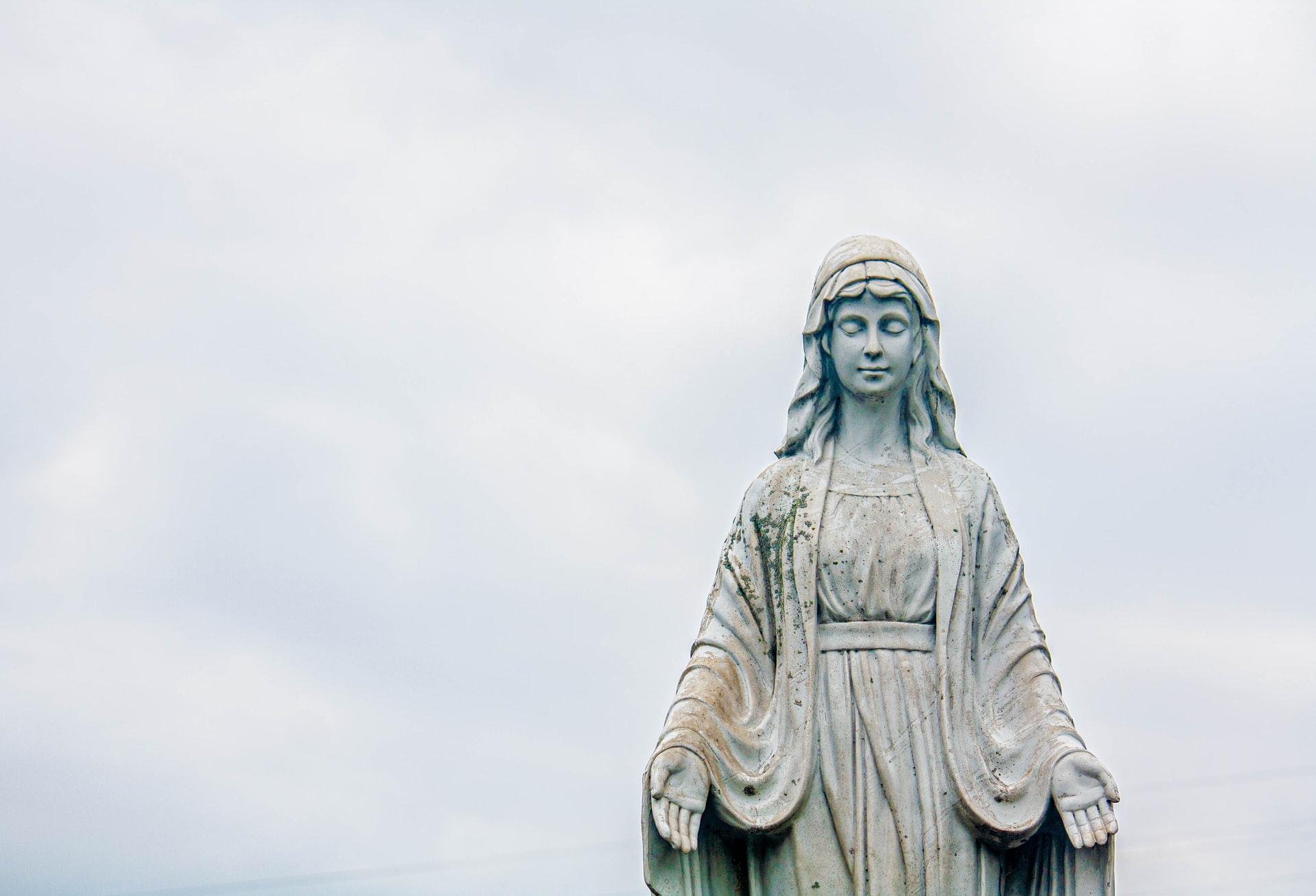

 “Then the [women] went away quickly from the tomb, fearful yet overjoyed.” (



 One of my favorite little moments from J.R.R. Tolkien’s fantasy masterpiece “The Lord of the Rings”
 People like to tell me that they haven’t seen “Star Wars.”
 For those of us in the northern hemisphere, we have officially entered the dead of winter – that time after Christmas and New Year’s when the activities have waned and the bleakness of the February sky provokes our innermost melancholy. Even for those of us in milder climates, this time of year can be taxing socially and spiritually.