Author: Allison Bobzien

  • Hands-on Faith: How Contact Builds Our Connection to Christ

    Hands-on Faith: How Contact Builds Our Connection to Christ

    My daughters love museums  –  a fact which has required practice, cajoling, and plenty of snacks – but, once sparked, the adventure of discovery is contagious. Throughout our family’s recent trip to Washington, D.C., we experimented with which museums worked best for children. The National Art Gallery, with its automated “please step back from the art!” alerts and constant shushing of giggles was not a friendly option for us. We felt more at home in the National Museum of Natural History. My girls, barely 3 and almost 6 years old, stared in awe at the towering dinosaur bones, the blue whale suspended above the ocean room, and the countless treasures encircling the iconic elephant, Henry, who oversees the entryway. In the Hall of Fossils, I noticed a sign that both shocked and delighted me, reading “please touch.” My girls hurried over to feel the dinosaur bones replicas, their faces alight with joy at having the opportunity to interact with something so precious. 

    We discovered more of these thoughtful signs throughout the museum, on huge stones containing amethysts, on ammonoid fossils, and on a section of sea coral. My younger daughter chatted all day about how she touched the amethyst. She loved the shape of the gemstones, how cold it felt to the touch, its color and how it shifted in the light. Having seen a great deal of beautiful and fascinating things behind pristine glass, the opportunity to touch and handle an exhibit was priceless. 

    RELATED: Children and the Church: Recognizing the Welcome

    While my husband and I chuckled at her newfound love for gemstones, we also recognized a deep truth within her delight: Connection is strengthened through contact. Contact can manifest in various forms, but that tactile connection impacted her in a way that merely viewing never could have. These dear signs scattered across the museum brought to my mind John 20:27. As the newly resurrected Jesus offers his hands and side for Thomas to touch, he tells Thomas, “Put your finger here; see my hands. Reach out your hand and put it in my side…”offering his body as proof of his resurrection. 
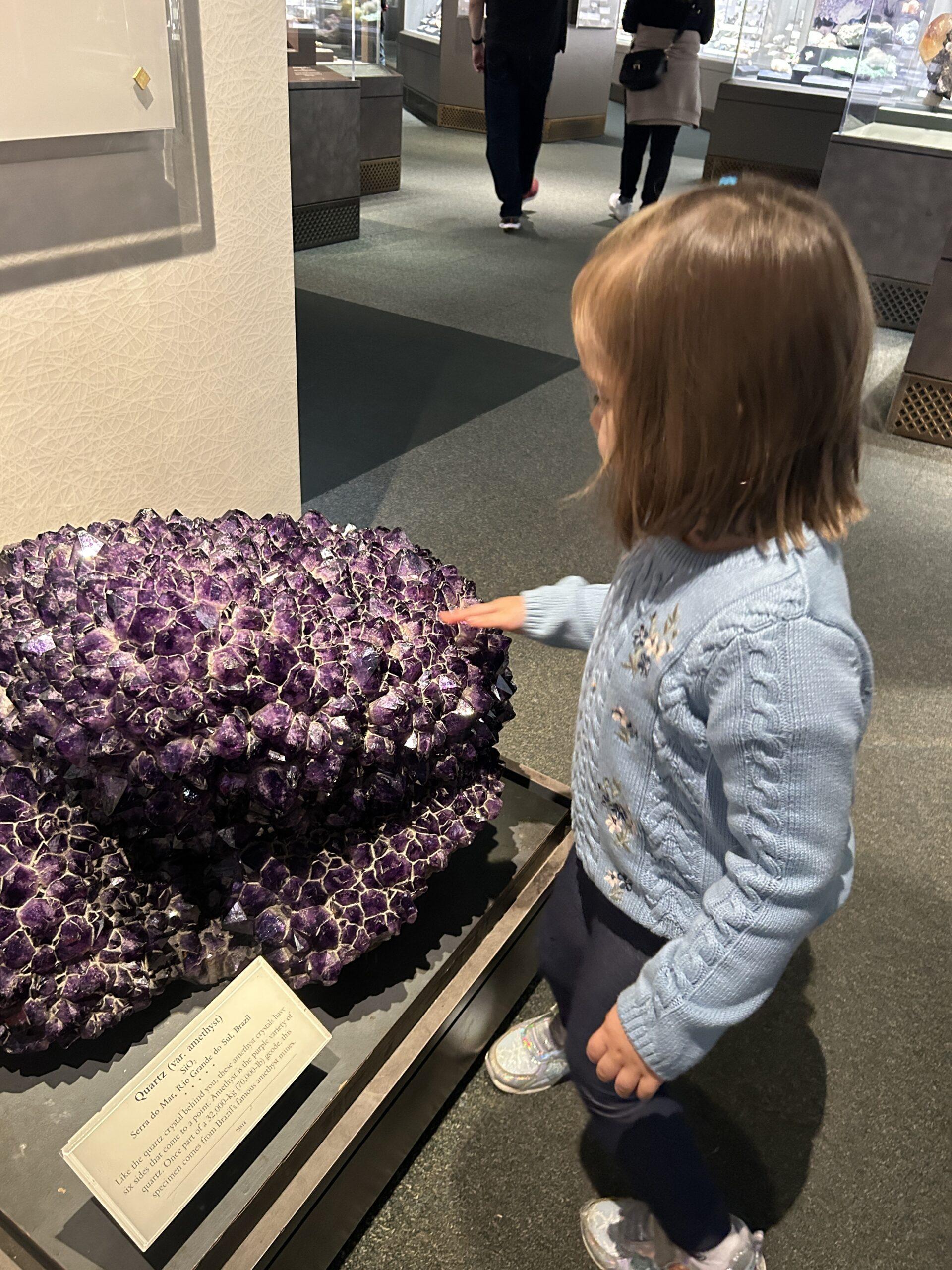
    Photo courtesy of the author

    Throughout the New Testament, Jesus offers his incarnated body to his people to see, to hear, and to touch. The Gospels open with the nativity, a sign of God’s love for us which shocks and delights. Although we celebrate the birth of Jesus yearly, this gift of the incarnation of our God continues to astound me. God became man, took on flesh, accepted vulnerability and human needs in order to connect with, serve, and save his creations. His birth, upbringing, and adulthood were far from lavish, sheltered experiences; he was born in a time of danger and fear for the lives of the young. He was brought into the world by a young woman away from her family and spent his early years in a foreign country; Christ touched and lived in the world of the lowly. 

    RELATED: How My Young Family is Making Room for Christ this Christmas

    In turn, he offered himself in ministry and sacrificed for the humble and proud alike. The incarnation was a fulfillment of prophesies and promises, but the way Christ served his people while on earth was also an invitation for connection. Christ told his disciples, “Let the little children come to me, and do not stop them; for the kingdom of heaven belongs to such as these.” (Matthew 19:14). He never shied away from his people and their need for him. He walked dusty roads, cried with his friends, healed with spit and mud, and in all his actions, formed connections through contact. 

    We are a tactile people, drawn to contact, longing for connection. Our God knew this; he created us in this way. So, in all his love for us, he reached down from heaven, took on flesh and said to all his people, “please touch.” As we enjoy this season of Advent and remember the incarnation, how will we answer God’s invitation for connection? Perhaps this Advent we will clasp Christ’s outstretched hand and focus on our relationship with him, leaning into each week of Advent and preparing our hearts for his second coming. Or maybe our connection will be extending that hand of welcome to our neighbor; inviting them in so as to reflect God’s love into their life. Hopefully we can do both, loving our neighbor as God loves us. Connecting with others in the knowledge that we serve a God who continually invites us into a relationship with him. 

  • ‘Inside Out 2’ and the Journey of Self-Acceptance and Reconciliation

    ‘Inside Out 2’ and the Journey of Self-Acceptance and Reconciliation

    “Inside Out 2” (Courtesy of Walt Disney Pictures)

    As a rising kindergartener, my 5-year-old feels our summer schedule should encompass all things big-kid-related. One of her ideas for a rite of passage: movie theaters. I was hesitant at first, but after she saw a trailer for “Inside Out 2,” there was no stopping the flood of requests to see the new movie. 

    We attended a sensory-friendly screening where the lights are merely dimmed and the volume plays a tad softer. Overall, it was a success. My 2-and-a-half-year-old lost interest midway through, but discovered the joys of popcorn and was placated, while my big kid was utterly mesmerized.

    RELATED: A Good Dog: How ‘Bluey’ Inspires Goodness for the Whole Family

    For those unfamiliar with the “Inside Out” movies, the plots center on the Emotions that reside in our heads: Joy, Sadness, Fear, Anger, and Envy. These Emotions control the console of our feelings while creating and storing memories. The mind in which most of the plot’s action takes place belongs to Riley, a lovable young lady who is 11 in the first movie and 13 in the sequel. The first film is a favorite at our house and focuses on the important roles of both Joy and Sadness in our life and growth.

    The writers of Pixar’s “Inside Out 2” succeeded again in crafting a film that not only appeals to youngsters, but also speaks with a nuanced wisdom to tweens, teens, and adults. While the new emotions in Riley’s head, led by Anxiety, have received a great deal of attention, an aspect of the movie that fascinated me was the Belief System. 

    The Belief System is a curated set of memories that create Riley’s continually forming Sense of Self. At the start of “Inside Out 2,” the audience witnesses Joy carefully choosing good memories to add to Riley’s Belief System; thereby forming a string of light that fuels and develops the Sense of Self. Joy also creates a launching device for all painful or embarrassing memories; they are sent flying to the back of the mind. The emotions express pride in Riley’s Sense of Self as it intones beliefs like “I am a good person” and “I am a good friend.” Then, puberty begins and Anxiety usurps the console of Emotions. 

    Anxiety destroys Riley’s Sense of Self and begins to form a new Sense of Self based on anxious beliefs; this new Belief System crackles and pops while shining a scalding orange. Riley acts out of character, ignoring her friends in favor of popularity, lying for clout, and appearing altogether lost internally. The Emotions are faced with a tough choice as they struggle to fight Anxiety and restore Riley’s Sense of Self: Do they release the bad memories to influence the Belief System in order to incorporate the good ones as well?

    RELATED: Spiritual Streaming: 5 Faith-Themed Films for Your Next Movie Night

    The Emotions realize that clinging to the Belief that we are all good, without the nuance of our flaws, isn’t a realistic or healthy way to live. The floodgate of memories is unleashed and Riley copes with the influx of new threads to her Belief System: She is a good person, but she makes mistakes and bad choices. Riley doesn’t accept her faults, but instead acknowledges them, and attempts to repair the damage she’s done. She finds a way to grow and move forward with a more holistic view of who she is.

    As I sat in the theater with my daughters cuddled on either side of me, I couldn’t help but think about how we as Christians take this idea of acknowledging our faults to an even more fulfilling conclusion.

    Rather than being left with the emotions in our head waging war against our poor choices and their effects on our Sense of Self, we are offered a beautiful example of love and forgiveness through God’s offer of Reconciliation. When we bring our whole selves, mistakes and all, vulnerably before God, He offers us grace. We are reminded in Romans 5:8 that, “God proves his love for us in that while we were still sinners Christ died for us.” Our faults do not have to become entrenched in our Sense of Self; we recognize our sinfulness and we bring it to him who loves us nonetheless. 

    When we acknowledge before God our failings, mistakes, and sins, we move into a relationship of love; for as C.S. Lewis writes “to love at all is to be vulnerable.” This vulnerability and willingness to confess our sins before God allows us to accept his love and grace. As Riley has to come to understand her Sense of Self as a fluctuating core, capable of good and bad choices, we too have the chance to humbly admit our failures and embrace our deep need for God.

    LISTEN: Co-Creator of ‘Blue’s Clues’ and ‘Daniel Tiger’s Neighborhood’ Offers Life Lessons for All Ages

    My 5-year-old tends to be hard on herself when she makes a mistake – a reaction I understand all too well. We often talk through how a poor choice does not indicate that you are a mean or bad person; in fact, feeling regret and disappointment in your actions shows that you know what is right, good, and true. The key is to make amends for our bad decisions. I appreciated how the movie showed Riley’s realization of her unkind behavior towards her friends, and her willingness to apologize and patiently build back their trust. When Riley makes amends with the friends whom she has hurt, she has to admit that she was wrong, but she moves towards a wholeness within herself.

    Reconciliation restores not only our relationship with God, but also our relationship with ourselves. Acknowledging our need for God’s grace creates an opportunity for our Sense of Self to broaden from internal musings to external appreciation for what God tells us about ourselves. He reminds us that we are fearfully and wonderfully made (Psalm 139), we are precious, honored, (Isaiah 43), chosen (Ephesians 1), created in God’s own image (Genesis 1:27), forgiven (1 John 1:9), and loved (Romans 8:38). When our Sense of Self wavers, as “Inside Out 2” reminds us it is prone to do, we can lean back on the truth of what God tells us about ourselves.

    I think the concept that our feelings about ourselves will change over time is an important one for both young and mature audiences. There are days of soaring pride and dark disappointment. However, when our Sense of Self relies not on our own fluctuating emotions, but on the steady promises of God, we can rest in the peace of his gaze. This is my hope and prayer for my girls, that movies like “Inside Out 2” remind them that everyone struggles with identity and belonging, yet their worth is not measured by feelings or validation from their peers. Their significance and Sense of Self is guaranteed and beautifully crafted by a God who loves them and welcomes them with open arms.

  • A Good Dog: How ‘Bluey’ Inspires Goodness for the Whole Family

    A Good Dog: How ‘Bluey’ Inspires Goodness for the Whole Family

    Image Courtesy of Disney+

    A red dog gently bunts a cricket ball to his younger sister; she triumphantly catches it and immediately runs to him to celebrate her big play. He proclaims, “What a catch!” while affectionately ruffling her hair as she giggles with glee. Looking on, a father states to his daughter, “That’s what cricket is all about, kid.” I find myself awash in tears while watching this tender and supportive interaction play out on the screen with my young daughters. 

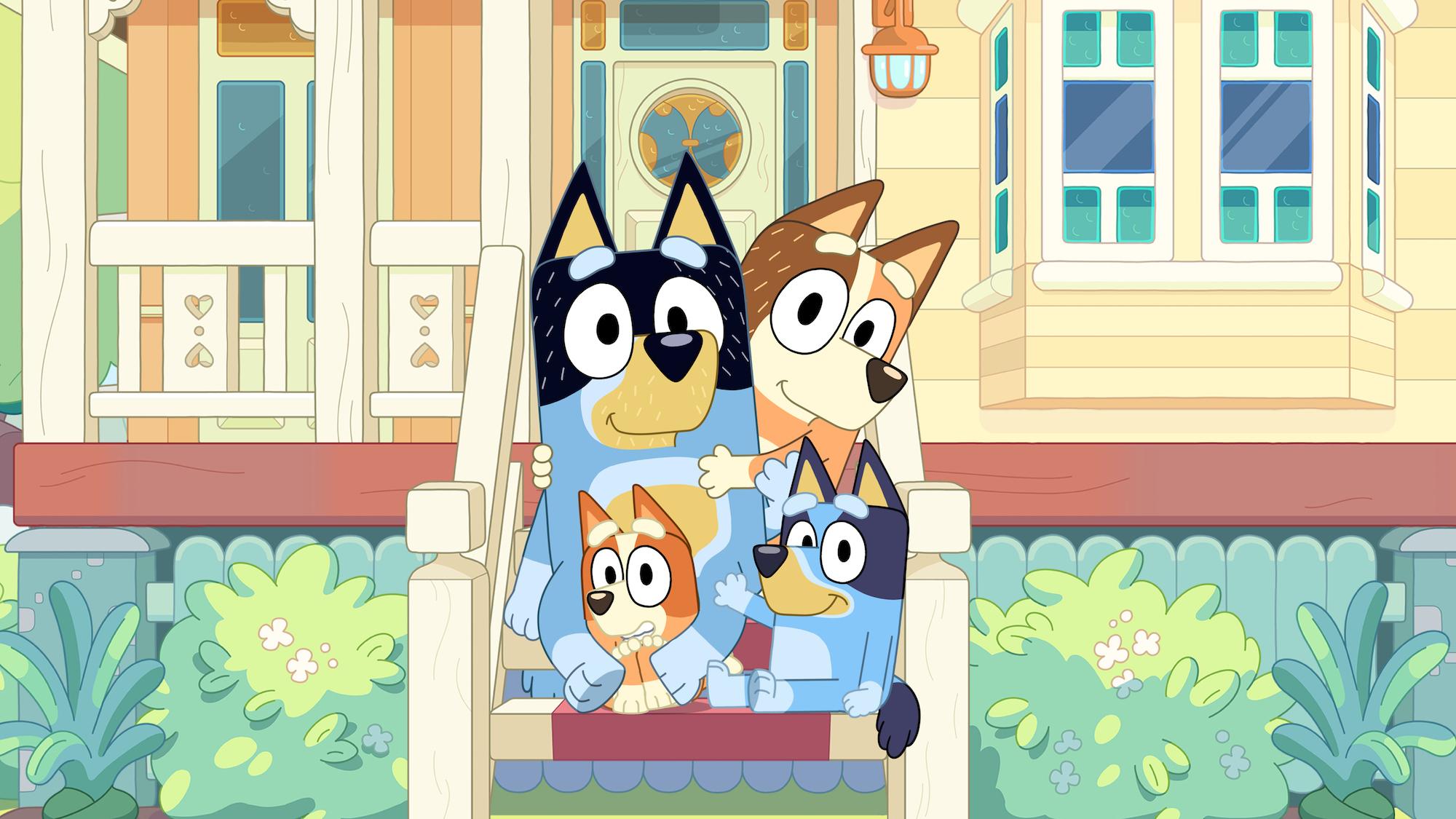
    What is it about the Australian kids’ cartoon “Bluey” that tugs my heartstrings? Parents and children alike feel drawn to and inspired by the show. Animated dogs are far from a new genre, and yet “Bluey” possesses a fresh, unique sense of childhood’s wonder and joy. “Bluey” follows the adventures of an anthropomorphic family of Blue Heelers living in Australia. Bluey is a spunky 6-year-old pup, and her 4-year-old sister, Bingo, happily takes the role of her imaginative playmate. Often joining in their elaborate games, their parents create a loving, family-oriented atmosphere. We began watching “Bluey” after our dear friends mentioned its charm and it became a fast favorite in our home. Wading through media meant for children is a daunting task as a parent, but “Bluey” provides a welcoming, safe space to which I find myself continually returning. There’s silliness, foibles, and even the sprinkling of light potty humor; and through it all “Bluey” captures the essence of goodness and family life remarkably well. 

    RELATED: 3 Ways God Reveals Himself to Me Through My Young Children  

    “Bluey” depicts the mundane, everyday interactions between a family and their friends. “Bluey’s” narratives do not focus on big sweeping storylines but rather on the sacred space of family life. Holding relationships at its center, the pursuit of goodness and harmony is evident in the depictions of both the adults and children in the series. The stories weave a tapestry of virtue I see reflected in my own family. 

    Giggles cascade across the room as my daughters carefully guide a ladybug to her newly constructed magic carpet. For an unexplained reason, our home has experienced an influx of ladybug visitors and, inspired by a particularly charming episode of “Bluey” called “Slide,” no bug shall be harmed in our home. In “Slide,” Bluey’s sister Bingo and her best friend Lila develop a system for ensuring that when they careen down the water slide, no bugs are squashed. My sweet, caring girls took this message to heart, and we are now the protectors and playmates of all insects. Small acts of kindness for the tiniest of friends, but kindness nonetheless. 

    LISTEN: Tackling Kids’ Tough Questions of Faith

    Goodness, sometimes defined as virtue in action, radiates throughout “Bluey’s” family as they navigate forming relationships that bless not only one another but also their neighbors, friends, and family. Theologian Stanley Hauerwas describes the development of virtue as narratively formed through stories. I see this development firsthand and subsequently try to be mindful as I curate the stories my daughters watch and read. Yet, I have discovered their characters are not the only ones formed through these narratives.  

    Kindness and goodness are depicted not only in the main characters, but also throughout their community; emphasizing our need to both give and receive support. In an episode called “Baby Race,” Bluey’s mom, Chilli, recollects her struggles with comparison early in motherhood. Her anxieties over Bluey’s development are eased when she is visited by a more experienced mom friend who gently informs her, “You’re doing great.” This has become a reminder frequently quoted by my dear friends and me when one of us is feeling the weight of motherhood. Never underestimate the wisdom of a pink poodle and the ripple effect of support. 

    RELATED: Children and the Church: Recognizing the Welcome

    The episode referenced at the beginning of this article, “Cricket,” chronicles the journey of Rusty, a friend of Bluey’s, to become a skilled cricket player. Rusty’s dad is deployed overseas; yet through his letters, he imparts advice on facing fast pitches by writing, “As you grow up, you’ll face harder things than a cricket ball… Just keep your eye on the ball and take care of your little sister for me.” This prompts Rusty to bunt the ball to his sister and celebrate her achievement rather than reveling in his own skill. My older daughter quickly caught onto the thread most pertinent to her life and cooed “Aw! He shared with his little sister.” And that’s the beauty of “Bluey;” she saw a sweet story about sharing with your siblings, while I watched a heartwarming tale about a young dog growing in character and skill, and we both loved every minute. 

    The stories that we watch and read with our children form both parent and child. They offer verbiage to discuss tricky topics, provide games and ideas for imaginative play, and gently teach us all the virtue of goodness. By creating a program that highlights the beauty of the mundane and centers on creating healthy relationships with others, “Bluey” has inspired and captivated audiences. All ages can enjoy a show that depicts how kids and parents can both grow in goodness within their everyday lives. As I read, watch, and listen to various stories with my children, I am learning to embrace each narrative that shapes my character, and that of my children, for good – even those starring a small blue dog.