
Author: Neela Kale

  • What Is the Catholic Teaching on the Presence of Ghosts or Spirits?

    What Is the Catholic Teaching on the Presence of Ghosts or Spirits?

    Image of shadows on curtainsQ: Scientists are constantly trying to “prove” the existence of ghosts or departed spirits. What is the Catholic teaching on the presence of ghosts or spirits?

    Catholics believe that death is not the end of human existence. While our present, corruptible bodies decay after death, our immortal souls will be reunited with our glorified bodies in the fullness of time. We don’t actually know what this will look like, although we do believe that we can have contact with the dead who have gone before us. That’s what we do when we pray for the intercession of the saints. But the Church does not teach that tormented souls linger on earth like the ghosts of popular imagination. Instead, Catholics believe that the communion of saints is invisible to most people most of the time. Any contact we have with the dead comes through the experience of faith, not necessarily though the empirical channels employed by scientists in search of the paranormal.

    Theologian Karl Rahner, S.J., explains this well:

    “The great mistake of many people … is to imagine that those whom death has taken, leave us. They do not leave us. They remain! Where are they? In the darkness? Oh, no. It is we who are in darkness. We do not see them, but they see us. Their eyes radiant with glory, are fixed upon our eyes … Though invisible to us, our dead are not absent … They are living near us transfigured into light and power and love.”

    Originally published October 25, 2013.

  • How Do I Instill Enthusiasm for Faith in My 10th Grade Students?

    How Do I Instill Enthusiasm for Faith in My 10th Grade Students?

    Students at Cristo Rey New York High School. (CNS photo/Chaz Muth)

    Faith is not taught, it is caught. So while it’s important to present your curriculum clearly and accurately, you must also offer an enthusiastic example of a life lived in faith.

    Can your students see that your own life is infused with joy and grace? Do they recognize that you are living in the peace and freedom that only God can give? While maintaining appropriate boundaries, are you honest with them about your own times of struggle and the fruits of those struggles?

    Your witness will be the strongest message they carry away from your classroom. While doctrines and jargon may go in one ear and out the other, the example of a life shaped by the good news remains in the heart. Be a person of faith and trust that God will touch your students’ hearts and inspire them to respond.

    RELATED: How Should I Best Share My Faith With Others?

    (Originally published Sept 7, 2018)

  • Who Decides Who Can Be a Confirmation Sponsor?

    Who Decides Who Can Be a Confirmation Sponsor?

    Q: Who makes the decision as to who can be the sponsors for a child making his confirmation? The rules are 1) church-goer in good standing 2) not divorced 3) Catholic. I don’t know anyone who qualifies for all three.

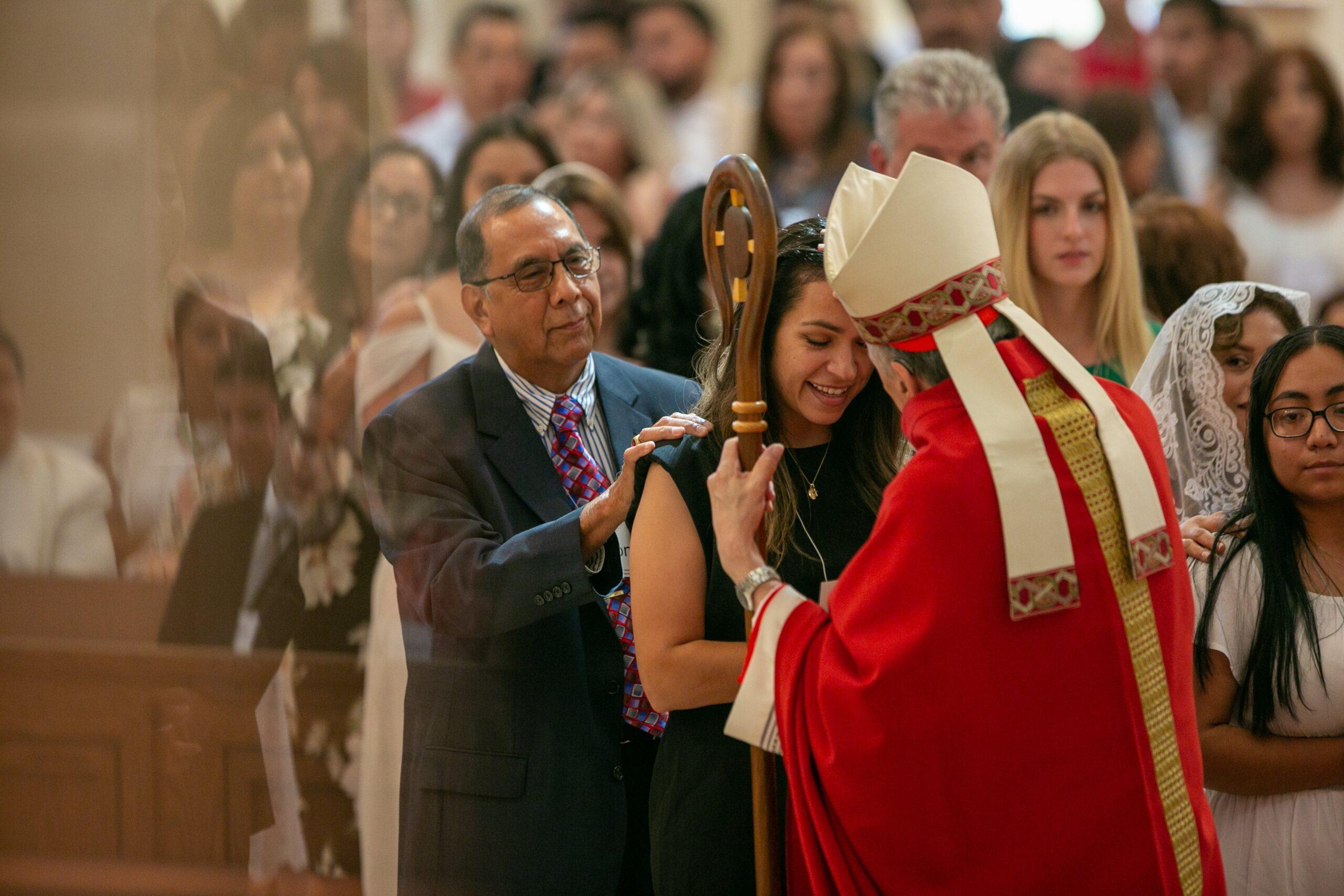
    A sponsor for baptism or confirmation must be at least 16 years old and be a Catholic who has received the Sacraments of Confirmation and Eucharist and who “leads a life of faith in keeping with the function to be taken on” (see the Code of Canon Law, paragraph 874, for the complete requirements). In most places, as determined by the local bishop or the pastor of a church, “leading a life of faith” is interpreted to mean that a person is following the teaching of the Church with respect to marriage. If single, he or she must not be living with a partner; if married, he or she must be sacramentally married in the Church. (Someone who is civilly divorced but not remarried can still be eligible.) While these standards can certainly vary by parish and priest, these rules aim to ensure that the sponsor can set a good example for his/her godchild or confirmandi. The most important role of sponsorship is sharing your faith and helping your godchild/confirmandi’s spirituality flourish. A young person needs a role model who attends Mass regularly and who takes the teaching of the Church seriously. 

    If you don’t know anyone who meets the requirements, make an appointment with the director of the confirmation program to discuss your particular situation. He or she will know if any exceptions might be approved by your local bishop. Alternatively, he or she could also connect you with faithful members of your parish who would be delighted to meet you and accompany a candidate on the journey to confirmation.

  • Why Do We Give up Something for Lent?

    Why Do We Give up Something for Lent?

    whey do we give up something for lentYou’re out with your friends on a Friday night and suddenly you notice that one of them has switched from his favorite microbrew to … lemonade? Is it time for Lent already? Giving up something for Lent sometimes evokes head-scratching in non-Catholics, but what might seem like just another Catholic eccentricity can actually be a practice with deep spiritual significance.

    RELATED: Busted Halo’s 2023 Lent Calendar

    Lent, the period of 40 days that precedes the celebration of Easter, has its origin in the early days of the Church. Converts seeking to become Christian, who at that time were mostly adults, spent several years in study and preparation. Under the threat of Roman persecution, becoming a Christian was serious business, so their process of preparation was intensive! Then they went through a final period of “purification and enlightenment” for the 40 days before their baptism at Easter. The rest of the Church began to observe the season of Lent in solidarity with these newest Christians. It became an opportunity for all Christians to recall and renew the commitment of their baptism.

    Today we know Lent as a season of conversion: We acknowledge the ways we have turned away from God in our lives, and We focus on turning our hearts and minds back toward God. Hence the three pillars of Lent are prayer, fasting, and almsgiving. These observances help us turn away from whatever has distracted or derailed us and to turn back to God. Giving up something for Lent is ultimately a form of fasting. We can deprive ourselves of some small pleasure or indulgence and offer that sacrifice up to God. Or we might “give up” a bad habit such as smoking as a way of positively turning our life back toward what God wants for us.

    RELATED: 7 Meatless Meals for Lent

    So maybe your mom was on to something when she had you give up Oreos or your favorite TV show as a child. An experience of want, however temporary, can help us to appreciate the true abundance in our lives. And a small positive change can have a big impact that lasts beyond the 40 days of Lent.

    Take the time now to think about what you might give up this year. Is it something you enjoy that you want to sacrifice for a while, like your daily latte? Or is it a bad habit you want to conquer, like running in late to meetings with co-workers? Or perhaps you want to turn your cell phone off for a few hours each day and not let it distract you from the loved ones you are with in real time? Find something that works for you, and whatever it is, may it help you to turn toward God in this holy season of Lent.

    Originally published February 17, 2017.

  • Why Is St. Paul Called an Apostle?

    Why Is St. Paul Called an Apostle?

    Question: Why is St. Paul called an Apostle? He wasn’t one of the 12 Apostles that Jesus picked.

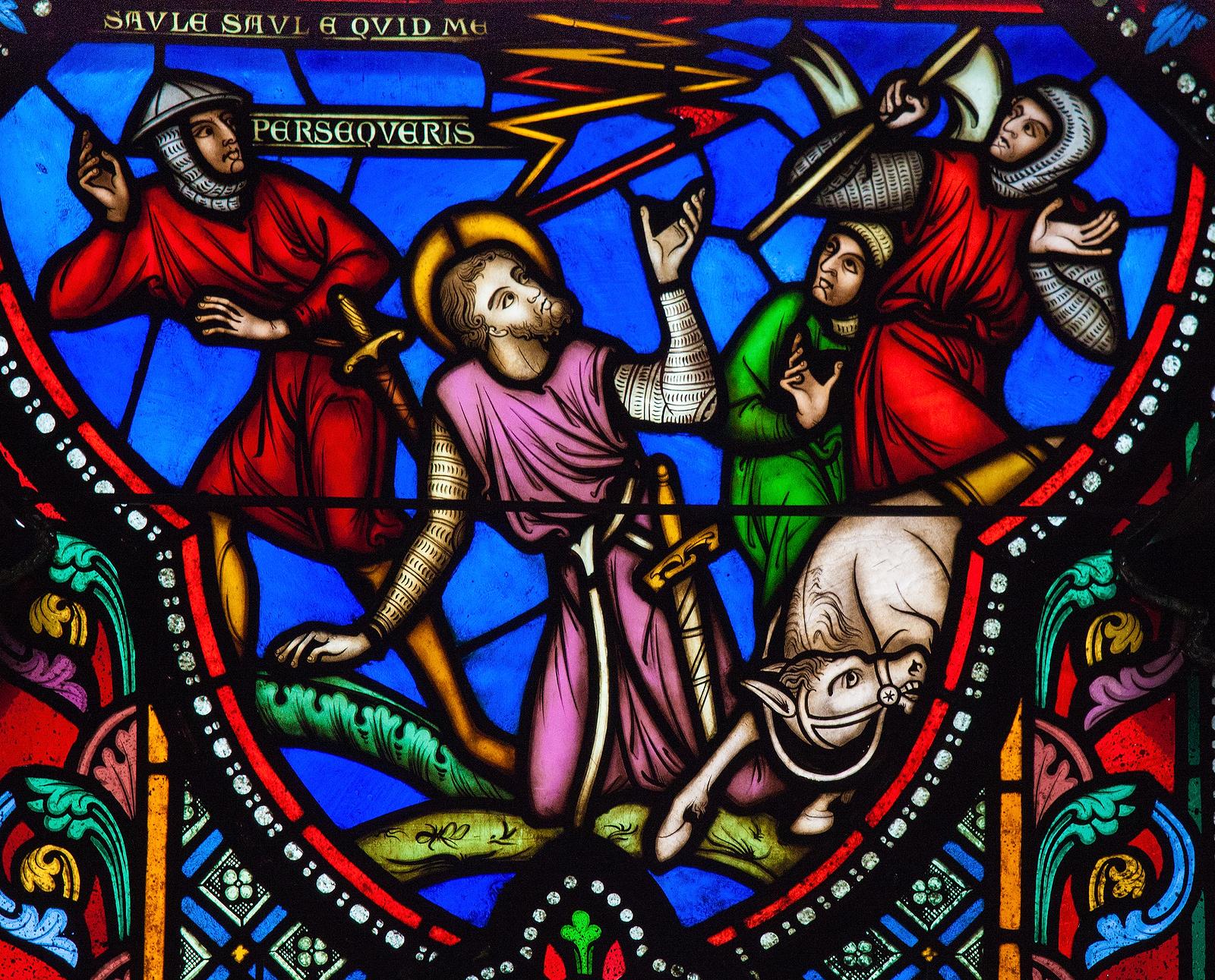
    The Conversion Of Saint PaulThe word apostle comes from the Greek apostolein, meaning sent ones. Although Jesus specially designated 12 of his followers in a symbolic restoration of the 12 tribes of Israel (see Matthew 10:2-5, Mark 3:16-19, and Luke 6:13-16), these 12 men were not the only ones sent by Jesus. Mary Magdalene and the other women who saw the risen Jesus were sent by Him to share the good news of the resurrection with the other disciples. And before the ascension, all of the disciples were sent forth by Jesus to proclaim salvation to the ends of the earth. Paul, though not one of the original companions of Jesus, considered himself an Apostle sent by Christ. Even though the Church has reserved the title “Apostle” in a special way for the 12, Paul was such a pivotal figure in the spread of the gospel that the Church has also applied this title to him, calling him “the Apostle to the Gentiles.”