
Author: Nicole Margiotta

  • Our Lady of Guadalupe: More Than Meets the Eye

    Our Lady of Guadalupe: More Than Meets the Eye

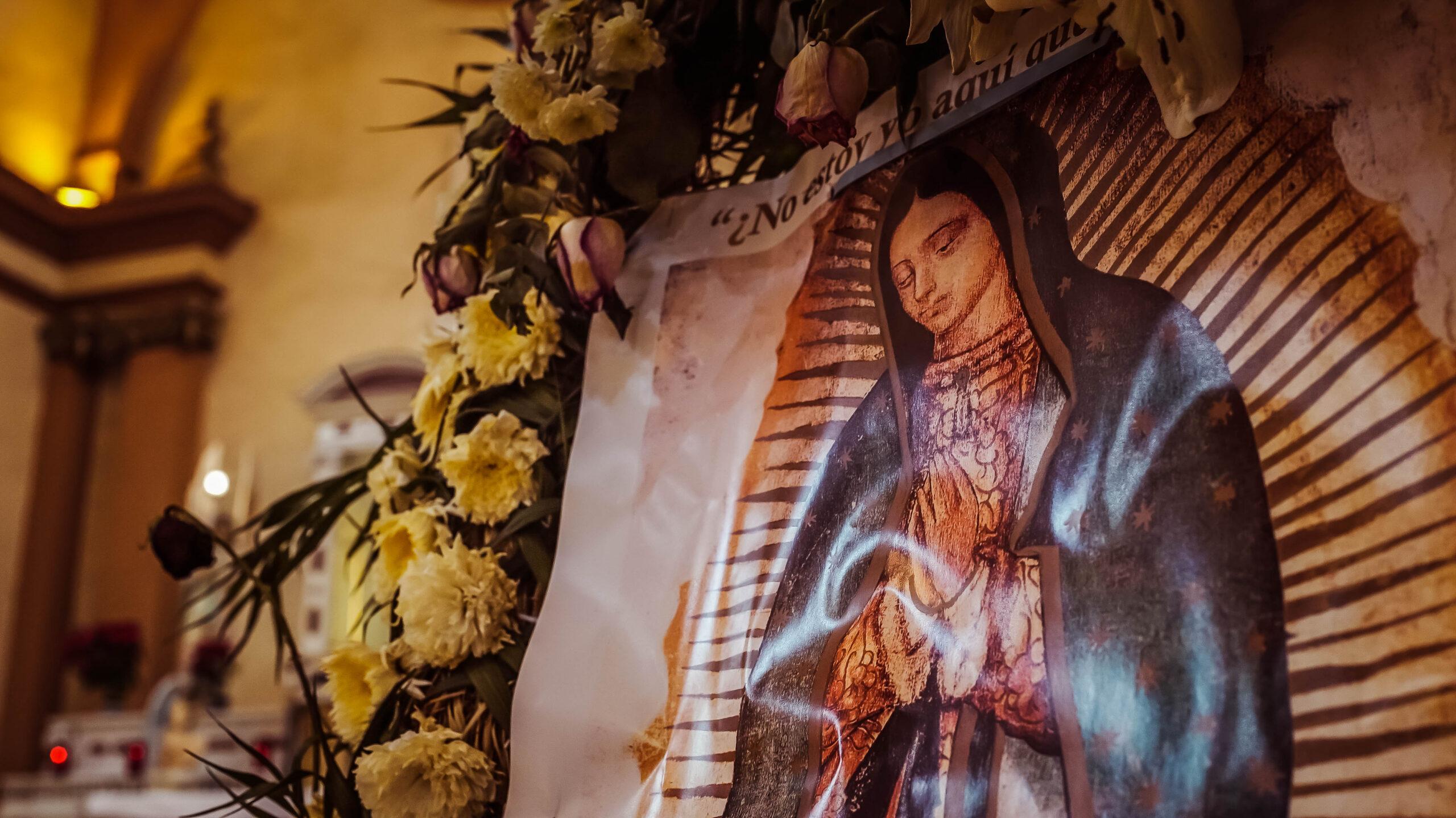
    Our Lady of Guadalupe, as she appeared in Mexico to Saint Juan Diego in the year 1531, is one of the most popular depictions of the Blessed Virgin Mary around the world. In my own experience, seeing her radiant image week after week as it hangs near the altar of my home church in Northern New Jersey piqued my interest and led me to learn more about this apparition. Upon first glance at the holy image, Our Lady’s beauty, humility, and tenderness are clear for all to see, but as it turns out, there is actually far more to this stunning self-portrait of Mary than one might suspect. As we prepare to celebrate the annual Feast of Our Lady of Guadalupe on December 12, let’s take some time to appreciate what makes La Virgen de Guadalupe so unique:

    1. Practicality

    On a basic level, I find it utterly amazing that the image of Our Lady of Guadalupe was given to humanity by Mary herself. As the historical account of the miraculous apparition goes, the Blessed Virgin came to Juan Diego and instructed him to petition the bishop of Mexico to build a church on the Hill of Tepeyac where she appeared. When the bishop asked Juan Diego for proof, Mary once again visited Juan Diego and gave him roses – in the dead of winter – to carry in his tilma, or cloak, and present to the bishop. Arriving before the skeptical clergyman once more, Juan Diego opened his tilma to reveal not only the beautiful roses, but the heavenly image of Our Lady of Guadalupe herself as we know her today. 

    This is the very same image that we still see of the Blessed Mother almost 500 years later. It’s not every day that the Mother of our Lord descends from heaven and quite literally hands us a self-portrait as a means of introducing herself to those who don’t yet know her. In a practical sense, this image allows us to honor Mary more intimately. It is not a man-made rendition of what some artist believed the Blessed Virgin might have looked like. When we look at this image, we see our Mother exactly as she appeared to Juan Diego centuries ago, her likeness crafted by heavenly design and gifted to humanity on a poor man’s cloak.

    RELATED: Our Lady of Guadalupe and the Joy of Knowing Her Son

    2. Symbolism

    The full account of the symbolism woven into La Virgen de Guadalupe’s image could stand as its own dissertation, but it is certainly worth mentioning in brief. Many elements incorporated into the depiction served to explain Mary’s identity – and that of the child in her womb – to the Aztec people. For example, the stars on her royal blue-green cloak that mirrored the constellations as they illuminated the sky on the morning of her apparition signified that she came to the Aztecs from heaven. The traditional black maternity band worn around her waist drew the natives’ attention to the child in her womb. With the sun behind her and the crescent moon under her feet, both of which were symbols of Aztec deities, Mary revealed that she was bearing the one and only true God. 

    I find it especially powerful that Our Lady came to her sons and daughters of Mexico in a way that was so personally meaningful to them, embodying their history and culture to demonstrate that she came to them as their mother. This leaves no doubt in my mind that when Christ gave us his mother to be our own as he hanged dying on his cross (John 19:26-27), Mary took us into the fold of her mantle as her beloved children. She is truly and devotedly our mother.

    RELATED: Our Lady of Guadalupe: A Convert’s Guide to Feasting the Patroness of the Americas

    3. Signs of Life

    Yes, you read that correctly. Though claims about the many miraculous attributes of Our Lady of Guadalupe’s image have naturally been met by their fair share of critics and naysayers, studies by doctors and scientists over the past century have resulted in some phenomenal findings. In the case of a three-hour infrared study of the tilma conducted in 1981 by Dr. Philip Callahan, a biophysicist and consultant for NASA, it was discovered that the figure of the Blessed Virgin Mother on the tilma maintains a temperature of 98.6 degrees Fahrenheit, which is the natural temperature of the living human body. Another investigation by gynecologist Carlos Fernandez del Castillo revealed that, when listening to the image with a stethoscope, one heartbeat could be heard at the chest of Our Lady, and a second within her womb that carries the unborn Christ. Ophthalmologists Dr. Manuel Torroella, Dr. Enrique Graue, and their colleagues likewise examined the image and discovered that the eyes of Our Lady of Guadalupe reflect images back at the viewer just as the normal human eyeball does. The list goes on

    Being a devout Roman Catholic and first-year medical student who loves all things science, I can’t help but take some personal satisfaction in these findings. As anyone with internet access can attest, an unfortunate “religion versus science” mentality seems to predominate our society and all too easily brings contention to discussions of either topic. Perhaps these scientific anomalies woven into La Virgen de Guadalupe’s image will show those who choose science alone at the expense of faith that it is God who is the author of the natural world; it is through science that we strive to decode his divine language.

    One of the main points I take away from the apparition of Our Lady of Guadalupe is that Mary comes to us as our own loving Mother, fully compassionate toward our personal circumstances and seeking above all to bring us closer to her and her beloved Son. Just as she did for the Aztec people centuries ago, Our Lady of Guadalupe comes to meet us precisely where we are, and as we are, to offer us her love and intercession. I often find great comfort in the words she spoke to Saint Juan Diego in one of his most difficult moments, and I encourage you to do the same: “Am I not here, I, who am your Mother? Are you not under my shadow and protection? Am I not the source of your joy?”
  • Who is Padre Pio of Pietrelcina? Examining His Inspiring Story of Faith and Trust

    Who is Padre Pio of Pietrelcina? Examining His Inspiring Story of Faith and Trust

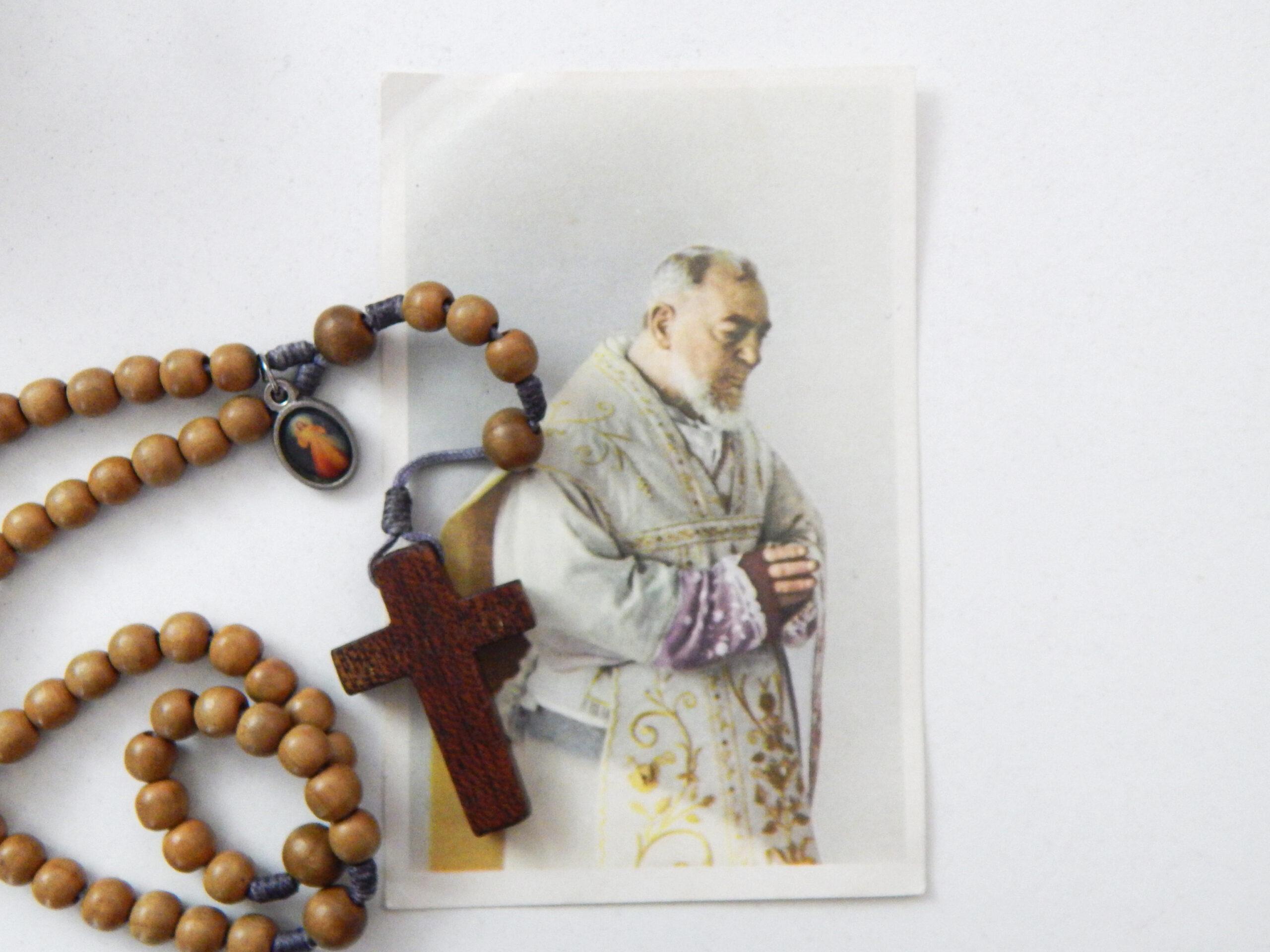
    Photo by Maria Paula Campisi on Cathopic

    Padre Pio of Pietrelcina is one of the Catholic Church’s best-known saints and stigmatists whose life serves as a true testament to radical love of God and neighbor. While the majority of his time on this earth was characterized by intense illness and suffering, Padre Pio’s example reveals to us how much more God’s grace abounds in the midst of our troubles when we unite our suffering to Christ crucified. The Catholic Church celebrates this beloved Italian saint’s feast day on September 23. 

    As is probably the case for many young Catholics of Italian descent, I first encountered Padre Pio in the form of pictures and prayer cards that decorated the home of my grandparents – a tailor and seamstress who emigrated from the Southern Italian region of Puglia. My nonno and nonna often told me stories about this holy man, instilling in me a deep admiration for his devotion to prayer and his profound love for Jesus. Now my favorite saint and intercessor (after the Blessed Virgin Mother, of course), Padre Pio continues to inspire me as a role model in faith and courage as I navigate my own spiritual journey. 

    RELATED: Pray, Hope, and Don’t Worry: Learning From Padre Pio’s Words of Wisdom

    Born Francesco Forgione to poor Southern Italian farmers on May 25, 1887, Saint Pio’s life of faith had an extraordinary beginning in that he consecrated himself to Jesus at just 5 years old. Young Francesco was gifted with the ability to see and speak to his guardian angel and innocently believed everyone enjoyed the same privilege.

    At the age of 10, Francesco informed his parents of his wish to become a Capuchin friar, and five years later, he was accepted into the order’s novitiate, where he would prepare to enter religious life. It was at this point that he took the name Pio in honor of the second-century bishop of Rome, Pope Pius I. After completing his training, he was ordained to the priesthood at 23 years old.

    Padre Pio’s special grace as a young priest was clear to all those who encountered him. He was known to spend the majority of his day praying and holding confessions. The friar often entered into silent contemplation of Christ’s Passion during his celebration of the Holy Mass, so it was not uncommon for his Masses to last several hours. News of Padre Pio’s mystifying spirituality quickly spread, drawing pilgrims from around the world to seek his spiritual guidance, confessions, and the powerful experience of his Mass. 

    Having endured markedly poor health since the time he was a child, the Capuchin priest understood his suffering as a God-given opportunity for sanctification, offering it to Christ for the conversion of sinners and as expiation for the souls in purgatory. Padre Pio expressed his ever-growing passion for this penitential sacrifice to his spiritual father in a letter, demonstrating his total surrender to the will of God in the words, “It seems to me that Jesus wants this.” 

    LISTEN: Discussing Heaven and Purgatory With Leonard DeLorenzo

    Inspired by his example, I strive to emulate the radical love of neighbor that Padre Pio embodied by offering up my own sufferings for the holy souls in purgatory just as he did. In doing so, I have learned to recognize the unique grace spoken about by many Catholic saints that is experienced when one embraces suffering with humility and gratitude. 

    At the age of 31, Pio received the stigmata – the real, bleeding wounds of Christ in his hands, feet, side, and shoulder – as he was praying before a crucifix. United to Christ’s Passion, Padre Pio bore these painful wounds for 50 years, and from them emanated the distinct aroma of violets that followed Pio wherever he went. When asked on one occasion if the wounds caused him pain, he smiled and replied, “Do you think the Lord gave them to me for decoration?” The wounds miraculously healed without a trace upon his death.

    The extraordinary life of Padre Pio serves as a guiding light to the faithful on how we can deepen our devotion to loving and serving our neighbors. For us laypeople who do not physically bear the wounds of Christ and cannot administer the sacrament of Reconciliation, what we can do is take seriously the need to pray for one another, especially the souls in purgatory who can no longer atone for their past sins. “We must empty purgatory with our prayers,” was one of Saint Pio’s oft-repeated phrases. Like the Capuchin priest, we are called to do all that we can with whatever graces God has given us to work selflessly for the salvation of our brothers and sisters, remembering that each and every soul is infinitely precious to our God. One of my personal favorite prayers for the souls in purgatory can be found here

    RELATED: 7 Ways to Pray for the Holy Souls in Purgatory This November 

    We can also look to Saint Pio as a shining example of complete and constant trust in the Lord when we find ourselves in challenging times. In fact, this saint’s story attests that it is through our suffering, rather than in spite of it, that we are brought closer to Jesus. As he carried the agonizing wounds of Christ’s Passion for 50 long years, Pio willingly embraced his affliction because he understood that suffering endured out of love for Christ brings sanctification. Like Padre Pio, we too can learn to recognize God in the midst of our hardships and take comfort in knowing that He faithfully sustains us through it all. In his own words, Saint Pio reassures us that “When we suffer, Jesus is closer to us.” I hold these words dear when I encounter difficult moments, confident that we are never abandoned in our suffering, but instead drawn nearer to the Lord who came into this world to suffer for our sake so that we may be redeemed. 

    With the same confidence in our Lord as the humble priest from Pietrelcina, let us always be guided by Padre Pio’s simple, yet beautiful profession of faith: “Pray, hope, and don’t worry.”