Author: LuElla D’Amico

  • How My Children Helped Me Learn to Venerate Mary: Celebrating the Feast of the Immaculate Conception

    How My Children Helped Me Learn to Venerate Mary: Celebrating the Feast of the Immaculate Conception

    When I was in the third grade, I remember my Baptist mother telling me I could no longer go to a friend’s house to play with her. My mom had discovered my friend was Catholic. “Catholics worship Mary,” she explained as the main reason I couldn’t go. She inquired if there were any statues of Mary in my friend’s house, too. At the age of 8, I couldn’t remember. 

    I did remember that my friend had a Nintendo and a Kirby game that we liked playing together and that I was upset that I wouldn’t see her large, fluffy poodle again. I still played with my friend at school and tried to convince my mom that I should be allowed to go to her house. However, I never saw the inside of my friend’s house again or found out about those statues. My friend and I ultimately drifted apart: I never revealed why I couldn’t visit her house anymore.

    RELATED: On This Feast of the Immaculate Conception, Mary Reminds Me of My Destiny

    When I converted to Catholicism in my 20s, situating Mary in my faith life still felt off-putting. I loved the rituals of the Church and its history, but I remember looking at Marian iconography — paintings and statues — and instinctively averting my eyes a little. Venerating Mary was a devotional part of the Church that my heart didn’t fully understand. I felt a little guilty on multiple accounts — in part because of the experiences with my mom from my childhood but also because I realized that, without understanding the devotion to Our Lady, my conversion to Catholicism was incomplete.

    It was during the season of Advent a few years after I converted that Mary first began to break through the boundaries in my heart. I was at a holiday party with friends and pregnant with my first child. Becoming pregnant had taken years for my husband and me, and I was overjoyed to have a child on the way. A few days before the party, though, I had gone to the hospital with unexplained bleeding and stomach pains; the doctor had assumed I was miscarrying. My baby son was fine, but I was considered a high risk throughout the rest of my pregnancy. 

    While at the Advent party, I spoke with a friend about my fears, and we discussed how much Mary traveled while she was in her third trimester. Pregnant and worried about my child and my family’s future, the Nativity story took on new meaning for me. I realized how scared Mary must have been to travel from Nazareth to Bethlehem — a journey of approximately 90 miles — not to mention how physically difficult it must’ve been for her to ride a donkey while pregnant during this trek. 

    RELATED: I Never Connected With the Rosary… Until I Became a Mother

    Suddenly, I began to admire Mary’s courage and faith in a way I never had prior. I thought about what it meant to be “filled with grace,” or to be filled with God’s love in the way that she was. I wanted to have that peace in my life. Here I was, someone with the amenities of modern medicine and cars to take me to doctor’s appointments, worried about the future. Mary had none of these. I wanted to mirror her certainty in God’s love and the path for her life even when she struggled, even when she must’ve been in pain, physically and emotionally.

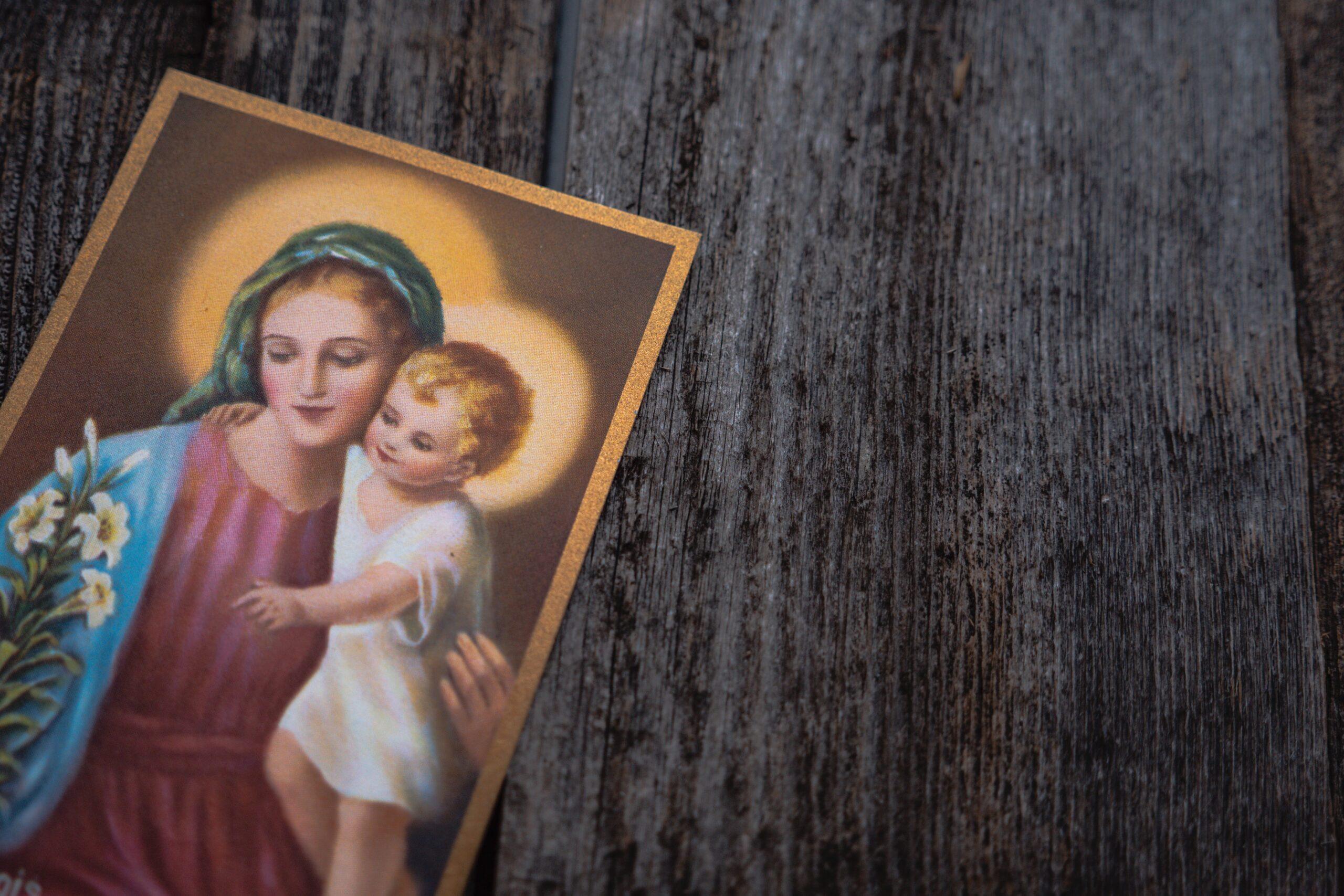
    Now, nine years later, I am blessed with a son and a daughter, both healthy. Our second child, my daughter, now 7 years old, has a relationship with Mary that was formed almost entirely on her own — and one I think that was meant to bring our entire family closer to God. My daughter has a devotional prayer space in her room, where together we’ve placed roses, a rosary, and different Marian prayer cards. 

    When we sit in this space, we talk together about how reflecting on Mary’s virtues leads us to a better prayer life. Following from this, we often talk about Jesus as a child, especially his relationship with his mother. In this space, my daughter asked me soon after Halloween this year if Jesus also worries about his mother hiding his candy from him. This small moment of sharing, which came in the middle of an unexpected chat about virtues and Twix bars, brought us closer. We talked about how Jesus and Mary exemplify self-control–one of the fruits of the spirits–and how to exercise it better. Then, we sought Mary’s intercession for strength to do so.

    RELATED: Mary in 2 Minutes

    Likewise, I pray about my shortcomings with my daughter  — particularly when I’ve been ill-tempered with her or focused more on work than I should have been. We’ve chatted about how I aspire to be more faithful like Mary. That my daughter chooses to have iconography throughout her room has become a lesson for our entire family about openness to veneration that feels full circle to me after my childhood experiences.

    In today’s world, Mary’s example of grace and courage is one that I constantly look to and hope that my family will continue to do so in the future. Rather than shying away from Marian veneration, I welcome it. Earlier in 2022, Pope Francis stated that we should all emulate Mary, posing this query to all of us: “Again, as I observe world events, do I let myself be entrapped by pessimism or, like the Virgin, am I able to discern the work of God who, through gentleness and smallness, achieves great things? Brothers and sisters, Mary today sings of hope and rekindles hope in us.” 

    Every year during Advent, as Catholics prepare for the birth of Jesus, I am reminded anew of how Mary rekindled hope in me on a day when I was scared about the birth of my child. Now, as Pope Francis calls us to do, I try to follow Mary’s example and live in hope. It isn’t always easy; none of us humans are without sin like her. Yet, she is a light for us to try to remain steadfast in our faith no matter what life brings us. For me, she has helped me discern God’s work even when I have suffered. 

    WATCH: You Don’t Know Jack… About the Immaculate Conception

    As the Church prepares to celebrate the Feast of the Immaculate Conception — when Mary was conceived in her mother, St. Anne’s womb, without original sin, my family will have a feast with bread because my daughter remembers that Mary and Jesus both eat and like bread in the Bible. Each member of our family will create something lovely for Mary, too, a drawing or a poem, because of how much her spiritual presence means in our lives. Participating in these small devotional acts helps us to recall that while we may never be sinless like Mary, we can try to create beauty in the world that glorifies her purity and reminds us to try to be like her. As Pope Francis advises us, we will all encounter troubled times in our lives that test our wills, but as Catholics, we have Mary’s guidance about the ways we ought to respond in those times. This lesson, along with greater peace, is what Marian veneration has added to my faith life since that Advent when my heart first became open to the awe and the love for who I now recognize as — and whom the Catechism calls — the Mother of the Church I now feel more fully a part of.
  • Holy Friends: 4 Saints to Turn to  This All Saints’ Day

    Holy Friends: 4 Saints to Turn to This All Saints’ Day

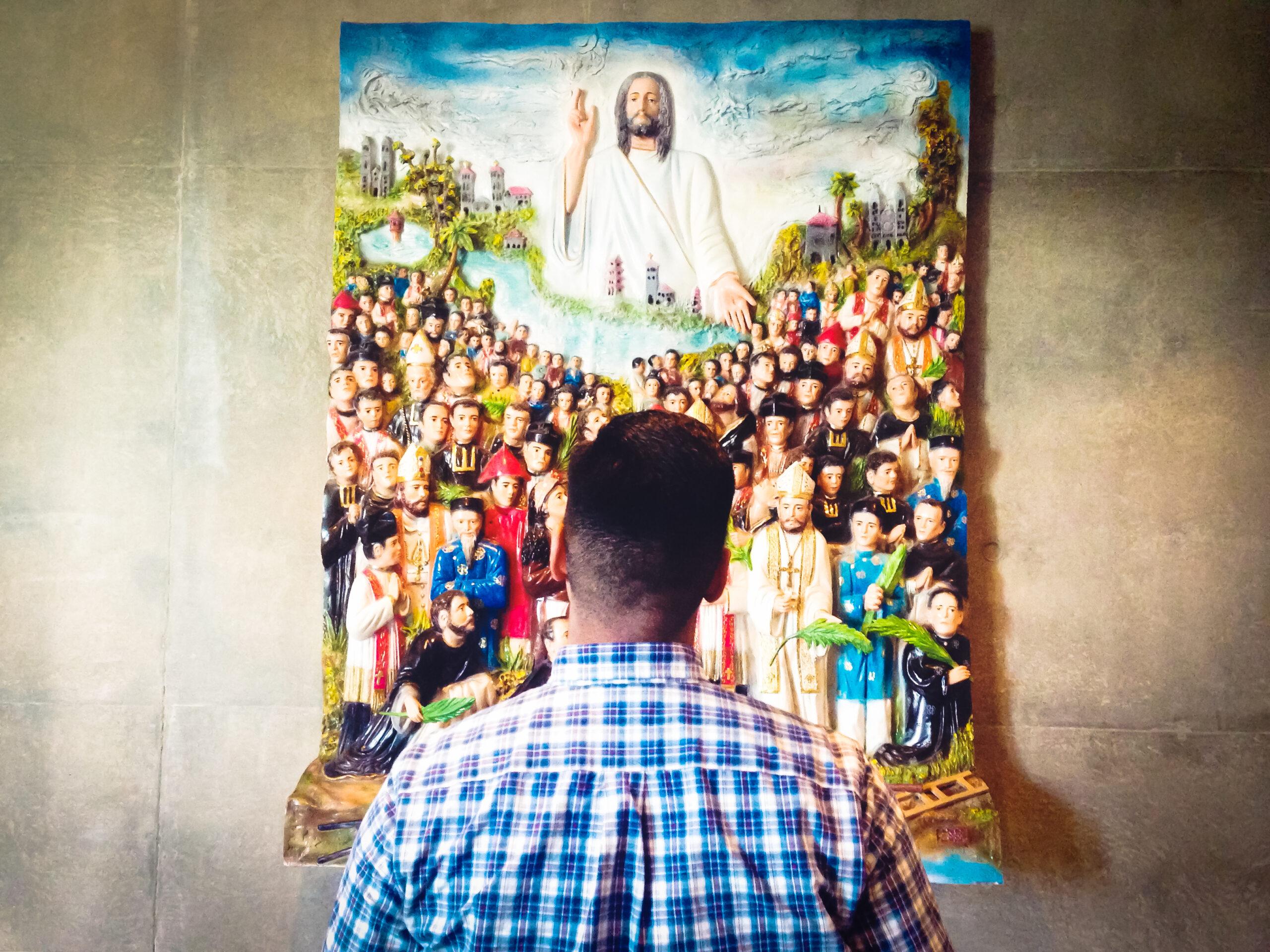
    Man in flannel shirt looking at a painting of Jesus and several saints.
    Photo by Angie Menes on Cathopic.

    As a convert to Catholicism, I’ve found that the veneration of the saints is a part of the faith that has taken me a little while to get used to. Having children has transformed that experience. Perhaps because they grew up with the idea of saints in their midst, my 9-year-old and 10-year-old bring up saints frequently. They love reading, watching, and listening to stories about the saints, celebrating feast days, and asking certain saints to intercede for our family at particular times.

    In this way — and perhaps this is normal for most Catholic families — I have realized that my family has “befriended” certain saints. Or maybe those saints have been kind enough to befriend us.

    RELATED: Want to Raise Little Saints? Tell the Saints’ Stories

    Throughout the day, we’ll talk to saints who have become part of the fabric of our lives, joking about what this saint might think of this or that daily task we’re doing. Would St. Thomas Aquinas, the patron saint of students, approve of my daughter deciding to watch another episode of “Bluey” instead of studying? Is St. Christopher, the patron saint of travelers, tired of seeing those Doritos bags strewn all over the car, and would he prefer a nicer ride, maybe?

    It probably won’t surprise you to learn that All Saints’ Day has become one of my family’s favorite holy days in the liturgical calendar. Here are a few of the saints that our family turns to frequently, and whom we’re happy to share with others looking for new family friends:

    1. St. Elizabeth Ann Seton (1774-1821)

    This new school year has been a test for my daughter. Third-grade math and social studies have been more challenging than she anticipated, and her grades have suffered. She prefers “girl saints,” so we’ve studied St.  Elizabeth Ann Seton together. St. Elizabeth Ann Seton, the first American-born Catholic saint, is perhaps best known as the founder of our parochial school system. 

    In reading a recent biography, I discovered that when she was younger, St. Elizabeth loved to dance and was fond of the fancy cream-colored slippers she wore to one of George Washington’s birthday parties. My daughter, who is a ballet enthusiast, found this anecdote inspiring. We often talk to St. Elizabeth about dancing and school—about how young women need to focus on both to be well-rounded. 

    Because Elizabeth Ann Seton also founded and led the Sisters of Charity, the first community for women religious in the United States, she’s an excellent role model for female leadership. As a teacher, I often turn to her myself! Before big test days, my daughter and I pray for St. Elizabeth Ann Seton’s intercession for her and her classmates, and she wears a St. Elizabeth medal around her neck daily.

    RELATED: How to Make Friends With a Saint

    2. St. Augustine of Hippo (354-430)

    If you’ve ever heard that old quip about kids who ask “why” constantly, then you’re actually talking about my fifth-grade son — who asks “why” about everything, including our Catholic faith. This cool kid spends most of his spare time reading books: You can’t catch him without a “Harry Potter” tome in his hands recently. He also has allergies and often rubs his eyes. 

    Last year, as his dad and I read Augustine’s “Confessions” together, we determined that this patron saint of theologians and sore eyes might be a good fit for our son to learn more about because we loved how Augustine transformed himself from a public thinker and speaker, or rhetorician, to a devoted intellectual and spiritual servant of God. 

    Every year, our parish hosts a fall festival, where children dress up as saints and participate in a costume contest. One of our family traditions is that our kids read a book about the saint they choose to emulate. When he was 8, our son flew through a biography about Augustine by Simonetta Carr, enjoying learning about the saint’s many travels. 

    St. Augustine is pretty inspiring for a child who loves facts and asking the “whys” of life, and I’m already looking forward to when my son’s old enough for us to read some of Augustine’s original writings together. (Plus, I always remind him that St. Augustine was a fan of another Catholic saint — his mom, St. Monica — who helped lead this beloved saint to his eventual conversion.)

    LISTEN: What Are the Benefits of Praying to Saints?

    3. St. Jude Thaddeus (between 1-80)

    I doubt there’s a Catholic household with children during cold and flu season where St. Jude — one of Christ’s 12 Apostles — isn’t often invoked. As a child, my husband caught pneumonia a few times, and because he also has asthma, he became extremely ill. St. Jude has always been a favorite friend of my spouse due to the saint’s association with sick children, mainly because of the famous children’s hospital that bears his name. 

    This fall, my father-in-law has been ill and hospitalized. He is currently in a rehabilitation center, but his case has been up and down for weeks. Some days, our family has been unsure if he will make it. Throughout this period, St. Jude, the patron saint of the “lost causes,” has been our family’s rock. We know we are not alone in this devotion. 

    St. Jude’s popularity rose in the United States during the Great Depression when many felt as if they were going through hopeless times. It was during this tumultuous period that Fr. John Tort felt called to found The National Shrine of St. Jude in Chicago: The saint’s popularity soon spread throughout the country and has since provided solace to many going through difficult times, whether due to illness or other challenges. St. Jude, who wears green in his iconography as a symbol of hope and renewal, is one of those saints whose name often rolls off the tongues of everyone in my family when we pray together during Mass or Adoration. Simply hearing his name tends to bring us a sense of peace.

    RELATED: How Do the Saints Hear Our Prayers?

    4. St. Hildegard of Bingen (1098-1179)

    As a convert, I often feel behind in my faith — and it might seem funny that I’ve found inspiration this past year in St. Hildegard — a German Benedictine abbess, writer, poet, composer, mystic, and theologian. If her résumé isn’t intimidating, I don’t know whose would be! St. Hildegard wrote nine books and at least 155 musical compositions, including a musical morality play, “Ordo Virtutum.” This only scratches the surface of her accomplishments! What I find most inspirational is that she didn’t begin writing until she was 42. In other words, there’s still hope for those of us who haven’t achieved all we would have liked yet. 

    Her first theological book, “Scivias (Know the Ways),” discusses the difficulties of balancing her spiritual experiences with intellectual reasoning. While we may not all have visions like Hildegard, many of us still struggle with balancing faith and reason and articulating our reconciled ideas to others with moral courage. Often, when I struggle in my professional life as a faith-filled teacher and writer, I think of Hildegard’s example and ask for her to intercede on my behalf, putting my fears to rest.

    By turning to these saints regularly — along with others I haven’t mentioned here and feel guilty about not including (please forgive me, St. Francis Xavier, St. Hedwig of Silesia, St. Sigismund of Burgundy, and St. Frances Cabrini, among others) — I’ve come to realize these figures aren’t distant at all. As St. Elizabeth Ann Seton reminds us, “We must pray without ceasing, in every occurrence and employment of our lives,” and that’s exactly what my family strives to do now, with her help and the help of our other saintly friends. These saints have become companions, offering guidance, humor, and solace during life’s inevitable ups and downs. 

    As my family prepares to celebrate All Saints’ Day, I’m heartened by how much richer our lives have become by welcoming these holy friends — not just as inspirations but as faithful intercessors walking alongside us. And yes, one day, I pray my family will be counted among them, too.

  • Four Tips for Keeping Your Semester Holy

    Four Tips for Keeping Your Semester Holy

    Close up of college student carrying books to school
    Photo by Element5 Digital on UnSplash

    I’m a college English professor with two children, ages 6 and 8. As a new school semester begins for our family, new routines automatically emerge. My son Jack will start playing basketball. My daughter Emmeline will start dance classes. I’ll begin teaching a new set of courses. A new semester automatically ushers in new ways of ordering our lives. My husband and I will arrange carline pickups and meal plans. College students will begin to schedule cardio classes with friends and other extracurricular activities. 

    As academics and activities increase for parents and students alike, so does joy – and stress. We need God in all of these moments, big and small. In the midst of school planning over the years, I’ve learned that an active spiritual life can sometimes get the short shift: There is no “back to school” meeting or college orientation that God plans for worship. Here are some tips I’ve learned over the years, so my family’s relationship with God remains at the center of every academic semester.

    RELATED: 3 Ways to Keep the Faith This School Year

    1. Take a few minutes to read or listen to the Daily Readings 

    Growing up, my mother always told me to “begin the day with Jesus,” and this advice has never left me. I remember seeing her in the mornings with her Bible and coffee in hand. Today, I often read Scripture during my morning routine, while blow-drying my hair, or I’ll listen to the Laudate app on the way to work. This five-minute check-in provides spiritual guidance, helping me ponder how God’s word relates to the events of my day. As I’m teaching or learning about new subjects or simply out with friends, I can think about how the daily reading intersects.

    2. Create or find a sacred space that you visit

    This summer, my daughter attended vacation Bible school and created a rosary with pipe cleaner and multicolored beads. She asked to hang it on her wall, so she could look at it and take it down to use. At work, I have a crucifix hanging and a poem by Mother Teresa that I reflect on when needed. Creating a sacred space doesn’t require a large area; all you need are small reminders that help bring you to prayerful time with Jesus. The side of your desk can hold a prayer card, as can your laptop. If you feel your environment isn’t conducive to creating a sacred space, find a space that helps you feel close to God that is easily accessible during your week. Don’t be afraid to visit your parish, your college’s Newman center, or the sanctuary at your school if there is one! Even a beloved tree will do in a pinch. Schedule this quiet time with God the same way you would a visit to the gym or a study group session. Just 10-15 minutes in prayer, away from the bustle of everything you have to do during the week, can help recenter your mind and bring a quiet peace to an otherwise packed day.  

    RELATED: 9-Day Back-to-School Challenge

    3. Befriend a saint for the semester or school year 

    Last year, because of the pandemic, I got to know Julian of Norwich, someone I’d always found inspirational but never had time to discover more about. I spent time asking for her intercession and read a little about her, often sharing her devotional writings at the start of my classes. She lived in isolation during a pandemic and has a famous prayer: “All shall be well” that has always given me comfort. Spending dedicated time with her helped me not only grow in knowledge but also deepened my faith. If you’re interested in literature like many of my students, you might choose to spend time with Saint George—the patron saint of reading. Or, if you’re interested in medicine, Saint Raphael or Saint Gianna Molla might be for you. Perhaps when creating a sacred space, you keep your saint for that semester or even school year in mind, knowing that they’ll be praying for your spiritual and academic success. 

    4. Set aside time for Mass 

    This one you probably expected to see on this list—but sticking to it is harder than it sounds during a busy semester. On my semester calendars and syllabi, I mark off religious observations and holy days. God may not require you to attend an orientation like I mentioned above, but we should be sure to schedule Mass into our lives just as we do anything else (or ideally before we do anything else). In the same way you’ve befriended a saint for the semester, you might try to find a friend to attend Mass with. If you’re in college, Newman centers or campus ministries are excellent places to start to find like-minded Catholic students. Or simply start showing up, and you’ll find familiar, friendly faces with similar values. 

    Mass is like beginning the day with Scripture: it infuses the week with love. Receiving the Eucharist. Offering peace to your fellow Catholics. Praying together in communion. This is what being Catholic is about, so it’s important to make this time with God a must—even and especially when we’re the busiest. This is one way we bring peace and joy to ourselves, and to the world around us. 

    RELATED: Back to School: Staying Connected to What Matters

    It feels fitting to end with one of my favorite Bible verses, Philippians 4:8, which reads:Finally, brothers and sisters, whatever is true, whatever is noble, whatever is right, whatever is pure, whatever is lovely, whatever is admirable—if anything is excellent or praiseworthy—think about such things.” 

    A busy semester will pull us all in a multitude of directions, and busier schedules will likewise have us contemplating a range of different “things.” Setting aside time to read what is “right” and “pure,” spending time in sacred spaces that are “lovely,” getting to know a “noble” saint one “admires,” and attending Mass where “truth” is spoken and felt are all ways to create a holier semester. I’ve learned over the years that none of the practices I’ve suggested take much time from my everyday life, but each of them has transformed it in a different way. Incorporating these ideas into your calendar at the beginning of the semester – as my family will be ours – will help ensure not only that your spiritual life feels attended to, but also that your whole life might be infused with a sense of calm because you’ll know that God will be a fixture in the patterns of your life no matter what the semester may bring.

    Originally published August 31, 2022.

  • A New Perspective on Our Faith: A Look at First Reconciliation Through My Daughter’s Eyes

    A New Perspective on Our Faith: A Look at First Reconciliation Through My Daughter’s Eyes

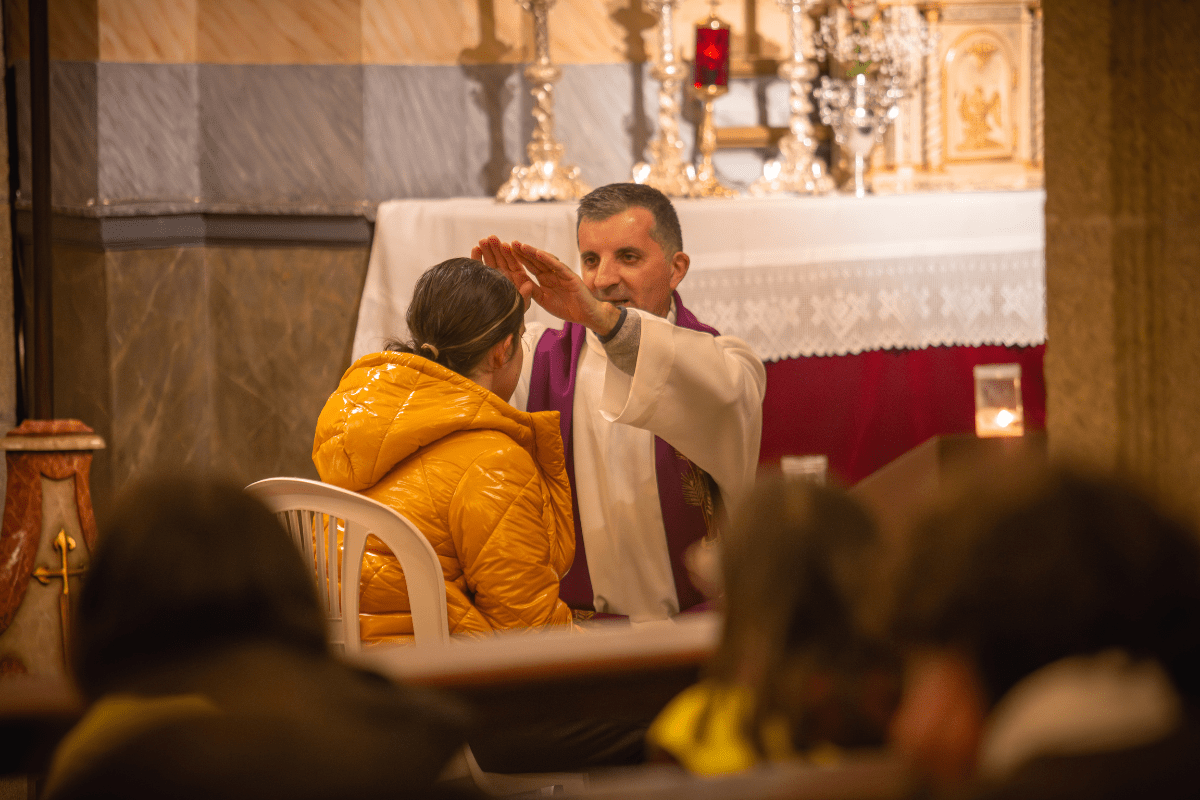
    A young girl goes to confession
    Photo by Yandry Fernández Perdomo on Cathopic

    My daughter is in second grade, which means it is the year of her First Communion. When she began her religious education classes at our parish this year, her dad and I were focused on preparing her for this milestone. We had prayers to practice, doctrines to discuss, and — as my daughter kept reminding me — a dress to dream about and purchase.    

    While the weekend of her First Communion was beautiful, what I found in the time leading up to it was that it was not that sacrament that my daughter was focused on most. It was the Sacrament of Reconciliation she was particularly curious about.

    What would she tell the priest? My daughter wondered. Would she talk to our parish priest specifically, the one she knows, the one who plays the harmonica and likes chocolate? Would he dislike her after she told her sins to him?  

    LISTEN: Preparing Your Kids for First Reconciliation and First Communion

    At dinner, my daughter would pretend to whisper her sins to her older brother, and he would laugh. If you knew her, you would know that this was a sign of how nervous she was about the experience, joking to cover up her worries, playing pretend to imagine the experience.

    As someone who converted to Catholicism at age 28, I felt as if I couldn’t always field my daughter’s questions or worries in the best way. I had never been a child participating in the Sacrament of Reconciliation, and children see the world through different lenses than adults. How was I to guide her and ease her nervousness?

    I talked with her about my experience with First Reconciliation, which she joked must have been hours long because I was almost 30 when I went. Just think about all of those sins I had to recount, she jested. While I didn’t recount all of my sins with her as I did during my first Confession, what I did share with her was the feeling of relief I experienced after it.

    I told her I was nervous like her when I went the first time, and I still get nervous, every time. Somehow, though, my soul always feels healed afterward. God’s grace, working through the priest, transforms my heart, and I feel lighter. The sacrament is a gift, and the nervousness we feel before we go to Confession is natural because, unlike Christ, we aren’t perfect. We sin, and so we try to reconcile ourselves and our hearts with him. This is how I tried to explain it to her at least, focusing on the feelings after the Confessional experience rather than what seemed to be the worries plaguing her heart before it.

    RELATED: Busted Halo’s Guide to Confession

    On the day of her First Confession, my daughter dressed up, not in her communion dress, but in one of her other favorites. To her, that Saturday felt as momentous as the next day, the day of her First Communion, would be. After all, one could not happen without the other. We practiced her confessional prayer before we left. We also discussed how she didn’t need to share anything she divulged about her sins in the confessional with her parents, her brother, or even the family dog unless she wanted to. 

    When we arrived at the parish and waited in line with the other children, she hopped from one foot to the next. There was a palpable sense of nervousness in the air. Some of the kids remarked noisily about their feelings, others simply stared, wide-eyed. On the car ride over, my daughter had wondered aloud if her confession would be longer or shorter than others, which might explain why she had inquired so persistently about the length of my first one.

    As she ventured into the booth during her turn, I thought about the times as a family we had gone together and she had waited on me. What must it be like, as a child, to know your parents are receiving forgiveness for their sins? 

    Throughout this year, my family has made it a point to go to confession together during each liturgical season, and I have been cognizant of my daughter’s eyes on me, searching and following, contemplating her own future steps in the Church as she grows up in it — and she sees her family growing up in it, too. 

    I speak with her often about how, as a child, she gets to experience the faith in a different way than I did because she receives many of the sacraments over time in her life (i.e. Baptism, Reconciliation, Communion, Confirmation), whereas I received them fairly close together in an RCIA setting. Through witnessing her journey, my faith deepens because I experience the sacraments anew, this time with a child’s gaze. We learn together, I tell her. She teaches me, as much as I do her. 

    WATCH: Confession 101

    With this said, God teaches us all through his sacraments, through these channels of God’s grace. I am reminded of Psalm, 32:8, which reads, “I will instruct you and teach you in the way you should go; I will counsel you with my loving eye on you.” Throughout this year, I have felt God’s loving eye on both my daughter and me. Our journey toward her Reconciliation has been one of growth and togetherness.

    It is likely not a surprise that when my daughter came out of the confessional, she looked lighter. Her smile of relief mixed with joy is one I’ll never forget. We did her penance together. 

    On the way home, I saw she had grabbed my phone and had texted her dad who was working that day. “She was very nervous!” she wrote about herself. Imagine a few thousand cry/laugh emojis attached to this text.

    After I took my phone back, I told her that while she may have been nervous, I was also a little nervous (to which she laughed), but that she did great.

    “We both did great,” she responded.

    In the end, preparing my daughter for the Sacrament of Reconciliation not only laid the groundwork for her to enter more fully into the Church, but also reconciled me closer to her, to God, and the sacraments that drew me to convert to the faith in the first place. 

    It deepened our connection to each other, and most importantly, to God’s love and his wondrous works in the world — in my family’s hearts.

  • 3 Ways to Maintain Joy Throughout the Easter Season

    3 Ways to Maintain Joy Throughout the Easter Season

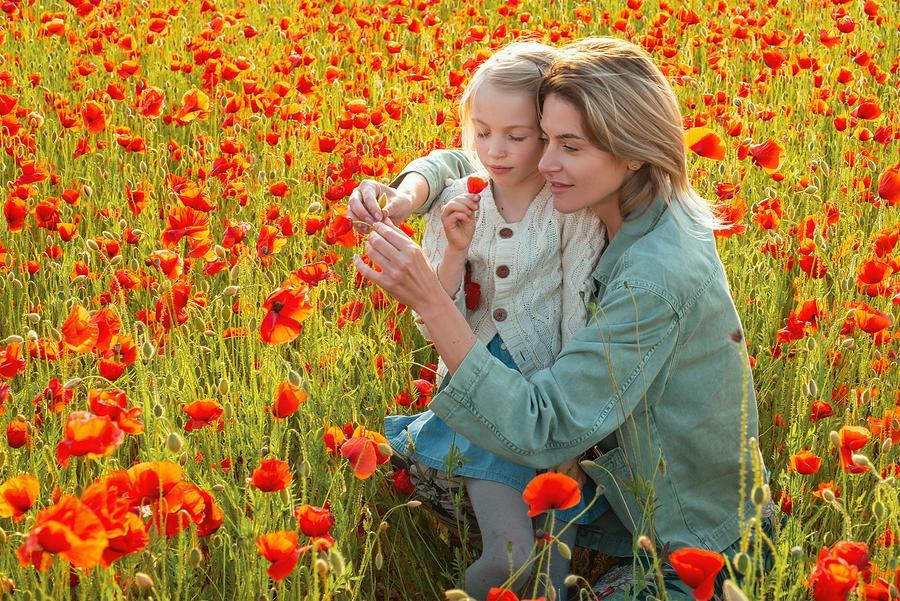
    Mom and daughter picking flowers in a flower field

    During the height of the COVID-19 pandemic, I began to suffer a deep depression, unlike anything I had known previously. I’m a professor, and during the first months of the pandemic I was undergoing a difficult tenure and promotion process at my institution. Moreover, like many others during the pandemic — my workload increased simultaneously. I was working full-time remotely while taking care of my two young children at home. I remember thinking, Of course this hardship begins during Lent. I prayed, I fasted, and I gave. Yet when Easter came, I didn’t feel the joy I thought I should have. Don’t get me wrong: My family celebrated Easter and went to Mass, but this season didn’t feel fitting to my heart. We celebrated for a day, took pictures, and then I would argue that my soul receded back into a Lenten modality. I felt I needed to do more, to work harder, to be worthy of the joy that Eastertide as a season brings with it.

    As we moved farther afield from the earliest stages of COVID-19, my depression slowly abated. I ultimately received tenure, yet I still struggled with the mixed emotions I had from the process. Eventually, I was diagnosed with clinical depression and sought therapy. Through this process – and through friends, family, and the Church – I began to discover new ways to instill meaning behind my suffering. Contemplating how much my identity was tied to my profession led me to seek ways to rely more on my faith and renew my sense of identity as an image-bearer of God rather than a worker only. I began to lean into the liturgical calendar rather than the academic one to define not only my life but also my family’s life, including fostering joy during a time when I didn’t necessarily feel joyful.

    Easter isn’t just one day; it is the second-longest liturgical season in our calendar, lasting 50 days for Catholics. We are to practice 50 days of joy in the knowledge of the resurrection. Keeping joy, as I learned while I was suffering from depression, isn’t an easy task. While suffering may mark the first part of the Easter story, it isn’t the last part that is essential for all of us faithful to remember. 1 Peter 1:3 reminds us to praise God and to recognize that “In his great mercy he has given us new birth into a living hope through the resurrection of Jesus Christ from the dead.” Easter is about a “living hope,” not one that is gone in a day, but one that lives in us.

    Lenten practice, in my experience, feels like work on the soul, and I would argue that Easter practice ought to, as well. It simply ought to feel like a different kind of work, a work toward proclaiming joy — and resting in it — for 50, long, well-earned days.

    Now, my family celebrates Eastertide with intention, just as we do Lent. Here are a few practices we’ve adopted that have lightened my soul and altered our family culture around the Easter season:

    We practice gratitude daily.

    In a personal journal, I write down at least two things that I’m grateful for each day. These can be as small as walking the dog or enjoying the sunshine. When I pick my children up from school, I ask them to practice this with me. “What brought you joy today?” I inquire. Because I have elementary-age schoolchildren, I delight in their stories of races won and lost at recess, of learning new science facts in school, and of lunchtime antics between their many friends.

    We create an Eastertide family calendar.

    We began this practice with Advent, and we’ve learned that liturgical calendars based around the Easter season help us partake in at least one joyful, praising activity each day. For Eastertide, some of these activities include: reading a Catholic book together, singing worship songs, dancing, celebrating Saints with Feast Days during the season like Saint Catherine of Siena, finding and planting flowers, serving others in the community, and praying. We build these calendars around what works in our home, and each day the children mark off what we’ve accomplished. “We can’t go to bed without dancing!” they’ll exclaim, and they’ll be right.

    Even on days when I don’t feel ready to praise, the calendar reminds me — and my family — that Easter is the season of joy, of living and sharing in the happiness that is Christ’s resurrection.

    We go to Adoration.

    My parish has scheduled times for Eucharistic Adoration, and our family goes together. Being inside the Church, praying there, basking in the beauty of the Eucharist and the prayerful community that gathers together reminds us that we are not alone in maintaining and celebrating the joy of Easter. We pray in the car before going into the Church, and then we pray inside. I allow my children to walk quietly around and appreciate the stained glass windows in our parish. Every time we’re there, we leave with our spirits lifted, knowing that we chose to spend time with God. It isn’t always quiet, or perfect, but it is joyful — and the questions they ask (such as “Why would Jesus suffer?) remind me of all that I have to be grateful for as a Catholic.

    Lent is a time of spiritual growth, yet so, too, is Eastertide. For those like myself who have suffered, and still deal with the ramifications of depression, Eastertide as a practice may even be more difficult than Lent. Yet as Pope Francis reminds us in Evangelii Gaudium, “The joy of the Gospel fills the hearts and lives of all who encounter Jesus. Those who accept his offer of salvation are set free from sin, sorrow, inner emptiness, and loneliness.”

    In celebrating the full 50 days of the Easter season, we accept the offer salvation provides us. Moreover, we evangelize to others the joy of the Gospel because they see us living, and practicing daily, a sustained encounter with Jesus. As humans, we all suffer, yet we all also experience moments of joy. For me, especially when experiencing the worst parts of my depression, Eastertide helped me remember Jesus’ love and cultivate his promise fulfilled in my life — even on those days when I least wanted to do so. Indeed, in the midst of one of my most salient times of isolation and despair, joy found root in my soul again — and it occurred because of committed and renewed Eastertide devotional practice. Psalm 32:11, one of my favorites, echoes this joyful message: “Be glad in the Lord, and rejoice, O righteous, and shout for joy, all you upright in heart!”

    Originally published April 12, 2023.

  • How Memorizing Prayers Together Brought My Family Closer to God

    How Memorizing Prayers Together Brought My Family Closer to God

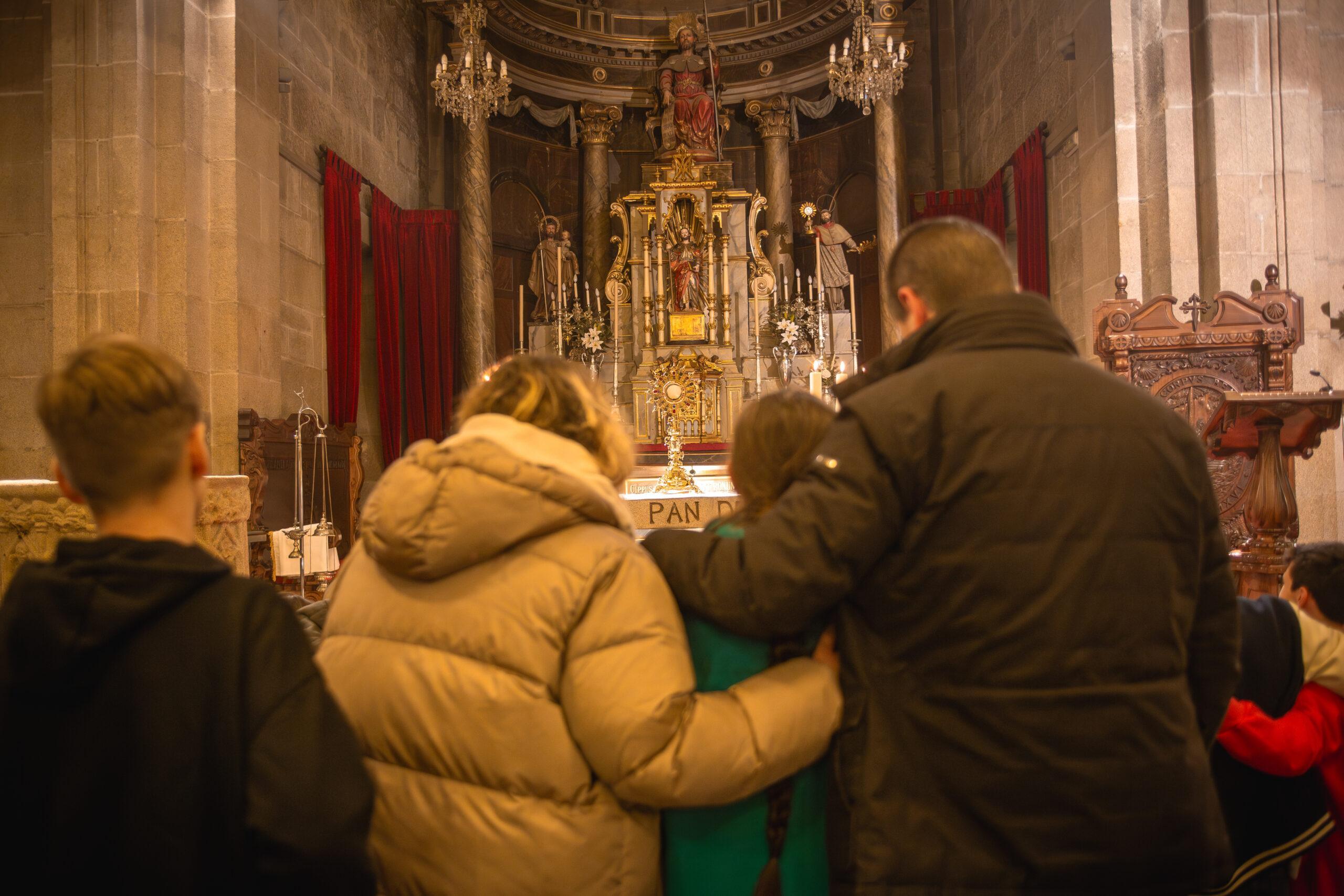
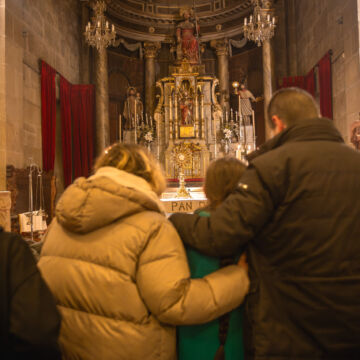
    Family kneeling before an alter in Church praying before the Eucharist
    Photo by Yandry Fernandez Perdomo on Cathopic

    Last fall, signs outside our parish and notices within our weekly bulletin reminded my family that the month of October in our Catholic faith is dedicated to the Rosary. Every time when we walked into Mass, we heard other parishioners reciting the Rosary before the service started. It may sound cheesy, but my husband and I felt a spiritual calling in October to participate in those prayers more actively. Notably, this isn’t a reflection on how my family learned to say the Rosary together during October. It is, however, an account of how we began to try.

    In this process of learning the prayers for the Rosary, we felt “behind” where we imagined other families we knew to be. In October, my family already knew “The Hail Mary” and “Glory Be,” but those were our only starting points. We began by adding “The Salve Regina” to our nightly routines, learning one line per night in our living room before the kids would dash off to brush their teeth and crawl into bed. 

    RELATED: Three Things I’m Doing to Teach My Young Children About the Mass

    In the process, we found that attempting to memorize new prayers together was unexpectedly spiritually rewarding for every member of our family—my husband, my two elementary-school-age children, and me. Before last October, we’d recite those prayers we already knew each night before bedtime, but we’d never attempted anything long. We’d also never practiced the memorization and recitation process nightly together. We had learned those prayers individually or with our church classes. Of course, the things that are spiritually rewarding in our lives are never quite as easy as we’d like them to be, and this process has been no different. It’s now Lent, and we’ve still yet to say the Rosary together without reading at least part of it from a book or a screen. 

    A little like brushing their teeth each night, my children often balk at reciting the prayers. Likewise, sometimes when there’s a football game on, so does my husband.  I also admit that if I’ve had a long day at work and would rather relax with a book and have some solitude, adding the drama of begging everyone to come together to learn prayers isn’t exciting for me. Still, once we start reciting the prayers and learning the lines, a sense of accomplishment and even a spiritual weight visits our living room that is worth every bit of nudging our family might have needed to start memorizing together. The kids might be fighting about whose cookie looks bigger for dessert, or what TV show they’ll watch in the morning, yet they’ll calm down once we’ve launched into saying the prayers a few times. Solemnity almost always takes hold, so to speak. 

    As part of our practice, we say each line of the prayer we’re covering that day five times together, adding whatever lines we learned the day before to it. Then we have each person say the prayer to the point they’ve learned it on their own. My children love taking center stage in the living room, standing on a certain part of the rug where there’s a big flower: This is their stage. They also enjoy checking and correcting my husband and me when we inevitably fumble certain lines or words in the prayers. Like the kids, we stand up on that same flower in the rug, making the recitation a more active, bodily endeavor. Even so, it still took my family three months to remember the “Salve Regina.” In part, this is because we didn’t recite the prayer every day, despite our best intentions. Yet when we’d get off schedule for a few days (like when my son got sick with the flu), we always picked back up where we left off as soon as we could. Now that we’ve finally learned “The Salve Regina,” the prayer is part of the fabric of our lives. We’ll say it together before I drop the kids off at school, or if they’re having an anxious moment, we’ll hold hands and pray it together. My 8-year-old daughter and I will also recite the prayers we’ve learned as I brush her hair in the morning.

    RELATED: What My Family Learned From Inviting Our Local Priests to Dinner

    As we’re approaching her First Communion this Easter, we’ve turned our focus to memorizing “The Apostles’ Creed.” The Rosary begins with it, and the Creed serves as a foundational statement of Catholic beliefs, focusing on our faith’s mysteries. When we practiced “The Apostles’ Creed” last week – again, before bed, in our living room betwixt the chaos of getting school clothes ready for the next day and lunch boxes packed – my daughter asked about the phrase in the creed stating that Jesus was “conceived by the Holy Spirit.” We realized she had no idea what the word “conceived” meant, and to be honest, my husband and I faltered for a moment in answering her. Theological explorations are not often at the forefront of our minds during our household bedtime routines. Even though we were saying the words together almost daily for months, it wasn’t until my daughter was able to repeat them without struggling that she began to ponder their meaning. How exactly was Jesus conceived by the Holy Spirit AND born of the Virgin Mary, not one or the other, she inquired?  

    After thinking through it—and, yes, Googling it—we explained that even though Jesus was born of a human mother, Mary, he possesses a divine nature, as his conception occurred through the Holy Spirit rather than a human father. Jesus is fully divine and fully human, both God and man. While we may worship this truth together at Mass and while my daughter may have learned this in her religious education classes, the lightbulb that went off in her head while we were discussing this mystery as a family was amazing to not only watch but also to participate in with her. Wow, we seemed to realize as a family, these words we’re repeating are astounding when one truly thinks through them and feels their power. 

    This was a special moment – and a rare one in our family routine – and it felt exhilarating to experience it. In fact, we encounter struggle more often than not. While we are almost done learning the Creed now, my husband is farther behind than the rest of us, and it’s not for lack of trying: memorization is simply harder for him. My daughter has a speech impediment, and the words don’t come easily to her either. Because every member of the family is different in how we learn, this can prove an impediment to keeping the energy and momentum needed to inspire daily practice. 

    RELATED: Children and the Church: Recognizing the Welcome

    Keeping this in mind, my husband and I try to keep an atmosphere of lightness. We never shame anyone if someone is struggling, but we encourage each other to make it to the end of that section no matter the attempts it takes. The laughter that inevitably happens as we mix or miss words is good for our family’s soul. Plus, it teaches our children to be kind to each other – and to us – because we’re all learning the prayers together simultaneously. Through memorizing and reciting prayers, our entire family can be described for one of the first times ever as spiritually curious. While we may have been fighting moments earlier before trying to pray about who did or did not do the dishes, we open ourselves to God being with us when we pause for this practice. Our hearts, minds, and days almost always settle. While it may not happen right away, after the final recitation, there is usually a sense of pervasive and palpable calm, and that is worth every up and down in getting there.

    It bears mention here that in Catholicism, memorization entails a spiritual recollection that is supposed to work in concert with the intellectual aspect of memory. For example, the liturgy of the Catholic Mass is a memorial, or “a remembering of” the re-presentation of the sacrificial act of Jesus’ death on the Cross. During each Mass, our salvation becomes present before us on the altar through the Sacrament of the Eucharist. In other words, Mass is not a mere recollection but an active participation in this past salvific event, making the past present in a sacred and transformative way.  

    As my family prepares for my daughter’s First Communion, we have learned that memorizing prayers has brought us closer to God’s divine mission on our couch at home in addition to on our parish’s pews. Memorizing together helps us connect with the Church’s past and lay claim to our own future within it. The often-fumbled words, the shared laughter, and the earnest attempts to understand the words we’re reciting have led us to find grace within our family’s spiritual life and to connect that grace with the broader Church family we also belong to and are learning more about through its prayers and creeds. 

    Indeed, in nurturing our children’s spiritual growth, my husband and I have inadvertently discovered a path to our own. Our family recitation and prayer time has become a conduit for grace, an opportunity to be present with one another and God. As my daughter prepares for her First Communion, “The Apostles Creed” stands not just as a set of words now memorized but as a testament to our shared journey, a journey that has drawn us closer to each other and the Church’s doctrines, and most importantly, closer to God.