

Author: Grace Spiewak

  • On Signs From God: Contemplating How God Reveals Himself to Me

    On Signs From God: Contemplating How God Reveals Himself to Me

    Person walking on road with a sign on the ground pointing in two different directions.

    God and I have a running inside joke. It started two years ago, when I read another Busted Halo article about discernment. The author wrote that when a friend of his was faced with a big decision, she would ask God to see a dog — specifically a Dalmatian — to confirm that she was making the right choice.

    As the author explains in the article, relying on signs from God is not the best tool for discernment. God is not a fortune teller and often, the signs we perceive tell us more about ourselves and what we want than God’s will. At the same time, God can speak to us through the physical world in the ways we need it most. 

    RELATED: Looking for a Sign From God? Try These Prayer Practices Instead

    At the time I came across this article, I was starved for affirmation from God. I had a job that brought me little fulfillment, a lengthy commute that drained my energy, and a profound yearning for community and friendship. I wasn’t facing any monumental decisions, but I wanted God to give me a sign that I was moving in the right direction, even if it didn’t feel that way. I don’t know if it was right or wrong to ask this of God, but a few days later, as I was driving home from work, I saw a woman crossing the street walking two spotted dogs on her leash — Dalmatians.

    While this might seem like a direct sign from the divine, it felt more like a playful elbow nudge from the Lord. Seeing those Dalmatians, I perceived a fatherly imperative and promise from God: Lighten up, it’s ok, I’m here

    In the following months, I didn’t ask to see another Dalmatian, but every so often I would cross paths with one, the dogs’ striking coats filling me with an inner warmth as they assured me of God’s presence. Seeing the Dalmatians was not a coincidence nor was it a command — it simply allowed God to reach out to me in a way he knew I would recognize.

    LISTEN: Brett Seeks a Sign From God

    Then there came a time when I was faced with a decision. I had two job offers to discern between, and the similarities in both their roles and workplaces made the choice extremely difficult. Since they were both at local universities, I decided to drive to each one and walk around the campuses, reflect on the offers, and attempt to determine where my soul was pulled. 

    I went on my quest on an icy Saturday in the middle of winter, muted gray clouds casting shadows over the traffic on the expressway. As I took the exit ramp to the first campus, I noticed that the car ahead of me had its windows down, which seemed like an odd choice for such a frigid day. As we curved down the ramp, the head of a Dalmatian emerged from the passenger window, the dog’s ears flapping in the brisk wind. My heartbeat accelerated as I accepted God’s squeeze on my shoulder and thanked him for staying by my side as I made my decision.

    Looking back, I don’t know if that Dalmatian was an indication that the campus I was heading towards was where I belonged, or just a gentle reminder that God would be with me wherever I went. Regardless, I know that it was not by chance that I was driving behind that car or that the dog needed fresh air — God knows what will speak to us the most in the moment that we need to hear him. 

    RELATED: What Is a Sign From God?

    I don’t think that discernment and decision-making should rely solely on perceived signs from God, but I also have faith that God finds unique ways to reveal himself to us. A stranger who holds open the door when our arms are full, a stoplight that turns green right when we approach — it is all laden with meaning whether or not we choose to extract it. 

    If we trust that everything we encounter has the ability to connect us back to God, moments of mundanity can become beautiful and coincidences can transform into assurances that he is watching over us. When I see a Dalmatian, it is like receiving a handwritten note from God, a little inside joke to lift my spirits and fill me with his presence. God always knows what will affirm his love for me, even if it comes in the form of a spotted dog.

  • How I Found Friends Through Faith: Trusting God to Bring Meaningful Connections

    How I Found Friends Through Faith: Trusting God to Bring Meaningful Connections

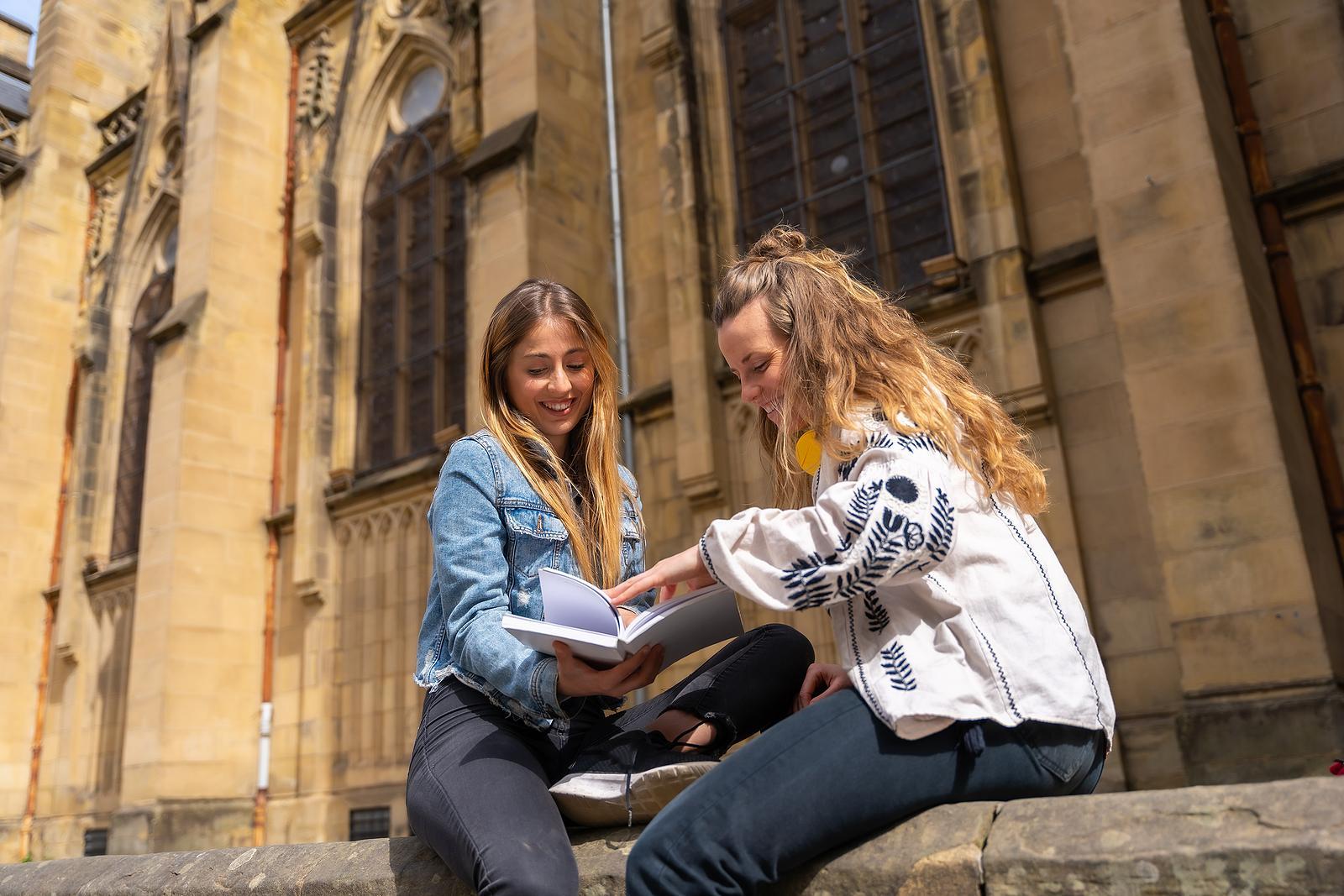
    Two girls read a book together.After college, there was a period in my life when I dreaded the weekends.  
    I anxiously awaited the long hours of unstructured time I would spend trying to distract myself from my loneliness. It wasn’t that I lacked friends, it was the physical distance between us that left me without plans on the weekends. As I adjusted to moving back home while working full-time as a college librarian and not having connections at my fingertips like I had when I was a student, I hungered for community with peers.

    My instinct during this time of loneliness was to take advantage of as many opportunities as possible to foster social connection. I joined a women’s group at a parish in Chicago and volunteered as a literacy tutor. I invested in hobbies that would sustain my body and mind – I went to exercise classes and rollerbladed, I started a gratitude journal and listened to audiobooks. 

    LISTEN: How Can I Be Strong in Faith While Missing Community? 

    Though these pursuits were healthy and helped me discover what fulfills me, I could not stay present and enjoy them when my focus remained on what I lacked. I stayed in motion but hadn’t found my place, becoming bitter and cynical when these activities did not produce the community I craved. Rather than reframing this period of loneliness as an opportunity to try new experiences and reevaluate my priorities, I saw it as a burden that I didn’t deserve to carry. I concentrated too much on what I wanted to gain from these activities rather than on what I could give to God and others through them.

    As this period continued, I knew I needed help. While I received support through mental health counseling, I also brought this ache to my spiritual life, turning to saints who had both experienced pain and found profound peace in trusting God. I asked our Blessed Mother Mary for help finding good and holy friendships. I prayed a novena to St. Therese the Little Flower, asking for the courage to pursue true friendships. On the last day of the novena, I joined a woman whom I had briefly met at Mass for a drink. It was the first new friend I had made in a long time, and the conversation we had affirmed me that a new, meaningful connection was possible.

    RELATED: Three Female Saints and Mystics Who Guide Me to Freedom

    As I struggled to let go of my need for control and rely on the saints’ intercession, opportunities for friendship and community began to present themselves more naturally, but without the same sense of pressure. I was invited to volunteer with an organization that hosts afterschool programs for girls, and I met other like-minded women who also volunteered there. Saying yes to this invitation and engaging with the connections I made there allowed me to intentionally invest in the community, striving for quality of interactions over quantity.

    I learned to rely on friendships that are spread across far distances, acknowledging that even if I don’t talk to these people every day, they are still the friends I have on speed dial whether I need to laugh or reach out for support. I planned weekend trips and organized a virtual book club with these friends to help us stay tethered. I worked to be grateful for the friendships I do have, and the community that I have within my family. By letting God into the work of bringing new people into my life, I slowly let go of the notion that I need a sprawling group of connections in order to feel whole.

    RELATED: Finding Fellowship: How I Built Community at a New Church

    As I look back to see what God was doing to my heart during this time, I can see him helping me rethink what community looks like. The biggest misconception I held was the belief that community is static, and that I will reach a stable point where I am completely fulfilled by all my activities and social interactions. Community is not a finish line or a goal to achieve – it is a growing organism that is never fully formed. God was showing me that community is always in flow, evolving as new connections form and others wilt, but he is the only one who will always be beside me.  

    The philosopher Aristotle wrote that, “Without friends, no one would want to live, even if he had all other goods.” The longing for community transcends generations, centuries and cultures. I do not take for granted the communities I’ve found through various avenues, but I know they may change and fade. There will be other seasons of loneliness, loss and grief that I will need to learn to endure with grace. Yet, it is these seasons that make my friendships so valuable, and allow me to renew my dependence on God, realigning myself with his dream for my life. 

    Originally published May 23, 2022.

  • Art and Divine Beauty: An Antidote to the Winter Blues

    Art and Divine Beauty: An Antidote to the Winter Blues

    For those of us in the northern hemisphere, we have officially entered the dead of winter – that time after Christmas and New Year’s when the activities have waned and the bleakness of the February sky provokes our innermost melancholy. Even for those of us in milder climates, this time of year can be taxing socially and spiritually.  

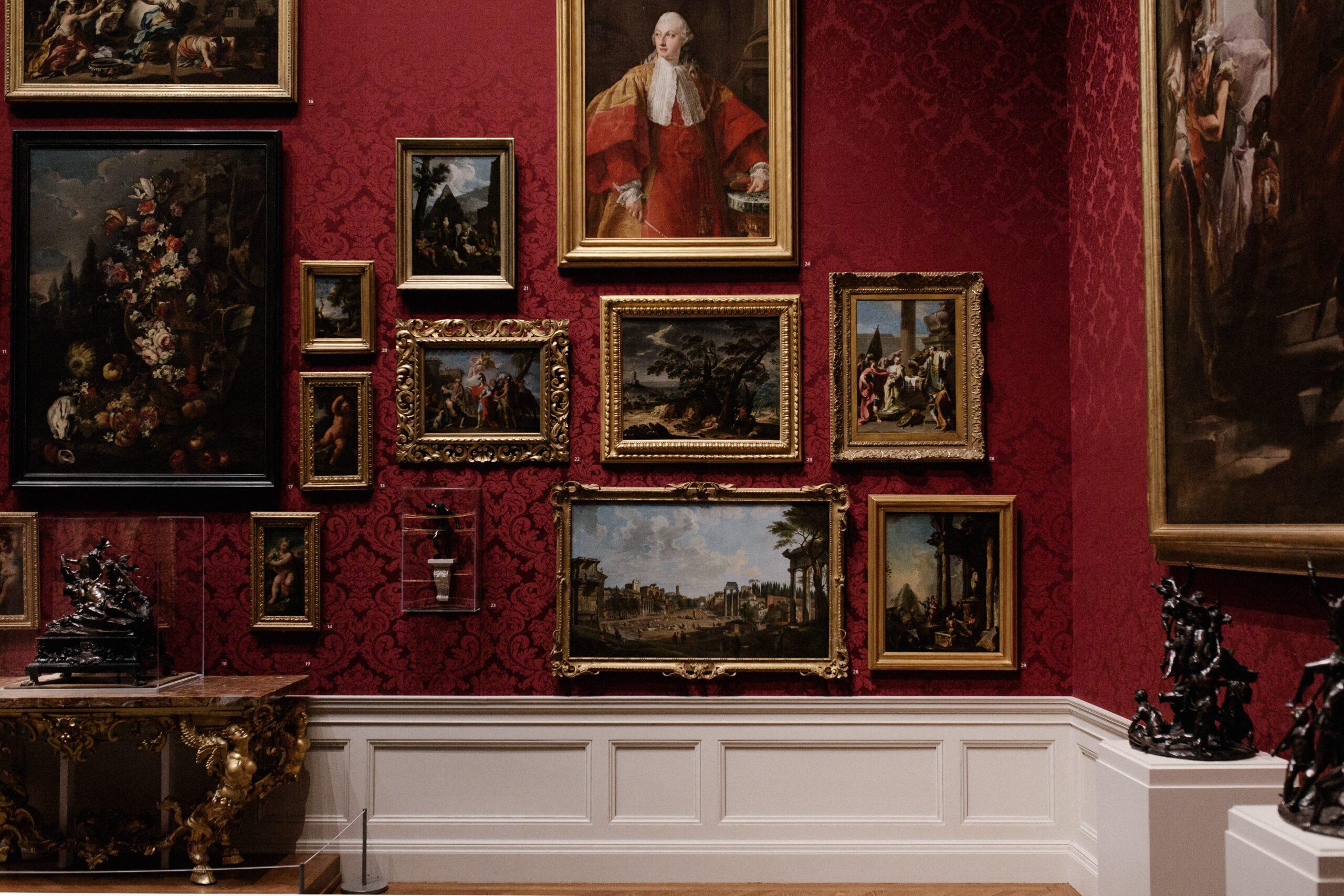
    In winter, my body craves the comforting and familiar – butternut squash soup, a fuzzy blanket, and tea. This year, I’m also reminded that returning to works of art that I have come to love from museum visits, art history classes, and personal discovery can help my soul get the dose of beauty it needs to thrive in the cold.

    RELATED: Lessons From the Midwinter Blues

    I want to note that not all art is beautiful. There is a plethora of media that can be described as art but can also tarnish our spirits and relay harmful messages. At the same time, secular art can also transmit beauty and afford us glimpses of God in our everyday life.  

    When I go to the Art Institute of Chicago, it is a necessity for me to visit the Contemporary Wing.  There are pieces there such as Jack Whitten’s Khee II that bring me comfort and excitement each time I visit. The work’s subtle colors and bleary lines, created by a multi-step method involving thin sheets of Japanese rice paper, evokes a monochromatic calmness and luminescent frenzy all at once. Becoming familiar with a piece of beauty – whether it be a painting, song, movie, or book – opens my heart to both connect with the piece and revitalize my own spirit.

    When I began graduate school, I struggled with transitioning to a new place where I didn’t have an immediate community. I started playing George Gershwin’s “Rhapsody in Blue” every morning when I got dressed, and it soon became a natural part of my routine. Its whimsical rhythm imbued a buoyancy into my day that both soothed and energized me. Just like I sing along to the lyrics of my favorite songs, I began to recognize the phrases and melodies of “Rhapsody in Blue” in the same way. Like a phone call with a close friend who I haven’t seen in a while, listening to this song helps lighten whatever weight is on my heart.

    While this song uplifted me, art can also be a way of affirming our suffering and reminding us that we are not alone in it.

    RELATED: Picture This: Using Art As a Path to the Holy Spirit

    On a mantel in my house is a large painting of Jesus in Gethsemane that my parents got from a great-aunt when she passed away. It has a dark blue hue cast over ominous silhouettes of trees and a moon peeking through dark clouds. It depicts Jesus as the focal point, looking over Jerusalem in profile with an expression of loneliness and anxiety, the impending destiny evident in his solitude. I can see resigned desperation on his face as he fears what is to come, the vast landscape swallowing up his gaze.  

    This painting is in a room where I often work on my writing. At first glance, the image is jarring and makes me want to look away, to avoid the pain Jesus was feeling so that I prevent similar feelings from arising in myself. The visceral reaction that art can provoke is key to recapturing our humanity when life becomes monotonous. Seeing this painting on a regular basis may alleviate the intensity of such a response, but I think it affords the opportunity to get over the initial shock and explore what is happening beneath the surface: What was Jesus feeling in this moment? Why did the artist choose such a somber scene? What prompted my great-aunt to obtain this painting? What was she going through at the time?  

    If I walked past this painting in a museum or a church, I would not be able to ponder these questions with the same intensity, turning to them over and over again with a new perspective each time. Becoming intimate with a piece of art not only establishes a connection with the themes and emotions illustrated in the work, but also with the artist and patrons who made the piece come to be. 

    RELATED: Art and Adoration: How Artwork Opens My Eyes to God’s Handiwork

    Sometimes I find myself thinking about what the expression on Jesus’ face means in the painting, the nuances of melancholy, grief, and acceptance. Other times I think about the artist and my great aunt, and the experiences that led them to create and obtain the painting.  This interconnectedness in turn causes me to think about the audiences that my own creative endeavors might reach, and what emotional circumstances may draw them toward my articles.

    In his Letter to Artists, St. Pope John Paul II wrote, “Beauty is a key to the mystery and a call to transcendence. It is an invitation to savor life and to dream of the future.” I don’t need to spend exorbitant amounts of money on paintings or sculptures to grow this kind of intimacy with a piece of art. I can save a painting on your phone lock screen, or print it out and post it next to my bathroom mirror. Regardless of the mode, infusing art into my daily life invites me to elevate my most mundane experiences. Art helps me engage with my own humanity, unearthing the beauty that may seem muffled by the dreariness of a mid-winter landscape.

    Originally published January 30, 2023.