Author: Deacon Mike Hayes

  • How Do I Overcome Anger?

    How Do I Overcome Anger?


    Photo by Drew Hays on Unsplash

    Overcoming anger is no easy task, especially when one has been hurt. It is possible, however. Our first task to understand is that anger is an emotion. Emotions are normal and not at all sinful. However, we cannot allow our emotions to rule our decisions. The evil one would like nothing more than for us to fall into what St. Ignatius of Loyola calls desolation–thinking that all is lost or hopeless and that nothing really matters anymore.

    Recovering from anger takes time and when we are thrust into desolate times it is important not to make any decisions or take any actions towards others when we aren’t thinking clearly. Only after we heal and can begin to see the light again can we actually make a good, discerned decision.

    So if you are angry about something, notice where your anger comes from and work on healing from that hurt. Talk to a trusted mentor, a counselor, a spiritual director or a priest from your parish or that you trust about your anger and work towards healing. Healing will involve feeling that emotion, but not allowing that emotion to rule your heart.

    Originally published 2014

  • Three Steps for Coming Back to Church

    Three Steps for Coming Back to Church

    I often run into people who, upon finding out that I work in the Catholic Church, inform me that they’ve been away from church for some time. Many aren’t angry with the Church (though some are and often have good reason for being so!), rather they’ve simply fallen out of practice. Many tell me that they’d really like to return but they’re “afraid the roof will cave in.” It can be quite anxiety-provoking to come back to church. Who knows what kind of feelings this might stir up? The truth is that relief, not anxiety, is the central emotion that many people feel upon “coming home” to the Catholic Church.

    But how does one “come home”? Do you need a formal invitation? Is there a need to announce one’s absence and return? Here are three initial steps to take when you’ve made the decision to attend church once again.

    1. Show up

    Start by talking with your Catholic friends who attend church regularly. Back when I was in radio, many people I worked with knew I was a churchgoer and would tell me that they were looking for a place to attend but were too afraid to walk in on their own. I would always offer the invitation to attend with me. So ask around! Find someone you’d like to go to church with and then make a “church date” and attend with them. You can also investigate a local parish if you’re there for a wedding, baptism, funeral, or other event. You might take some extra time to pray and seek out the pastor or associate pastor afterwards for confession.

    2. Reconcile

    The Sacrament of Reconciliation is always a good option for those of us who have been away from church for some time. If you start out by attending Mass with friends or by yourself, pick up a church bulletin and find out what time the Sacrament of Reconciliation is offered in that parish, or if you’re lucky, the priest presiding at Mass might have some spare time to hear your confession that day. This sacrament reconciles us to both God and the community. The priest represents the community as well as our merciful God who forgives us. Like the Prodigal Son who came home after a long absence, God and the Church rejoice in our returning home again. So, we ritualize that celebration with the Sacrament of Reconciliation where we admit our faults and rejoice in the mercy of God. Nervous? Check out Busted Halo’s Sacraments 101 video about Reconciliation and walk with another young adult through her first confession in 10 years, captured in this video from World Youth Day.

    3. Join

    Some parishes call this “registering.” When you do this, you are saying that you wish to be a regular member of that particular parish community. You may be asked how you came to know the church, what you like about the parish, and what activities the church has that interest you. You may also be asked how you wish to contribute to the parish’s financial well-being. Remember, being part of the community means chipping in! Some parishes have a “New Parishioner Welcome Night” where you register and find out a bit more about the place. The parish, in turn, can find out more about you. Don’t be afraid of committing — putting your name down may just help you resist the temptation to drift away again after a while.

    Looking for more help making the transition?

    Some people prefer to take a little more time with their return to the church. Here are some programs designed to help with the transition back into the community:

    • Catholics Come Home is inspired by the call to a New Evangelization and is reaching out to inactive Catholics with inspiring media, which asks visitors to “open a door” and discover (or rediscover) the truth and depth of the Church.
    • Once Catholic will connect you with a community of Catholics as you sort through your issues with the Church.
    • Landings is an eight-week support group where people returning to the church get to tell their stories, discern a place in the Church, and find a way home.
    • Your local parish might also be doing something specifically for “returning Catholics,” so check out the parish bulletin or newsletter, or inquire with the priest.

    The truth is that coming back to church isn’t as scary as it sounds. And there are lots of great resources that can help you as you continue your spiritual journey here at Busted Halo — podcasts, videos about Church teaching, answers to your questions of faith, engaging articles about faith and spirituality, and much more. So, with these three steps as your guide — get out there and go (back) to church!

    Originally published February 12, 2013.

  • What Is the Transfiguration?

    What Is the Transfiguration?

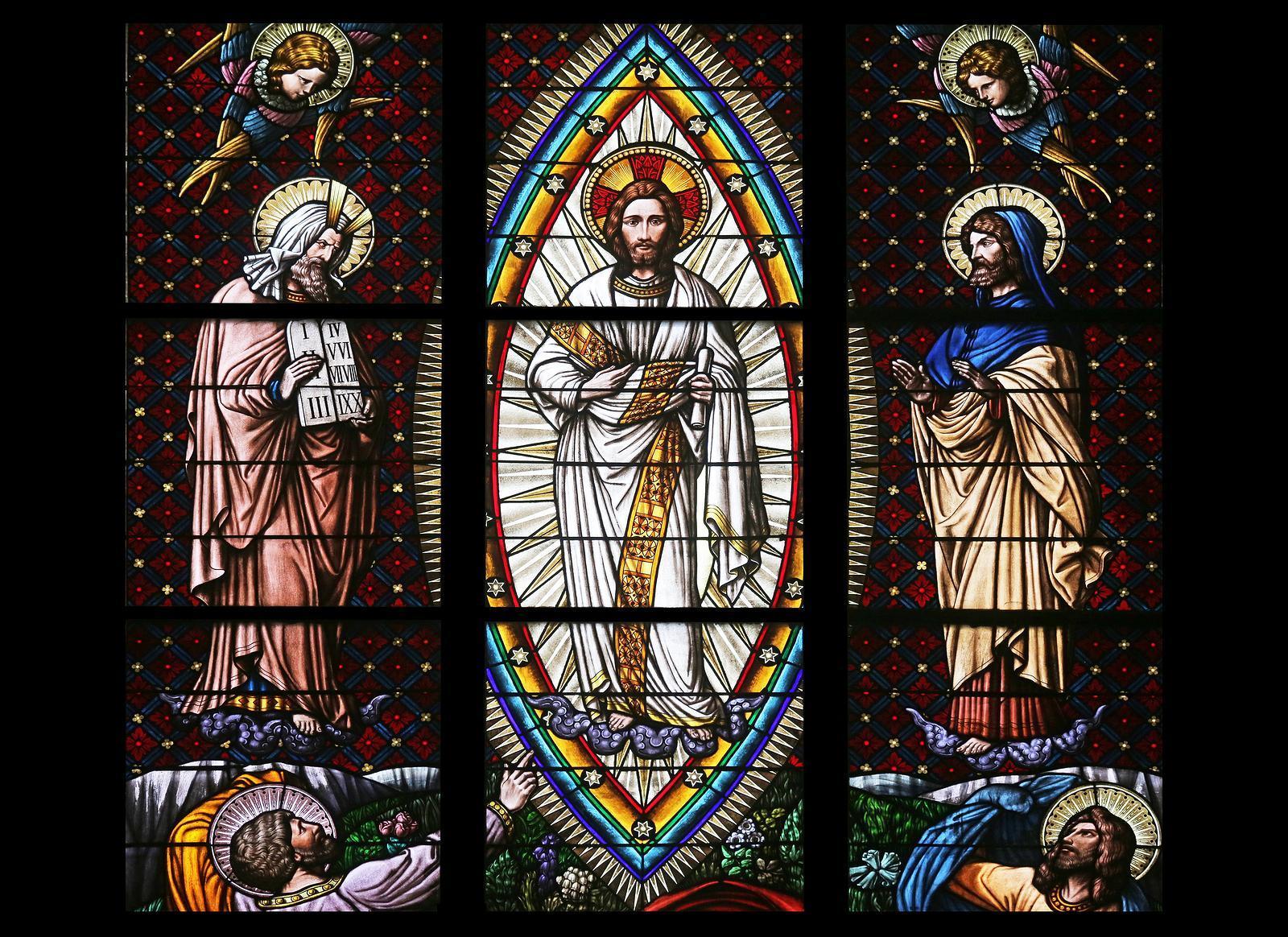
    The Transfiguration is an event from the life of Jesus that’s reported in three of the four gospels (Matthew 17:1-9, Mark 9:2-8, Luke 9:28-36). Jesus, along with his disciples, went up a mountain that overlooks Jerusalem and then appears with Elijah and Moses while he “transfigures,” meaning that the disciples see Jesus as he would appear after the resurrection. The gospels report that Jesus’ face and clothes became “dazzling white.”

    RELATED: Who Gave Jesus His Halo?

    The story is meant to not simply be a miracle but also has several other meanings. One is that Jesus is the fulfillment of the Old Testament law and prophets. At the Transfiguration, he’s seen with Moses (giver of the law) and Elijah (greatest of all prophets). As they overlook Jerusalem, the story foreshadows where this fulfillment of the law will take place: Jerusalem, where Jesus will meet his death. The disciples are confused by the Transfiguration and don’t realize that Jesus must die in order to save the world.

    Lastly, the story is a foretaste of what is in store for us. We will all rise again, and with the Transfiguration, Jesus gives his disciples just a glimpse of what the afterlife holds for both them and us.

    Originally published August 4, 2017.

  • Why Do We Celebrate the Solemnity of Saints Peter and Paul on the Same Day?

    Why Do We Celebrate the Solemnity of Saints Peter and Paul on the Same Day?

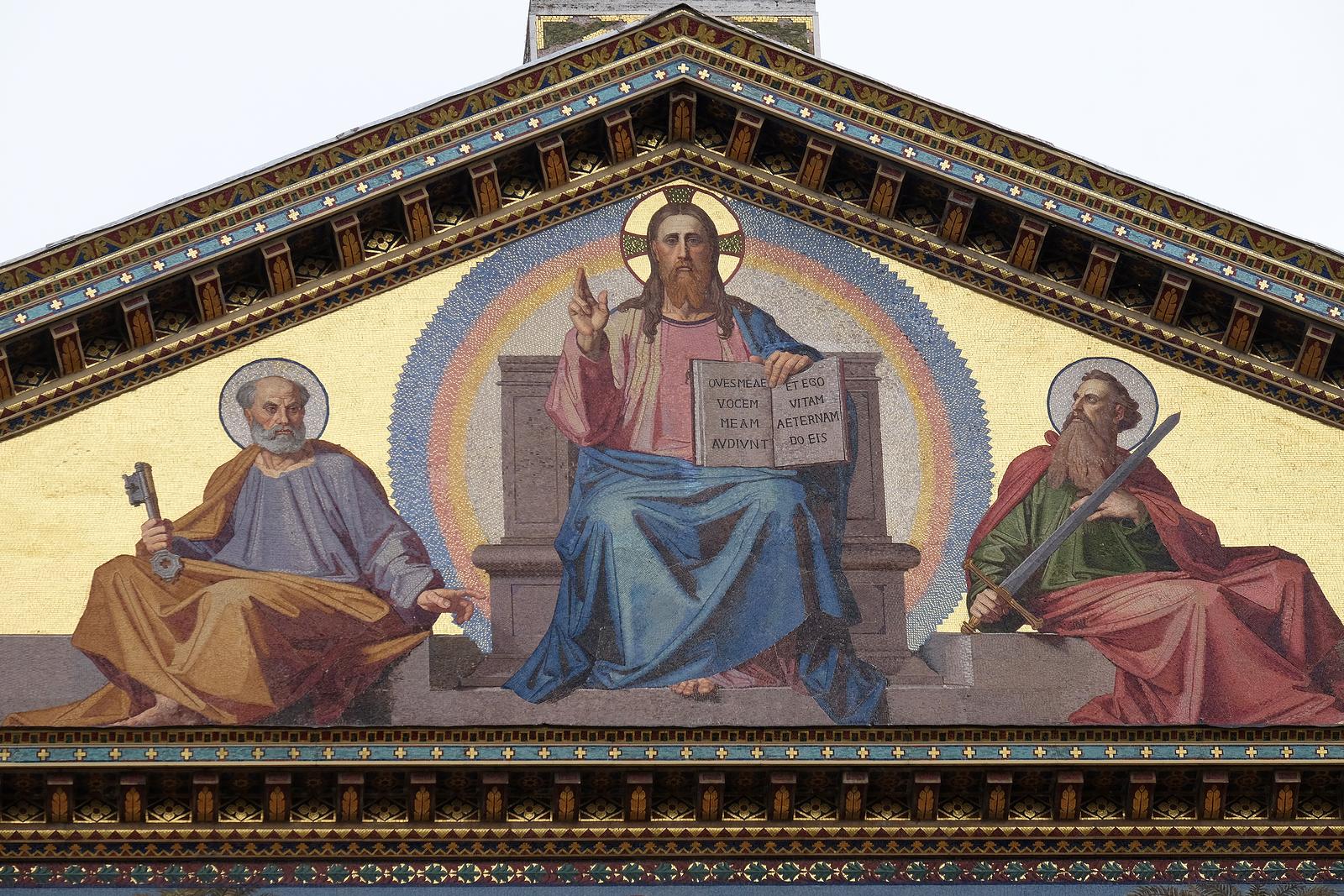
    ROME, ITALY – SEPTEMBER 05: Mosaic of Jesus Christ the Teacher, Saints Peter and Paul, Basilica of Saint Paul outside the walls, Rome, Italy on September 05, 2016.

    St. Peter and St. Paul are two of the most well-known saints and are often spoken of as the two men most responsible for spreading the Christian message in the days of the early church.

    RELATED: Why Is St. Paul Called an Apostle?

    As to why they are celebrated on the same day, legend has it that they were executed on the same day under the command of Emperor Nero and buried in Rome. (Although historical accounts cite Peter being martyred in 64 AD and Paul in 67 AD.)

    Because of his Roman citizenship, Saint Paul was beheaded. St. Peter was reportedly crucified upside down because he said he was not worthy to be sacrificed in the same manner as Christ.

    WATCH: Why Does Jesus ask Peter “do you love me” three times?

    June 29, the Church celebrates the feast day of both men, and as early as 258 AD, there is evidence of an already-lengthy tradition that both Saint Peter and Saint Paul were celebrated on the same day.

    In a sermon in the year 395, St. Augustine of Hippo said of Saints Peter and Paul:

    “Both apostles share the same feast day, for these two were one; and even though they suffered on different days, they were as one. Peter went first, and Paul followed. And so we celebrate this day made holy for us by the apostles’ blood. Let us embrace what they believed, their life, their labors, their sufferings, their preaching, and their confession of faith.”

  • What Is the Trinity?

    What Is the Trinity?

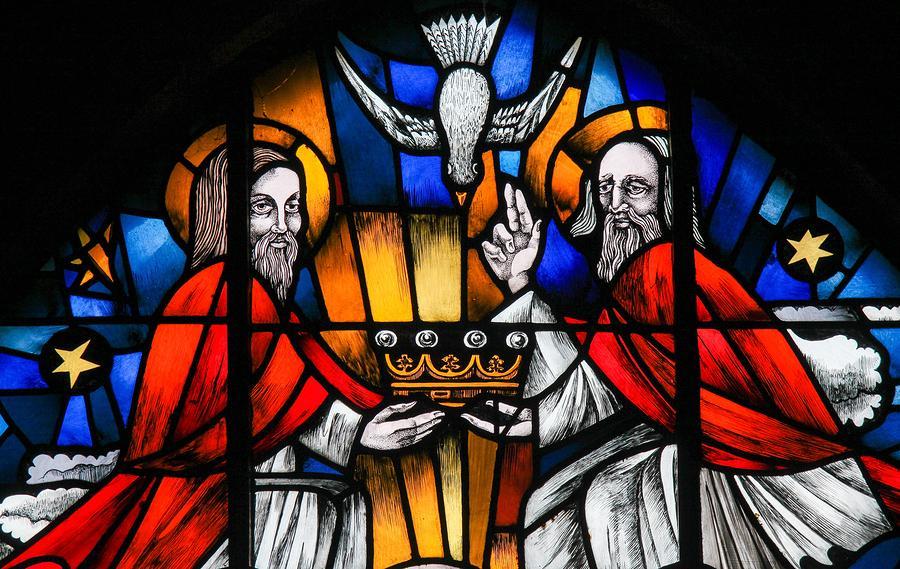
    The Trinity is the manner in which Catholics believe God is revealed to the world. The Catechism of the Catholic Church tells us, “The mystery of the Holy Trinity is the central mystery of the Christian faith and of the Christian life.” (CCC, #261)

    The Church shows that because God is “mystery,” meaning that we just can’t pin God down — we’re unable to know everything there is to know about God — God has tried to communicate to us just who He is. Traditionally, the Church expressed this as, God being revealed as Father, Son, and Holy Spirit, three expressions or “persons” of one divine essence. The Trinity is one. Catholics do not believe in three Gods but rather one God in a unity of three persons with one divine nature.

    RELATED: What Is Trinity Sunday All About? (printable PDF)

    God the Father

    The church uses the image of the Father — the Creator from which everything flows and has its being — to express the first person of the Trinity. While the Son and the Holy Spirit are not “lesser gods” they do proceed from the Father as God’s own self-gift to humanity.

    God the Son

    The second person of the Trinity is the Son — Jesus himself, God become man. Catholics believe that God freely chooses to come into human history in the person of Jesus. God becomes like us and dies our human death for us. But because Jesus is God, He cannot be held by death and rises to a new life, supremely better than human experience.

    God the Holy Spirit

    The third person of the Trinity is the Holy Spirit, who proceeds from both the Father and the Son. Jesus announces that his Father will send the Holy Spirit to be with and in the disciples, to teach and guide them. The Spirit is God’s real presence living within all of us, which brings us inspiration (which literally means “to draw in the Spirit”).

    God is three “persons” but one “essence.” The Father is just as much “God” as the Son and neither is “more God” than the Spirit.

    Still confused? Let’s try thinking of these things in yet another way. Instead of “persons” let’s substitute the word “expressions” of God.

    Expressions of God

    The Trinity can be thought of in these three expressions:

    1. God is “beyond us.”
      We can never really fathom what God is, but we know that He is far beyond our limited human nature or anything we can come to know in that human experience. God is the ultimate mystery, the question that we never fully answer. This is God the Father — the creator, the one who is beyond all understanding.
    2. God is also “among us.”
      We come to know God in the person of Jesus. God takes on our human nature and becomes “one of us.” Catholics also believe that this human experience of God continues in the sacrament of the Eucharist. God the Son is among us.
    3. God is also “within us.”
      God is the “divine spark” that awakens us to the fact that we are alive. God imbues us with our creativity, our gifts and talents, and our limitations as well. As we come to know ourselves as people, we also come to know God — who knows us better than we know ourselves. This is the experience of God the Holy Spirit.

    God is all these things and more. We don’t know all that God is but this is how God has been revealed to us throughout the course of our history — how we have come to best express God.

  • With Finals Looming…Who Is the Patron Saint of Studying?

    With Finals Looming…Who Is the Patron Saint of Studying?

    I can offer three who would be good to pray with:
    1) St. Thomas Aquinas — the official patron of scholars and a doctor of the church. His great work, the “Summa Theologica,” might just be something you’re studying in fact.

    2) St. John Henry Newman was very active in the intellectual life and set up centers for discussion so as to merge Catholics with intellectual conversation at universities as it was often misconstrued that to be Catholic is to be anti-intellectual. Campus Ministry Centers across the United States often bear his name. Read “The Idea of a University” sometime.

    3) An obvious one is St. Ignatius of Loyola who founded the Jesuits whose charism is education. Many Jesuit universities exist in the United States and elsewhere including Georgetown, Boston College, Fordham, and Loyola Marymount.

    If you’re really desperate, you just might want to try St. Jude. He is the patron saint of hopeless cases and has been known to dig a few people out of a jam.

    Originally published May 9, 2016.

  • Why Are There No Old Testament Readings During the Easter Season?

    Why Are There No Old Testament Readings During the Easter Season?

    The Old Testament has (almost) never been read at the Eucharist during the Easter season. St. Augustine of Hippo in the fourth century started this based on earlier practices by Cyril of Jerusalem.

    Instead, the Hebrew Scriptures are replaced by the Acts of the Apostles. The logic is based on the practice of looking forward from the Resurrection and balances the Easter Vigil’s looking back on our salvation history. (At the Easter Vigil, we draw out the history of our salvation in one night from creation, through Abraham, through Moses, etc.)

    On weekdays in the Easter season, in fact, the Acts of the Apostles are read in pretty much a continuous way, with the whole book completed by the end of the season. The Second Readings on Sundays come from I Peter, I John, and the unusual Book of Revelation, during Years A, B, and C, respectively. The Gospel readings are almost exclusively from John.

    All of this is to center us on the celebration of the Resurrection and to keep us looking forward from that event into today’s time.

  • Why Do Catholics Eat Fish on Fridays?

    Why Do Catholics Eat Fish on Fridays?

    Catholics are required to abstain from eating meat on Ash Wednesday and each Friday in Lent (including Good Friday). Fish is often used as a substitute for meat-based meals. But of course, with the popularity of vegetarian and vegan diets, there are many other solutions besides fish.

    Historically, since about the second century of Christianity, Christians abstained from eating meat on Fridays as a kind of sacrifice and reminder that acknowledged Jesus’ sacrifice on the Cross, which we commemorate on Good Friday. It’s also why we proclaim the sorrowful mysteries of the rosary on Friday. About a century or two later, Lent came into being, as a season of intense preparation for Easter, so the fasting and abstinence was extended to much of Lent.

    RELATED: Eating Meat on Fridays

    The Second Vatican Council simplified many Catholic customs and laws. There was too much of an emphasis on sin and sacrifice and some of the practices were rather involved. Many people believed that breaking Friday abstinence was a sin so serious it could land you in hell. They knew the whole thing had gotten out of hand.

    So the bishops preserved fasting on Ash Wednesday and Good Friday (meaning to eat only one full meal for the day and then to merely sustain yourself for the rest of the day — two smaller meals that do not equal the one large meal) and abstaining from meat on Fridays during the more penitential time of Lent.

    Some have said the bishops were in cahoots with the fishing industry, but there is little to no evidence to claim that as truth.